Canada Pest Control Products Market Trends
The Canada pest control products market size was estimated at USD 857.7 million in 2024 and is expected to reach USD 1,345.6 million by 2033, growing at a CAGR of 5.2% from 2025 to 2033. In Canada, pest control demand is shaped by urbanization, global travel and trade, and rising public health awareness. At the same time, consumers are increasingly favoring eco-friendly and sustainable solutions, pushing providers toward bio-based products, integrated pest management, and reduced chemical use.

The growing public awareness of health and hygiene is a key factor driving Canada’s pest control products market expansion. Pests such as rodents, cockroaches, and mosquitoes are widely recognized as carriers of diseases and allergens, creating serious risks in homes, healthcare facilities, food processing units, and hospitality establishments. With consumers and businesses increasingly prioritizing cleanliness and safety, especially post-COVID, demand for reliable, preventive pest control services has surged. This heightened awareness also pushes organizations to adopt regular monitoring and integrated pest management practices to protect people and brand reputation.
Digital pest management is emerging as a transformative trend in the pest control industry, with sensors, cameras, and IoT-enabled devices enabling real-time monitoring of pest activity. These technologies allow for faster detection, data-driven insights, and timely interventions, reducing infestation risks and reliance on broad chemical treatments. By offering precision, efficiency, and transparency, digital solutions are becoming increasingly attractive to commercial sectors such as food processing, hospitality, and healthcare, where strict hygiene standards demand proactive pest control, leading to growth in the volume of sales of products.
Advanced baiting techniques are enhancing the effectiveness of pest control by using more targeted, efficient, and environmentally safe methods to detect and eliminate pests. Modern baits are designed to be highly attractive to specific species while minimizing risks to non-target organisms, reducing the need for widespread chemical applications. These innovations improve detection and control and support integrated pest management strategies, making them particularly valuable in sensitive environments like residential spaces, food facilities, and healthcare institutions.
Consumer Insights
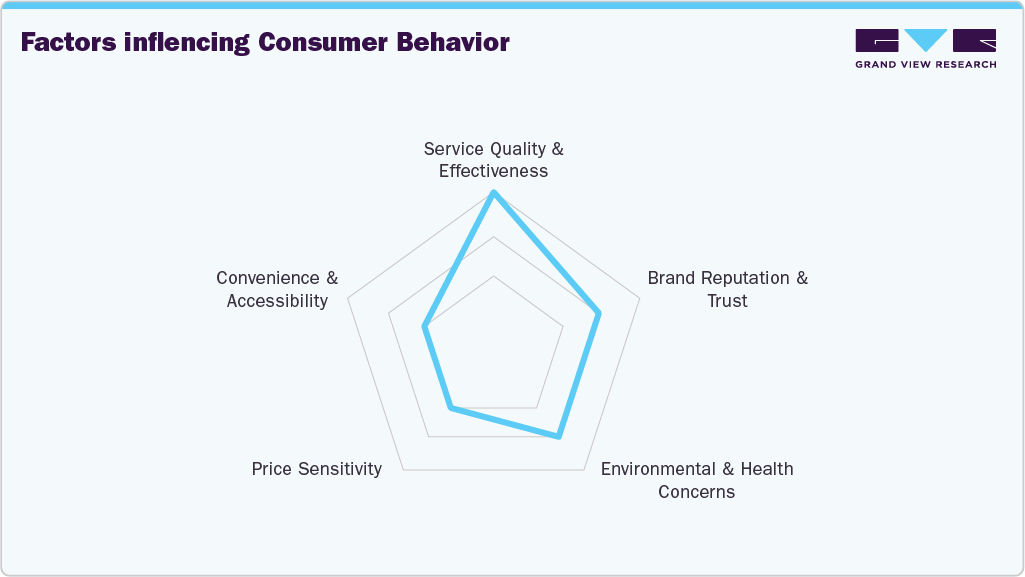
Homeowners and businesses prioritize integrated pest management solutions that minimize chemical exposure while ensuring long-term prevention. Price sensitivity is balanced with trust in established brands, service guarantees, and quick response times. Increasing awareness of health risks, property damage, and eco-friendly practices drives demand for innovative treatments and subscription-based maintenance programs. Leveraging these insights, companies can tailor offerings, enhance customer experience, and strengthen loyalty in a competitive pest control services industry.
Product Insights
Sprays/Aerosols accounted for a revenue share of 33.06% of the Canada pest control products market in 2024. Sprays and aerosols are cost-effective, easy to use, and provide immediate results, making them the most preferred solution for households and businesses. Their versatility in targeting various pests, insects, and rodents further enhances their demand. In addition, the availability of ready-to-use consumer products in retail stores supports high adoption in residential settings. At the same time, professional pest control providers rely on aerosol formulations for quick knockdown of infestations.
The microbials/biopesticides category is expected to grow at a CAGR of 7.7% from 2025 to 2033. Rising concerns over the health and environmental risks associated with chemical pesticides and stricter government regulations on synthetic formulations are encouraging the adoption of bio-based alternatives. Microbials and biopesticides offer targeted action against pests while minimizing harm to non-target species, soil health, and ecosystems. In addition, growing consumer preference for organic food and sustainable practices in agriculture and landscaping is driving farmers, businesses, and households to choose these safer, eco-conscious solutions.
Pest Type Insights
The crawling insects category by pest type accounted for a revenue share of 37.36% of the Canada pest control products market in 2024. Crawling insects are the most common and persistent pests in residential and commercial settings. Species such as ants, cockroaches, and spiders frequently infest homes, food establishments, and healthcare facilities, posing health risks, hygiene concerns, and property damage. Their prevalence and the need for regular monitoring and control drive consistent demand for pest management services. In addition, crawling insects are relatively easier to detect and treat using widely available solutions such as sprays, baits, and traps.
The flying insects category is expected to grow at a CAGR of 5.4% from 2025 to 2033 due to their growing prevalence and the health risks they pose. Flying insects such as mosquitoes, flies, and midges are not only nuisances but also potential carriers of diseases, particularly in urban and suburban areas with warmer seasons and standing water sources. Climate change, increased urbanization, and expanding outdoor recreational spaces have contributed to higher populations of these pests. As a result, both residential and commercial sectors are seeking more effective and preventive solutions, driving rapid growth in demand for flying insect control services and products.
Control Mechanism Insights
Chemical pest control accounted for a revenue share of 62.67% of the Canada pest control products market in 2024. Chemical formulations, including sprays, aerosols, and baits, provide immediate knockdown and long-lasting residual effects, making them highly reliable for residential and commercial applications. Their widespread availability, cost-effectiveness, and ease of use reinforce their dominance. Despite increasing interest in eco-friendly alternatives, chemical methods' proven efficiency and versatility continue to make them the preferred choice for controlling persistent and diverse pest populations.
Biological pest control is expected to grow at a CAGR of 7.2% from 2025 to 2033 due to growing concerns over the health and environmental impacts of chemical pesticides. Consumers, businesses, and regulatory authorities increasingly favor eco-friendly and sustainable solutions that minimize harm to humans, pets, and non-target species. Biological control methods, such as beneficial insects, microbes, and biopesticides, offer targeted pest management while supporting soil health and biodiversity. In addition, rising awareness of organic farming practices and stricter government regulations on synthetic chemicals drive adoption across agriculture, residential, and commercial sectors, fueling strong growth in the industry.
End Use Insights
B2B users accounted for a revenue share of 77.61% of the Canada pest control products market in 2024. Commercial and industrial establishments face higher exposure to pest-related risks and are subject to strict health, safety, and regulatory standards. Sectors such as food processing, hospitality, healthcare, and warehousing require regular, large-scale pest management services to prevent infestations, protect public health, and maintain compliance with government regulations. Commercial pest control contracts' scale, frequency, and technical requirements are typically much larger than residential needs, driving the industry.

The B2C user’s category is expected to grow at a CAGR of 7.5% from 2025 to 2033. The rising health and hygiene awareness has made households more proactive about controlling pests such as rodents, cockroaches, and mosquitoes. At the same time, the availability of affordable, ready-to-use sprays, aerosols, and baits in retail and online stores makes pest control convenient for consumers. Growing urbanization and smaller living spaces further increase exposure to infestations, driving strong demand for DIY pest control products in the B2C industry.
Key Canada Pest Control Products Company Insights
The Canada pest control products market comprises established brands and new entrants, each adapting to shifting consumer preferences and regulatory standards. Manufacturers drive customer satisfaction by developing innovative, highly effective solutions, improving product performance, and incorporating eco-friendly and sustainable formulations. By broadening their product lines and catering to the evolving needs of residential and commercial users, these companies strengthen their market presence and sustain a competitive edge in the industry.
-
Bayer AG, headquartered in Germany, is a global life sciences company with core businesses in healthcare and agriculture. Through its Crop Science division, it is a major player in pest control and crop protection, offering insecticides, herbicides, fungicides, and seed treatments. In Canada, Bayer CropScience provides innovative and sustainable solutions to support farmers in boosting productivity and managing pests effectively.
-
BASF SE, based in Germany, is one of the world’s largest chemical companies and a leading provider of crop protection solutions. Its Agricultural Solutions division offers insecticides, herbicides, fungicides, and biological products. In Canada, BASF Canada Agricultural Solutions, headquartered in Calgary, delivers innovative pest control and farming solutions to support sustainable agriculture.
Key Canada Pest Control Products Companies:
- Bayer AG
- BASF
- Syngenta
- FMC
- Adama
- Nufarm
- Vive Crop Protection Inc.
- The Scotts Company LLC,
- S.C. Johnson & Son, Inc.
- Woodstream Corporation
Recent Developments
-
In April 2025, Senske Family of Companies expanded its Canadian presence by acquiring Huron Pest Control in Ontario. This acquisition allows Huron to operate under Mosquito Buzz, Senske’s Canadian brand specializing in mosquito and tick control, enhancing its service offerings and market reach.
-
In October 2023, Corteva Agriscience launched Straxan fungicide seed treatment in Canada. This product is designed to protect cereal crops such as wheat, barley, and oats from early-season seed and seedling diseases like Fusarium, Rhizoctonia, and true loose smut. This ready-to-use formulation offers flexibility for application through both commercial seed treaters and on-farm equipment, ensuring stable performance under varying conditions and temperatures.
Canada Pest Control Products Market Report Scope
|
Report Attribute
|
Details
|
|
Market size in 2025
|
USD 896.8 million
|
|
Revenue forecast in 2033
|
USD 1,345.6 million
|
|
Growth rate (Revenue)
|
CAGR of 5.2% from 2025 to 2033
|
|
Actuals
|
2021 - 2024
|
|
Forecast period
|
2025 - 2033
|
|
Quantitative units
|
Revenue in USD million/billion, and CAGR from 2025 to 2033
|
|
Report coverage
|
Revenue forecast, company ranking, competitive landscape, growth factors, and trends
|
|
Segments covered
|
Product, pest type, control mechanism, end use
|
|
Country scope
|
Canada
|
|
Key companies profiled
|
Bayer AG; BASF; Syngenta; FMC; Adama; Nufarm; Vive Crop Protection Inc.; The Scotts Company LLC; S.C. Johnson & Son, Inc.; Woodstream Corporation
|
|
Customization
|
Free report customization (equivalent up to 8 analysts working days) with purchase. Addition or alteration to country, regional & segment scope
|
|
Pricing and purchase options
|
Avail customized purchase options to meet your exact research needs. Explore purchase options
|
Canada Pest Control Products Market Report Segmentation
This report forecasts revenue growth at the country’s level and provides an analysis of the latest industry trends and opportunities in each of the sub-segments from 2021 to 2033. For the purpose of this study, Grand View Research has segmented the Canada pest control products market report by product, pest type, control mechanism, and end use.
-
Product Outlook (Revenue, USD Million, 2021 - 2033)
-
Sprays/Aerosols
-
Baits/Gels
-
Repellents
-
Predators/Parasites
-
Microbials/Biopesticides
-
Barriers/Exclusion
-
Mechanical Traps
-
Electronic Devices
-
Pest Type Outlook (Revenue, USD Million, 2021 - 2033)
-
Flying Insects
-
Crawling Insects
-
Rodents
-
Others (Birds, etc.)
-
Control Mechanism Outlook (Revenue, USD Million, 2021 - 2033)
-
Chemical
-
Physical/Mechanical
-
Biological
-
End Use Outlook (Revenue, USD Million, 2021 - 2033)
-
B2C
-
Supermarkets and Hypermarkets
-
Pharmacies & Drugstores
-
Home Improvement & Hardware Stores
-
E-commerce/Online
-
Others (Grocery Stores, Department Stores, etc.)
-
B2B
-
Direct Sales
-
Distributors & Wholesalers
-
Agricultural Supply Stores & Co-operatives
-
Commercial & Institutional E-procurement Platforms
-
Others (Government Procurement Programs, etc.)
Frequently Asked Questions About This Report
b. The Canada pest control products market was estimated at USD 857.7 million in 2024 and is expected to reach USD 896.8 million in 2025.
b. The Canada pest control products market is expected to grow at a compound annual growth rate of 5.2% from 2025 to 2033 to reach USD 1,345.6 million by 2033.
b. Sprays/Aerosols accounted for a revenue share of 33.06% of the Canada pest control products market in 2024. Sprays and aerosols are cost-effective, easy to use, and provide immediate results, making them the most preferred solution for households and businesses.
b. Some of the key players in the Canada pest control products market is Bayer AG; BASF; Syngenta; FMC; Adama; Nufarm; Vive Crop Protection Inc.; The Scotts Company LLC,; S.C. Johnson & Son, Inc.; Woodstream Corporation.
b. In Canada, pest control demand is shaped by urbanization, global travel and trade, and rising public health awareness. At the same time, consumers are increasingly favoring eco-friendly and sustainable solutions, pushing providers toward bio-based products, integrated pest management, and reduced chemical use.

 Download Sample Report
















