
- Home
- »
- Medical Devices
- »
-
Cardiac Mapping Market Size And Share Report, 2026-2033GVR Report cover

Cardiac Mapping Market (2026 - 2033)
Size, Share & Trends Analysis Report By Product (Mapping Systems, Mapping Catheters, Mapping Accessories & Consumables), By Application (AF, Atrial Flutter, SVT), By Mapping Approach, By End Use, By Region, And Segment Forecasts
Market Size, 2025
$2.5BMarket Estimate, 2026
$2.8BMarket Forecast, 2033
$5.2BCAGR, 2026–2033
9.2%Cardiac Mapping Market Summary
The global cardiac mapping market size was valued at USD 2.5 billion in 2025 and is projected to grow from USD 2.8 billion in 2026 to USD 5.2 billion by 2033, at a CAGR of 9.2% from 2026 to 2033. North America dominated the market, accounting for a revenue share of 48.1% in 2025. The market is driven by the rising prevalence of cardiac arrhythmias, especially atrial fibrillation, the growing use of catheter-based electrophysiologic studies, and the increasing need for minimally invasive diagnostics and therapies.
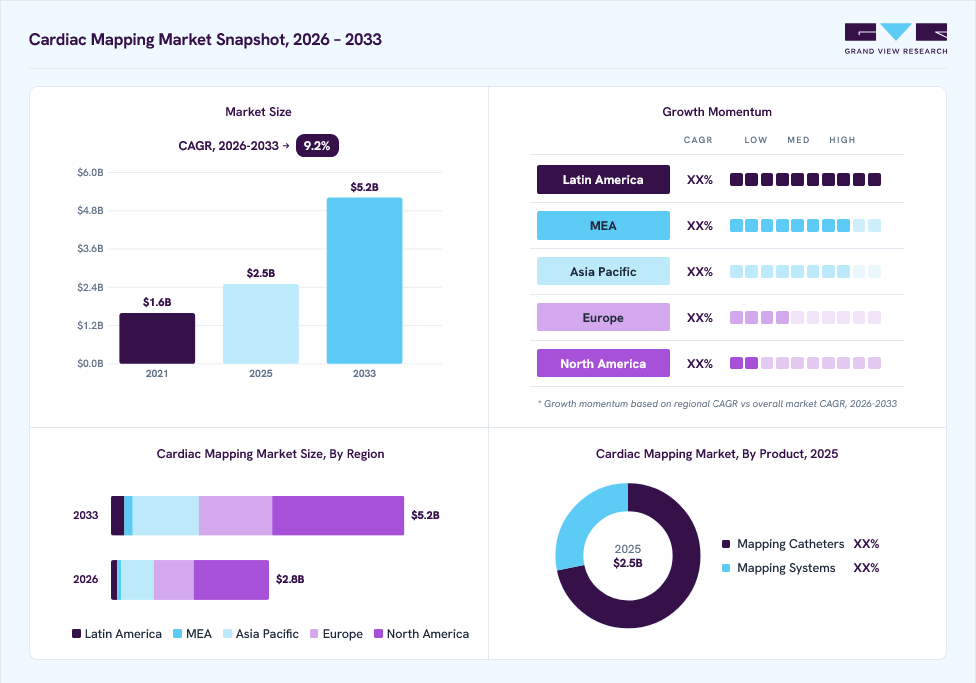 Source: Grand View Research, IR Documents, Primary Interviews, Paid DatabasesTo learn more about this report,
 Download Free Sample Report
 Key Market Trends & Insights
- By product: The mapping catheters segment held the largest revenue share of 57.8% in 2025.
- By application: The atrial fibrillation segment dominated the market, with a revenue share of 56.3% in 2025.
- By mapping approach: The contact mapping segment held the largest revenue share of 82.3% in 2025.
- By end use: The hospitals segment held the largest revenue share of 74.8% in 2025.
Regional Highlights
- Largest regional market: North America (48.1% revenue share, 2025)
- Fastest-growing regional market: Asia Pacific (highest CAGR, 2026-2033)
- By country: The U.S. held the largest market share in 2025.
Market Size & Forecast
- Market size in 2025: USD 2.5 Billion
- Estimated market size in 2026: USD 2.8 Billion
- Projected market size by 2033: USD 5.2 Billion
- CAGR (2025-2033): 9.2%
Three ways to get this report
Buy it, customize it, or ask a question.Ask an Analyst
Analyst response in 1 business day
- AccessReport author, directly
- Reply timeWithin 1 working day
- No sales callDirect answer only
- FormatEmail reply
- CostFree, no cost
Get the Full Report
What the study covers
- FormatsPDF · Excel · Dashboard
- Timeline2026–2033 annual, 2025 base
- Coverage20+ countries, 5 regions
- Companies10+ key players profiled
Customize the Report
20% free customization
- IncludeCountries, segments, points
- TailorTo your product definition
- ExtendDeeper competitor detail
- OrA fully bespoke study
- Turnaround5–10 working days
Cardiac mapping allows the electrophysiologist to locate and map any abnormal electrical activity in the heart. Growing investments in electrophysiology infrastructure, an aging population, and increasing use of three-dimensional mapping systems are among the other factors driving the market. Technological advancements and the increasing clinical adoption of cardiac mapping are driving market growth. The development of high-density mapping catheters, three-dimensional electroanatomical mapping, non-contact mapping, advanced visualization, and software-enabled signal analysis has improved the accuracy, resolution, and efficiency of arrhythmia identification and treatment. The rising prevalence of atrial fibrillation, ventricular tachycardia, atrial flutter, and other complex arrhythmias is expanding the clinical use of cardiac mapping, particularly for identifying abnormal electrical pathways and guiding catheter ablation. The growing adoption of mapping-guided ablation procedures, combined with the shift toward high-resolution and personalized electrophysiology, is further increasing demand for advanced mapping systems. In addition, integration of mapping platforms with ablation technologies and real-time visualization and analytics is improving procedural precision and supporting broader adoption across electrophysiology laboratories.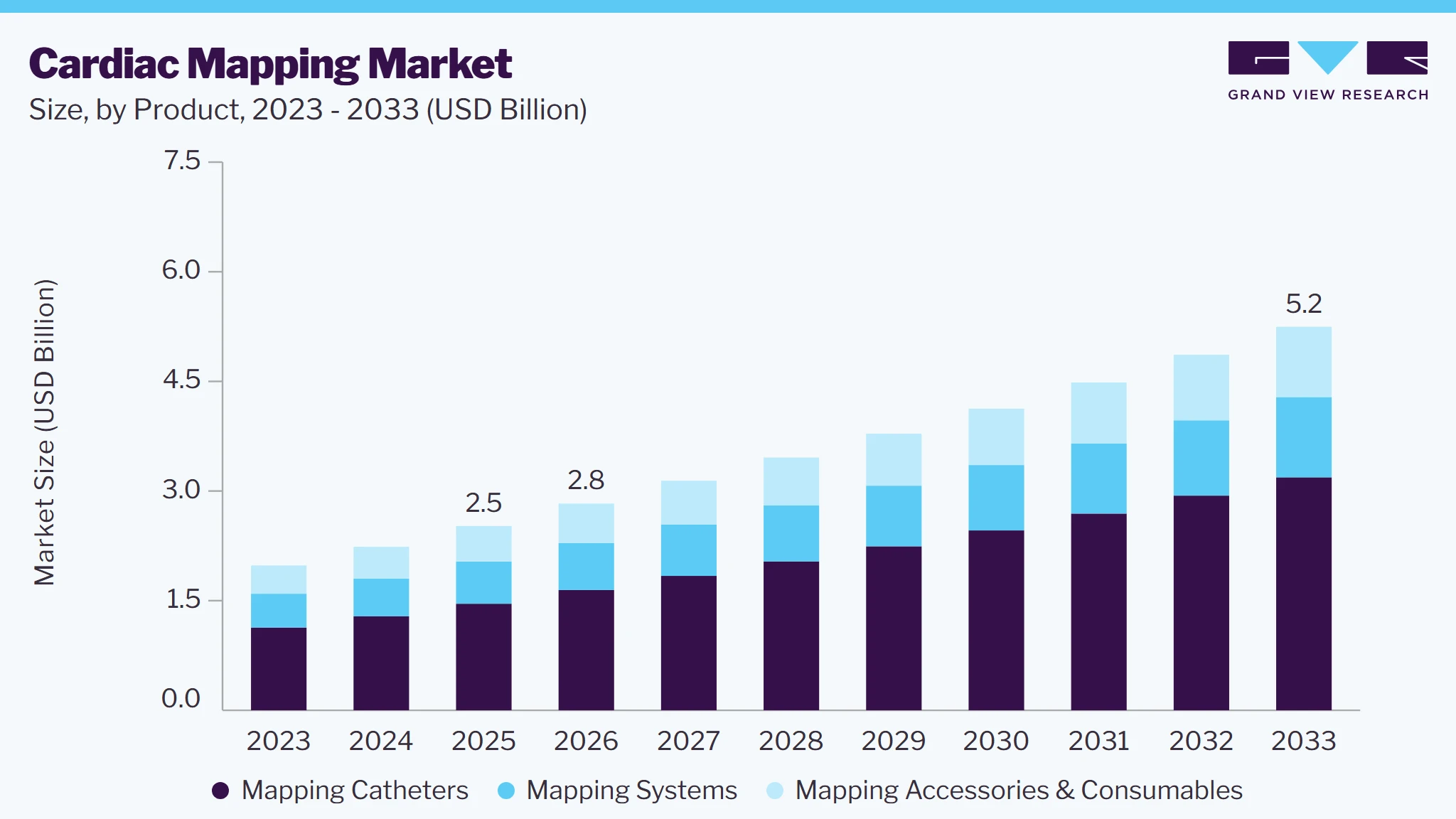 To learn more about this report, Download Free Sample Report
 Market Dynamics
The rising prevalence of cardiac arrhythmias, particularly atrial fibrillation (AF), is increasing the need for cardiac mapping and mapping-guided electrophysiology procedures. AF is the most common sustained cardiac arrhythmia and is associated with major complications, including stroke and heart failure. The growing burden of AF is driven by population aging and increasing prevalence of hypertension, diabetes, obesity, and other lifestyle-related risk factors, resulting in a larger population requiring diagnosis, monitoring, and interventional treatment. In May 2024, the CDC identified AFib as the most common heart arrhythmia treated in the U.S. and projected that the number of Americans affected could reach 12.1 million by 2030.
AFib is also associated with approximately 158,000 deaths annually and contributes to around one in seven stroke cases. Globally, the prevalence of AF has more than doubled over the past three decades, while increasing incidence in middle-income countries is creating additional demand for electrophysiology infrastructure and treatment capabilities. In July 2025, The Lancet Regional Health – Americas reported continued regional differences in AF burden, with the U.S. experiencing a substantial increase in AF incidence and prevalence. The expanding AF patient pool is consequently increasing catheter ablation volumes and the demand for cardiac mapping systems that enable the identification of abnormal electrical pathways, the localization of arrhythmogenic tissue, and the precise guidance of ablation procedures.
The increasing demand for AF treatment is also encouraging manufacturers to develop integrated mapping and ablation platforms, high-density mapping capabilities, and advanced catheter technologies that improve procedural precision and efficiency. Recent product and regulatory developments demonstrate this trend:
Company
Product / System
Date
Relevance to Cardiac Mapping Market
Medtronic
Affera Mapping and Ablation System with Sphere-9 Catheter
October 2024
Combines high-density cardiac mapping with pulsed-field and radiofrequency ablation in an integrated platform for persistent AF and typical atrial flutter, supporting the convergence of mapping and ablation technologies.
Abbott
TactiFlex Sensor-Enabled Ablation Catheter
May 2025
Incorporates a flexible tip and contact-force sensing technology and is designed for integration with the EnSite X EP System, supporting precise mapping and ablation during AF procedures.
BTL
Easy Pulz PFA Catheter
December 2024
Used in a first-in-human study involving six AF patients, demonstrating continued development of pulsed-field ablation technologies that can expand demand for advanced mapping-guided procedures.
The increasing AF burden is expected to drive higher volumes of electrophysiology procedures, greater adoption of catheter ablation, and increased utilization of high-density and three-dimensional mapping systems. At the same time, the development of integrated mapping-ablation platforms is expected to increase the value and technological sophistication of cardiac mapping systems, particularly for complex AF and other arrhythmia procedures.
Technological advancements in high-density electroanatomical mapping are another important market driver. With current electrocardiography systems, large volumes of intracardiac electrical information can be collected, and a three-dimensional image of the heart can be developed. There is also increased integration of electrocardiography with ablation technologies, enabling physicians to map abnormal electrical activity and guide patients through a single integrated system. For instance, in April 2025, Medtronic reported one-year clinical data for its investigational Sphere-360 catheter, a single-shot pulsed-field ablation catheter incorporating mapping capabilities for paroxysmal atrial fibrillation. The company reported freedom from arrhythmia recurrence in 88% of patients and durable pulmonary vein isolation in 98% of targeted veins at one year. This development showcases the continued integration of mapping and ablation capabilities into catheter technology, which supports the adoption of high-density, integrated cardiac mapping technologies.
The high capital and operational costs associated with advanced cardiac mapping systems are a major restraint on market growth. The latest electroanatomical mapping systems necessitate advanced mapping consoles, specialized catheters, navigation tools, software, and electrophysiology laboratory infrastructure. In addition, there are recurring costs, including disposable mapping catheters, system maintenance, and staff training. Such high costs may hinder the adoption of electroanatomical mapping systems by small hospitals and other healthcare facilities, especially in developing countries with tight healthcare budgets. The complexity of cardiac mapping procedures further complicates the adoption of electroanatomical mapping systems, as specialized electrophysiologists and trained personnel are required to operate and interpret these advanced three-dimensional systems.
The increasing integration of artificial intelligence (AI), automation, and advanced data analytics into cardiac mapping systems represents a significant growth opportunity for market participants. AI-enabled technologies can automate and enhance several time-intensive steps of electrophysiology procedures, including anatomical reconstruction, identification and labeling of cardiac structures, integration of imaging and electrophysiological data, signal interpretation, and visualization of arrhythmogenic regions. These capabilities can help electrophysiologists generate detailed three-dimensional cardiac maps more efficiently, potentially reducing mapping time and improving procedural consistency, particularly in complex arrhythmia cases.
The opportunity is further supported by the increasing sophistication of catheter ablation procedures and the need to manage large volumes of electrophysiological data generated by high-density mapping technologies. For instance, the 2026 ACC/AHA/HRS advanced training statement highlights that 3D electroanatomic mapping has become an essential tool for catheter ablation and that newer mapping technologies require advanced integration of imaging and mapping data. This creates opportunities for manufacturers to develop AI-assisted mapping, automated map annotation, multimodal image integration, and intelligent visualization capabilities that can improve workflow efficiency and support clinical decision-making. As electrophysiology laboratories increasingly adopt high-density mapping and integrated ablation platforms, incorporating AI-based automation could further differentiate cardiac mapping systems and expand their applications in treating complex arrhythmias.
Market Characteristics & Concentration
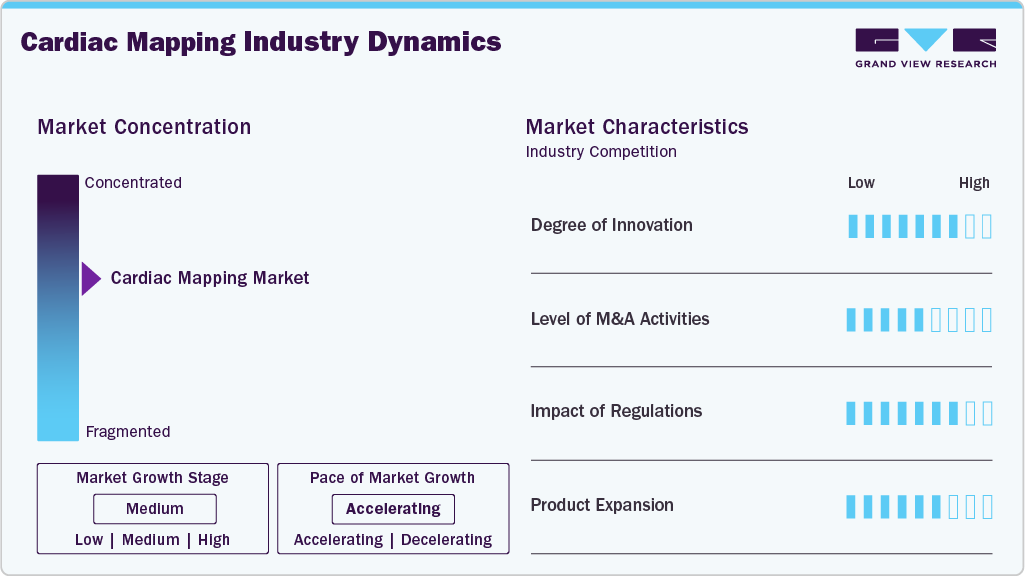
The chart below illustrates the relationship between industry concentration, industry characteristics, and key market participants. The market is moderately consolidated, with established electrophysiology device manufacturers and specialized cardiac mapping technology companies. Leading participants compete through integrated mapping systems, high-density mapping catheters, advanced visualization and navigation technologies, and mapping-enabled ablation platforms.
The cardiac mapping industry is characterized by rapid technological innovation, driven by the integration of artificial intelligence, high-density mapping, advanced imaging, and automated anatomical reconstruction. Manufacturers are increasingly developing integrated platforms that combine cardiac mapping, real-time imaging, and ablation capabilities, enabling more precise visualization and treatment of complex arrhythmias while improving procedural efficiency. For instance, in April 2026, Johnson & Johnson expanded the capabilities of its CARTO System by introducing the CARTOSOUND SONATA Module, which incorporates artificial intelligence to streamline intracardiac echocardiography analysis. The module automatically converts ultrasound images into detailed cardiac maps while recognizing and labeling relevant anatomical structures, supporting more efficient cardiac visualization and electrophysiology procedures.
 To learn more about this report, Download Free Sample Report
 The level of M&A and strategic investments is moderate, as firms seek to enhance their electrophysiology product portfolios and gain access to related mapping and imaging systems. For instance, in July 2025, EnChannel Medical announced an agreement to acquire Acutus Medical's AcQMap High Resolution Imaging and Mapping platform assets, including intellectual property, clinical data, regulatory documentation, and associated catheter technologies. The transaction strengthens EnChannel's capabilities in non-contact cardiac mapping and full-chamber atrial fibrillation mapping.
The cardiac mapping industry is significantly influenced by regulatory considerations, as electroanatomical mapping devices and mapping catheters must be cleared or approved for marketing. For instance, in January 2026, the U.S. FDA cleared Imricor Medical Systems' NorthStar Mapping System, a cardiovascular diagnostic computer designed for cardiac mapping applications. Such regulatory clearances directly influence the introduction and commercialization of new mapping technologies.
Market participants are actively expanding their product portfolios with new mapping systems, dense-mapping catheters, artificial-intelligence-based mapping software, and mapping ablation systems. For instance, in March 2026, the U.S. FDA cleared Cortex's OptiMap Catheter - 50mm, classified as a high-density intracardiac mapping catheter, expanding the availability of advanced catheter-based mapping technologies for electrophysiology procedures.
Analyst Perspective
The market is driven by the rising prevalence of atrial fibrillation, atrial flutter, ventricular tachycardia, and other arrhythmias, increasing demand for precise diagnosis and mapping-guided ablation. The expansion of electrophysiology laboratories and the growing adoption of minimally invasive and personalized arrhythmia treatments are further supporting market growth. Technological advancements in high-density mapping, 3D electroanatomical mapping, AI, automated anatomical reconstruction, and real-time visualization are improving procedural accuracy and efficiency. The increasing integration of mapping and ablation technologies is further strengthening adoption, while growing emphasis on precision electrophysiology and advanced cardiac care is creating opportunities for vendors offering next-generation mapping systems, catheters, and integrated electrophysiology solutions.
Product Insights
The mapping catheters segment dominated the market, with a 57.8% share in 2025, and is anticipated to register the fastest CAGR over the forecast period. Mapping catheters are essential for acquiring intracardiac electrical information and creating activation and voltage maps. Increased adoption of high-density and multipole mapping catheters is driving market growth, as these catheters enable physicians to record more electrical activity and diagnose arrhythmogenic substrates more effectively. For instance, in September 2025, Stereotaxis announced the successful completion of the first U.S. commercial procedures using its MAGiC Sweep catheter, described as the first robotically navigated high-density electrophysiology mapping catheter. The catheter uses 20 electrodes to enable rapid, detailed electroanatomical mapping, demonstrating the integration of robotic navigation with high-density mapping technology and supporting innovation in mapping catheters.
The mapping systems segment accounted for the second-largest market share. Mapping systems provide the software and visualization infrastructure required to reconstruct cardiac anatomy, display electrical activation patterns, and guide catheter navigation during electrophysiology procedures. The combination of 3D electroanatomical mapping, imaging, automatic anatomical reconstruction, and advanced signal processing is facilitating the adoption of this technology by electrophysiology laboratories. For instance, in February 2025, Boston Scientific received CE Mark approval for its FARAWAVE NAV Ablation Catheter and FARAVIEW Software, which expand mapping capabilities for the FARAPULSE Pulsed Field Ablation System and are compatible with the company's OPAL HDx Mapping System. The development strengthens the integration of mapping software, navigation-enabled catheters, and ablation platforms, supporting demand for advanced cardiac mapping systems.
Application Insights
The atrial fibrillation segment dominated the market, with the largest share of around 56.3% in 2025, and is anticipated to register the fastest CAGR during the forecast period. Atrial fibrillation represents a major application for cardiac mapping because accurate identification of abnormal electrical activity and pulmonary-vein-related conduction is critical during catheter ablation. Increasing AF prevalence, growing use of catheter ablation, and technological advances in high-density mapping are supporting demand for mapping technologies. Mapping catheters are increasingly used for detailed characterization of persistent and complex AF, including redo procedures and substrate-based mapping. For instance, in October 2025, Kardium announced the first commercial procedures in the U.S. using its Globe Pulsed Field System, an integrated mapping and ablation system designed for atrial fibrillation. The commercialization of this product indicates increased use of map-and-ablate systems specifically developed to treat AF.
The ventricular tachycardia (VT) segment accounted for the second-largest market share. Cardiac mapping is increasingly used during VT procedures to identify abnormal conduction pathways and scar-related arrhythmogenic substrates, particularly in patients with structural heart disease. The increasing use of substrate mapping and high-density mapping technologies for complex ventricular arrhythmias is supporting demand within this application.
Mapping Approach Insights
The contact mapping segment dominated the market, accounting for around 82.3% in 2025. Contact mapping enables direct acquisition of intracardiac electrical signals through electrodes positioned against the cardiac tissue, allowing physicians to generate detailed activation and voltage maps. Clinical applications, high-resolution imaging, and compatibility with electroanatomical three-dimensional mapping make it a leader in the field. Consensus statements in electrophysiology on current electroanatomical contact mapping indicate that it is a key method for anatomical reconstruction and catheter localization. For instance, in June 2026, researchers developed a multi-electrode mapping sheath incorporating an adjustable basket of ultrathin electrode splines for intracardiac electrophysiological recording and cardiac mapping. Testing demonstrated electrogram acquisition and reconstruction of voltage and activation maps in ex vivo and in vivo models, supporting continued innovation in direct intracardiac mapping approaches.
The hybrid mapping segment is anticipated to register the fastest CAGR during the forecast period. The hybrid mapping approach uses complementary mapping and imaging techniques to offer improved visualization of cardiac structure and electrical activity. The increasing need for navigational precision in the treatment of complex arrhythmias, along with the use of mapping technology, intracardiac imaging, and advanced visualization, is driving the adoption of hybrid approaches. The introduction of hybrid devices that incorporate mapping, imaging, and ablation features is bolstering this market segment.
End Use Insights
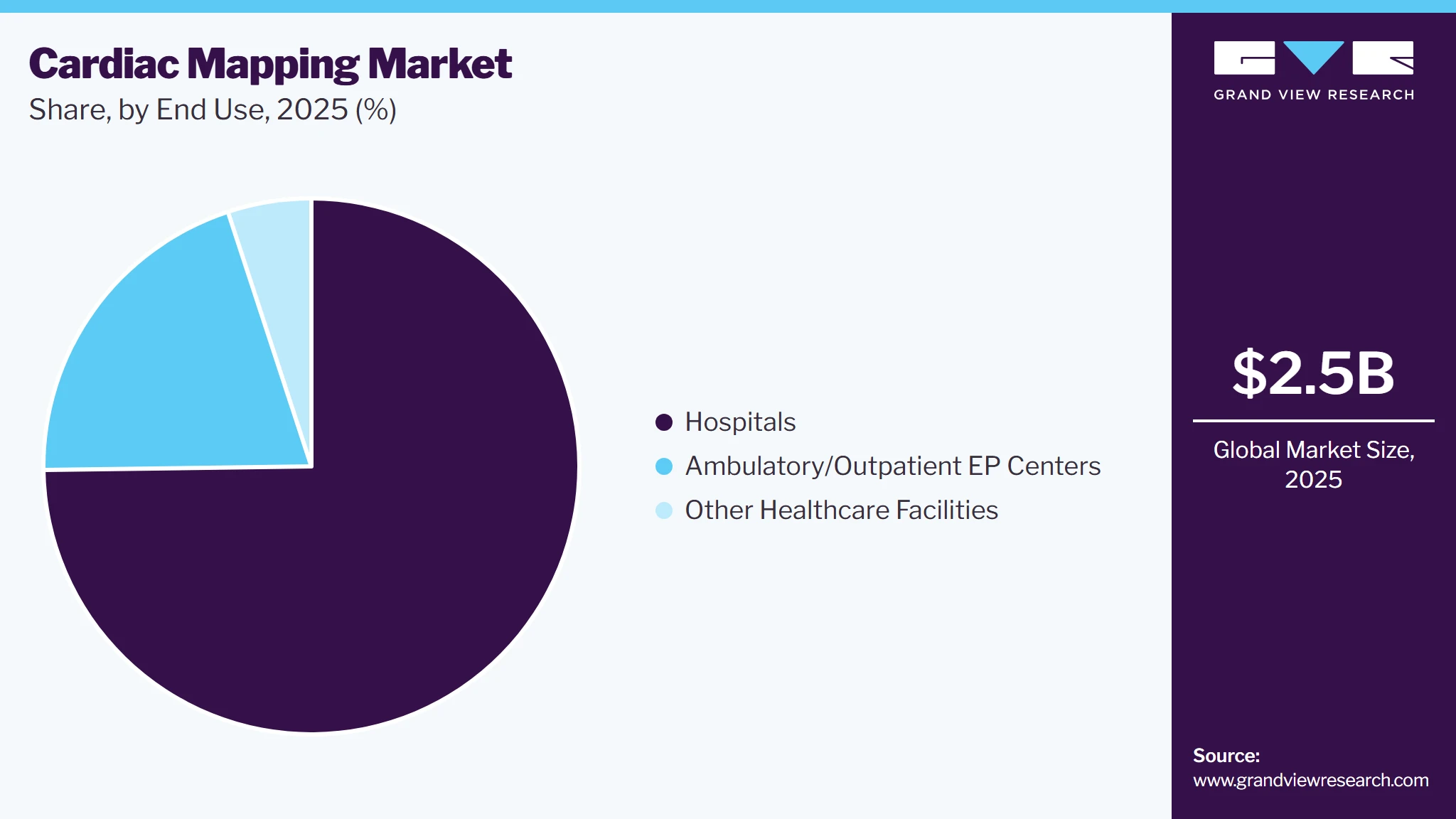
The hospitals segment dominated with the largest market share of around 74.8% in 2025. Electrophysiology procedures account for a significant share of hospital activity owing to the availability of cardiac infrastructure, electrophysiologists, catheterization labs, and multidisciplinary care facilities. The high volume of procedures, along with the presence of advanced platforms for mapping and ablation, is driving the adoption. Industry research indicates that hospitals remain the leading end-user segment, supported by high patient volumes and access to advanced electrophysiology infrastructure.
 To learn more about this report, Download Free Sample Report
 The ambulatory/outpatient EP centers segment is anticipated to register the fastest CAGR during the forecast period. The expansion of outpatient electrophysiology services is supported by improvements in catheter-based technologies, shorter procedural and recovery times, and growing efforts to shift appropriate cardiac procedures to lower-cost outpatient settings. The expansion of ambulatory facilities and growing adoption of electrophysiology procedures outside traditional inpatient environments are creating additional demand for compact and efficient mapping technologies.
Regional Insights
North America dominated the global cardiac mapping market, with the largest revenue share of around 48.1% in 2025, owing to advanced electrophysiology infrastructure in the region, widespread use of 3D electroanatomical mapping systems, the existing reimbursement landscape, and the presence of key cardiac technology providers. The presence of major companies, including Johnson & Johnson, Abbott, Boston Scientific, and Medtronic, provides additional impetus for technology adoption. For instance, in February 2026, the U.S. FDA cleared the CARTO 3 EP Navigation System V8.4 from Biosense Webster for catheter-based atrial and ventricular mapping, enabling acquisition and analysis of navigation data during electrophysiology procedures. The clearance demonstrates continued investment in advanced mapping technologies in the U.S. and supports the adoption of next-generation electroanatomical mapping systems.
 To learn more about this report, Download Free Sample Report
 U.S. Cardiac Mapping Market Trends
The cardiac mapping market in the U.S. dominates the North America regional market, due to the presence of several electrophysiology labs and the rising adoption of catheter ablation procedures for cardiac arrhythmias. The market in the country is further driven by the high incidence of cardiac arrhythmias, state-of-the-art electrophysiology labs, and the quick adoption of high-density and 3D mapping solutions. It remains a significant hub for innovation in cardiac mapping, driven by FDA approvals, clinical studies, and the presence of prominent electrophysiology firms.
Europe Cardiac Mapping Market Trends
The cardiac mapping market in Europe accounts for a significant share of the global market owing to well-established healthcare infrastructure, growing use of electrophysiological procedures, and an extensive network of cardiac centers. For instance, in February 2026, Johnson & Johnson announced the full commercial release of its NUVISION-NAV Ultra-Sound Catheter in Europe, which integrates with the CARTO 3 System to provide real-time 4D intracardiac imaging alongside 3D electroanatomical mapping. The convergence enhances visualization and navigation during electrophysiology procedures, thus driving the demand for mapping platforms in Europe.
The UK cardiac mapping market is driven by the availability of specialized cardiac services and the increasing adoption of advanced electrophysiology technologies. The growing use of catheter ablation and 3D mapping technologies in the management of arrhythmias is driving demand for cardiac mapping systems. The UK is also recognized as a major European market for cardiac mapping technologies.
The cardiac mapping market in Germany is supported by its advanced healthcare infrastructure and strong electrophysiology capabilities. The country has a well-developed network of cardiac centers and is increasingly adopting sophisticated mapping and ablation technologies. Germany also represents one of the leading European markets for electrophysiology equipment and recording systems.
Asia Pacific Cardiac Mapping Market Trends
The cardiac mapping market in the Asia Pacific is expected to register the fastest growth, driven by improvements in healthcare infrastructure, rising numbers of electrophysiology procedures, increased healthcare spending, and greater availability of cardiac technology. The leading countries in this region include China, Japan, and India, owing to the development of specialized electrophysiology labs and the use of cardiac mapping/ablation technology.
China cardiac mapping market is expanding due to a significant number of cardiovascular patients in the country, rising usage of catheters in the treatment of arrhythmia, and advancements in hospital infrastructure. For instance, in November 2025, MicroPort EP introduced the PulseMagic TrueForce catheter in China for use with its Columbus 3D cardiac mapping system. The development combines pressure sensing, saline irrigation, and 3D mapping capabilities, reflecting the expansion of domestically developed electrophysiology technologies in China.
The cardiac mapping market in India is experiencing rapid growth due to increased investment in specialized cardiac centers and electrophysiology facilities. The increasing need for minimally invasive arrhythmia management, particularly catheter ablation, is driving the adoption of advanced mapping devices. The increased availability of specialized cardiac care and rising healthcare spending are also creating new opportunities for cardiac mapping solutions.
Latin America Cardiac Mapping Market Trends
The cardiac mapping market in Latin America is experiencing gradual growth due to greater access to cardiac care, the adoption of electrophysiological techniques, and investment in healthcare infrastructure. Brazil is one of the key markets in the region, but adoption is affected by health spending, technology costs, and the availability of specialized electrophysiology centers.
Brazil cardiac mapping market is supported by expansion, driven by growth in specialized cardiac services and increased use of catheter-based procedures. The growing availability of electrophysiology equipment has created many new opportunities for suppliers of cardiac mapping systems, although cost and inconsistent access to specialized infrastructure remain challenges. For instance, a July 2024 study published in Heart Rhythm O2 reported that atrial fibrillation affects an estimated 4.6% of Brazilian men and 3.6% of Brazilian women aged over 55, corresponding to approximately 170,000 new cases annually. The substantial burden of arrhythmia creates a clinical need for electrophysiological procedures and associated cardiac mapping technologies in Brazil.
Middle East & Africa Cardiac Mapping Market Trends
The cardiac mapping market in MEA is developing as healthcare infrastructure expands and specialized cardiac care becomes more accessible. Investments in modern hospitals and electrophysiology procedures, especially in the Gulf region, are driving the adoption of advanced cardiac mapping and ablation systems. In addition, the relatively limited availability of specialist electrophysiologists and rising equipment costs continue to shape the adoption process in many countries.
Saudi Arabia cardiac mapping market is supported by healthcare infrastructure development, increasing investment in specialized cardiovascular services, and the expansion of advanced cardiac treatment capabilities. The country's healthcare modernization initiatives are contributing to greater access to specialized electrophysiology procedures and advanced cardiac technologies.
Key Cardiac Mapping Company Insights
The market players are focusing on devising innovative business growth strategies, including service portfolio expansions, partnerships & collaborations, mergers & acquisitions, and business footprint expansions.
Key Cardiac Mapping Companies
The following key companies have been profiled for this study on the cardiac mapping market.
-
Abbott
-
Biosense Webster (Medical Devices Business Services, Inc)
-
Biotronik
-
Boston Scientific Corporation or its affiliates
-
CathVision
-
Kardium Inc.
-
Koninklijke Philips N.V.
-
Lepu Medical Technology (Beijing) Co., Ltd.
-
Medtronic
-
MicroPort Scientific Corporation
-
Streamex
Competitive Benchmarking
Market Players
Operating Strategies
Competitive Edge
Weakness
Mature players: (Abbott, Biosense Webster, Biotronik, Medtronic)
- Focus on expanding integrated electrophysiology portfolios through 3D electroanatomical mapping systems, high-density mapping catheters, ablation technologies, software upgrades, clinical evidence generation, and strategic technology development.
- These companies increasingly focus on integrating mapping, visualization, navigation, and ablation capabilities within comprehensive EP platforms.
- Strong global presence, established electrophysiology portfolios, extensive relationships with hospitals and physicians, regulatory expertise, broad installed base, and integrated mapping-and-ablation offerings support strong market penetration.
- Companies such as Biosense Webster, Abbott, and Medtronic benefit from established mapping platforms and complementary EP technologies.
- Large organizational structures, high R&D and regulatory costs, dependence on sophisticated electrophysiology infrastructure, and relatively premium pricing can limit flexibility and adoption in cost-sensitive markets.
Emerging Players: (CathVision, Kardium Inc., Streamex)
- Focus on developing differentiated mapping technologies, high-resolution electrophysiology solutions, advanced signal-processing capabilities, and integrated mapping-and-ablation technologies.
- Emerging companies also focus on targeted clinical applications and geographic expansion to establish positions in specialized EP segments.
- Greater technological specialization and organizational flexibility can support faster development of targeted solutions.
- Companies such as CathVision and Kardium differentiate through advanced signal processing, high-resolution mapping, and integrated approaches to electrophysiology procedures.
- Smaller geographic footprints, limited installed bases, lower brand recognition, and comparatively fewer financial, clinical, and commercial resources than established global EP companies can constrain large-scale market penetration and physician adoption.
Recent Developments
-
In August 2026, Medtronic expanded the European clinical application of its Affera Mapping system, Ablation System, and Sphere-9 Catheter through an updated CE Mark indication covering ventricular arrhythmias, including ventricular tachycardia (VT) and premature ventricular contractions (PVCs). The expanded indication broadens the use of Medtronic’s integrated mapping and ablation technology for complex cardiac rhythm disorders and supports the growing adoption of advanced catheter-based electrophysiology systems.
-
In April 2026, Corify Care received clearance from the U.S. FDA for its ACORYS system, introducing real-time, four-dimensional electroanatomical cardiac mapping. The technology provides non-invasive cardiac electrical mapping and generates real-time electroanatomical information to support the assessment of cardiac arrhythmias.
-
In July 2025, Banner Wyoming Medical Center opened a USD 7.3 million electrophysiology (EP) lab in Casper, significantly reducing the need for patients to travel out of state for routine heart rhythm treatments. Staffed part-time by Colorado-based electrophysiologists, the lab offers advanced procedures, including ablations, pacemaker implants, and lead extractions. The facility addresses growing local demand, particularly for care of patients with atrial fibrillation, and aims to expand operations as patient volume increases.
-
In March 2025, Bayer and Al-Dawaa Medical Services launched the “Protect Your Heart” campaign in Saudi Arabia to promote early detection of cardiovascular diseases. The initiative focuses on pharmacist training, digital self-assessment tools, and public awareness, aligning with the healthcare goals of Saudi Vision 2030.
-
In December 2024, BTL successfully treated the first six patients with atrial fibrillation in a first-in-human study using its next-generation pulsed-field ablation (PFA) catheter. The trial, conducted in Prague, showcased the device’s potential to make AF treatment safer and more efficient. The Easy Pulz catheter demonstrated promising early results in collaboration with global cardiac experts.
Cardiac Mapping Market Report Scope
Report Attribute
Details
Market size in 2025
USD 2.5 billion
Estimated market size in 2026
USD 2.8 billion
Projected market size by 2033
USD 5.2 billion
Growth rate
CAGR of 9.2% from 2026 to 2033
Actual data
2021 - 2025
Forecast data
2026 - 2033
Quantitative units
Revenue in USD billion, and CAGR from 2026 to 2033
Report coverage
Revenue forecast, company ranking, competitive landscape, growth factors, and trends
Segments covered
Product, application, mapping approach, end use, region
Regional scope
North America; Europe; Asia Pacific; Latin America; MEA
Country scope
U.S.; Canada; Mexico; UK; Germany; France; Italy; Spain; Denmark; Norway; Sweden; China; India; Japan; Australia; Thailand; South Korea; Brazil; Argentina; South Africa; Saudi Arabia; UAE; Kuwait
Key companies profiled
Abbott; Biosense Webster (Medical Devices Business Services, Inc); Biotronik; Boston Scientific Corporation or its affiliates; CathVision; Kardium Inc.; Koninklijke Philips N.V.; Lepu Medical Technology (Beijing) Co., Ltd.; Medtronic; MicroPort Scientific Corporation; Streamex
Customization scope
Free report customization (equivalent up to 8 analysts working days) with purchase. Addition or alteration to country, regional & segment scope.
Pricing and purchase options
Avail customized purchase options to meet your exact research needs. Explore purchase options
Global Cardiac Mapping Market Report Segmentation
This report forecasts revenue growth at global, regional, and country levels and provides an analysis of industry trends in each of the segments from 2021 to 2033. For this study, Grand View Research, Inc. has segmented the global cardiac mapping market report based on product, application, mapping approach, end use, and region:
-
Product Outlook (Revenue, USD Billion, 2021 - 2033)
-
Mapping Systems
-
3D Electroanatomical Mapping Systems
-
High-Density Mapping Systems
-
Contact Mapping Systems
-
Non-contact Mapping Systems
-
Hybrid / Magnetic+Impedance Mapping Systems
-
-
Mapping Catheters
-
Point-by-point / Conventional Mapping Catheters
-
High-Density Mapping Catheters
-
Grid Mapping Catheters
-
Basket Mapping Catheters
-
Balloon Mapping Catheters
-
Other Specialized Mapping Catheters
-
-
Mapping Accessories & Consumables
-
Patient Interface / Reference Patches
-
Mapping Cables & Connectors
-
Mapping Electrode Accessories
-
Other Consumables
-
-
-
Application Outlook (Revenue, USD Billion, 2021 - 2033)
-
Atrial Fibrillation (AF)
-
Atrial Flutter
-
Supraventricular Tachycardia (SVT)
-
Ventricular Tachycardia (VT)
-
Ventricular Fibrillation (VF)
-
Other Arrhythmias
-
-
Mapping Approach Outlook (Revenue, USD Billion, 2021 - 2033)
-
Contact
-
Non-contact
-
Hybrid
-
-
End Use Outlook (Revenue, USD Billion, 2021 - 2033)
-
Hospitals
-
Ambulatory/Outpatient EP Centers
-
Other Healthcare Facilities
-
-
Regional Outlook (Revenue, USD Billion, 2021 - 2033)
-
North America
-
U.S.
-
Canada
-
Mexico
-
-
Europe
-
UK
-
Germany
-
France
-
Italy
-
Spain
-
Sweden
-
Denmark
-
Norway
-
-
Asia Pacific
-
China
-
India
-
Japan
-
Australia
-
South Korea
-
Thailand
-
-
Latin America
-
Brazil
-
Argentina
-
-
MEA
-
South Africa
-
Saudi Arabia
-
Kuwait
-
UAE
-
-
Research Methodology
The cardiac mapping market figures in this report are based on a proven research process that combines executive interviews with secondary research from proprietary databases, company filings, and recognized regulatory and institutional sources. Market size is built through value-chain sizing-reconciling supply-side and demand-side estimates-and triangulated with bottom-up and top-down approaches. Every estimate passes multiple levels of expert validation before publication, with each cardiac mapping segment quantified using the revenue-capture definitions in the table below.
Segment Definition
By Product
Segment
Sub-segment
Revenue capture definition
Cardiac Mapping Systems
3D Electroanatomical Mapping Systems
Integrated hardware and software platforms that acquire, process, and display intracardiac electrical signals and anatomical information to create three-dimensional representations of the heart and support localization of arrhythmogenic substrates during electrophysiology procedures.
High-Density Mapping Systems
Cardiac mapping platforms capable of acquiring and processing a high volume of intracardiac electrical signals through multi-electrode mapping technologies to generate detailed, high-resolution activation, voltage, or substrate maps.
Non-contact Mapping Systems
Mapping platforms that reconstruct or characterize cardiac electrical activity using signals acquired without requiring direct electrode contact with every region of the cardiac chamber being mapped.
Mapping Catheters
Contact Mapping Catheters
Electrophysiology catheters with electrodes that directly contact cardiac tissue to acquire intracardiac electrical signals for activation, voltage, or substrate mapping.
High-Density Mapping Catheters
Multi-electrode electrophysiology catheters designed to simultaneously acquire numerous intracardiac electrical signals to generate high-resolution cardiac maps.
Non-contact Mapping Catheters
Catheter-based mapping technologies that acquire electrical information from cardiac chambers without requiring direct electrode contact with each region being mapped.
Mapping Accessories & Consumables
Supporting components required for cardiac mapping procedures, including patches, cables, connectors, reference electrodes, sheaths, and other disposable or procedure-specific components used with mapping systems and catheters.
By Application
Application
Revenue capture definition
Atrial Fibrillation (AF)
Use of cardiac mapping technologies to characterize atrial electrical activity, identify pulmonary vein and other arrhythmogenic substrates, and guide catheter-based treatment of atrial fibrillation.
Atrial Flutter
Use of cardiac mapping to identify and characterize reentrant atrial circuits and guide targeted ablation of atrial flutter.
Supraventricular Tachycardia (SVT)
Use of cardiac mapping to localize abnormal electrical pathways or focal sources originating above the ventricles and guide electrophysiology procedures.
Ventricular Tachycardia (VT)
Use of cardiac mapping to identify ventricular scar, abnormal conduction pathways, and arrhythmogenic substrates and guide catheter ablation of ventricular tachycardia.
Ventricular Fibrillation (VF)
Use of cardiac electrical mapping to characterize abnormal ventricular electrical activity associated with ventricular fibrillation, primarily in specialized electrophysiology and research applications.
Other Arrhythmias
Use of cardiac mapping for other atrial, ventricular, or complex arrhythmias requiring electrophysiological localization, characterization, or treatment.
By Mapping Approach
Mapping Approach
Revenue capture definition
Contact
Mapping is performed using electrodes that directly contact the endocardial surface to acquire intracardiac electrical signals and generate activation, voltage, or substrate maps.
Non-contact
Mapping that characterizes or reconstructs cardiac electrical activity without requiring direct electrode contact with every region of the cardiac chamber being mapped.
Hybrid / Integrated
Mapping approaches that combine complementary electrical mapping, anatomical reconstruction, imaging, navigation, or visualization technologies to characterize cardiac anatomy and electrical activity.
By End Use
End Use
Recommended Definition
Hospitals
Hospital-based electrophysiology departments and cardiac centers that use cardiac mapping systems and catheters for arrhythmia diagnosis, mapping, and catheter ablation procedures.
Ambulatory / Outpatient EP Centers
Dedicated outpatient electrophysiology and cardiac centers that perform diagnostic and therapeutic catheter-based procedures using cardiac mapping technologies.
Other Healthcare Facilities
Specialty cardiovascular, electrophysiology, and other healthcare facilities outside conventional hospitals and dedicated outpatient EP centers that utilize cardiac mapping technologies.
Estimation Model
Section
Key Summary
Research Approach
Hybrid research approach combining secondary and primary research methodologies. The market assessment is based on cardiac mapping system installations, electrophysiology (EP) procedure volumes, catheter ablation procedures, mapping system utilization, mapping catheter sales, installed base, replacement cycles, ASPs, and technology adoption. Insights from electrophysiologists, EP laboratory managers, hospitals, cardiac centers, device manufacturers, distributors, and industry experts are used to validate market estimates.
Market Estimation Framework
Market size is estimated using three complementary approaches: (1) procedure volume and utilization model, (2) installed-base and replacement model, and (3) vendor revenue validation model. These approaches are triangulated to determine the overall cardiac mapping market size and forecast projections.
Demand Model
Estimates market demand based on the volume of electrophysiology procedures requiring cardiac mapping, particularly atrial fibrillation, ventricular tachycardia, atrial flutter, and supraventricular tachycardia procedures. The model considers EP laboratory capacity, catheter ablation volumes, mapping utilization per procedure, adoption of 3D and high-density mapping, expansion of EP infrastructure, and increasing use of mapping-guided ablation.
Revenue Model
Market value is calculated based on the number of cardiac mapping systems and mapping catheters utilized or sold, applicable average selling prices (ASPs), system replacement cycles, new EP laboratory installations, procedure-specific catheter utilization, and recurring consumable requirements. The model also accounts for differences in pricing across conventional, 3D electroanatomical, high-density, and advanced mapping technologies.
Vendor Model
Market estimates are validated against revenues and sales information from leading cardiac mapping and electrophysiology device manufacturers. The analysis considers reported cardiovascular/EP revenues, product launches, installed systems, mapping catheter sales, geographic presence, market expansion, acquisitions, regulatory approvals, and company disclosures. Where cardiac mapping-specific revenues are not publicly disclosed, product-level and procedure-level indicators are used to support market allocation and validation.
Forecast Development
Forecast projections are developed using key market drivers, including the rising prevalence of atrial fibrillation and other cardiac arrhythmias, increasing catheter ablation volumes, expansion of electrophysiology laboratories, adoption of high-density and 3D electroanatomical mapping, integration of mapping with ablation platforms, technological advancements in visualization and AI-enabled mapping, replacement of installed mapping systems, and increasing adoption of minimally invasive arrhythmia treatment. Forecasts are developed using a weighted-driver approach rather than a uniform linear growth assumption.
Segmentation Method
Market segmentation is determined using procedure volumes, mapping technology adoption, system utilization, catheter utilization, clinical application, mapping approach, end-use setting, installed base, and regional EP infrastructure. Product-level estimates distinguish between cardiac mapping systems, mapping catheters, and mapping accessories and consumables, while application-level estimates consider atrial fibrillation, ventricular tachycardia, atrial flutter, supraventricular tachycardia, ventricular fibrillation, and other arrhythmias.
Scope & Assumptions
The market is measured in USD and includes revenues generated from cardiac mapping systems, mapping catheters, and associated mapping accessories and consumables, depending on the defined market boundary. The estimation incorporates EP procedure volumes, mapping utilization rates, installed system base, new system installations, replacement demand, mapping catheter consumption, ASPs, technology adoption, and regional differences in electrophysiology infrastructure.
Delivered Customizations
This report has been delivered with the following In-depth customizations
Client Request
Customization Delivered
Value Adds
Volume & ASP Analysis by Product Type
Developed a comprehensive volume and pricing assessment of the cardiac mapping market segmented by 3D electroanatomical mapping systems, high-density mapping systems, non-contact mapping systems, mapping catheters, and mapping accessories & consumables. The analysis evaluates annual system volumes, mapping catheter utilization, installed base, replacement demand, average selling prices (ASPs), technology adoption, and regional pricing variations.
Enables stakeholders to identify high-volume and high-value product categories, assess pricing trends, optimize product and inventory planning, evaluate replacement opportunities, and prioritize investments across cardiac mapping technologies.
Procedure Volume & Mapping Utilization Analysis
Assessed electrophysiology procedure volumes and mapping utilization across atrial fibrillation, atrial flutter, supraventricular tachycardia, ventricular tachycardia, and other arrhythmias. The analysis evaluates mapping adoption per procedure, EP laboratory capacity, procedure growth, catheter utilization, and technology penetration.
Helps stakeholders understand demand drivers, estimate addressable procedure volumes, identify high-growth clinical applications, optimize sales strategies, and align product development with evolving electrophysiology practice patterns.
Advanced Cardiac Mapping Technology Assessment
Conducted an in-depth evaluation of emerging technologies, including high-density mapping, 3D electroanatomical mapping, AI-enabled mapping, automated anatomical reconstruction, advanced visualization, non-contact mapping, and integrated mapping-ablation platforms. The assessment benchmarks technology maturity, clinical adoption, product development, regulatory developments, and competitive positioning.
Helps stakeholders identify technology opportunities, strengthen product differentiation, prioritize R&D investments, and develop strategies around next-generation mapping and integrated electrophysiology platforms.
Frequently Asked Questions About This Report
The cardiac mapping market size was estimated at USD 2.5 billion in 2025 and is estimated at USD 2.8 billion for 2026.
North America dominated with a 48.1% revenue share in 2025.
The market is driven by the rising prevalence of cardiac arrhythmias, especially atrial fibrillation, the rise in catheter-based electrophysiology studies, and the growing need for minimally invasive diagnostics and therapy. Cardiac mapping allows the electrophysiologist to locate and map any abnormal electrical activity in the heart.
Some of the key players in the market include Abbott, Biosense Webster (Medical Devices Business Services, Inc), Biotronik, Boston Scientific Corporation or its affiliates, CathVision, Kardium Inc., Koninklijke Philips N.V., Lepu Medical Technology (Beijing) Co., Ltd., Medtronic, MicroPort Scientific Corporation, and Streamex.
The global cardiac mapping market is expected to grow at a CAGR of 9.2% from 2026 to 2033, reaching USD 5.2 billion by 2033.
The mapping catheters segment held the largest revenue share of 57.8% in 2025 while mapping systems segment is second fastest growing market.
The atrial fibrillation segment dominated the market, with the largest share of around 56.3% in 2025.
The contact mapping segment dominated the market, accounting for around 82.3% in 2025 while hybrid mapping segment is expected to be the fastest-growing market.
Asia Pacific is the fastest-growing region over the forecast period.
About the Author(s)
Medical Devices Research Team
Healthcare · Medical DevicesThis report was authored by the medical devices research team at Grand View Research - comprising two research analysts, one senior research analyst, and one industry expert - with specialized expertise in the medical devices segment of the healthcare industry. All findings are based on proprietary healthcare databases, executive interviews, and regulatory analysis, subject to internal peer review prior to publication.
Last Updated:
Speak to Analyst

Customize this report to your needs - add regions, segments, or data points, with 20% free customization.
Or view our licence options:


ISO 9001:2015 & 27001:2022 Certified
We are GDPR and CCPA compliant! Your transaction & personal information is safe and secure. For more details, please read our privacy policy.


