
- Home
- »
- Plastics, Polymers & Resins
- »
-
Cement Packaging Market Size & Share Report, 2026-2033GVR Report cover

Cement Packaging Market (2026 - 2033)
Size, Share & Trends Analysis Report By Material (Plastic, Paper, Jute), By Capacity (Up to 5 kg, 5 to 15 kg, 15 to 30 kg, Above 30 kg), By Region, And Segment Forecasts
Market Size, 2025
$4.7BMarket Estimate, 2026
$4.9BMarket Forecast, 2033
$6.2BCAGR, 2026–2033
3.4%Cement Packaging Market Summary
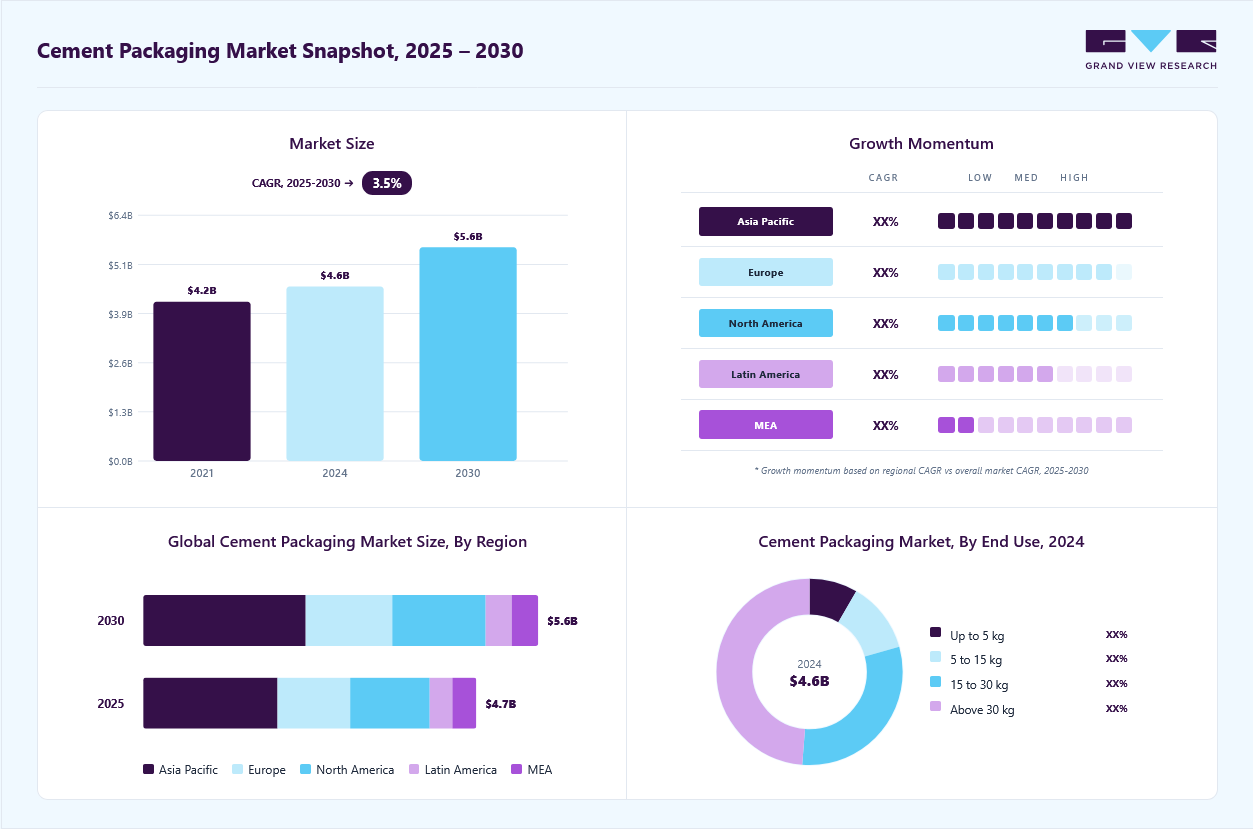
The global cement packaging market size was valued at USD 4.7 billion in 2025 and is projected to grow from USD 4.9 billion in 2026 to USD 6.2 billion by 2033, at a CAGR of 3.4% from 2026 to 2033. The market in Asia Pacific dominated with a revenue share of 40.3% in 2025. The cement packaging industry’s growth is driven by rising infrastructure and construction activities globally.
 Source: Grand View Research, IR Documents, Primary Interviews, Paid DatabasesTo learn more about this report,
 Download Free Sample Report
 Key Market Trends & Insights
- By material: Paper segment held the largest market share of 59.5% in 2025.
- By capacity: Above 30 kg segment held the largest market share of 48.7% in 2025.
Regional Highlights
- Largest regional market: Asia Pacific (40.3% revenue share, 2025)
- By country: China held the largest market share in 2025
Market Size & Forecast
- Market size in 2025: USD 4.7 Billion
- Estimated market size in 2026: USD 4.9 Billion
- Projected market size by 2033: USD 6.2 Billion
- CAGR (2026-2033): 3.4%
Three ways to get this report
Buy it, customize it, or ask a question.Ask an Analyst
A direct answer, usually in 1 working day
- AccessReport author, directly
- Reply timeWithin 1 working day
- No sales callDirect answer only
- FormatEmail reply
- CostFree, no cost
Get the Full Report
What the study covers
- FormatsPDF · Excel · Dashboard
- Timeline2026–2033 annual, 2025 base
- Coverage20+ countries, 5 regions
- Companies10+ key players profiled
Customize the Report
20% free customization
- IncludeCountries, segments, points
- TailorTo your product definition
- ExtendDeeper competitor detail
- OrA fully bespoke study
- Turnaround5–10 working days
Environmental regulations and sustainability trends are also reshaping the market. Governments and international organizations are encouraging the adoption of eco-friendly packaging materials to reduce plastic waste and carbon emissions. This has prompted manufacturers to invest in recyclable and biodegradable packaging alternatives, such as paper sacks with biodegradable liners instead of traditional plastic bags.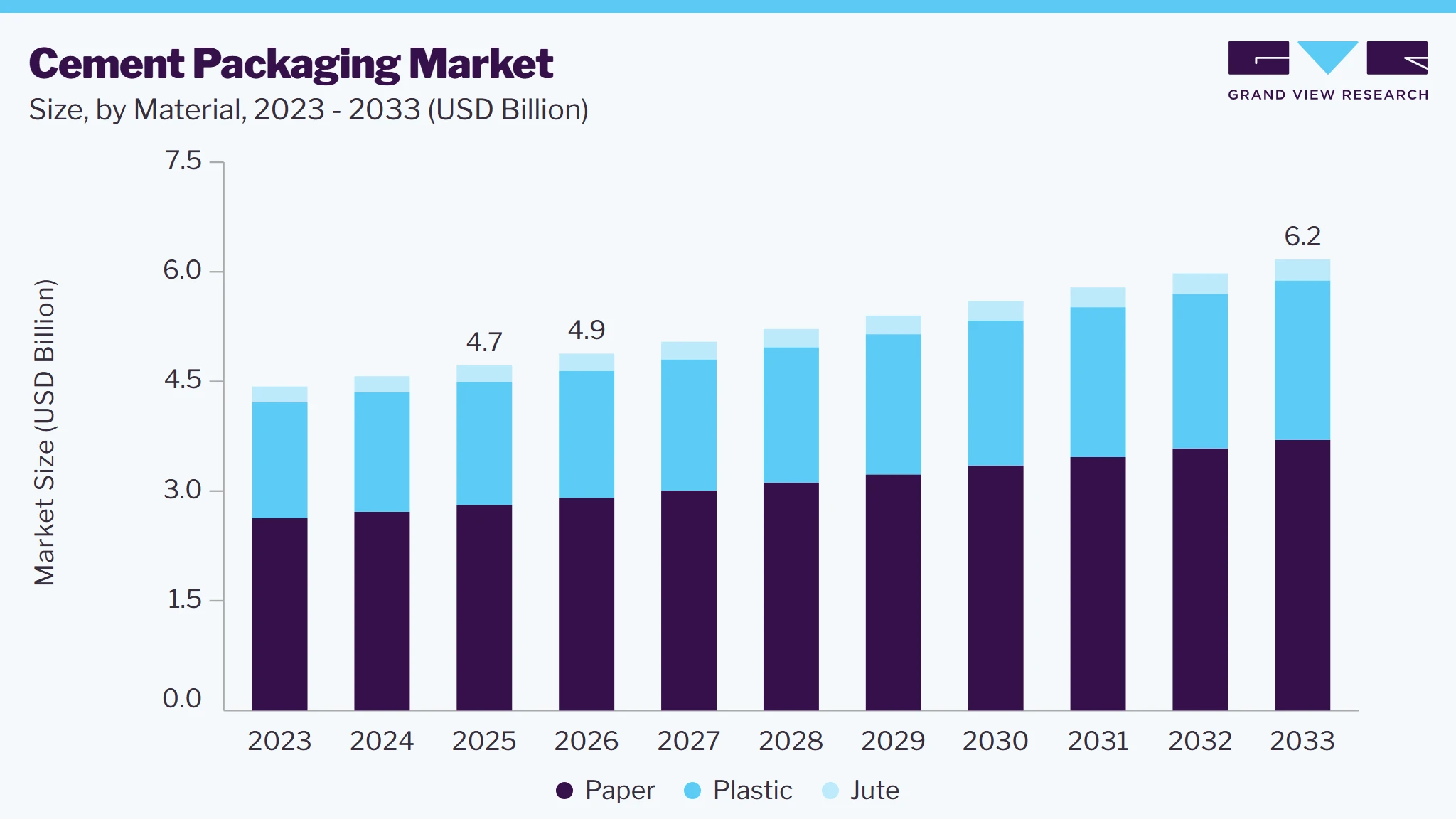 To learn more about this report, Download Free Sample Report
 Rapid urbanization, especially in emerging economies such as India, China, and several African nations, is significantly increasing demand for cement. As cement is a bulk material that requires robust packaging to prevent leakage, moisture damage, and material loss during transport and storage, the rise in infrastructure projects translates directly to increased demand for reliable and efficient cement packaging solutions. For example, India’s “Smart Cities Mission” and China’s Belt and Road Initiative are large-scale programs that contribute to substantial cement consumption, thus boosting the packaging sector.
Another major driver is technological innovation in packaging design and materials. Advances such as valve bags and form-fill-seal packaging systems improve filling efficiency, reduce waste, and enhance product protection. These innovations are especially attractive to cement producers looking to streamline operations and reduce costs. For instance, valve bags allow for faster filling without the need for sealing, which lowers production line downtime. Such efficiency gains are vital in high-output markets where speed and consistency are essential.
Moreover, the rise of branded and retail cement offerings is shaping the packaging market. As cement companies compete for market share in both B2B and retail segments, packaging is becoming a key differentiator. High-quality, visually appealing, and durable packaging helps manufacturers build brand recognition and consumer trust, particularly in countries where consumers are beginning to buy bagged cement directly from hardware stores or online platforms. This trend fuels demand for better-printed and structurally sound packaging, pushing manufacturers to invest in aesthetic and functional enhancements.
Market Dynamics
The cement packaging market is experiencing steady growth, supported by increasing construction activities, infrastructure investments, and rapid urbanization worldwide. Rising demand for durable, moisture-resistant, and cost-effective packaging solutions is driving the adoption of advanced packaging materials and formats that improve product protection and handling efficiency. Sustainability initiatives are also encouraging the use of recyclable and eco-friendly packaging materials. However, fluctuations in raw material costs and evolving environmental regulations may pose challenges to market growth.
The primary driver of the cement packaging market is the continuous growth of construction and infrastructure development activities across residential, commercial, and industrial sectors. Rapid urbanization, population growth, and increasing government investments in transportation networks, housing projects, smart cities, and public infrastructure are significantly boosting cement consumption worldwide. As cement remains a fundamental construction material, higher production and distribution volumes directly increase the demand for reliable packaging solutions that ensure safe storage, handling, and transportation.
The expansion of construction activities in emerging economies, coupled with renovation and modernization projects in developed regions, is further creating sustained demand for cement packaging products. Manufacturers are increasingly adopting durable and moisture-resistant packaging formats to protect cement quality throughout the supply chain and reduce product losses. The growing movement of cement through retail, wholesale, and export channels is further strengthening the need for efficient packaging solutions, making construction and infrastructure development the most significant growth driver for the cement packaging market.
A significant restraint for the cement packaging market is the volatility in raw material prices, particularly for paper, plastic resins, and other packaging materials. Price fluctuations driven by supply chain disruptions, changes in energy costs, and variations in raw material availability can increase production expenses for packaging manufacturers. These rising costs often reduce profit margins and may lead to higher packaging prices for cement producers. Moreover, the challenge of balancing cost efficiency with performance and sustainability requirements can limit the adoption of advanced packaging solutions, thereby restraining overall market growth.
The increasing focus on sustainability and environmental responsibility is creating significant opportunities in the cement packaging market. Governments, construction companies, and consumers are placing greater emphasis on reducing packaging waste and improving recyclability, encouraging manufacturers to develop eco-friendly packaging solutions. The adoption of recyclable paper bags, biodegradable materials, and packaging with reduced material consumption is gaining momentum across the industry. As cement producers seek to align with sustainability goals and regulatory requirements, demand for innovative and environmentally friendly packaging solutions is expected to create new growth opportunities for market participants.
Market Concentration & Characteristics
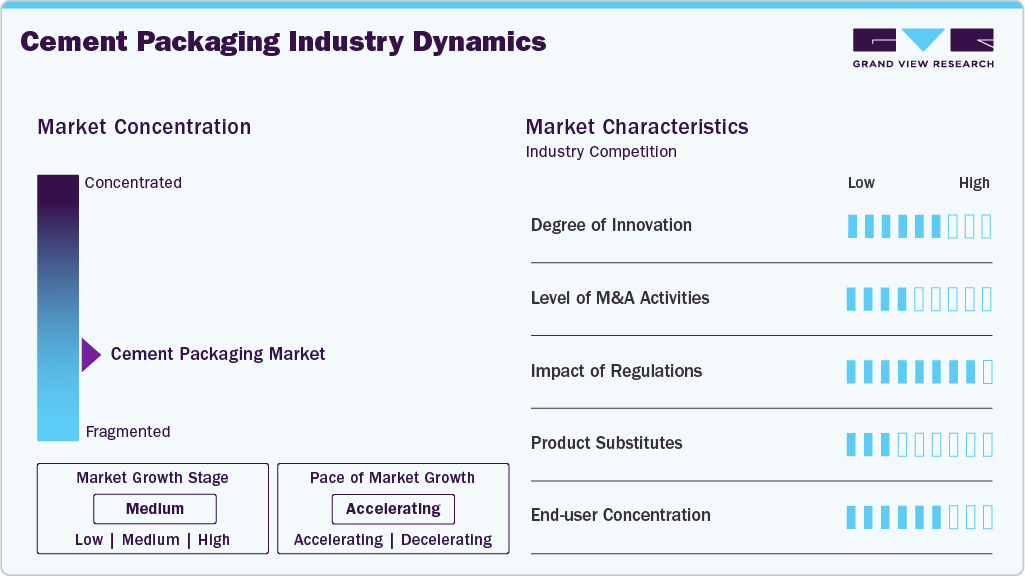
The cement packaging industry is capital-intensive, especially for large-scale manufacturers that invest in automated filling lines, high-strength paper sack production, and printing technologies. It is also a volume-driven business where profitability depends on economies of scale. Margins are typically thin, making operational efficiency and raw material cost management critical. The demand is largely B2B, tied closely to the cement industry's output and distribution model.
Environmental regulations are becoming a defining characteristic of the industry. Governments and global buyers are pushing for recyclable, compostable, or lower-carbon packaging. This shift is driving investments in sustainable materials, creating both challenges and opportunities. For example, in the EU and parts of Asia, legislation around single-use plastics and Extended Producer Responsibility (EPR) is influencing the shift toward paper-based or hybrid sacks.
 To learn more about this report, Download Free Sample Report
 In July, UltraTech Cement Limited, India’s largest cement and ready-mix concrete company, developed innovative eco-friendly cement packaging bags made with 50% recycled polypropylene (rPP), significantly reducing the use of virgin plastic by 43% per bag. The recycled polymer bags are part of UltraTech’s broader commitment to the circular economy and sustainability, complementing its efforts in using industrial and municipal waste in cement manufacturing.
Analyst Perspective
The cement packaging market is expected to witness steady growth, driven by increasing construction activities, infrastructure investments, and urbanization worldwide. Rising cement consumption is boosting demand for durable, moisture-resistant, and cost-effective packaging solutions that ensure safe storage and transportation. The growing focus on sustainability is also encouraging the adoption of recyclable and eco-friendly packaging materials. Companies offering innovative, high-strength, and sustainable packaging solutions are expected to gain a competitive advantage in the years ahead.
Material Insights
Based on material, the paper segment led the market with the largest revenue share of 59.5% in 2025 and is projected to grow at the fastest CAGR of 3.5% during the forecast period. Paper cement bags, traditionally made from kraft paper, are widely used due to their biodegradability and eco-friendly profile. These bags are usually multi-walled and may include a plastic liner or coating to offer limited moisture protection. The growth of the paper cement packaging segment is driven by increasing environmental awareness, regulatory pressure to reduce plastic usage, and consumer preference for sustainable packaging. Furthermore, the growing green construction movement is promoting environmentally responsible packaging practices, favoring paper over synthetic alternatives.
Plastic cement packaging, particularly in the form of polyethylene (PE) and polypropylene (PP) bags, has gained widespread usage due to its superior durability, resistance to moisture, and ability to withstand rough handling during transportation. These bags often come as valve bags or form-fill-seal (FFS) bags. They can be multilayered to further enhance protection against external elements such as humidity, which can compromise cement quality. The demand for plastic cement packaging is primarily driven by its moisture barrier properties, cost-effectiveness in bulk production, and longer shelf life for cement products.
Capacity Insights
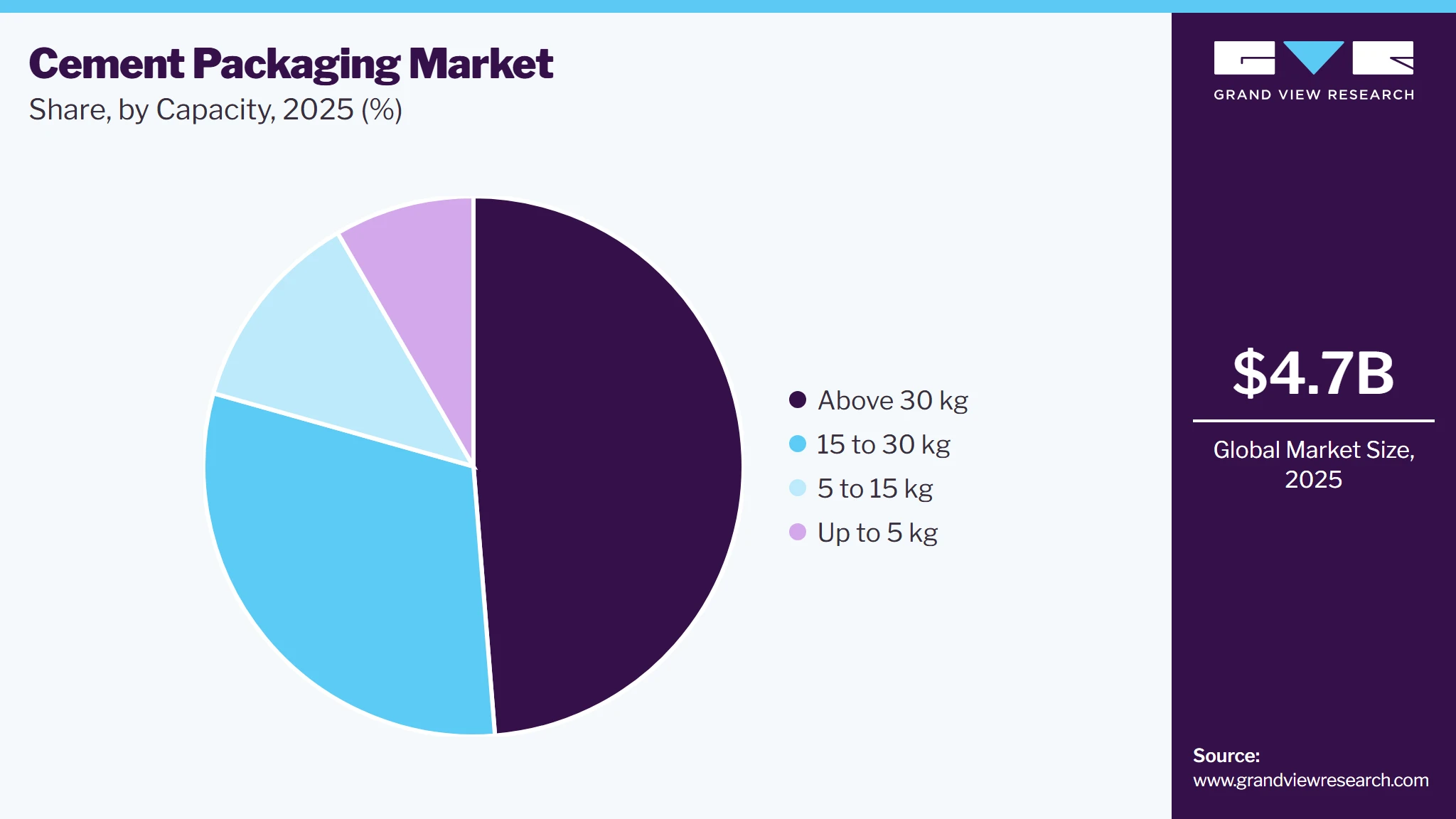
Based on capacity, the above 30 kg segment led the market with the largest revenue share of 48.7% in 2025. This segment includes bulk packaging, such as jumbo bags or large sacks, often used in industrial or commercial projects and supplied directly to construction sites. The primary driver is the growth in large-scale infrastructure projects, including highways, airports, ports, and industrial zones. Moreover, the rise in ready-mix concrete plants and mega-construction activities in emerging markets further propels demand in this category.
 To learn more about this report, Download Free Sample Report
 15 to 30 kg is the most common capacity type in the cement packaging market and is widely used by contractors and builders for mainstream construction activities. Bags in this category offer an optimal trade-off between portability and volume and are suitable for manual handling and storage on construction sites. Infrastructure development, urban housing expansion, and large-scale real estate projects are the primary drivers.
Regional Insights
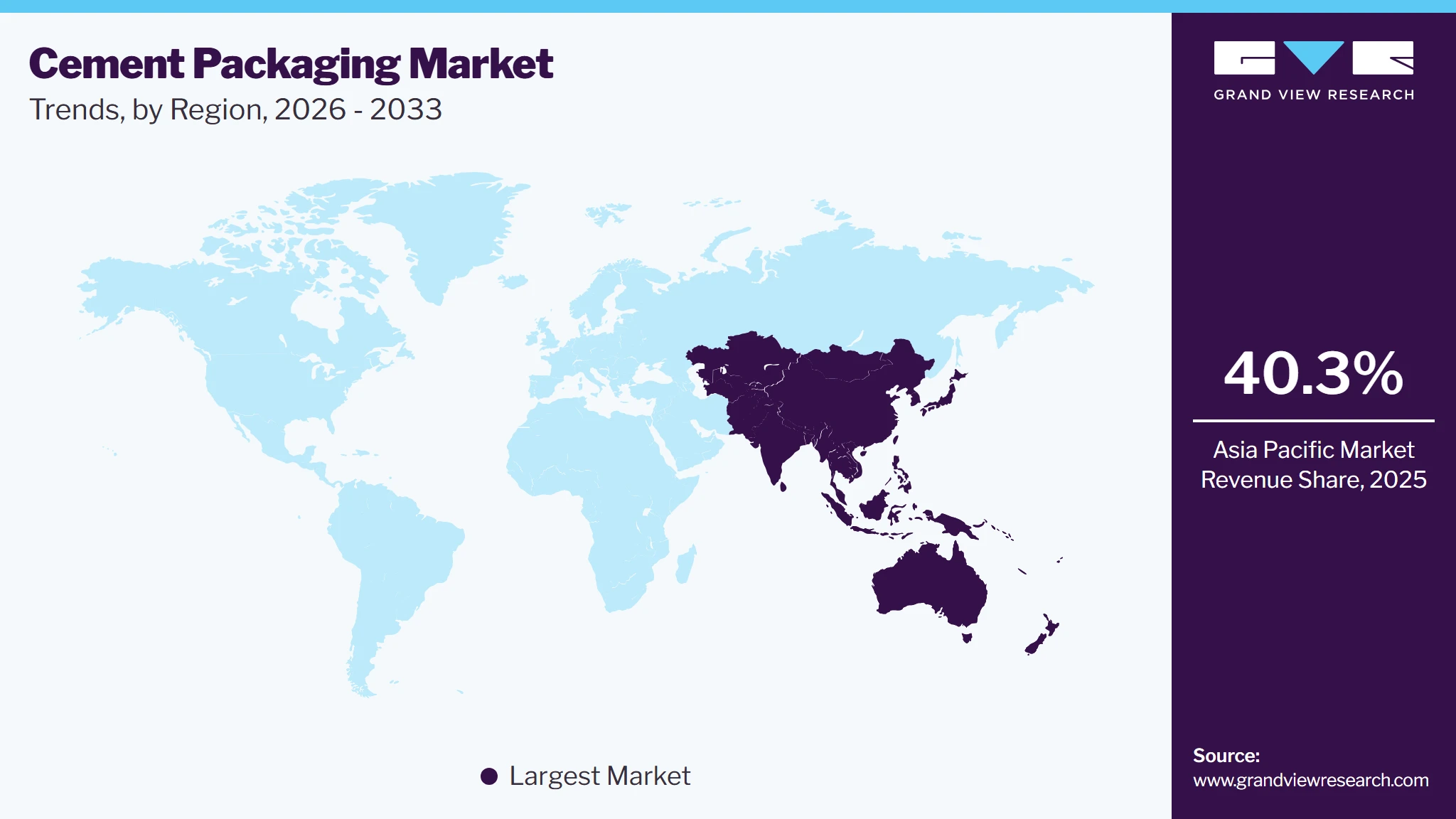
Asia Pacific dominated the cement packaging market with the largest revenue share of 40.3% in 2025 and is anticipated to grow at the fastest CAGR of 3.8% during the forecast period. The region dominates the global market due to rapid urbanization, infrastructure development, and increasing construction activities. Countries such as China, India, and Indonesia are witnessing massive investments in residential, commercial, and industrial projects, boosting demand for cement and, consequently, cement packaging.
 To learn more about this report, Download Free Sample Report
 China Cement Packaging Market Trends
The cement packaging market in China held the largest share in the North America region in 2025. China’s demand for cement packaging is primarily supported by its large-scale cement production and continued consumption across infrastructure, industrial construction, urban development, and renovation activities. Although the country’s residential construction sector has experienced a slowdown, substantial investment in transportation infrastructure, utilities, water-management projects, industrial facilities, and urban renewal continues to generate demand for cement. The widespread presence of smaller construction sites, contractors, distributors, and retail channels also sustains the requirement for bagged cement, particularly where bulk handling is less practical. As cement moves through increasingly extensive distribution networks, packaging plays an important role in protecting the product from moisture, leakage, contamination, and handling-related damage, thereby maintaining demand for durable and reliable cement bags.
For example, India’s Smart Cities Mission and China’s Belt and Road Initiative (BRI) have spurred large-scale construction, requiring durable and efficient packaging solutions such as woven polypropylene (PP) bags and paper bags. Furthermore, government initiatives promoting affordable housing, such as India’s Pradhan Mantri Awas Yojana (PMAY), further drive cement consumption, reinforcing the need for efficient packaging.
North America Cement Packaging Market Trends
North America’s cement packaging industry is driven by robust infrastructure spending, renovation projects, and a shift toward sustainable packaging solutions. The U.S. and Canada are investing heavily in road construction, bridges, and green buildings, increasing cement demand. For instance, the U.S. Infrastructure Investment and Jobs Act (2021) allocates billions for construction, directly impacting cement packaging needs. Manufacturers are focusing on high-strength woven polypropylene bags and FIBCs (bulk bags) to meet large-scale industrial requirements.
Europe Cement Packaging Market Trends
Europe’s cement packaging industry is influenced by stringent environmental policies, high construction standards, and a focus on circular economy principles. The European Union’s Green Deal and CE marking regulations mandate sustainable packaging, leading to increased use of kraft paper bags and recyclable plastics. Countries such as Germany, France, and the UK are major contributors due to their well-established construction sectors and emphasis on energy-efficient buildings.
Key Cement Packaging Company Insights
The competitive environment of the cement packaging industry is characterized by intense rivalry among both global and regional players. Key players compete on the basis of innovation, material strength, moisture resistance, and eco-friendliness, with a growing shift towards sustainable paper sacks and recyclable plastic options. The market is also influenced by backward integration strategies of cement manufacturers, regulatory standards promoting environmental safety, and rising demand from developing economies. Technological advancements in valve sack designs and automated filling systems further intensify competition by enabling operational efficiency and reduced wastage.
-
In June 2024, Mondi, in partnership with Cemex, launched its innovative SolmixBag, a water-soluble, single-ply kraft paper cement bag, across the Balearic Islands of Ibiza, Mallorca, and Menorca. Designed to meet strict local regulations on landfilling and waste incineration, as well as to support Cemex’s sustainability goals, the SolmixBag completely dissolves during the cement mixing process, eliminating packaging waste and dust at construction sites.
-
In January 2024, Heidelberg Materials North America announced the launch of redesigned bags for its packaged cement products, reflecting the company’s recent rebranding and the introduction of a new logo that symbolizes both technical strength and future growth. These new bags highlight the company’s commitment to environmental sustainability, long-term growth, and high product performance, aligning with the values represented in the new logo.
Key Cement Packaging Companies:
The following key companies have been profiled for this study on the cement packaging market.
-
Mondi
-
Smurfit Westrock
-
Stora Enso
-
Billerud
-
UltraTech
-
NNZ Inc.
-
ARODO BV
-
FORMOSA SYNTHETICS PVT. LTD.
-
Shalimar Group
-
Umasree Texplast Pvt. Ltd.
-
R. G. Plasto-packs Pvt. Ltd.
-
Dhuleva Industries
-
Knack Polymers
-
Yiyang Wanlin Weave Packing Co., Ltd.
Competitive Benchmarking
Category
Operating Strategies
Competitive Edge
Weakness
Established Players (Mondi, Smurfit Westrock, Stora Enso, Billerud, UltraTech, NNZ Inc., ARODO BV)
- Focus on large-scale production, integrated supply chains, and global distribution networks to ensure cost efficiency and consistent product availability.
- Invest in sustainable packaging materials, advanced manufacturing technologies, and product innovation to meet evolving customer and regulatory requirements.
- Strong brand recognition, extensive customer relationships, and established market presence enable long-term contracts with major cement manufacturers.
- Significant financial resources and R&D capabilities support continuous innovation, capacity expansion, and geographic diversification.
- Large operational structures can reduce flexibility and slow response times to changing market demands or niche customer requirements.
- High capital investments and operating costs increase exposure to fluctuations in raw material prices and economic downturns.
Emerging Players (FORMOSA SYNTHETICS PVT. LTD., Shalimar Group, Umasree Texplast Pvt. Ltd., R. G. Plasto-packs Pvt. Ltd., Dhuleva Industries, Knack Polymers, Yiyang Wanlin Weave Packing Co., Ltd.)
- Concentrate on regional markets and customized packaging solutions to address specific customer needs and build market presence.
- Compete through cost-effective manufacturing, flexible production capabilities, and targeted expansion into underserved markets.
- Greater operational agility enables quicker adaptation to customer specifications, local market trends, and changing demand patterns.
- Lower organizational complexity allows competitive pricing and faster decision-making compared to larger competitors.
- Limited financial resources and production capacities can restrict large-scale expansion and technology investments.
- Lower brand visibility and narrower distribution networks may hinder access to multinational cement producers and large-volume contracts.
Cement Packaging Market Report Scope
Report Attribute
Details
Market size in 2025
USD 4.7 billion
Estimated market size in 2026
USD 4.9 billion
Projected market size by 2033
USD 6.2 billion
Growth rate
CAGR of 3.4% from 2026 to 2033
Base year for estimation
2025
Historical data
2021 - 2024
Forecast period
2026 - 2033
Quantitative units
Revenue in USD million/billion and CAGR from 2026 to 2033
Report coverage
Revenue forecast, company ranking, competitive landscape, growth factors, and trends
Segments covered
Material, capacity, region
Regional scope
North America; Europe; Asia Pacific; Latin America; MEA
Country scope
U.S.; Canada; Mexico; Germany; UK; France; Italy; Spain; China; Japan; India; South Korea; Australia; Brazil; Argentina; Saudi Arabia; South Africa; UAE
Key companies profiled
Mondi; Smurfit Westrock; Stora Enso; Billerud; UltraTech; NNZ Inc.; ARODO BV; FORMOSA SYNTHETICS PVT. LTD.; Shalimar Group; Umasree Texplast Pvt. Ltd.; R. G. Plasto-packs Pvt. Ltd.; Dhuleva Industries; Knack Polymers; Yiyang Wanlin Weave Packing Co., Ltd.
Customization scope
Free report customization (equivalent up to 8 analysts' working days) with purchase. Addition or alteration to country, regional & segment scope.
Pricing and purchase options
Avail customized purchase options to meet your exact research needs. Explore purchase options
Global Cement Packaging Market Report Segmentation
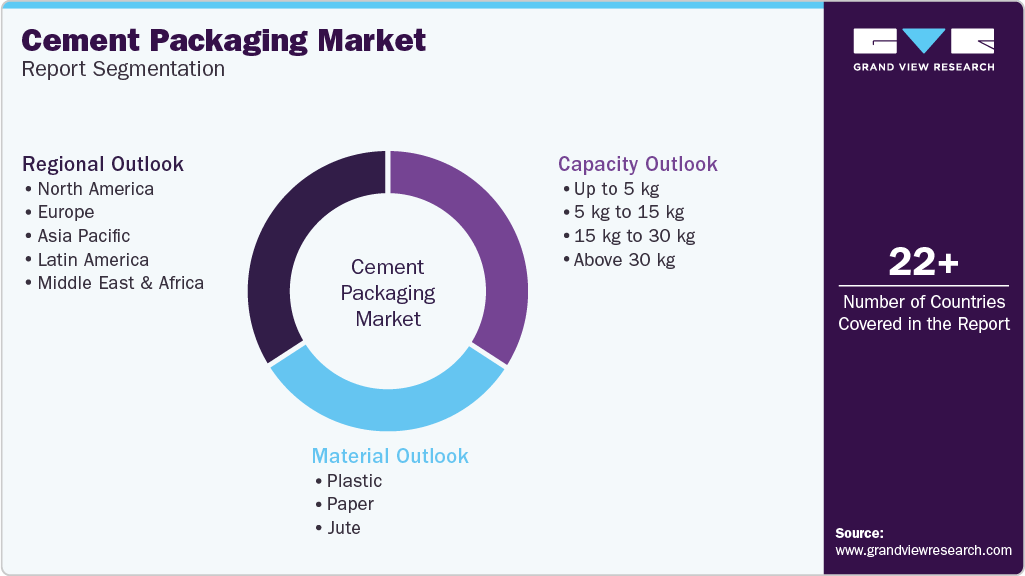
This report forecasts revenue growth at a global level and provides an analysis of the latest industry trends in each of the sub-segments from 2021 to 2033. For this study, Grand View Research has segmented the global cement packaging market report based on material, capacity, and region:
 To learn more about this report, Download Free Sample Report
 -
Material Outlook (Revenue, USD Million, 2021 - 2033)
-
Plastic
-
Paper
-
Jute
-
-
Capacity Outlook (Revenue, USD Million, 2021 - 2033)
-
Up to 5 kg
-
5 kg to 15 kg
-
15 kg to 30 kg
-
Above 30 kg
-
-
Regional Outlook (Revenue, USD Million, 2021 - 2033)
-
North America
-
U.S.
-
Canada
-
Mexico
-
-
Europe
-
Germany
-
France
-
UK
-
Italy
-
Spain
-
-
Asia Pacific
-
China
-
India
-
Japan
-
South Korea
-
Australia
-
-
Latin America
-
Brazil
-
Argentina
-
-
Middle East & Africa
-
South Africa
-
Saudi Arabia
-
UAE
-
-
Research Methodology
The cement packaging market figures in this report are based on a proven research process that combines executive interviews with secondary research from proprietary databases, company filings, and recognized regulatory and institutional sources. Market size is built through value-chain sizing - reconciling supply-side and demand-side estimates - and triangulated with bottom-up and top-down approaches. Every estimate passes multiple levels of expert validation before publication, with each cement packaging segment quantified using the revenue-capture definitions in the table below.
Segment Definition
Segment - Material
Revenue capture definition
Plastic
Revenue generated from the sale of cement packaging products manufactured using plastic materials such as polypropylene (PP), polyethylene (PE), and woven plastic fabrics. This segment includes sacks and bags designed to provide high durability, moisture resistance, and efficient handling during cement storage, transportation, and distribution.
Paper
Revenue generated from the sale of paper-based cement packaging solutions, including multi-wall paper sacks and kraft paper bags. This segment includes packaging products used to protect cement from contamination while supporting sustainability objectives through recyclable and environmentally friendly materials.
Jute
Revenue generated from the sale of cement packaging products made from natural jute fibers. This segment includes woven jute bags used for cement handling and transportation, particularly in applications where biodegradable, reusable, and eco-friendly packaging solutions are preferred.
Segment - Capacity
Revenue capture definition
Up to 5 kg
Revenue generated from the sale of cement packaging solutions with a capacity of up to 5 kg. This segment includes small-format bags primarily used for retail sales, home improvement projects, repair work, and DIY construction applications.
5 to 15 kg
Revenue generated from the sale of cement packaging solutions with a capacity ranging from 5 kg to 15 kg. This segment includes medium-sized bags designed for small-scale construction, maintenance activities, and specialty cement products requiring convenient handling and storage.
15 to 30 kg
Revenue generated from the sale of cement packaging solutions with a capacity ranging from 15 kg to 30 kg. This segment includes standard cement bags widely used across residential, commercial, and infrastructure construction projects for efficient transportation and application.
Above 30 kg
Revenue generated from the sale of cement packaging solutions with a capacity exceeding 30 kg. This segment includes heavy-duty bags and bulk packaging formats used for large-scale construction, industrial projects, and commercial distribution channels where higher-volume cement handling is required.
Estimation Model
Layer Name
Key Question
Description
Cement Consumption Base Layer
What forms the demand base for cement packaging?
Identify global cement production and consumption volumes across residential, commercial, industrial, and infrastructure construction activities. Assess demand generated by ready-mix concrete, precast products, renovation projects, and retail cement sales. This layer establishes the total addressable cement volume that requires packaging for storage, transportation, and distribution.
Packaging Penetration Layer
Where is cement packaging utilized?
Estimate the proportion of cement distributed through packaged formats versus bulk cement across regions and end-use sectors. Analyze the adoption of paper, plastic, and jute packaging materials, along with usage across different bag capacities. Assess packaging penetration in retail construction markets, small-scale projects, and regions with limited bulk handling infrastructure.
Packaging Volume Intensity Layer
How much packaging volume is required?
Evaluate the number of cement bags consumed based on cement production volumes, packaging formats, bag capacities, and replacement rates. Analyze factors such as transportation requirements, storage conditions, handling efficiency, product protection needs, and regional distribution practices. Packaging intensity is influenced by construction activity levels, logistics networks, and packaging material preferences.
Revenue Layer
How is market revenue generated?
Market revenue is quantified through the production and sale of cement packaging solutions, including paper sacks, plastic bags, and jute bags. Revenue is generated from demand across cement manufacturers, construction material suppliers, distributors, and retail channels. Additional value is created through customized printing, enhanced barrier properties, durability improvements, and sustainable packaging innovations.
Delivered Customizations
This report has been delivered with the following In-depth customizations
Client Request
Customization Delivered
Value Adds
Regional Segmentation Analysis
Provided detailed market size, growth forecasts, demand patterns, and packaging consumption analysis across North America, Europe, Asia Pacific, Central & South America, and Middle East & Africa. Country-level insights were included for major cement-producing and consuming markets within each region.
Enabled identification of high-growth regional markets, demand concentration areas, and region-specific packaging requirements to support expansion and investment decisions.
Cross-Segmentation Analysis
Delivered detailed analysis across Material (Plastic, Paper, Jute) and End Use (Up to 5 kg, 5 to 15 kg, 15 to 30 kg, Above 30 kg). Assessed market size, growth trends, demand contribution, and adoption patterns for each segment combination.
Helped identify the most attractive product categories, high-growth volume segments, and emerging opportunities for portfolio optimization and product development.
Competitive Benchmarking
Conducted benchmarking of key cement packaging manufacturers based on product offerings, material expertise, production capacity, regional presence, sustainability initiatives, pricing strategies, and strategic developments.
Provided actionable insights into competitor positioning, market share opportunities, performance gaps, and competitive differentiation strategies.
Frequently Asked Questions About This Report
The paper segment led the cement packaging market with a 59.5% revenue share in 2025.
The above 30 kg segment led the cement packaging market with a 48.7% revenue share in 2025.
Up to 5 kg is the fastest-growing end use segment in the cement packaging market with a CAGR of 3.9% over the forecast period.
Key players in the cement packaging market include Mondi; Smurfit Westrock; Stora Enso; Billerud; UltraTech; NNZ Inc.; ARODO BV; FORMOSA SYNTHETICS PVT. LTD.; Shalimar Group; Umasree Texplast Pvt. Ltd.; R. G. Plasto-packs Pvt. Ltd.; Dhuleva Industries; Knack Polymers; Yiyang Wanlin Weave Packing Co., Ltd.
The global cement packaging market size was valued at USD 4.7 billion in 2025 and is estimated at USD 4.9 billion for 2026.
The global cement packaging market is expected to grow at a CAGR of 3.4% from 2026 to 2033, reaching USD 6.2 billion by 2033.
Asia Pacific dominated the cement packaging market with a 40.3% revenue share in 2025.
Asia Pacific is the fastest-growing region in the cement packaging market with a CAGR of 3.8% over the forecast period.
Key factors driving the cement packaging market include rising construction and infrastructure activities, growing cement consumption, rapid urbanization, and increasing demand for durable, moisture-resistant packaging. The adoption of sustainable packaging materials and advancements in packaging technology are further supporting market growth.
About the Author(s)
Plastics, Polymers & Resins Research Team
Bulk Chemicals · Plastics, Polymers & ResinsThis report was authored by the plastics, polymers & resins research team at Grand View Research - comprising two research analysts, one senior research analyst, and one industry expert - with specialized expertise in the plastics, polymers & resins segment of the bulk chemicals industry. All findings are based on proprietary bulk chemicals databases, executive interviews, and regulatory analysis, subject to internal peer review prior to publication.
Last Updated:
Speak to Analyst

Customize this report to your needs - add regions, segments, or data points, with 20% free customization.
Or view our licence options:


ISO 9001:2015 & 27001:2022 Certified
We are GDPR and CCPA compliant! Your transaction & personal information is safe and secure. For more details, please read our privacy policy.


