
- Home
- »
- Medical Devices
- »
-
China Small Molecule CDMO Market Size Report, 2026 - 2033GVR Report cover

China Small Molecule CDMO Market (2026 - 2033) Size, Share & Trends Analysis Report By Product (Active Pharmaceutical Ingredients (API), Finished Drug Products), By Drug (Innovators, Generics), By Application (Cardiovascular Disease), and Segment Forecasts
Market Size, 2025
$4.6BMarket Estimate, 2026
$5.0BMarket Forecast, 2033
$9.4BCAGR, 2026–2033
9.6%China Small Molecule CDMO Market Summary
The China small molecule CDMO market size was valued at USD 4.6 billion in 2025 and is projected to grow from USD 5.0 billion in 2026 to USD 9.4 billion by 2033, at a CAGR of 9.6% from 2026 to 2033. The market growth is driven by rising drug discovery efforts in fields like oncology, cardiovascular, and the central nervous system, which has led many pharmaceutical companies to turn to outsourcing.
Key Market Trends & Insights
- Based on product, the active pharmaceutical ingredients (API) segment held the largest market share of 62.0% in 2025.
- By drug, the innovators segment held the largest market share in 2025.
- Based on application, the oncology segment held the largest market share in 2025.
Market Size & Forecast
- 2025 Market Size: USD 4.6 Billion
- 2033 Projected Market Size: USD 9.4 Billion
- CAGR (2026-2033): 9.6%
Three ways to get this report
Buy it, customize it, or ask a question.Ask an Analyst
A direct answer, usually in 1 working day
- AccessReport author, directly
- Reply timeWithin 1 working day
- No sales callDirect answer only
- FormatEmail reply
- CostFree, no cost
Get the Full Report
What the study covers
- FormatsPDF · Excel · Dashboard
- Timeline2026–2033 annual, 2025 base
- Coverage20+ countries, 5 regions
- Companies10+ key players profiled
Customize the Report
20% free customization
- IncludeCountries, segments, points
- TailorTo your product definition
- ExtendDeeper competitor detail
- OrA fully bespoke study
- Turnaround5–10 working days
Besides, the small-molecule CDMOs in China are characterized by favorable cost structures, a skilled workforce, and a growing range of domestic projects, making them an appealing partner for both local and international companies. In addition, the market's expansion is driven by rising demand for generics and innovative small-molecule therapies, further fueling the trend toward integrated, end-to-end development and manufacturing solutions.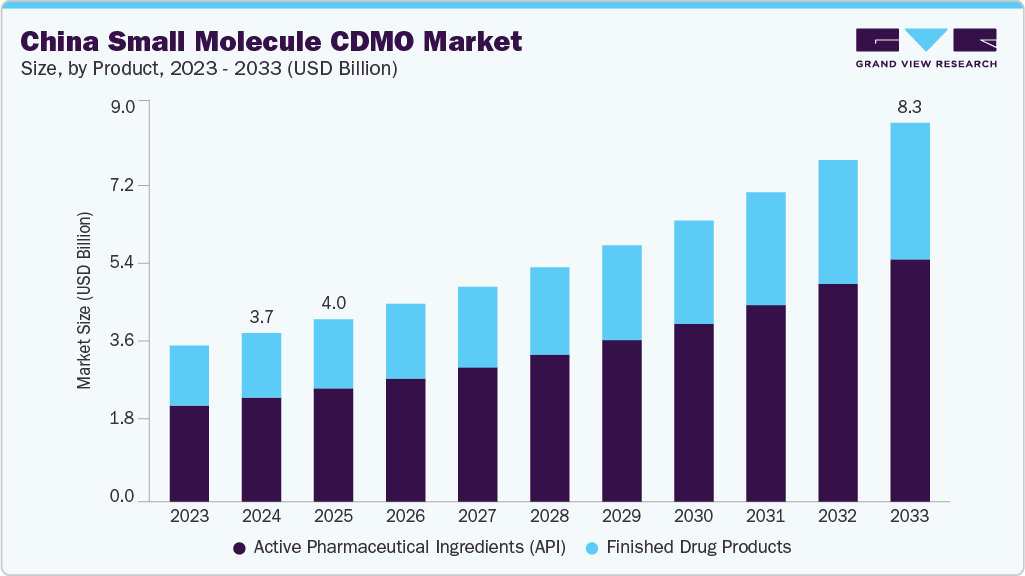 Source: Grand View Research, IR Documents, Primary Interviews, Paid DatabasesTo learn more about this report,
 Download Free Sample Report
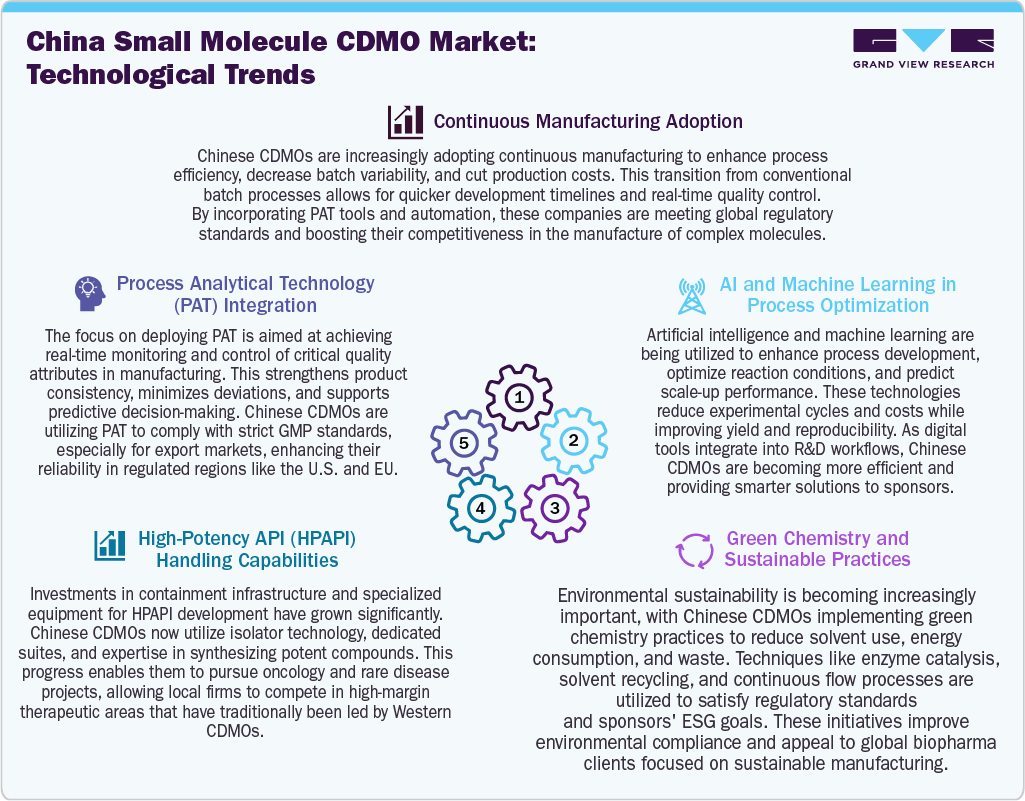
 In addition, technological advancements in the market have played a crucial role in enhancing the capabilities of China's CDMO sector, further supporting market growth. Besides, innovations such as process optimization, real-time monitoring via Process Analytical Technology (PAT), and machine learning applications for predictive analytics are increasingly prioritized to improve efficiency and product quality. Moreover, the integration of continuous manufacturing technologies and advanced synthetic chemistry further supports the development of high-potency and complex molecules. This technological advancement has further supported the Chinese CDMOs to compete more effectively in the global arena, particularly for early-phase and high-value niche projects.
Furthermore, increased investments are being made to drive small molecule CDMO capabilities, supported by government initiatives like "Made in China 2025," which has fueled the Chinese small molecule CDMO facilities in key locations such as Shanghai, Suzhou, and Hangzhou. These investments are enhanced by venture capital and international collaborations. Numerous partnerships and licensing agreements between multinational pharmaceutical companies and local biotechs are reinforcing the domestic CDMO pipeline. Moreover, upgrades to facilities to comply with Good Manufacturing Practices (GMP) and strategic acquisitions are also underway to improve global competitiveness.
Moreover, China's regulatory environment is evolving to meet international standards, with the National Medical Products Administration (NMPA) streamlining the approval process for innovative drugs and implementing policies to protect intellectual property and ensure data exclusivity. However, increased regulatory scrutiny, including routine inspections and quality audits, especially for facilities exporting to the U.S. and Europe, highlights ongoing challenges in the market. Besides, external geopolitical factors, such as potential foreign policy restrictions, have led to increased caution in engaging with Chinese CDMOs from global stakeholders. Such factors are expected to drive the market growth during the forecast period.
Impact of U.S. Tariffs on the China Small Molecule CDMO Market
Higher U.S. tariffs on active pharmaceutical ingredients, specialty chemicals, and Chinese pharmaceutical intermediates created supply chain and pricing pressures throughout the small-molecule CDMO industry. The rising export-related uncertainty has affected several Chinese CDMOs involved in early-stage synthesis, API manufacturing, and commercial small molecule production, especially for products sold to pharmaceutical customers in North America. Additionally, a number of international pharmaceutical companies have been prompted by tariff-related trade possibilities to re-evaluate the risks associated with sourcing concentration and implement multi-region outsourcing strategies for key small molecule programs. Due to their limited global diversification and increased reliance on the U.S. contract volumes, smaller export-oriented CDMOs have been more severely impacted by this situation.
In addition, to lower their tariff exposure for commercial supply, some global pharmaceutical corporations have shifted a part of their late-stage manufacturing operations to Singapore, India, and a few European sites. Nonetheless, China's cost-effective production capabilities, large-scale API manufacture, and high competitiveness in process chemistry continue to highlight the country's ongoing outsourcing demand from both local and foreign sponsors. As a result, the tariff environment has sped up efforts to diversify the supply chain while encouraging Chinese CDMOs to strengthen their capacity for innovation, expand regionally, and pursue long-term collaborations with non-U.S. pharmaceutical companies.
Technological Advancements
China’s small molecule CDMO market is undergoing a transformation driven by key technological advancements that are enhancing competitiveness and regulatory alignment. Continuous manufacturing is being adopted to streamline production, reduce cycle times, and ensure consistent product quality. This transition from batch to continuous processing is enabling faster scale-up and greater cost efficiency. Moreover, the integration of Process Analytical Technology (PAT) enables real-time monitoring of critical process parameters, ensuring greater process control and regulatory compliance.
 To learn more about this report, Download Free Sample Report
 Besides, significant investments have been made in high-potency API (HPAPI) handling capabilities, including specialized containment facilities and expertise in potent compound synthesis, positioning Chinese CDMOs to support oncology and niche therapeutics. Furthermore, artificial intelligence and machine learning are leveraged for process optimization, predictive analytics, and formulation modeling, enabling faster, more reliable development cycles. Besides, complementing these advancements, a growing emphasis on green chemistry and sustainable practices is driving the adoption of environmentally responsible techniques, including solvent recycling and biocatalysis. Thus, these innovations are expected to drive China’s small molecule CDMO market.
Pricing Model Analysis
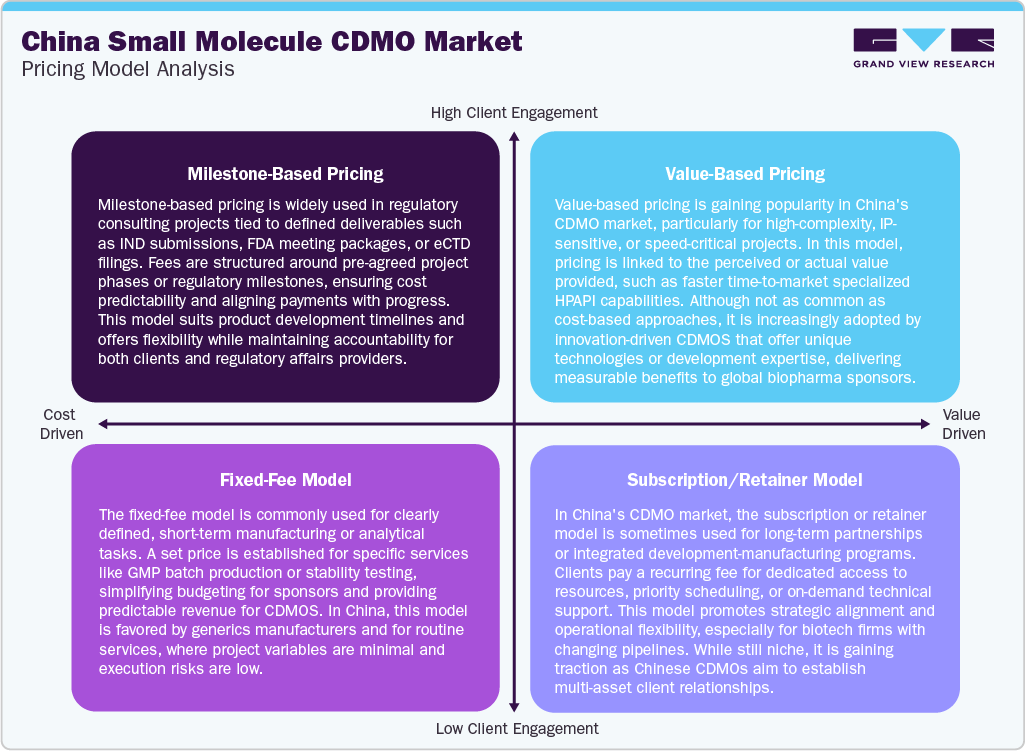
China’s small-molecule CDMO market is driven by a range of pricing models that meet diverse sponsor needs. Milestone-based pricing is widely used for development projects, in which payments are tied to key deliverables, such as process development, clinical batch completion, or regulatory submissions. This model supports risk-sharing and offers financial flexibility. Fixed-fee models are commonly applied to routine or well-scoped projects, such as GMP manufacturing or analytical testing, ensuring cost predictability and operational efficiency.
 To learn more about this report, Download Free Sample Report
 Value-based pricing is gradually emerging, particularly for complex or high-value services such as HPAPI development, where fees are linked to outcomes, such as accelerated timelines or technical differentiation. It reflects a shift toward performance-aligned compensation. Moreover, the subscription or retainer model is used in strategic, long-term partnerships where clients pay recurring fees for dedicated capacity, priority access, or continuous support. Also, this model is gaining traction among biotech sponsors seeking integrated, multi-project engagements with Chinese CDMOs.
Market Dynamics
The rise in the number of drug candidates entering the preclinical and clinical stages of development has been a primary driver of the China Small Molecule CDMO market. Chinese pharmaceutical and biotechnology companies have started expanding their research and development pipelines, driven by the growing need for innovation in therapeutics for oncology, cardiovascular disease, infections, and orphan disease indications. For instance, as of March 2026, Wuxi Apptec added 328 new molecules to its small-molecule development and manufacturing pipeline. The small-molecule development and manufacturing pipeline reached 3,550 molecules. This is an increase of 9 projects in phase III and commercial stages in the first quarter of 2026. This upsurge in drug development projects has led to increased outsourcing of services by CDMOs for process development, API manufacturing, analytical testing, and commercial manufacturing. Furthermore, China has emerged as a favored destination for outsourcing services, owing to its affordable manufacturing capabilities, a highly educated scientific workforce, and regulatory compliance with international standards. Similarly, the growing number of indigenous biotechnology startups and foreign investment in China's pharmaceutical industry is also fueling demand for CDMO services for flexible, scalable manufacturing of small molecules. Moreover, the growing complexity of small-molecule synthesis is driving greater demand for chemical expertise and advanced manufacturing facilities, benefiting the CDMO market in China.
The increasing reliance on biologics and advanced therapeutics poses considerable obstacles to the growth prospects of the small-molecule CDMO sector in China. The pharma players' focus is gradually shifting toward biologics, including monoclonal antibodies, cell therapy, gene therapy, and recombinant proteins, owing to their superior target specificity and efficacy in treating complex medical conditions. Furthermore, the rapid expansion of biologics manufacturing facilities in China adds to the competitive pressures on small-molecule CDMOs.
The China small molecule CDMO market is experiencing new growth opportunities driven by rising demand for cost-effective API manufacturing, coupled with the expansion of the country’s innovative drug pipeline. This has established local CDMOs as vital partners for both global and domestic companies. Besides, opportunities are especially in areas such as high-potency APIs (HPAPIs), complex generics, and continuous manufacturing platforms. The alignment of local regulations with ICH guidelines, along with enhanced intellectual property protection, is facilitating access to regulated markets. In addition, government initiatives like “Made in China 2025” and the development of biotech clusters in cities like Suzhou, Shanghai, and Guangzhou are attracting new foreign investment and encouraging joint ventures.
Moreover, the multinational companies are increasingly adopting dual-sourcing strategies, viewing China as a cost-effective site for early-phase or volume-driven production. Furthermore, advancements in automation, digitalization, and green chemistry are opening up new value-added services. As global supply chains evolve, China’s CDMO providers are strategically positioned to broaden their involvement across projects from preclinical stages to commercial production.
Market Concentration & Characteristics
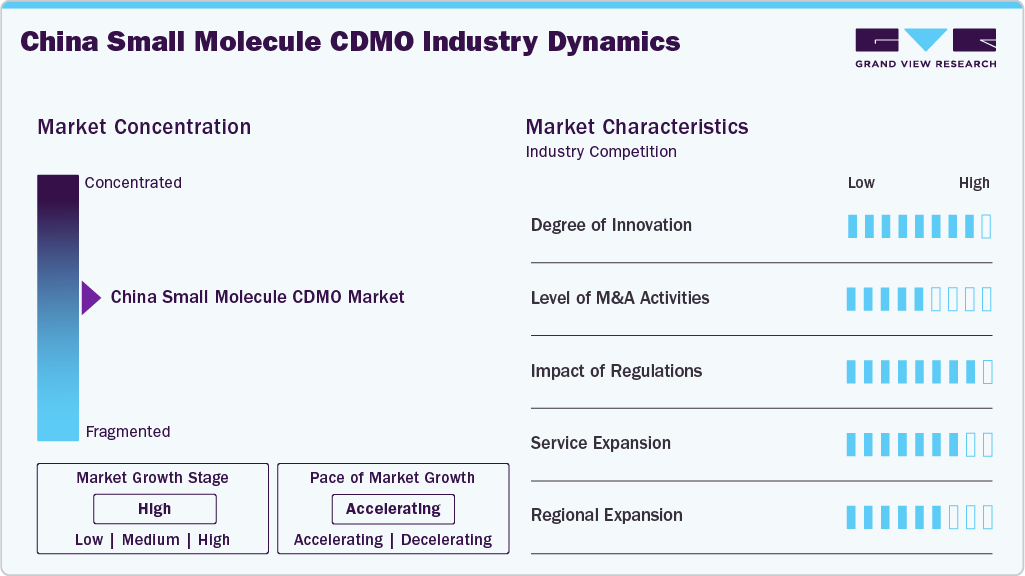
The China small molecule CDMO market is at a high growth stage, with growth accelerating. The market is characterized by the degree of innovation, level of M&A activities, regulatory impact, service expansion, and regional expansion.
The industry is experiencing significant innovation due to advancements in continuous manufacturing, high-potency capabilities, and digitalization. Increased R&D investment and technology transfer from multinational partners are boosting innovation in process development and formulation services.
 To learn more about this report, Download Free Sample Report
 China's regulatory reforms have positively impacted the CDMO market by aligning more closely with ICH standards, speeding up approvals, and strengthening GMP enforcement. However, geopolitical scrutiny and export restrictions have introduced uncertainty for CDMOs catering to U.S. and European pharmaceutical clients.
M&A activity in the Chinese small molecule CDMO sector is on the rise, as local companies acquire niche technology firms and international players enter through joint ventures. These transactions are focused on expanding capacity, diversifying services, and accessing regulated market capabilities.
These CDMOs are broadening their service offerings to include end-to-end solutions like API synthesis, formulation development, analytical services, and clinical supply. The growing demand for HPAPI, controlled substances, and complex generics is driving innovation and specialization throughout the development stages.
The CDMOs are actively expanding regionally by developing facilities in Asia, the EU, and the U.S. markets. This approach enhances global compliance, mitigates geopolitical risk, and improves their capacity to serve multinational clients looking for localized or dual-sourced manufacturing options.
Product Insights
On the basis of product, in 2025, the active pharmaceutical ingredients (API) segment dominated the market, accounting for a revenue share of 62.0%. The segment growth is driven by low production costs, robust infrastructure, and a skilled chemical workforce. Besides, rising demand for generics, complex APIs, and high-potency compounds. Regulatory alignment with ICH-GMP standards and increasing investments in quality systems have enhanced China’s position as a reliable supplier. Despite geopolitical scenarios and compliance scrutiny, Chinese CDMOs continue to expand capabilities in continuous manufacturing, green chemistry, and HPAPI handling, positioning themselves as strategic partners for global pharmaceutical and biotech companies.
On the other hand, the finished drug products segment is expected to witness the second-fastest growth rate over the forecast period. The finished drug products are fueled by rising demand for both generic and innovative medications. Improved manufacturing capabilities, compliance with international quality standards, and investments in advanced formulation technologies have fueled the country’s competitiveness in the market. Also, regulatory reforms have enabled faster approvals and enhanced compliance, further supporting market growth. Moreover, the country is broadening its offerings in finished dosage forms, including solid and liquid formulations, making it a preferred partner for both domestic and international pharmaceutical companies seeking reliable, cost-effective contract manufacturing solutions.
Drug Insights
In terms of the drug segment, the innovators segment accounted for the largest share in 2025. The growth is driven by a rise in domestic R&D and increased collaborations with global pharmaceutical companies. Innovations in process chemistry, high-potency APIs, and advanced manufacturing technologies are expected to enhance market competitiveness and further drive market growth. Besides, favorable government policies and regulatory reforms have supported the adoption of innovation and speed up product development timelines. Moreover, with the rising challenges such as intellectual property protection and international scrutiny persisting, the country’s innovators are playing a more significant role in developing complex molecules and offering specialized services. This positions them as crucial partners for global biopharmaceutical sponsors seeking efficient, innovative, and scalable small molecule solutions.
The generics segment is anticipated to grow as the fastest-growing segment during the forecast period. The segment is expanding rapidly, propelled by strong domestic demand and government initiatives promoting affordable healthcare. Competitive manufacturing costs, growing capacity, and streamlined regulatory pathways have enabled local CDMOs to scale generic API and finished product production efficiently. Despite intense competition and pricing pressures, innovation in complex generics and enhanced quality standards has improved market positioning. These factors are expected to drive market growth over the estimated time period.
Application Insights
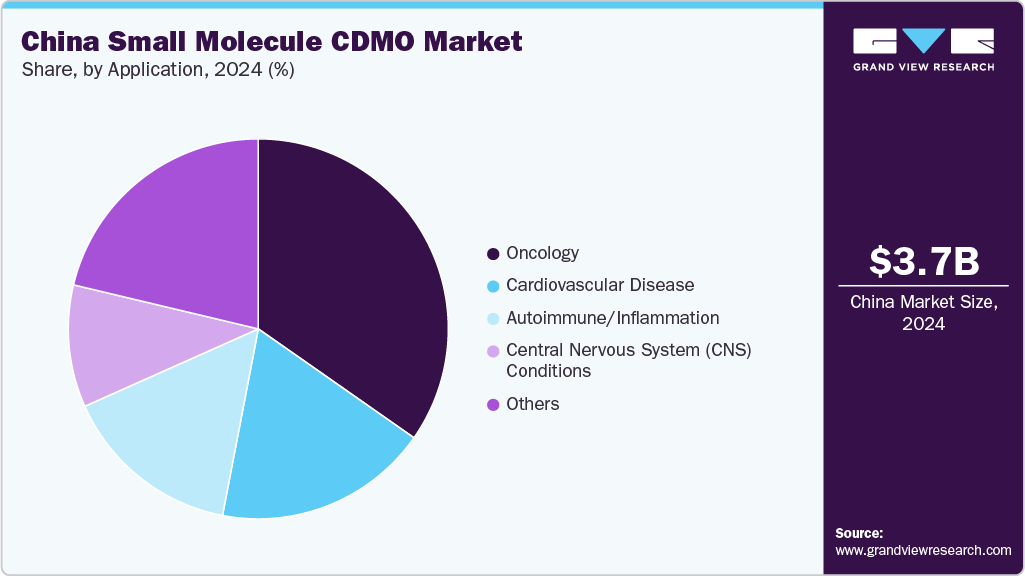
On the basis of application, the oncology segment dominated the market in 2025. The oncology market is driven by the rising prevalence of cancer, greater investment in R&D, and an expanding array of targeted therapies. CDMOs are stepping up their capabilities in high-potency API manufacturing, complex formulation development, and continuous processing to support the innovation of oncology drugs. Besides, supportive government policies, better regulatory alignment, and an increase in collaborations with multinational pharmaceutical companies are further fueling the market growth. With advancements in process optimization and a focus on oncology therapeutics, Chinese CDMOs are becoming key strategic partners for both global and domestic companies working on next-generation small molecule cancer treatments. Such factors are expected to drive the market over the estimated time period.
 To learn more about this report, Download Free Sample Report
 The autoimmune/inflammation segment is anticipated to witness the second-fastest growth rate over the analysis period. As autoimmune diseases, including lupus, psoriasis, rheumatoid arthritis, and inflammatory bowel disease, are on the rise in China, there is a persistent need for advanced therapies. In addition, the growing presence of domestic biotech companies developing tailored anti-inflammatory medicines and an increased investment in immunology-focused drug discovery are driving the demand for outsourcing API development and formulation manufacturing in the country. To support high-potency immunology medication pipelines, CDMOs in China are also boosting their capacities in complex process chemistry, high-potency chemical synthesis, and oral solid dosage manufacturing. Furthermore, the need for specialized development and scalable commercial manufacturing services is rising due to the increased emphasis on JAK inhibitors, TYK2 inhibitors, and other small molecules.
Key China Small Molecule CDMO Company Insights
The key players operating across the market are adopting strategic initiatives such as service launches, mergers & acquisitions, partnerships & agreements, and expansions to gain a competitive edge in the market. For instance, in March 2026, Eli Lilly invested USD 3 billion to expand its pharmaceutical manufacturing operations in China, with a focus on manufacturing oral small-molecule therapies, such as orforglipron, locally. The project entails strategic partnerships with regional CDMO firms such as Pharmaron, as well as increased manufacturing operations in Suzhou. The investment is intended to enhance supply chain localization and production efficiency while strengthening late-stage and commercial-scale manufacturing capabilities. The development strengthens China's position as a key international center for pharmaceutical outsourcing services and small-molecule manufacturing.
Key China Small Molecule CDMO Companies
-
Lonza
-
Catalent, Inc
-
Thermo Fisher Scientific Inc.
-
Bellen Chemistry
-
Siegfried Holding AG
-
Recipharm AB
-
WuXi AppTec
-
Asymchem Laboratories
-
Langhua Pharmaceutical (Viva Biotech subsidiary)
-
Apeloa Pharmaceutical
-
JiuZhou Pharmaceutical
Competitive Benchmarking
Operating Strategies
Competitive Edge
Weaknesses
Mature Players: Lonza
- The major players target increasing their service integration in areas such as drug discovery, process development, API manufacturing, and full-scale commercialization.
- They strategically develop their market share via acquisitions, alliances with multinational pharmaceutical companies, and manufacturing capacity expansion in China.
- The existing players are able to sustain their competitiveness in the market through their well-established manufacturing facilities, strong regulatory track records, and comprehensive end-to-end CDMO services.
- Existing firms also benefit from efficient supply chains, high-volume manufacturing facilities, and strong expertise in complex chemistry.
- High compliance and operational costs associated with maintaining global as well as Chinese regulatory standards, large-scale operations can pressure profit margins, and advanced manufacturing infrastructure currently pose challenges to the Chinese market.
Emerging Players: Bellen Chemistry
- To gain market share, the emerging players use a flexible and specialized strategy.
- While gaining technical expertise and regulatory permissions, the majority of new businesses utilize competitive pricing, adaptable project management, and regional manufacturing strengths to draw in clients locally as well as globally.
- The competitive advantage of the new entrants lies in their operational flexibility, faster turnaround times, and cost-efficient outsourcing services that make use of lean organizational structures.
- Furthermore, many new Chinese CDMOs focus on custom client support and specialized chemistry capabilities that helps them differentiate in highly targeted therapeutic and biotech segments.
- Limited abilities in terms of large-scale production capabilities, international regulatory expertise, and global client base are some of the weaknesses that are faced by the emerging players.
- In addition, they may lack long-term associations with top-tier pharmaceutical firms and may face challenges regarding investments.
Recent Developments
- In July 2025, Flamma, a CDMO, inaugurated its new cGMP-compliant facility in China. This strategic expansion is set to strengthen the company’s ability to manufacture and supply small molecule active pharmaceutical ingredients (APIs), supporting the development and commercialization efforts of innovator pharmaceutical partners across global markets.
China Small Molecule CDMO Market Report Scope
Report Attribute
Details
Market size value in 2025
USD 4.6 billion
Market size value in 2026
USD 5.0 billion
Revenue forecast in 2033
USD 9.4 billion
Growth rate
CAGR of 9.6% from 2026 to 2033
Actual Data
2021 - 2025
Forecast period
2026 - 2033
Quantitative units
Revenue in USD Billion and CAGR from 2026 to 2033
Report coverage
Revenue forecast, company ranking, competitive landscape, growth factors, and trends
Segments covered
Product, drug, application
Country scope
China
Key companies profiled
Lonza; Catalent, Inc; Thermo Fisher Scientific Inc.; Bellen Chemistry; Siegfried Holding AG; Recipharm AB; WuXi AppTec; Asymchem Laboratories; Langhua Pharmaceutical (Viva Biotech subsidiary); Apeloa Pharmaceutical; JiuZhou Pharmaceutical
Customization scope
Free report customization (equivalent up to 8 analysts working days) with purchase. Addition or alteration to country, regional & segment scope.
Pricing and purchase options
Avail customized purchase options to meet your exact research needs. Explore purchase options
China Small Molecule CDMO Market Report Segmentation
This report forecasts revenue growth at the country level and provides an analysis of the latest industry trends in each of the sub-segments from 2021 to 2033. For this study, Grand View Research has segmented the China small molecule CDMO market report based on product, drug, and application:
-
Product Outlook (Revenue, USD Billion, 2021 - 2033)
-
Active Pharmaceutical Ingredients (API)
-
Finished Drug Products
-
-
Drug Outlook (Revenue, USD Billion, 2021 - 2033)
-
Innovators
-
Generics
-
-
Application Outlook (Revenue, USD Billion, 2021 - 2033)
-
Oncology
-
Cardiovascular Disease
-
Central Nervous System (CNS) Conditions
-
Autoimmune/Inflammation
-
Others
-
Delivered Customizations
This report has been delivered with the following In-depth customizations
Client Request
Customization Delivered
Value Adds
Small Molecule CDMO Capacity Expansion & Regulatory Landscape Analysis
Developed a tailored assessment of China’s small molecule CDMO market focused on manufacturing capacity expansion trends, regulatory compliance requirements, and country-level industrial cluster development. The study incorporated evaluation of GMP standards, NMPA policies, international quality certifications, and evolving regulatory expectations influencing small molecule drug manufacturing operations across China.
Enables stakeholders to understand the evolving regulatory and operational landscape surrounding small molecule CDMO services, identify high-growth manufacturing hubs, assess compliance and operational risks, and evaluate the impact of regulatory changes on outsourcing strategies, production scalability, and long-term competitiveness.
Pharmaceutical Outsourcing Demand & Innovation Trends Assessment
Delivered a customized evaluation of outsourcing trends within China’s pharmaceutical industry, including analysis of demand growth from domestic biotech firms and global pharmaceutical companies, innovation-driven manufacturing requirements, pipeline expansion, and trends associated with complex small molecule development and commercialization.
Provides actionable insights into changing outsourcing behavior, emerging demand segments, and high-growth therapeutic areas, helping clients identify commercially attractive CDMO opportunities and align strategic initiatives with evolving pharmaceutical development trends.
Manufacturing Infrastructure & Advanced Technology Opportunity Assessment
Conducted a focused assessment of China’s small molecule CDMO infrastructure landscape, including manufacturing technology adoption, high-potency API capabilities, continuous manufacturing trends, process optimization requirements, and investment activity across production facilities. The analysis also evaluated gaps in specialized manufacturing capabilities, technology integration, and international supply chain readiness.
Supports investment planning for advanced manufacturing facilities and technology expansion initiatives by identifying underserved capability segments, evaluating revenue potential from specialized CDMO services, and strengthening the business case for infrastructure modernization, process innovation, and strategic capacity expansion.
Frequently Asked Questions About This Report
The China small molecule CDMO market size was estimated at USD 4.6 billion in 2025 and is expected to reach USD 5.0 billion in 2026.
The China small molecule CDMO market is expected to grow at a compound annual growth rate of 9.6% from 2026 to 2033 to reach USD 9.4 billion by 2033.
Some key players operating in the China small molecule CDMO market include Lonza, Catalent, Inc, Thermo Fisher Scientific Inc., Bellen Chemistry, Siegfried Holding AG, Recipharm AB, WuXi AppTec, Asymchem Laboratories, Langhua Pharmaceutical (Viva Biotech subsidiary), Apeloa Pharmaceutical, and JiuZhou Pharmaceutical, among others.
The Active Pharmaceutical Ingredients (API) segment dominated the China small molecule CDMO market with a share of 62.0% in 2025. The segment growth is driven by low production costs, robust infrastructure, and a skilled chemical workforce. Besides, rising demand for generics, complex APIs, and high-potency compounds. Regulatory alignment with ICH-GMP standards and increasing investments in quality systems have enhanced China’s position as a reliable supplier. Such factors are expected to drive the segment growth.
Key factors driving the China small molecule CDMO market growth include rising drug discovery efforts, favorable cost structures, a skilled workforce, and a growing range of domestic projects, making them an appealing partner for both local and international companies. In addition, the market's expansion is driven by rising demand for generics and innovative small-molecule therapies, further fueling the trend toward integrated, end-to-end development and manufacturing solutions.
About the Author(s)
Medical Devices Research Team
Healthcare · Medical DevicesThis report was authored by the medical devices research team at Grand View Research - comprising two research analysts, one senior research analyst, and one industry expert - with specialized expertise in the medical devices segment of the healthcare industry. All findings are based on proprietary healthcare databases, executive interviews, and regulatory analysis, subject to internal peer review prior to publication.
Last Updated:
Speak to Analyst

Customize this report to your needs - add regions, segments, or data points, with 20% free customization.
Or view our licence options:


ISO 9001:2015 & 27001:2022 Certified
We are GDPR and CCPA compliant! Your transaction & personal information is safe and secure. For more details, please read our privacy policy.


