
- Home
- »
- Medical Devices
- »
-
Clinical Trial Equipment & Ancillary Solutions Market Report, 2026-2033GVR Report cover

Clinical Trial Equipment & Ancillary Solutions Market (2026 - 2033)
Size, Share & Trends Analysis Report By Type (Sourcing, Supply/Logistics, Service), By Phase (Phase I, II, III, IV), By Region (North America, Europe, Asia Pacific, Latin America, MEA), And Segment Forecasts
Market Size, 2025
$3.4BMarket Estimate, 2026
$3.7BMarket Forecast, 2033
$6.8BCAGR, 2026–2033
9.0%Clinical Trial Equipment & Ancillary Solutions Market Summary
The global Clinical trial equipment & ancillary solutions market size was valued at USD 3.4 billion in 2025 and is projected to grow from USD 3.7 billion in 2026 to USD 6.8 billion by 2033, at a CAGR of 9.0% from 2026 to 2033. North America dominated the market with the largest market share of 40.1% in 2025. The growth of the market is due to the increasing complexity and globalization of clinical trials, which demand highly specialized, protocol-specific equipment and logistics support.
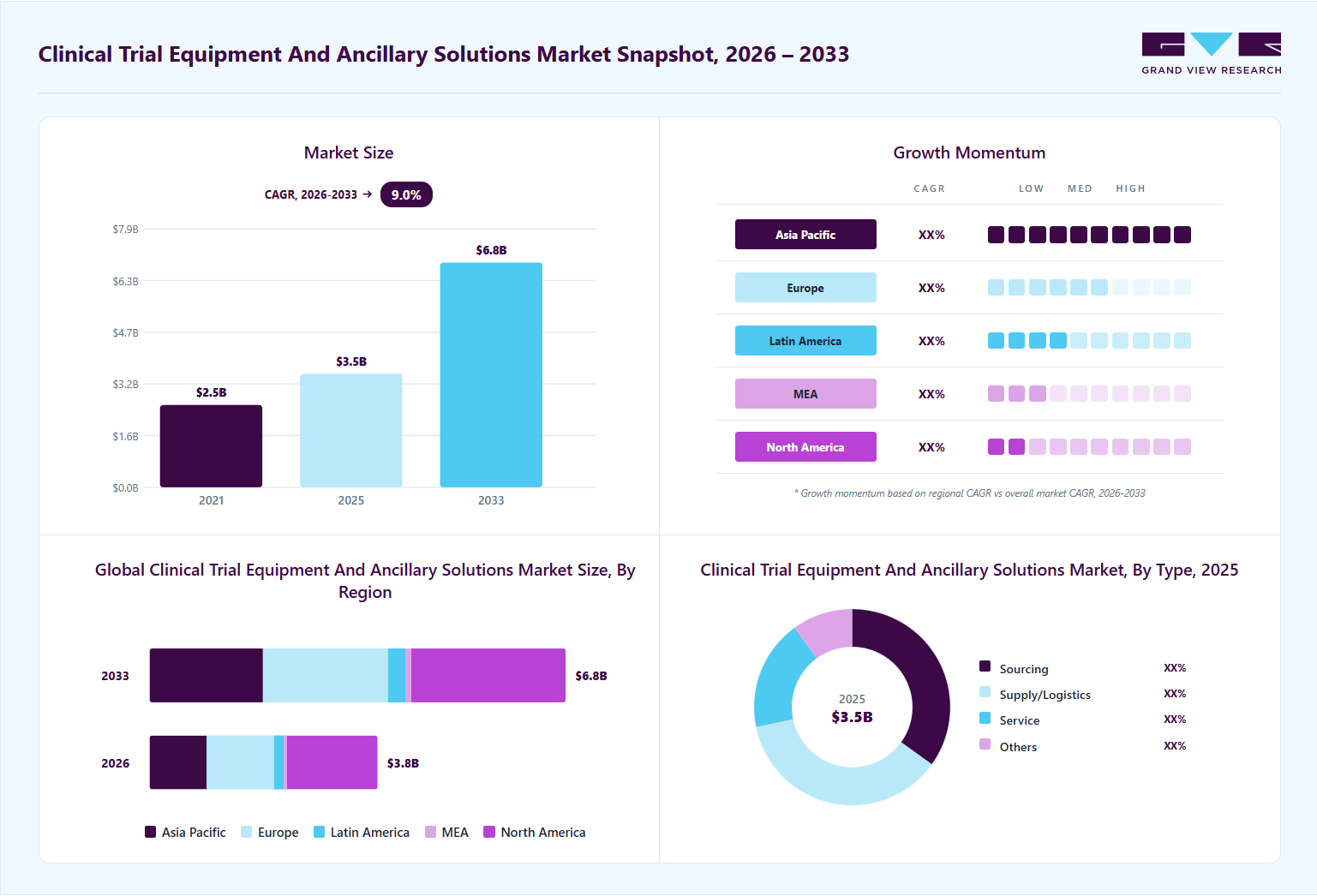 Source: Grand View Research, IR Documents, Primary Interviews, Paid DatabasesTo learn more about this report,
 Download Free Sample Report
Key Market Trends & Insights
- By type: Supply/logistics segment accounted for the largest revenue share of 36.8% in 2025.
- By phase: Phase III segment held the largest market in 2025 with 53.9%.
Regional Highlights
- Largest regional market: North America (40.1% revenue share, 2025)
- Fastest-growing regional market: Asia Pacific (highest CAGR, 2026-2033)
- By country: The U.S. held the largest market share in 2025.
Market Size & Forecast
- Market size in 2025: USD 3.4 Billion
- Estimated market size in 2026: USD 3.7 Billion
- Projected market size by 2033: USD 6.8 Billion
- CAGR (2026-2033): 9.0%
Prism AI by Grand View Research Free to tryAsk a question about the clinical trial equipment & ancillary solutions marketTry asking✓Every figure cited from GVR research Prefer the report? Download free sample →
The rapid adoption of decentralized and hybrid trial models requires remote monitoring devices, wearable sensors, and home-use diagnostic kits, significantly expanding the scope of ancillary services. The transformation of clinical trial models, especially the increase of decentralized and hybrid trials, has significantly raised the demand for specialized equipment and support services that facilitate remote, site-less, and home-based research settings. The traditional model, which relied heavily on centralized trial sites, is being replaced by more patient-focused approaches, requiring remote monitoring devices, mobile health kits, wearables, and courier-enabled logistics for biological samples. For example, the U.S. FDA has promoted decentralized clinical trials (DCTs) through its 2023 draft guidance, urging sponsors to adopt digital health technologies and remote care tools to enhance patient access and data quality. These developments are leading CROs and sponsors to acquire reliable, temperature-sensitive packaging, validated medical devices for home use, and real-time tracking systems to oversee equipment shipments across different regions. This shift has transformed the role of clinical trial equipment suppliers from passive vendors into active, integrated service partners responsible for ensuring regulatory compliance, proper calibration, and delivery schedules aligned with study protocols.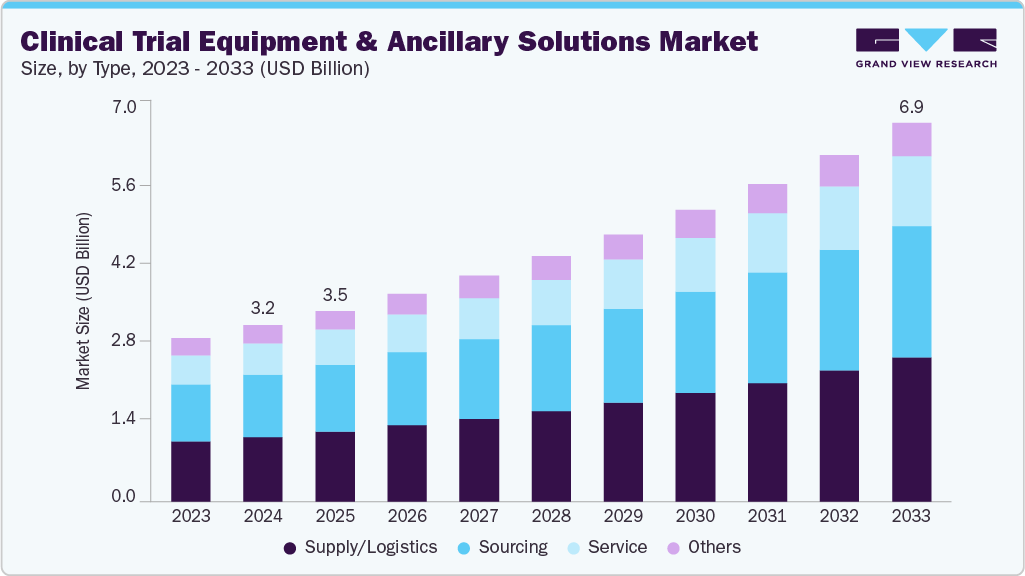 To learn more about this report, Download Free Sample Report
Additionally, government and non-profit funding organizations are increasingly supporting early-stage research, translational medicine, and investigator-initiated trials, all of which depend on timely access to ancillary trial supplies. Initiatives like the NIH’s All of Us Research Program and the European Union’s Horizon Europe framework are expanding the boundaries of patient cohort diversity and precision diagnostics, which require adaptive and flexible equipment supply strategies. For example, Horizon Europe allocates nearly USD 111.49 billion (€95 billion) toward science and innovation through 2027, with multiple projects focused on personalized medicine, wearable monitoring, and telehealth-integrated clinical trials. These initiatives generate demand for site-ready kits, cloud-connected monitoring devices, and digitally traceable shipping for reagents and biologics.
Opportunity Analysis
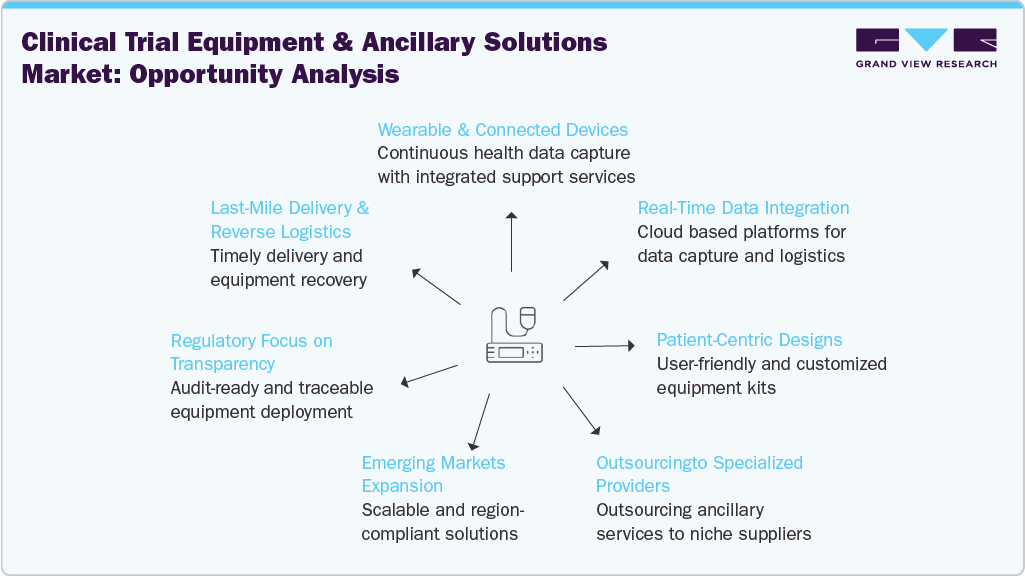 To learn more about this report, Download Free Sample Report
Technological Advancements
The global clinical trial equipment and ancillary solutions market is rapidly changing, driven by innovations that improve efficiency, compliance, and patient engagement. Digital integration leads the way, with cloud-based inventory systems, IoT-enabled tracking devices, and AI-powered demand forecasting tools becoming more common. Wearable health technology, remote monitoring devices, and smart kits enable seamless data collection and decrease the need for on-site visits in decentralized trials. Automation in equipment calibration, temperature-controlled logistics, and packaging validation boosts accuracy and reduces manual work. Additionally, blockchain and RFID technologies are being explored to ensure secure, transparent, and traceable handling of critical clinical supplies across regions. This move toward connected, smart systems not only streamlines trial operations but also creates new opportunities for vendors to deliver bundled, end-to-end ancillary solutions tailored to modern trial needs.
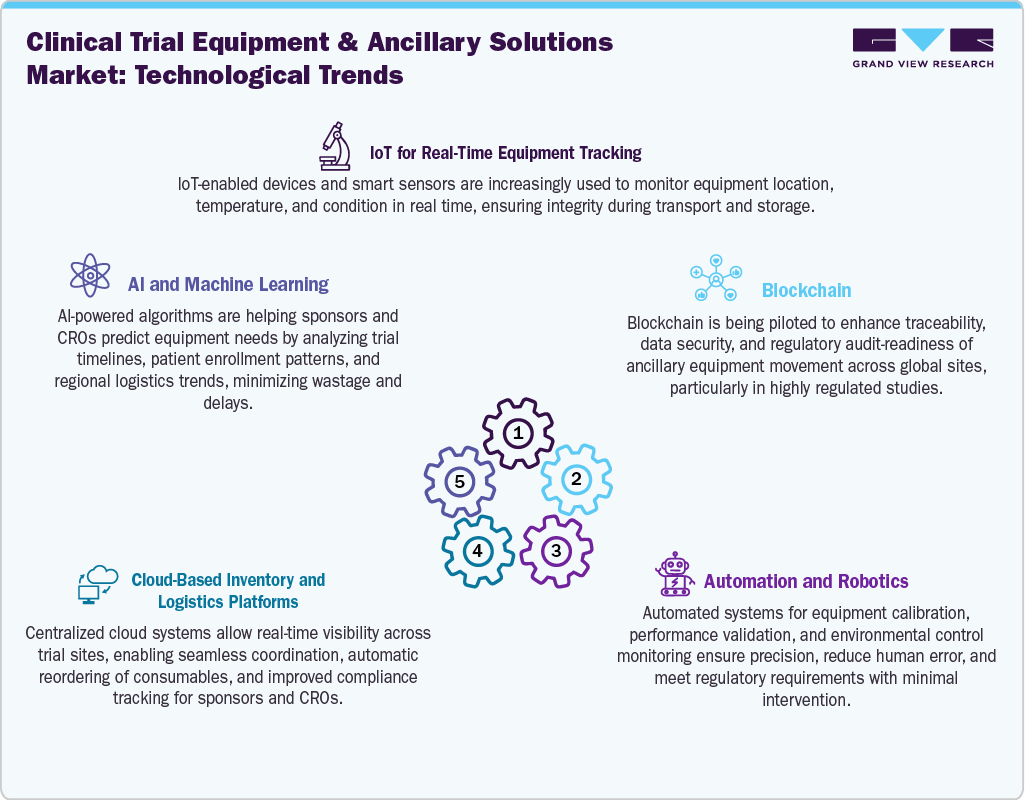 To learn more about this report, Download Free Sample Report
Pricing Analysis
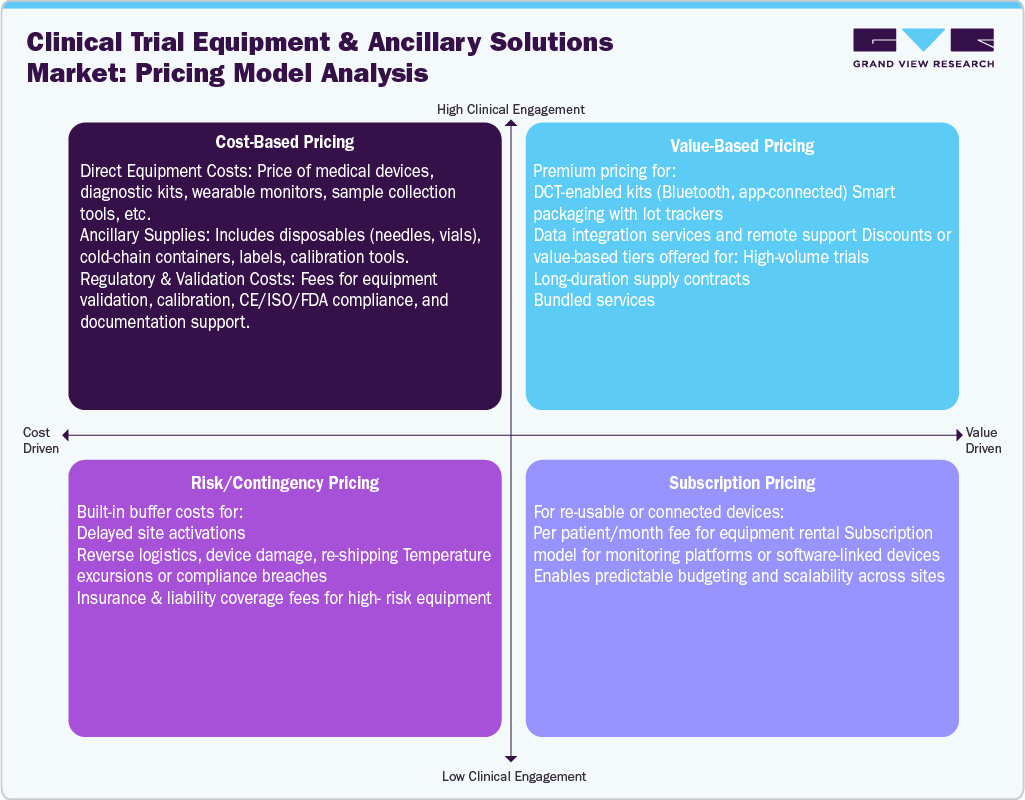 To learn more about this report, Download Free Sample Report
Market Dynamics
The clinical trial equipment and ancillary solutions market is evolving from a support function into a strategic enabler of modern clinical research. Increasing trial complexity, globalization of study sites, decentralized clinical trial (DCT) adoption, and growing biologics pipelines are driving demand for specialized equipment sourcing, temperature-controlled logistics, calibration services, and direct-to-patient delivery models.
The U.S. FDA's guidance supporting decentralized clinical trials has accelerated adoption of digital health technologies, remote patient monitoring systems, and telehealth-enabled study models. As a result, ancillary solution providers are becoming critical partners responsible for equipment deployment, calibration, retrieval, maintenance, and compliance monitoring. Modern studies increasingly require real-time shipment visibility, cold-chain integrity, and automated inventory management across multiple geographies.
The growth of advanced therapeutic areas such as oncology, rare diseases, cell and gene therapies, and precision medicine further amplifies demand for specialized clinical trial infrastructure. These studies often require highly customized devices, temperature-sensitive transportation, and complex biospecimen handling procedures. Consequently, sponsors are increasingly outsourcing ancillary management to specialized providers capable of supporting global trials while maintaining protocol adherence and regulatory compliance.
The increasing globalization of clinical trials has introduced additional logistical complexities. Sponsors frequently conduct studies across dozens of countries, requiring synchronized equipment deployment, customs clearance management, localized labeling, temperature-controlled transportation, and equipment servicing. Delays in any of these processes can disrupt study timelines, increase costs, and compromise trial integrity.
Another challenge stems from rising expectations around supply chain visibility and cold-chain management, particularly for biologics, cell therapies, and temperature-sensitive investigational products. Continuous monitoring systems, validated packaging, and real-time tracking infrastructure require substantial investments that may strain smaller providers. As clinical trial protocols become increasingly sophisticated, vendors unable to scale operationally or maintain regulatory compliance may face margin pressures and competitive disadvantages.
Analyst Perspective
The clinical trial equipment and ancillary solutions market is expected to experience sustained growth through 2033, driven by increasing adoption of decentralized clinical trials, rising biologics development, and growing complexity of global study protocols. Providers that combine equipment sourcing, logistics, calibration, and digital tracking capabilities within an integrated service model are likely to gain competitive advantage. As sponsors prioritize patient-centric trial designs and operational efficiency, demand for direct-to-patient logistics, cold-chain infrastructure, and technology-enabled supply chain visibility will continue to accelerate. Companies capable of delivering scalable global operations while maintaining regulatory compliance and service flexibility are expected to capture a disproportionate share of future market expansion.
Type Insights
On the basis of type segment, the market is classified into sourcing, supply/logistics, service, and others. The supply/logistics segment accounted for the largest revenue share in the clinical trials equipment & ancillary solutions industry of 36.8% in 2025. The growth of the segment is due to increasing complexity and globalization of clinical trials. As trials expand to multiple regions, including emerging markets in Asia-Pacific, Latin America, and Eastern Europe-demand has surged for reliable cold chain logistics, time-sensitive deliveries, and compliant transport of temperature-sensitive and perishable supplies.
The sourcing segment is anticipated to grow at a considerable CAGR during the forecast period. The segment growth is driven due to the rising complexity of trial protocols and the increasing diversity of required ancillary materials. Clinical trials today require a wide array of equipment, including wearable devices, point-of-care diagnostics, customized sample kits, and region-specific medical supplies-prompting sponsors and CROs to outsource sourcing functions to specialized vendors with global procurement networks.
Phase Insights
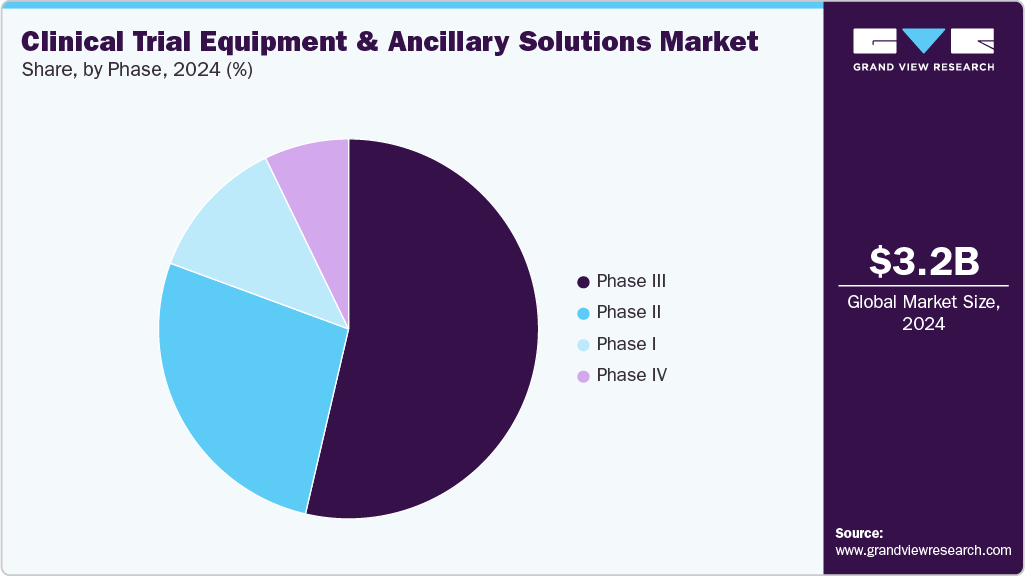
Based on phase segmentation, the market is divided into Phase I, Phase II, Phase III, and Phase IV. The Phase III segment held the largest market in 2025 with 53.9% share due to its extensive scale, longer duration, and complex logistical needs. Phase III trials typically involve large patient populations across multiple geographic regions, requiring high volumes of medical equipment, diagnostic kits, and ancillary supplies. This phase also requires strong supply chain coordination to ensure consistent availability of calibrated devices, biosample kits, and temperature-sensitive materials at each trial site.
 To learn more about this report, Download Free Sample Report
The Phase I segment is expected to grow at the fastest CAGR during the forecast period. Its growth is driven by an increase in early-stage clinical trials, especially in oncology, rare diseases, and cell and gene therapies. These trials often need specialized and customized equipment, such as first-in-human (FIH) dosing kits, rapid-response biosample collection tools, and highly controlled infusion devices, all requiring precise sourcing and handling.
Regional Insights
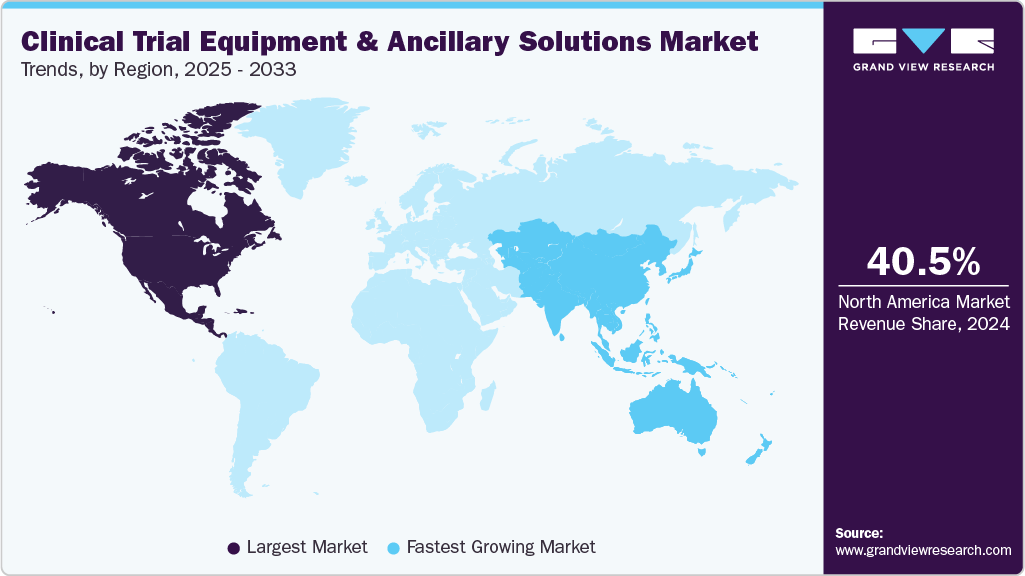
North America dominated the market with the largest market share of 40.1% in 2025, owing to the increased R&D investments, the presence of global players, and rising efforts to come up with newer patents. In addition, the increasing number of clinical trials is also fueling market growth.
 To learn more about this report, Download Free Sample Report
U.S. Clinical Trial Equipment & Ancillary Solutions Market Trends
The clinical trial equipment & ancillary solutions market in the U.S. held the largest share in 2024. This is attributed to the increasing number of clinical trials being performed in the U.S. For instance, according to the National Clinical Trials Registry (NCT), around 12,326 clinical trials studies were undergoing across various phases for the treatment of cancer in 2022.
Europe Clinical Trial Equipment & Ancillary Solutions Market Trends
The clinical trial equipment & ancillary solutions market in Europe is expected to grow significantly due to rising focus on clinical trial studies, favorable government initiatives and policies, compliance with the Good Clinical Practice (GCP) standards, larger patient pools and rising number of clinical trials are some of the key factors fueling the market growth.
The clinical trial equipment & ancillary solutions market in Germany is driven by the factors such as advanced medical expertise and easy access to patients, low rate of saturation of competing trials, and high number of participants contributing to the clinical research studies.
The clinical trial equipment & ancillary solutions market in the UK is driven by factors such as rising government spending on clinical research and rising number of clinical trial studies in the region. According to the National Institute for Health Research (NIHR), UK, clinical research is worth USD 3.74 billion each year and includes USD 2.07 billion from commercial sources, which supports around 47,000 jobs.
Asia Pacific Clinical Trial Equipment & Ancillary Solutions Market Trends
Asia Pacific is expected to be the fastest growing market due to growing investment by developed countries in the regions and various amendments made by the regulatory agencies to facilitate local manufacturing & contract services.
The clinical trial equipment & ancillary solutions market in China held the largest share in 2024. The growth is attributed to the government initiatives to regulate the clinical trials as per the global standards and better infrastructure, which includes 4,000 hospital beds. Initially in China, Centre of Drug Evaluation (CDE) was responsible was regulating the clinical trials
The clinical trial equipment & ancillary solutions market in Japan is expected to grow over the forecast period. The regulatory process is supportive of faster clinical trial approval. For instance, clinical trials can be started once the probable benefits are demonstrated by carrying out a relatively smaller number of clinical trials.
The clinical trial equipment & ancillary solutions market in India is anticipated to grow at the lucrative CAGR over the forecast period. This can be attributed to the increasing government funds. The government of India focuses on expanding affordable healthcare facilities in the country. This propelled the growth of the clinical trials sector in India. In addition, local Indian players such as Vitas Pharma (Hyderabad) and Bugworks (Bengaluru) ventured into drug development activities.
Key Clinical Trials Equipment & Ancillary Solutions Company Insights
Several key players are acquiring various strategic initiatives to strengthen their market position offering diverse services to customers. The prominent strategies adopted by companies are service launches, mergers & acquisitions/joint ventures merger, partnership & agreements, expansions, and others to increase market presence & revenue and gain a competitive edge drives the market growth.
Key Clinical Trials Equipment & Ancillary Solutions Companies:
The following are the leading companies in the clinical trials equipment & ancillary solutions market. These companies collectively hold the largest market share and dictate industry trends.
- Ancillare, LP
- Imperial CRS, Inc.
- Woodley Equipment Company Ltd.
- Thermo Fisher Scientific, Inc.
- Parexel International (MA) Corporation
- Emsere (formerly MediCapital Rent)
- Quipment SAS
- IRM
- Marken (UPS-United Parcel Service)
- Myonex
- Yourway
Competitive Benchmarking
Category
Operating Strategies
Competitive Edge
Weakness
Established Players (Thermo Fisher Scientific Inc., PAREXEL International, Marken, Ancillare, LP)
- Expand integrated end-to-end offerings combining equipment sourcing, logistics, calibration, and compliance management.
- Strengthen global distribution networks and cold-chain capabilities through partnerships, acquisitions, and digital tracking platforms.
- Extensive global infrastructure supports multi-country trials with consistent service quality and regulatory compliance.
- Ability to manage large-scale Phase III and decentralized clinical trials through established logistics and operational expertise.
- Higher operating costs and complex organizational structures may reduce agility in customized projects.
- Dependence on large enterprise contracts can limit responsiveness to niche or emerging trial requirements.
Emerging Players (Emsere, Quipment SAS, IRM)
- Focus on specialized services such as equipment rental, decentralized trial support, and direct-to-patient logistics.
- Differentiate through flexible service models, rapid deployment, and technology-enabled tracking solutions.
- Greater operational flexibility enables tailored solutions for complex and niche study requirements.
- Faster implementation timelines and stronger customer engagement improve client retention.
- Limited geographic coverage compared to global incumbents can constrain multinational trial participation.
- Smaller capital base may restrict investments in advanced infrastructure and large-scale expansion.
Recent Developments
-
In January 2025, Ancillare announced the launch of its state-of-the-art cold chain management service capabilities for clinical trial supplies. The enhancements focus on maintaining temperature integrity, expanding global logistics capabilities, and incorporating real-time tracking and visibility tools.
-
In May 2024, Emsere entered into a partnership agreement with the Clario to enhance ophthalmic imaging capacity in clinical trials by integrating Clario’s clinical trial software with Emsere’s barcoded imaging devices. The expansion addresses needs in retina-focused ophthalmology studies, improving equipment provision and imaging workflow efficiency.
Clinical Trial Equipment & Ancillary Solutions Market Report Scope
Report Attribute
Details
Market size value in 2025
USD 3.4 billion
Estimated market size in 2026
USD 3.7 billion
Projected market size by 2033
USD 6.8 billion
Growth rate
CAGR of 9.0% from 2026 to 2033
Historical data
2021 - 2025
Forecast period
2026 - 2033
Quantitative units
Revenue in USD million/billion and CAGR from 2026 to 2033
Report coverage
Revenue forecast, company ranking, competitive landscape, growth factors, and trends
Segments covered
Type, phase, region
Regional scope
North America; Europe; Asia Pacific; Latin America; MEA
Country scope
U.S.; Canada; Mexico; Germany; UK; France; Italy; Spain; Norway; Denmark; Sweden; China; Japan; India; South Korea; Australia; Thailand; Brazil; Argentina; Colombia; Saudi Arabia; South Africa; UAE; Kuwait; Oman; Qatar
Key companies profiled
Ancillare, LP; Imperial CRS, Inc.; Woodley Equipment Company Ltd.; Thermo Fisher Scientific, Inc.; Parexel International (MA) Corporation; Emsere (MediCapital Rent); Quipment SAS; IRM; Marken (UPS-United Parcel Service); Myonex; Yourway
Customization scope
Free report customization (equivalent up to 8 analysts' working days) with purchase. Addition or alteration to country, regional & segment scope.
Pricing and purchase options
Avail customized purchase options to meet your exact research needs. Explore purchase options
Global Clinical Trials Equipment & Ancillary Solutions Market Report Segmentation
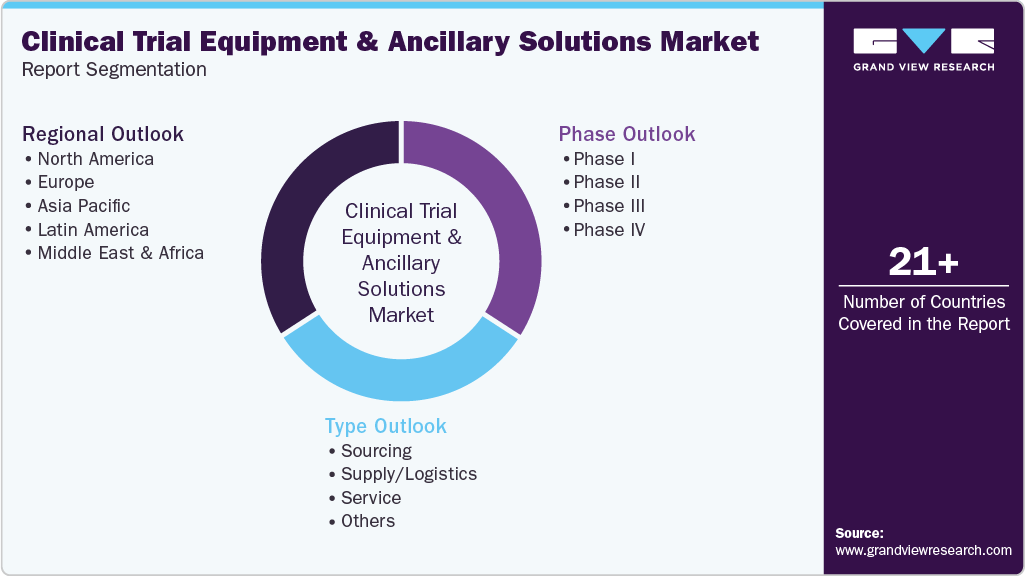
This report forecasts revenue growth at global, regional, and country levels and provides an analysis of the latest industry trends in each of the sub-segments from 2021 to 2033. For this study, Grand View Research has segmented the global clinical trial equipment & ancillary solutions market report based on type, phase and region.
 To learn more about this report, Download Free Sample Report
-
Type Outlook (Revenue, USD Million, 2021 - 2033)
-
Sourcing
-
Procurement
-
Equipment
-
Ancillaries
-
-
Rental
-
Equipment
-
Ancillaries
-
-
-
Supply/Logistics
-
Transportation
-
Packaging
-
Others
-
-
Service
-
Calibrations
-
Equipment servicing
-
Others
-
-
Others
-
-
Phase Outlook (Revenue, USD Million, 2021 - 2033)
-
Phase I
-
Phase II
-
Phase III
-
Phase IV
-
-
Regional Outlook (Revenue, USD Million, 2021 - 2033)
-
North America
-
U.S.
-
Canada
-
Mexico
-
-
Europe
-
UK
-
Germany
-
France
-
Italy
-
Spain
-
Denmark
-
Norway
-
Sweden
-
-
Asia Pacific
-
Japan
-
China
-
India
-
Australia
-
South Korea
-
Thailand
-
-
Latin America
-
Brazil
-
Argentina
- Colombia
-
-
Middle East and Africa (MEA)
-
South Africa
-
Saudi Arabia
-
UAE
-
Kuwait
-
Oman
-
Qatar
-
-
Research Methodology
Segment Definition
Segment
Definition
Product
Traditional API
Small-molecule APIs manufactured using conventional chemical synthesis processes. Revenue includes process development, scale-up, and commercial production.
HP-API
Highly potent APIs requiring specialized containment facilities. Revenue includes high-containment manufacturing and handling services.
Biologics
Biologically derived APIs such as proteins, antibodies, and recombinant products. Revenue reflects biologic process development and manufacturing contracts.
Synthesis
Synthetic
APIs produced through chemical synthesis routes. Revenue includes process chemistry and manufacturing services.
Biotech
APIs produced through fermentation, cell culture, or recombinant technologies. Revenue includes upstream and downstream bioprocessing services.
Drug Type
Innovative
APIs supporting novel drug candidates and patented therapeutics. Revenue driven by development-intensive programs.
Generics
APIs supporting off-patent drugs. Revenue derived from cost-efficient large-scale manufacturing contracts.
Workflow
Clinical
Services supporting preclinical through clinical-stage manufacturing, including small-batch production and process development.
Commercial
Large-scale manufacturing services supporting approved products and market supply.
Application
Oncology
APIs used in cancer therapies including targeted therapies and cytotoxic drugs.
Hormonal
APIs used in endocrine and hormone-related treatments.
Glaucoma
APIs incorporated into ophthalmic therapies for glaucoma management.
Cardiovascular Disease
APIs utilized in cardiac and vascular disease treatments.
Diabetes
APIs used in anti-diabetic therapeutics and metabolic disease management.
Others
APIs serving infectious diseases, neurology, respiratory, immunology, and additional therapeutic categories.
Market estimation Approach - Commodity Flow Analysis
Step
Process Description
1
Identifying the key players in the clinical trial equipment & ancillary solutions market based on parameters such as revenues, service portfolio, strategic initiatives among others
2
Analyzing and determining the global and regional revenues of the key market players
3
Estimating the segment-specific revenues commanded by key players in the market
4
Estimating revenues on a segment and sub-segment level commanded by the major players in the clinical trial equipment & ancillary solutions market (regional and global)
5
Extrapolating sum of revenues of key players to arrive at global market size based on the market share commanded by key market players
Delivered Customizations
This report has been delivered with the following In-depth customizations
Client Request
Customization Delivered
Value Adds
Clinical Trial Equipment & Ancillary Solutions Market Trends & Opportunity Assessment
Assessment of demand for clinical trial equipment, ancillary supplies, logistics services, decentralized trial support solutions, therapeutic area-specific requirements, trial phase adoption trends, equipment utilization patterns, and regional growth opportunities.
Identifies high-growth service segments, emerging decentralized trial opportunities, unmet operational needs, investment hotspots, and expansion opportunities across clinical research ecosystems.
Competitive Landscape & Market Share Assessment
Evaluation of established and emerging service providers bsed on equipment portfolio breadth, logistics capabilities, geographic footprint, regulatory compliance expertise, technology integration, strategic partnerships, and service delivery models.
Highlights competitive intensity, white-space opportunities, differentiation strategies, partnership potential, consolidation trends, and market entry pathways.
Technology, Supply Chain & Regulatory Landscape Review
Analysis of digital trial technologies, remote patient monitoring devices, IoT-enabled asset tracking, cold-chain logistics infrastructure, inventory management platforms, direct-to-patient delivery models, GxP compliance requirements, and supply chain resilience initiatives.
Supports investment prioritization, operational optimization, technology roadmap development, regulatory readiness, risk mitigation, and long-term growth strategies.
Frequently Asked Questions About This Report
Key factors that are driving the clinical trial equipment & ancillary solutions market growth include rising R&D investments, the evolving need for clinical trials, and the increase in the growth of pharmaceutical and medical industries.
The global clinical trial equipment & ancillary solutions market size was estimated at USD 3.4 billion in 2025 and is expected to reach USD 3.7 billion in 2026.
The global clinical trial equipment & ancillary solutions market is expected to grow at a compound annual growth rate of 9.0% from 2026 to 2033 to reach USD 6.8 billion by 2033.
Some key players operating in the clinical trial equipment & ancillary solutions market include Ancillare LP, Imperial Clinical Research Services, Woodley Equipment Company LTD, Thermo Fisher Scientific Inc., PAREXEL International Corp., etc.
Asia Pacific is the fastest-growing region over the forecast period.
North America dominated the clinical trial equipment & ancillary solutions market with a share of 40.1% in 2025. This is attributable to the high R&D investments, the strong presence of global players, and their efforts to come up with newer patents.
Supply/Logistics segment dominated the type-segment with 36.8%share in 2025.
Phase III segment dominated the type-segment with 53.9%share in 2025.
About the Author(s)
Medical Devices Research Team
Healthcare · Medical DevicesThis report was authored by the medical devices research team at Grand View Research - comprising two research analysts, one senior research analyst, and one industry expert - with specialized expertise in the medical devices segment of the healthcare industry. All findings are based on proprietary healthcare databases, executive interviews, and regulatory analysis, subject to internal peer review prior to publication.
Last Updated:
Speak to Analyst

Customize this report to your needs - add regions, segments, or data points, with 20% free customization.
Or view our licence options:


ISO 9001:2015 & 27001:2022 Certified
We are GDPR and CCPA compliant! Your transaction & personal information is safe and secure. For more details, please read our privacy policy.


