
- Home
- »
- Medical Devices
- »
-
Combination Integrated Aesthetic Treatment Devices Market Report 2033GVR Report cover

Combination Integrated Aesthetic Treatment Devices Market (2026 - 2033)
Size, Share & Trends Analysis Report By Product (Injections x Injections, Devices x Devices), By Application (Skin Rejuvenation, Resurfacing & Tightening, Hair Removal), By End Use, By Region, And Segment Forecasts
Market Size, 2025
$800.5MMarket Estimate, 2026
$866.2MMarket Forecast, 2033
$1,513.2MCAGR, 2026–2033
8.3%Combination Integrated Aesthetic Treatment Devices Market Summary
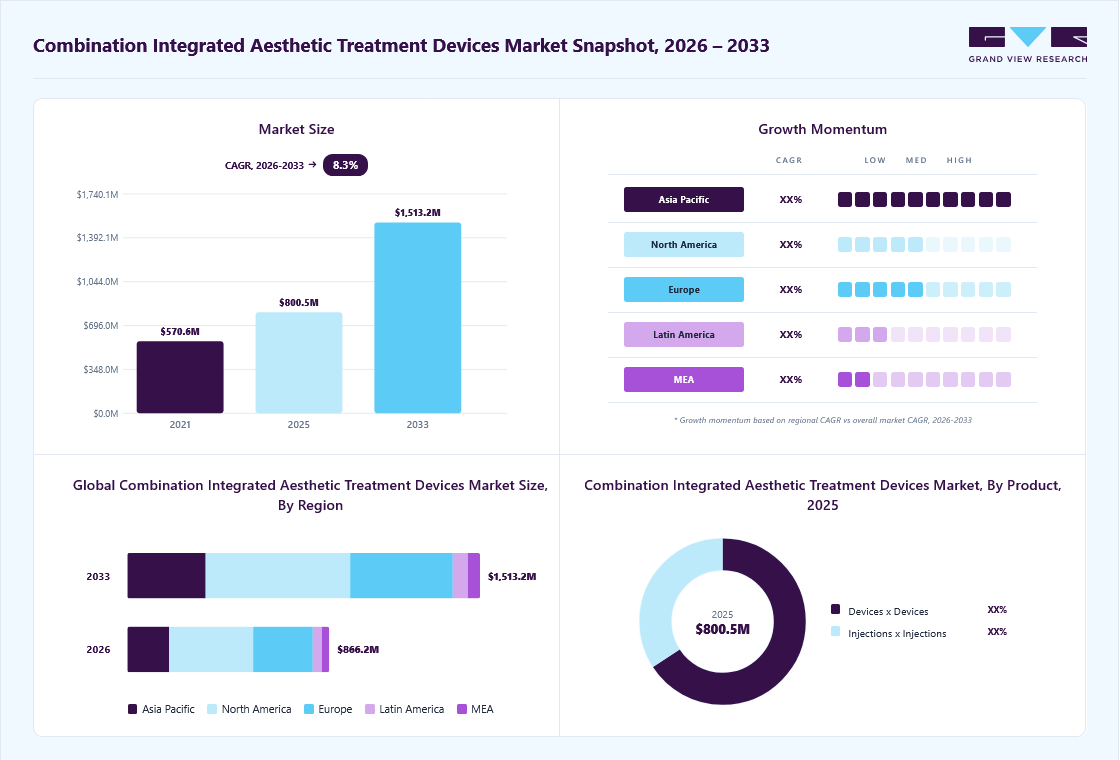
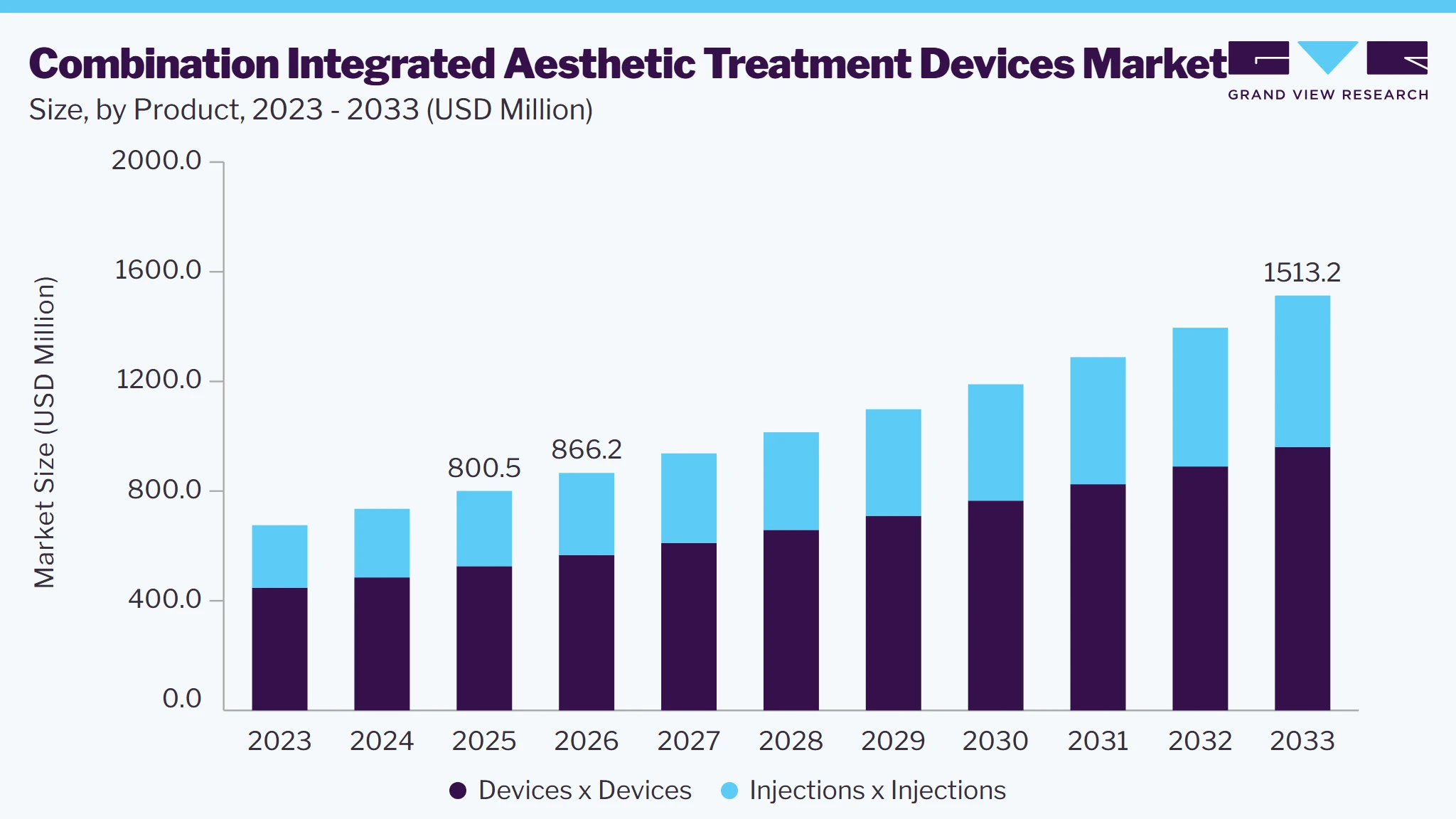
The global combination integrated aesthetic treatment devices market size was valued at USD 800.5 million in 2025 and is projected to grow from USD 866.2 million in 2026 to USD 1,513.2 million by 2033, at a CAGR of 8.3% from 2026 to 2033. North America dominated the market, accounting for a revenue share of 41.7% in 2025. The market is developing as aesthetic clinics, dermatology practices, medical spas, and other treatment facilities increasingly adopt platforms that combine multiple energy-based technologies within a single system.
 Source: Grand View Research, IR Documents, Primary Interviews, Paid DatabasesTo learn more about this report,
 Download Free Sample Report
Key Market Trends & Insights
- By product: Devices x devices segment held the largest market share of 65.7% in 2025.
- By application: Skin rejuvenation, resurfacing & tightening segment held the largest market share of 21.2% in 2025.
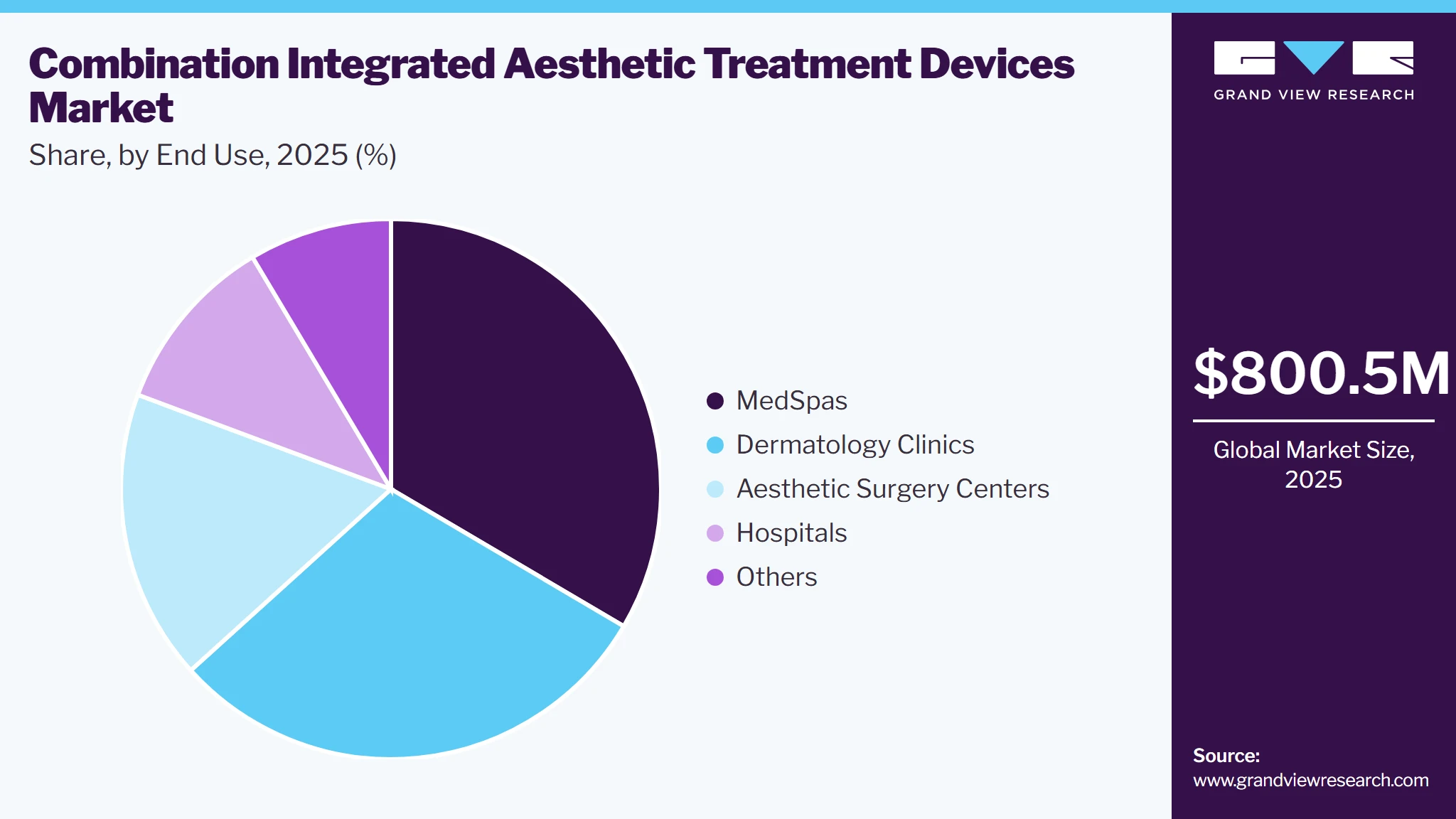
- By end use: Medspas segment held a leading market share of 33.5% in 2025.
Regional Highlights
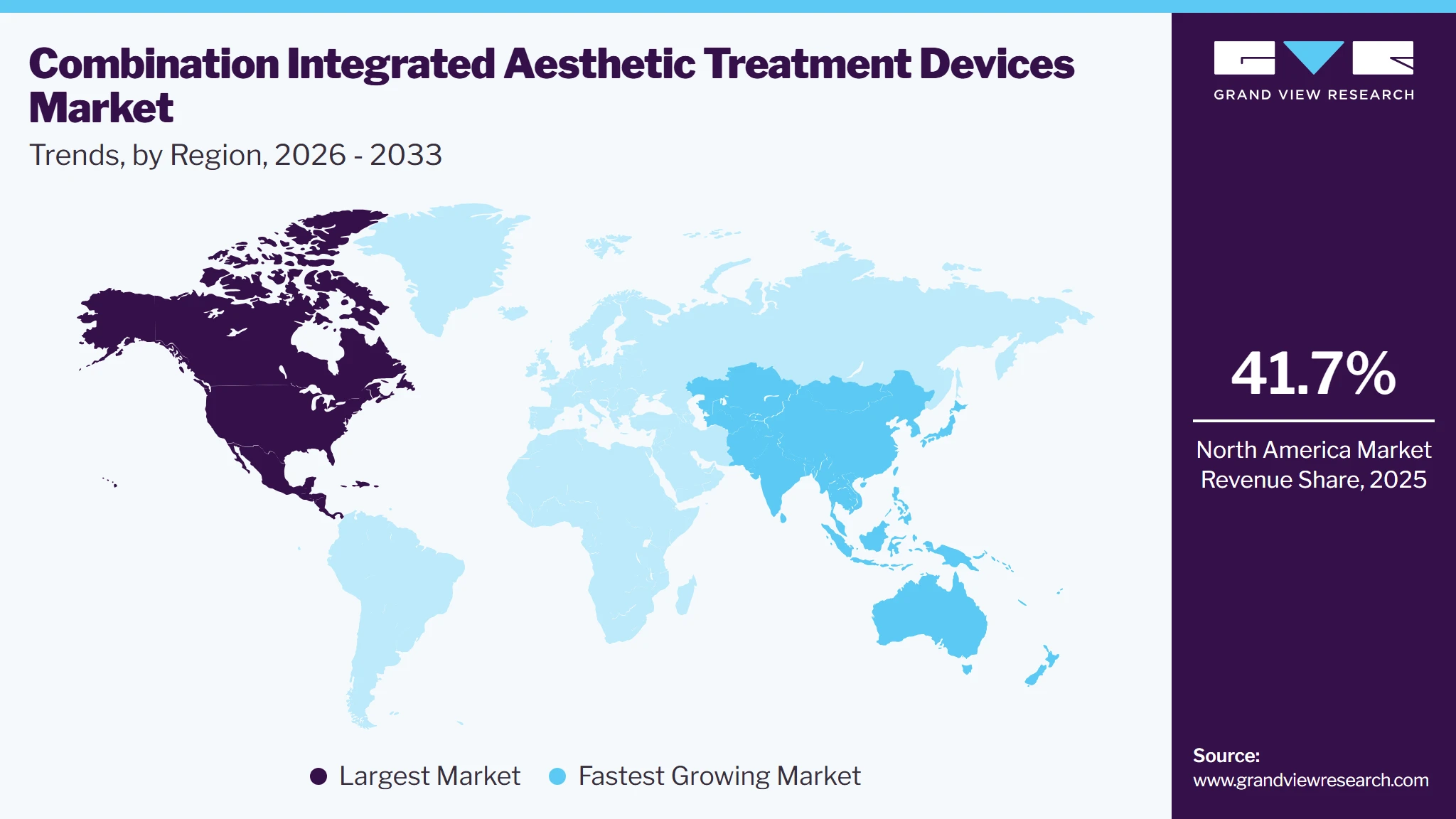
- Largest regional market: North America (41.7% revenue share, 2025)
- Fastest-growing regional market: Asia Pacific (highest CAGR, 2026-2033)
- By country: The U.S. held the largest market share in 2025
Market Size & Forecast
- Market size in 2025: USD 800.5 Million
- Estimated market size in 2026: USD 866.2 Million
- Projected market size by 2033: USD 1,513.2 Million
- CAGR (2026-2033): 8.3%
Three ways to get this report
Buy it, customize it, or ask a question.Ask an Analyst
Analyst response in 1 business day
- AccessReport author, directly
- Reply timeWithin 1 working day
- No sales callDirect answer only
- FormatEmail reply
- CostFree, no cost
Get the Full Report
What the study covers
- FormatsPDF · Excel · Dashboard
- Timeline2026–2033 annual, 2025 base
- Coverage20+ countries, 5 regions
- Companies10+ key players profiled
Customize the Report
20% free customization
- IncludeCountries, segments, points
- TailorTo your product definition
- ExtendDeeper competitor detail
- OrA fully bespoke study
- Turnaround5–10 working days
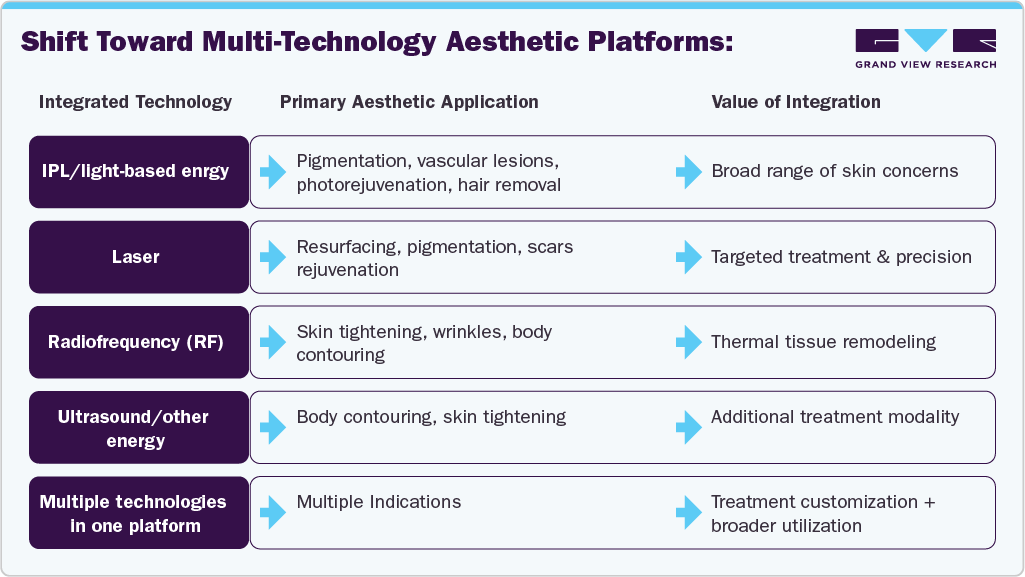
The use of multiple technologies within a single platform allows practitioners to develop more customized treatment protocols while reducing the need to operate multiple standalone devices. The FDA recognizes multiple energy-based technologies, including RF, light-based energy, ultrasound, and cryolipolysis, across aesthetic and body-contouring applications, supporting the broad technology base on which combination platforms are being developed.
 To learn more about this report, Download Free Sample Report
Increasing consumer interest in non-surgical and minimally invasive aesthetic procedures is a major growth driver. Consumers are increasingly seeking treatments that provide visible improvements while limiting surgical intervention and downtime. The 2025 American Society for Dermatologic Surgery (ASDS) consumer survey found that 70% of respondents were considering a cosmetic procedure, with laser-based treatments remaining among the most commonly considered categories. The survey also identified skin texture, discoloration, wrinkles, excess fat, and facial aging concerns as important areas of interest. This broad range of aesthetic concerns supports the demand for multifunctional platforms capable of addressing multiple indications using different technologies.
 To learn more about this report, Download Free Sample Report
The shift toward multifunctional platforms is also being supported by ongoing product innovation. For instance, in April 2025, Alma Lasers introduced the latest Alma Harmony platform, integrating five technologies, including IPL, Q-Switch laser, fractional ablative laser, non-ablative laser, and green diode laser within a single system. The platform is designed to address multiple aesthetic indications, including skin rejuvenation, resurfacing, pigmentation, vascular lesions, hair removal, and tattoo removal. This launch highlights the industry's continued shift toward integrated platforms that offer practitioners multiple treatment options through a single device and enable more customized treatment approaches.
Another factor supporting market development is the expansion of aesthetic treatment facilities and medical-spa networks, which creates demand for devices capable of supporting multiple procedures within the same practice. The American Society for Dermatologic Surgery Association notes that the number of medical spas in the U.S. has increased substantially since 2010, reflecting the expansion of facilities offering aesthetic procedures. For these providers, integrated systems can improve equipment utilization by enabling a single platform to support multiple treatment categories. At the same time, patient safety and provider training remain important considerations. In October 2025, the FDA issued a safety communication concerning reported complications associated with certain uses of RF microneedling devices, emphasizing the importance of trained providers and appropriate device use.
Technological advancement is expected to remain an important trend in the market, as manufacturers increasingly focus on platforms that provide broader treatment capabilities, greater treatment customization, and improved workflow efficiency. A recent example is the March 2026 U.S. launch of XTherma, which combines high-frequency RF with cryogen cooling for aesthetic treatment applications. Such developments indicate continued interest in combining complementary energy technologies within a treatment system. However, the market remains influenced by device costs, regulatory requirements, practitioner training, treatment safety, and the need for clinical evidence supporting combined technologies.
Market Dynamics
The combination integrated aesthetic treatment devices market is driven by increasing demand for non-invasive and minimally invasive aesthetic procedures, growing consumer focus on appearance and skin health, rising adoption of multifunctional treatment platforms, and the expanding use of combination technologies for addressing multiple aesthetic concerns. The integration of multiple energy-based modalities into a single device enables aesthetic practitioners to deliver customized treatments for skin rejuvenation, skin tightening, pigmentation, vascular lesions, hair removal, body contouring, and other applications.
The growing demand for non-invasive and minimally invasive aesthetic procedures is a major driver of the combination integrated aesthetic treatment devices market, as consumers increasingly seek aesthetic treatments that provide visible results with limited downtime, shorter recovery periods, and less procedural burden than conventional surgical procedures. This trend is encouraging aesthetic clinics, dermatology practices, plastic surgery centers, and medical spas to invest in multifunctional platforms that can combine technologies such as laser, intense pulsed light (IPL), radiofrequency (RF), ultrasound, and other energy-based modalities. Combination platforms allow providers to address multiple aesthetic concerns, including wrinkles, skin laxity, pigmentation, unwanted hair, acne scars, skin texture, and body contouring, using a single system. The growing number of minimally invasive treatments is supporting this demand; according to the American Society of Plastic Surgeons (ASPS), more than 28.5 million minimally invasive procedures were performed in the U.S. in 2024, representing a 1.5% increase from 2023, while skin resurfacing procedures exceeded 3.7 million. ASPS also highlighted affordability, personalization, and short recovery times as factors supporting the popularity of minimally invasive treatments.
The complexity of operating combination integrated aesthetic treatment devices can restrain market growth because these platforms incorporate multiple energy-based technologies, such as laser, intense pulsed light (IPL), radiofrequency (RF), ultrasound, and other modalities, within a single system. Each technology has different operating principles, energy levels, treatment parameters, applicators, and safety requirements, requiring practitioners to have adequate technical knowledge and hands-on training. Providers may need to undergo manufacturer-specific training and regular skill updates to ensure appropriate device selection and treatment settings for different skin types, treatment areas, and aesthetic indications. This increases training time and operational costs, particularly for small and independent aesthetic clinics with limited staff. In addition, the availability of trained professionals may vary across regions, making it more difficult for clinics in developing markets to fully utilize advanced multifunctional platforms. Improper selection of treatment parameters or incorrect use of multiple modalities can also increase the risk of burns, pigmentation changes, scarring, or other treatment-related complications.
Market Concentration & Characteristics
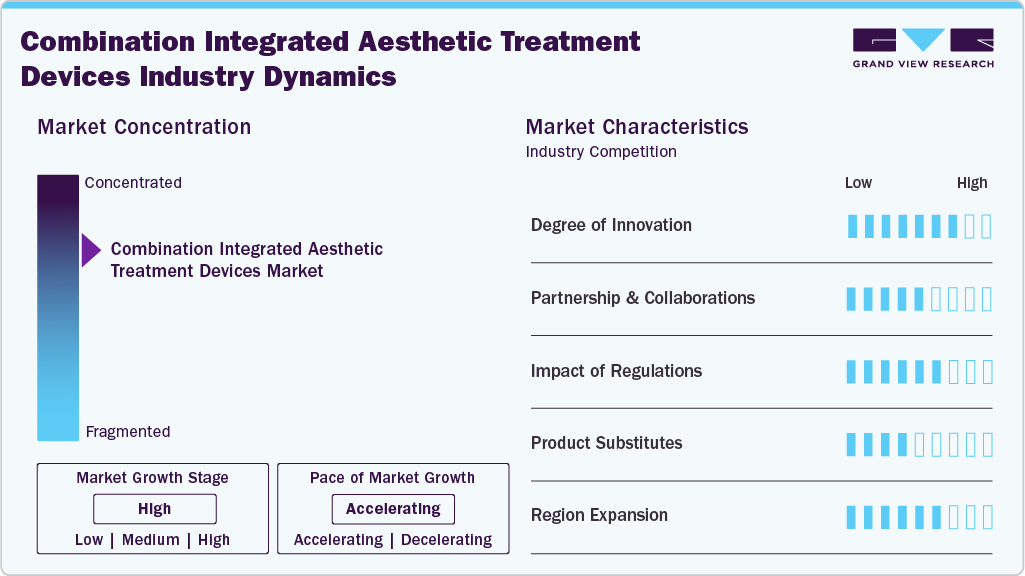
The combination integrated aesthetic treatment devices market is moderately concentrated, with established aesthetic device manufacturers maintaining strong positions through multi-technology platforms, broad product portfolios, established distribution networks, and comprehensive service capabilities. Key market participants include BTL Industries, Cynosure, Lumenis, InMode, Cutera, Candela, and Venus Concept, offering combination integrated aesthetic treatment systems that integrate multiple energy-based modalities for applications such as skin rejuvenation, body contouring, hair removal, skin tightening, pigmentation treatment, vascular lesion management, and other aesthetic procedures. Competition is increasingly focused on the integration of laser, intense pulsed light (IPL), radiofrequency (RF), ultrasound, and other energy-based technologies within multifunctional aesthetic platforms.
The industry is characterized by a high degree of technological innovation, as manufacturers increasingly develop multifunctional platforms that integrate two or more aesthetic technologies to address multiple indications through a single system. Innovation is focused on combining laser, intense pulsed light (IPL), radiofrequency (RF), ultrasound, and other energy-based technologies, while improving energy delivery, treatment customization, applicator design, cooling systems, treatment precision, and overall workflow efficiency. Manufacturers are also developing modular and expandable platforms that allow clinics to add treatment technologies or applicators according to their requirements, thereby increasing the versatility and utilization of the device.
 To learn more about this report, Download Free Sample Report
Partnerships and collaborations are becoming an important strategy in the combination integrated aesthetic treatment devices industry, as manufacturers increasingly work with distributors, aesthetic clinics, technology providers, and clinical partners to expand geographic reach, strengthen training and service capabilities, and accelerate the commercialization and adoption of multifunctional aesthetic platforms. These relationships are particularly relevant for combination devices because successful adoption depends not only on the technology itself but also on practitioner training, clinical education, local regulatory requirements, distribution infrastructure, and post-sales support. For instance, in March 2026, BENEV partnered with LaserAway to expand access to XTherma in the U.S., a combination therapy device integrating high-frequency RF and cryogen technology. The partnership is intended to broaden the availability of the technology through LaserAway's aesthetic dermatology network, illustrating how manufacturer-provider collaborations can support the commercialization and adoption of combination treatment technologies.
Regulatory oversight has a significant impact on the combination integrated aesthetic treatment devices market, as manufacturers must demonstrate the safety, performance, quality, and intended use of devices before commercialization. Regulatory requirements can vary according to the technologies incorporated into a platform and the intended aesthetic application. In the U.S., the FDA regulates aesthetic and cosmetic devices according to their intended use and technological characteristics. Depending on the device and indication, manufacturers may be required to submit a 510(k) premarket notification or follow another applicable premarket pathway. FDA's aesthetic-device resources specifically cover technologies such as microneedling and non-invasive body-contouring devices, while the agency's device framework requires manufacturers to comply with applicable safety, effectiveness, quality, labeling, and post-market requirements.
The market faces substitution from single-modality aesthetic devices, standalone energy-based systems, and non-device-based aesthetic procedures that can be selected according to the patient's treatment objective, skin or body condition, practitioner preference, and available clinical infrastructure. Single-modality laser, IPL, RF, ultrasound, or electromagnetic devices represent a key substitute because providers can purchase specialized systems for individual indications rather than investing in a multifunctional platform. For example, clinics primarily focused on hair removal may use dedicated laser systems, while providers specializing in skin tightening may use standalone RF or ultrasound devices. This can reduce the need for combination platforms among practices with a narrower procedure portfolio.
Regional expansion is an important growth strategy, as manufacturers seek to increase their presence across established and emerging aesthetic markets through regulatory approvals, distributor agreements, direct sales networks, local partnerships, and practitioner-training programs. Manufacturers are increasingly targeting markets where demand for non-invasive and minimally invasive aesthetic procedures is expanding. Expansion strategies typically focus on obtaining country-specific regulatory clearances, strengthening distributor networks, establishing local technical support, and providing clinical education to aesthetic practitioners. For instance, in February 2025, Cynosure entered into a strategic distribution agreement with Amico Aesthetics covering multiple Middle Eastern markets, including the UAE, Saudi Arabia, Kuwait, Qatar, Jordan, Iraq, Egypt, Bahrain, Oman, and Lebanon. The agreement provides a regional route for Cynosure Lutronic's aesthetic technology portfolio and supports localized commercial and customer-service activities.
Analyst Perspective
The combination integrated aesthetic treatment devices market is an established segment within the broader medical aesthetics and energy-based aesthetic devices market, supported by the increasing use of multiple technologies and treatment modalities to address diverse aesthetic concerns through integrated treatment approaches. Combination integrated aesthetic treatment devices incorporate two or more energy-based or therapeutic technologies, such as radiofrequency (RF), intense pulsed light (IPL), laser, ultrasound, and other energy modalities, within a single platform or treatment system, enabling complementary treatment of skin rejuvenation, skin tightening, pigmentation, vascular lesions, body contouring, hair removal, and other aesthetic indications.
Product Insights
The devices x devices segment dominated the market in 2025 and accounted for the 65.7% of the overall revenue. The segment is supported by the increasing adoption of multifunctional platforms that combine two or more energy-based technologies, such as laser, intense pulsed light (IPL), radiofrequency (RF), ultrasound, and electromagnetic stimulation, within a single system. These platforms allow aesthetic providers to address multiple concerns while reducing the need to maintain multiple standalone devices. The growing demand for personalized and minimally invasive treatments is further supporting adoption, as providers increasingly seek technologies that can offer different treatment options and parameters within the same platform.
The injections x injections segment is expected to witness the fastest CAGR of 9.2% over the forecast period. The growth is supported by increasing demand for minimally invasive facial rejuvenation and the ability to combine different injectable treatments to address multiple aesthetic concerns. Combination injection approaches may involve neuromodulators, hyaluronic acid fillers, biostimulatory products, and other injectable treatments, allowing practitioners to target wrinkles, facial volume loss, skin quality, and facial contouring as part of a broader treatment plan. The segment is also benefiting from the relatively short treatment time, limited downtime, and growing consumer preference for subtle, personalized aesthetic outcomes. These trends support the expansion of combination injectable treatment protocols as providers increasingly use multiple products to address different aspects of facial aging and aesthetic concerns during a coordinated treatment plan.
Application Insights
The skin rejuvenation, resurfacing & tightening segment dominated the market and held the largest revenue share in 2025. The growth is supported by the growing demand for non-invasive and minimally invasive procedures that address multiple signs of skin aging, including wrinkles, uneven texture, pigmentation, and skin laxity. The increasing preference for treatments with limited downtime, customizable treatment settings, and the ability to combine multiple technologies is supporting adoption among aesthetic clinics and medical practices. In addition, the continued global use of non-surgical skin-tightening procedures, as reported by ISAPS for 2024, reflects sustained consumer interest in minimally invasive approaches to improving skin firmness and overall appearance.
The pigmentation & vascular lesions segment is expected to witness the fastest CAGR over the forecast period. The growth is driven by increasing demand for treatments targeting hyperpigmentation, melasma, age spots, vascular lesions, rosacea, and other visible skin irregularities. The availability of multifunctional platforms that address both pigmented and vascular conditions across different wavelengths and energy modalities is expanding treatment options and supporting the adoption of combination aesthetic devices. For instance, in April 2025, a systematic review and meta-analysis evaluated the efficacy and safety of 532 nm and 755 nm lasers for the treatment of facial pigmented and vascular lesions, analyzing 16 studies involving 509 participants. The findings support the clinical application of these laser wavelengths across pigmentation and vascular indications, highlighting their relevance for aesthetic skin-treatment procedures. This highlights the rising demand for combination integrated aesthetic treatment devices in the application segment.
End Use Insights
The medspas segment held the largest revenue share in 2025 and is expected to witness the fastest CAGR over the forecast period. Growth is supported by the increasing consumer preference for convenient, minimally invasive aesthetic treatments, expanding availability of injectables and skin-rejuvenation procedures, and the growing number of physician-guided medspa locations. Medspas also provide multiple aesthetic services within a single setting, allowing providers to offer combinations of HA fillers, skin boosters, biostimulatory injectables, laser treatments, and other non-surgical procedures. Recent industry developments reflect the continued expansion of this channel. In May 2026, VIO Med Spa announced 10 new franchise agreements, adding 15 locations to its development pipeline, citing sustained demand for physician-guided aesthetics. This development indicates continued investment in scalable medspa networks and physician-guided aesthetic services, supporting the segment's role as an important channel for non-surgical aesthetic treatments.
 To learn more about this report, Download Free Sample Report
The dermatology clinics segment is anticipated to grow at the second-fastest CAGR over the forecast period. The growth is attributed to the increasing integration of aesthetic procedures into dermatology practices, greater emphasis on medically supervised treatments, and growing demand for personalized skin-rejuvenation solutions. Dermatology clinics are well-positioned to offer injectable and energy-based procedures alongside diagnosis, skincare, and follow-up care, enabling providers to develop comprehensive treatment plans for concerns such as facial aging, skin quality, pigmentation, and volume loss. Recent developments also demonstrate greater integration between aesthetic-product companies and dermatology practices. For instance, in April 2026, Galderma launched its ALASTIN Signature Practices program, beginning with Colorado Springs Dermatology Clinic and planning additional practices across the U.S.; the program focuses on integrating regenerative skincare with procedural treatment and patient-care workflows.
Regional Insights
The North America combination integrated aesthetic treatment devices market accounted for the largest revenue share of 41.7% in 2025. The region benefits from a large and well-established aesthetic medicine industry, high consumer awareness of minimally invasive procedures, strong adoption of energy-based technologies, and the presence of established aesthetic device manufacturers and physician-led clinics. The U.S. represents the major contributor to regional demand because aesthetic practices increasingly offer multiple procedures, including skin tightening, resurfacing, pigmentation treatment, hair removal, and body contouring, through specialized platforms. ISAPS reported that the U.S. performed more than 6.1 million aesthetic procedures in 2024, the highest number reported for any country, while non-surgical skin tightening, IPL-based photorejuvenation, and other non-surgical procedures remained established treatment categories.
 To learn more about this report, Download Free Sample Report
U.S. Combination Integrated Aesthetic Treatment Devices Market Trends
Thecombination integrated aesthetic treatment devices market in the U.S. is experiencing robust growth, driven by high consumer spending on aesthetic procedures, increasing preference for minimally invasive treatments with limited downtime, expansion of medspas and dermatology practices, and continuous product innovation by aesthetic-device manufacturers. The U.S. also has a mature regulatory and clinical environment that supports the introduction of new indications and technologies. For example, in June 2026, Allergan Aesthetics received FDA approval for SKINVIVE by JUVÉDERM for the improvement of neck appearance, expanding the use of an established aesthetic product into an additional treatment indication.
Europe Combination Integrated Aesthetic Treatment Devices Market Trends
Thecombination integrated aesthetic treatment devices market in Europe accounted for a significant revenue share in 2025. Market growth is supported by the region's established aesthetic medicine infrastructure, demand for non-surgical procedures, and adoption of laser, intense pulsed light (IPL), radiofrequency, ultrasound, and other energy-based technologies. Procedure data from the International Society of Aesthetic Plastic Surgery (ISAPS) highlight the scale of non-surgical aesthetic activity in major European markets. In 2024, Germany recorded approximately 361,210 botulinum toxin procedures and 221,836 hyaluronic acid procedures, while Italy recorded 316,385 botulinum toxin and 430,598 hyaluronic acid procedures. Germany, Italy, and France also recorded 28,192, 22,318, and 21,280 non-surgical skin-tightening procedures, respectively, performed by plastic surgeons. These procedure volumes indicate established demand for aesthetic treatments that can be supported by complementary or multiple energy-based modalities.
The UK combination integrated aesthetic treatment devices marketis steadily growing. The growth is driven by increasing consumer interest in non-surgical aesthetic procedures, a growing network of dermatology and aesthetic clinics, demand for treatments with shorter recovery periods, and greater emphasis on patient safety and appropriately maintained equipment. The UK also has an established regulatory framework for healthcare premises and equipment. The Care Quality Commission's Regulation 15 requires regulated providers to ensure that premises and equipment are suitable, maintained, safe, and properly used. This regulatory environment encourages professional providers to maintain appropriate treatment infrastructure, while continued demand for non-surgical facial rejuvenation, skin tightening, laser and injectable procedures supports investment in modern aesthetic treatment technologies.
Thecombination integrated aesthetic treatment devices market in Spain isexperiencing significant growth. The growth is attributed to the strong dermatology and aesthetic medicine base, increasing demand for facial rejuvenation and skin-quality treatments, and the country's position as an established destination for aesthetic and medical tourism. Spanish aesthetic practices increasingly use complementary treatments addressing volume loss, skin hydration, wrinkles, pigmentation, and skin laxity. The presence of multiple treatment options across injectables and energy-based procedures supports the development of multimodal treatment protocols and demand for integrated aesthetic technologies.
Asia Pacific Combination Integrated Aesthetic Treatment Devices Market Trends
Thecombination integrated aesthetic treatment devices market in the Asia Pacific is expected to witness the fastest CAGR of 9.4% over the forecast period.Growth is supported by increasing disposable income, expanding medical-aesthetic infrastructure, a large and increasingly appearance-conscious consumer population, growing demand for minimally invasive procedures, and strong adoption of advanced laser and energy-based technologies. The region is also characterized by significant aesthetic-device innovation in countries such as China, South Korea, and Japan. These factors are supporting wider use of multi-functional platforms that allow clinics to address several aesthetic indications.
The China combination integrated aesthetic treatment devices market is experiencing rapid expansion, driven by the expansion of medical-aesthetic clinics, increasing consumer expenditure on appearance-related treatments, growing demand for non-surgical facial rejuvenation, and rising adoption of advanced domestic and international energy-based technologies. Demand is particularly supported by treatments for skin quality, pigmentation, acne scars, hair removal, and facial contouring, which can require different energy modalities and treatment combinations. China's large consumer base and rapidly developing medical-aesthetic ecosystem also provide manufacturers with opportunities to introduce platforms offering multiple applications.
Thecombination integrated aesthetic treatment devices market in South Korea is experiencing strong growth, driven by the country's highly developed aesthetic medicine ecosystem, strong consumer acceptance of minimally invasive procedures, concentration of dermatology and aesthetic clinics, and presence of domestic manufacturers specializing in laser and energy-based devices. Korean aesthetic practices commonly use technologies for skin rejuvenation, pigmentation, acne scars, tightening, hair removal, and body contouring, creating demand for systems that can provide several treatment functions. The country's influence in aesthetic medicine is further supported by the broader Asian adoption of non-surgical procedures and advanced skin-treatment technologies documented by ISAPS.
Latin America Combination Integrated Aesthetic Treatment Devices Market Trends
The combination integrated aesthetic treatment devices market in Latin America is emerging as a high-growth market, supported by increasing demand for aesthetic procedures, a strong cultural acceptance of cosmetic treatments, expansion of private aesthetic clinics, and growing use of minimally invasive procedures. According to ISAPS, Brazil recorded more than 3.1 million aesthetic procedures in 2024, including more than 760,000 non-surgical procedures. Non-surgical skin tightening and full-field ablative treatments were among the reported facial-rejuvenation procedures in the country. The established procedure base creates demand for technologies capable of treating multiple indications within aesthetic practices.
The Brazil combination integrated aesthetic treatment devices market is supported by high consumer demand for aesthetic procedures, a large base of plastic surgeons and aesthetic clinics, strong adoption of both surgical and non-surgical treatments, and increasing interest in skin rejuvenation and body-contouring procedures. The presence of several high-volume treatment categories creates opportunities for clinics to adopt technologies capable of supporting multiple procedures. Brazil's participation in international aesthetic medicine education is also reflected by its representation at the ISAPS World Congress, where the Brazilian Society of Plastic Surgery presented sessions covering advanced techniques and combinations of technologies.
Middle East & Africa Combination Integrated Aesthetic Treatment Devices Market Trends
The combination integrated aesthetic treatment devices market in the Middle East & Africa is witnessing steady growth, supported by increasing investment in private healthcare infrastructure, expanding dermatology and aesthetic clinics, medical-tourism activity, rising consumer interest in cosmetic procedures, and growing availability of advanced laser and energy-based technologies. The UAE and Saudi Arabia are important markets within the region because of their developed private healthcare systems and growing aesthetic medicine infrastructure. The combination of local demand and international patients creates opportunities for clinics to offer comprehensive treatment portfolios using multiple aesthetic technologies.
The Saudi Arabia combination integrated aesthetic treatment devices market is experiencing notable growth, driven by the expansion of private healthcare services, increasing demand for dermatology and cosmetic treatments, growing consumer interest in minimally invasive procedures, and government efforts to strengthen quality and safety in cosmetic healthcare. In March 2026, Saudi Arabia's Ministry of Health launched an inspection campaign targeting cosmetic clinics to enhance safety and ensure compliance with approved healthcare regulations. The Ministry specifically highlighted procedures such as fillers, Botox, and threads and emphasized practitioner qualifications, informed consent, and product information. This development indicates increasing regulatory attention to the rapidly developing cosmetic-clinic sector and may support demand for professionally operated clinics equipped with appropriate aesthetic treatment technologies.
Key Combination Integrated Aesthetic Treatment Devices Company Insights
The combination integrated aesthetic treatment devices market is competitive, with aesthetic device manufacturers focusing on advancing multi-technology platforms, energy delivery systems, treatment precision, and integrated workflow solutions. Manufacturers are focusing on improved energy control, customizable treatment parameters, enhanced treatment precision, shorter procedure times, and greater patient comfort to expand the clinical applications of combination integrated aesthetic treatment systems.
Key Combination Integrated Aesthetic Treatment Devices Companies
The following key companies have been profiled for this study on the combination integrated aesthetic treatment devices market.
-
BTL Industries Limited
-
InMode Ltd.
-
Allergan Aesthetics, an AbbVie company (Allergan Aesthetics)
-
Lumenis Ltd
-
Sciton, Inc.
-
Cynosure, LLC
-
Cutera, Inc.
-
Candela Corporation
-
VAIM Global
-
PharmaResearch Co., Ltd.
-
Galderma
-
Solta Medical, Inc
-
Alma Lasers, Inc
-
Merz Pharma GmbH & Co. KGaA
Competitive Benchmarking
Category
Operating Strategies
Competitive Edge
Weakness
Established Players (BTL Industries Limited, InMode Ltd., Allergan Aesthetics, Lumenis Ltd, Sciton, Inc., Cynosure, LLC)
- Focus on expanding multi-modality portfolios by integrating or combining technologies such as IPL, laser, RF, RF microneedling, ultrasound, and electromagnetic energy to address multiple aesthetic indications.
- Emphasize platform modularity, interchangeable handpieces, treatment customization, clinical training, and strategic distribution partnerships to strengthen adoption across dermatology clinics, MedSpas, and aesthetic centers.
- Strong brand recognition, established physician and clinic relationships, broad technology portfolios, extensive distribution networks, and large installed bases support market penetration.
- Advanced multi-technology platforms enable providers to address skin rejuvenation, pigmentation, vascular lesions, hair removal, acne and scars, skin tightening, and body-contouring applications through a broader treatment offering.
- High R&D, regulatory compliance, manufacturing, training, and service costs associated with developing and maintaining multifunctional aesthetic platforms.
- Complex systems and multiple treatment modalities can increase operator-training requirements, maintenance needs, and capital expenditure for smaller aesthetic practices.
Emerging Players (VAIM Global, PharmaResearch Co., Ltd., Solta Medical, Inc, Cutera, Inc.)
- Focus on specialized energy-based technologies, modular platforms, targeted aesthetic applications, and differentiated treatment protocols to establish positions in specific market niches.
- Prioritize innovation in areas such as RF, RF microneedling, skin tightening, body contouring, and combination treatment approaches, supported by distributor partnerships and expansion into new geographic markets.
- Faster product development and greater flexibility enable emerging companies to respond to specific practitioner requirements and evolving aesthetic-treatment trends.
- Specialized technologies, compact systems, differentiated treatment approaches, and targeted applications can provide opportunities to compete in specific segments without matching the full breadth of established portfolios.
- Smaller installed bases, limited brand recognition, and comparatively narrower distribution and physician networks can restrict market penetration.
- Regulatory approval requirements, limited clinical evidence, lower financial resources, and the need to establish training and after-sales service infrastructure can slow adoption and geographic expansion.
Recent Development
-
In June 2026, Cartessa Aesthetics launched the Prisma advanced IPL aesthetic system in Canada, expanding the availability of the platform beyond the U.S. market. Manufactured by DEKA, Prisma integrates IPL, radiofrequency (RF), and electro-muscle stimulation (EMS) technologies in a single platform to support treatments targeting pigmentation, vascularity, skin laxity, signs of aging, and reduced muscle tone.
-
In May 2026, Allergan Aesthetics announced Health Canada authorization and the Canadian launch of HArmonyCa with Lidocaine, a dual-action injectable combining hyaluronic acid (HA) and calcium hydroxyapatite (CaHA) in a single injection. The product is designed to provide an immediate lifting effect while stimulating collagen production.
Combination Integrated Aesthetic Treatment Devices Market Report Scope
Report Attribute
Details
Market size in 2025
USD 800.5 million
Estimated market size in 2026
USD 866.2 million
Projected market size by 2033
USD 1,513.2 million
Growth rate
CAGR of 8.3% from 2026 to 2033
Base year for estimation
2025
Historical data
2021 - 2024
Forecast period
2026 - 2033
Quantitative units
Revenue in USD million and CAGR from 2026 to 2033
Report coverage
Revenue forecast, company ranking, competitive landscape, growth factors, and trends
Segments covered
Product, application, end use, region
Regional scope
North America; Europe; Asia Pacific; Latin America; MEA
Country scope
U.S.; Canada; Mexico; U.K.; Germany; France; Italy; Spain; Denmark; Sweden; Norway; Japan; China; India; Australia; Thailand; South Korea; Brazil; Argentina; South Africa; Saudi Arabia; UAE; Kuwait
Key companies profiled
BTL Industries Limited; InMode Ltd.; Allergan Aesthetics; Lumenis Ltd; Sciton, Inc.; Cynosure, LLC; Cutera, Inc.; Candela Corporation; VAIM Global; PharmaResearch Co., Ltd.; Galderma; Solta Medical, Inc; Alma Lasers, Inc; Merz Pharma GmbH & Co. KGaA
Customization scope
Free report customization (equivalent up to 8 analyst’s working days) with purchase. Addition or alteration to country, regional, and segment scope
Pricing and purchase options
Avail customized purchase options to meet your exact research needs. Explore purchase options
Global Combination Integrated Aesthetic Treatment Devices Market Report Segmentation
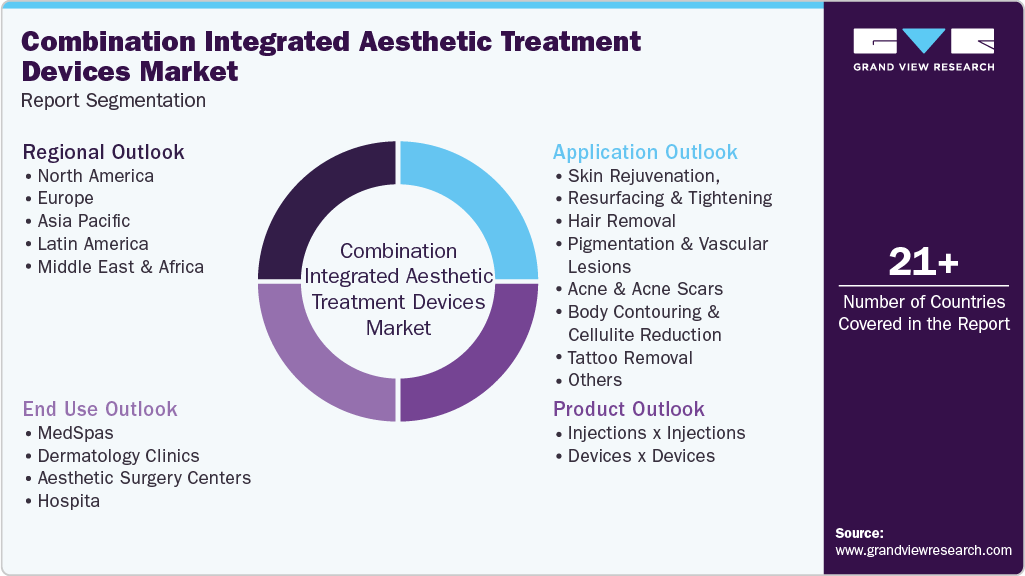
This report forecasts revenue growth at global, regional, and country levels and provides an analysis of the latest industry trends in each of the sub-segments from 2021 to 2033. For this study, Grand View Research has segmented the global combination integrated aesthetic treatment devices market report based on product, application, end use, and region:
 To learn more about this report, Download Free Sample Report
-
Product Outlook (Revenue, USD Million, 2021 - 2033)
-
Injections x Injections
-
HA x Biostimulants
-
HA x Skin Boosters
-
Others
-
-
Devices x Devices
-
RF x EMS
-
RF x Ultrasound
-
IPL x Laser
-
Others
-
-
-
Application Outlook (Revenue, USD Million, 2021 - 2033)
-
Skin Rejuvenation, Resurfacing & Tightening
-
Hair Removal
-
Pigmentation & Vascular Lesions
-
Acne & Acne Scars
-
Body Contouring & Cellulite Reduction
-
Tattoo Removal
-
Muscle Toning / Muscle Stimulation
-
Other Applications
-
-
End Use Outlook (Revenue, USD Million, 2021 - 2033)
-
MedSpas
-
Dermatology Clinics
-
Aesthetic Surgery Centers
-
Hospitals
-
Others
-
-
Regional Outlook (Revenue, USD Million, 2021 - 2033)
-
North America
-
U.S.
-
Canada
-
Mexico
-
-
Europe
-
UK
-
Germany
-
France
-
Italy
-
Spain
-
Norway
-
Denmark
-
Sweden
-
-
Asia Pacific
-
China
-
Japan
-
South Korea
-
Thailand
-
Australia
-
India
-
-
Latin America
-
Brazil
-
Argentina
-
-
MEA
-
South Africa
-
Saudi Arabia
-
UAE
-
Kuwait
-
-
Research Methodology
The combination integrated aesthetic treatment devices market figures in this report are based on a proven research process that combines executive interviews with secondary research from proprietary databases, company filings, and recognized regulatory and institutional sources. Market size is built through value-chain sizing - reconciling supply-side and demand-side estimates - and triangulated with bottom-up and top-down approaches. Every estimate passes multiple levels of expert validation before publication, with each combination integrated aesthetic treatment devices segment quantified using the revenue-capture definitions in the table below.
Segment Definition
Segment - Product
Revenue capture definition
Injections x Injections
Revenue is generated through the co-administration or dual-protocol bundling of multiple injectable bioregenerative assets, neuromodulators, or dermal fillers. Manufacturers and specialized distributors capture high-margin revenue from multi-syringe combination bundles, pre-mixed dual-chamber vials, and specialized training programs designed for multi-tier layer-injection techniques that target distinct dermal depths in a single clinical visit.
Devices x Devices
Revenue flows through multi-modality energy-based platforms that integrate two or more distinct technology engines into a single physical workstation or synchronized treatment protocol. Equipment manufacturers derive high-tier capital hardware revenue from multi-handpiece system sales, alongside recurring income from multi-functional disposable tips, specialized optical fiber line attachments, cross-modality software licenses, and comprehensive technical service agreements.
Segment - Application
Revenue capture definition
Skin Rejuvenation, Resurfacing & Tightening
Revenue is captured by commercializing synergistic combination protocols that simultaneously ablate superficial tissue and heat deep dermal structures to trigger rapid neocollagenesis. Income is driven by high-value per-patient treatment packages, accelerating recurring clinic orders for specialized energy delivery handpiece consumables, topical post-care recovery matrices, and multi-laser replacement components.
Hair Removal
Revenue flows from synchronized multi-wavelength laser or energy platforms designed to safely target different hair follicle depths and diverse skin phototypes. Manufacturers capture revenue through multi-wavelength workstation sales, high-shot-count diode array handpieces, integrated sapphire cooling tips, and high-frequency replacement flashlamps.
Pigmentation & Vascular Lesions
Revenue is derived from multi-technology systems combining broadband light (IPL) or picosecond lasers with targeted vascular-specific lasers to resolve complex, overlapping skin concerns like melasma, rosacea, and photo-damage in a single session. Value is captured through specialized handpiece attachments, targeted light filters, and proprietary cooling gas cartridges.
Acne & Acne Scars
Revenue is generated by deploying dual-action systems that combine active thermal gland destruction with deep structural dermal remodeling. Device developers monetize this segment via high-volume sales of single-use insulated micro-needle cartridges, specialized light-emitting attachments, and post-procedure biostimulatory gels.
Body Contouring & Cellulite Reduction
Revenue flows from combined non-invasive body sculpting platforms that integrate multi-polar Radiofrequency, vacuum suction, targeted ultrasound (HIFU), and laser lipolysis within a single treatment session. Equipment suppliers capture high capital device revenues alongside recurring consumable income from specialized applicator membranes, contact gels, and modular treatment head replacements.
Tattoo Removal
Revenue is captured through multi-wavelength Q-switched and picosecond laser platforms engineered to break down complex, multi-colored ink matrices across varying dermal depths. Income is driven by premium capital device purchases, specialized multi-lens handpieces, optic maintenance packages, and software-driven pulse duration configurations.
Muscle Toning / Muscle Stimulation
Revenue is generated by marketing systems that combine High-Intensity Focused Electromagnetic energy (HIFEM) or Electrical Muscle Stimulation (EMS) with Radiofrequency thermal fat disruption. Manufacturers command high margin returns through upfront capital equipment sales, single-patient applicator pads, and timed software activation keys or usage-tier subscriptions.
Other Applications
Revenue encompasses emerging multi-modality clinical protocols, including energy-based intimate health restoration, surgical scar revision combinations, and specialized scalp rejuvenation treatments that integrate microneedling arrays with LED light therapy or autologous growth factors.
Segment - End Use
Revenue capture definition
MedSpas
Revenue is generated through corporate aesthetic chain procurement contracts, commercial equipment leasing models, and direct aesthetic distribution networks. Device suppliers capture rapid, high-volume revenue here by providing versatile, all-in-one combination workstations that deliver broad procedural versatility with minimal patient downtime, maximizing treatment turnover and room utilization efficiency.
Dermatology Clinics
Revenue is captured through direct-to-physician accounts, specialized medical buying groups (GPOs), and evidence-based equipment distribution pipelines. Income is anchored on advanced, medical-grade combination platforms backed by histological data, clinical trial validations, and robust safety profiles for complex clinical cases.
Aesthetic Surgery Centers
Revenue flows through plastic surgery procurement networks and surgical lane validation setups. Equipment and consumable manufacturers capture value by offering high-potency combination platforms utilized as intraoperative or immediate post-surgical adjunctive treatments to accelerate healing and enhance structural surgical outcomes.
Hospitals
Revenue is derived from formal institutional healthcare tenders, rigid formulary reviews, and institutional budget allocations. Device manufacturers earn steady, bulk wholesale revenue through the deployment of heavy-duty, multi-application capital workstations utilized across reconstructive surgery, burn units, and institutional dermatology departments.
Others
Revenue encompasses non-traditional aesthetic service channels, including boutique plastic surgery suites, academic dermatology training institutions, wellness resorts, and independent nurse-injector practices that acquire multi-modality hardware and bundled injectable assets directly through specialized biomedical clearing houses.
Estimation Model
01
02
03
04
Scope Definition
Build the Product Base
Estimate Penetration
Revenue Conversion
Combination Integrated Aesthetic Treatment Devices Market
How many combination aesthetic treatment systems are available, installed, and actively used across the market?
How widely are combination integrated platforms adopted by aesthetic practitioners and facilities?
How can combination-platform adoption and device placements be converted into annual revenue?
PROCESS STEPS
PROCESS STEPS
PROCESS STEPS
PROCESS STEPS
1. Define combination integrated aesthetic treatment devices.
1. Build a manufacturer- and product-level database.
1. Quantify the addressable facility base.
1. Collect device-level ASPs.
2. Establish product and technology boundaries.
2. Map technologies incorporated into each platform.
2. Estimate facility-level adoption.
2. Calculate annual device revenue.
3. Define market inclusion and exclusion criteria.
3. Estimate the installed base.
3. Assess practitioner utilization and treatment demand.
3. Incorporate replacement and upgrade revenue.
4. Establish segmentation and geographic scope.
4. Estimate annual device placements and replacement demand.
4. Evaluate technology migration.
4. Cross-check manufacturer and market-level revenues.
DATA SOURCES
DATA SOURCES
DATA SOURCES
DATA SOURCES
FDA (510(k)) databases, Health Canada, MHRA, EU MDR-related sources, manufacturer product catalogs
Manufacturer annual reports, product catalogs, regulatory databases, distributor information
Primary research, dermatology/aesthetic associations, facility databases, practitioner surveys
Manufacturer price lists, distributor quotations, company financial reports, product catalogs
Delivered Customizations
This report has been delivered with the following In-depth customizations
Client Request
Customization Delivered
Value Adds
Product Analysis
Conducted a detailed product analysis of the global combination integrated aesthetic treatment devices market, assessing platforms that integrate two or more energy-based technologies within a single system, such as IPL with laser, IPL with radiofrequency (RF), laser with RF, RF with other energy modalities, and other multi-technology configurations. The analysis evaluated product portfolios based on technology integration, treatment applications, device versatility, indications, energy sources, treatment parameters, platform architecture, and availability of multiple handpieces or applicators. It also assessed the use of integrated platforms across skin rejuvenation, resurfacing and tightening, pigmentation and vascular lesions, hair removal, acne treatment, body contouring, and other aesthetic procedures.
Enables stakeholders to understand product-level competition, technology trends, and areas of product differentiation within the combination integrated aesthetic treatment devices market. The analysis supports decisions related to product development, portfolio expansion, technology selection, and investment prioritization by identifying the types of integrated platforms gaining adoption across aesthetic practices.
Porter Analysis
Conducted a detailed Porter’s Five Forces analysis of the global combination integrated aesthetic treatment devices market to assess the competitive and economic forces influencing manufacturers and suppliers. The assessment examined competitive rivalry based on technology differentiation, product launches, clinical evidence, brand positioning, pricing strategies, distribution reach, and portfolio breadth; supplier power based on the availability and cost of energy sources, optical components, RF components, cooling systems, electronics, and specialized device components; and buyer power based on purchasing volumes, equipment prices, financing availability, switching costs, practitioner preferences, and the increasing ability of clinics and medical spas to compare competing platforms.
Provides stakeholders with a structured understanding of the competitive intensity and economic pressures affecting the market. The analysis helps manufacturers identify opportunities to strengthen differentiation through integrated technology, clinical outcomes, service models, training, and practitioner support.
Practitioner & Facility Analysis
Conducted a comprehensive practitioner and facility analysis of the global combination integrated aesthetic treatment devices market, evaluating adoption patterns across dermatologists, plastic surgeons, aesthetic physicians, cosmetic practitioners, and other qualified healthcare professionals, as well as across dermatology clinics, medical aesthetic clinics, plastic surgery practices, medspas, hospitals, ambulatory facilities, and other aesthetic treatment centers. The assessment examined practitioner preferences for multifunctional platforms, treatment volume, clinical specialization, training requirements, ease of operation, treatment workflow, patient throughput, and demand for customized treatment protocols. At the facility level, the analysis assessed capital expenditure capacity, equipment utilization, procedure mix, patient footfall, facility size, staffing availability, maintenance requirements, financing models, and return-on-investment considerations.
Enables stakeholders to understand who is purchasing integrated aesthetic platforms, where these devices are being adopted, and the economic factors influencing equipment utilization. The analysis supports manufacturers in developing practitioner-specific product positioning, training programs, service models, and distribution strategies. It also helps identify facility-level opportunities based on procedure volumes, patient demographics, disposable income, out-of-pocket spending, equipment financing, operating costs, and expected utilization rates.
About the Author(s)
Medical Devices Research Team
Healthcare · Medical DevicesThis report was authored by the medical devices research team at Grand View Research - comprising two research analysts, one senior research analyst, and one industry expert - with specialized expertise in the medical devices segment of the healthcare industry. All findings are based on proprietary healthcare databases, executive interviews, and regulatory analysis, subject to internal peer review prior to publication.
Last Updated:
Speak to Analyst

Customize this report to your needs - add regions, segments, or data points, with 20% free customization.
Or view our licence options:


ISO 9001:2015 & 27001:2022 Certified
We are GDPR and CCPA compliant! Your transaction & personal information is safe and secure. For more details, please read our privacy policy.


