
- Home
- »
- Homecare & Decor
- »
-
Commercial Floor Care Chemicals Market Report, 2026-2033GVR Report cover

Commercial Floor Care Chemicals Market (2026 - 2033)
Size, Share & Trends Analysis Report By Product (Floor Cleaners & Maintainers, Floor Disinfectant, Floor Strippers), By End-use, By Supply Type, By Type, By Enterprise Size, By Region, And Segment Forecasts
Market Size, 2025
$14.6BMarket Estimate, 2026
$15.2BMarket Forecast, 2033
$20.6BCAGR, 2026–2033
4.4%Commercial Floor Care Chemicals Market Summary
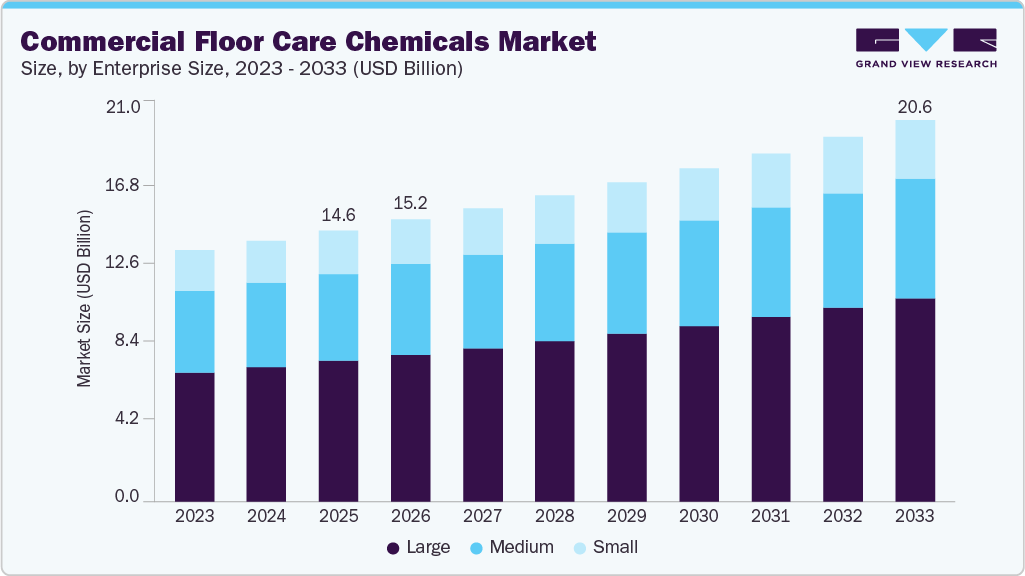
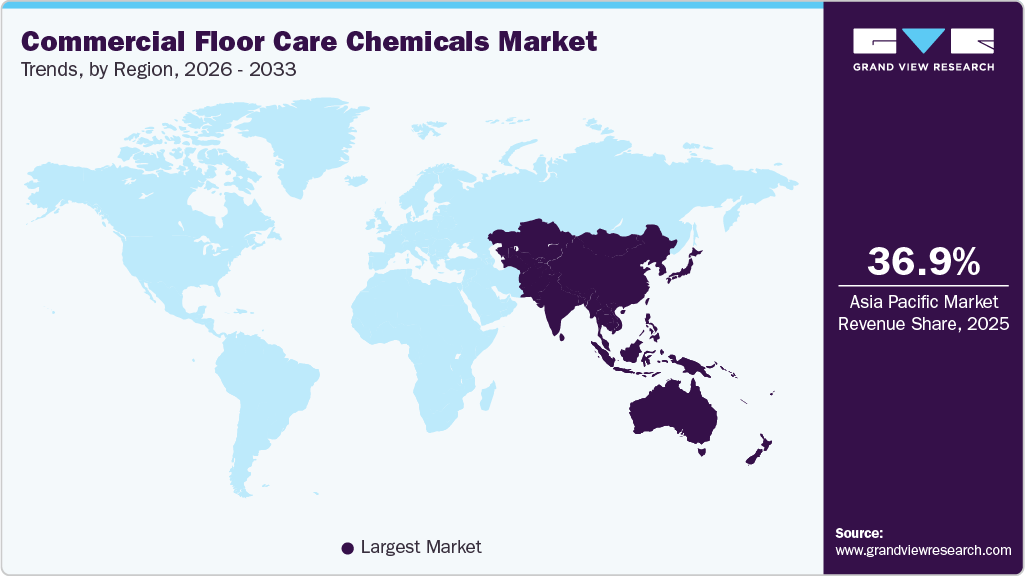
The global commercial floor care chemicals market size was valued at USD 14.6 billion in 2025 and is projected to grow from USD 15.2 billion in 2026 to USD 20.6 billion by 2033, at a CAGR of 4.4% from 2026 to 2033. The market in Asia Pacific dominated with a revenue share of 36.9% in 2025. The industry is primarily driven by the rapid expansion of the hospitality and healthcare sectors, which demand stringent cleanliness and infection control standards.
Key Market Trends & Insights
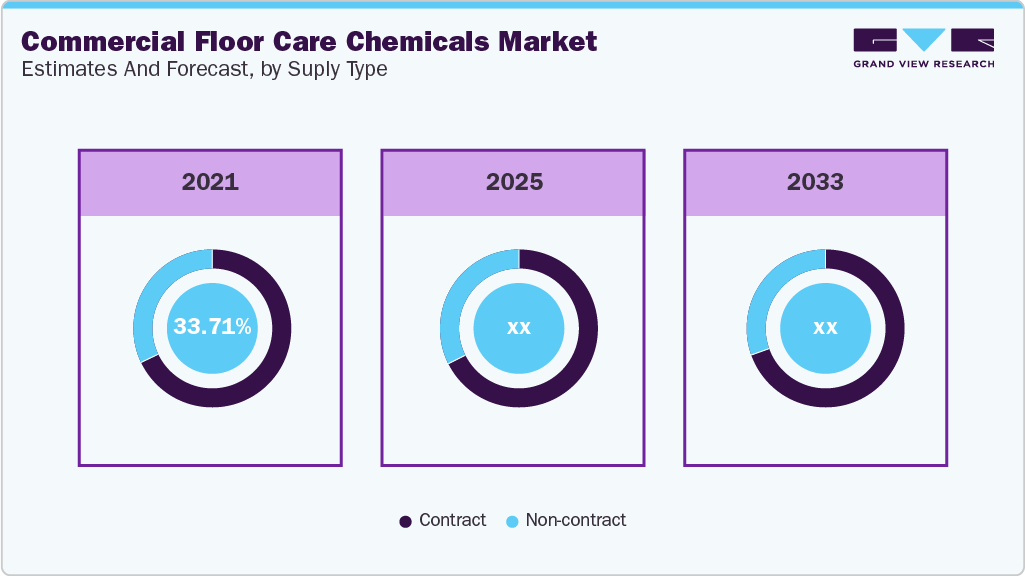
- By supply type: Contract-based commercial floor care chemicals segment held the largest market share of 67.3% in 2025.
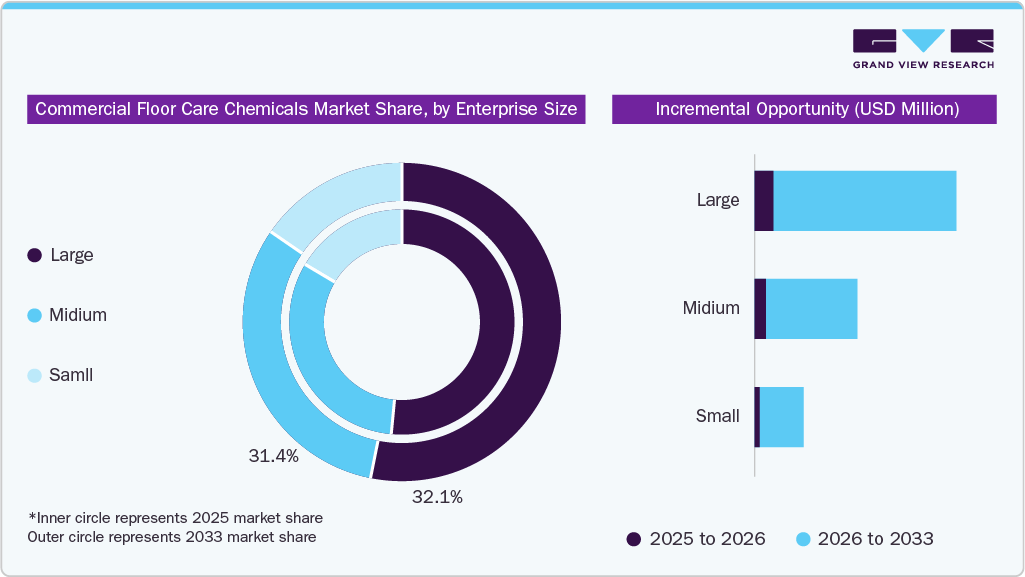
- By enterprise size: Large enterprise size segment held the largest market share of 51.9% in 2025.
- By product: Floor disinfectants segment held the largest market share of 31.7% in 2025.
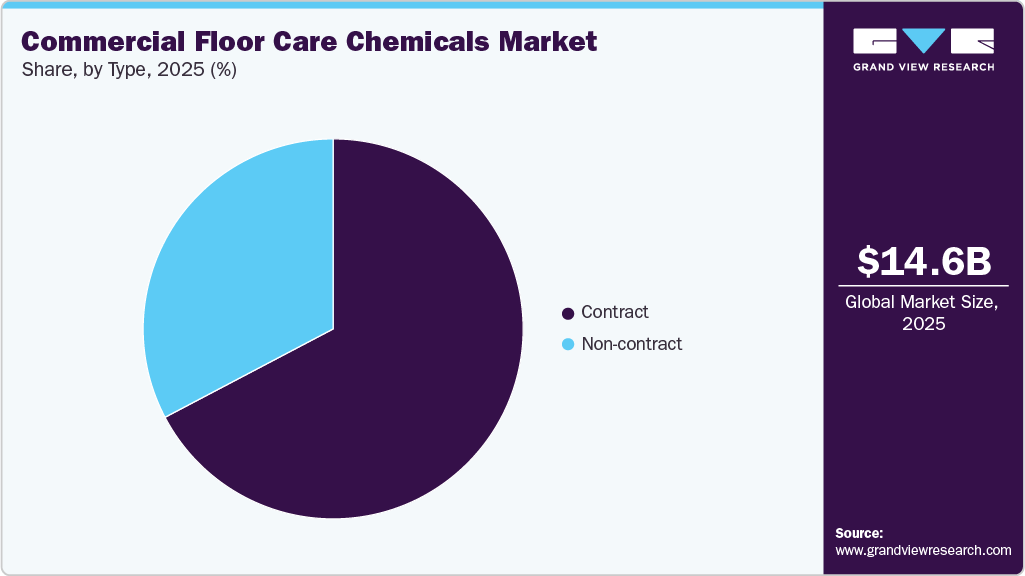
- By type: Contract-based commercial floor care chemicals segment held the largest market share of 67.3% in 2025.
- By end use: Food services segment held the largest market share of 18.9% in 2025.
Regional Highlights
- Largest regional market: Asia Pacific (36.9% revenue share, 2025)
- By country: China held the largest market share in 2025
Market Size & Forecast
- Market size in 2025: USD 14.6 Billion
- Estimated market size in 2026: USD 15.2 Billion
- Projected market size by 2033: USD 20.6 Billion
- CAGR (2026-2033): 4.4%
Prism AI by Grand View Research Free to tryAsk a question about the commercial floor care chemicals marketTry asking✓Every figure cited from GVR research Prefer the report? Download free sample →
Simultaneously, the surge in commercial real estate development, spanning corporate offices, retail complexes, and logistics hubs, is substantially increasing the addressable surface area requiring professional floor maintenance. In addition, regulatory mandates around workplace hygiene further reinforce sustained procurement of specialized floor care formulations.The proliferation of diverse flooring materials in commercial settings, including vinyl and linoleum, polished concrete, stone, and wood, has created a parallel demand for substrate-specific chemical solutions. Facility managers are increasingly moving away from universal cleaners toward pH-balanced, substrate-compatible formulations that preserve floor finish integrity while delivering effective soil removal. This shift is directly stimulating product innovation and SKU expansion among chemical manufacturers, driving both volume growth and premiumization within the market.
 Source: Grand View Research, IR Documents, Primary Interviews, Paid DatabasesTo learn more about this report,
 Download Free Sample Report
Additionally, the outsourcing of facility maintenance to professional cleaning service providers and integrated facility management (IFM) companies has become a structural growth enabler for the commercial floor care chemicals market. These entities operate large-scale procurement models, favoring concentrated chemical solutions, dilution control systems, and bulk supply contracts. As the global contract cleaning market continues to expand, particularly across emerging economies in Asia-Pacific and the Middle East, it is generating consistent, high-volume demand for commercial-grade floor care chemical products.
Evolving environmental and occupational health regulations, including EPA Safer Choice certifications, LEED compliance requirements, and OSHA slip-resistance standards, are compelling end-users and distributors to transition toward compliant, next-generation chemical formulations. Commercial facilities in regulated industries such as food & beverage processing, pharmaceuticals, and healthcare are mandated to use certified, residue-free floor care chemicals. This regulatory pressure is accelerating the replacement cycle of legacy products and creating sustained demand for reformulated, high-performance alternatives.
A significant regulatory development reinforcing this trend is the EPA's revision of its certification framework. In August 2024, the EPA announced updates to strengthen the Safer Choice and Design for the Environment (DfE) Standard, introducing toughened packaging criteria to eliminate PFAS from primary packaging, strengthening sustainable packaging requirements, and new optional energy efficiency criteria. Compounding this, the U.S. Green Building Council's LEED V4 Standard lists Safer Choice certification under the Existing Building Operations and Management (EBOM) green cleaning section, meaning commercial buildings can earn LEED points by procuring products carrying the Safer Choice label, directly embedding regulatory compliance into the floor care chemicals procurement cycle.
In addition, the COVID-19 pandemic fundamentally recalibrated hygiene benchmarks across all commercial verticals. Organizations across healthcare, education, retail, and corporate sectors have institutionalized elevated cleaning frequencies and multi-step floor decontamination protocols that were previously considered exceptional. Disinfectant-integrated floor cleaners and antimicrobial floor finish products have transitioned from niche categories to procurement staples. The specification of antimicrobial additives in finishes for shared spaces has emerged as a major post-pandemic trend, structurally expanding consumption frequency per facility and translating into measurable volume growth across the commercial floor care chemicals segment.
Company Market Share Insights
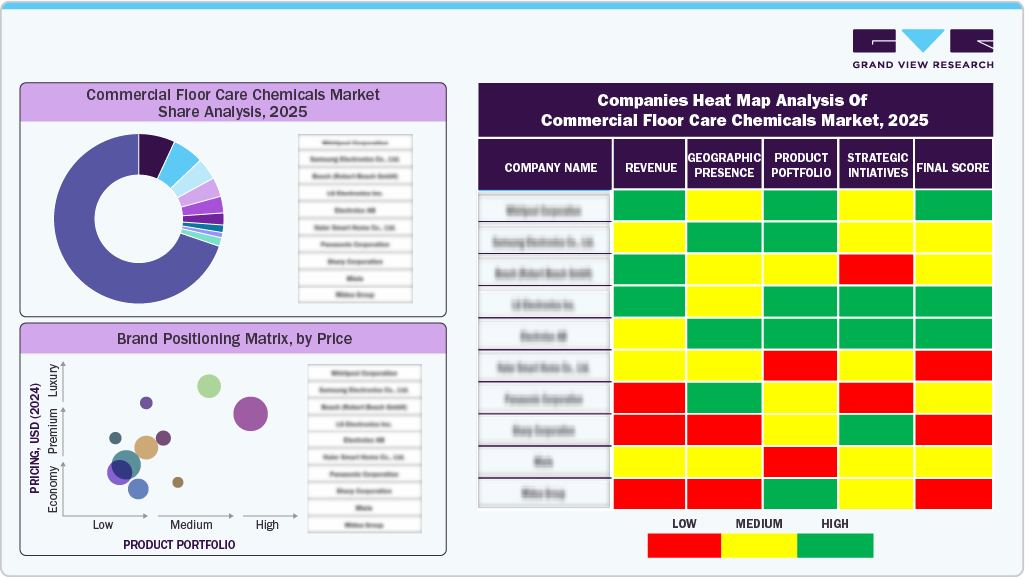
The global commercial floor care chemicals industry is highly competitive, driven by continuous product innovation and strong demand for high-performance cleaning, maintenance, and hygiene solutions. Major companies such as Ecolab Inc., Solenis Group, Procter & Gamble, 3M Company, and Reckitt Benckiser Group plc compete through frequent launches of advanced floor cleaners, finishes, and maintenance solutions, including disinfectant cleaners, high-durability floor coatings, and low-foam formulations for automated cleaning systems. Competition is increasingly centered on multifunctional formulations that combine cleaning efficiency, antimicrobial performance, and surface protection, along with sustainability-driven innovations such as low-VOC, biodegradable, and green-certified products. Growing regulatory pressure and rising demand from sectors such as healthcare, hospitality, and food service are accelerating the adoption of safer and more compliant chemical solutions.
 To learn more about this report, Download Free Sample Report
Product Insights
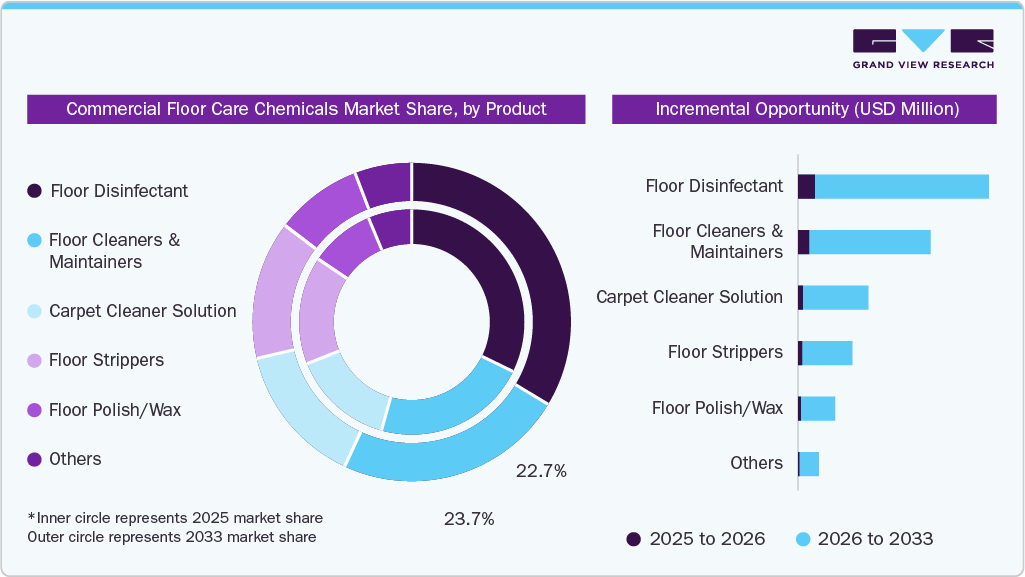
Floor disinfectants accounted for the largest market share of 31.7% in 2025. The demand for floor disinfectants is rising due to stricter infection-control protocols in hospitals and food-service facilities, where surface hygiene is directly tied to regulatory compliance and audit outcomes. Post-COVID-19 behavior shifts have institutionalized routine disinfection in commercial spaces. Growth is also driven by higher footfall in malls and transit hubs, increasing contamination risk, and by the adoption of mechanized cleaning systems that require low-foam, fast-acting formulations. Additionally, liability concerns and brand reputation push businesses toward certified, hospital-grade disinfectant solutions.
 To learn more about this report, Download Free Sample Report
Floor cleaners and maintainers are anticipated to grow at a CAGR of 5.0% from 2026 to 2033, driven by increased use of high-value flooring materials (vinyl, wood, concrete, stone) that require specialized maintenance to preserve finish and lifespan. Growth is driven by the expansion of organized retail, healthcare, and hospitality sectors, where appearance standards directly impact customer perception and audits. The adoption of automated scrubbers is boosting demand for low-residue, machine-compatible formulations. Additionally, labor cost pressures are pushing facilities toward high-efficiency products that reduce cleaning frequency and maintenance cycles.
End-use Insights
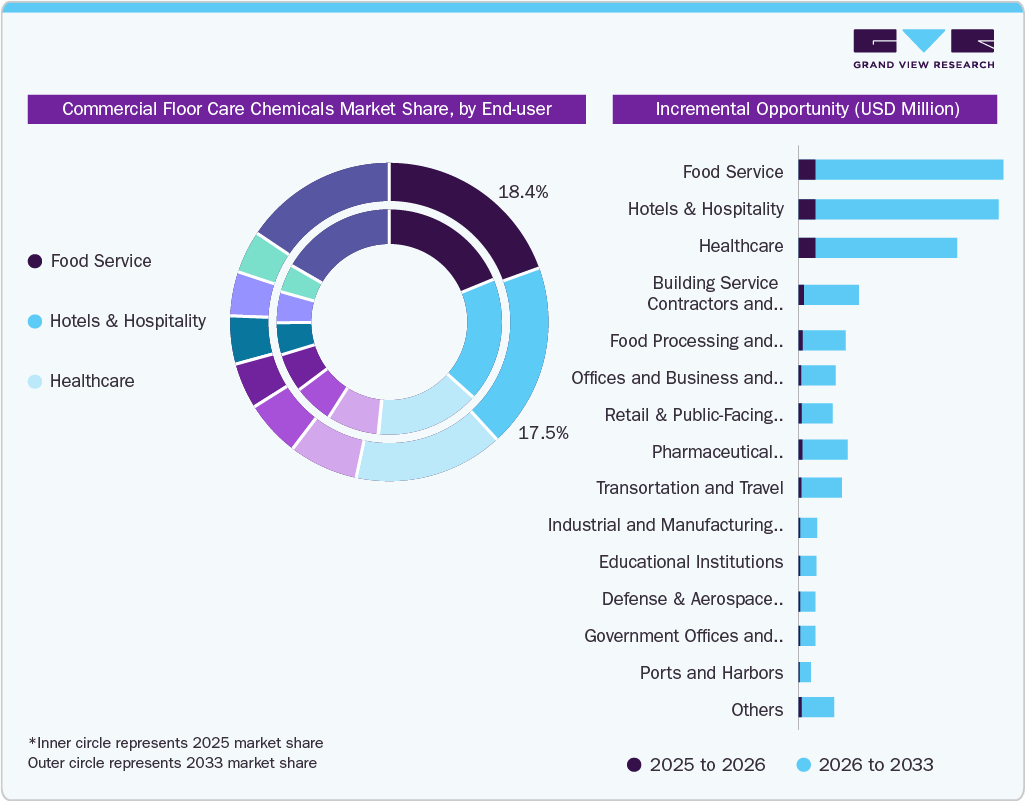
Commercial floor care chemicals in food service accounted for 18.9% of the market in 2025, driven by stringent hygiene and audit requirements under systems such as HACCP, where floor sanitation directly impacts compliance scores. High grease accumulation in kitchens necessitates heavy-duty degreasers and slip-resistant floor treatments. Rapid outlet expansion of QSR chains increases standardized cleaning protocols across locations. Additionally, liability risks from slip-and-fall incidents push the adoption of certified anti-slip and fast-drying formulations that minimize downtime during peak operating hours.
 To learn more about this report, Download Free Sample Report
Commercial floor care chemicals in hotels & hospitality is expected to grow at a CAGR of 5.1% from 2026 to 2033. Consumers are prioritizing hygiene, aesthetics, and operational efficiency in hospitality environments, driving demand for high-performance floor care chemicals. Hotels require spotless, well-maintained floors to meet brand standards and influence guest reviews and repeat bookings. High foot traffic necessitates durable finishes and quick-drying formulations to avoid disruption. Additionally, premium flooring materials demand specialized care, while labor constraints push the adoption of multipurpose, machine-compatible solutions that reduce cleaning time and ensure consistent results across properties. For instance, in July 2025, Ecolab Inc. launched its ReadyDose cleaning system, enabling precise dosing and efficient daily floor maintenance, supporting faster operations and consistent cleaning outcomes.
Supply Type Insights
Contract-based commercial floor care chemicals accounted for 67.3% of the market in 2025, supported by rising demand for integrated service models that bundle chemicals, equipment, and maintenance into fixed-cost agreements. Large facilities such as hospitals, airports, and hotel chains prefer these contracts to ensure consistent cleaning standards, regulatory compliance, and reduced reliance on in-house labor. Additionally, the growing use of automated floor cleaning systems is driving demand for supplier-managed dosing, training, and performance monitoring, further strengthening the adoption of contract-based supply models.
 To learn more about this report, Download Free Sample Report
Non-contract-based commercial floor care chemicals are expected to grow at a CAGR of 3.6% from 2026 to 2033, driven by demand from small and mid-sized facilities seeking procurement flexibility and lower upfront commitments. Businesses such as independent restaurants, small hotels, and retail outlets prefer spot purchasing to manage cash flow and switch suppliers based on price or performance. Additionally, availability through distributors and e-commerce platforms enables quick replenishment. Standardized formulations that do not require specialized equipment or service support further encourage adoption of non-contract purchasing models.
Enterprise Size Insights
The commercial floor care chemicals market for large enterprise size accounted for 51.9% in 2025, driven by multi-site standardization requirements, where consistent cleaning protocols must be maintained across facilities such as hospitals, airports, and retail chains. High floor area and foot traffic increase chemical consumption and demand for durable finishes and high-efficiency cleaners. Adoption of automated scrubbers and centralized procurement systems further drives the need for compatible, bulk-supply formulations. Additionally, strict audit, ESG, and safety compliance requirements push enterprises toward certified, high-performance chemical solutions.
 To learn more about this report, Download Free Sample Report
The medium enterprise segment is expected to grow at a CAGR of 4.1% from 2026 to 2033. Increasing operational scale and multi-location expansion among medium enterprises is driving demand for standardized floor care chemicals that deliver consistent results across sites. Growing adoption of scrubber-dryers and semi-automated systems is boosting the need for low-foam, machine-compatible formulations. Cost optimization pressures are leading to higher uptake of concentrated products that reduce dilution and logistics costs. Additionally, stricter hygiene audits in sectors like healthcare and retail are pushing businesses toward reliable, certified cleaning and maintenance solutions.
Type Insights
Contract-based commercial floor care chemicals accounted for 67.3% of the market in 2025, driven by increasing demand for customized service bundles aligned to facility complexity. Large multi-site operators prefer fully integrated Hygiene-as-a-Service (HaaS) and performance-based contracts for outcome assurance and KPI tracking, while healthcare and food service sectors drive uptake of training and compliance-inclusive contracts to meet audit standards. Equipment-inclusive models are expanding with automation adoption, whereas smaller facilities opt for product-only contracts to retain cost control while ensuring supply consistency.
 To learn more about this report, Download Free Sample Report
Non-contract-based commercial floor care chemicals are expected to grow at a CAGR of 3.6% from 2026 to 2033. Consumers are favoring flexible, need-based procurement of commercial floor care chemicals, driving demand for non-contract-based offerings by type. Small and mid-sized operators prefer standalone purchases of cleaners, disinfectants, and finishes based on immediate usage and budget cycles. High-consumption environments require frequent replenishment of consumables, while easy availability through distributors and e-commerce supports quick sourcing. Additionally, standardized, user-friendly formulations eliminate the need for technical support or bundled services, encouraging independent purchasing decisions across product categories.
Regional Insights
The North America commercial floor care chemicals market accounted for a share of 24.1% in 2025. North America is experiencing strong growth in commercial floor care chemicals driven by stringent regulatory oversight from agencies such as the EPA and OSHA, which enforce the use of compliant and safer formulations. High labor costs are accelerating the adoption of automated cleaning systems, increasing demand for machine-compatible chemicals. Additionally, widespread implementation of green building standards such as LEED is boosting demand for sustainable solutions. Large facility operators, including healthcare networks and retail chains, are also prioritizing centralized procurement and standardized cleaning protocols, driving bulk consumption of high-performance products. Increasing focus on workplace safety and slip-resistance is further supporting demand for specialized floor treatments and maintainers.
U.S. Commercial Floor Care Chemicals Market Trends
The commercial floor care chemicals industry in the U.S. is expected to grow at a CAGR of 3.1% from 2026 to 2033. The U.S. market is driven by stringent occupational health and safety mandates enforced by OSHA, along with the EPA’s Safer Choice certification program, which is compelling formulators to develop low-VOC, biodegradable chemistries suited for enclosed commercial environments. The healthcare sector remains a key demand driver, where hospital-acquired infection (HAI) prevention protocols are accelerating the use of EPA-registered disinfectant floor cleaners across acute and long-term care facilities. LEED v4 green building requirements further support the adoption of environmentally preferable products. Additionally, the country’s extensive retail, hospitality, and education infrastructure, combined with rising outsourcing to facilities management providers, is sustaining volume demand, while high labor costs are driving uptake of high-dilution concentrate formats to optimize cost-in-use.
Canada commercial floor care chemicals market is expected to grow at a CAGR of 4.2% from 2026 to 2033. The market is driven by a dual-layered regulatory environment, governed federally by Health Canada through the Workplace Hazardous Materials Information System (WHMIS), alongside province-specific occupational health mandates that establish a rigorous compliance baseline for chemical procurement. The country’s harsh winter climate further drives demand for alkaline degreasers and strippers capable of removing salt and ice-melt residues from high-traffic flooring. Healthcare and post-secondary institutions remain key end-use sectors, with purchasing influenced by green certification standards such as EcoLogo. Additionally, bilingual labeling requirements under the Canada Consumer Product Safety Act shape formulation and packaging strategies, while expanding outsourced facility services across urban commercial real estate continue to support volume growth.
Europe Commercial Floor Care Chemicals Market Trends
The commercial floor care chemicals industry in Europe accounted for a revenue share of 19.8% of the global market in 2025. The European market is driven by stringent regulatory compliance under REACH and the CLP Regulation, which are reshaping product formulations by accelerating the shift away from solvent-heavy chemistries toward bio-based and enzymatic alternatives. Institutional demand is further influenced by the European Commission through its Green Public Procurement (GPP) framework and the EU Ecolabel scheme, particularly across government, healthcare, and transport infrastructure. Growth in the hospitality sector across the Mediterranean and Northern Europe is sustaining demand for high-performance solutions. Additionally, the Circular Economy Action Plan is promoting concentrate formats and refill systems, driving innovation in packaging and distribution.
Francecommercial floor care chemicals industry accounted for a revenue share of around 18.2% on the European market in 2025. The French market is driven by the country’s position as a major global tourism hub, where dense hospitality infrastructure, including luxury hotels, conference centers, and heritage sites, creates sustained demand for specialized, surface-specific floor care formulations. Regulatory oversight by ANSES enforces strict biocidal product approvals alongside EU-level REACH compliance, raising entry barriers for suppliers. Public sector procurement is further shaped by AFNOR certification standards. Additionally, a well-established contract cleaning sector operating under collective labor agreements ensures consistent chemical usage across commercial real estate and healthcare, while increasing demand for NF Environnement products is driving a gradual shift toward sustainable formulations.
The commercial floor care chemicals market in the UK is expected to grow at a CAGR of 3.3% from 2026 to 2033. Regulatory divergence following Brexit is a key driver of the UK commercial floor care chemicals market, as UK REACH, administered by the Health and Safety Executive, now requires separate compliance from EU frameworks, increasing complexity for suppliers. The National Health Service significantly influences demand through centralized procurement of disinfectant floor cleaners. A highly developed outsourced facilities management sector further supports consistent chemical consumption via long-term service agreements across commercial real estate and infrastructure. Additionally, evolving regulatory requirements such as UKCA marking and growing emphasis on sustainable procurement are shaping product development and market positioning strategies.
Asia Pacific Commercial Floor Care Chemicals Market Trends
The commercial floor care chemicals market in Asia Pacific accounted for the largest revenue share of 36.9% of the global market in 2025. Rapid urban expansion and infrastructure development across the Asia Pacific are key drivers of the commercial floor care chemicals market, with increasing construction of large-format retail spaces, airports, and mixed-use developments expanding demand. Heightened hygiene awareness post-COVID-19 has raised institutional cleaning standards in countries such as Australia, Japan, South Korea, and Singapore, supported by regulatory frameworks including the National Environment Agency and AICIS. Growth in hospitality and healthcare infrastructure, particularly across ASEAN markets, is further boosting demand. Additionally, varying labor cost structures across the region are influencing the adoption of both manual cleaning chemicals and advanced formulations for automated systems, creating diverse product requirements.
 To learn more about this report, Download Free Sample Report
Chinacommercial floor care chemicals market accounted for a revenue share of around 55.3% on the Asia Pacific market in 2025. China’s expanding commercial construction pipeline across Tier 1 to Tier 3 cities is a key driver of the commercial floor care chemicals market, with large-scale development of mixed-use complexes, healthcare campuses, and transport infrastructure generating sustained demand. Regulatory oversight under the GB Standards framework, enforced by the State Administration for Market Regulation, is shaping formulation and labeling compliance. Additionally, VOC emission controls led by the Ministry of Ecology and Environment are accelerating the shift toward water-based, low-emission products. Centralized procurement through state-owned enterprise-led facility management contracts further supports high-volume consumption, while domestic manufacturers intensify competition through aggressive pricing and deep distribution across emerging urban markets.
The commercial floor care chemicals market in India is expected to grow at a CAGR of 6.9% from 2026 to 2033. India’s expanding organized commercial real estate sector, anchored by IT/ITES office parks, retail malls, and healthcare institutions under schemes such as Ayushman Bharat, is driving incremental demand for commercial floor care chemicals. Regulatory oversight by the Bureau of Indian Standards is gradually formalizing product certification in institutional procurement. Additionally, urban initiatives such as the Smart Cities Mission are elevating hygiene requirements across public infrastructure. Rising labor costs in metro areas are pushing outsourced housekeeping providers toward concentrated, multi-surface formulations for efficiency. At the same time, import duties are encouraging domestic manufacturing, enabling local players to compete effectively on price and distribution.
Central & South America Commercial Floor Care Chemicals Market Trends
The commercial floor care chemicals market in Central & South America is expected to grow at a CAGR of 5.5% from 2026 to 2033. The market is driven by Brazil’s relatively formalized regulatory environment, where oversight by ANVISA and environmental compliance mandates shape supplier strategies across the region. The country’s extensive public healthcare network under Sistema Único de Saúde represents a major demand center for disinfectant floor care products. In Mexico, growth in automotive and aerospace manufacturing hubs is increasing demand for industrial-grade floor maintenance chemicals. Additionally, the region’s transition from informal cleaning labor to organized facility management services is improving procurement standardization and distribution reach, while currency volatility and import tariffs are encouraging local formulation over finished product imports.
Middle East & Africa Commercial Floor Care Chemicals Market Trends
The commercial floor care chemicals industry in the Middle East & Africa is expected to grow at a CAGR of 4.6% from 2026 to 2033. The growth of the market in the Middle East & Africa is being strongly driven by large-scale infrastructure and commercial construction activity across the region, supported by initiatives such as Saudi Vision 2030 and similar development programs in the UAE and Qatar, which are accelerating demand for durable and high-performance flooring and maintenance solutions. Expanding commercial real estate, hospitality, and healthcare infrastructure is further reinforcing the need for specialized floor care chemicals, particularly in high-traffic institutional environments.
Key Commercial Floor Care Chemical Companies Insights
Key players operating in the market are undertaking various initiatives to strengthen their presence and increase the reach of their products and services. Strategies such as expansion activities and partnerships are key in propelling the market growth.
Key Commercial Floor Care Chemical Companies:
The following key companies have been profiled for this study on the commercial floor care chemicals market.
- Ecolab Inc.
- Solenis Group
- Procter & Gamble
- 3M Company
- Henkel AG & Co. KGaA
- The Clorox Company
- Reckitt Benckiser Group plc
- S.C. Johnson & Son, Inc.
- Zep Inc.
- Spartan Chemical Company, Inc.
- Betco Corporation
- Kao Corporation
Recent Developments
-
In April 2026, P&G PRO launched Mr. Clean PRO, positioning it as a “dependable new employee” with a full portfolio of professional-grade cleaning solutions for commercial use. The new range is designed to help businesses clean more efficiently, tackling grease, stains, and grime with advanced formulations across floors and high-touch surfaces.
-
In November 2025, Ecolab launched its Scientific Clean range in Canada through an expanded partnership with The Home Depot, introducing professional-grade cleaning solutions across retail channels. The rollout includes a portfolio of commercial floor care chemicals alongside degreasers and other solutions, designed to deliver high-performance cleaning for commercial and industrial environments.
-
In March 2025, SC Johnson Professional launched its Multi-Surface and EZ Care floor care systems in Canada, expanding its commercial cleaning portfolio. The launch focuses on advanced commercial floor care chemicals and coatings designed to simplify maintenance, deliver durable finishes, and improve efficiency in professional cleaning operations.
-
In October 2024, Kao Vietnam introduced a new Magiclean floor cleaning solution focused on delivering a superior, hassle-free cleaning experience for modern households. The launch emphasizes advanced formulations that effectively remove dirt and grease while ensuring quick-drying, residue-free floors, reinforcing Kao’s push toward more efficient and hygienic floor care solutions.
Commercial Floor Care Chemicals Market Report Scope
Report Attribute
Details
Market size in 2025
USD 14.6 billion
Estimated market size in 2026
USD 15.2 billion
Projected market size by 2033
USD 20.6 billion
Growth rate
CAGR of 4.4% from 2026 to 2033
Base year for estimation
2025
Historical data
2021 - 2025
Forecast period
2026 - 2033
Quantitative units
Revenue in USD million/billion, and CAGR from 2026 to 2033
Report coverage
Revenue forecast, company ranking, competitive landscape, growth factors, and trends
Segments covered
Product, end-use, supply type, type, enterprise size, region
Regional scope
North America; Europe; Asia Pacific; Central & South America; and Middle East & Africa
Country scope
U.S.; Canada; UK; Germany; France; Italy; Spain; Poland; China; India; Japan; South Korea; Australia & New Zealand; Malaysia; Thailand; Vietnam; Brazil; Argentina; Mexico; South Africa; Saudi Arabia; UAE
Key companies profiled
Ecolab Inc.; Solenis Group; Procter & Gamble; 3M Company; Henkel AG & Co. KGaA; The Clorox Company; Reckitt Benckiser Group plc; S.C. Johnson & Son, Inc.; Zep Inc.; Spartan Chemical Company, Inc.; Betco Corporation; Kao Corporation
Customization scope
Free report customization (equivalent up to 8 analysts working days) with purchase. Addition or alteration to country, regional & segment scope.
Pricing and purchase options
Avail customized purchase options to meet your exact research needs. Explore purchase options
Global Commercial Floor Care Chemicals Market Report Segmentation
This report forecasts revenue growth at global, regional & country levels and provides an analysis of the latest trends and opportunities in each of the sub-segments from 2021 to 2033. For this study, Grand View Research has segmented the global commercial floor care chemicals market report on the basis of product, end-use, supply type, type, enterprise size, and region.
-
Product Outlook (Revenue, USD Million, 2021 - 2033)
-
Floor Cleaners and Maintainers
-
Stone Cleaners
-
Concrete Cleaners
-
Wood Cleaners
-
Vinyl & Linoleum Cleaners
-
-
Floor Disinfectant
-
Carpet Cleaner Solution
-
Floor Polish/Wax
-
Floor Strippers
-
Others (Finishes & Sealers, Restorers, etc.)
-
-
End-use Outlook (Revenue, USD Million, 2021 - 2033)
-
Healthcare
-
Hospitals
-
Senior Living and Retirement Communities
-
Medical Centers (Life Science, Biotech, Research Centers)
-
Ambulatory Surgical Centers
-
Doctor's Offices and Clinics
-
Others (Small Rehab Centers, etc.)
-
-
Food Service
-
Restaurants & Beverage Outlets
-
Cafés, Bars, and Pubs
-
Catering Establishments
-
Informal and Mobile Food Service Establishments
-
-
Hotels & Hospitality
-
Hotels & Resorts
-
Non-Hotel & Alternative Hospitality Accommodation
-
Leisure and Entertainment Parks
-
Event Venues and Recreational Facilities
-
-
Industrial and Manufacturing Facilities
-
Food Processing and Beverage Facilities
-
Pharmaceutical Manufacturing
-
Defense & Aerospace Facilities
-
Building Service Contractors and Facility Management Companies
-
Retail & Public-Facing Commercial Spaces
-
Educational Institutions
-
Transportation and Travel
-
Airports
-
Railway Stations
-
Bus Terminals and Depots
-
Metro and Subway Systems
-
-
Ports and Harbors
-
Offices and Business Parks
-
Government Offices and Buildings
-
Others (Religious Institutions, etc.)
-
-
Supply Type Outlook (Revenue, USD Million, 2021 - 2033)
-
Contract
-
Service-Led Contract Holders
-
Building Service Contractors (BSCs)
-
Facilities Management (FM) Companies
-
-
End-user-led contract holders
-
Group Purchasing Organizations (GPOs)
-
-
Non-contract
-
-
Type Outlook (Revenue, USD Million, 2021 - 2033)
-
Contract
-
Product-Only Supply Contracts
-
Service Inclusive Contracts
-
Equipment Inclusive Supply Contracts
-
Training & Compliance Inclusive Contracts
-
Fully Integrated Hygiene-as-a-Service (HaaS)/Performance-Based
-
-
Non-contract
-
-
Enterprise Size Outlook (Revenue, USD Million, 2021 - 2033)
-
Small
-
Medium
-
Large
-
-
Regional Outlook (Revenue, USD Million, 2021 - 2033)
-
North America
-
U.S.
-
Canada
-
-
Europe
-
UK
-
Germany
-
France
-
Italy
-
Spain
-
Poland
-
-
Asia Pacific
-
China
-
India
-
Japan
-
South Korea
-
Australia & New Zealand
-
Malaysia
-
Vietnam
-
Thailand
-
-
Central & South America
-
Brazil
-
Argentina
-
Mexico
-
-
Middle East & Africa
-
South Africa
-
Saudi Arabia
-
UAE
-
-
Frequently Asked Questions About This Report
Asia Pacific dominated with a 36.9% revenue share in 2025.
Food services segment accounted for the largest revenue share of18.9% in 2025.
The contract-based segment dominated the market in 2025 and accounted for the largest revenue share of 67.3%.
Large enterprise size segment dominated the market, with a revenue share of 51.9% in 2025.
Contract-based segment held the largest share (over 67.0%) in 2025.
The floor disinfectants segment led with a 31.7% revenue share in 2025.
Key players include Ecolab Inc.; Solenis Group; Procter & Gamble; 3M Company; Henkel AG & Co. KGaA; The Clorox Company; Reckitt Benckiser Group plc; S.C. Johnson & Son, Inc.; Zep Inc.; Spartan Chemical Company, Inc.; Betco Corporation; Kao Corporation.
The global commercial floor care chemicals market size was valued at USD 14.6 billion in 2025 and is estimated at USD 15.2 billion for 2026.
The global commercial floor care chemicals market is expected to grow at a CAGR of 4.4% from 2026 to 2033, reaching USD 20.6 billion by 2033.
Key factors driving market growth include rising hygiene standards, expanding commercial infrastructure, and increasing adoption of automated cleaning solutions.
About the Author(s)
Homecare & Decor Research Team
Consumer Goods · Homecare & DecorThis report was authored by the homecare & decor research team at Grand View Research - comprising two research analysts, one senior research analyst, and one industry expert - with specialized expertise in the homecare & decor segment of the consumer goods industry. All findings are based on proprietary consumer goods databases, executive interviews, and regulatory analysis, subject to internal peer review prior to publication.
Last Updated:
Speak to Analyst

Customize this report to your needs - add regions, segments, or data points, with 20% free customization.
Or view our licence options:


ISO 9001:2015 & 27001:2022 Certified
We are GDPR and CCPA compliant! Your transaction & personal information is safe and secure. For more details, please read our privacy policy.


