
- Home
- »
- Communications Infrastructure
- »
-
Data Center Transformer Market Size Report, 2026-2033GVR Report cover

Data Center Transformer Market (2026 - 2033)
Size, Share, & Trends Analysis Report By Insulation Type (Oil Immersed, Dry), By Voltage (1,250-3,750 kVA, Over 3,750 kVA), By Channel Partners (OEMs, Distributors), By Region, And Segment Forecasts
Market Size, 2025
$8.4BMarket Estimate, 2026
$8.9BMarket Forecast, 2033
$14.5BCAGR, 2026–2033
7.2%Data Center Transformer Market Summary
The global data center transformer market size was valued at USD 8.4 billion in 2025 and is projected to grow from USD 8.9 billion in 2026 to USD 14.5 billion in 2033, at a CAGR of 7.2% from 2026 to 2033. The market in North America dominated with a revenue share of 36.2% in 2025. The growing deployment of high-density computing infrastructure increases power consumption requirements, driving demand for large-capacity transformers that ensure reliable power distribution and support continuous operations.
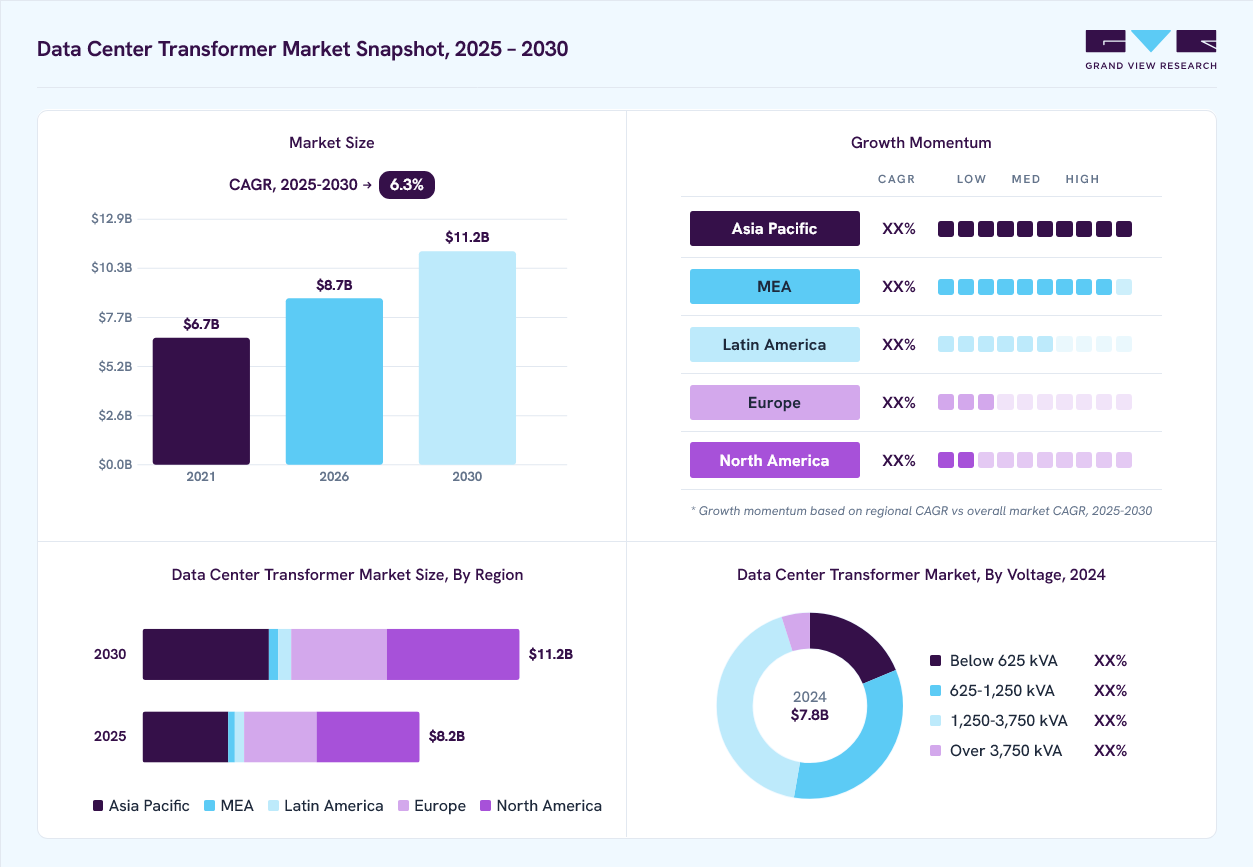 Source: Grand View Research, IR Documents, Primary Interviews, Paid DatabasesTo learn more about this report,
 Download Free Sample Report
 Key Market Trends & Insights
- By insulation type: Oil immersed segment dominated the market, with a revenue share of 76.9% in 2025
- By voltage: 1,250-3,750 kVA segment held the largest market share of 42.6% in 2025
- By channel partners: OEMs segment held the largest revenue share in 2025
Regional Highlights
- Largest regional market: North America (36.2% revenue share, 2025)
- Fastest-growing regional market: Asia Pacific (highest CAGR, 2026-2033)
- By country: The U.S. held the largest market share in 2025.
Market Size & Forecast
- Market size in 2025: USD 8.4 Billion
- Estimated market size in 2026: USD 8.9 Billion
- Projected market size by 2033: USD 14.5 Billion
- CAGR (2026-2033): 7.2%
Three ways to get this report
Buy it, customize it, or ask a question.Ask an Analyst
Analyst response in 1 business day
- AccessReport author, directly
- Reply timeWithin 1 working day
- No sales callDirect answer only
- FormatEmail reply
- CostFree, no cost
Get the Full Report
What the study covers
- FormatsPDF · Excel · Dashboard
- Timeline2026–2033 annual, 2025 base
- Coverage20+ countries, 5 regions
- Companies10+ key players profiled
Customize the Report
20% free customization
- IncludeCountries, segments, points
- TailorTo your product definition
- ExtendDeeper competitor detail
- OrA fully bespoke study
- Turnaround5–10 working days
Primarily, the market growth is driven by the rapid expansion of data centers globally, fueled by the growing demand for cloud computing, big data analytics, and internet services. The increasing digitalization across industries, coupled with the rise of IoT (Internet of Things) and AI (Artificial Intelligence), has resulted in a surge of data processing and storage needs, necessitating more robust and efficient power infrastructure. Moreover, the adoption of renewable energy sources in data center operations has also created demand for energy-efficient transformers. The emphasis on reducing energy consumption and minimizing carbon footprints in large-scale data center facilities further propels the growth of the data center transformer market. Additionally, stringent regulations surrounding power efficiency and sustainability have encouraged data center operators to invest in advanced transformer technologies.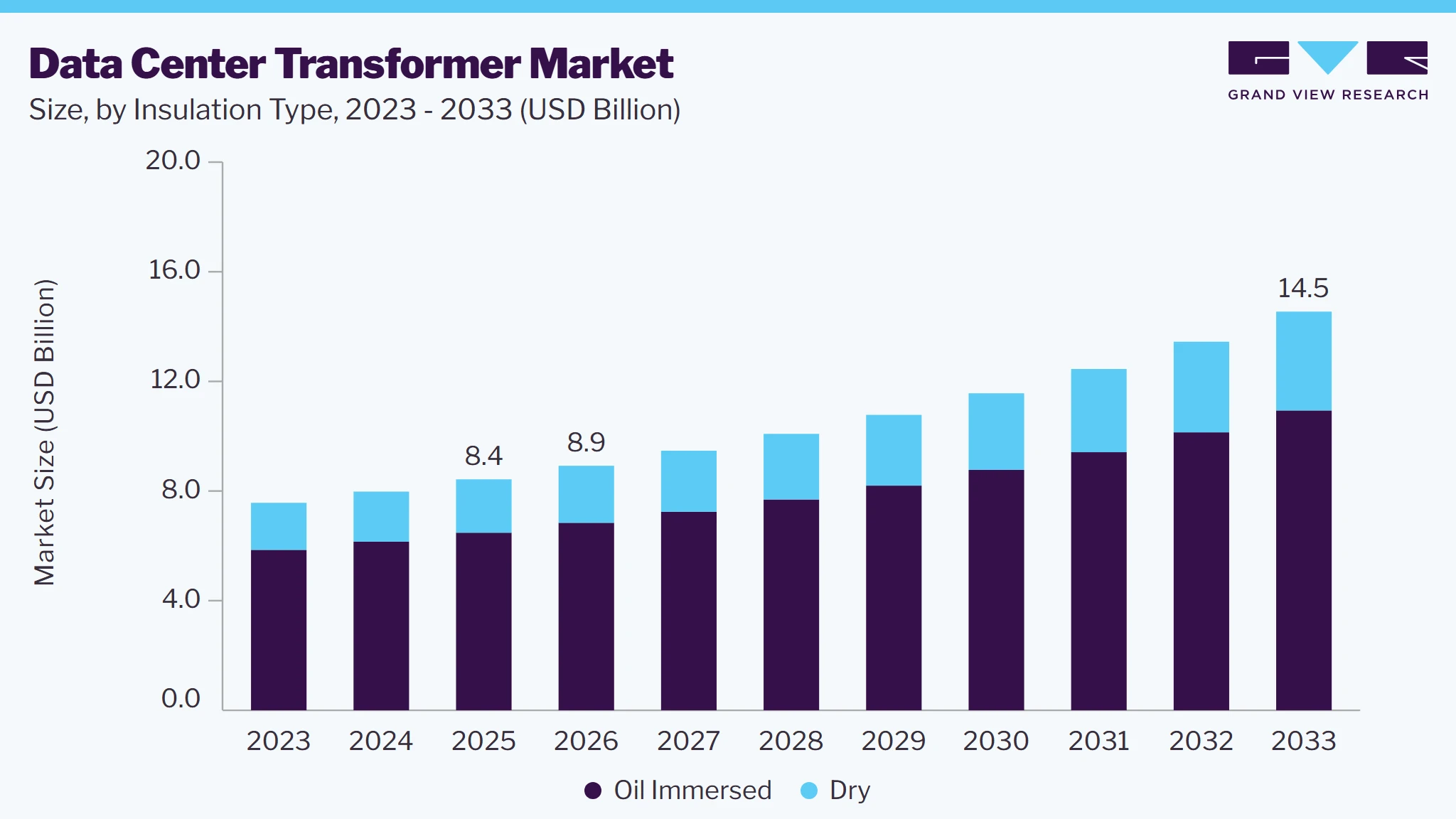 To learn more about this report, Download Free Sample Report
 The rapid expansion of data centers globally significantly drives the data center transformer market by escalating the demand for reliable and efficient power solutions supporting large-scale operations. As data centers increase to accommodate growing digital storage and processing needs, primarily driven by cloud computing, artificial intelligence, big data analytics, and IoT applications, there is a corresponding need for transformers designed to ensure consistent and stable power distribution. These transformers play a critical role in meeting high-energy demands while maintaining operational efficiency and reducing downtime, which is crucial in data-intensive environments. Additionally, as data centers aim to incorporate more sustainable energy sources, such as solar or wind, the market for energy-efficient transformers tailored to handle variable power inputs is further strengthened, making transformers an indispensable component in the modern data center infrastructure.
The data centers have witnessed unprecedented growth in technologies and services over the years. There has been an increase in IT spending by organizations to simplify operations and data storage capabilities. Rapidly growing data traffic is driving data storage demand, which has resulted in the continuous expansion of the global data center market. Data center structures are associated with more power consumption and are increasing in proportion and size day by day. Furthermore, the growing workload on the data centers has, in turn, increased the demand for better quality power supply. These factors further justify the presence of transformers in a data center and have contributed to the market's growth.
The need to ensure effective power distribution across data centers has led to the advent of smart transformers. Smart transformers are equipped with intelligent electronic devices and control systems that allow the operator to remotely monitor the behavior of the transformer core, bushings, and windings, among other transformer components. The smart transformer also has a system that sends feedback about the power fluctuations to the grid so that voltage can be optimized according to the load requirement. The transformer also responds instantly to the fluctuations across the grid and acts as a voltage regulator, thus ensuring an optimum amount of voltage distribution across the data center. Thus, the market is anticipated to witness an elevated demand for smart transformers over the next few years.
Market Dynamics
Data center transformers are witnessing increasing demand as they play a critical role in ensuring reliable power distribution, voltage regulation, grid connectivity, backup power integration, and energy-efficient operation of modern data centers. These transformer solutions enable data center operators to support high-density computing environments, minimize power losses, enhance electrical reliability, and maintain uninterrupted operations for mission-critical workloads. The rapid expansion of hyperscale facilities, cloud computing infrastructure, colocation data centers, and AI-driven computing environments is significantly accelerating transformer deployments worldwide. Furthermore, the growing emphasis on energy efficiency, renewable energy integration, smart grid connectivity, and sustainable data center operations is driving the adoption of advanced transformer technologies equipped with real-time monitoring, predictive maintenance, and intelligent power management capabilities. Increasing investments in digital infrastructure modernization, coupled with rising electricity requirements from artificial intelligence, high-performance computing (HPC), and edge computing applications, are expected to further support the continued growth of the data center transformer market.
The rapid expansion of hyperscale, cloud, and AI-driven data centers is a major driver of the data center transformer market, as operators require robust power infrastructure to support increasingly energy-intensive workloads. Data center transformers play a critical role in voltage conversion, power distribution, and electrical reliability, ensuring uninterrupted operations for mission-critical applications. The growing adoption of artificial intelligence, machine learning, cloud computing, and high-performance computing (HPC) is significantly increasing power consumption across data centers worldwide. To accommodate higher power densities and support large-scale digital infrastructure deployments, operators are investing in advanced transformer solutions that enhance efficiency, scalability, and grid connectivity, thereby driving market growth.
Transformer supply constraints and high capital investment requirements remain significant restraints for the data center transformer market. Large power and distribution transformers require substantial investments in engineering, manufacturing, transportation, installation, and commissioning. In addition, increasing demand from utilities, renewable energy projects, industrial facilities, and data centers has created supply chain bottlenecks, resulting in extended lead times and rising equipment costs. Data center developers often face challenges in securing transformer capacity within project timelines, which can delay facility construction and expansion plans. Furthermore, fluctuations in the prices of copper, electrical steel, and insulation materials add to overall project costs, limiting adoption among cost-sensitive operators.
The growing focus on sustainability, energy efficiency, and renewable energy integration presents a significant opportunity for the data center transformer market. Modern transformers are increasingly being equipped with intelligent monitoring systems, IoT-enabled sensors, predictive maintenance capabilities, and advanced cooling technologies that improve operational efficiency and reduce power losses. As data center operators pursue carbon reduction goals and integrate renewable energy sources such as solar and wind power into their energy mix, demand for smart transformers capable of managing variable power loads and enhancing grid stability is expected to increase. The transition toward green data centers, coupled with investments in AI-ready and high-density computing facilities, is creating substantial growth opportunities for transformer manufacturers and power infrastructure providers.
Analyst Perspective
The data center transformer market is being driven by rapid hyperscale data center expansion, accelerating AI adoption, growing cloud computing demand, and increasing focus on energy-efficient digital infrastructure. Data center operators, cloud providers, and enterprises are investing in advanced power distribution systems to support higher-density computing environments and ensure uninterrupted operations. As power requirements rise, transformers are becoming critical for reliable voltage regulation, grid connectivity, renewable energy integration, and operational resilience. Manufacturers offering high-efficiency transformer technologies, intelligent monitoring, predictive maintenance, and scalable power infrastructure solutions will be best positioned to capitalize on market growth. The increasing adoption of renewable energy, sustainability initiatives, and real-time power management technologies is further strengthening demand for advanced transformer systems across modern data centers.
Insulation Type Insights
Based on insulation type, the oil immersed segment led the market with the largest revenue share of 76.9% in 2025 and is expected to grow at the significant CAGR over the forecast period. The adoption of oil immersed insulation transformers is primarily driven by their high efficiency, robust performance, and superior cooling capabilities. These transformers utilize insulating oils, which not only provide effective insulation but also serve as a medium for heat dissipation, allowing the transformer to handle larger loads and endure prolonged operational cycles. Their reliability in high-load applications makes them well-suited for use in industrial settings, utility grids, and large-scale infrastructure projects where consistent power delivery is essential. Furthermore, advancements in eco-friendly, biodegradable insulating oils have improved their environmental profile, making oil-immersed transformers a viable choice for regions with stringent environmental regulations.
The dry insulation type segment is expected to grow significantly during the forecast period. The adoption of dry type insulation transformers is driven by their enhanced safety, lower maintenance requirements, and suitability for indoor environments. Unlike oil-immersed models, dry-type transformers use air or other solid insulation materials, eliminating the need for flammable insulating fluids and significantly reducing fire hazards. This makes them particularly appealing in settings where safety is a priority, such as commercial buildings, hospitals, schools, and densely populated areas. Additionally, dry-type transformers offer a compact design and require minimal maintenance, which makes them ideal for urban installations with limited space and stringent safety standards. The increased focus on eco-friendly, oil-free insulation options further supports the rising demand for dry-type transformers, especially in regions with rigorous environmental and safety regulations.
Voltage Insights
Based on voltage, the 1,250-3,750 kVA segment led the market with the largest revenue share of 42.6% in 2025. The adoption of 1,250-3,750 kVA transformers in the data center market is driven by the rapid growth of small to medium-sized data centers that require reliable and scalable power infrastructure. This voltage range is well-suited for data centers that experience moderate workloads and seek efficient power distribution without needing extremely high capacity. The 1,250-3,750 kVA transformers offer an optimal balance between energy efficiency and operational cost, which is ideal for data centers focusing on sustainable energy management. These transformers are also easier to install and maintain, making them attractive for operators looking to optimize capital expenditures while maintaining reliable power performance in less intensive data center environments.
The over 3,750 kVA segment is expected to grow at a significant rate during the forecast period. The adoption of transformers in the over 3,750 kVA segment is primarily driven by the increasing demand for high-capacity power solutions in large-scale data centers and hyperscale facilities. As the data processing needs of industries continue to rise, driven by advancements in cloud computing, AI, and big data, these large data centers require transformers with higher voltage capacities to ensure uninterrupted and stable power delivery. The over 3,750 kVA transformers support critical infrastructure, enabling efficient load handling and operational stability even during peak demand. Additionally, as hyperscale facilities expand to accommodate growing digital services, transformers in this segment provide the necessary power efficiency and resilience to support high-density, energy-intensive environments, making them essential for large, mission-critical data center applications.
Channel Partners Insights
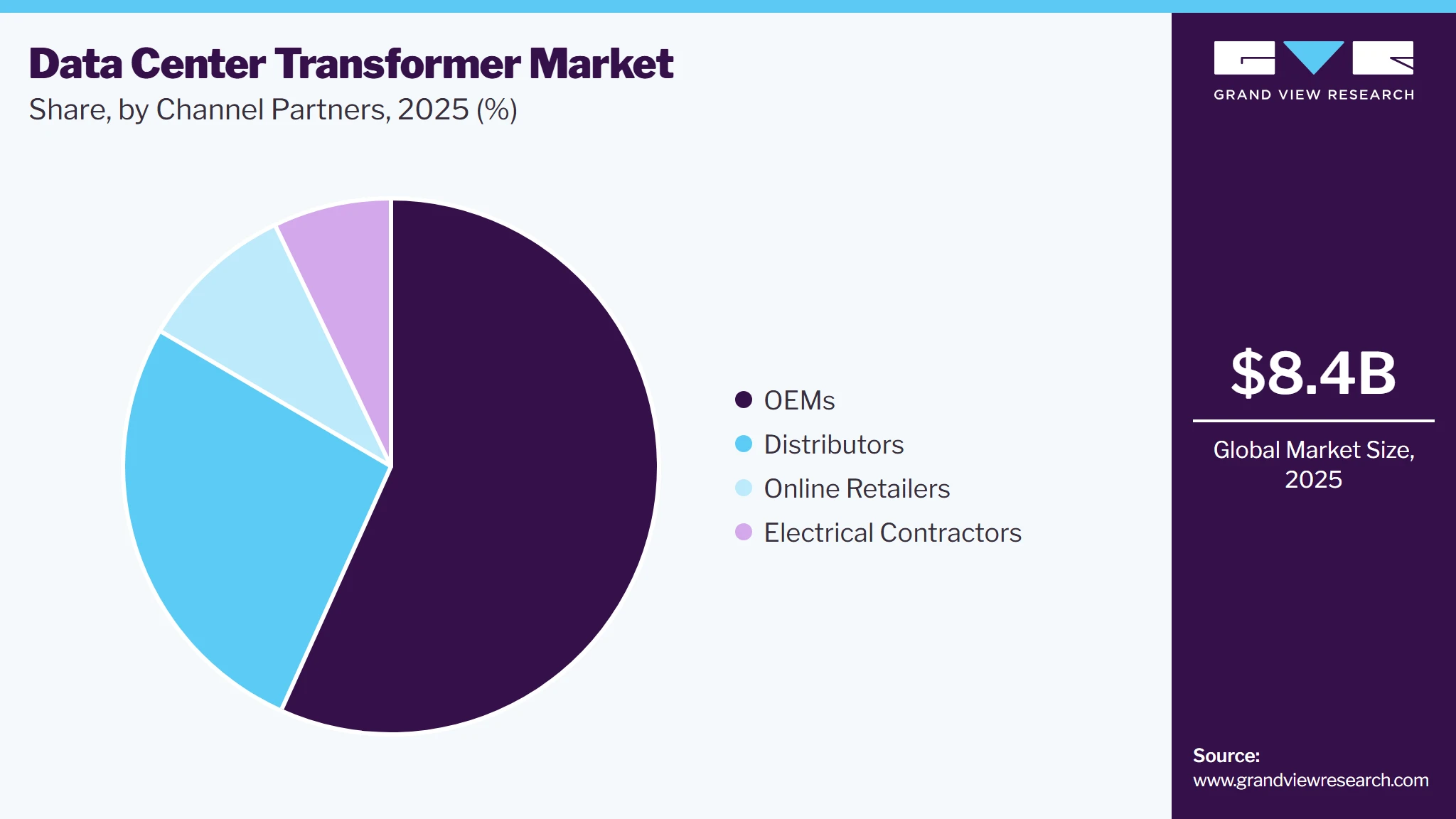
Based on channel partners, the OEMs segment led the market with the largest revenue share of 56.7% in 2025, driven by the demand for customized, high-quality transformers tailored to specific operational requirements in data centers. OEMs can offer end-to-end solutions that include design, engineering, and installation support, ensuring that transformers meet the stringent performance standards needed for mission-critical applications in data centers. Additionally, data center operators prefer working directly with OEMs to access advanced, innovative technologies that enhance efficiency and reliability. The increased emphasis on sustainable energy practices also fuels demand for OEMs, as they are often at the forefront of developing energy-efficient transformers that align with environmental and regulatory standards. Furthermore, direct engagement with OEMs enables data centers to maintain control over quality, compatibility, and long-term maintenance support, making OEMs a preferred choice for large-scale and custom transformer solutions.
 To learn more about this report, Download Free Sample Report
 The distributors segment is expected to grow at a significant rate during the forecast period. The adoption of distributors as channel partners in the data center transformer market is driven by the need for quick and efficient access to transformer equipment, especially for small to medium-sized data centers and urgent installations. Distributors provide a flexible supply chain, allowing data center operators to source transformers without extended lead times associated with custom manufacturing. This segment appeals to operators seeking standardized transformer models, which are readily available and often come with pre-negotiated pricing, making the procurement process cost-effective and timely. Distributors also offer logistical support and local inventory, enabling data centers to deploy or replace transformers as needed rapidly.
Regional Insights
North America dominated the data center transformer market with the largest revenue share of 36.2% in 2025. This market is witnessing significant investments in hyperscale and AI-focused data centers by major cloud service providers and technology companies. This includes a growing preference for dry-type transformers due to their enhanced safety and reduced environmental impact. Additionally, the shift towards modular and prefabricated power solutions accelerates construction timelines and improves overall efficiency. The rise of hyperscale data centers also drives demand for high-capacity transformers, further emphasizing the need for robust power management solutions.
 To learn more about this report, Download Free Sample Report
 U.S. Data Center Transformer Trends
The data center transformer market in the U.S. held the largest share in the North America region in 2025. In the U.S., the data center transformer market is driven by rapid digitalization and the increasing demand for cloud services. There is a notable trend toward the deployment of advanced transformers that support grid resilience and integrate with renewable energy sources. The market is also experiencing a rise in using advanced Uninterruptible Power Supply (UPS) systems that enhance power reliability. Furthermore, significant investments in manufacturing and infrastructure are expected to bolster production capabilities, addressing supply shortages in the sector.
Europe Data Center Transformer Trends
The data center transformer market in Europe is expected to grow significantly at a CAGR of over 5% from 2026 to 2033. Stringent environmental regulations and a strong emphasis on sustainability characterize European data center transformer market. The adoption of transformers utilizing renewable energy sources is gaining traction, aligning with the European Union's goals for carbon neutrality. Additionally, innovations in transformer design, such as the use of biodegradable insulating oils, are becoming increasingly common. The integration of digital technologies in power management systems is also a significant trend, enabling real-time monitoring and optimization of transformer performance.
Asia Pacific Data Center Transformer Trends
The data center transformer market in the Asia Pacific is expected to grow significantly at a CAGR of over 8% from 2026 to 2033. The Asia Pacific region is experiencing rapid growth in the data center transformer market, fueled by urbanization and increasing internet penetration. The trend toward establishing large-scale data centers is leading to a surge in demand for high-capacity transformers. Additionally, there is a growing focus on energy-efficient solutions and smart grid technologies, aligning with regional initiatives for energy conservation and sustainability. The adoption of modular transformer solutions is also on the rise, enabling faster deployment and scalability in response to the expanding digital landscape.
Key Data Center Transformer Company Insights
Key players operating in the data center transformer market include ABB, Eaton, General Electric, Hitachi Energy, HYOSUNG HEAVY INDUSTRIES, Legrand, Mitsubishi Electric Corporation, Schneider Electric, SGB-SMIT Group, Siemens, Toshiba Corporation, Vertiv Group Corp., and Virginia Transformer Corp. The companies are focusing on various strategic initiatives, including new product development, partnerships & collaborations, and agreements to gain a competitive advantage over their rivals.
Key Data Center Transformer Companies:
The following key companies have been profiled for this study on the data center transformer market.
-
ABB
-
Eaton
-
General Electric
-
Hitachi Energy
-
HYOSUNG HEAVY INDUSTRIES
-
Legrand
-
Mitsubishi Electric Corporation
-
Schneider Electric
-
SGB-SMIT Group
-
Siemens
-
Toshiba Corporation
-
Vertiv Group Corp.
-
Virginia Transformer Corp
Competitive Benchmarking
Category
Operating Strategies
Competitive Edge
Weakness
Established Players (ABB, Hitachi Energy, Siemens, Schneider Electric, Eaton)
- Established players focus on delivering comprehensive power infrastructure solutions for hyperscale, colocation, enterprise, and AI data centers. Their strategies emphasize high-capacity transformers, grid integration solutions, smart monitoring technologies, energy-efficient designs, and long-term service agreements. These companies leverage global manufacturing networks, utility relationships, and engineering expertise to support large-scale data center projects worldwide.
- Established players benefit from strong brand recognition, extensive manufacturing capabilities, global service networks, and proven expertise in mission-critical power systems. Their broad product portfolios, advanced R&D capabilities, and ability to provide end-to-end electrical infrastructure solutions create significant value for data center operators.
- These companies face high capital investment requirements for manufacturing expansion and R&D. Long product development cycles and complex organizational structures can limit agility. They also face increasing pressure from raw material price volatility, transformer supply shortages, and competition from regional manufacturers offering lower-cost alternatives.
Emerging Players (Virginia Transformer Corp, Hyosung Heavy Industries, SGB-SMIT Group)
- Emerging players focus on specialized transformer solutions, customized designs, rapid delivery capabilities, and high-efficiency products tailored for growing data center requirements. Many target niche opportunities in hyperscale expansion projects, renewable energy integration, and smart transformer deployments. Their strategies often emphasize operational flexibility, localized manufacturing, and customer-specific engineering services.
- Emerging players offer greater flexibility, faster customization, competitive pricing, and shorter decision-making cycles. Their ability to tailor transformer designs for specific power requirements and regional regulations helps them compete effectively in specialized market segments. Many are also investing in digital monitoring and predictive maintenance technologies to differentiate their offerings.
- Limited global brand recognition, smaller service networks, and lower manufacturing scale can restrict their ability to secure large multinational contracts. Dependence on external suppliers for critical materials and components may impact production timelines and margins. Additionally, expanding into new geographic markets often requires significant investment in distribution channels and technical support infrastructure.
Recent Developments
-
In March 2024, Schneider Electric announced plans to invest USD 140 million in its U.S. manufacturing operations, resulting in the creation of approximately 750 new manufacturing jobs nationwide by 2024. Initially, the company will allocate USD 85 million to renovate and equip an existing 500,000-square-foot manufacturing facility in Mt. Juliet, Tennessee, while also upgrading its current manufacturing operations in Smyrna, Tennessee. Both locations will focus on the production of medium voltage power distribution and custom electrical switchgear products, thereby enhancing support for critical infrastructure, various industries, and the growing demand for data center solutions in the U.S.
-
In August 2023, Eaton announced a plan to invest over USD 500 million in North American manufacturing to advance energy transition, electrification, and digitalization across various industries. As part of this initiative, Eaton is expanding its Nacogdoches, Texas, facility by 200,000 square feet, more than doubling its current size. This expansion will increase Eaton's production capacity for voltage regulators, supporting utility customers across North America in accelerating grid modernization and resilience efforts. The expansion in Texas will also free up capacity at Eaton's largest manufacturing facility in Waukesha, Wisconsin. In Waukesha, Eaton is investing in new equipment to boost the production of three-phase transformers, which serve utility, data center, large commercial, and industrial applications.
Data Center Transformer Market Report Scope
Report Attribute
Details
Market size in 2025
USD 8.4 billion
Estimated market size in 2026
USD 8.9 billion
Projected market size by 2033
USD 14.5 billion
Growth rate
CAGR of 7.2% from 2026 to 2033
Base year for estimation
2025
Historical data
2021 - 2024
Forecast period
2026 - 2033
Quantitative units
Revenue in USD billion and CAGR from 2026 to 2033
Report coverage
Revenue forecast, company ranking, competitive landscape, growth factors, and trends
Segments covered
Insulation Type; Voltage; Channel Partners; Region
Regional scope
North America; Europe; Asia Pacific; Latin America; MEA
Country scope
U.S.; Canada; Mexico; Germany; UK; France; China; Japan; India; South Korea; Australia; Brazil; Saudi Arabia; South Africa; UAE
Key companies profiled
ABB; Eaton; General Electric; Hitachi Energy; HYOSUNG HEAVY INDUSTRIES; Legrand; Mitsubishi Electric Corporation; Schneider Electric; SGB-SMIT Group; Siemens; Toshiba Corporation; Vertiv Group Corp.; Virginia Transformer Corp
Customization scope
Free report customization (equivalent up to 8 analysts' working days) with purchase. Addition or alteration to country, regional & segment scope.
Pricing and purchase options
Avail customized purchase options to meet your exact research needs. Explore purchase options
Global Data Center Transformer Market Report Segmentation
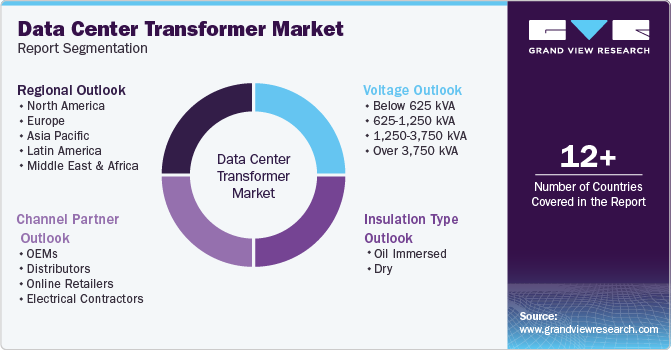
This report forecasts revenue growth at global, regional, and country levels and provides an analysis of the latest industry trends in each of the sub-segments from 2021 to 2033. For this study, Grand View Research has segmented the data center transformer market report based on insulation type, voltage, channel partners, and region.
 To learn more about this report, Download Free Sample Report
 -
Insulation Type Outlook (Revenue, USD Million, 2021 - 2033)
-
Oil Immersed
-
Dry
-
-
Voltage Outlook (Revenue, USD Million, 2021 - 2033)
-
Below 625 kVA
-
625-1,250 kVA
-
1,250-3,750 kVA
-
Over 3,750 kVA
-
-
Channel Partners Outlook (Revenue, USD Million, 2021 - 2033)
-
OEMs
-
Distributors
-
Online Retailers
-
Electrical Contractors
-
-
Regional Outlook (Revenue, USD Million, 2021 - 2033)
-
North America
-
U.S.
-
Canada
-
Mexico
-
-
Europe
-
Germany
-
UK
-
France
-
-
Asia Pacific
-
China
-
India
-
Japan
-
South Korea
-
Australia
-
-
Latin America
-
Brazil
-
-
Middle East & Africa
-
UAE
-
Saudi Arabia
-
South Africa
-
-
Research Methodology
The data center transformer market figures in this report are based on a proven research process that combines executive interviews with secondary research from proprietary databases, company filings, and recognized regulatory and institutional sources. Market size is built through value-chain sizing - reconciling supply-side and demand-side estimates - and triangulated with bottom-up and top-down approaches. Every estimate passes multiple levels of expert validation before publication, with each data center transformer segment quantified using the revenue-capture definitions in the table below.
Segment Definition
Segment - Insulation Type
Revenue capture definition
Oil-Immersed
Oil-immersed transformers use insulating mineral oil, natural ester oil, or synthetic fluids as both an electrical insulation medium and a cooling agent. The oil circulates within the transformer to dissipate heat generated during operation, enabling efficient performance under high-load conditions. These transformers are widely deployed in large-scale data centers, utility substations, and hyperscale facilities where high power capacity, reliability, and efficient thermal management are critical requirements.
Dry Transformers
Dry transformers utilize air, resin, or solid insulation materials instead of liquid-filled cooling systems. Common types include cast-resin and vacuum pressure impregnated (VPI) transformers. These transformers offer enhanced fire safety, lower environmental risks, and reduced maintenance requirements compared to oil-filled alternatives. Dry transformers are commonly installed inside data center buildings, enterprise facilities, and edge data centers where safety, space optimization, and indoor deployment are important considerations.
Segment - Voltage Rating
Revenue capture definition
Below 625 kVA
Transformers rated below 625 kVA are designed for relatively low-power applications and smaller data center environments. They are typically used for localized power distribution, edge computing facilities, network rooms, and auxiliary systems where power demand is limited.
625-1,250 kVA
Transformers within the 625-1,250 kVA range serve medium-sized data center operations and support power distribution to IT equipment, cooling systems, and supporting infrastructure. They offer a balance between capacity, efficiency, and operational flexibility.
1,250-3,750 kVA
These transformers are commonly deployed in colocation and large enterprise data centers requiring higher power capacity. They support substantial electrical loads associated with servers, storage systems, networking equipment, and cooling infrastructure while ensuring reliable voltage regulation and power quality.
Over 3,750 kVA
Transformers rated above 3,750 kVA are designed for hyperscale, cloud, and AI-driven data centers with extremely high power requirements. These units provide large-scale power distribution capabilities, support high-density computing workloads, and facilitate integration with utility grids and renewable energy sources.
Segment - Channel Partner
Revenue capture definition
OEMs
(Original Equipment Manufacturers)
OEMs are transformer manufacturers that design, engineer, manufacture, and directly supply transformers to data center developers, engineering firms, utilities, and infrastructure operators. OEMs often provide customized solutions, installation support, maintenance services, and long-term technical assistance.
Distributors
Distributors act as intermediaries between transformer manufacturers and end users. They maintain inventories, provide regional sales coverage, offer technical support, and facilitate product availability for contractors, system integrators, and data center operators.
Online Retailers
Online retailers sell standard transformer products and related electrical equipment through digital commerce platforms. This channel is primarily utilized for smaller transformers, replacement units, accessories, and electrical components, offering convenience and faster procurement processes.
Electrical Contractors
Electrical contractors are specialized firms responsible for procuring, installing, integrating, testing, and maintaining transformer systems within data center facilities. They play a critical role in power infrastructure deployment, ensuring compliance with electrical standards, safety regulations, and operational requirements.
Estimation Model
Layer
Question
Analysis
Data Center Addressable Layer
Who can benefit from data center transformers?
Identify power-intensive facilities requiring reliable electrical infrastructure, including hyperscale data centers, colocation providers, enterprise data centers, cloud service providers, AI/HPC facilities, edge data centers, telecommunications hubs, and government data centers to define the total addressable market for transformer deployments.
Power Infrastructure & Grid Readiness Layer
Where can data center transformers be deployed effectively?
Evaluate regional data center construction activity, utility grid capacity, transmission infrastructure, renewable energy integration, power availability, substation accessibility, and electrical distribution requirements to determine the operationally reachable market for transformer installations.
Deployment & Capacity Expansion Layer
Who actively deploys data center transformers?
Analyze data center expansion projects, hyperscale investments, colocation capacity additions, AI data center developments, retrofit activities, power density requirements, and regional data center demand trends to convert reachable facilities into active transformer buyers.
Monetization Layer
How is revenue generated?
Assess revenue potential by analyzing spending on power transformers, distribution transformers, transformer monitoring systems, installation services, engineering and commissioning, maintenance contracts, replacement cycles, efficiency upgrades, and smart transformer solutions across active data center facilities.
Delivered Customizations
This report has been delivered with the following In-depth customizations
CLIENT REQUEST
CUSTOMIZATION DELIVERED
VALUE ADDS
Data Center Transformer Ecosystem & Market Opportunity Assessment
Assessed demand for oil-immersed and dry-type transformers, smart transformer technologies, digital monitoring systems, predictive maintenance solutions, grid-interconnection infrastructure, renewable energy integration, and advanced power management systems, along with technology adoption trends and deployment challenges.
Supports investment and expansion strategies by identifying underserved market segments, evaluating technology readiness, assessing competitive dynamics, and strengthening long-term growth opportunities in next-generation data center power infrastructure.
Grid Modernization & Sustainable Data Center Power Analysis
Analyzed transformer requirements associated with renewable energy-powered data centers, utility grid modernization programs, microgrid deployments, battery energy storage integration, carbon-neutral facilities, and energy-efficient data center initiatives across North America, Europe, Asia Pacific, and emerging markets.
Enables stakeholders to identify emerging opportunities in sustainable power infrastructure, evaluate grid readiness and renewable integration requirements, and capitalize on increasing investments in green data centers and energy-efficient transformer technologies.
Regional Data Center Capacity & Transformer Demand Forecast
Evaluated installed and planned data center capacity (MW/GW), regional power consumption trends, utility constraints, AI data center developments, and transformer procurement patterns across major data center hubs globally.
Provides actionable insights into regional demand hotspots, infrastructure investment priorities, supply-demand gaps, and future transformer deployment opportunities across rapidly expanding data center markets.
Frequently Asked Questions About This Report
The global data center transformer market size was estimated at USD 8.4 billion in 2025 and is expected to reach USD 8.9 billion in 2026.
The oil immersed segment led with a 76.9% revenue share in 2025, while dry segment is the fastest-growing segment.
The 1,250-3,750 kVA segment led with a 42.6% revenue share in 2025, while over 3,750 kVA segment is the fastest-growing segment.
The OEMs segment held the largest share (over 56.0%) in 2025, and is the fastest-growing segment.
The data center transformer market is expected to grow at a compound annual growth rate of 7.2% from 2026 to 2033 to reach USD 14.5 billion by 2033.
Key factors are driving the data center transformer market include the rapid expansion of data centers globally, fueled by the growing demand for cloud computing, big data analytics, and internet services. The increasing digitalization across industries, coupled with the rise of IoT (Internet of Things) and AI (Artificial Intelligence), has resulted in a surge of data processing and storage needs, necessitating more robust and efficient power infrastructure.
North America dominated with 36.2% revenue share in 2025.
Asia Pacific is expected to be the fastest-growing region over the forecast period.
Some key players operating in the data center transformer market include ABB; Eaton; General Electric; Hitachi Energy; HYOSUNG HEAVY INDUSTRIES; Legrand; Mitsubishi Electric Corporation; Schneider Electric; SGB-SMIT Group; Siemens; Toshiba Corporation; Vertiv Group Corp.; and Virginia Transformer Corp.
About the Author(s)
Communications Infrastructure Research Team
Technology · Communications InfrastructureThis report was authored by the communications infrastructure research team at Grand View Research - comprising two research analysts, one senior research analyst, and one industry expert - with specialized expertise in the communications infrastructure segment of the technology industry. All findings are based on proprietary technology databases, executive interviews, and regulatory analysis, subject to internal peer review prior to publication.
Last Updated:
Speak to Analyst

Customize this report to your needs - add regions, segments, or data points, with 20% free customization.
Or view our licence options:


ISO 9001:2015 & 27001:2022 Certified
We are GDPR and CCPA compliant! Your transaction & personal information is safe and secure. For more details, please read our privacy policy.


