
- Home
- »
- Homecare & Decor
- »
-
Decorative Lighting Market Size & Share Report, 2026-2033GVR Report cover

Decorative Lighting Market (2026 - 2033)
Size, Share & Trends Analysis Report By Product (Sconce, Flush Mount), By Application (Commercial, Household), By Light Source (LED, Fluorescent, Incandescent), By Region, And Segment Forecasts
Market Size, 2025
$42.9BMarket Estimate, 2026
$44.2BMarket Forecast, 2033
$53.3BCAGR, 2026–2033
2.9%Decorative Lighting Market Summary
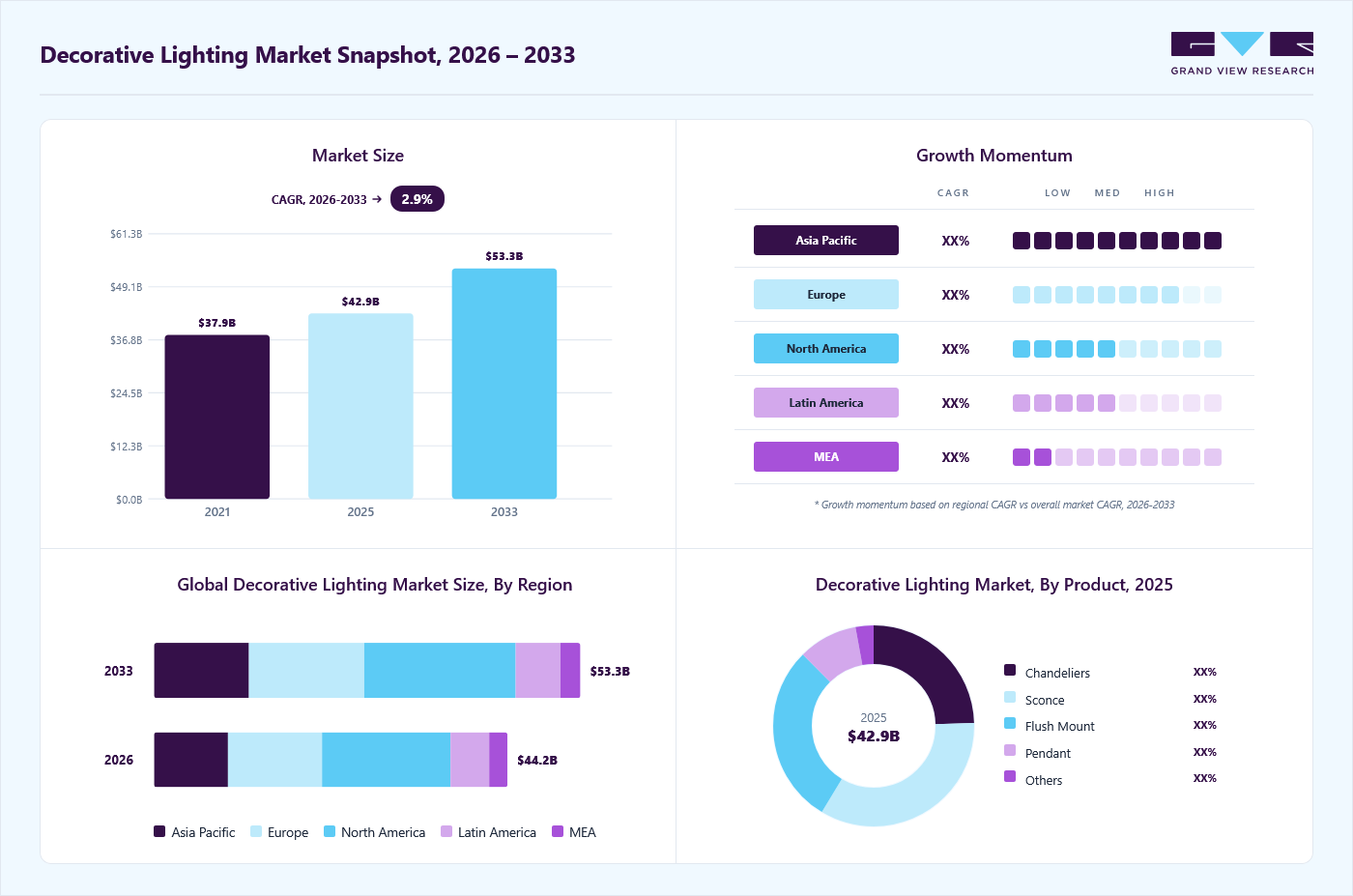
The global decorative lighting market size was estimated at USD 42.9 billion in 2025 and is projected to grow from USD 44.2 billion in 2026 to USD 53.3 billion by 2033, growing at a CAGR of 2.9% from 2026 to 2033. The North America market held the largest share of 36.45% of the global market in 2025. Rising urbanization and increasing disposable incomes increase home aesthetics and interior decoration spending.
 Source: Grand View Research, IR Documents, Primary Interviews, Paid DatabasesTo learn more about this report,
 Download Free Sample Report
 Key Market Trends & Insights
- By product: The sconce segment led the market with the largest revenue share of 34.04% in 2025 and is expected to grow at the fastest CAGR over the forecast period.
- By light source: The LED segment led the market with the largest revenue share of 51.95% in 2025.
Regional Highlights
- Largest regional market: North America (36.45% revenue share, 2025)
- By country: The U.S. held the largest market share in 2025.
Market Size & Forecast
- Market size in 2025: USD 42.9 Billion
- Estimated market size in 2026: USD 44.2 Billion
- Projected market size by 2033: USD 53.3 Billion
- CAGR (2026-2033): 2.9%
Three ways to get this report
Buy it, customize it, or ask a question.Ask an Analyst
Analyst response in 1 business day
- AccessReport author, directly
- Reply timeWithin 1 working day
- No sales callDirect answer only
- FormatEmail reply
- CostFree, no cost
Get the Full Report
What the study covers
- FormatsPDF · Excel · Dashboard
- Timeline2026–2033 annual, 2025 base
- Coverage20+ countries, 5 regions
- Companies10+ key players profiled
Customize the Report
20% free customization
- IncludeCountries, segments, points
- TailorTo your product definition
- ExtendDeeper competitor detail
- OrA fully bespoke study
- Turnaround5–10 working days
As more people prioritize creating stylish living spaces, the demand for decorative lighting solutions surges. Additionally, technological advancements in lighting, such as the development of energy-efficient LED bulbs and smart lighting systems, attract consumers looking for modern and sustainable options.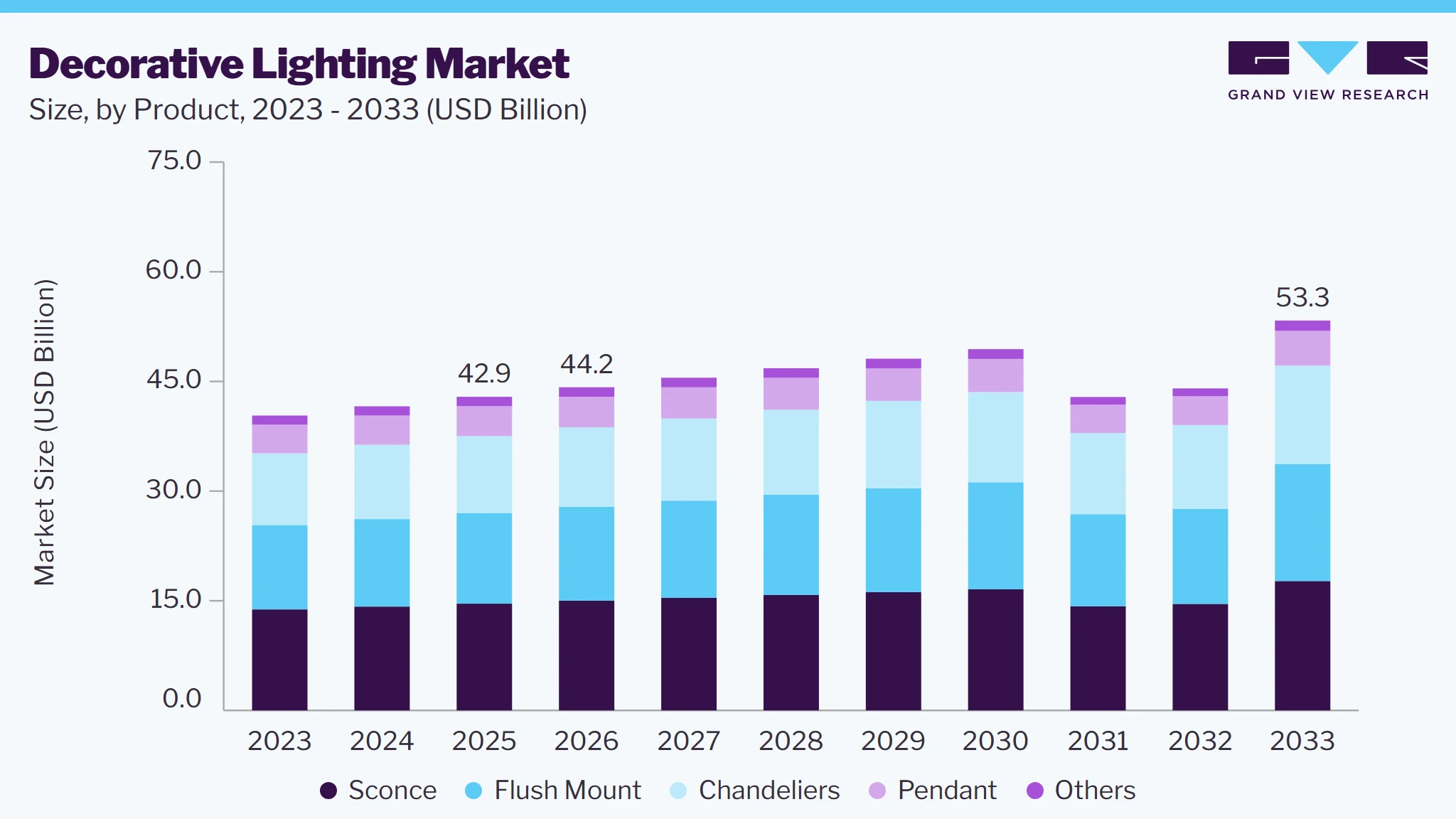 To learn more about this report, Download Free Sample Report
 The growing popularity of themed and mood lighting, driven by social media and interior design trends, contributes to market growth. Furthermore, the expanding hospitality industry emphasizes creating appealing and inviting environments, which boosts the demand for decorative lighting in hotels, restaurants, and other commercial spaces. These drivers, combined with increasing consumer awareness of the benefits of well-designed lighting, are expected to sustain the growth of the decorative lighting market in the coming years.
Market Dynamics
The decorative lighting market is experiencing steady growth, driven by increasing consumer emphasis on aesthetic enhancement and experiential design across residential, commercial, and hospitality environments. Decorative lighting products such as chandeliers, pendant lights, wall sconces, table and floor lamps, and ambient outdoor fixtures are increasingly being used not only for illumination but also as key interior design elements that define ambience and spatial identity. Rising expenditure on home renovation, premium lifestyle upgrades, and interior décor is significantly supporting demand in the residential segment, while strong investments in hotels, restaurants, retail spaces, and commercial real estate are further accelerating adoption in non-residential applications. The market is also being shaped by technological advancements, particularly the widespread transition toward energy-efficient LED solutions and the growing integration of smart lighting systems offering features such as dimming, color tuning, and app-based control. Additionally, evolving consumer preferences toward minimalist, vintage, and artisanal design aesthetics, along with increasing use of sustainable materials, are encouraging continuous product innovation and expanding the overall scope of the decorative lighting industry.
The decorative lighting market is primarily driven by the growing consumer emphasis on aesthetic enhancement and experiential living across residential, commercial, and hospitality environments. Increasing urbanization, rising disposable incomes, and a strong shift toward premium home interiors have significantly boosted demand for decorative lighting solutions that go beyond functional illumination to serve as key design elements. Products such as chandeliers, pendant lights, wall sconces, and ambient fixtures are increasingly being incorporated into modern interior design concepts to create mood, identity, and visual appeal. In addition, rapid expansion of the hospitality and retail sectors is further accelerating demand, as hotels, restaurants, malls, and commercial spaces invest heavily in decorative lighting to enhance customer experience and brand differentiation. The growing popularity of home renovation and interior décor trends, particularly in urban markets, continues to reinforce the adoption of design-centric lighting solutions globally.
One of the key restraints in the decorative lighting market is the relatively high cost associated with premium and designer lighting products, which limits adoption among price-sensitive consumer segments. Decorative lighting often involves advanced design elements, high-quality materials, and brand-driven positioning, making it more expensive than standard lighting solutions. Additionally, the increasing integration of smart lighting features and energy-efficient LED technologies further raises product costs, restricting penetration in cost-conscious markets. In developing economies, consumers often prioritize functional lighting over decorative aesthetics, which can slow market expansion. Furthermore, fluctuations in raw material prices, particularly metals, glass, and electronic components, can impact manufacturing costs and pricing stability, thereby affecting overall market growth.
The decorative lighting market presents significant growth opportunities through the increasing adoption of smart lighting systems and sustainable design solutions. Advancements in IoT-enabled lighting technologies, including app-based control, voice integration, dimming, and color customization, are enhancing user experience and driving demand for intelligent decorative lighting products. Additionally, growing environmental awareness and regulatory emphasis on energy efficiency are encouraging the shift toward LED-based and eco-friendly lighting solutions. Manufacturers are increasingly focusing on sustainable materials such as recycled metals, wood, and glass, aligning product offerings with green building standards and sustainable interior design trends. The rising penetration of smart homes, coupled with growing consumer preference for personalized and controllable ambient lighting, is expected to further expand the market potential and accelerate innovation in the decorative lighting industry.
Analyst Perspective
The decorative lighting market sits at the intersection of several durable structural tailwinds few consumer durables categories can match - accelerating urbanization and premium residential and commercial construction, rising global expenditure on interior aesthetics and experiential living spaces, and the rapid shift toward energy-efficient LED adoption alongside smart lighting systems. While historically cyclical and closely tied to real estate and renovation cycles, the category is increasingly being reshaped by design-led consumption and the integration of lighting into broader smart home and smart building ecosystems. The central competitive moat, however, will belong to players that successfully move beyond standalone decorative fixtures into integrated lighting solutions that combine architectural design, energy efficiency, and IoT-enabled control systems. The ability to fuse aesthetic differentiation with connected functionality - while embedding into home automation and intelligent infrastructure platforms - will ultimately determine pricing power, brand relevance, and long-term category leadership, as the market transitions from a product-driven segment into an experience-led layer of modern living environments.
Product Insights
Based on product, the sconce segment led the market with the largest revenue share of 34.04% in 2025 and is expected to grow at the fastest CAGR over the forecast period. Wall sconces offer a versatile lighting solution that can enhance the ambiance of various settings, from residential spaces to commercial establishments. Their ability to provide both direct and ambient lighting makes them a preferred choice for interior designers and homeowners alike. Additionally, the wide variety of designs, styles, and finishes available in the sconce segment caters to diverse aesthetic preferences, further driving demand. The increasing trend of home renovation and the desire to create stylish, well-lit living environments also contribute to the strong performance of the sconce segment in the decorative lighting market.
The flush mount segment is expected to grow at the fastest CAGR of 3.4% over the forecast period. Flush mount fixtures are particularly popular in homes with lower ceilings, as they offer a stylish yet unobtrusive lighting solution. Their compact design fits seamlessly against the ceiling, providing ample illumination without taking up much space. The increasing trend towards minimalist and modern home interiors also boosts the demand for flush mount lighting. Additionally, advancements in LED technology are making these fixtures more energy-efficient and longer-lasting, appealing to eco-conscious consumers.
Light Source Insights
Based on light source, the LED segment led the market with the largest revenue share of 51.95% in 2025. LED lights are known for their energy efficiency, consuming significantly less power than traditional lighting solutions, which appeals to eco-conscious consumers and those looking to reduce electricity costs. Additionally, LEDs have a longer lifespan, reducing the need for frequent replacements and offering better value for money over time. The versatility of LED technology allows for a wide range of applications and design possibilities, from vibrant color-changing lights to subtle, ambient illumination. Innovations in smart lighting systems, where LEDs play a central role, are also gaining popularity, enabling users to control their lighting environment through smartphones and voice assistants easily. These attributes make LEDs the preferred choice in the decorative lighting market, driving their dominant market share.
The fluorescent segment is expected to witness a significant CAGR over the forecast period. The increasing demand for energy-efficient lighting solutions is a major contributor, as fluorescent lights consume less energy than traditional incandescent bulbs. Additionally, increasing awareness of environmental sustainability and the need to reduce carbon footprints encourage consumers and businesses to opt for fluorescent lighting. The segment's cost-effectiveness and longer lifespan make it an attractive option for residential and commercial applications.
Application Insights
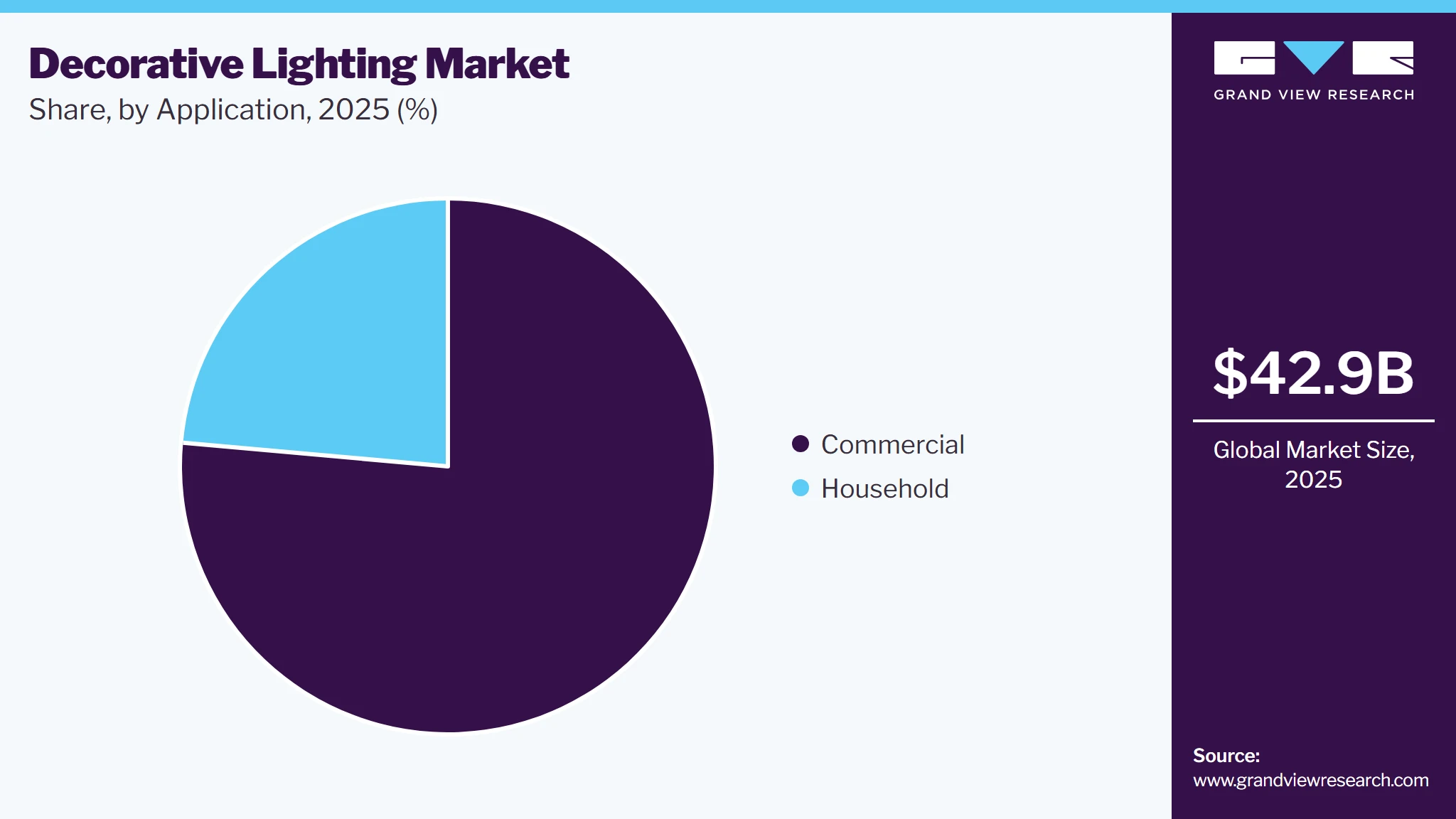
Based on application, the commercial segment dominated the market with the largest revenue share in 2025. This growth is driven by the expanding hospitality industry, including hotels, restaurants, and resorts, all of which invest heavily in creating appealing and inviting environments for their guests. Additionally, office spaces and retail stores increasingly focus on aesthetics to enhance customer experience and employee productivity. The rise of smart cities and infrastructural development projects also contributes to the demand for modern and efficient lighting solutions. The emphasis on energy efficiency and sustainability further drives the adoption of advanced lighting technologies in commercial settings. As businesses continue to prioritize ambiance and eco-friendly practices, the commercial segment remains a key driver of growth in the decorative lighting market.
 To learn more about this report, Download Free Sample Report
 The household segment is expected to grow at the fastest CAGR over the forecast period. With more people spending time at home and prioritizing their living environments, there is an increased demand for decorative lighting that enhances home aesthetics and functionality. The rise in home renovation projects and the trend of personalized interior design are boosting the adoption of stylish and innovative lighting solutions. Additionally, the growing awareness of energy efficiency and the benefits of LED technology encourage homeowners to upgrade their lighting systems. The influence of social media and online platforms, where homeowners can easily access and get inspired by various lighting ideas, further fuels this growth. As consumers continue to invest in creating beautiful and comfortable living spaces, the household segment is poised for significant expansion in the decorative lighting market.
Regional Insights
North America dominated the decorative lighting market with the largest revenue share of 36.45% in 2025. The region's high disposable incomes enable consumers to invest in premium and innovative lighting solutions. Additionally, a robust real estate market fuels demand for stylish and functional lighting fixtures in both residential and commercial properties. The growing trend of smart homes and connected lighting systems also plays a significant role, as tech-savvy consumers embrace the convenience and customization of smart lighting.
 To learn more about this report, Download Free Sample Report
 U.S. Decorative Lighting Market Trends
The decorative lighting market in the U.S. held the largest share in the North America region in 2025. The high standard of living and substantial disposable incomes in the U.S. empower consumers to invest in premium, innovative lighting solutions. The booming real estate market, characterized by numerous residential and commercial developments, fuels the demand for stylish and functional lighting fixtures. Moreover, the growing adoption of smart home technologies and connected lighting systems caters to the tech-savvy U.S. consumer base, which values customization and convenience. Additionally, the emphasis on sustainability and energy efficiency drives the popularity of LED lighting and other eco-friendly options.
Europe Decorative Lighting Market Trends
The European decorative lighting market was identified as a lucrative region in 2025. The increasing adoption of energy-efficient LED lighting solutions is a major contributor, as consumers and businesses alike prioritize sustainability and cost savings. The "home sweet home" trend, which emphasizes creating comfortable and aesthetically pleasing living spaces, has also boosted demand for decorative lighting in this region.
The UK decorative lighting market is expected to grow significantly over the forecast period. Economic stability in the country has led to higher consumer spending on non-essential items, including decorative lighting. Additionally, the presence of major market players and a well-established retail infrastructure make a wide range of decorative lighting products easily accessible to consumers.
Asia Pacific Decorative Lighting Market Trends
Asia Pacific decorative lighting market is expected to grow at the fastest CAGR of 3.8% over the forecast period. This rapid growth is driven by several factors, including the region's increasing urbanization and rising disposable incomes. As more people move to urban areas and seek to enhance their living spaces, the demand for decorative lighting solutions rises. Additionally, the growing middle class in countries such as China and India contributes to higher consumer spending on home decor. The trend towards smart homes and adopting energy-efficient lighting solutions, such as LED lights, are also significant in driving market growth.
The Indian decorative lighting market is expected to grow at a significant CAGR over the forecast period. This growth is driven by several factors, including economic development, rapid urbanization, and growing awareness about interior design. Furthermore, the growing number of middle-class people and rising disposable incomes are also contributing to higher consumer spending on home décor, including decorative lighting.
Key Decorative Lighting Company Insights
Some key companies in the decorative lighting market include Acuity, Philips Lighting, Home Depot, Hubbell, Generation Brands, Juno, Lowe’s, GE Lighting, LSI, and others. Companies are introducing new designs to increase their customer base. Furthermore, several companies are implementing various strategic initiatives, such as mergers and acquisitions and partnerships with other leading companies.
-
Acuity Brands, operating under the brand Lithonia Lighting, provides various decorative lighting solutions, including sconces, chandeliers, and pendant lights, known for their durability and aesthetic appeal. The company focuses on delivering energy-efficient and sustainable lighting options for both residential and commercial spaces.
-
Philips Lighting offers an extensive collection of decorative lights, such as chandeliers, pendant lights, and wall sconces, designed to enhance the ambiance of any space. Philips emphasizes sustainability and innovation, focusing strongly on LED technology and smart lighting solutions that allow users to customize their lighting experience.
Key Decorative Lighting Companies:
The following key companies have been profiled for this study on the decorative lighting market.
-
ACUITY BRANDS, INC.
-
Philips Lighting (Signify Holding)
-
Home Depot
-
Hubbell
-
Generation Brands
-
Juno
-
Lowe’s
-
GE Lighting
-
LSI Industries
-
OSRAM GmbH
Competitive Benchmarking
Category
Operating Strategies
Competitive Edge
Weakness
Established Players (Signify N.V., Acuity Brands, Inc., Zumtobel Group AG, ams OSRAM AG)
- Established players focus on expanding integrated lighting ecosystems that combine decorative, architectural, and smart lighting solutions. Their strategies emphasize IoT-enabled smart lighting systems, energy-efficient LED adoption, and connected home. They also actively pursue partnerships with real estate developers, hospitality chains, and smart home platforms to scale adoption of premium decorative lighting solutions.
- They benefit from strong global distribution networks, established brand equity, and large-scale manufacturing capabilities. In addition, they leverage advanced R&D in LED technology, smart controls, and human-centric lighting, allowing them to offer highly durable, design-led, and technologically advanced decorative lighting products across residential, commercial, and hospitality segments.
- Despite their strong positioning, they face high operational and R&D costs, along with exposure to cyclical demand in construction and real estate markets. Their large organizational structures can also lead to slower design innovation cycles, especially in fast-moving aesthetic trends within decorative lighting.
Emerging Players (Smart lighting startups, D2C decorative lighting brands)
- Emerging players focus on design-centric, customizable, and smart decorative lighting solutions targeted at millennials and urban consumers. They rely heavily on e-commerce platforms, D2C channels, influencer marketing, and social media-driven branding. Many also integrate app-based lighting controls, voice assistant compatibility, and modular lighting designs to enhance personalization.
- Their key strengths include rapid design innovation, trend responsiveness, and strong consumer engagement through digital-first strategies. They are highly agile in launching aesthetic, theme-based lighting products aligned with interior design trends, festivals, and smart home adoption.
- Companies often face limited production scalability, weaker global supply chains, and lower brand recognition compared to established players. They also struggle with price competition and margin pressure, especially when competing against large LED manufacturers.
Recent Developments
-
In October 2024, Surya Roshni announced that it is all set to brighten the festive season with its latest collection of decorative lighting solutions. The collection includes the Jagmag String Light, Rope Light, and Profile Strip Light, among others, designed to offer versatility, ease of installation, and low power consumption.
-
In September 2024, Kingswood Capital Management, a Los Angeles-based private equity firm, announced the acquisition of Kichler Lighting from Masco Corp. for an estimated USD 125 million.
Decorative Lighting Market Report Scope
Report Attribute
Details
Market size value in 2025
USD 42.9 billion
Estimated market size in 2026
USD 44.2 billion
Projected market size by 2033
USD 53.3 billion
Growth rate
CAGR of 2.9% from 2026 to 2033
Base year for estimation
2025
Historical data
2021 - 2024
Forecast period
2026 - 2033
Quantitative units
Revenue in USD million/billion and CAGR from 2026 to 2033
Report coverage
Revenue forecast, company ranking, competitive landscape, growth factors, and trends
Segments covered
Type, modality, region
Regional scope
North America; Europe; Asia Pacific; Latin America; MEA
Country scope
U.S.; Canada; Mexico; Germany; UK; France; Italy; Spain; Norway; Denmark; Sweden; Russia; Iceland; Finland; China; Japan; India; South Korea; Australia; Thailand; Singapore; Brazil; Argentina; Saudi Arabia; South Africa; UAE; Kuwait; Israel
Key companies profiled
Acuity; Philips Lighting; Home Depot; Hubbell; Generation Brands; Juno; Lowe’s; GE Lighting; LSI; Osram; Cree; Amerlux; Littmann; ETC; Columbia; AZZ; Intense
Customization scope
Free report customization (equivalent up to 8 analysts' working days) with purchase. Addition or alteration to country, regional & segment scope.
Pricing and purchase options
Avail customized purchase options to meet your exact research needs. Explore purchase options
Global Decorative Lighting Market Report Segmentation
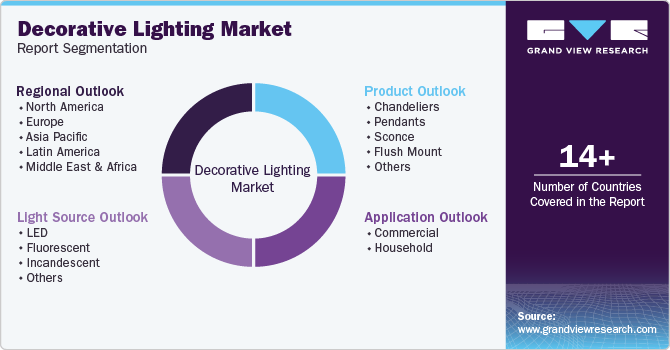
This report forecasts revenue growth at global, regional, and country levels and provides an analysis of the latest industry trends in each of the sub-segments from 2021 to 2033. For this study, Grand View Research has segmented the global decorative lighting market report based on product, light source, application, and region:
 To learn more about this report, Download Free Sample Report
 -
Product Outlook (Revenue, USD Million, 2021 - 2033)
-
Chandeliers
-
Pendants
-
Sconce
-
Flush Mount
-
Others
-
-
Light Source Outlook (Revenue, USD Million, 2021 - 2033)
-
LED
-
Fluorescent
-
Incandescent
-
Others
-
-
Application Outlook (Revenue, USD Million, 2021 - 2033)
-
Commercial
-
Household
-
-
Regional Outlook (Revenue, USD Million, 2021 - 2033)
-
North America
-
U.S.
-
Canada
-
Mexico
-
-
Europe
-
Germany
-
UK
-
France
-
Italy
-
Spain
-
-
Asia Pacific
-
China
-
Japan
-
India
-
South Korea
-
Australia
-
-
Latin America
-
Brazil
-
-
Middle East and Africa (MEA)
-
South Africa
-
Saudi Arabia
-
-
Research Methodology
Segment Definition
Segment - Product
Revenue capture definition
Chandeliers
This segment covers the revenues generated through the sales of decorative lighting and similar products, primarily ceiling-mounted ornamental fixtures designed with multiple arms, crystals, glass, or metal elements that serve as statement lighting pieces in residential, hospitality, and commercial interiors. Real-life examples of this channel include grand crystal chandeliers used in hotel lobbies, dining halls, luxury residences, banquet halls, and upscale retail showrooms.
Sconce
This segment covers the revenues generated through the sales of decorative lighting and similar products, specifically wall-mounted lighting fixtures used to provide ambient, accent, or task lighting while enhancing interior aesthetics. Real-life examples include bedside wall sconces in hotels, corridor lighting in residential apartments, mirror lighting in bathrooms, and decorative wall fixtures in restaurants and cafes.
Flush Mount
This segment covers the revenues generated through the sales of decorative lighting and similar products, comprising ceiling-mounted fixtures that are installed directly against the ceiling surface, making them ideal for spaces with low ceilings while providing uniform ambient lighting. Real-life examples include hallway lighting in apartments, kitchen ceiling lights in residential homes, and general lighting in offices, schools, and retail spaces.
Pendant
This segment covers the revenues generated through the sales of decorative lighting and similar products, consisting of single or multiple hanging light fixtures suspended from the ceiling using cords, rods, or chains, often used for focused or decorative illumination. Real-life examples include kitchen island pendant lights, café and restaurant table lighting, bedroom bedside pendants, and decorative lighting installations in retail stores and showrooms.
Others
This segment covers the revenues generated through the sales of decorative lighting and similar products, including a wide range of non-traditional or specialized decorative lighting solutions such as floor lamps, table lamps, track lighting, outdoor decorative lighting, and custom artistic lighting installations. Real-life examples include designer floor lamps in living rooms, outdoor garden lighting setups, decorative string lights in events, and architectural accent lighting in commercial buildings.
Segment - Light Source
Revenue capture definition
LED
This segment covers the revenues generated through the sales of decorative lighting and similar products, specifically light sources based on light-emitting diode technology that offer high energy efficiency, long lifespan, low heat emission, and flexible design applications. Real-life examples include LED chandeliers in hotels, LED strip-integrated ceiling coves in modern homes, LED pendant fixtures in restaurants, and smart LED decorative lamps with color-changing features used in residential and commercial spaces.
Fluorescent
This segment covers the revenues generated through the sales of decorative lighting and similar products, comprising gas-discharge light sources that use fluorescence to produce visible light, typically known for moderate energy efficiency and widespread use in commercial applications. Real-life examples include fluorescent tube-based decorative ceiling fixtures in offices, retail store ambient lighting panels, and corridor lighting in institutional buildings such as schools and hospitals.
Incandescent
This segment covers the revenues generated through the sales of decorative lighting and similar products, consisting of traditional light sources that produce light by heating a filament until it glows, offering warm illumination but lower energy efficiency and shorter lifespan compared to modern alternatives. Real-life examples include vintage-style decorative bulbs in cafés and restaurants, filament bulbs used in pendant lighting fixtures, and ambient decorative lamps in residential living spaces.
Others
This segment covers the revenues generated through the sales of decorative lighting and similar products, including alternative and emerging light sources such as halogen lamps, neon-based decorative lighting, and specialty lighting technologies used for niche aesthetic applications. Real-life examples include neon sign lighting in retail storefronts, halogen accent lights in galleries and showrooms, and specialty decorative lighting used in events, exhibitions, and themed interior designs.
Estimation Model
Layer Name
Key Question
Description
Epidemiology Layer
Who needs decorative lighting?
Identify the prevalence of residential, commercial, hospitality, and event spaces, along with renovation cycles, to define the core demand base for decorative lighting.
Digital Access Layer
Who can be reached through physical and digital channels?
Apply region-specific distribution penetration across organized retail, local trade channels, e-commerce platforms, and project-based procurement networks, adjusted for urbanization and Tier 1–3 brand reach, to derive the physically and digitally reachable decorative lighting market.
Behavioural Layer
Who actively purchases and uses decorative lighting?
Identify the share of reachable consumers who actively purchase decorative lighting driven by design preferences, seasonal demand, and upgrade cycles, to define the actual buyer base.
Monetisation Layer
How much revenue is generated?
Convert active buyers into revenue using average selling prices, project installation values, and upgrade cycles across residential, commercial, hospitality, and event segments, to define the total monetisable decorative lighting market.
Delivered Customizations
This report has been delivered with the following In-depth customizations
Client Request
Customization Delivered
Value Adds
Decorative Lighting Consumer Behavior & Demand Analysis
Developed a comprehensive assessment of consumer preferences and usage behavior in the decorative lighting market across residential, commercial, and hospitality applications.
The analysis examined key demand drivers such as interior design trends, festive and seasonal lighting demand, smart home adoption, sustainability preferences, and rising demand for LED-based aesthetic lighting solutions. It also evaluated the shift toward customizable, app-controlled, and energy-efficient lighting systems across urban households.Enables stakeholders to identify high-growth consumer segments, understand evolving aesthetic and functional preferences, and align product innovation, seasonal marketing campaigns, and portfolio strategies with changing consumer lighting behaviors.
Decorative Lighting Product Innovation & Technology Assessment
Delivered an in-depth evaluation of the decorative lighting technology ecosystem, including LED advancements, smart lighting systems, IoT-enabled controls, and human-centric lighting solutions.
The analysis also assessed the impact of design innovation, miniaturization of lighting systems, RGB customization, and integration with smart home ecosystems (Alexa, Google Home, Apple HomeKit) on product development and market competitiveness.Supports innovation-led decision making by identifying emerging product opportunities, technology adoption trends, and premiumization pathways within the decorative lighting market. Helps companies strengthen differentiation through design, energy efficiency, and smart connectivity features.
Decorative Lighting Distribution, Retail & Competitive Landscape Assessment
Conducted a focused analysis of distribution channels and competitive strategies in the decorative lighting market, including offline retail stores, home improvement chains, specialty lighting stores, and rapidly growing e-commerce platforms.
The study further evaluated brand positioning strategies, pricing approaches, partnerships with interior designers and real estate developers, and expansion across hospitality and commercial projects.Provides actionable insights into channel optimization, partnership opportunities, and competitive positioning, enabling companies to enhance market penetration, strengthen brand visibility, and improve long-term revenue growth in the decorative lighting industry.
Frequently Asked Questions About This Report
The global decorative lighting market size was estimated at USD 42.9 billion in 2025 and is expected to reach USD 44.2 billion in 2026.
Some key players operating in the global decorative lighting market include Acuity, Philips (Signify), Home Depot, Hubbell, Generation Brands, Juno, Lowe’s, GE Lighting, LSI, Osram, Cree, Amerlux, Littmann, ETC, Columbia, AZZ, and Intense.
Key factors that are driving the decorative lighting market growth include increasing recognition of the role of the illuminating medium in setting up the ambiance of the room and shifting the focus of some of the popular designers towards decorative lighting has streamlined their application in homes, shops, malls, libraries, hotels, spa, parlors, restaurants, and washrooms.
North America dominated the decorative lighting market share of 36.4% in 2025, driven by strong demand for premium lighting products and high adoption of decorative fixtures in residential and commercial spaces.
The Sconce segment accounted for the largest market share of 34.0% in 2025 due to its widespread use in residential, hospitality, and commercial applications.
The global decorative lighting market is expected to grow at a compound annual growth rate of 2.9% from 2025 to 2033 to reach USD 53.3 billion by 2025.
The commercial segment led the decorative lighting market, accounting for 76.4% of the market share in 2025, driven by extensive adoption across hotels, restaurants, retail spaces, offices, and other commercial establishments.
The LED segment led the market with the largest revenue share of 51.9% in 2025.
About the Author(s)
Homecare & Decor Research Team
Consumer Goods · Homecare & DecorThis report was authored by the homecare & decor research team at Grand View Research - comprising two research analysts, one senior research analyst, and one industry expert - with specialized expertise in the homecare & decor segment of the consumer goods industry. All findings are based on proprietary consumer goods databases, executive interviews, and regulatory analysis, subject to internal peer review prior to publication.
Last Updated:
Speak to Analyst

Customize this report to your needs - add regions, segments, or data points, with 20% free customization.
Or view our licence options:


ISO 9001:2015 & 27001:2022 Certified
We are GDPR and CCPA compliant! Your transaction & personal information is safe and secure. For more details, please read our privacy policy.


