
- Home
- »
- Medical Devices
- »
-
Dental Air Polishing System Market Size, Share Report, 2033GVR Report cover

Dental Air Polishing System Market (2026-2033)
Size, Share & Trends Analysis Report By Product (Equipment, Replacement Parts & Accessories, Consumables), By Clinical Application, By Patient Age, By End-use, By Distribution Channel, By Region, And Segment Forecasts
Market Size, 2025
$654.0MMarket Estimate, 2026
$709.1MMarket Forecast, 2033
$1,198.5MCAGR, 2026–2033
7.8%Dental Air Polishing System Market Summary
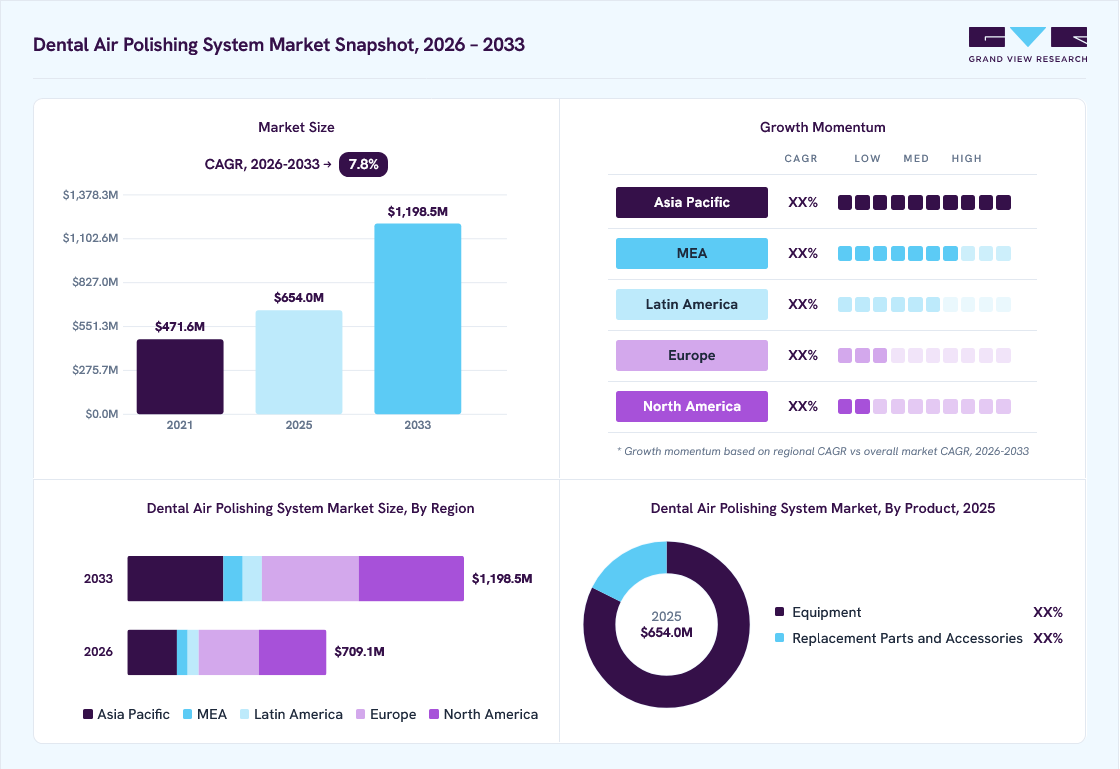
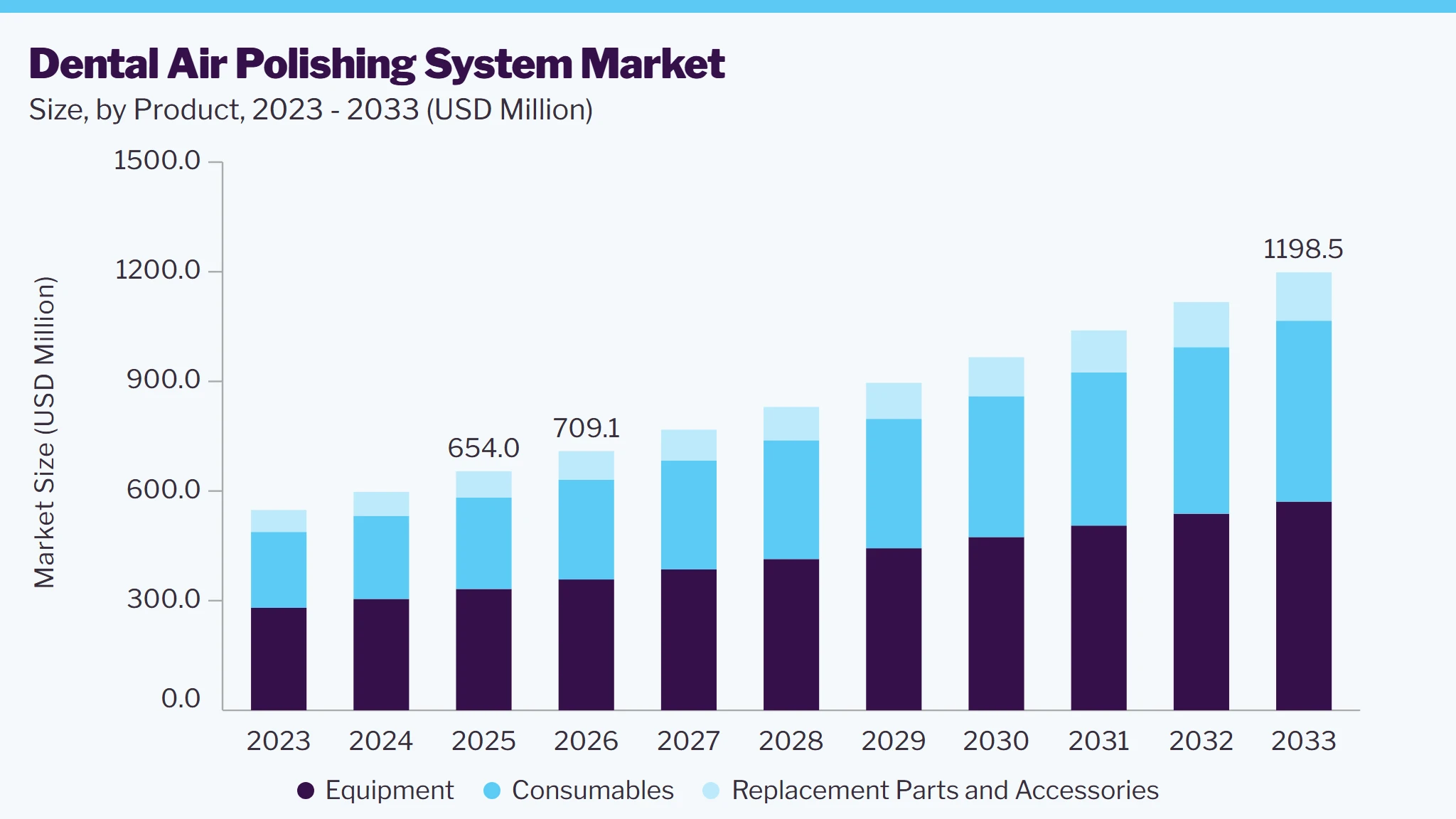
The global dental air polishing system market size was valued at USD 654.0 million in 2025 and is projected to grow from USD 709.1 million in 2026 to USD 1,198.5 million by 2033, at a CAGR of 7.8% from 2026 to 2033. North America dominated the market, accounting for a revenue share of 34.3% in 2025. The growth of the global market is driven by the rising burden of dental caries and periodontal disease, increasing adoption of preventive and professional dental care, and growing demand for efficient removal of plaque, biofilm, and extrinsic stains.
 Source: Grand View Research, IR Documents, Primary Interviews, Paid DatabasesTo learn more about this report,
 Download Free Sample Report
 Key Market Trends & Insights
- By product: The equipment segment led the market with the largest revenue share of 50.7% in 2025.
- By clinical application: The routine cleaning and stain removal segment led the market with the largest revenue share of 41.1% in 2025.
- By patient age: The adults segment led the market with the largest revenue share of 60.5% in 2025.
- By end use: The dental clinics segment led the market with the largest revenue share of 82.8% in 2025.
- By distribution channel: The direct sales segment led the market with the largest revenue share of 50.6% in 2025.
Regional Highlights
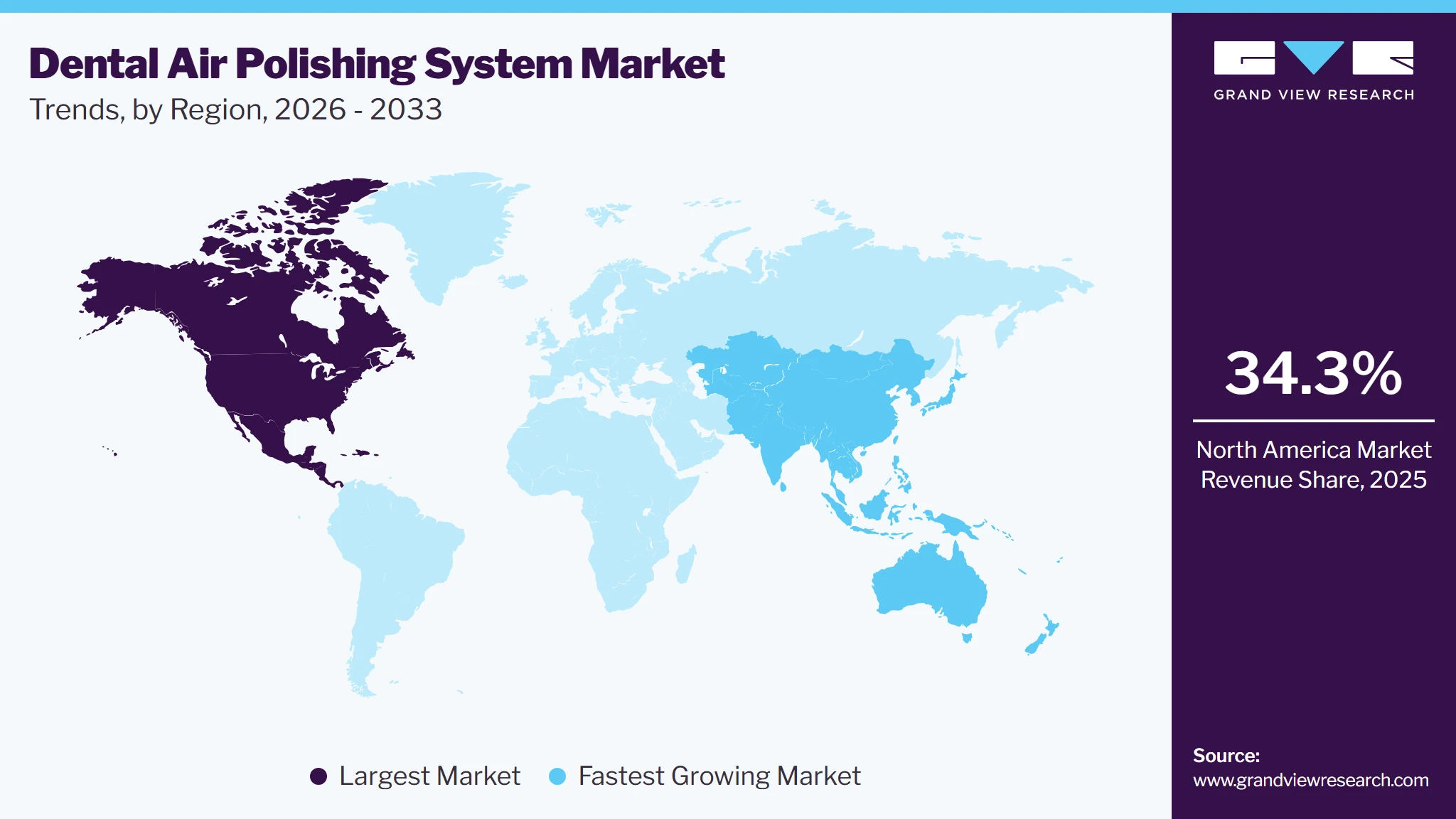
- Largest regional market: North America (34.3% revenue share, 2025)
- Fastest-growing regional market: Asia Pacific (highest CAGR, 2026-2033)
- By country: The U.S. held the largest market share in 2025.
Market Size & Forecast
- Market size in 2025: USD 654.0 Million
- Estimated market size in 2026: USD 709.1 Million
- Projected market size by 2033: USD 1,198.5 Million
- CAGR (2026-2033): 7.8%
Three ways to get this report
Buy it, customize it, or ask a question.Ask an Analyst
A direct answer, usually in 1 working day
- AccessReport author, directly
- Reply timeWithin 1 working day
- No sales callDirect answer only
- FormatEmail reply
- CostFree, no cost
Get the Full Report
What the study covers
- FormatsPDF · Excel · Dashboard
- Timeline2026–2033 annual, 2025 base
- Coverage20+ countries, 5 regions
- Companies10+ key players profiled
Customize the Report
20% free customization
- IncludeCountries, segments, points
- TailorTo your product definition
- ExtendDeeper competitor detail
- OrA fully bespoke study
- Turnaround5–10 working days
In addition, technological advancements in dental air polishing systems are focused on low-abrasive powders, precise powder delivery, and specialized subgingival applications. Recent research has evaluated smaller-particle powders such as erythritol and glycine to improve biofilm removal while limiting surface damage. In July 2025, a systematic review and meta-analysis evaluated 9 randomized controlled trials involving 462 patients and compared erythritol, glycine, and trehalose powders for subgingival air polishing; erythritol achieved the highest SUCRA ranking for reducing probing depth (84.1), compared with 48.0 for trehalose and 28.5 for glycine.
 To learn more about this report, Download Free Sample Report
 In September 2026, according to an article published in Dental Economics, therapeutic air polishing can remove soft deposits 3-5 times faster than other forms of instrumentation, while ultrasonic instrumentation can reduce deposit removal time by 20%-36%. The article also highlights the ergonomic benefits of power-enhanced instrumentation, including reduced hand strain, with less than 10 g of lateral pressure transmitted to the clinician’s palm and fingers. These developments are particularly relevant because up to 85% of dental hygienists reportedly experience work-related musculoskeletal disorders, while 64%-69% report hand- and wrist-related disorders. The findings indicate that modern air-polishing technology is evolving beyond basic stain and biofilm removal toward faster, less physically demanding, and more ergonomic dental hygiene workflows.
Growing oral disease burden drives demand for advanced air polishing systems:
The rising burden of dental caries and periodontal disease is increasing the need for professional preventive dental procedures, including plaque, biofilm, and stain removal. Recent evidence from the 2024 Korea National Children’s Oral Health Survey, published by the Korea Disease Control and Prevention Agency in 2026, highlights the continued prevalence of dental caries. Among 7,746 five-year-old children, 58.3% had experienced primary dental caries and 25.3% had active caries. Among 12,309 twelve-year-old children, 60.3% had experienced caries in permanent teeth, while 7.3% had active permanent caries.
Study Data: Dental Caries Burden in Korean Children, 2024:
Study parameter
5-year-old children
12-year-old children
Study population
7,746
12,309
Experienced dental caries
58.3%
60.3%
Active dental caries
25.3%
7.3%
Dental condition assessed
Primary teeth
Permanent teeth
Key finding
More than half had experienced dental caries
About 6 in 10 had experienced dental caries
Source: Korea Disease Control and Prevention Agency, Public Health Weekly Report, 2026.
Consumer perception and preferences:
Consumer perception is becoming an increasingly important factor in the dental air-polishing systems industry as patients prioritize comfortable, efficient, and minimally invasive dental cleaning procedures. Patients are placing greater importance on air-polishing methods that effectively remove plaque, biofilm, and extrinsic stains while minimizing discomfort and protecting tooth surfaces, restorations, and dental implants. Growing awareness of modern preventive and periodontal maintenance approaches is also increasing interest in technologies that offer faster treatment and improved patient comfort. As dental practices adopt patient-centered care, preferences are shifting toward air polishing systems that combine clinical effectiveness, reduced sensitivity, ergonomic treatment, and compatibility with implants, orthodontic appliances, and restorative materials.
Key Consumer Preferences
-
Comfortable and minimally invasive procedures: Patients prefer air polishing approaches that provide effective cleaning with less discomfort and reduced sensitivity compared with more invasive mechanical instrumentation.
-
Effective plaque, biofilm, and stain removal: Consumers value technologies that efficiently remove extrinsic stains, plaque, and biofilm while supporting overall oral hygiene and preventive dental care.
-
Tooth and restoration safety: Patients prefer low-abrasive powders and technologies that minimize unnecessary surface alteration of enamel, dentin, restorations, and implant components.
-
Shorter and more convenient treatment: Patients favor technologies that reduce treatment time and streamline professional cleaning procedures while maintaining effective clinical outcomes.
-
Improved overall treatment experience: Reduced discomfort, better visibility, less sensitivity, and efficient treatment are becoming important factors influencing patient acceptance of modern air polishing procedures.
Market Dynamics
The market is expanding as dental professionals adopt minimally invasive, efficient approaches to oral hygiene and periodontal maintenance. Air polishing technology enables the controlled removal of dental plaque, biofilm, extrinsic stains, and deposits from tooth and restoration surfaces, supporting applications across routine prophylaxis, periodontal care, implant maintenance, and orthodontic treatment. Market development is being supported by the growing emphasis on preventive dentistry, increasing utilization of dental implants and orthodontic procedures, and rising demand for effective biofilm management. Technological advancements, including low-abrasive powders, subgingival air-polishing systems, portable devices, and integrated air-polishing platforms are further broadening clinical applications. In addition, expansion of organized dental clinics, improvements in dental infrastructure, and increasing awareness of professional oral hygiene are creating opportunities for wider adoption of air polishing systems globally.
The increasing use of air polishing for orthodontic biofilm control is a key driver because fixed orthodontic appliances, brackets, wires, and other components create additional surfaces where plaque and biofilm can accumulate. These areas can be difficult to clean effectively with conventional brushing, increasing the risk of gingival inflammation, plaque accumulation, and enamel demineralization during orthodontic treatment. Air polishing provides a professional cleaning approach that can remove biofilm and extrinsic stains around orthodontic appliances while improving access to difficult-to-clean areas. The growing number of orthodontic treatments, combined with greater emphasis on maintaining oral hygiene throughout treatment, is therefore creating additional opportunities for air polishing systems in dental clinics.
A key limitation of air polishing is the potential for surface alteration or damage when inappropriate powders, pressure levels, or application techniques are used on restorative materials. Certain air-polishing powders may increase surface roughness or alter the properties of composite resins, glass ionomers, ceramics, and other restorations. Roughened surfaces can potentially increase plaque accumulation and affect the appearance or longevity of restorations. Consequently, clinicians need to select powders and operating parameters according to the material being treated. This material-compatibility consideration can restrict the use of conventional air-polishing systems in patients with extensive restorations and increases the importance of restoration-safe, low-abrasive technologies.
The expansion of subgingival and peri-implant air-polishing systems represents an important opportunity, as periodontal and implant maintenance require effective removal of biofilm from areas that are difficult to access with conventional cleaning instruments. Specialized systems using fine, low-abrasive powders can be used for professional biofilm management around periodontal pockets and dental implants. Growing use of dental implants and the need for long-term peri-implant maintenance are creating demand for technologies designed specifically for these applications. Manufacturers that develop nozzles, controlled powder delivery, and material-compatible powders for subgingival and peri-implant use can broaden the clinical applications of air polishing and strengthen product differentiation.
Market Concentration & Characteristics
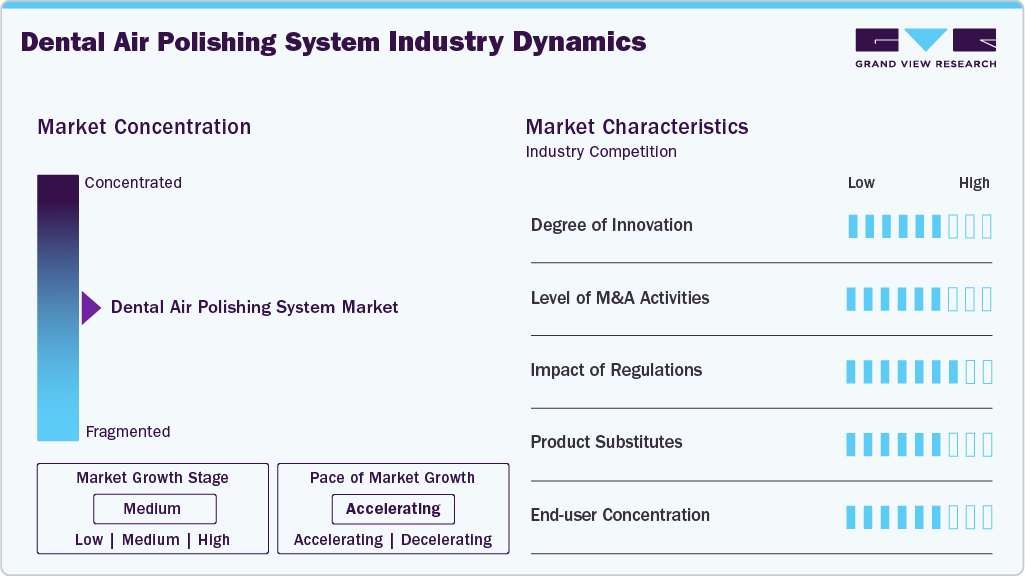
The market is characterized by a high degree of innovation, driven by advancements in low-abrasive powders, subgingival delivery systems, peri-implant maintenance technologies, and integrated air-polishing platforms. Manufacturers are developing devices with improved powder control, ergonomic handpieces, specialized periodontal nozzles, and multiple operating modes for supragingival and subgingival applications. For instance, EMS AIRFLOW MAX is designed for supragingival and subgingival biofilm removal and incorporates AIRFLOW and PERIO technologies, supporting applications across periodontal and implant maintenance. Such innovations are expanding the clinical applications of air polishing while improving operator control and patient comfort.
The market has witnessed moderate M&A and strategic partnership activity, particularly as dental technology companies seek to strengthen their preventive dentistry and periodontal-care portfolios. Companies can expand their market presence through acquisitions, partnerships, and distribution agreements involving air-polishing technologies, dental equipment, consumables, and digital dental workflows. Strategic consolidation enables manufacturers to combine air polishing with complementary technologies such as ultrasonic scaling, prophylaxis systems, and broader dental equipment portfolios.
 To learn more about this report, Download Free Sample Report
 The market is significantly influenced by medical-device regulations and product safety requirements, particularly regarding device performance, electrical safety, materials, intended use, and manufacturing quality. Manufacturers must comply with applicable regulatory requirements before commercializing air-polishing equipment in major markets. In the U.S., dental air-polishing systems are subject to FDA medical device requirements, with regulatory status varying based on the device’s intended use and classification. FDA’s device databases provide records of air-polishing products and their manufacturers, demonstrating that these products are regulated within the medical-device framework.
The market faces moderate competition from substitute professional cleaning technologies, including ultrasonic scalers, hand instruments, rubber cups with prophylaxis pastes, polishing brushes, and conventional polishing systems. Ultrasonic scalers and hand instruments remain widely used for calculus and deposit removal, while conventional rubber-cup polishing is commonly used for routine stain and plaque removal.
Demand for dental air polishing systems is concentrated primarily among dental clinics, periodontal and implant practices, hospitals, and dental academic and research institutions. Dental clinics represent an important end use setting because air polishing is used for routine prophylaxis, stain removal, periodontal maintenance, orthodontic cleaning, and implant maintenance. Specialty practices focused on periodontics, implant dentistry, and orthodontics can have higher utilization because of the need for regular biofilm management and professional maintenance procedures. Dental hospitals and academic institutions also contribute to demand through specialized treatment, clinical training, and research activities.
Analyst Perspective
Increasing demand for preventive dental care, periodontal and implant maintenance, orthodontic cleaning, and effective biofilm and stain removal is supporting the growth of the market. Technological advancements in low-abrasive powders, portable systems, and integrated air-polishing platforms are further supporting adoption. From an analyst’s perspective, companies offering versatile, material-safe, and efficient air-polishing solutions will be better positioned to gain market share. Future growth is expected to depend on innovation in subgingival and peri-implant applications, improved operator safety, expansion across dental clinics and emerging markets, and integration with modern dental workflows while maintaining cost-effectiveness and clinical usability.
Product Insights
The equipment segment dominated the market, accounting for 50.7% of the market share in 2025. This dominance is supported by the broad clinical need for professional oral hygiene and the expanding capabilities of dedicated air-polishing equipment. In March 2025, the WHO reported that oral diseases affect nearly 3.7 billion people worldwide, underscoring the substantial need for preventive and professional dental care. In addition, manufacturers are expanding equipment capabilities beyond routine polishing toward subgingival biofilm removal, periodontal maintenance, implant cleaning, and orthodontic applications.
The consumables segment in the market is expected to grow at the fastest rate during the forecast period due to the recurring nature of polishing powders and disposable nozzles, increasing use of subgingival and peri-implant air polishing, and growing adoption of low-abrasive powders such as glycine and erythritol. For instance, EMS offers multiple powder formulations, including 14 μm erythritol-based AIRFLOW PLUS, 25 μm AIRFLOW PERIO, and 40 μm sodium bicarbonate AIRFLOW CLASSIC, designed for different clinical applications ranging from routine stain removal to subgingival and peri-implant biofilm management. The increasing need for repeated periodontal maintenance and procedure-specific powder selection is expected to support recurring demand for dental air polishing consumables.
Clinical Application Insights
The routine cleaning and stain removal segment dominated the market, accounting for 41.1% of the market share in 2025. This dominance is supported by the widespread use of professional dental cleaning procedures for the removal of extrinsic stains, plaque, and soft deposits, particularly during routine preventive dental visits. The ability of air polishing systems to efficiently remove stains caused by coffee, tea, tobacco, and other dietary or lifestyle factors further supports their adoption in routine prophylaxis. In addition, the availability of dedicated powders with varying particle sizes and abrasion profiles enables dental professionals to select suitable formulations based on cleaning requirements and patient needs. The growing emphasis on preventive oral care and regular professional dental cleaning is therefore expected to sustain demand for air polishing systems used for routine cleaning and stain removal.
The dental implant cleaning segment is expected to grow at the fastest rate during the forecast period due to the increasing number of dental implant procedures, growing emphasis on long-term peri-implant maintenance, and rising adoption of air polishing for effective biofilm removal around implants. The increasing use of low-abrasive powders, particularly glycine and erythritol, is also supporting adoption because these formulations can provide effective biofilm removal while reducing the risk of surface alteration compared with more abrasive powders.
Patient Age Insights
The adults segment dominated the market, accounting for 60.5% of the market in 2025. This dominance is supported by the broad utilization of dental hygiene, periodontal maintenance, restorative, implant, and orthodontic services among adults. Adults are also the primary patient group for routine professional cleaning and maintenance procedures, in which air polishing is used to remove extrinsic stains, plaque, and biofilm. In addition, the increasing number of adults retaining natural teeth into older age and undergoing restorative and implant-related treatments is expanding the need for regular professional maintenance.
The geriatric segment is expected to grow at the fastest rate during the forecast period due to the increasing need for dental maintenance among older adults and the growing number of older patients who retain their natural teeth and receive restorative dental care. The CDC's 2024 oral health surveillance findings show that adults aged 65 years and older had an average of 21.7 teeth at ages 65-74 and 19.8 teeth among those aged 75 years and older, indicating continued retention of natural dentition among a substantial proportion of older adults. These utilization patterns provide a substantial patient base for professional cleaning and maintenance procedures, supporting demand for air polishing systems in the geriatric segment.
End-use Insights
The dental clinics segment dominated the market, accounting for 82.8% in 2025. This dominance is driven by the concentration of routine dental hygiene, periodontal maintenance, implant maintenance, orthodontic cleaning, and stain-removal procedures within dental clinics. For instance, in August 2026, Lema Dental Clinic expanded its international patient infrastructure and operates a 4,000-square-meter dedicated dental facility in Istanbul, with facilities supporting complex dental implants, full-mouth restorations, and aesthetic dentistry. The expansion of large-scale dental facilities and increasing availability of specialized clinical services provide a broader setting for the adoption of professional dental equipment, including air polishing systems.
The dental schools and training centers segment is expected to grow at a significant rate during the forecast period. Growth is driven by the increasing emphasis on hands-on clinical training, expansion of dental education infrastructure, and incorporation of modern preventive and periodontal treatment techniques into undergraduate and postgraduate training programs. Dental schools require students to develop practical skills in professional prophylaxis, biofilm management, stain removal, and periodontal maintenance, creating demand for air polishing equipment within simulation laboratories and clinical training facilities.
Distribution Channel Insights
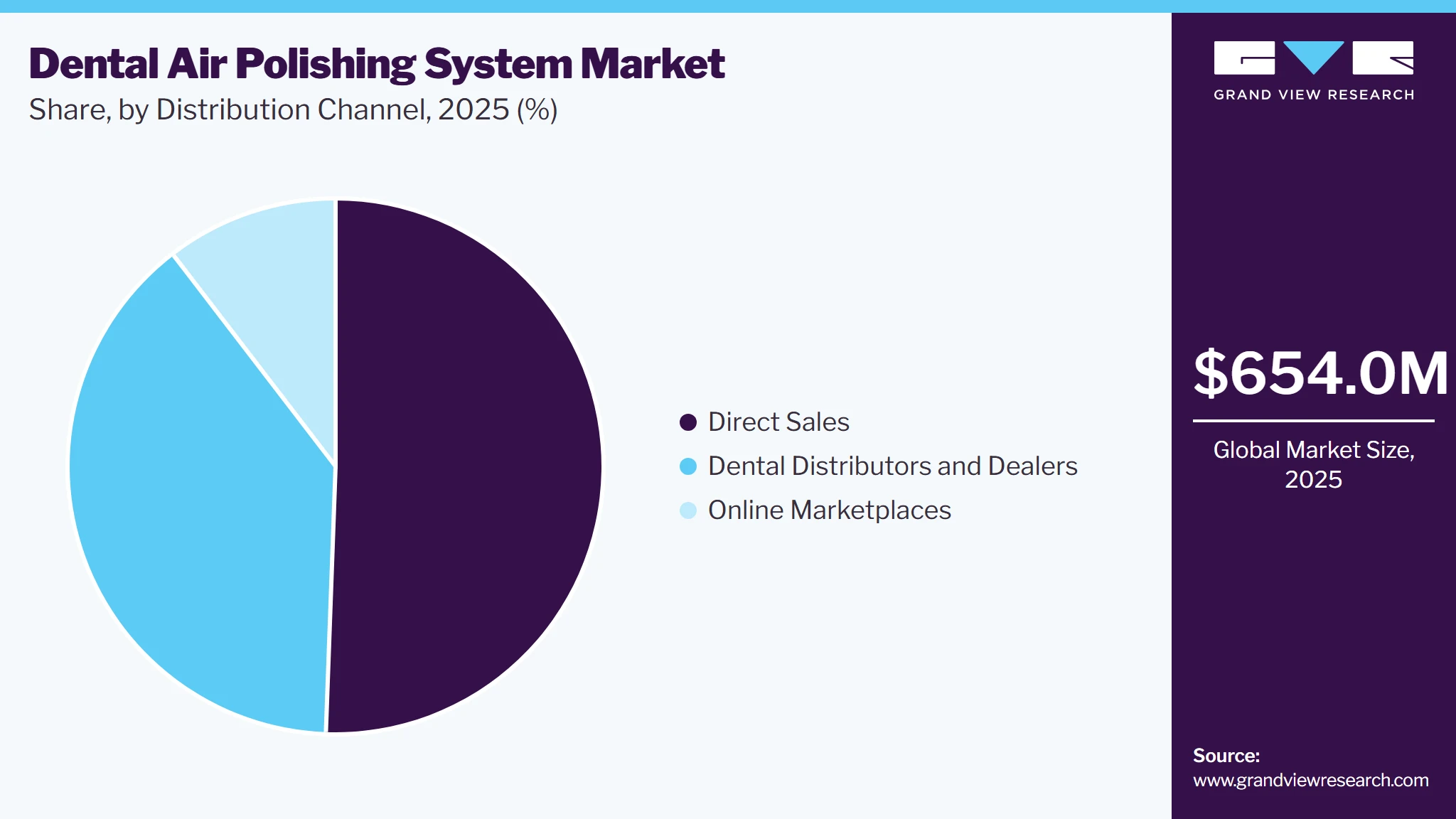
The direct sales segment dominated the market, accounting for 50.6% in 2025. This dominance is driven by the preference of dental clinics and other professional buyers for purchasing equipment directly from manufacturers, particularly for higher-value systems that require product demonstrations, installation, technical support, and training. Direct sales also enable manufacturers to provide application-specific guidance on device configuration, polishing powders, handpieces, and accessories, which is important for systems used across routine, periodontal, implant, and orthodontic procedures.
 To learn more about this report, Download Free Sample Report
 The online marketplaces segment is expected to grow at the fastest CAGR during the forecast period. Growth is driven by the increasing adoption of digital procurement channels among dental professionals and the expansion of specialized online platforms offering branded dental equipment and consumables. For instance, in January 2026, Dentalkart entered into a strategic partnership with NSK Japan to strengthen access to authentic dental technology in India, reflecting the growing role of digital dental-commerce platforms in connecting manufacturers with dental professionals. The availability of equipment, replacement components, polishing powders, nozzles, and other dental products through specialized online channels is also improving product accessibility and simplifying procurement for clinics.
Regional Insights
The North America dental air polishing system market held the largest share of 34.3% in 2025, supported by established dental care infrastructure and the presence of major manufacturers. The U.S. represents the largest market in the region, with companies such as EMS, Dentsply Sirona, Hu-Friedy Mfg. Co., LLC. (STERIS), KaVo Dental, Nakanishi inc., Acteon Group, Mectron s.p.a., and DÜRR DENTAL offering air-polishing products and systems. In addition, the underlying dental-care market also provides a substantial commercial base, with U.S. national dental expenditures reaching USD 189 billion in 2024, while dental spending increased by 4% after adjusting for inflation.
 To learn more about this report, Download Free Sample Report
 U.S. Dental Air Polishing System Market Trends
The dental air polishing system industry in the U.S. is supported by a substantial burden of oral diseases and an established dental-care infrastructure. According to the American Cancer Society, approximately 60,480 new cases of oral cavity and oropharyngeal cancer and 13,150 related deaths are estimated for 2026 in the U.S. Incidence rates have also increased by about 1% annually since the mid-2000s. The broader prevalence of oral diseases, including dental caries, periodontal disease, and other oral conditions, increases the need for professional preventive and maintenance procedures. This disease burden supports demand for dental air polishing systems used for plaque and biofilm removal, stain removal, periodontal maintenance, and oral hygiene procedures.
Europe Dental Air Polishing System Market Trends
The dental air polishing system industry in Europe is supported by the continued need for professional dental care and preventive oral-health services. According to Eurostat, published in August 2025, 6.0% of people in the EU who needed dental care reported unmet dental care needs in 2024. The proportion was particularly high in Greece at 27.1%, followed by Latvia at 16.5% and Romania at 16.2%, while Malta, Germany, and Croatia reported much lower levels of 0.4%, 0.9%, and 1.1%, respectively. In addition, 13.7% of people at risk of poverty reported unmet dental care needs, compared with 5.1% among those not at risk of poverty. These disparities highlight differences in dental-care accessibility across Europe while supporting the need for efficient preventive and professional cleaning procedures, including air polishing.
The dental air polishing system industry in the UK is witnessing steady growth, supported by the continued burden of dental disease and the need for preventive and professional oral healthcare services. For instance, in September 2025, according to NHS England, 21,162 children aged 5-9 years were admitted to hospitals in England due to tooth decay during 2024/25, compared with 13,667 admissions for acute tonsillitis, making tooth decay the leading cause of hospital admissions in this age group. The persistent burden of tooth decay supports demand for professional dental cleaning and preventive procedures, including plaque, biofilm, and extrinsic stain removal, creating opportunities for dental air polishing systems across UK dental practices.
Asia Pacific Dental Air Polishing System Market Trends
The dental air polishing system industry in Asia Pacific is expected to benefit from the expansion of organized dental-care networks, increasing investment in modern dental clinics, and improving access to professional oral healthcare. For instance, in May 2025, Clove Dental reported that its network in the Mumbai region had reached 34 clinics, following the addition of 13 clinics in 2024 and 21 clinics during 2025. The company also planned further expansion and targeted 100 clinics across Mumbai by the end of 2026, with expansion covering locations including Navi Mumbai, Thane, Pune, Panvel, and Ahmedabad.
The China dental air polishing system industry is supported by the expansion of dental care infrastructure, modernization of dental facilities, and increasing adoption of advanced dental technologies. In June 2026, Sino-Dental attracted more than 900 companies from nearly 40 countries and regions and showcased dental diagnostic and treatment equipment, medical consumables, and smart dental solutions, highlighting the continued development and technology adoption within China’s dental industry.
Latin America Dental Air Polishing System Market Trends
The dental air polishing system industry in Latin America is supported by the region's substantial dental-care workforce, expansion of oral-health services, and increasing investment in modern dental infrastructure. Brazil represents an important market within the region. Brazil's Ministry of Health reported in 2025 that the country's public oral-health program had expanded to 1,200 Dental Specialty Centers and was increasing the deployment of mobile dental units and digital technologies. These investments are expanding access to professional dental services and creating opportunities for equipment used in preventive, periodontal, and specialist dental procedures, including air-polishing systems.
Middle East & Africa Dental Air Polishing System Market Trends
The MEA dental air polishing system industry is being supported by healthcare infrastructure investment, expansion of specialized dental services, and increasing adoption of advanced healthcare technologies. In September 2025, the Al-Baha Health Cluster opened specialized dental clinics for implantology, oral medicine, and orthodontics and equipped dental facilities with 201 digital devices supported by AI technologies.
Key Dental Air Polishing System Company Insights
Some of the key companies in the dental air polishing system industry include Acteon Group, Dentsply Sirona, EMS Electro Medical Systems, Harry J. Bosworth Company (Keystone Industries), among others. Organizations are focusing on increasing customer base to gain a competitive edge in the industry. Therefore, key players are taking several strategic initiatives, such as product launch and partnerships with other major companies.
Key Dental Air Polishing System Companies
The following key companies have been profiled for this study on the dental air polishing system market.
-
Acteon Group
-
Dentsply Sirona
-
EMS Electro Medical Systems
-
Harry J. Bosworth Company (Keystone Industries)
-
Hu-Friedy Mfg. Co., LLC. (STERIS)
-
KaVo Dental (Planmeca Oy)
-
Nakanishi inc.
-
Woodpecker
-
Mectron s.p.a.
-
W&H Dentalwerk (Peter and Hilde Malata)
-
DÜRR DENTAL
-
Deldent
Competitive Benchmarking
Category
Operating Strategies
Competitive Edge
Weakness
Established Players (EMS Electro Medical Systems, Dentsply Sirona, Acteon Group, KaVo Dental)
- Focus on developing advanced air-polishing systems, including integrated platforms, subgingival and peri-implant solutions, low-abrasive powder compatibility, and portable handpiece-based systems.
- Expand global presence through dental distributors, specialist clinics, dental hospitals, universities, and established service networks.
- Strong brand recognition established dental-industry relationships, broad prophylaxis portfolios, extensive distribution networks, and experience in developing integrated air-polishing and ultrasonic systems.
- Established players also benefit from product compatibility with existing dental units and established clinical support infrastructure.
- Relatively higher product costs, complex product portfolios, and dependence on trained dental professionals limit adoption among smaller or cost-sensitive dental practices.
- Established companies also face competition from lower-cost regional manufacturers.
Emerging Players (Harry J. Bosworth Company (Keystone Industries), Deldent)
- Emphasize compact, portable, and cost-effective air-polishing solutions while expanding through regional distributors and dental-equipment dealers.
- Focus on specialized applications such as stain removal, prophylaxis, air abrasion, and restorative or periodontal procedures.
- Competitive pricing, flexible product configurations, compact systems, and the ability to address the requirements of smaller dental practices and cost-sensitive markets.
- Regional distribution can also enable faster penetration in selected emerging markets.
- Lower global brand recognition compared with leading multinational manufacturers, smaller direct sales and service networks.
- Dependence on distributors can also constrain customer support and market expansion.
Recent Developments
-
In February 2026, Hu-Friedy Mfg. Co., LLC. launched its new PWR Air air polishing system at the CDS Chicago Midwinter Meeting. The system was designed to support efficient air polishing for preventive and implant care while integrating into existing clinical workflows.
“Chicago Midwinter has always been an important moment for our customers and for our company,” Rob Woolley, CEO of Hu-Friedy Mfg. Co., LLC., said in a press release leading up to the trade show, which ran from February 19 to February 21. “Launching PWR Air here, in our hometown, allows us to connect directly with clinicians and show how our renewed focus is translating into solutions that truly support the way they practice every day.”
-
In February 2026, Dentsply Sirona expanded its partnership with Burkhart Dental Supply, adding its full dental technology portfolio. The expansion aimed to improve access to digital dental technologies, simplify purchasing, and strengthen local support for dental practices.
"Burkhart is thrilled to expand our partnership with Dentsply Sirona," said Phillip Salerno, Director of Equipment, Merchandise & Technology. "The addition of their full technology portfolio will allow Burkhart to continue to provide our clients with innovative digital solutions and clinical products to help practices streamline workflows and deliver the best patient experience."
-
In February 2025, Nakanishi Inc. expanded its dental operatory portfolio with three new surgical products, including a subgingival air polisher, surgical micromotor, and implant stability measurement device. The products were designed to improve periodontal care, implant procedures, connectivity, and peri-implantitis prevention.
Dental Air Polishing System Market Report Scope
Report Attribute
Details
Market size in 2025
USD 654.0 million
Estimated market size in 2026
USD 709.1 million
Revenue forecast in 2033
USD 1,198.5 million
Growth rate
CAGR of 7.8% from 2026 to 2033
Base year for estimation
2025
Actual estimates/Historical data
2021 - 2024
Forecast period
2026 - 2033
Quantitative units
Revenue in USD million, and CAGR from 2026 to 2033
Report coverage
Revenue forecast, company ranking, competitive landscape, growth factors, and trends
Segments covered
Product, clinical application, patient age, end-use, distribution channel, region
Regional scope
North America; Europe; Asia Pacific; Latin America; Middle East & Africa
Country scope
U.S.; Canada; Mexico; UK; Germany; France; Italy; Spain; Denmark; Sweden; Norway; Japan; China; India; Thailand; Australia; South Korea; Brazil; Argentina; South Africa; Saudi Arabia; UAE; Kuwait
Key companies profiled
Acteon Group; Dentsply Sirona; EMS Electro Medical Systems; Harry J. Bosworth Company (Keystone Industries); Hu-Friedy Mfg. Co., LLC. (STERIS); KaVo Dental (Planmeca Oy); Nakanishi Inc.; Woodpecker; Mectron S.P.A.; W&H Dentalwerk (Peter and Hilde Malata); DÜRR DENTAL; Deldent
Customization scope
Free report customization (equivalent up to 8 analyst’s working days) with purchase. Addition or alteration to country, regional & segment scope
Pricing and purchase options
Avail customized purchase options to meet your exact research needs. Explore purchase options
Global Dental Air Polishing System Market Report Segmentation
This report forecasts revenue growth at global, regional & country levels and provides an analysis of the latest industry trends in each of the sub-segments from 2021 to 2033. For this study, Grand View Research has segmented the global dental air polishing system market report based on product, clinical application, patient age, end-use, distribution channel, and region:
-
Dental Air Polishing System Product Outlook (Revenue, USD Million, 2021 - 2033)
-
Equipment
-
Tabletop Systems
-
Handheld Systems
-
Air Polishing-Scaler Systems
-
-
Replacement Parts and Accessories
-
Replacement Handpieces
-
Powder Chambers
-
Reusable Nozzles and Tips
-
Connectors and Hoses
-
Other Accessories
-
-
Consumables
-
Polishing Powders
-
Sodium Bicarbonate
-
Glycine
-
Erythritol
-
Calcium Carbonate
-
Trehalose
-
Other Polishing Powders
-
-
-
Disposable Nozzles and Tips
-
Other Consumables
-
-
Dental Air Polishing System Clinical Application Outlook (Revenue, USD Million, 2021 - 2033)
-
Routine Cleaning and Stain Removal
-
Periodontal Cleaning
-
Dental Implant Cleaning
-
Orthodontic Cleaning
-
Pre-treatment and Cosmetic Cleaning
-
Other Dental Applications
-
-
Dental Air Polishing System Patient Age Outlook (Revenue, USD Million, 2021 - 2033)
-
Children and Adolescents
-
Adults
-
Geriatric
-
-
Dental Air Polishing System End Use Outlook (Revenue, USD Million, 2021 - 2033)
-
Dental Clinics
-
DSO Affiliated
-
Private
-
-
Hospitals
-
Dental Schools and Training Centers
-
-
Dental Air Polishing System Distribution Channel Outlook (Revenue, USD Million, 2021 - 2033)
-
Direct Sales
-
Dental Distributors and Dealers
-
Online Marketplaces
-
-
Regional Outlook (Revenue, USD Million, 2021 - 2033)
-
North America
-
U.S.
-
Canada
-
Mexico
-
-
Europe
-
UK
-
Germany
-
France
-
Italy
-
Spain
-
Denmark
-
Sweden
-
Norway
-
-
Asia Pacific
-
Japan
-
China
-
India
-
Thailand
-
Australia
-
South Korea
-
-
Latin America
-
Brazil
-
Argentina
-
-
Middle East & Africa
-
South Africa
-
Saudi Arabia
-
UAE
-
Kuwait
-
-
Research Methodology
The dental air polishing system market figures in this report are based on a proven research process that combines executive interviews with secondary research from proprietary databases, company filings, and recognized regulatory and institutional sources. Market size is built through value-chain sizing - reconciling supply-side and demand-side estimates - and triangulated with bottom-up and top-down approaches. Every estimate passes multiple levels of expert validation before publication, with each dental air polishing system segment quantified using the revenue-capture definitions in the table below.
Segment Definition
Segment - Product
Revenue capture definition
Equipment
Revenue generated from the sale of dental air polishing equipment, including tabletop systems, handheld systems, and air polishing-scaler systems.
Replacement Parts and
Accessories
Revenue generated from the sale of replacement and supporting components used with dental air polishing equipment, including replacement handpieces, powder chambers, reusable nozzles and tips, connectors, hoses, and other accessories.
Consumables
Revenue generated from the sale of consumable products used during dental air polishing procedures, including polishing powders, disposable nozzles and tips, and other procedure-specific consumables.
Estimation Model
Delivered Customizations
This report has been delivered with the following In-depth customizations
Client Request
Customization Delivered
Value Adds
Dental Air Polishing Device Product Portfolio & Clinical Application Analysis
Conducted a comprehensive assessment of the dental air polishing device product portfolio, including tabletop systems, handheld systems, and air polishing-scaler systems, along with replacement parts, accessories, and consumables. Evaluated product utilization across routine cleaning and stain removal, periodontal cleaning, dental implant cleaning, orthodontic cleaning, pre-treatment and cosmetic cleaning, and other dental applications.
Helps stakeholders identify high-demand product categories, understand application-specific demand, evaluate technology and consumable preferences, and optimize product portfolios according to evolving clinical requirements and patient needs.
End-user Adoption & Procurement Landscape Analysis
Analyzed the adoption of dental air polishing system across dental clinics, including DSO-affiliated and private practices, hospitals, and dental schools and training centers. Assessed procurement preferences, equipment replacement cycles, reusable versus disposable component usage, consumable purchasing patterns, maintenance requirements, and the influence of procedure volumes on purchasing decisions.
Enables manufacturers to strengthen commercial strategies, identify high-demand end-user segments, optimize distribution networks, improve procurement planning, and expand market penetration across established and emerging dental markets.
Product Positioning & Manufacturer Competitiveness Assessment
Evaluated leading dental air polishing system manufacturers based on product portfolio breadth, equipment configuration, subgingival and peri-implant capabilities, powder compatibility, ergonomic design, integrated scaling functionality, portability, technological innovation, geographic presence, pricing strategies, regulatory compliance, and distribution strength. The assessment also analyzed recent product launches, product upgrades, low-abrasive powder technologies, consumable innovations, and competitive differentiation across the global dental air polishing devices market.
Supports competitive benchmarking, identifies product development opportunities, enables portfolio differentiation, strengthens go-to-market strategies, and helps companies improve competitive positioning through clinical innovation, ergonomic design, consumable development, and expansion across dental clinics, hospitals, and academic institutions.
Frequently Asked Questions About This Report
The global dental air polishing system market size was valued at USD 654.0 million in 2025 and is estimated at USD 709.1 million for 2026.
The global dental air polishing system market is expected to grow at a CAGR of 7.8% from 2026 to 2033, reaching USD 1,198.5 million.
Key factors include the rising global burden of dental caries and periodontal disease, increasing adoption of preventive and professional dental care, and growing demand for efficient plaque, biofilm, and extrinsic stain removal.
North America dominated with a 34.3% revenue share in 2025.
Asia Pacific is the fastest-growing region over the forecast period.
The equipment segment held the largest share of 50.7% in 2025, while consumables is the fastest-growing segment over the forecast period.
The routine cleaning and stain removal held the largest share of 41.1% in 2025, while dental implant cleaning is the fastest-growing segment over the forecast period.
The dental clinics held the largest share of 82.8% in 2025 and is the fastest-growing segment over the forecast period.
The dental sales held the largest share of 50.6% in 2025, while online marketplaces is the fastest-growing segment over the forecast period.
Key players include Acteon Group, Dentsply Sirona, EMS Electro Medical Systems, Harry J. Bosworth Company (Keystone Industries), Hu-Friedy Mfg. Co., LLC. (STERIS), KaVo Dental (Planmeca Oy), Nakanishi inc., Woodpecker, Mectron s.p.a., W&H Dentalwerk (Peter and Hilde Malata), DÜRR DENTAL, and Deldent.
About the Author(s)
Medical Devices Research Team
Healthcare · Medical DevicesThis report was authored by the medical devices research team at Grand View Research - comprising two research analysts, one senior research analyst, and one industry expert - with specialized expertise in the medical devices segment of the healthcare industry. All findings are based on proprietary healthcare databases, executive interviews, and regulatory analysis, subject to internal peer review prior to publication.
Last Updated:
Speak to Analyst

Customize this report to your needs - add regions, segments, or data points, with 20% free customization.
Or view our licence options:


ISO 9001:2015 & 27001:2022 Certified
We are GDPR and CCPA compliant! Your transaction & personal information is safe and secure. For more details, please read our privacy policy.


