
- Home
- »
- Medical Devices
- »
-
Dental Intraoral Sensors Market Size, Industry Report, 2030GVR Report cover
![Dental Intraoral Sensors Market Size, Share & Trends Report]()
Dental Intraoral Sensors Market (2025 - 2030) Size, Share & Trends Analysis Report By Product (Wired Intraoral Sensors, Wireless Intraoral Sensors), By Application (Orthodontics, Implantology), By End Use (Dental Hospitals, Dental Clinics), By Region, And Segment Forecasts
- Report ID: GVR-4-68040-558-4
- Number of Report Pages: 90
- Format: PDF
- Historical Range: 2018 - 2023
- Forecast Period: 2025 - 2030
- Industry: Healthcare
- Report Summary
- Table of Contents
- Interactive Charts
- Methodology
- Download FREE Sample
-
 Download Sample Report
Dental Intraoral Sensors Market Summary
The global dental intraoral sensors market size was estimated at USD 257.3 million in 2024 and is projected to reach USD 360.5 million by 2030, growing at a CAGR of 5.9% over the forecast period 2025 to 2030. The market is expanding rapidly as clinics modernize diagnostic workflows and seek safer, faster, and more integrated imaging solutions.
Key Market Trends & Insights
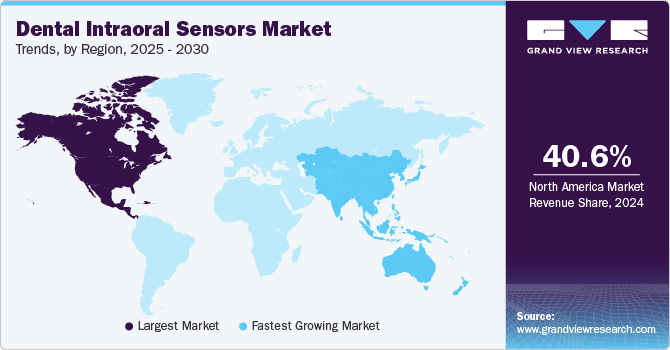
- North America dental intraoral sensors industry dominated globally with a share of 40.6% in 2024.
- The Asia Pacific dental intraoral sensors industry is expected to grow at the fastest CAGR during the forecast period.
- Based on product, the wired intraoral sensors segment held the largest share of over 71.1% in 2024.
- Based on end use, the dental clinics segment held the largest share at 61.4% in 2024 and is expected to grow at the fastest CAGR over the forecast period.
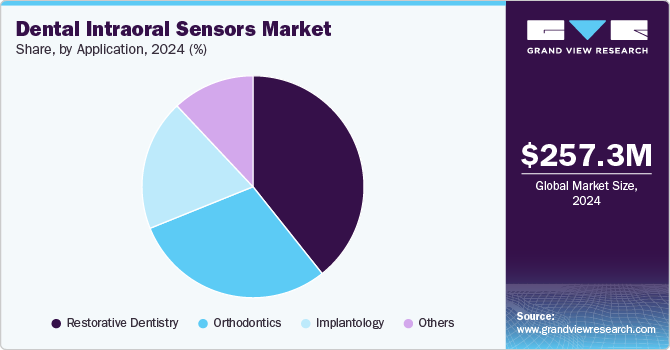
- Based on application, the restorative dentistry segment held the largest share of 39.3% in 2024 and is anticipated to grow at the fastest CAGR over the forecast period.
Market Size & Forecast
- 2024 Market Size: USD 257.3 Million
- 2030 Projected Market Size: USD 360.5 Million
- CAGR (2025-2030): 5.9%
- North America: Largest market in 2024
- Asia Pacific: Fastest growing market
Technology advancements and the broader digitalization trend are expected to continue fueling adoption, even in price-sensitive or infrastructure-constrained environments. In March 2025, Dental Technology Review reported that 38.62% of dentists use in-house CAD software. This growth in digital workflow highlights the rising demand for intraoral sensors, which are key to improving diagnostic accuracy and practice efficiency.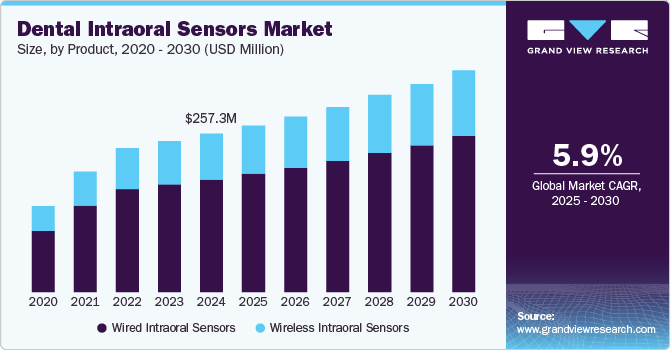
Clinics are increasingly investing in digital tools that streamline diagnostic workflows, reduce turnaround times, and support paperless patient record systems. Intraoral sensors offer instant imaging, improved diagnostic efficiency, and easier integration with practice management software, making them central to modern dental operations. In December 2023, an article in Scientific Reports highlighted a novel intraoral sensor platform for monitoring temperature and humidity. This system, embedded in a conventional dental spoon, offers precise measurements to address oral health issues like xerostomia. It aims to enhance treatment by providing real-time data for personalized therapy, marking a significant step forward in intraoral sensor technology for improving patient care.
Growing clinical emphasis on early and accurate diagnosis in procedures such as endodontics, periodontics, and implant planning is fueling demand for high-performance intraoral sensors. New-generation sensors offer enhanced resolution and improved dynamic range while enabling dentists to minimize radiation exposure. In April 2022, an article in Sensors focused on the role of intraoral sensors in modern dental practice. It discussed the integration of sensors for measuring occlusal force and bite force, particularly in disclusion time reduction (DTR) therapy, where intraoral sensors showed significant improvement in patients with muscular dysfunction. The article also examined the use of flexiforce sensors in mandibular advancement devices (MADs) for treating obstructive sleep apnea, highlighting their ability to distribute force more effectively across the dentition.
Continuous innovation in intraoral sensor design, ranging from ergonomic form factors to wireless connectivity, is reducing usability barriers and improving adoption across varied clinical settings. Wireless sensors eliminate cumbersome cables and enable more flexible chairside positioning, enhancing practitioner convenience and patient comfort. In October 2023, PreXion introduced the Evolve Intraoral Sensor, designed to enhance digital imaging in dental practices. The sensor delivers high-definition images using Cesium Lodide (Csl-TL) technology, ensuring accuracy for safe diagnoses. It integrates seamlessly with all X-ray equipment and includes user-friendly software for smooth transitions to digital imaging.
Market Concentration & Characteristics
The dental intraoral sensors industry demonstrates a high degree of innovation, with companies investing heavily in R&D to improve image resolution, reduce radiation exposure, and enhance sensor durability. Developments in AI-enabled diagnostic support, integration with practice management software, and ergonomic wireless designs are reshaping clinical workflows. CMOS technology remains central, with enhancements in pixel size and real-time imaging latency drawing considerable attention. Innovation is also visible in disinfection protocols and sensor flexibility, addressing pain points in clinical usability. The drive toward digital efficiency and diagnostic accuracy continues to keep innovation at the forefront.
The level of merger and acquisition activity in the dental intraoral sensors industry is low, with most players preferring organic growth through technological innovation or software partnerships. While a few dental conglomerates have made strategic investments in imaging software firms, there has been limited consolidation focused specifically on intraoral sensor manufacturers. Independent brands often operate under parent companies but retain distinct operations. Companies like DEXIS and Carestream Dental continue to dominate through proprietary development rather than external acquisitions. This trend indicates a relatively stable competitive structure with minimal shake-ups from M&A.
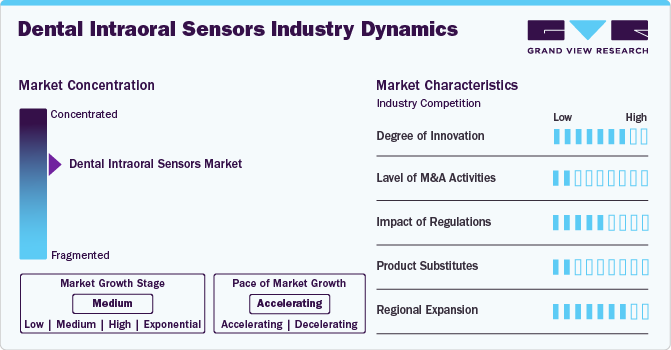
Regulatory influence on the dental intraoral sensors industry is moderate, with devices classified as Class II medical equipment in the U.S. and similar categories in the EU and Japan. Manufacturers must adhere to radiation safety standards, biocompatibility testing, and electrical performance norms. However, regulatory processes are well-established and do not represent a prohibitive barrier for established firms familiar with medical device compliance frameworks. Software interoperability standards such as DICOM compatibility are increasingly monitored, particularly as sensor data is integrated into cloud-based diagnostics. The environment encourages quality assurance but does not stifle innovation or entry entirely.
There is are low level of viable substitutes in the dental intraoral sensors industry. Intraoral sensors provide unmatched resolution, speed, and integration into chairside workflows, especially compared to traditional film or external imaging systems. While panoramic and CBCT imaging serve other purposes, they cannot replace the precision and immediacy required for bitewing and periapical diagnostics. Analog systems remain in limited use but are rapidly phasing out due to higher costs over time and slower turnaround. As digital workflows become standard across dental practices, intraoral sensors retain a critical, irreplaceable role in routine diagnostics and treatment planning.
The market shows high momentum in regional expansion, particularly in Asia-Pacific, Eastern Europe, and parts of Latin America. Digital adoption in dental practices is on the rise, driven by improving healthcare infrastructure, greater awareness of oral diagnostics, and declining costs of entry-level systems. Key players are forming regional partnerships, deploying training initiatives, and offering multilingual support platforms to penetrate emerging markets. The shift from analog to digital imaging has become a strategic focus in developing economies.
Product Insights
The wired intraoral sensors segment held the largest share of over 71.1% in 2024 due to its cost-effectiveness, reliability, and established integration with existing dental systems. These sensors offer consistent image quality and are less susceptible to wireless signal issues, making them especially appealing for high-volume practices prioritizing efficiency over mobility. Their compatibility with a broad range of dental imaging software and relatively lower maintenance costs have kept them a preferred choice in clinics where budget and operational stability are key considerations. For instance, the Carestream Dental RVG 142 is an intraoral RVG sensor that delivers accurate periapical radiographs. It features an ergonomic design, waterproof and shock-resistant casing, and USB connectivity for easy integration with dental practice management software.
The wireless intraoral sensors segment is expected to grow at the fastest CAGR during the forecast period, due to improved connectivity, enhanced battery life, and greater ease of use in clinical workflows. These sensors eliminate cable clutter, improve patient comfort, and offer seamless integration with digital systems. As practices modernize, the demand for mobility, hygiene, and real-time data transfer is accelerating the shift toward wireless solutions despite their higher upfront cost. In April 2022, a study in Wireless Personal Communications introduced a novel model integrating intraoral wireless sensors, the Internet of Dental Things (IoDT), and teledentistry to monitor cariogenic factors like oral pH and biofilm activity. This approach aims to enable early detection and prevention of dental caries through real-time data collection and cloud-based analysis.
End Use Insights
The dental clinics segment held the largest share at 61.4% in 2024 and is expected to grow at the fastest CAGR over the forecast period. Dental clinics have emerged as the dominant end use segment in the market due to their widespread presence, high patient inflow, and focus on adopting advanced imaging solutions for routine diagnostics. Clinics often prioritize faster turnaround times and operational efficiency, making digital intraoral sensors ideal for streamlining workflows, storing images electronically, and enhancing case documentation. Their ability to conduct high volumes of radiographic procedures daily also justifies the return on investment for sensor integration, particularly among mid to large-sized clinics. As the majority of general and specialist dentistry takes place in these settings, clinics represent a stable and expansive consumer base for sensor manufacturers.
Dental clinics have become increasingly competitive, prompting practitioners to differentiate themselves through technology adoption and improved patient experiences. Digital sensors allow for real-time image viewing, reducing chair time and improving patient communication, which clinics leverage as a value-added service. With the growing consolidation of dental practices under group and DSO models, procurement of standardized imaging systems such as intraoral sensors has increased. In December 2023, Benevis introduced Digital Intraoral Sensors across its 120 dental locations in 13 states, enhancing X-ray imaging and improving diagnostic precision. This upgrade supports the company's goal to expand access to quality dental care for underserved communities while boosting operational efficiency.
Application Insights
The restorative dentistry segment held the largest share of 39.3% in 2024 and is anticipated to grow at the fastest CAGR over the forecast period. Restorative dentistry dominates the market primarily due to its high reliance on accurate, real-time imaging for diagnosis and treatment planning. Procedures such as cavity detection, crown placement, and implant planning require detailed intraoral views to assess tooth structure, alignment, and restoration margins. In July 2024, a study published in Diagnostics highlighted the T-Scan III system, a gold standard in dental occlusion analysis. Using fine, sensitive intraoral sensors, it measures occlusal forces in real-time, providing detailed data on contact distribution. The system’s accuracy and ability to visualize dynamic dental interactions make it essential in both clinical practice and research.
The rise in dental insurance coverage and patient awareness in developed markets has led to a surge in elective and preventive restorative procedures, amplifying demand for reliable diagnostic technologies like intraoral sensors. Dentists favor digital sensors for their ease of use, reduced radiation exposure, and seamless integration with CAD/CAM systems, enabling chairside restorations with enhanced accuracy. In April 2024, an article published in the Dentistry Journal focused on the integration of wireless sensors with artificial intelligence in restorative dentistry. The systematic review examined the efficacy of wireless sensors in diagnosing cavities, monitoring toothbrush forces, and detecting physiological parameters from dental implants. The study found that wireless sensors demonstrated high accuracy, validity, and reproducibility, highlighting their potential to enhance diagnostic precision and patient outcomes in restorative dentistry.
Regional Insights
North America dental intraoral sensors industry dominated globally with a share of 40.6% in 2024. The region benefits from an advanced healthcare system, widespread adoption of digital dentistry, and high patient demand for minimally invasive treatments. The growing number of dental clinics incorporating intraoral sensors into their practices is driven by an increased focus on operational efficiency and diagnostic precision. In February 2023, Henry Schein showcased its latest products and digital innovations at the Chicago Dental Society Midwinter Meeting. Key highlights included the launch of CARINA digital intraoral sensors and AI-powered tools like Dentrix Detect AI and Dentrix Voice. The lineup emphasized enhanced clinical efficiency, streamlined workflows, and improved patient experiences.
U.S. Dental Intraoral Sensors Market Trends
The U.S. dental intraoral sensors industry accounted for the largest share in the North America region in 2024, driven by a high level of adoption across both private and public dental sectors. Dental practices in the U.S. are increasingly integrating intraoral sensors to improve imaging precision, streamline diagnostics, and enhance patient experience. Unlike traditional film-based methods, intraoral sensors offer real-time imaging with lower radiation exposure and quicker turnaround. In May 2024, DEXIS launched the Ti2 Sensor, the latest addition to its AI-driven dental imaging ecosystem, replacing the top-selling Titanium Sensor in the U.S. The Ti2 features double the durability, an integrated servicing module, and built-in AI diagnostics for six dental findings within native DEXIS software.
Europe Dental Intraoral Sensors Market Trends
The dental intraoral sensors industry in Europe held a significant market share in 2024, owing to countries such as Germany, the UK, and France. Europe’s dental market is characterized by high levels of healthcare accessibility, advanced dental practices, and a strong emphasis on patient care. In October 2024, MIT CSAIL and Aarhus University introduced "MouthIO," an innovative dental brace that integrates sensors and actuators to capture in-mouth data. Designed for 3D printing, it monitors conditions like bruxism and helps users with motor impairments to interact with devices via tongue taps.
Germany dental intraoral sensors industry is characterized by a strong emphasis on advanced dental technologies. With a well-established healthcare system, German dental professionals are quick to integrate new tools, such as intraoral sensors, to improve diagnostic accuracy and treatment efficiency. In March 2023, Cefla introduced its latest intraoral sensors at the International Dental Show (IDS) in Cologne, Germany. The launch was led by its imaging brands, MyRay and NewTom, as part of a broader showcase across Cefla’s dental portfolio. The products are set to enhance diagnostic precision in clinical practice.
The UK dental intraoral sensors industry is experiencing significant growth driven by the increasing adoption of digital tools in dental practices. In January 2023, an article published in Sensors reviewed the performance of oral cavity sensors, focusing on their accuracy and agreement metrics. The review highlighted the prevalence of force and pressure sensors in dental applications, as well as the increasing use of optical and image sensors across various fields. Despite promising potential, the article emphasized the need for larger human trials, technological maturity, and standardized evaluation for future advancements in oral cavity sensor applications in healthcare.
The France dental intraoral sensors industry is anticipated to witness a significant CAGR during the forecast period. Driven by advancements in dental technology and rising patient demand for efficient, precise treatments, intraoral sensors are becoming increasingly popular. The French market benefits from a growing shift towards digital dentistry, where diagnostic accuracy and treatment efficiency are prioritized.
Asia Pacific Dental Intraoral Sensors Market Trends
The Asia Pacific dental intraoral sensors industry is expected to grow at the fastest CAGR during the forecast period. This growth is fueled by increasing disposable incomes, heightened dental awareness, and expanding healthcare infrastructure in emerging markets. In September 2022, a review in the Journal of Dental Research and Review highlighted the transformative role of intraoral sensors in pediatric dentistry. IOS technology offers a safer, more comfortable alternative to traditional impressions, particularly beneficial for children with cleft lip and palate. The digital workflow enhances the efficiency and accuracy of fabricating space maintainers, crowns, and obturators.
China dental intraoral sensors industry accounted for a significant revenue share of the Asia Pacific region in 2024. China's market is benefiting from the country’s rapid urbanization, increasing healthcare investments, and rising dental awareness. In June 2022, npj Flexible Electronics published an article on a wearable, battery-free dental patch for wireless sensing and drug delivery. The patch monitors the acidic environment caused by bacteria and delivers fluoride for caries treatment. It uses near-field communication for wireless data transmission to smartphones, offering a new solution for in situ dental care.
Japan's dental intraoral sensors industry has demonstrated robust growth, fueled by the country's advanced technological infrastructure and precision-focused dental practices. Dental professionals in Japan are actively integrating intraoral sensors into clinical workflows to achieve high-resolution imaging and minimize patient discomfort during diagnostics. The Runyes Intraoral Sensor, utilizing APS CMOS technology, offers high-resolution imaging with enhanced sensitivity for precise dental diagnostics. It is designed for ergonomic ease and durability, making it ideal for both adult and pediatric patients.
The India dental intraoral sensors industry is experiencing significant growth driven by rising dental awareness and an increasing preference for advanced, efficient treatment options. In December 2022, Unicorn Denmart launched the Xpect Vision Intraoral Sensor at Expodent International 2022 in Delhi, introducing the world’s first sensor based on Photon-Counting Technology. This compact, ergonomic sensor delivers high-resolution images with a 16-bit grayscale and eliminates light scattering for clearer diagnostics. The sensor’s waterproof design and durable 3-meter cable enhance longevity and usability.
Latin America Dental Intraoral Sensors Market Trends
The Latin America dental intraoral sensors industry is growing due to increased investments by key companies in the region and a growing demand for advanced dental technologies. The rising incidence of dental issues, an expanding middle class, and greater access to modern healthcare contribute to market growth. Countries like Brazil are at the forefront of adopting intraoral sensors as digital solutions become a vital part of clinical practices. As dental care in Latin America continues to evolve, the market for intraoral sensors is set to expand significantly.
Brazil’s dental intraoral sensors industry is experiencing growth as clinics and practitioners increasingly adopt digital radiography to improve diagnostic precision and workflow efficiency. The shift from analog to digital systems is being driven by rising patient expectations, as well as a greater emphasis on reducing radiation exposure and improving treatment turnaround. For instance, Xpectvision is the world’s first intraoral sensor to utilize photon counting technology, delivering clearer, faster images with real-time results. It features silica-based chips, providing superior image quality and durability, with a low radiation exposure and no need for chemicals.
MEA Dental Intraoral Sensors Market Trends
The MEA dental intraoral sensors industry is expected to grow lucratively due to regions like Saudi Arabia leading the charge owing to significant healthcare investments and a focus on modernizing dental care. The healthcare sector in the Middle East is undergoing rapid transformation, with more dental clinics adopting advanced digital solutions like intraoral sensors. The demand for high-quality dental care is rising, particularly in countries with developing dental infrastructures, creating a strong growth potential for intraoral sensor adoption. Saudi Arabia, with its Vision 2030 healthcare initiative, is investing heavily in healthcare innovation, which includes the adoption of advanced technologies in dentistry.
South Africa dental intraoral sensors industry is growing at a significant CAGR over the forecast period. In South Africa, the market is still in the early stages of development, with adoption rates lower than in other regions. However, increasing foreign investments and international healthcare collaborations are expected to spur growth in the region. In December 2022, Vatech's intraoral sensors, particularly the EzRay Air, contributed significantly to the company’s record sales in South Africa. The EzRay Air, featuring carbon nanotube technology (CNT), saw a global sales increase of nearly 40% year-on-year. This innovation enhanced imaging quality and efficiency, establishing the sensor as a leading choice in dental practices.
Key Dental Intraoral Sensors Company Insights
Some of the key players operating in the industry include Carestream Dental and Planmeca. The company’s key strategies include understanding the strengths and weaknesses of major market participants, anticipating future market trends, opportunities, and challenges, and making proactive decisions based on insights into emerging technologies and changing consumer preferences. For instance, Acteon and Owandy Radiology are some of the emerging players in dental intraoral sensors.
Key Dental Intraoral Sensors Companies:
The following are the leading companies in the dental intraoral sensors market. These companies collectively hold the largest market share and dictate industry trends.
- Carestream Dental
- Envista Holdings Corporation
- Dürr Dental
- Acteon
- KaVo Dental
- Owandy Radiology
- Planmeca
- XDR Radiology
- Cefla
- Vatech
Recent Developments
-
In April 2025, Freedom Technologies Group, LLC introduced its advanced DC-Air wireless intraoral sensor, leveraging direct conversion X-ray technology for clearer imaging and improved diagnostic accuracy. The sensor’s 5.4mm slim, IP67 water-resistant, wireless design enhances patient comfort and operational durability. Its Bluetooth integration and streamlined workflow make it a transformative addition to modern dental practices.
-
In May 2024, DEXIS launched its Ti2 intraoral sensor as part of its AI-powered dental imaging ecosystem, enhancing image accuracy and workflow efficiency. The sensor features durability upgrades, AI-assisted 2D diagnostics, and IoT-enabled support through DEXIS Connect Pro. With CleanCapture technology and a universal fit design, Ti2 aims to boost clinical confidence and patient comfort in high-volume dental practices.
-
In April 2024, A2Z Imaging announced a groundbreaking innovation in dental imaging with the release of Air2Zed, a wireless device that converts USB intraoral x-ray sensors into wireless technology. This patent-pending device aims to streamline dental imaging workflows by eliminating the need for cumbersome wires and cables, thus saving space and reducing maintenance costs.
Dental Intraoral Sensors Market Report Scope
Report Attribute
Details
Market size value in 2025
USD 270.5 million
Revenue forecast in 2030
USD 360.5 million
Growth Rate
CAGR of 5.9% from 2025 to 2030
Actual data
2018 - 2023
Forecast period
2025 - 2030
Quantitative units
Revenue in USD million/billion and CAGR from 2025 to 2030
Report coverage
Revenue forecast, company ranking, competitive landscape, growth factors, and trends
Segments covered
Product, application, end use, region
Regional scope
North America; Europe; Asia Pacific; Latin America; MEA
Country scope
U.S.; Mexico; Canada; UK; Germany; France; Italy; Spain; Denmark; Sweden; Norway; Japan; China; India; Australia; Thailand; South Korea; Brazil; Argentina; South Africa; Saudi Arabia; UAE; Kuwait.
Key companies profiled
Carestream Dental; Envista Holdings Corporation; Dürr Dental; Acteon; KaVo Dental; Owandy Radiology; Planmeca; XDR Radiology; Cefla; Vatech
Customization scope
Free report customization (equivalent up to 8 analysts working days) with purchase. Addition or alteration to country, regional & segment scope.
Pricing and purchase options
Avail customized purchase options to meet your exact research needs. Explore purchase options
Global Dental Intraoral Sensors Market Report Segmentation
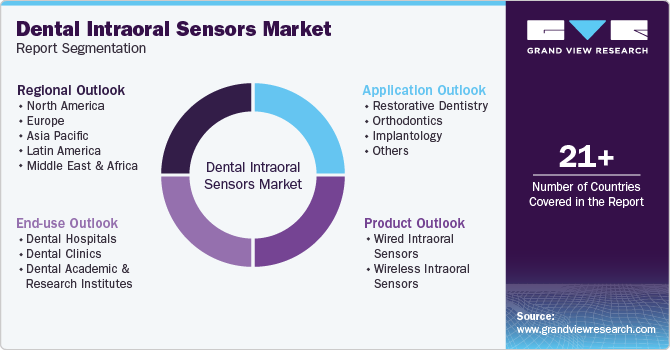
This report forecasts revenue growth at global, regional & country levels and provides an analysis of the industry trends in each of the sub-segments from 2018 to 2030. For this study, Grand View Research has segmented the global dental intraoral sensors market report based on product, application, end use, and region:
-
Product Outlook (Revenue, USD Million, 2018 - 2030)
-
Wired Intraoral Sensors
-
Wireless Intraoral Sensors
-
-
Application Outlook (Revenue, USD Million, 2018 - 2030)
-
Restorative Dentistry
-
Orthodontics
-
Implantology
-
Others
-
-
End Use Outlook (Revenue, USD Million, 2018 - 2030)
-
Dental Hospitals
-
Dental Clinics
-
Dental Academic and Research Institutes
-
-
Regional Outlook (Revenue, USD Million, 2018 - 2030)
-
North America
-
U.S.
-
Canada
-
Mexico
-
-
Europe
-
UK
-
Germany
-
France
-
Italy
-
Spain
-
Denmark
-
Sweden
-
Norway
-
-
Asia Pacific
-
Japan
-
China
-
India
-
South Korea
-
Australia
-
Thailand
-
-
Latin America
-
Brazil
-
Argentina
-
-
Middle East & Africa
-
South Africa
-
Saudi Arabia
-
UAE
-
Kuwait
-
-
Frequently Asked Questions About This Report
b. The global dental intraoral sensors market size was estimated at USD 257.3 million in 2024 and is expected to reach USD 270.5 million in 2025.
b. The global dental intraoral sensors market is expected to grow at a compound annual growth rate of 5.9% from 2025 to 2030 to reach USD 360.5 million by 2030.
b. The wired intraoral sensors segment held the largest share of over 71.1% in 2024 due to its cost-effectiveness, reliability, and established integration with existing dental systems.
b. Some of the major participants in the dental intraoral sensors market include Carestream Dental; Envista Holdings Corporation; Dürr Dental; Acteon; KaVo Dental; Owandy Radiology; Planmeca; XDR Radiology; Cefla; Vatech
b. The dental intraoral sensors market is expanding rapidly as clinics modernize diagnostic workflows and seek safer, faster, and more integrated imaging solutions. Technology advancements and the broader digitalization trend are expected to continue fueling adoption, even in price-sensitive or infrastructure-constrained environments.

Share this report with your colleague or friend.
Need a Tailored Report?
Customize this report to your needs — add regions, segments, or data points, with 20% free customization.


ISO 9001:2015 & 27001:2022 Certified
We are GDPR and CCPA compliant! Your transaction & personal information is safe and secure. For more details, please read our privacy policy.
Trusted market insights - try a free sample
See how our reports are structured and why industry leaders rely on Grand View Research. Get a free sample or ask us to tailor this report to your needs.













