
- Home
- »
- Medical Devices
- »
-
Dental Regeneration Market Size, Industry Report, 2033GVR Report cover
![Dental Regeneration Market Size, Share & Trends Report]()
Dental Regeneration Market (2026 - 2033) Size, Share & Trends Analysis Report By Type (Hard Tissue, Soft Tissue), By Age Group (Pediatric, Adult, Geriatric), By End User (Hospitals, Dental Clinics, Others), By Region, And Segment Forecasts
- Report ID: GVR-4-68040-042-4
- Number of Report Pages: 120
- Format: PDF
- Historical Range: 2021 - 2024
- Forecast Period: 2026 - 2033
- Industry: Healthcare
- Report Summary
- Table of Contents
- Interactive Charts
- Methodology
- Download FREE Sample
-
 Download Sample Report
Dental Regeneration Market Summary
The global dental regeneration market size was estimated at USD 5.82 billion in 2025 and is projected to reach USD 9.59 billion by 2033, growing at a CAGR of 6.51% from 2026 to 2033. The market growth is primarily driven by the rising prevalence of periodontal diseases and tooth loss, as well as the increasing demand for dental implants.
Key Market Trends & Insights
- North America dominated the dental regeneration market with the largest revenue share of 39.63% in 2025.
- The U.S. dental regeneration industry dominated North America, accounting for the largest revenue share in 2025.
- By type, the hard tissue segment led the market with the largest revenue share in 2025.
- By age group, the geriatric segment led the market with the largest revenue share in 2025.
- By end user, the dental clinics segment led the market with the largest revenue share in 2025.
Market Size & Forecast
- 2025 Market Size: USD 5.82 Billion
- 2033 Projected Market Size: USD 9.59 Billion
- CAGR (2026-2033): 6.51%
- North America: Largest market in 2025
- Asia Pacific: Fastest growing market
The growing preference for minimally invasive, tissue-preserving treatments further supports the adoption of regenerative biomaterials and biologics. In addition, advancements in bone graft substitutes, membranes, and growth factor-based therapies are enhancing clinical outcomes and expanding treatment applications.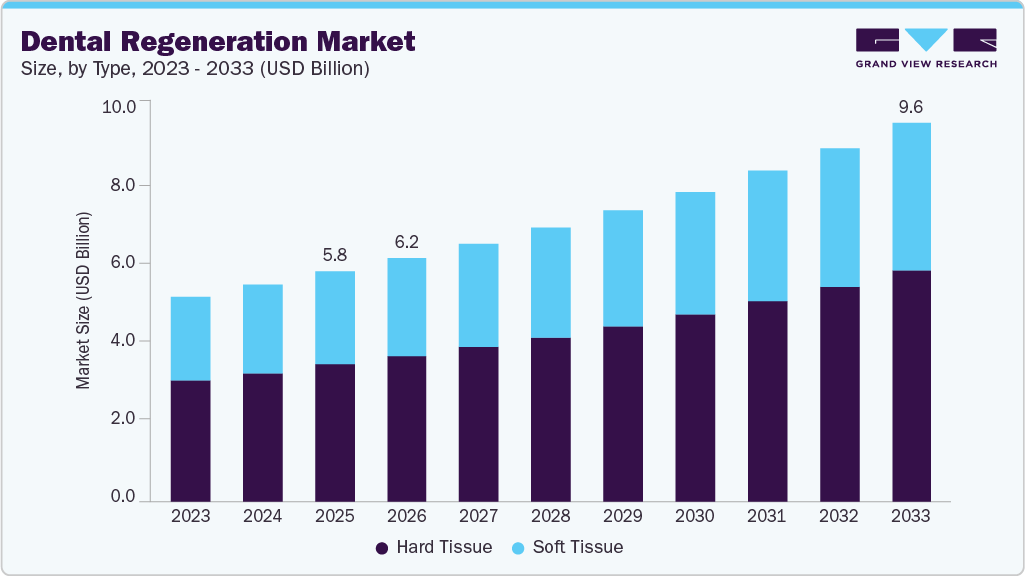
The rising prevalence of periodontal disease, dental caries, and tooth loss significantly drives the dental regenerative market by increasing the need for tissue restoration procedures. Advanced gum disease often leads to destruction of alveolar bone and soft tissue, creating demand for bone grafts, membranes, and biologic regeneration products. As more patients seek to preserve natural teeth and support dental implants, regenerative therapies become essential. This growing disease burden directly expands the patient pool requiring advanced regenerative solutions.
Projected Oral Health Trends in the UK (2020-2050)
Condition / Population Group
2020
2050 (Projected)
Change / Trend
People living with gum disease
42% of population
54% of population
Significant increase
People with signs of gum disease (gum pockets, tissue loss)
25.7 million
28 million
Increase of 2.3 million
People with gum tissue loss alone
18.7 million
~21 million
Increase of 2.3 million
Adults aged 16-59 with tooth decay
15.7 million
15.5 million
Slight decrease (-1.5%)
Adults aged 60+ with tooth decay
5 million
9.6 million
Nearly doubled (+92%)
Source: Adult Dental Health Survey (ADHS)
The shift toward biological and minimally invasive dentistry drives the dental regenerative industry by increasing demand for therapies that preserve and restore natural tissues rather than replace them. Clinicians are adopting bioactive materials, growth factors, and regenerative techniques that promote natural healing with less surgical trauma. This treatment philosophy aligns with patient preferences for conservative, long-term solutions, thereby accelerating the adoption of regenerative products and technologies.
For instance, in 2024, the Annals of Dental Specialty highlighted that minimally invasive dentistry emphasizes a biological, conservation-oriented approach that prioritizes halting disease progression and preserving natural tooth structure rather than relying on extensive surgical intervention. This approach employs biological strategies such as remineralizing materials and early lesion management to support natural healing and reduce the need for invasive restorations, reflecting a broader shift toward biologically driven, patient-friendly dental care.
Technological advancements in the dental regeneration market, including stem cell therapy, growth factor-based biomaterials, 3D bioprinting, and bioactive scaffolds, are significantly transforming restorative dentistry. Innovations in tissue engineering and regenerative endodontics enable natural repair of dental pulp, dentin, and periodontal tissues, reducing the need for invasive procedures. The development of biocompatible and bioresorbable materials further improves treatment success rates and patient outcomes. These advancements are accelerating clinical adoption and driving strong market growth. For instance, in November 2025, research ers from Yonsei University College of Dentistry reported the discovery of “cellular self-organisation” in dental development, a breakthrough that informs future tooth regrowth therapies. The study demonstrated that tooth growth cells taken from the lingual (tongue) and buccal (cheek) sides of mouse dentition possess distinct developmental roles. Even when randomly mixed, these cells reorganized themselves and formed appropriate dental structures, with lingual cells developing into dentin. This finding highlights the intrinsic regenerative potential of dental cells and supports future advancements in the market.
Dr Jung said that these findings had ‘the potential to significantly impact our understanding of tooth development’. The researchers hope that this could lead to ‘advancements in stem cell-based tooth regeneration and more effective therapeutic applications for dental restoration and repair’.
Market Concentration & Characteristics
The market is witnessing significantinnovation, driven by advances in biomaterials, biologics, and tissue engineering. Continuous development of next-generation bone graft substitutes, resorbable membranes, growth factor-based products, and regenerative endodontic procedures reflects strong R&D momentum. Integration with digital dentistry, 3D printing, and precision surgical techniques further enhances clinical predictability. However, innovation is largely concentrated in specialized segments, with ongoing efforts to improve scalability, cost efficiency, and long-term clinical validation. For instance, in March 2023, Botiss Biomaterials GmbH, an international innovator in dental biomaterials, introduced three advanced solutions to enhance bone regeneration, improve treatment comfort, and optimize systemic health at IDS. The company unveiled NOVAMag resorbable magnesium membranes and screws, designed to support regenerative procedures while eliminating the need for secondary removal surgeries. It also launched cerabone +HyA, a ready-to-use combination of bovine bone and hyaluronate offering improved handling in dental bone regeneration. In addition, botissCARE was introduced as a rapid point-of-care solution to help optimize vitamin D levels and support improved oral regenerative outcomes.
Dr. Svenja Rogge, Head of New Developments and Techniques at botiss, said, “We work closely with scientists and clinicians to continuously develop new solutions that meet the requirements in practice.” Since its founding in 2009, the Berlin/Brandenburg-based company has been expanding its portfolio, with a recent focus on biological factors and their influence on wound healing. Now botiss impressed the dental community at the IDS and most recently at the German ITI Congress with the two new products NOVAMag and cerabone +HyA, which support tissue regeneration with their special physical properties. Additionally, a product line for testing, analysis and supplementation of vitamin D is offered from now on.
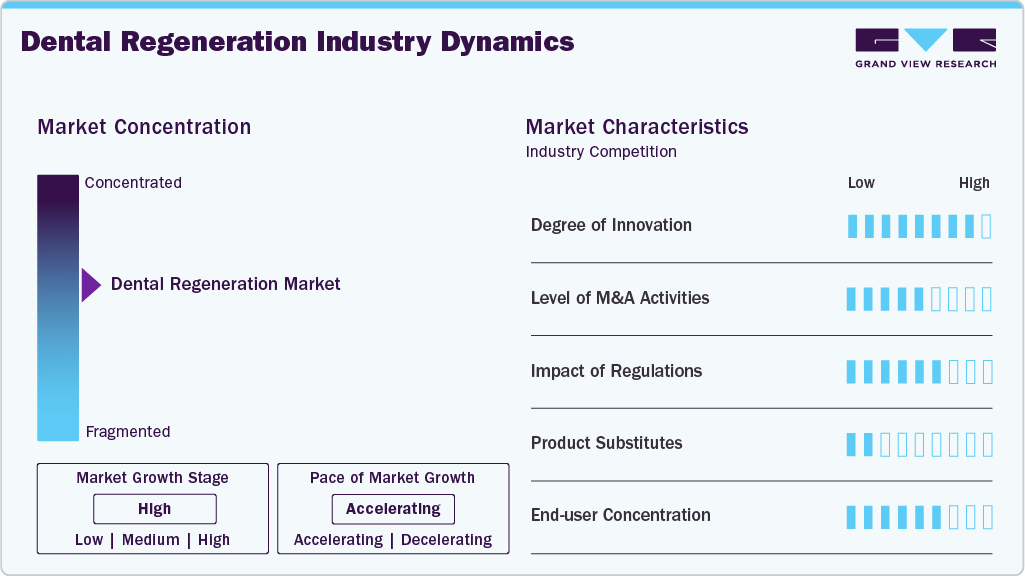
The dental regeneration industry is witnessing moderate, strategically driven merger and acquisition activity. Established dental and biomaterial companies are acquiring smaller, innovative-focused firms to strengthen their regenerative product portfolios, particularly in bone grafts, membranes, and biologics. These acquisitions are typically aimed at expanding technological capabilities, geographic reach, and clinical offerings rather than large-scale consolidation. Overall, M&A activity reflects a competitive effort to accelerate innovation and secure long-term growth within the regenerative dentistry segment.
Regulations have a significant impact on the market for dental regeneration, particularly for products involving biologics, growth factors, and stem cell-based therapies. Strict approval processes and clinical validation requirements lengthen development timelines and increase costs, potentially delaying product commercialization. Compliance with quality, safety, and manufacturing standards ensures patient safety but limits rapid innovation. Overall, regulatory frameworks create both barriers to entry and quality benchmarks that shape market competitiveness.
The dental regeneration market exhibits moderate to high end-use concentration, with most procedures performed in specialized dental clinics and periodontal practices. Advanced regenerative treatments, such as guided bone regeneration and biologic applications, are primarily offered in implantology and periodontology centers rather than in general dental offices. Dental hospitals and academic institutions also represent a smaller but important segment, particularly for complex cases and clinical research. Overall, demand is concentrated among specialized providers with advanced infrastructure and expertise.
Type Insights
The hard tissue regeneration segment dominated the market in 2025 and is expected to grow over the forecast period, driven by strong demand for bone grafts and related biomaterials used in implant site development, periodontal defect treatment, and alveolar ridge augmentation. These products are widely adopted due to their established clinical efficacy and essential role in supporting dental implants. Continued preference for predictable hard-tissue outcomes, combined with the growing number of implant procedures globally, supports this segment’s leading position. Emerging innovations in synthetic and composite graft materials further sustain its market leadership.
The soft tissue regeneration segment is experiencing significant growth over the forecast period, driven by rising demand for periodontal reconstruction and aesthetic gum procedures. Increasing awareness of gum health and the importance of soft-tissue stability around implants is boosting the adoption of collagen matrices and biologic agents. Advancements in minimally invasive techniques and bioactive materials are further improving clinical outcomes. As implant dentistry expands, the need for soft tissue management continues to accelerate segment growth.
Age Group Insights
The geriatric segment dominated the dental regeneration industry in 2025, driven by the higher prevalence of tooth loss, periodontal disease, and alveolar bone resorption among older adults. Aging populations require regenerative procedures to support dental implants and restore oral function. In addition, increased life expectancy and greater awareness of oral health in elderly patients contribute to sustained demand. This demographic trend continues to position the geriatric segment as the leading contributor to market revenue.
The adult segment is expected to grow at the fastest CAGR during the forecast period, driven by rising awareness of preventive and restorative dental care. The increasing demand for dental implants, aesthetic procedures, and minimally invasive regenerative treatments among working-age populations supports this growth. Higher disposable income and improved access to advanced dental services further accelerate adoption. As adults prioritize long-term oral health and appearance, this segment is projected to grow rapidly.
End User Insights
Dentalclinics dominated the dental regeneration market in 2025, as they serve as the primary setting for procedures such as bone grafting, guided tissue regeneration, and implant-site development. Specialized periodontal and implantology clinics are particularly significant contributors due to their advanced infrastructure and expertise. The growing number of private dental practices and increasing patient preference for outpatient care further strengthen this segment’s leadership. As minimally invasive regenerative treatments expand, dental clinics continue to capture the largest share of market revenue.
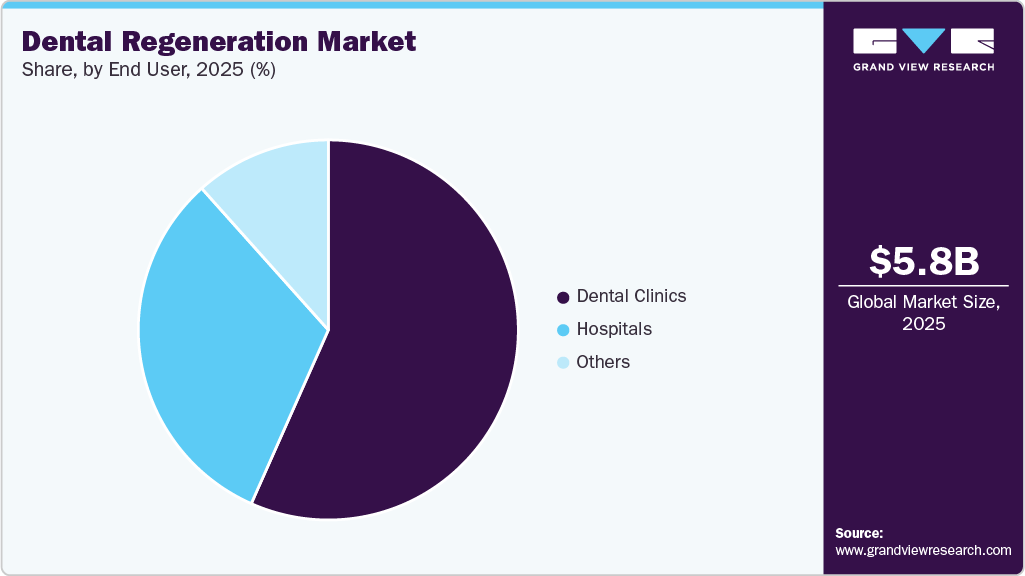
The hospitals segment is expected to grow at the fastest CAGRover the coming years, driven by the rising number of dental complexes and the adoption of multidisciplinary dental procedures. Hospitals are equipped with advanced surgical infrastructure and access to biologics, supporting high-risk and specialized regenerative treatments. Growth in inpatient oral and maxillofacial surgeries further contributes to segment expansion. In addition, stronger reimbursement frameworks in hospital settings are expected to accelerate the adoption of advanced regenerative technologies.
Regional Insights
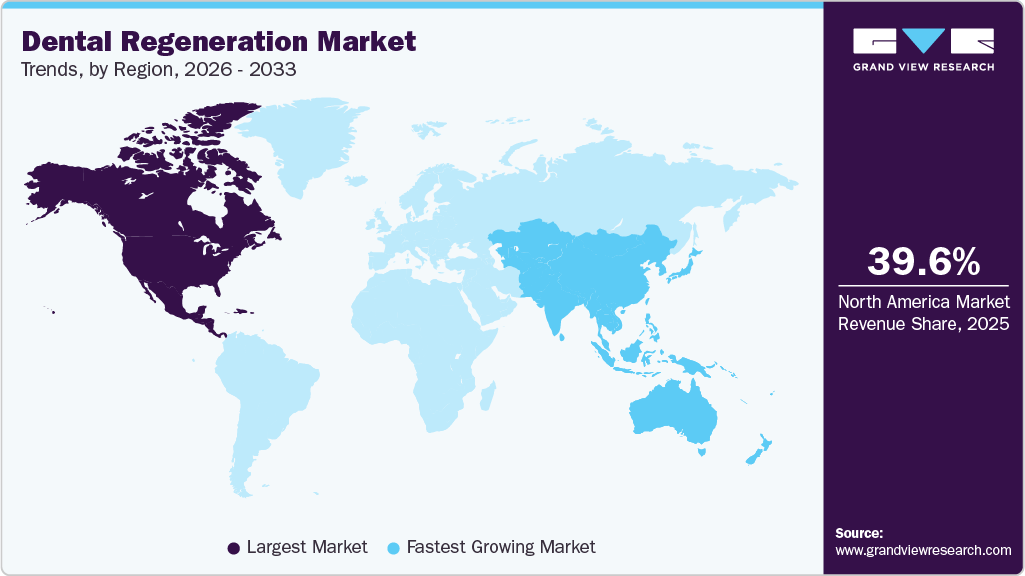
The dental regeneration industry in North America held the largest share, accounting for the largest revenue share of 39.63% in 2025. The market is characterized by high adoption of advanced bone graft materials, biologics, and minimally invasive regenerative procedures. Strong demand for dental implants and periodontal treatments continues to drive hard- and soft-tissue regeneration solutions. The region benefits from well-developed dental infrastructure, high patient awareness, and ongoing technological advancements. Integration of digital planning and precision surgical techniques further strengthens market growth across the region.
U.S. Dental Regeneration Market Trends
The U.S. dental regeneration industry is experiencing significant growth, driven by rising volumes of dental implant procedures and an increasing preference for tissue-preserving treatments. Adoption of advanced bone graft substitutes, collagen membranes, and biologic agents is expanding across specialized dental practices. Growing awareness of periodontal health and aesthetic outcomes further supports demand. In addition, technological integration, including digital imaging and guided surgical techniques, continues to enhance procedural accuracy and clinical success rates.
Europe Dental Regeneration Market Trends
The Europe dental regeneration industry is witnessing significant expansion, supported by growing demand for dental implants and periodontal reconstruction procedures. Increasing adoption of bone graft materials, resorbable membranes, and biologic agents reflects a shift toward tissue-preserving treatments. Strong academic research and clinical collaboration across the region continue to foster innovation in regenerative techniques. In addition, rising patient awareness of oral health and aesthetics is contributing to broader acceptance of advanced regenerative solutions.
The UK dental regeneration market is experiencing significant growth as clinicians adopt advanced materials for bone and soft-tissue regeneration in implant and periodontal procedures. Rising patient demand for minimally invasive, aesthetic dental treatments is driving wider use of biologics and collagen matrices. Ongoing clinical research and professional training are enhancing practitioner confidence and procedural outcomes. In addition, improved access to regenerative therapies through expanding dental service networks is supporting broader market adoption.
The dental regeneration market in France is witnessing gradual growth, supported by increasing demand for implant-supported restorations and periodontal reconstruction procedures. The adoption of advanced biomaterials, such as synthetic bone substitutes and resorbable membranes, is expanding among specialized dental clinics. A strong focus on clinical research and adherence to strict regulatory standards ensures quality-driven innovation. In addition, growing patient interest in aesthetic and long-term tooth-preservation solutions is shaping market trends nationwide.
Asia Pacific Dental Regeneration Market Trends
The Asia Pacific dental regeneration industry is experiencing rapid growth, driven by rising dental disease prevalence and increasing demand for advanced restorative solutions. Adoption of bone graft materials, biologics, and soft tissue regeneration products is expanding as oral healthcare infrastructure improves across the region. Growing medical tourism and higher awareness of aesthetic dental treatments are further boosting market uptake. In addition, increasing investments in clinician training and access to innovative technologies are supporting broader acceptance of regenerative procedures.
The Japan dental regeneration market is advancing rapidly, driven by the growing use of bone grafts and biologic materials in implantology and periodontal therapies. High standards of dental care and strong emphasis on clinical outcomes promote the adoption of advanced regenerative techniques. Aging population dynamics also increase demand for solutions that preserve oral function and support implant success. Additionally, ongoing research collaborations between academic institutions and industry contribute to innovation and market development.
Latin America Dental Regeneration Market Trends
The Latin America dental regeneration industry is gaining momentum as oral healthcare awareness and access to advanced dental treatments improve across the region. The increasing adoption of bone graft substitutes, membranes, and biologic agents reflects the growing demand for implant and periodontal regenerative procedures. Expansion of dental service networks and rising disposable incomes are supporting broader market uptake. Furthermore, ongoing investments in clinician education and training are enhancing the quality and acceptance of regenerative techniques.
MEA Dental Regeneration Market Trends
The MEA dental regeneration industry is gradually expanding as investments in oral healthcare infrastructure and specialist dental services increase. Rising demand for implant-supported restorations and periodontal regenerative procedures is driving the adoption of bone grafts, biologic agents, and soft tissue matrices. Growing patient awareness of advanced dental care and aesthetics further supports market growth. In addition, expanding training programs for clinicians are enhancing the integration of regenerative techniques in the region.
Key Dental Regeneration Company Insights
Key companies in the dental regeneration market include major dental biomaterial and implant manufacturers that offer bone grafts, membranes, and biologic solutions, with several global players holding significant market shares due to broad product portfolios and established distribution networks. Market share is generally concentrated among these leading firms, while numerous smaller innovators contribute niche regenerative technologies, supporting competitive dynamics and continued product development across segments.
Key Dental Regeneration Companies:
The following key companies have been profiled for this study on the dental regeneration market.
- Bioteck S.p.A.
- Dentsply Sirona
- Maxigen Biotech Inc. (TCI Co., Ltd.)
- Institut Straumann AG
- Nobel Biocare Services AG (Envista)
- Geistlich Holding
- ZimVie Inc.
- NovaBone (Halma)
- Osteogenics Biomedical (Envista)
- Regenity
- Medtronic
- BioHorizons
- REGEDENT AG
- IDL Dental Technologies LTD
- EUCARE PHARMACEUTICALS (P) LTD
- Curasan, Inc.
- TBR Dental
- DentiumUSA
- Tecnoss Dental Srl (Tecnoss s.r.l.)
- Unicare Biomedical, Inc.
- Neoss
- Advanced Medical Solutions Group plc
- B&B Dental Implant Company
- Botiss
- Septodont Holding
- Implant Direct Corporation (Envista)
- META BIOMED CO,. LTD
- SigmaGraft Biomaterials
Recent Developments
-
In February 2026, DKSH Business Unit Healthcare announced a strategic partnership with Osteopore Limited, a global provider of 3D-printed biomimetic and bioresorbable implants, to strengthen the distribution, commercial reach, and operational efficiency of its dental solutions portfolio in Malaysia.
-
In April 2025, South Korea-based CGBIO (CEO Hyun Seung Yu), a company in bio-regenerative medicine, announced that its innovative bone graft substitute, NOVOSIS PUTTY, received Investigational Device Exemption (IDE) approval from the U.S. Food and Drug Administration (FDA). This significant milestone enables the initiation of a clinical trial in spinal fusion procedures across the United States, marking an important step toward expanding its presence in the U.S. market.
Jumi Han, Head of U.S. Development at CGBIO USA, overseeing the pivotal clinical program, commented, “Securing IDE approval for this pivotal trial validates our global clinical infrastructure and product quality. We are fully committed to executing a robust clinical trial and expanding NOVOSIS PUTTY’s reach across the U.S. and other major markets”.
-
In November 2025, Dental Tribune International reported that the use of advanced biomaterials in dentistry continues to gain momentum, providing innovative approaches to repair and protect teeth without relying solely on synthetic or invasive treatments. The publication highlighted a recent breakthrough in enamel-regenerating gel, demonstrating how bio-inspired materials could significantly transform the prevention and management of dental caries by promoting natural remineralization and tissue preservation.
Dental Regeneration Market Report Scope
Report Attribute
Details
Market size value in 2026
USD 6.16 billion
Revenue forecast in 2033
USD 9.59 billion
Growth rate
CAGR of 6.51% from 2026 - 2033
Base year for estimation
2025
Historical data
2021 - 2024
Forecast period
2026 - 2033
Quantitative units
Revenue in USD million/billion and CAGR from 2021 - 2033
Report coverage
Revenue forecast, company ranking, competitive landscape, growth factors, and trends
Segments covered
Type, age group, end user, region
Regional scope
North America; Europe; Asia Pacific; Latin America; MEA
Country scope
U.S.; Canada; Mexico; Germany; UK; France; Norway; Italy; Denmark; Sweden; Spain; China; Japan; India; South Korea; Australia; Brazil; KSA; UAE; South Africa
Key companies profiled
Bioteck S.p.A.; Dentsply Sirona; Maxigen Biotech Inc. ( TCI Co., Ltd.); Institut Straumann AG; Nobel Biocare Services AG (Envista); Geistlich Holding; ZimVie Inc.; NovaBone (Halma); Osteogenics Biomedical (Envista); Regenity; Medtronic; BioHorizons; REGEDENT AG; IDL Dental Technologies LTD; EUCARE PHARMACEUTICALS (P) LTD; Curasan, Inc.; TBR Dental; DentiumUSA; Tecnoss Dental Srl (Tecnoss s.r.l.); Unicare Biomedical, Inc.; Neoss; Advanced Medical Solutions Group plc; B&B Dental Implant Company; Botiss; Septodont Holding; Implant Direct Corporation (Envista); META BIOMED CO,. LTD; SigmaGraft Biomaterials
Customization scope
Free report customization (equivalent up to 8 analysts working days) with purchase. Addition or alteration to country, regional & segment scope.
Pricing and purchase options
Avail customized purchase options to meet your exact research needs. Explore purchase options
Global Dental Regeneration Market Report Segmentation
This report forecasts revenue growth at the global, regional, and country levels and provides an analysis of the latest industry trends in each of the sub-segments from 2021 to 2033. For this study, Grand View Research has segmented the global dental regeneration market report based on type, age group, end user, and region:
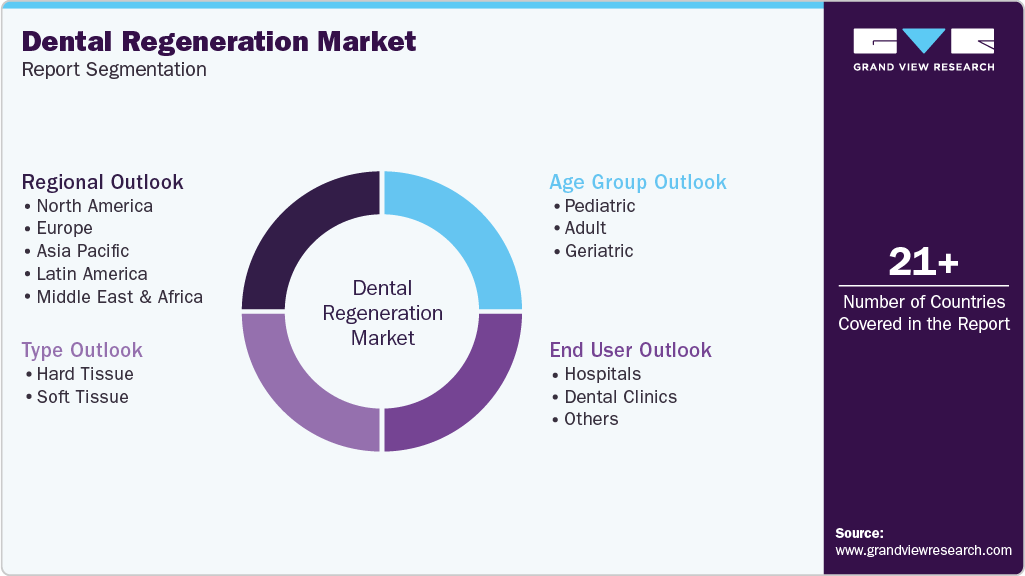
-
Type Outlook (Revenue, USD Million, 2021 - 2033)
-
Hard Tissue
-
Dentin
-
Cementum
-
Enamel
-
-
Soft Tissue
-
Gum
-
Pulp
-
-
-
Age Group Outlook (Revenue, USD Million, 2021 - 2033)
-
Pediatric
-
Adult
-
Geriatric
-
-
End User Outlook (Revenue, USD Million; 2021 - 2033)
-
Hospitals
-
Dental Clinics
-
Others
-
-
Regional Outlook (Revenue, USD Million, 2021 - 2033)
-
North America
-
U.S.
-
Canada
-
Mexico
-
-
Europe
-
Germany
-
UK
-
France
-
Italy
-
Spain
-
Sweden
-
Denmark
-
Norway
-
-
Asia Pacific
-
Japan
-
China
-
India
-
Australia
-
South Korea
-
Thailand
-
-
Latin America
-
Brazil
-
Argentina
-
-
Middle East & Africa
-
South Africa
-
Saudi Arabia
-
UAE
-
Kuwait
-
-
Frequently Asked Questions About This Report
b. The global dental regeneration market size was estimated at USD 5.82 billion in 2025 and is expected to reach USD 6.16 billion in 2026.
b. The global dental regeneration market is expected to grow at a compound annual growth rate of 6.51% from 2026 to 2033 to reach USD 9.59 billion by 2033.
b. North America accounted for the largest share of 39.63% in 2025. The growing prevalence of dental diseases and rising developments in dental regenerative procedures are the key factors driving the growth of the market in the region.
b. Key factors that are driving the dental regeneration market growth include the growing geriatric population, increasing dental diseases such as periodontal diseases, dental caries, and hereditary dentine disorders, and increasing incidence of tooth loss.
b. Some key players operating in the dental regeneration market include Bioteck S.p.A., Dentsply Sirona, Maxigen Biotech Inc. ( TCI Co., Ltd.), Institut Straumann AG, Nobel Biocare Services AG (Envista), Geistlich Holding, ZimVie Inc., NovaBone (Halma), Osteogenics Biomedical (Envista), Regenity, Medtronic, BioHorizons, REGEDENT AG, IDL Dental Technologies LTD, EUCARE PHARMACEUTICALS (P) LTD, Curasan, Inc., TBR Dental, DentiumUSA, Tecnoss Dental Srl (Tecnoss s.r.l.), Unicare Biomedical, Inc., Neoss, Advanced Medical Solutions Group plc, B&B Dental Implant Company, Botiss, Septodont Holding, Implant Direct Corporation (Envista), META BIOMED CO,. LTD, SigmaGraft Biomaterials


Share this report with your colleague or friend.
Need a Tailored Report?
Customize this report to your needs — add regions, segments, or data points, with 20% free customization.


ISO 9001:2015 & 27001:2022 Certified
We are GDPR and CCPA compliant! Your transaction & personal information is safe and secure. For more details, please read our privacy policy.
Trusted market insights - try a free sample
See how our reports are structured and why industry leaders rely on Grand View Research. Get a free sample or ask us to tailor this report to your needs.













