
- Home
- »
- Medical Devices
- »
-
Denture Base Resin Market Size & Share Report, 2026-2033GVR Report cover
![Denture Base Resin Market (2026 - 2033)Report]()
Denture Base Resin Market (2026 - 2033)
Size, Share & Trends Analysis Report By Resin (Polymethyl Methacrylate (PMMA) Resin, Polyamide (Nylon) Denture Resin), By Curing Method, By Application, By Product Form, By End-use, By Region, And Segment Forecasts
Market Size, 2025
$601.7MMarket Estimate, 2026
$629.9MMarket Forecast, 2033
$947.1MCAGR, 2026–2033
6.0%Denture Base Resin Market Summary
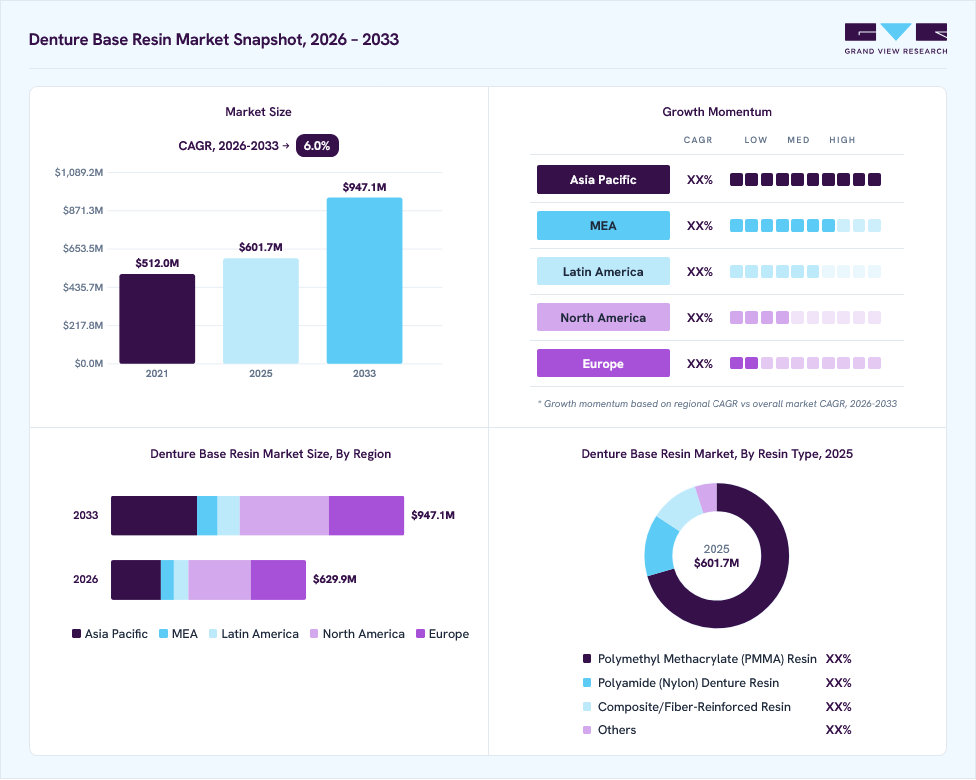
The global denture base resin market size was valued at USD 601.7 million in 2025 and is projected to grow from USD 629.9 million in 2026 to USD 947.1 million by 2033, at a CAGR of 6.0% from 2026 to 2033. North America dominated the market, accounting for the largest revenue share of 32.1% in 2025. The growth of the industry is driven by the growing geriatric population, the increasing prevalence of tooth loss and edentulism, and the rising demand for removable dental prostheses.
Key Market Trends & Insights
- By resin: Polymethyl Methacrylate (PMMA) resin segment led the market with the largest revenue share of 70.4% in 2025.
- By curing method: Heat cured resin segment led the market with the largest revenue share of 60.7% in 2025.
- By application: Complete dentures segment led the market with the largest revenue share of 41.7% in 2025.
- By product form: Conventional powder-liquid denture base resin segment led the market with the largest revenue share of 69.9% in 2025.
- By end use: Dental laboratories segment led the market with the largest revenue share of 66.2% in 2025.
Regional Highlights
- Largest regional market: North America (32.1% revenue share, 2025)
- Fastest-growing regional market: Asia Pacific (highest CAGR, 2026-2033)
- By country: The U.S. held the largest share in 2025
Market Size & Forecast
- Market size in 2025: USD 601.7 Million
- Estimated market size in 2026: USD 629.9 Million
- Projected market size by 2033: USD 947.1 Million
- CAGR (2026-2033): 6.0%
The expansion of digital dentistry, including CAD/CAM milling and 3D printing technologies, is also supporting demand for advanced denture base resins. In addition, the growth of the global denture base resin market is driven by the increasing adoption of digital denture manufacturing and advanced 3D printing technologies. Dental practices and laboratories are shifting from conventional denture fabrication toward digital workflows that offer greater automation, production efficiency, workflow standardization, and the ability to manufacture customized dentures. For instance, in January 2024, Dentsply Sirona launched the Lucitone Digital Print Denture System for use with its Primeprint Solution. The FDA- and CE-cleared system enabled dental practices and laboratories to manufacture dentures in-house through a highly automated and validated 3D printing and post-processing workflow. This increasing adoption of integrated digital denture workflows is expected to support the demand for high-performance, biocompatible, and 3D-printable denture base resins, thereby contributing to market growth.
The high burden of tooth loss and edentulism is a significant driver of the denture base resin market, as patients with partial or complete tooth loss often require removable dental prostheses to restore oral function and aesthetics. Dental caries and severe periodontal disease remain major causes of tooth loss, while aging, smoking, trauma, and limited access to preventive dental care further contribute to the patient population requiring prosthetic rehabilitation. According to the CDC's 2024 Oral Health Surveillance Report, 11.4% of U.S. adults aged 65-74 years and 19.7% of those aged 75 years or older had lost all their teeth. WHO's 2025 oral health fact sheet similarly estimates that complete tooth loss affects almost 7% of adults aged 20+ globally, increasing to approximately 23% among people aged 60+. This supports continued demand for denture base materials.
Rising Global Incidence of Edentulism
Global incidence of edentulism increased from 26.8 million in 2021 to 27.5 million in 2022, reaching 27.9 million in 2023 and 28.4 million in 2024. This consistent increase indicates a growing population experiencing complete tooth loss and requiring prosthetic rehabilitation. As dentures remain an important treatment option for restoring oral function and aesthetics among edentulous patients, the rising incidence of edentulism is expected to increase the need for denture fabrication and replacement.
Market Dynamics
The denture base resin market is experiencing steady growth due to the increasing prevalence of tooth loss and edentulism, the growing geriatric population, and the rising demand for removable dental prostheses. Denture base resins are widely used to manufacture the structural foundation of complete and partial dentures, providing support for artificial teeth while contributing to functionality, durability, and aesthetics. The market is further supported by the increasing adoption of digital dentistry, including CAD/CAM milling and 3D printing technologies, which enable more efficient, automated, and customized denture fabrication. The integration of digital scanners, design software, additive manufacturing systems, and advanced post-processing technologies is also expanding the use of specialized printable and millable denture base resins.
The expansion of digital denture fabrication is driving the demand for advanced denture base resins. Dental laboratories and clinics are adopting CAD/CAM milling and 3D printing technologies to improve workflow efficiency, manufacturing accuracy, standardization, and customization. In August 2025, a systematic review and network meta-analysis identified 4,994 articles, ultimately including 42 studies in its quantitative synthesis, comparing conventional and digitally fabricated denture bases. The review found that CAD/CAM-milled denture bases demonstrated significantly higher flexural strength than 3D-printed denture bases, with a standardized mean difference of 2.13 (95% CI: 0.21-4.05).
Limited affordability and inadequate access to oral healthcare can restrict the adoption of dentures and advanced denture materials, particularly in low- and middle-income countries. Many patients face high out-of-pocket expenses for prosthetic dental treatment, while dental services and trained professionals may be unavailable or limited in underserved areas. In addition, advanced digital dentures can require specialized equipment and laboratory infrastructure, which may further increase treatment costs. These factors can limit patient access to denture treatment and restrain the demand for denture base resins.
The development of antimicrobial and biofilm-resistant denture base resins presents a significant market opportunity. Conventional denture base materials can accumulate microorganisms and biofilms on their surfaces, potentially contributing to denture-related oral health complications. In July 2024, a study compared biofilm inhibition among four denture base materials and fabrication techniques: cold-polymerized, heat-polymerized, CAD/CAM-milled, and 3D-printed. The study specifically evaluated the inhibition of Candida albicans, demonstrating the continued clinical and research focus on reducing microbial colonization on denture surfaces. This growing focus on reducing microbial adhesion and biofilm formation is expected to create opportunities for manufacturers to develop advanced antimicrobial denture base resins with improved hygiene, clinical performance, and product differentiation.
Market Concentration & Characteristics
The denture base resin market is characterized by a moderate to high degree of innovation, with manufacturers focusing on improving the inherent limitations of conventional denture base materials. Product development is directed toward improving impact strength, flexural strength, fracture resistance, color stability, wear resistance, and long-term durability. Innovation is also focused on reducing residual monomer release and improving biocompatibility. In addition, researchers and manufacturers are exploring reinforced and modified resin formulations incorporating fibers, nanoparticles, and other additives to enhance mechanical and functional properties. The development of antimicrobial and biofilm-resistant denture base resins also represents an emerging area of innovation, as manufacturers seek to reduce microbial adhesion and improve denture hygiene.
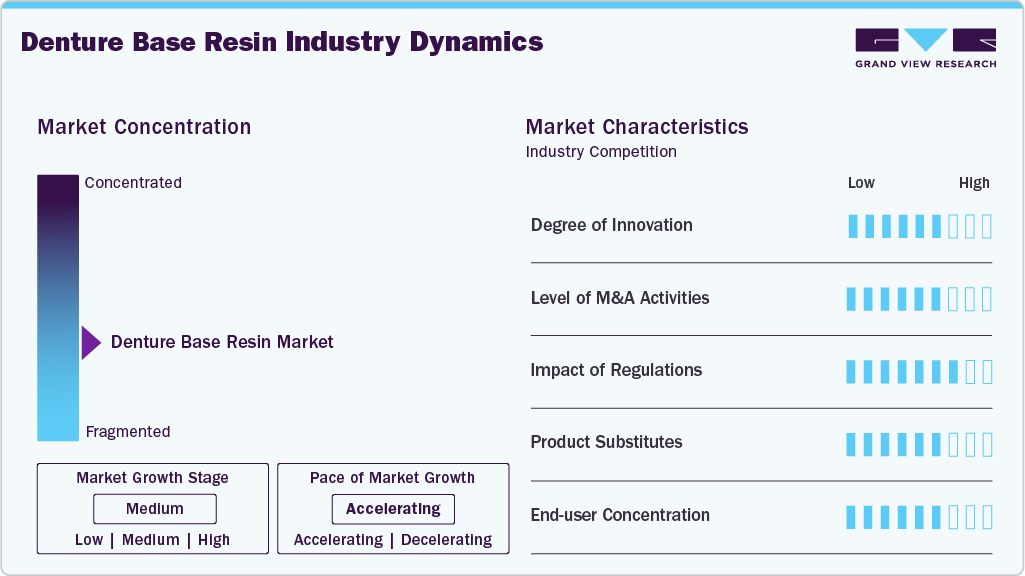
The denture base resin industry has witnessed moderate merger and acquisition activity, primarily driven by the broader consolidation of the dental materials and digital dentistry industries. Large dental technology companies are expanding their portfolios through acquisitions and strategic partnerships involving dental laboratories, CAD/CAM technologies, 3D printing platforms, dental materials, and digital workflow solutions. For instance, in June 2026, HeyGears and Dentsply Sirona partnered to validate Lucitone Digital Print Denture Resins for one-piece denture production using the UltraCraft Multi-Material Fusion (MMF) 3D printer. The collaboration aimed to streamline digital denture manufacturing by reducing bonding steps while supporting the production of durable and aesthetic dentures.
"This validation marks an important step forward in making advanced denture workflows more accessible," said Peiyan Gui, CEO and Co-founder of HeyGears. "By integrating our printing technology with Dentsply Sirona’s trusted materials, we are enabling laboratories of all sizes to scale production, enhance consistency, and deliver excellent outcomes."
Regulatory requirements have a significant impact on the development and commercialization of denture base resins, particularly for materials intended for long-term intraoral use. Manufacturers must demonstrate biocompatibility, mechanical performance, chemical safety, and suitability for their intended dental application. In the U.S., dental resins may be subject to FDA regulatory requirements depending on their intended use and classification, while products marketed in the European Union must comply with the Medical Device Regulation (MDR) 2017/745.
The denture base resin market faces moderate competition from alternative materials and restorative treatment options. Metal frameworks, flexible thermoplastic materials, and other polymer-based materials can be used in certain removable prosthetic applications. In addition, fixed dental bridges and dental implants can reduce the need for conventional removable dentures for suitable patients. However, denture base resins, particularly PMMA-based materials, continue to be widely used because of their favorable balance of aesthetics, cost, ease of processing, repairability, and clinical acceptance.
Demand for denture base resins is primarily concentrated among dental laboratories, dental clinics and hospitals, and academic and research institutions. Dental laboratories represent a major end-use segment, as they manufacture complete and partial dentures using conventional, CAD/CAM milling, and 3D-printing workflows. Dental clinics and hospitals use digital denture systems for treatment planning and, in some cases, in-house fabrication. The growing adoption of chairside and laboratory-based digital dentistry is also increasing demand for specialized printable and millable denture base resins.
Resin Insights
The Polymethyl Methacrylate (PMMA) resin segment dominated the denture base resin market, accounting for 70.4% of the market in 2025. This dominance is supported by PMMA's established clinical use, favorable aesthetics, biocompatibility, cost-effectiveness, ease of processing and repair, and adequate mechanical and dimensional properties. Polymethyl methacrylate remains the most widely used material for denture base fabrication, providing a combination of properties that make it suitable for complete and partial dentures. In addition, ongoing research focuses on addressing PMMA's limitations, including fracture resistance and antimicrobial performance, through reinforcement and material modification.
The composite/fiber-reinforced resin segment is expected to grow at the fastest rate during the forecast period due to the increasing demand for lightweight, thin, and mechanically reinforced denture bases. Fiber reinforcement enables manufacturers to improve the structural performance of resin materials while potentially reducing the amount of bulk required in the denture base. This is particularly relevant for patients requiring thinner prosthetic designs, in which excessive material thickness can compromise comfort, speech, and oral adaptation. The growing focus on patient comfort, prosthesis durability, and material optimization is expected to accelerate the adoption of composite and fiber-reinforced resin formulations during the forecast period.
Curing Method Insights
The heat cured resin segment dominated the denture base resin industry, accounting for 60.7% of the market in 2025. This dominance is supported by the long-established clinical use of heat-polymerized PMMA, predictable polymerization, favorable mechanical properties, and suitability for routine complete and partial denture fabrication. Heat curing also enables controlled polymerization of PMMA and is widely established in dental laboratory workflows.
The light cured resin segment is expected to grow at the fastest rate during the forecast period due to the increasing availability of photopolymerizable denture base materials, rapid polymerization, and the ability to produce denture bases with controlled curing and material properties. Light-cured resins are particularly relevant to newer additive-manufacturing denture workflows, where the resin is selectively polymerized and subsequently post-cured to achieve the required mechanical and surface characteristics.
Application Insights
The complete dentures segment dominated the market, accounting for 41.7% share in 2025. This dominance is supported by the large global population experiencing complete tooth loss, particularly among older adults, and the continued use of complete dentures as an accessible and cost-effective tooth-replacement option. Complete dentures require a full denture base to support the artificial teeth and restore chewing ability, speech, and facial aesthetics. The growing burden of edentulism therefore directly contributes to demand for denture base resins. Globally, the incidence of edentulism in your market dataset increased from 26.8 million in 2021 to 28.4 million in 2024, indicating a continuing need for complete tooth-replacement solutions.
The implant-supported overdentures segment is projected to grow at the fastest rate during the forecast period due to the increasing adoption of implant-supported prosthetic rehabilitation and the growing demand for greater denture stability, retention, and patient comfort. Unlike conventional complete dentures, implant-supported overdentures use dental implants to provide additional retention and stability, making them an attractive option for patients experiencing difficulties with conventional dentures.
Product Form Insights
The conventional powder-liquid denture base resin segment dominated the market for denture base resin, accounting for 69.9% share in 2025. This dominance is supported by its long-established clinical use, relatively low material cost, straightforward handling, and compatibility with established denture fabrication and repair procedures. Powder-liquid PMMA systems allow dental laboratories to adjust the material during mixing and processing and remain suitable for complete dentures, partial dentures, relining, and repair applications. Their broad clinical familiarity and availability through established dental material supply chains further support continued adoption, particularly in cost-sensitive markets where conventional denture fabrication remains prevalent.
The 3D printing denture base resin segment is expected to grow at the fastest rate during the forecast period due to the increasing clinical validation of printable denture base materials, improvements in mechanical performance, and growing availability of resins specifically formulated for permanent denture applications. Importantly, the growth of this segment is being supported by material development rather than simply by the adoption of 3D printers.
End Use Insights
The dental laboratories segment dominated the market with 66.2% share in 2025. This dominance is driven by the high volume of denture fabrication, repair, relining, and replacement procedures performed by dental laboratories, as well as their central role in processing and supplying prosthetic restorations to dental practices. Private laboratories serve multiple dentists and prosthodontic practices simultaneously, creating recurring demand for denture base materials across complete dentures, partial dentures, and implant-supported overdentures. In addition, the expanding number of dental laboratories and continued outsourcing of denture fabrication by dental clinics are expected to sustain the dominant position of private dental laboratories in the denture base resin market.
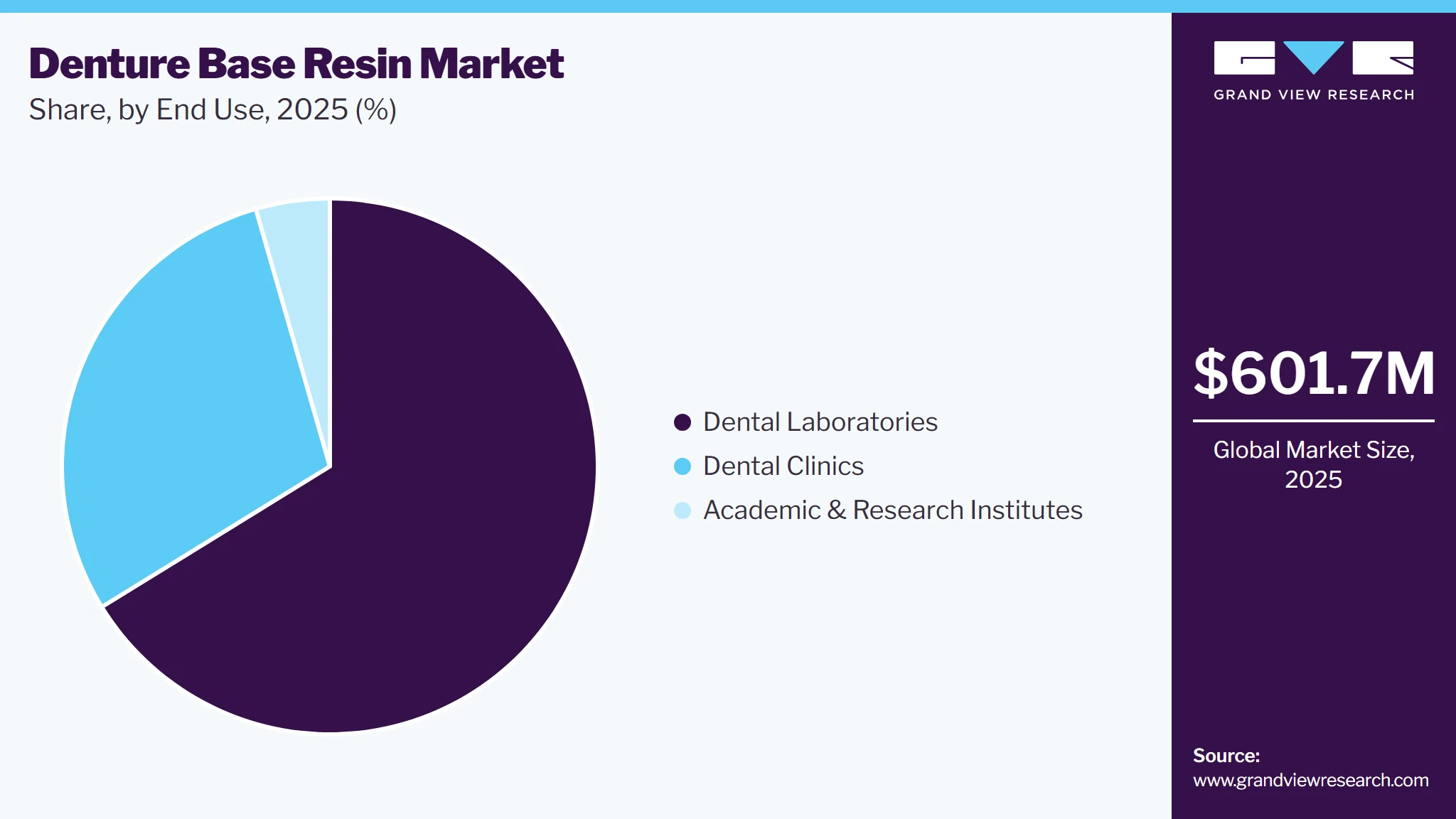
The dental clinics segment is expected to grow at the fastest rate during the forecast period. Growth is driven by the expansion of dental clinic networks, increasing availability of prosthodontic services, and growing adoption of in-house denture fabrication and repair capabilities. The expansion of organized dental care providers, particularly in emerging markets, is improving access to complete and partial denture treatment and increasing the number of clinics involved in prosthetic rehabilitation. For instance, in February 2026, Clove Dental launched 48 new clinics in a single day, expanding its network to 715 centers across 26 cities in India. The expansion, marking its 15th year of operations, strengthened its focus on organized dentistry, standardized clinical protocols, and technology-enabled dental care.
Regional Insights
The North America denture base resin market held the largest share of 32.1% in 2025, supported by the region's large aging population, established prosthodontic care infrastructure, and significant demand for tooth replacement solutions. The region has a substantial population affected by complete tooth loss, particularly among older adults, supporting the continued use of complete and partial dentures. In addition, the presence of a well-established dental laboratory industry and strong availability of advanced dental materials support the adoption of premium, high-impact, and specialized denture base resin formulations.

U.S. Denture Base Resin Market Trends
The denture base resin market in the U.S. is supported by the country's large dental care infrastructure and continued demand for prosthetic dental services. For instance, according to the American Dental Association Health Policy Institute, there were 202,485 professionally active dentists in the U.S. in 2024, equivalent to 59.5 dentists per 100,000 population. This extensive clinical workforce supports the availability of restorative and prosthetic dental services, including the fabrication, replacement, repair, and maintenance of complete and partial dentures.
Europe Denture Base Resin Market Trends
The denture base resin market in Europe is experiencing steady growth due to the region's aging population and the continued demand for prosthetic rehabilitation. Several European countries have a high proportion of older adults, increasing the number of patients requiring treatment for tooth loss and age-related oral health conditions. The region also benefits from established public and private dental care systems, strong dental laboratory infrastructure, and well-developed regulatory standards for dental materials.
The UK denture base resin market is supported by the continued need for prosthetic dental treatment among older adults and the availability of dental services through both the NHS and the private sector. According to NHS England's Adult Oral Health Survey 2024, approximately 5% of adults had no natural teeth, while the prevalence increased substantially among older age groups. The ongoing demand for replacement and maintenance of removable dental prostheses, combined with the country's established network of dental laboratories and prosthodontic services, is expected to support demand for denture base resins.
Asia Pacific Denture Base Resin Market Trends
The denture base resin market in the Asia Pacific is expected to witness the fastest growth during the forecast period, supported by rapid population aging, a large absolute burden of tooth loss, and the expansion of dental care services across major economies. Countries such as China, Japan, India, and South Korea have large and aging populations, creating a substantial potential patient base requiring prosthetic rehabilitation. In addition, expanding private dental clinic networks and improving access to dental treatment are increasing the availability of denture services.
The China denture base resin market is expected to see steady growth, driven by the expansion of healthcare services and the rapidly aging population. According to China's National Bureau of Statistics, the population aged 60 and above reached 323.38 million in 2025, accounting for 23.0% of the total population, up from 310.31 million, or 22.0%, in 2024. In addition, in December 2025, China's National Health Commission announced implementing initiatives to expand and improve healthcare and elderly-care services, including increasing the supply and accessibility of healthcare resources for older adults. The expansion of healthcare infrastructure, combined with the growing elderly population and associated need for oral rehabilitation and tooth-replacement solutions, is expected to increase demand for complete and partial dentures and subsequently support consumption of denture base resins in China.
Latin America Denture Base Resin Market Trends
The denture base resin market in Latin America is expected to experience steady growth due to the continued burden of untreated oral diseases and disparities in access to preventive dental care. Countries such as Brazil and Argentina have large populations requiring restorative and prosthetic dental treatment. In Brazil, the extensive network of dental professionals and laboratories supports the availability of denture treatment across both private and public healthcare settings. Furthermore, the growing elderly population and increasing focus on restoring oral function and aesthetics are expected to support demand for complete and partial dentures, creating opportunities for denture base resin manufacturers.
MEA Denture Base Resin Market Trends
The denture base resin market in the Middle East & Africa is expected to grow due to expanding access to oral healthcare, increasing investments in dental infrastructure, and a growing focus on prosthetic rehabilitation. Countries including Saudi Arabia, the UAE, and South Africa are expanding dental service capacity through private healthcare investment and broader healthcare transformation initiatives. Meanwhile, many African countries continue to experience a substantial burden of untreated oral diseases and limited access to restorative care, creating significant unmet needs for affordable tooth replacement solutions. The expansion of dental services and increasing availability of lower-cost prosthetic treatment are expected to create growth opportunities for denture base resin manufacturers across the region.
Key Denture Base Resin Company Insights
Some of the key companies in the denture base resin market include Dentsply Sirona, Ivoclar Vivadent, Kulzer GmbH, GC Corporation, Vertex-Dental B.V., SHOFU Inc., Keystone Industries, Formlabs, NextDent (3D Systems), Zhermack SpA, and Carbon, Inc. Organizations are focusing on increasing their customer base to gain a competitive edge in the industry. Therefore, key players are taking several strategic initiatives, such as product launches, and partnerships with other major companies.
Key Denture Base Resin Companies
The following key companies have been profiled for this study on the denture base resin market:
-
Dentsply Sirona
-
Ivoclar Vivadent
-
Kulzer GmbH
-
GC Corporation
-
Vertex-Dental B.V.
-
SHOFU Inc.
-
Keystone Industries
-
Formlabs
-
NextDent (3D Systems)
-
Zhermack SpA
-
Carbon, Inc.
Competitive Benchmarking
Category
Operating Strategies
Competitive Edge
Weakness
Established Players (Dentsply Sirona, Ivoclar Vivadent, Kulzer GmbH, GC Corporation)
- Focus on developing advanced denture base resin systems with improved mechanical strength, aesthetics, biocompatibility, durability, and processing efficiency.
- Expand market presence through established dental distribution networks, direct sales, dental laboratories, clinics, and long-term relationships with dental professionals.
- Strong brand recognition established regulatory capabilities, extensive dental-material portfolios, and established relationships with dental laboratories and clinics.
- Their broad product portfolios allow them to provide complementary denture and restorative materials alongside denture base resins.
- High R&D, regulatory compliance, and manufacturing costs.
- Premium pricing may also limit penetration in price-sensitive markets.
Emerging Players (Formlabs, NextDent (3D Systems), Carbon, Inc.)
- Focus on developing 3D-printing denture base resins, digital denture workflows, printable materials, and integrated hardware-software-material ecosystems.
- Expand adoption through partnerships with dental laboratories, dental service providers, distributors, and digital dentistry platforms.
- Strong expertise in additive manufacturing, digital workflows, material science, and software integration.
- Ability to support rapid digital denture production, workflow automation, and customized prosthetic manufacturing provides differentiation from conventional powder-liquid resin suppliers.
- Relatively higher dependence on digital workflow adoption and compatible printing equipment.
- Material and equipment costs can be higher than conventional denture fabrication methods.
Recent Developments
-
In August 2026, Carbon introduced DB 4000 Denture Base Resin, a material designed for dental laboratories producing 3D-printed digital dentures on Carbon’s platform. The resin was designed to support efficient denture production while providing the required properties for denture-base applications.
“DB 4000 is a clear example of how Carbon’s platform, hardware, software, and materials engineered together, let us bring dental labs a material with strong performance across the metrics that matter most, at a more competitive cost per part,” said Phil DeSimone, Co-Founder and Chief Executive Officer, Carbon. “This launch reflects our continued investment in the digital denture market and our commitment to giving labs better tools and better margins to run their businesses.”
-
In April 2026, SprintRay introduced Apex Flex, a biocompatible FDA Class II (510(k)-cleared resin designed for 3D printing flexible partial denture bases. Compatible with the Pro 2 3D printer and NanoCure post-curing system, the resin enables chairside and in-office fabrication while reducing reliance on outsourced laboratory workflows.
Denture Base Resin Market Report Scope
Report Attribute
Details
Market size in 2025
USD 601.7 million
Estimated market size in 2026
USD 629.9 million
Projected market size by 2033
USD 947.1 million
Growth rate
CAGR of 6.0% from 2026 to 2033
Base year for estimation
2025
Actual estimates/Historical data
2021 - 2024
Forecast period
2026 - 2033
Quantitative units
Revenue in USD million and CAGR from 2026 to 2033
Report coverage
Revenue forecast, company ranking, competitive landscape, growth factors, and trends
Segments covered
Resin, curing method, application, product form, end use, region
Regional scope
North America; Europe; Asia Pacific; Latin America; Middle East & Africa
Country scope
U.S.; Canada; Mexico; UK; Germany; France; Italy; Spain; Denmark; Sweden; Norway; Japan; China; India; Thailand; Australia; South Korea; Brazil; Argentina; South Africa; Saudi Arabia; UAE; Kuwait
Key companies profiled
Dentsply Sirona; Ivoclar Vivadent; Kulzer GmbH; GC Corporation; Vertex-Dental B.V.; SHOFU Inc.; Keystone Industries; Formlabs; NextDent (3D Systems); Zhermack SpA; Carbon, Inc.
Customization scope
Free report customization (equivalent up to 8 analyst’s working days) with purchase. Addition or alteration to country, regional & segment scope
Pricing and purchase options
Avail customized purchase options to meet your exact research needs. Explore purchase options
Global Denture Base Resin Market Report Segmentation
This report forecasts revenue growth at global, regional & country levels and provides an analysis of the latest industry trends in each of the sub-segments from 2021 to 2033. For this study, Grand View Research has segmented the global denture base resin market report based on resin, curing method, application, product form, end use, and region:
-
Resin Outlook (Revenue, USD Million, 2021 - 2033)
-
Polymethyl Methacrylate (PMMA) Resin
-
Polyamide (Nylon) Denture Resin
-
Composite/Fiber-Reinforced Resin
-
Others
-
-
Curing Method Outlook (Revenue, USD Million, 2021 - 2033)
-
Heat Cured Resin
-
Self Cured Resin
-
Light Cured Resin
-
Microwave Cured Resin
-
-
Application Outlook (Revenue, USD Million, 2021 - 2033)
-
Complete Dentures
-
Partial Dentures
-
Implant-Supported Overdentures
-
Denture Relining & Repair
-
-
Product Form Outlook (Revenue, USD Million, 2021 - 2033)
-
Conventional Powder-Liquid Denture Base Resin
-
CAD/CAM PMMA Discs & Pucks
-
3D Printing Denture Base Resin
-
-
End Use Outlook (Revenue, USD Million, 2021 - 2033)
-
Dental Laboratories
-
Dental Clinics
-
Academic & Research Institutes
-
-
Regional Outlook (Revenue, USD Million, 2021 - 2033)
-
North America
-
U.S.
-
Canada
-
Mexico
-
-
Europe
-
UK
-
Germany
-
France
-
Italy
-
Spain
-
Denmark
-
Sweden
-
Norway
-
-
Asia Pacific
-
Japan
-
China
-
India
-
Thailand
-
Australia
-
South Korea
-
-
Latin America
-
Brazil
-
Argentina
-
-
Middle East & Africa
-
South Africa
-
Saudi Arabia
-
UAE
-
Kuwait
-
-
Research Methodology
The denture base resin market figures in this report are based on a proven research process that combines executive interviews with secondary research from proprietary databases, company filings, and recognized regulatory and institutional sources. Market size is built through value-chain sizing-reconciling supply-side and demand-side estimates-and triangulated with bottom-up and top-down approaches. Every estimate passes multiple levels of expert validation before publication, with each denture base resin segment quantified using the revenue-capture definitions in the table below.
Segment Definition
Segment - Resin Type
Revenue capture definition
Polymethyl Methacrylate (PMMA) Resin
Revenue generated from the sale of PMMA-based denture base resins used to fabricate complete, partial, implant-supported, and other removable denture bases. This includes conventional heat-cured, self-cured, light-cured, and compatible digital/3D-printing PMMA resin products, where the revenue is attributable specifically to the denture base resin material.
Polyamide (Nylon) Denture Resin
Revenue generated from the sale of polyamide- or nylon-based denture resins used primarily for flexible denture bases, partial dentures, and related removable prosthetic applications. Revenue includes the resin/material supplied for denture fabrication but excludes laboratory fabrication fees and finished dentures sold as completed prosthetic devices.
Composite/Fiber-Reinforced Resin
Revenue generated from the sale of composite resin formulations and fiber-reinforced denture base materials incorporating reinforcing fibers or other composite components to improve mechanical strength, durability, or dimensional stability of denture bases. Revenue is captured only for the denture base resin/material component, excluding fabrication, laboratory, and clinical service fees.
Estimation Model
Approach
Description
Bottom-Up Estimation
The market is estimated by assessing the annual volume of dentures fabricated across dental laboratories and dental clinics at the country, regional, and global levels. The analysis considers complete dentures, partial dentures, implant-supported overdentures, and denture relining and repair procedures. Resin consumption per denture, average selling prices, material adoption rates, and the penetration of conventional powder-liquid are considered.
Top-Down Approach
The market estimation begins with an assessment of the broader dental materials and dental prosthetics market, followed by evaluating the share attributable to denture base resins through secondary research and industry validation. The analysis considers key indicators such as the number of dental laboratories and clinics, denture fabrication volumes, prevalence of edentulism and tooth loss, demand for removable dental prostheses, and adoption of digital dentistry.
Supply-Side Analysis
The analysis considers manufacturers' production capacity, denture base resin sales, product portfolio diversification across PMMA, polyamide, composite/fiber-reinforced, and other resin types, as well as conventional and digitally manufactured resin products. Average selling prices, manufacturing facilities, regional distribution networks, regulatory approvals, product launches, and raw material contributions are assessed.
Delivered Customizations
This report has been delivered with the following In-depth customizations
Client Request
Customization Delivered
Value Adds
Denture Base Resin Product Portfolio & Material Analysis
Conducted a comprehensive assessment of the denture base resin product portfolio, including PMMA resin, polyamide (nylon) denture resin, composite/fiber-reinforced resin, and other specialized materials. Evaluated product adoption across complete dentures, partial dentures, implant-supported overdentures, and denture relining and repair applications. The analysis also examined conventional powder-liquid resin kits, CAD/CAM discs and packs, and 3D printing denture base resins, while assessing material properties and evolving denture laboratory preferences.
Helps stakeholders identify high-growth resin categories, understand application-specific demand, evaluate the transition from conventional to digital denture fabrication, and optimize product portfolios according to changing dental laboratory, clinic, and patient requirements.
End-user Adoption & Denture Fabrication Workflow Analysis
Analyzed the adoption of denture base resins across dental laboratories, dental clinics, and academic and research institutes. Assessed purchasing criteria, resin selection factors, curing methods, fabrication workflows, equipment compatibility, material handling requirements, and preferences for conventional versus digitally manufactured denture bases.
Enables manufacturers to identify high-demand end-user segments, optimize product and distribution strategies, align resin offerings with evolving fabrication workflows, and expand adoption across conventional and digitally enabled dental markets.
Product Positioning & Manufacturer Competitiveness Assessment
Evaluated leading denture base resin manufacturers based on product portfolio breadth, material formulation, mechanical and aesthetic properties, curing technologies, CAD/CAM and 3D-printing capabilities, regulatory compliance, manufacturing capabilities, geographic presence, distribution strength, and pricing strategies. The assessment also examined product launches, digital dentistry partnerships, material innovation, workflow integration, and competitive differentiation across conventional and digital denture base resin products.
Supports competitive benchmarking, identifies material and technology development opportunities, enables portfolio differentiation, strengthens go-to-market strategies, and helps manufacturers capitalize on the shift toward digitally fabricated dentures and advanced denture base materials.
About the Author(s)
Medical Devices Research Team
Healthcare · Medical DevicesThis report was authored by the medical devices research team at Grand View Research - comprising two research analysts, one senior research analyst, and one industry expert - with specialized expertise in the medical devices segment of the healthcare industry. All findings are based on proprietary healthcare databases, executive interviews, and regulatory analysis, subject to internal peer review prior to publication.
Last Updated:
Speak to Analyst


Customize this report to your needs — add regions, segments, or data points, with 20% free customization.
Or view our licence options:


ISO 9001:2015 & 27001:2022 Certified
We are GDPR and CCPA compliant! Your transaction & personal information is safe and secure. For more details, please read our privacy policy.


