
- Home
- »
- Medical Devices
- »
-
Diagnostics Device CDMO Market Size Report, 2026-2033GVR Report cover
![Diagnostics Device CDMO Market (2026 - 2033)Report]()
Diagnostics Device CDMO Market (2026 - 2033)
Size, Share & Trends Analysis Report By Service (Contract Development, Contract Manufacturing), By Class (Class I, Class II), By Application, By End-use, By Region, And Segment Forecasts
Market Size, 2025
$44.3BMarket Estimate, 2026
$49.0BMarket Forecast, 2033
$113.1BCAGR, 2026–2033
12.7%Diagnostics Device CDMO Market Summary
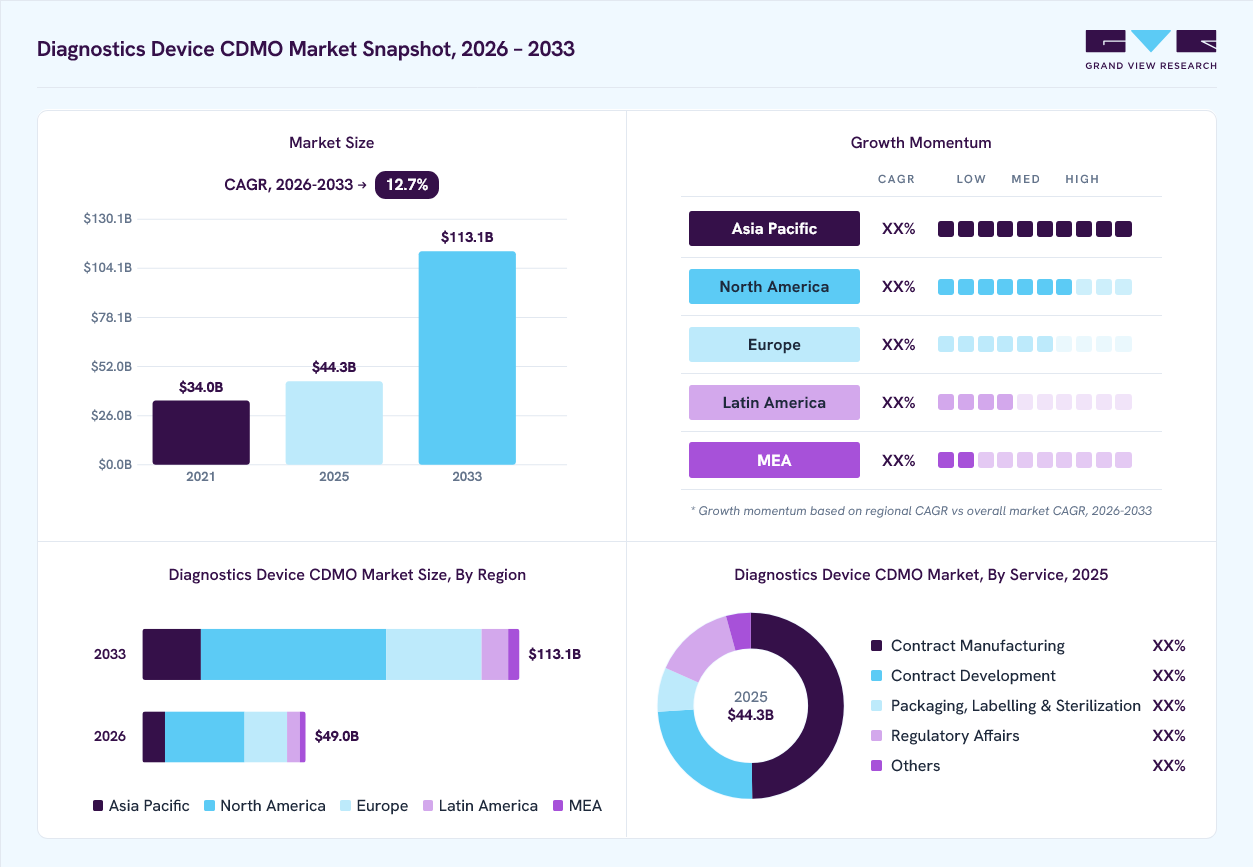
The global diagnostics device CDMO market size was valued at USD 44.3 billion in 2025 and is projected to grow from USD 49.0 billion in 2026 to USD 113.1 billion by 2033, at a CAGR of 12.7% from 2026 to 2033. North America dominated the market, accounting for the largest revenue share of 48.7% in 2025. The market is driven by the rising burden of chronic & infectious diseases, shift toward point-of-care and rapid diagnostics, cost efficiency and faster time-to-market, and technological advancements in manufacturing.
Key Market Trends & Insights
- By service: Contract manufacturing segment led the market with the largest revenue share of 49.7% in 2025.
- By class: Class I segment led the market with the largest revenue share of 81.3% in 2025.
- By application: Infectious disease diagnostics segment led the market with the largest revenue share of 40.4% in 2025.
- By end use: Original equipment manufacturers (OEMs) segment led the market with the largest revenue share of 49.5% in 2025.
Regional Highlights
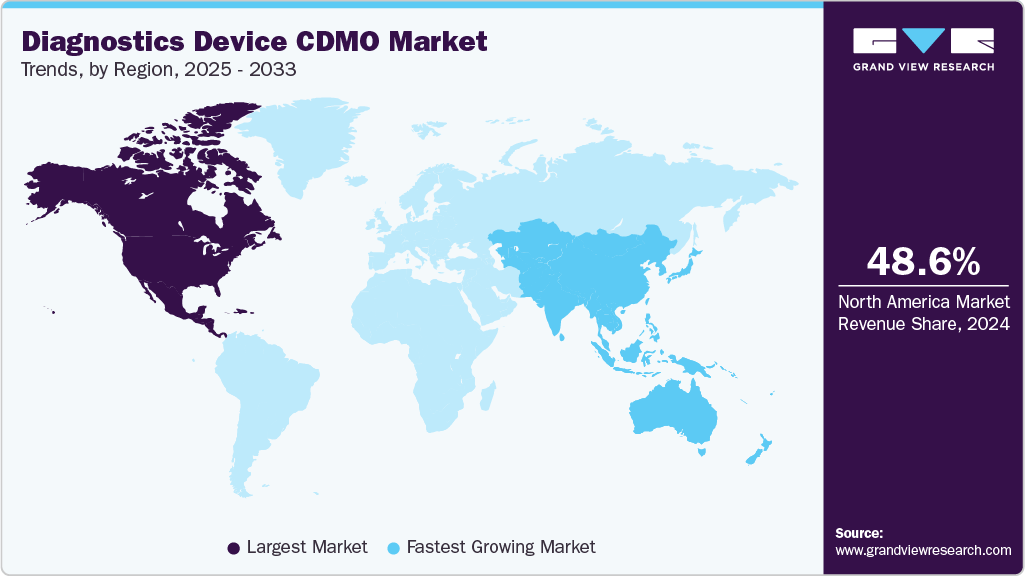
- Largest regional market: North America (48.7% revenue share, 2025)
- Fastest-growing regional market: Asia Pacific (highest CAGR, 2026-2033)
- By country: The U.S. dominated North America with the largest revenue share in 2025
Market Size & Forecast
- Market size in 2025: USD 44.3 Billion
- Estimated market size in 2026: USD 49.0 Billion
- Projected market size by 2033: USD 113.1 Billion
- CAGR (2026-2033): 12.7%
In addition, the market is driven by the healthcare systems shifting toward faster, more accessible, and technology-driven diagnostic solutions. The rising prevalence of chronic and infectious diseases has compelled test developers to accelerate innovation, which has strengthened the need for specialized outsourcing partners. As diagnostic companies aim to shorten development timelines and navigate an increasingly complex regulatory landscape for device design, validation, and commercial-scale manufacturing, they are increasingly relying on CDMOs to manage production, quality assurance, and compliance activities that would otherwise slow in-house operations. This shift is further supported by the rapid move toward decentralized and point-of-care testing, where manufacturers depend on CDMOs capable of delivering compact, high-precision components and fully integrated platforms that meet stringent global quality standards.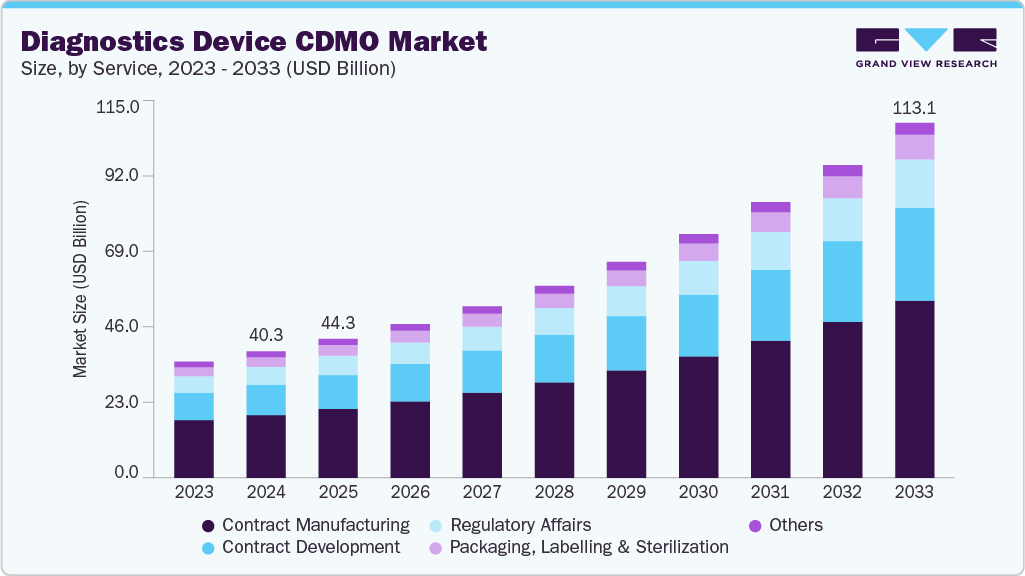
Furthermore, evolving clinical needs have driven technological advancements within the manufacturing ecosystem, further strengthening the role of CDMOs in the diagnostics industry. Advancements in microfluidics, sensor integration, automation, and high-precision plastics have made outsourcing an efficient way for OEMs to access specialized infrastructure without significant capital investment. As companies focus more heavily on R&D, companion diagnostics, and molecular testing, they increasingly depend on CDMOs to manage complex assembly processes, reagent-device integration, and large-volume production. The growth of at-home test kits and rapid diagnostics has further reinforced this trend, with market participants turning to partners capable of scaling output while maintaining high levels of accuracy, reliability, and regulatory compliance.
Market Dynamics
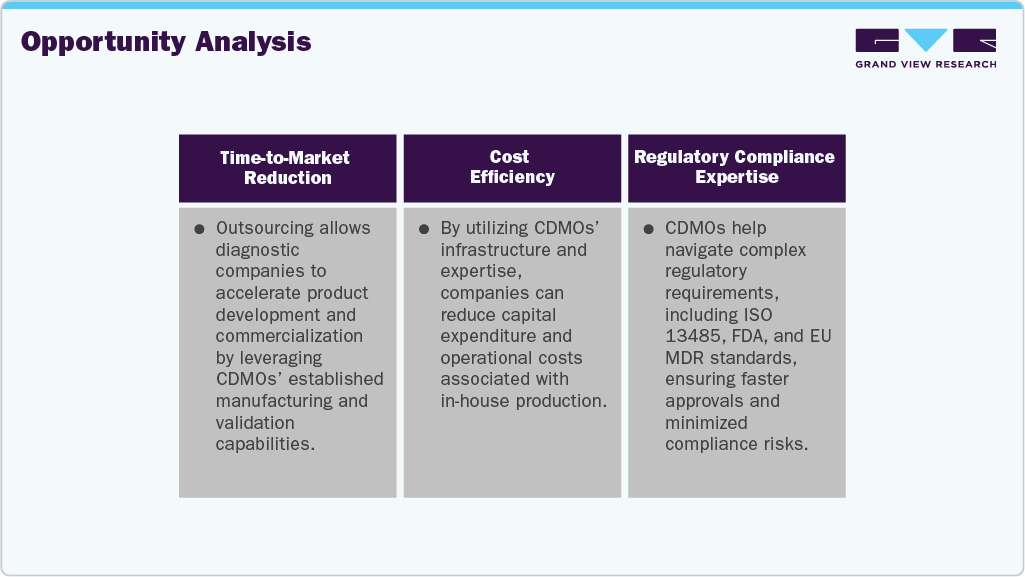
The diagnostics device CDMO market is witnessing considerable growth driven by the increasing outsourcing of medical device design, development, prototyping, manufacturing, and regulatory support by diagnostics companies. Rising demand for in vitro diagnostic (IVD) devices, molecular diagnostics, point-of-care testing systems, and companion diagnostics has encouraged manufacturers to partner with specialized contract development and manufacturing organizations (CDMOs) to reduce production costs, accelerate commercialization, and improve operational efficiency. Growing complexity in diagnostic technologies, including automation, microfluidics, biosensors, and digital diagnostics, has increased the need for CDMOs with expertise in engineering, product validation, precision manufacturing, and quality management. Additionally, stringent regulatory requirements, continuous technological innovation, and increasing investments in advanced manufacturing facilities are supporting market expansion by enabling scalable production, improved product quality, and faster time-to-market for diagnostic devices.
The growing trend of outsourcing diagnostic device development and manufacturing is a major driver of the diagnostic device CDMO market. Diagnostic device manufacturers are increasingly partnering with CDMOs to access specialized engineering capabilities, reduce capital investments, optimize manufacturing costs, and shorten product development timelines. The growing demand for molecular diagnostics, immunodiagnostics, clinical chemistry analyzers, hematology systems, and point-of-care diagnostic devices has further increased the need for experienced manufacturing partners capable of supporting product design, prototyping, validation, regulatory documentation, and commercial-scale production. CDMOs also provide flexible manufacturing capacity, allowing diagnostic companies to respond quickly to changing market demand while maintaining compliance with international quality standards. Moreover, the rapid introduction of technologically advanced diagnostic platforms and the increasing demand for customized, integrated diagnostic solutions continue to strengthen outsourcing across the global diagnostics industry.
Stringent regulatory requirements and complex quality management standards remain significant challenges for the diagnostics device CDMO market. Diagnostic devices must comply with rigorous regulations governing design controls, manufacturing processes, performance validation, risk management, traceability, and post-market surveillance across different countries. CDMOs are required to maintain compliance with standards such as ISO 13485, Good Manufacturing Practices (GMP), and regional regulatory frameworks, requiring continuous investments in quality systems, documentation, and employee training. Additionally, maintaining consistency across multiple production batches, managing component suppliers, validating manufacturing processes, and addressing evolving regulatory requirements increase operational complexity and production costs. Any delays in regulatory approvals or quality-related issues can extend commercialization timelines, increase project costs, and affect long-term partnerships between diagnostic device manufacturers and CDMOs.
The increasing adoption of advanced diagnostic technologies presents significant growth opportunities for the diagnostics device CDMO market. Rising demand for molecular diagnostics, multiplex testing platforms, digital pathology systems, companion diagnostics, wearable diagnostic devices, and AI-enabled diagnostic solutions is creating new outsourcing opportunities for specialized CDMOs. Several emerging diagnostics companies and startups lack the infrastructure and technical expertise required for product development, engineering, regulatory compliance, and large-scale manufacturing, increasing reliance on contract manufacturing partners. Growing investments in decentralized diagnostics, home-based testing, precision medicine, and infectious disease diagnostics are expected to generate sustained demand for flexible manufacturing services. Furthermore, expanding manufacturing capabilities across Asia Pacific, Latin America, and Eastern Europe, along with increasing collaborations between diagnostic companies and CDMOs, are expected to strengthen global production networks and support the commercialization of next-generation diagnostic devices.
Analyst Perspective
The diagnostics device CDMO market is growing rapidly due to rising demand for IVD, POC, molecular diagnostics, and laboratory automation. Increasing outsourcing by diagnostic OEMs, biotechnology, and pharmaceutical companies is driving demand for product development, engineering, manufacturing, testing, and regulatory services. Growing adoption of AI-enabled diagnostics, connected devices, microfluidics, and personalized medicine is further supporting market expansion. Investments in automation, smart manufacturing, and regulatory compliance, along with capacity expansion across North America, Europe, and Asia Pacific, are creating significant opportunities for CDMO providers.
Service Insights
Based on service, the contract manufacturing segment led the market with the largest revenue share of 49.7% in 2025. Based on service, the market is classified into contract manufacturing and contract development, packaging, labelling & sterilization, regulatory affairs, and others. The contract manufacturing segment accounted for the largest revenue share in the market with 49.65% in 2024. The segment's growth is due to the increasing demand for large-scale, high-precision production of diagnostic devices, reagents, and components. Diagnostic companies are increasingly outsourcing manufacturing to CDMOs to reduce capital expenditure, ensure consistent quality, and accelerate time-to-market.
The contract development segment is anticipated to grow at the fastest CAGR during the forecast period. The segment growth is driven by the rising need for end-to-end development services, including prototype design, process optimization, analytical testing, and clinical validation. Diagnostic companies are increasingly outsourcing these activities to CDMOs to accelerate product innovation, reduce R&D costs, and manage operational risks.
Class Insights
Based on class, the Class II segment led the market with the largest revenue share of 81.3% in 2025. Based on class segment, the market is segregated into Class I, Class II, and Class III. The Class II segment held the largest share in the market in 2024. The growth of the segment is due to the high demand for moderately complex diagnostic devices that require regulatory oversight but are not as stringent as Class III devices. Class II devices, which include blood glucose monitors, immunoassay analyzers, and certain molecular diagnostic kits, are widely used across hospitals, clinics, and point-of-care settings. Outsourcing the manufacturing and development of these devices to CDMOs allows diagnostic companies to leverage specialized expertise, maintain compliance with FDA and ISO standards, and scale production efficiently to meet growing clinical demand.
Class I segment is anticipated to grow at a considerable CAGR during the forecast period. The growth of the segment is due to the rising demand for low-risk, simple diagnostic devices, such as basic laboratory instruments, sample collection devices, and handheld testing kits, which are widely used in clinics and home settings. Companies are increasingly outsourcing the manufacturing of these devices to CDMOs to benefit from cost efficiency, streamlined production, and regulatory support, while ensuring consistent quality and faster market entry.
Application Insights
Based on application, the infectious disease diagnostics segment led the market with the largest revenue share of 40.4% in 2025. In terms of application, the market is segregated into infectious disease diagnostics, oncology diagnostics, cardiometabolic diagnostics, genetic & genomic testing, respiratory & critical care diagnostics, and others segments. The infectious disease diagnostics segment held the largest share in the market in 2024. The growth of the segment is due to the increasing prevalence of infectious diseases, including viral, bacterial, and parasitic infections, coupled with the rising demand for rapid and accurate diagnostic solutions. Frequent outbreaks, such as influenza, COVID-19, and other emerging pathogens, have intensified the need for large-scale production of diagnostic kits and devices, leading companies to rely on CDMOs for manufacturing and development expertise.
The genetic & genomic testing segment is anticipated to grow at the fastest CAGR during the forecast period. The segment growth is due to the increasing adoption of precision medicine, personalized healthcare, and advanced molecular diagnostics, which require specialized and high-complexity testing. Rising awareness of hereditary diseases, advancements in next-generation sequencing (NGS) technologies, and the growing demand for companion diagnostics are fueling the need for outsourced development and manufacturing services from CDMOs.
End Use Insights
Based on end use, the original equipment manufacturers (OEMs) segment led the market with the largest revenue share of 49.5% in 2025. In terms of end use, the market is segregated into original equipment manufacturers (OEMs), pharmaceutical & biopharmaceutical companies, and others segments. The Original Equipment Manufacturers (OEMs) segment accounted for the largest revenue share in 2024 due to the increasing reliance of OEMs on CDMOs for outsourcing non-core activities such as device manufacturing, assembly, quality testing, and regulatory compliance. By partnering with CDMOs, OEMs can reduce capital expenditure, accelerate time-to-market, and maintain focus on R&D, product innovation, and commercialization.
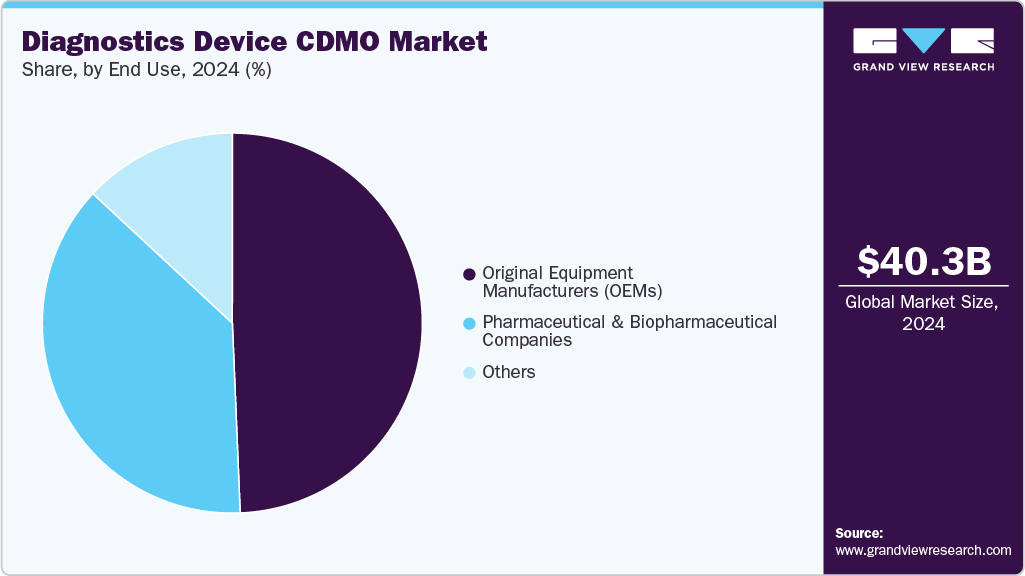
The pharmaceutical & biopharmaceutical companies segment is anticipated to grow at a considerable CAGR during the forecast period. This growth is due to the increasing involvement of these companies in developing advanced diagnostic solutions, including companion diagnostics, molecular testing kits, and personalized medicine platforms. Outsourcing to CDMOs enables pharmaceutical and biopharmaceutical companies to leverage specialized expertise in device development, manufacturing, and regulatory compliance while minimizing capital investment and operational complexity.
Regional Insights
North America Diagnostics Device CDMO Market Trends
North America dominated the diagnostics device CDMO market with the largest revenue share of 48.7% in 2025. The market is driven by a strong regulatory framework, advanced R&D infrastructure & rising demand for innovative healthcare technologies. Most medtech companies are increasingly outsourcing design, development, and manufacturing to optimize costs, accelerate time-to-market, and access specialized expertise.
U.S. Diagnostics Device CDMO Market Trends
The diagnostics device CDMO market in the U.S. held the largest share in the North America region in 2025. The country’s growth is due to the rising demand for advanced medical technologies, cost optimization needs, and stringent regulatory requirements. In addition, OEMs in the country are increasingly outsourcing medical device design, prototyping, component production, and assembly to CDMOs to enhance efficiency & reduce time-to-market.
Europe Diagnostics Device CDMO Market Trends
The diagnostics device CDMO industry in Europe is expected to grow significantly due to increasing investments in biotechnology and pharmaceutical R&D, supportive government initiatives promoting advanced therapies, and a strong focus on personalized medicine across the region.
The diagnostics device CDMO industry in Germany held a significant share in 2024, owing to the country’s strong pharmaceutical and biotechnology industry, advanced manufacturing infrastructure, and robust investment in research and development. Germany’s supportive regulatory framework, skilled workforce, and strategic location within Europe make it an attractive hub for CDMO services.
The diagnostics device CDMO industry in the UK held a significant share in 2024. The growth of the market is due to country’s strong biopharmaceutical sector, substantial investments in cutting-edge research, and government initiatives supporting innovation in advanced therapies.
Asia Pacific Diagnostics Device CDMO Market Trends
Asia Pacific diagnostics device CDMO industry is anticipated to witness the fastest CAGR over the estimated timeline. The regional growth is due to the region’s rapidly growing pharmaceutical and biotechnology sectors, cost-effective manufacturing capabilities, and increasing investments in R&D infrastructure. In addition, rising demand for personalized medicine and biologics, supportive government policies, and the presence of emerging CDMOs with advanced technological capabilities are driving market expansion.
The diagnostics device CDMO industry in China held the largest share in 2024. The growth is due to the country’s rapidly expanding pharmaceutical and biotechnology industries, significant government support for innovation, and increasing investments in advanced manufacturing infrastructure. China’s large patient population, cost-efficient production capabilities, and growing number of clinical trials further boost demand for outsourcing services.
The diagnostics device CDMO industry in Japan is expected to grow over the forecast period. The country’s growth is due to the country’s strong pharmaceutical industry, advanced technological capabilities, and significant investments in biopharmaceutical R&D.
The diagnostics device CDMO industry in India is anticipated to grow at a lucrative CAGR over the forecast period. The country’s market growth is due to the lower operational costs, skilled scientific workforce, and growing R&D investments from both domestic and multinational companies.
Key Diagnostics Device CDMO Company Insights
The major players operating across the market are focused on adopting inorganic strategic initiatives such as mergers, partnerships, acquisitions, etc. Moreover, companies focus on technological innovations to augment their market position.
Key Diagnostics Device CDMO Companies
The following key companies have been profiled for this study on the diagnostics device CDMO market.
-
Jabil Inc.
-
Thermo Fisher Scientific Inc.
-
Integer Holdings Corporation
-
FLEX Ltd.
-
Sanmina Corporation
-
Celestica Inc.
-
Phillips-Medisize
-
Plexus Corp.
-
Nipro Corporation
-
Viant Technology LLC
Competitive Benchmarking
Category
Operating Strategies
Competitive Edge
Weakness
Established Players (Jabil Inc., FLEX Ltd.)
- Mature players in the diagnostics device CDMO market focus on expanding global manufacturing capacity, offering integrated end-to-end product development and manufacturing services, and strengthening capabilities across diagnostic instruments, in vitro diagnostic (IVD) devices, point-of-care (POC) systems, and molecular diagnostics. These companies actively pursue acquisitions, strategic partnerships, manufacturing automation, digital transformation, and investments in advanced engineering, electronics integration, cleanroom facilities, and regulatory compliance to support global OEMs.
- Mature players possess strong competitive advantages through extensive global manufacturing networks, diversified service portfolios, advanced engineering expertise, and established regulatory capabilities. Their large-scale production infrastructure, integrated supply chains, financial strength, and proven quality management systems enable diagnostic device manufacturers worldwide to achieve efficient product development, high-volume manufacturing, and accelerated commercialization.
- Mature players may face challenges associated with high operating costs, complex organizational structures, and longer decision-making cycles. Large manufacturing facilities require significant capital investments, continuous technology upgrades, workforce development, and ongoing compliance with evolving global regulatory and quality standards.
Emerging Players (Sanmina Corporation)
- Emerging players in the Diagnostics Device CDMO market primarily focus on niche manufacturing expertise, customized engineering services, flexible production capabilities, and rapid capacity expansion. Many companies emphasize strategic partnerships with diagnostic startups and mid-sized OEMs, investments in automation, precision manufacturing, reagent integration, and specialized production capabilities for next-generation diagnostic devices to strengthen their market position.
- Emerging players gain competitive advantage through operational flexibility, faster product development cycles, specialized engineering capabilities, and customized manufacturing solutions. Their ability to deliver tailored services, support low-to-medium production volumes, and rapidly adopt new manufacturing technologies enables strong positioning in high-growth diagnostic segments.
- Emerging players often face limitations related to smaller manufacturing capacity, limited geographic presence, and comparatively lower financial resources. Many lack extensive commercial-scale manufacturing infrastructure, global regulatory experience, and broad customer portfolios. Additionally, competing with established multinational CDMOs offering fully integrated development and manufacturing services remains a significant challenge.
Recent Developments
-
In February 2025, Jabil Inc. acquired Pharmaceutics International, Inc. a CDMO with expertise in aseptic filling, lyophilization, and oral solid dose manufacturing - expanding Jabil’s CDMO‑service offerings.
-
In March 2025, Flex Ltd. announce the launch of a new Product Introduction (NPI) center near Boston aimed at serving healthcare customers - including diagnostics and medical‑device firms - from concept through to production transfer.
Diagnostics Device CDMO Market Report Scope
Report Attribute
Details
Market size in 2025
USD 44.3 billion
Estimated market size in 2026
USD 49.0 billion
Projected market size by 2033
USD 113.1 billion
Growth rate
CAGR of 12.7% from 2026 to 2033
Historical data
2021 - 2025
Forecast period
2026 - 2033
Quantitative units
Revenue in USD million/billion and CAGR from 2026 to 2033
Report coverage
Revenue forecast, company ranking, competitive landscape, growth factors, and trends
Segments covered
Service, class, application, end use, region
Regional scope
North America; Europe; Asia Pacific; Latin America; MEA
Country scope
U.S.; Canada; Mexico; Germany; UK; France; Italy; Spain; Norway; Denmark; Sweden; China; Japan; India; South Korea; Australia; Thailand; Brazil; Argentina; Saudi Arabia; South Africa; UAE; Kuwait; Oman; Qatar.
Key companies profiled
Jabil Inc.; Thermo Fisher Scientific Inc.; Integer Holdings Corporation; FLEX Ltd.; Sanmina Corporation; Celestica Inc.; Phillips-Medisize; Plexus Corp.; Nipro Corporation; Viant Technology LLC
Customization scope
Free report customization (equivalent up to 8 analysts' working days) with purchase. Addition or alteration to country, regional & segment scope.
Pricing and purchase options
Avail customized purchase options to meet your exact research needs. Explore purchase options
Global Diagnostics Device CDMO Market Report Segmentation
This report forecasts revenue growth at global, regional, and country levels and provides an analysis of the latest industry trends in each of the sub-segments from 2021 to 2033. For this study, Grand View Research has segmented the global diagnostics device CDMO market report based on service, class, application, end use, and region.
-
Service Outlook (Revenue, USD Million, 2021 - 2033)
-
Contract Manufacturing
-
Accessories Manufacturing
-
Assembly Manufacturing
-
Component Manufacturing
-
Device Manufacturing
-
-
Contract Development
-
Product Design and Development Services
-
Testing & Validation
-
Quality Management
-
Others
-
-
Packaging, Labelling & Sterilization
-
Regulatory Affairs
-
Others
-
-
Class Outlook (Revenue, USD Million, 2021 - 2033)
-
Class I
-
Class II
-
Class III
-
-
Application Outlook (Revenue, USD Million, 2021 - 2033)
-
Infectious Disease Diagnostics
-
Oncology Diagnostics
-
Cardiometabolic Diagnostics
-
Genetic & Genomic Testing
-
Respiratory & Critical Care Diagnostics
-
Others
-
-
End Use Outlook (Revenue, USD Million, 2021 - 2033)
-
Original Equipment Manufacturers (OEMs)
-
Pharmaceutical & Biopharmaceutical Companies
-
Others
-
-
Regional Outlook (Revenue, USD Million, 2021 - 2033)
-
North America
-
U.S.
-
Canada
-
Mexico
-
-
Europe
-
UK
-
Germany
-
France
-
Italy
-
Spain
-
Denmark
-
Norway
-
Sweden
-
-
Asia Pacific
-
Japan
-
China
-
India
-
Australia
-
South Korea
-
Thailand
-
-
Latin America
-
Brazil
-
Argentina
-
-
Middle East and Africa (MEA)
-
South Africa
-
Saudi Arabia
-
UAE
-
Kuwait
-
Oman
-
Qatar
-
-
Research Methodology
The diagnostics device CDMO market figures in this report are based on a proven research process that combines executive interviews with secondary research from proprietary databases, company filings, and recognized regulatory and institutional sources. Market size is built through value-chain sizing-reconciling supply-side and demand-side estimates-and triangulated with bottom-up and top-down approaches. Every estimate passes multiple levels of expert validation before publication, with each diagnostics device CDMO segment quantified using the revenue-capture definitions in the table below.
Segment Definition
Segment - Phase
Revenue capture definition
Contract Manufacturing
The segment captures revenue generated from outsourced manufacturing services for diagnostic devices. Services include component production, sub-assembly, final device manufacturing, quality control, packaging, and commercial-scale production performed on behalf of original equipment manufacturers (OEMs) and diagnostic companies.
Accessories Manufacturing
The segment captures revenue generated from manufacturing accessories used with diagnostic devices. This includes cartridges, sample collection accessories, consumable holders, probes, connectors, cables, adapters, trays, and other supporting components required for the operation of diagnostic systems.
Assembly Manufacturing
The segment captures revenue generated from assembling diagnostic device components into finished or semi-finished products. Services include mechanical, electrical, electronic, and automated assembly, calibration, functional verification, and final product integration prior to commercialization.
Component Manufacturing
The segment captures revenue generated from manufacturing individual components used in diagnostic devices. This includes plastic molded parts, electronic circuit boards, sensors, optics, fluidic components, housing, precision-machined parts, and other critical components supplied for final device assembly.
Device Manufacturing
The segment captures revenue generated from the end-to-end manufacturing of complete diagnostic devices. Services include fabrication, assembly, system integration, testing, quality inspection, packaging, and production of finished diagnostic instruments for commercial distribution.
Contract Development
The segment captures revenue generated from outsourced product development services for diagnostic devices. Services include concept development, engineering design, prototyping, feasibility studies, design optimization, verification, validation, and preparation for commercial manufacturing.
Product Design and
Development Services
The segment captures revenue generated from designing and developing diagnostic devices from concept through design transfer. Services include industrial design, mechanical and electrical engineering, software development, usability engineering, risk assessment, and prototype development.
Testing & Validation
The segment captures revenue generated from testing and validation services performed to verify the safety, performance, reliability, and regulatory compliance of diagnostic devices. Services include functional testing, electrical safety, environmental testing, software validation, biocompatibility assessment, and performance verification.
Quality Management
The segment captures revenue generated from quality management services supporting diagnostic device development and manufacturing. Services include quality system implementation, process validation, supplier quality management, internal audits, documentation control, risk management, and compliance with applicable quality standards.
Others
The segment captures revenue generated from additional contract development services not included elsewhere. These include design consulting, technology transfer, manufacturing process optimization, human factors engineering, project management, and other specialized engineering support services.
Packaging, Labelling
& Sterilization
The segment captures revenue generated from packaging, labeling, sterilization, and related finishing services for diagnostic devices. Services include primary and secondary packaging, label development, serialization, sterile barrier packaging, sterilization validation, and packaging compliance testing.
Regulatory Affairs
The segment captures revenue generated from regulatory affairs services supporting diagnostic device approval and commercialization. Services include regulatory strategy, technical documentation preparation, product registration, submission management, regulatory consulting, and post-market regulatory support across global markets.
Others
The segment captures revenue generated from manufacturing support services not included elsewhere. This includes inventory management, logistics coordination, supply chain support, aftermarket services, refurbishment, lifecycle management, and other value-added manufacturing services.
Segment - Class
Revenue capture definition
Class I
The segment captures revenue generated from contract development and manufacturing services for Class I diagnostic devices that present low patient risk and are subject to general regulatory controls. These include basic laboratory accessories and low-risk diagnostic equipment requiring limited regulatory oversight.
Class II
The segment captures revenue generated from contract development and manufacturing services for Class II diagnostic devices that present moderate risk and require additional regulatory controls to demonstrate safety and performance. This includes a broad range of laboratory analyzers, point-of-care diagnostic systems, and in vitro diagnostic devices.
Class III
The segment captures revenue generated from contract development and manufacturing services for Class III diagnostic devices that present high patient risk or support critical clinical decision-making. These devices require rigorous design controls, clinical validation, and comprehensive regulatory review before commercialization.
Segment - Application
Revenue capture definition
Infectious Disease
Diagnostics
The segment captures revenue generated from CDMO services for diagnostic devices used to detect bacterial, viral, fungal, and parasitic infections. Applications include molecular diagnostics, immunoassays, rapid antigen tests, PCR systems, and laboratory-based infectious disease testing platforms.
Oncology Diagnostics
The segment captures revenue generated from CDMO services for diagnostic devices used in cancer detection, screening, prognosis, therapy selection, and disease monitoring. This includes molecular diagnostic systems, companion diagnostics, biomarker testing platforms, and pathology diagnostic technologies.
Cardiometabolic
Diagnostics
The segment captures revenue generated from CDMO services for diagnostic devices used to diagnose and monitor cardiovascular diseases, diabetes, metabolic disorders, and related health conditions. Applications include cardiac biomarker testing, glucose monitoring, lipid analysis, and clinical chemistry systems.
Genetic & Genomic Testing
The segment captures revenue generated from CDMO services supporting diagnostic devices used for genetic, genomic, and hereditary disease testing. This includes sequencing platforms, PCR instruments, microarray systems, mutation-detection technologies, and precision-medicine diagnostics.
Respiratory & Critical
Care Diagnostics
The segment captures revenue generated from CDMO services for diagnostic devices used in respiratory disease detection and critical care monitoring. Applications include respiratory pathogen testing, blood gas analyzers, critical care diagnostic instruments, and pulmonary disease diagnostic systems.
Others
The segment captures revenue generated from CDMO services for diagnostic devices used across additional clinical applications not included elsewhere. These include autoimmune diseases, gastrointestinal disorders, renal diseases, neurological conditions, reproductive health, toxicology, allergy testing, and general laboratory diagnostics.
Estimation Model
Method / Model
Description
Bottom-Up Revenue Model
Market size is estimated by identifying leading companies diagnosing device CDMOs that provide product design and development, engineering, component manufacturing, device manufacturing, assembly, testing and validation, packaging, sterilization, and regulatory support services.
Revenue contributions attributable to diagnostic device contract development and manufacturing services are derived from annual reports, investor presentations, contract announcements, manufacturing facility disclosures, and management commentary.
Individual company revenues are aggregated and validated through industry benchmarks, service portfolio analysis, and regional manufacturing presence to estimate market size.
Manufacturing Capacity Model
Market value is estimated based on available manufacturing capacity across diagnostic device production facilities, including cleanroom manufacturing, electronics assembly, plastic molding, precision machining, reagent filling, and final device assembly.
Parameters such as manufacturing floor space, production lines, cleanroom utilization, automation levels, annual production capacity, and average contract manufacturing pricing are evaluated.
Total manufacturing capacity is converted into potential annual revenue and cross-checked against reported facility utilization, capacity expansion projects, and customer contracts.
Device Demand-Based Model
Market size is derived by evaluating global production volumes of diagnostic devices, including in vitro diagnostic (IVD) systems, point-of-care testing devices, molecular diagnostic instruments, immunoassay analyzers, clinical chemistry analyzers, hematology analyzers, and other laboratory diagnostic equipment.
Average outsourcing expenditure for product development, engineering, component manufacturing, device assembly, testing, packaging, sterilization, and regulatory support is assigned across different device categories.
The number of devices manufactured is multiplied by the estimated outsourced manufacturing spend, and the results are aggregated across industries such as oncology diagnostics, cardiovascular diagnostics, genetic and genomic diagnostics, infectious disease diagnostics, and other applications to estimate total CDMO demand.
Outsourcing Penetration Model
Market size is estimated by assessing the proportion of diagnostic device manufacturers and original equipment manufacturers (OEMs) that outsource product development and manufacturing rather than maintain fully integrated in-house operations.
Outsourcing rates are determined through primary interviews, industry publications, company disclosures, partnership announcements, and contract manufacturing agreements
The addressable market is calculated by applying outsourcing penetration rates to total spending on diagnostic device design, engineering, manufacturing, testing, packaging, sterilization, and regulatory services, thereby estimating the overall contract development and manufacturing opportunity.
Delivered Customizations
This report has been delivered with the following In-depth customizations
Client Request
Customization Delivered
Value Adds
Technology & Manufacturing Capability Assessment
Conducted a comparative assessment of emerging manufacturing technologies and engineering capabilities across the diagnostics device CDMO landscape. The analysis covered automation, cleanroom manufacturing, microfluidics, novel tooling, precision molding, electronics integration, AI-enabled quality inspection, digital manufacturing, and smart factory adoption. Evaluated technology readiness, manufacturing scalability, and investment trends across leading CDMOs.
Helps stakeholders identify technology leaders, benchmark manufacturing capabilities, prioritize capital investments, and select CDMO partners with advanced production capabilities that support innovation and operational efficiency.
Industry Outlook, Value Chain, and Business Model Assessment
Conducted a comprehensive evaluation of the Diagnostics Device CDMO ecosystem, covering raw material suppliers, electronic component manufacturers, precision plastics suppliers, contract design firms, component partners, assembly providers, testing and validation companies, packaging and sterilization providers, logistics partners, and diagnostic device OEMs. Assessed prevailing business models, outsourcing trends, revenue streams, pricing dynamics, and value creation opportunities across product design, development, manufacturing, commercialization, and aftermarket support.
Provides a holistic understanding of industry structure, profit pools, outsourcing dynamics, and critical success factors, enabling stakeholders to identify high-value opportunities across the diagnostics device value chain.
Mergers, Acquisitions & Partnership Landscape Analysis
Analyzed recent mergers, acquisitions, strategic collaborations, licensing agreements, contract manufacturing partnerships, and capacity expansion initiatives within the diagnostics device CDMO market. Assessed transaction rationale, technology acquisition trends, geographic expansion strategies, and their impact on competitive positioning and market consolidation.
Provides actionable insights into industry consolidation, investment opportunities, potential acquisition targets, and partnership strategies, enabling informed business development and long-term growth planning.
Frequently Asked Questions About This Report
The contract manufacturing segment led with a 49.7% revenue share in 2025.
The Class II segment led with a 81.3% revenue share in 2025 and is also the fastest growing segment.
The infectious disease diagnostics segment held the largest revenue share of 40.4% in 2025.
Key players include Jabil Inc., Thermo Fisher Scientific Inc., Integer Holdings Corporation, FLEX Ltd., Sanmina Corporation, Celestica Inc., Phillips-Medisize, Plexus Corp., Nipro Corporation, Viant Technology LLC, among others.
Key factors include rising burden of chronic & infectious diseases, shift toward point-of-care and rapid diagnostics, cost efficiency and faster time-to-market, and technological advancements in manufacturing.
Asia Pacific is the fastest-growing region over the forecast period.
The original equipment manufacturers (OEMs) segment held the largest revenue share of 49.5% in 2025.
Diagnostics Device CDMO market size was valued at $40.3B in 2024 and is projected to grow from $48.9B in 2026 to $113.1B by 2033, at a CAGR of 12.4%
The global diagnostics device CDMO market is expected to grow at a CAGR of 12.4% from 2025 to 2033, reaching USD 113.1 billion by 2033.
North America dominated with a 48.7% revenue share in 2025.
About the Author(s)
Medical Devices Research Team
Healthcare · Medical DevicesThis report was authored by the medical devices research team at Grand View Research - comprising two research analysts, one senior research analyst, and one industry expert - with specialized expertise in the medical devices segment of the healthcare industry. All findings are based on proprietary healthcare databases, executive interviews, and regulatory analysis, subject to internal peer review prior to publication.
Last Updated:
Speak to Analyst


Customize this report to your needs — add regions, segments, or data points, with 20% free customization.
Or view our licence options:


ISO 9001:2015 & 27001:2022 Certified
We are GDPR and CCPA compliant! Your transaction & personal information is safe and secure. For more details, please read our privacy policy.


