
- Home
- »
- Specialty & Chemicals
- »
-
Dicalcium Phosphate Market Size And Share Report, 2033GVR Report cover
![Dicalcium Phosphate Market (2026 - 2033)Report]()
Dicalcium Phosphate Market (2026 - 2033)
Size, Share & Trends Analysis Report By Product (Anhydrous, Dihydrate), By Application (Animal Feed, Fertilizers, Food Additives, Pharmaceuticals), By Region, And Segment Forecasts
Market Size, 2025
$1.2BMarket Estimate, 2026
$1.3BMarket Forecast, 2033
$1.9BCAGR, 2026–2033
6.2%Dicalcium Phosphate Market Summary
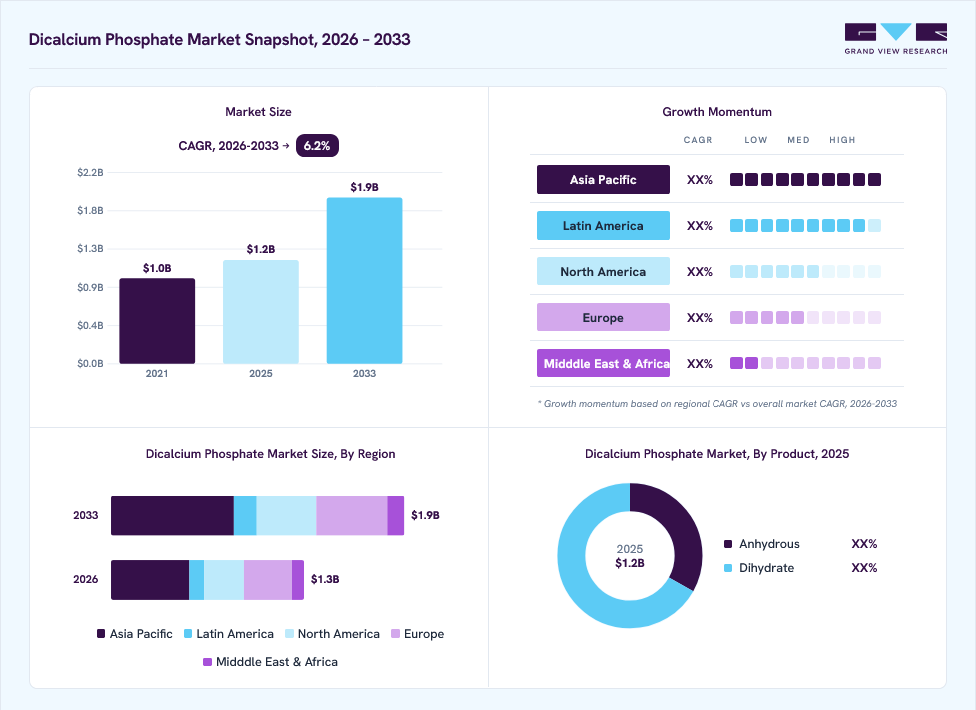
The global dicalcium phosphate market size was valued at USD 1.2 billion in 2025 and is expected to grow from USD 1.3 billion in 2026 to USD 1.9 billion in 2033, at a CAGR of 6.2% from 2026 to 2033. Asia Pacific dominated the market, accounting for the largest revenue share of 40.4% in 2025. The market growth is supported by the increasing adoption of dicalcium phosphate in animal feed and nutritional applications, particularly to provide essential calcium and phosphorus, support bone development, improve mineral balance, and enhance overall livestock and poultry health and productivity across poultry, swine, cattle, aquaculture, and other animal feed segments.
Key Market Trends & Insights
- By product: Dihydrate segment held the largest revenue share of 66.9% in 2025
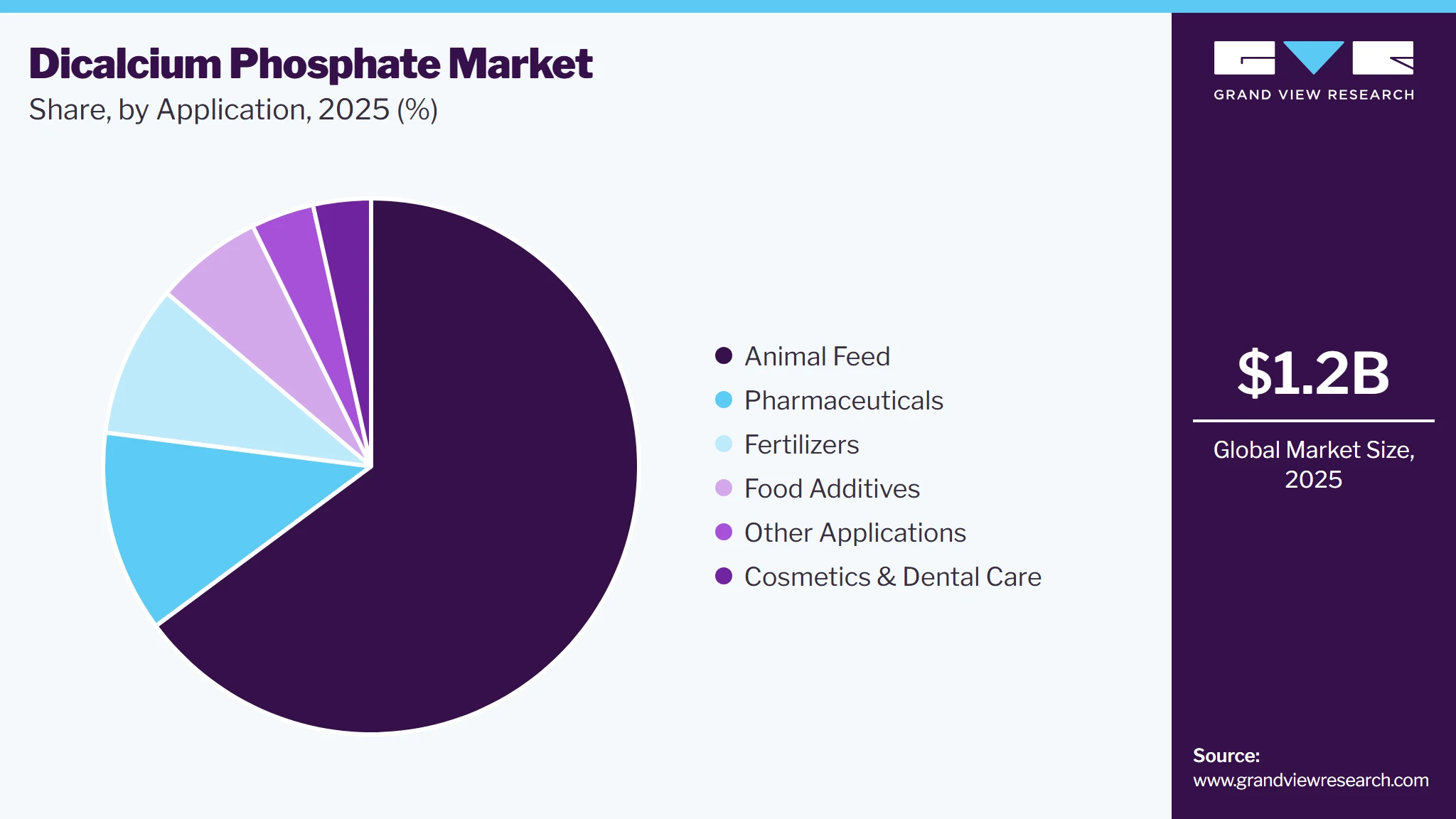
- By application: Animal feed segment held the largest revenue share of 64.8% in 2025.
Regional Highlights
- Largest regional market: Asia Pacific (40.4% revenue share, 2025)
- By country: China held the largest market share in 2025
Market Size & Forecast
- Market size in 2025: USD 1.2 Billion
- Estimated market size in 2026: USD 1.3 Billion
- Projected market size by 2033: USD 1.9 Billion
- CAGR (2026-2033): 6.2%
Rising demand for high-quality animal nutrition and efficient mineral supplementation is driving the adoption of dicalcium phosphate. Dicalcium phosphate is a highly bioavailable source of calcium and phosphorus, essential minerals that support bone development, skeletal strength, growth, and overall animal health. Growing concerns over mineral deficiencies, increasing demand for balanced animal feed, and the need to improve feed efficiency are supporting market growth. The expansion of poultry, swine, cattle, and aquaculture production, along with rising demand for meat, dairy, and other animal-derived products, is further strengthening the use of dicalcium phosphate. Advancements in feed formulations and increasing focus on animal health and productivity are also supporting its adoption across modern livestock and feed systems.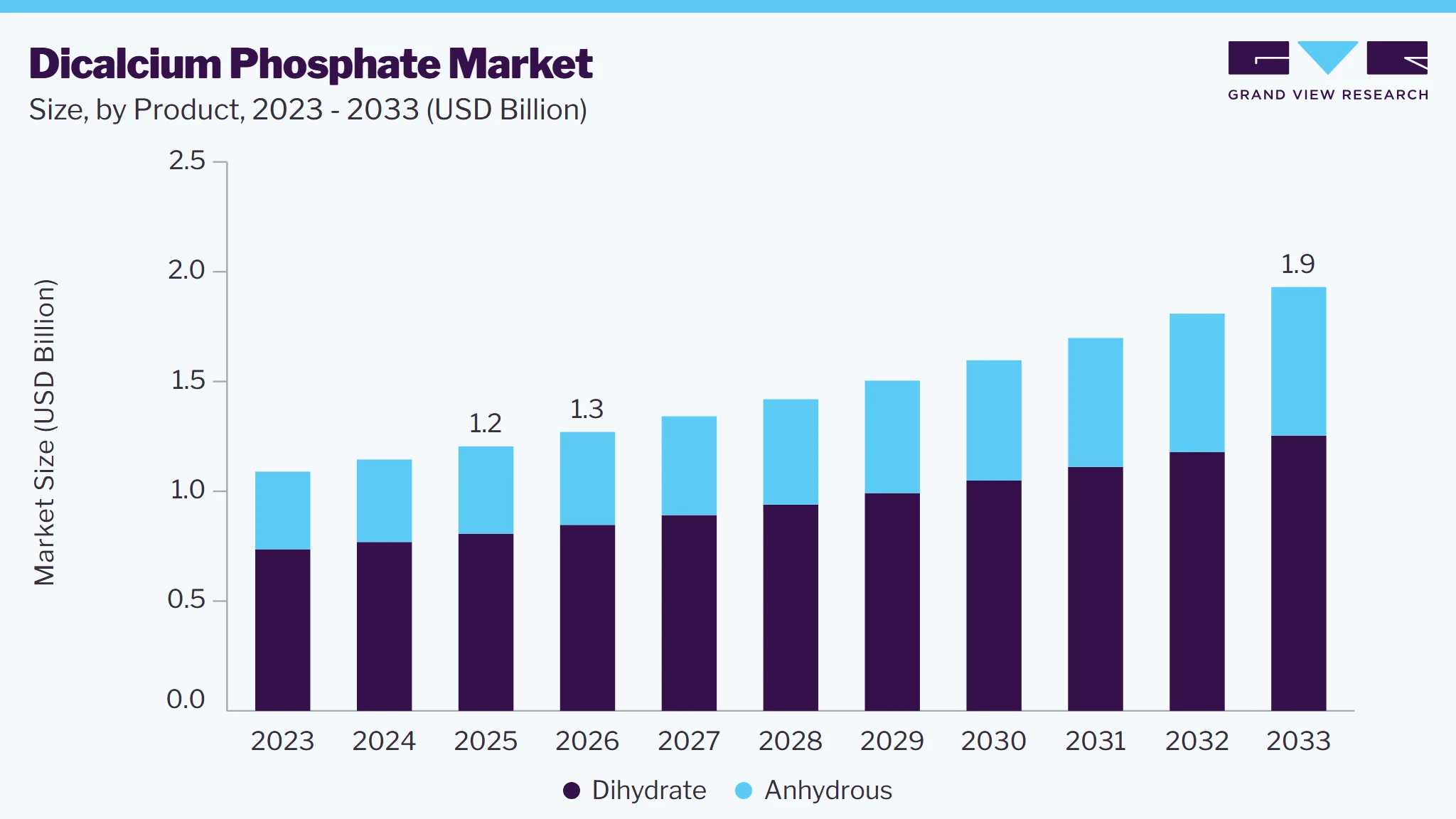
Market Dynamics
The dicalcium phosphate market is gaining momentum as the demand for efficient mineral supplementation in animal nutrition continues to increase. Dicalcium phosphate provides highly bioavailable calcium and phosphorus, which are essential for bone development, skeletal strength, growth, and overall animal health. Increasing demand for balanced feed formulations, rising livestock and poultry production, and growing emphasis on feed efficiency and animal productivity are supporting market growth. Demand is also being strengthened by the expansion of commercial production of poultry, swine, dairy, cattle, and aquaculture.
Growing awareness of the importance of calcium and phosphorus in animal nutrition is a key driver of the dicalcium phosphate market. Deficiencies of these minerals can adversely affect skeletal development, growth, reproductive performance, and overall productivity in livestock and poultry. Dicalcium phosphate is widely incorporated into feed formulations as a concentrated and readily available source of both minerals, helping manufacturers achieve balanced nutritional profiles.
The expansion of intensive livestock farming and increasing demand for meat, dairy, eggs, and aquaculture products are strengthening the need for nutritionally optimized feed. Rising adoption of scientifically formulated animal diets, combined with greater focus on feed conversion efficiency and animal health, is encouraging the use of dicalcium phosphate across commercial feed applications.
Fluctuations in the prices and availability of raw materials used in dicalcium phosphate production can constrain market growth. Changes in the costs of phosphate rock, phosphoric acid, calcium-based raw materials, energy, and transportation can increase production costs and put pressure on manufacturers' margins. These cost variations can also affect product pricing, particularly in price-sensitive feed markets.
Environmental and regulatory requirements associated with phosphate mining, processing, and waste management can further increase compliance and operational costs. Smaller producers may face greater challenges in maintaining cost competitiveness while meeting quality and regulatory standards.
The continued expansion of poultry, swine, dairy, cattle, and aquaculture production presents significant opportunities for dicalcium phosphate manufacturers. Rising consumption of animal-derived food products, particularly in emerging economies, is encouraging investment in commercial livestock production and increasing demand for formulated feed.
Growing adoption of specialized animal nutrition products also creates opportunities for manufacturers to develop high-purity, feed-grade, highly bioavailable, and application-specific dicalcium phosphate formulations. Increasing demand for efficient mineral supplementation, improved feed performance, and enhanced animal productivity is expected to support product penetration across both established and emerging feed markets.
Market Concentration & Characteristics
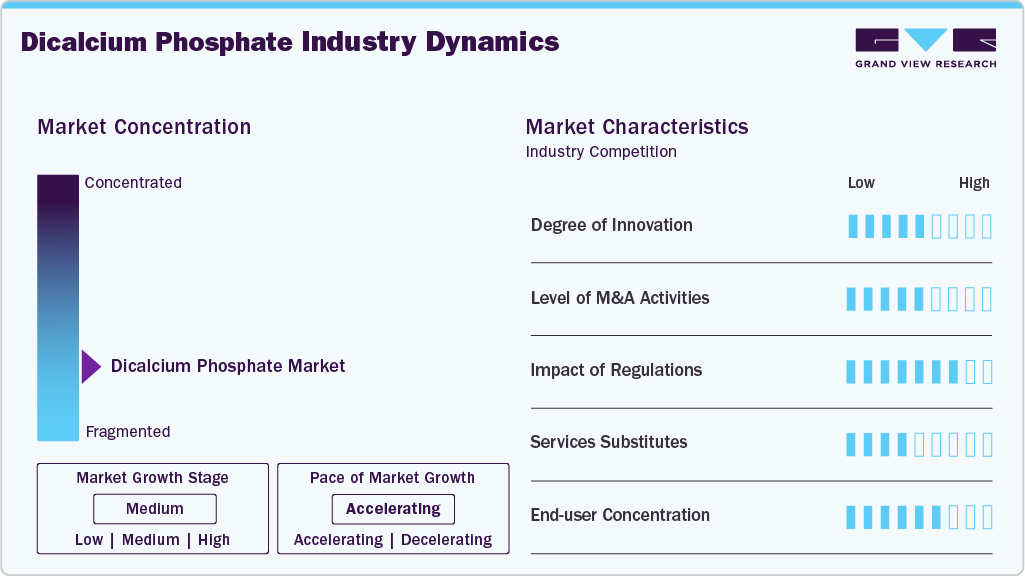
The dicalcium phosphate market comprises large phosphate and chemical manufacturers, animal nutrition companies, and regional feed-grade mineral producers. Competitive positioning depends on product purity, phosphorus and calcium content, bioavailability, production efficiency, pricing, quality consistency, and distribution capabilities. Companies are focusing on expanding production capacity, strengthening raw material supply chains, improving manufacturing efficiency, and developing products tailored to specific animal nutrition requirements. The market is influenced by the scale of livestock and feed production in major consuming regions, while regional producers maintain a presence through localized distribution networks and competitive pricing. Growing demand for scientifically formulated animal feed and increasing emphasis on mineral balance are expected to support competition among suppliers and encourage continued improvements in product quality and manufacturing efficiency.
Leading companies are expanding their dicalcium phosphate portfolios through product development, production capacity expansion, strategic collaborations, and partnerships with animal feed manufacturers, distributors, and livestock nutrition companies. Increasing investments in high-purity feed-grade formulations, improved bioavailability, production efficiency, quality control, and sustainable phosphate processing technologies are expected to strengthen product differentiation and intensify competition over the forecast period.
Analyst Perspective
The dicalcium phosphate market is driven by the growing emphasis on efficient animal nutrition and the increasing need for balanced mineral supplementation. Rising concerns over calcium and phosphorus deficiencies, increasing demand for nutritionally optimized animal feed, and the expansion of intensive livestock and poultry production are accelerating the adoption of dicalcium phosphate across feed applications. Advances in feed-grade formulations, mineral bioavailability, processing technologies, and precision feed formulation are improving nutrient utilization and supporting healthy growth, bone development, feed efficiency, and overall animal productivity while enabling more effective mineral management.
Product Insights
The dihydrate segment dominated the dicalcium phosphate market, accounting for 66.9% of total revenue in 2025, primarily due to its established use as a source of calcium and phosphorus in formulated animal diets. Its favorable nutritional profile, handling characteristics, and suitability for large-scale feed manufacturing support its extensive use in poultry, swine, cattle, dairy, and aquaculture applications. The segment also benefits from its established production infrastructure and broad availability across major feed-producing regions.
The anhydrous segment is expected to grow at the fastest CAGR of 6.9% during the forecast period, supported by increasing demand for products with higher mineral concentration and reduced moisture content. Its physical properties make it suitable for applications requiring greater formulation stability and controlled ingredient composition. Growing utilization in specialized animal nutrition, pharmaceutical formulations, and other applications requiring consistent mineral specifications is expected to create additional demand.
Application Insights
The animal feed segment dominated the dicalcium phosphate industry, accounting for 64.8% of total revenue share in 2025, supported by the expanding consumption of nutritionally balanced feed and the increasing commercialization of livestock production. Dicalcium phosphate is incorporated into feed formulations to maintain appropriate calcium-to-phosphorus ratios, support skeletal development, and meet species-specific nutritional requirements. Rising production of poultry, meat, dairy products, and aquaculture, particularly in developing economies, is expected to sustain demand as producers place greater emphasis on animal growth, feed quality, and production efficiency.
The cosmetics & dental care segment is expected to grow at the fastest CAGR of 7.2% during the forecast period, driven primarily by increasing incorporation of dicalcium phosphate into toothpaste and other oral care formulations. Its mild abrasive properties support plaque and surface stain removal, while its calcium content provides functional benefits in selected dental formulations. Rising awareness of preventive oral care, increasing consumption of premium dental hygiene products, and continued development of specialized toothpaste formulations are expected to broaden the segment's use.
Regional Insights
Asia Pacific dominated the dicalcium phosphate market with a 40.4% revenue share in 2025 and is expected to grow at the fastest CAGR over the forecast period. The market growth is supported by the region’s large livestock and poultry production base, expanding animal feed industry, and increasing demand for mineral-enriched feed formulations. China, India, and Southeast Asian economies are witnessing growth in commercial animal farming and aquaculture, creating sustained demand for calcium and phosphorus supplements. The region also benefits from established phosphate production capabilities and the presence of major manufacturers, supporting regional supply and competitive pricing.

The China dicalcium phosphate market dominated Asia Pacific in 2025, driven by its extensive poultry, swine, livestock, and aquaculture industries and its large-scale animal feed manufacturing base. Increasing demand for meat, eggs, dairy products, and aquaculture products is encouraging feed producers to adopt balanced mineral formulations containing dicalcium phosphate. The country’s strong phosphate-processing industry established domestic supply chains, and manufacturing capabilities further support market development.
North America Dicalcium Phosphate Market Trends
The North America dicalcium phosphate industry is supported by the region’s well-established livestock, poultry, pet nutrition, and animal feed industries. Increasing demand for high-quality formulated feed and greater emphasis on animal health, mineral balance, and feed efficiency are supporting product consumption. The region also has stringent quality standards for feed ingredients, encouraging the use of consistent, high-purity phosphate products. Growing demand for functional pet nutrition and specialty mineral ingredients is creating additional opportunities for market participants.
U.S. Dicalcium Phosphate Market Trends
The U.S. represents a major market in North America, supported by its large-scale poultry, cattle, dairy, swine, pet food, and aquaculture sectors. Commercial feed manufacturers increasingly rely on scientifically formulated diets to meet species-specific calcium and phosphorus requirements and improve animal productivity. Demand is also supported by the expansion of premium pet nutrition and growing interest in high-quality mineral ingredients. Established feed manufacturing infrastructure and strong regulatory oversight further favor the adoption of standardized, feed-grade dicalcium phosphate.
Europe Dicalcium Phosphate Market Trends
The Europe dicalcium phosphate industry is driven by established livestock and poultry production, stringent animal nutrition standards, and increasing emphasis on feed quality, animal health, and sustainable production practices. Demand is supported by the use of mineral supplements in dairy, swine, poultry, and other feed formulations. Growing focus on improving feed efficiency and reducing the environmental impact of livestock production is encouraging manufacturers to optimize mineral inclusion levels and develop high-quality nutritional formulations. The region’s mature feed industry and strict quality requirements favor reliable and standardized dicalcium phosphate products.
Latin America Dicalcium Phosphate Market Trends
The Latin American dicalcium phosphate industry is benefiting from the expansion of commercial poultry, swine, cattle, dairy, and aquaculture production, particularly in Brazil, Mexico, and other major agricultural economies. Rising domestic consumption and export-oriented meat production are increasing the need for nutritionally balanced feed formulations. Growing investment in modern feed mills and intensive livestock systems is supporting mineral supplementation, while increasing awareness of animal nutrition and productivity is creating opportunities for dicalcium phosphate suppliers.
Middle East Dicalcium Phosphate Market Trends
The Middle East dicalcium phosphate industry is supported by increasing investment in poultry, dairy, livestock, and aquaculture production as countries seek to strengthen domestic food production and reduce reliance on imported animal products. Hot, challenging climatic conditions underscore the importance of nutritionally optimized feed formulations that support animal health and productivity. Expansion of commercial farming, investments in modern feed manufacturing facilities, and the growing demand for meat, dairy, and poultry products are expected to drive dicalcium phosphate consumption across the region.
Key Dicalcium Phosphate Company Insights
Companies operating in the dicalcium phosphate market are strengthening their competitive positions through product development, portfolio expansion, production capacity enhancement, and investments in advanced phosphate and mineral nutrition solutions. Leading manufacturers are focusing on improving product purity, mineral bioavailability, nutritional efficiency, and formulation consistency while developing products suitable for poultry, livestock, swine, dairy, aquaculture, and other animal feed applications.
-
Innophos is a prominent participant in the dicalcium phosphate industry, leveraging its expertise in phosphate-based ingredients and mineral nutrition solutions to support animal feed applications. The company’s portfolio includes phosphate products designed to provide essential calcium and phosphorus, supporting bone development, skeletal strength, growth, and overall animal health. Innophos’s focus on product quality, nutritional performance, manufacturing consistency, and application-specific phosphate solutions enables it to serve diverse animal nutrition requirements while strengthening its position in the global phosphate ingredients market.
-
Phosphea is a leading manufacturer of phosphorus-based mineral solutions for animal nutrition, offering dicalcium phosphate and other phosphate products for livestock and poultry feed applications. Its portfolio is focused on supplying highly available calcium and phosphorus to support animal growth, skeletal development, and mineral balance. Phosphea is strengthening its market position through specialized mineral formulations, product quality optimization, nutritional expertise, and solutions tailored to different animal species and feed requirements, enabling the company to serve a broad range of animal nutrition markets.
Key Dicalcium Phosphate Companies
The following key companies have been profiled for this study of the dicalcium phosphate market.
-
Innophos
-
Phosphea
-
Jiangsu Khonor Chemicals Co.
-
Prayon
-
ANMOL CHEMICALS Private Limited
-
KEMAPCO
-
Sudeepgroup (Sudeep Pharma Limited)
-
ICL
-
Budenheim
-
WENGFU GROUP CO. LTD.
Competitive Benchmarking
Operating Strategies
Competitive Edge
Weaknesses
Mature Players: Innophos, Phosphea, Prayon, ICL, Budenheim
- Invest in phosphate production technologies, product quality, and feed-grade mineral formulations to improve calcium and phosphorus availability.
- Expand portfolios across dicalcium phosphate and other phosphate-based mineral products for poultry, livestock, swine, dairy, and aquaculture applications.
- Strengthen manufacturing capabilities and global distribution networks to serve animal nutrition and feed markets across major regions.
- Develop products with improved purity, bioavailability, consistency, and compatibility with different feed formulations.
- Pursue strategic partnerships with feed manufacturers, distributors, animal nutrition companies, and livestock producers to expand market reach.
- Strong technical expertise in phosphate chemistry, mineral nutrition, and feed-grade ingredients.
- Broad phosphate portfolios serving multiple animal nutrition and industrial applications.
- Established manufacturing infrastructure, quality-control capabilities, and international distribution networks.
- Strong relationships with feed manufacturers, distributors, and agricultural customers.
- Greater financial and R&D resources support product development, capacity expansion, and large-scale commercialization.
- Large-scale production and stringent quality requirements can increase operating and manufacturing costs.
- Exposure to fluctuations in phosphate rock, phosphoric acid, energy, and logistics costs can affect product economics.
- Premium or highly specialized products may face pricing pressure from regional and lower-cost suppliers.
- Large organizational structures may make rapid customization for smaller regional customers more challenging.
- Regulatory and environmental requirements associated with phosphate production can increase compliance costs.
Emerging Players: Jiangsu Khonor Chemicals Co., Ltd., ANMOL CHEMICALS Private Limited, KEMAPCO, WENGFU GROUP CO., LTD, Sudeepgroup (Sudeep Pharma Limited)
- Expand dicalcium phosphate and phosphate-based product portfolios to address growing demand for animal feed mineral supplements.
- Focus on competitive pricing, consistent product quality, and reliable supply to strengthen relationships with feed manufacturers and distributors.
- Increase production efficiency and capacity to serve domestic and export markets.
- Develop feed-grade phosphate products with controlled purity, calcium-phosphorus ratios, and consistent specifications.
- Strengthening regional distribution networks and partnerships with animal nutrition companies to improve market penetration.
- Competitive manufacturing and pricing capabilities, particularly in regional markets.
- Strong expertise in phosphate processing and mineral-based products.
- Greater flexibility in serving regional customers and adapting product specifications to market requirements.
- Established relationships with local distributors, feed manufacturers, and agricultural customers.
- Proximity to raw materials and key consumer markets can support supply-chain efficiency.
- Smaller global footprint compared with multinational phosphate and specialty nutrition companies.
- More limited financial and R&D resources may constrain advanced product development and large-scale capacity expansion.
- Greater exposure to raw material and energy price fluctuations can affect margins.
- Dependence on regional distributors and export channels may limit direct access to certain international markets.
- Lower global brand recognition may create challenges in competing for multinational feed customers.
Recent Developments
-
In May 2026, Innophos introduced a new formulation for dog treats that combines its dicalcium phosphate with prebiotics such as inulin to support digestive health and mineral fortification. The solution provides highly bioavailable calcium and phosphorus for strong teeth and bones and uses a 1.3:1 calcium-to-phosphorus ratio aligned with AAFCO and veterinary guidance. The formulation is designed to support microbiome health and digestive comfort while maintaining consistent processing and product quality.
Dicalcium Phosphate Market Report Scope
Report Attribute
Details
Market size in 2025
USD 1.2 billion
Estimated market size in 2026
USD 1.3 billion
Projected market size by 2033
USD 1.9 billion
Growth rate
CAGR of 6.2% from 2026 to 2033
Base year for estimation
2025
Historical data
2021 - 2024
Forecast period
2026 - 2033
Quantitative units
Volume in kilotons, revenue in USD million/billion, and CAGR from 2026 to 2033
Report coverage
Revenue forecast, volume forecast, company ranking, competitive landscape, growth factors, and trends
Segments covered
Product, application, and region
Regional scope
North America; Europe; Asia Pacific; Latin America; Middle East & Africa
Country scope
U.S.; Canada; Mexico; Germany; UK; France; Italy; Spain; China; India; Japan; South Korea; Brazil; Argentina; Saudi Arabia; South Africa
Key companies profiled
Innophos; Phosphea; Jiangsu Khonor Chemicals Co.; Prayon; ANMOL CHEMICALS Private Limited; KEMAPCO; Sudeepgroup (Sudeep Pharma Limited); ICL; Budenheim; WENGFU GROUP CO. LTD.
Customization scope
Free report customization (equivalent up to 8 analysts’ working days) with purchase. Addition or alteration to country, regional & segment scope.
Pricing and purchase options
Avail customized purchase options to meet your exact research needs. Explore purchase options
Global Dicalcium Phosphate Market Report Segmentation
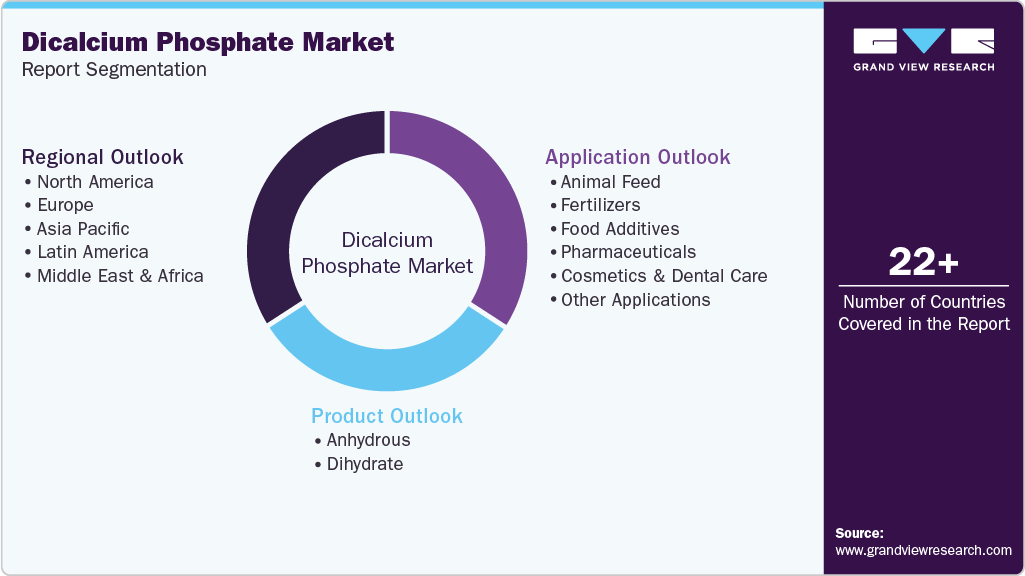
This report forecasts revenue & volume growth at the global, regional & country levels and provides an analysis of the latest industry trends in each of the sub-segments from 2021 to 2033. For this study, Grand View Research has segmented the global dicalcium phosphate market report based on product, application, and region:
-
Product Outlook (Volume, Kilotons; Revenue, USD Million/Billion, 2021 - 2033)
-
Anhydrous
-
Dihydrate
-
-
Application Outlook (Volume, Kilotons; Revenue, USD Million/Billion, 2021 - 2033)
-
Animal Feed
-
Fertilizers
-
Food Additives
-
Pharmaceuticals
-
Cosmetics & Dental Care
-
Other Applications
-
-
Regional Outlook (Volume, Kilotons; Revenue, USD Million/Billion, 2021 - 2033)
-
North America
-
U.S.
-
Canada
-
Mexico
-
-
Europe
-
Germany
-
UK
-
France
-
Italy
-
Spain
-
-
Asia Pacific
-
China
-
India
-
Japan
-
South Korea
-
-
Latin America
-
Brazil
-
Argentina
-
-
Middle East & Africa
-
Saudi Arabia
-
South Africa
-
-
Research Methodology
The dicalcium phosphate market figures in this report are based on a proven research process that combines executive interviews with secondary research from proprietary databases, company filings, and recognized regulatory and institutional sources. Market size is built through value-chain sizing-reconciling supply-side and demand-side estimates-and triangulated with bottom-up and top-down approaches. Every estimate passes multiple levels of expert validation before publication, with each dicalcium phosphate segment quantified using the revenue-capture definitions in the table below.
Segment Definition
Segment - Product
Revenue capture definition
Anhydrous
Sales are generated from anhydrous dicalcium phosphate, which contains calcium and phosphorus in a moisture-free form and is primarily used as a mineral supplement in animal feed and nutritional formulations. Its concentrated mineral content supports bone development, skeletal strength, growth, and overall animal health.
Dihydrate
Market revenues arise from dicalcium phosphate dihydrate, a widely used form of dicalcium phosphate that provides bioavailable calcium and phosphorus for animal nutrition. It is incorporated into feed formulations for poultry, livestock, swine, dairy animals, and other species to support mineral balance and nutritional requirements.
Segment - Application
Revenue capture definition
Animal Feed
Sales are generated from the incorporation of dicalcium phosphate into animal feed formulations as a source of calcium and phosphorus. Applications span poultry, swine, cattle, dairy animals, aquaculture, and other livestock segments, where they support bone development, growth, mineral balance, and overall animal productivity.
Fertilizers
Revenue is captured from the use of dicalcium phosphate as a phosphorus and calcium source in agricultural fertilizer formulations. Its application supports plant nutrient supply, soil fertility, and crop development, particularly where supplemental phosphorus and calcium are required.
Food Additives
Market revenues arise from the use of food-grade dicalcium phosphate as a mineral fortifying and functional ingredient in selected food products. It can provide calcium and phosphorus while contributing to product formulation, texture, and processing requirements across specific food applications.
Pharmaceuticals
Sales are generated through the use of high-purity dicalcium phosphate as a calcium and phosphorus source and pharmaceutical excipient. Applications include mineral supplements, tablets, and other formulations where controlled particle size, purity, compressibility, and mineral content are required.
Cosmetics & Dental Care
Revenue is derived from dicalcium phosphate used in oral and dental care formulations, particularly as a polishing, abrasive, and calcium-containing ingredient in toothpaste and related products. Its functional properties support cleaning and formulation performance in dental care applications.
Other Applications
Market revenues are generated from dicalcium phosphate used across specialized nutritional, industrial, and other functional applications where calcium and phosphorus supplementation, mineral content, or specific physical properties are required. These applications include selected pet nutrition, laboratory, and specialty formulations.
Estimation Model
Layer No.
Layer Name
Key Question
Description
01
Raw Material & Production Layer
What forms is the supply base?
Examine the sourcing and manufacturing of dicalcium phosphate using phosphate rock, phosphoric acid, calcium-based raw materials, and other processing inputs. The assessment covers reaction and neutralization processes, precipitation, filtration, purification, drying, granulation, blending, production capacities, quality-control practices, and raw-material availability. It also evaluates developments in phosphate processing, production efficiency, product purity, mineral bioavailability, and manufacturing technologies that influence product quality, consistency, cost, and scalability.
02
Form Adoption Layer
Where is dicalcium phosphate utilized?
Evaluate the adoption of dicalcium phosphate across powder, granular, and other feed-grade formulations and its incorporation into animal feed, mineral premixes, nutritional supplements, and specialty formulations. Demand is influenced by the need to provide bioavailable calcium and phosphorus, support skeletal development, maintain mineral balance, improve animal growth and productivity, and optimize feed formulations. Growing livestock production, commercial poultry farming, aquaculture, and demand for scientifically formulated animal feed are contributing to wider adoption.
03
Consumption Intensity Layer
How much dicalcium phosphate is consumed?
Assess consumption based on calcium and phosphorus requirements across poultry, swine, cattle, dairy animals, aquaculture, and other livestock segments. The analysis considers animal population, feed production volumes, species-specific nutritional requirements, inclusion rates, feed conversion practices, production intensity, and adoption of mineral-enriched feed formulations to estimate annual dicalcium phosphate consumption across major animal nutrition markets.
04
Revenue Layer
How is market revenue generated?
Market revenue is generated through the manufacture and sale of dicalcium phosphate products, primarily used as calcium and phosphorus supplements in animal feed, as well as in fertilizers, food additives, pharmaceuticals, dental care, and other specialized uses. Revenue growth is supported by increasing demand for balanced animal nutrition, expansion of commercial livestock and poultry production, rising aquaculture output, growing emphasis on mineral bioavailability and feed efficiency, and increasing use of high-quality phosphate-based nutritional ingredients.
Delivered Customizations
This report has been delivered with the following In-depth customizations
Client Request
Customization Delivered
Value Adds
Cross-segmentation
The assessment provides detailed cross-segmentation of the dicalcium phosphate market by product form, application, animal type, and end use. The analysis evaluates demand across anhydrous and dihydrate forms, with application assessment covering animal feed, fertilizers, food additives, pharmaceuticals, cosmetics & dental care, and other applications. Animal feed analysis further covers poultry, swine, cattle, dairy, aquaculture, and other livestock segments.
Enables identification of high-growth opportunities across specific product-application-animal type combinations. Supports targeted product development, production planning, capacity expansion, distribution strategies, and market-entry decisions by highlighting applications with strong mineral supplementation requirements, specialized product specifications, and increasing adoption of balanced animal nutrition solutions.
Opportunity Assessment
Detailed evaluation of growth opportunities arising from increasing demand for balanced animal nutrition, commercial livestock and poultry production, aquaculture expansion, feed efficiency, and mineral-enriched feed formulations. The assessment covers developments in feed-grade phosphate products, mineral bioavailability, high-purity formulations, production technologies, specialty nutrition solutions, and application-specific products designed to improve calcium and phosphorus utilization.
Enables identification of attractive investment opportunities across the dicalcium phosphate value chain. Supports decisions related to product development, manufacturing expansion, technology adoption, regional market entry, and distribution partnerships by highlighting high-potential animal nutrition applications, evolving feed formulation practices, and long-term demand drivers.
Competitive Benchmarking
Comparative assessment of leading dicalcium phosphate manufacturers based on product portfolios, phosphate production capabilities, product purity, calcium and phosphorus content, manufacturing capacity, geographic presence, R&D activities, quality standards, distribution networks, strategic partnerships, and application expertise. The benchmarking evaluates product consistency, bioavailability, formulation flexibility, production efficiency, application versatility, commercialization strategies, and the ability to serve diverse animal nutrition and industrial requirements.
Supports benchmarking against key competitors while identifying opportunities to strengthen product differentiation, improve product quality, optimize manufacturing efficiency, expand distribution coverage, and develop application-specific phosphate solutions. The analysis assists strategic decisions concerning R&D investment, portfolio expansion, manufacturing capabilities, technology adoption, partnerships, and long-term positioning in the dicalcium phosphate market.
Frequently Asked Questions About This Report
The dicalcium phosphate market is expected to grow at a compound annual growth rate of 6.2% from 2026 to 2033 to reach USD 1.9 billion by 2033.
The dicalcium phosphate market size was estimated at USD 1.2 billion in 2025 and is expected to reach USD 1.3 billion in 2026.
By product, dihydrate dominated the market with a 66.9% revenue share in 2025 supported by its widespread use as a calcium and phosphorus source in animal feed and nutritional formulations.
Key players include Innophos, Phosphea, Jiangsu Khonor Chemicals Co., Prayon, ANMOL CHEMICALS Private Limited, KEMAPCO, Sudeepgroup (Sudeep Pharma Limited), ICL, Budenheim, WENGFU GROUP CO. LTD.
The market is primarily driven by the expansion of commercial livestock and poultry production, rising demand for balanced and mineral-enriched animal feed, increasing consumption of meat, dairy, and aquaculture products, and growing emphasis on animal health and feed efficiency. Dicalcium phosphate provides a bioavailable source of calcium and phosphorus required for skeletal development, growth, and overall animal productivity.
Asia Pacific dominated the global dicalcium phosphate market, accounting for 40.4% of revenue in 2025 supported by the region's large livestock and poultry production base, expanding feed manufacturing industry, and growing demand for animal-derived products. Strong phosphate production capabilities and increasing adoption of formulated animal feed in countries such as China and India further support regional demand.
The anhydrous segment is expected to register the fastest growth, expanding at a CAGR of 6.9% during the forecast period driven by increasing demand for concentrated mineral sources and formulations requiring lower moisture content and consistent calcium and phosphorus specifications.
The animal feed segment dominated the dicalcium phosphate market, capturing 64.8% of revenue in 2025 driven by increasing incorporation of calcium and phosphorus sources into formulated diets for poultry, livestock, swine, dairy animals, and aquaculture. Rising commercial animal production and greater emphasis on balanced nutrition and feed efficiency are supporting segment demand.
The cosmetics & dental care is expected to grow fastest at a CAGR of 7.2% during the forecast period supported by increasing use of dicalcium phosphate in toothpaste and oral care formulations. Its abrasive and polishing properties, along with its calcium content, make it suitable for selected dental care applications, while rising awareness of oral hygiene and demand for specialized dental products are supporting growth.
About the Author(s)
Specialty & Chemicals Research Team
Research · Specialty & ChemicalsThis report was authored by the specialty & chemicals research team at Grand View Research - comprising two research analysts, one senior research analyst, and one industry expert - with specialized expertise in the specialty & chemicals segment of the research industry. All findings are based on proprietary research databases, executive interviews, and regulatory analysis, subject to internal peer review prior to publication.
Last Updated:
Speak to Analyst


Customize this report to your needs — add regions, segments, or data points, with 20% free customization.
Or view our licence options:


ISO 9001:2015 & 27001:2022 Certified
We are GDPR and CCPA compliant! Your transaction & personal information is safe and secure. For more details, please read our privacy policy.


