
- Home
- »
- Medical Devices
- »
-
Dietary Supplements Contract Manufacturing Market Report, 2033GVR Report cover

Dietary Supplements Contract Manufacturing Market (2026 - 2033)
Size, Share & Trends Analysis Report By Product (Proteins & Amino Acid, Multivitamin, Multi-Mineral, Antioxidant), By Dosage Form (Tablets, Capsules, Liquid Oral, Gummies), By Region, And Segment Forecasts
Market Size, 2025
$22.6BMarket Estimate, 2026
$25.4BMarket Forecast, 2033
$58.9BCAGR, 2026–2033
12.8%Dietary Supplements Contract Manufacturing Market Summary
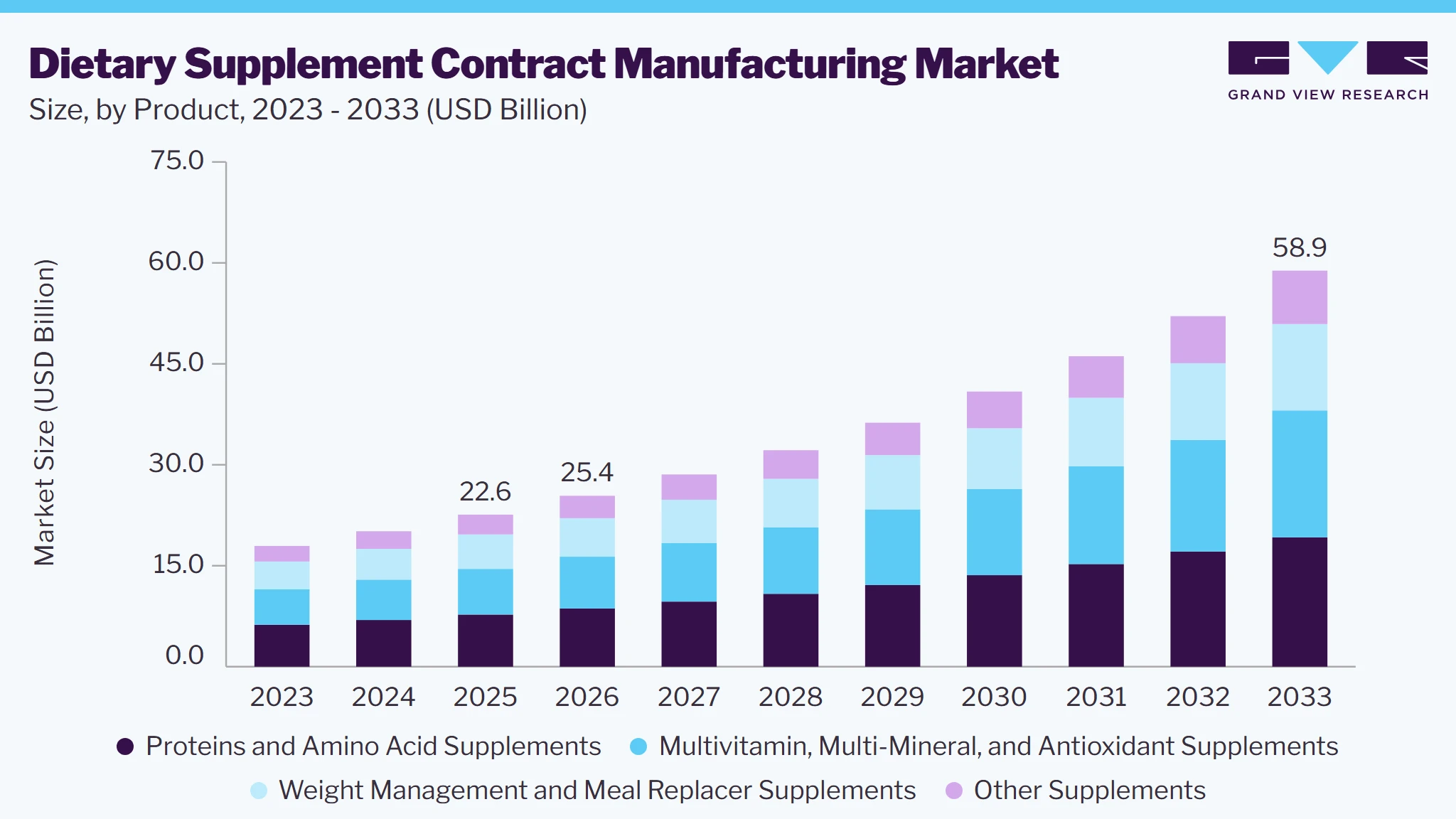
The global dietary supplements contract manufacturing market size was valued at USD 22.6 billion in 2025 and is projected to grow from USD 25.4 billion in 2026 to USD 58.9 billion by 2033, at a CAGR of 12.8% from 2026 to 2033. Asia Pacific dominated the market, accounting for a revenue share of 33.8% in 2025. The growth is driven by the increasing demand for dietary supplements, the rising obese population, a growing number of market players and rising consumer demand for personalized and condition-specific supplements.
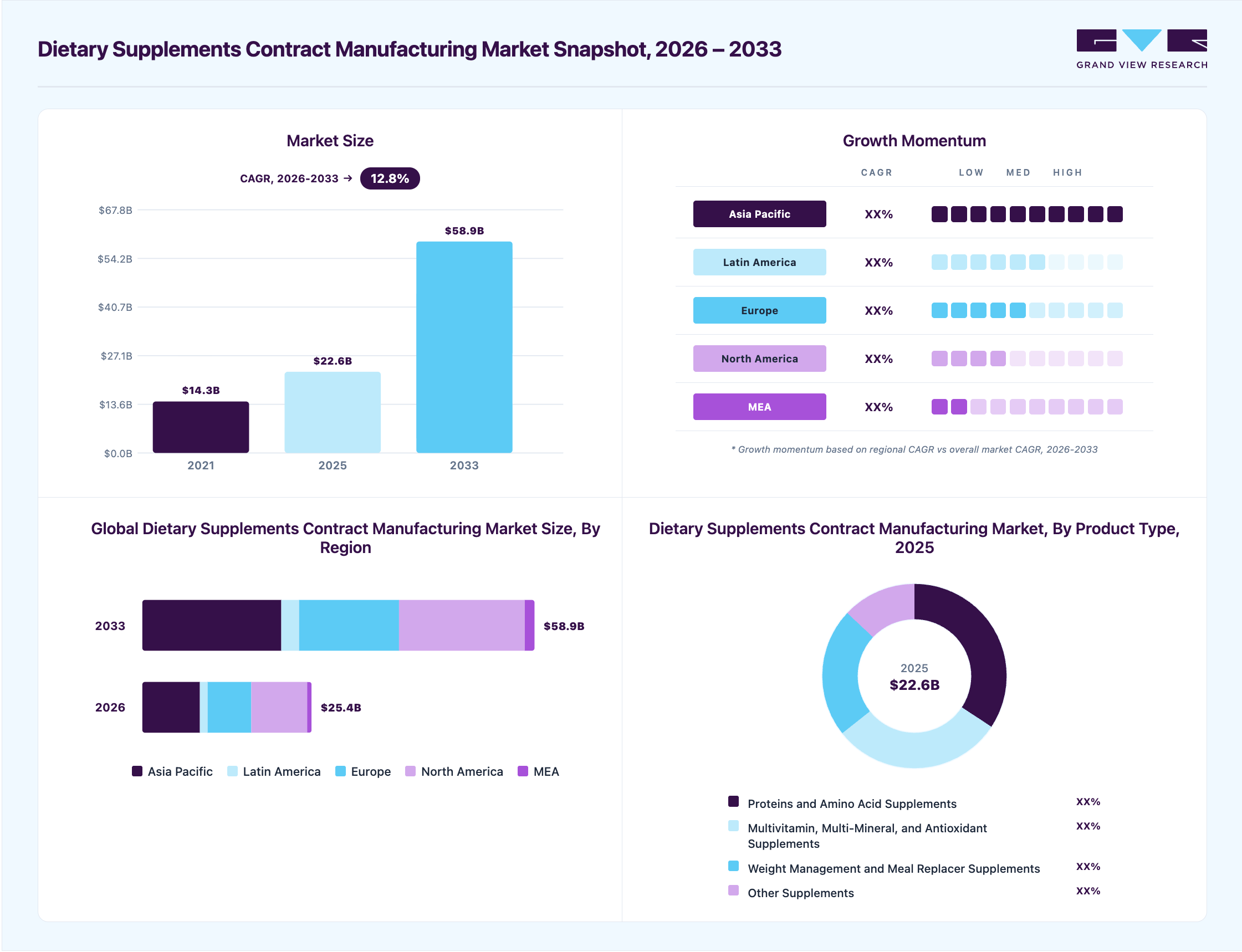 Source: Grand View Research, IR Documents, Primary Interviews, Paid DatabasesTo learn more about this report,
 Download Free Sample Report
Key Market Trends & Insights
- By product: Proteins and amino acid supplements segment held the largest market share of 34.2% in 2025.
- By dosage form: Tablets segment held the largest market share of 28.0% in 2025.
Regional Insights
- Largest market: Asia Pacific (33.8% revenue share in 2025)
- Fastest growing market: Asia Pacific (highest CAGR from 2026-2033)
- By country: China held the largest regional share in 2025
Market Size & Forecast
- Market size in 2025: USD 22.6 Billion
- Estimated market size in 2026: USD 25.4 Billion
- Projected market size by 2033: USD 58.9 Billion
- CAGR (2026-2033): 12.8%
Three ways to get this report
Buy it, customize it, or ask a question.Ask an Analyst
Analyst response in 1 business day
- AccessReport author, directly
- Reply timeWithin 1 working day
- No sales callDirect answer only
- FormatEmail reply
- CostFree, no cost
Get the Full Report
What the study covers
- FormatsPDF · Excel · Dashboard
- Timeline2026–2033 annual, 2025 base
- Coverage20+ countries, 5 regions
- Companies10+ key players profiled
Customize the Report
20% free customization
- IncludeCountries, segments, points
- TailorTo your product definition
- ExtendDeeper competitor detail
- OrA fully bespoke study
- Turnaround5–10 working days
 To learn more about this report, Download Free Sample Report
Market Dynamics
The industry is experiencing robust growth, driven by increasing global demand for nutritional supplements and preventive healthcare products. In addition, rising obesity rates, aging populations, and growing consumer awareness of health and wellness have significantly increased the consumption of vitamins, minerals, probiotics, proteins, botanicals, and functional nutrition products. Some of the brand owners are outsourcing manufacturing to specialized contract manufacturers to reduce capital investments, optimize production costs, accelerate product commercialization, and comply with evolving regulatory standards.
The expanding advantages of contract manufacturing, including scalable production capacity, access to advanced formulation expertise, quality assurance systems, and regulatory compliance, continue to strengthen market demand. In addition, contract manufacturers are broadening their service portfolios by offering formulation development, clinical support, packaging, labeling, testing, and logistics, enabling customers to access comprehensive end-to-end manufacturing solutions. Furthermore, continuous investments in innovative dosage forms such as gummies, softgels, powders, stick packs, and personalized nutrition products are further driving product development, enhancing competitiveness, and supporting sustained market expansion across global dietary supplement industries.
The growing consumer preference for personalized, condition-specific dietary supplements is a significant driver of the industry. Consumers are increasingly seeking customized nutritional solutions addressing specific health concerns such as immunity, gut health, cognitive function, joint health, and stress management, rather than generic multivitamins. This shift is compelling supplement brands, particularly startups and smaller companies lacking in-house manufacturing capabilities, to partner with contract manufacturers who possess specialized formulation expertise, advanced technologies, and flexible production capacities.
In addition, contract manufacturers are responding by investing in customized formulation services, novel delivery formats like gummies, effervescent tablets, and functional beverages, and small-batch production capabilities to accommodate niche and personalized product lines. In addition, advancements in nutrigenomics and diagnostic testing are enabling more precise supplement recommendations, fueling demand for agile, innovation-driven manufacturing partners. This trend is particularly strong among health-conscious millennials and Gen Z consumers, reinforcing sustained growth opportunities for contract manufacturers offering customization, scalability, and rapid product development.
Stringent and often varying regulatory frameworks across different regions pose a significant restraint on the dietary supplements contract manufacturing market. Regulatory bodies such as the FDA, EFSA, and other regional authorities impose rigorous requirements related to good manufacturing practices (GMP), ingredient safety, labeling accuracy, and health claim substantiation. In addition, compliance necessitates significant investments in quality control systems, documentation, testing infrastructure, and skilled regulatory affairs personnel, increasing operational costs for contract manufacturers.
In addition, frequent updates to regulations, coupled with inconsistencies between international markets, create complexities for manufacturers serving global clients, often resulting in extended product development timelines and increased compliance burdens. Smaller contract manufacturers may struggle to keep pace with evolving standards, limiting their ability to compete with larger, well-resourced players. Furthermore, incidents of contamination, mislabeling, or non-compliance can lead to product recalls, reputational damage, and legal liabilities, discouraging brand owners from partnering with manufacturers lacking robust quality assurance systems, thereby constraining overall market growth and new entrant participation.
The growing health and wellness awareness in emerging markets across Asia Pacific, Latin America, and the Middle East & Africa presents a substantial opportunity for dietary supplements contract manufacturers. In addition, rising disposable incomes, expanding middle-class populations, and increasing urbanization are driving greater consumer spending on preventive healthcare and nutritional products in these regions. The local and international supplement brands are increasingly seeking cost-effective, quality-compliant manufacturing partners to establish or expand their presence in these high-growth markets without incurring the capital expenditure of building in-house facilities.
The contract manufacturers with regional production capabilities, familiarity with local regulatory nuances, and established distribution networks are well-positioned to capture this demand. In addition, growing e-commerce penetration and direct-to-consumer supplement brands in these regions further amplify the need for agile, scalable manufacturing partnerships. By strategically expanding operations, forming local alliances, or establishing regional manufacturing hubs, contract manufacturers can tap into this underpenetrated consumer base, diversify their client portfolios, and secure long-term growth opportunities beyond saturated developed markets.
Market Concentration & Characteristics
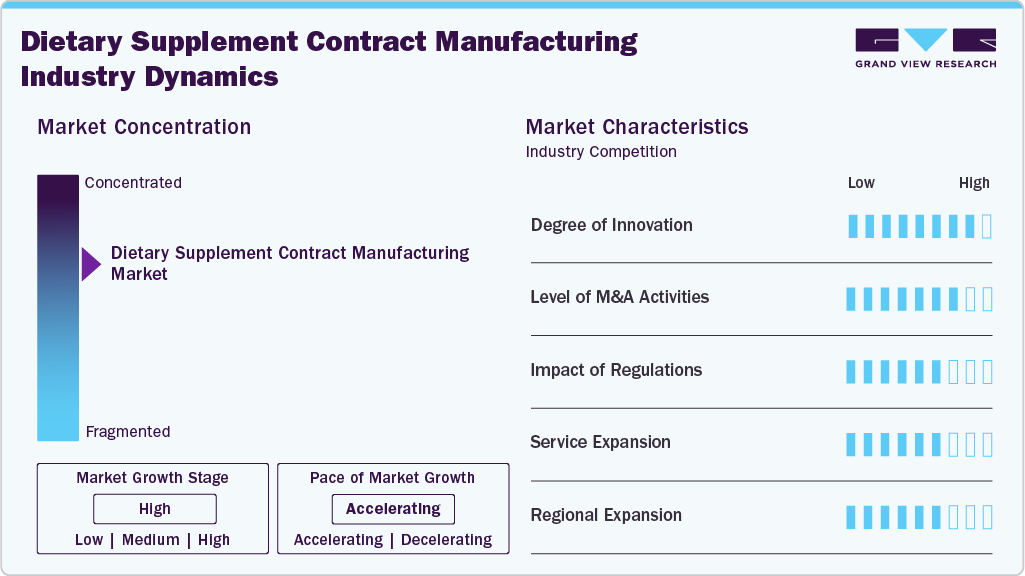
The industry is characterized by strong outsourcing demand, stringent regulatory compliance, rapid product innovation, and increasing customization capabilities. Manufacturers compete through quality certifications, scalable production, formulation expertise, and supply chain reliability. Growing demand for personalized nutrition, clean-label products, and efficient manufacturing technologies continues to drive market competitiveness and long-term expansion.
The industry is driven by breakthroughs in delivery systems, ingredient stability, and formulation techniques. Companies are developing self-emulsifying drug delivery systems (SEDDS) for better absorption, precision fermentation for sustainable ingredient production, and smart coatings to improve nutrient release. Gummy and liquid formulations are evolving with sugar-free, plant-based alternatives, catering to health-conscious consumers. Automation and blockchain-based traceability are also enhancing quality control.
 To learn more about this report, Download Free Sample Report
The industry is witnessing partnerships, collaborations, mergers, and acquisitions as companies seek to expand their capabilities, geographic reach, and service offerings to stay competitive in the evolving landscape. The growing demand for dietary supplements in emerging markets is due to rising disposable incomes, urbanization, and increasing health consciousness. Contract manufacturers are expanding their presence in these regions to capitalize on the numerous growth opportunities. For instance, in September 2025, Maypro partnered with Tradichem Group to introduce Clonapure and Hipering technologies in North America, expanding access to advanced nutraceutical ingredients and clean-label manufacturing solutions while enhancing formulation efficiency.
The industry is characterized by a complex interchange of evolving regulations, industry standards, and consumer demands. Regulatory authorities such as the U.S. Food and Drug Administration (FDA) and European Medicines Agency (EMA) are involved in monitoring and enforcement of quality control measures to ensure safety, efficacy, and accurate labeling of dietary supplements. Changes in regulations, such as the implementation of the Dietary Supplement Health and Education Act (DSHEA) or updates to Current Good Manufacturing Practices (cGMP), can significantly impact contract manufacturers' operations and compliance requirements. In the U.S., the Federal Trade Commission (FTC) regulates advertising & marketing claims, and the FDA oversees labeling claims.
The growing adoption of e-commerce platforms and Direct-To-Consumer (D2C) sales channels is transforming the marketing and sales landscape of dietary supplement products. This transformation is reshaping how contract manufacturers operate in the industry. Consumers are increasingly conscious of the ingredients used in dietary supplements, with a growing preference for natural and organic options. This shift in consumer preferences presents an opportunity for contract manufacturers to differentiate themselves by specializing in sourcing and incorporating high-quality natural and organic ingredients into product formulations. They can also ensure compliance with organic certifications and sustainability standards, helping dietary supplement companies meet the demands of environmentally conscious consumers.
The industry is driven by increasing health awareness, regulatory shifts, and growing demand for functional nutrition. Asia-Pacific is emerging as a manufacturing hub due to lower production costs and a booming nutraceutical industry, attracting global brands for outsourcing. North America and Europe continue expanding through premium formulations and regulatory compliance, with companies investing in local production to reduce supply chain risks. Latin America and the Middle East & Africa are witnessing gradual growth as consumer demand for supplements rises, prompting manufacturers to establish localized facilities and strategic partnerships for market penetration.
Analyst Perspective
The industry is driven by rising consumer demand for personalized nutrition, preventive healthcare, and clean-label formulations. Some brands are outsourcing production to leverage specialized expertise, cost efficiencies, and faster time-to-market, while contract manufacturers invest in advanced technologies, regulatory compliance, and flexible manufacturing capabilities. In addition, growing e-commerce penetration, expanding sports nutrition and immunity-boosting product categories, and increasing private-label demand further fuel growth, positioning contract manufacturers as strategic partners in meeting evolving consumer preferences across global supplement markets.
Impact of U.S. Tariffs on Dietary Supplements Contract Manufacturing Market
The imposition of U.S. tariffs on imported raw materials, nutraceutical ingredients, packaging components, and manufacturing inputs has created cost pressures across the industry. Many contract manufacturers rely on globally sourced vitamins, minerals, botanical extracts, amino acids, probiotics, and specialty ingredients, making production costs vulnerable to trade restrictions. Higher import costs have encouraged manufacturers to diversify supplier networks, increase regional sourcing, and establish dual-supply strategies to reduce dependency on tariff-affected countries. Some companies have accelerated investments in domestic production facilities and automation to improve cost efficiency and supply chain resilience. While large contract manufacturers have been better positioned to absorb increased costs through economies of scale and long-term supplier agreements, smaller manufacturers have faced tighter profit margins and pricing challenges. Thus, the tariff environment has accelerated supply chain localization, strategic procurement, and operational optimization while encouraging manufacturers to strengthen manufacturing flexibility and enhance long-term competitiveness.
Technological Advancements
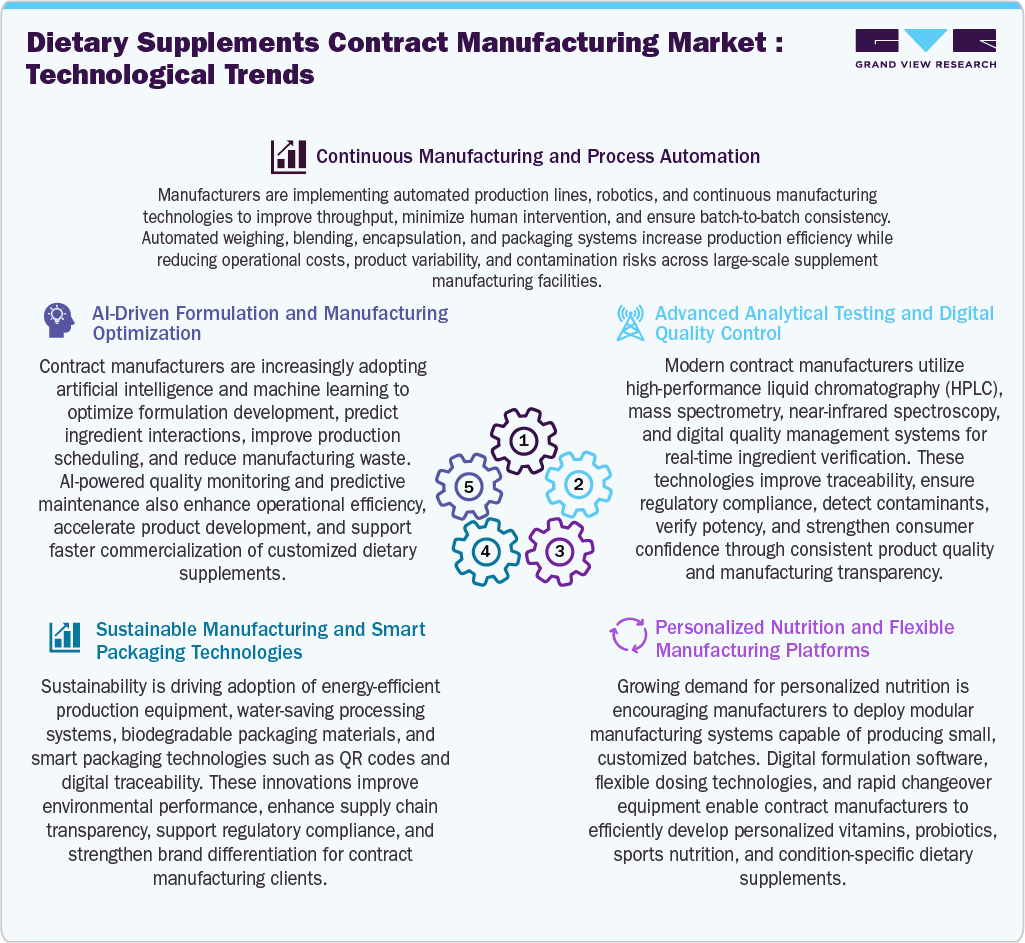
The market is witnessing rapid technological advancement as manufacturers invest in digitalization, automation, and advanced production capabilities to improve efficiency and product quality. In addition, artificial intelligence and machine learning are increasingly used for formulation optimization, demand forecasting, predictive maintenance, and production planning, reducing development timelines and operational costs. Whereas, continuous manufacturing, robotics, and automated blending, encapsulation, and packaging systems enhance productivity while ensuring consistent product quality.
 To learn more about this report, Download Free Sample Report
In addition, advanced analytical technologies, including high-performance liquid chromatography (HPLC), mass spectrometry, and digital quality management systems, enable real-time quality control, ingredient authentication, contaminant detection, and regulatory compliance. Furthermore, rising demand for personalized nutrition is encouraging the adoption of modular and flexible manufacturing platforms capable of producing customized formulations in smaller batches with rapid changeovers. In addition, manufacturers are integrating sustainable production technologies, energy-efficient equipment, environmentally friendly packaging materials, and digital traceability solutions such as QR codes and blockchain-enabled supply chain monitoring. These technological innovations strengthen manufacturing flexibility, improve product transparency, accelerate commercialization, and enhance the global competitiveness of dietary supplements contract manufacturers.
Pricing Model Analysis
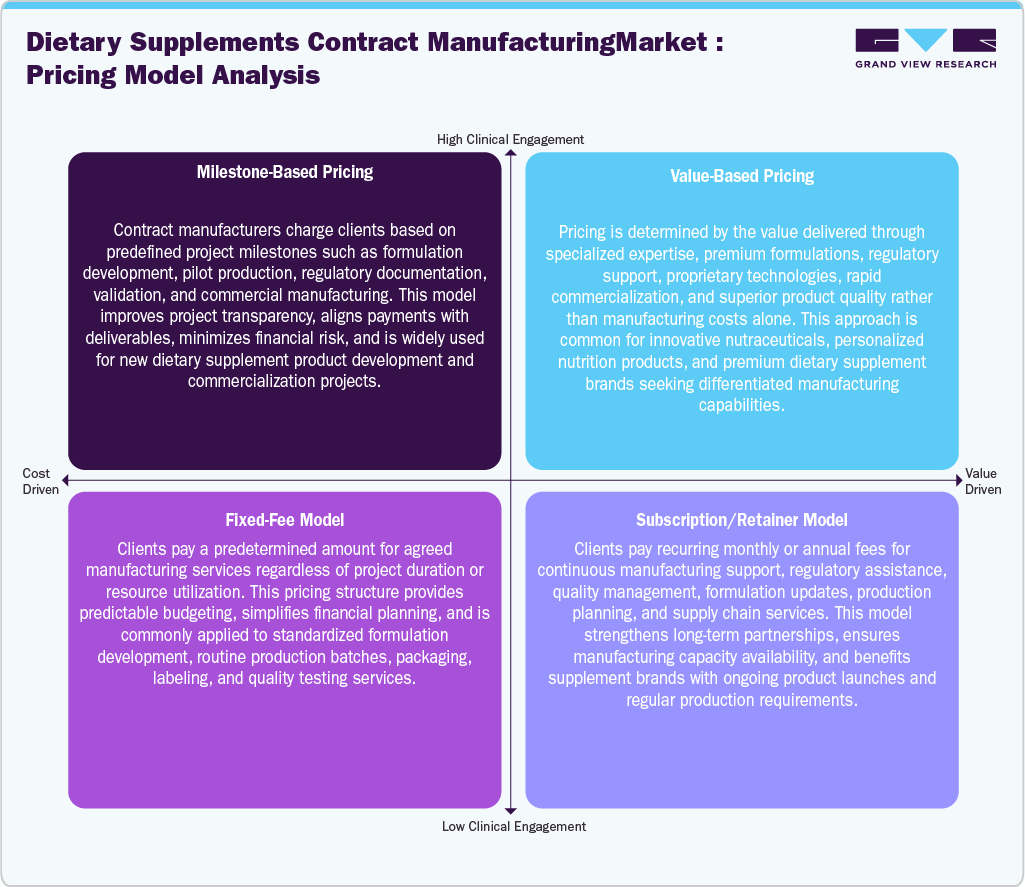
The market utilizes multiple pricing models to accommodate varying client requirements and project complexities. Milestone-based pricing links payments to key development stages such as formulation, pilot production, validation, and commercial manufacturing, ensuring transparency and reducing financial risk. The value-based pricing reflects the specialized expertise, regulatory support, proprietary technologies, and premium manufacturing capabilities that enhance product quality and accelerate commercialization.
 To learn more about this report, Download Free Sample Report
In fixed-fee pricing offers predictable costs for standardized services, including routine manufacturing, packaging, labeling, and quality testing, enabling effective budget planning. Meanwhile, subscription or retainer models provide continuous access to manufacturing, regulatory, quality assurance, and supply chain support through recurring payments, fostering long-term partnerships. These flexible pricing approaches help contract manufacturers serve both emerging supplement brands and established companies while supporting operational efficiency, customer retention, and sustainable business growth.
Product Insights
On the basis of product, the protein & amino acids supplements segment held the largest market share of 34.2% in 2025. The awareness of the importance of maintaining a healthy lifestyle and physical fitness is growing. Consumers, including athletes, fitness enthusiasts, and health-conscious individuals, are seeking protein and amino acid supplements to support their fitness goals, muscle recovery, and overall well-being. The desire to optimize athletic performance and achieve the desired body composition is driving the demand for proteins and amino acid supplements. The demand for plant-based and vegan protein supplements is growing due to various factors, including ethical considerations, environmental concerns, and dietary preferences. For instance, plant-based proteins are gaining popularity as alternatives to animal-derived proteins. The growing number of protein & amino acids supplement brands is expected to fuel the adoption of contract manufacturing services for these products to save costs and increase efficiency. In February 2026, Life Health Foods India launched the So Good High Protein Plant-Based beverage range, delivering 10 g of plant protein per serving to address growing demand for convenient, nutrient-rich, plant-based nutrition and support innovation in functional dietary supplements.
The multivitamin, multi-mineral, and antioxidant supplements segment is anticipated to witness the fastest CAGR during the forecast period. The increasing prevalence of dietary deficiencies due to inadequate nutrient intake or specific dietary restrictions is a key factor driving the market. There is a growing awareness among consumers about the importance of maintaining overall health and well-being. Multivitamins, multi-minerals, and antioxidants are seen as essential components of a balanced diet that can help bridge nutritional gaps. As a result, consumers are turning to supplements to fill potential nutrient gaps and support their health goals. Soigner Pharma is an Indian pharmaceutical as well as a third-party manufacturing company. Its lineup includes contract manufacturing services for multivitamins, multi-minerals, and antioxidant tablets. On the other hand, American Health Foundation, Inc. offers ready-to-brand private-label vitamin and supplement formulas in various delivery forms and dosages.
Dosage Form Insights
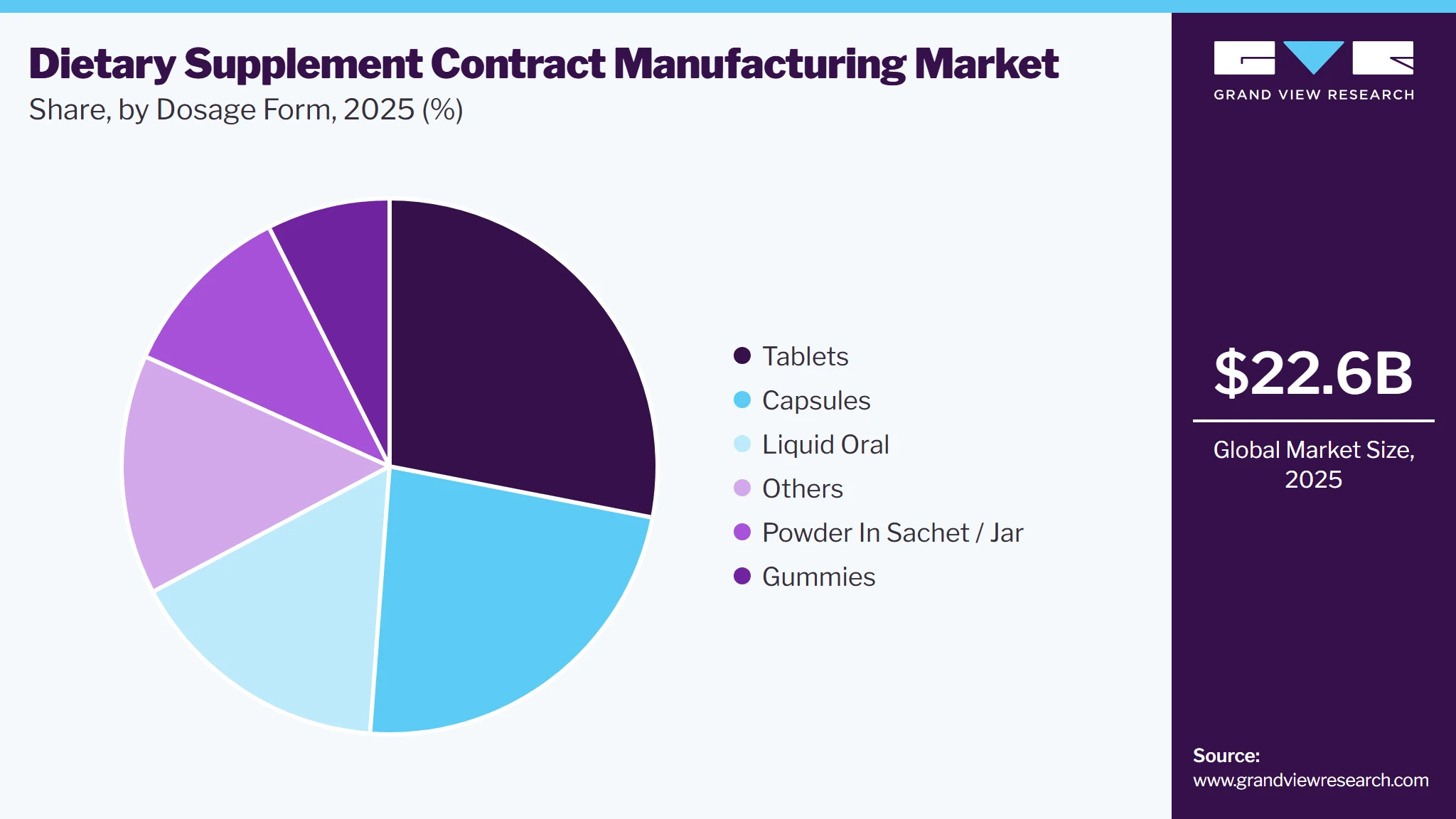
On the basis of dosage form, the tablets segment held the largest market share of 28.0% in 2025. The demand for dietary supplements in tablet form has been increasing due to their convenience, ease of use, and long shelf life. Recent advancements in tablet technology have made it possible to produce tablets with improved disintegration, dissolution, and bioavailability. This has led to an increase in the popularity of tablets as a delivery system for dietary supplements. Tablets are a well-established delivery system for dietary supplements and are widely recognized by regulatory agencies such as the FDA. This makes it easier for contract manufacturers to comply with regulatory requirements and ensures that tablets are safe and effective for consumers. For instance, Gemini Pharmaceuticals is a U.S.-based dietary supplement manufacturer specializing in condition-specific formulations and line extensions for customers across the globe. It offers dosage forms such as tablets & capsules and applications ranging from cognitive health to ayurvedic formulations. The products of the company are FDA registered, routinely audited, cGMP certified, and inspected to 21 CFR Part 211 for dietary supplement manufacturing.
 To learn more about this report, Download Free Sample Report
The gummies segment is expected to grow at the fastest CAGR during the forecast period. The market for gummies and chews is growing rapidly, driven by the increasing demand for dietary supplements in more palatable forms. Consumers are increasingly looking for dietary supplements that are not only effective but also enjoyable to consume. Gummies offer a fun and flavorful way to incorporate vitamins, minerals, and other nutrients into one’s daily routine. As a result, manufacturers are investing in expanding their gummy supplement offerings to cater to this growing demand. Contract manufacturers are responding to this trend by offering a wide range of customization options, including ingredient selection, dosage forms, and packaging, to meet individual/regional consumer preferences.
Regional Insights
The North America dietary supplements contract manufacturing market held a significant share in the global market due to the well-established market, with numerous contract manufacturing companies offering services to brands and businesses. These companies have the necessary infrastructure, regulatory knowledge, and quality standards to ensure the safety & efficient production of dietary supplement products. The dietary supplements contract manufacturing growth in the U.S. and Canada is a key factor contributing to market growth. In addition, the presence of a vast population across these countries with increased obesity levels & lifestyle-related diseases, increased disposable incomes, and shifting trends towards supplements, which offer numerous health benefits beyond basic nutrition, has fueled the market growth.
U.S. Dietary Supplements Contract Manufacturing Market Trends
The dietary supplements contract manufacturing market in the U.S. held a dominant share in North America in 2025. Growing adoption of healthier products & lifestyle has led people to consume more Vitamins, Minerals, and Supplements (VMS) for a holistic approach to their well-being, which is expected to fuel market demand. Consumers are increasingly seeking natural and preventive approaches to maintain their health, which has led to a rise in demand for nutraceutical products. Similarly, growing innovations and launches of dietary supplements in the U.S. are anticipated to fuel the market growth. For instance, in July 2026, Infusd Nutrition expanded its U.S. manufacturing with a 60,000-square-foot New York facility to scale commercial production of water-soluble, shelf-stable functional ingredients. Such an expansion strengthens contract manufacturing capacity, improves formulation capabilities, and supports rising demand for innovative dietary supplements.
The Canada dietary supplements contract manufacturing market is advancing due to rising demand for clinically validated natural health products, supportive Health Canada regulations, and growing consumer preference for science-supported botanical formulations. For instance, in September 2025, Health Canada approved Nutriventia’s Prolanza as a licensed Natural Health Product, strengthening opportunities for contract manufacturers to produce innovative capsules, gummies, tablets, and stick packs. The competitive landscape is characterized by manufacturers expanding formulation expertise, regulatory compliance capabilities, clean-label production, and advanced delivery technologies to attract domestic and international nutraceutical brands.
Europe Dietary Supplements Contract Manufacturing Market Trends
The dietary supplements contract manufacturing market in Europe is driven by strict regulatory standards under EFSA, ensuring high-quality supplement production. The rising demand for vegan, organic, and allergen-free supplements is pushing manufacturers toward sustainable and plant-based formulations. Innovation in sustained-release capsules and bioavailability enhancers is gaining traction among premium brands.
The UK dietary supplements contract manufacturing market is anticipated to grow from a post-Brexit regulatory shift, allowing greater flexibility in innovation and formulation. A surge in e-commerce and direct-to-consumer brands is driving demand for contract manufacturing services. Personalized nutrition and DNA-based supplementation are emerging as key trends, encouraging companies to develop customized solutions.
The dietary supplements contract manufacturing market in Germany held a significant share in 2025. The country is a key hub for contract manufacturing in dietary supplements. The country's focus on scientific validation and high consumer trust in clinically tested supplements drives premium product demand. Herbal and botanical extracts, especially for stress relief and digestion, are seeing high adoption.
Asia Pacific Dietary Supplements Contract Manufacturing Market Trends
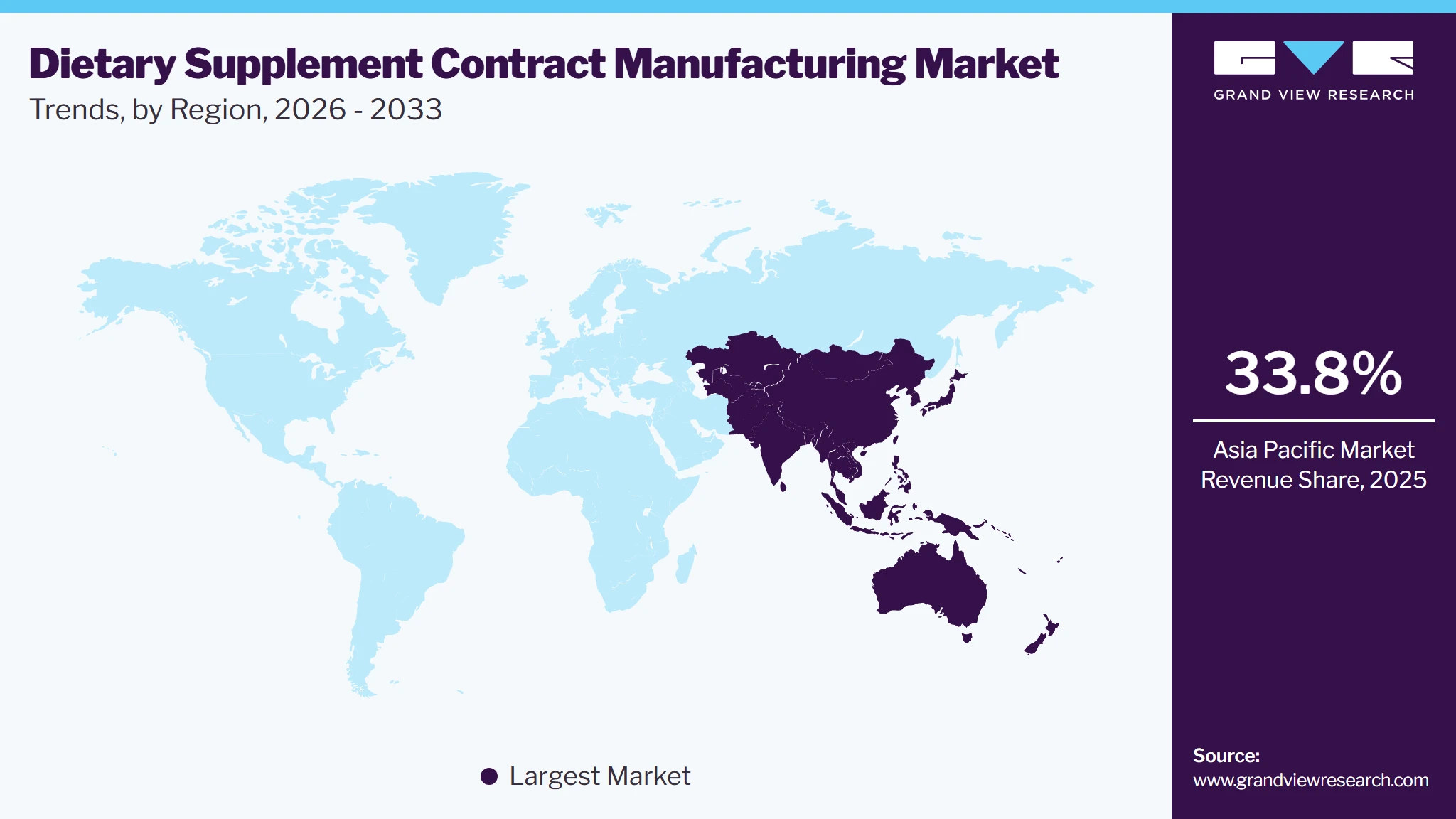
The dietary supplements contract manufacturing market in Asia Pacific dominated the market with a share of 33.8% in 2025. This growth can be attributed to various factors, such as the growing demand for dietary supplement products from various countries, such as China, India, Japan, South Korea, & Australia, and the constantly improving need for contract manufacturing services to meet the production requirements. In addition, increasing awareness about health & wellness, growing intake of health supplements, changing lifestyles, and a growing aging population drive the demand for dietary supplement products. Similarly, this improves the need for contract manufacturing services to meet production requirements.
 To learn more about this report, Download Free Sample Report
The China dietary supplements contract manufacturing market is expected to grow over the forecast period. China is a major country for dietary supplement contract manufacturing in the Asia Pacific. The country's growth is driven by the increasing prevalence of chronic diseases and lifestyle-related health issues, making consumers more conscious about their health. This has led to an increased emphasis on contract manufacturing for developing new, high-quality dietary supplement products that offer unique benefits in reducing the risk of diseases or health conditions.
The dietary supplements contract manufacturing market in Japan is witnessing significant growth due to an aging population seeking functional foods and nutraceuticals for longevity. The FOSHU (Foods for Specified Health Uses) regulatory framework supports innovation and consumer trust in high-quality supplements. Demand for fermented and traditional herbal formulations is increasing, aligning with Japan’s preference for natural health solutions. Companies are investing in precision fermentation and probiotic technology to enhance supplement efficacy.
The India dietary supplements contract manufacturing market is witnessing considerable growth due to surging demand for nutraceuticals, increasing awareness of health and fitness, rising disposable incomes, and a growing obesity & aging population. Furthermore, the adoption of nutraceuticals is growing at a steady pace in India, especially among the population focused on strengthening immunity. Numerous people are consuming herbal and nutraceutical dietary supplements as an alternative to conventional medicine. For instance, in June 2025, Dabur entered the nutraceutical market with Siens, a digital-first wellness brand offering supplements across beauty, gut health, and daily wellness. This launch strengthens premium supplement offerings and expands digital health product accessibility.
Latin America Dietary Supplements Contract Manufacturing Market Trends
The dietary supplements contract manufacturing market in Latin America is driven by increasing middle-class affordability and health awareness. The demand for traditional herbal and plant-based supplements is strong, particularly in countries with a history of natural medicine. Contract manufacturers are expanding facilities to meet the rising demand for immune-boosting and weight management supplements.
The Brazil dietary supplements contract manufacturing marketis experiencing rapid growth due to a fitness-conscious population and demand for sports nutrition. The ANVISA regulatory framework is evolving, allowing for more supplement innovations and streamlined approvals. Increasing consumption of plant-based proteins and functional drinks is driving local contract manufacturers to expand their capabilities. Domestic production incentives are encouraging investment in advanced manufacturing technologies.
Middle East and AfricaDietary Supplements Contract Manufacturing Market Trends
The dietary supplements contract manufacturing market in the MEA region is driven by the growing health awareness, expanding preventive nutrition adoption, increasing government focus on local manufacturing, and rising demand for halal-certified and customized dietary supplements, which are driving the Middle East & Africa dietary supplements contract manufacturing market. Some of the investments, such as AKI’s VetHealth platform and regional production expansions, strengthen manufacturing capabilities. The competitive landscape remains moderately fragmented, with international CDMOs partnering with regional manufacturers to enhance regulatory compliance, supply chain resilience, formulation expertise, and market access across GCC and African countries.
The South Africa dietary supplements contract manufacturing market is witnessing growth due to rising consumer demand for preventive healthcare products, expanding sports nutrition and wellness segments, increasing private-label supplement launches, and growing preference for locally manufactured formulations. Some of the international CDMOs are also entering strategic partnerships with regional brands, encouraging technology transfer, higher quality standards, and broader contract manufacturing opportunities across South Africa.
The dietary supplements contract manufacturing market in the UAE is driven by rising preventive healthcare awareness, strong government nutrition initiatives, expanding private-label supplement demand, and Dubai’s emergence as a regional nutraceutical trade hub. For instance, in January 2026, the launch of Vitafoods Middle East and Africa is expected to strengthen regional sourcing, contract manufacturing partnerships, and technology exchange. In addition, competitive intensity is increasing as international CDMOs, ingredient suppliers, and local manufacturers expand production capabilities, GMP compliance, and customized formulation services to serve the Middle East and Africa markets.
Key Dietary Supplements Contract Manufacturing Companies Insights
Some of the key players operating in the dietary supplement contract manufacturing market are leveraging advanced formulation technologies, sustainable ingredient sourcing, and automation to stay competitive. Companies like CAPTEK Softgel International, NutraScience Labs, and Lonza Group Ltd. are focusing on high-bioavailability delivery systems and personalized nutrition solutions to meet evolving consumer demands. For instance, in January 2026, Robinson Pharma expanded its vegan softgel manufacturing capacity by increasing dedicated production lines, opening an 82,000-square-foot support facility, and hiring over 120 employees to meet rising global demand for plant-based dietary supplements and contract manufacturing services.
Key Dietary Supplements Contract Manufacturing Companies
The following key companies have been profiled for this study on the dietary supplements contract manufacturing market.
-
Ashland
-
Glanbia plc
-
Lonza Group Ltd.
-
CAPTEK Softgel International Inc.
-
Catalent, Inc
-
Trividia Manufacturing Solutions, Inc.
-
Biotrex Nutraceuticals
-
Martinez Nieto.
-
Menadiona
-
NutraScience Labs
-
Nutrivo LLC,
-
Gemini Pharmaceuticals
-
Biovencer Healthcare Pvt Ltd
-
Rain Nutrience
-
Vantage Nutrition (ACG group)
-
LiquidCapsule
-
DCC plc
-
Nature’s Value
-
MPI NutriPharma BV
-
FAVEA Czech Republic (Favea)
-
MediGrün Naturprodukte GmbH (MediGrun)
Competitive Benchmarking
Operating Strategies
Competitive Edge
Weaknesses
Mature Player: Lonza Group Ltd.
- Mature contract manufacturers focus on expanding production capacity, investing in automation, and strengthening global supply chains to improve efficiency and scalability.
- They emphasize regulatory compliance through GMP, NSF, and ISO certifications while offering end-to-end services including formulation, manufacturing, packaging, labeling, and logistics.
- Established manufacturers possess extensive production infrastructure, advanced formulation expertise, and diversified service portfolios that enable rapid commercialization of dietary supplements.
- Their strong regulatory knowledge, validated quality systems, global distribution capabilities, and long-standing relationships with ingredient suppliers provide operational reliability. Large-scale manufacturing lowers production costs through economies of scale, while investments in R&D.
- Large contract manufacturers often face higher operational complexity, slower decision-making, and significant capital expenditure requirements. Their standardized production processes may reduce flexibility for small-batch or highly customized products compared to niche manufacturers.
Emerging Player: Menadiona
- Emerging contract manufacturers focus on niche formulations, personalized nutrition, plant-based supplements, gummies, probiotics, and clean-label products to differentiate themselves.
- They invest in flexible manufacturing lines, digital quality management systems, and regulatory certifications while offering low minimum order quantities, rapid product development, and end-to-end formulation support.
- Emerging players gain a competitive advantage through operational flexibility, customized formulations, faster turnaround times, and strong customer engagement.
- Their ability to serve start-ups and mid-sized supplement brands with smaller production batches, innovative delivery formats, and responsive technical support allows them to compete effectively.
- Emerging manufacturers often face challenges related to limited production capacity, lower brand recognition, and restricted financial resources for technology investments and global expansion.
Recent Developments
-
In May 2026, Robinson Pharma expanded its manufacturing network with a new 183,000-square-foot facility featuring advanced veggie softgel production lines, reinforcing large-scale plant-based supplement capabilities. Such an investment enhances production capacity, shortens lead times, and increases competitive pressure among dietary supplement contract manufacturers serving global brands.
-
In February 2026, Everwell Health consolidated its ingredient portfolio under a unified brand, integrating Nutrition21, Celadrin, DeltaGold, and GG-Gold while launching a centralized digital platform. Such a strategy strengthens portfolio visibility, simplifies customer engagement, and enhances competitive positioning through science-backed functional ingredient offerings in the nutraceutical market.
-
In October 2025, Lonza Capsugel introduced Organicaps, North America’s first USDA-certified organic, plant-based pullulan capsule, offering superior oxygen barrier properties, stability, and clean-label compatibility. Such innovations strengthen organic supplement manufacturing, expands formulation options for contract manufacturers, and intensifies competition in premium nutraceutical encapsulation.
Dietary Supplements Contract Manufacturing Market Report Scope
Report Attribute
Details
Market size in 2025
USD 22.6 billion
Estimated market size in 2026
USD 25.4 billion
Projected market size by 2033
USD 58.9 billion
Growth rate
CAGR of 12.8% from 2026 to 2033
Historical data
2021 - 2025
Forecast period
2026 - 2033
Quantitative units
Revenue in USD billion and CAGR from 2026 to 2033
Report coverage
Revenue forecast, company ranking, competitive landscape, growth factors, and trends
Segments covered
Product, dosage form, region
Regional scope
North America; Europe; Asia Pacific; Latin America; MEA
Country scope
U.S.; Canada; Mexico; Germany; UK; France; Italy; Spain; Norway; Denmark; Sweden; China; Japan; India; South Korea; Australia; Thailand; Brazil; Argentina; Saudi Arabia; South Africa; UAE; Kuwait;
Key companies profiled
Ashland; Glanbia plc; Lonza Group Ltd.; CAPTEK Softgel International, Inc.; Catalent, Inc.; Trividia Manufacturing Solutions, Inc.; Biotrex Nutraceuticals; Martinez Nieto S.A.; Menadiona; NutraScience Labs; Nutrivo LLC; Gemini Pharmaceuticals; Biovencer Healthcare Pvt Ltd.; Rain Nutrience; Vantage Nutrition (ACG group); LiquidCapsule, DCC PLC; Nature’s Value; MPI NutriPharma BV; FAVEA Czech Republic (Favea); MediGrün Naturprodukte GmbH (MediGrun)
Customization scope
Free report customization (equivalent up to 8 analysts' working days) with purchase. Addition or alteration to country, regional & segment scope.
Pricing and purchase options
Avail customized purchase options to meet your exact research needs. Explore purchase options
Dietary Supplements Contract Manufacturing Market Report Segmentation
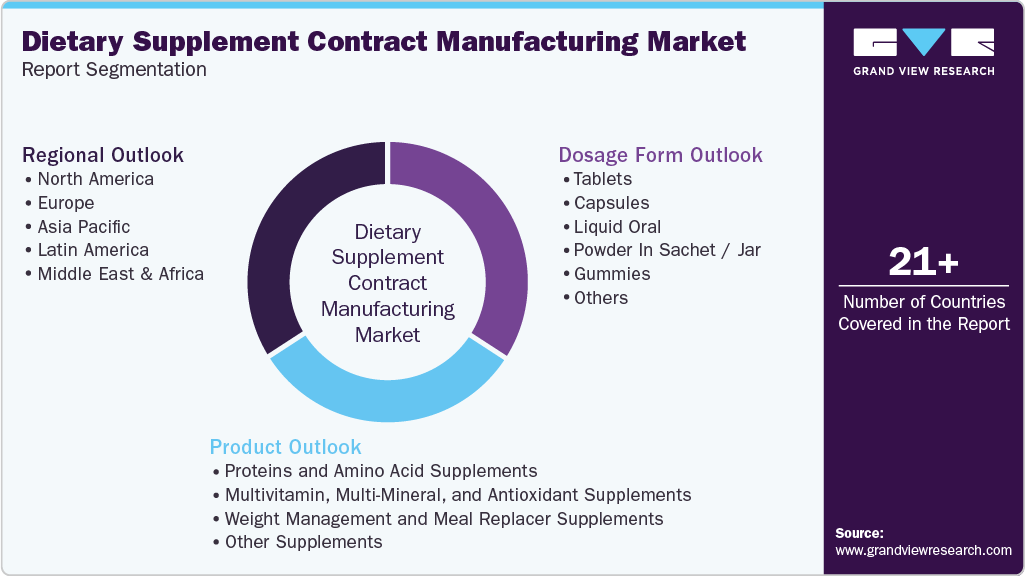
This report forecasts revenue growth at global, regional, and country levels and provides an analysis of the latest industry trends in each of the sub-segments from 2021 to 2033. For this study, Grand View Research has segmented the global dietary supplements contract manufacturing market report based on product, dosage form, and region:
 To learn more about this report, Download Free Sample Report
-
Product Outlook (Revenue, USD Billion, 2021 - 2033)
-
Proteins and Amino Acid Supplements
-
Multivitamin, Multi-Mineral, and Antioxidant Supplements
-
Weight Management and Meal Replacer Supplements
-
Other Supplements
-
-
Dosage Form Outlook (Revenue, USD Billion, 2021 - 2033)
-
Tablets
-
Capsules
-
Liquid Oral
-
Powder In Sachet / Jar
-
Gummies
-
Others
-
-
Regional Outlook (Revenue, USD Billion, 2021 - 2033)
-
North America
-
U.S.
-
Canada
-
Mexico
-
-
Europe
-
UK
-
Germany
-
France
-
Italy
-
Spain
-
Denmark
-
Sweden
-
Norway
-
-
Asia Pacific
-
China
-
Japan
-
India
-
Australia
-
South Korea
-
Thailand
-
-
Latin America
-
Brazil
-
Argentina
-
-
Middle East and Africa (MEA)
-
South Africa
-
Saudi Arabia
-
UAE
-
Kuwait
-
-
Research Methodology
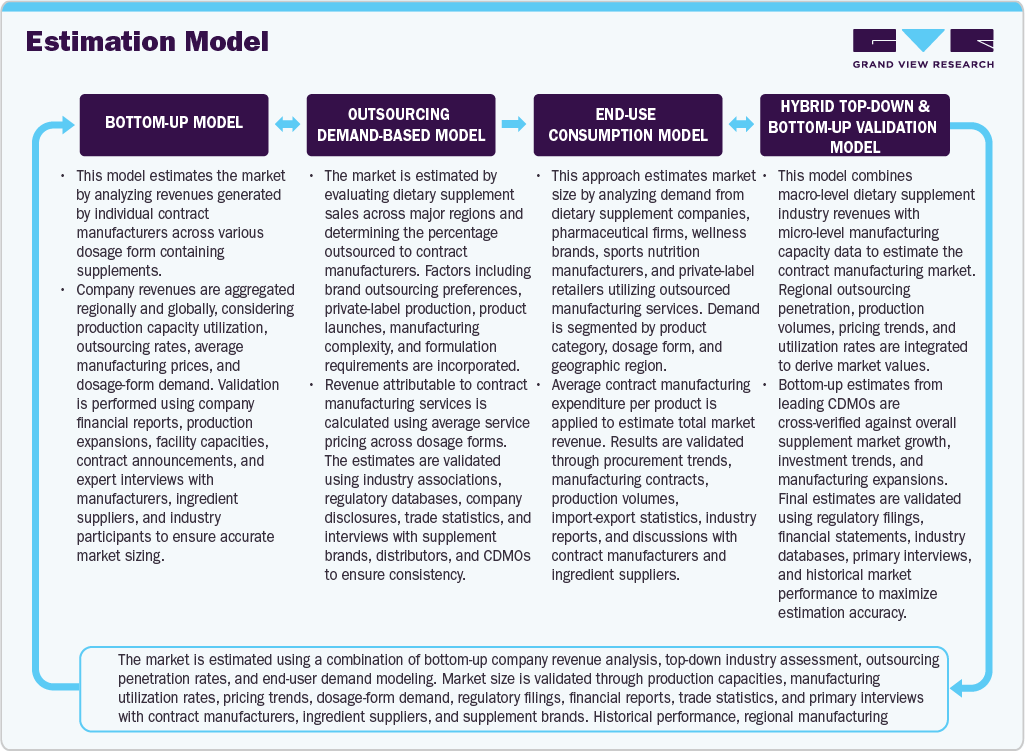
The dietary supplements contract manufacturing market figures in this report are based on a proven research process that combines executive interviews with secondary research from proprietary databases, company filings, and recognized regulatory and institutional sources. Market size is built through value-chain sizing-reconciling supply-side and demand-side estimates-and triangulated with bottom-up and top-down approaches. Every estimate passes multiple levels of expert validation before publication, with each dietary supplements contract manufacturing market segment quantified using the revenue-capture definitions in the table below.
Segment Definition
Segment - Service
Revenue capture definition
Proteins and Amino Acid Supplements
Contract manufacturing of protein powders, amino acid blends, branched-chain amino acids (BCAAs), collagen, and sports nutrition formulations supporting muscle growth, recovery, endurance, metabolism, and overall nutritional supplementation.
Multivitamin, Multi-Mineral, and Antioxidant Supplements
Manufacturing services for formulations containing essential vitamins, minerals, antioxidants, and micronutrients designed to support immunity, bone health, cardiovascular function, energy metabolism, and overall daily nutritional requirements.
Weight Management and Meal Replacer Supplements
Includes contract manufacturing of meal replacement shakes, appetite control supplements, fat metabolism products, metabolism boosters, protein-rich nutrition products, and calorie-controlled formulations supporting healthy weight management programs.
Other Supplements
Covers manufacturing of probiotics, prebiotics, herbal extracts, omega fatty acids, botanical ingredients, joint health, cognitive health, digestive health, beauty supplements, and other specialized nutritional formulations.
Segment - Dosage Form
Revenue capture definition
Tablets
Compressed solid dosage forms manufactured using direct compression or granulation processes, offering precise dosing, extended shelf life, cost-effective production, and suitability for vitamins, minerals, and botanical supplements.
Capsules
Hard gelatin, HPMC, pullulan, and vegetarian capsules are manufactured for powders, granules, or liquids, providing easy swallowing, rapid disintegration, ingredient protection, and flexible formulation capabilities across supplement categories.
Liquid Oral
Includes syrups, suspensions, oral solutions, concentrates, and ready-to-drink formulations designed for enhanced bioavailability, convenient consumption, pediatric applications, and consumers preferring non-solid dietary supplement formats.
Powder in Sachet / Jar
Contract manufacturing of powdered nutritional supplements packaged in sachets, pouches, jars, or tubs, commonly used for proteins, electrolytes, meal replacements, greens, and functional nutrition products.
Gummies
Chewable dietary supplement formulations manufactured using gelatin or plant-based ingredients, delivering vitamins, minerals, botanicals, probiotics, and functional nutrients with improved taste, convenience, and consumer compliance across age groups.
Others
Includes softgels, chewable tablets, lozenges, oral strips, effervescent tablets, sprays, stick packs, and innovative dosage formats developed to improve consumer convenience, ingredient stability, and product differentiation.
 To learn more about this report, Download Free Sample Report
Delivered Customizations
This report has been delivered with the following In-depth customizations
Client Request
Customization Delivered
Value Adds
Technology, innovation, and manufacturing capability assessment
Customized analysis covering advanced encapsulation technologies, continuous manufacturing, automation, AI-enabled quality control, clean-label formulation technologies, plant-based supplement manufacturing, personalized nutrition, sustainable production, traceability systems, and digital manufacturing platforms. The report evaluates commercialization readiness, investment trends, and technology adoption across leading CDMOs globally.
This supports informed technology investments, improves manufacturing efficiency, enhances product quality, accelerates innovation pipelines, reduces operational costs, strengthens regulatory compliance, and enables organizations to align future production capabilities with evolving customer expectations and emerging nutraceutical trends.
Competitive benchmarking and CDMO landscape analysis
Delivered comprehensive profiling of global and regional dietary supplement contract manufacturers, including production capabilities, dosage-form expertise, certifications, facility expansions, technology adoption, strategic partnerships, acquisitions, innovation pipelines, pricing positioning, manufacturing scale, and competitive differentiation. The assessment also compares emerging and established CDMOs to highlight strengths, weaknesses, market positioning, and future competitive threats.
This helps manufacturers benchmark against competitors, identify acquisition or partnership opportunities, evaluate outsourcing partners, understand technology gaps, monitor strategic movements, strengthen competitive positioning, and develop differentiated manufacturing capabilities that improve customer acquisition and long-term profitability.
Regional demand assessment and opportunity mapping
Developed detailed country-level analysis covering North America, Europe, Asia Pacific, Latin America, the Middle East & Africa, with market size estimates, growth drivers, consumer trends, manufacturing capacity, regulatory developments, outsourcing trends, and investment hotspots. The study identifies high-growth countries, evaluates import-export dynamics, and compares mature and emerging nutraceutical manufacturing ecosystems to support regional expansion strategies.
This enables clients to prioritize high-growth countries, allocate investments efficiently, identify manufacturing expansion opportunities, evaluate regional risks, optimize market-entry strategies, strengthen distributor selection, and improve long-term geographic planning using reliable country-specific intelligence rather than broad regional assumptions.
Frequently Asked Questions About This Report
The global dietary supplement contract manufacturing market size was estimated at USD 22.6 billion in 2025 and is expected to reach USD 25.4 billion in 2026.
Some of the key players operating in the dietary supplement contract manufacturing market include Ashland, CAPTEK Softgel International Inc., Catalent, Inc., Trividia Manufacturing Solutions, Inc.
Key factors that are driving the market growth include increasing benefits associated with outsourcing manufacturing processes and expansion of service offerings by contract manufacturers, leading to the development of new dietary supplements,
Asia Pacific dietary supplements contract manufacturing market held the largest share of 33.8% of the global market in 2025.
Based on product, the proteins and amino acid supplements segment held the largest market share of 34.2% in 2025.
Based on dosage form, tablets segment held the largest market share of 28.0% in 2025.
The global dietary supplement contract manufacturing market is expected to grow at a compound annual growth rate of 12.8% from 2026 to 2033 to reach USD 58.9 billion by 2033.
About the Author(s)
Medical Devices Research Team
Healthcare · Medical DevicesThis report was authored by the medical devices research team at Grand View Research - comprising two research analysts, one senior research analyst, and one industry expert - with specialized expertise in the medical devices segment of the healthcare industry. All findings are based on proprietary healthcare databases, executive interviews, and regulatory analysis, subject to internal peer review prior to publication.
Last Updated:
Speak to Analyst

Customize this report to your needs - add regions, segments, or data points, with 20% free customization.
Or view our licence options:


ISO 9001:2015 & 27001:2022 Certified
We are GDPR and CCPA compliant! Your transaction & personal information is safe and secure. For more details, please read our privacy policy.


