
- Home
- »
- Healthcare IT
- »
-
Drug Discovery Platforms Market Size, Growth Report, 2026-2033GVR Report cover

Drug Discovery Platforms Market (2026 - 2033)
Size, Share & Trends Analysis Report By Drug Type (Small Molecule, Large Molecule), By Application (Target Identification, Target Validation), By Therapeutic Area (Oncology, Neurology), By End Use, By Region, And Segment Forecasts
Market Size, 2025
$3.4BMarket Estimate, 2026
$3.9BMarket Forecast, 2033
$10.5BCAGR, 2026–2033
15.1%Drug Discovery Platforms Market Summary
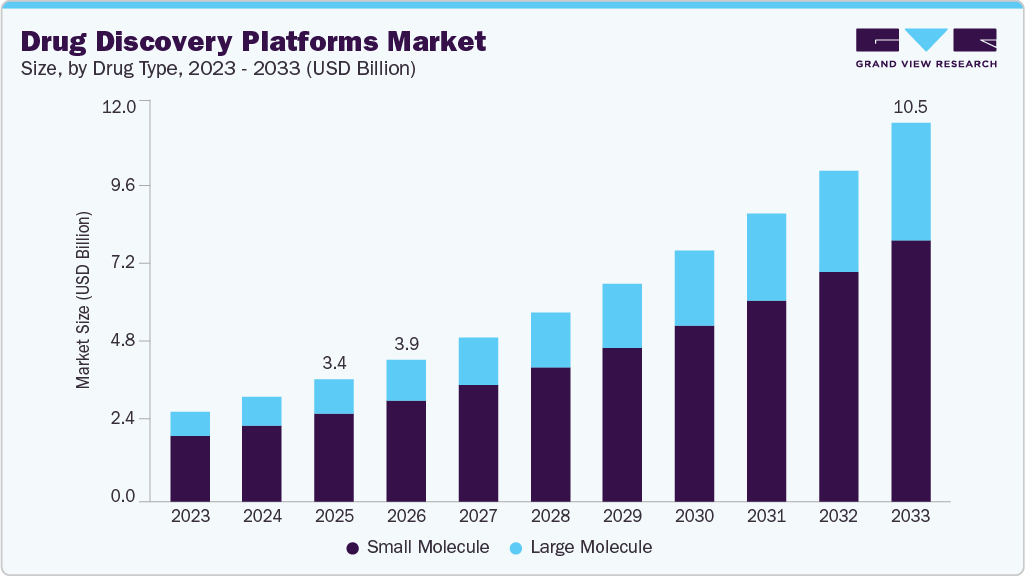
The global drug discovery platforms market size was valued at USD 3.4 billion in 2025 and is projected to grow from USD 3.9 billion in 2026 to USD 10.5 billion by 2033, at a CAGR of 15.1% from 2026 to 2033. North America dominated the global market, accounting for the largest revenue share of 41.0% in 2025. The market growth is driven by several factors, including the increasing adoption of artificial intelligence (AI) and machine learning in drug discovery, rising pharmaceutical and biotechnology R&D investments, growing demand for precision medicine and targeted therapies, and advances in computational drug discovery.
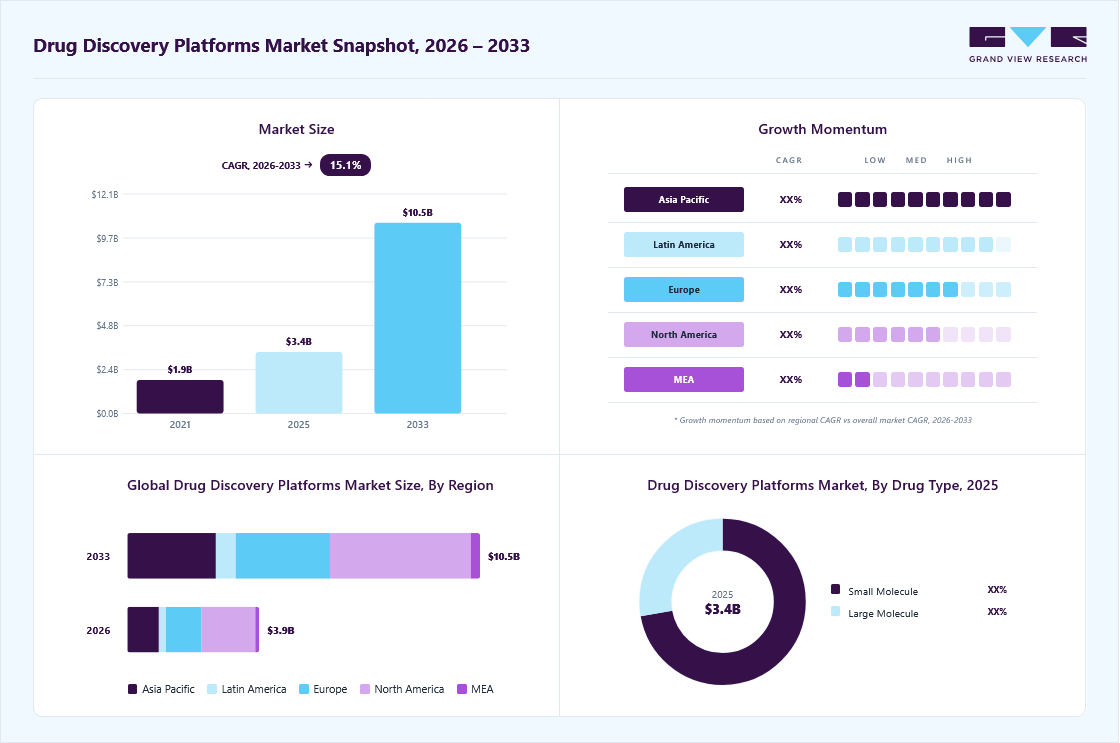 Source: Grand View Research, IR Documents, Primary Interviews, Paid DatabasesTo learn more about this report,
 Download Free Sample Report
Key Market Trends & Insights
- By drug type: Small molecule segment led the market with the largest revenue share of 73.9% in 2025.
- By application: Lead discovery segment held the largest market share of 25.7% in 2025.
- By end use: Biopharmaceutical companies segment held the largest market share in 2025.
Regional Highlights
- Largest regional market: North America (41.0% revenue share, 2025)
- Fastest-growing regional market: Asia Pacific (highest CAGR, 2026-2033)
- By country: The U.S. drug discovery platforms industry is a major contributor to the global market.
Market Size & Forecast
- Market size in 2025: USD 3.4 Billion
- Estimated market size in 2026: USD 3.9 Billion
- Projected market size by 2033: USD 10.5 Billion
- CAGR (2026-2033): 15.1%
Three ways to get this report
Buy it, customize it, or ask a question.Ask an Analyst
Analyst response in 1 business day
- AccessReport author, directly
- Reply timeWithin 1 working day
- No sales callDirect answer only
- FormatEmail reply
- CostFree, no cost
Get the Full Report
What the study covers
- FormatsPDF · Excel · Dashboard
- Timeline2026–2033 annual, 2025 base
- Coverage20+ countries, 5 regions
- Companies10+ key players profiled
Customize the Report
20% free customization
- IncludeCountries, segments, points
- TailorTo your product definition
- ExtendDeeper competitor detail
- OrA fully bespoke study
- Turnaround5–10 working days
The increasing adoption of AI and Machine Learning (ML) in drug discovery workflows is significantly driving the growth of the market. AI and ML-based platforms enable pharmaceutical and biotechnology companies to analyze large biological datasets, identify potential drug targets, and optimize lead compounds with greater speed and accuracy compared to conventional methods. These technologies support virtual screening, predictive toxicology, molecular modeling, and generative drug design, thereby reducing R&D costs and the time to molecule discovery.
 To learn more about this report, Download Free Sample Report
In addition, AI-driven automation reduces clinical trial failure risks and improves decision-making efficiency. The growing demand for faster development of novel therapeutics, such as oncology and rare diseases, is further encouraging the adoption of AI-powered drug discovery platforms across the pharmaceutical industry. For instance, in January 2026, Pierre Fabre Laboratories and Iktos announced a collaboration for AI-driven drug discovery, aimed at developing novel small-molecule oncology therapies by combining computational design, biology, medicinal chemistry, medical science, and preclinical development capabilities.
This collaboration with Iktos marks an important milestone in our journey to build an AI-powered R&D engine at Pierre Fabre Laboratories. By integrating Iktos’ generative AI and automated chemistry technologies into our research platforms, we are taking a step toward realizing our data and AI strategy. This cooperation exemplifies our ambition to leverage cutting-edge innovation to improve the quality and probability of success in drug discovery, while accelerating the delivery of meaningful advances for patients in oncology.
- Audrey Kauffmann, Head of Data Science and Biometry at Pierre Fabre Medical Care R&D
Moreover, the rising demand for precision medicine and targeted therapies supports the growth of the drug discovery platforms market. Precision medicine develops treatments tailored to individual genetic profiles, biomarkers, and disease characteristics. This increases the adoption of AI-enabled drug discovery, genomics, bioinformatics, and multiomics technologies.
Drug discovery platforms support biomarker identification, molecular profiling, and patient stratification. This enables the development of highly targeted and effective therapies for diseases such as cancer, rare disorders, and neurological conditions. Consequently, pharmaceutical and biotechnology companies are increasingly investing in and collaborating on precision medicine-based drug development, supporting market growth. For instance, in March 2025, BostonGene Corporation announced a collaboration with Johnson & Johnson to evaluate biomarkers for colorectal cancer and multiple myeloma using AI-driven molecular profiling in clinical trials.
Similarly, in August 2024, BostonGene Corporation partnered with Takeda Pharmaceutical to evaluate immunotherapies using AI-powered molecular and immune profiling technologies. The collaboration focuses on improving patient selection, identifying predictive biomarkers for treatment response and toxicity, and enhancing clinical trial design through advanced multiomics and bioinformatics analysis. These partnerships aim to enhance patient stratification, optimize treatment selection, and identify predictive biomarkers through advanced molecular analytics.
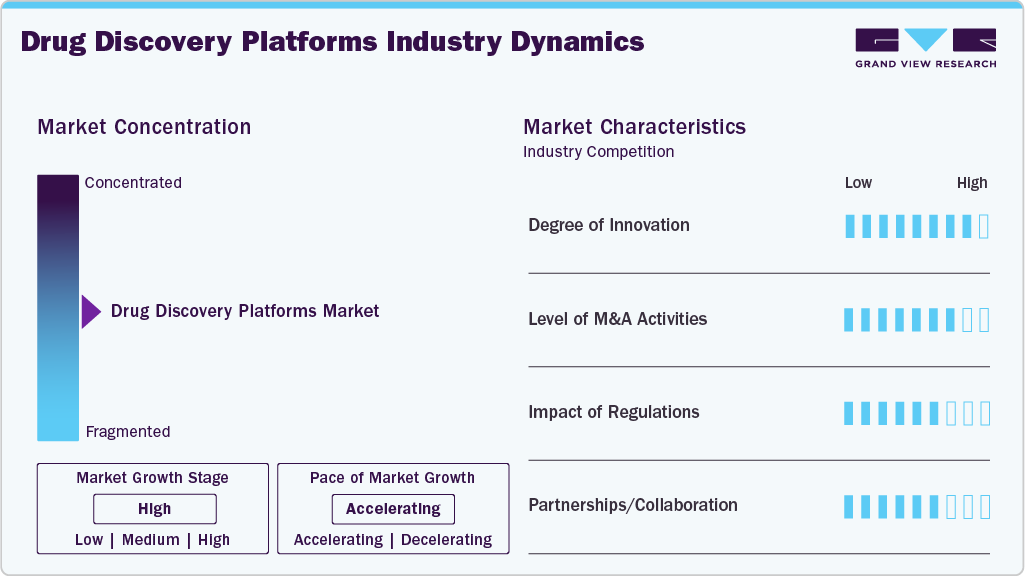
Market Concentration & Characteristics
The degree of innovation in the drug discovery platforms market is high, driven by advancements in AI, machine learning, multiomics, computational biology, and generative AI technologies. Companies are increasingly developing AI-powered platforms for molecular modeling, biomarker identification, virtual screening, and predictive toxicology to accelerate drug development processes. For instance, in November 2025, Insilico Medicine and Eli Lilly and Company entered a research collaboration to advance AI-driven drug discovery using Insilico’s Pharma.AI platform. The goal is to improve capabilities to identify, design, and optimize candidate compounds targeting molecules.
"We are delighted to collaborate with Lilly, a global leader in the pharmaceutical industry, renowned for its commitment to medical innovation. Lilly has been a valued user of our Pharma.AI software suite, and this expanded collaboration further recognizes Insilico's AI-driven drug discovery capabilities while strengthening our longstanding partnership. By joining forces, we are accelerating the development of transformative therapies to address urgent patient needs worldwide."
- Alex Zhavoronkov, PhD, Founder and Co-CEO of Insilico Medicine.
In addition, key players are integrating robotics, automation, and cloud-based analytics into discovery workflows to improve efficiency and reduce development timelines. These technological advancements are significantly transforming traditional drug discovery approaches.
 To learn more about this report, Download Free Sample Report
The level of mergers and acquisitions in the drug discovery platforms market is high, driven by market players seeking to strengthen their capabilities in AI, expand computational drug discovery portfolios, and accelerate precision medicine development. Pharma companies involving in the strategic collaborations and acquisitions to enhance molecular modeling, biomarker discovery, and multiomics analytics capabilities in the therapeutic areas such as oncology, neurology, cardiovascular Diseases and etc. For instance, in January 2026, insitro Inc. announced the acquisition of CombinAbleAI and launched its TherMLplatform to establish a full-stack, modality-agnostic AI platform for drug discovery and therapeutic design. The platform integrates biologics design with small molecule and oligonucleotide capabilities, enabling simultaneous optimization of potency and manufacturability to accelerate clinic-ready drug development and reduce late-stage development risks. Such advancements are driving the global drug discovery platforms market as pharmaceutical and biotech companies increasingly adopt AI-enabled platforms to improve precision, enhance pipeline productivity, and increase the success rate of novel therapeutics.
Regulatory frameworks for drug discovery platforms play a significant role in the market, especially regarding AI validation, biomarker verification, clinical trial compliance, and patient data protection. Agencies are increasingly emphasizing transparency, reliability, and safety in AI-enabled drug development workflows. Regulations on genomic data handling, bioinformatics analysis, and personalized medicine are influencing platform adoption across pharmaceutical companies. Supportive regulatory initiatives for precision medicine and innovative therapies are encouraging investments drug discovery novel technologies globally.
Market players operating in market are expanding their market presence through global collaborations, research partnerships, and regional R&D investments. For instance, in January 2025, Iktos and Cube Biotech announced a strategic collaboration to accelerate small-molecule drug discovery using robotic synthesis platform and advanced protein technologies. Furthermore, multinational pharmaceutical companies are expanding research collaborations across Europe, China, Japan, and India to strengthen precision medicine and computational drug discovery capabilities globally.
Drug Type Insights
Small molecule segment dominated the market, with the largest revenue share of 73.9% in 2025. The growth can be attributed to the widespread use of small molecule therapeutics in the treatment of cancer, cardiovascular diseases, infectious diseases, and neurological disorders. Drug discovery platforms are extensively utilized for virtual screening, molecular modeling, lead optimization, and target identification in small molecule drug development. The increasing integration of AI, computational chemistry, and high-throughput screening technologies is accelerating the identification and optimization of small molecule candidates. In addition, small molecules offer advantages such as oral bioavailability, lower manufacturing complexity, and established regulatory pathways, which continue to support their strong market demand. Pharmaceutical companies are increasingly investing in AI-enabled platforms to improve the efficiency and success rate of small molecule discovery programs.
Large molecule is expected to grow at the fastest CAGR of 16.7% during the forecast period from 2026 to 2033. The growth is due to the rising demand for biologics, monoclonal antibodies, cell therapies, and gene therapies. Drug discovery platforms are being adopted to support biomarker identification, protein engineering, antibody discovery, and multiomics analysis in large molecule drug development. Advances in AI-driven biologics design, genomics, proteomics, and computational biology are improving the development of targeted and personalized therapies. In addition, the adoption of biologic therapeutics is driven by the rising prevalence of chronic diseases, cancer, and autoimmune disorders is increasing the. Pharmaceutical and biotechnology companies are investing more in biologics-focused discovery platforms to accelerate innovation and improve therapeutic efficacy.
Application Insights
The lead discovery segment dominated the drug discovery platforms market with the revenue shares of 25.7% in 2025. This dominance is due to the increasing adoption of artificial intelligence, high-throughput screening, and computational drug discovery technologies for identifying potential drug candidates. Drug discovery platforms are utilized during lead discovery to analyze large biological datasets, perform virtual screening, and optimize lead compounds with improved efficacy and safety profiles. The growing prevalence of cancer, infectious diseases, and chronic disorders has further increased the demand for rapid identification of novel therapeutic molecules. In addition, market players are heavily investing in AI-powered lead generation platforms to reduce drug development timelines and improve research productivity. For instance, in July 2025, Elix Inc. announced that its AI drug discovery platform, Elix Discovery, was adopted by Eisai Co., Ltd to support AI-driven molecular design and lead candidate optimization. Furthermore, the integration of multiomics analysis and molecular modeling technologies is further driving the segment growth.
The target identification segment is expected to grow at the fastest CAGR during the forecast period from 2026 to 2033. This growth is attributed to the increasing adoption of artificial intelligence, genomics, bioinformatics, and multiomics technologies for identifying disease-specific molecular targets and biomarkers. Drug discovery platforms are increasingly being utilized to analyze complex biological datasets, improve understanding of disease pathways, and accelerate the identification of novel therapeutic targets. The rising demand for precision medicine and targeted therapies is further supporting the adoption of advanced target identification technologies across pharmaceutical and biotechnology companies. In addition, growing investments in computational biology, next-generation sequencing (NGS), and molecular profiling are improving the efficiency and accuracy of target discovery workflows. Strategic collaborations between AI-driven biotechnology firms and pharmaceutical companies are also contributing to segment growth.
Therapeutic Area
The oncology segment dominated the drug discovery platforms market with a revenue share of 32.7% in 2025. This is due to the rising global burden of cancer and increasing demand for targeted therapies and precision medicine. Drug discovery platforms are widely used in oncology research for biomarker discovery, molecular profiling, target identification, and AI-driven drug design to accelerate the development of cancer therapeutics. The growing adoption of genomics, proteomics, multiomics analysis, and computational biology is further improving the efficiency of oncology drug discovery workflows. In addition, pharmaceutical and biotechnology companies are heavily investing in AI-enabled platforms and immuno-oncology research to enhance therapeutic outcomes and reduce development timelines.
The digestive system diseases segment is expected to witness the fastest growth during the forecast period from 2026 to 2033. This is due to the increasing prevalence of gastrointestinal disorders, liver diseases, inflammatory bowel disease (IBD), and colorectal cancer. Drug discovery platforms are increasingly being adopted for biomarker analysis, target validation, molecular profiling, and AI-driven therapeutic discovery for digestive disease treatment development. Rising investments in precision medicine, microbiome research, and genomics-based therapeutics are further supporting segment growth. In addition, pharmaceutical companies are utilizing computational biology and high-throughput screening technologies to identify novel treatment targets and improve drug development efficiency. Growing research into personalized therapies for digestive disorders is also contributing to the expansion of this segment.
End Use Insights
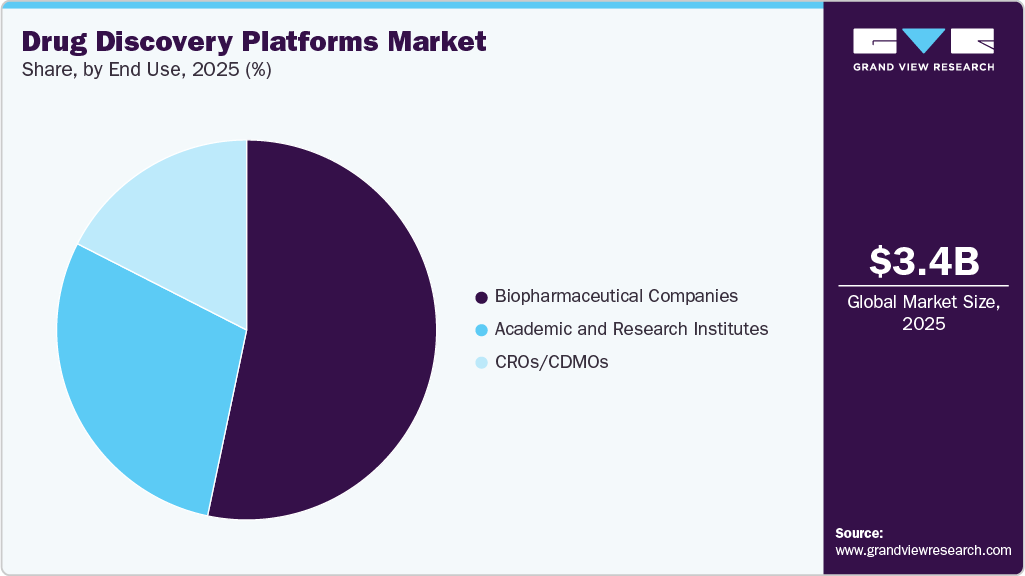
The biopharmaceutical companies segment dominated the market with the largest revenue share of 53.3% in 2025, and is expected to grow at the fastest CAGR over the forecast period 2026 to 2033. This can be attributed to increasing investments in AI-driven drug discovery, genomics, bioinformatics, and precision medicine research. Biopharmaceutical companies extensively utilize drug discovery platforms for lead identification, target validation, biomarker discovery, and molecular profiling to accelerate therapeutic development and improve R&D efficiency. The growing demand for targeted therapies, biologics, and personalized medicines is further increasing the adoption of advanced computational and multiomics-based platforms.
 To learn more about this report, Download Free Sample Report
The academic and research institutes segment accounted for a significant share of the drug discovery platforms market due to increasing research work in genomics, molecular biology, bioinformatics, and biomarker discovery. Academic institutions are adopting AI-enabled drug discovery platforms, assay technologies, and high-throughput screening solutions to support early-stage drug research and disease modeling studies. In addition, growing government funding and collaborations between universities, biotechnology companies, and pharmaceutical firms are accelerating innovation in precision medicine and computational drug discovery. Research institutes are also focusing on multiomics analysis and translational research to improve understanding of disease mechanisms and identify therapeutic targets. These factors are contributing to the steady growth of the segment globally.
Regional Insights
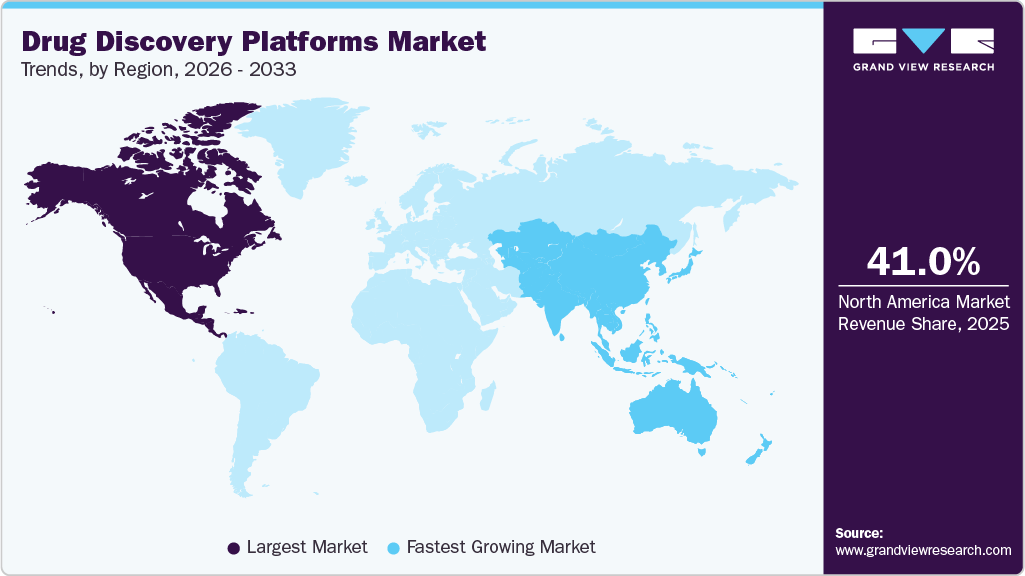
North America dominated the drug discovery platforms market, with the largest share of 41.0% in 2025. The dominance is due to the strong presence of pharmaceutical and biotechnology companies, advanced healthcare infrastructure, and increasing adoption of AI-based drug discovery technologies. The region is witnessing significant investments in precision medicine, genomics, bioinformatics, and computational biology to accelerate therapeutic development and improve clinical outcomes. For instance, in December 2025, Illumina, Inc. invested in MyOme to support AI-integrated whole-genome sequencing and bioinformatics-driven risk modeling for precision healthcare applications. In addition, growing collaborations between pharmaceutical companies, AI startups, and research institutions are further supporting market growth.
 To learn more about this report, Download Free Sample Report
U.S. Drug Discovery Platforms Market Trends
The drug discovery platforms market in U.S. is driven by increasing adoption of AI, genomics, bioinformatics, and precision medicine technologies in pharmaceutical research. The presence of leading biotechnology and pharmaceutical companies, along with high R&D investments, is supporting market expansion across the country. In addition, growing collaborations between AI-based drug discovery firms and pharmaceutical companies are accelerating the development of novel therapeutics and personalized medicines. Rising investments in high-throughput screening, molecular profiling, and computational drug discovery platforms are driving the growth of market growth.
Europe Drug Discovery Platforms Market Trends
The growth in the drug discovery platforms market in Europe is due to increasing investment in precision medicine, genomics, bioinformatics, assay technologies, and high-throughput screening solutions. There is also growing adoption of AI-enabled molecular profiling, multiomics analysis, and computational drug discovery platforms across pharmaceutical and biotechnology companies in the region. For instance, in September 2023, Exscientia plc announced an AI-driven drug discovery collaboration with Merck KGaA focused on developing novel small-molecule drug candidates for oncology, neuroinflammation, and immunology. The partnership combines Exscientia’s precision AI drug design platform with Merck’s disease expertise and clinical development capabilities to address complex drug discovery challenges. In addition, rising research collaborations between academic institutes and biopharmaceutical firms support advancements in biomarker discovery and personalized therapeutics development.
The drug discovery platforms market in Germany is growing significantly because of rising investments in genomics, bioinformatics, omics-based research, assay technologies, and high-throughput screening solutions. A strong pharmaceutical and biotechnology ecosystem supported by advanced research institutes and collaborations between academia and industry drives this growth. Increasing adoption of AI-powered molecular modeling, sequence analysis platforms, and computational drug discovery technologies is driving the market growth. For instance, in December 2023, Merck KGaA launched ADDISON drug discovery software, the first software-as-a-service (SaaS) platform to integrate virtual molecule design with real-world manufacturability through the Synthia retrosynthesis API. The platform combines machine learning, generative AI, and computer-aided drug design to accelerate new drug development.
The drug discovery platforms market in UK is driven by increasing adoption of artificial intelligence, genomics, bioinformatics, and computational drug discovery technologies. The country has a strong biotechnology and life sciences ecosystem supported by leading research institutions, government funding initiatives, and pharmaceutical collaborations. Rising investments in precision medicine, multiomics research, assay technologies, and high-throughput screening platforms are accelerating drug development activities across the region.
Asia Pacific Drug Discovery Platforms Market Trends
The Asia Pacific market is the fastest growing region over the forecast period from 2026 to 2033, due to increasing investments in pharmaceuticals, genomics, bioinformatics, assay technologies, and high-throughput screening solutions across countries such as China, Japan, India, and South Korea. The region is experiencing rising adoption of artificial intelligence (AI), multiomics analysis, and computational drug discovery platforms to accelerate pharmaceutical research and precision medicine development. In addition, growing government support, expanding clinical research activities, and increasing collaborations between pharmaceutical companies and AI-based biotechnology firms are driving regional market expansion. The presence of emerging biotech startups and improving healthcare research infrastructure are further supporting the adoption of advanced drug discovery technologies across the Asia Pacific region.
The drug discovery platforms market in China is represent the significant growth over the forecast period due to increasing investments in artificial intelligence (AI), genomics, bioinformatics, high-throughput screening, and precision medicine research. The country is rapidly expanding its biotechnology and pharmaceutical R&D infrastructure, supported by favorable government initiatives and rising healthcare innovation funding. Chinese pharmaceutical and biotechnology companies are increasingly adopting AI-powered molecular modeling, multiomics analysis, and computational drug discovery technologies to accelerate therapeutic development. In addition, growing collaborations between domestic biotech firms and global pharmaceutical companies are supporting advancements in biomarker discovery and personalized medicine. The increasing presence of AI-driven drug discovery companies such as XtalPi Holdings Limited is further strengthening market growth in China. For instance, in August 2025, XtalPi Holdings Limited and DoveTree Medicines entered a USD 6 billion AI-driven drug discovery collaboration focused on developing small molecule and antibody therapeutics for oncology, autoimmune, CNS, and metabolic diseases. The partnership utilizes XtalPi’s integrated AI and robotics-enabled drug discovery platform to accelerate molecular design, target identification, and therapeutic development in China.
Latin America Drug Discovery Platforms Market Trends
The drug discovery platforms market in Latin America is witnessing growth due to increasing investments in biotechnology research, genomics, bioinformatics, and precision medicine initiatives across countries such as Brazil, and Argentina. The region is experiencing rising adoption of AI-enabled drug discovery platforms, assay technologies, and high-throughput screening solutions to support pharmaceutical R&D activities. In addition, expanding collaborations between regional research institutes and global pharmaceutical companies are enhancing capabilities in molecular profiling and computational drug discovery. Government initiative in healthcare innovation and improving clinical research infrastructure are further contributing to market growth across Latin America.
Middle East & Africa Drug Discovery Platforms Market Trends
The drug discovery platforms market Middle East & Africa is driven by increasing investments in biotechnology research, genomics, bioinformatics, assay technologies, and precision medicine initiatives. Countries such as Saudi Arabia, the UAE, and South Africa are expanding healthcare research infrastructure and adopting AI-enabled drug discovery, molecular profiling, and high-throughput screening technologies to strengthen pharmaceutical R&D capabilities.
Key Drug Discovery Platforms Company Insights
The companies in the drug discovery platforms market are involved in various strategic initiatives, such as partnerships, product launches, and merger & acquisitions. Some of the strong players in the drug discovery platforms market are Schrödinger, Inc., Recursion Pharmaceuticals, Inc. Insilico Medicine, Atomwise, Inc. These companies offer a wide range of drug discovery platforms and technologies, including AI-driven molecular modeling, genomics, bioinformatics, high-throughput screening, biomarker discovery, and computational drug discovery solutions to support pharmaceutical and biotechnology research activities.
Key Drug Discovery Platforms Companies:
The following key companies have been profiled for this study on the drug discovery platforms market.
- Schrödinger, Inc.
- Certara
- Optibrium Ltd
- Insilico Medicine
- Atomwise, Inc.
- XtalPi Holdings Limited
- Dassault Systèmes SE
- Genedata AG
- Relay Therapeutics, Inc.
- Recursion Pharmaceuticals, Inc.
- insitro Inc.
- Merck KGaA
Recent Developments
-
In January 2026, Bayer and Cradle have entered into a three-year strategic collaboration to leverage Cradle’s scientific AI platform for protein engineering, integrating generative AI into Bayer’s R&D workflows to strengthen lead generation and optimize its therapeutic antibody pipeline. This partnership highlights the growing adoption of AI-driven platforms in pharmaceutical research, accelerating target identification, reducing development timelines, and improving success rates in biologics development thereby driving innovation and growth in the global drug discovery market through enhanced efficiency and data-driven decision-making.
-
In November 2025, Insilico Medicine entered a research and licensing collaboration with Eli Lilly to co-discover and advance novel therapies using Insilico’s Pharma.AI platform. Insilico is anticipated to generate, design, and optimize compounds for Lilly-defined targets.
“We are delighted to collaborate with Lilly, a global leader in the pharmaceutical industry, renowned for its commitment to medical innovation. Lilly has been a valued user of our Pharma.AI software suite, and this expanded collaboration further recognizes Insilico’s AI-driven drug discovery capabilities while strengthening our longstanding partnership. By joining forces, we are accelerating the development of transformative therapies to address urgent patient needs worldwide.”
- Alex Zhavoronkov, PhD, Founder and Co-CEO of Insilico Medicine.
-
In October 2024, Exscientia plc introduced an AWS AI-powered platform to strengthen its end-to-end drug discovery and automation capabilities. By integrating advanced AI models with AWS’s secure and scalable cloud infrastructure, the company aims to design and optimize drug candidates for specific diseases and patient groups while cutting down development time and early-stage research costs. This initiative supports the drug discovery market by speeding up target identification, enhancing compound screening, reducing research expenses, and promoting innovation through AI-driven automation in pharmaceutical development.
-
In November 2023, Insilico Medicine expanded its end-to-end Pharma.AI platform with new features, including chat functionality, off-target screening, and enhanced knowledge graphs, presented via three webinars on PandaOmics 4.0 (target discovery), Chemistry42 3.0 (generative design), and inClinico 2.0 (clinical trial prediction).
Drug Discovery Platforms Market Report Scope
Report Attribute
Details
Market size in 2025
USD 3.4 billion
Estimated Market size in 2026
USD 3.9 billion
Projected Market size by 2033
USD 10.5 billion
Growth rate
CAGR of 15.1% from 2026 to 2033
Actual data
2021 - 2025
Forecast period
2026 - 2033
Quantitative units
Revenue in USD million/billion and CAGR from 2026 to 2033
Report coverage
Revenue forecast, company ranking, competitive landscape, growth factors, and trends
Segments covered
Drug type, application, therapeutic area, end use, region
Regional scope
North America; Europe; Asia Pacific; Latin America; MEA
Country scope
U.S.; Canada; Mexico; UK; Germany; Spain; France; Italy; Spain; Denmark; Sweden; Norway; China; Japan; India; Australia; South Korea; Thailand; Brazil; Mexico; Argentina; South Africa; Saudi Arabia; UAE; Kuwait
Key companies profiled
Schrödinger, Inc.; Certara; Optibrium Ltd; Insilico Medicine; Atomwise, Inc.; XtalPi Holdings Limited; Dassault Systèmes SE; Genedata AG; Relay Therapeutics, Inc.; Recursion Pharmaceuticals, Inc.; insitro Inc.; Merck KGaA
Customization scope
Free report customization (equivalent up to 8 analysts working days) with purchase. Addition or alteration to country, regional & segment scope.
Pricing and purchase options
Avail customized purchase options to meet your exact research needs. Explore purchase options
Global Drug Discovery Platforms Market Report Segmentation
This report forecasts revenue growth and provides at the global, regional, and country levels an analysis of the latest trends in each of the sub-segments from 2021 to 2033. For this report, Grand View Research has segmented the global drug discovery platforms market report based on drug type, application, therapeutic area, end use, and region:
-
Drug Type Outlook (Revenue, USD Million, 2021 - 2033)
-
Small Molecule
-
Large Molecule
-
-
Application Outlook (Revenue, USD Million, 2021 - 2033)
-
Target Identification
-
Target Validation
-
Lead Discovery
-
Lead Optimization
-
Preclinical Testing
-
Other (including Clinical Trials)
-
-
Therapeutic Outlook (Revenue, USD Million, 2021 - 2033)
-
Oncology
-
Neurology
-
Cardiovascular Diseases
-
Infectious and Immune System Diseases
-
Digestive System Diseases
-
Other (Respiratory Diseases, Diabetes)
-
-
End Use Outlook (Revenue, USD Million, 2021 - 2033)
-
Biopharmaceutical Companies
-
Academic and Research Institutes
-
CROs/CDMO
-
-
Regional Outlook (Revenue, USD Million, 2021 - 2033)
-
North America
-
U.S.
-
Canada
-
Mexico
-
-
Europe
-
UK
-
Germany
-
France
-
Italy
-
Spain
-
Denmark
-
Sweden
-
Norway
-
-
Asia Pacific
-
Japan
-
China
-
India
-
Australia
-
South Korea
-
Thailand
-
-
Latin America
-
Brazil
-
Argentina
-
-
Middle East & Africa
-
South Africa
-
Saudi Arabia
-
UAE
-
Kuwait
-
-
Frequently Asked Questions About This Report
Small molecule segment led with a 73.9% revenue share in 2025, while large molecule is the fastest-growing segment.
Lead discovery segment held the largest revenue share 25.7% in 2025, while target identification is the fastest-growing area.
Biopharmaceutical segment held the largest share (over 53.3%) in 2025.
The global drug discovery platforms market size was estimated at USD 3.4 billion in 2025 and is expected to reach USD 3.9 billion in 2026
The global drug discovery platforms market is expected to grow at a compound annual growth rate of 15.1% from 2026 to 2033 to reach USD 10.5 billion by 2033
North America dominated the drug discovery platforms market with a share of 41.0% in 2025.
Some key players operating in the drug discovery platforms market include Schrödinger, Inc., Certara, Optibrium Ltd, Insilico Medicine, Atomwise, Inc., XtalPi Holdings Limited, Dassault Systèmes SE, Genedata AG, Relay Therapeutics, Inc., Recursion Pharmaceuticals, Inc., insitro Inc., Merck KGaA
Key factors that are driving the market growth include increasing adoption of artificial intelligence (AI) and machine learning technologies in drug discovery, rising pharmaceutical and biotechnology R&D investments, and growing demand for precision medicine and targeted therapies.
About the Author(s)
Healthcare IT Research Team
Healthcare · Healthcare ITThis report was authored by the healthcare it research team at Grand View Research - comprising two research analysts, one senior research analyst, and one industry expert - with specialized expertise in the healthcare it segment of the healthcare industry. All findings are based on proprietary healthcare databases, executive interviews, and regulatory analysis, subject to internal peer review prior to publication.
Last Updated:
Speak to Analyst

Customize this report to your needs - add regions, segments, or data points, with 20% free customization.
Or view our licence options:


ISO 9001:2015 & 27001:2022 Certified
We are GDPR and CCPA compliant! Your transaction & personal information is safe and secure. For more details, please read our privacy policy.


