
- Home
- »
- Advanced Interior Materials
- »
-
Earthquake-Resistant Building Materials Market Report, 2033GVR Report cover

Earthquake-Resistant Building Materials Market (2026 - 2033)
Size, Share & Trends Analysis Report By Material Type (Reinforced Concrete, Structural Steel, Others), By End Use (Residential, Non-residential), By Region, And Segment Forecasts
Market Size, 2025
$29.4BMarket Estimate, 2026
$31.2BMarket Forecast, 2033
$47.5BCAGR, 2026–2033
6.2%Earthquake-Resistant Building Materials Market Summary
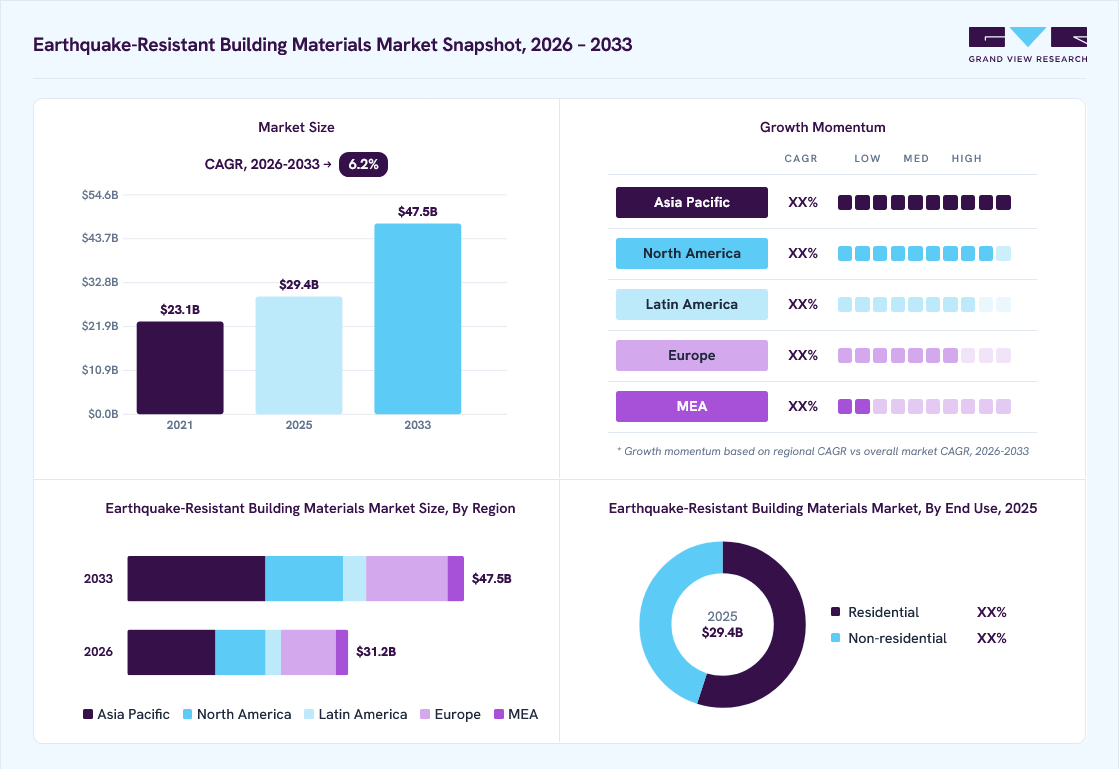
The global Earthquake-Resistant building materials market size was valued at USD 29.4 billion in 2025 and is projected to grow from USD 31.2 billion in 2026 to USD 47.5 billion by 2033, at a CAGR of 6.2% from 2026 to 2033. The market in Asia Pacific dominated with a revenue share of 39.7% in 2025. Governments are implementing stricter building codes and seismic regulations worldwide, compelling builders and developers to adopt advanced materials capable of withstanding seismic forces.
 Source: Grand View Research, IR Documents, Primary Interviews, Paid DatabasesTo learn more about this report,
 Download Free Sample Report
 Key Market Trends & Insights
- By material type: Reinforced concrete segment held the largest market share of 39.7% in 2025.
- By end use: Residential segment held the largest market share of 54.9% in 2025.
Regional Highlights
- Largest regional market: Asia Pacific (39.7% revenue share, 2025)
- By country: China held the largest market share in 2025
Market Size & Forecast
- Market size in 2025: USD 29.4 Billion
- Estimated market size in 2026: USD 31.2 Billion
- Projected market size by 2033: USD 47.5 Billion
- CAGR (2026-2033): 6.2%
Three ways to get this report
Buy it, customize it, or ask a question.Ask an Analyst
Analyst response in 1 business day
- AccessReport author, directly
- Reply timeWithin 1 working day
- No sales callDirect answer only
- FormatEmail reply
- CostFree, no cost
Get the Full Report
What the study covers
- FormatsPDF · Excel · Dashboard
- Timeline2026–2033 annual, 2025 base
- Coverage20+ countries, 5 regions
- Companies10+ key players profiled
Customize the Report
20% free customization
- IncludeCountries, segments, points
- TailorTo your product definition
- ExtendDeeper competitor detail
- OrA fully bespoke study
- Turnaround5–10 working days
This regulatory push, combined with a rising awareness of earthquake risks among homeowners and public sectors, has accelerated the use of specialized materials such as high-strength steel, reinforced concrete, and fiber-reinforced composites in both new constructions and retrofitting projects. The residential and infrastructure sectors, including bridges and transportation hubs, are significant contributors to this growing demand due to their critical role in community safety and disaster resilience.Technological advancements and innovation also play a crucial role in market expansion. The development of new material technologies, such as shape-memory alloys, self-healing concrete, and fiber-reinforced polymers, enhances the ability of buildings to absorb and dissipate seismic energy effectively. Alongside these, the integration of digital construction technologies like Building Information Modeling (BIM) and real-time structural health monitoring through IoT sensors helps optimize the design and maintenance of earthquake-resistant structures. The increasing use of prefabricated and modular building systems that incorporate these innovative materials accelerates construction timelines and improves seismic performance, driving market growth, especially in rapidly urbanizing economies.
 To learn more about this report, Download Free Sample Report
 Economic factors also contribute significantly to market dynamics. Economic recovery post-pandemic has led to increased capital investment in infrastructure development globally, with many governments prioritizing resilient infrastructure as a key economic stimulus. Incentive programs and public-private partnerships focus on enhancing the seismic resilience of urban centers, driving the demand for earthquake-resistant materials. In emerging markets, where urban development is rapid and often in high-risk seismic zones, this has resulted in heightened construction activities that embrace these materials for safety and longevity. Consequently, the market is expected to witness sustained growth as infrastructure modernization and urban population expansion continue.
Market Dynamics
The earthquake-resistant building materials market is expanding steadily as governments, developers, and infrastructure authorities prioritize resilient construction to reduce structural damage and improve public safety in seismic regions. Increasing urbanization, stringent building regulations, and growing investments in resilient infrastructure are driving the adoption of high-performance concrete, structural steel, engineered wood, fiber-reinforced composites, seismic isolation systems, and advanced reinforcement materials. Technological innovations in material science, coupled with rising awareness of disaster preparedness, are further strengthening market growth across residential, commercial, and critical infrastructure projects.
Governments across earthquake-prone regions are increasing investments in resilient infrastructure to minimize economic losses and protect human lives. Public infrastructure projects, including hospitals, schools, bridges, airports, and transportation networks, are increasingly incorporating earthquake-resistant materials that offer higher structural strength, flexibility, and energy dissipation. Growing reconstruction activities following major seismic events are also accelerating demand for advanced construction materials.
In addition, stricter seismic building regulations and continuously updated engineering standards are encouraging architects, contractors, and developers to adopt certified earthquake-resistant materials. Compliance with these regulations has become essential for obtaining project approvals, particularly in high-risk seismic zones. As resilience becomes a key consideration in construction planning, the demand for innovative structural materials continues to rise globally.
The adoption of earthquake-resistant building materials is often constrained by their higher initial costs compared to conventional construction materials. Advanced composites, seismic dampers, base isolation systems, and specialized reinforcement products require greater investment in materials, engineering expertise, and installation. Budget limitations, particularly in developing economies and small-scale construction projects, may delay the adoption of these advanced solutions.
The increasing focus on sustainable construction presents significant opportunities for manufacturers of earthquake-resistant building materials. The development of low-carbon concrete, engineered timber, recycled steel, high-performance composites, and smart materials that combine structural resilience with environmental benefits is creating new growth avenues. Rising investments in green buildings, resilient urban development, and next-generation construction technologies are expected to further accelerate market expansion while supporting long-term infrastructure sustainability.
Market Concentration & Characteristics
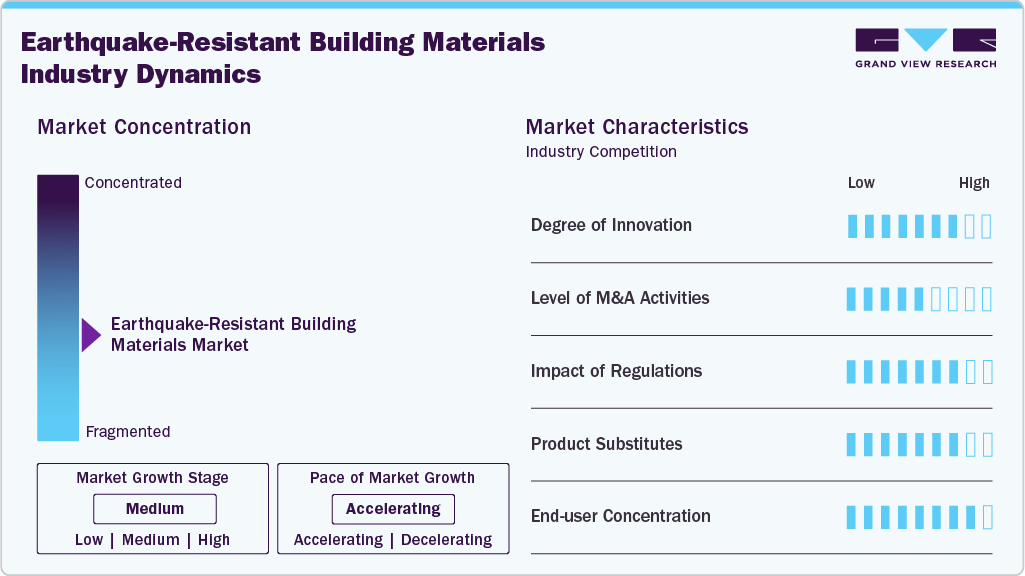
The earthquake-resistant building materials industry exhibits a moderate to high market concentration, characterized by the presence of several key global players specializing in advanced construction chemicals, steel products, and composite solutions. Innovation is a significant market characteristic, with continuous research focused on developing smart materials such as fiber-reinforced polymers, self-healing concrete, and shape-memory alloys that enhance seismic performance and durability.
The competitive landscape is also shaped by ongoing mergers and acquisitions aimed at expanding product portfolios and geographic footholds, alongside strategic collaborations that foster technological advancements. Regulatory frameworks, including stringent building codes like the International Building Code (IBC) and various national seismic standards, substantially impact market dynamics by mandating the use of certified earthquake-resistant materials, thus driving industry compliance and innovation.
 To learn more about this report, Download Free Sample Report
 Service substitutes in this market are limited due to the specialized nature of earthquake-resistant materials, as conventional construction materials do not offer equivalent performance under seismic stress. Consequently, end-user concentration is notable among residential, commercial, industrial, and critical infrastructure sectors, each demanding tailored solutions to meet safety and regulatory requirements. Residential users, particularly in retrofitting projects, create significant demand alongside large-scale infrastructure developments such as bridges, tunnels, and transportation hubs that prioritize resilience. The industry's reliance on certification and regulatory approvals ensures high entry barriers, fostering market stability but also emphasizing the importance of continuous innovation and compliance.
Analyst Perspective
The earthquake-resistant building materials market is evolving from a conventional construction materials industry into a technology-driven market focused on high-performance structural materials, advanced reinforcement systems, seismic isolation technologies, fiber-reinforced composites, and sustainable building solutions. Growth is being supported by increasing investments in resilient infrastructure, urban development, stricter seismic building codes, and rising demand for disaster-resilient construction. End users increasingly demand materials that offer superior strength, ductility, durability, and faster construction while minimizing lifecycle costs. Innovation is centered on advanced material engineering, low-carbon construction materials, smart structural systems, and seismic performance optimization.
Material Type Insights
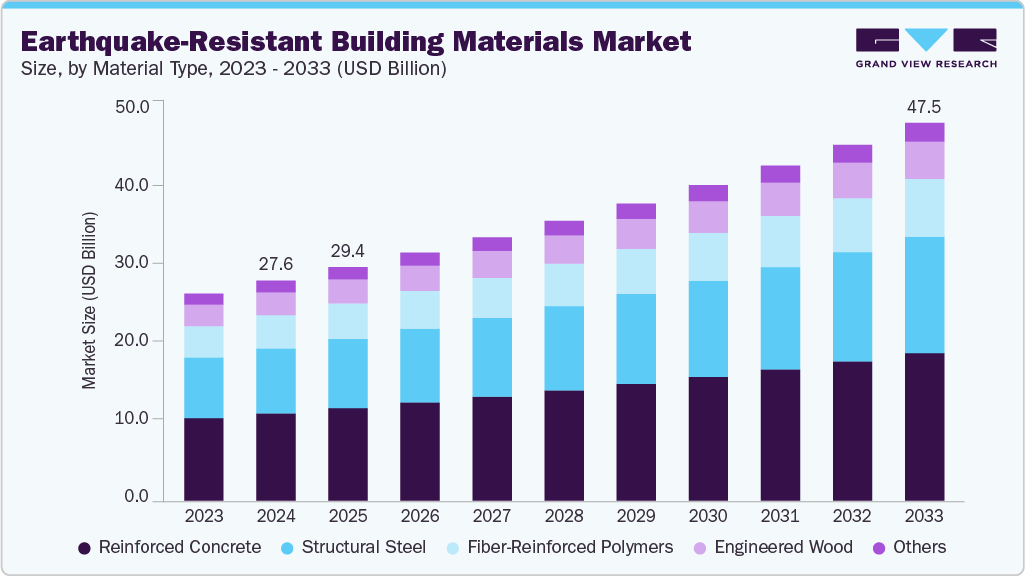
Based on material type, the reinforced concrete segment led the market with the largest revenue share of 39.7% in 2025 and is expected to grow at a CAGR of 6.0% over the forecast period. Reinforced concrete combines the compressive strength of concrete with the tensile strength of steel, making it ideal for high-rise and critical infrastructure projects in seismic zones. Growing investments in urban infrastructure and government initiatives for disaster-resilient construction are fueling demand. In addition, advancements in reinforcement technologies, such as fiber-reinforced and self-healing concrete, are enhancing material performance. The segment continues to dominate due to its cost-effectiveness and adaptability across diverse construction environments.
The structural steel segment is expected to grow at the fastest CAGR of 6.7% over the forecast period, driven by the material’s high ductility, load-bearing capacity, and recyclability, making it a preferred choice for earthquake-resistant structures. Structural steel can absorb and dissipate seismic energy effectively, reducing structural damage during earthquakes. Rapid industrialization and infrastructure modernization projects are boosting steel usage in commercial and public construction. Furthermore, prefabrication techniques and lightweight steel framing systems are reducing construction time and improving safety standards.
End Use Insights
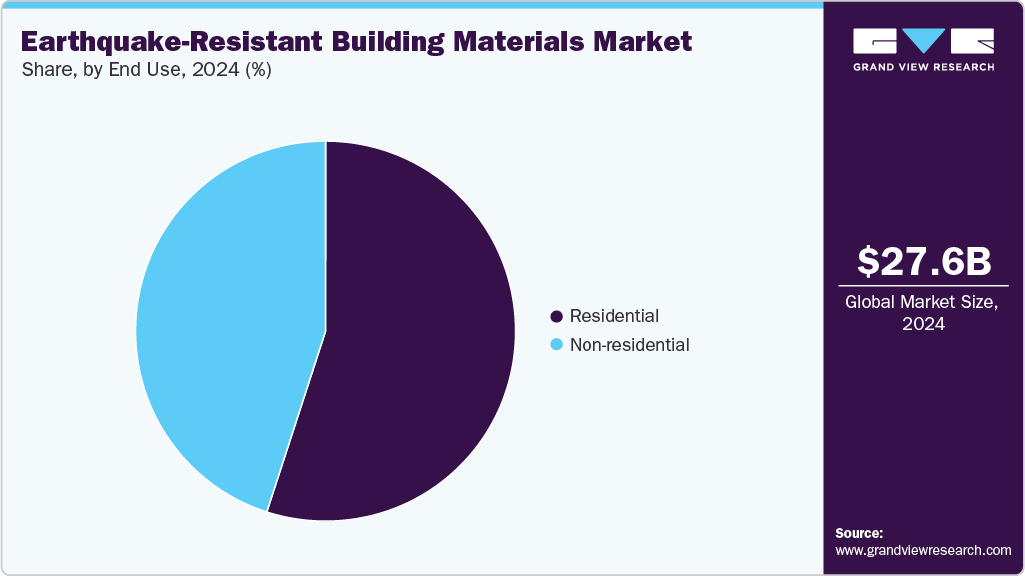
Based on end use, the residential segment led the market with the largest revenue share of 54.9% in 2025 and is expected to grow at a CAGR of 6.0% over the forecast period. Rapid urbanization in seismic-prone regions, coupled with rising disposable incomes, is encouraging the use of advanced materials that enhance safety and longevity. Governments and housing authorities are also introducing building codes and subsidy programs to promote resilient housing infrastructure.
 To learn more about this report, Download Free Sample Report
 The non-residential segment is anticipated to grow at the fastest CAGR of 6.5% during the forecast period, driven by stringent safety regulations and increasing demand for resilient infrastructure. Large-scale projects such as hospitals, schools, and office complexes require materials that can endure seismic shocks without compromising structural integrity. Corporate sustainability goals and risk mitigation strategies are further propelling the adoption of earthquake-resistant materials in this sector.
Regional Insights
The earthquake-resistant building materials market in North America is driven by stringent construction regulations and government initiatives focused on enhancing building safety in seismic-prone regions. Increasing investments in retrofitting aging infrastructure, especially in states like California and Alaska, are boosting demand for advanced seismic materials. Growing awareness among developers about long-term cost benefits of resilient construction also fuels market growth. The integration of smart materials and IoT-enabled monitoring systems further strengthens the region’s adoption. Rising insurance premiums for non-compliant structures encourage builders to adopt certified materials. In addition, innovation in high-performance concrete and steel composites continues to support market expansion across commercial and residential sectors.
U.S. Earthquake-Resistant Building Materials Market Trends
The earthquake-resistant building materials market in U.S. is primarily driven by strict building codes enforced by agencies such as FEMA and the U.S. Geological Survey (USGS). Continuous advancements in material science and 3D construction technology are promoting the use of sustainable, high-strength composites. The focus on rebuilding and upgrading infrastructure under federal programs also supports steady demand. Public-private partnerships in seismic retrofitting initiatives strengthen market penetration in urban centers. Increased awareness of disaster preparedness among homeowner’s further influences material selection. Moreover, research investments by universities and engineering firms continue to propel innovation in shock-absorbing and self-healing materials.
Asia Pacific Earthquake-Resistant Building Materials Market Trends
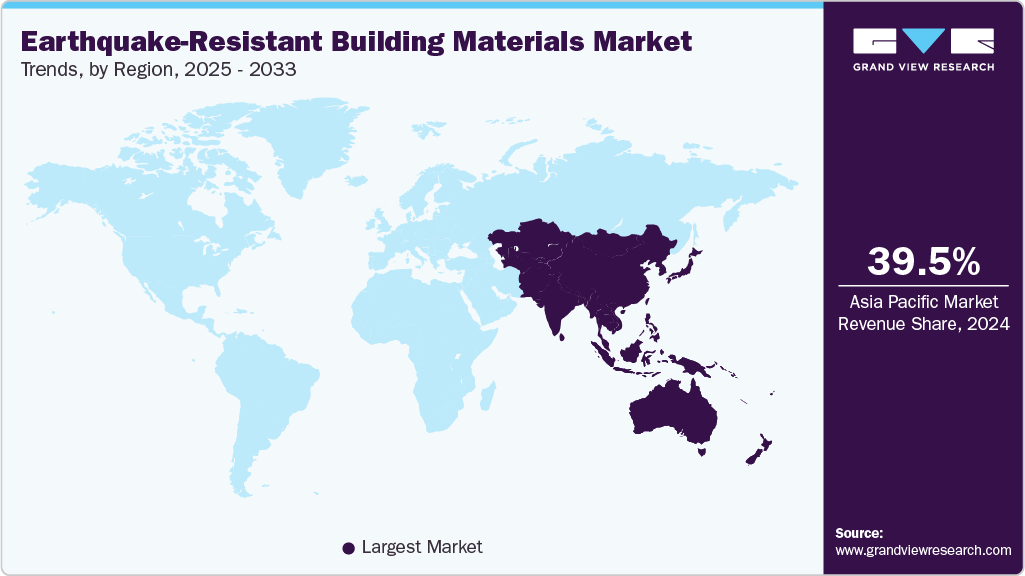
Asia Pacific dominated the earthquake-resistant building materials market with the largest revenue share of 39.7% in 2025, driven by frequent seismic events in countries like Japan, Indonesia, and India. Rapid urbanization and population growth are pushing governments to adopt strict construction standards. Technological advancements in prefabricated and modular structures improve the efficiency and resilience of new constructions. Increasing foreign investments in infrastructure projects, particularly in smart cities, further enhance market demand. Public awareness regarding earthquake safety measures is also rising, promoting the use of certified materials. Moreover, local manufacturing advancements and cost-efficient solutions contribute to market accessibility across developing nations.
 To learn more about this report, Download Free Sample Report
 The earthquake-resistant building materials market in China held the largest share in the Asia Pacific region in 2025. The Ministry of Housing and Urban-Rural Development (MOHURD) has established strict guidelines for new constructions in high-risk regions. Massive infrastructure projects, including transportation hubs and residential complexes, are increasingly incorporating advanced materials such as fiber-reinforced concrete and structural steel. Growing investments in research and development drive domestic innovation in earthquake-proof designs. The country’s rapid industrialization and urban expansion also create significant demand for durable and sustainable materials. Furthermore, the adoption of green building certifications further enhances the market’s growth trajectory.
Europe Earthquake-Resistant Building Materials Market Trends
The earthquake-resistant building materials market in Europe is driven by regulatory frameworks that prioritize safety, energy efficiency, and sustainability. Countries located near seismic zones, such as Italy and Greece, are actively upgrading public and heritage buildings. The European Union’s funding for resilience-focused infrastructure further supports innovation in advanced materials. Increased collaboration between construction firms and research institutions promotes the development of lightweight, flexible materials. Moreover, consumer demand for sustainable and eco-friendly solutions drives manufacturers to integrate recycled and bio-based inputs. Rising adoption of Building Information Modeling (BIM) technology also facilitates efficient seismic design and material optimization.
The Germany earthquake-resistant building materials market is supported by strict safety standards and a growing emphasis on sustainable construction. Although seismic activity is relatively low, regions such as the Rhine Graben require adherence to seismic design codes. The nation’s leadership in engineering and material science contributes to innovations in structural reinforcements and damping systems. The adoption of digital construction tools and predictive modeling enhances design precision and safety. Increasing investments in energy-efficient and long-lasting materials further align with the country’s green building policies. In addition, collaborations with European research institutions foster continuous improvement in seismic resistance technologies.
Central & South America Earthquake-Resistant Building Materials Market Trends
The earthquake-resistant building materials market in Central & South America is driven by high seismic vulnerability in countries such as Chile, Mexico, and Peru. Governments are increasingly enforcing stricter building regulations to minimize structural damage during earthquakes. Urban expansion and reconstruction initiatives following past disasters stimulate continuous demand for resilient materials. International aid and partnerships with global engineering firms facilitate technology transfer and modernization. Public awareness campaigns about earthquake safety are encouraging the use of certified and tested materials. Furthermore, the availability of cost-effective local materials adapted to seismic conditions enhances market growth across the region.
Middle East & Africa Earthquake-Resistant Building Materials Market Trends
The earthquake-resistant building materials market in Middle East & Africa is gaining momentum due to infrastructure development in seismic zones such as Turkey, Iran, and parts of North Africa. Growing investments in smart city and urban renewal projects drive demand for advanced and durable materials. Governments are increasingly adopting international building standards to improve resilience and public safety. Technological collaboration with global construction companies accelerates the adoption of modern materials such as reinforced composites and high-ductility steel. Awareness of climate resilience and disaster risk reduction further boosts adoption. In addition, the region’s focus on long-term sustainability and infrastructure safety promotes steady market growth.
Key Earthquake-Resistant Building Materials Company Insights
Some of the key players operating in the market include. BASF SE, LafargeHolcim Ltd.:
-
BASF SE is a global chemical company headquartered in Germany, offering a wide range of innovative construction solutions. In the earthquake-resistant materials segment, the company provides high-performance concrete admixtures, polymer-based coatings, and fiber-reinforced composites designed to enhance structural flexibility and strength.
-
LafargeHolcim Ltd., based in Switzerland, is one of the world’s largest building materials manufacturers with a strong focus on sustainability and resilience. The company’s earthquake-resistant offerings include high-strength concrete, engineered cement composites, and advanced construction aggregates.
Saint-Gobain S.A., Sika AG are some of the emerging participants in the market.
-
Saint-Gobain S.A., headquartered in France, specializes in innovative building materials and construction solutions. The company’s earthquake-resistant portfolio includes lightweight plasterboards, reinforced glass, and energy-efficient insulation materials that enhance building stability.
-
Sika AG, based in Switzerland, is a global leader in specialty chemicals and construction materials. The company offers earthquake-resistant products such as structural bonding adhesives, high-performance mortars, and fiber-reinforced concrete systems.
Key Earthquake-Resistant Building Materials Companies:
The following key companies have been profiled for this study on the earthquake-resistant building materials market.
- BASF SE
- LafargeHolcim Ltd.
- Saint-Gobain S.A.
- Sika AG
- CRH plc
- CEMEX S.A.B. de C.V.
- Nippon Steel Corporation
- Tata Steel Limited
- Hilti Corporation
Competitive Benchmarking
Category
Operating Strategies
Competitive Edge
Weakness
Established Players (BASF SE, Holcim Ltd. (formerly LafargeHolcim Ltd.), Saint-Gobain S.A., Sika AG, CRH plc)
- Expand production facilities and regional distribution networks in seismic-prone markets.
- Invest heavily in R&D to develop advanced, sustainable, and high-performance seismic construction materials.
- Form strategic partnerships with governments, EPC contractors, and infrastructure developers for large-scale projects.
- Strong global manufacturing footprint and established brand recognition.
- Broad product portfolios offering integrated solutions for multiple construction applications
- Strong financial resources enabling acquisitions, innovation, and large infrastructure participation.
- High operating and manufacturing costs across global facilities.
- Slower decision-making and product commercialization due to organizational complexity.
- Greater exposure to fluctuations in construction cycles and raw material prices.
Emerging Players (CEMEX S.A.B. de C.V., Tata Steel Limited )
- Focus on niche earthquake-resistant materials and specialized retrofit solutions.
- Collaborate with research institutions and engineering firms to commercialize innovative materials.
- Expand through regional distributors and targeted infrastructure projects in high-growth seismic regions.
- High flexibility in developing customized products for local market requirements.
- Faster innovation cycles and quicker response to evolving building regulations.
- Ability to address underserved regional markets with cost-competitive offerings.
- Limited production capacity and geographic presence.
- Lower brand recognition and limited customer trust compared to established companies.
- Limited financial resources for large-scale expansion, R&D, and international market penetration.
Recent Developments
- In October 2024, Japan-based startup Aster Co., Ltd. introduced an innovative coating designed to enhance the earthquake resistance of masonry structures significantly. This cutting-edge coating, named Aster Power Coating, combines short, hard glass fibers with soft acrylic silicone resin to create a flexible yet highly durable film on masonry surfaces.
Earthquake-Resistant Building Materials Market Report Scope
Report Attribute
Details
Market size in 2025
USD 29.4 billion
Estimated market size in 2026
USD 31.2 billion
Projected market size by 2033
USD 47.5 billion
Growth rate
CAGR of 6.2% from 2026 to 2033
Base year for estimation
2025
Historical data
2021 - 2024
Forecast period
2026 - 2033
Quantitative units
Revenue in USD million/billion, and CAGR from 2026 to 2033
Report coverage
Revenue forecast, company ranking, competitive landscape, growth factors, and trends
Segments covered
Material type, end use, region
Regional scope
North America; Europe; Asia Pacific; Central & South America; Middle East & Africa
Country scope
U.S.; Canada; Mexico; Germany; UK; France; Italy; Spain; India; China; Japan; South Korea
Key companies profiled
BASF SE; LafargeHolcim Ltd.; Saint-Gobain S.A.; Sika AG; CRH plc; CEMEX S.A.B. de C.V.; Nippon Steel Corporation; Tata Steel Limited; Hilti Corporation
Customization scope
Free report customization (equivalent up to 8 analysts' working days) with purchase. Addition or alteration to country, regional & segment scope.
Pricing and purchase options
Avail customized purchase options to meet your exact research needs. Explore purchase options
Global Earthquake-Resistant Building Materials Market Report Segmentation
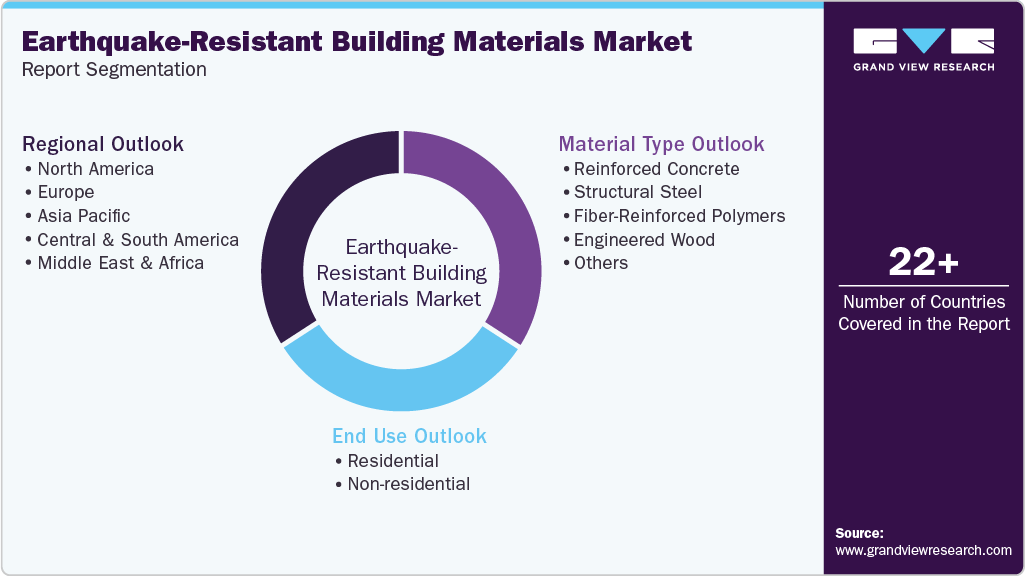
This report forecasts revenue growth at the global, regional, and country levels and provides an analysis of the latest industry trends in each of the sub-segments from 2021 to 2033. For this study, Grand View Research has segmented the global earthquake-resistant building materials market report based on material type, end use, and region:
 To learn more about this report, Download Free Sample Report
 -
Material Type Outlook (Revenue, USD Million, 2021 - 2033)
-
Reinforced Concrete
-
Structural Steel
-
Fiber-Reinforced Polymers
-
Engineered Wood
-
Others
-
-
End Use Outlook (Revenue, USD Million, 2021 - 2033)
-
Residential
-
Non-residential
-
-
Regional Outlook (Revenue, USD Million, 2021 - 2033)
-
North America
-
U.S.
-
Canada
-
Mexico
-
-
Europe
-
Germany
-
UK
-
France
-
Italy
-
Spain
-
-
Asia Pacific
-
China
-
India
-
Japan
-
South Korea
-
-
Central & South America
-
Middle East & Africa
-
Research Methodology
The earthquake-resistant building materials market figures in this report are based on a proven research process that combines executive interviews with secondary research from proprietary databases, company filings, and recognized regulatory and institutional sources. Market size is built through value-chain sizing - reconciling supply-side and demand-side estimates - and triangulated with bottom-up and top-down approaches. Every estimate passes multiple levels of expert validation before publication, with each earthquake-resistant building materials segment quantified using the revenue-capture definitions in the table below.
Segment Definition
Segment - Material Type
Revenue capture definition
Reinforced Concrete
Revenue generated from the sale of reinforced concrete used in earthquake-resistant construction, incorporating steel reinforcement, fiber reinforcement, or other strengthening technologies to improve structural strength, ductility, and seismic energy absorption. This includes applications in building foundations, columns, beams, shear walls, bridges, tunnels, and critical infrastructure.
Structural Steel
Revenue generated from the sale of structural steel products designed for earthquake-resistant buildings, including steel beams, columns, bracing systems, structural frames, and fabricated steel components that provide high strength, flexibility, and ductility during seismic events. This includes applications across residential, commercial, industrial, and infrastructure projects.
Fiber-Reinforced Polymers
Revenue generated from the sale of fiber-reinforced polymer materials used to strengthen and retrofit earthquake-resistant structures. This includes carbon fiber, glass fiber, aramid fiber composites, FRP wraps, laminates, plates, rods, and reinforcement systems applied to buildings, bridges, tunnels, and other structures requiring enhanced seismic performance.
Engineered Wood
Revenue generated from the sale of engineered wood products designed for earthquake-resistant construction, including cross-laminated timber (CLT), glued laminated timber (Glulam), laminated veneer lumber (LVL), and structural composite lumber. This includes applications in residential, commercial, institutional, and multi-story timber buildings requiring high strength-to-weight ratios and seismic resilience.
Others
Revenue generated from the sale of other earthquake-resistant building materials, including seismic isolation bearings, energy dissipation devices, high-performance concrete additives, masonry reinforcement products, geosynthetics, advanced composites, damping systems, and specialty construction materials used to improve structural resilience against seismic activity.
Segment - End Use
Revenue capture definition
Residential
Revenue generated from the sale of earthquake-resistant building materials used in residential construction, including single-family homes, multi-family housing, apartments, condominiums, affordable housing projects, and residential renovations or seismic retrofitting applications designed to improve occupant safety and structural stability.
Non-residential
Revenue generated from the sale of earthquake-resistant building materials used in non-residential construction, including commercial buildings, offices, hospitals, educational institutions, industrial facilities, airports, transportation infrastructure, government buildings, utilities, and public infrastructure projects requiring enhanced seismic protection and regulatory compliance.
Estimation Model
Layer Name
Key Question
Description
Macroeconomic & Seismic Risk Assessment
Which macroeconomic, urbanization, infrastructure, and seismic risk factors influence demand for earthquake-resistant building materials?
Evaluates construction activity, urban expansion, infrastructure investments, earthquake-prone regions, government resilience programs, and disaster risk reduction initiatives that shape the overall market potential.
Material Adoption & Demand Assessment
Which earthquake-resistant materials are witnessing the highest adoption across different construction applications?
Assesses demand for reinforced concrete, structural steel, fiber-reinforced polymers, engineered wood, and other advanced seismic materials across new construction and retrofit projects based on performance, durability, and regulatory compliance.
End-use Industry & Regional Demand Analysis
Which end-use sectors and regions generate the highest revenue for earthquake-resistant building materials?
Evaluates material consumption across residential and non-residential construction while analyzing regional demand based on seismic activity, building regulations, infrastructure investments, and construction growth.
Competitive Landscape & Future Market Outlook
How will innovation, regulations, sustainability, and competitive strategies shape future market growth?
Examines manufacturer strategies, product innovation, sustainable construction materials, seismic engineering advancements, evolving building codes, strategic partnerships, and long-term market opportunities influencing future revenue growth.
Delivered Customizations
This report has been delivered with the following In-depth customizations
Client Request
Customization Delivered
Value Adds
Regional market intelligence
Comprehensive country- and region-level assessment covering seismic risk exposure, construction activity, infrastructure investments, urbanization trends, building code implementation, retrofit demand, residential and non-residential construction outlook, and material adoption across major earthquake-prone markets.
Enables clients to identify high-growth geographies, prioritize investment opportunities, optimize regional expansion strategies, align product portfolios with local demand, and strengthen market entry and distribution planning.
Competitive landscape assessment
In-depth benchmarking of leading manufacturers based on product portfolio, manufacturing capabilities, innovation, geographic presence, strategic partnerships, mergers & acquisitions, capacity expansions, pricing strategies, distribution networks, and competitive positioning within the earthquake-resistant building materials market.
Supports strategic decision-making by identifying competitive advantages, market gaps, partnership opportunities, acquisition targets, product differentiation strategies, and potential areas for business expansion.
Technology and sustainability assessment
Detailed evaluation of emerging technologies including seismic isolation systems, energy dissipation devices, fiber-reinforced composites, engineered wood, high-performance concrete, low-carbon cement, recycled construction materials, digital engineering solutions, and evolving sustainability regulations impacting resilient construction.
Helps clients develop future-ready product strategies, accelerate innovation, comply with environmental and seismic regulations, strengthen ESG initiatives, improve R&D planning, and capitalize on emerging opportunities in resilient and sustainable construction.
Frequently Asked Questions About This Report
Some of the key players operating in the earthquake-resistant building materials market include BASF SE, LafargeHolcim Ltd., Saint-Gobain S.A., Sika AG, CRH plc, CEMEX S.A.B. de C.V., Nippon Steel Corporation, Tata Steel Limited, and Hilti Corporation.
Key factors driving the earthquake-resistant building materials market include increasing seismic safety regulations, rising investments in resilient infrastructure, rapid urbanization, and growing adoption of advanced high-performance construction materials.
Asia Pacific held the highest revenue market share of 39.7% in 2025, due to rapid urbanization, frequent seismic activity, stringent earthquake-resistant building regulations, and substantial investments in resilient infrastructure across countries such as China, Japan, and India.
The non-residential segment is the fastest growing end use in the earthquake-resistant building materials market.
The Structural steel segment is the fastest growing product segment in the earthquake-resistant building materials market.
The reinforced concrete segment accounted for the largest revenue share of 39.7% in 2025, due to its superior structural strength, ductility, cost-effectiveness, and widespread adoption in earthquake-resistant residential, commercial, and infrastructure construction.
The residential segment held the highest revenue market share of 54.9% in 2025, due to increasing adoption of earthquake-resistant construction materials in new housing developments, stringent seismic building codes, and growing investments in resilient residential infrastructure across earthquake-prone regions.
The global Earthquake-Resistant building materials market size was valued at USD 29.4 billion in 2025 and is estimated at USD 31.2 billion for 2026.
The global Earthquake-Resistant building materials market is expected to grow at a CAGR of 6.2% from 2026 to 2033, reaching USD 47.5 billion by 2033.
About the Author(s)
Advanced Interior Materials Research Team
Advanced Materials · Advanced Interior MaterialsThis report was authored by the advanced interior materials research team at Grand View Research - comprising two research analysts, one senior research analyst, and one industry expert - with specialized expertise in the advanced interior materials segment of the advanced materials industry. All findings are based on proprietary advanced materials databases, executive interviews, and regulatory analysis, subject to internal peer review prior to publication.
Last Updated:
Speak to Analyst

Customize this report to your needs - add regions, segments, or data points, with 20% free customization.
Or view our licence options:


ISO 9001:2015 & 27001:2022 Certified
We are GDPR and CCPA compliant! Your transaction & personal information is safe and secure. For more details, please read our privacy policy.


