
- Home
- »
- Advanced Interior Materials
- »
-
Electric Arc Furnace Market Size & Share Report, 2026-2033GVR Report cover

Electric Arc Furnace Market (2026 - 2033)
Size, Share & Trends Analysis Report By Furnace Type (AC (Alternating Current) EAF, DC (Direct Current) EAF), By Technology (Standard EAF, Energy-Efficient EAF), By Application, By Capacity, By Region, And Segment Forecasts
Market Size, 2025
$3.8BMarket Estimate, 2026
$3.9BMarket Forecast, 2033
$5.7BCAGR, 2026–2033
5.6%Electric Arc Furnace Market Summary
The global electric arc furnace market size was valued at USD 3.8 billion in 2025 and is projected to grow from USD 3.9 billion in 2026 to USD 5.7 billion by 2033, growing at a CAGR of 5.6% from 2026 to 2033. Asia Pacific dominated the market, accounting for the largest revenue share of 44.2% in 2025. Rising demand for steel in the construction, automotive, and manufacturing industries is a key driver for the market growth.
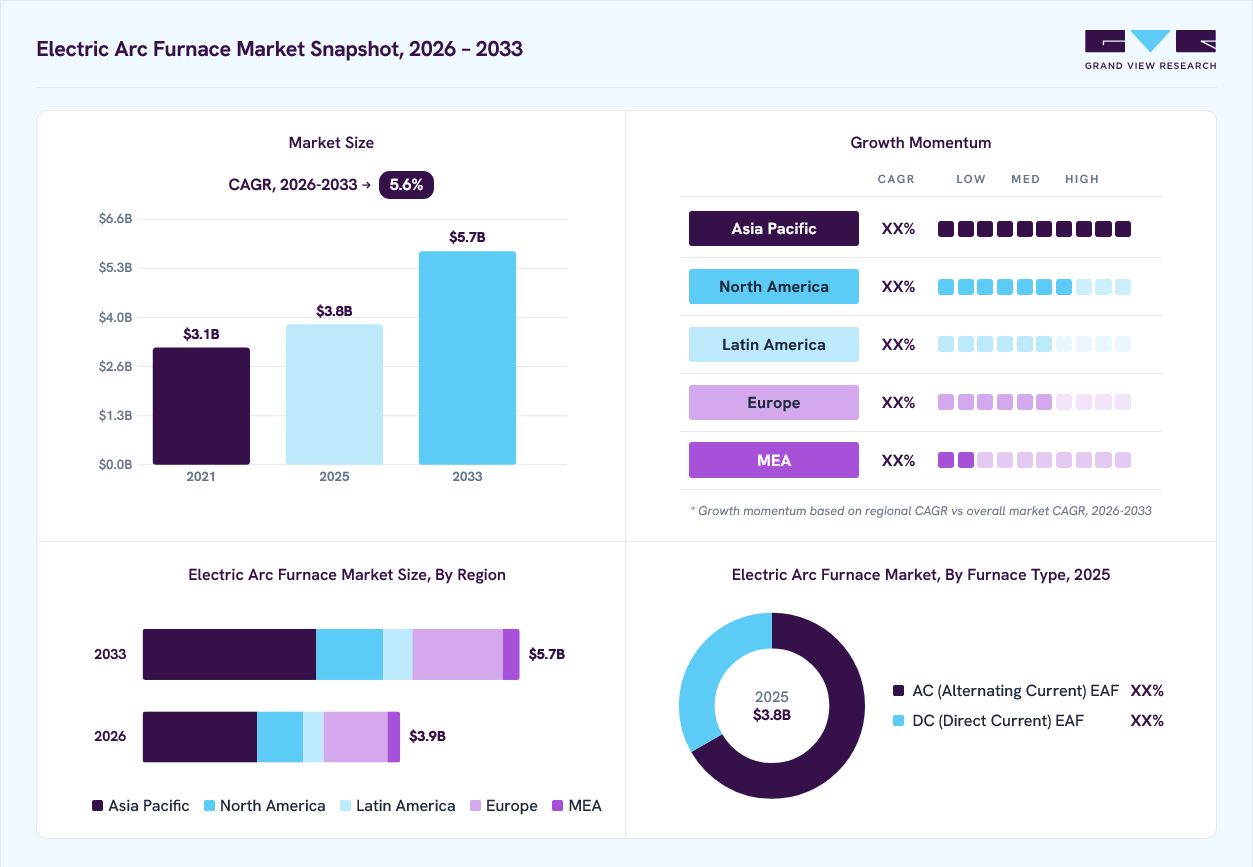 Source: Grand View Research, IR Documents, Primary Interviews, Paid DatabasesTo learn more about this report,
 Download Free Sample Report
 Key Market Trends & Insights
- By furnace type: AC (Alternating Current) EAF segment led the market with the largest revenue share of 66.6% in 2025.
- By application: Ferrous metals segment led the market with the largest revenue share of 82.6% in 2025.
- By capacity: Above 150 Tons segment led the market with the largest revenue share of 41.2% in 2025.
- By technology: Standard EAF led the market with the largest revenue share of 53.1% in 2025.
Regional Highlights
- Largest regional market: Asia Pacific (44.2% revenue share, 2025)
- By country: China held the largest share in the Asia Pacific region in 2025
Market Size & Forecast
- Market Size in 2025: USD 3.8 Billion
- Estimated Market Size in 2026: USD 3.9 Billion
- Projected Market Size by 2033: USD 5.7 Billion
- CAGR (2026-2033): 5.6%
Three ways to get this report
Buy it, customize it, or ask a question.Ask an Analyst
Analyst response in 1 business day
- AccessReport author, directly
- Reply timeWithin 1 working day
- No sales callDirect answer only
- FormatEmail reply
- CostFree, no cost
Get the Full Report
What the study covers
- FormatsPDF · Excel · Dashboard
- Timeline2026–2033 annual, 2025 base
- Coverage20+ countries, 5 regions
- Companies10+ key players profiled
Customize the Report
20% free customization
- IncludeCountries, segments, points
- TailorTo your product definition
- ExtendDeeper competitor detail
- OrA fully bespoke study
- Turnaround5–10 working days
Increasing focus on sustainable steel production and recycling of scrap metal has further boosted the adoption of electric arc furnace technology. Advancements in automation, digital monitoring, and energy-efficient furnace designs are enhancing operational performance and reducing production costs.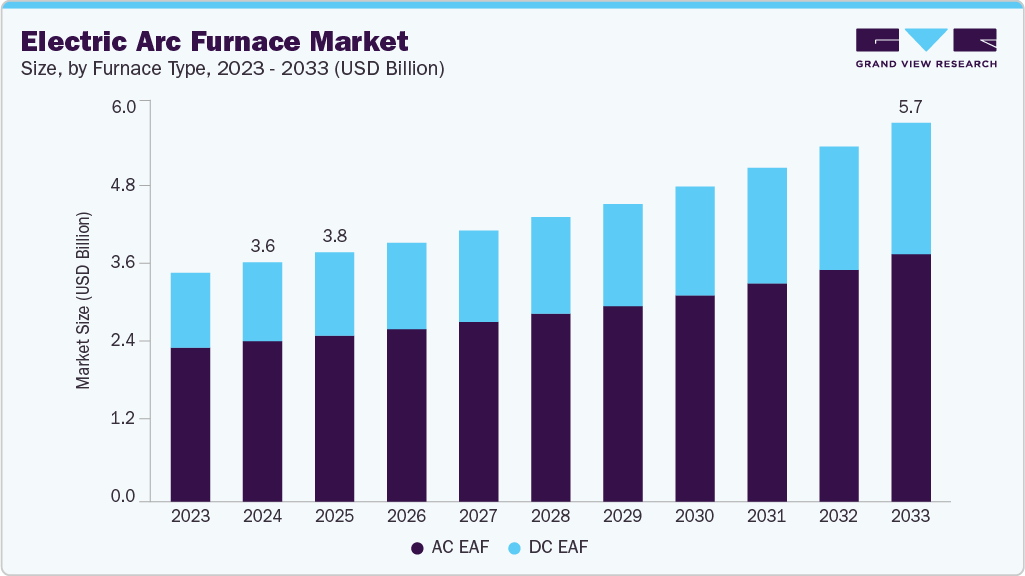 To learn more about this report, Download Free Sample Report
 With governments and industries emphasizing decarbonization, electric arc furnaces are gaining preference over traditional blast furnaces due to their ability to utilize renewable electricity and recycled scrap as feedstock. This not only lowers greenhouse gas emissions but also aligns with circular economy initiatives, making electric arc furnaces a vital solution for sustainable steel production in the coming years.
Market Dynamics
The global electric arc furnace (EAF) market is driven by the steel industry's transition toward low-carbon and resource-efficient production methods, supported by increasing utilization of recycled steel scrap, stringent environmental regulations, and global decarbonization initiatives. Rising investments in sustainable steelmaking, coupled with growing demand from construction, automotive, infrastructure, and manufacturing sectors, are accelerating the adoption of advanced EAF technologies featuring automation, digital process control, and energy-efficient operations. Furthermore, government policies promoting circular economy practices and carbon emission reduction continue to strengthen market growth. However, the market faces challenges, including high electricity consumption, volatility in industrial power prices, fluctuations in scrap metal availability, and substantial capital investment requirements for furnace modernization and grid infrastructure.
The electric arc furnace (EAF) market is driven by the growing demand for sustainable, energy-efficient, and low-carbon steel production technologies. Electric arc furnaces primarily utilize scrap steel as a raw material, promoting circular economy initiatives by enabling efficient recycling and reducing reliance on iron ore-based steelmaking processes. Increasing government regulations aimed at lowering greenhouse gas emissions, coupled with steel manufacturers' commitments to achieving carbon neutrality and improving environmental performance, are significantly accelerating the adoption of EAF technology. Additionally, ongoing advancements in furnace efficiency, automation, and renewable energy integration are further strengthening market growth by enhancing productivity and reducing operational costs.
High electricity consumption and volatile energy prices remain significant restraints on the growth of the electric arc furnace (EAF) market. Electric arc furnaces require substantial amounts of electrical power to melt scrap steel and sustain continuous steel production, making electricity one of the largest operating cost components. Fluctuating electricity prices can significantly increase production costs and reduce profit margins for steel manufacturers, particularly in regions with unstable energy markets or limited power infrastructure. Moreover, dependence on a reliable and uninterrupted electricity supply exposes EAF operators to operational disruptions in areas affected by grid instability, power outages, or energy shortages. These challenges can discourage investments in new EAF facilities, especially in developing economies with inadequate energy infrastructure.
The increasing global investment in green steel production is creating significant opportunities for the electric arc furnace market. Steel producers are expanding EAF capacity by integrating renewable energy sources, hydrogen-based direct reduced iron (H₂-DRI), and advanced energy recovery systems to reduce carbon emissions and improve sustainability.
In addition, the adoption of digital technologies, including artificial intelligence, Industrial Internet of Things (IIoT), predictive maintenance, and real-time process optimization, enhancing furnace productivity, energy efficiency, and operational reliability.
Market Concentration & Characteristics
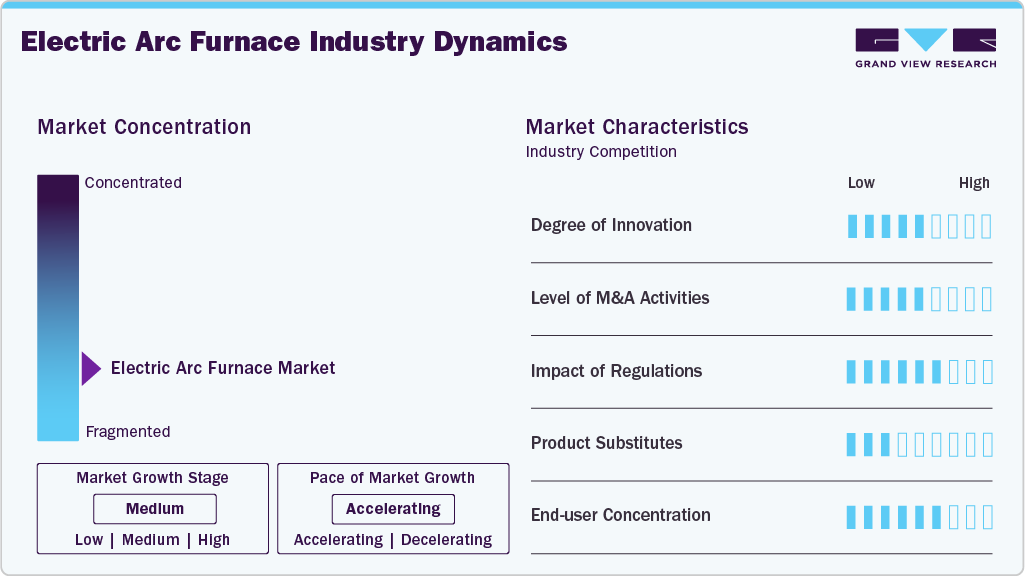
The electric arc furnace industry is moderately concentrated, with a few global steel technology providers and furnace manufacturers holding substantial market share. Their dominance is supported by advanced metallurgical expertise, established customer relationships with large steelmakers, and strong service networks. Smaller or regional players often face challenges in competing on efficiency, large-scale projects, and technology integration, leaving the market largely shaped by leading companies.
The electric arc furnace industry demonstrates a moderate to high level of innovation, with key players focusing on energy efficiency, automation, and digital process monitoring. Technological improvements in electrode management, slag handling, and furnace control systems are enhancing productivity and lowering operational costs. The integration of data-driven solutions and AI-enabled monitoring is also advancing process optimization and extending equipment life cycles.
 To learn more about this report, Download Free Sample Report
 Mergers and acquisitions are a significant feature of the electric arc furnace industry, as major players seek to expand their geographic presence, strengthen technical capabilities, and broaden product portfolios. Acquisitions of niche technology providers and collaborations with engineering firms enable large companies to address sustainability goals while offering customized solutions to global steel producers.
Regulatory frameworks on carbon emissions, energy consumption, and recycling practices exert a strong influence on the industry. Compliance with stricter sustainability norms drives investment in EAF technology as steelmakers transition away from traditional blast furnaces. These regulations not only encourage cleaner and more efficient production methods but also shape the strategic direction of market participants, influencing product design and operational practices.
Regulatory standards related to environmental sustainability, energy efficiency, and workplace safety significantly influence the industry. Compliance with emission norms and energy consumption standards drives the adoption of eco-friendly and energy-efficient machines. Regulations also encourage companies to implement safe and sustainable manufacturing practices. Adhering to these rules affects production processes, costs, and overall market strategies.
Analyst Perspective
The global electric arc furnace (EAF) market is expected to witness steady growth, driven by the steel industry's shift toward low-carbon and sustainable production methods. Increasing environmental regulations, greater utilization of recycled steel scrap, and rising investments in EAF capacity are accelerating market adoption while supporting resource efficiency and carbon emission reduction. Technological advancements in ultra-high-power furnaces, automation, digital process optimization, and energy management systems are further enhancing operational efficiency and productivity. Although fluctuating electricity prices, scrap availability, and high capital investment requirements remain key challenges, ongoing modernization of steel manufacturing facilities, growing integration of direct reduced iron (DRI), and expanding investments in green steel production are expected to support long-term market growth and reinforce the role of electric arc furnace technology in the global steel industry.
Furnace Type Insights
Based on furnace type, the AC (Alternating Current) EAF segment led the market with the largest revenue share of 66.6% in 2025, driven by its proven reliability and widespread use in steelmaking operations. Its ability to handle diverse scrap charges at lower capital costs makes it attractive for producers in both developed and emerging markets. The flexibility of AC furnaces to adapt to varying production scales and raw furnace type availability continues to support their adoption across a broad range of steel plants.
The DC EAF segment is anticipated to grow at the fastest CAGR during the forecast period. The DC EAF segment benefits from growing demand for furnaces with greater operational stability and reduced electrode consumption. Its efficient arc control minimizes electrode wear, leading to lower operating costs and higher productivity. These advantages make DC furnaces especially appealing for large-scale steel producers looking to improve efficiency and achieve long-term cost savings.
Application Insights
Based on application, the ferrous metals segment led the market with the largest revenue share of 82.6% in 2025, driven by the surge in global steel demand across construction, automotive, and infrastructure industries. EAF technology enables efficient recycling of scrap steel, aligning with sustainability targets while meeting rising production needs. The ability to produce high-quality steel grades with lower environmental impact further strengthens EAF adoption in this segment.
The non-ferrous metals segment is anticipated to grow at the fastest CAGR during the forecast period, supported by increasing demand for aluminum, copper, and other alloys across the automotive, aerospace, and electronics industries. EAF technology provides the flexibility to handle diverse raw furnace types while ensuring precise control over melting conditions, enabling high-quality non-ferrous metal production.
Capacity Insights
Based on capacity, the Above 150 Tons segment led the market with the largest revenue share of 41.2% in 2025, driven by large-scale steelmakers focused on mass production and high efficiency. These furnaces cater to integrated steel plants producing bulk steel volumes, where economies of scale, automation, and advanced process control systems drive cost-effectiveness and competitive advantage.
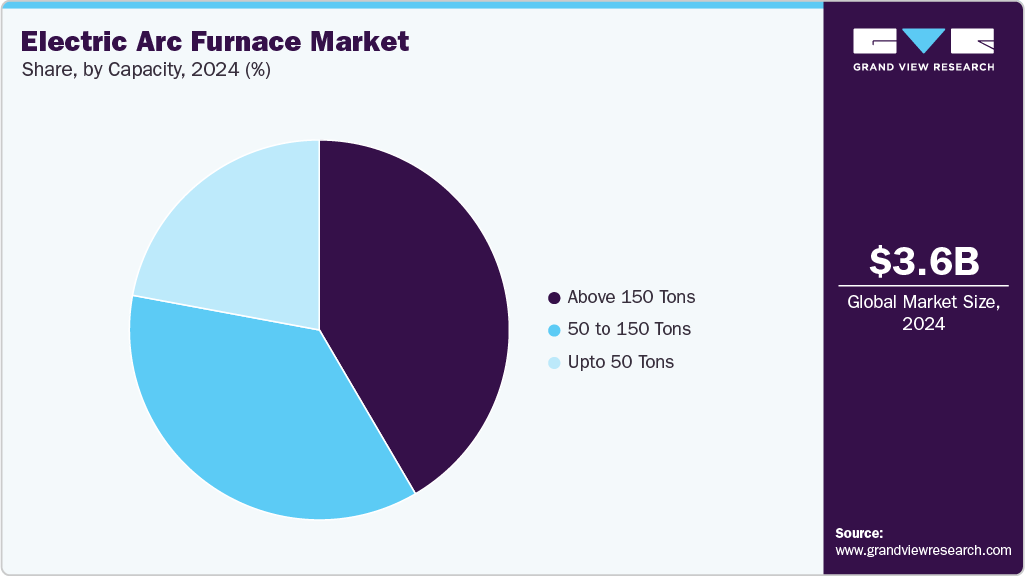 To learn more about this report, Download Free Sample Report
 The 50 to 150 tons’ segment is anticipated to grow at the fastest CAGR during the forecast period, driven by its strong fit for mid-sized steel producers that require a balance between output capacity and operational efficiency. These furnaces are widely adopted in facilities serving construction, automotive, and machinery sectors, where consistent throughput and flexibility in handling different raw furnace type inputs are critical to meeting market demand.
Technology Insights
Based on technology, the Standard EAF led the market with the largest revenue share of 53.1% in 2025, driven by its proven, cost-effective configuration that balances capex and operational flexibility; its capability to handle varied scrap mixes with reliable metallurgical performance makes it a go-to solution for many steelmakers, while ongoing improvements in control systems, electrode management, and energy recovery boost productivity and lower total cost of ownership ip.
The energy-efficient EAF segment is anticipated to grow at the fastest CAGR during the forecast period, supported by the global emphasis on reducing carbon footprints and lowering production costs. Innovations such as regenerative burners, improved insulation, and smart energy management systems are driving adoption among steelmakers seeking to align with sustainability goals while maintaining competitive operations.
Regional Insights
The electric arc furnace market in North America is driven by the region’s strong emphasis on steel recycling and sustainable production. High availability of scrap steel, combined with supportive policies for low-emission manufacturing, has encouraged widespread use of electric arc furnace technology. Major steel producers are upgrading facilities with energy-efficient and automated systems, while infrastructure development continues to sustain steel demand.
U.S. Electric Arc Furnace Market Trends
The electric arc furnace in the U.S. is expected to grow at a substantial CAGR of 5.0% over the forecast period, supported by a well-established steel recycling ecosystem and strong policy emphasis on sustainable production. High scrap availability and rising investments in green steel initiatives are driving greater reliance on electric arc furnace technology. Modernization of existing plants with digital and energy-efficient systems is further supporting long-term growth.
Asia Pacific Electric Arc Furnace Market Trends
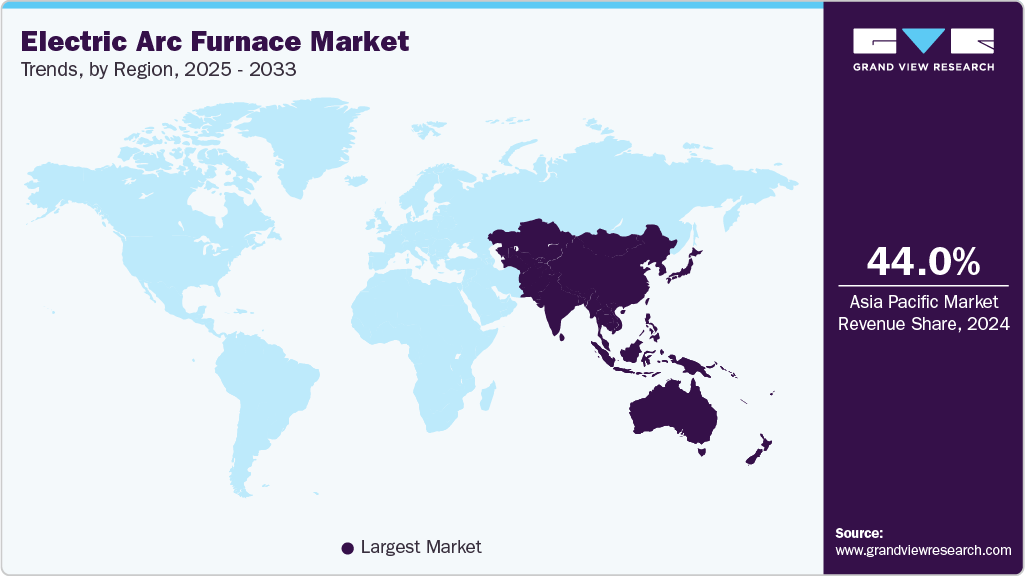
Asia Pacific dominated the electric arc furnace market with the largest revenue share of 44.2% in 2025, fueled by industrialization, rapid urbanization, and large-scale infrastructure projects. Countries such as China, India, and Japan are experiencing rising demand for sustainable steelmaking methods that balance environmental concerns with strong steel consumption. Local producers are increasingly adopting electric arc furnace technology to enhance efficiency and make greater use of scrap steel resources.
 To learn more about this report, Download Free Sample Report
 China Electric Arc Furnace Market Trends
The electric arc furnace market in China held the largest share in the Asia Pacific region in 2025. The country represents the largest growth opportunity for the electric arc furnace industry, with rising environmental regulations and government initiatives aimed at reducing carbon emissions. Although blast furnaces dominate, the transition toward electric arc furnaces is accelerating as scrap availability increases and steelmakers seek more flexible production methods. Rapid infrastructure development and strong domestic steel demand continue to drive large-scale adoption.
The India electric arc furnace market is expected to expand at a substantial CAGR of 6.3 over the forecast period.In India, the electric arc furnace industry is expanding alongside rapid urbanization, infrastructure investment, and automotive sector growth. The increasing availability of scrap steel and government-led policies promoting sustainable manufacturing are encouraging greater use of electric arc furnaces. Local producers are also investing in energy-efficient technologies to balance rising steel demand with environmental commitments.
Europe Electric Arc Furnace Market Trends
The electric arc furnace market in Europe is supported by strict carbon reduction goals and the European Union’s commitment to green steel initiatives. Leading producers are transitioning away from traditional blast furnaces to electric arc furnaces to meet sustainability regulations and circular economy principles. Investments in digital controls, automation, and energy recovery technologies are further accelerating adoption across the region.
The France electric arc furnace market is projected to grow at a significant CAGR of 5.7% over the forecast period,as steel producers respond to strict European Union carbon neutrality targets. The country’s focus on low-emission steelmaking is encouraging the replacement of older blast furnaces with electric arc furnaces. Investments in automation and renewable energy integration are positioning France as an important player in sustainable steel production.
The electric arc furnace market in Germany is expected to grow at a substantial CAGR of 5.2% over the forecast period, driven by the nation’s advanced industrial base and leadership in sustainable technologies. Steelmakers are actively transitioning to electric arc furnace production to align with ambitious decarbonization goals and meet demand from the automotive and manufacturing sectors. Significant research and development investments are further supporting innovation in furnace design and efficiency.
Middle East & Africa Electric Arc Furnace Market Trends
The electric arc furnace market in the Middle East and Africa is growing due to abundant scrap availability, relatively low-cost electricity, and expanding demand for steel in construction, infrastructure, and energy projects. Regional steelmakers are investing in modern furnace systems to diversify output and reduce reliance on imports. Increasing focus on sustainable industrial development is expected to drive stronger adoption in the coming years.
The Saudi Arabia electric arc furnace market is projected to expand at a considerable CAGR of 4.9% over the forecast period.In Saudi Arabia, the electric arc furnace industry is growing as part of the country’s broader industrial diversification and infrastructure development under Vision 2030. Abundant scrap availability and access to relatively low-cost electricity make electric arc furnaces an attractive choice for local steel producers. Expanding demand for steel in construction, energy, and industrial projects further strengthens adoption.
Latin America Electric Arc Furnace Market Trends
The electric arc furnace market in Latin America is shaped by the ongoing modernization of steel plants and rising steel demand in the construction and automotive industries. Although blast furnaces remain common, the shift toward cleaner, cost-effective, and more flexible production methods is opening new opportunities for electric arc furnace adoption. Government-led initiatives promoting recycling and emission reduction are further supporting this transition.
The Argentina electric arc furnace market is expected to grow at a considerable CAGR of 5.2% over the forecast period, supported by demand from the construction and manufacturing industries. While economic challenges have limited large-scale investment, local steelmakers are beginning to adopt electric arc furnace technology for its flexibility and ability to utilize recycled steel. Growing awareness of sustainable practices is expected to stimulate future market growth.
Key Electric Arc Furnace Company Insights
Some of the key players operating in the market include Danieli & C. Meccaniche S.p.A and SMS group GmbH:
-
Danieli & C. Meccaniche S.p.A. is a prominent player in plant engineering for the metals industry, specializing in turnkey plants and advanced equipment for ironmaking, steelmaking, and aluminum & non-ferrous metals. The company operates wholly owned manufacturing and engineering centers in Austria, China, India, and Thailand, maintaining consistent product quality worldwide.
-
SMS group GmbH builds and services plants and machinery for the metals sector with a focus on forward-looking technologies and comprehensive lifecycle support. It integrates equipment, automation, digitalization, and process expertise to address sustainability challenges in steel and non-ferrous metal production. With over 150 years of experience, the company operates more than 100 locations globally, delivering solutions that range from metallurgy and casting through to flat and long product finishing.
Key Electric Arc Furnace Companies:
The following are the leading companies in the electric arc furnace market.
- Danieli & C. S.p.A.
- SMS group GmbH
- Primetals Technologies
- Tenova S.p.A.
- Electrotherm
- JP Steel Plantech Co.
- Paul Wurth IHI Co., Ltd. (IHI Corporation)
- SARRALLE
- Xiye
- CHNZBTECH Co. Ltd
- Xi'an Taoyuan Metallurgical Equipment Engineering Co.,Ltd
- Daido Steel Co., Ltd
- Rose Corporation
Competitive Benchmarking
Category
Operating Strategies
Competitive Edge
Weakness
Established Players (e.g., Danieli & C. S.p.A.; SMS group GmbH; Primetals Technologies; Tenova S.p.A.; Electrotherm.)
- These companies focus on expanding electric arc furnace technology portfolios, improving energy efficiency, and strengthening global engineering and project execution capabilities.
- They invest in advanced furnace automation systems, digital monitoring technologies, and sustainable steelmaking solutions to support low-emission steel production.
- They have strong engineering expertise, advanced metallurgical technologies, and broad electric arc furnace system portfolios covering steelmaking automation, furnace components, and integrated plant solutions.
- Their global project execution capabilities, established customer relationships, and strong technical service networks strengthen competitiveness across large-scale steel production projects.
- These companies often face high research, engineering, and project execution costs associated with advanced electric arc furnace technologies and large-scale steel plant infrastructure projects.
- Dependence on steel industry investment cycles and industrial economic conditions can expose companies to fluctuations in project demand.
Emerging & Regional Players (e.g., SARRALLE; Xiye; CHNZBTECH Co. Ltd; Xi'an Taoyuan Metallurgical Equipment Engineering Co., Ltd; Rose Corporation, regional players)
- Focus on cost-effective electric arc furnace systems, regional market expansion, and customized steelmaking solutions for small and medium-sized steel manufacturers.
- Many companies strengthen local engineering support and target developing industrial markets with growing steel production capacity.
- These players benefit from competitive pricing, flexible operations, and ability to provide customized electric arc furnace solutions for regional steel manufacturers.
- Lower manufacturing and engineering costs help them compete in developing markets where steel producers prioritize affordable equipment solutions.
- They often face limitations related to smaller engineering capabilities, lower brand recognition, and limited access to advanced steelmaking technologies.
- Restricted research and development resources may reduce competitiveness in high-capacity and highly automated electric arc furnace systems.
Recent Developments
-
In October 2024, SMS Group announced it will supply Saarstahl in Völklingen, Germany, with a 185-ton AC Electric Arc Furnace (EAF) and auxiliary systems, supporting SHS Group’s carbon-neutrality target for 2045. Set on a brownfield site, the furnace-one of the most powerful globally with a 300 MVA transformer and a 9.3-meter shell-can process 100% scrap or a mix of 80% Cold Direct Reduced Iron and 20% scrap, producing 1.9 million tons of steel annually.
-
In February 2025, the China Iron and Steel Association (CISA) launched an Electric Arc Furnace (EAF) Steel Division at its Beijing headquarters to support the growth of EAF steelmaking in China. The division will assist the central government in shaping policies, developing unified technical standards, and serving as a communication platform among steelmakers, end-users, and supply chain stakeholders.
Electric Arc Furnace Market Report Scope
Report Attribute
Details
Market Size in 2025
USD 3.8 billion
Estimated Market Size in 2026
USD 3.9 billion
Projected Market Size by 2033
USD 5.7 billion
Growth rate
CAGR of 5.6% from 2026 to 2033
Base year for estimation
2025
Historical data
2021 - 2024
Forecast period
2026 - 2033
Quantitative units
Revenue in USD billion and CAGR from 2026 to 2033
Report coverage
Revenue forecast, company ranking, competitive landscape, growth factors, and trends
Segments covered
Furnace type, application, capacity, technology, region
Regional scope
North America; Europe; Asia Pacific; Latin America; Middle East & Africa
Country scope
U.S.; Canada; Mexico; UK; Germany; France; Spain; Italy; China; Japan; India; South Korea; Australia; Brazil; Argentina; Saudi Arabia; Egypt; South Africa
Key companies profiled
Danieli & C. S.p.A.; SMS group GmbH; Primetals Technologies; Tenova S.p.A.; Electrotherm; JP Steel Plantech Co.; Paul Wurth IHI Co., Ltd. (IHI Corporation); SARRALLE; Xiye; CHNZBTECH Co. Ltd; Xi'an Taoyuan Metallurgical Equipment Engineering Co., Ltd; Daido Steel Co., Ltd; Rose Corporation
Customization scope
Free report customization (equivalent up to 8 analysts' working days) with purchase. Addition or alteration to country, regional & segment scope.
Pricing and purchase options
Avail customized purchase options to meet your exact research needs. Explore purchase options
Global Electric Arc Furnace Market Report Segmentation
This report forecasts revenue growth at global, regional, and country levels and provides an analysis of the latest industry trends in each of the sub-segments from 2021 to 2033. For this study, Grand View Research has segmented the global electric arc furnace market report based on furnace type,technology, application, capacity, and region.
-
Furnace Type Outlook (Revenue, USD Million, 2021 - 2033)
-
AC (Alternating Current) EAF
-
DC (Direct Current) EAF
-
-
Technology Outlook (Revenue, USD Million, 2021 - 2033)
-
Standard EAF
-
Ultra-High Power (UHP) EAF
-
Energy-Efficient EAF
-
-
Application Outlook (Revenue, USD Million, 2021 - 2033)
-
Ferrous Metals
-
Non-Ferrous Metals
-
-
Capacity Outlook (Revenue, USD Million, 2021 - 2033)
-
Upto 50 Tons
-
50 to 150 Tons
-
Above 150 Tons
-
-
Regional Outlook (Revenue, USD Million, 2021 - 2033)
-
North America
-
U.S.
-
Canada
-
Mexico
-
-
Europe
-
Germany
-
France
-
Italy
-
Spain
-
UK
-
Austria
-
-
Asia Pacific
-
China
-
India
-
Japan
-
South Korea
-
Australia
-
-
Latin America
-
Brazil
-
Argentina
-
-
Middle East and Africa
-
Saudi Arabia
-
Egypt
-
South Africa
-
-
Research Methodology
The electric arc furnace market figures in this report are based on a proven research process that combines executive interviews with secondary research from proprietary databases, company filings, and recognized regulatory and institutional sources. Market size is built through value-chain sizing - reconciling supply-side and demand-side estimates - and triangulated with bottom-up and top-down approaches. Every estimate passes multiple levels of expert validation before publication, with each electric arc furnace segment quantified using the revenue-capture definitions in the table below.
Delivered Customizations
This report has been delivered with the following In-depth customizations
Segment - Furnace Type
Revenue Capture Definition
AC (Alternating Current) EAF
Revenue is generated from the sale of AC electric arc furnace systems, including furnace equipment, power supply systems, automation controls, and related components supplied for steelmaking and metal melting applications.
DC (Direct Current) EAF
Revenue is generated from the sale of DC electric arc furnace systems, including furnace equipment, DC power systems, bottom electrode technology, automation controls, and associated components.
Segment - Technology
Revenue Capture Definition
Standard EAF
Revenue is generated from the sale of standard electric arc furnace systems designed for conventional steelmaking operations, including associated electrical and control equipment.
Ultra-High Power (UHP) EAF
Revenue is generated from the sale of ultra-high power electric arc furnace systems featuring high-capacity transformers, advanced cooling systems, and high-performance process control technologies.
Energy-Efficient EAF
Revenue is generated from the sale of energy-efficient electric arc furnace systems incorporating technologies such as optimized power management, scrap preheating, energy recovery, and advanced automation.
Segment - Application
Revenue Capture Definition
Ferrous Metals
Revenue is generated from the sale of electric arc furnace systems installed for the production and recycling of ferrous metals, including carbon steel, alloy steel, stainless steel, and cast iron.
Non-Ferrous Metals
Revenue is generated from the sale of electric arc furnace systems installed for melting and processing non-ferrous metals, including copper, nickel, titanium, aluminum, and specialty alloys.
Segment - Capacity
Revenue Capture Definition
Up to 50 Tons
Revenue is generated from the sale of electric arc furnace systems with melting capacities of up to 50 tons per heat, primarily supplied to small-scale steel producers, foundries, specialty metal manufacturers, and metal recycling facilities.
50 to 150 Tons
Revenue is generated from the sale of electric arc furnace systems with melting capacities ranging from 50 to 150 tons per heat, serving medium- to large-scale steel manufacturers producing a broad range of long and flat steel products.
Above 150 Tons
Revenue is generated from the sale of electric arc furnace systems with melting capacities exceeding 150 tons per heat, primarily installed in large integrated steel plants and high-volume steel production facilities requiring enhanced productivity and operational efficiency.
Estimation Model
Layer Name
Key Question
Description
Steel Production Infrastructure Layer
What is the total addressable base of steel production facilities?
Identify and quantify the global steel production facilities forming the addressable market, including integrated steel plants, mini mills, specialty steel manufacturers, and foundries. Analyze facility counts, geographic distribution, production capacities, ownership structure, and planned greenfield and brownfield expansions across major steel-producing countries.
Electric Arc Furnace Penetration Layer
What proportion of steel production facilities utilize electric arc furnace technology?
Estimate the penetration of electric arc furnaces across the identified steel production facilities based on production routes, scrap steel availability, direct reduced iron (DRI) usage, electricity infrastructure, decarbonization initiatives, environmental regulations, and government incentives. Evaluate both existing EAF installations and the potential for future adoption across regions.
Capacity, Technology & Furnace Adoption Layer
How are electric arc furnace deployments distributed by capacity, technology, and furnace type?
Segment the installed and future EAF base by furnace capacity, furnace type (AC and DC), automation level, steel grade, end-use industry, and geographic region. Assess deployment trends, modernization activities, replacement demand, and technology adoption while considering competition from blast furnace-basic oxygen furnace (BF-BOF), induction furnaces, and other emerging steelmaking technologies.
Revenue Estimation Layer
How is the electric arc furnace market value derived?
Convert estimated EAF deployments into market revenue by evaluating average selling prices across furnace types, capacities, and technology configurations. Incorporate revenues from equipment supply, engineering, procurement and construction (EPC), installation, commissioning, automation systems, modernization and retrofit projects, replacement components, maintenance services, and long-term service contracts to estimate the total market size.
Delivered Customizations
This report has been delivered with the following In-depth customizations
Client Request
Customization Delivered
Value Adds
Competitive Benchmarking
Detailed benchmarking of key electric arc furnace manufacturers based on furnace technology, automation capabilities, manufacturing footprint, project execution expertise, service network, and positioning across steelmaking applications. The study also assessed innovation in energy-efficient furnace systems, digital process monitoring, and environmentally sustainable steel production technologies.
Provides a clearer understanding of technology leadership, product differentiation, and competitive positioning within the electric arc furnace market. Helps identify partnership opportunities, expansion strategies, and product development gaps.
Regional Segmentation
Detailed analysis of the electric arc furnace market across North America, Europe, Asia Pacific, Latin America, and Middle East & Africa, including country-level evaluation for the U.S., Germany, China, India, Brazil, and Saudi Arabia. The study assessed steel production trends, scrap steel availability, industrial infrastructure development, and environmental regulations influencing electric arc furnace adoption across regional markets.
Helps identify regions with stronger steel recycling activities, industrial investments, and low-emission steel production initiatives. Supports regional expansion strategy and prioritization of high-growth electric arc furnace markets.
Opportunity assessment
Identification of growth opportunities linked to increasing steel recycling, low-carbon steel production targets, modernization of steel manufacturing facilities, renewable energy integration, and rising demand for energy-efficient steelmaking technologies. The study also evaluated opportunities in furnace automation, digital steel plant technologies, and compact electric arc furnace systems for developing industrial markets.
Helps companies align long-term growth strategies with sustainability regulations, decarbonization goals, and increasing investments in advanced steel production infrastructure. Supports investment planning and market expansion strategies.
Frequently Asked Questions About This Report
Some of the key players operating in the global electric arc furnace market include Danieli & C. S.p.A., SMS group GmbH, Primetals Technologies, Tenova S.p.A., Electrotherm, JP Steel Plantech Co., Paul Wurth IHI Co., Ltd. (IHI Corporation), SARRALLE, Xiye, CHNZBTECH Co. Ltd, Xi'an Taoyuan Metallurgical Equipment Engineering Co., Ltd, Daido Steel Co., Ltd, and Rose Corporation.
The global electric arc furnace (EAF) market is primarily driven by the increasing demand for sustainable steel production through recycling, which reduces carbon emissions and energy consumption compared to traditional methods. Additionally, advancements in EAF technology, such as improved energy efficiency and automation, are enhancing productivity and supporting the industry's growth.
Asia Pacific is anticipated to be one of the fastest-growing regional markets over the forecast period, driven by expanding steel production capacity, increasing infrastructure development, rising industrialization, and growing investments in modern steel manufacturing facilities.
The AC (Alternating Current) EAF segment led the market with the largest revenue share of 66.6% in 2025.
The above 150 tons segment accounted for the largest revenue share of 41.2% in 2025.
The ferrous metals segment led the market with the largest revenue share of 82.6% in 2025.
The global electric arc furnace market size was estimated at USD 3.8 billion in 2025 and is expected to be USD 3.9 billion in 2026.
The global electric arc furnace market, in terms of revenue, is expected to grow at a compound annual growth rate of 5.6% from 2026 to 2033 to reach USD 5.7 billion by 2033.
The market in Asia Pacific accounted for 44.2% of the electric arc furnace market in 2025, driven by rising demand for sustainable steel production and advancements in recycling technologies. China, India, and Southeast Asian countries are leading the expansion, supported by government initiatives and industrial modernization.
About the Author(s)
Advanced Interior Materials Research Team
Advanced Materials · Advanced Interior MaterialsThis report was authored by the advanced interior materials research team at Grand View Research - comprising two research analysts, one senior research analyst, and one industry expert - with specialized expertise in the advanced interior materials segment of the advanced materials industry. All findings are based on proprietary advanced materials databases, executive interviews, and regulatory analysis, subject to internal peer review prior to publication.
Last Updated:
Speak to Analyst

Customize this report to your needs - add regions, segments, or data points, with 20% free customization.
Or view our licence options:


ISO 9001:2015 & 27001:2022 Certified
We are GDPR and CCPA compliant! Your transaction & personal information is safe and secure. For more details, please read our privacy policy.


