
- Home
- »
- Nutraceuticals & Functional Foods
- »
-
EMEA Human Probiotic Dietary Supplements Market Report, 2035GVR Report cover

EMEA Human Probiotic Dietary Supplements Market (2027 - 2035)
Size, Share & Trend Analysis Report By Form (Chewables & Gummies, Capsules, Powder, Others), By Application (Sports Fitness, Energy & Weight Management, General Health, Others), By Distribution Channel, And Segment Forecasts
Market Size, 2026
$4.7MMarket Estimate, 2027
$5.0MMarket Forecast, 2035
$7.8MCAGR, 2027–2035
5.8%EMEA Human Probiotic Dietary Supplements Market Summary
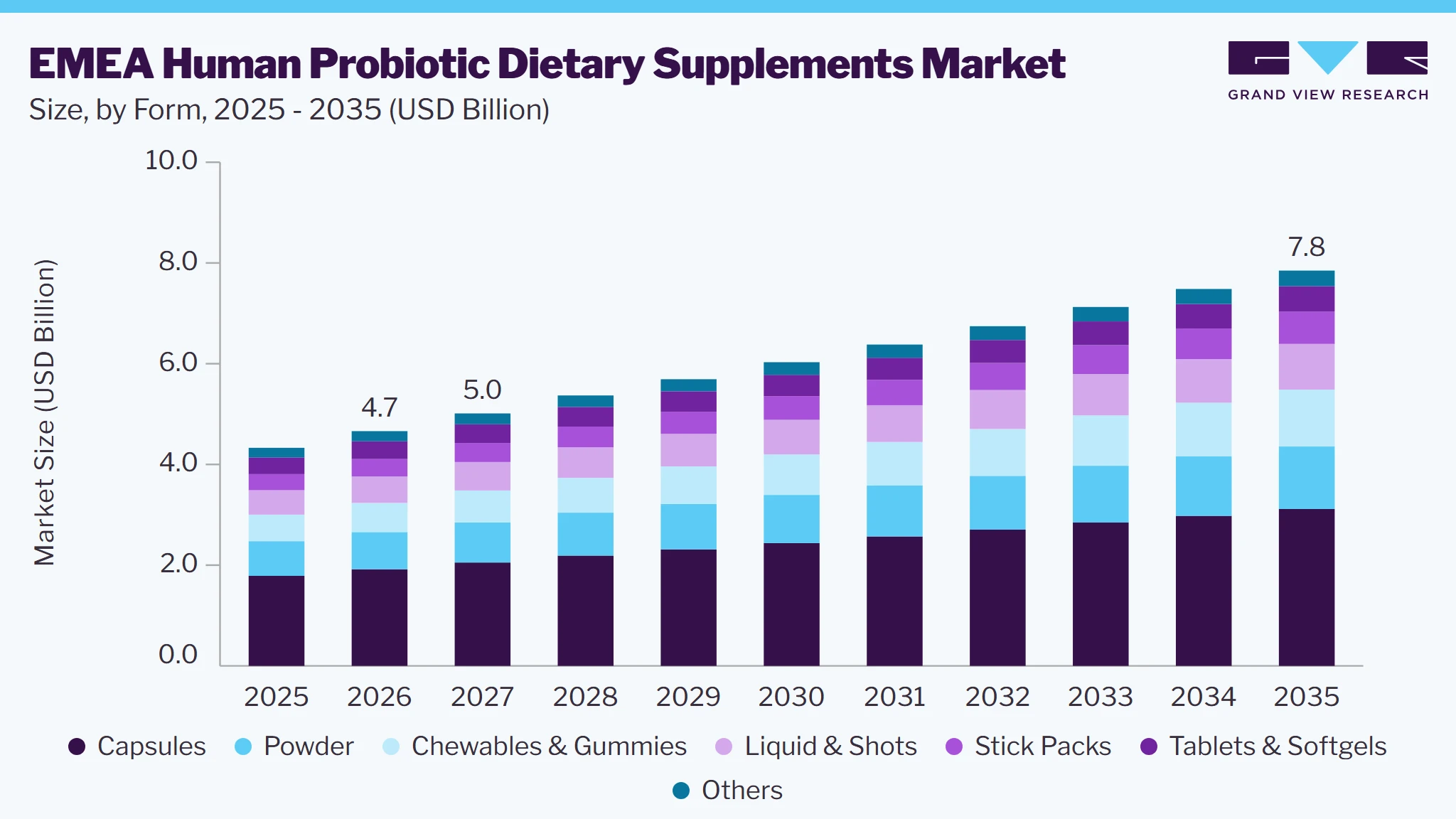
The EMEA human probiotic dietary supplements market size was valued at USD 4.7 billion in 2026 and is projected to grow from USD 5.0 billion in 2027 to USD 7.8 billion by 2035, at a CAGR of 5.8% from 2027 to 2035. Europe dominated the market, accounting a revenue share of 93.6% in 2026. The growth of the market is attributed to increasing consumer awareness of gut health, rising demand for preventive healthcare, and growing interest in microbiome-based nutrition.
Key Market Trends & Insights
- By form: Human probiotic dietary supplements in capsule form accounted for the largest market share of 41.1% in 2026.
- By application: Use of probiotic dietary supplements for gastrointestinal health accounted for the largest revenue share of 57.3% in 2026.
- By distribution channel: Sales of probiotic dietary supplements through Amazon is growing at the fastest CAGR of 8.8% from 2027 to 2035.
Regional Highlights
- Largest Region: Europe (93.6% revenue share, 2026)
- Fastest-growing region: Middle East & Africa (fastest CAGR, 2027-2035)
Market Size & Forecast
- Market Size in 2026: USD 4.7 Billion
- Estimated Market Size in 2027: USD 5.0 Billion
- Projected Market Size by 2035: USD 7.8 Billion
- CAGR (2027-2035): 5.8%
Prism AI by Grand View Research Free to tryAsk a question about the EMEA human probiotic dietary supplements marketTry asking✓Every figure cited from GVR research Prefer the report? Download free sample →Furthermore, expanding applications of probiotics across digestive health, immunity, women's health, and mental wellness are encouraging manufacturers to introduce specialized formulations and broaden their product portfolios.
 Source: Grand View Research, IR Documents, Primary Interviews, Paid DatabasesTo learn more about this report,
 Download Free Sample Report
Market Dynamics
The growing emphasis on digestive wellness and preventive nutrition is influencing the EMEA human probiotic dietary supplements market. Consumers are increasingly recognizing the importance of maintaining intestinal microbial balance as part of their broader health management routines. Probiotic supplements containing beneficial microorganisms are gaining attention for their role in supporting digestive function and gastrointestinal wellness. Growing awareness of common digestive concerns, including bloating, irregular bowel movements, and digestive discomfort, is encouraging consumers to explore targeted probiotic formulations. Furthermore, increasing interest in the gut microbiome and its relationship with immune function is expanding consumer demand beyond traditional digestive health applications.
In addition, the growing adoption of preventive healthcare practices is supporting the consumption of probiotic dietary supplements. Consumers are increasingly incorporating nutritional supplements into their daily routines to maintain general wellness and address specific nutritional requirements. Healthcare professionals, pharmacists, nutritionists, and wellness practitioners are also contributing to product awareness by providing guidance on probiotic selection and supplementation. The expansion of pharmacies, health and wellness stores, and online retail platforms is further improving product accessibility. Moreover, manufacturers are introducing multi-strain formulations, specialized probiotic blends, and convenient delivery formats to address different consumer requirements. These developments are expected to support continued market growth across the EMEA region.
Regulatory complexity and concerns surrounding probiotic product efficacy remain significant restraints for the EMEA human probiotic dietary supplements market. Manufacturers must comply with applicable requirements related to ingredient safety, product classification, labeling, health claims, and manufacturing practices across different countries. Regulatory frameworks can differ considerably between European markets and countries across the Middle East and Africa, increasing compliance costs and complicating product launches. Restrictions on health claims can also limit how companies communicate the potential benefits of probiotic formulations, particularly for products positioned around immunity, gastrointestinal health, and other specialized applications.
In addition, probiotic effectiveness depends on several factors, including bacterial strain selection, dosage, viability, formulation stability, and storage conditions. Maintaining the required number of viable microorganisms throughout manufacturing, transportation, and product shelf life can create technical challenges for manufacturers. Consumers may also struggle to distinguish scientifically supported formulations from products with limited clinical evidence. Furthermore, inconsistent product quality, exaggerated health claims, and inadequate consumer understanding of CFU counts and bacterial strains can weaken purchasing confidence. These factors may increase the importance of research investment, quality assurance, regulatory compliance, and transparent product communication.
The growing demand for specialized nutrition and microbiome-focused wellness solutions presents substantial opportunities for the EMEA human probiotic dietary supplements market. Consumers are increasingly seeking formulations designed around specific health requirements rather than relying exclusively on general-purpose probiotic products. This trend is encouraging manufacturers to develop targeted supplements for gastrointestinal health, immunity, women's health, bone and joint wellness, skin health, and brain and mental wellness. Products addressing specific life stages, dietary preferences, and individual wellness requirements can also help companies differentiate their offerings and reach underserved consumer groups.
Advancements in microbiome research, bacterial strain identification, encapsulation technologies, and formulation development are further supporting product innovation. Manufacturers are exploring strain-specific formulations, multi-strain combinations, synbiotics, and probiotic blends containing prebiotics and other functional ingredients. The development of improved delivery systems is also helping companies address challenges associated with bacterial viability, stability, and convenience. Furthermore, e-commerce and direct-to-consumer channels are enabling brands to provide personalized recommendations, subscription programs, educational content, and recurring deliveries. These developments, together with increasing consumer interest in preventive nutrition and personalized wellness, are expected to create significant opportunities for long-term market growth.
Consumer Insights
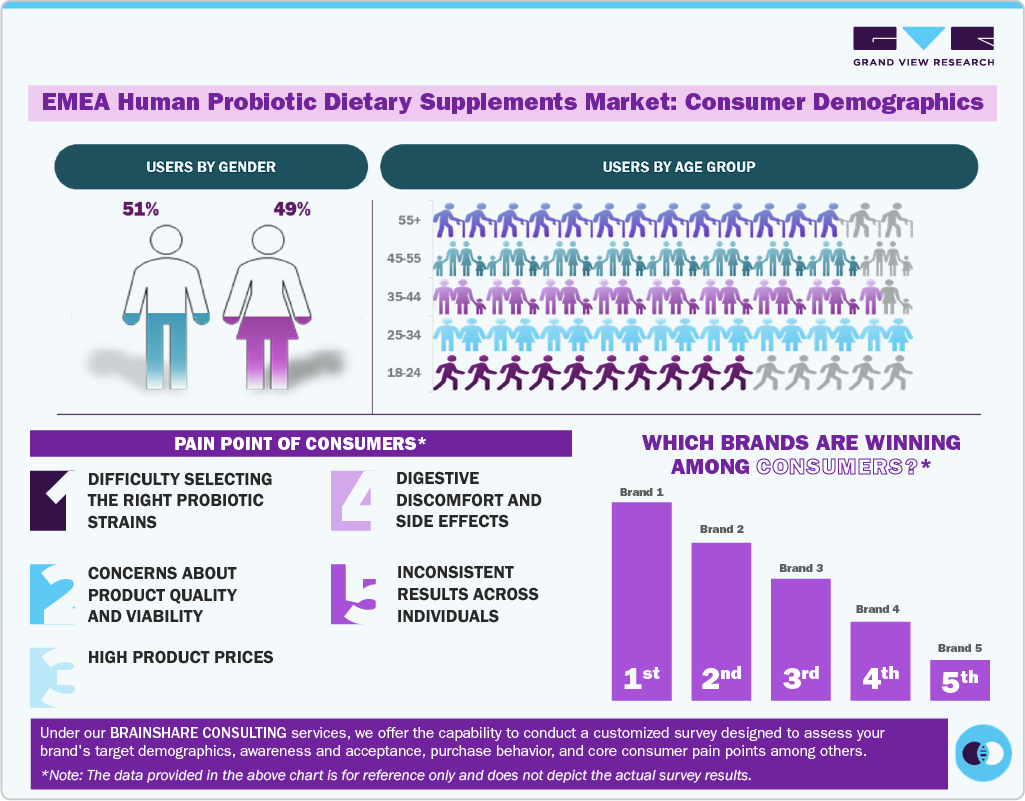
Consumer awareness of gut health and its relationship with overall well-being is increasing across the EMEA region, encouraging greater adoption of probiotic dietary supplements. Consumers are increasingly exploring products containing beneficial microorganisms to support intestinal microbial balance, digestive function, and general wellness. Growing interest in the gut microbiome is also expanding consumer understanding of the potential relationship between intestinal health, immune function, and other physiological processes. Probiotic supplements are gaining visibility through pharmacies, healthcare professionals, nutrition specialists, and digital health platforms, which are helping consumers understand different probiotic strains, formulations, and intended applications. These developments are creating opportunities for manufacturers to expand beyond traditional digestive health products into specialized wellness categories.
 To learn more about this report, Download Free Sample Report
Consumer demand in the EMEA human probiotic dietary supplements market is increasingly shifting toward targeted formulations, convenient consumption formats, and scientifically supported ingredients. Consumers are showing greater interest in products addressing gastrointestinal discomfort, immune support, energy, women's health, and other specific wellness requirements. Capsules remain an established format because of their convenience, portability, and ability to deliver standardized probiotic formulations, while gummies, powders, stick packs, and liquid supplements are attracting consumers seeking alternative consumption experiences. Furthermore, consumers are paying greater attention to bacterial strains, colony-forming unit (CFU) counts, product stability, ingredient transparency, and scientific evidence. Consequently, brands offering clearly differentiated formulations, convenient formats, and credible product information are better positioned to build consumer trust and encourage repeat purchases.
Analyst Perspective
The EMEA human probiotic dietary supplements market is driven by rising awareness of gut health, preventive nutrition, and microbiome-focused wellness. Growing demand for specialized formulations supporting digestion, immunity, metabolic health, and women's wellness is encouraging product innovation. Capsules remain the primary delivery format, while gummies and chewables are gaining popularity. Wider availability through pharmacies and online platforms is further supporting adoption.
Competitive advantage increasingly depends on scientific credibility, proprietary probiotic strains, formulation stability, and product differentiation. Growing consumer focus on CFU counts, clinical evidence, and ingredient transparency is creating opportunities for companies offering research-backed formulations. Increasing interest in personalized nutrition and gut-brain health is expected to further support market growth.
Form Insights
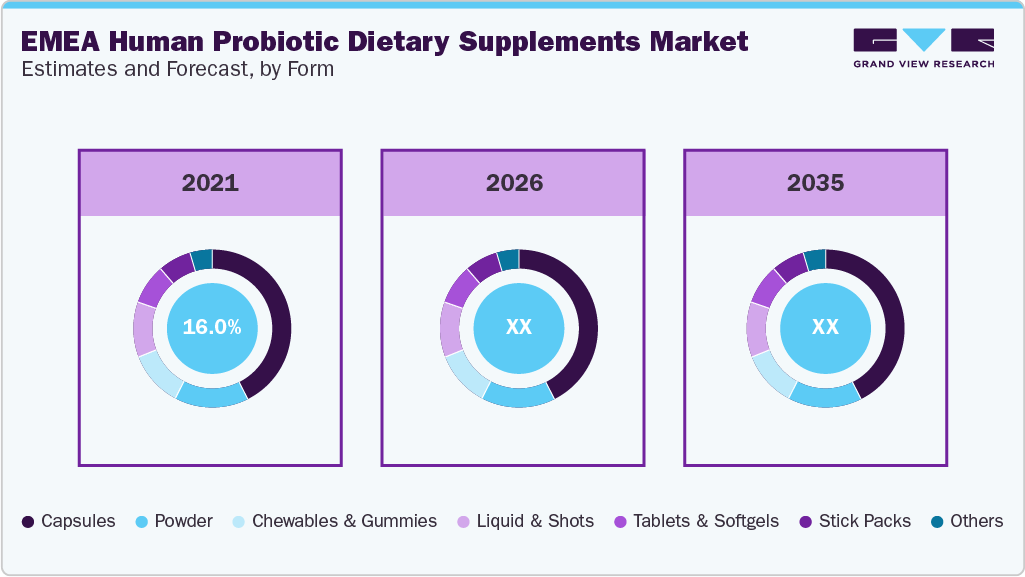
The capsules segment accounted for the largest market share of 41.1% in 2026. The segment's leading position is attributed to the convenience, portability, precise dosage, and established consumer acceptance of capsule-based probiotic supplements. Capsules provide manufacturers with suitable delivery systems for incorporating single-strain and multi-strain probiotic formulations while protecting sensitive microorganisms through appropriate encapsulation technologies. Furthermore, their longer shelf-life potential, ease of storage, and availability across different CFU strengths make them attractive to consumers seeking consistent daily supplementation. Pharmacies, healthcare practitioners, and online retailers also offer a wide selection of probiotic capsules targeting digestive health, immunity, and general wellness. The continued availability of specialized capsule formulations is expected to support segment growth.
 To learn more about this report, Download Free Sample Report
The chewables and gummies form of probiotic supplements are projected to grow at the fastest CAGR of 7.5% over the forecast period from 2027 to 2035. Growing consumer preference for convenient and palatable supplement formats is supporting segment expansion. Unlike conventional capsules and tablets, chewables and gummies offer alternative consumption experiences through appealing flavors, textures, and easy administration. These formats are particularly attractive to consumers who experience difficulty swallowing conventional supplements and those seeking to incorporate probiotics into their daily wellness routines. Furthermore, manufacturers are introducing flavored formulations, sugar-conscious options, and products combining probiotics with vitamins and other functional ingredients. Increasing demand for convenient supplementation and product innovation is expected to accelerate segment adoption.
Application Insights
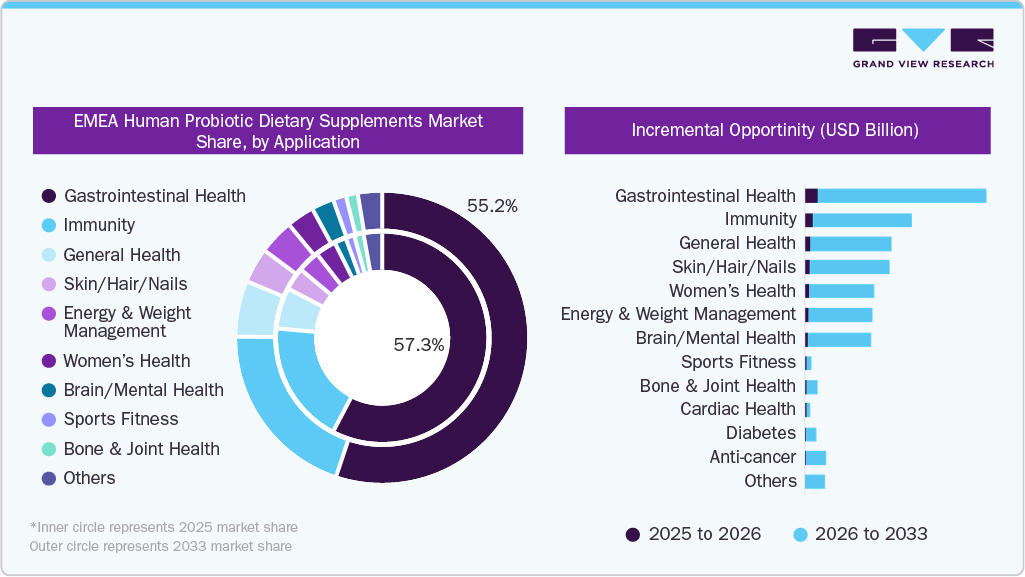
The use of probiotic dietary supplements for gastrointestinal health accounted for the largest market share of 57.3% in 2026. The segment's leading position reflects the established association between probiotics and digestive wellness. Consumers increasingly seek probiotic supplements to support intestinal microbial balance, digestive function, and gastrointestinal comfort. Growing awareness of digestive concerns, including bloating, irregular bowel movements, and digestive sensitivities, is encouraging the adoption of targeted formulations. Furthermore, healthcare professionals and pharmacists are contributing to consumer awareness by providing guidance on probiotic strains and their intended digestive health applications. Manufacturers are also introducing specialized products containing multiple bacterial strains and combinations of probiotics and prebiotics. The growing emphasis on gut health as an important component of overall wellness is expected to sustain segment demand.
 To learn more about this report, Download Free Sample Report
The use of probiotic dietary supplements for brain and mental health is anticipated to grow at the fastest CAGR of 8.6% from 2027 to 2035. Increasing scientific interest in the gut-brain axis and the relationship between intestinal microorganisms and neurological functions is encouraging consumer interest in targeted probiotic formulations. Consumers are becoming more aware of the potential role of gut microbiota in processes associated with mood, stress response, and mental well-being. This is encouraging manufacturers to explore specialized formulations containing probiotic strains studied for their potential effects on the gut-brain axis. Furthermore, growing interest in holistic wellness and preventive nutrition is supporting demand for products positioned around stress management, emotional well-being, and cognitive wellness. Continued microbiome research and product innovation are expected to create opportunities for segment expansion.
Distribution Channel Insights
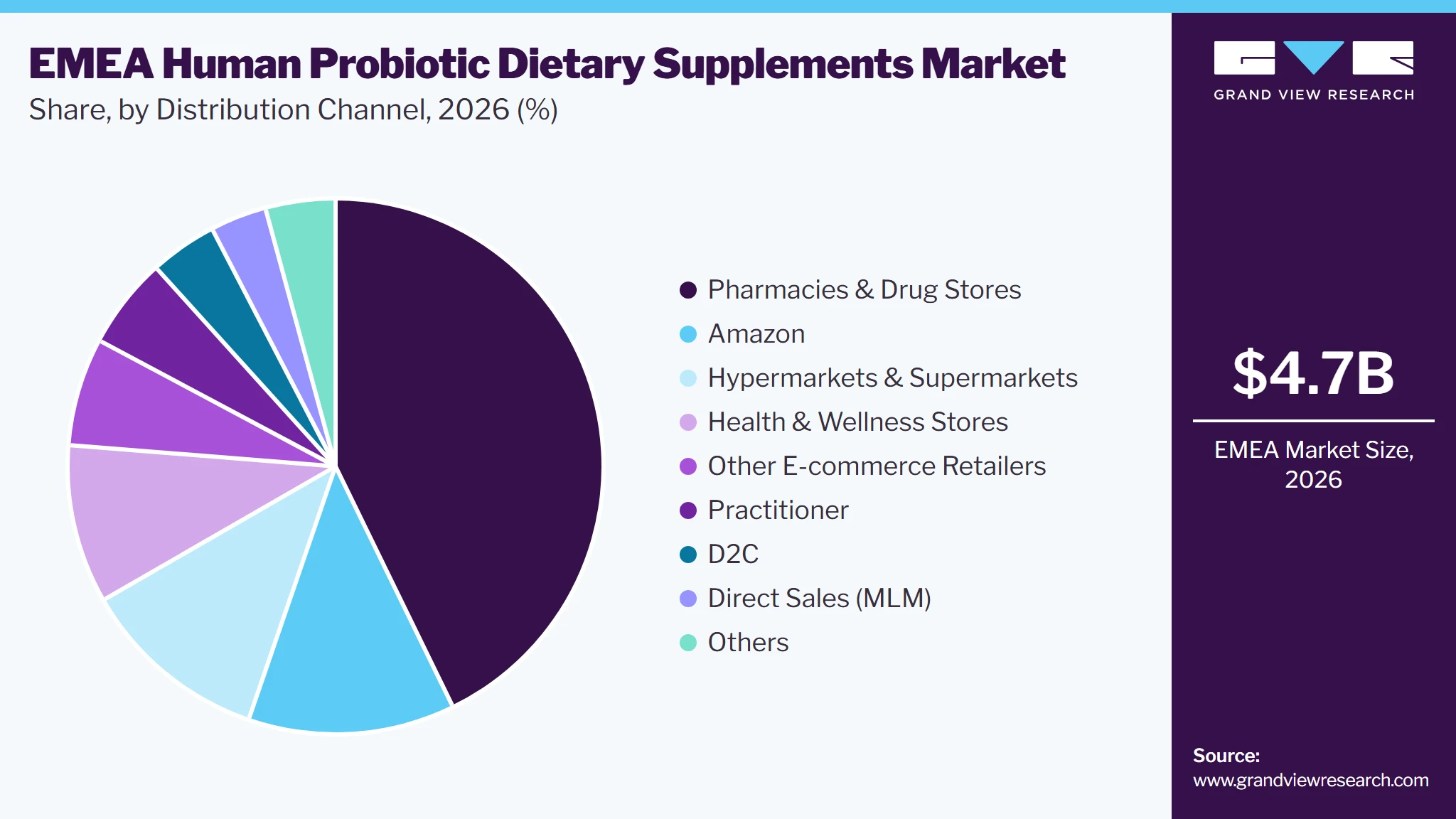
The sale of human probiotic dietary supplements through pharmacies and drug stores captured the largest market share of 42.8% in 2026. The presence of established pharmacy chains and independent drug stores across the EMEA region significantly contributes to segment expansion. These outlets provide consumers with access to a broad range of probiotic dietary supplements and opportunities to seek product guidance from pharmacists and healthcare professionals. Consumer preference for purchasing health-related products through trusted retail outlets also supports the segment's leading position. Furthermore, pharmacies offer multiple formulations, including capsules, powders, tablets, and liquid supplements, allowing consumers to compare products based on bacterial strains, dosage, and intended health applications. The growing availability of specialized probiotic products through pharmacy networks is expected to support continued segment growth.
 To learn more about this report, Download Free Sample Report
Sales through Amazon is projected to grow at the fastest CAGR of 8.8% over the forecast period from 2027 to 2035. Increasing consumer preference for online purchasing and the growing availability of specialized probiotic products are supporting segment expansion. Amazon provides consumers with access to a broad selection of brands, formulations, product strengths, and delivery formats across multiple price categories. Product descriptions, customer reviews, subscription options, and promotional offers also support product discovery and purchasing decisions. Furthermore, online marketplaces allow emerging and established supplement brands to reach consumers beyond their traditional retail distribution networks. The convenience of home delivery, product comparisons, and recurring purchase options is expected to encourage greater adoption of probiotic dietary supplements through Amazon.
Regional Insights
The Europe human probiotic dietary supplements industry accounted for the largest market share of around 93.6% in 2026. The established consumer awareness of digestive wellness, developed dietary supplement industries, and widespread access to pharmacies and healthcare professionals are supporting the growth of the market in the region. Consumers are increasingly exploring probiotic formulations for gastrointestinal health, immunity, women's health, and general wellness. Furthermore, established supplement manufacturers, advanced product development capabilities, and strong retail distribution networks are supporting product availability across European markets. Growing interest in microbiome research, personalized nutrition, and preventive healthcare is also encouraging manufacturers to introduce specialized probiotic formulations. The expansion of online supplement retailers and growing preference for convenient delivery formats are expected to reinforce Europe's leading position in the regional market.
Italy Human Probiotic Dietary Supplements Market Trends
Italy led the European human probiotic dietary supplements market in 2026, holding the largest market share of 21.4% of the region's total revenue. The Italian market benefits from established consumer familiarity with probiotic products and strong interest in digestive wellness. Consumers increasingly incorporate probiotic supplements into their health management routines, particularly for gastrointestinal balance and general digestive support. The presence of established pharmaceutical and dietary supplement companies, pharmacy distribution networks, and specialized health retailers also contributes to market development. Furthermore, consumer interest in preventive nutrition, microbiome health, and specialized probiotic formulations is encouraging manufacturers to expand their product portfolios. The availability of capsules, sachets, powders, and liquid probiotic products through pharmacies and online platforms is further supporting consumer access and category adoption.
Middle East & Africa Human Probiotic Dietary Supplements Market
The Middle East & Africa human probiotic dietary supplements industry is projected to grow at the fastest CAGR of 6.7% from 2027 to 2035. Regional growth is supported by increasing health awareness, rising disposable incomes, urbanization, and growing consumer interest in preventive healthcare. Consumers are becoming more attentive to digestive wellness and the role of nutritional supplements in supporting overall health. Demand for probiotic products is gaining traction as pharmacies, modern retail outlets, healthcare practitioners, and online platforms improve product accessibility. Furthermore, increasing exposure to international supplement brands and growing interest in specialized formulations are encouraging category development. However, consumer awareness, affordability, regulatory differences, and distribution infrastructure vary across regional markets. Companies offering accessible products, clear health information, reliable quality, and convenient formulations are expected to benefit from emerging demand opportunities.
Key EMEA Human Probiotic Dietary Supplements Company Insights
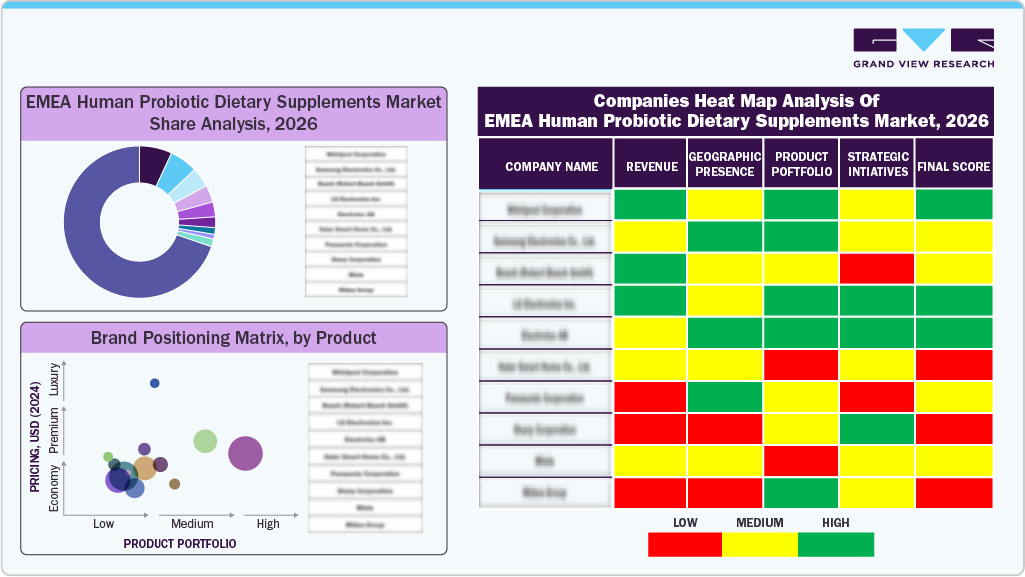
The EMEA human probiotic dietary supplements industry is witnessing increasing competition as established ingredient manufacturers, pharmaceutical companies, specialized probiotic brands, and nutrition businesses expand their product portfolios. Market participants are focusing on strain-specific formulations and specialized products targeting gastrointestinal health, immunity, women's health, brain and mental wellness, and general health applications. Companies are strengthening their competitive positions through microbiome research, clinical studies, formulation innovation, strategic partnerships, and expansion across pharmacy and online distribution networks.
Established ingredient suppliers leverage their expertise in microbial strains, fermentation technologies, and nutritional science to serve supplement manufacturers, while specialized brands focus on differentiated formulations and consumer engagement. Companies are also investing in product stability, convenient delivery formats, transparent labeling, and scientifically supported product positioning. The market offers opportunities to strengthen competitive positioning through research-driven innovation, brand credibility, expanded distribution, and targeted product development across Europe and Middle East & Africa.
 To learn more about this report, Download Free Sample Report
Key EMEA Human Probiotic Dietary Supplements Companies
-
International Flavors & Fragrances Inc.
-
ADM
-
Symprove
-
OMNi-BiOTiC
-
Kerry Group
-
Biocodex
-
dsm-firmenich
-
Novonesis
-
Nature's Sunshine
-
Herbalife
Competitive Benchmarking
Category
Operating Strategies
Competitive Edge
Weakness
Established Players (International Flavors & Fragrances Inc.; ADM; Kerry Group; dsm-firmenich; Novonesis; Biocodex)
- Expand probiotic ingredient and finished-product portfolios across gastrointestinal health, immunity, general wellness, women's health, and other specialized applications. Invest in microbial strain research, fermentation technologies, clinical validation, encapsulation, and formulation development. Strengthen relationships with dietary supplement manufacturers, pharmaceutical companies, and healthcare distribution networks.
- Established expertise in microbial technologies, nutritional science, fermentation, and ingredient development. Strong B2B relationships, research capabilities, quality-control infrastructure, and international distribution networks support product innovation and commercial penetration.
- High research, manufacturing, regulatory compliance, and quality-assurance costs. Ingredient-focused business models can create dependence on downstream supplement manufacturers and their commercialization strategies.
Specialized & Consumer-Focused Players (Symprove; OMNi-BiOTiC; Nature's Sunshine; Herbalife)
- Focus on differentiated probiotic formulations and consumer wellness requirements through specialized products targeting digestive health, immunity, and other applications. Leverage brand positioning, scientific communication, practitioner relationships, direct selling, digital marketing, and consumer education to strengthen market penetration.
- Specialized probiotic expertise, established consumer relationships, targeted product positioning, and differentiated delivery formats. Direct selling and practitioner networks can support consumer education, product recommendations, and repeat purchasing.
- Comparatively limited resources for large-scale microbial research and global expansion. Dependence on selected distribution models, product categories, and consumer segments can create challenges in competing with diversified multinational ingredient suppliers and supplement manufacturers.
Recent Developments:
-
In September 2026, Kerry launched its Bio-K+ probiotic capsule range in the UK and Ireland, introducing four formulations containing proprietary probiotic strains to support digestive health, gut microbiome balance, abdominal comfort, and stress management.
-
In November 2024, Nestlé Health Science launched six Garden of Life probiotic supplement formulations in the UK and Ireland, offering products with up to 50 billion CFU and 15 bacterial strains to address diverse gut health and dietary needs.
EMEA Human Probiotic Dietary Supplements Market Report Scope
Report Attribute
Details
Market size in 2026
USD 4.7 billion
Estimated market size in 2027
USD 5.0 billion
Projected market size by 2035
USD 7.8 billion
Growth Rate (Revenue)
CAGR of 5.8% from 2027 to 2035
Actuals
2023 - 2026
Forecast period
2027 - 2035
Quantitative (Revenue) units
Revenue in USD Million/Billion, and CAGR from 2027 to 2035
Report coverage
Revenue forecast, company ranking, competitive landscape, growth factors, and trends
Segments covered
Form, application, distribution channel
Regional Scope
Europe and Middle East & Africa
Country scope
U.K., Germany, France, Italy, Spain, Poland
Key companies profiled
International Flavors & Fragrances Inc.; ADM; Symprove; OMNi-BiOTiC; Kerry Group; Biocodex; dsm-firmenich; Novonesis; Nature's Sunshine; and Herbalife
Customization scope
Free report customization (equivalent up to 8 analysts’ working days) with purchase. Addition or alteration to country, regional & segment scope.
Pricing and purchase options
Avail customized purchase options to meet your exact research needs. Explore purchase options
EMEA Human Probiotic Dietary Supplements Market Report Segmentation
This report forecasts revenue growth at the regional and country levels and provides an analysis of the latest industry trends and opportunities in each of the sub-segments from 2023 to 2035. For the purpose of this study, Grand View Research has segmented the EMEA human probiotic dietary supplements market report on the basis of form, application, distribution channel, and region.
-
Form Outlook (Revenue, USD Billion; 2023 - 2035)
-
Chewables & Gummies
-
Capsules
-
Powder
-
Tablets & Softgels
-
Liquid & Shots
-
Stick Packs
-
Others
-
-
Application Outlook (Revenue, USD Billion; 2023 - 2035)
-
Sports Fitness
-
Energy & Weight Management
-
General Health
-
Bone & Joint Health
-
Gastrointestinal Health
-
Immunity
-
Cardiac Health
-
Diabetes
-
Anti-Cancer
-
Skin/Hair/Nails
-
Brain/Mental Health
-
Women’s Health
-
Others
-
-
Distribution Channel Outlook (Revenue, USD Billion; 2023 - 2035)
-
Pharmacies & Drug Stores
-
Hypermarkets & Supermarkets
-
Health & Wellness Stores
-
Amazon
-
D2C
-
Other E-commerce Retailers
-
Practitioner
-
Direct Sales (MLM)
-
Others
-
-
Regional Outlook (Revenue, USD Million, 2023 - 2035)
-
Europe
-
U.K
-
Germany
-
France
-
Italy
-
Poland
-
Spain
-
-
Middle East & Africa
-
Research Methodology
The EMEA human probiotic dietary supplements market figures in this report are based on a proven research process that combines executive interviews with secondary research from proprietary databases, company filings, and recognized regulatory and institutional sources. Market size is built through value-chain sizing - reconciling supply-side and demand-side estimates - and triangulated with bottom-up and top-down approaches. Every estimate passes multiple levels of expert validation before publication, with each EMEA human probiotic dietary supplements segment quantified using the revenue-capture definitions in the table below.
Segment Definition
Segment - Application
Revenue capture definition
Sports Fitness
This segment includes sales of probiotic dietary supplements formulated to support digestive function, nutrient utilization, and gut health in physically active individuals and athletes.
Energy & Weight Management
This segment includes sales of probiotic dietary supplements marketed primarily to support energy metabolism, metabolic balance, and healthy weight management.
General Health
This segment includes sales of probiotic dietary supplements designed to support overall wellness and maintain general intestinal microbial balance without targeting a specific health condition.
Bone & Joint Health
This segment includes sales of probiotic dietary supplements formulated to support bone strength, mineral utilization, joint function, and musculoskeletal wellness.
Gastrointestinal Health
This segment includes sales of probiotic dietary supplements specifically formulated to support digestive function, intestinal microbial balance, bowel regularity, and gastrointestinal comfort.
Immunity
This segment includes sales of probiotic dietary supplements primarily marketed to support immune system function, intestinal barrier integrity, and natural immune defenses.
Cardiac Health
This segment includes sales of probiotic dietary supplements formulated to support cardiovascular wellness, healthy blood lipid levels, and normal cardiovascular function.
Diabetes
This segment includes sales of probiotic dietary supplements marketed to support glucose metabolism, insulin sensitivity, and metabolic wellness in individuals concerned about blood sugar management.
Anti-cancer
This segment includes sales of probiotic dietary supplements positioned for nutritional support and gut microbiome maintenance in the context of cancer-related wellness, excluding pharmaceutical cancer treatments.
Skin/Hair/Nails
This segment includes sales of probiotic dietary supplements formulated to support skin condition, hair quality, and nail strength through nutritional and microbiome-related wellness.
Brain/Mental Health
This segment includes sales of probiotic dietary supplements marketed to support the gut-brain axis, mood balance, stress response, and cognitive wellness.
Women's Health
This segment includes sales of probiotic dietary supplements specifically formulated to support women's microbiome health, vaginal microbial balance, and urinary tract wellness.
Others
This segment includes sales of probiotic dietary supplements targeting other specialized health applications not classified within the aforementioned categories.
Estimation Model
Target Population Layer
Supplement Adoption Layer
Probiotic Application
Conversion LayerMonetisation Layer Who has a relevant health or wellness need?
Who uses dietary supplements?
Who actively purchases probiotic dietary supplements?
How much revenue is generated?
Identify the adult population across Europe and Middle East & Africa. Apply relevant prevalence, lifestyle, dietary, and wellness requirements across gastrointestinal health, immunity, metabolic wellness, women's health, and other application categories.
Apply country-specific dietary supplement adoption rates to the eligible population. Consider supplement purchasing behavior, preventive healthcare awareness, healthcare recommendations, and consumer acceptance of probiotic products.
Apply probiotic-category participation and application conversion rates to supplement users, filtering consumers purchasing products specifically positioned around gastrointestinal health, immunity, sports fitness, women's health, and other targeted wellness needs.
Multiply estimated paying probiotic supplement users by blended annual consumer spending per user. Incorporate differences in product formats, bacterial strains, CFU strengths, purchase frequency, premium formulations, subscription models, and online/offline purchasing.
Delivered Customizations
This report has been delivered with the following In-depth customizations
CLIENT REQUEST
CUSTOMIZATION DELIVERED
VALUE ADDS
Human Probiotic & Gut Health Supplement Trends
Conducted a focused assessment of human probiotic dietary supplements covering gastrointestinal health, immunity, general health, sports fitness, women's health, brain and mental wellness, and other specialized applications. The assessment also considered changing consumer preferences, microbiome awareness, probiotic strains, formulation innovation, and preventive nutrition.
Helps stakeholders identify high-growth probiotic applications, understand changing consumer health priorities, and evaluate product innovation and commercialization opportunities across the EMEA dietary supplements market.
Preventive Healthcare & Probiotic Supplement Adoption Trends
Evaluated adoption trends across different probiotic supplement formats, including capsules, chewables and gummies, powders, tablets, softgels, liquids, and stick packs. The analysis assessed growing interest in gut health, immune support, convenient supplementation, personalized nutrition, and science-backed wellness solutions.
Provides insights into emerging consumer needs, attractive application-specific opportunities, and commercially relevant supplement formats to support product positioning, portfolio expansion, and targeted marketing strategies.
Personalized Nutrition & Specialized Probiotic Opportunity Assessment
Assessed demand for targeted probiotic formulations, including multi-strain products, specialized bacterial strains, and formulations addressing digestive, metabolic, women's, and brain health. The assessment also considered clinical research, formulation stability, product differentiation, regulatory requirements, and consumer trust.
Supports investment and expansion strategies by identifying underserved application areas, evaluating product differentiation opportunities, and strengthening long-term growth prospects in specialized probiotic supplementation.
About the Author(s)
Nutraceuticals & Functional Foods Research Team
Consumer Goods · Nutraceuticals & Functional FoodsThis report was authored by the nutraceuticals & functional foods research team at Grand View Research - comprising two research analysts, one senior research analyst, and one industry expert - with specialized expertise in the nutraceuticals & functional foods segment of the consumer goods industry. All findings are based on proprietary consumer goods databases, executive interviews, and regulatory analysis, subject to internal peer review prior to publication.
Last Updated:
Speak to Analyst

Customize this report to your needs - add regions, segments, or data points, with 20% free customization.
Or view our licence options:


ISO 9001:2015 & 27001:2022 Certified
We are GDPR and CCPA compliant! Your transaction & personal information is safe and secure. For more details, please read our privacy policy.


