
- Home
- »
- Medical Devices
- »
-
Europe Bioregenerative Aesthetic Injectable Market Report 2033GVR Report cover

Europe Bioregenerative Aesthetic Injectable Market (2026 - 2033) Size, Share & Trends Analysis Report By Product (PN, Peptide based Injectables), By Application, By End-use (MedSpas, Hospitals, Aesthetic Surgery Centers, Dermatology Centers), By Country, And Segment Forecasts
Europe Bioregenerative Aesthetic Injectable Market Summary
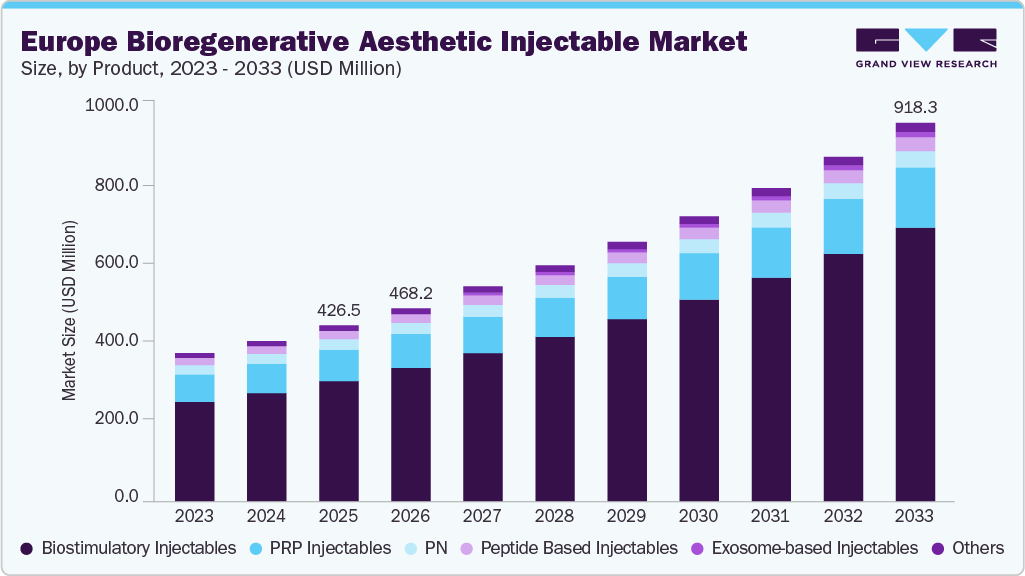
The Europe bioregenerative aesthetic injectable market size was estimated at 426.5 million in 2025 and is projected to reach 918.3 million by 2033, growing at a CAGR of 10.1% from 2026 to 2033. This growth is driven by rising consumer demand for natural-looking, minimally invasive treatments that promote long-term skin health.
Key Market Trends & Insights
- Germany bioregenerative aesthetic injectable industry held the largest share of 18.0% in 2025.
- The bioregenerative aesthetic injectable industry in UK is expected to grow significantly over the forecast period.
- By product, the biostimulatory injectables segment held the largest market share in 2025.
- By application, the wrinkle correction (for face) segment held the largest market share in 2025.
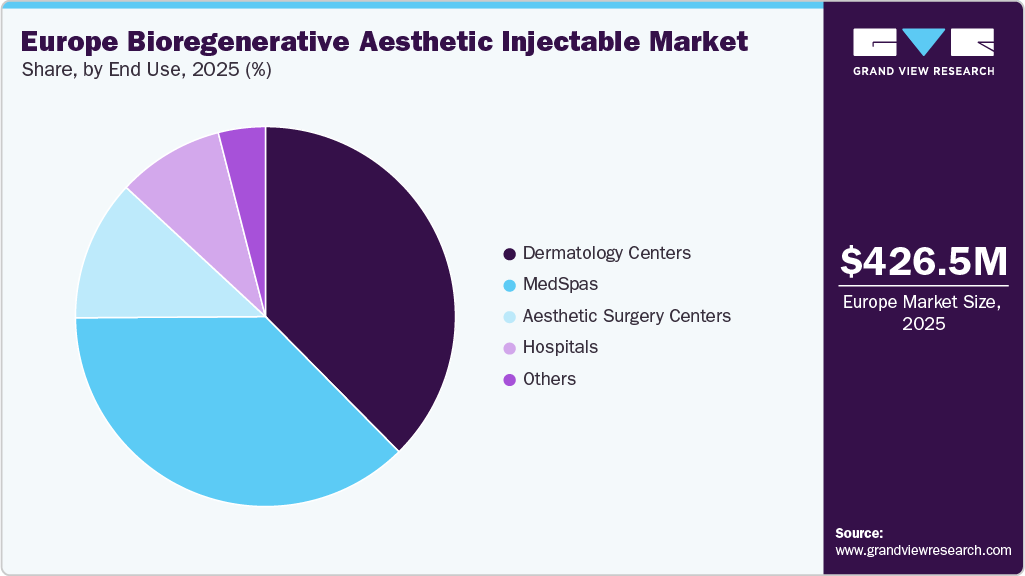
- By End-use, the dermatology centers segment held the largest revenue share of 37.6% in 2025.
Market Size & Forecast
- 2025 Market Size: 426.5 Million
- 2033 Projected Market Size: 918.3 Million
- CAGR (2026-2033): 10.1%
Three ways to get this report
Buy it, customize it, or ask a question.Ask an Analyst
Analyst response in 1 business day
- AccessReport author, directly
- Reply timeWithin 1 working day
- No sales callDirect answer only
- FormatEmail reply
- CostFree, no cost
Get the Full Report
What the study covers
- FormatsPDF · Excel · Dashboard
- Timeline2026–2033 annual, 2025 base
- Coverage20+ countries, 5 regions
- Companies10+ key players profiled
Customize the Report
20% free customization
- IncludeCountries, segments, points
- TailorTo your product definition
- ExtendDeeper competitor detail
- OrA fully bespoke study
- Turnaround5–10 working days
Advances in regenerative technologies such as platelet-rich plasma, polynucleotides, and exosomes are boosting product effectiveness. Increasing awareness, higher disposable incomes, and expanding medical aesthetics infrastructure worldwide are further driving adoption across key markets.The European bioregenerative aesthetic injectable industry is entering a more mature and philosophy-driven phase, shaped by shifting consumer expectations toward natural regeneration, skin health, and long-term tissue quality. Across major markets such as the UK, Germany, France, Italy, Spain, and the Nordics, PLLA (poly-L-lactic acid) and polynucleotide (PDRN)-based injectables are increasingly positioned as core tools for biological rejuvenation rather than cosmetic transformation.
 Source: Grand View Research, IR Documents, Primary Interviews, Paid DatabasesTo learn more about this report,
 Download Free Sample Report
This transition closely mirrors broader cultural signals. According to NEXT by Galderma, online searches for the “clean girl aesthetic” rose by more than 500% between 2021 and 2023 across Europe, while interest in more aggressive facial reshaping procedures fell sharply. These shifts underscore Europe’s growing preference for subtle enhancement, skin vitality, and authenticity, which aligns directly with the mechanisms of PLLA and PDRN injectables.
A defining feature of Europe’s market evolution is education-led adoption. Through the NEXT by Galderma framework, six future-facing aesthetic trends Proactive Beauty, Expressionality, Cancelling Age, Mindful Aesthetics, Fast Aesthetics, and Beauty Fandom have been translated into practical training via the Galderma Aesthetic Injector Network (GAIN). In 2024 alone, GAIN delivered over 8,000 educational events globally, training more than 88,000 practitioners, with strong participation from European clinicians.
These programs emphasize advanced facial assessment, regenerative consultation models, and minimally invasive injection techniques, directly supporting the responsible integration of PLLA and PDRN treatments into routine practice. Rather than trend-driven volume enhancement, European injectors are increasingly using bioregenerative injectables to future-proof facial tissues, improve skin resilience, and maintain expression.
Market Concentration & Characteristics
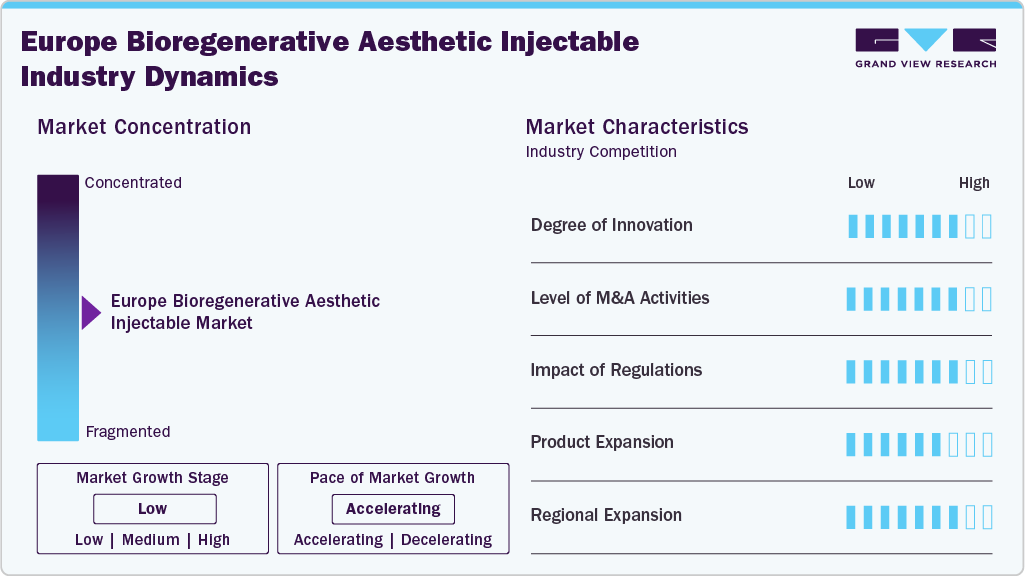
The Europe bioregenerative aesthetic injectable industry is moderately concentrated, dominated by established pharmaceutical and aesthetic leaders such as Galderma, Merz Pharma, IBSA Group, and Croma-Pharma. These companies leverage strong distribution networks, clinical validation, and CE-marked products to maintain a competitive advantage. The market is characterized by rising demand for collagen-stimulating injectables such as polynucleotides and biostimulators, particularly in Germany, France, Italy, and the UK. Private dermatology and aesthetic clinics drive adoption, while regulatory oversight under the EU Medical Device Regulation (MDR) ensures product safety. Innovation, physician training, and combination therapies are key competitive differentiators shaping market dynamics.
The Europe bioregenerative aesthetic injectable industry exhibits strong innovation, supported by Sweden’s growing influence in European aesthetics. In January 2025, Nordberg Medical introduced Juläine, a Swedish-developed PLLA biostimulator, across Central Europe. Developed using proprietary LASYNPRO technology, Juläine utilizes microsphere-based collagen stimulation with controlled inflammatory response to gradually activate fibroblasts. Positioned as a minimally invasive alternative to traditional dermal fillers, the product highlights Sweden’s commitment to science-led innovation, natural aesthetic outcomes, and sustained tissue regeneration through long-term collagen remodeling.
 To learn more about this report, Download Free Sample Report
The Europe bioregenerative aesthetic injectable industry is experiencing moderate to high merger and acquisition (M&A) activity, reflecting intensifying competition and portfolio expansion strategies. Established players such as Galderma, Merz Pharma, and Croma-Pharma frequently pursue strategic acquisitions, distribution agreements, and minority investments to strengthen their regenerative portfolios, particularly in polynucleotides and biostimulators. Cross-border partnerships between Swiss, German, Italian, and Scandinavian firms are common, aiming to accelerate CE-marked product launches and clinical expansion. Private equity involvement is also rising, targeting fast-growing aesthetic brands. Overall, M&A activity is driven by technology acquisition, geographic expansion, and consolidation within Europe’s premium aesthetics segment.
Regulation significantly shapes the Europe bioregenerative aesthetic injectables industry, primarily under the EU Medical Device Regulation (MDR 2017/745), which imposes stricter clinical evidence, post-market surveillance, and CE-marking requirements. Manufacturers must demonstrate long-term safety and performance, particularly for collagen-stimulating biostimulators and polynucleotides. Compliance costs and extended approval timelines have increased barriers to entry, favoring established players with strong regulatory infrastructure. National health authorities in Germany, France, and Italy further enforce practitioner qualification standards and advertising controls. While regulation slows rapid commercialization, it enhances patient safety, product credibility, and market transparency, ultimately supporting sustainable growth and physician confidence in regenerative injectables.
Product substitutes in the Europe bioregenerative aesthetic injectable industry include traditional hyaluronic acid (HA) dermal fillers, botulinum toxin injections, energy-based devices, and surgical cosmetic procedures. HA fillers from companies such as Allergan Aesthetics and Teoxane remain widely used for immediate volumization, while botulinum toxin products address dynamic wrinkles. Laser, radiofrequency, and ultrasound-based skin tightening systems offer non-injectable alternatives. In addition, surgical facelifts provide long-lasting structural correction. Although bioregenerative injectables focus on collagen stimulation and gradual tissue remodeling, substitutes appeal to patients seeking faster results, lower cost options, or more dramatic aesthetic transformation.
Regional expansion in the Europe bioregenerative aesthetic injectables industry is driven by rising demand for minimally invasive procedures, increasing aesthetic awareness, and growth in private dermatology clinics across Western and Central Europe. Companies such as IBSA Group and Croma-Pharma are expanding distribution networks into Germany, France, Italy, Spain, and the Nordics. Recognizing the broader potential of PLLA, manufacturers are extending applications beyond facial treatments. For instance, Sculptra received European MDR certification in late 2025 for expanded body indications, including gluteal, thigh, and décolletage rejuvenation, reflecting regulatory confidence and growing demand for comprehensive aesthetic solutions across the region.
Product Insights
The biostimulatory injectable segment accounted for the largest revenue share of 68.4% in 2025 and is expected to witness the fastest CAGR during the forecast period, primarily due to its ability to deliver long-lasting, natural-looking aesthetic results by stimulating the body’s own collagen production. Unlike traditional fillers that provide immediate volume, biostimulatory injectables such as poly-L-lactic acid and calcium hydroxylapatite promote gradual tissue regeneration and structural improvement. Growing patient preference for minimally invasive treatments with durable outcomes, reduced maintenance frequency, and improved skin quality has driven adoption. Strong physician confidence, expanding clinical indications, and increasing use in combination therapies further support the segment’s dominant market position.
The exosome-based injectable segment is estimated to register the fastest CAGR from 2026 to 2033 due to increasing interest in advanced regenerative therapies that support cellular communication, tissue repair, and skin rejuvenation. Exosomes contain bioactive molecules such as growth factors, proteins, and RNA that enhance collagen synthesis, reduce inflammation, and accelerate healing. Rising demand for next-generation, minimally invasive aesthetic solutions, along with ongoing clinical research and product innovation, is driving adoption. In addition, expanding use in combination with microneedling and energy-based treatments, coupled with improving regulatory clarity and practitioner training, is expected to accelerate market growth.
Application Insights
The wrinkle correction (for face) segment accounted for the largest share of 20.4% in 2025. An aging population increasingly seeks non-surgical aesthetic solutions that can delay or diminish visible signs of aging without the recovery time or risk associated with surgical procedures. With populations over age 60 expanding worldwide, the prevalence of wrinkles and sagging skin has become a central driver of consumer demand for minimally invasive interventions.
The under eye-areas (for face) segment in the Europe bioregenerative aesthetic injectable industry is expected to witness the fastest CAGR during the forecast period. The rising demand is also influenced by lifestyle factors including increased screen time and digital fatigue, which accentuate under-eye shadows and hollowness, especially among younger demographics who now view early preventative aesthetics as part of self-care.
End-use Insights
The dermatology centers segment held the largest revenue share of 37.6%, in 2025 within the market. This dominance is driven by the growing preference for medically supervised aesthetic procedures, particularly collagen-stimulating injectables such as polynucleotides and PLLA-based biostimulators. Dermatology centers offer specialized expertise in skin biology, regenerative treatments, and combination therapies, enhancing patient trust and treatment outcomes. Increasing awareness of minimally invasive anti-aging solutions, rising disposable incomes, and strong urban clinic networks across Germany, France, and Italy further support segment growth. Advanced diagnostic capabilities and personalized treatment planning also position dermatology centers as primary hubs for regenerative aesthetic procedures.
 To learn more about this report, Download Free Sample Report
The MedSpa segment is expected to witness the fastest CAGR during the forecast period, driven by rising consumer demand for minimally invasive, quick-recovery treatments in non-hospital settings. Growing preference for preventive aesthetics, combination therapies, and personalized skin rejuvenation programs is accelerating adoption. MedSpas offer convenient access, competitive pricing, and strong digital marketing outreach, particularly among younger demographics.
Country Insights
Europe bioregenerative aesthetic injectable industry held the largest share of the global market, exceeding 28.4% in 2025, and is expected to witness sustained growth in the coming years. The region benefits from high aesthetic awareness, advanced dermatology infrastructure, and strong regulatory oversight under the EU MDR framework. Countries such as Germany, France, Italy, and the UK drive demand for collagen-stimulating injectables, including polynucleotides and PLLA-based biostimulators. Established players like Galderma and Merz Pharma strengthen regional dominance through innovation and physician training, supporting continued expansion across both Western and emerging Central European markets.
UK Bioregenerative Aesthetic Injectable Market Trends
The UK bioregenerative aesthetic injectable industry is evolving rapidly as aesthetic professionals and patients increasingly embrace injectables that stimulate the body’s own regenerative processes rather than simply adding volume. One sign of this shift is the increasing use of PDRN (polynucleotide) injections in UK aesthetic practice. Clinics such as DRV Clinic in London have publicly highlighted their focus on regenerative skin treatments using polynucleotide injectables, which are designed to improve hydration, elasticity, and collagen production at a cellular level, offering patients a natural rejuvenation effect that unfolds over time rather than immediate, artificial volume change.
Polynucleotides work via DNA fragments that stimulate fibroblast activity, collagen synthesis, and tissue repair, making them suitable for addressing fine lines, uneven texture, and skin laxity in a subtler way than traditional volumizing modalities. Experts in the UK aesthetic sector note that PDRN’s unique regenerative mechanism bridges the gap between simple skin boosters and deeper biostimulation therapies.
Training and professional education around regenerative injectables are also developing in the UK. Organizations such as the Harley Street Institute offer specialized polynucleotide therapy courses to help clinicians learn safe, effective regenerative techniques, reflecting growing clinical demand. Meanwhile, events like The Regenerative Aesthetic Medicine Conference and Exhibition (RAMCE) in London are bringing together UK and international experts to discuss regenerative strategies and case studies that go beyond traditional injectables toward long-term tissue health.
 To learn more about this report, Download Free Sample Report
Germany Bioregenerative Aesthetic Injectable Market Trends
Germany bioregenerative aesthetic injectable industry stands as one of Europe’s most advanced and medically regulated aesthetic medicine markets, with a growing niche in bioregenerative injectables that stimulate the body’s natural regenerative processes. Clinics across major German cities such as Berlin, Hamburg, and Düsseldorf now offer polynucleotide (PN/PDRN) treatments marketed as advanced skin boosters and biostimulators that support cellular repair and collagen production. Practices like BellaDerma in Berlin highlight how PDRN injectables such as PhilArt and Nucleofill are used to enhance skin elasticity, hydration, and dermal texture without adding artificial volume, making them attractive for patients seeking subtle rejuvenation and improved skin health.
In addition to standalone PDRN therapies, Germany also sees hybrid biostimulation approaches that combine regenerative substances with adjunctive technologies like RF needling and PLLA-based stimulation. For example, clinics such as Perfect Skin Berlin promote RF Needling & Hybrid-PLLA protocols aimed at deeper collagen activation and natural tightening, which improve skin texture without traditional fillers. The emphasis in these protocols reflects a broader clinical trend toward therapies that work with biological processes rather than simply “filling” tissue.
Romania Bioregenerative Aesthetic Injectable Market Trends
The bioregenerative aesthetic injectable industry in Romania is experiencing strong growth, fueled by rising consumer interest in minimally invasive, natural-looking facial rejuvenation solutions. Fox Group’s aesPlla, a bio-stimulatory PLLA injectable, exemplifies this trend by leveraging the skin’s natural collagen production to deliver long-lasting volumization and subtle facial restoration. Its streamlined particle structure enables precise injections with less force, reducing risks of migration or nodules and positioning it as a safer, highly effective alternative to traditional PLLA fillers. Designed for individuals aged 30 and above, aesPlla treats age-related volume loss, wrinkles, marionette lines, and atrophic scarring, requiring three to four sessions for optimal results lasting up to three years.
Alongside this, the Romanian market is seeing growing adoption of hybrid injectables such as Allergan Aesthetics’ HarmonyCa, which combines hyaluronic acid (HA) with calcium hydroxyapatite (CaHA) in a single injection. Launched at the 2022 Aesthetic and Anti-Aging Medicine World Congress (AMWC), this dual-effect technology is being introduced across Europe, including Romania, supported by in-person and virtual training for healthcare professionals, highlighting the shift toward multifunctional, evidence-based aesthetic solutions.
Bulgaria Bioregenerative Aesthetic Injectable Market Trends
The bioregenerative aesthetic injectable industry in Bulgaria is expanding steadily, driven by strong cultural emphasis on appearance, rising demand for minimally invasive treatments, and increasing awareness of collagen-stimulating technologies. Urban centers such as Sofia and Plovdiv host a growing number of private aesthetic clinics offering injectables that prioritize gradual, natural rejuvenation over exaggerated cosmetic correction.
International manufacturer activity further strengthens the Bulgarian market outlook. In March 2022, Allergan Aesthetics announced the European and EEMEA launch of HArmonyCa, a dual-effect injectable combining hyaluronic acid and calcium hydroxyapatite (CaHA). Bulgaria was included among the early EEMEA markets, positioning the country within the broader European transition toward hybrid and regenerative injectable categories supported by structured physician training through the Allergan Medical Institute.
Key Opinion Leader (KOL) Statements Supporting Market Complexity in Bulgaria
“In Bulgaria, aesthetic corrections are part of the culture. The more often people see injectable procedures, the easier they become the norm. This self-replicating trend continues to fuel demand, even when concerns about excess and unrealistic standards are clearly recognized.”
- Alexandra Petrova, Psychologist
“We are increasingly seeing patients as young as 17 seeking aesthetic injections. Unlike many European countries, Bulgaria has no enforced age limits, which creates serious medical and ethical concerns when procedures are performed outside regulated clinical settings.”
- Prof. Miroslava Kadurina, Dermatologist
Key Europe Bioregenerative Aesthetic Injectable Company Insights
Some of the key companies in the Europe bioregenerative aesthetic injectable industry include Galderma, Merz Pharma, IBSA Group and among others. Most companies focus on R&D activities to develop technologically advanced products to gain a competitive edge. Companies are also adopting various strategies, such as mergers and acquisitions, joint ventures, and developing low-cost equipment, especially for developing economies.
Key Europe Bioregenerative Aesthetic Injectable Companies:
- PharmaResearch Products Co., Ltd.
- MD Skin Solutions
- Mastelli s.r.l.
- Merz Aesthetics
- Caregen Co. Ltd
- Croma Pharma
- PROMOITALIA
- Galderma
- Fillmed
- IBSA
- Bio-Formula
- BR Pharma
- Allergan (AbbVie)
- Merz
- Fidia
- VAIM
Recent Developments
-
In August 2025, PharmaResearch partnered with France-based VIVACY to distribute its PN-based skin booster Rejuran across 22 European countries. The five-year, (USD 50-60 million) €54.5 million agreement accelerates PharmaResearch’s European market entry and strengthens Rejuran’s regional presence.
-
In March 2025, Korean aesthetics brand JuveLook (Vaim), a PDLLA-based collagen biostimulator, is going global through expanded production in Daejeon and a new European distribution deal with Laboratoires FILLMED. The brand now offers four SKUs tailored by particle size, enhancing natural collagen stimulation, while in 2024 sales nearly tripled to USD 57 million, reflecting strong international growth.
Europe Bioregenerative Aesthetic Injectable Market Report Scope
Report Attribute
Details
Market size value in 2026
USD 468.2 million
Revenue forecast in 2033
USD 918.3 million
Growth rate
CAGR of 10.1% from 2026 to 2033
Historical data
2021 - 2024
Forecast period
2026 - 2033
Quantitative units
Revenue in USD billion/million, and CAGR from 2026 to 2033
Report coverage
Revenue forecast, company ranking, competitive landscape, growth factors, and trends
Segments covered
Product, application, end-use, country
Regional scope
Europe
Country scope
UK; Germany; France; Italy; Spain; Norway; Denmark; Sweden; Russia; Ukraine; Belarus; Benelux; Baltics; Balkans; Czech Republic; Hungary; Portugal; Greece; Turkey; Austria; Poland; Romania; Bulgaria; Georgia; Azerbaijan; Kazakhstan
Key companies profiled
PharmaResearch Products Co., Ltd.; MD Skin Solutions; Mastelli s.r.l.; Merz Aesthetics; Caregen Co. Ltd; Croma Pharma; PROMOITALIA; Galderma; Fillmed; IBSA; Bio-Formula; BR Pharma; Allergan (AbbVie); Merz; Fidia; VAIM
Customization scope
Free report customization (equivalent to 8 analyst’s working days) with purchase. Addition or alteration to country, regional & segment scope
Pricing and purchase options
Avail customized purchase options to meet your exact research needs. Explore purchase options
Europe Bioregenerative Aesthetic Injectable Market Report Segmentation
This report forecasts revenue growth at regional and country levels and provides an analysis of the latest industry trends in each of the sub-segments from 2021 to 2033. For this study, Grand View Research has segmented the Europe bioregenerative aesthetic injectable market report based on product, application, end-use, and country:
-
Product Outlook (Revenue, USD Million, 2021 - 2033)
-
PN
-
PDRN
-
PN Injectables
-
-
Peptide based Injectables
-
Exosome-based Injectables
-
Biostimulatory Injectables
-
PLLA
-
CaHA
-
-
PRP Injectables
-
Others
-
-
Application Outlook (Revenue, USD Million, 2021 - 2033)
-
Skin Hydration & Moisturization (For Face)
-
Elasticity & Firmness (For Face)
-
Under eye-areas (For Face)
-
Fine Lines (For Face)
-
Acne Scar (For Face)
-
Wrinkle Correction (For Face)
-
Body Application-
-
Arms & Thighs
-
Décolletage
-
Intimate Areas
-
Knees
-
Scalp & Hair Rejuvenation
-
-
-
End-use Outlook (Revenue, USD Million, 2021 - 2033)
-
MedSpas
-
Aesthetic Surgery Centers
-
Hospitals
-
Dermatology Centers
-
Others
-
-
Regional Outlook (Revenue, USD Million, 2021 - 2033)
-
Europe
-
UK
-
Germany
-
France
-
Italy
-
Spain
-
Norway
-
Denmark
-
Sweden
-
Russia
-
Ukraine
-
Belarus
-
Benelux
-
Baltics
-
Balkans
-
Czech Republic
-
Hungary
-
Portugal
-
Greece
-
Turkey
-
Austria
-
Poland
-
Romania
-
Bulgaria
-
Georgia
-
Azerbaijan
-
Kazakhstan
-
-
Frequently Asked Questions About This Report
The Europe bioregenerative aesthetic injectable market is expected to grow at a compound annual growth rate of 10.1% from 2026 to 2033 to reach USD 918.3 million by 2033.
Germany dominated the Europe bioregenerative aesthetic injectable market with a share of 18.0% in 2025. Germany stands as one of Europe’s most advanced and medically regulated aesthetic medicine markets, with a growing niche in bioregenerative injectables that stimulate the body’s natural regenerative processes.
Some key players operating in the Europe bioregenerative aesthetic injectable market include MD Skin Solutions, Mastelli s.r.l., Merz Aesthetics, Caregen Co. Ltd, Croma Pharma, PROMOITALIA, Galderma, Fillmed, IBSA, Bio-Formula, BR Pharma, Allergan (AbbVie), Merz, Fidia, VAIM
Key factors driving the Europe bioregenerative aesthetic injectable market growth is driven by rising consumer demand for natural-looking, minimally invasive treatments that promote long-term skin health. Advances in regenerative technologies like platelet-rich plasma, polynucleotides, and exosomes are boosting product effectiveness.
The Europe bioregenerative aesthetic injectable market size was estimated at USD 426.5 million in 2025 and is expected to reach USD 468.2 million in 2026.
About the Author(s)
Medical Devices Research Team
Healthcare · Medical DevicesThis report was authored by the medical devices research team at Grand View Research - comprising two research analysts, one senior research analyst, and one industry expert - with specialized expertise in the medical devices segment of the healthcare industry. All findings are based on proprietary healthcare databases, executive interviews, and regulatory analysis, subject to internal peer review prior to publication.
Last Updated:
Speak to Analyst

Customize this report to your needs - add regions, segments, or data points, with 20% free customization.
Or view our licence options:


ISO 9001:2015 & 27001:2022 Certified
We are GDPR and CCPA compliant! Your transaction & personal information is safe and secure. For more details, please read our privacy policy.


