
- Home
- »
- Medical Devices
- »
-
Europe Dermatology Devices Market Size Report, 2026-2033GVR Report cover

Europe Dermatology Devices Market (2026 - 2033)
Size, Share & Trends Analysis Report By Product (CO2 Lasers, Er:YAG Lasers, Nd:YAG lasers, Diode lasers), By Application (Anti-Aging, Photorejuvenation), By End-use (Beauty Clinics/MedSpas, Dermatology Clinics), By Country, And Segment Forecasts
Market Size, 2025
$192.7MMarket Estimate, 2026
$208.9MMarket Forecast, 2033
$383.6MCAGR, 2026–2033
9.1%Europe Dermatology Devices Market Summary
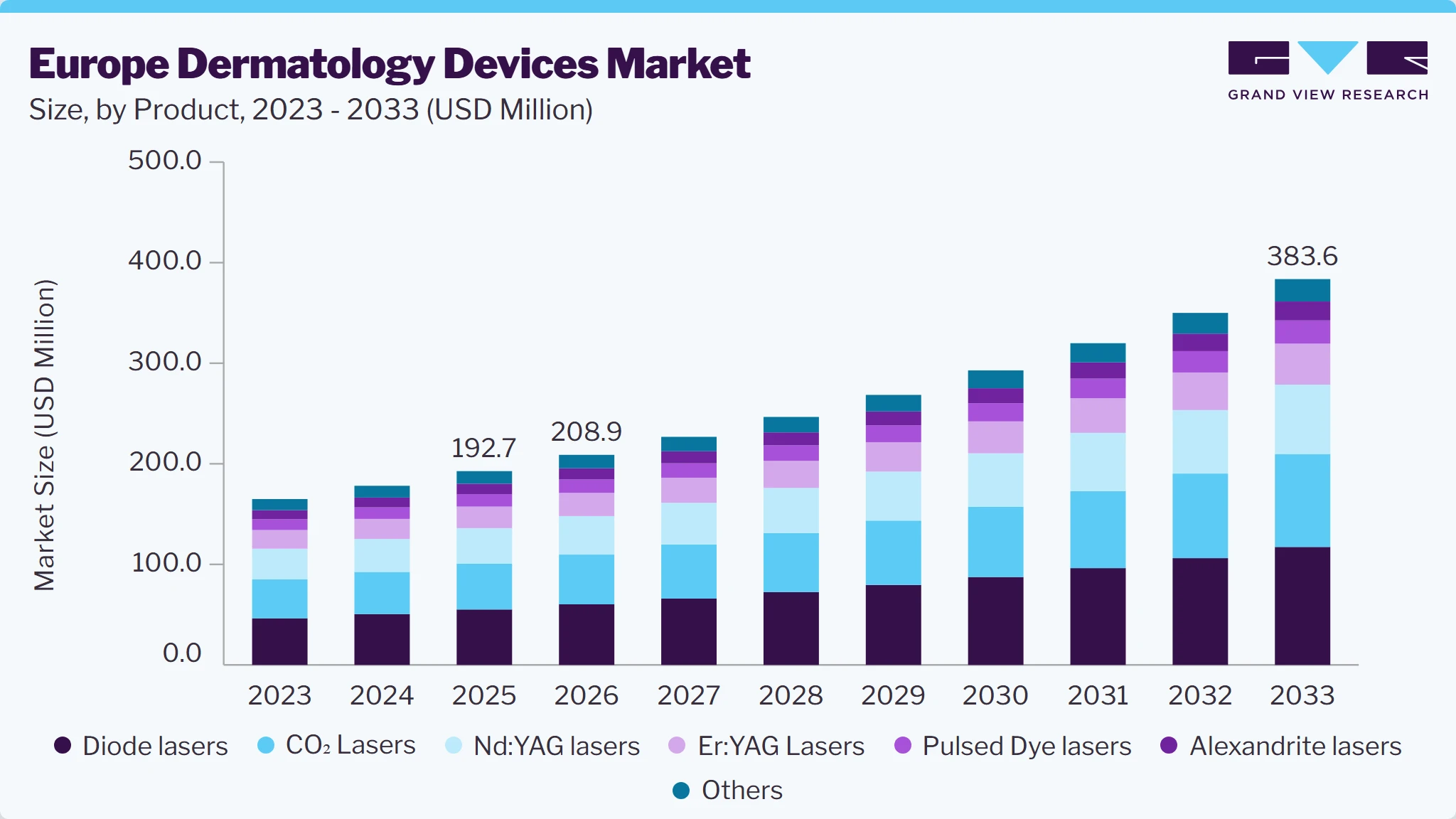
The Europe dermatology devices market size was valued at USD 192.7 million in 2025 and is projected to grow from USD 208.9 million in 2026 to USD 383.6 million by 2033, at a CAGR of 9.1% from 2026 to 2033. The market growth is primarily driven by the rising prevalence of skin disorders, including acne, psoriasis, eczema, rosacea, and pigmentation-related conditions, across European countries.
Key Market Trends & Insights
- Germany's dermatology devices market held the largest revenue share of 24.6% in 2025.
- By product, the diode lasers segment held the largest market share of 28.6% in 2025.
- By application, the anti-aging segment held the largest market share of 55.1% in 2025.
- By end-use, the beauty clinics/medspas segment held the largest market share in 2025.
Market Size & Forecast
- Market size in 2025: USD 192.7 Million
- Estimated market size in 2026: USD 208.9 Million
- Projected market size by 2033: USD 383.6 Million
- CAGR (2026-2033): 9.1%
- Germany: Largest market in 2025
- The UK: Fastest-growing market
Prism AI by Grand View Research Free to tryAsk a question about the europe dermatology devices marketTry asking✓Every figure cited from GVR research Prefer the report? Download free sample →
Increasing consumer awareness regarding aesthetic appearance and skin health, coupled with the growing demand for minimally invasive and non-invasive cosmetic procedures, is significantly supporting market expansion. In addition, advancements in laser-based dermatology technologies, including CO₂ lasers, Nd:YAG lasers, Er:YAG lasers, and radiofrequency-based systems, are improving treatment precision, safety, and patient outcomes, further accelerating adoption across hospitals, dermatology clinics, and medical spas.The growing patient population is increasing the demand for dermatology treatments, diagnostic procedures, laser therapies, biologic drugs, and advanced skincare products. Dermatology clinics and hospitals across Europe are witnessing a rise in patient visits for both medical and cosmetic skin concerns. In particular, the increasing incidence of psoriasis and atopic dermatitis is supporting the adoption of biologic therapies and targeted treatments that provide long-term disease management. Pharmaceutical and medical device companies are therefore investing heavily in research and development to introduce more effective, minimally invasive dermatology solutions.
 Source: Grand View Research, IR Documents, Primary Interviews, Paid DatabasesTo learn more about this report,
 Download Free Sample Report
Furthermore, Europe’s growing elderly population is contributing significantly to market expansion, as older individuals are more susceptible to chronic and age-related skin conditions such as xerosis, pressure ulcers, skin infections, pigmentation disorders, and skin cancers. A study published in 2024 by BMC Geriatrics titled “Cutaneous Melanoma in Older Patients” reported that the incidence of melanoma is highest among elderly individuals, particularly in industrialized regions with aging populations such as Europe. The study highlighted that older adults are at greater risk of skin cancers due to cumulative ultraviolet (UV) exposure and age-related skin changes, thereby increasing the need for dermatology consultations and skin cancer treatment services. According to regional demographic trends, the proportion of the population aged 65 years and above continues to rise across many European countries, creating long-term demand for dermatological consultations and therapeutic products.
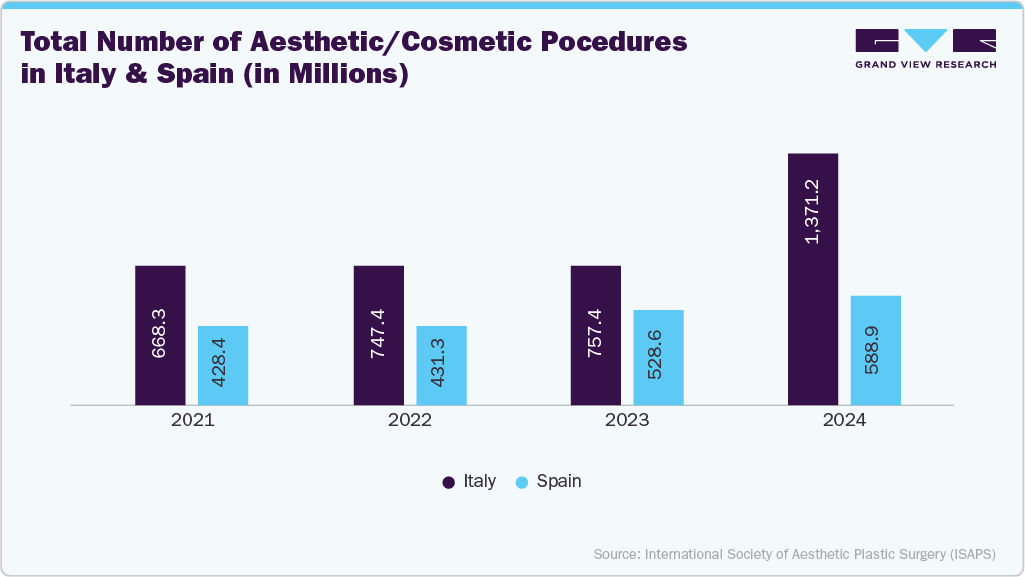
One of the major factors supporting the growth of the Europe dermatology devices industry is the increasing popularity of minimally invasive and non-invasive cosmetic procedures such as laser skin resurfacing, chemical peels, botulinum toxin injections, dermal fillers, acne scar treatments, pigmentation correction, and skin tightening therapies. These procedures offer quicker recovery times, lower procedural risks, and more natural-looking results compared to traditional surgical treatments. As a result, they are becoming highly preferred among both younger and aging populations across Europe.
 To learn more about this report, Download Free Sample Report
Market Dynamics
The Europe dermatology devices market is gaining significant momentum as hospitals, specialty dermatology clinics, academic medical centers, outpatient healthcare facilities, and private dermatology practices increasingly adopt advanced diagnostic, therapeutic, and aesthetic dermatology solutions to address the growing burden of skin diseases and rising demand for skin health management. The market encompasses a broad range of products and services, including prescription therapeutics, biologics, topical treatments, dermatology devices, diagnostic imaging systems, laser-based technologies, teledermatology platforms, and aesthetic dermatology procedures designed to improve clinical outcomes and patient quality of life. In addition, the increasing prevalence of chronic dermatological conditions such as psoriasis, atopic dermatitis, acne vulgaris, rosacea, skin infections, and skin cancers is driving demand for innovative treatment options across Europe. Furthermore, rising awareness of skin health, expanding adoption of minimally invasive aesthetic procedures, growing utilization of digital dermatology technologies, and continuous advancements in precision medicine, biologic therapies, and artificial intelligence-enabled diagnostic solutions are supporting market expansion across both established and emerging European healthcare markets.
The rising prevalence of skin disorders is one of the major factors driving the growth of the European dermatology devices market. Skin conditions such as acne, psoriasis, eczema, rosacea, dermatitis, fungal infections, and skin cancer are becoming increasingly common across European countries. Factors including environmental pollution, changing lifestyles, stress, aging populations, and increased exposure to ultraviolet (UV) radiation are contributing to the growing number of dermatology cases in the region. A 2025 study by the European Academy of Dermatology and Venereology (EADV) further highlighted the growing burden of skin diseases across Europe. According to the study “The Burden of Skin Diseases Project,” which analyzed data from more than 44,000 participants across 27 European countries, a significant proportion of the adult population continues to suffer from at least one dermatological condition. This growing patient population is increasing the demand for dermatology treatments, diagnostic procedures, laser therapies, and advanced skincare products. In addition, rising awareness regarding skin health and early diagnosis is encouraging more individuals to seek professional dermatological care.
The rise of the laser in dermatology brought about a true revolution in the treatment of various skin conditions. Laser technologies have paved the way for both cosmetic and medical applications, providing dermatologists with a wide range of effective and safe treatment options.
Dermatology Resident / Doctor in Specialist Training for Dermatology Maastricht UMC+ & Dermatologist affiliated with Maastricht UMC+ and Catharina Hospital Eindhoven.
The high cost of dermatological treatments and advanced medical technologies is a major restraint for the growth of the European dermatology devices market, as it significantly limits affordability for patients and increases the financial burden on healthcare providers. Dermatology care in Europe includes both medical treatments for chronic skin conditions and aesthetic procedures, many of which rely on advanced technologies such as laser systems, phototherapy units, and biologic drugs. These treatments are often expensive and require repeated use over time, making long-term care costly for patients. For chronic dermatological conditions such as psoriasis, atopic dermatitis, and skin cancer, biologic therapies and targeted drugs have significantly improved treatment outcomes. However, these therapies are among the most expensive treatment options in dermatology, with annual treatment costs often running into several thousand euros per patient. Even though some European healthcare systems provide partial reimbursement, access varies widely across countries, and patients may still face co-payments or eligibility restrictions. This creates affordability challenges, particularly for long-term treatment adherence, thereby limiting widespread adoption. In addition to drug therapies, the high cost of dermatology equipment also acts as a restraint for market expansion. Dermatology clinics and hospitals require advanced diagnostic and treatment devices such as laser systems for skin resurfacing, hair removal, and pigmentation disorders, as well as dermatoscopes and imaging systems for early skin cancer detection.
Market Concentration & Characteristics
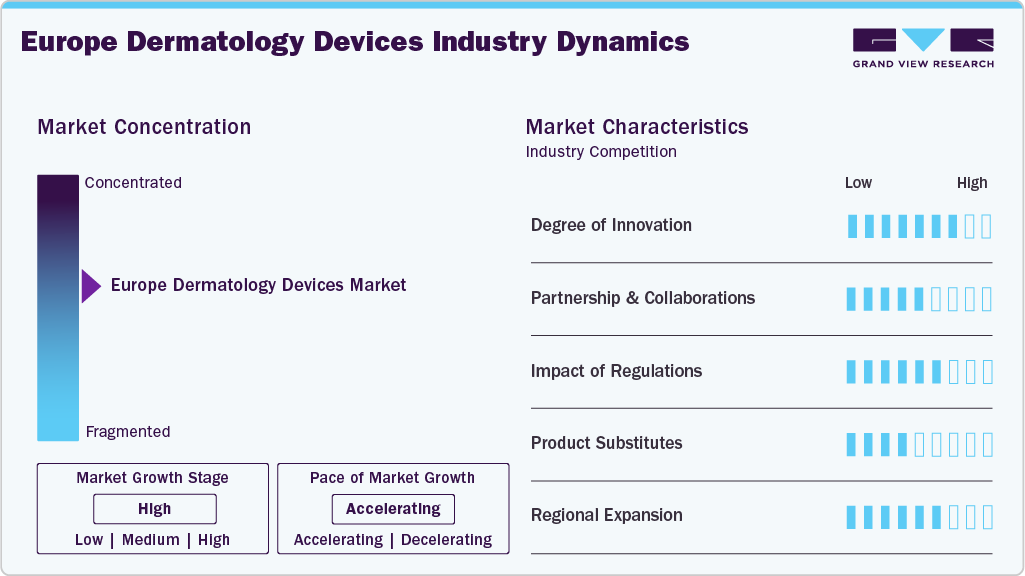
The Europe dermatology devices market is moderately consolidated, with major companies such as Candela Medical, Asclepion Laser Technologies, Lumenis Be Ltd., and Cynosure, LLC holding significant market positions across therapeutic and aesthetic dermatology segments. These companies offer a broad portfolio of dermatology solutions, including biologics, immunomodulators, topical therapies, systemic treatments, dermatology devices, laser-based technologies, and aesthetic dermatology products designed to address a wide range of skin disorders and cosmetic concerns. Their product portfolios support the diagnosis and treatment of conditions such as psoriasis, atopic dermatitis, acne vulgaris, rosacea, hidradenitis suppurativa, skin cancers, and other chronic inflammatory skin diseases. In addition, ongoing investments in research and development, biologic innovation, precision medicine, digital dermatology platforms, and minimally invasive aesthetic procedures are strengthening their competitive positions while helping healthcare providers improve treatment outcomes, enhance patient quality of life, and expand access to advanced dermatological care across Europe.
The Europe dermatology devices industry is witnessing a high degree of innovation driven by the growing demand for advanced therapeutic, diagnostic, and aesthetic dermatology solutions that improve treatment outcomes, enhance diagnostic accuracy, and support long-term skin health management. For instance, in January 2026, Alma Lasers announced that its Alma Harmony platform had won the 2025 GOOD DESIGN Award for outstanding innovation and excellence in product design, recognizing its advanced engineering, modular design, and integration of multiple energy-based aesthetic technologies. The award highlights the system’s intelligent workflow, ergonomic structure, and ability to deliver versatile in-clinic treatments across a wide range of dermatological indications.
 To learn more about this report, Download Free Sample Report
The market is witnessing a significant rise in partnerships and collaborations among pharmaceutical companies, dermatology device manufacturers, healthcare providers, academic research institutions, and biotechnology firms to accelerate innovation and improve patient outcomes. In January 2025, Quanta System, part of El.En. S.p.A., announced an exclusive distribution partnership with French aesthetic technology distributor Celliance during IMCAS Paris 2025 to expand the commercialization of advanced dermatology laser systems across France. The collaboration was specifically aimed at increasing access to skin rejuvenation, anti-aging, and aesthetic laser technologies among French practitioners and clinics.
The Europe dermatology devices market operates within a highly regulated framework governed by the European Medicines Agency (EMA), national regulatory authorities, and other healthcare oversight bodies, which focus on product safety, efficacy, quality standards, clinical performance, and patient outcomes. Regulatory oversight has increased significantly due to the growing adoption of biologics, targeted immunotherapies, dermatology devices, digital health platforms, and advanced aesthetic dermatology technologies used in the diagnosis and treatment of various skin disorders. Regulatory authorities are placing greater emphasis on clinical evidence generation, post-market surveillance, pharmacovigilance, cybersecurity requirements for digital health solutions, and compliance with the European Medical Device Regulation (MDR) to ensure patient safety and treatment effectiveness.
The Europe dermatology devices industry faces growing competition from a wide range of alternative treatment options, including generic dermatology medications, over-the-counter (OTC) skincare products, cosmetic procedures, medical-grade skincare formulations, and non-pharmacological treatment approaches that may reduce reliance on branded prescription therapies and advanced dermatological interventions. Conventional topical treatments, emollients, and OTC products remain widely utilized to manage mild-to-moderate skin conditions due to their affordability, accessibility, and ease of use, particularly in cost-sensitive patient populations. In addition, increasing adoption of aesthetic procedures such as laser therapies, chemical peels, light-based treatments, and injectable treatments is providing alternative solutions for certain cosmetic and dermatological concerns.
The market is witnessing significant regional expansion as pharmaceutical companies, dermatology device manufacturers, aesthetic technology providers, and healthcare organizations strengthen their presence across both established and emerging European markets to address the growing burden of skin diseases and increasing demand for advanced dermatological care. For instance, Asclepion Laser Technologies continues to reinforce its leadership in Er:YAG laser systems through the expansion of its Dermablate platform, widely used for skin resurfacing, scar revision, and anti-aging treatments. In June 2025, the company celebrated the 30th anniversary of Dermablate, highlighting that more than 1,500 systems have been installed, demonstrating strong regional adoption of Er:YAG laser technologies.
Analyst Perspective
The Europe dermatology devices market has evolved into one of the most dynamic segments within the broader medical aesthetics and skin health industry, driven by the rising aesthetic awareness, increasing aging population, growing preference for minimally invasive procedures, and continuous advancements in laser-based dermatology technologies. Dermatology has increasingly shifted from a treatment-focused specialty to a broader aesthetic and preventive care ecosystem involving dermatologists, aesthetic physicians, beauty clinics, medspas, and cosmetic wellness centers. As consumer demand for low-downtime and personalized skin rejuvenation procedures continues to rise, energy-based dermatology devices are becoming increasingly integrated into mainstream aesthetic treatment pathways across Europe.
Product Insights
The diode lasers segment dominated the Europe dermatology devices industry, accounting for the largest share of 28.6% in 2025, and is expected to witness the fastest CAGR of 10.0% over the forecast period. Diode laser technology is gaining strong traction because of its ability to deliver controlled thermal stimulation for skin rejuvenation with minimal skin surface damage. Unlike ablative resurfacing lasers, diode systems primarily work by heating the deeper dermal layers to stimulate fibroblast activity and collagen regeneration, helping improve skin firmness and elasticity over time. This mechanism makes diode lasers increasingly suitable for consumers seeking gradual anti-aging enhancement rather than aggressive resurfacing treatments. Clinics across Europe are promoting diode-based rejuvenation procedures as comfortable, repeatable treatments that fit well within preventive skincare and maintenance-focused aesthetic programs. Recent technology launches also reflect growing innovation within the diode laser segment. In September 2024, Dutch aesthetic distributor Bowie Medical introduced an advanced diode laser platform featuring AI-supported skin diagnostics and integrated treatment optimization tools for aesthetic practices across Europe. The company highlighted that the system was designed to improve procedural customization and patient comfort for high-volume dermatology and medspa environments.
The CO₂ lasers segment is expected to grow at a significant CAGR over the forecast period, owing to the rising demand for advanced skin resurfacing, anti-aging, and photorejuvenation procedures. Dermatology clinics are increasingly adopting fractional and fully ablative CO₂ laser systems because these devices deliver visible improvements in wrinkles, pigmentation, acne scars, sun damage, and skin texture with long-lasting results. Compared with topical treatments or light chemical peels, CO₂ laser resurfacing provides deeper collagen remodeling and stronger skin-tightening results, making it highly preferred by both physicians and consumers seeking effective rejuvenation solutions. One of the major growth drivers for the segment is Europe’s aging population and the increasing consumer focus on youthful appearance and preventive aesthetics. As collagen production naturally declines with age, demand for treatments that stimulate collagen regeneration has increased significantly. CO₂ laser systems are widely used because they produce controlled thermal injury to the skin, triggering natural healing and collagen formation. This helps reduce fine lines, wrinkles, enlarged pores, and age-related skin laxity.
Application Insights
The anti-aging dominated the Europe dermatology devices market with the largest revenue share in 2025. Anti-aging has become one of the most important application areas in the market, as consumers increasingly seek treatments to reduce wrinkles, fine lines, skin laxity, and other visible signs of aging. Consumers are becoming more focused on maintaining youthful skin appearance and delaying age-related skin changes through non-surgical dermatology procedures. The growing aging population in Europe, combined with increasing beauty awareness among middle-aged and younger consumers, is significantly supporting demand for anti-aging dermatology treatments. Many consumers are now opting for preventive anti-aging procedures at earlier ages to maintain skin texture, collagen levels, and facial appearance over the long term.
The photorejuvenation segment is expected to grow at the fastest CAGR over the forecast period. Consumers are increasingly seeking photorejuvenation procedures to treat sun damage, pigmentation, redness, uneven skin tone, age spots, fine lines, and early skin aging caused by UV exposure and environmental stress. The rising focus on preventive skincare and long-term skin maintenance is encouraging consumers to adopt photorejuvenation treatments at earlier ages, particularly among urban and working-age populations. Consumers are increasingly choosing these procedures because they provide visible skin improvement without the downtime and risks associated with invasive cosmetic surgery. Laser-based technologies are becoming the preferred treatment option for photorejuvenation across Europe because they provide targeted and clinically controlled skin renewal. Consumers prefer these technologies because they deliver gradual, natural-looking results while improving skin texture and elasticity over multiple sessions. A major factor supporting the growth of photorejuvenation treatments in Europe is the increasing preference for minimally invasive aesthetic procedures with shorter treatment times and faster recovery.
End-use Insights
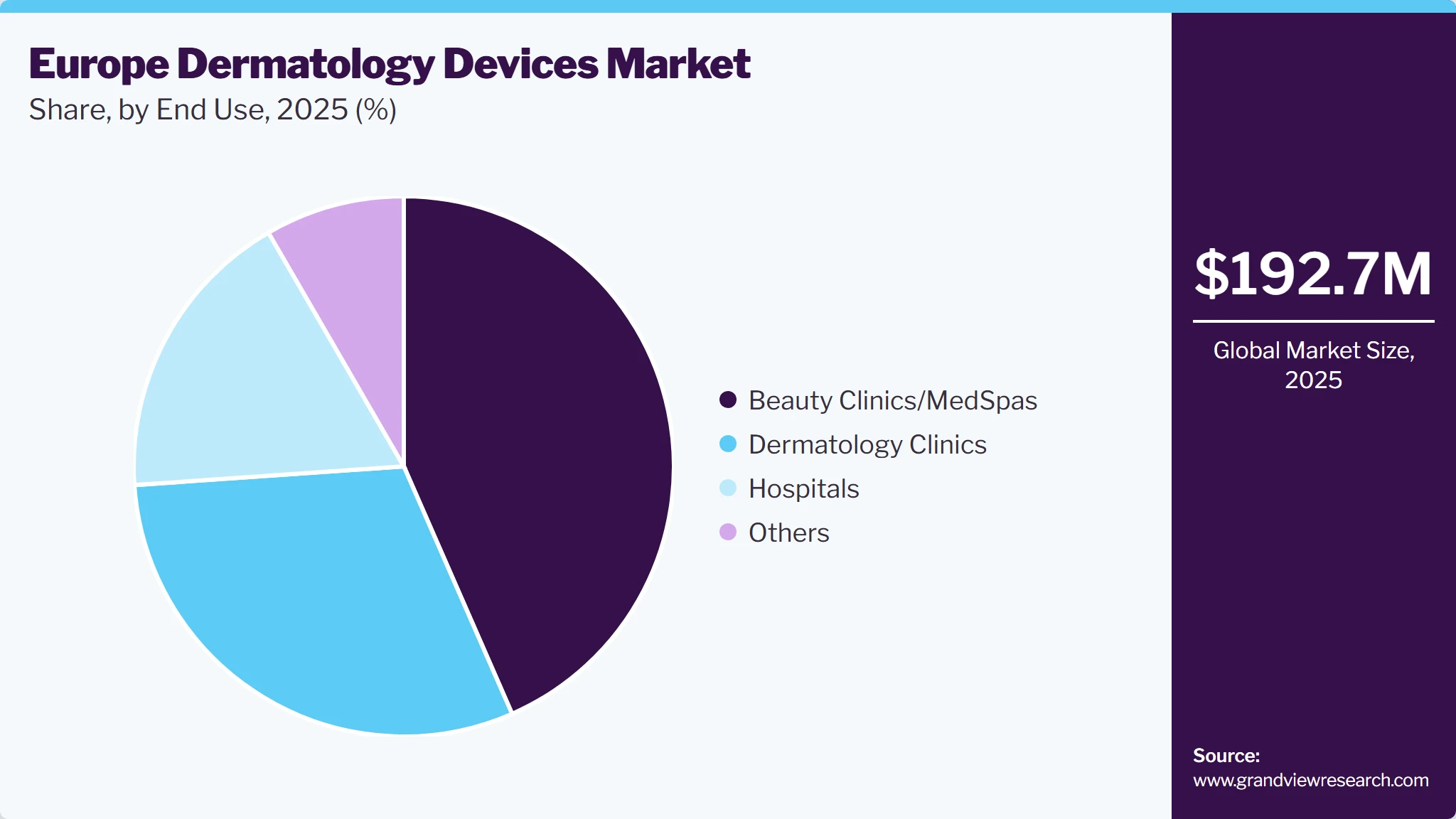
The beauty clinics/medspas segment dominated the devices market in 2025 and is expected to witness the fastest CAGR over the forecast period. These facilities primarily provide treatments to improve skin texture, tone, and overall appearance using advanced cosmetic technologies. Consumers are increasingly choosing these facilities because they offer minimally invasive cosmetic dermatology treatments with shorter recovery periods than traditional surgical interventions. The aging population in Europe, combined with heightened awareness of facial aesthetics and preventive skincare, has significantly increased patient visits to aesthetic clinics and medical spas. In addition, social media influence, increasing acceptance of cosmetic procedures among younger consumers, and the expansion of wellness-focused dermatology centers are supporting segment growth across the region. The strong adoption of advanced energy-based aesthetic devices across countries further drives the segment’s growth. For instance, in December 2025, Signature Clinics in Glasgow announced the launch of advanced CO₂ laser technology programs for scar refinement and skin rejuvenation as part of its expanded aftercare and aesthetic treatment services.
 To learn more about this report, Download Free Sample Report
The dermatology clinics segmentis anticipated to grow at a significat CAGR over the forecast period. Dermatology clinics are becoming the preferred destination for anti-aging and photorejuvenation treatments across Europe because consumers increasingly prioritize medically supervised, minimally invasive aesthetic procedures that deliver clinically validated results with lower procedural risks. Patients in countries such as Germany, France, the UK, Italy, and Spain are choosing dermatology clinics over traditional beauty centers because these facilities provide access to board-certified dermatologists, customized skin analysis, and advanced laser platforms capable of treating wrinkles, pigmentation, vascular lesions, acne scars, and photo aged skin with greater precision. The consumers are also becoming more aware that laser outcomes strongly depend on physician expertise, skin-type assessment, and post-treatment protocols, which is increasing trust in specialized dermatology clinics for energy-based aesthetic procedures.
Country Insights
The Europe dermatology devices market is experiencing strong growth due to the rising demand for minimally invasive aesthetic procedures and the rapid adoption of advanced dermatology laser platforms across clinics and medical spas. Technologies such as CO₂ lasers, Er:YAG lasers, Nd:YAG lasers, diode lasers, pulsed dye lasers, and alexandrite lasers are increasingly being used for wrinkle reduction, skin resurfacing, pigmentation correction, collagen stimulation, vascular lesion treatment, and overall skin rejuvenation. Dermatology clinics are increasingly utilizing pulsed dye lasers and combination wavelength platforms for vascular lesions, redness reduction, wrinkle management, and collagen remodeling. In April 2025, Candela launched the Vbeam Pro laser platform, integrating 595 nm pulsed dye laser technology with 1064 nm Nd:YAG wavelengths for dermatologic and vascular treatments. The platform supports treatment for rosacea, wrinkles, photoaging, scars, stretch marks, and benign pigmented lesions, reflecting the growing trend toward multifunctional laser systems in Europe’s dermatology sector. European clinics are increasingly preferring such hybrid platforms because they improve treatment versatility and clinic utilization rates.
UK Dermatology Devices Market Trends
The dermatology devices market in UK is experiencing steady growth. One of the major drivers of competition and market growth is the increasing demand for minimally invasive anti-aging and photorejuvenation procedures among consumers seeking shorter recovery times and natural-looking aesthetic outcomes. Dermatology clinics and aesthetic centers across the UK are increasingly investing in advanced laser platforms that support multiple treatment applications using a single device, improving operational efficiency and treatment customization. Another important competitive factor in the UK market is the growing emphasis on practitioner training, clinical education, and technology differentiation.
Germany Dermatology Devices Market Trends
The dermatology devices market in Germany is expected to grow significantly over the forecast period. The growth is supported by high consumer spending on cosmetic dermatology and strong clinical adoption of advanced laser technologies. In addition, an aging population and rising awareness of preventive aesthetics are contributing to increased demand for photorejuvenation and laser resurfacing procedures among both middle-aged and younger consumers. Technological innovation and practitioner training are also intensifying competition among leading dermatology laser manufacturers operating in Germany. Companies are increasingly focusing on multifunctional platforms that deliver anti-aging, resurfacing, pigmentation correction, and vascular treatments using integrated wavelength technologies.
Key Europe Dermatology Devices Company Insights
The Europe dermatology devices market is highly competitive, with key players focusing on strengthening their market position through continuous innovation, strategic collaborations, portfolio expansion, and regional growth initiatives. Companies are increasingly investing in advanced dermatology therapies and technologies, including biologics, targeted immunotherapies, dermatology devices, laser-based treatment systems, artificial intelligence-enabled diagnostic platforms, and digital dermatology solutions to improve treatment efficacy, enhance diagnostic accuracy, and optimize patient outcomes across a broad range of skin disorders.
Key Europe Dermatology Devices Companies
-
Candela Medical
-
Asclepion Laser Technologies
-
Lumenis Be Ltd.
-
Cynosure, LLC
-
Lynton Lasers
-
El.En. S.p.A.
-
Cutera
-
Termosalud
-
Sisram Medical (Alma Lasers)
-
Fotona
Competitive Benchmarking
Operating Strategies
Competitive Edge
Weaknesses
Established Players (Candela Medical, Asclepion Laser Technologies, Lumenis Be Ltd.)
- Focus on expanding biologic and targeted therapies for chronic dermatological disorders, including psoriasis, atopic dermatitis, hidradenitis suppurativa, and chronic urticaria.
- Strengthen market presence through strategic collaborations with hospitals, dermatology clinics, research institutes, and patient advocacy organizations across Europe.
- Focus on expanding biologic and targeted therapies for chronic dermatological disorders, including psoriasis, atopic dermatitis, hidradenitis suppurativa, and chronic urticaria.
- Strengthen market presence through strategic collaborations with hospitals, dermatology clinics, research institutes, and patient advocacy organizations across Europe.
- High R&D expenditure and increasing clinical trial costs can impact profitability.
- Stringent European Medicines Agency (EMA) regulations and country-specific reimbursement negotiations may delay product launches.
Emerging Players (Termosalud, Sisram Medical (Alma Lasers), Fotona)
- Focus on developing innovative biologics, immunomodulators, precision medicines, and novel topical formulations targeting unmet dermatology needs.
- Prioritize niche indications such as hidradenitis suppurativa, vitiligo, alopecia areata, rare inflammatory skin diseases, and difficult-to-treat atopic dermatitis.
- Faster innovation cycles and greater flexibility in adopting emerging technologies and novel therapeutic mechanisms.
- Strong focus on first-in-class and best-in-class drug candidates addressing unmet clinical needs.
- Limited commercial infrastructure and smaller sales networks than those of established pharmaceutical companies.
- Dependence on external funding, partnerships, and successful clinical trial outcomes.
Recent Developments
-
In May 2026, Lumenis announced that its Stellar M22 platform with XPL technology was named “Best New Dermatology Technology Solution” in the 2026 MedTech Breakthrough Awards program. The company highlighted the system’s multi-application capabilities, including photorejuvenation, vascular lesion treatment, pigmentation correction, and skin resurfacing, supported by XPL pulsed light technology and over 850 built-in treatment protocols.
-
In November 2025, Lumenis launched the new Stellar M22 skin treatment platform featuring XPL (Expert Pulsed Light) technology at the Annual American Society for Dermatologic Surgery (ASDS) Meeting. The company presented new clinical data demonstrating up to 70% improvement in vascular and pigmented lesions after a single XPL session, while highlighting features such as Glide Mode, BrushFX, and more than 850 built-in treatment protocols.
-
In February 2024, Asclepion Laser Technologies announced the launch of its new high-power hair removal laser system, AlexStar, during IMCAS Paris 2024. The platform combines 760 nm Alexandrite and 1060 nm Nd:YAG wavelengths, delivering up to 5,000 W power with advanced PowerLine handpieces and integrated 360° skin cooling for optimized treatments across all skin types.
Europe Dermatology Devices Market Report Scope
Report Attribute
Details
Market size in 2025
USD 192.7 million
Estimated market size in 2026
USD 208.9 million
Projected market size by 2033
USD 383.6 million
Growth rate
CAGR of 9.1% from 2026 to 2033
Base year for estimation
2025
Historical data
2021 - 2024
Forecast period
2026 - 2033
Quantitative units
Revenue in USD million and CAGR from 2026 to 2033
Report coverage
Revenue forecast, company ranking, competitive landscape, growth factors, and trends
Segments covered
Product, application, end-use, country
Country scope
UK; Germany; France; Italy; Spain
Key companies profiled
Candela Medical; Asclepion Laser Technologies; Lumenis Be Ltd.; Cynosure, LLC; Lynton Lasers; El.En. S.p.A.; Cutera; Termosalud; Sisram Medical (Alma Lasers); Fotona
Customization scope
Free report customization (equivalent up to 8 analyst’s working days) with purchase. Addition or alteration to country, regional, and segment scope
Pricing and purchase options
Avail customized purchase options to meet your exact research needs. Explore purchase options
Europe Dermatology Devices Market Report Segmentation
This report forecasts revenue growth at the regional & country levels and provides an analysis of the latest industry trends in each of the sub-segments from 2021 to 2033. For this study, Grand View Research has segmented the Europe dermatology devices market report based on product, application, end-use, and country:
-
Product Outlook (Revenue, USD Million, 2021 - 2033)
-
CO₂ Lasers
-
Er:YAG Lasers
-
Nd:YAG lasers
-
Diode lasers
-
Pulsed Dye lasers
-
Alexandrite lasers
-
Others
-
-
Application Outlook (Revenue, USD Million, 2021 - 2033)
-
Anti-aging
-
Photorejuvenation
-
-
End-use Outlook (Revenue, USD Million, 2021 - 2033)
-
Beauty Clinics/MedSpas
-
Dermatology Clinics
-
Hospitals
-
Others
-
-
Country Outlook (Revenue, USD Million, 2021 - 2033)
-
UK
-
Germany
-
France
-
Italy
-
Spain
-
Research Methodology
The europe dermatology devices market figures in this report are based on a proven research process that combines executive interviews with secondary research from proprietary databases, company filings, and recognized regulatory and institutional sources. Market size is built through value-chain sizing - reconciling supply-side and demand-side estimates - and triangulated with bottom-up and top-down approaches. Every estimate passes multiple levels of expert validation before publication, with each europe dermatology devices segment quantified using the revenue-capture definitions in the table below.
Segment Definition
Segment - Product
Revenue capture definition
CO₂ Lasers
Revenue is generated through the capital sale of high-powered, gas-state carbon dioxide laser systems operating at a wavelength of 10,600 nm. Manufacturers earn upfront revenue from hardware installations, along with recurring revenue from specialized delivery tips, articulated arms, scanning handpieces, software-driven pulse-customization upgrades, and mandatory annual maintenance and calibration (AMC) contracts.
Er:YAG Lasers
Revenue flows from the commercialization of erbium-doped yttrium aluminum garnet laser hardware emitting at a wavelength of 2,940 nm. Market participants derive capital income from selling these high-precision, low-downtime superficial ablative workstations to clinical accounts. This is supplemented by recurring sales of single-use and multi-use optical tips, variable spot-size handpieces, and technical service agreements.
Nd:YAG lasers
Revenue is captured through the distribution of neodymium-doped yttrium aluminum garnet laser platforms operating at deep-penetrating wavelengths, typically 1064 nm or frequency-doubled 532nm. Income is secured through the sale of standalone or multi-platform capital consoles, alongside continuous replenishment orders for internal flashlamps, fiber-optic delivery cables, protective eyewear accessories, and proprietary cooling gas cartridges or chillers.
Diode lasers
Revenue is derived from the high-volume sale of semiconductor-based diode laser workstations utilized heavily for vascular lesions and high-throughput hair removal. Manufacturers capture strong upfront revenues via console sales, which are supported by a highly predictable aftermarket stream from replacement laser-diode handpiece arrays, specialized sapphire cooling tips, and software licenses for rapid-treatment protocols.
Pulsed Dye lasers
Revenue flows through the commercialization of liquid-state dye lasers optimized for vascular anomalies and erythematous lesions (typically emitting at 595 nm). Companies generate income through premium-tier capital hardware shipments, alongside substantial recurring revenue from highly specialized consumables, including proprietary liquid dye cartridges, micro-vial solvent canisters, and dynamic cooling device (DCD) cryogen spray canisters.
Alexandrite lasers
Revenue is generated through the capital procurement of solid-state alexandrite laser systems utilizing chromium-doped chrysoberyl crystals emitting at a fast-cycling wavelength of 755 nm. Manufacturers monetize this high-demand pigment and hair removal segment through upfront workstation sales, optical fiber delivery system replacements, distance-gauge accessories, and premium technical support packages tailored to high-volume treatment centers.
Others
Revenue encompasses alternative and niche dermatological energy-based technologies, including Q-switched/Picosecond specialized tattoo removal variants, Intense Pulsed Light (IPL) broadband systems, fractional non-ablative infrared platforms, and recurring software patch updates or trade-in upgrade programs for multi-technology workstation towers.
Segment - Application
Revenue capture definition
Anti-aging
Revenue is captured by positioning and selling advanced energy-based devices tailored to deep tissue restructuring, neocollagenesis, and structural wrinkle reduction. Manufacturers drive income by marketing these systems as premium, high-margin clinical solutions designed to reverse severe photoageing, commanding high device-tier pricing structures across Europe's expanding aging demographic.
Photorejuvenation
Revenue streams develop from multi-wavelength non-ablative laser platforms, diode systems, and multi-functional handpieces optimized to treat benign pigmented lesions, vascular irregularities, rosacea, and skin-tone inconsistencies. Volume is driven by the European consumer's high demand for non-invasive, minimal-downtime "lunchtime procedures," generating consistent, recurring revenue for clinics through high-frequency handpiece usage and consumable consumption.
Segment - End Use
Revenue capture definition
Beauty Clinics/MedSpas
Revenue is generated through commercial aesthetic distribution networks, corporate aesthetic chain procurement contracts, and competitive leasing or financing programs. Equipment suppliers capture volume here by focusing on user-friendly, low-downtime, and highly automated laser platforms that require minimal clinical overhead and deliver rapid patient turnaround to maximize non-surgical clinic profitability.
Dermatology Clinics
Revenue is captured through specialized physician-exclusive purchasing accounts, direct-to-clinic medical sales structures, and independent medical practice buying groups. Income is anchored on advanced, clinical-grade medical laser systems backed by robust histological validation, European CE Mark compliance, and peer-reviewed safety records.
Hospitals
Revenue flows through formal institutional public or private healthcare tenders, rigid hospital formulary reviews, and institutional budget allocations. Revenue capture in this segment is characterized by lower relative unit margins but exceptionally steady, multi-site hardware placement commitments, focusing primarily on highly versatile, durable multi-platform workstations used for both reconstructive dermatology and therapeutic scar revisions.
Others
Revenue is derived through alternative or emerging end-use channels, including independent plastic surgery boutique suites, academic dermatology research universities, and professional laser therapy training academies that purchase specialized, high-tier configuration hardware directly from manufacturers for training, certification, and clinical trial validation.
Estimation Model
Layer Name
Key Question
Description
Scope Definition
What is being sized?
Define Device Categories. Define Clinical & Aesthetic Applications. Set Geographic Boundaries. Align on base year & forecast horizon (2026-2033). Data Sources: EADV, European Commission, National Healthcare Agencies.
Build the Product Base
How large is the total addressable installed base and procedure ecosystem?
Profile Dermatology Care Facilities. Estimate Installed Device Base. Assess Procedure Volumes. Evaluate Replacement & Upgrade Cycles. Data Sources: Hospital Databases, Dermatology Associations, Device Manufacturer Filings.
Estimate Penetration
What proportion of dermatology practices are transitioning to advanced dermatology technologies?
Assess Adoption of Advanced Energy-Based Devices. Map Conventional vs. Advanced Technologies. Evaluate Digital Dermatology Adoption. Assess Regulatory and Reimbursement Impact. Data Sources: Primary interviews, company filings, trade surveys.
Revenue Conversion
How do installed devices and procedure volumes translate into market revenue?
Determine Average Selling Prices (ASPs). Segment Revenue Streams. Apply End-user Mix. Triangulate and Validate. Data Sources: Company Financial Reports, Procurement Databases, Distributor Pricing Data.
Delivered Customizations
This report has been delivered with the following In-depth customizations
Client Request
Customization Delivered
Value Adds
Technological Advancements
Conducted a comprehensive assessment of technological advancements shaping the European dermatology devices market, focusing on innovations in biologics, targeted immunotherapies, AI-enabled diagnostic platforms, teledermatology solutions, advanced laser and energy-based devices, digital skin imaging systems, and personalized dermatology treatments. The study evaluated recent product launches, clinical developments, regulatory approvals, R&D investments, and strategic collaborations undertaken by pharmaceutical companies, dermatology device manufacturers, hospitals, and research institutions. In addition, the analysis examined the growing adoption of precision medicine, digital health technologies, and minimally invasive aesthetic procedures that are transforming dermatological diagnosis, treatment outcomes, and patient management across Europe.
This analysis enables stakeholders to understand evolving technological trends, identify innovation-driven growth opportunities, and evaluate the competitive impact of emerging dermatology technologies. The study supports strategic decision-making in product development, commercialization, investment planning, and market expansion, while highlighting how technological advancements are improving treatment efficacy, patient experience, diagnostic accuracy, and overall healthcare delivery across the European dermatology landscape.
Expenditure on Anti-aging And Photorejuvenation Treatment By Country
Conducted an in-depth analysis of country-level expenditure on anti-aging and photorejuvenation treatments across major European markets, including Germany, France, the United Kingdom, Italy, Spain, and Nordic countries. The study assessed spending patterns across cosmetic dermatology clinics, medical aesthetic centers, hospitals, and specialty skincare facilities. The analysis included evaluation of demand for laser resurfacing, intense pulsed light (IPL) procedures, chemical peels, dermal fillers, botulinum toxin treatments, skin tightening procedures, and other skin rejuvenation therapies. Furthermore, the research examined factors influencing expenditure, including disposable income levels, aging demographics, aesthetic awareness, medical tourism, treatment accessibility, and reimbursement dynamics.
This assessment helps stakeholders identify high-spending countries, benchmark market attractiveness, and understand regional demand variations for aesthetic dermatology procedures. The analysis provides valuable insights into consumer spending behavior, procedure adoption trends, and growth potential across key European markets. It also supports investment prioritization, geographic expansion strategies, clinic network development, and product commercialization initiatives targeting the rapidly expanding anti-aging and aesthetic dermatology segment.
Country-Level Analysis
Conducted a detailed country-level assessment of the European dermatology devices market across major and emerging markets, including Germany, France, the United Kingdom, Italy, Spain, Netherlands, Switzerland, Belgium, and selected Central and Eastern European countries. The study evaluated market size, growth potential, disease prevalence, healthcare expenditure, dermatologist density, reimbursement frameworks, regulatory environment, treatment accessibility, and adoption of advanced dermatology therapies. Additionally, the analysis examined country-specific drivers, including the increasing prevalence of psoriasis, atopic dermatitis, acne, skin cancer, and other chronic skin disorders, as well as the rising demand for aesthetic dermatology procedures and digital healthcare solutions.
This geographical analysis enables stakeholders to identify country-specific growth opportunities, assess market entry and expansion potential, and prioritize investment strategies across Europe. The study highlights differences in healthcare infrastructure, reimbursement policies, patient demographics, treatment adoption rates, and competitive intensity. These insights support informed decision-making regarding product launches, partnership development, distribution network optimization, and long-term strategic planning within the European dermatology devices market.
Frequently Asked Questions About This Report
The global Europe dermatology devices market size was estimated at USD 192.7 million in 2025 and is expected to reach USD 208.9 million in 2026.
The global Europe dermatology devices market is expected to grow at a compound annual growth rate of 9.1% from 2026 to 2033 to reach USD 383.6 million by 2033.
By product, the diode lasers segment led with a 28.6% revenue share in 2025 and is the fastest-growing segment.
Germany dominated the Europe dermatology devices market with a 24.6% revenue share in 2025.
Key factors that are driving the market growth include the rising prevalence of skin disorders, including acne, psoriasis, eczema, rosacea, and pigmentation-related conditions, across European countries, and increasing consumer awareness regarding aesthetic appearance and skin health.
Anti-aging held the largest revenue share in 2025, while photorejuvenation is the fastest-growing area.
Beauty clinics/medspas held the largest revenue share in 2025 and is the fastest-growing area.
Some key players operating in the European dermatology devices market include Candela Medical, Asclepion Laser Technologies, Lumenis Be Ltd., Cynosure, LLC, Lynton Lasers, and El.En. S.p.A.; Cutera; Termosalud; Sisram Medical (Alma Lasers); Fotona
About the Author(s)
Medical Devices Research Team
Healthcare · Medical DevicesThis report was authored by the medical devices research team at Grand View Research - comprising two research analysts, one senior research analyst, and one industry expert - with specialized expertise in the medical devices segment of the healthcare industry. All findings are based on proprietary healthcare databases, executive interviews, and regulatory analysis, subject to internal peer review prior to publication.
Last Updated:
Speak to Analyst

Customize this report to your needs - add regions, segments, or data points, with 20% free customization.
Or view our licence options:


ISO 9001:2015 & 27001:2022 Certified
We are GDPR and CCPA compliant! Your transaction & personal information is safe and secure. For more details, please read our privacy policy.


