
- Home
- »
- Medical Devices
- »
-
Europe Peripheral Liquid Embolic Agents Market Report, 2036GVR Report cover

Europe Peripheral Liquid Embolic Agents Market (2026 - 2036)
Size, Share & Trends Analysis Report By Product (Ethylene Vinyl Alcohol Copolymer, Cyanoacrylates/Tissue Glues Combined), By Application (Peripheral Vascular Hemorrhage, Hypervascular Tumors), By End Use, By Country, And Segment Forecasts
Market Size, 2025
$104.3MMarket Estimate, 2026
$109.4MMarket Forecast, 2036
$178.6MCAGR, 2026–2036
5.0%Europe Peripheral Liquid Embolic Agents Market Summary
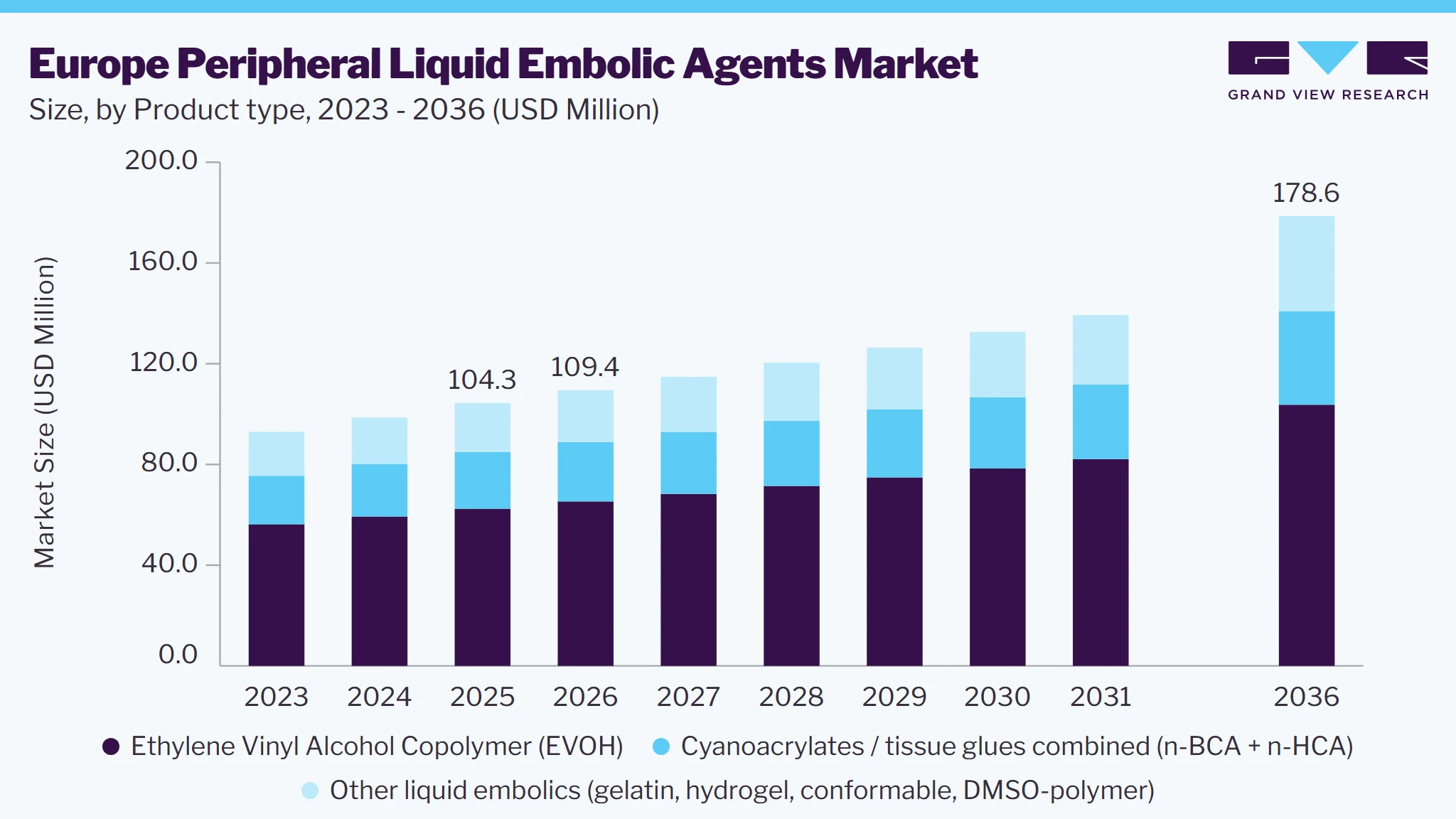
The Europe peripheral liquid embolic agents market size was valued at USD 104.3 million in 2025 and is projected to grow from USD 109.4 million in 2026 to USD 178.6 million by 2036, at a CAGR of 5.0% from 2026 to 2036. The rising burden of peripheral artery disease and other vascular disorders is supporting demand for endovascular interventions. In addition, the growing preference for minimally invasive vascular procedures is contributing to the adoption of catheter-based treatment approaches due to lower procedural trauma, shorter hospital stays, and faster patient recovery.
Key Market Trends & Insights
- By product: the Ethylene Vinyl Alcohol Copolymer (EVOH) segment led the market with the largest revenue share of 59.8% in 2025.
- By application: the venous applications segment led the market with the largest revenue share of 44.6% in 2025.
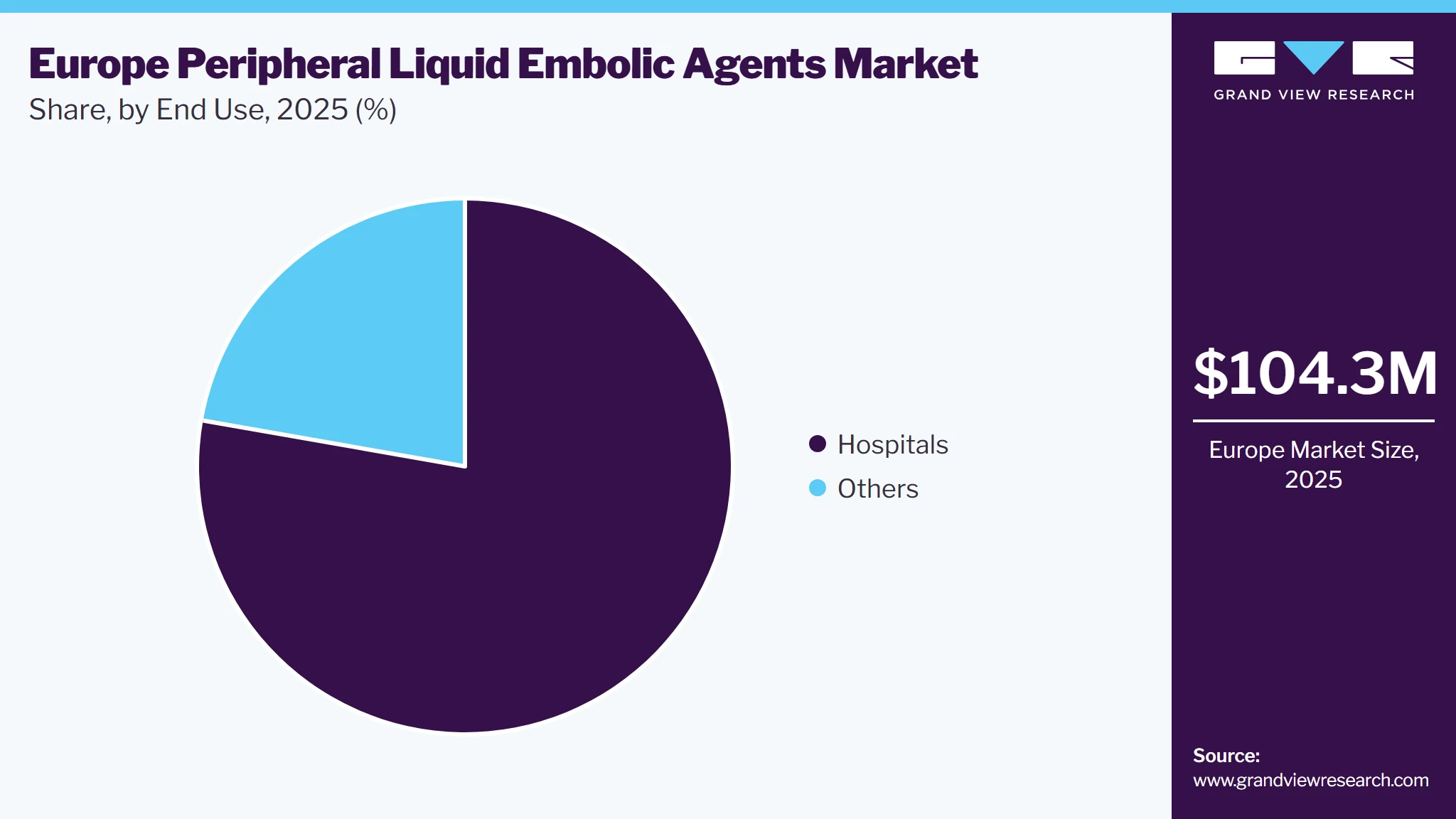
- By end use: the hospitals segment led the market with the largest revenue share of 77.8% in 2025.
Market Size & Forecast
- Market Size in 2025: USD 104.3 Million
- Estimated market size in 2026: USD 109.4 Million
- Projected Market Size by 2036: USD 178.6 Million
- CAGR (2026-2036): 5.0%
Three ways to get this report
Buy it, customize it, or ask a question.Ask an Analyst
A direct answer, usually in 1 working day
- AccessReport author, directly
- Reply timeWithin 1 working day
- No sales callDirect answer only
- FormatEmail reply
- CostFree, no cost
Get the Full Report
What the study covers
- FormatsPDF · Excel · Dashboard
- Timeline2026–2036 annual, 2025 base
- Coverage20+ countries, 5 regions
- Companies10+ key players profiled
Customize the Report
20% free customization
- IncludeCountries, segments, points
- TailorTo your product definition
- ExtendDeeper competitor detail
- OrA fully bespoke study
- Turnaround5–10 working days
The expansion of interventional radiology and vascular surgery services, together with improvements in catheter-based technologies and embolization techniques, is further supporting the use of liquid embolic agents in peripheral vascular procedures. An aging population and increasing healthcare focus on managing chronic vascular conditions are also expected to support demand for advanced peripheral embolization solutions across Europe.For instance, the European Society of Cardiology’s (ESC) Cardiovascular Disease Statistics 2025 reports that 9.3 million new cardiovascular disease cases were recorded across ESC member countries in 2023, with peripheral arterial disease (PAD) accounting for 24% of new CVD cases. The report further estimates 121 million people living with CVD, while PAD prevalence represented 19% of people living with CVD, and PAD incidence reached 123.6 per 100,000 person-years. Among individuals aged 70 years and older, PAD incidence was substantially higher at 1,090 per 100,000 person-years, highlighting the significant vascular disease burden associated with population aging. These findings support demand for peripheral vascular interventions and advanced embolization technologies, including liquid embolic agents, as healthcare systems address the growing need for diagnosis and treatment of peripheral vascular disease.
 Source: Grand View Research, IR Documents, Primary Interviews, Paid DatabasesTo learn more about this report,
 Download Free Sample Report
 In addition, the availability of specialized vascular centers, established endovascular treatment pathways, and growing expertise among vascular specialists are supporting the adoption of embolization procedures to treat aneurysm-related complications. Improvements in vascular imaging and surveillance following EVAR are enabling earlier identification and management of Type II endoleaks, increasing the utilization of peripheral liquid embolic agents. According to data published by the National Vascular Registry in 2025, when aneurysms develop in the aorta, they most frequently occur below the arteries supplying the kidneys and are known as infra-renal AAAs. The NVR received information on 2,511 people who had an elective repair of an unruptured infra-renal AAA in 2024, which corresponds to an estimated case-ascertainment rate for the UK of 91% (for England = 91%; for Wales = >100%; for Scotland = 64%; for NI = 100%)
Comparison of Clinical Outcomes Between Open Repair and Endovascular Aneurysm Repair (EVAR) for Aortic Aneurysm Management
Parameter
Open Repair
EVAR (Endovascular Aneurysm Repair)
Mortality
3.10%
0.30%
Length of Stay
7 (6-10) days
2 (1-3) days
Return to Theatre
8.60%
2.60%
Readmission within 30 Days
5.60%
5.40%
Source: National Vascular Registry 2025
The rising incidence and clinical diagnosis of varicocele in the UK are contributing to growth in the market by increasing demand for minimally invasive embolization procedures. Varicocele is one of the most common venous disorders affecting the male reproductive system. It is frequently associated with chronic scrotal pain, testicular dysfunction, and male infertility, prompting a growing number of patients to seek treatment. Transcatheter embolization has become an established therapeutic option for varicocele management, offering a minimally invasive alternative to surgical ligation. During the procedure, liquid embolic agents are used to achieve targeted occlusion of incompetent testicular veins, eliminate abnormal venous reflux, and preserve surrounding vascular structures.
Market Dynamics
Advances in liquid embolic formulations, microcatheter systems, and angiographic imaging are enabling more precise delivery, improved control of embolic material, and treatment of increasingly complex vascular anatomies. In addition, the expanding use of embolization across peripheral hemorrhage management, arteriovenous malformations, hypervascular tumors, and other vascular abnormalities, together with Europe’s aging population and rising demand for less invasive treatment approaches, is expected to create favorable opportunities for peripheral liquid embolic agents.
Advances in liquid embolic technology are improving the ability of physicians to visualize and control embolic materials during peripheral vascular procedures. Improved radiopacity allows the embolic agent to be monitored under imaging, while developments in material properties and delivery systems can provide greater control over injection, penetration, and distribution. These improvements are particularly relevant for treating vessels with complex anatomy or difficult-to-reach lesions. Better procedural control can help physicians target the intended vascular area more precisely and manage the embolization process more effectively. As these technologies continue to develop, they can support broader clinical adoption of liquid embolic agents in peripheral vascular interventions.
Stringent European medical-device regulations can act as a restraint on the market by increasing the requirements for clinical evidence, conformity assessment, certification, registration, and post-market surveillance. Manufacturers introducing or modifying liquid embolic products may need to provide extensive technical and clinical documentation to demonstrate safety and performance. These requirements can increase development costs and extend the time required for regulatory approval and market introduction. Smaller manufacturers may face greater difficulties because of limited regulatory and financial resources. In addition, compliance requirements across different stages of the product lifecycle can increase operational complexity, potentially slowing the introduction of innovative liquid embolic technologies into European markets.
The increasing use of catheter-based embolization for controlling traumatic and non-traumatic hemorrhage presents a significant opportunity for peripheral liquid embolic agents in Europe. Interventional embolization can provide rapid and minimally invasive control of active bleeding in selected patients, particularly when conventional surgery may involve greater procedural risk. Improvements in emergency imaging, angiographic systems, microcatheter technology, and interventional radiology capabilities are enabling faster identification and treatment of bleeding vessels. The development of liquid embolic agents with predictable delivery, controlled deployment, and effective vessel occlusion could further expand their use in emergency hemorrhage management and strengthen market demand.
Market Concentration & Characteristics
The market is characterized by a high degree of innovation, supported by ongoing improvements in embolic formulations, delivery systems, radiopacity, viscosity, and handling characteristics. Manufacturers are focusing on technologies that provide greater control during embolization and more predictable vessel occlusion. Advancements in liquid embolic materials are also improving compatibility with microcatheters and imaging-guided procedures. These developments are particularly relevant for complex peripheral vascular interventions where precise delivery and visualization are important. Continued innovation is expected to improve procedural control, expand the applicability of liquid embolic agents, and support adoption across different peripheral vascular procedures in European healthcare systems.
The market is characterized by a moderate level of M&A activity. Companies are seeking to strengthen their interventional radiology and peripheral vascular portfolios through strategic acquisitions, partnerships, licensing arrangements, and distribution agreements. Such activities can provide access to complementary technologies, established distribution networks, specialized expertise, and new geographic markets. However, M&A activity remains relatively selective because liquid embolic agents represent a specialized segment within the broader embolization market.
To learn more about this report, Download Free Sample Report The market experiences a high regulatory impact because liquid embolic agents are medical devices that require compliance with European regulatory requirements concerning safety, performance, clinical evidence, conformity assessment, and post-market surveillance. The EU Medical Device Regulation has strengthened requirements for clinical evaluation, device documentation, certification, and ongoing monitoring. The implementation of EUDAMED further supports greater transparency and traceability of medical devices. These requirements can increase product-development costs, regulatory complexity, and time to market.
The market faces moderate to high competition from substitute embolization technologies, including coils, vascular plugs, particles, and other embolic materials. The choice of embolic technology depends on factors such as vessel size, lesion characteristics, vascular anatomy, required occlusion, and physician preference. Coils and plugs are commonly suited to focal vessel occlusion, while particles can be used for selected vascular and tumor embolization procedures. Liquid embolic agents offer differentiated characteristics, including the ability to penetrate smaller or complex vascular networks and conform to irregular vascular anatomy.
Demand for peripheral liquid embolic agents in Europe is highly concentrated among hospitals, academic medical centers, and specialized interventional radiology and vascular facilities. These facilities typically possess advanced imaging equipment, catheterization laboratories, specialized microcatheters, and trained interventional specialists required for liquid embolization procedures. Use is particularly concentrated in higher-volume centers that manage complex peripheral vascular conditions, including hemorrhage, vascular malformations, endoleaks, hypervascular lesions, and other challenging vascular abnormalities.
Analyst Perspective
The market is supported by expanding interventional radiology capabilities, increasing adoption of advanced embolization technologies, and rising demand for liquid agents in complex vascular procedures. Regulatory developments, including evolving EU MDR requirements and expanded indications for embolic products, are also influencing market dynamics. Manufacturers offering radiopaque, controllable, biocompatible, and catheter-compatible liquid embolics with strong clinical evidence will be better positioned. Future opportunities are expected to be shaped by product innovation, regulatory approvals, specialist physician training, and broader adoption across European tertiary hospitals and specialized vascular centers.
Product Insights
The Ethylene Vinyl Alcohol Copolymer (EVOH) segment dominated the market, accounting for 59.8% revenue share in 2025, supported by its established use across a broad range of peripheral vascular interventions. EVOH-based agents such as Onyx and Squid are non-adhesive liquid embolics that enable controlled delivery, distal penetration, and permanent vessel occlusion. For instance, according to a 2026 review by Cannavale et al., EVOH-based liquid embolic agents were identified as one of the dominant copolymer families used in peripheral and other non-neurovascular embolization procedures. The review highlighted their ability to provide controlled delivery and effective vessel occlusion, supporting their use across a broad range of peripheral vascular interventions. EVOH-based systems were used in applications including peripheral hemorrhage control, arteriovenous malformations and fistulas, hypervascular tumor embolization, endoleak management, and selected visceral and renal vascular procedures. These established clinical applications contributed to the strong adoption of EVOH-based liquid embolic agents in the European market.
The others segment is expected to witness the fastest growth during the forecast period, driven by increasing adoption of emerging and specialized embolic technologies. This segment includes gelatin-based embolic agents, hydrogel-based materials, conformable liquid embolics, and DMSO-polymer formulations designed to provide controlled delivery and effective vessel occlusion. Growing demand for minimally invasive treatment of complex peripheral vascular conditions, including arteriovenous malformations, hemorrhage, aneurysms, and hypervascular tumors, is supporting the adoption of these alternatives. Technological advancements aimed at improving conformability, distal penetration, visibility, and control during embolization are further expanding their clinical utility and creating opportunities for growth across European interventional radiology practices.
Application Insights
The venous segment dominated the market, accounting for 44.6% share in 2025. This dominance is supported by the increasing use of liquid embolic agents in the treatment of venous disorders, including varicocele, pelvic congestion syndrome (PCS), and varicose veins. Liquid embolic agents, particularly sclerosants and cyanoacrylate-based agents, can provide effective occlusion of abnormal or refluxing veins and penetrate complex collateral venous networks.
The Type II endoleaks segment is expected to grow at the fastest rate during the forecast period, primarily supported by the increasing use of endovascular aneurysm repair (EVAR) across European healthcare systems and the need for effective management of persistent Type II endoleaks following aneurysm repair. Type II endoleaks, which are commonly associated with retrograde blood flow from branch vessels such as lumbar and inferior mesenteric arteries, may require embolization when persistent or associated with aneurysm sac enlargement. Liquid embolic agents offer controlled delivery and the ability to penetrate complex vascular channels, supporting their use in these procedures.
End Use Insights
The hospitals segment dominated the market, accounting for 77.8% share in 2025, driven by hospital infrastructure investments across the region. For instance, in July 2026, the UK Department of Health and Social Care reported that 11 long-term partnerships had been signed between NHS trusts and construction partners to deliver new hospitals across England under the New Hospital Programme. The initiative was designed to modernize hospital infrastructure through the Hospital 2.0 model, incorporating digital innovation and standardized hospital design. Consequently, continued investment in hospital infrastructure and modernization is expected to expand access to advanced interventional facilities, supporting the adoption of peripheral liquid embolic agents across European hospitals.
 To learn more about this report, Download Free Sample Report
 The others segment is expected to grow at the fastest rate during the forecast period, supported by the increasing adoption of minimally invasive vascular procedures in specialized outpatient facilities, ambulatory settings, and other healthcare centers. Advances in liquid embolic formulations, catheter-based delivery systems, and imaging technologies are improving procedural precision and enabling the treatment of complex peripheral vascular conditions outside traditional hospital environments. In addition, the growing emphasis on reducing hospital stays, improving healthcare efficiency, and expanding access to interventional procedures is encouraging the development of specialized vascular treatment facilities.
Country Insights
Germany Peripheral Liquid Embolic Agents Market Trends
The peripheral liquid embolic agents market in Germany held the largest share in 2025, supported by the country's well-established interventional radiology infrastructure, high availability of specialized hospitals, and growing use of minimally invasive embolization procedures. Germany's healthcare system has formally classified selective embolization with liquid embolic agents across multiple peripheral vascular sites, including the lower-leg, thigh, abdominal and pelvic vessels, visceral vessels, and arteriovenous malformations, demonstrating the breadth of clinical applications for these products.
UK Peripheral Liquid Embolic Agents Market Trends
The peripheral liquid embolic agents market in the UK is expected to witness the fastest CAGR during the forecast period. The market is being influenced by the ongoing evolution of the MHRA medical-device regulatory framework. In Great Britain, manufacturers must comply with the UK Medical Devices Regulations 2002 and register medical devices with the MHRA before placing them on the market. Although UKCA remains the domestic conformity-assessment route, the UK continues to recognize certain CE-marked devices during the transition to the future regulatory framework, which can facilitate the continued availability of established embolization technologies.
Key Medical Device Regulatory Updates in Great Britain
Month & Year
Regulatory Update
Regulatory Authority
Key Changes
Jun-25
Implementation of the Medical Devices (Post-Market Surveillance Requirements) (Amendment) (Great Britain) Regulations 2024
Medicines and Healthcare products Regulatory Agency (MHRA)
Strengthened post-market surveillance requirements for medical devices, including enhanced real-world data collection, improved safety monitoring, trend reporting, and faster reporting of serious incidents to the MHRA within 15 days
Source: GOV UK 2025
“As innovation in health technologies accelerates, regulation must keep pace. Today’s reform is a critical step in ensuring safety standards evolve alongside this progress. By strengthening oversight of devices once they’re in use and setting clearer expectations for manufacturers, these new regulations provide a robust framework for identifying risks earlier and responding to protect patients. This represents an important milestone in our work to build a modern, responsive regulatory system - one that puts patient safety first while also supporting innovation in life sciences and medical technologies across the UK.” said Lawrence Tallon, Chief Executive of the MHRA
Key Europe Peripheral Liquid Embolic Agents Company Insights
Some of the key companies in the Europe peripheral liquid embolic agents market are focusing on product innovation and development of advanced formulations with improved delivery control, penetration, visibility, and safety.
Key Europe Peripheral Liquid Embolic Agents Companies
-
Medtronic
-
BALT Group
-
GEM S.r.l. (H.B. Fuller)
-
Terumo Medical Corporation (MicroVention)
-
B. Braun SE
-
Qmedics
-
NeuroSafe Medical / Sirtex Medical
-
Johnson & Johnson MedTech (Cordis)
-
Peters Surgical
-
Boston Scientific Corporation
-
BlackSwan Vascular / Sirtex Medical
Competitive Benchmarking
Category
Operating Strategies
Competitive Edge
Weakness
Established Players (Medtronic, Boston Scientific Corporation)
- Focus on developing and expanding advanced liquid embolic agent portfolios for peripheral vascular embolization, with emphasis on controlled delivery, improved radiopacity, biocompatibility, and compatibility with microcatheter-based procedures.
- Expand market presence through strategic partnerships with hospitals, interventional radiology centers, specialty physicians, distributors, and healthcare systems.
- Strong global brand recognition, extensive R&D capabilities, broad interventional product portfolios, established distribution and service networks, and strong regulatory expertise.
- Integration with established catheter and embolization platforms enables these companies to maintain leadership in premium embolization solutions.
- High R&D and clinical development costs, stringent regulatory requirements, and premium product pricing may limit adoption among cost-sensitive healthcare providers.
- Long product development and approval cycles and increasing competition from specialized and lower-cost manufacturers also pose challenges.
Emerging Players (BALT Group, Peters Surgical)
- Expanding distribution in emerging markets and developing innovative liquid embolic technologies for peripheral vascular applications.
- Emphasize continuous product improvements, controlled embolization, delivery-system compatibility, clinical validation, international certifications, and expansion through regional distributors and specialty interventional radiology networks.
- Competitive pricing, specialized product offerings, faster product development, and growing presence across Asia-Pacific, Latin America, and the Middle East.
- Ability to address demand for minimally invasive embolization among cost-sensitive healthcare providers.
- Comparatively lower global brand recognition, smaller direct sales and service networks.
- Dependence on regional distributors, relatively lower R&D budgets, limited clinical evidence compared with established competitors.
Recent Developments
-
In April 2026, Guerbet achieved a regulatory milestone for Lipiodol Ultra Fluid, with EU member states supporting a new indication for peripheral and central vascular embolization using compatible cyanoacrylate-based surgical glues. The approval is expected to expand Lipiodol’s use in interventional radiology following subsequent national authorizations.
-
In July 2025, IHT Medical launched the CLARITE pivotal trial to evaluate its Obtura liquid embolic system for endovascular treatment of arteriovenous pathologies. The multicentre trial planned to enroll 110 patients across six centres in Germany and Spain.
Europe Peripheral Liquid Embolic Agents Market Report Scope
Report Attribute
Details
Market size in 2025
USD 104.3 million
Estimated market size in 2026
USD 109.4 million
Projected market size by 2036
USD 178.6 million
Growth rate
CAGR of 5.0% from 2026 to 2036
Base year for estimation
2025
Actual estimates/historical data
2021 - 2024
Forecast period
2026 - 2036
Quantitative units
Revenue in USD million and CAGR from 2026 to 2036
Report coverage
Revenue forecast, company ranking, competitive landscape, growth factors, and trends
Segments covered
Product, application, end use, region
Regional scope
Europe
Country scope
UK; Germany; France; Italy; Spain
Key companies profiled
Medtronic; BALT Group; GEM S.r.l. (H.B. Fuller); Terumo Medical Corporation (MicroVention); B. Braun SE; Qmedics; NeuroSafe Medical / Sirtex Medical; Johnson & Johnson MedTech (Cordis); Peters Surgical; Boston Scientific Corporation; BlackSwan Vascular / Sirtex Medical.
Customization scope
Free report customization (equivalent up to 8 analyst’s working days) with purchase. Addition or alteration to country, regional & segment scope
Pricing and purchase options
Avail customized purchase options to meet your exact research needs. Explore purchase options
Europe Peripheral Liquid Embolic Agents Market Report Segmentation
This report forecasts revenue growth at the regional and country levels and provides an analysis of the latest industry trends in each of the sub-segments from 2021 to 2036. For this study, Grand View Research has segmented the Europe peripheral liquid embolic agents market report based on product, application, end use, and country:
-
Product Outlook (Revenue, USD Million, 2021 - 2036)
-
Ethylene Vinyl Alcohol Copolymer (EVOH)
-
Cyanoacrylates / tissue glues combined
-
n-butyl cyanoacrylate (n-BCA)
-
n-hexyl cyanoacrylate (n-HCA)
-
Others liquid embolics
-
-
Application Outlook (Revenue, USD Million, 2021 - 2036)
-
Peripheral Vascular Hemorrhage
-
Hypervascular Tumors
-
Peripheral Vascular Malformations / AVMs
-
Aneurysms / Pseudoaneurysms
-
Type II Endoleaks
-
Portal Vein Embolization (PVE)
-
Venous Applications (varicocele, PCS, varicose veins)
-
Other Peripheral Embolization Applications
-
-
End Use Outlook (Revenue, USD Million, 2021 - 2036)
-
Hospitals
-
Others
-
-
Country Outlook (Revenue, USD Million, 2021-2036)
-
UK
-
Germany
-
France
-
Italy
-
Spain
-
Research Methodology
The europe peripheral liquid embolic agents market figures in this report are based on a proven research process that combines executive interviews with secondary research from proprietary databases, company filings, and recognized regulatory and institutional sources. Market size is built through value-chain sizing-reconciling supply-side and demand-side estimates-and triangulated with bottom-up and top-down approaches. Every estimate passes multiple levels of expert validation before publication, with each Europe peripheral liquid embolic agents segment quantified using the revenue-capture definitions in the table below.
Segment Definition
Segment - Product
Revenue capture definition
Ethylene Vinyl Alcohol
Copolymer (EVOH)
Revenue generated from EVOH-based liquid embolic agents, consisting of ethylene vinyl alcohol copolymer dissolved in DMSO and typically containing radiopaque materials such as tantalum. These non-adhesive agents form a cohesive polymer cast within the target vessels and are used for controlled and permanent embolization of peripheral vascular lesions, including arteriovenous malformations, hypervascular tumors, bleeding, and Type II endoleaks.
Cyanoacrylates / tissue
glues combined
Revenue generated from the sale of cyanoacrylate-based liquid embolic agents and tissue glues containing n-butyl cyanoacrylate (n-BCA), N-hexyl cyanoacrylate (n-HCA), or formulations combining these agents, used for vascular embolization and tissue sealing procedures. Revenue includes the product value realized by manufacturers from these embolic/glue products, while excluding delivery catheters, ancillary devices, and procedure-related services.
Other Liquid Embolics
Revenue generated from other liquid embolic agents, including gelatin-based, hydrogel, conformable, and DMSO-polymer formulations that achieve vessel occlusion through mechanisms such as gel formation, polymer precipitation, or other in-situ material transformations. These products are used across peripheral vascular applications, including venous embolization, hemorrhage control, vascular malformations, tumors, and endoleaks, depending on the formulation and clinical indication
Estimation Model
Bottom-Up Estimation
02 - Top-Down Approach
03 - Supply-Side Analysis
The market is estimated by assessing the volume of peripheral embolization procedures performed across interventional radiology departments, vascular centers, tertiary hospitals, and specialized embolization facilities across European countries. The analysis incorporates utilization of EVOH-based liquid embolics, cyanoacrylates/tissue glues (n-BCA + n-HCA), and other liquid embolics across hemorrhage, hypervascular tumors, AVMs, aneurysms / pseudoaneurysms, Type II endoleaks, PVE, and venous applications.
The market estimation begins with the broader European embolization devices and interventional radiology market, followed by assessing the share attributable to peripheral liquid embolic agents through secondary research, clinical literature, regulatory information, and expert validation. Key indicators include peripheral embolization procedure volumes, prevalence of vascular malformations and peripheral vascular conditions, adoption of liquid versus solid embolic technologies, specialist-center activity, healthcare expenditure, and country-level technology penetration.
The analysis evaluates manufacturers' liquid embolic product portfolios, production capabilities, annual shipments, average selling prices, regulatory approvals, product indications, and distribution networks across Europe. It incorporates supplier revenues and geographic exposure for EVOH, n-BCA, n-HCA, and other liquid embolic formulations, along with product launches, clinical trial activity, regulatory milestones, distributor relationships, inventory flows, and manufacturer presence across major European markets to estimate overall market supply and revenue potential.
Delivered Customizations
This report has been delivered with the following In-depth customizations
Client Request
Customization Delivered
Value Adds
Peripheral Liquid Embolic Agents Product Type & Market Segmentation Analysis
Conducted a detailed assessment of the Europe peripheral liquid embolic agents market by EVOH, cyanoacrylates/tissue glues combined (n-BCA + n-HCA), and other liquid embolics, including gelatin, hydrogel, conformable, and DMSO-polymer-based agents. Analyzed market revenue across 2021-2036, product adoption patterns, formulation characteristics, clinical utility, and technology differentiation.
Enables stakeholders to identify high-value liquid embolic product categories, assess technology-level growth opportunities, prioritize product development, and align portfolios with evolving European embolization requirements.
Application & Clinical Demand Landscape Analysis
Assessed the utilization of peripheral liquid embolic agents across hemorrhage control, tumor embolization, vascular malformations, aneurysms/pseudoaneurysms, endoleaks, PVE, and venous interventions. Examined procedure complexity, embolization requirements, physician preferences, and the suitability of different liquid embolic technologies across applications.
Supports application-level opportunity assessment, identifies emerging areas of demand, guides clinical positioning strategies, and helps companies target applications with stronger growth potential.
Product Positioning & Manufacturer Competitiveness Assessment
Assessed major manufacturers and emerging players based on liquid embolic product portfolios, EVOH and cyanoacrylate technologies, product indications, formulation characteristics, delivery compatibility, clinical evidence, regulatory status, geographic presence, distribution capabilities, and innovation activities. The analysis also considered anticipated competitive entries and portfolio expansion opportunities.
Helps stakeholders benchmark competitors, identify technology and portfolio gaps, differentiate liquid embolic products, evaluate competitive threats, and develop strategies for strengthening market position across Europe.
Frequently Asked Questions About This Report
The Europe peripheral liquid embolic agents market size was valued at USD 104.3 million in 2025 and is estimated at USD 109.4 million for 2026.
The Europe peripheral liquid embolic agents market is expected to grow at a CAGR of 5.0% from 2026 to 2036, reaching USD 178.6 million
Key factors include the rising burden of peripheral artery disease and other vascular disorders across European countries is supporting demand for endovascular interventions.
The Ethylene Vinyl Alcohol Copolymer (EVOH) segment held the largest share of 59.8% in 2025, while other liquid embolics is the fastest-growing segment over the forecast period.
The venous applications held the largest share of 44.6% in 2025, while other peripheral embolization applications is the fastest-growing segment over the forecast period.
The hospitals held the largest share of 77.8% in 2025 while others is the fastest-growing segment over the forecast period.
Key players include Medtronic, BALT Group, GEM S.r.l. (H.B. Fuller), Terumo Medical Corporation (MicroVention), B. Braun SE, Qmedics, NeuroSafe Medical / Sirtex Medical, Johnson & Johnson MedTech (Cordis), Peters Surgical, Boston Scientific Corporation, and BlackSwan Vascular / Sirtex Medical.
About the Author(s)
Medical Devices Research Team
Healthcare · Medical DevicesThis report was authored by the medical devices research team at Grand View Research - comprising two research analysts, one senior research analyst, and one industry expert - with specialized expertise in the medical devices segment of the healthcare industry. All findings are based on proprietary healthcare databases, executive interviews, and regulatory analysis, subject to internal peer review prior to publication.
Last Updated:
Speak to Analyst

Customize this report to your needs - add regions, segments, or data points, with 20% free customization.
Or view our licence options:


ISO 9001:2015 & 27001:2022 Certified
We are GDPR and CCPA compliant! Your transaction & personal information is safe and secure. For more details, please read our privacy policy.


