
- Home
- »
- Nutraceuticals & Functional Foods
- »
-
Europe Protein Supplements Market Report, 2026-2033GVR Report cover

Europe Protein Supplements Market (2026 - 2033)
Size, Share & Trends Analysis Report By Source (Animal-based Protein Supplements, Plant-based Protein Supplements), By Product, By Application (Sports Nutrition, Functional Foods), By Distribution Channel, By Region, And Segment Forecasts
Market Size, 2025
$7.9BMarket Estimate, 2026
$8.5BMarket Forecast, 2033
$17.2BCAGR, 2026–2033
10.6%Europe Protein Supplements Market Summary
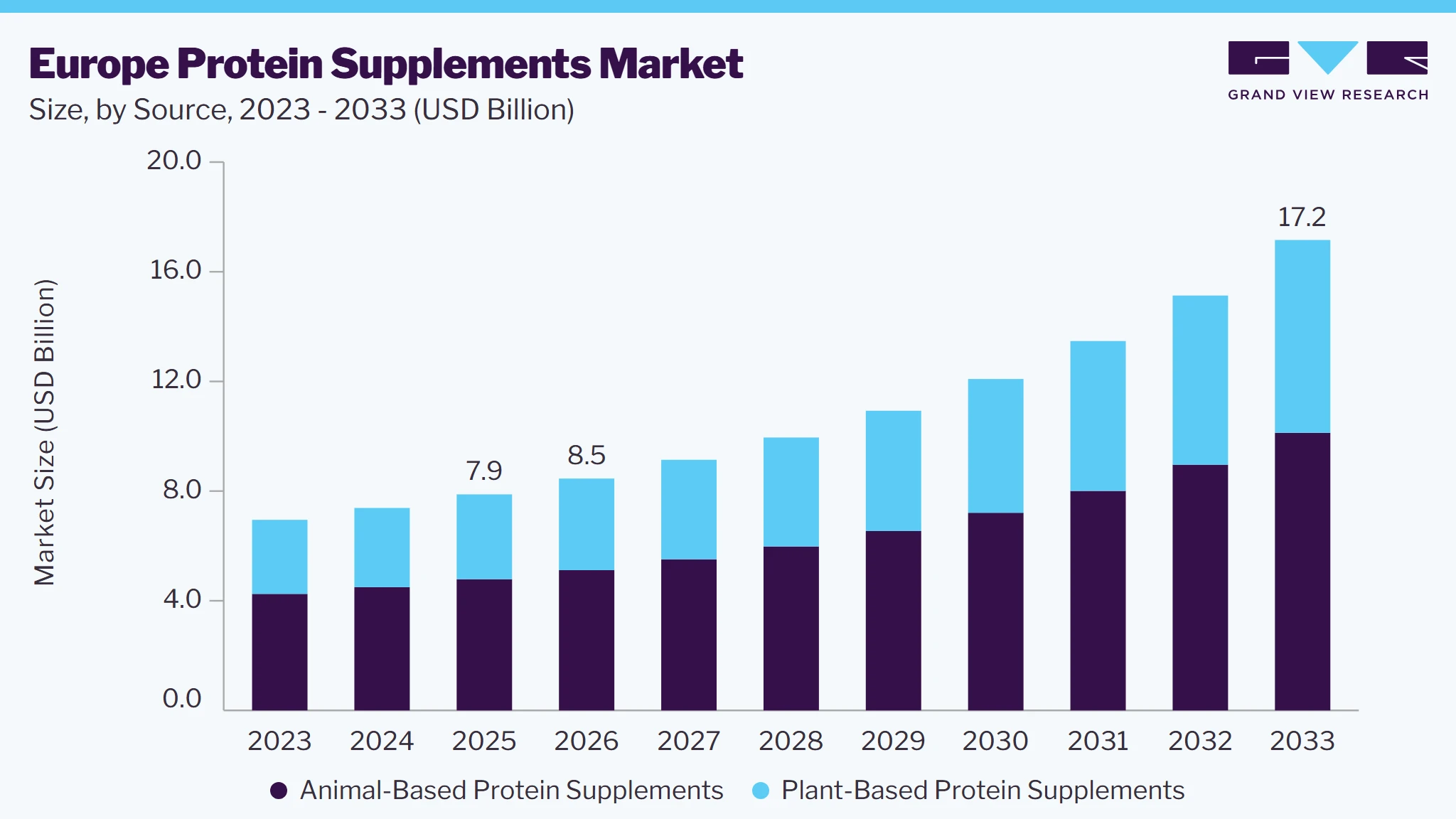
The Europe protein supplements market size was valued at USD 7.9 billion in 2025 and is projected to grow from USD 8.5 billion in 2026 to USD 17.2 billion by 2033, at a CAGR of 10.6% from 2026 to 2033. The market growth is being shaped by growing consumer interest in fitness, active lifestyles, healthy aging, and preventive nutrition. Consumers are increasingly incorporating protein products into their everyday diets beyond traditional sports use, with demand extending to fitness enthusiasts, recreational athletes, and those seeking convenient nutritional support.
Key Market Trends & Insights
- By source: The animal-based segment held the largest market share of 60.7% in 2025.
- By product: The protein powder segment led the market with the largest revenue share of 49.0% in 2025.
- By application: The functional foods segment dominated the market with a revenue share of 50.8% in 2025.
- By distribution channel: The online stores segment held the largest market share of 45.0% in 2025.
Market Size & Forecast
- Market size in 2025: USD 7.9 Billion
- Estimated market size in 2026: USD 8.5 Billion
- Projected market size by 2033: USD 17.2 Billion
- CAGR (2026-2033): 10.6%
Three ways to get this report
Buy it, customize it, or ask a question.Ask an Analyst
Analyst response in 1 business day
- AccessReport author, directly
- Reply timeWithin 1 working day
- No sales callDirect answer only
- FormatEmail reply
- CostFree, no cost
Get the Full Report
What the study covers
- FormatsPDF · Excel · Dashboard
- Timeline2026–2033 annual, 2025 base
- Coverage20+ countries, 5 regions
- Companies10+ key players profiled
Customize the Report
20% free customization
- IncludeCountries, segments, points
- TailorTo your product definition
- ExtendDeeper competitor detail
- OrA fully bespoke study
- Turnaround5–10 working days
Preference for convenient formats, diverse protein sources, clean-label formulations, and products tailored to specific dietary needs is encouraging manufacturers to broaden their offerings and strengthen their presence across retail, specialty stores, gyms, and online channels.
European consumers are increasingly incorporating protein into their regular nutrition routines, moving beyond the traditional sports and bodybuilding audience. A 2025 survey of 1,277 active consumers across France, Germany, Italy, Spain, and the UK found that 42% cited plant proteins among their preferred sports-nutrition ingredients, compared with 26% for whey or dairy protein. The same research found that 64% preferred vitamins and 42% preferred plant proteins among the sports-nutrition ingredients evaluated. This indicates that consumers are considering a broader range of nutritional ingredients alongside protein products.
 Source: Grand View Research, IR Documents, Primary Interviews, Paid DatabasesTo learn more about this report,
 Download Free Sample Report
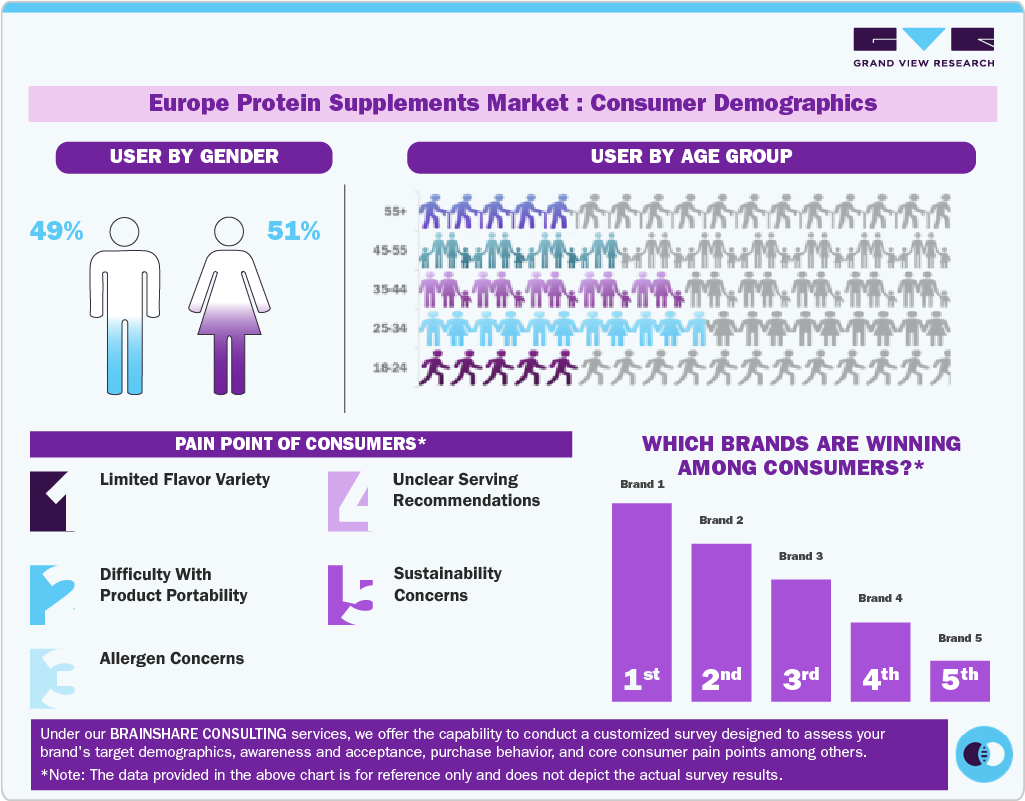
Consumer needs also vary according to age and physical activity, creating demand for protein products that serve different usage occasions. The 2025 European survey found that 51% of consumers aged 18-24 primarily participated in strength training, while 75% of consumers aged 55 and above preferred endurance activities. In terms of sports-nutrition objectives, 49% identified muscle growth and 51% identified post-exercise recovery as key goals, while 71% cited energy. These findings indicate that protein supplements can appeal to both younger consumers focused on strength and performance and older consumers interested in maintaining an active lifestyle.
Convenience and product variety are becoming important factors in the European protein supplements industry as consumers look for products that can fit easily into daily routines. Protein supplements are increasingly available in various formats, flavors, and formulations, allowing consumers to choose products that suit their lifestyle, nutritional goals, and consumption occasions. Manufacturers are therefore focusing on improving taste, texture, digestibility, and ease of use while developing products suitable for consumption before or after exercise and throughout the day.
Consumer Insights
European consumers are increasingly looking for protein supplements that offer clear nutritional benefits and fit specific dietary requirements. Interest is shifting toward products with transparent ingredient lists, recognizable protein sources, and formulations that address individual preferences such as lactose-free, low-sugar, gluten-free, and plant-based nutrition. Consumers are also paying closer attention to protein content per serving and overall ingredient quality when comparing products, encouraging brands to provide clearer nutritional information and differentiated formulations.
 To learn more about this report, Download Free Sample Report
Taste, affordability, and digestibility remain important considerations when choosing protein supplements. Consumers may be hesitant to use products that have an unpleasant aftertaste, gritty texture, digestive discomfort, or a high price relative to perceived nutritional value. As a result, manufacturers are focusing on improving solubility, mouthfeel, flavor variety, and digestive tolerance while offering a range of pack sizes and serving options. These preferences also support the development of simpler formulations and convenient products that can be incorporated into regular diets without requiring major changes to consumers' eating habits.
Europe has a broad consumer base for dietary supplements, supporting demand across different nutritional and wellness categories. According to 2026 research involving 6,000 consumers across the European Economic Area (EEA), 55% reported purchasing food supplements, while 62% of supplement users reported taking them daily. Although the figures cover food supplements as a whole rather than protein supplements specifically, they indicate widespread supplement purchasing and regular usage across European consumers, providing a broader consumer base for specialized products such as protein supplements.
Market Dynamics
Protein consumption is becoming increasingly connected with broader health and wellness goals across Europe, rather than being limited to professional athletes or bodybuilding. According to a January 2026 report, 95% of Europeans identified health as a top priority, while 56% reported cutting sugar and 50% reducing processed foods as part of healthier lifestyle choices. The same report noted that nearly one in five consumers purchased sports or functional nutrition products to support hydration, while everyday consumers were incorporating whey protein and other sports-nutrition products into their routines. This shift toward a more active, health-focused lifestyle is broadening the consumer base for protein supplements and encouraging their use beyond traditional sports contexts.
Rising whey protein costs are creating pricing and formulation challenges for protein supplement manufacturers in Europe. In May 2026, the price of Whey protein concentrate containing 80% protein reached around €26,450 per metric ton in Europe, more than double the level recorded less than a year earlier. Tight supply and strong demand are increasing the cost of a key ingredient used in protein powders and other supplements, which can place pressure on manufacturers’ margins and potentially raise prices for consumers. The cost pressure may also encourage manufacturers to adjust formulations by incorporating alternative protein sources or blends to manage production expenses.
The growing acceptance of alternative protein sources across Europe is creating opportunities for protein supplement manufacturers to diversify beyond conventional Whey and dairy-based products. Manufacturers can develop plant-based and blended formulations using ingredients such as pea, soy, and other plant proteins, while also improving taste, texture, digestibility, and nutritional profiles. The focus on protein diversification is also encouraging innovation around products that combine health, affordability, sustainability, and convenience, allowing brands to address a wider range of consumer preferences and dietary requirements.
Analyst Perspective
The Europe protein supplements market is evolving from a predominantly sports-performance category toward a broader everyday nutrition market, with consumers increasingly incorporating protein into fitness, wellness, recovery, and active-lifestyle routines. Competition is centered on product diversification, convenient formats, plant-based alternatives, clean-label positioning, and improved taste and functionality. Brands are also using e-commerce and direct-to-consumer channels to reach consumers across European markets, while innovation in high-protein products, clear protein beverages, bars, and functional formulations creates additional opportunities. Overall, the market outlook remains favorable as protein becomes more integrated into mainstream European dietary and wellness habits.
Source Insights
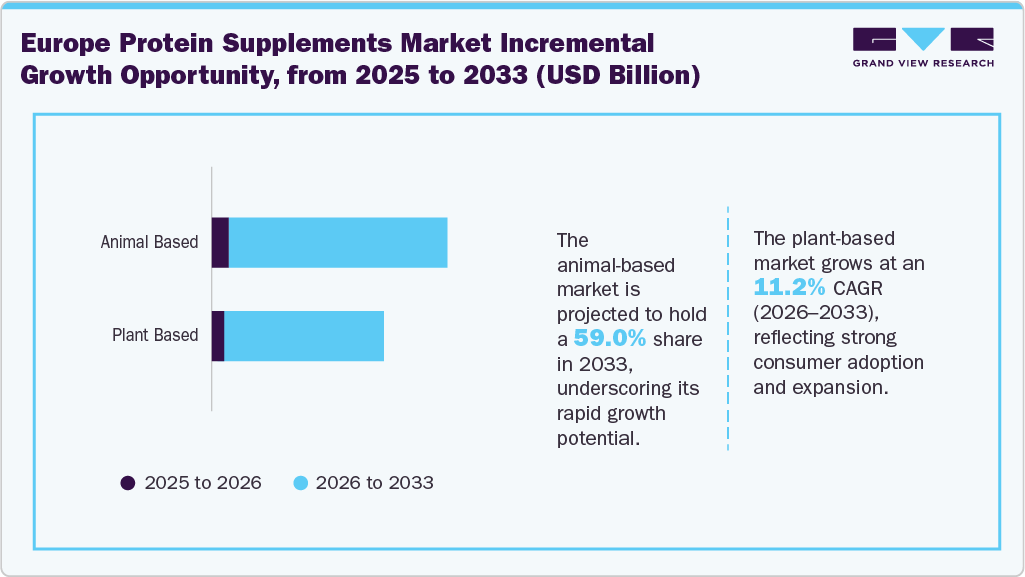
The animal-based segment led the market with the largest revenue share of 60.7% in 2025. The animal-based category continues to appeal to European consumers due to the established familiarity with dairy-derived proteins, particularly whey and casein. These protein sources are widely associated with complete amino acid profiles, muscle recovery, and sports performance nutrition, while their established use in protein powders, shakes, and bars supports continued consumer acceptance. At the same time, the growing availability of plant-based alternatives is encouraging manufacturers to diversify their protein portfolios and address consumers seeking different dietary preferences.
 To learn more about this report, Download Free Sample Report
The plant-based segment is anticipated to grow at the fastest CAGR of 11.2% from 2026 to 2033. The rising acceptance of plant-based nutrition across Europe is encouraging manufacturers to develop protein supplements using sources such as pea, soy, rice, and other plant proteins. Consumers are increasingly seeking alternatives that align with vegan and flexitarian diets while also offering nutritional value, digestibility, and convenience. This trend is encouraging brands to introduce a wider range of plant-based protein powders, shakes, bars, and blended formulations, while improving taste and texture to appeal to a broader consumer base.
Product Insights
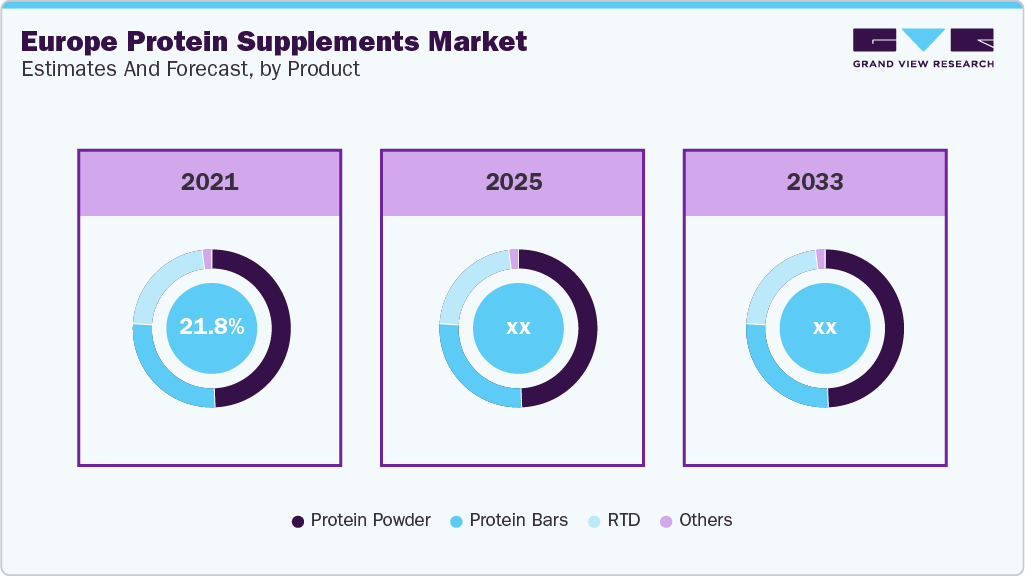
The protein powder segment led the market with the largest revenue share of 49.0% in 2025. Protein powder remains a widely established product format in Europe because it offers high protein concentration, flexible serving sizes, and easy incorporation into shakes, smoothies, and meals. Its versatility makes it suitable for consumers pursuing muscle recovery, fitness, healthy aging, and everyday protein intake. Manufacturers are also differentiating powders by whey, casein, pea, soy, and blended formulations, as well as options tailored to specific dietary preferences, such as plant-based and lactose-free formulations.
 To learn more about this report, Download Free Sample Report
The RTD protein supplements segment is anticipated to grow at the fastest CAGR of 11.4% from 2026 to 2033. RTD protein supplements are gaining traction among European consumers because they offer a convenient, portable, and ready-to-consume option for meeting protein needs without preparation or mixing. Their suitability for post-workout recovery, commuting, travel, and everyday nutrition is encouraging manufacturers to introduce products with varied protein sources, flavors, and nutritional profiles. The format is also supporting innovation in high-protein beverages, plant-based RTD products, and functional formulations, allowing brands to address consumers seeking both convenience and broader wellness benefits.
Application Insights
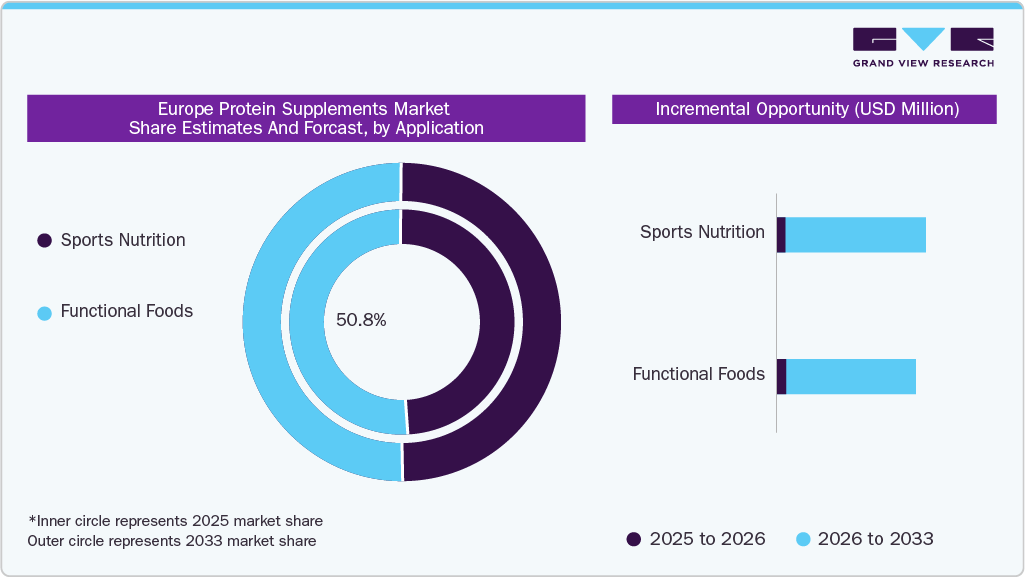
The functional foods segment led the market with the largest revenue share of 50.8% in 2025. In Europe, protein is increasingly becoming part of mainstream nutrition rather than being limited to traditional sports supplementation. According to 2026 Food Navigator reporting, 42% of European consumers cited low sugar as an important attribute when choosing sports-nutrition products, while convenience, particularly through ready-to-drink and portable formats, was also identified as an important consideration. This preference is encouraging protein supplement manufacturers to develop products that combine protein content with simpler nutritional profiles and convenient formats suited to everyday consumption.
 To learn more about this report, Download Free Sample Report
The sports nutrition segment is anticipated to grow at the fastest CAGR of 10.8% from 2026 to 2033, supported by the growing participation in fitness activities, strength training, and recreational sports across Europe. Protein supplements are increasingly incorporated into daily nutrition routines to support muscle recovery, maintenance, and performance. Product innovation in ready-to-drink beverages, protein bars, powders, and plant-based formulations is also creating more convenient consumption options. In addition, demand for high-protein and clean-label products is encouraging manufacturers to introduce formulations with added vitamins, minerals, and other functional ingredients.
Distribution Channel Insights
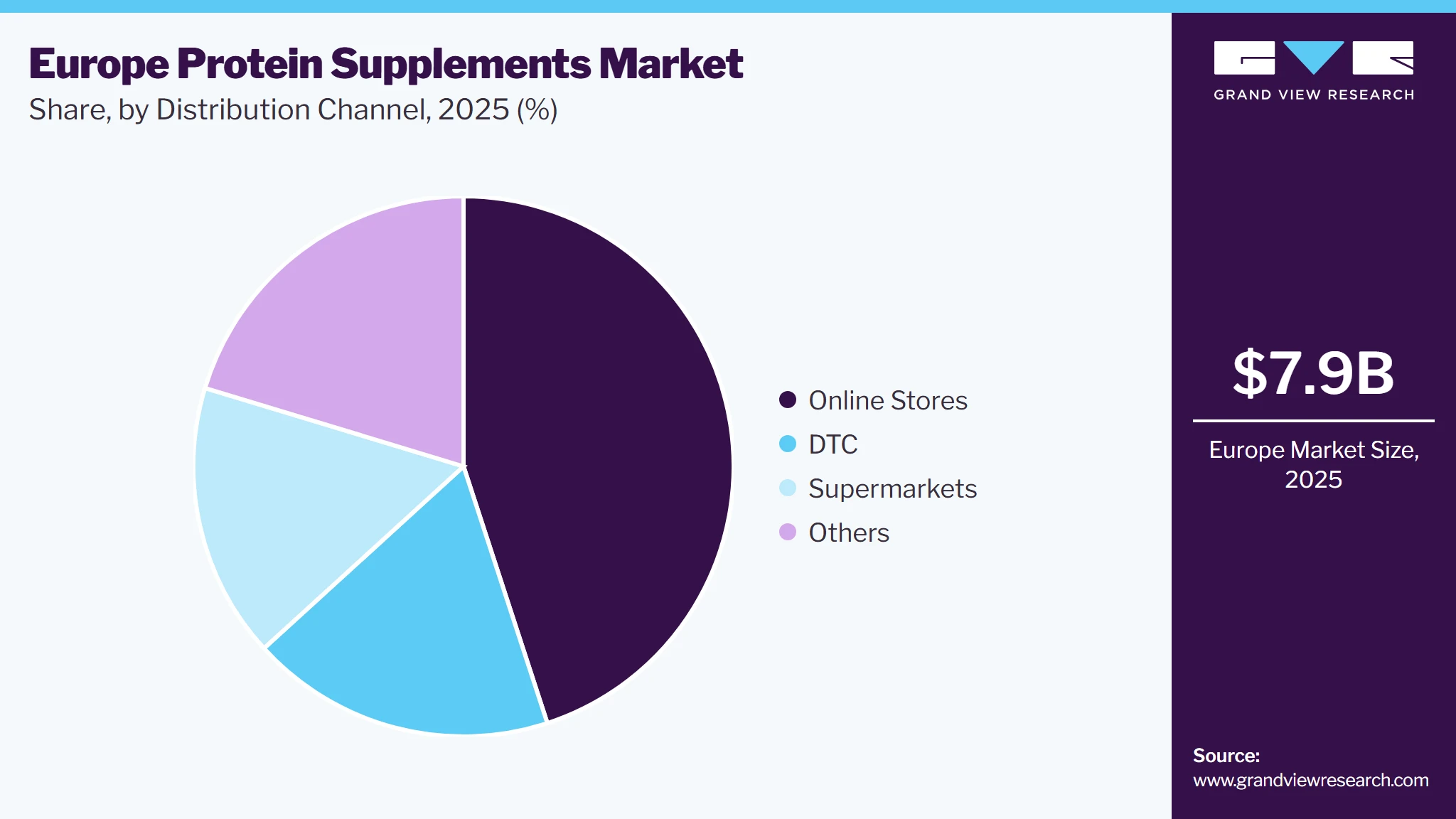
The online stores segment led the market with the largest revenue share of 45.0% in 2025. Online purchasing is becoming an important channel for European protein supplement consumers because it provides access to a wider range of brands, protein sources, flavors, pack sizes, and specialized formulations than many physical stores do. E-commerce also allows consumers to compare nutritional information, ingredients, prices, and customer reviews before making a purchase. Protein brands are therefore using direct-to-consumer websites, online marketplaces, and social-commerce platforms to reach consumers beyond traditional sports-nutrition outlets, while subscription and home-delivery options can support repeat purchases.
 To learn more about this report, Download Free Sample Report
The supermarkets segment is projected to grow at the fastest CAGR of 11.8% from 2026 to 2033. Supermarkets are becoming an increasingly important retail touchpoint for protein supplements as protein-focused nutrition moves into mainstream grocery shopping. European retailers are giving greater shelf space to protein powders, shakes, bars, and protein-enriched foods, making these products more accessible to consumers who may not specifically shop through specialist sports-nutrition stores. Recent reporting from Europe also highlights the growing presence of high-protein products in mainstream retail, with 23 new products carrying explicit protein claims launched in French stores during the first three months of 2025. This retail shift is encouraging brands to develop convenient, clearly positioned protein products suited to everyday grocery purchases.
Regional Insights
Germany Protein Supplements Market Trends
The Germany protein supplements market held the largest revenue share of 19.6% in Europe in 2025, by growing participation in fitness activities, strength training, running, and recreational sports. German consumers are increasingly incorporating protein powders, bars, ready-to-drink beverages, and other high-protein products into their daily diets to support muscle recovery, fitness goals, and general nutritional needs. Demand is also shifting toward convenient and transparent formulations, with consumers paying greater attention to protein content, ingredient quality, and nutritional composition. Plant-based protein products are gaining visibility as manufacturers introduce formulations based on plant sources. In Germany, foodspring, ESN (Elite Sports Nutrients), and Myprotein offer a broad range of protein supplements, including whey protein, vegan protein powders, protein bars, and ready-to-drink products. ESN, for instance, offers products such as whey protein and vegan protein formulations for sports and fitness consumers. The availability of these products through online platforms, sports nutrition stores, gyms, and other retail channels is supporting wider consumer access to protein supplementation.
UK Protein Supplements Market Trends
The protein supplements market in the UK is anticipated to grow at the fastest CAGR of 12.7% from 2026 to 2033, as consumers increasingly incorporate protein products into their daily nutrition and fitness routines. Growing participation in gym workouts, strength training, and recreational exercise is supporting demand for protein powders, bars, and ready-to-drink products. Consumers are also using protein supplements for muscle recovery, muscle maintenance, and meeting daily nutritional requirements, while the popularity of high-protein diets is extending demand beyond traditional sports users. In addition, growing interest in plant-based proteins, convenient formats, and products with simple nutritional profiles is encouraging manufacturers to diversify their offerings. Online retail, supermarkets, specialist sports nutrition stores, and fitness-focused channels are providing consumers with greater access to protein supplements across the UK.
Key Europe Protein Supplements Company Insights
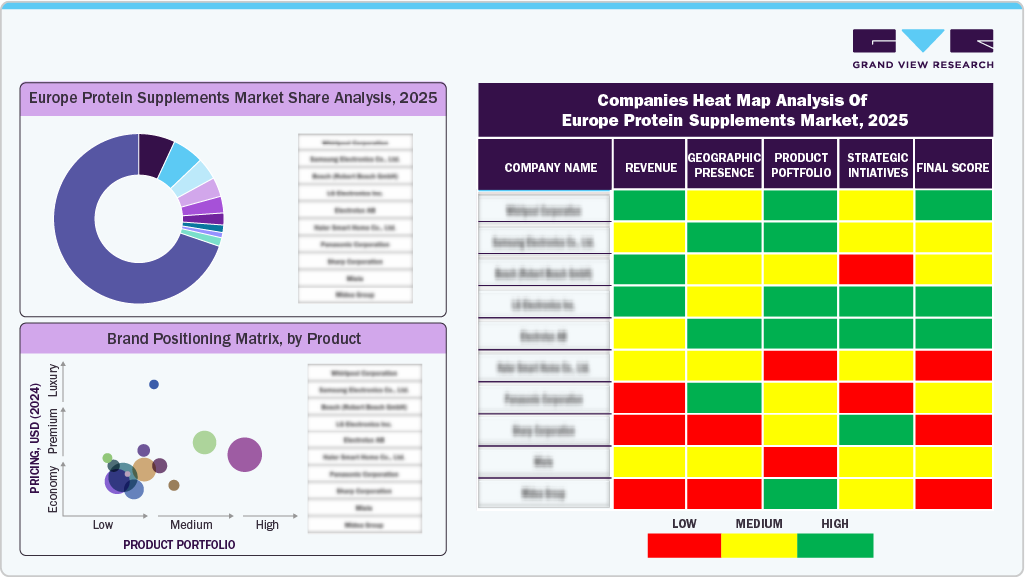
The Europe protein supplements industry features a mix of established sports-nutrition and nutritional-health companies, with competition centered on broad protein portfolios, formulation capabilities, brand recognition, and distribution reach. Companies such as Glanbia Plc, Muscle Pharm, Abbott, CytoSport, Quest Nutrition, BPI Sports, NOW Foods, and Transparent Labs offer products across protein powders, beverages, bars, and other formats. Companies are also differentiating through whey, casein, plant-based, and specialized protein formulations to address varied consumer preferences and usage occasions.
 To learn more about this report, Download Free Sample Report
Key Europe Protein Supplements Companies
The following key companies have been profiled for this study on the Europe protein supplements market
-
GymBeam
-
Myprotein
-
Prozis
-
BioTechUSA
-
Optimum Nutrition
-
Olimp Laboratories
-
AllNutrition
-
XXL Nutrition
-
HSN Nutrition
-
Scitec Nutrition
Competitive Benchmarking
Category
Operating Strategies
Competitive Edge
Weakness
Established Players (Myprotein, Optimum Nutrition, BioTechUSA, Olimp Laboratories, Scitec Nutrition)
- Broaden protein supplement portfolios, introduce new flavors and convenient formats, develop whey and plant-based formulations, invest in product quality and innovation, and strengthen retail, specialty-store, and online distribution across European markets.
- High brand recognition, diversified sports-nutrition portfolios, broad European distribution networks, established formulation capabilities, and access to large consumer bases.
- Broad product portfolios, higher operating complexity, intense competition across European markets, and potentially slower adaptation to highly specialized consumer preferences.
Emerging / Specialized Players (GymBeam, Prozis, AllNutrition, XXL Nutrition, HSN Nutrition)
- Focus on targeted protein products, develop differentiated formulations and flavors, introduce convenient and lifestyle-oriented formats, strengthen direct-to-consumer and e-commerce channels, and address specific fitness and everyday nutrition needs.
- Strong digital presence, focused product positioning, flexible product development, direct consumer engagement, competitive pricing, and specialized sports-nutrition offerings.
- Comparatively lower brand recognition in some European markets, narrower physical distribution, greater dependence on online channels, and smaller scale than the largest international players.
Recent Developments
-
In July 2026, THG Nutrition and Nichols announced a partnership to launch Myprotein Clear Whey Protein Water in the UK. The ready-to-drink product is planned for September 2026 in Vimto and Raspberry Lemon flavors, with 15 g of clear whey protein per 500 ml serving. The product is sugar-free, low in calories, and intended to provide a lighter alternative to conventional milk-based protein drinks.
-
In July 2025, Myprotein launched its “Splash of” Clear Whey range, adding a new clear-whey format to its European sports-nutrition portfolio. The launch came as the number of clear-whey products across more than 600 European protein brands had increased by 50% over the preceding 12 months, highlighting the growing product activity in this format.
-
In June 2026, Optimum Nutrition launched Clear Whey Protein in the UK. The new range is available in Blackcurrant, Mango, and Passion Fruit flavors and provides 20 g of whey protein isolate per serving, with zero sugar, zero fat, and low lactose. The launch expands Optimum Nutrition’s existing clear-protein portfolio and targets consumers seeking a lighter, water-based alternative to traditional milk-style protein shakes.
Europe Protein Supplements Market Report Scope
Report Attribute
Details
Market size in 2025
USD 7.9 billion
Estimated market size in 2026
USD 8.5 billion
Projected market size by 2033
USD 17.2 billion
Growth rate
CAGR of 10.6% from 2026 to 2033
Base year for estimation
2025
Historical data
2021 - 2024
Forecast period
2026 - 2033
Quantitative units
Revenue in USD billion, and CAGR from 2025 to 2033
Report coverage
Revenue forecast, company ranking, competitive landscape, growth factors, and trends
Segments covered
Source, product, distribution channel, application, region
Regional scope
Europe
Country scope
Germany; UK; France; Italy; Spain
Key companies profiled
GymBeam; Myprotein; Prozis; BioTechUSA; Optimum Nutrition; Olimp Laboratories; AllNutrition; XXL Nutrition; HSN Nutrition; Scitec Nutrition.
Customization scope
Free report customization (equivalent up to 8 analysts’ working days) with purchase. Addition or alteration to country, regional & segment scope.
Pricing and purchase options
Avail customized purchase options to meet your exact research needs. Explore purchase options
Europe Protein Supplements Market Report Segmentation
This report forecasts revenue growth at country and regional levels and provides an analysis of the latest trends and opportunities in each sub-segment from 2021 to 2033. For this study, Grand View Research has segmented the Europe protein supplements market report based on the source, product, application, distribution channel, and region
-
Source Outlook (Revenue, USD Billion, 2021 - 2033)
-
Animal-based
-
Whey
-
Casein
-
Egg
-
Fish
-
Others
-
Plant-based
-
Soy
-
Spirulina
-
Pumpkin Seed
-
Wheat
-
Hemp
-
Rice
-
Pea
-
Others
-
-
Product Outlook (Revenue, USD Billion, 2021 - 2033)
-
Protein Powder
-
Protein Bars
-
RTD
-
Others
-
-
Application Outlook (Revenue, USD Billion, 2021 - 2033)
-
Sports Nutrition
-
Functional Foods
-
-
Distribution Channel Outlook (Revenue, USD Billion, 2021 - 2033)
-
Supermarkets
-
Online Stores
-
DTC
-
Others
-
-
Region Outlook (Revenue, USD Billion, 2021 - 2033)
-
Germany
-
UK
-
France
-
Italy
-
Spain
-
Research Methodology
The Europe protein supplements marketfigures in this report are based on a proven research process that combines executive interviews with secondary research from proprietary databases, company filings, and recognized regulatory and institutional sources. Market size is built through value-chain sizing-reconciling supply-side and demand-side estimates-and triangulated with bottom-up and top-down approaches. Every estimate passes multiple levels of expert validation before publication, with each Europe protein supplements segment quantified using the revenue-capture definitions in the table below.
Segment Definition
Segment - Source
Revenue capture definition
Animal-based
This segment includes the sales of protein supplements derived from animal-based sources, including milk, whey, casein, eggs, and other animal-derived protein ingredients.
Plant-based
This segment includes the sales of protein supplements derived from plant sources, including rice, hemp, and other plant-based protein ingredients.
Segment - Product
Revenue capture definition
Protein Powder
This segment includes the sales of powdered protein supplements made from sources such as whey, casein, soy, pea, rice, and other proteins, typically mixed with water, milk, or other beverages before consumption.
Protein Bars
This segment includes the sales of protein-rich snack bars formulated with protein sources, commonly consumed as convenient snacks or for post-workout nutrition.
RTD
This segment includes the sales of ready-to-drink protein beverages that are pre-mixed and packaged for immediate consumption, including protein shakes, milk-based drinks, and clear protein beverages.
Others
This segment includes the sales of protein supplements offered in other formats, such as capsules, tablets, protein cookies, gels, and other specialized protein products.
Estimation Model
Addressable Consumer Pool
Protein Relevance & Purchase Consideration
Purchase & Usage Conversion
Revenue Realization Layer
Who could potentially use protein supplements?
Who is considering protein supplementation?
Who converts consideration into actual purchases?
How much revenue is generated?
Identify the relevant European adult population with potential demand for protein supplements based on physical activity, lifestyle, nutritional goals, healthy aging, and interest in increasing protein intake.
Narrow the potential consumer pool by considering consumers seeking additional protein for muscle maintenance, fitness, recovery, weight management, healthy aging, and everyday nutrition.
Apply consideration, trial, purchase, and repeat-use rates to estimate the proportion of interested consumers who purchase and regularly use protein supplements across different product formats and retail channels.
Estimate revenue by combining the converted consumer base with purchase frequency, units purchased, average selling price, and product mix, while accounting for differences in protein source, product format, pricing, and distribution channels.
Customization Table
Client Request
Customization Delivered
Value Adds
Europe Protein Supplements Market Product Structure Assessment
Analyzed the European protein supplements market based on protein sources, product formats, applications, and product characteristics, considering differences in formulation, nutritional composition, convenience, and intended usage.
Provides a clear understanding of the European protein supplement product landscape and helps identify relevant formulation, format, and product development opportunities.
Europe Protein Supplements Market Competitive Landscape Assessment
Evaluated key market participants based on product portfolios, market positioning, formulation capabilities, distribution presence, innovation focus, and strategic direction, without disclosing individual company names.
Enables comparison of established and emerging participants and highlights differences in product offerings, positioning, innovation, distribution capabilities, and competitive approaches.
Europe Protein Supplements Market Consumer & Distribution Assessment
Evaluated European consumer groups based on purchasing behavior, usage occasions, product preferences, accessibility, and purchasing routes across online stores, supermarkets, specialty retailers, and other relevant channels.
Helps identify consumer-oriented opportunities, understand purchasing behavior and channel preferences, and support route-to-market and distribution planning.
Frequently Asked Questions About This Report
Some key players operating in the Europe protein supplements market include WOODBOLT DISTRIBUTION LLC; BPI Sports; GELITA AG; Hoogwegt; Nestle; NOW Foods; Optimum Nutrition; International Dehydrated Foods, Inc.; Jym-Supplement-Science.; Surthrival
The Europe protein supplements market size was estimated at USD 1,441.8 million in 2023 and is expected to reach USD 1,536.2 million in 2024.
The Europe protein supplements market is expected to grow at a compounded growth rate of 7.2% from 2024 to 2030 to reach USD 2.33 billion by 2030.
Animal-based protein supplements accounted for a revenue share of 58.0% in 2023. The rising demand for high-value proteins is likely to drive market growth. Whey protein is the most popular animal-based protein supplement. The growing demand for whey proteins is attributed to their high nutritional value in enhancing muscle growth, increasing power, and improving immunity. Whey proteins are added to supplements for all age groups, from infants, children, and adolescents to older adults. Furthermore, Whey proteins comprise essential amino acids and leucine, which are known to have a positive impact on human health and are much more easily digestible than many other protein sources.
Key factors that are driving the Europe protein supplements market growth include increasing emphasis on healthy living, growing trend of preventive health care, and rising demand for protein supplements from countries such as the U.K. and Germany is expected to increase market growth over the forecast period. Furthermore, the aging population and growing consumer awareness regarding healthy eating and exercise are expected to drive the demand for protein supplements.
About the Author(s)
Nutraceuticals & Functional Foods Research Team
Consumer Goods · Nutraceuticals & Functional FoodsThis report was authored by the nutraceuticals & functional foods research team at Grand View Research - comprising two research analysts, one senior research analyst, and one industry expert - with specialized expertise in the nutraceuticals & functional foods segment of the consumer goods industry. All findings are based on proprietary consumer goods databases, executive interviews, and regulatory analysis, subject to internal peer review prior to publication.
Last Updated:
Speak to Analyst

Customize this report to your needs - add regions, segments, or data points, with 20% free customization.
Or view our licence options:


ISO 9001:2015 & 27001:2022 Certified
We are GDPR and CCPA compliant! Your transaction & personal information is safe and secure. For more details, please read our privacy policy.


