
- Home
- »
- Pharmaceuticals
- »
-
Excipients Market Size, Share, Growth, Industry Report 2033GVR Report cover

Excipients Market (2026 - 2033) Size, Share & Trends Analysis Report By Product (Polymers, Alcohols, Sugars, Minerals, Gelatin), By Formulation (Oral, Topical), By Function, By Region, And Segment Forecasts
Market Size, 2025
$10,690.7MMarket Estimate, 2026
$11,123.7MMarket Forecast, 2033
$14,746.7MCAGR, 2026–2033
4.1%Excipients Market Summary
The global excipients market size was estimated at USD 10,690.68 million in 2025 and is projected to reach USD 14,746.68 million by 2033, growing at a CAGR of 4.11% from 2026 to 2033. Excipients are increasingly valued for enhancing drug functionality and offering a competitive edge in formulations, driving their widespread adoption among pharmaceutical companies.
 Source: Grand View Research, IR Documents, Primary Interviews, Paid DatabasesTo learn more about this report,
 Download Free Sample Report
 Key Market Trends & Insights
- Europe excipients market held the largest share of 37.21% of the global market in 2025.
- The excipients industry in the U.K. is expected to grow significantly over the forecast period.
- By product, polymers held the highest market share of 45.66% in 2025.
- By function, binders held the highest market share of 13.08% in 2025.
- By formulation, the oral formulation segment held the highest market share of 55.66% in 2025.
Market Size & Forecast
- 2025 Market Size: USD 10,690.68 Million
- 2033 Projected Market Size: USD 14,746.68 Million
- CAGR (2026-2033): 4.11%
- Europe: Largest market in 2025
- Asia Pacific: Fastest market from 2026 to 2033
Three ways to get this report
Buy it, customize it, or ask a question.Ask an Analyst
Analyst response in 1 business day
- AccessReport author, directly
- Reply timeWithin 1 working day
- No sales callDirect answer only
- FormatEmail reply
- CostFree, no cost
Get the Full Report
What the study covers
- FormatsPDF · Excel · Dashboard
- Timeline2026–2033 annual, 2025 base
- Coverage20+ countries, 5 regions
- Companies10+ key players profiled
Customize the Report
20% free customization
- IncludeCountries, segments, points
- TailorTo your product definition
- ExtendDeeper competitor detail
- OrA fully bespoke study
- Turnaround5–10 working days
Continuous research and development of optimized excipients for improved drug delivery have strengthened market growth, while the trend toward more advanced, multifunctional excipients is shaping the current pharmaceutical landscape. Excipients continue to play a critical role in enhancing drug functionality and improving patient outcomes, driving widespread adoption among pharmaceutical companies. Rising demand for advanced excipients that support nanoparticle drug delivery and targeted therapies in oncology, metabolic, and chronic disease treatments is boosting innovation and adoption. Patent expirations of major drugs are also encouraging the development of optimized formulations with multifunctional excipients to improve stability, solubility, and bioavailability.Pharmaceutical firms are now actively engaged in R&D for next-generation excipients, focusing on compatibility with biologics, sustained-release formulations, and patient-friendly delivery systems. For instance, in December 2025, Pfizer Inc. and Cipla Ltd. entered a strategic partnership in India under which Cipla will exclusively market and distribute four key Pfizer brands across the country, combining Pfizer’s established products with Cipla’s extensive distribution network to expand access to essential medications nationwide, highlighting the role of collaborations in advancing drug formulation and delivery innovation.
 To learn more about this report, Download Free Sample Report
 The growing emphasis on customized drug delivery is further driving excipient innovation, as companies aim to improve bioavailability and patient compliance. Firms like Novartis AG, Sanofi S.A., and Teva Pharmaceutical Industries Ltd. are exploring multifunctional excipients for oral, injectable, and sustained-release formulations. Increasing collaborations between pharmaceutical and specialty chemical companies are accelerating the development of stable, high-performance excipients suitable for complex therapies. In addition, the integration of excipients in nanoparticle and biologic formulations is expanding their role in targeted treatment strategies. Regulatory agencies are also encouraging the adoption of advanced excipients through updated guidelines, ensuring safety and quality. Together, these trends are expected to sustain robust growth and innovation in the excipients sector over the coming years.
Market Concentration & Characteristics
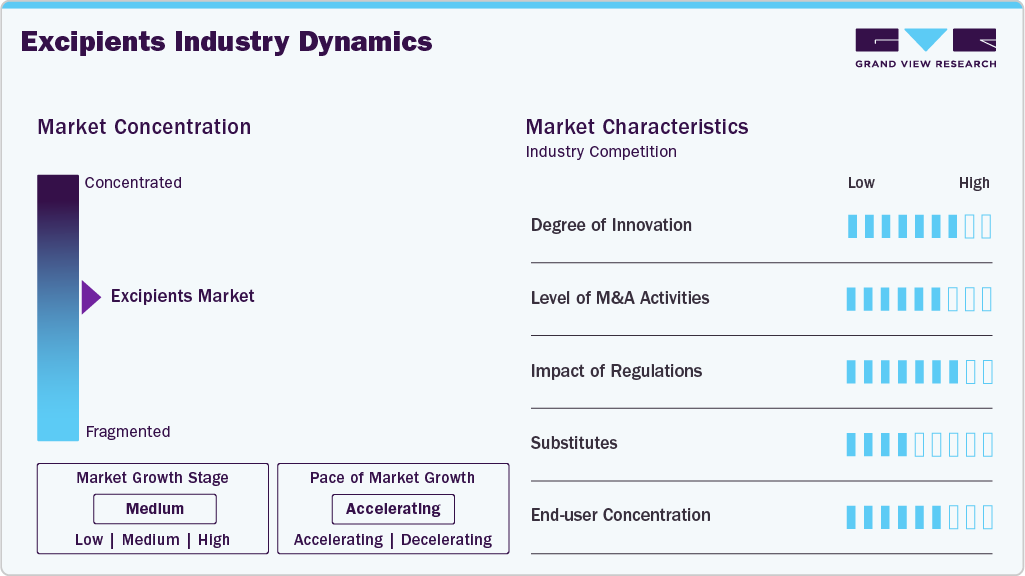
The market demonstrates a moderate to high degree of innovation, driven by the need for multifunctional and advanced excipients that enhance drug stability, solubility, and bioavailability. Companies are actively developing novel excipients for nanoparticle, biologic, and sustained-release formulations. Continuous R&D, collaborations, and technological advancements in drug delivery systems are fostering innovation.
Moreover, regulatory encouragement for high-quality, safe excipients is pushing firms to create more sophisticated and specialized solutions. This focus on innovation is shaping the market landscape and expanding opportunities for pharmaceutical companies globally.
 To learn more about this report, Download Free Sample Report
 The excipients industry presents significant barriers to entry due to high regulatory requirements, including strict compliance with GMP and pharmacopeial standards. Establishing reliable supply chains for raw materials and ensuring consistent product quality are also major challenges. In addition, high R&D and capital investment are needed to develop advanced or multifunctional excipients. Strong competition from established players with well‑recognized brands and global distribution networks further limits new entrants. These factors collectively make it difficult for new companies to gain a foothold in the market.
Regulations play a critical role in shaping the excipients industry, as compliance with GMP (Good Manufacturing Practices) and safety standards is mandatory for pharmaceutical formulations. Agencies like the US FDA, EMA, and China NMPA closely monitor excipient quality, purity, and sourcing. Stricter guidelines on toxicology, labeling, and traceability have encouraged manufacturers to adopt advanced testing and documentation practices. Regulatory oversight ensures patient safety while fostering innovation in high-performance and multifunctional excipients. Overall, adherence to evolving regulations drives both market credibility and sustainable growth.
Product substitutes are becoming an important consideration as pharmaceutical companies seek cost-effective or multifunctional alternatives to traditional excipients. Natural polymers, synthetic polymers, and novel bio-based compounds are increasingly explored to replace conventional excipients while maintaining or improving drug stability, solubility, and delivery efficiency. Growing demand for sustainable and regulatory-compliant substitutes is driving innovation in this space. In addition, advances in nanotechnology and co-processed excipients offer functional replacements that enhance bioavailability and controlled-release profiles. These factors collectively influence formulation strategies and competitive dynamics in the global market.
The excipients industry is witnessing significant geographical expansion as pharmaceutical companies seek to strengthen their global supply chains and access emerging markets. Growth in regions such as Asia-Pacific, Latin America, and the Middle East is driven by increasing local drug manufacturing, rising healthcare expenditure, and demand for high-quality formulations. Companies are establishing regional production facilities and distribution networks to meet localized regulatory requirements and reduce import dependency. Strategic collaborations with local partners are also enabling faster market entry and broader reach. This global expansion is expected to enhance availability, improve affordability, and drive overall market growth in the coming years.
Product Insights
The polymers segment dominated the market with the largest revenue share of 45.66% in 2025, driven by their essential roles in enhancing drug stability, controlled/sustained release profiles, and manufacturability, while alcohol‑based excipients are also gaining traction for their solubilizing and formulation‑enabling properties in oral, parenteral, and topical dosage forms. For instance, in May 2025, Roquette completed the acquisition of IFF Pharma Solutions, significantly strengthening its position in plant‑based excipients and drug delivery solutions and broadening its global excipient offerings. In addition, in September 2025, Evonik Industries AG entered a strategic partnership with Ethris to co‑develop advanced lipid nanoparticle (LNP) technologies for nucleic acid delivery, expanding excipient capabilities for next‑generation RNA therapies. These strategic moves, alongside ongoing investments in innovation, regulatory compliance, and sustainable materials, are reshaping the competitive landscape and enabling manufacturers to better address complex formulation challenges.
The alcohols segment is projected to grow at a CAGR of 4.26% over the forecast period. In the pharmaceutical excipients landscape, alcohol‑based excipients such as ethanol, propylene glycol, glycerin, and sorbitol continue to gain importance due to their roles as solvents, co‑solvents, preservatives, and solubilizers across oral, parenteral, topical, and inhalation formulations, helping enhance drug stability, solubility, and patient acceptability while addressing formulation challenges in complex therapies, supported by growing chronic disease prevalence worldwide. For instance, in June 2025, Breckenridge Pharmaceutical received FDA approval for Dehydrated Alcohol Injection, USP, a high‑purity ethyl alcohol product developed with Andersen Pharma Global, offering a sterile option for therapeutic use in conditions like hypertrophic obstructive cardiomyopathy, reflecting innovation and expanded application of alcohol‑based pharmaceutical products. Regulatory progress has also included updates to excipient monographs such as glycerin and propylene glycol in global pharmacopeias, indicating ongoing quality and safety refinements in excipient standards. With rising investment in advanced drug delivery systems and personalized medicines, alcohol excipients are increasingly tailored for specific functional roles rather than generic filler uses, driving portfolio expansions and product launches by leading suppliers. The broader excipient market is also benefiting from sustained pharmaceutical industry growth, as aging populations and chronic conditions elevate overall medication demand, in turn supporting sustained uptake of alcohol excipient technologies.
Function Insights
The binders segment dominated the market with the largest revenue share of 13.08% in 2025 and is expected to grow at the fastest CAGR during the forecast period. In the current pharmaceutical excipients landscape, binders remain integral to solid dosage form development, not just for mechanical strength but also for tailored performance in advanced formulations like controlled‑release and orally disintegrating tablets, as well as direct compression processes. Microcrystalline cellulose (MCC), hydroxypropyl cellulose (HPC), polyvinylpyrrolidone (PVP), and copovidone are widely used due to their excellent compressibility and cohesive properties that support tablet integrity and manufacturability in both conventional and continuous manufacturing environments. Recent research emphasizes a shift toward multifunctional and sustainable binders, including natural polymers and co‑processed excipients that combine binding with additional attributes like disintegration and flow enhancement.
The lubricants and glidants segment is projected to grow at a significant CAGR over the forecast period, driven by its critical role in optimizing tablet and capsule production efficiency. These excipients reduce friction between formulation components and processing equipment, enabling smooth compression, minimizing machinery wear, and enhancing overall throughput. Glidants further improve powder flowability, ensuring uniform die filling and consistent dosage accuracy, which is essential for maintaining product quality and regulatory compliance. The segment benefits from the increasing adoption of high-speed and continuous manufacturing technologies, where flow and lubrication performance are key operational parameters. In addition, the rising complexity of drug formulations, particularly those involving high-dose and poorly flowing active pharmaceutical ingredients, is accelerating demand for advanced multifunctional excipients. As manufacturers increasingly focus on scalability and process optimization, lubricants and glidants remain integral to improving manufacturing robustness and ensuring product consistency.
Formulation Insights
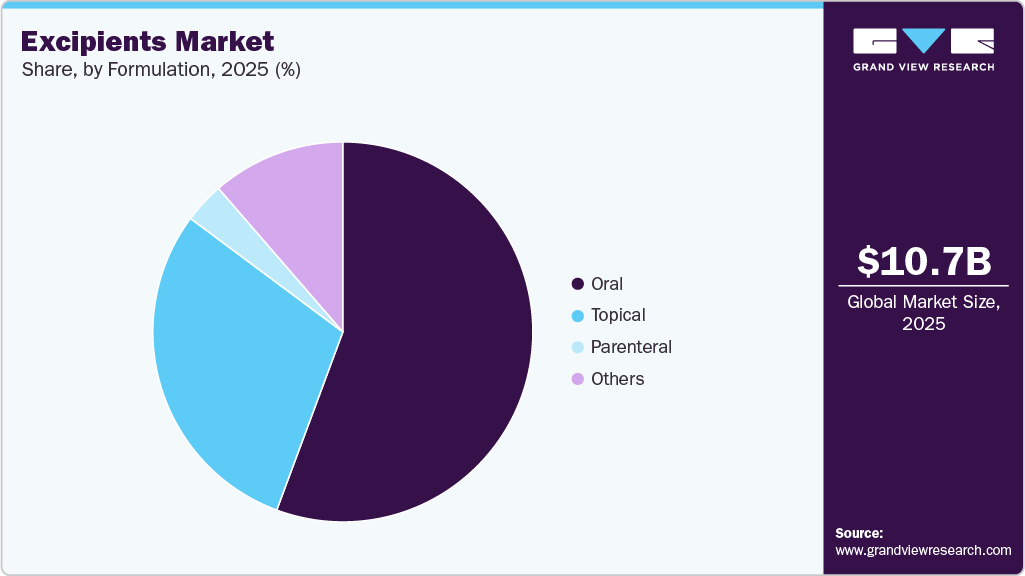
The oral formulation segment accounted for the largest revenue share of 55.66% in 2025, driven by its widespread use in tablets, capsules, and orally disintegrating formulations, which require various excipients such as binders, disintegrants, stabilizers, and solubilizers to ensure optimal drug performance and patient compliance. This is further evidenced by recent industry activity where companies like IFF Pharma Solutions showcased next‑generation oral disintegrating tablet (ODT) and controlled‑release excipient technologies at CPHI Japan 2025, reflecting innovation in oral delivery, especially for pediatric and elderly patients who need easier‑to‑take medications. In addition, advancements in super disintegrants and functional excipients have enabled faster dissolution and enhanced bioavailability, addressing longstanding formulation challenges in solid oral dosage forms. Trends such as polypill design and custom excipient integration are also emerging, allowing multi‑ingredient oral medications tailored for specific therapeutic profiles. These developments align with increasing healthcare focus on patient‑centric solutions, with oral therapies often preferred for chronic disease management due to convenience and better adherence compared to injectable routes.
 To learn more about this report, Download Free Sample Report
 The topical segment is projected to grow at a significant CAGR over the forecast period. The topical segment is witnessing strong growth as excipients enhance drug delivery through the skin, improving penetration, stability, and patient compliance in creams, gels, ointments, and lotions. Products such as Carbopol and Kolliphor polymers continue to be widely used for their rheology-modifying, bioadhesive, and solubilizing properties. For instance, in June 2025, Lubrizol showcased its advanced Apinovex polymer at CPHI China, highlighting innovation in excipients suitable for both topical and semisolid formulations. This development demonstrates how multifunctional excipients are being optimized to improve drug performance and patient experience. Rising prevalence of skin conditions like eczema and psoriasis has further increased demand for effective topical therapies, while co-processed excipients enable easier formulation and enhanced API delivery. In addition, growing interest in cosmeceuticals and dermatology-focused therapeutics is driving demand for excipients that improve sensory attributes and stability. Continuous R&D efforts by specialty chemical companies to develop excipients with improved compatibility, controlled release, and skin absorption are expected to further propel growth in this segment.
Regional Insights
North America held a significant share in the market in 2025 due to the region’s well-established pharmaceutical infrastructure, strong R&D investment, and high adoption of advanced drug delivery technologies. The growing prevalence of chronic diseases and demand for patient-centric formulations have increased the use of functional excipients in oral, topical, and injectable products. The presence of leading excipient manufacturers such as Lubrizol, BASF, and Croda has strengthened supply chains and innovation capabilities. Regulatory support and streamlined approval processes for novel excipients have further encouraged market expansion. In addition, collaborations and partnerships between specialty chemical companies and pharmaceutical firms are driving the development of next-generation excipients for enhanced drug performance and bioavailability.
U.S. Excipients Market Trends
The excipients market in the U.S. is advancing as a highly mature and innovation-driven segment of the pharmaceutical industry, supported by a strong focus on formulation performance and product differentiation. Growth in the country is distinctly driven by the rapid expansion of biologics, cell and gene therapies, and personalized medicines, all of which require highly specialized excipients for stability, delivery, and compatibility. In addition, increasing adoption of continuous manufacturing and advanced drug delivery technologies is accelerating demand for multifunctional and ready-to-use excipient systems that enhance efficiency and scalability. The market is further strengthened by the presence of leading pharmaceutical and contract manufacturing organizations investing heavily in research and development of next-generation formulations. Rising emphasis on patient-centric dosage forms, such as orally disintegrating tablets and long-acting injectables, is also shaping excipient innovation in the region. Overall, the U.S. market continues to lead globally in terms of technological sophistication and high-value excipient development, driven by innovation intensity and evolving therapeutic needs.
Europe Excipients Market Trends
The excipients market in Europe held the largest share of 37.21% in 2025, driven by the presence of innovative players focusing on advanced pharmaceutical solutions. Growing innovations in animal-free substitutes and plant-based excipients have attracted increasing attention from vegetarian and vegan consumers. The region is closely followed by North America and the Asia Pacific, where major companies like Avantor Performance Materials Inc. and FMC Corporation serve as direct manufacturers of excipients. These regions are expected to witness significant growth due to ongoing research and case studies on drug-excipient interactions, aimed at enhancing delivery efficiency and therapeutic efficacy. Increasing R&D investments and collaborations between pharmaceutical and specialty chemical firms are further supporting market expansion. Moreover, rising demand for personalized and patient-centric formulations is driving the development of multifunctional excipients tailored for specific drug delivery needs. Regulatory support for novel excipients and sustainable manufacturing practices is also boosting innovation and adoption across the European market.
 To learn more about this report, Download Free Sample Report
 The excipients industry in the U.K. is expected to grow significantly over the forecast period. The UK excipients market is developing as a quality-driven and innovation-focused segment within the country’s advanced pharmaceutical landscape, supported by strong regulatory oversight and a mature drug development ecosystem. Growth in the UK is uniquely driven by the increasing emphasis on patient-centric formulations, particularly the need for excipients that enable taste masking, pediatric suitability, and improved drug acceptability. The rising demand for biologics and specialty medicines is also encouraging the use of high-purity and functional excipients compatible with complex formulations and sensitive active ingredients. In addition, sustainability considerations are influencing procurement strategies, with manufacturers increasingly favoring eco-friendly and responsibly sourced excipient materials. The country’s strong clinical research environment and academia-industry collaborations further support innovation in novel excipient applications and drug delivery technologies. Overall, the UK market is characterized by regulatory rigor, innovation in formulation science, and a growing shift toward patient-focused and sustainable solutions.
The excipients market in Germany is characterized by a highly mature and innovation-driven pharmaceutical ecosystem, supported by strong domestic chemical manufacturing capabilities and advanced formulation research. Growth in the country is primarily driven by increasing adoption of precision medicine and advanced drug delivery technologies, including 3D-printed pharmaceuticals and personalized dosage forms, which require highly specialized excipients. In addition, Germany’s stringent regulatory framework and close collaboration between pharmaceutical companies, research institutions, and excipient manufacturers are fostering the development of high-purity and function-specific excipients tailored for complex therapies. For instance, in April 2025, a new production facility for the pharmaceutical excipient L-HPC was announced adjacent to an existing plant in Germany, with completion targeted for the second half of 2026 to strengthen supply capabilities and support advanced formulation needs. The market is also witnessing strong momentum from sustainability initiatives, with manufacturers focusing on eco-friendly and bio-based excipients aligned with Europe’s green chemistry goals. Furthermore, Germany’s leadership in biologics and specialty drugs is driving demand for excipients compatible with sensitive molecules and novel delivery systems.
France excipients market is characterized by a high level of technological maturity and innovation, supported by the country’s strong pharmaceutical R&D ecosystem and focus on advanced drug delivery systems. Growth is primarily driven by increasing development of nanoparticle-based and precision drug delivery formulations, particularly in oncology and specialty therapeutics, where excipients play a critical role in enhancing stability and bioavailability. The market is also benefiting from the country’s emphasis on patient-centric formulations, including orally disintegrating tablets and modified-release systems, aligned with Europe’s evolving healthcare standards. For instance, in October 2025, Roquette announced the launch of its novel excipient KLEPTOSE Crysmeb methyl-beta-cyclodextrin, designed to improve solubility and stability of a wide range of active pharmaceutical ingredients, reinforcing innovation in complex formulations. In addition, France’s leadership in plant-based and sustainable excipients is gaining traction, with manufacturers increasingly focusing on bio-derived ingredients to meet stringent environmental and regulatory expectations. The presence of well-established pharmaceutical players and ongoing integration of excipients into biologics and specialty drugs further strengthens the market, positioning France as a key innovation hub within Europe’s excipient landscape.
Asia Pacific Excipients Market Trends
Asia Pacific excipients market is expected to register the fastest CAGR of 4.36% over the forecast period. The excipients market in the Asia Pacific is poised for strong growth as the region’s pharmaceutical manufacturing base expands, particularly in China, India, and Japan, supported by rising healthcare expenditure and increasing production of both generic and biopharmaceutical drugs. Demand for excipients that improve bioavailability, stability, and targeted delivery is rising alongside advancements in biologics and complex formulations, reflecting the growing role of functional excipients in modern drug development. China is expected to register one of the highest growth rates in the region due to ongoing healthcare infrastructure investments and pharmaceutical industry modernization. In addition, the rising prevalence of chronic diseases and an aging population are increasing the overall requirement for medications, thereby driving excipient uptake in oral, topical, and injectable formulations. Regulatory alignment and supportive policy environments are further enabling market growth, while collaborations between local and global excipient manufacturers are enhancing capacity and technological transfer across the region.
Japan excipients market is evolving as a technically advanced and quality‑driven segment within the country’s pharmaceutical value chain, supported by strong domestic demand for innovative formulation solutions and stringent regulatory oversight that prioritizes safety and performance. For instance, in March 2025, IFF Pharma Solutions showcased next‑generation excipient technologies for oral disintegrating tablets, controlled‑release formulations, and novel complex systems at CPHI Japan 2025, highlighting Japan’s role as an early adopter of advanced excipient innovations. Unlike many other markets, Japan’s growth is uniquely influenced by its aging population and increasing focus on high‑end biologics and specialized dosage forms, which drives demand for excipients tailored to stability, bioavailability, and targeted delivery rather than basic fillers. Another key driver is the strong emphasis on regulatory compliance and pharmacopeial quality, which compels manufacturers and suppliers to meet rigorous standards that, in turn, raise the overall quality bar for excipients used in both generics and novel therapies. In addition, Japanese pharmaceutical companies are increasingly integrating excipients that support eco‑friendly and patient‑centric formulations, such as plant‑based polymers and multifunctional materials, aligning with broader sustainability and demographic trends.
The excipients market in China is evolving as a dynamic and increasingly specialized segment of the country’s broader pharmaceutical supply chain, driven by the simultaneous expansion of domestic drug manufacturing and deepening regulatory sophistication. In June 2025, the National Medical Products Administration issued a new Pharmaceutical Excipients Annex to China’s Good Manufacturing Practice (GMP) requirements, strengthening quality management systems and supplier oversight for excipient production and use, with full implementation scheduled for 2026 to elevate manufacturing standards across the industry. Unlike many other markets, China’s growth is especially supported by government policy encouragement for self‑reliance in pharmaceutical ingredients and a strategic shift toward high‑purity, value-added excipients to support advanced drug formulations, including biopharmaceuticals and controlled‑release products. Local industry events like the Pharma Excipients Innovation and Development Forum at CPHI & PMEC China 2025 have showcased emerging technologies and functional excipient solutions tailored for direct compression and novel drug delivery systems, reflecting strong innovation activity. Another key driver is the increasing demand for excipients that support China’s fast‑growing generic and innovative drug pipelines, prompted by high domestic medicine consumption and a large, aging population requiring diverse therapeutic modalities. Moreover, China’s broader pharmaceutical ecosystem is attracting international collaborations and licensing deals, creating downstream opportunities for advanced excipient integration into global drug development and manufacturing. Overall, the market is transitioning from commodity‑focused supply toward higher technical complexity and quality, underpinned by regulatory momentum and industry innovation.
Latin America Excipients Market Trends
The excipients market in Latin America is growing steadily as expanding pharmaceutical manufacturing and generic drug production drive the need for high-quality excipients in tablets, capsules, and other dosage forms. Increasing healthcare access and rising chronic disease prevalence in countries like Brazil, Mexico, and Argentina are boosting demand for medications, which in turn elevates excipient usage. Local manufacturers are partnering with global excipient suppliers to improve formulation efficiency, quality, and technology transfer. The region is also witnessing growth in oral, topical, and parenteral formulations, encouraging the adoption of multifunctional excipients. Investment in R&D centers and pilot plants by key players is enhancing innovation and supporting local production capabilities. Furthermore, rising consumer awareness of safety, efficacy, and sustainability in pharmaceutical products is driving demand for advanced, high-performance excipients. Regulatory improvements and harmonization of quality standards are further supporting market expansion. Together, these factors position Latin America as a steadily growing hub for excipient innovation and production in the coming years.
Brazil excipients market is gaining traction as an increasingly sophisticated component of the country’s pharmaceutical ecosystem, driven by greater demand for complex drug formulations and efficiency‑oriented manufacturing practices. For instance, in April 2025, Ashland completed a USD 10 million expansion of its pharmaceutical manufacturing plant in Cabreúva, Brazil, significantly enhancing its production capacity for tablet coatings and excipient-related solutions to support coated tablets and antimicrobial products in the region. This rise in demand is mirrored by growing chronic disease burdens; around 45 % of Brazilian adults aged 18 and over reportedly suffer from at least one chronic noncommunicable disease, such as hypertension or diabetes, which in turn spurs pharmaceutical production needs that rely on quality excipients. In tandem, manufacturers are adopting co‑processed and performance‑enhancing excipients for direct compression and controlled‑release formulations, reflecting a market shift away from basic filler use. Recent industry activity also includes global excipient innovators introducing new coating platforms and finished systems that enhance drug delivery and compliance. On the regulatory and supply side, quality expectations and harmonization are increasing, encouraging higher‑purity excipients and robust documentation to meet Brazil’s evolving pharmacopeial alignment. Overall, Brazil’s excipient market is evolving both in depth and technical complexity, underpinned by local healthcare trends, manufacturing investments, and product innovations.
Middle East & Africa Excipients Market Trends
The excipients market in MEA is emerging as a steadily expanding segment within the broader pharmaceutical and formulation ingredients industry, reflecting growing regional demand. The market growth in MEA is being increasingly driven by the rising prevalence of chronic diseases such as diabetes, cancer, and cardiovascular disorders, which fuel demand for advanced drug formulations that depend on high‑performance excipients to enhance solubility, stability, and bioavailability. In addition, increased investment in healthcare infrastructure and pharmaceutical manufacturing across key countries like the UAE, Saudi Arabia, and Egypt is expanding formulation activities in oral, topical, and parenteral dosage forms, thereby boosting excipient uptake. Growing adoption of co‑processed and multifunctional excipients to simplify production and improve product performance is another notable trend in the region’s market. Further, expansion of international suppliers’ distribution networks into MEA and rising health awareness among populations are strengthening market prospects, supported by innovation in natural and plant‑based excipient solutions that align with regional preferences for safety and sustainability.
Saudi Arabia excipients market is witnessing steady growth, driven by the expansion of the domestic pharmaceutical sector and increasing demand for high-quality drug formulations. Excipients play a vital role in improving drug stability, bioavailability, and overall effectiveness across oral, topical, and injectable products. The rising prevalence of chronic diseases and growing healthcare investments under national transformation initiatives are further supporting market demand. In addition, increasing focus on localized drug manufacturing is boosting the need for functional and specialty excipients. The market is also benefiting from technological advancements and a greater emphasis on patient-centric and innovative drug delivery systems.
Key Excipients Company Insights
Eastman Chemical Corporation, P&G Chemicals, and Avantor Performance Materials, LLC are actively strengthening the market through continuous innovation in functional ingredients that enhance drug stability, solubility, and bioavailability. Companies such as Huntsman Corporation and BASF SE are expanding their pharmaceutical excipient portfolios by investing in high-performance materials and advanced formulation technologies tailored for complex drug delivery systems. Ashland Inc. and Lubrizol Corporation are focusing on polymer-based excipients and controlled-release solutions, supporting the development of next-generation oral and topical dosage forms. Meanwhile, FMC Corporation leverages its expertise in specialty chemistries to contribute to excipient innovation, particularly in enhancing formulation efficiency and product consistency. Roquette continues to expand its plant-based excipient offerings, addressing the rising demand for natural and sustainable pharmaceutical ingredients, while Colorcon Inc. plays a critical role in film coatings and modified-release technologies that improve drug performance and patient compliance. Collectively, these companies are driving advancements in excipient functionality, scalability, and regulatory compliance, supporting the evolving needs of modern pharmaceutical development.
Key Excipients Companies:
The following key companies have been profiled for this study on the excipients market.
- Eastman Chemical Corporation
- P&G Chemicals
- Avantor Performance Materials, LLC
- Huntsman Corporation
- BASF SE
- Ashland Inc.
- FMC Corporation
- Roquette
- Colorcon Inc.
- Lubrizol Corporation
Recent Developments
-
In March 2026, BASF SE announced a global price increase of up to 20% for pharmaceutical excipients and selected APIs to maintain supply reliability amid rising energy and raw material costs. The move reinforces its commitment to consistent quality and global supply continuity.
-
In October 2025, Lubrizol Corporation showcased its latest polymer-based excipient technologies at CPHI Frankfurt, highlighting innovations in drug delivery and formulation performance. The exhibition emphasized advanced controlled-release solutions and strengthened collaboration opportunities with global pharmaceutical manufacturers.
-
In May 2025, Roquette completed its acquisition of IFF Pharma Solutions, strengthening its global excipient portfolio and drug delivery capabilities. The deal integrates advanced formulation expertise and innovative product offerings, reinforcing its strategic position in high-value pharmaceutical markets and expanding its role as a key partner in drug delivery solutions.
Excipients Market Report Scope
Report Attribute
Details
Market size value in 2026
USD 11,123.65 million
Revenue forecast in 2033
USD 14,746.68 million
Growth rate
CAGR of 4.11% from 2026 to 2033
Historical data
2021 - 2025
Forecast period
2026 - 2033
Quantitative units
Revenue in USD million/billion and CAGR from 2026 to 2033
Report coverage
Revenue forecast, company ranking, competitive landscape, growth factors, trends
Segments covered
Product, formulation, function, region
Regional scope
North America; Europe; Asia Pacific; Latin America; MEA
Country scope
U.S.; Canada; Mexico; UK; Germany; France; Italy; Spain; Denmark; Sweden; Norway; China; Japan; India; Australia; South Korea; Thailand; Brazil; Argentina; South Africa; Saudi Arabia; UAE; Kuwait
Key company profiled
Eastman Chemical Corporation; P&G Chemicals; Avantor Performance Materials, LLC; Huntsman Corporation; BASF SE; Ashland Inc.; FMC Corporation; Roquette; Colorcon Inc.; Lubrizol Corporation.
Customization scope
Free report customization (equivalent up to 8 analysts working days) with purchase. Addition or alteration to country, regional & segment scope.
Pricing and purchase options
Avail customized purchase options to meet your exact research needs. Explore purchase options
Global Excipients Market Report Segmentation
This report forecasts revenue growth at global, regional, and country levels and provides an analysis of the latest industry trends in each of the sub-segments from 2021 to 2033. For this study, Grand View Research has segmented the global excipients market report based on product, formulation, function, and region:
 To learn more about this report, Download Free Sample Report
 -
Product Outlook (Revenue, USD Million, 2021 - 2033)
-
Polymers
-
MCC
-
HPMC
-
Ethyl Cellulose
-
Methyl Cellulose
-
CMC
-
Croscarmellose Sodium
-
Povidone
-
Pregelatinized starch
-
Sodium starch glycolate
-
Polyethylene Glycol
-
Acrylic Polymers
-
-
Alcohols
-
Glycerin
-
Propylene Glycol
-
Sorbitol
-
Mannitol
-
Others
-
-
Sugar
-
Lactose
-
Sucrose
-
Others
-
-
Minerals
-
Calcium Phosphate
-
Calcium Carbonate
-
Clay
-
Silicon Dioxide
-
Titanium Dioxide
-
Others
-
-
Gelatin
-
-
Formulation Outlook (Revenue, USD Million, 2021 - 2033)
-
Oral
-
Topical
-
Parenteral
-
Others
-
-
Function Outlook (Revenue, USD Million, 2021 - 2033)
-
Fillers and Diluents
-
Suspending & Viscosity Agents
-
Coating Agents
-
Binders
-
Flavoring Agents & Sweeteners
-
Disintegrants
-
Colorants
-
Lubricants and Glidants
-
Preservatives
-
Emulsifying Agents
-
Others
-
-
Regional Outlook (Revenue, USD Million, 2021 - 2033)
-
North America
-
U.S.
-
Canada
-
Mexico
-
-
Europe
-
UK
-
Germany
-
France
-
Italy
-
Spain
-
Denmark
-
Sweden
-
Norway
-
-
Asia Pacific
-
Japan
-
China
-
India
-
Australia
-
South Korea
-
Thailand
-
-
Latin America
-
Brazil
-
Argentina
-
-
Middle East & Africa
-
South Africa
-
Saudi Arabia
-
UAE
-
Kuwait
-
-
Frequently Asked Questions About This Report
The global excipients market size was estimated at USD 10,690.68 million in 2025 and is expected to reach USD 11,123.65 million in 2026.
The global excipients market is expected to grow at a compound annual growth rate of 4.11% from 2026 to 2033 to reach USD 14,746.68 million by 2033.
Based on product, the polymers segment dominated the excipients market with the largest revenue share of 45.66% in 2025, driven by their critical role in enhancing drug stability, controlled release, and overall formulation performance across a wide range of pharmaceutical applications.
Key players operating in the market include Eastman Chemical Corporation, P&G Chemicals, Avantor Performance Materials, LLC, Huntsman Corporation, BASF SE, Ashland Inc., FMC Corporation, Roquette, Colorcon Inc., and Lubrizol Corporation.
Key factors driving market growth include increasing demand for advanced drug delivery systems, rising prevalence of chronic diseases, and growing adoption of biologics and personalized medicines. Additionally, continuous R&D in multifunctional excipients, improvements in bioavailability and stability, and increasing focus on patient-centric formulations are accelerating market expansion.
About the Author(s)
Pharmaceuticals Research Team
Healthcare · PharmaceuticalsThis report was authored by the pharmaceuticals research team at Grand View Research - comprising two research analysts, one senior research analyst, and one industry expert - with specialized expertise in the pharmaceuticals segment of the healthcare industry. All findings are based on proprietary healthcare databases, executive interviews, and regulatory analysis, subject to internal peer review prior to publication.
Last Updated:
Speak to Analyst

Customize this report to your needs - add regions, segments, or data points, with 20% free customization.
Or view our licence options:


ISO 9001:2015 & 27001:2022 Certified
We are GDPR and CCPA compliant! Your transaction & personal information is safe and secure. For more details, please read our privacy policy.


