
- Home
- »
- Nutraceuticals & Functional Foods
- »
-
Fiber Supplements Market Size And Share Report, 2026-2033GVR Report cover
![Fiber Supplements Market (2026 - 2033)Report]()
Fiber Supplements Market (2026 - 2033)
Size, Share & Trends Analysis Report By Form (Powder, Tablet), By Distribution Channel (Hypermarkets & Supermarkets, Pharmacy & Drug Stores, Online), By Region (North America, Europe, APAC), And Segment Forecasts
Market Size, 2025
$15.5BMarket Estimate, 2026
$16.4BMarket Forecast, 2033
$25.6BCAGR, 2026–2033
6.5%Fiber Supplements Market Summary
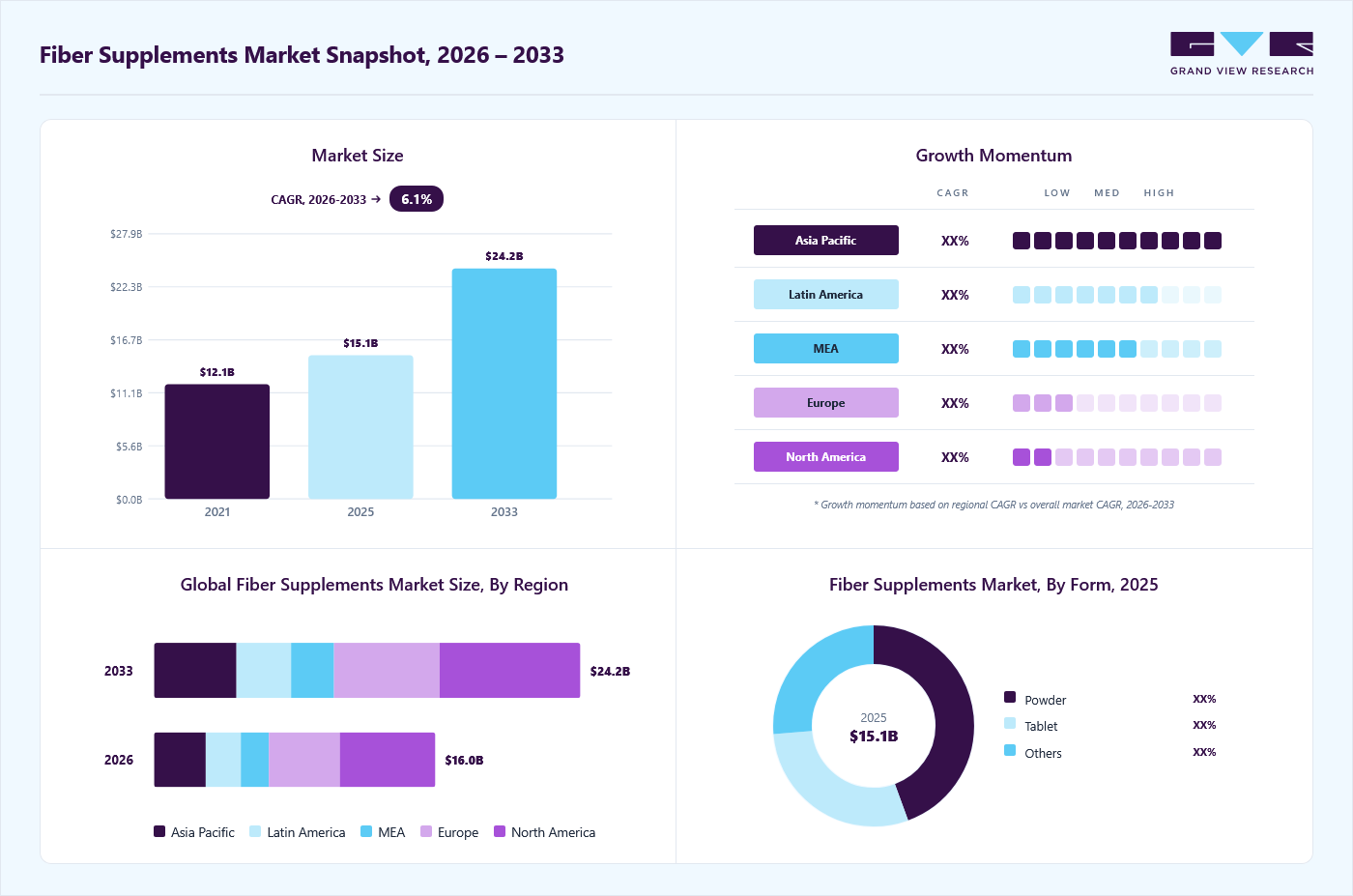
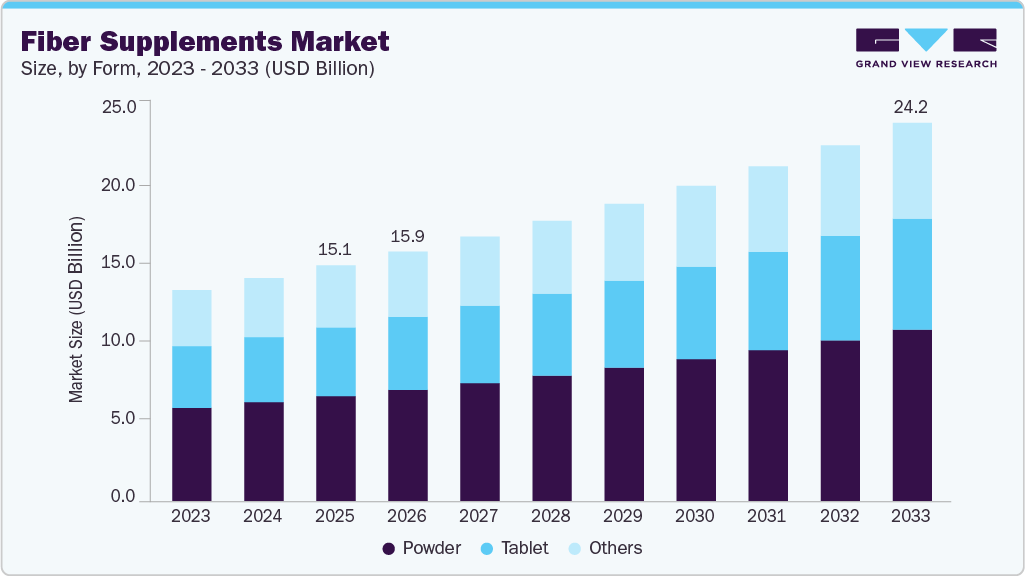
The fiber supplements market size was estimated at USD 15.5 billion in 2025 and is projected to grow from USD 16.4 billion in 2026 to USD 25.6 billion by 2033, growing at a CAGR of 6.5% from 2026 to 2033. Asia Pacific dominated the fiber supplements market with the largest revenue share of 34.9% in 2025. The market for fiber supplements is experiencing significant growth due to a combination of factors related to health awareness, lifestyle changes, and dietary trends.
Key Market Trends & Insights
- By distribution channel: Supermarkets & hypermarkets segment held the largest market share of 36.2% in 2025.
- By form: Other segment held the largest market share of 51.0% in 2025.
Regional Highlights
- Largest regional market: Asia Pacific (34.9% revenue share, 2025)
- By country: China held the largest market share in 2025
Market Size & Forecast
- Market size in 2025: USD 15.5 Billion
- Estimated market size in 2026: USD 16.4 Billion
- Projected market size by 2033: USD 25.6 Billion
- CAGR (2026-2033): 6.5%
Three ways to get this report
Buy it, customize it, or ask a question.Ask an Analyst
A direct answer, usually in 1 working day
- AccessReport author, directly
- Reply timeWithin 1 working day
- No sales callDirect answer only
- FormatEmail reply
- CostFree, no cost
Get the Full Report
What the study covers
- FormatsPDF · Excel · Dashboard
- Timeline2026–2033 annual, 2025 base
- Coverage20+ countries, 5 regions
- Companies10+ key players profiled
Customize the Report
20% free customization
- IncludeCountries, segments, points
- TailorTo your product definition
- ExtendDeeper competitor detail
- OrA fully bespoke study
- Turnaround5–10 working days
One of the primary drivers is the growing recognition of dietary fiber's benefits for digestive health. As consumers become more educated about the role of fiber in preventing constipation, reducing the risk of colorectal cancer, and supporting overall gut health, there is a heightened demand for supplements that can help meet daily fiber needs.Another important factor is the rise in chronic health conditions such as obesity, diabetes, and heart disease, which have been linked to poor dietary habits and low fiber intake. As people seek to manage these conditions through diet, fiber supplements are becoming a popular choice for their role in promoting satiety, controlling blood sugar levels, and improving cardiovascular health.
The growing trend towards personalized nutrition and the desire for convenience has spurred the market growth. Busy lifestyles often make it challenging for individuals to consume adequate amounts of fiber through whole foods alone. Fiber supplements offer a practical solution for those looking to enhance their diet without the need for extensive meal planning or preparation.
Moreover, the market is being driven by innovation and a broader range of fiber supplement products is now available. From traditional soluble and insoluble fibers to more advanced formulations with added prebiotics and probiotics, consumers have access to a diverse array of options tailored to their specific health needs and preferences. This variety not only appeals to a wider audience but also supports ongoing market growth as new products and formulations continue to emerge.
Market Dynamics
The fiber supplements market is experiencing steady growth, driven by increasing consumer awareness of digestive health, gut microbiome wellness, and the importance of adequate dietary fiber intake. Rising incidences of gastrointestinal disorders, lifestyle-related health concerns, and nutrient-deficient diets have encouraged consumers to incorporate fiber supplements into their daily wellness routines. In addition, growing interest in preventive healthcare, weight management, and functional nutrition is supporting demand for a wide range of fiber-based products, including powders, capsules, gummies, and ready-to-consume formulations. Continuous product innovation, coupled with expanding availability through retail and e-commerce channels, is expected to further accelerate market growth over the forecast period.
The increasing awareness of digestive health and gut microbiome wellness is a key factor driving the growth of the fiber supplements market. Consumers are actively incorporating fiber supplements into their daily health routines to support digestive regularity, improve gut health, and address dietary fiber deficiencies associated with modern eating habits. Growing interest in preventive healthcare and functional nutrition has further accelerated demand for fiber-based products, particularly those containing prebiotic ingredients that promote beneficial gut bacteria. In response, manufacturers are expanding their portfolios with innovative fiber formulations and convenient delivery formats, including powders, gummies, and ready-to-mix supplements, thereby supporting market growth.
In September 2025, Supergut launched Foundational Daily Fiber, a prebiotic fiber supplement designed to help consumers meet their daily fiber requirements while supporting digestive and metabolic health. The product launch highlights the growing industry focus on fiber-based nutritional solutions aimed at improving gut wellness and addressing inadequate dietary fiber intake.
The potential for gastrointestinal discomfort remains a key restraint to the growth of the fiber supplements market. While fiber supplements offer digestive health benefits, consumers may experience side effects such as bloating, gas, abdominal cramping, and digestive discomfort, particularly when supplements are introduced rapidly or consumed in high quantities. These adverse effects can negatively impact consumer experience, reduce product adherence, and discourage repeat purchases. Additionally, the need for gradual dosage adjustments and adequate fluid intake may limit adoption among first-time users seeking convenient digestive health solutions. As a result, manufacturers continue to face challenges in balancing product efficacy with consumer tolerance and ease of use.
In December 2025, Mayo Clinic highlighted that commonly used fiber supplements, including psyllium and inulin-based products, may cause bloating and gas, particularly during the initial stages of use. The guidance underscores a persistent industry challenge, as digestive side effects can affect consumer satisfaction and long-term usage of fiber supplementation products.
Despite growing awareness of the health benefits associated with dietary fiber, consumer adherence to fiber supplementation remains relatively low due to challenges such as unpleasant texture, poor taste, mixing difficulties, and gastrointestinal discomfort. This has created a significant opportunity for manufacturers to develop innovative formulations that improve convenience, palatability, and ease of consumption. Companies are increasingly introducing fiber supplements in gummies, ready-to-drink beverages, chewables, and flavored powder formats to enhance the user experience and attract a broader consumer base. Additionally, the incorporation of clinically supported prebiotic fibers and low-bloating formulations is helping address consumer concerns regarding digestive side effects, thereby supporting greater product adoption.
In March 2025, TopGum Industries launched Gummiotics, a synbiotic gummy combining prebiotic fiber, probiotics, and postbiotics in a convenient gummy format. The product was developed to overcome consumer resistance toward traditional fiber powders and capsules while providing comprehensive gut health support.
Analyst Perspective
The fiber supplements market is evolving from a digestive regularity category into a broader metabolic and gut health platform, creating opportunities that extend well beyond traditional laxative positioning. The most valuable players will be those that successfully reposition fiber as a daily functional nutrition ingredient linked to satiety, blood sugar management, microbiome health, and GLP-1 lifestyle support rather than occasional digestive relief. As consumer awareness increases, competitive advantage is expected to shift from fiber quantity to formulation quality, clinical validation, and delivery formats that improve adherence. Brands capable of embedding fiber into convenient, habit-forming products while demonstrating measurable health outcomes are likely to capture disproportionate market share and command premium pricing in an increasingly crowded wellness landscape.
Consumer Insights
Consumers primarily choose fiber supplements to improve digestive health and maintain regular bowel movements. Many individuals experience digestive issues such as constipation, irregular digestion, or bloating due to low fiber intake in modern diets. As a result, supplements containing fibers like psyllium or inulin are preferred because they help support gut microbiota, enhance digestion, and promote overall gastrointestinal wellness.
Convenience plays an important role in consumer preference for fiber supplements. Many consumers favor formats such as capsules, gummies, or easy-to-mix powders that can be quickly incorporated into daily routines. Portable, ready-to-consume options are particularly appealing to busy individuals who want a simple way to increase their fiber intake without making significant dietary changes.
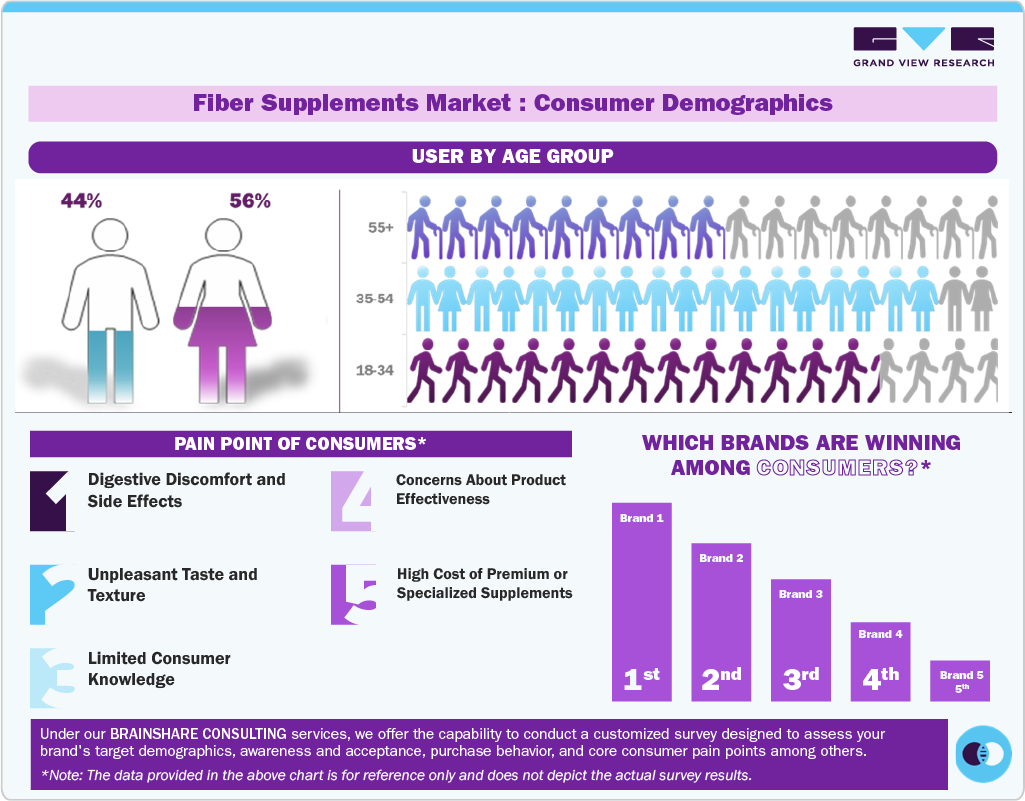
Taste and texture are key factors influencing repeat purchases of fiber supplements. Consumers tend to avoid products with a gritty texture or unpleasant flavor, which can make regular consumption difficult. Therefore, manufacturers increasingly focus on improving product formulations by offering flavored powders, smooth-mixing fibers, and palatable gummy formats to enhance the overall user experience.
Form Insights
Based on form, other segment led the market with the largest revenue share of 51.0% in 2025 and is expected to grow at the fastest CAGR over the forecast period. Powders can be easily mixed into a variety of beverages or foods, allowing for customizable dosing and integration into daily routines. This form also often offers a higher fiber concentration than other forms, such as capsules or tablets, making it a more efficient choice for individuals aiming to increase their fiber intake. In addition, powder supplements generally have a longer shelf life and can be more cost-effective, further enhancing their appeal.
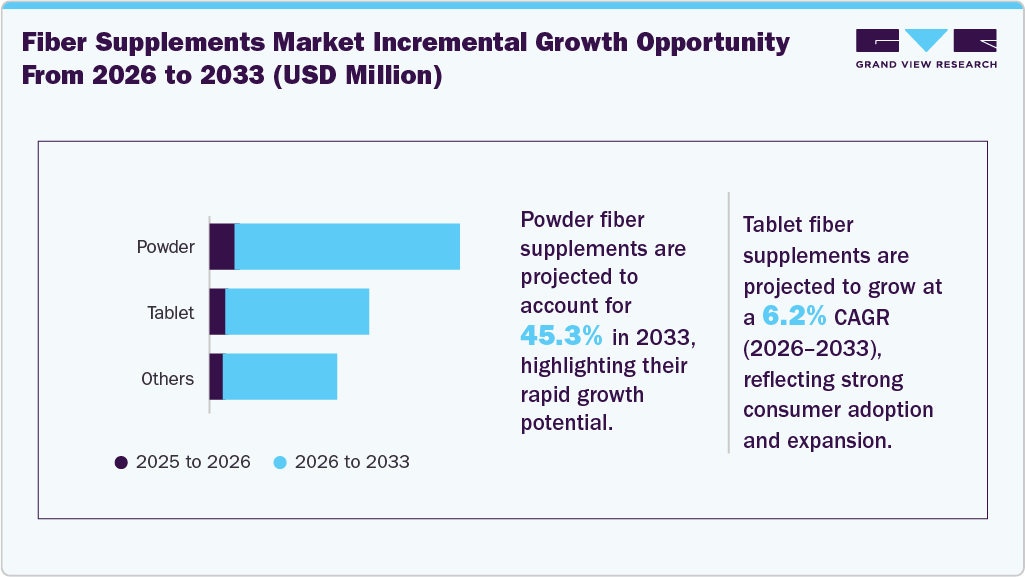
Fiber supplements in tablet form areestimated to witness a CAGR of 6.2% from 2026 to 2033, due to their convenience, ease of use, and precise dosage. In addition, tablet formats provide a consistent, measured amount of fiber per serving, helping consumers easily manage their daily intake and maintain regular digestive health.
Distribution Channel Insights
Based on distribution channel, supermarkets & hypermarkets segment led the market with the largest revenue share of 36.2% in 2025. These retail formats offer a broad range of products, including fiber supplements, often at competitive prices and with frequent promotions. Their extensive reach and high foot traffic enable consumers to easily purchase fiber supplements as part of their regular shopping routines, thereby contributing significantly to their market share of revenues.
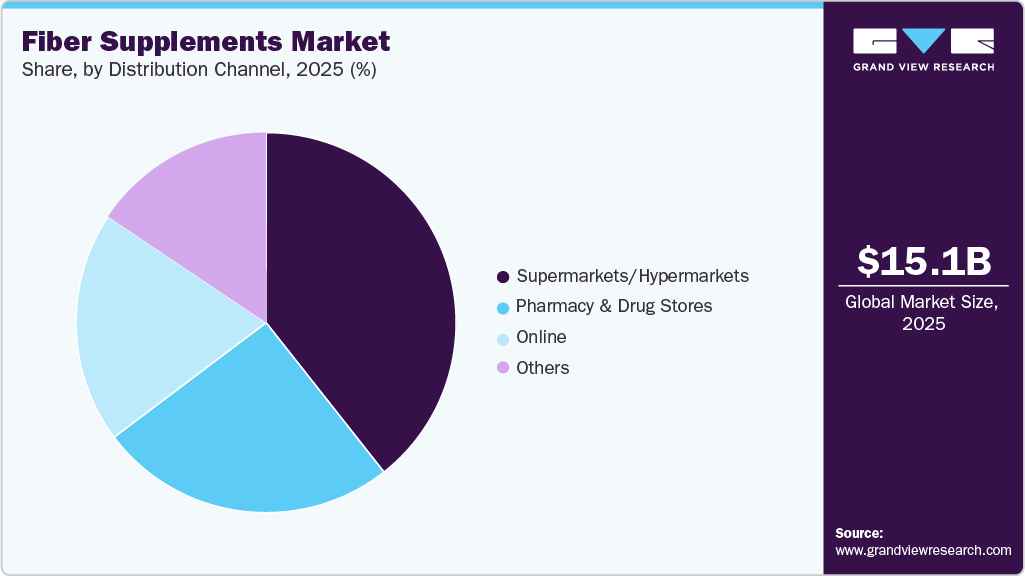
Sales through online distribution channel is estimated to witness a CAGR of 7.3% from 2026 to 2033. Consumers are increasingly seeking dietary solutions that support gut health and overall wellness, and online shopping offers a broad range of options, user reviews, and easy access to products that might not be available locally. In addition, the rise of personalized nutrition and digital health tools has driven increased demand for fiber supplements.
Regional Insights
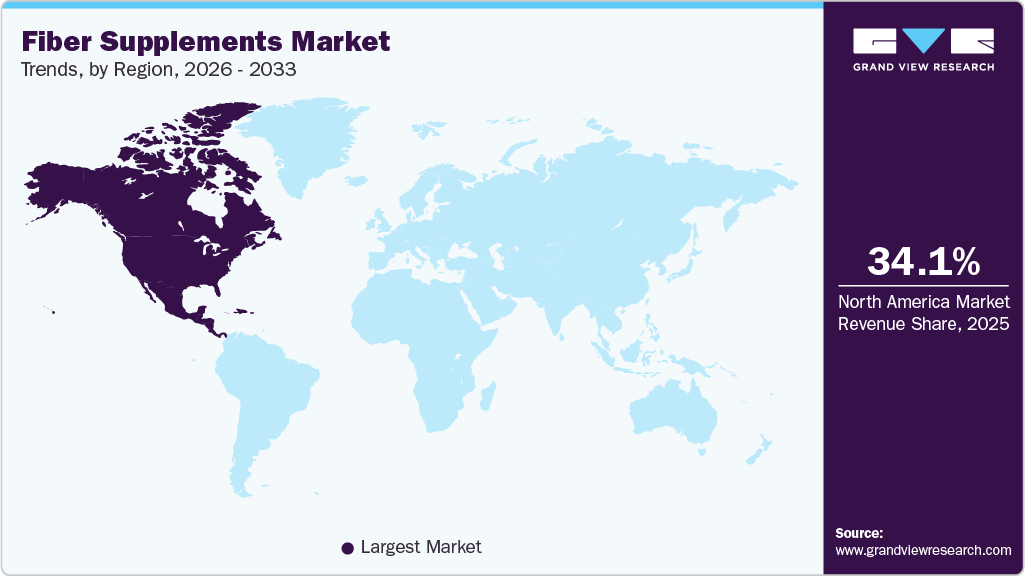
Asia Pacific dominated the fiber supplements market with the largest revenue share of 34.9% in 2025. The North America market is driven by increasing consumer awareness of digestive health, the rising prevalence of gastrointestinal disorders, and a growing emphasis on preventive healthcare. In addition, the demand is supported by trends towards healthier eating habits, including higher fiber intake for weight management and overall wellness, as well as the expanding availability of a variety of fiber supplement products that cater to different dietary needs and preferences.
U.S. Fiber Supplements Market Trends
The fiber supplements industry in the U.S. is estimated to witness strong growth from 2026 to 2033. In the U.S. the rise in sedentary lifestyles and processed food consumption has further boosted the demand for fiber supplements as a convenient way to improve dietary fiber intake. In addition, strong marketing efforts, a broad product offering, and growing availability across retail and online channels contribute to the market's expansion.
Asia Pacific Fiber Supplements Market Trends
The fiber supplements industry in Asia Pacific held a revenue share of 18.3% in 2025. The region's diverse dietary habits and a shift towards healthier eating are driving the demand for fiber supplements. In addition, increasing urbanization and the expansion of the retail sector, along with educational campaigns on the benefits of dietary fiber, are contributing to the market's growth.
The fiber supplements market in China held the largest share in the Asia Pacific region in 2025. The expansion of China’s functional food and nutraceutical sector is strongly influencing the market. Dietary fiber is widely used in functional foods and health supplements due to its benefits for digestive and metabolic health. With China’s functional foods market expected to grow rapidly in the coming years, the integration of fiber ingredients in supplements, beverages, and fortified foods is increasing significantly.
The fiber supplements industry in India is growing due to increasing awareness about digestive wellness and preventive healthcare is a major trend driving the market in India. Consumers are becoming more conscious of the importance of dietary fiber for maintaining gut health, preventing constipation, and supporting overall wellness.
Europe Fiber Supplements Market Trends
The fiber supplements industry in Europe is estimated to witness a CAGR of 5.9% from 2026 to 2033. In Europe, the fiber supplements industry is driven by a growing focus on health and wellness, heightened awareness of the benefits of dietary fiber for digestive and overall health, and a trend towards preventive healthcare. The aging population and rising incidence of chronic diseases are also contributing factors. In addition, regulatory support for health claims related to fiber and increased availability of a wide range of fiber supplement products across various retail channels are supporting market growth.
The fiber supplements industry in France is driven by the increasing number of consumers prioritizing digestive health, driving demand for fiber supplements that help regulate digestion and support gut microbiota. Fiber products containing ingredients such as psyllium, inulin, and other prebiotic fibers are gaining popularity for helping manage constipation, supporting gut bacteria, and improving overall digestive function. Growing awareness of gastrointestinal health and lifestyle-related digestive issues is significantly boosting the consumption of fiber supplements.
Central And South America Fiber Supplements Market Trends
The fiber supplements industry in Central and South America is growing significantly from 2026 to 2033. The market is seeing strong demand for plant-based and natural ingredients. Fiber derived from oats, psyllium husk, fruits, and vegetables is increasingly used in supplements due to its perceived health benefits and sustainability.
Key Fiber Supplements Company Insights
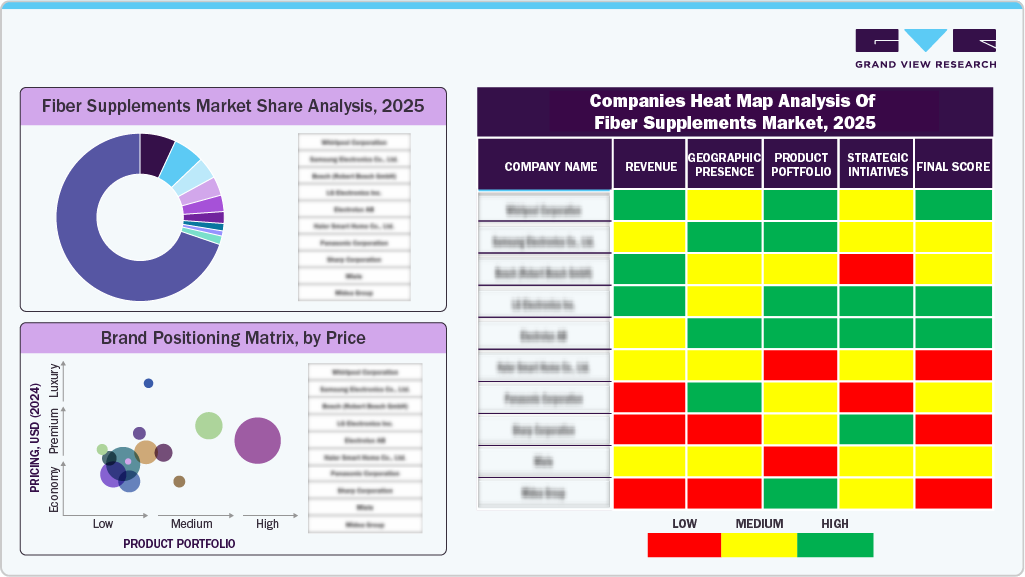
The global fiber supplements industry includes a mix of established nutraceutical companies and emerging health-focused brands that continue to innovate in ingredient formulations, product formats, and functional benefits to meet evolving consumer preferences. Leading companies focus on sourcing high-quality fiber ingredients such as psyllium, inulin, and resistant starch, while offering products that support digestive health, weight management, and overall wellness. By expanding distribution through pharmacies, supermarkets, health stores, and e-commerce platforms, companies are improving product accessibility and strengthening their global market presence.
Key Fiber Supplements Companies
The following key companies have been profiled for this study on the fiber supplements market.
-
Robinson Pharma, Inc.
-
Renew Life
-
Benefiber
-
Citrucel, Metamucil
-
Walgreens
-
Now
-
Garden of Life
-
Metamucil
-
Yerba Prima
-
Nature’s Bounty
Competitive Benchmarking
Operating Strategies
Competitive Edge
Weaknesses
Established Players (Metamucil, Benefiber, Citrucel)
- Mature players focus on expanding product portfolios across soluble fiber, prebiotic blends, and clinically backed digestive health formulations, with strong emphasis on scientific validation and multi-channel distribution.
- Established players benefit from strong brand credibility, extensive retail penetration, and long-standing physician and nutritionist endorsements across global markets.
- High dependence on traditional supplement formats and slower innovation cycles limit agility in responding to emerging clean-label and plant-based fiber demand.
Emerging Players (Garden of Life, Renew Life, Now (NOW Foods)
- Emerging players adopt niche-focused positioning with plant-based, clean-label, and functional fiber formulations targeting gut health, weight management, and wellness-conscious consumers.
- Agility in product innovation, direct-to-consumer engagement, and strong positioning in e-commerce channels enable faster market penetration and brand differentiation.
- Limited clinical validation, weaker brand trust, and constrained distribution networks restrict scalability against established multinational supplement brands.
Recent Developments
-
In February 2026, the nutrition and performance company Momentous launched Fiber+, a new performance-focused fiber supplement designed to support gut health, metabolic balance, and overall body recovery. The product featured a triple-action formula combining soluble fiber from psyllium husk, insoluble fiber from rice bran, and resistant potato starch to improve digestion, regulate blood sugar, and promote beneficial gut bacteria.
-
In February 2026, Sova, a gut-health-focused startup, launched its Daily Prebiotic Fiber, a plant-based fiber supplement designed to support regular bowel movements, metabolic balance, and digestive health. The product featured a seven-source prebiotic fiber blend formulated to improve gut microbiome balance, reduce post-meal glucose spikes, and promote satiety for better weight management. It was developed as a gentle, psyllium-free supplement for individuals with sensitive digestion or IBS, introduced as a daily fiber solution that could support long-term gut health without causing bloating or heaviness.
Fiber Supplements Market Report Scope
Report Attribute
Details
Market size in 2025
USD 15.5 billion
Estimated market size in 2026
USD 16.4 billion
Projected market size by 2033
USD 25.6 billion
Growth rate
CAGR of 6.5% from 2026 to 2033
Base year for estimation
2025
Historical data
2021 - 2024
Forecast period
2026 - 2033
Quantitative units
Revenue in USD billion and CAGR from 2026 to 2033
Report coverage
Revenue forecast, company ranking, competitive landscape, growth factors, and trends
Segments covered
Form, distribution channel, region
Regional scope
North America; Europe; Asia Pacific; Central & South America; Middle East & Africa
Country scope
U.S.; Canada; Mexico; Germany; UK; France; Spain; Italy; China; India; Japan; Australia; South Korea; Brazil; South Africa; Saudi Arabia
Key companies profiled
Robinson Pharma, Inc.; Renew Life; Benefiber; Citrucel; Metamucil; Walgreens; Now; Garden of Life; Yerba Prima; Nature’s Bounty
Customization scope
Free report customization (equivalent up to 8 analysts' working days) with purchase. Addition or alteration to country, regional & segment scope.
Pricing and purchase options
Avail customized purchase options to meet your exact research needs. Explore purchase options
Global Fiber Supplements Market Report Segmentation
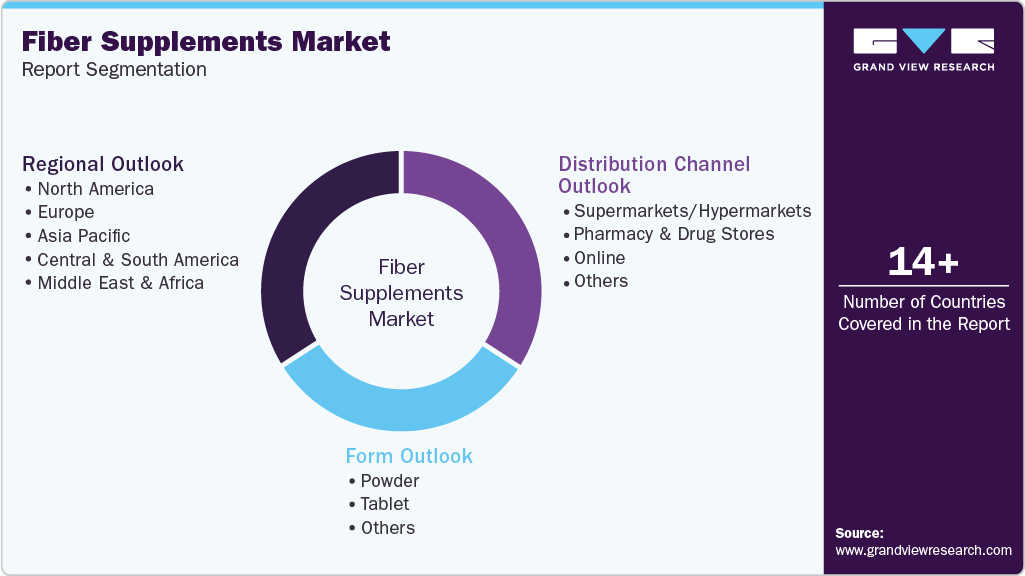
This report forecasts revenue growth at the global, regional, and country levels and provides an analysis of the latest industry trends and opportunities in each of the sub-segments from 2021 to 2033. For this study, Grand View Research has segmented the global fiber supplements market report based on form, distribution channel, and region.
-
Form Outlook (Revenue, USD Million, 2021 - 2033)
-
Powder
-
Tablet
-
Others
-
-
Distribution Channel Outlook (Revenue, USD Million, 2021 - 2033)
-
Supermarkets/Hypermarkets
-
Pharmacy & Drug Stores
-
Online
-
Others
-
-
Regional Outlook (Revenue, USD Million, 2021 - 2033)
-
North America
-
U.S.
-
Canada
-
Mexico
-
-
Europe
-
Germany
-
UK
-
Spain
-
Italy
-
France
-
-
Asia Pacific
-
China
-
India
-
Japan
-
Australia
-
South Korea
-
-
Central and South America
-
Brazil
-
-
Middle East & Africa
-
South Africa
-
Saudi Arabia
-
-
Research Methodology
The fiber supplements market figures in this report are based on a proven research process that combines executive interviews with secondary research from proprietary databases, company filings, and recognized regulatory and institutional sources. Market size is built through value-chain sizing-reconciling supply-side and demand-side estimates-and triangulated with bottom-up and top-down approaches. Every estimate passes multiple levels of expert validation before publication, with each fiber supplements segment quantified using the revenue-capture definitions in the table below.
Segment Definition
Segment - Form
Revenue capture definition
Powder
This segment includes fiber supplements marketed in powdered form for mixing with water, juices, smoothies, and other beverages. Revenue is generated through the sale of single-ingredient and blended fiber formulations containing psyllium, inulin, resistant starch, acacia fiber, and other functional fibers, distributed through pharmacies, supermarkets, health stores, and e-commerce channels.
Tablet
This segment includes fiber supplements offered in tablet and caplet formats designed for convenient and measured consumption. Revenue is generated through the sale of compressed fiber formulations targeted at consumers seeking portable, easy-to-use alternatives to traditional powdered supplements for digestive health and daily fiber intake support.
Others
This segment includes fiber supplements available in gummies, capsules, chewables, sachets, liquid formulations, and ready-to-consume formats. Revenue is generated through the sale of innovative and consumer-friendly fiber products that cater to evolving preferences for convenience, taste, and on-the-go supplementation while supporting digestive and gut health.
Segment – Distribution Channel
Revenue capture definition
Supermarkets & Hypermarkets
This segment includes the sales of fiber supplements through large-scale retail chains, supermarkets, and hypermarkets. Revenue is generated through in-store purchases of powders, tablets, gummies, capsules, and other fiber supplement formats, supported by broad product availability, promotional activities, and consumer accessibility.
Pharmacy & Drug Stores
This segment includes the sales of fiber supplements through pharmacies, drug stores, and healthcare retail outlets. Revenue is generated through the purchase of physician-recommended and over-the-counter fiber products by consumers seeking digestive health support, dietary supplementation, and wellness management solutions.
Online
This segment includes the sales of fiber supplements through e-commerce platforms, brand-owned websites, online pharmacies, and digital marketplaces. Revenue is generated through direct-to-consumer purchases, subscription-based programs, promotional campaigns, and the increasing adoption of digital health and wellness shopping channels.
Others
This segment includes the sales of fiber supplements through specialty nutrition stores, health and wellness outlets, fitness centers, practitioner channels, direct selling networks, and other alternative retail formats. Revenue is generated through niche distribution channels that cater to specific consumer preferences and specialized dietary supplement requirements.
Estimation Model
Layer Name
Key Question
Description
Epidemiology/Need Layer
Who has relevant digestive health and fiber-deficiency needs?
Identifies the population with digestive health concerns, including constipation, irritable bowel syndrome (IBS), obesity, and lifestyle-driven low fiber intake, representing the total addressable need pool for fiber supplementation.
Accessibility Layer
Who can be reached through modern retail and digital health channels?
Applies dietary awareness levels, healthcare penetration, retail availability, and digital health reach to determine the population with access to fiber supplements through pharmacies, online channels, and supermarkets.
Adoption Layer
Who actively consumes fiber-enriched products?
Estimates active users based on supplement consumption behavior, preventive health adoption rates, and conversion from dietary awareness to regular fiber supplement usage across adult and aging populations.
Monetisation Layer
How much revenue is generated?
Calculates revenue potential using average annual spend per user across gummies, powders, capsules, and functional fiber-enriched products, including both retail and subscription-based replenishment models.
Delivered Customizations
This report has been delivered with the following In-depth customizations
Client Request
Customization Delivered
Value Adds
Regulatory considerations affecting ingredient approvals, claims, and market entry
Conducted an assessment of regulatory frameworks governing fiber ingredients across key markets, including permissible health claims, labeling requirements, and approval pathways for functional fibers such as inulin, psyllium, and resistant starch. Evaluated compliance variations across dietary supplement and functional food categories.
Enables stakeholders to navigate complex regulatory environments, minimize compliance risks, and accelerate market entry strategies across multiple geographies. Supports formulation planning aligned with permitted health claims and labeling standards.
Strategic implications of functional food and beverage companies entering the fiber segment
Analyzed increasing participation of food and beverage companies in fiber fortification across beverages, snacks, and meal replacements, with focus on product diversification, brand extension strategies, and competitive displacement of standalone supplement players.
Helps stakeholders assess competitive intensity from FMCG entrants, identify collaboration or acquisition opportunities, and position fiber supplements within the broader functional nutrition ecosystem.
Supply chain and sourcing considerations for key fiber ingredients
Evaluated global sourcing dynamics for key fiber ingredients such as psyllium husk, chicory root (inulin), acacia fiber, and guar derivatives, including raw material availability, price volatility, and regional supply concentration risks.
Supports procurement optimization, cost-risk management, and supplier diversification strategies while ensuring consistent quality and scalability of fiber supplement production.
Frequently Asked Questions About This Report
Asia Pacific dominated the fiber supplements market with a share of 34.9% in 2025.
Other segment held the largest revenue share 51.0% in 2025
Supermarket/hypermarket held the largest share (over 36.2%) in 2025.
Some key players operating in the fiber supplements market are Robinson Pharma, Inc., Renew Life, Benefiber, Citrucel, Metamucil, Walgreens, Now, Garden of Life, Renew Life, Yerba Prima, Nature’s Bounty
The fiber supplements market is experiencing significant growth due to a combination of factors related to health awareness, lifestyle changes, and dietary trends. One of the primary drivers is the increasing recognition of the benefits of dietary fiber in maintaining digestive health. As consumers become more educated about the role of fiber in preventing constipation, reducing the risk of colorectal cancer, and supporting overall gut health, there is a heightened demand for supplements that can help meet daily fiber needs.
The global fiber supplements market size was estimated at USD 15.5 billion in 2025 and is expected to reach USD 16.4 billion in 2026.
The global fiber supplements market is expected to grow at a CAGR of 6.5% from 2026 to 2033 to reach USD 25.6 billion by 2033.
About the Author(s)
Nutraceuticals & Functional Foods Research Team
Consumer Goods · Nutraceuticals & Functional FoodsThis report was authored by the nutraceuticals & functional foods research team at Grand View Research - comprising two research analysts, one senior research analyst, and one industry expert - with specialized expertise in the nutraceuticals & functional foods segment of the consumer goods industry. All findings are based on proprietary consumer goods databases, executive interviews, and regulatory analysis, subject to internal peer review prior to publication.
Last Updated:
Speak to Analyst


Customize this report to your needs - add regions, segments, or data points, with 20% free customization.
Or view our licence options:


ISO 9001:2015 & 27001:2022 Certified
We are GDPR and CCPA compliant! Your transaction & personal information is safe and secure. For more details, please read our privacy policy.


