
- Home
- »
- Medical Devices
- »
-
Foley Catheters Market Size And Share Report, 2026-2033GVR Report cover

Foley Catheters Market (2026 - 2033) Size, Share & Trends Analysis Report By Product Type, By Catheter Size, By Duration Of Use, By Lumen Type, By Tip Configuration, By Gender (Male), By Age Group (Adult, Pediatric, Geriatric), By Indication, By End-use, And Segment Forecasts
Market Size, 2025
$1.9BMarket Estimate, 2026
$2.1BMarket Forecast, 2033
$3.0BCAGR, 2026–2033
5.6%Foley Catheters Market Summary
The global foley catheters market size was valued at USD 1.9 billion in 2025 and is projected to grow from USD 2.0 billion in 2026 to USD 3.0 billion by 2033, at a CAGR of 5.6% from 2026 to 2033. North America dominated the global market with the largest revenue share of 31.5% in 2025. The market growth is due to the increasing prevalence of urological disorders such as urinary tract infections (UTIs) and kidney and ureteral stones, the rising preference for minimally invasive surgeries, and the rising geriatric population in the Asia Pacific region, especially in countries such as Japan, India, and China.
 Source: Grand View Research, IR Documents, Primary Interviews, Paid DatabasesTo learn more about this report,
 Download Free Sample Report
 Key Market Trends & Insights
- By product type, the silicone-based catheter segment accounted for the largest market revenue share in 2025.
- By catheter size, the medium size (12-18 Fr) accounted for the largest market revenue share in 2025.
- By duration of use, the short-term segment accounted for the largest market revenue share in 2025.
- By lumen type, the 2-way foley segment accounted for the largest market revenue share in 2025.
Regional Highlights
- Largest regional market: North America (31.5% revenue share, 2025)
- Fastest-growing regional market: Asia Pacific (highest CAGR, 2026-2033)
- The U.S. foley catheters industry accounted for the largest market revenue share in North America in 2025.
Market Size & Forecast
- 2025 Market Size: USD 1.9 Billion
- 2026 Market Size: USD 2.0 Billion
- 2033 Projected Market Size: USD 3.0 Billion
- CAGR (2026-2033): 5.6 %
Three ways to get this report
Buy it, customize it, or ask a question.Ask an Analyst
Analyst response in 1 business day
- AccessReport author, directly
- Reply timeWithin 1 working day
- No sales callDirect answer only
- FormatEmail reply
- CostFree, no cost
Get the Full Report
What the study covers
- FormatsPDF · Excel · Dashboard
- Timeline2026–2033 annual, 2025 base
- Coverage20+ countries, 5 regions
- Companies10+ key players profiled
Customize the Report
20% free customization
- IncludeCountries, segments, points
- TailorTo your product definition
- ExtendDeeper competitor detail
- OrA fully bespoke study
- Turnaround5–10 working days
The increasing prevalence of kidney stones, cystitis, benign prostatic hyperplasia, and other urinary tract disorders is expected to drive the foley industry during the forecast period. For instance, in May 2024, according to the data published by the American Kidney Fund, it reported that kidney stones are a typical kidney problem. Over 1 in 10 males and almost 1 in 14 females in the U.S. will have kidney stones at least once in their lives. This rising burden of urinary tract and kidney-related disorders is expected to significantly increase the demand for Foley catheters, thereby supporting the growth of the global market during the forecast period. To learn more about this report, Download Free Sample Report
 Prostate cancer is an important clinical driver of the foley catheter industry because many patients require urinary drainage during diagnosis, treatment, and post-surgical recovery. Procedures such as prostate biopsy, prostatectomy, and radiation therapy can temporarily or permanently affect normal urine flow, creating the need for catheterization. After prostate removal surgery, Foley catheters are commonly used for continuous bladder drainage and healing support, often for several days to weeks. In advanced prostate cancer cases, urinary obstruction caused by tumor growth can also require catheter placement. As global prostate cancer incidence continues to rise with aging male populations, the demand for reliable, biocompatible, and long-duration drainage solutions, especially Foley catheters, is expected to increase, supporting significant market growth.
Global Prostate Cancer Outlook 2040: Increasing Cases and Uneven Survival
Key Metric
Data / Insight
Projected Global Cases by 2040
2.4 million annual prostate cancer cases worldwide
Rise in Distant-Stage Cases
Increasing by 2.6%-6.2% annually across all age groups
Survival Rate for Distant-Stage Disease
Remains low at 36%-43% despite treatment advances
Mortality-to-Incidence Ratio
Nearly 5× higher in low-income countries (0.95 vs 0.24)
Disability-adjusted life years (DALY) Trend
Decreased by 25.8% in high-income countries; increased by 13.8% in low-income countries
Highest Mortality Region
The African region reports the highest prostate cancer mortality globally
Five-Year Survival Gap
Over 90% in high-income countries vs only 28% in South Africa
Source: Vitus Privatklink
The rising incidence of urolithiasis (kidney stones) is contributing to increased hospital visits, surgical interventions, and post-procedural urinary management. Patients undergoing stone removal procedures or experiencing urinary obstruction often require temporary catheterization, including Foley catheters. As recurrence rates remain high, the growing burden of urolithiasis is supporting sustained demand in the global market. The following illustrates the increasing prevalence and incidence rates of kidney stones from 2021 to 2023.
 To learn more about this report, Download Free Sample Report
  To learn more about this report, Download Free Sample Report
 As a result, the rising burden of urological and kidney-related disorders, including BPH, prostate cancer, spinal cord injuries, CKD, urinary incontinence, and urolithiasis, continues to significantly expand the patient population requiring short- and long-term catheterization. Coupled with an aging demographic profile and increasing surgical interventions, these conditions are driving sustained clinical demand for Foley catheters across acute, rehabilitation, and long-term care settings. Consequently, the growing disease prevalence across the region strongly supports long-term market expansion.
The rising prevalence of spinal cord injuries contributes significantly to the demand for foley catheters, as many patients develop neurogenic bladders requiring long-term urinary drainage. This sustained need for chronic catheterization supports consistent product utilization and drives market growth, particularly in rehabilitation and long-term care settings. For instance, in September 2025, according to the United Spinal Association, an estimated 250,000 to 390,000 Americans were living with a spinal cord injury, with approximately 18,000 new cases reported annually, reflecting a significantly increasing patient population requiring ongoing medical management and supportive care.
 To learn more about this report, Download Free Sample Report
 Causes of Spinal Cord Injury in the U.S. (2025)
Cause
Percentage of Cases
Vehicle accidents
39.30%
Falls
31.80%
Violence
13.20%
Sports-related injuries
8.00%
Medical or surgical causes
4.30%
Source: United Spinal Association
The growing preference for silicone over latex-based catheters is a key driver of the market growth, as clinicians prioritize biocompatibility and reduce complication risks. Silicone catheters are widely favored for their lower rates of encrustation, decreased urethral irritation, and suitability for long-term catheterization compared to latex alternatives. In addition, rising awareness of latex hypersensitivity and hospital infection-prevention protocols is accelerating the transition toward 100% silicone 2-way Foley designs, supporting premium product adoption and sustained market growth.
Foley Catheter Latex vs. Silicone: Key Differences
Feature
Latex Foley Catheters
Silicone Foley Catheters
Material Composition
Made from natural latex with a silicone coating to decrease friction.
Constructed entirely from medical-grade silicone.
Flexibility and Comfort
Thermo-sensitive while adapting to body temperature for increased pliability and comfort.
Soft and flexible for gentle insertion and lower urethral irritation.
Allergy Potential
May cause allergic reactions in sensitive individuals due to latex proteins.
Hypoallergenic for patients with latex sensitivities or allergies.
Indwelling Time
14 days (IFU recommends ≤14 days).
30 days; with a 5% glycerin-filled balloon, approximately ≤90 days, and should be replaced at least every 4 weeks.
Infection Risk
Higher risk of bacterial adherence and urinary tract infections.
Lower risk due to smooth surface and biocompatibility.
Cost
More cost-effective for short-term use.
Higher initial cost but cost-effective over time due to endurance and abridged complications.
Source: Well Lead Medical
Market Dynamics
The increasing prevalence of urological and kidney diseases is a major driver of the foley catheters industry. The growing cases of urinary incontinence, enlarged prostate gland/benign prostatic hyperplasia, spinal cord injury, chronic kidney disease, and bladder dysfunction are significantly increasing the need for both short- and long-term catheterization. The expanding geriatric population in the Asia Pacific, which is more prone to these conditions, further strengthens demand. Consequently, rising urological procedures and hospital admissions are supporting sustained market growth across the region.
The high cost of silicone catheters acts as a key restraint in the foley catheters industry, as these products are typically priced higher than traditional latex alternatives. Budget constraints in hospitals, ambulatory centers, and long-term care facilities limit widespread adoption, particularly in cost-sensitive procurement environments. Although silicone offers clinical advantages such as improved biocompatibility and reduced encrustation, the higher upfront cost can delay purchasing decisions and reduce market penetration, especially among smaller healthcare providers.
Market Concentration & Characteristics
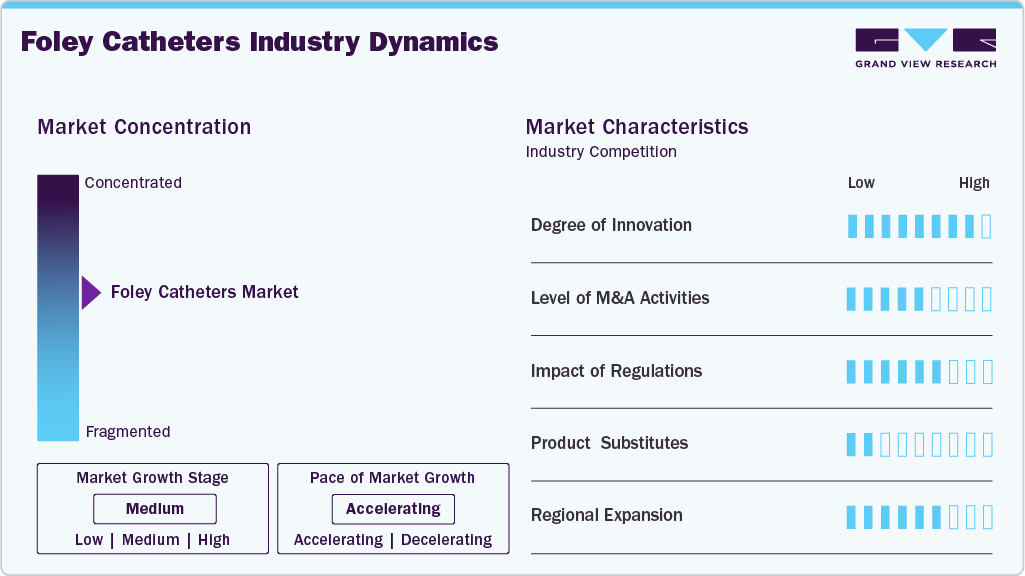
The market growth stage is moderate, and the pace of growth is accelerating. The foley catheter market is characterized by growth owing to technological advancements, the rising prevalence of urological disorders, and the increasing prevalence of older people.
Foley catheters have advanced significantly in terms of materials and antimicrobial coatings, improving patient comfort, hygiene, and infection prevention. For instance, according to the Walter Bushnell Health Foundation Journal, catheter-associated urinary tract infections (CAUTIs) account for nearly 80% of hospital-acquired urinary tract infections, underscoring the growing need for advanced Foley catheters made from silicone and equipped with antimicrobial coatings to reduce infection risk and improve clinical outcomes.
 To learn more about this report, Download Free Sample Report
 Regulatory bodies such as Health Canada, the Food and Drug Administration (FDA), and the European Union set standards for the quality and safety of medical devices, including Foley catheters. These devices are classified into various categories based on their associated risk levels, which influence the level of regulatory scrutiny they receive. For instance, the FDA classifies Foley catheters as Class II devices and regulates them under 21 CFR 876.5130 with the product code EZL.
Many industry players are acquiring smaller catheter manufacturers to gain a competitive edge in the rapidly expanding foley catheter industry. For instance, in May 2026, Bactiguard Holding AB and BD strengthened their long-term global partnership through an updated agreement to expand access to Bactiguard-coated Foley catheters designed to reduce infection risks. The collaboration supports wider global availability of advanced infection-prevention catheter solutions and reinforces ongoing innovation and commercialization efforts across existing and new healthcare markets.
“We are very pleased with how our partnership with BD has evolved, particularly over the past two years, where our common focus has been on ensuring a smooth transition of new markets, including obtaining regulatory approvals. The aim has been to ensure patient access to Bactiguard-coated Foley catheters, and we are fully aligned with BD to grow the Foley business. Our collaboration with BD and the progress made is a good example of the power and potential of our license-focused strategy; a partnership that is global, growing, and built on shared success.”
- Christine Lind, CEO of Bactiguard.
Companies in the Foley catheter industry strategically focus on regional expansion to strengthen their market presence. For instance, in January 2026, Medline Industries expanded its regional footprint in the Middle East by opening a new office in Riyadh, Saudi Arabia, to strengthen the distribution of urology and urinary care products across hospitals and long-term care facilities. This strategic expansion is aimed at improving supply chain efficiency and increasing product availability in high-growth healthcare markets.
Product Type Insights
The silicone-based foley catheters segment accounted for the largest market revenue share in 2025, due to their superior biocompatibility, lower risk of allergic reactions, and reduced incidence of catheter-associated urinary tract infections (CAUTIs) compared to latex catheters. Silicone catheters are widely preferred for long-term catheterization because they offer larger internal lumens, improved patient comfort, and lower encrustation rates. Also, growing adoption of premium variants such as hydrophilic-coated silicone catheters, which enhance lubrication and minimize urethral trauma during insertion and removal, further supports segment growth.
The antimicrobial/ specialty coatings catheters segment is expected to grow at the fastest CAGR during the forecast period, due to the increasing focus on infection prevention and patient comfort. Silver-alloy coated and antibiotic-impregnated catheters help reduce catheter-associated infections, while hydrophilic-coated catheters minimize friction, urethral trauma, and discomfort during insertion and removal. Growing adoption of advanced infection-control solutions in hospitals and long-term care settings is further supporting segment growth.
For instance, in June 2025, Aesculap, Inc. launched XABO Antibiotic-Impregnated Catheters in the U.S. to help reduce shunt-related infections in hydrocephalus treatment. Advanced catheter technology supports improved patient safety and treatment outcomes for both pediatric and adult patients, highlighting the growing focus on infection-prevention solutions in catheter-based neurosurgical care.
“We are excited to introduce the XABO Antibiotic-Impregnated Catheters, which represent a significant advancement in the treatment of hydrocephalus," +
- Bob Sowinski, Corporate Vice President, Aesculap. +
"This launch is key to our goal to improve patient outcomes and quality of life by reducing the incidence of shunt infections, a common and serious complication of hydrocephalus treatment."
Catheter Size Insights
The medium size foley catheters (12-18 Fr) segment accounted for the largest market revenue share in 2025, due to their broad applicability in routine urinary drainage procedures, offering an effective balance between drainage efficiency and patient comfort. These catheter sizes are widely recommended for adult patients in hospital, surgical, and long-term catheterization settings. For instance, according to the Bactiguard AB, 12-16 Fr catheters are commonly used for adult urinary catheterization, supporting the high adoption of medium-sized Foley catheters in clinical practice.
The large size foley (>18 Fr) segment is expected to grow at the fastest CAGR during the forecast period, as demand increases for enhanced urinary drainage in patients with severe hematuria, blood clots, post-urological surgeries, and trauma-related conditions. These catheters provide faster drainage and effective clot evacuation, making them highly sui for critical care and complex surgical applications, thereby supporting their growing adoption in hospitals and specialized urology settings.
Duration of Use Insights
The short-term foley catheters segment accounted for the largest market revenue share in 2025, owing to their extensive use in hospitals for perioperative care, acute urinary retention management, and intensive care monitoring. Their widespread adoption in short-duration catheterization procedures, combined with lower infection risk compared to long-term use, continues to drive strong demand across healthcare settings.
The long-term foley catheters segment is expected to grow at the fastest CAGR during the forecast period,as the prevalence of chronic urinary disorders, neurogenic bladder conditions, urinary incontinence, and age-related urological complications continues to increase globally. Rising demand for home healthcare and long-term care support among elderly and bedridden patients is further accelerating the adoption of long-term catheterization solutions.
Lumen Type Insights
The 2-way foley catheters segment led the market with the largest revenue share of 51.17% in 2025. The 2-way foley catheter is the most common type of indwelling catheter, and it has two channels: one for passing urine and the other for inflating and deflating balloons. There are two connectors on 2-way foley catheters; one is used to drain urine from the bladder, and the other to inflate the balloon. A pediatric version of the 2-way catheter is also available; it functions in the same way but has smaller dimensions to fit a child's smaller frame. This catheter is developed using latex and silicone to ensure flexibility and reliability. The widespread clinical use, ease of insertion, availability in multiple sizes, and growing demand for long-term urinary management solutions are expected to continue driving the dominance of the 2-way Foley catheters segment in the global market.
The 3-way foley catheters segment is expected to grow at the fastest CAGR during the forecast period. The third channel on some three-way catheters allows for continuous bladder irrigation. When a prostate or bladder is bleeding, and the bladder needs intermittent or continuous irrigation to clear debris or blood clots, this urinary catheter is frequently used. These products are used for short- and long-term urine drainage. The rising burden of urological issues such as bladder bleeding and urine drainage is anticipated to drive segment growth over the forecast period.
Tip Configuration Insights
The standard tip segment accounted for the largest market revenue share in 2025, driven by its extensive use in routine urinary drainage procedures, ease of insertion, and cost-effectiveness across hospitals and long-term care settings. The segment’s dominance is further supported by the high global volume of catheter use. For instance, in June 2025, according to the Centers for Disease Control and Prevention, nearly 15%-25% of hospitalized patients receive urinary catheters during their hospital stay, significantly driving demand for standard tip Foley catheters used in general clinical applications.
The coudé/curved tip segment is expected to grow at the fastest CAGR during the forecast period, due to the increasing prevalence of urological disorders, such as Benign Prostatic Hyperplasia (BPH), urethral strictures, and urinary obstructions, which complicate standard catheter insertion. The curved tip design enables easier navigation through narrowed urethras, improving patient comfort and procedural success. For instance, in October 2024, according to the National Library of Medicine, the histological prevalence of BPH at autopsy is around 50%-60% in men in their 60s and increases to nearly 80%-90% in men older than 70 years, supporting the growing demand for coudé /curved tip catheters.
Gender Insights
The male segment accounted for the largest market revenue share in 2025. Male patients frequently require catheterization during post-operative recovery and long-term urinary management, particularly in hospitals and elderly care settings. Rising awareness regarding infection prevention and patient comfort is also encouraging demand for advanced silicone and antimicrobial Foley catheters. In addition, healthcare providers are adopting specialized male urinary management solutions to reduce catheter-associated complications and improve clinical efficiency. For instance, in April 2024, Medline Industries expanded its catheter portfolio with the launch of the QiVi MEC male external urine management device, designed to reduce complications linked with traditional indwelling catheters and improve urinary care for male patients.
The female catheters segment is expected to grow at the fastest CAGR during the forecast period. Increased hospital admissions for childbirth complications, hysterectomies, and age-related urinary disorders are also raising demand for Foley catheters in female care. Healthcare providers are prioritizing infection prevention, patient comfort, and effective bladder management, which is accelerating the adoption of advanced catheter technologies. In addition, the expanding elderly female population and greater awareness of women’s urinary health are supporting market growth. For instance, in May 2024, Coloplast expanded its Luja portfolio by launching a next-generation intermittent catheter platform designed to reduce the risk of urinary tract infections and improve bladder emptying efficiency, further advancing innovation in female urinary care.
"Medline Urology is committed to providing essential solutions that empower clinicians to reduce the risk of CAUTIs and IADs. QiVi MEC is Medline's newest male external urinary management device that bridges the needs of infection prevention and WOC in their efforts to reduce hospital-acquired infections. QiVi MEC helps clinicians deliver high-quality urological care to achieve optimal outcomes. We are excited to add QiVi MEC to Medline's robust urology portfolio."
- Mike Gerskovich, General Manager, Urology, Medline.
Indication Insights
The chronic urological conditions segment accounted for the largest market share in 2025, driven by the rising prevalence of long-term urinary disorders such as Benign Prostatic Hyperplasia (BPH), neurogenic bladder, chronic urinary retention, and urinary incontinence, particularly among the aging population. These conditions often require prolonged or repeated catheterization for effective bladder management, driving consistent demand for Foley catheters across hospitals, long-term care settings, and home healthcare. For instance, in August 2024, according to a study published by the National Library of Medicine, approximately 13 million people in the U.S. are directly impacted by urinary incontinence.
The acute & procedural applications segment is expected to grow at the fastest CAGR during the forecast period, driven by increasing volumes of surgical procedures, rising ICU admissions, and the growing need for continuous urinary monitoring in critically ill patients. Foley catheters are widely used in perioperative care and intensive care settings to manage urine output, prevent bladder complications, and support post-surgical recovery, driving strong demand across healthcare facilities.
End-use Insights
The hospitals segment accounted for the largest market revenue share in 2025. This growth primarily arises from the rising number of patients experiencing various urological diseases, which has led to an increase in surgical treatments. Hospitals tend to attract significantly more patients for urological procedures and other therapies compared to other healthcare settings. This is mainly due to their ability to manage emergencies that may arise during surgical procedures and their wide range of treatment options. Therefore, the hospital segment is expected to grow, driven by these factors.
The home care settings segment is expected to grow at the fastest CAGR during the forecast period, due to the increasing preference for at-home patient care, especially among elderly and chronically ill populations requiring long-term catheterization. Rising healthcare costs and improved availability of user-friendly catheter products are further supporting the adoption of catheter care in home care environments. For instance, the CRUZINE Foley Balloon Catheter 2-Way is a sterile urinary catheter designed for safe and effective bladder drainage. Made from natural latex with a smooth silicone elastomer coating, it helps minimize irritation, ensures patient comfort, and allows easier insertion during catheterization procedures.
Age Group Insights
The adult age group segment accounted for the largest market revenue share in 2025. Rising admissions to intensive care units and the growing number of minimally invasive and urological procedures are also supporting demand for Foley catheters in hospitals and long-term care settings. In addition, the increasing burden of catheter-associated urinary tract infections (CAUTIs) has encouraged healthcare providers to adopt advanced infection-prevention catheter technologies. According to a large multicenter clinical study involving 1,000 patients in India, Bactiguard-coated Foley catheters reduced the risk of CAUTIs by 69% compared to standard catheters, highlighting the growing focus on patient safety in adult care. Furthermore, Bactiguard’s coated Foley catheters are being distributed globally through partnerships with BD and Well Lead Medical to expand access to infection prevention urinary management solutions for hospitalized adult patients.
 To learn more about this report, Download Free Sample Report
 The geriatric age group segment is expected to grow at the fastest CAGR during the forecast period.Many older adults in long-term care and rehabilitation facilities need prolonged catheterization because of limited independence and chronic neurological conditions. Growing demand for home healthcare is also driving the adoption of user-friendly, infection-resistant Foley catheters. For instance, in December 2023, Bactiguard announced that its infection-prevention technology for urinary catheters is expanding through global licensing partnerships, including with BD, to support broader access to Foley catheters designed to reduce catheter-associated urinary tract infections among long-term and elderly care patients.
Regional Insights
North America dominated the global foley catheters market with the largest revenue share of 31.5% in 2025. The increasing incidence of chronic kidney diseases (CKD) and the rising aging population in developed economies are driving the demand for foley catheters for urological procedures. For instance, in March 2026, according to data published by the Centers for Disease Control and Prevention (CDC), more than 1 in 10 adults aged 18 years or older, representing approximately 37 million people, were estimated to have chronic kidney disease (CKD).
 To learn more about this report, Download Free Sample Report
 U.S. Foley Catheters Market Trends
The foley catheters market in the U.S. accounted for the largest market revenue share in North America in 2025, driven by demographic and clinical trends. The aging population remains a primary factor, as older adults are more prone to conditions such as benign prostatic hyperplasia, urinary incontinence, prostate cancer, and neurogenic bladder, all of which often require catheterization.
 To learn more about this report, Download Free Sample Report
 Europe Foley Catheters Market Trends
The foley catheters market in Europe is driven by several key factors. The increasing prevalence of urological disorders, including urinary retention and bladder dysfunction, is leading to a higher demand for catheterization procedures. In addition, the aging population in European countries is contributing to a rise in healthcare needs, as older adults are more likely to require catheterization. Furthermore, the continuous advancement of clinical guidelines is supporting market growth. For instance, the 2026 European Association of Urology (EAU) Guidelines on Urolithiasis introduced updated evidence from 126 studies, reflecting ongoing improvements in urological treatment standards and patient management practices across the region.
The UK foley catheters market is expected to experience substantial growth in the coming years. This growth can be attributed to several factors, including an aging population and rising prevalence of urological diseases. Rising research activity in the UK is expected to support market growth. For instance, in April 2026, UK-based Camstent announced the publication of a multicentre clinical study demonstrating that its Bacteriaphobic-coated Foley catheters significantly reduced catheter-associated urinary tract infections (CAUTIs) by preventing bacterial biofilm formation. The innovation highlights ongoing advancements in antimicrobial catheter technologies that aim to improve patient safety, reduce antibiotic use, and enhance Foley catheter effectiveness across healthcare settings.
The foley catheters market in France is projected to grow significantly during the forecast period. France's aging population contributes to a higher incidence of conditions that require catheter use, thereby boosting market demand. Advances in catheter technology, including developing antimicrobial and silicone-coated options, enhance patient safety and comfort, further propelling market growth.
The Germany foley catheters market is experiencing steady growth driven by several factors, including government initiatives to enhance healthcare infrastructure and increased investments in medical devices. These efforts are expected to support the ongoing expansion of the market. For instance, in August 2025, Germany’s hospital transformation fund under the healthcare reform framework highlighted medical technology as a key area for investment, supporting the modernization of hospitals through advanced medical devices and infection-control solutions. The initiative is expected to strengthen demand for products such as Foley catheters and other urology care devices across German healthcare facilities.
Asia Pacific Foley Catheters Market Trends
The foley catheters market in the Asia Pacific is anticipated to grow at the fastest CAGR during the forecast period, due to several key factors. The rising demand for Foley catheter products in emerging markets such as India and China is a significant driver of market expansion. In addition, increasing healthcare expenditure across the region enhances access to medical devices and improves healthcare infrastructure. The large patient populations in countries such as India, China, and Japan further drive demand for effective urological solutions. For instance, in March 2026, the Government of India announced increased healthcare allocations in the Union Budget 2026-27, with continued investments in hospital infrastructure, medical device accessibility, and the expansion of tertiary care services. These initiatives are expected to improve access to urological care products, including Foley catheters, while supporting rising demand driven by the country’s large patient population and growing burden of chronic kidney and urinary disorders.
The China foley catheters market is driven by the rising prevalence of urological disorders and an aging population. Increased healthcare investments and advancements in catheter technology, such as antimicrobial features, enhance patient safety. Growing awareness of urological health further fuels the country's demand for effective catheterization solutions.
The foley catheter market in Japan is projected to grow significantly during the forecast period, primarily driven by the country's rapidly aging population, which is more susceptible to urological disorders. Conditions like urinary incontinence are becoming increasingly common among the Japanese population. A study published by Sage Journals in October 2023 reported that approximately 25.5% of Japanese women aged 20-65 experience urinary incontinence, with prevalence increasing with age. This large patient pool is expected to propel market growth significantly in the coming years.
Middle East & Africa Foley Catheters Market Trends
The foley catheters market in the Middle East and Africa is driven by the rising prevalence of urological disorders, increasing healthcare investments, and improvements in medical infrastructure. Growing awareness among healthcare providers of the need for catheterization further supports regional market expansion.
The Saudi Arabia foley catheter market is driven by the increasing prevalence of urological disorders, a growing aging population, and significant healthcare investments. In addition, government initiatives to enhance medical infrastructure further support market growth in the country. For instance, in October 2025, Saudi Arabia’s Ministry of Health announced healthcare partnerships and investments exceeding USD 33 billion during the Global Health Exhibition 2025 under the Vision 2030 Health Sector Transformation Program.
The foley catheter market in Kuwait is expected to grow at a significant CAGR over the forecast period, driven by rising healthcare expenditures and an aging population. In addition, the growing prevalence of urological disorders is anticipated to support market growth.
Key Foley Catheters Company Insights
BD, Coloplast, Teleflex Incorporated, B. Braun, Cardinal Health, Medtronic, Convatec (Unomedical Ltd), Sterimed Group, AdvaCare Pharma, Bactiguard AB, and Coloplast Corp are some of the major players in the foley catheters industry. Companies are expanding their portfolios of foley catheters to gain a competitive advantage in the coming years. Moreover, industry players focus on obtaining approvals for advanced foley catheters to meet the growing demand in the coming years.
Key Foley Catheters Companies
The following key companies have been profiled for this study on the foley catheters market.
-
BD
-
Coloplast
-
Teleflex Incorporated
-
B. Braun
-
Cardinal Health
-
Medtronic
-
Convatec (Unomedical Ltd)
-
Sterimed Group
-
AdvaCare Pharma
-
Bactiguard AB
-
Coloplast Corp
-
HEMC (Hospital Equipment Manufacturing Company)
-
ANGIPLAST PRIVATE LIMITED
-
Bexen MEDICAL
-
Pennine Healthcare
-
Flexicare Medical Ltd
-
SEWOON MEDICAL Co., Ltd.
-
Dahlhausen
-
UNOQUIP GmbH
-
Ningbo Siny Medical Technology Co., Ltd
Innovation Intensity & Clinical Impact Analysis
The foley catheter industry exhibits a clear strategic divide between acute-care infection prevention and patient-centric material design. BD / Bard demonstrates a strong competitive advantage in Silver/Antimicrobial Coatings and Closed Drainage Systems, driving a 30% to 50% reduction in CAUTI rates that saves hospitals USD1,200 to USD5,000 per patient in non-reimbursable costs. Meanwhile, competitors like Coloplast, Hollister, and Medline focus on quality-of-life innovations, excelling in Hydrophilic Surfaces and Pre-lubricated systems that reduce insertion friction by up to 70% to support seamless home self-catheterization.
 To learn more about this report, Download Free Sample Report
 Clinical Performance: CAUTI Reduction & Technology Ratings
The chart indicates the clinical performance of companies that BD/Bard leads the market in CAUTI reduction (~47%), along with a strong overall technology score. C.R. Bard and Hollister also demonstrate relatively strong clinical performance, particularly in infection reduction compared to mid-tier players. Coloplast shows a higher technology score despite a moderate reduction in CAUTIs, indicating a strong innovation focus. In contrast, Teleflex and Medline exhibit lower CAUTI reduction rates, reflecting comparatively weaker clinical performance in this segment.
 To learn more about this report, Download Free Sample Report
 INNOVATION INTENSITY vs. CAUTI PREVENTION IMPACT
The chart illustrates a competitive analysis of five major medical device companies, highlighting each brand's distinct technological focus. In particular, BD/Bard shows a significant advantage in Silver/Antimicrobial Coating and Closed Drainage Systems, positioning them strongly in infection prevention. Meanwhile, competitors like Coloplast, Hollister, and Medline show stronger performance in user-centric and material features, such as Pre-lubricated/Ready-Use, Patient Self-Catheterization, and Hydrophilic Surfaces.
 To learn more about this report, Download Free Sample Report
 Competitive Benchmarking
Operating Strategies
Competitive Edge
Weaknesses
Mature Players: BD; Coloplast; Teleflex Incorporated; B. Braun; Cardinal Health; Medtronic; Convatec (Unomedical Ltd); Bactiguard AB; Sterimed Group.
- Strengthening partnerships with hospitals, long-term care centers, urology clinics, and healthcare distributors to improve Foley catheter adoption and long-term procurement contracts.
- Expanding manufacturing capacity and geographic presence through regional subsidiaries, distribution agreements, and localized product offerings, including antimicrobial and coated Foley catheters.
- Strong global brand recognition and established distribution networks across hospitals, ambulatory surgical centers, and healthcare institutions.
- Broad product portfolios including silicone Foley catheters, latex Foley catheters, antimicrobial-coated catheters, urine drainage systems, and infection prevention solutions.
- High dependency on regulatory approvals, quality compliance, and infection-control standards, increasing operational complexity and product launch timelines.
- Premium pricing of advanced coated and antimicrobial Foley catheters may limit adoption in cost-sensitive healthcare facilities and developing markets.
Emerging Players: AdvaCare Pharma; HEMC (Hospital Equipment Manufacturing Company); ANGIPLAST PRIVATE LIMITED; Bexen MEDICAL; Pennine Healthcare; Flexicare Medical Ltd; SEWOON MEDICAL Co., Ltd.; Dahlhausen; UNOQUIP GmbH; Ningbo Siny Medical Technology Co., Ltd.
- Focusing on affordable Foley catheter products and customized solutions targeted toward regional hospitals, clinics, and home healthcare providers.
- Expanding market penetration through partnerships with regional distributors, government tenders, and private healthcare providers.
- Competitive pricing advantages are supported by lower manufacturing and operational costs.
- Greater flexibility in meeting regional demand, customized product specifications, and private-label manufacturing requirements.
- Limited global brand recognition and smaller international distribution networks compared to established multinational companies.
- Lower investment capacity for advanced R&D, antimicrobial coating technologies, and large-scale clinical validation studies.
Recent Developments
-
In May 2026, Cathetrix and TubeX will showcase their advanced catheter securement solutions, Foley-Safe and Nephro-Safe, at the 2026 World Health Expo in Miami. The innovations are designed to improve infection prevention, enhance patient safety, and provide reliable catheter stabilization, supporting the increasing demand for safer healthcare technologies in U.S. hospitals and clinical settings.
-
In April 2026, FendX partnered with Innovotech to evaluate the U.S. FDA regulatory classification and approval pathway for its coated Foley catheter program, supporting future commercialization efforts. Following the assessment, the company may proceed with antimicrobial testing and additional data generation to strengthen product development and regulatory submissions.
-
In July 2025, Amsino launched upgraded AMSure Foley Catheter Kits featuring FlexGRIP securement technology, dual antiseptic skin preparation, and updated usage guidance to improve urinary catheter management. The enhanced kits are designed to help healthcare providers reduce catheter-associated urinary tract infections (CAUTIs) while improving patient safety and clinical efficiency through Amsino’s partnership with Bedal International.
-
In January 2025, UNOQUIP GmbH introduced its latest Open Tip Silicone Foley Catheters to its portfolio. These new models are engineered to improve urinary drainage and facilitate catheter insertion in difficult situations. Featuring a smooth, atraumatic open tip designed for guidewire catheterization and exchange, the new models also include an additional drainage eyelet to enhance urine flow and reduce the risk of blockages.
Foley Catheters Market Report Scope
Report Attribute
Details
Market size value in 2025
USD 1.9 billion
Market size value in 2026
USD 2.0 billion
Revenue forecast in 2033
USD 3.0 billion
Growth rate
CAGR of 5.6% from 2026 to 2033
Base year for estimation
2025
Historical data
2021 - 2024
Forecast period
2026 - 20303
Quantitative units
Revenue in USD million/billion, and CAGR from 2025 to 2030
Report coverage
Revenue forecast, company ranking, competitive landscape, growth factors, and trends
Segments covered
Product type, catheter size, duration of use, lumen type, tip configuration, gender, age group, indication, end-use, region
Regional scope
North America; Europe; Asia Pacific; Latin America; MEA
Country scope
U.S.; Canada, Mexico; UK; Germany; France; Italy; Spain; Japan; China; India; Australia; South Korea;Brazil; Colombia; Argentina; South Africa; Saudi Arabia; UAE
Key companies profiled
BD; Coloplast; Teleflex Incorporated; B. Braun; Cardinal Health; Medtronic; Convatec (Unomedical Ltd); Sterimed Group; AdvaCare Pharma; Bactiguard AB; Coloplast Corp; HEMC (Hospital Equipment Manufacturing Company); ANGIPLAST PRIVATE LIMITED; Bexen MEDICAL; Pennine Healthcare; Flexicare Medical Ltd; SEWOON MEDICAL Co., Ltd.; Dahlhausen; UNOQUIP GmbH; Ningbo Siny Medical Technology Co., Ltd
Customization scope
Free report customization (equivalent up to 8 analysts working days) with purchase. Addition or alteration to country, regional & segment scope
Pricing and purchase options
Avail customized purchase options to meet your exact research needs. Explore purchase options
Global Foley Catheters Market Report Segmentation
This report forecasts revenue growth at the global, regional, and country levels and provides an analysis of the latest industry trends in each of the sub-segments from 2021 to 2033. For this study, Grand View Research has segmented the global foley catheters market report based on product type, catheter size, duration of use, lumen type, tip configuration, gender, age group, indication, end-use, and region:
-
Product Type Outlook (Revenue, USD Million, 2021 - 2033)
-
Latex-based
-
PTFE (Teflon) Coated
-
Silicone-Elastomer Coated
-
-
Silicone-based
-
Standard All-Silicone
-
Hydrophilic-Coated Silicone
-
-
Antimicrobial/Specialty Coatings
-
Silver-alloy coated (Infection prevention)
-
Antibiotic-impregnated
-
Hydrophilic-coated (Reduced friction)
-
-
-
Catheter Size Outlook (Revenue, USD Million, 2021 - 2033)
-
Small Size Foley Catheters (≤10 Fr)
-
Medium Size Foley Catheters (12-18 Fr)
-
Large Size Foley Catheters (>18 Fr)
-
-
Duration of Use Outlook (Revenue, USD Million, 2021 - 2033)
-
Short-Term Foley Catheters
-
Medium-Term Foley Catheters
-
Long-Term Foley Catheters
-
-
Lumen Type Outlook (Revenue, USD Million, 2021 - 2033)
-
2-Way Foley
-
3-Way Foley
-
4-Way Foley Catheters
-
-
Tip Configuration Outlook (Revenue, USD Million, 2021 - 2033)
-
Standard Tip
-
Coudé / Curved Tip
-
Specialty Tips
-
-
Gender Outlook (Revenue, USD Million, 2021 - 2033)
-
Male
-
Female
-
-
Age Group Outlook (Revenue, USD Million, 2021 - 2033)
-
Adult
-
Pediatric
-
Geriatric
-
-
Indication Outlook (Revenue, USD Million, 2021 - 2033)
-
Chronic Urological Conditions
-
Benign Prostatic Hyperplasia (BPH)
-
Neurogenic Bladder (Spinal Cord Injury, MS, Diabetes)
-
Chronic Urinary Retention / Incontinence
-
Acute & Procedural Applications
-
Perioperative / Post-Surgical Care
-
Critical Care & ICU Monitoring
-
-
End-use Outlook (Revenue, USD Million, 2021 - 2033)
-
Hospitals
-
Long-Term Care Facilities
-
Nursing Homes
-
Homecare Settings
-
Ambulatory Surgical Centers
-
Specialty Clinics / Urology Clinics
-
-
Regional Outlook (Revenue, USD Million, 2021 - 2033)
-
North America
-
U.S.
-
Canada
-
Mexico
-
-
Europe
-
UK
-
Germany
-
France
-
Italy
-
Spain
-
Denmark
-
Sweden
-
Norway
-
-
Asia Pacific
-
Japan
-
China
-
India
-
Australia
-
Thailand
-
South Korea
-
-
Latin America
-
Brazil
-
Argentina
-
-
Middle East and Africa (MEA)
-
South Africa
-
Saudi Arabia
-
UAE
-
Kuwait
-
-
Frequently Asked Questions About This Report
Key factors that are driving the foley catheters market growth include a surge in the number of surgical procedures for urological diseases and increasing demand for minimally invasive surgeries. In addition, the rising geriatric population, and increasing various initiatives by major key market players such as acquisitions, mergers, and product launches are anticipated to boost the market are further fuelling the growth of the foley catheters market
The global foley catheter market size was estimated at USD 1.9 billion in 2025 and is expected to reach USD 2.1 billion in 2026.
The global foley catheters market is expected to grow at a compound annual growth rate of 5.6% from 2026 to 2033 to reach USD 3.0 billion by 2033.
North America dominated the foley catheter market in 2025. This is due to the high prevalence of urological disorders such as prostate cancer and bladder cancer, along with technological advancements.
Prominent key players operating in the foley catheter market include BD, Coloplast, Teleflex Incorporated, B. Braun, Cardinal Health, Medtronic, Convatec (Unomedical Ltd), Sterimed Group, AdvaCare Pharma, Bactiguard AB, Coloplast Corp, HEMC (Hospital Equipment Manufacturing Company), ANGIPLAST PRIVATE LIMITED, Bexen MEDICAL, Pennine Healthcare, Flexicare Medical Ltd, SEWOON MEDICAL Co., Ltd., Dahlhausen, UNOQUIP GmbH, Ningbo Siny Medical Technology Co., Ltd.
About the Author(s)
Medical Devices Research Team
Healthcare · Medical DevicesThis report was authored by the medical devices research team at Grand View Research - comprising two research analysts, one senior research analyst, and one industry expert - with specialized expertise in the medical devices segment of the healthcare industry. All findings are based on proprietary healthcare databases, executive interviews, and regulatory analysis, subject to internal peer review prior to publication.
Last Updated:
Speak to Analyst

Customize this report to your needs - add regions, segments, or data points, with 20% free customization.
Or view our licence options:


ISO 9001:2015 & 27001:2022 Certified
We are GDPR and CCPA compliant! Your transaction & personal information is safe and secure. For more details, please read our privacy policy.


