
- Home
- »
- Advanced Interior Materials
- »
-
Green Tires Market Size, Share & Growth Report, 2026-2033GVR Report cover

Green Tires Market (2026 - 2033)
Size, Share & Trends Analysis Report By Vehicle (Light Commercial Vehicles, Passenger Cars, Heavy Trucks, Buses & Coaches), By Application (On Road, Off Road), By Region (North America, Europe), And Segment Forecasts
Market Size, 2025
$154.8MMarket Estimate, 2026
$172.7MMarket Forecast, 2033
$391.0MCAGR, 2026–2033
12.4%Green Tires Market Summary
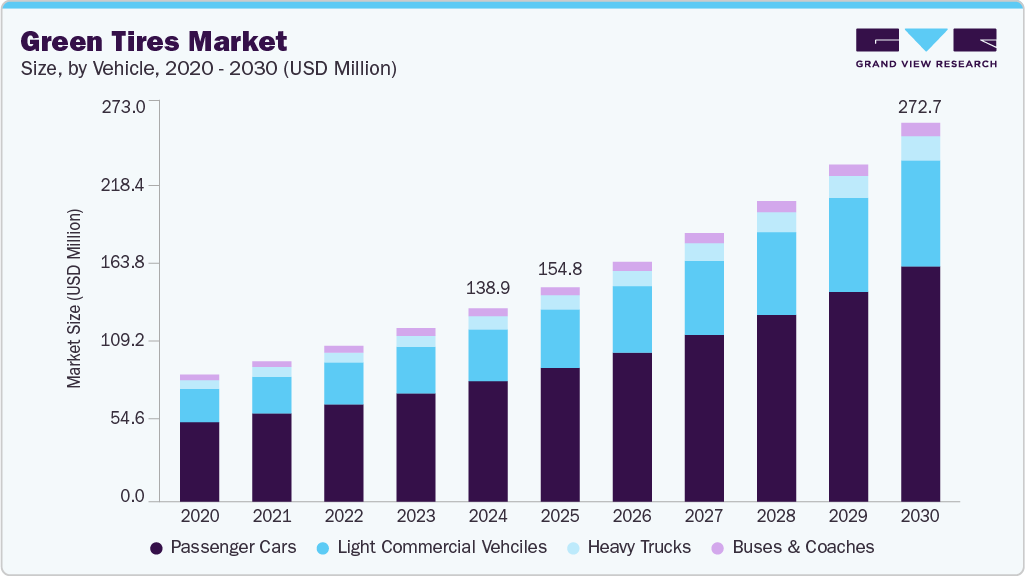
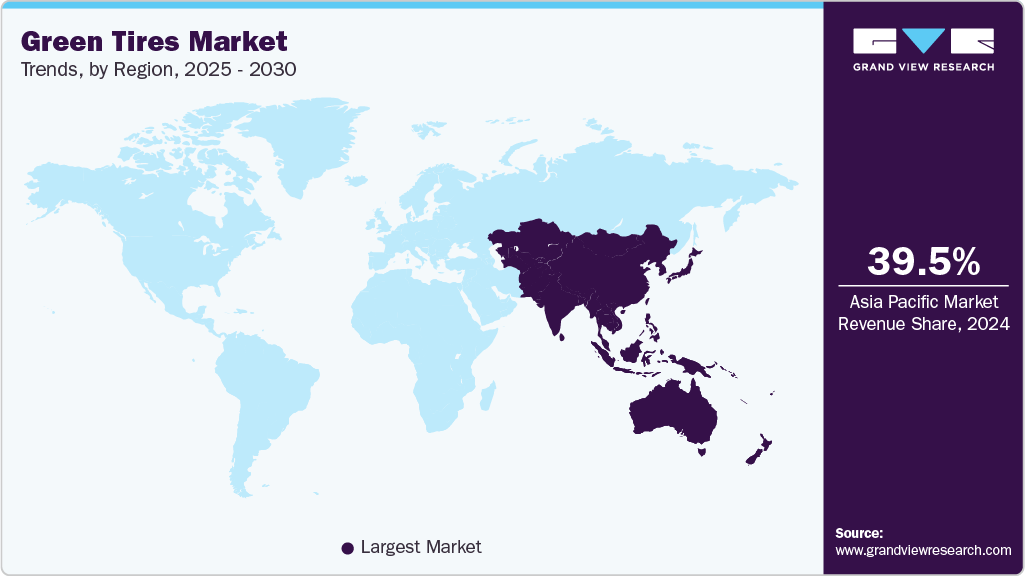
The global green tires market size was valued at USD 154.8 million in 2025 and is projected to grow from USD 172.7 million in 2026 to USD 391.0 million by 2033, at a CAGR of 12.4% from 2026 to 2033. Asia Pacific dominated the market, accounting for a revenue share of 39.8% in 2025. Escalating environmental concerns, regulatory mandates, and rising demand for sustainable mobility solutions are driving market growth.
 Source: Grand View Research, IR Documents, Primary Interviews, Paid DatabasesTo learn more about this report,
 Download Free Sample Report
Key Market Trends & Insights
- By vehicle: Passenger cars segment led the market with the largest revenue share of 62.4% in 2025.
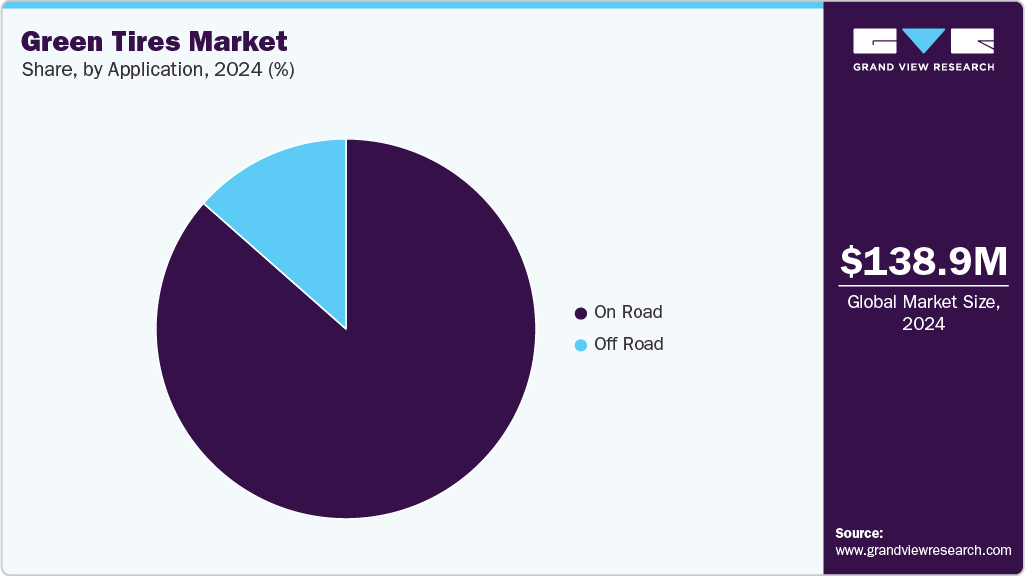
- By application: On-road segment led the market with the largest revenue share of 86.6% in 2025.
Regional Highlights
- Largest regional market: Asia Pacific (39.8% revenue share, 2025)
- By country: China held the largest share in the Asia Pacific region in 2025.
Market Size & Forecast
- Market size in 2025: USD 154.8 Million
- Estimated market size in 2026: USD 172.7 Million
- Projected market size by 2033: USD 391.0 Million
- CAGR (2026-2033): 12.4%
Three ways to get this report
Buy it, customize it, or ask a question.Ask an Analyst
Analyst response in 1 business day
- AccessReport author, directly
- Reply timeWithin 1 working day
- No sales callDirect answer only
- FormatEmail reply
- CostFree, no cost
Get the Full Report
What the study covers
- FormatsPDF · Excel · Dashboard
- Timeline2026–2033 annual, 2025 base
- Coverage20+ countries, 5 regions
- Companies10+ key players profiled
Customize the Report
20% free customization
- IncludeCountries, segments, points
- TailorTo your product definition
- ExtendDeeper competitor detail
- OrA fully bespoke study
- Turnaround5–10 working days
Eco-friendly design and the use of renewable materials offer a reduced environmental footprint by improving fuel efficiency and lowering carbon emissions. The increasing concerns about greenhouse gas emissions and the limited availability of natural resources have prompted vehicle manufacturers to adopt green tires.Key innovations in the industry are redefining tire manufacturing by integrating sustainable raw materials, such as recycled rubber, bio-based silica, and renewable polymers. This helps minimize dependence on finite resources while promoting a circular economy. For instance, in January 2024, Toyo Tires unveiled a new tire made from 90% sustainable materials, including biomass-derived rubbers, recycled carbon black, and plant-based oils, highlighting the industry's rapid shift toward environmentally conscious production.
 To learn more about this report, Download Free Sample Report
Government agencies worldwide are encouraging the use of recycled tires, forming regulations, and offering incentives to promote the green tire industry. For instance, state and federal governance in the U.S. partnered with associations and organizations such as the U.S. Tire Manufacturers Association (USTMA) and the Product Stewardship Institute (PSI). Also, in April 2024, Euro 7 Regulations were introduced to limit tire abrasion emissions. The regulation encouraged manufacturers to develop more durable and less abrasive "green" materials and reduce microplastics released from tires. Such partnerships promote tire recycling and the use of recycled material to manufacture new tires, supporting green tire initiatives.
Market Dynamics
The green tires market is experiencing strong growth due to increasing environmental regulations, rising fuel efficiency requirements, and growing consumer preference for sustainable mobility solutions. Automakers are increasingly integrating low rolling resistance tires into both conventional and electric vehicles to improve energy efficiency and reduce carbon emissions. Technological advancements in sustainable raw materials, silica-based compounds, and bio-based rubber formulations are further enhancing tire performance without compromising safety or durability. Additionally, expanding electric vehicle production and stricter emission standards across major automotive markets continue to accelerate demand for green tires globally.
Stringent fuel economy regulations and global carbon reduction targets are driving automakers and consumers toward tires that improve vehicle efficiency. Green tires, manufactured using advanced silica compounds and optimized tread designs, significantly reduce rolling resistance, enabling vehicles to consume less fuel and emit fewer greenhouse gases. Governments worldwide are introducing fuel efficiency standards and tire labeling regulations that encourage the adoption of energy-efficient tire technologies. As a result, vehicle manufacturers are increasingly equipping new passenger and commercial vehicles with green tires to comply with regulatory requirements while enhancing overall vehicle performance.
The rapid expansion of electric vehicles is further strengthening market demand. Since rolling resistance directly affects battery range, EV manufacturers prioritize green tires that maximize energy efficiency and extend driving distance. Tire manufacturers are responding by developing specialized products with lightweight construction, improved grip, lower noise levels, and longer service life. These innovations are making green tires an essential component of next-generation mobility solutions, creating sustained growth opportunities across both OEM and replacement markets.
The production of green tires requires advanced materials such as highly dispersible silica, bio-based polymers, and specialized manufacturing technologies that increase production costs compared to conventional tires. These higher costs often translate into premium retail prices, limiting adoption among price-sensitive consumers, particularly in developing economies. Additionally, fluctuations in raw material availability and the need for continuous research and development further increase manufacturing expenses. Cost remains a key challenge despite the long-term fuel savings and environmental benefits offered by green tires.
Growing investments in sustainable materials, recycled rubber technologies, renewable feedstocks, and circular economy initiatives present significant opportunities for the green tires market. Manufacturers are increasingly focusing on renewable natural rubber, recycled carbon black, bio-based oils, and end-of-life tire recycling to reduce environmental impact while meeting sustainability commitments. Continued innovation in eco-friendly tire materials, combined with supportive government policies and rising consumer awareness, is expected to create new growth avenues and strengthen the long-term adoption of green tires across global automotive markets.
Market Concentration & Characteristics
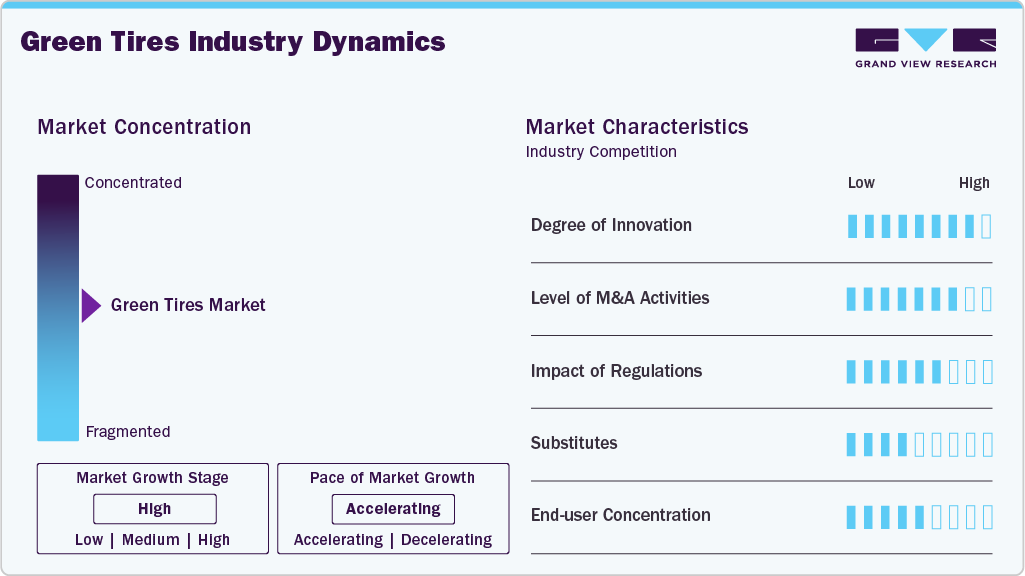
The green tire industry is experiencing significant growth and is in an accelerating phase, with momentum continuing to build rapidly. The market is moderately fragmented, characterized by both established tire manufacturers and emerging players competing for market share. Companies are heavily investing in research and development to introduce cutting-edge green tire technologies that enhance sustainability and reduce rolling resistance.
As competition intensifies, developing eco-conscious products has become a key differentiator for tire manufacturers. By focusing on sustainable innovation, companies aim to meet growing consumer demand for green alternatives while staying ahead in an evolving market. Companies are making strategic partnerships to offer innovative products. For instance, in June 2024, Nokian Tyres plc partnered with UPM, a leading biomaterials production expert, to introduce the first concept tire made with a new renewable material.
 To learn more about this report, Download Free Sample Report
Companies worldwide are also pursuing mergers and acquisitions to strengthen their market positions and access innovations and customer bases. For example, in May 2023, Yokohama Rubber acquired Trelleborg Wheel Systems, significantly bolstering its presence in the off-highway tire segment. This strategic move allowed Yokohama to tap into Trelleborg's experience in environmentally friendly, energy-efficient tire solutions and expand its footprint in the sustainable tire market.
Analyst Perspective
The green tires market is expected to witness steady long-term growth as sustainability becomes a core priority across the global automotive industry. Regulatory pressure to reduce vehicle emissions, coupled with increasing adoption of electric vehicles and stricter fuel efficiency standards, will continue to accelerate demand for low rolling resistance tires. Manufacturers investing in sustainable raw materials, advanced tread technologies, and circular economy initiatives are likely to strengthen their competitive positioning. While premium pricing and raw material cost volatility remain challenges, continuous technological innovation, expanding OEM collaborations, and growing consumer awareness of lifecycle cost savings are expected to support broader market adoption over the forecast period.
Vehicle Insights
Based on vehicle, the passenger cars segment led the market with the largest revenue share of 62.4% in 2025 and is expected to grow at a CAGR of 12.3% over the forecast period. The large share is mainly attributed to the growing consumer demand for sustainable and fuel-efficient vehicles, prompting tire manufacturers to adopt eco-friendly production practices. By utilizing materials such as sustainably sourced natural rubber, bio-based compounds, and recycled rubber, manufacturers aim to reduce environmental impact while meeting consumer expectations for performance and sustainability in passenger cars. Besides, there is a consistently growing demand for conventional passenger cars and electric vehicles (EVs) and growing environmental consciousness for aftermarket & replacement tires is boosting the demand for green tires in this segment.
The light commercial vehicles (LCVs) segment is projected to have the fastest CAGR of 12.6% over the forecast period. Businesses operating vehicle fleets are increasingly turning to green tires for their ability to enhance fuel efficiency and reduce operational costs. Beyond economic benefits, green tires offer improved traction, better braking response, extended tread life, and reliable stability across diverse road conditions. These performance enhancements not only contribute to safer driving experiences but also align with corporate sustainability goals, positioning green tires as a strategic investment for fleet-dependent industries.
Application Insights
Based on application, the on road segment led the market with the largest revenue share of 86.6% in 2025 and is expected to grow at a CAGR of 12.5% over the forecast period. Integrating green tires into on-road vehicles significantly contributes to sustainability efforts and reduces environmental impact. These tires are designed with advanced compounds that ensure even pressure distribution across the road surface, reducing tread wear and extending tire lifespan. In electric vehicles (EVs), green tires play a crucial role by minimizing rolling resistance, thereby improving range efficiency and allowing for longer distances between charges. Companies are introducing innovative green tires primarily for passenger vehicles. For instance, Goodyear developed a concept tire made with 70% sustainable materials. This tire includes 13 featured ingredients across nine different components, incorporating plant-based oils, rice husk silica, and recycled polyester, while maintaining strong performance standards across all regulatory and internal tests. Such developments are boosting the demand for on-road green tires.
 To learn more about this report, Download Free Sample Report
The off-road segment is expected to grow with the fastest CAGR over the forecast period from 2025 to 2030. Green tires in this category are specifically engineered for demanding environments such as construction, mining, and agriculture. These tires offer exceptional durability, fuel efficiency, and reduced emissions, aligning with the sustainability goals of off-road vehicle manufacturers. The innovations in this category reduce the carbon footprint and enhance tire life, durability, and fuel economy. Companies are gradually moving towards developing off-road products. For instance, in 2023, GRI, one of the leading tire manufacturers, introduced its Green XLR Earth Series, which incorporates up to 78.6% sustainable materials, including natural rubber sourced from Sri Lankan farmers, recycled carbon black, reclaimed rubber, soybean oil, HD silica, and bio-sourced cellulose fibers. Extensive field testing in countries such as Germany, Spain, and the UK has validated the superior performance of these tires across varied agricultural conditions, reinforcing GRI’s commitment to environmentally responsible tire solutions.
Region Insights
North America green tires market is projected to experience substantial growth over the forecast period. There is a growing awareness among consumers in North America regarding environmental issues and sustainability. As more individuals become conscious of pollution and climate change and seek ways to reduce it, there is a rising demand for products that align with these issues. Green tires, known for their contribution to fuel efficiency and reduced emissions, are gaining popularity among environmentally conscious consumers. Besides, increasing adoption of electric vehicles across North America is also contributing to this trend, as green tires complement EV performance by enhancing range and energy efficiency.
U.S. Green Tires Market Trends
The U.S. held the largest share of the green tires market in 2025 and is poised for continued growth. This expansion is driven by increasing car ownership and a heightened focus on environmental sustainability among consumers. The shift in consumer mindset focusing on improving fuel efficiency and lowering vehicle emissions has boosted the demand for green tire in the country. Consequently, factors such as growing consumer environmental consciousness and strategic industry investments are collectively fostering a favorable environment for the green tires industry in the U.S., positioning it for robust growth in the coming years.
Europe Green Tires Market Trends
Europe is expected to witness significant growth over the forecast period. Due to fluctuating fuel prices and growing concerns about energy efficiency, European consumers are focusing on reducing vehicle operating costs. Green tires improve fuel efficiency due to reduced rolling resistance and offer long-term cost savings to vehicle owners and fleet operators. The potential for lower fuel consumption and maintenance costs makes green tires an attractive option in the European market. In addition, stringent regulations from the European Union are further encouraging manufacturers to develop new green tire products in the region, further boosting the green tire industry.
Asia Pacific Green Tires Market Trends
Asia Pacific dominated the green tires market with the largest revenue share of 39.8% in 2025. The high market share is attributed to stringent environmental regulations and increased adoption of sustainable automotive solutions. Countries such as China, Japan, South Korea, and India have implemented fuel efficiency and emission standards that are pushing automakers to incorporate green tire technologies to meet compliance and reduce their environmental impact. Supporting this momentum, in 2023, Bridgestone announced its first carbon-neutral tire manufacturing site in Pune, India, achieving a 94% carbon footprint reduction through solar energy and biomass boilers. Additionally, its Hai Phong plant in Vietnam is shifting to 100% renewable energy for steam production, aiming to cut CO₂ emissions by 92%. These developments reflect the region’s strong regulatory backing and industry-led initiatives, positioning Asia Pacific as a key driver in the global shift toward sustainable tire manufacturing.
 To learn more about this report, Download Free Sample Report
The green tires market in China held the largest share in the Asia Pacific region in 2025. With the increasing popularity of electric vehicles in China, there is a growing demand for eco-friendly parts, including tires. Consumers are becoming more environmentally conscious and are seeking products that align with their sustainability goals.
Key Green Tires Company Insights
Some of the key players operating in the green tires market include Goodyear Tire, MICHELIN, and Nokian Tyres plc, among others.
-
Goodyear is a tire manufacturer that operates in most regions of the world. It focuses on reducing energy consumption and emissions in its factories and utilizing renewable energy sources. It also uses sustainable material sources, develops alternatives such as green tires, and aims to create 100% sustainable material tires by 2030.
-
The MICHELIN Group is a global company headquartered in France that delivers tires to over 170 countries. The company is strongly committed to innovation and sustainable development. MICHELIN manufactures tires for various applications, including space shuttles, aircraft, automobiles, heavy equipment, motorcycles, and bicycles.
Key Green Tires Companies:
The following key companies have been profiled for this study on the green tires market.
-
APOLLO TYRES LTD
-
Bridgestone Corporation
-
CANADIAN TIRE
-
Continental AG
-
GRI Tires
-
JK TYRE & INDUSTRIES LTD
-
MICHELIN
-
MRF Tyres
-
Nokian Tyres plc.
-
Pirelli & C. S.p.A.
-
RPG Group (CEAT tires)
-
The Goodyear Tire & Rubber Company
-
THE YOKOHAMA RUBBER CO., LTD.
-
Toyo Tire Corporation
Competitive Benchmarking
Category
Operating Strategies
Competitive Edge
Weakness
Established Players (Bridgestone Corporation; Continental AG; MICHELIN; Pirelli & C. S.p.A.; The Goodyear Tire & Rubber Company; THE YOKOHAMA RUBBER CO., LTD.; Toyo Tire Corporation; Nokian Tyres plc.)
- Develop low rolling resistance and EV-specific green tires.
- Invest in sustainable raw materials, silica compounds, and recycling technologies.
- Strengthen OEM partnerships and expand global production capacity.
- Strong global brand recognition and extensive R&D capabilities.
- Broad product portfolio across passenger, commercial, and off-road vehicles.
- Well-established manufacturing, distribution, and OEM networks worldwide.
- High dependence on volatile raw material prices.
- Significant capital investment required for technology upgrades and sustainability initiatives.
- Premium pricing limits adoption in price-sensitive markets.
Emerging Players (APOLLO TYRES LTD; JK TYRE & INDUSTRIES LTD; MRF Tyres; RPG Group (CEAT Tires); GRI Tires; CANADIAN TIRE)
- Expand regional manufacturing and distribution networks.
- Focus on cost-effective green tires for replacement and commercial vehicle markets.
- Invest in fuel-efficient tire technologies and export expansion.
- Strong regional presence with competitive pricing.
- Flexible manufacturing suited to local customer requirements.
- Growing investments in sustainable products and export capabilities.
- Limited global brand recognition compared to multinational competitors.
- Lower R&D spending for advanced green tire technologies.
- Smaller international OEM and distribution network.
Recent Developments
-
In may 2025, JK Tyre & Industries Ltd. launched India’s first sustainable car tire made of 80% sustainable materials. All the material used for manufacturing tires is ISCC Plus certified sustainable materials.
-
In May 2023, Kumho Petrochemical and Hankook Tire collaborated to develop green tires using eco-solution-polymerized styrene-butadiene rubber. This rubber utilizes recycled styrene monomer to improve fuel efficiency and tire wear resistance. This collaboration involves Hankook testing and evaluating its tires to determine their performance qualities and physical properties.
-
In March 2023, Nokian Tyres announced an expansion initiative in Tennessee, which entails the establishment of a 600,000-square-foot tire warehouse. This move aims to bolster the company's existing nine-warehouse network throughout the U.S. and Canada, enabling it to achieve a maximum production capacity of up to four million tires annually by 2024.
-
In June 2022, Michelin and Hyundai Motor Group announced a partnership to develop next-generation tires for premium electric automobiles. The partnership aims to create eco-friendly tires by increasing the use of sustainable materials optimized for next-generation electric automobiles and real-time tire monitoring systems. The partnership was also aimed at analyzing tire wear, road friction, and tire load beyond current standards and enhance ride comfort by decreasing vibration and noise generated by EVs at high speeds.
-
In May 2022, Goodyear launched its first city transit tires made with a sustainable soybean oil compound. These tires incorporate soybean oil to replace petroleum-based materials, reducing the environmental impact of tire production while maintaining performance benefits. Using soybean oil in these tires marks a significant step towards sustainability in the tire industry, aligning with Goodyear's commitment to developing eco-friendly and high-performance tire solutions.
Green Tires Market Report Scope
Report Attribute
Details
Market size in 2025
USD 154.8 million
Estimated market size in 2026
USD 172.7 million
Projected market size by 2033
USD 391.0 million
Growth rate
CAGR of 12.4% from 2026 to 2033
Base year for estimation
2025
Historical data
2021 - 2024
Forecast period
2026 - 2033
Quantitative units
Revenue in USD million/billion, and CAGR from 2026 to 2033
Report coverage
Revenue forecast, company ranking, competitive landscape, growth factors, and trends
Segments covered
Type, application, region
Regional scope
North America; Europe; Asia Pacific; Central & South America; Middle East & Africa
Country scope
U.S.; Canada; Mexico; France; Germany; Italy; Spain; UK; China; India; Japan; South Korea; Brazil; Saudi Arabia; UAE
Key companies profiled
APOLLO TYRES LTD; Bridgestone Corporation; CANADIAN TIRE; Continental AG; GRI Tires; JK TYRE & INDUSTRIES LTD; MICHELIN; MRF Tyres; Nokian Tyres plc.; Pirelli & C. S.p.A.; RPG Group (CEAT tires); The Goodyear Tire & Rubber Company; THE YOKOHAMA RUBBER CO., LTD.; Toyo Tire Corporation
Customization scope
Free report customization (equivalent up to 8 analysts' working days) with purchase. Addition or alteration to country, regional & segment scope.
Pricing and purchase options
Avail customized purchase options to meet your exact research needs. Explore purchase options
Global Green Tires Market Report Segmentation
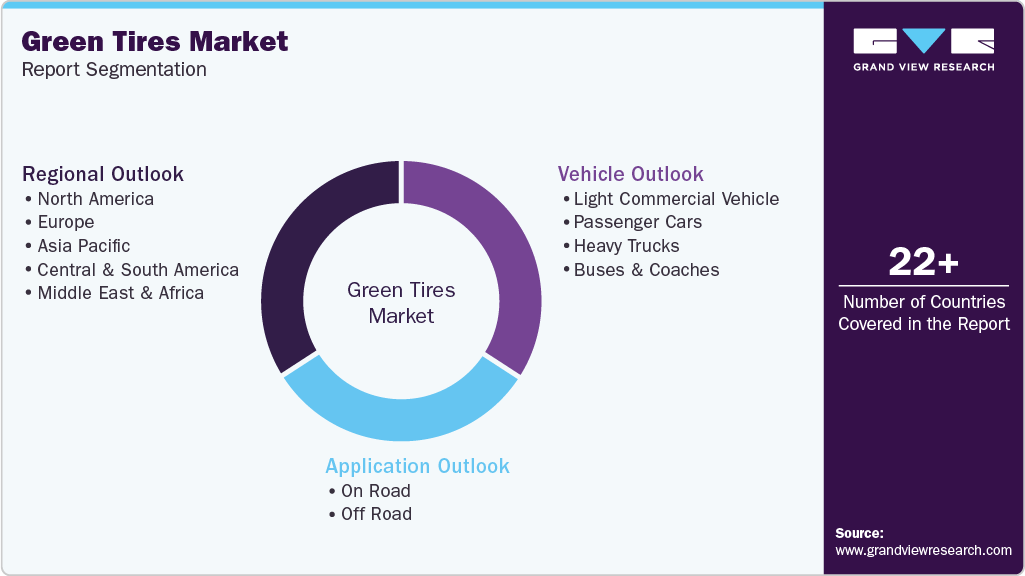
This report forecasts revenue growth at the global, regional, and country levels and provides an analysis of the latest industry trends in each of the sub-segments from 2021 to 2033. For this study, Grand View Research has segmented the global green tires market report based on the vehicle, application, and region:
 To learn more about this report, Download Free Sample Report
-
Vehicle Outlook (Revenue, USD Million, 2021 - 2033)
-
Light Commercial Vehicle
-
Passenger Cars
-
Heavy Trucks
-
Buses & Coaches
-
-
Application Outlook (Revenue, USD Million, 2021 - 2033)
-
On Road
-
Off Road
-
-
Regional Outlook (Revenue, USD Million, 2021 - 2033)
-
North America
-
U.S.
-
Canada
-
Mexico
-
-
Europe
-
France
-
Germany
-
Italy
-
Spain
-
UK
-
-
Asia Pacific
-
China
-
India
-
Japan
-
South Korea
-
-
Central & South America
-
Brazil
-
-
Middle East & Africa
-
Saudi Arabia
-
UAE
-
-
Research Methodology
The green tires market figures in this report are based on a proven research process that combines executive interviews with secondary research from proprietary databases, company filings, and recognized regulatory and institutional sources. Market size is built through value-chain sizing - reconciling supply-side and demand-side estimates - and triangulated with bottom-up and top-down approaches. Every estimate passes multiple levels of expert validation before publication, with each green tires segment quantified using the revenue-capture definitions in the table below.
Segment Definition
Segment - Vehicle
Revenue capture definition
Light Commercial Vehicles
Revenue generated from the manufacture, sale, and replacement of green tires specifically designed for light commercial vehicles, offering low rolling resistance, improved fuel efficiency, enhanced durability, and reduced carbon emissions.
Passenger Cars
Revenue generated from the manufacture, sale, and replacement of green tires for passenger cars, incorporating advanced rubber compounds and tread technologies to improve fuel economy, safety, driving comfort, and environmental performance.
Heavy Trucks
Revenue generated from the manufacture, sale, and retreading of green tires for heavy trucks, engineered to deliver high load-bearing capacity, extended tread life, lower rolling resistance, and reduced operating costs for long-haul and freight transportation.
Buses & Coaches
Revenue generated from the manufacture, sale, and maintenance of green tires for buses and coaches, designed to enhance fuel efficiency, passenger safety, mileage performance, and operational sustainability in public and private transportation fleets.
Segment Application
Revenue capture definition
On Road
Revenue generated from the sale and replacement of green tires intended for on-road applications across passenger vehicles, commercial vehicles, and public transport fleets, focusing on fuel efficiency, low noise, superior traction, and regulatory compliance.
Off Road
Revenue generated from the manufacture, sale, and servicing of green tires for off-road vehicles used in construction, agriculture, mining, and industrial applications, emphasizing durability, traction, lower fuel consumption, and reduced environmental impact under demanding operating conditions.
Estimation Model
Layer Name
Key Question
Description
Raw Material & Component Manufacturing
What is the production capacity and supply of green tire raw materials and components?
Estimates the supply of natural rubber, synthetic rubber, silica, carbon black, bio-based oils, steel cords, textile reinforcements, bead wires, chemical additives, tread compounds, sidewall materials, and other green tire components by evaluating raw material availability, manufacturing capacity, production technologies, supplier output, and production trends across major manufacturing regions.
Green Tire Manufacturing
How many green tires are manufactured across vehicle categories?
Evaluates the production of green tires by tire manufacturers, considering manufacturing capacity, product mix, advanced compounding technologies, tire design, OEM and replacement demand, and production volumes across passenger cars, light commercial vehicles, heavy trucks, buses & coaches, and on-road and off-road vehicle applications.
End-Use Vehicle Demand
Which vehicle applications generate the highest demand for green tires?
Measures demand across passenger cars, light commercial vehicles, heavy trucks, buses & coaches, and off-road vehicles by analyzing vehicle production, fleet expansion, replacement cycles, electric vehicle adoption, fuel efficiency requirements, transportation activity, logistics growth, mining, agriculture, and infrastructure development.
Regional Revenue Validation
What is the final market value by region and segment?
Validates market estimates through regional vehicle production, automotive sales, OEM procurement, replacement tire demand, government fuel efficiency and emission regulations, raw material pricing, import-export analysis, tire replacement rates, electric vehicle penetration, and adoption of sustainable tire technologies to derive the final market size.
Delivered Customizations
This report has been delivered with the following In-depth customizations
Client Request
Customization Delivered
Value Adds
Sustainability Analysis
Detailed assessment of sustainable tire manufacturing practices, low rolling resistance technologies, recyclable and bio-based tire materials, carbon emission reduction initiatives, and EV-compatible tire innovations across passenger and commercial vehicle segments
Helps understand sustainability trends, regulatory compliance strategies, eco-friendly material adoption, and long-term environmental impact reduction opportunities in the green tires market
Regional Analysis
Comprehensive evaluation of regional market dynamics based on EV adoption, fuel efficiency regulations, automotive production trends, replacement tire demand, and sustainability initiatives
Supports identification of high-growth regional markets, evolving regulatory frameworks, investment opportunities, and regional demand trends for green tires
Competitive Benchmarking
In-depth analysis of key green tire manufacturers based on product portfolio, pricing strategies, regional presence, production capacity, OEM partnerships, and sustainability initiatives
Enables understanding of competitive positioning, technology differentiation, market expansion strategies, and evolving competitive dynamics across the green tires industry
Frequently Asked Questions About This Report
The green tires market size was estimated at USD 154.8 million in 2025 and is expected to reach USD 172.7 million in 2026.
Asia Pacific held the highest revenue market share of 39.8% in 2025, due to its large automotive manufacturing base, rising vehicle production and ownership, expanding electric vehicle adoption, and the presence of leading tire manufacturers investing in sustainable and fuel-efficient tire technologies.
The light commercial vehicles segment is the fastest-growing in the green tires market.
The off-road segment is the fastest-growing application in the green tires market.
The passenger cars segment accounted for the largest revenue share of 62.4% in 2025, owing to high global passenger vehicle production and ownership, increasing consumer demand for fuel-efficient mobility, and widespread adoption of low rolling resistance green tires by both OEMs and the replacement market.
The green tires market is expected to grow at a compound annual growth rate of 12.4% from 2026 to 2033 to reach USD 391.0 million by 2033.
The on-road segment held the highest revenue market share of 86.6% in 2025, due to its extensive adoption across passenger cars and commercial vehicles.
Some of the key players operating in the green tires market include APOLLO TYRES LTD, Bridgestone Corporation, CANADIAN TIRE, Continental AG, GRI Tires, JK TYRE & INDUSTRIES LTD, MICHELIN, MRF Tires, and Nokian Tires plc.; Pirelli & C. S.p.A.; RPG Group (CEAT tires); The Goodyear Tire & Rubber Company; THE YOKOHAMA RUBBER CO., LTD.; and Toyo Tire Corporation
Key factors driving the green tires market include increasing demand for fuel-efficient vehicles, stringent vehicle emission regulations, rapid electric vehicle adoption, and advancements in sustainable tire materials and low rolling resistance technologies.
About the Author(s)
Advanced Interior Materials Research Team
Advanced Materials · Advanced Interior MaterialsThis report was authored by the advanced interior materials research team at Grand View Research - comprising two research analysts, one senior research analyst, and one industry expert - with specialized expertise in the advanced interior materials segment of the advanced materials industry. All findings are based on proprietary advanced materials databases, executive interviews, and regulatory analysis, subject to internal peer review prior to publication.
Last Updated:
Speak to Analyst

Customize this report to your needs - add regions, segments, or data points, with 20% free customization.
Or view our licence options:


ISO 9001:2015 & 27001:2022 Certified
We are GDPR and CCPA compliant! Your transaction & personal information is safe and secure. For more details, please read our privacy policy.


