
- Home
- »
- Plastics, Polymers & Resins
- »
-
Healthcare Blister Packaging Market Size Report, 2026-2033GVR Report cover

Healthcare Blister Packaging Market (2026 - 2033)
Size, Share & Trends Analysis Report By Material (Paper & Paperboard, Plastic Films, and Aluminum), By Technology (Thermoforming, Cold Forming), By Type, By Application, By Region, And Segment Forecasts
Market Size, 2025
$22.1BMarket Estimate, 2026
$23.8BMarket Forecast, 2033
$42.3BCAGR, 2026–2033
8.6%Healthcare Blister Packaging Market Summary
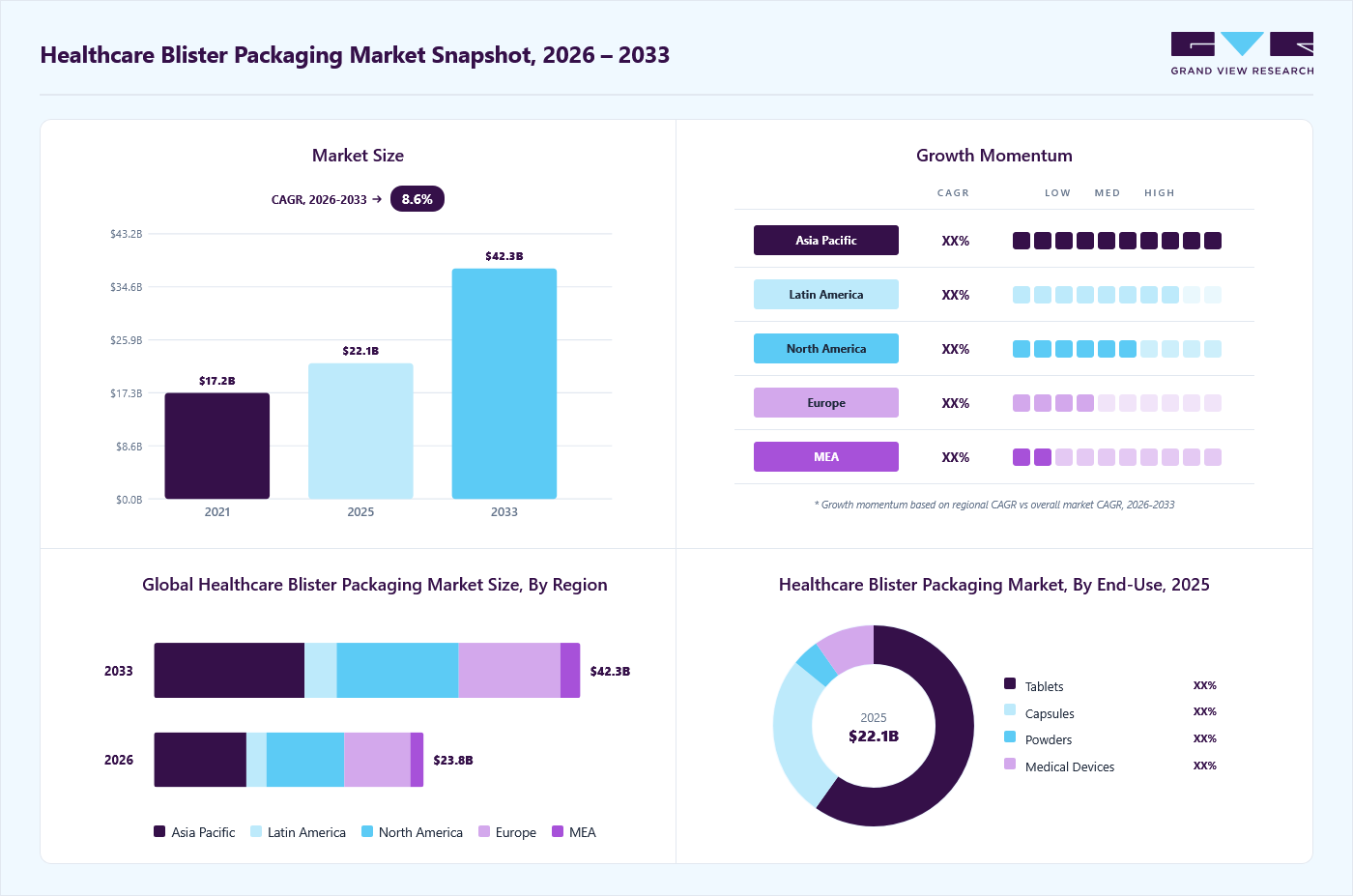
The global healthcare blister packaging market size was valued at USD 22.1 billion in 2025 and is projected to grow from USD 23.8 billion in 2026 to USD 42.3 billion by 2033, at a CAGR of 8.6% from 2026 to 2033. The market in Asia Pacific dominated with a revenue share of 34.0% in 2025. The market is driven by rising pharmaceutical production, increasing demand for unit-dose packaging, and the growing need for patient compliance, safety, and tamper-evident solutions.
 Source: Grand View Research, IR Documents, Primary Interviews, Paid DatabasesTo learn more about this report,
 Download Free Sample Report
 Key Market Trends & Insights
- By material: Aluminum segment held the largest market share of 48.0% in 2025.
- By technology: Thermoforming segment held the largest market share of 84.0% in 2025.
- By type: Carded segment held the largest market share of 57.0% in 2025.
- By application: Tablets segment held the largest market share of 59.0% in 2025.
Regional Highlights
- Largest regional market: Asia Pacific (34.0% revenue share, 2025)
- By country: China held the largest market share in 2025
Market Size & Forecast
- Market size in 2025: USD 22.1 Billion
- Estimated market size in 2026: USD 23.8 Billion
- Projected market size by 2033: USD 42.3 Billion
- CAGR (2026-2033): 8.6%
Three ways to get this report
Buy it, customize it, or ask a question.Ask an Analyst
Analyst response in 1 business day
- AccessReport author, directly
- Reply timeWithin 1 working day
- No sales callDirect answer only
- FormatEmail reply
- CostFree, no cost
Get the Full Report
What the study covers
- FormatsPDF · Excel · Dashboard
- Timeline2026–2033 annual, 2025 base
- Coverage20+ countries, 5 regions
- Companies10+ key players profiled
Customize the Report
20% free customization
- IncludeCountries, segments, points
- TailorTo your product definition
- ExtendDeeper competitor detail
- OrA fully bespoke study
- Turnaround5–10 working days
Besides, expansion of OTC medicines, aging populations, and advancements in high-barrier, sustainable blister materials further support market growth globally. The healthcare blister packaging market is primarily driven by the rapid growth of the global pharmaceutical and biopharmaceutical industries. Rising demand for prescription medicines, OTC drugs, and specialty therapies is increasing the need for packaging formats that ensure product integrity, dosage accuracy, and long shelf life. Blister packs provide strong protection against moisture, oxygen, and contamination, making them especially suitable for sensitive tablets and capsules. As drug manufacturers expand production volumes worldwide, blister packaging continues to be a preferred solution due to its efficiency and scalability.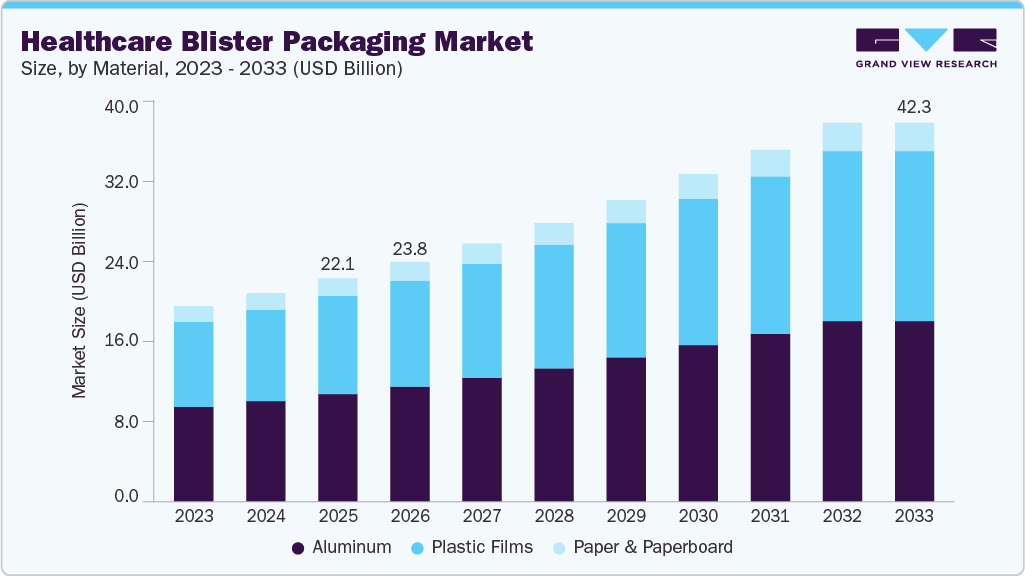 To learn more about this report, Download Free Sample Report
 An increasing focus on patient safety, adherence, and convenience is also contributing to the growth of the market. Blister packaging supports unit-dose dispensing, which helps patients follow correct medication schedules and reduces the risk of overdose or misuse. This is particularly important in aging populations, where chronic disease prevalence is high and medication regimens are complex. Healthcare providers and pharmacies increasingly favor blister packs because they improve compliance, enable easy tracking of doses, and enhance overall treatment outcomes.
Regulatory pressure and the need for anti-counterfeiting measures are also accelerating market growth. Governments and health authorities require pharmaceutical packaging to meet strict standards for tamper evidence, traceability, and child-resistant features. Blister packaging offers high security through sealed cavities and advanced printing technologies, making it harder to counterfeit compared to loose bottle formats. As regulations tighten globally, manufacturers are investing more in high-quality blister solutions to ensure compliance and brand protection.
Furthermore, innovation in packaging materials and sustainability trends are supporting market expansion. Companies are developing recyclable blister materials, aluminum-free alternatives, and eco-friendly polymer structures to reduce environmental impact while maintaining barrier performance. Technological advancements such as smart blister packs with digital tracking features are also gaining traction, especially in clinical trials and high-value drug segments. These innovations, combined with growing healthcare access in emerging markets, are expected to further strengthen demand for blister packaging worldwide.
Market Concentration & Characteristics
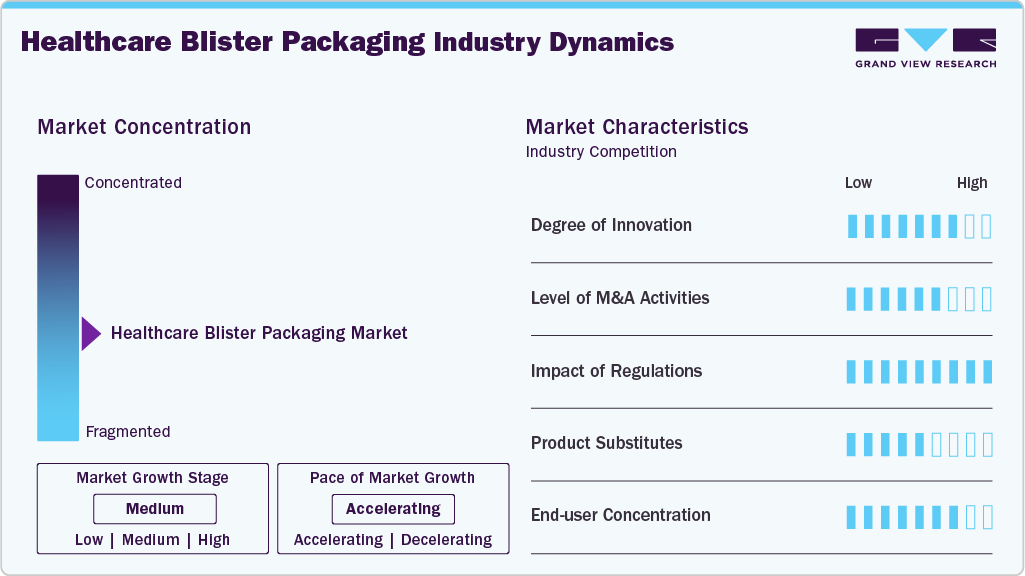
The competitive landscape is moderately consolidated, with major global packaging companies dominating through long-term contracts with pharmaceutical manufacturers. Competition centers around customization, production scalability, compliance support, cost efficiency, and value-added services such as smart packaging and anti-counterfeiting features. The industry is also experiencing gradual shifts toward eco-friendly packaging, digital integration, and growing demand from emerging markets where pharmaceutical production is expanding rapidly.
 To learn more about this report, Download Free Sample Report
 Another key characteristic is the industry’s emphasis on barrier protection and material performance. Blister packs are valued for their ability to protect drugs from moisture, oxygen, and light, especially for sensitive formulations. The market includes a mix of plastic-based blister packs (PVC, PVDC, PET) and aluminum-based solutions (Alu-Alu) depending on drug stability needs. Material innovation is a central competitive factor, with increasing focus on sustainable and recyclable blister structures.
Material Insights
The aluminum segment dominated the healthcare blister packaging market in 2025, accounting for over 48.0% revenue share, due to its superior barrier properties against moisture, oxygen, and light, which are critical for protecting sensitive pharmaceutical formulations. Aluminum blister packs, especially Alu-Alu structures, are widely preferred for high-value drugs, antibiotics, and humidity-sensitive tablets because they ensure extended shelf life and product stability. In addition, growing regulatory emphasis on tamper evidence, anti-counterfeiting, and secure unit-dose packaging further strengthened aluminum’s adoption across global pharmaceutical manufacturing.
Plastic films are expected to register the highest growth rate of 7.0% during the forecast period, driven by their cost-effectiveness, lightweight nature, and increasing adoption in high-volume pharmaceutical packaging. Advances in polymer technology, such as PVDC-coated PVC and recyclable mono-material structures, are improving barrier performance while supporting sustainability goals. In addition, rising demand for convenient, flexible, and customizable blister formats in emerging markets is accelerating the shift toward plastic film-based healthcare blister packaging solutions.
Technology Insights
The thermoforming segment dominated the healthcare blister packaging market in 2025, accounting for over 84.0% revenue share and is expected to register the highest growth rate of 6.9% during the forecast period. This outlook is due to its high production efficiency, cost-effectiveness, and suitability for large-scale packaging of solid oral drugs such as tablets and capsules. Thermoformed blister packs offer excellent design flexibility, allowing manufacturers to create customized cavity shapes while maintaining reliable protection and visibility. In addition, widespread use of PVC and advanced barrier films in thermoforming processes continues to support strong adoption across pharmaceutical companies globally.
Cold forming is a crucial segment in the healthcare blister packaging market, primarily used for drugs that require the highest level of barrier protection. Unlike thermoforming, cold forming uses aluminum-based laminates that provide near-total resistance to moisture, oxygen, and light, making it ideal for highly sensitive pharmaceuticals, biologics, and specialty medicines. Although it is more expensive and slower in production, growing demand for high-value and stability-critical drugs is supporting steady adoption of cold-formed blister packaging.
Type Insights
The carded segment accounted for over 57.0% of the healthcare blister packaging market in 2025 and is projected to grow at the fastest CAGR of 7.0% over the forecast period due to its strong appeal in retail-ready pharmaceutical and OTC product packaging. Carded blisters combine enhanced product visibility with improved branding space, tamper resistance, and consumer convenience, making them widely preferred in pharmacies and healthcare stores. Rising demand for unit-dose packaging, coupled with growth in self-medication and OTC drug consumption, is further accelerating adoption of carded blister formats globally.
Clamshell blister packaging is a key format in the healthcare blister packaging market, commonly used for medical devices, diagnostic kits, and OTC healthcare products requiring high visibility and strong physical protection. This packaging type consists of two hinged plastic shells that securely enclose the product, offering excellent tamper resistance and durability during transportation and retail handling. Growing demand for secure, retail-friendly packaging solutions in pharmacies and healthcare distribution channels is supporting the steady adoption of clamshell formats.
Application Insights
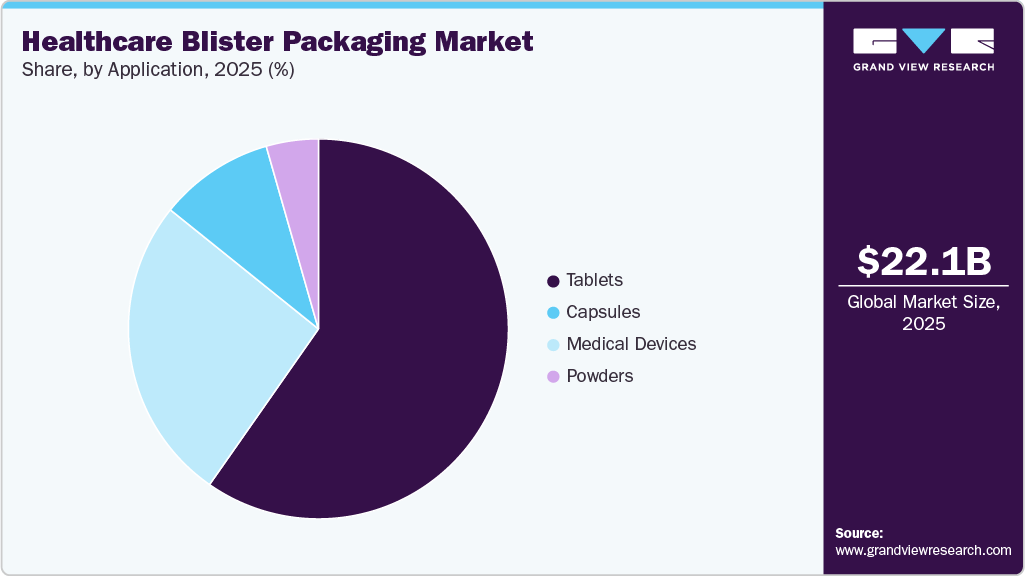
The tablets segment dominated the healthcare blister packaging market in 2025, accounting for over 59.0% of total market share and is expected to register a CAGR of 7.1% over the forecast period. This outlook is due to the high global consumption of solid oral dosage forms for both prescription and OTC medicines. Blister packs provide unit-dose protection, improved patient compliance, and strong barriers against moisture and contamination, which are essential for tablet stability. In addition, the rising prevalence of chronic diseases and expanding pharmaceutical production volumes continue to reinforce tablets as the leading application for blister packaging.
 To learn more about this report, Download Free Sample Report
 The medical devices segment is an important application area in the healthcare blister packaging market, supported by rising demand for sterile, tamper-evident, and protective packaging for products such as syringes, catheters, diagnostic kits, and surgical instruments. Blister packaging ensures high product visibility while providing strong physical protection and contamination resistance during storage and transportation. In addition, increasing healthcare expenditure, growth in home healthcare devices, and stricter regulatory requirements for device packaging integrity are driving steady adoption in this segment.
Regional Insights
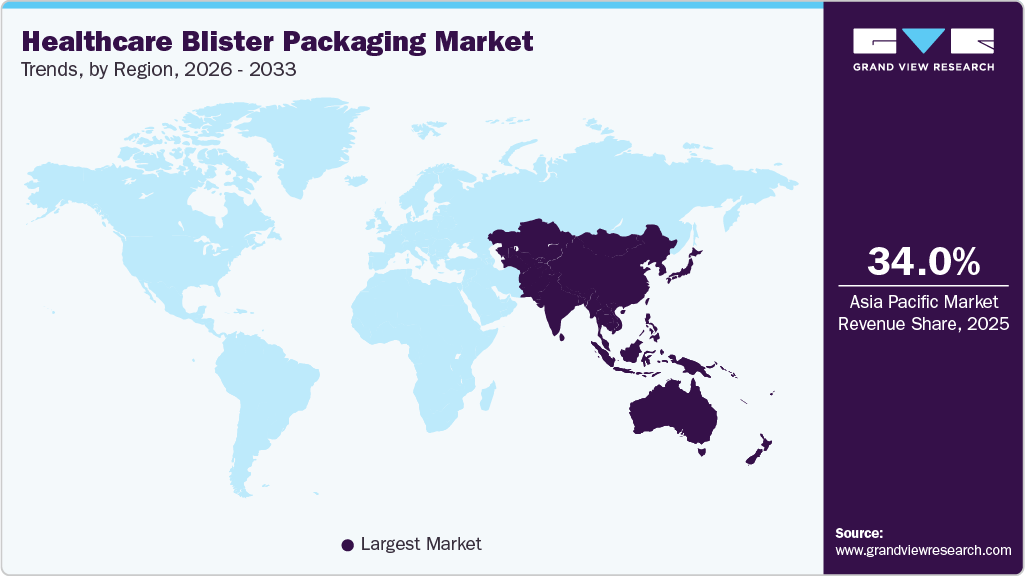
Asia Pacific dominated the healthcare blister packaging market in 2025, accounting for over 34.0% of global market share, and is projected to expand at the fastest CAGR of 7.2% over the forecast period due to rapid growth in pharmaceutical manufacturing hubs such as China and India. The region benefits from rising healthcare spending, expanding generic drug production, and increasing demand for cost-effective unit-dose packaging solutions. In addition, improving regulatory standards, strong export-oriented pharma activity, and growing OTC consumption are accelerating blister packaging adoption across Asia Pacific.
 To learn more about this report, Download Free Sample Report
 China is a major driver of the Asia Pacific healthcare blister packaging market, supported by its position as one of the world’s largest pharmaceutical manufacturing and export hubs. Rapid expansion of generic drug production, rising domestic healthcare demand, and increasing government investments in healthcare infrastructure are fueling the need for high-volume blister packaging solutions. In addition, stricter regulations on drug safety, anti-counterfeiting, and modern packaging standards are accelerating the adoption of advanced aluminum and plastic film blister formats across China’s pharmaceutical sector.
North America Healthcare Blister Packaging Market Trends
North America represents a significant share of the healthcare blister packaging market, driven by strong demand from the pharmaceutical and biopharmaceutical industries, particularly in the U.S. The region benefits from advanced healthcare infrastructure, high consumption of prescription medicines, and strict regulatory requirements for tamper-evident and child-resistant packaging. In addition, growing adoption of high-value specialty drugs, expanding clinical trial activity, and increasing focus on patient adherence solutions are supporting steady growth in blister packaging across North America.
The U.S. is a key contributor to the North America healthcare blister packaging market, supported by its large pharmaceutical industry, high prescription drug consumption, and strong demand for unit-dose packaging formats. Strict FDA regulations on drug safety, serialization, and tamper-evident packaging are driving widespread adoption of advanced blister solutions. In addition, the growing prevalence of chronic diseases, rising specialty drug production, and increasing focus on patient compliance packaging continue to strengthen the U.S. market outlook.
Europe Healthcare Blister Packaging Market Trends
Europe holds a prominent position in the healthcare blister packaging market, driven by its well-established pharmaceutical manufacturing base and strong regulatory emphasis on patient safety and sustainable packaging. Countries such as Germany, France, and the UK are major contributors due to high demand for unit-dose blister packs in both prescription and OTC drug markets. In addition, stringent EU directives on tamper evidence, anti-counterfeiting measures, and the growing shift toward recyclable blister materials are accelerating innovation and adoption across the region.
Key Healthcare Blister Packaging Company Insights
The competitive environment of the healthcare blister packaging market is moderately fragmented, characterized by the presence of major global packaging leaders such as Amcor plc, Constantia Flexibles, Smurfit WestRock, Klöckner Pentaplast, and Tekni-Plex, alongside regional converters and specialty material suppliers. Competition is driven by the need for high-barrier packaging performance, regulatory compliance, cost efficiency, and innovation in sustainable and recyclable blister structures.
Companies differentiate through advanced aluminum and polymer film technologies, smart packaging solutions, and value-added services such as contract packaging and anti-counterfeiting features. Strategic partnerships with pharmaceutical manufacturers, investments in R&D, and expansion into emerging markets further intensify rivalry, making innovation and compliance critical success factors in this industry.
-
In Jan 2026, ACG Packaging Materials launched SuperPod, a lightweight cold-form blister solution that reduces blister cavity size by up to 39% while maintaining full barrier protection and machine performance. Designed for moisture-sensitive products like vitamins and oncology drugs, it lowers material use, packaging footprint, logistics costs, and lifecycle carbon emissions.
-
In April 2025, Amcor plc completed its all-stock acquisition of Berry Global Inc, creating a global packaging leader with around 400 facilities, 75,000 employees, and operations in 140 countries. The merger, valued at approximately USD 13.0 billion, enhances Amcor's portfolio with expanded material science and innovation capabilities, positioning it to deliver more consistent growth and improved margins.
-
In October 2024, Bayer and Liveo Research introduced the first recyclable one-material PET blister pack for Aleve, replacing PVC to improve sustainability. The innovation cuts carbon footprint by 38%, reduces weight by 18%, and significantly lowers water and land use, while meeting pharmaceutical regulations without increasing consumer cost.
Key Healthcare Blister Packaging Companies:
The following key companies have been profiled for this study on the healthcare blister packaging market.
- Amcor Plc
- Constantia Flexibles
- CCL Healthcare
- UFlex Limited
- Smurfit WestRock
- Klöckner Pentaplast
- Südpack
- TekniPlex
- Nelipak
- Acino International AG
- Lovell Industries
Healthcare Blister Packaging Market Report Scope
Report Attribute
Details
Market size in 2025
USD 22.1 billion
Estimated market size in 2026
USD 23.8 billion
Projected market size by 2033
USD 42.3 billion
Growth rate
CAGR of 8.6% from 2026 to 2033
Base year for estimation
2025
Historical data
2021 - 2024
Forecast period
2026 - 2033
Quantitative units
Revenue in USD million/billion, volume in Kilotons, and CAGR from 2026 to 2033
Report coverage
Revenue forecast, volume forecast, company ranking, competitive landscape, growth factors, and trends
Segments covered
Material, technology, type, application, and region
Regional scope
North America; Europe; Asia Pacific; Latin America; Middle East & Africa
Country scope
U.S.; Canada; Mexico; Germany; France; UK; Italy; Spain; China; India; Japan; Australia; Brazil; Argentina; Saudi Arabia; UAE ; South Africa
Key companies profiled
Amcor Plc; Constantia Flexibles; CCL Healthcare; UFlex Limited; Smurfit WestRock; Klöckner Pentaplast; Südpack; TekniPlex; Nelipak; Acino International AG; Lovell Industries
Customization scope
Free report customization (equivalent up to 8 analysts working days) with purchase. Addition or alteration to country, regional & segment scope.
Pricing and purchase options
Avail of customized purchase options to meet your exact research needs. Explore purchase options
Global Healthcare Blister Packaging Market Report Segmentation
This report forecasts revenue growth at the regional, and country levels and provides an analysis on the latest industry trends and opportunities in each of the sub-segments from 2021 to 2033. For this study, Grand View Research has segmented the healthcare blister packaging market report on the basis of material, technology, type, application, and region:
-
Material Outlook (Volume, Kilotons; Revenue, USD Million, 2021 - 2033)
-
Aluminum
-
Plastic Films
-
Paper & Paperboard
-
-
Technology Outlook (Volume, Kilotons; Revenue, USD Million, 2021 - 2033)
-
Thermoforming
-
Cold Forming
-
-
Type Outlook (Volume, Kilotons; Revenue, USD Million, 2021 - 2033)
-
Carded
-
Clamshell
-
-
Application Outlook (Volume, Kilotons; Revenue, USD Million, 2021 - 2033)
-
Tablets
-
Capsules
-
Medical Devices
-
Powders
-
-
Regional Outlook (Volume, Kilotons; Revenue, USD Million, 2021 - 2033)
-
North America
-
U.S.
-
Canada
-
Mexico
-
-
Europe
-
Germany
-
France
-
UK
-
Italy
-
Spain
-
-
Asia Pacific
-
China
-
India
-
Japan
-
Australia
-
-
Latin America
-
Brazil
-
Argentina
-
-
Middle East & Africa
-
Saudi Arabia
-
UAE
-
South Africa
-
-
Frequently Asked Questions About This Report
Aluminum segment led with a 48.0% revenue share in 2025, while plastic films is the fastest-growing segment.
Thermoforming held the largest share (over 84.0%) revenue share in 2025 and is the fastest-growing.
Carded segment led with a 57.0% revenue share in 2025 and is the fastest-growing.
Tablets segment led with a 59.0% revenue share in 2025.
The global healthcare blister packaging market is expected to grow at a CAGR of 8.6% from 2026 to 2033, reaching USD 42.3 billion.
Rising consumption of solid oral pharmaceutical dosages and escalating demand for tamper-evident packaging in the pharmaceutical sector is anticipated to fuel the growth of healthcare blister packaging market.
Key players include Amcor Plc; Constantia Flexibles; CCL Healthcare; UFlex Limited; Smurfit WestRock; Klöckner Pentaplast; Südpack; TekniPlex; Nelipak; Acino International AG; and Lovell Industries.
Aluminum emerged as the dominating material segment in the healthcare blister packaging market, accounting for over 48.0% value share in 2025, due to its exceptional barrier protection against moisture, oxygen, and light.
Asia Pacific dominated with a 34.0% revenue share in 2025.
About the Author(s)
Plastics, Polymers & Resins Research Team
Bulk Chemicals · Plastics, Polymers & ResinsThis report was authored by the plastics, polymers & resins research team at Grand View Research - comprising two research analysts, one senior research analyst, and one industry expert - with specialized expertise in the plastics, polymers & resins segment of the bulk chemicals industry. All findings are based on proprietary bulk chemicals databases, executive interviews, and regulatory analysis, subject to internal peer review prior to publication.
Last Updated:
Speak to Analyst

Customize this report to your needs - add regions, segments, or data points, with 20% free customization.
Or view our licence options:


ISO 9001:2015 & 27001:2022 Certified
We are GDPR and CCPA compliant! Your transaction & personal information is safe and secure. For more details, please read our privacy policy.


