
- Home
- »
- Plastics, Polymers & Resins
- »
-
Healthcare Cold Chain Packaging Market Size, Growth Report, 2026-2033GVR Report cover

Healthcare Cold Chain Packaging Market (2026 - 2033)
Size, Share & Trends Analysis Report By Product (Insulated Pallet Shippers, Insulated Containers, Vacuum Insulated Panels), By Temperature Requirement, By Packaging Format, By End Use, By Region, And Segment Forecasts
Market Size, 2025
$12.9BMarket Estimate, 2026
$14.4BMarket Forecast, 2033
$32.2BCAGR, 2026–2033
12.2%Healthcare Cold Chain Packaging Market Summary
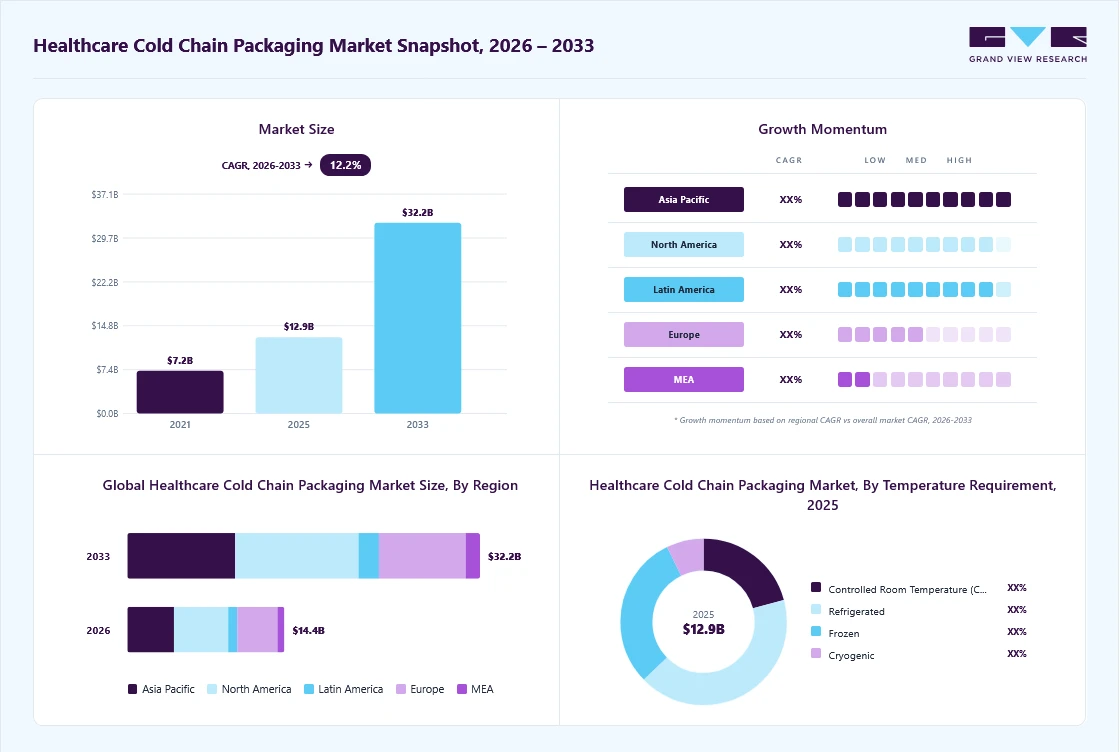
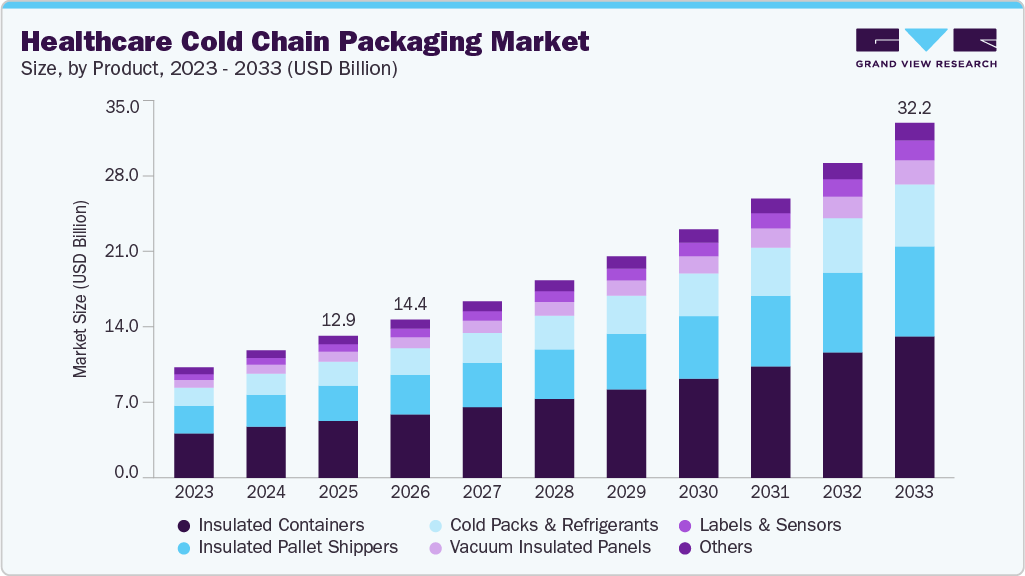
The global healthcare cold chain packaging market size was valued at USD 12.9 billion in 2025 and is projected to grow from USD 14.4 billion in 2026 to USD 32.2 billion by 2033, at a CAGR of 12.2% from 2026 to 2033. North America dominated the global market, accounting for the largest revenue share of 34.7% in 2025. The demand for healthcare cold chain packaging is rising significantly as the need for temperature-sensitive pharmaceuticals, such as vaccines, biologics, and specialty drugs, grows.
 Source: Grand View Research, IR Documents, Primary Interviews, Paid DatabasesTo learn more about this report,
 Download Free Sample Report
Key Market Trends & Insights
- By product: Labels & sensors segment is anticipated to expand at a CAGR of 13.0% from 2026 to 2033 in revenue terms.
- By temperature requirement: Refrigerated (2°C-8°C) temperature requirement segment led the healthcare cold chain packaging market, accounting for the largest revenue share of 42.1% in 2025.
- By packaging Format: Passive segment dominated the healthcare cold chain packaging market in 2025, accounting for 59.3%.
- By end use: Biopharmaceutical companies segment is forecast to grow at a CAGR of 12.8% from 2026 to 2033 in terms of revenue.
Regional Highlights
- Largest regional market: North America (34.7% revenue share, 2025)
- Fastest-growing regional market: Asia Pacific (highest CAGR, 2026-2033)
- By country: The U.S healthcare cold chain packaging industry is a major contributor to the global market.
Market Size & Forecast
- Market size in 2025: USD 12.9 Billion
- Estimated market size in 2026: USD 14.4 Billion
- Projected market size by 2033: USD 32.2 Billion
- CAGR (2026-2033): 12.2%
Prism AI by Grand View Research Free to tryAsk a question about the healthcare cold chain packaging marketTry asking✓Every figure cited from GVR research Prefer the report? Download free sample →The expansion of global immunization programs and the increasing prevalence of chronic diseases are driving the transportation of sensitive medical products across long distances. Key drivers include advancements in biologics and biosimilars, which require precise temperature control during storage and transportation. The pharmaceutical industry's shift toward high-value, temperature-sensitive drugs is significantly boosting demand for insulated packaging and active cooling solutions. Growth in clinical trials, especially in emerging economies, is increasing the need for reliable cold chain logistics. Additionally, the expansion of global healthcare infrastructure and rising healthcare expenditure are fueling market growth.
 To learn more about this report, Download Free Sample Report
Logistics providers are investing in smart packaging solutions with real-time temperature monitoring to ensure compliance and reduce spoilage. Increasing collaborations between pharmaceutical companies and logistics providers are also strengthening cold chain capabilities. The demand for last-mile delivery solutions in urban and remote areas further supports the adoption of advanced packaging technologies.
The market is witnessing rapid technological advancements, including the development of phase change materials (PCMs) and vacuum insulated panels (VIPs) for enhanced thermal efficiency. Smart packaging solutions integrated with IoT-enabled sensors are gaining traction, allowing real-time tracking of temperature and shipment conditions. Sustainable and eco-friendly packaging materials are becoming a major trend as companies aim to reduce environmental impact. Reusable cold chain packaging solutions are also gaining popularity due to cost efficiency and sustainability benefits. Automation in cold chain logistics and the use of artificial intelligence (AI) for predictive monitoring are further transforming the industry. Moreover, the rise of drone and autonomous delivery systems is opening new avenues for temperature-controlled logistics. Companies are also focusing on lightweight and compact packaging designs to optimize transportation costs.
Market Concentration & Characteristics
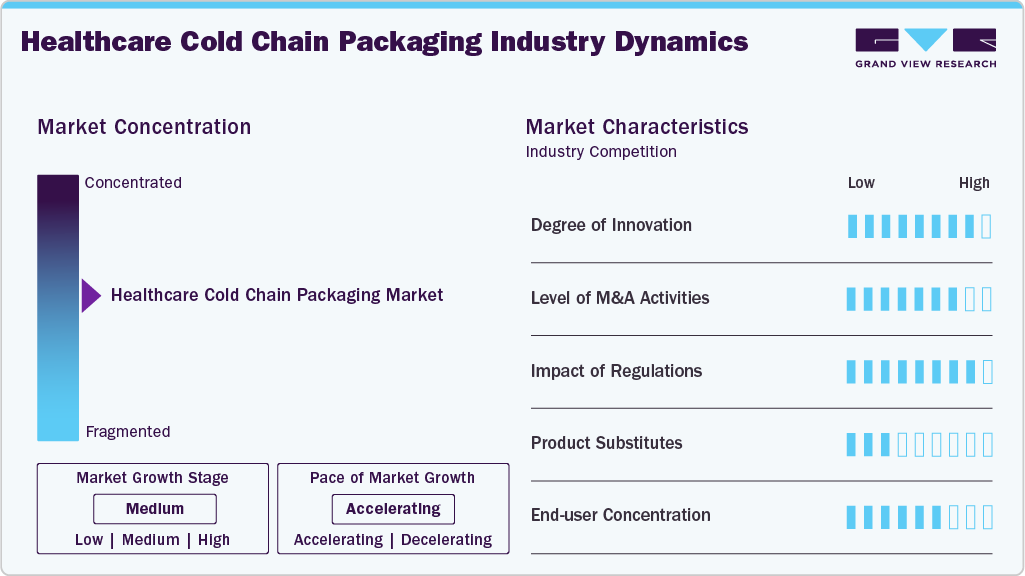
The healthcare cold chain packaging market exhibits a moderately consolidated structure with the presence of several global and regional players. Leading companies dominate through technological expertise, extensive distribution networks, and strong partnerships with pharmaceutical firms. However, the market also includes niche players offering specialized solutions for specific temperature ranges or product categories. High entry barriers exist due to regulatory compliance requirements and the need for advanced technological capabilities. Mergers and acquisitions are common as companies aim to expand their product portfolios and geographic reach. Innovation and customization capabilities serve as key competitive differentiators.
 To learn more about this report, Download Free Sample Report
The threat of substitutes in this market is relatively low due to the critical need for maintaining strict temperature conditions for healthcare products. Traditional packaging solutions without temperature control cannot ensure the safety and efficacy of pharmaceuticals, limiting substitution possibilities. However, alternative technologies such as advanced refrigeration systems and improved cold storage infrastructure can reduce dependence on certain packaging formats. In some cases, localized manufacturing of pharmaceuticals may reduce the need for long-distance cold chain logistics. Despite these factors, the specialized nature of temperature-sensitive drug transportation ensures sustained demand for cold chain packaging.
Product Insights
The insulated containers segment dominated the healthcare cold chain packaging market in 2025, accounting for 40% of revenue share. This positive outlook is due to its widespread use in maintaining stable temperature conditions during pharmaceutical transportation. These containers, often made with advanced insulation materials such as expanded polystyrene (EPS), polyurethane (PUR), and vacuum insulated panels (VIPs), provide reliable thermal protection for vaccines, biologics, and specialty drugs. Their cost-effectiveness, durability, and ability to support both short- and long-distance shipping make them highly preferred among pharmaceutical companies and logistics providers. Additionally, the increasing demand for last-mile delivery of temperature-sensitive drugs has further strengthened the adoption of insulated containers.
The cold packs & refrigerants segment is witnessing strong growth as they play a critical role in maintaining required temperature ranges within insulated packaging. These include gel packs, phase change materials (PCMs), and dry ice, which are essential for ensuring product integrity during transit. The growing demand for cost-efficient and reusable refrigerants is driving innovation in this segment. Besides, advancements in PCM technology allow for more precise temperature control, especially for sensitive biologics. The growing need for flexible packaging solutions to meet varying temperature requirements is also boosting demand. As pharmaceutical distribution networks expand globally, the reliance on effective refrigerants continues to rise, particularly in passive cold chain systems.
Temperature Requirement Insights
The refrigerated (2°C-8°C) segment dominated the healthcare cold chain packaging market in 2025, accounting for 42.1% of revenue share. This positive outlook stems from the fact that it represents the most common temperature range required for the storage and transportation of vaccines, insulin, and many biologic drugs. This temperature range is widely used across healthcare supply chains due to its compatibility with existing cold storage infrastructure. The expansion of immunization programs and increasing distribution of temperature-sensitive pharmaceuticals have significantly contributed to the segment’s dominance. Moreover, regulatory guidelines across global markets emphasize strict maintenance of this temperature range, further driving demand. The availability of cost-effective packaging solutions tailored to this range also supports its widespread adoption.
The cryogenic (<-80°C) segment is experiencing rapid growth due to the rising demand for advanced therapies such as cell and gene therapies, which require ultra-low temperature storage. The transportation of mRNA vaccines and other highly sensitive biologics has further accelerated the need for cryogenic packaging solutions. These systems often rely on dry ice or liquid nitrogen to maintain extremely low temperatures. Technological advancements in cryogenic packaging are improving safety, efficiency, and handling. Although this segment involves higher costs and logistical complexities, its importance is increasing with the growth of precision medicine.
Packaging Format Insights
The passive segment dominated the healthcare cold chain packaging market in 2025, accounting for 59.3% of revenue share. This positive outlook is due to its cost-effectiveness, simplicity, and reliability. Passive systems use insulated containers combined with refrigerants, such as gel packs or dry ice, to maintain temperature without an external power source. These solutions are widely used for last-mile delivery and in regions with limited infrastructure. Their ease of use and lower operational costs make them highly attractive for pharmaceutical companies. In addition, passive packaging is well-suited for short- to medium-duration shipments, which constitute a significant portion of healthcare logistics.
The active segment is gaining traction due to its ability to provide precise temperature control through powered systems. Active packaging solutions include refrigerated containers equipped with battery or electrically powered cooling systems, ensuring consistent temperature maintenance over long distances. These systems are particularly useful for high-value and highly sensitive pharmaceutical products. The increasing globalization of pharmaceutical supply chains is driving the adoption of active cold chain solutions. Although they cost more than passive systems, their reliability and real-time monitoring capabilities make them essential for critical shipments. Technological advancements and integration with IoT are further enhancing their adoption.
End Use Insights
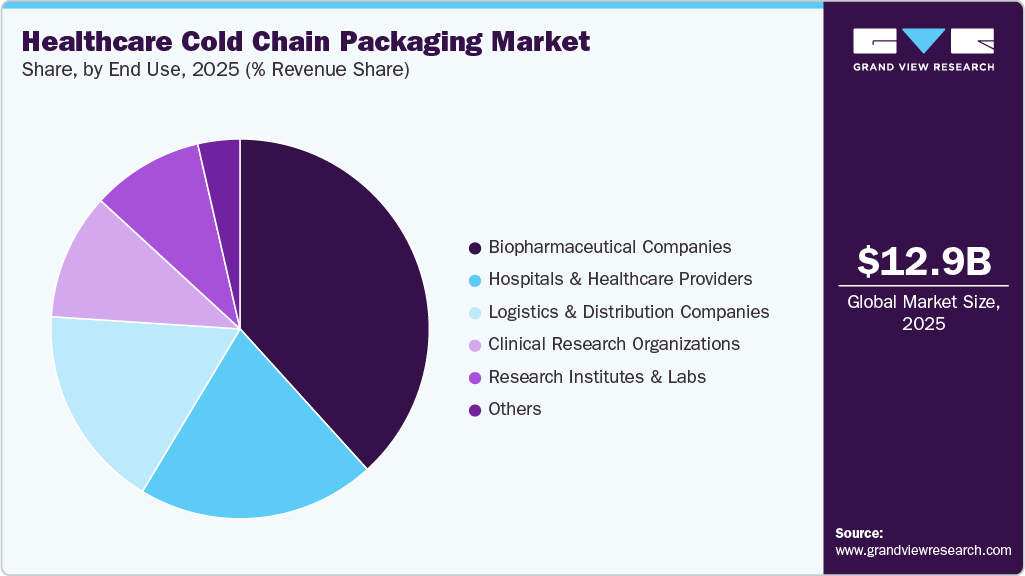
The biopharmaceutical companies segment dominated the healthcare cold chain packaging market in 2025, accounting for 38.3% of the total market share. This dominance stems from these organizations being the primary producers and distributors of temperature-sensitive drugs, such as biologics, vaccines, and specialty therapies. The increasing focus on biologics and personalized medicine has significantly increased the need for advanced cold chain packaging solutions. These companies require highly reliable packaging systems to ensure compliance with stringent regulatory standards and to maintain product efficacy. The expansion of global distribution networks and rising R&D investments further contribute to their dominance. Additionally, partnerships with logistics providers to enhance cold chain capabilities are strengthening this segment’s position.
 To learn more about this report, Download Free Sample Report
The research institutes & labs segment is growing steadily as the volume of clinical trials and biomedical research activities continues to increase. These institutions require specialized cold chain packaging for transporting biological samples, reagents, and experimental drugs under controlled temperature conditions. The rise in global research collaborations and cross-border sample transportation is boosting demand. Additionally, advancements in life sciences and biotechnology are increasing the need for ultra-low temperature storage solutions.
Regional Insights
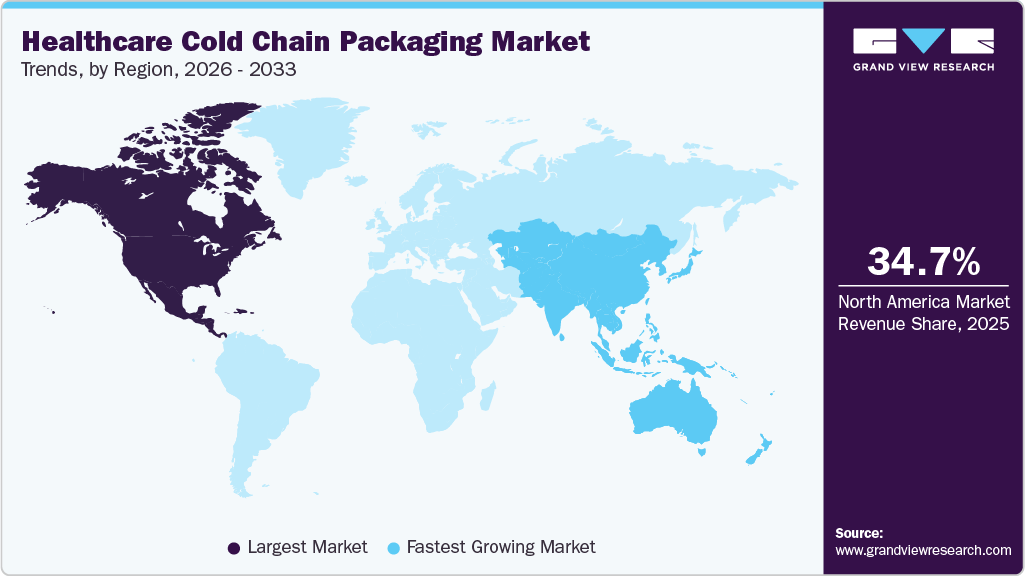
North America led the healthcare cold chain packaging market, accounting for the highest revenue share of 34.7% in 2025. The North America healthcare cold chain packaging industry dominated the global market. The presence of leading pharmaceutical companies and strong regulatory frameworks drives demand. Increasing biologics production and clinical research activities contribute significantly. The region is also witnessing high adoption of IoT-enabled smart packaging solutions. Strong logistics infrastructure supports efficient distribution. Sustainability trends are driving the adoption of reusable packaging solutions. Continuous innovation keeps the market competitive and technologically advanced.
 To learn more about this report, Download Free Sample Report
U.S. Healthcare Cold Chain Packaging Market Trends
The healthcare cold chain packaging industry in the U.S. is driven by high pharmaceutical R&D investments and the presence of major biotech firms. Strict regulatory requirements ensure widespread adoption of validated cold chain packaging solutions. The demand for specialty drugs and biologics is a major growth driver. Companies are heavily investing in real-time monitoring and tracking technologies. Growth in home healthcare and direct-to-patient delivery is boosting demand. The market also benefits from advanced logistics networks. Sustainability initiatives are further shaping packaging innovations.
Asia Pacific Healthcare Cold Chain Packaging Market Trends
Asia Pacific is projected to register the fastest CAGR of 12.7% over the forecast period. The healthcare cold chain packaging industry in the Asia Pacific is a high-growth region, due to rapid growth in pharmaceutical manufacturing and increasing healthcare investments. Countries like China and India are major hubs for vaccine production and generic drugs, driving demand for cold chain solutions. Expanding healthcare infrastructure and rising government initiatives further support market growth. Increasing the number of clinical trials and exports of temperature-sensitive drugs contributes to regional dominance. The growing population and rising disease burden are also key factors. Investments in logistics and cold storage facilities are accelerating adoption.
The China healthcare cold chain packaging industry is experiencing strong growth driven by its expanding biopharmaceutical sector and government support for healthcare innovation. The country’s role as a major vaccine producer increases the need for efficient cold chain systems. Investments in advanced logistics infrastructure and smart packaging technologies are on the rise. Domestic companies are focusing on improving the efficiency of thermal packaging. Regulatory compliance is becoming stricter, pushing the adoption of high-quality solutions. Export activities are further boosting demand.
Europe Healthcare Cold Chain Packaging Market Trends
The healthcare cold chain packaging industry in Europe is experiencing steady growth, supported by stringent regulations and a strong pharmaceutical industry. The region emphasizes sustainability, leading to increased adoption of eco-friendly packaging solutions. Growth in biologics and vaccine distribution is driving demand. Cross-border pharmaceutical trade within the EU enhances the need for reliable cold chain systems. Technological advancements in insulation materials are gaining traction. Companies are focusing on reducing carbon footprints. Regulatory compliance remains a key market driver.
Key Healthcare Cold Chain Packaging Company Insights
The competitive landscape of the healthcare cold chain packaging market is moderately fragmented, characterized by the presence of both global leaders and regional players competing on technological capability, reliability, and cost efficiency. Major companies such as Cold Chain Technologies, Peli BioThermal LLC, and Sonoco Products Company maintain a strong market position through diversified product portfolios, advanced thermal packaging solutions, and well-established partnerships with pharmaceutical and biotechnology firms. Meanwhile, regional and emerging players compete by offering customized, cost-effective solutions and faster delivery tailored to local requirements. The growing emphasis on sustainability, including reusable packaging systems and eco-friendly materials, along with strict regulatory compliance, has intensified competition. As a result, companies are increasingly investing in innovation, smart tracking technologies, and strategic collaborations or acquisitions to enhance their market presence and operational capabilities.
-
In April 2025, Cold Chain Technologies launched TailorTemp, a sustainable fiber-based thermal packaging solution made from recyclable corrugated cardboard. This innovation is designed to reduce reliance on traditional EPS materials while maintaining strong thermal performance for pharmaceutical shipments. The solution aligns with growing sustainability mandates in the healthcare sector and supports circular-economy goals by improving recyclability and reducing environmental impact. It also caters to pharmaceutical companies seeking compliant, eco-friendly alternatives without compromising temperature control efficiency during transit.
-
In October 2024, Peli BioThermal LLC introduced Crēdo Vault, an advanced bulk shipper engineered to provide highly reliable temperature control for large-scale pharmaceutical shipments. This solution is designed to support the safe transport of high-value, temperature-sensitive biologics and vaccines across long distances, even under extreme environmental conditions. The Crēdo Vault integrates enhanced thermal performance with extended hold times, reducing the risk of temperature excursions during transit.
Key Healthcare Cold Chain Packaging Companies:
The following key companies have been profiled for this study on the healthcare cold chain packaging market.
- Cold Chain Technologies
- Peli BioThermal LLC
- ThermoSafe
- CSafe
- Envirotainer
- Cryopak
- EMBALL’ISO
- Sofrigam Group
- Intelsius
- Softbox Systems
Healthcare Cold Chain Packaging Market Report Scope
Report Attribute
Details
Market size in 2025
USD 12.9 billion
Estimated Market size in 2026
USD 14.4 billion
Projected Market size by 2033
USD 32.2 billion
Growth rate
CAGR of 12.2% from 2026 to 2033
Base year for estimation
2025
Historical data
2021 - 2024
Forecast period
2026 - 2033
Quantitative units
Revenue in USD million/billion and CAGR from 2026 to 2033
Report coverage
Revenue forecast, company ranking, competitive landscape, growth factors, and trends
Segments covered
product, temperature requirement, packaging format, end use, region
Regional Scope
North America; Europe; Asia Pacific; Latin America; Middle East & Africa
Country Scope
U.S.; Canada; Mexico; Germany; France; UK; Italy; Spain; China; India; Japan; South Korea; Australia; Brazil; Argentina; Saudi Arabia; UAE; South Africa
Key companies profiled
Cold Chain Technologies; Peli BioThermal LLC; ThermoSafe; CSafe; Envirotainer; Cryopak; EMBALL’ISO; Sofrigam Group; Intelsius; Softbox Systems
Customization scope
Free report customization (equivalent up to 8 analysts working days) with purchase. Addition or alteration to country, regional & segment scope.
Pricing and purchase options
Avail of customized purchase options to meet your exact research needs. Explore purchase options
Global Healthcare Cold Chain Packaging Market Report Segmentation
This report forecasts revenue growth at the global, regional, and country levels and provides an analysis on the latest industry trends and opportunities in each of the sub-segments from 2021 to 2033. For the purpose of this study, Grand View Research has segmented the healthcare cold chain packaging market report on the basis of product, temperature requirement, packaging format, end use, and region:
-
Product Outlook (Revenue, USD Million, 2021 - 2033)
-
Insulated Pallet Shippers
-
Insulated Containers
-
Vacuum Insulated Panels
-
Cold Packs & Refrigerants
-
Labels & Sensors
-
Others
-
-
Temperature Requirement Outlook (Revenue, USD Million, 2021 - 2033)
-
Controlled Room Temperature (CRT)
-
Refrigerated (2°C-8°C)
-
Frozen (-20°C to -40°C)
-
Cryogenic (<-80°C)
-
-
Packaging Format Outlook (Revenue, USD Million, 2021 - 2033)
-
Active
-
Passive
-
-
End Use Outlook (Revenue, USD Million, 2021 - 2033)
-
Biopharmaceutical Companies
-
Clinical Research Organizations
-
Hospitals and Healthcare Providers
-
Research Institutes & Labs
-
Logistics and Distribution Companies
-
Others
-
-
Regional Outlook (Revenue, USD Million, 2021 - 2033)
-
North America
-
U.S.
-
Canada
-
Mexico
-
-
Europe
-
Germany
-
France
-
UK
-
Italy
-
Spain
-
-
Asia Pacific
-
China
-
India
-
Japan
-
South Korea
-
Australia
-
-
Latin America
-
Brazil
-
Argentina
-
-
Middle East & Africa
-
Saudi Arabia
-
UAE
-
South Africa
-
-
Frequently Asked Questions About This Report
North America dominated with a 34.7% revenue share in 2025.
Asia Pacific is the fastest-growing region over the forecast period.
The insulated containers segment led the market with the largest revenue share of 40.0% in 2025.
The refrigerated (2°C-8°C) segment led with a 42.1% revenue share in 2025.
The passive segment held the largest share (over 59.0%) in 2025.
The biopharmaceutical companies segment dominated the healthcare cold chain packaging market in 2025, accounting for 38.3% of total market share.
Key players include Cold Chain Technologies; Peli BioThermal LLC; ThermoSafe; CSafe; Envirotainer; Cryopak; EMBALL’ISO; Sofrigam Group; Intelsius; Softbox Systems.
Rising demand for temperature-sensitive biologics and vaccines, expansion of global pharmaceutical distribution, and stringent regulatory requirements for drug safety are key factors driving the healthcare cold chain packaging market.
The global healthcare cold chain packaging market size was valued at USD 12.9 billion in 2025 and is estimated at USD 14.4 billion for 2026.
The global healthcare cold chain packaging market is expected to grow at a CAGR of 12.2% from 2026 to 2033, reaching USD 32.2 billion by 2033.
About the Author(s)
Plastics, Polymers & Resins Research Team
Bulk Chemicals · Plastics, Polymers & ResinsThis report was authored by the plastics, polymers & resins research team at Grand View Research - comprising two research analysts, one senior research analyst, and one industry expert - with specialized expertise in the plastics, polymers & resins segment of the bulk chemicals industry. All findings are based on proprietary bulk chemicals databases, executive interviews, and regulatory analysis, subject to internal peer review prior to publication.
Last Updated:
Speak to Analyst

Customize this report to your needs - add regions, segments, or data points, with 20% free customization.
Or view our licence options:


ISO 9001:2015 & 27001:2022 Certified
We are GDPR and CCPA compliant! Your transaction & personal information is safe and secure. For more details, please read our privacy policy.


