
- Home
- »
- Healthcare IT
- »
-
Healthcare Technology Management Market Report, 2025-2033GVR Report cover

Healthcare Technology Management Market (2025 - 2033)
Size, Share & Trends Analysis Report By Technology Stack (Services, Software, Hardware, AI & Analytics), By Deployment Mode (On-premise, Cloud-based), By Functionality, By End-use, By Region, And Segment Forecasts
Market Size, 2024
$5.2BMarket Estimate, 2026
$6.5BMarket Forecast, 2033
$15.0BCAGR, 2025–2033
12.6%Healthcare Technology Management Market Summary
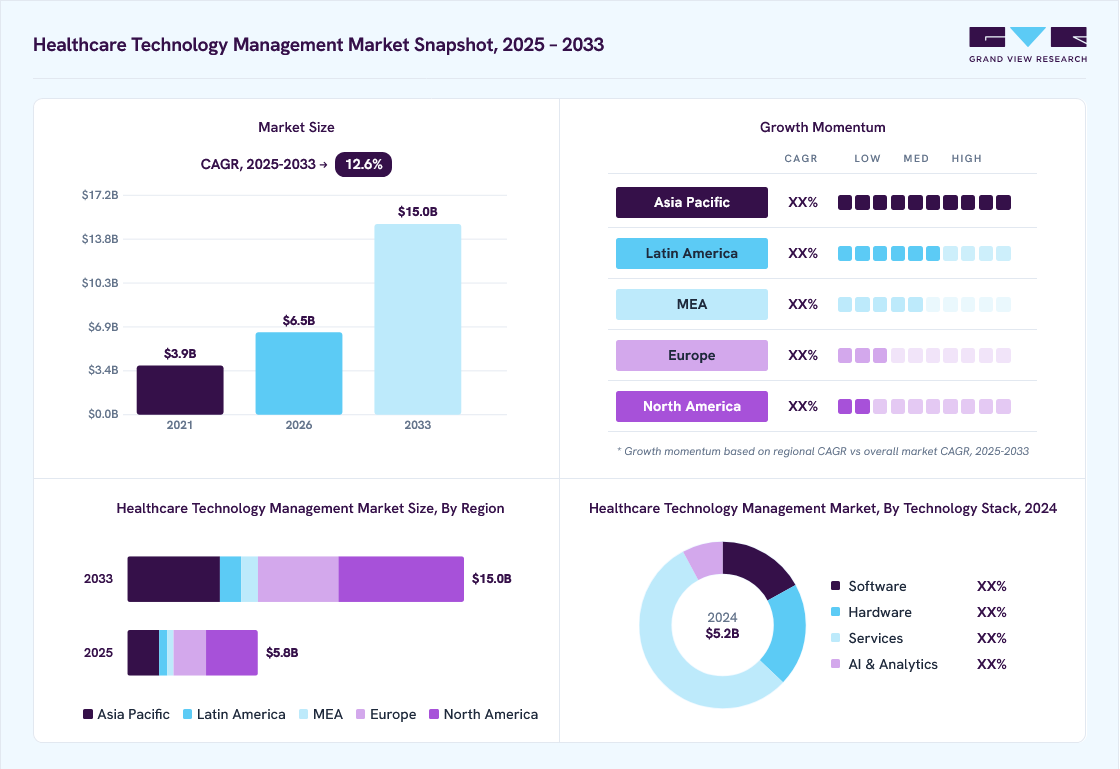
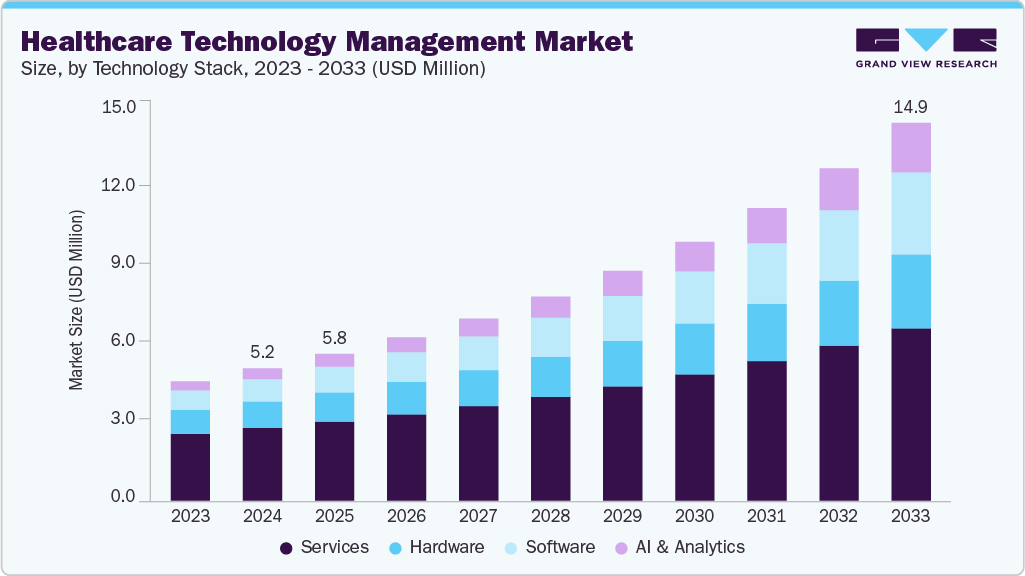
The global healthcare technology management market size was valued at USD 5.2 billion in 2024 and is projected to grow from USD 6.5 billion in 2026 to USD 15.0 billion by 2033, at a CAGR of 12.6% from 2025 to 2033. North America dominated the market, accounting for a revenue share of 40.0% in 2024. Industry growth is driven by rising adoption of healthcare IT infrastructure, growing use of AI and predictive analytics, expansion of cloud-based solutions, and increasing deployment of IoT sensors and edge devices for real-time monitoring
 Source: Grand View Research, IR Documents, Primary Interviews, Paid DatabasesTo learn more about this report,
 Download Free Sample Report
 Key Market Trends & Insights
- The healthcare technology managementmarket in the U.S. has grown significantly over the forecast period.
- By technology stack, the services segment led the market with a share of over 55.0% in 2024.
- By deployment, the on-premise segment emerged as the leading segment in 2024.
- By functionality, the workorder management & technician dispatch segment spearheaded the market with the largest revenue share in 2024.
Market Size & Forecast
- 2024 Market Size: USD 5.2 Billion
- 2033 Projected Market Size: USD 15.0 Billion
- CAGR (2025-2033): 12.6%
- North America: Largest market in 2024
- Asia Pacific: Fastest growing market
Three ways to get this report
Buy it, customize it, or ask a question.Ask an Analyst
Analyst response in 1 business day
- AccessReport author, directly
- Reply timeWithin 1 working day
- No sales callDirect answer only
- FormatEmail reply
- CostFree, no cost
Get the Full Report
What the study covers
- FormatsPDF · Excel · Dashboard
- Timeline2025–2033 annual, 2024 base
- Coverage20+ countries, 5 regions
- Companies10+ key players profiled
Customize the Report
20% free customization
- IncludeCountries, segments, points
- TailorTo your product definition
- ExtendDeeper competitor detail
- OrA fully bespoke study
- Turnaround5–10 working days
The rapid expansion of healthcare IT infrastructure is fueling the growth of the healthcare technology management industry, as hospitals, clinics, and public health systems seek solutions to manage the rising complexity of connected medical devices, evolving regulatory frameworks, and the industry-wide transition toward patient-centric digital care models.The rising integration of connected medical devices such as patient monitoring systems, infusion pumps, ventilators, and diagnostic imaging systems has made equipment management increasingly complex. Each device generates valuable performance and patient data, requiring structured management to ensure interoperability, uptime and cybersecurity. This uptick in connected devices drives hospitals to adopt healthcare technology management (HTM) platforms for centralized monitoring and optimized performance.
 To learn more about this report, Download Free Sample Report
 Moreover, as healthcare systems transition from volume-based reimbursement to value-based care models, software/device uptime and reliability directly impact patient outcomes. Technology management solutions help providers maximize device utilization, reduce unnecessary capital expenditure on replacements, and align with advanced technology such as AI.
Furthermore, strengthening healthcare IT infrastructure with advanced technologies such as artificial intelligence (AI) is becoming a crucial driver for the expansion of HTM solutions. AI-driven computerized maintenance management system (CMMS) platforms are helping hospitals and health systems improve asset reliability, compliance, and patient safety results. According to an article published by Oxmaint Inc. in September 2025, hospitals using AI in healthcare operations saw:
-
50-70% reductions in facility management costs
-
40-60% improvements in system reliability
-
USD 1.2-3.5 million in annual savings through prevented failures
-
80-90% reduction in emergency interventions
These gains illustrate how AI-enabled infrastructure directly supports healthcare technology management functions such as predictive maintenance, regulatory reporting, and asset lifecycle management. As healthcare organizations continue to modernize IT systems with AI, IoT, and cloud-based platforms, the demand for integrated HTM solutions to handle connected devices, interoperability, and compliance will only grow.
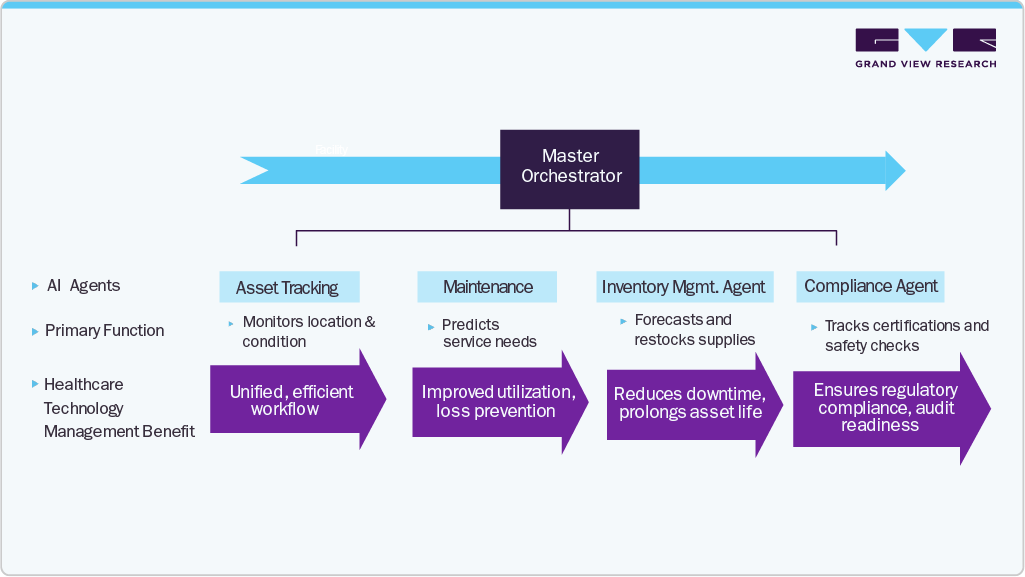
AI Agents in Asset Management: A Multi-Agent Framework for HTM
The integration of agentic AI into asset management is transforming how healthcare organizations track, maintain, and optimize medical equipment. Akira.ai, for instance, highlights a multi-agent system coordinated by a Master Orchestrator, where specialized AI agents manage real-time asset tracking, predictive maintenance, inventory management, and regulatory compliance. This framework directly supports healthcare technology management by reducing downtime, cutting operational costs, and ensuring compliance readiness.
 To learn more about this report, Download Free Sample Report
 Market Concentration & Characteristics
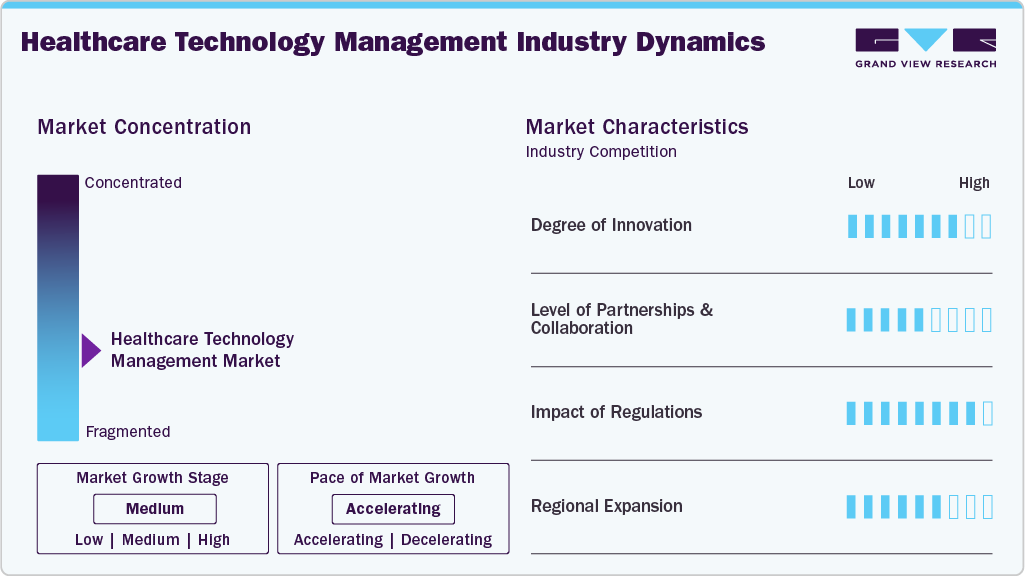
The chart below illustrates the relationship between market concentration, industry characteristics, and industry participants. It sheds light on the the level of industry concentration, ranging from low to high, while elucidating various industry characteristics, including industry competition, impact of regulations, level of partnerships & collaborations activities, degree of innovation, and regional expansion. For instance, the healthcare technology management market is slightly fragmented, with many product & service providers entering the market. The degree of innovation, the level of partnerships & collaboration activities, and the impact of regulations on the industry are high. However, the regional expansion observes moderate growth.
The market for healthcare technology management is advancing as providers adopt integrated digital platforms to strengthen compliance, asset reliability, and patient safety. For instance, in March 2025, Brightly Software, a Siemens company, announced Compliance Pro, an all-in-one cloud-based module within its TheWorxHub platform. The solution digitizes and integrates hospital compliance activities into CMMS work orders, streamlining permit approvals, centralizing documentation, and reducing risks to both accreditation and patient safety.
 To learn more about this report, Download Free Sample Report
 The industry is expected to witness significant growth fueled by strategic partnerships and collaborations that accelerate digital transformation, strengthen compliance capabilities, and optimize asset lifecycle management across healthcare organizations. To illustrate, in October 2023, AA Medical announced transformational partnerships with Tekyard, Zantek Medical, and MED-SELL.COM to expand its capabilities in healthcare asset management, medical device reprocessing, and disposition services. These partnerships aim to accelerate AA Medical's growth strategy and strengthen its position as a leading technology-driven medical equipment platform in the U.S.
Regulations play a critical role in shaping the healthcare technology management industry by influencing how medical assets are maintained, tracked, and integrated within healthcare facilities. Strict requirements from agencies such as the FDA, EMA, and The Joint Commission drive compliance with patient safety standards, device interoperability, and audit readiness. Adherence to evolving guidelines around equipment maintenance, digital recordkeeping, and regulatory reporting is essential for healthcare providers and vendors to ensure accreditation.
Healthcare technology management is witnessing strong growth across regions, driven by the increasing demand for digital asset management and the growing emphasis on compliance, patient safety, and cost optimization. Strategic partnerships and acquisitions further accelerate market expansion by strengthening regional presence and enhancing solution capabilities. For instance, in October 2024, TMA Systems acquired MEX, Australia’s leading CMMS provider, expanding its global footprint in the Asia-Pacific region and boosting capabilities across industries, including healthcare.
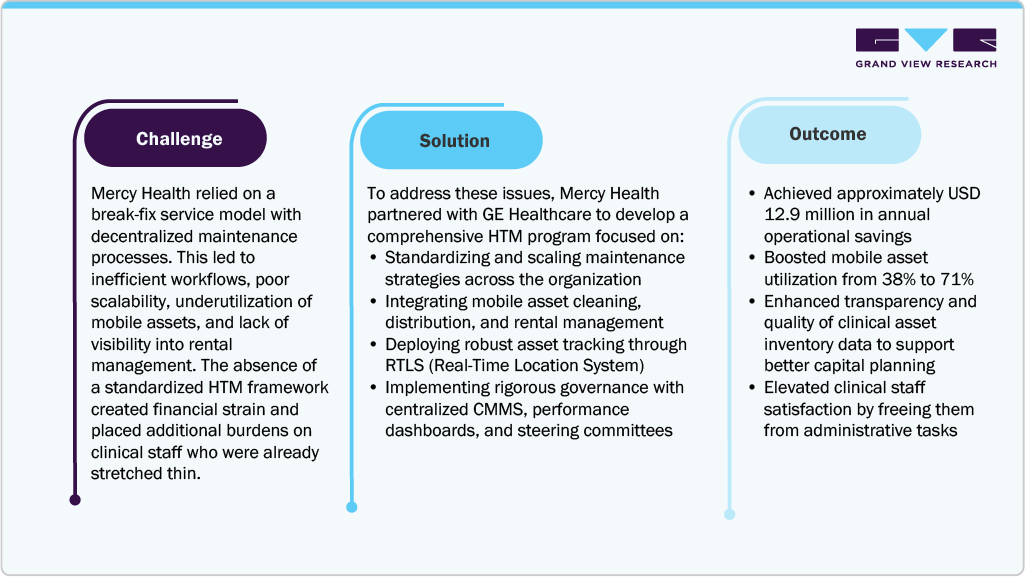
Case Study: Mercy Health’s Shift to a Comprehensive HTM Program
Mercy Health is one of the largest health systems in the U.S., with more than 500 care facilities and over 33,500 employees. Its scale and rapid growth demanded a robust approach to medical asset management, yet operations were fragmented across multiple sites, creating inconsistencies in service delivery and asset use.
 To learn more about this report, Download Free Sample Report
 Technology Stack Insights
The services segment accounted for the largest share of 55.0% in 2024, driven by the growing demand for consulting, implementation, customization, managed services, and training across healthcare facilities. Hospitals, diagnostic centers, and long-term care providers increasingly rely on service providers to deploy, maintain, and optimize complex CMMS platforms, and IoT-enabled medical devices. For instance, in April 2025, Siemens Healthineers and Tower Health launched a 10-year Value Partnership to enhance and standardize imaging equipment lifecycle management across radiology, oncology, and cardiology departments. The partnership includes upgrading diagnostic imaging systems, deploying digital intelligence tools, and leveraging proprietary Siemens algorithms for clinical operations, reporting efficiency, and cardiovascular imaging data consistency, demonstrating how service-driven HTM solutions improve equipment uptime, operational efficiency, and patient care.
The AI and analytics segment is expected to register the fastest growth in the healthcare technology management industry, spurred by the increasing adoption of predictive algorithms, utilization analytics, and anomaly detection tools across healthcare facilities. Hospitals, diagnostic centers, and long-term care providers are leveraging AI-enabled platforms to optimize equipment performance, forecast maintenance needs, and identify operational inefficiencies in real time.
Deployment Insights
The on-premise segment accounted for the largest share of 57.13% in 2024. This growth is attributed to increasing priority for regulatory compliance, data security, and control over critical patient information. Amidst an increased adoption of cloud based deployment models, healthcare organizations with established IT infrastructure prefer on-premise deployment to ensure seamless integration with legacy systems, customization, and to reduce the cybersecurity challenges. This methodology is especially relevant for facilities handling sensitive imaging, clinical, and operational data, where direct ownership of systems offers reliability and long-term cost efficiency. Such factors lead to the segment growth over the forecast period.
The cloud-based deployment mode is expected to witness the fastest growth in the healthcare technology management market, fueled by the adoption of integrated cloud platforms that streamline asset lifecycle management and enable collaborative service models. For example, in April, 2021, Siemens partnered with SAP to integrate Teamcenter with SAP’s Asset Intelligence Network, delivering cloud-based solutions that enhance operational coordination and enable new service workflows across healthcare facilities.
Functionality Insights
The workorder management & technician dispatch segment held the largest revenue share of 23.0% in 2024. This growth is powered by the rising workload in hospitals, diagnostic centers, and long-term care facilities to efficiently schedule, track, and execute maintenance activities across biomedical and imaging equipment. HTM platforms minimize equipment downtime, maximize worker utilization, and assure timely adherence to maintenance schedules by automating workorder development, prioritizing, and technician allocation. In addition, the increasing complexity of medical devices and the need for quick reaction to technical concerns have highlighted the relevance of this functionality as a key driver of operational efficiency in healthcare facilities.
The utilization and capacity planning segment is expected to register the fastest growth. Utilization and capacity planning enable hospitals, diagnostic centers, and long-term care facilities to optimize equipment use, forecast demand, and allocate resources efficiently, contributing to the segment's growth. The rise in adoption of AI-driven tools and analytics for operational decision-making further accelerates demand for utilization and capacity planning solutions.
End-se Insights
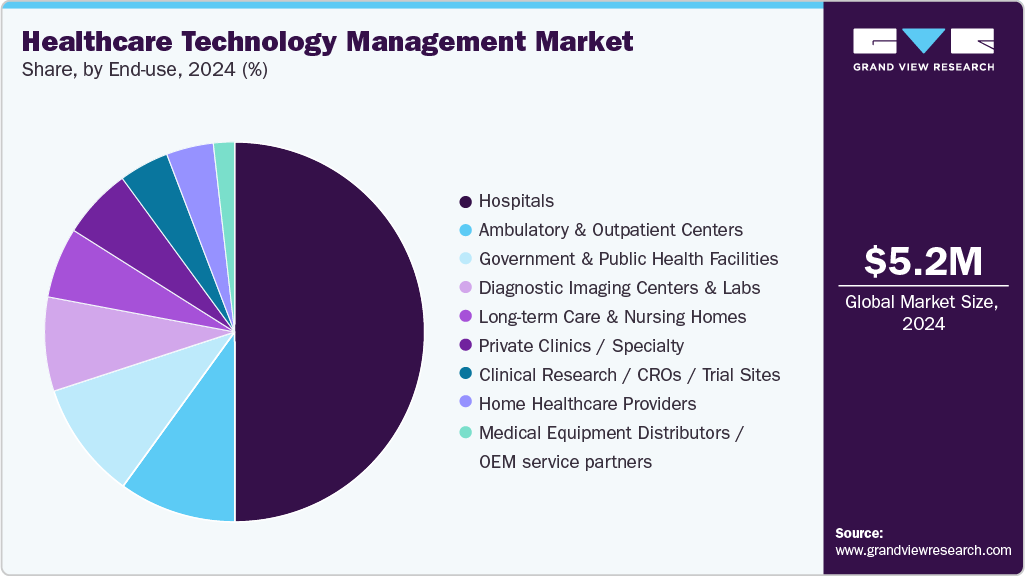
The hospitals segment captured the largest revenue share in 2024. As the primary care providers managing a wide range of biomedical, imaging, and monitoring equipment, hospitals require comprehensive healthcare technology management solutions to ensure equipment uptime, regulatory compliance, and operational efficiency. The growing complexity of medical devices, coupled with the need for timely maintenance, predictive analytics, and workflow optimization, has driven hospitals to adopt advanced HTM platforms that integrate workorder management, asset tracking, and AI-driven insights, contributing to the large share of the segment.
 To learn more about this report, Download Free Sample Report
 The clinical research organizations and clinical trial sites segment is projected to register the fastest growth, driven by the adoption of advanced medical devices, the increasing complexity in clinical trials and stringent regulatory compliance requirements. In addition, the rising trend of decentralized clinical trials, global expansion of biopharma and medtech R&D, and the need for real-time asset utilization and predictive maintenance in trial sites fuel demand for specialized HTM solutions. These factors make CROs and trial sites increasingly reliant on robust HTM platforms to ensure operational efficiency, data integrity, and patient safety.
Regional Insights
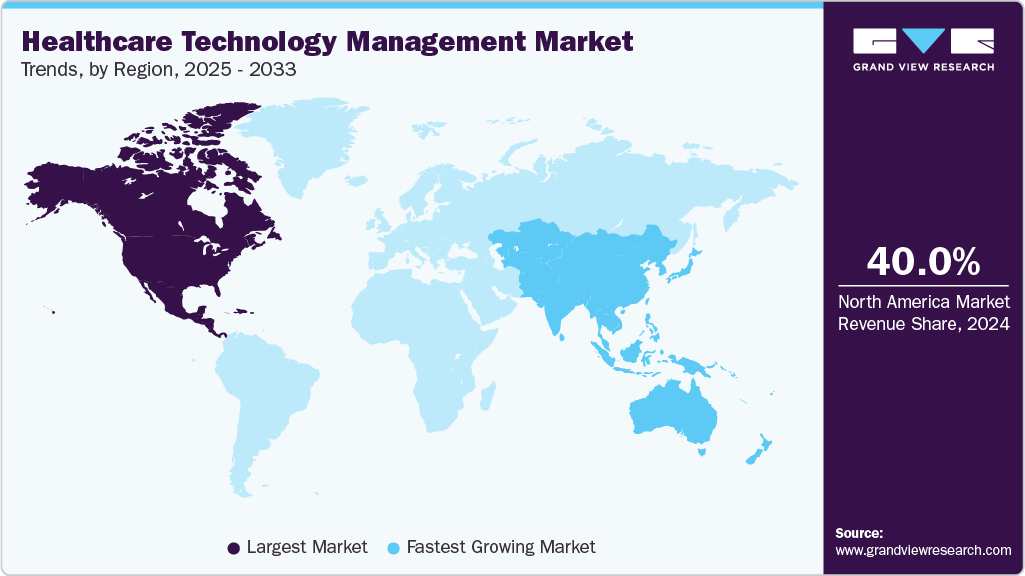
The North America healthcare technology management market contributed the largest revenue share to the global market in 2024. The growth is attributed to the widespread use of healthcare IT solutions such as telehealth, e-prescribing, and mHealth, along with strong government efforts to promote IoT-enabled healthcare infrastructure. The region’s large number of hospitals, research organizations, and medical device manufacturers further fuels the demand for HTM solutions to oversee complex clinical assets. The adoption of electronic health records is also rising sharply in the U.S. According to the Health IT reports until 2021, nearly 9 out of 10 U.S.-based physicians have adopted EHR. This has further increased the need for integrated asset and compliance management platforms, reinforcing North America’s leadership in the HTM market.
 To learn more about this report, Download Free Sample Report
 U.S. Healthcare Technology Management Market Trends
The healthcare technology management industry in the U.S. is witnessing strong growth, propelled by the widespread adoption of advanced healthcare IT infrastructure, growing reliance on connected medical devices, and the rising need for efficient compliance and asset management solutions. The increasing demand for integrated platforms to manage biomedical and imaging equipment further strengthens market penetration. For instance, in June 2025, Compass One Healthcare, a U.S.-based healthcare support services provider, launched Intelas as its signature healthcare technology management brand. Intelas emphasizes data-driven clinical engineering programs and round-the-clock support, enabling healthcare providers to optimize equipment performance, enhance safety, and improve patient experiences.
Europe Healthcare Technology Management Market Trends
The Europe healthcare technology management industry is observing consistent growth, driven by strong regulatory frameworks and increasing focus on digital transformation in healthcare. In January 2025, the European Commission launched a dedicated cybersecurity action plan for hospitals and healthcare providers, aimed at strengthening protections for connected medical devices and digital infrastructure. Such initiatives are significantly boosting demand for advanced HTM solutions that ensure compliance, device lifecycle management, and data security across Europe’s diverse healthcare systems.
The Healthcare technology management industry in the UK is growing quickly, fueled by large government investments and hospital modernization efforts. The USD 3.9 billion (Euro 3.4 billion) NHS productivity plan announced in March 2024, which provides significant funding for AI adoption and IT infrastructure upgrades, plays a key role in shaping the market. This investment increases the demand for HTM platforms that support asset lifecycle management, compliance, and the integration of connected medical technologies throughout the healthcare system.
The Germany healthcare technology management industryis expanding steadily, fueled by strong regulatory frameworks, advanced hospital infrastructure, and significant investments in digital health. The Krankenhauszukunftsgesetz (Hospital Future Act), launched with a USD 5.0 billion (Euro 4.3 billion) fund, continues to drive digital transformation in German hospitals by supporting projects related to IT infrastructure upgrades, cybersecurity, and interoperability. This initiative is increasing demand for HTM solutions that can ensure device lifecycle management, compliance reporting, and integration of connected medical technologies, positioning Germany as one of the leading adopters of healthcare technology management in Europe.
Asia Pacific Healthcare Technology Management Market Trends
The Asia Pacific healthcare technology management industry is expanding rapidly, driven by rising investments in smart hospital infrastructure, government-led digital health programs, and the growing need for efficient medical device lifecycle management. A strong focus on equipment uptime and maintenance efficiency is also shaping the market. For instance, in February 2025, Sodexo India inaugurated a cutting-edge HTM facility in Kolkata, featuring six specialized labs and over 270 technical professionals to maintain up to 500,000 medical devices across public healthcare setups in West Bengal, with a targeted 99% uptime. Such initiatives demonstrate how regional healthcare systems are adopting advanced HTM solutions to improve reliability, compliance, and patient outcomes.
The Japan healthcare technology management industry is advancing steadily, supported by strong government policies, growing adoption of smart hospitals, and increasing demand for predictive maintenance solutions. A key trend shaping the market is the integration of AI and analytics to enhance asset lifecycle management and reduce downtime. For instance, in January 2025, Genpact launched its AI-Driven Smart Command Center in Japan, designed to transform equipment service and supply chain operations through predictive maintenance and cloud-based efficiency improvements, with plans to extend services to medical equipment management. Such initiatives highlight Japan’s focus on leveraging digital innovation to optimize device uptime, compliance, and operational performance in healthcare settings.
The healthcare technology management industry in China is expanding rapidly, underpinned by government initiatives like Healthy China 2030, the rise of smart hospitals, and stricter regulatory requirements for medical device safety. Growing adoption of AI and IoT-enabled equipment is driving demand for HTM solutions that ensure predictive maintenance, compliance, and efficient asset lifecycle management.
Latin America Healthcare Technology Management Market Trends
The Latin America healthcare technology management industry is gaining momentum due to rising investments in hospital modernization, increased adoption of digital health solutions, and growing demand for efficient medical device maintenance. Countries such as Brazil are leading with expanding healthcare infrastructure, government initiatives to enhance digital connectivity, and the implementation of electronic health records. The need to improve equipment uptime, regulatory compliance, and cost efficiency is accelerating the adoption of HTM platforms across hospitals, diagnostic centers, and public health systems.
Middle East & Africa Healthcare Technology Management Market Trends
The Middle East & Africa healthcare technology management industry is growing rapidly, driven by the expansion of healthcare infrastructure, increased adoption of smart hospital projects, and government-led digital health initiatives. Countries like Saudi Arabia and the UAE are leading the way, supported by programs such as Saudi Vision 2030 and the UAE’s National Strategy for Artificial Intelligence, which focus on medical device digitalization, predictive maintenance, and interoperability. In Africa, rising investments in hospital upgrades and donor-funded digital health programs are further boosting demand for HTM platforms that improve equipment uptime, compliance, and patient safety.
Key Healthcare Technology Management Company Insights
The market is highly fragmented, with many small and large players operating in this space. This leads to intense competition between smaller players to sustain their position. Strategies such as new product launches and partnerships are playing a key role in propelling the market growth.
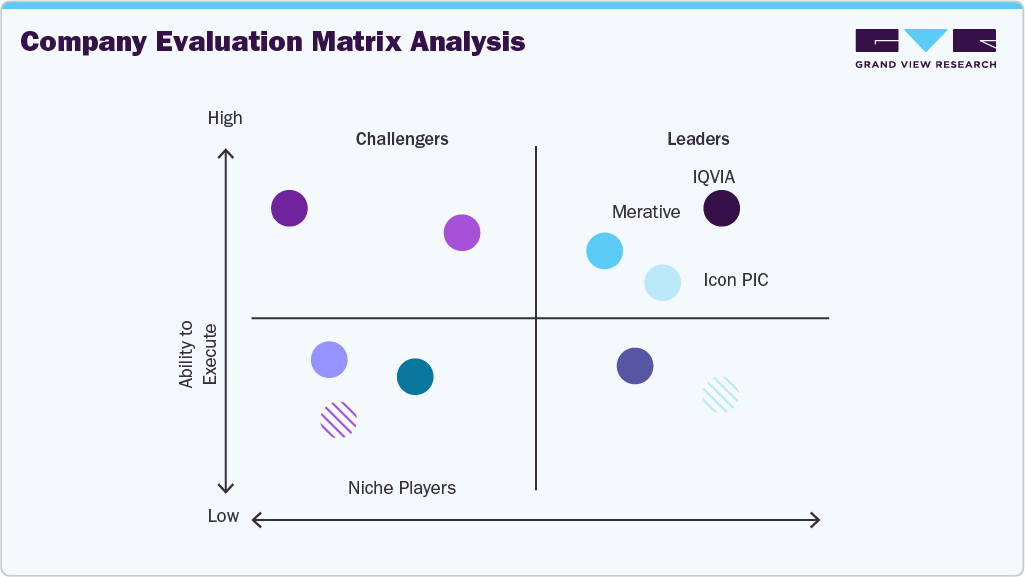
Company Evaluation Matrix Analysis
 To learn more about this report, Download Free Sample Report
 (The final report will provide a detailed analysis of the company evaluation matrix, highlighting notable, emerging players and innovators 25+ market players positioned within the matrix.)
Key Healthcare Technology Management Companies:
The following are the leading companies in the healthcare technology management market. These companies collectively hold the largest market share and dictate industry trends.
- Nuvolo, a Trane Technologies Company
- Phoenix Data Systems
- FSI LLC
- Brightly Software, Inc.
- Maintainly
- Eptura
- IBM
- Oracle
- ServiceNow
- GE HealthCare
- Koninklijke Philips N.V.
- Siemens Healthineers AG
- Zebra Technologies Corp
- Sonitor Technologies
- Accruent
- Securitas Healthcare LLC
- TRIMEDX
- TeleTracking Technologies, Inc.
Recent Developments
- In May 2025, PartsSource opened a new state-of-the-art Customer Experience Center at its headquarters in Hudson, Ohio. The center offers healthcare technology management professionals hands-on training, practical demonstrations, and industry-specific solutions to improve equipment management, operational efficiency, and clinical asset availability in healthcare facilities.
“Our new Customer Experience Center is designed to provide our customers with real-world, actionable insights, to reduce operational costs, mitigate risk, and improve the clinical availability of their equipment. This space will help healthcare leaders understand how to apply our integrated evidence-based solutions in parts, service, talent and asset management to achieve tangible savings, increased productivity, and ultimately improve clinical capacity within their communities.
- Phil Settimi MD, MSE, President and CEO of PartsSource
- In July 2024, Siemens announced that its Siemens Xcelerator partner ecosystem was strengthened by integrating an AI-driven field service and asset management solution provided by IFS. This solution improves Siemens Smart Infrastructure’s offerings by enabling predictive maintenance, increasing asset reliability, and optimizing service delivery through AI and cloud technologies, supporting smarter and more adaptive infrastructure management worldwide.
“Our customers are facing complex challenges including the need to increase productivity, optimize OPEX conditions, and minimize downtime, while meeting sustainability goals. Technology that underpins the entire asset and service lifecycle is therefore key, as sustainability success depends upon how well you manage and maintain your enterprise assets. By adding the IFS suite to Siemens Xcelerator, our customers are set to benefit from an expanded offering that truly complements our newly launched Electrification X portfolio”.
- Stephan May, CEO of Electrification and Automation at Siemens Smart Infrastructure.
- In August 2024, CBRE partnered with Microsoft to enhance its fmPilot Computerized Maintenance Management System (CMMS) platform by integrating with Microsoft Dynamics 365 Field Services. This collaboration aims to improve operational performance, asset-technician connectivity, and cost efficiencies for clients in retail and multi-site industries, including healthcare and life sciences, by leveraging IoT, AI, and intelligent automated workflows.
- In July 2023, Transcat Inc. acquired SteriQual, Inc., a Florida-based provider of expert consulting services specializing in commissioning, qualification, and validation (CQV) for pharmaceutical, biopharmaceutical, medical device, and diagnostic equipment manufacturers. This acquisition enhances Transcat's professional services business, expanding capabilities in CQV and strengthening its Nexa Enterprise Asset Management offerings.
“This acquisition bolsters the NEXA Single Source Solution (NS3) model, enabling the execution of the vast majority of the scope surrounding the engineering needs required for capital projects under a single entity. Based on our experience with growing Nexa and the demand we are seeing in the marketplace, we believe that SteriQual is the perfect fit for Nexa and Transcat and we are confident that it further enhances our overall value proposition, that is already a significant differentiator as we pursue incremental business with new and existing customers.”
- Lee Rudow, President and Chief Executive Officer
Healthcare Technology Management Market Report Scope
Report Attribute
Details
Market size in 2024
USD 5.2 billion
Estimated Market size in 2026
USD 6.5 billion
Projected Market size by 2033
USD 15.0 billion
Growth rate
CAGR of 12.6% from 2025 to 2033
Actual data
2021 - 2024
Forecast period
2025 - 2033
Quantitative units
Revenue in USD million/billion, and CAGR from 2025 to 2033
Report coverage
Revenue forecast, company ranking, competitive landscape, growth factors, and trends
Segments covered
Technology stack, deployment mode, functionality, end-use, region
Regional scope
North America; Europe; Asia Pacific; Latin America; MEA
Country scope
U.S.; Canada; Mexico; Germany; UK; France; Italy; Spain; Norway; Denmark; Sweden; China; Japan; India; South Korea; Australia; Thailand; Brazil; Argentina; Saudi Arabia; South Africa; UAE; Kuwait
Key companies profiled
Nuvolo, a Trane Technologies Company; Phoenix Data Systems; FSI LLC; Brightly Software, Inc.; Maintainly; Eptura; IBM; Oracle; ServiceNow; GE HealthCare; Koninklijke Philips N.V.; Siemens Healthineers AG; Zebra Technologies Corp; Sonitor Technologies; Accruent; Securitas Healthcare LLC; TRIMEDX; TeleTracking Technologies, Inc.
Customization scope
Free report customization (equivalent up to 8 analysts working days) with purchase. Addition or alteration to country, regional & segment scope.
Pricing and purchase options
Avail customized purchase options to meet your exact research needs. Explore purchase options
Global Healthcare Technology Management Market Report Segmentation
This report forecasts revenue growth at global, regional, and country levels and provides an analysis of the latest industry trends in each of the sub-segments from 2021 to 2033. For this study, Grand View Research has segmented the global healthcare technology management market report based on technology stack, deployment mode, functionality, end-use, and region.
-
Technology Stack Outlook (Revenue, USD Million, 2021 - 2033)
-
Software
-
Hardware
-
Services
-
AI & Analytics
-
-
Deployment Outlook (Revenue, USD Million, 2021 - 2033)
-
Cloud-based (SaaS)
-
On-premise
-
Hybrid
-
-
Functionality Outlook (Revenue, USD Million, 2021 - 2033)
-
Asset Tracking & Location Services (RTLS)
-
Utilization & Capacity Planning
-
Workorder Management & Technician Dispatch
-
Regulatory & Compliance Reporting
-
Costing & Chargeback / Cost Allocation
-
Performance Benchmarking & SLA Management
-
Spare Parts Forecasting & Automated Replenishment
-
Device Interoperability & Clinical Workflow Enablement
-
-
End-use Outlook (Revenue, USD Million, 2021 - 2033)
-
Hospitals
-
Ambulatory & Outpatient Centers
-
Diagnostic Imaging Centers & Labs
-
Long-term Care & Nursing Homes
-
Home Healthcare Providers
-
Clinical Research / CROs / Trial sites
-
Government & Public Health Facilities
-
Private Clinics / Specialty Centers
-
Medical Equipment Distributors / OEM Service Partners
-
-
Regional Outlook (Revenue, USD Million, 2021 - 2033)
-
North America
-
U.S.
-
Canada
-
Mexico
-
-
Europe
-
UK
-
Germany
-
France
-
Italy
-
Spain
-
Denmark
-
Sweden
-
Norway
-
-
Asia Pacific
-
China
-
Japan
-
India
-
South Korea
-
Australia
-
Thailand
-
-
Latin America
-
Brazil
-
Argentina
-
-
Middle East and Africa (MEA)
-
South Africa
-
Saudi Arabia
-
UAE
-
Kuwait
-
-
Frequently Asked Questions About This Report
The global healthcare technology management market size was valued at USD 5.2 billion in 2024 and is estimated at USD 6.5 billion for 2026.
The global healthcare technology management market is expected to grow at a CAGR of 12.6% from 2025 to 2033, reaching USD 15.0 billion by 2033.
North America dominated the global healthcare technology management market with a share of 40.0% in 2024. This growth is driven by the widespread use of healthcare IT solutions such as telehealth, e-prescribing, and mHealth, along with strong government efforts to promote IoT-enabled healthcare infrastructure.
Some key players operating in the global healthcare technology management market include Nuvolo, a Trane Technologies Company; Phoenix Data Systems; FSI LLC; Brightly Software, Inc.; Maintainly; Eptura; IBM; Oracle; ServiceNow; GE HealthCare; Koninklijke Philips N.V.; Siemens Healthineers AG; Zebra Technologies Corp; Sonitor Technologies; Accruent; Securitas Healthcare LLC; TRIMEDX; and TeleTracking Technologies, Inc
Key factors that are driving the market growth include rising adoption of healthcare IT infrastructure, growing use of AI and predictive analytics, expansion of cloud-based solutions, growing demand for consulting, implementation, customization, managed services, and training across healthcare facilities, and increasing deployment of IoT sensors and edge devices for real-time monitoring.
About the Author(s)
Healthcare IT Research Team
Healthcare · Healthcare ITThis report was authored by the healthcare it research team at Grand View Research - comprising two research analysts, one senior research analyst, and one industry expert - with specialized expertise in the healthcare it segment of the healthcare industry. All findings are based on proprietary healthcare databases, executive interviews, and regulatory analysis, subject to internal peer review prior to publication.
Last Updated:
Speak to Analyst

Customize this report to your needs - add regions, segments, or data points, with 20% free customization.
Or view our licence options:


ISO 9001:2015 & 27001:2022 Certified
We are GDPR and CCPA compliant! Your transaction & personal information is safe and secure. For more details, please read our privacy policy.


