
- Home
- »
- Homecare & Decor
- »
-
Heat Diffuser Market Size And Share, Industry Report, 2033GVR Report cover
![Heat Diffuser Market Size, Share & Trends Report]()
Heat Diffuser Market (2025 - 2033) Size, Share & Trends Analysis Report By Application (Commercial, Residential), By Distribution Channel (Supermarkets & Hypermarkets, Specialty Retail, Online), By Region, And Segment Forecasts
Market Size, 2024
$1,417.2MMarket Estimate, 2026
$1,508.2MMarket Forecast, 2033
$2,492.8MCAGR, 2025–2033
6.5%Heat Diffuser Market Summary
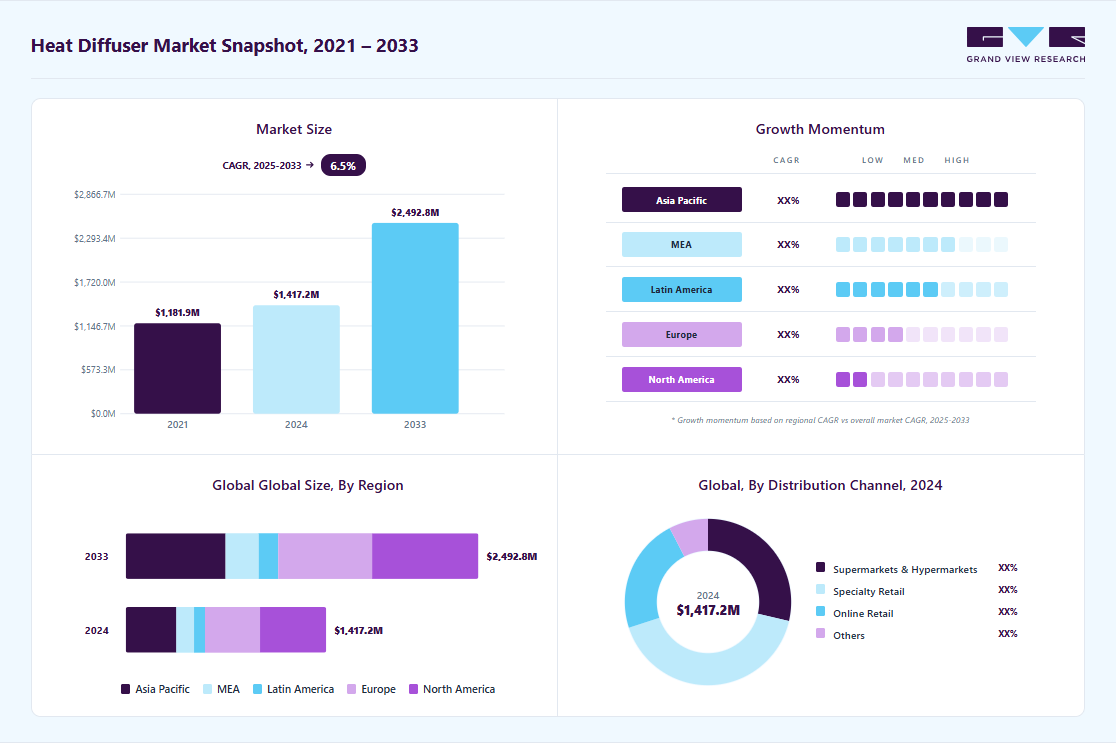
The global heat diffuser market size was estimated at USD 1,417.2 million in 2024 and is expected to reach USD 2,492.8 million by 2033, growing at a CAGR of 6.5% from 2025 to 2033. The rising global awareness of aromatherapy as a valued wellness practice has propelled the increased adoption of all diffuser types.
Key Market Trends & Insights
- The North America UAV industry accounted for the highest revenue share of 33.02% in 2024.
- The U.S. UAV industry accounted for the largest market share of 86% in 2024.
- Based on system, the platform segment accounted for the largest market share of over 48% in 2024.
- Based on application, the military segment registered the largest revenue share in 2024.
- Based on type, the rotary-blade segment registered the largest revenue share in 2024.
Market Size & Forecast
- 2024 Market Size: USD 1,417.2 Million
- 2033 Projected Market Size: USD 2,492.8 Million
- CAGR (2025-2033): 6.5%
- North America: Largest market in 2024
In particular, heat diffusers, whether electric or candle-based, appeal to consumers seeking simplicity and an affordable price point, supporting steady market expansion. This accessibility makes heat diffusers an entry-level choice for individuals exploring aromatherapy at home, especially as self-care and home spa trends become mainstream.Advancements in energy-efficient design have further accelerated the market. Heat diffusers are engineered to use minimal power, appealing to environmentally conscious users seeking to reduce their carbon footprint. In parallel, manufacturers embed stylistic updates, such as minimalist aesthetics and compact form factors, to align with contemporary interior design preferences. These improvements and their silent operation make heat diffusers attractive for residential environments where unobtrusive wellness solutions are desired.
Growing consumer interest in stress relief and mental wellness is another significant driver. As essential oil consumption surges (with markets like the United States reporting multi-million dollar imports of essential oils annually), users recognize heat diffusers' ability to create calming living spaces. The heat-driven diffusion process gently releases fragrances without water or complex electronics, providing a straightforward means to enhance relaxation and sleep. As mental health challenges, such as anxiety and insomnia, increase globally, heat diffusers serve a valuable and accessible therapeutic role.
The expansion of the spa and wellness industry has also catalyzed demand for heat diffusers. Spas utilize various diffusers, including heat-based models, to create tranquil atmospheres for clients. Industry data shows spa-goers increasingly value self-care experiences-with heat diffusers delivering ambiance and scent for relaxation rituals. This translates to greater commercial usage in spas, salons, and hospitality settings, complementing a growing base of residential customers.
E-commerce proliferation and smarter distribution channels have widened consumer access to heat diffusers. Online platforms, specialty wellness portals, and direct-to-consumer brands have ramped up marketing and product variety, making it easier for buyers to research, compare, and purchase diffusers from anywhere. The convenience of internet shopping, customer reviews, and competitive pricing have enabled heat diffusers to reach previously untapped market segments globally, particularly in regions with limited brick-and-mortar retail.
Lastly, the shift toward sustainable lifestyle products influences ongoing growth. Heat diffusers are now offered in eco-friendly materials, such as recycled ceramics or biodegradable bases, appealing to “green” consumers. Industry players leverage these attributes in branding and innovation, expanding their reach among environmentally aware buyers. As users seek wellness solutions that match their personal and ecological values, the market for sustainable heat diffusers continues to broaden, positioning this segment for ongoing growth through product differentiation and environmental stewardship.
Application Insights
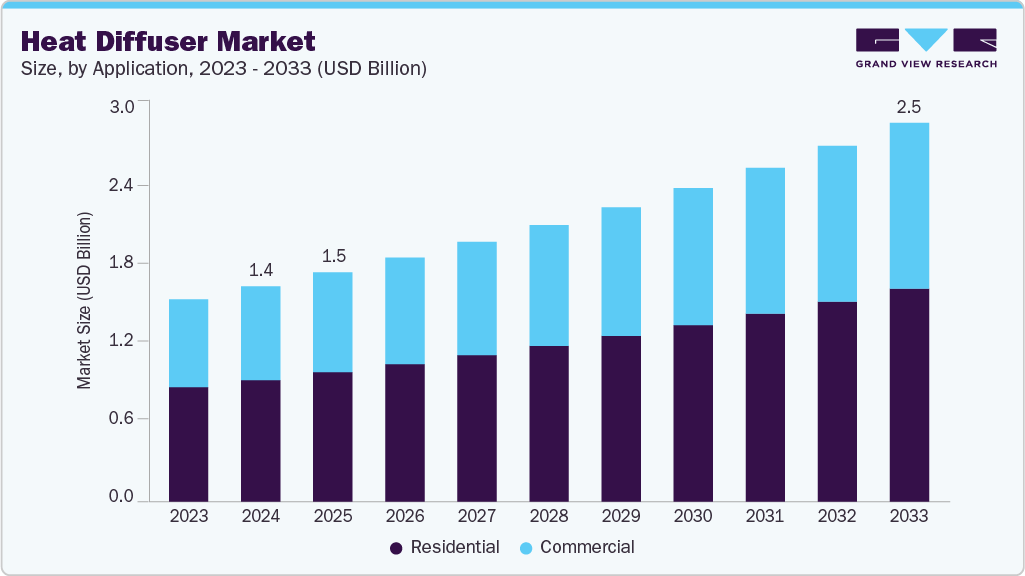
Residential was the most extensive heat diffuser application, accounting for over 55% of the market in 2025. Residential use of heat diffusers in aromatherapy has become increasingly popular as urban lifestyles drive a strong focus on wellness and mental well-being. Consumers seek simple, affordable ways to introduce relaxation rituals into their daily routines, especially after increased remote work and heightened mental health awareness. Heat diffusers provide a silent, unobtrusive, and low-maintenance method for scenting homes, making them desirable for bedrooms, living rooms, and self-care spaces. The rise of e-commerce has further facilitated market growth, granting consumers easy access to a wide variety of designs that fit both minimalist and modern aesthetics, while allowing them to review feedback and compare prices conveniently.
Another key driver for the residential segment is the demand for natural and non-intrusive ways to improve home environments. Heat diffusers are valued for their gentle diffusion mechanism, which does not involve water or complicated electronics, thus minimizing maintenance and risk of malfunction. As health-conscious consumers become more knowledgeable about essential oils and their purported benefits, such as stress reduction, improved sleep, and mood enhancement, heat diffusers are increasingly viewed as approachable entry-point devices for home wellness. Manufacturers continue to innovate with energy-efficient models and eco-friendly materials, aligning with householders’ sustainability values and enabling further category expansion.
In the commercial sector, heat diffusers are gaining momentum across spas, wellness centers, salons, hospitality venues, and office environments. Businesses recognize that ambient scenting creates inviting spaces and contributes actively to client relaxation and staff well-being. In particular, the spa and wellness industry relies on heat diffusers to foster tranquil atmospheres conducive to stress relief and holistic care. Market reports indicate that as more facilities emphasize “spa-like” customer experiences-whether for treatments or waiting areas-demand for dependable, easy-to-operate diffusers continues to climb. The appeal of heat diffusers’ silence and simplicity ensures a soothing experience without distractions from noise or complex controls.
Offices and hotels increasingly adopt aromatherapy diffusers to enhance air quality, improve employee productivity, and elevate guest satisfaction. Commercial settings are capitalizing on the global wellness trend, integrating scenting into branding, wellness packages, or productivity programs. Heat diffusers are often preferred for their ability to dispense delicate, consistent fragrances in large or shared spaces, where quiet operation and low energy consumption are valued. As the wellness tourism and corporate wellness sectors expand, commercial demand is bolstered by the growing expectation that work and leisure environments should proactively support health and comfort, further driving the market for heat diffusers.
Distribution Channel Insights
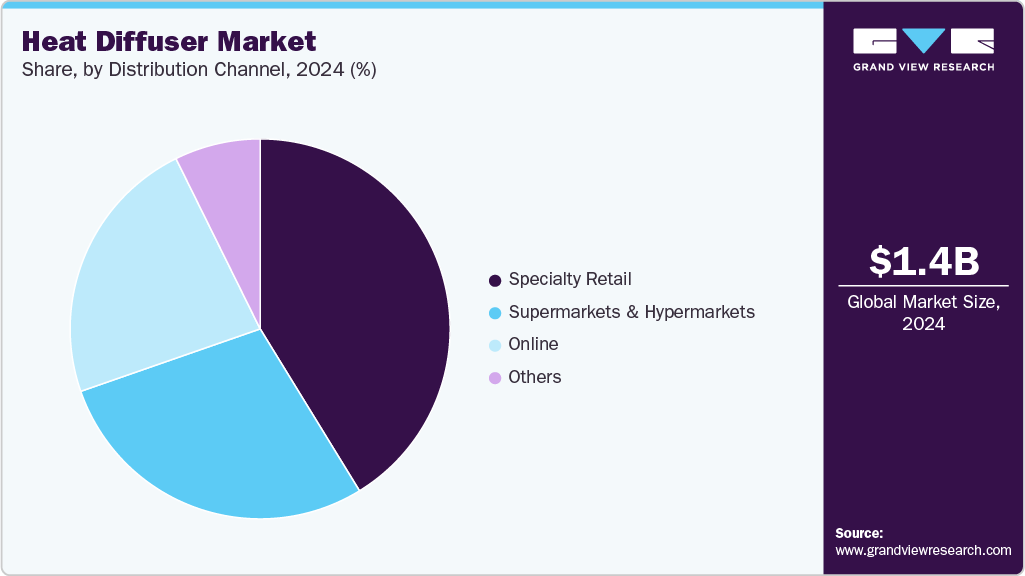
Specialty retail was the most widely used distribution channel for heat diffusers, accounting for over USD 585.5 million in 2024. The convenience of purchasing wellness products during routine shopping trips and the ability to physically experience products via in-store demonstrations have supported continued strong sales. Retailers frequently provide dedicated wellness sections featuring diffusers and essential oils, driving impulse buys and introducing new scent brands to a broader audience. This "mass category leadership" has triggered the mainstreaming of home fragrance products, expanding access to affordable diffusers with features previously limited to luxury brands-such as timers and adjustable intensity. Supermarkets remain especially important in developing regions, where brick-and-mortar stores dominate and brand trust is reinforced by physical presence and knowledgeable staff.
However, while specialty retailers have led in volume and convenience, their growth faces increasing competition from e-commerce. Younger, research-driven shoppers often prefer the ability to compare products and read reviews online, which has challenged the dominance of offline retail. Retailers respond by enhancing their omni-channel strategies, blending in-store sampling with digital personalization via QR codes and cross-channel promotions. Physical stores remain vital for shoppers seeking to see, touch, and evaluate products before purchase. However, growth rates are now outpaced by online channels-especially as digital marketing and mobile shopping continue their ascent.
Online retail has rapidly become the most significant and fastest-growing channel for aromatherapy diffuser sales in 2025. E-commerce platforms like Amazon, Walmart, and specialized wellness websites offer customers low prices, extensive product selections, and doorstep delivery. The convenience of mobile shopping, deep digital advertising, and the ability to review and compare products are major factors behind online retail's continued expansion. This channel is especially effective at reaching health-conscious, tech-savvy consumers, with the direct-to-consumer (D2C) model allowing brands to control engagement and build lasting relationships with buyers. Online platforms also enable influencer-driven marketing, limited edition drops, and personalized recommendations, further encouraging purchases and accelerating market penetration.
As online retail becomes increasingly dominant, it innovates with targeted sales, next-day delivery, bundled wellness products, and interactive platforms. The channel's flexibility means consumers can shop for diffusers anytime, access detailed educational content, and benefit from exclusive online-only deals. This has led to consistent double-digit growth-markedly faster than offline retail-and is expected to further mainstream aromatherapy diffusers. Expanding online distribution allows brands to reach global markets, connect with younger demographics, and respond swiftly to shifting consumer preferences, making it the primary engine of future market growth.
Regional Insights
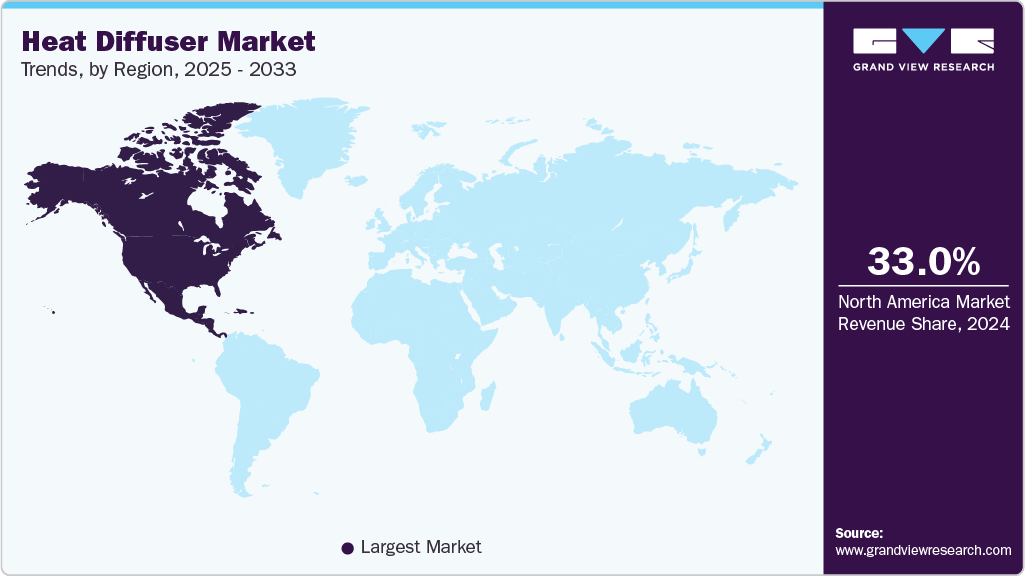
North America heat diffuser market was the largest market for heat diffusers, accounting for a market revenue of over USD 468 million in 2024. North America is the largest regional market for aromatherapy diffusers, driven by high consumer awareness and demand for wellness and mental health products. The population’s growing focus on holistic health, established retail channels, and a mature e-commerce ecosystem support widespread adoption of diffusers for home and commercial use. Consumers in North America favor innovative products that combine fragrance diffusion with features like humidification, ambient lighting, and smart controls, reflecting their preference for multifunctional and customizable wellness devices. In addition, the presence of key well-established brands, extensive distribution networks, and effective marketing campaigns further strengthens the region’s leading market position. Both residential users seeking stress relief and relaxation, as well as spas, hotels, and corporate wellness programs, contribute to sustained growth in this region.
U.S. Heat Diffuser Market Trends
The heat diffuser market in the U.S dominated the North America market, accounting for over 75% of the region’s heat diffuser consumption. The U.S. market benefits from high disposable incomes, wide availability of premium and mass-market diffuser products, and advanced digital retail infrastructure, making it easy for consumers to access diverse options. Leading diffuser brands and wellness companies invest heavily in product innovation, integrating innovative technology and user-friendly designs to meet evolving preferences. Moreover, heightened media attention on natural remedies, essential oils, and lifestyle wellness trends helps educate and attract a broad consumer base, extending sales beyond traditional spa settings into everyday home use.
Asia Pacific Heat Diffuser Market Trends
The heat diffuser market in the Asia Pacific region is expected to grow fastest at a CAGR of 7.9% from 2025 to 2033, driven by rising urbanization, increasing disposable incomes, and accelerating lifestyle changes. Countries like China, India, Japan, and South Korea are witnessing rapid adoption due to growing interest in wellness practices and the benefits of aromatherapy for mental and physical health. The region’s growth is supported by a booming spa and wellness tourism sector and a surge in online retail platforms, facilitating easy access to diverse diffuser products even in remote or emerging markets. Social media and influencer marketing are powerful drivers, influencing younger demographics to explore natural wellness solutions. Moreover, the fast-paced, high-stress lifestyles every day in many Asia Pacific metropolitan areas create a strong demand for convenient, effective home wellness devices, cementing this region as a critical frontier for future market expansion.
Key Heat Diffuser Company Insights
The market's competitive landscape in 2025 is characterized by robust growth, innovation, and a broad array of established players as well as emerging brands. Major companies in this sector include doTERRA International LLC, Young Living Essential Oils LLC, NOW Health Group Inc., Vitruvi Designs Inc., Edens Garden Inc., Organic Aromas LLC, ZAQ Skin & Body Care LLC, Saje Natural Business Inc., and Newell Brands Inc., among others. These companies compete actively in developing advanced diffusion technologies, expanding product portfolios, and strengthening global distribution networks, particularly through online channels, specialty stores, and supermarkets.
Key players differentiate themselves through proprietary blends, sustainability initiatives, integration of smart technologies, and innovative design aesthetics. For example, doTERRA and Young Living leverage supply chain control and essential oil purity as competitive advantages, while brands like Vitruvi and Saje focus on eco-friendly materials and minimalist designs aimed at modern consumers. Companies such as NOW Health Group and Plant Therapy appeal to a wide demographic with budget-friendly, transparent products available in both physical retail and online marketplaces.
Key Heat Diffuser Companies:
The following are the leading companies in the heat diffuser market. These companies collectively hold the largest market share and dictate industry trends.
- doTERRA International LLC
- Young Living Essential Oils LC
- NOW Health Group Inc.
- Vitruvi Designs Inc.
- Edens Garden Inc.
- Organic Aromas LLC
- ZAQ Skin & Body Care LLC
- Saje Natural Business Inc.
- Newell Brands Inc.
- Plant Therapy Inc.
Heat Diffuser Market Report Scope
Report Attribute
Details
Market size value in 2025
USD 1508.2 million
Revenue forecast in 2033
USD 2492.8 million
Growth rate (revenue)
CAGR of 6.5% from 2025 to 2033
Actual data
2021 - 2023
Forecast period
2025 - 2033
Quantitative units
Revenue in USD million/billion, and CAGR from 2025 to 2033
Report coverage
Revenue forecast, company ranking, competitive landscape, growth factors, and trends
Segments covered
Application, distribution channel, region
Regional scope
North America; Europe; Asia Pacific; Central & South America; Middle East & Africa
Country scope
U.S; Canada; Mexico; Germany; UK; France; Italy; Spain; China; Japan; India; Australia & New Zealand; South Korea; Brazil; UAE
Key companies profiled
doTERRA International LLC; Young Living Essential Oils LLC; NOW Health Group Inc.; Vitruvi Designs Inc.; Edens Garden Inc.; Organic Aromas LLC; ZAQ Skin & Body Care LLC; Saje Natural Business Inc.; Newell Brands Inc.; Plant Therapy Inc.
Customization scope
Free report customization (equivalent up to 8 analysts working days) with purchase. Addition or alteration to country, regional & segment scope.
Pricing and purchase options
Avail customized purchase options to meet your exact research needs. Explore purchase options
Global Heat Diffuser Market Report Segmentation
This report forecasts revenue growth globally, regionally, and country-wide and analyzes the latest industry trends and opportunities in each sub-segment from 2021 to 2033. Grand View Research has segmented the global heat diffuser market report by product, application, distribution channel, and region:

-
Application Outlook (Revenue, USD Million, 2021 - 2033)
-
Commercial
-
Residential
-
-
Distribution Channel Outlook (Revenue, USD Million, 2021 - 2033)
-
Supermarkets & Hypermarkets
-
Specialty Retail
-
Online
-
Others
-
-
Regional Outlook (Revenue, USD Million, 2021 - 2033)
-
North America
-
U.S.
-
Canada
-
Mexico
-
-
Europe
-
Germany
-
UK
-
France
-
Italy
-
Spain
-
-
Asia Pacific
-
China
-
Japan
-
India
-
Australia & New Zealand
-
South Korea
-
-
Central & South America
-
Brazil
-
-
Middle East & Africa
-
UAE
-
-
About the Author(s)
Homecare & Decor Research Team
Consumer Goods · Homecare & DecorThis report was authored by the homecare & decor research team at Grand View Research - comprising two research analysts, one senior research analyst, and one industry expert - with specialized expertise in the homecare & decor segment of the consumer goods industry. All findings are based on proprietary consumer goods databases, executive interviews, and regulatory analysis, subject to internal peer review prior to publication.
Last Updated:
Speak to Analyst


Customize this report to your needs — add regions, segments, or data points, with 20% free customization.
Or view our licence options:


ISO 9001:2015 & 27001:2022 Certified
We are GDPR and CCPA compliant! Your transaction & personal information is safe and secure. For more details, please read our privacy policy.












