
- Home
- »
- Medical Devices
- »
-
Corporate Wellness Market Size & Share Report, 2026-2033GVR Report cover

Corporate Wellness Market (2026 - 2033
Size, Share & Trends Analysis Report By Service (Health Risk Assessment, Fitness, Smoking Cessation), By End Use (Small Scale Organizations), By Category, By Delivery Model (Onsite, Offsite), By Region, And Segment Forecasts
Market Size, 2025
$55.1BMarket Estimate, 2026
$56.7BMarket Forecast, 2033
$70.1BCAGR, 2026–2033
3.1%Corporate Wellness Market Summary
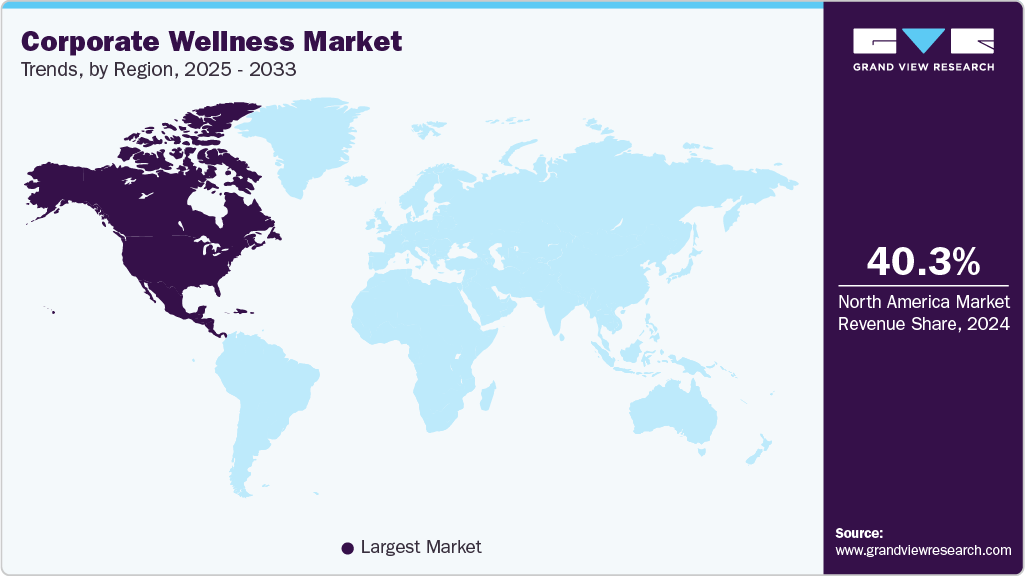
The global corporate wellness market sizewas valued at USD 55.1 billion in 2025 and is projected to grow from USD 56.7 billion in 2026 to USD 70.1 billion by 2033, at a CAGR of 3.1% from 2026 to 2033. The market in North America dominated with a revenue share of 39.0% in 2025. The rising awareness regarding employee health and well-being is driving market growth.
 Source: Grand View Research, IR Documents, Primary Interviews, Paid DatabasesTo learn more about this report,
 Download Free Sample Report
 Key Market Trends & Insights
- By service: Health risk assessment segment held the largest market share of 21.0% in 2025.
- By end use: Large-scale organizations segment held the largest market share of 53.3% in 2025.
- By category: Organizations/employers segment held the largest market share of 49.4% in 2025.
- By delivery model: Onsite segment held the largest market share in 2025.
Regional Highlights
- Largest regional market: North America (39.0% revenue share, 2025)
- By country: U.S. held the largest market share in 2025
Market Size & Forecast
- Market size in 2025: USD 55.1 Billion
- Estimated market size in 2026: USD 56.7 Billion
- Projected market size by 2033: USD 70.1 Billion
- CAGR (2026-2033): 3.1%
Three ways to get this report
Buy it, customize it, or ask a question.Ask an Analyst
Analyst response in 1 business day
- AccessReport author, directly
- Reply timeWithin 1 working day
- No sales callDirect answer only
- FormatEmail reply
- CostFree, no cost
Get the Full Report
What the study covers
- FormatsPDF · Excel · Dashboard
- Timeline2026–2033 annual, 2025 base
- Coverage20+ countries, 5 regions
- Companies10+ key players profiled
Customize the Report
20% free customization
- IncludeCountries, segments, points
- TailorTo your product definition
- ExtendDeeper competitor detail
- OrA fully bespoke study
- Turnaround5–10 working days
Hence, numerous firms and enterprises across diverse industries are establishing wellness programs for their employees, propelling the demand. In addition, workplace wellness initiatives are designed to aid employees in maintaining good health. These initiatives assist businesses in increasing productivity while simultaneously lowering overall operating costs. Moreover, these programs promote a better lifestyle among employees.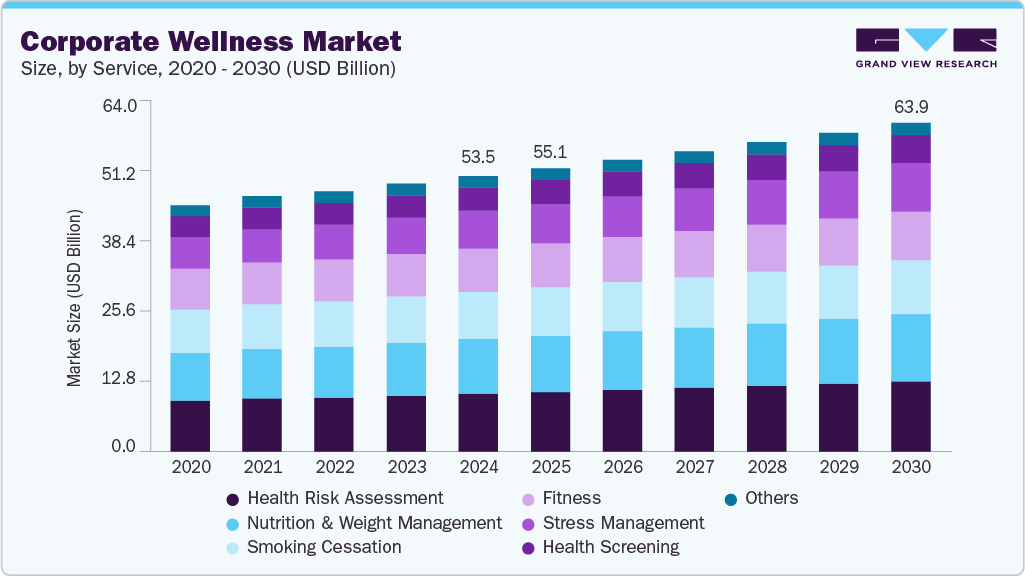 To learn more about this report, Download Free Sample Report
 The section below outlines the key factors driving the growth of the corporate wellness market, highlighting the increasing focus on employee health and productivity, rising prevalence of lifestyle-related diseases, and growing employer investment in preventive healthcare programs. It also examines the role of digital health platforms, personalized wellness solutions, mental health support, and continuous engagement strategies in strengthening corporate wellness programs as a key component of workplace benefits.
Rising Employer Healthcare Costs and Focus on Employee Productivity
In the U.S., physicians, nurses, technicians, and other healthcare staff charge higher fees than professionals in other countries, such as the UK, Canada, and Germany, increasing the overall cost of treatment. Moreover, employers pay a substantial healthcare premium to insurance providers, especially in a large-scale organization. A higher number of unhealthy employees increases the premium cost, boosting the financial burden of an organization. Corporate wellness programs are considered preventative measures as they help inculcate healthy habits and reduce absenteeism of employees due to health issues. Thus, employers invest in corporate wellness programs to reduce healthcare costs and increase productivity at work.
The growing adoption of corporate wellness partnerships is driving profitability in the fitness and wellness industry by enhancing member retention, ensuring predictable revenue streams, and optimizing facility utilization. For instance, Wellhub’s Corporate Wellness Report 2025 found that 73% of wellness operators reported increased profitability, while 89% experienced higher member retention through corporate wellness partnerships.
Increasing Healthcare Costs Encouraging Adoption of Corporate Wellness Programs
In addition, corporate wellness programs include benefits, programs, and policies, addressing various risk factors and conditions and influencing employees & the organization. As per the National Center for Chronic Disease Prevention and Health Promotion (NCCDPHP) in the U.S., corporate programs promote health and well-being, along with disease prevention plans, which is expected to influence employees, significantly reducing the cost of healthcare. Furthermore, according to the International Foundation of Employee Benefits Plans, in the 2025 plan year, the medical plan cost is expected to increase by around 7%. Hence, to reduce such employee expenses, the companies are shifting toward corporate wellness programs and solutions, which is expected to contribute to the market growth over the forecast period.
Increasing Burden of Chronic Diseases and Lifestyle-Related Health Risks
The expansion of the market is fueled by a rise in the occurrence and early development of chronic illnesses, along with a reduction in healthcare expenses for employees. In today’s work environment, many individuals struggle to find time for mental and physical activities outside of work or during their leisure hours, leading to various health issues. On a global scale, chronic diseases pose a major risk, as the incidence of many such conditions continues to grow. For instance, the World Health Organization states that noncommunicable (chronic) diseases such as cardiovascular diseases, cancer, diabetes, and respiratory conditions account for nearly 74% of all global deaths, highlighting the growing burden of chronic illnesses and the need for preventive workplace wellness initiatives.
In addition, chronic conditions such as heart disease, obesity, and diabetes have become widespread in many countries, particularly in industrialized nations, due to unhealthy and sedentary lifestyles. The rising incidence of obesity is expected to increase the prevalence of other chronic diseases. For instance, according to a report, the prevalence of obesity among adolescents in the Americas is expected to increase from 2020 to 2035. Boys are likely to see an increase from 20% to 33%. Furthermore, obesity is also expected to increase among men and women during the same 15-year period, with almost half of all adults (47% to 49%) predicted to be affected by obesity by 2035. In addition, as per the Johns Hopkins University study, the risk of heart failure increased by 32% in the study for every five-point increase in body mass index (BMI). Obesity is a major health issue for over 1 billion individuals across the world, including adults, adolescents, and children; as per the report of the WHO, approximately 167 million people will be obese by 2025.
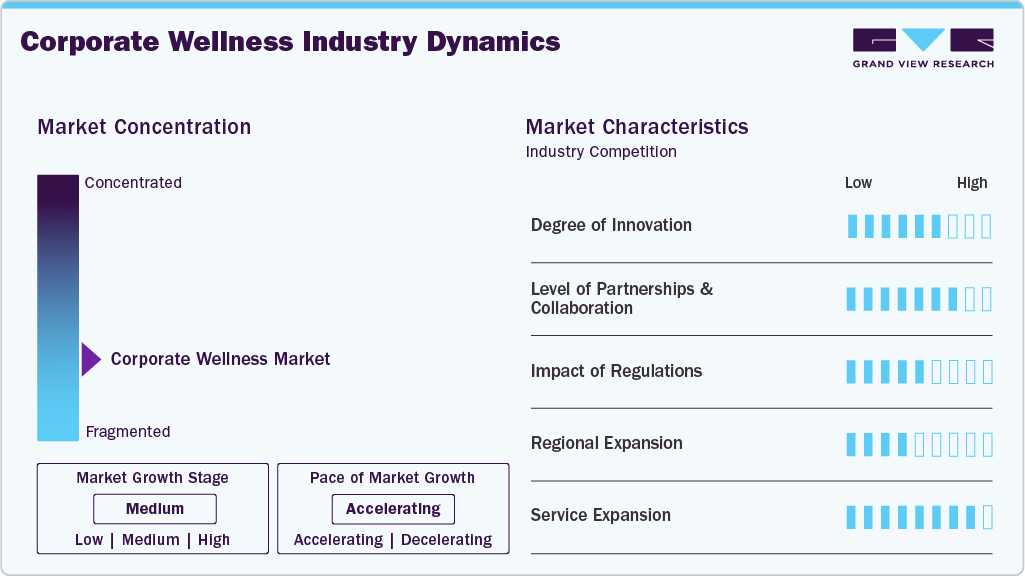
Market Characteristics & Concentration
The chart below illustrates the relationship between industry concentration, industry characteristics, and industry participants. The x-axis represents the level of industry concentration, ranging from low to high. The y-axis represents various industry characteristics, including the impact of regulations, degree of innovation, industry competition, regional expansion, and level of partnerships & collaboration activities. The market is fragmented, with the presence of many local providers in the market. Furthermore, the degree of innovation is high, and the level of M&A activities is moderate to high. The impact of regulations on the market is high, and service expansion is also high, while regional expansion is moderate.
The degree of innovation is high in the market. Companies are adopting wearable technology to monitor employee health metrics, encouraging physical activity and health awareness. These devices provide real-time data that can be used to tailor wellness programs to individual needs. In addition, artificial intelligence is being leveraged to create personalized wellness programs. In May 2025, Whoop launched the Whoop 5.0 and Whoop MG devices, featuring 14-day battery life and advanced health insights, enabling continuous monitoring and encouraging adoption of wearable-driven wellness solutions for improved health and performance outcomes.
 To learn more about this report, Download Free Sample Report
 The level of merger and acquisition activities in the corporate wellness market has been steadily increasing in recent years. This rise in M&A is driven by several factors related to the growing demand for workplace wellness solutions, advancements in technology, and the need for companies to offer more comprehensive and integrated services to improve employee health and productivity. For instance, in February 2026, Marico acquired a 60% stake in Cosmix Wellness for approximately USD 41 million, aiming to expand its presence in plant-based nutrition and accelerate growth within the functional wellness and nutraceuticals segment.
Corporate wellness activities are health-related and need to adhere to regulations. Wellness programs are regulated via the Internal Revenue Code, the Americans with Disabilities Act (ADA), and the Health Insurance Portability and Accountability Act (HIPAA). HIPAA prohibits an employer from charging a higher premium to sick employees. Regulations also provide tax exemption for the expenditure on employee wellness programs. For instance, all wellness programs are not eligible for tax exemption, according to the Internal Revenue Service (IRS). A health service may be eligible for tax exemption if found as a valid medical expense under Code Section 213(d). These regulations provide a structured framework for employee wellness programs and are expected to have a positive impact on their adoption.
In the global corporate wellness market, the presence of service substitutes is high. While various corporate wellness that cater to specific needs, such as period tracking, pregnancy monitoring, and overall wellness, are available, the level of direct substitutes that offer identical features and functionalities may not be as high as in some other industries.
The corporate wellness market is experiencing significant regional expansion, driven by various factors including increased health awareness, rising healthcare costs, and a growing emphasis on employee well-being. For instance, in February 2023, WebMD Health Services, a division of WebMD LLC, launched an enhanced WebMD ONE well-being program, extending its reach to encompass over 190 countries spanning Europe, Asia, and Latin America. This latest expansion incorporates human-translated editions in languages such as Arabic, Hindi, Thai, Vietnamese, Korean, Slovakian, and more.
Service Insights
The health risk assessment segment dominated the market in 2025 with a revenue share of 21.0%. HRA is the first and most important component of any wellness program as it involves assessing health-related information, which helps in designing the wellness programs. HRA increases the productivity of the employees by checking health status, in turn saving huge costs for the employers. Organizations are increasingly adopting HRAs as a proactive strategy to identify potential health issues early and reduce long-term medical expenses. The rise in chronic conditions such as obesity, diabetes, and cardiovascular diseases has further accelerated the need for systematic employee health evaluations. In June 2025, the interRAI Network for Mental Health advanced the CHARMH initiative across 25+ countries, introducing standardized, scalable mental health assessment tools to expand access to care, particularly in low-resource settings, through digital and community-based approaches. Moreover, advancements in digital health technologies such as wearable devices, AI-driven analytics, and mobile health platforms have made it easier for employers to conduct continuous and data-driven health monitoring.
The stress management segment is anticipated to grow at fastest growth rate over the forecast period. Stress management is an important service of the wellness portfolio as it directly contributes to promoting employees' mental health. The pandemic has significantly contributed to stress among employees. Moreover, younger individuals are more open to discussing issues related to their mental health & consider the availability of mental health benefits as a factor when deciding on the workplace. Such factors are increasing the demand for stress management solutions in the market.
End Use Insights
Large-scale organizations segment dominated the market and accounted for a share of 53.3% in 2025. Large-scale organizations need corporate wellness programs pertaining to the huge workforce. According to the 2025 Employer Health Benefits Survey, around 56% of the large firms offer Health Risk Assessments (HRAs), and around 44% offer biometric screening to employees as a part of health promotion & wellness programs. Many large firms offer corporate wellness programs to their employees to promote balance in work & life. For instance, Google provides various services on its campus, such as physicians, therapists, chiropractors, and masseuse. This saves its employees time from going outside and making an appointment, which also increases productivity. It also offers courses such as guitar lessons, cooking classes, and coding degrees. Employees are also provided with community bikes and free entry to fitness classes & gyms.
Medium scale organizations segment is expected to grow at the fastest CAGR over the forecast period. One of the medium-scale companies, Motley Fool, offers fun wellness programs for its employees, such as spinning classes & boot camps. For instance, they have named April as Active April, which aims at holding one active meeting a day. In these meetings, members are allowed to perform pushups and walk around the office space, which keeps them engaged & stress-free. In addition, they encourage employees to participate in races of several kinds and pay 50% of the total fee. The company has 86% wellness engagement.
Category Insights
Organizations/ employers segment dominated the market and accounted for a share of 49.4% in 2025. Corporate wellness providers incorporate components such as nutrition, exercise, medication, social connectedness, behavioral health, and character strength, in their wellness service offerings. The different programs deliver diversified solutions along with a holistic view of healthcare. The rise in personalized wellness programs, along with the expansion of wellbeing and digital wellness tools, is anticipated to drive the organization category of the market.
The increasing integration of AI-driven and data-centric wellness platforms is driving the corporate wellness market by enabling organizations to translate employee well-being into measurable productivity, performance, and strategic business outcomes. In March 2026, Eatsbueno advanced its AI-driven corporate wellness platform, integrating predictive analytics, behavioral science, and nutritional intelligence to transform employee well-being into a scalable and measurable component of enterprise performance.
 To learn more about this report, Download Free Sample Report
 Fitness & nutrition consultants segment is expected to grow at the fastest CAGR over the forecast period. Fitbit’s employees get hefty discounts on their products. All its products, both existing & new, are available at a 50% discount for them. In addition, its employees are offered health coaches and other health benefits. They are also provided with doctors, and the company bears their consultation fees. In addition, it provides flexible working hours and plenty of vacations. This is expected to drive the segment growth during the forecast period.
Delivery Model Insights
Onsite segment dominated the market in 2025. On-site wellness programs usually include health screenings, lectures, meditation sessions, and other activities. Some providers, such as Marino Wellness, even offer an on-site massage service with the necessary spa equipment, eliminating the need for employees to waste their time & money on outside spas and fitness centers. The meditation and yoga sessions provided in the office are designed to be short, preventing any loss of productivity for the employees.
Offsite segment is expected to grow at the fastest CAGR over the forecast period. Offsite wellness programs include one-to-one interaction to improve employee health at different locations. The adoption of advanced technology constantly upgrades health services. For instance, in October 2025, Biocon Biologics and Civica expanded their partnership to launch a private-label version of insulin glargine, a long-acting insulin used to manage diabetes, in the U.S. market. This collaboration aims to provide affordable and accessible diabetes treatment options to the 38.4 million Americans living with diabetes.
Regional Insights
North America is estimated to hold maximum market share of 39.0%% in 2025. North America dominated the market and is projected to maintain its position during the forecast period. Several enterprises and businesses across diverse industries are increasingly adopting health initiatives for their employees, which is anticipated to drive the demand and contributing to the growth of the market in the region.
 To learn more about this report, Download Free Sample Report
 U.S. Corporate Wellness Market Trends
U.S. corporate wellness industry held the largest share in the North America region in 2025. In the U.S., the market is expected to grow due to technological advancements, the adoption of software platforms & wearable devices, and the growing awareness regarding corporate wellness programs among employees. This is likely to drive corporate wellness programs as they can be considered a way to cut healthcare costs. In March 2026, Mave Health raised USD 2.1 million and launched a wearable headset designed to improve focus and regulate stress, demonstrating the rising adoption of neurotechnology-driven wellness solutions to enhance employee performance and mental well-being.
Canada corporate wellness market is expected to grow at the fastest CAGR in the North America region in 2025. The market in Canada is expected to witness significant growth due to the rising uptake of technology-driven corporate wellness solutions, the substantial burden of mental health in organizations, and the surging adoption of corporate wellness programs by employers. Moreover, the rising mental stress at the workplace and the increasing onset of chronic diseases are some of the factors expected to drive market growth. According to benefitscanada.com, in April 2023, around 71% of the employees in Canada suffer from mental health problems at the workplace. This highlights the necessity of focusing on mental health and supporting the employees.
Europe Corporate Wellness Market Trends
The market in Europe is expected to grow owing to the European employers are planning to mandate wellness programs in their respective organizations. Employers are also providing flexible working hours and the option to work from home. Implementation of these programs has led to reduction in attrition rates and increase in employee engagement.
Corporate wellness industry in UK is witnessing growth as many companies in the UK offer employees with Private Medical Insurance (PMI), which covers several unexpected short-term diseases and assists employees by providing them with access to private hospitals and healthcare centers. This is generally implemented to reduce absenteeism and healthcare costs. However, some organizations offer a health cash plan. This cost-effective insurance plan reimburses partial or full amount to the employees.
Corporate wellness market in Germany is growing significantly due to decreasing employee counts in the country. A study conducted by 4 Day Week Global (4DWG) examined 45 German companies published in November 2025, evaluates the broader benefits of a four-day workweek, expanding beyond traditional metrics such as revenue, employee turnover, and burnout. The results were striking: participating companies saw an average revenue increase of 36% compared with the previous year, a 42% reduction in employee resignations, and a 64% decrease in reported burnout. These findings align with trends observed in previous four-day workweek trials, highlighting the potential of reduced work schedules to boost productivity, employee retention, and overall well-being.
According to estimates by Deloitte, boutique fitness is thriving in the country due to rising awareness. An app called HUMANOO has been introduced to ensure that employees are physically and mentally healthy. This platform offers all the services under one roof, such as exercise and nutrition. It also allows employers to set challenges for their employees and reward them when they achieve their goals. It also generates comprehensive reports to help employers understand the health and wellbeing of the employees. Employers are signing up for this app as it helps to cut costs and look after their employees.
Spain's corporate wellness market is shaped by specific regulations and trends. In Spain, a smaller number of companies offer comprehensive corporate wellness programs. However, the country has a high penetration rate of smartphones apps and high adoption rate of digital propositions proving future potential in the corporate wellness industry. ACCIONA is an organization based in Spain, involved in development of renewable energy and infrastructure. In the field of workplace preventive care, the company, in collaboration with Spain's National Cardiovascular Research Center (CNIC), is conducting an epidemiological study to discover factors that enhance workplace wellness. In addition, the company set up physiotherapy service, at various office locations across Spain.
Asia-Pacific Corporate Wellness Market Trends
The market in Asia-Pacific is expected to grow at a significant rate due to the increased demand for corporate wellness services in Asia Pacific is anticipated to grow rapidly over the forecast period, mainly due to increasing awareness. The acceptance rate has increased in China as organizations realize the importance of corporate wellness programs. India being one of the fastest developing countries, seeks help from wellness providers to increase productivity and employee engagement. In November 2025, Standard Chartered launched a global health and wellness proposition through partnerships with Bupa Global and Whoop, enhancing preventive care and holistic well-being offerings for affluent clients.
Japan corporate wellness market is witnessing growth as manyfirms are following the trend of corporate wellness programs. They are introducing the programs for their corporate image and management strategies. Employers are putting in efforts to improve employee health by promoting wellness tourism. The increasing demand for compact, non-invasive wearable health monitoring devices is driving the corporate wellness industry by enabling continuous tracking of vital health metrics, promoting preventive care, and supporting data-driven wellness strategies. In December 2025, Soxai launched the Soxai Ring 2, a titanium smart ring featuring advanced PPG sensing, sleep tracking, and up to 14-day battery life, reflecting the growing adoption of discreet wearable devices for continuous health monitoring.
Latin America Corporate Wellness Market Trends
Latin America corporate wellness industry is expected to grow rapidly. In Latin America, Brazil and Mexico are major countries contributing to the corporate wellness market growth. Rapid economic growth in these countries is one of the key factors propelling market growth during the forecast period. Moreover, the increasing adoption of corporate wellness programs by companies fueled the market growth in the region. In addition, the region’s large employee population is expected to drive the market.
Brazil corporate wellness market is experiencing significant growth as companies increasingly recognize the value of investing in employee well-being to enhance productivity and reduce healthcare costs. This trend is driven by a rising awareness of the importance of preventive health measures and a strong focus on mental health support, particularly in the wake of the COVID-19 pandemic. Companies are adopting comprehensive wellness programs that include physical fitness initiatives, nutritional guidance, mental health counseling, stress management workshops, and hybrid work arrangements.
MEA Corporate Wellness Market Trends
MEA is expected to witness lucrative growth. The growth in this region is expected to be static as compared to the other regions. This is mainly due to lack of awareness about these programs. In addition, in countries such as the UAE, acceptance is low and skepticism is high, further blocking the growth of the market. However, in countries such as South Africa, the South African Board for People Practices (SABPP) implemented a few wellness laws for employees.
South Africa corporate wellness market trends are showing growth due to society's conservative nature plays a significant role in shaping the market. The main roles of the SABPP are transformation, sourcing, training, and retention of talent. It also promotes harmonious relations at work. An employee wellness strategy was formulated by a group of HR managers in the country by following the SABPP guidelines. Most of the wellness programs curated by companies mainly target physical and mental wellness only. In these wellness programs, health data of the employees is collected and assessed, and probable risks are calculated at regular intervals. This is mainly used to study the effectiveness of these wellness programs. The increasing emphasis on preventive health and behavior-driven wellness programs, particularly incorporating sleep as a critical health metric. In October 2025, Discovery Mindpeers partnered with ŌURA to integrate sleep tracking into its platform, incentivizing members through rewards and personalized goals to improve sleep health and overall well-being.
Key Corporate Wellness Company Insights
The market is characterized by the increasing focus of companies on expansion to include in-house corporate wellness services. In the U.S., there are more than 550 organizations offering employee health programs. Market players are focusing on expanding their market presence through investment activities, mergers, and acquisitions, in order to accommodate and cater to larger groups of employees. Some of the emerging players includes Headspace Health, Virzen Wellness Private Limited (WCS), Limeade, and Gympass.
Key Corporate Wellness Companies:
The following key companies have been profiled for this study on the corporate wellness market.
- ComPsych
- Virzen Wellness Private Limited
- Personify Health
- EXOS
- Marino Wellness
- Privia Health
- Mindpeers
- MCH International, LLC
- Zevo Group
- Truworth Wellness
- SOL Wellness
Recent Developments
-
In March 2026, Symrise launched its Care & Wellness Division, integrating health actives, cosmetic ingredients, and biotics to deliver science-based, holistic solutions aligned with rising demand for connected health and well-being offerings.
-
In October 2025, Kohler Co. launched Kohler Health, marking its entry into the health and wellness space and expanding its legacy beyond kitchen and bath design into personal well-being innovation. This initiative represents a strategic move to integrate health-focused technologies within the home environment, blending Kohler’s expertise in design, water, and smart living with modern wellness needs.
-
In August 2025, Apollo Hospitals and OneBanc jointly launched an AI-powered preventive care initiative aimed at enhancing corporate wellness programs. This collaboration leverages Apollo’s extensive healthcare expertise and OneBanc’s technological capabilities to offer data-driven, personalized health solutions for employees.
-
In August 2025, Alight launched Alight Worklife, its employee experience platform. It includes several enhancements and new features designed to help employees improve their overall well-being.
-
In April 2023, Alight expanded its partnership with Workday, Inc. Through this partnership, the company delivers global, unified HCM and payroll experience. The partnership combined Workday's HCM platform with Alight's global payroll expertise to provide organizations with a single solution for managing their workforce and paying their employees.
Corporate Wellness Market Report Scope
Report Attribute
Details
Market size in 2025
USD 55.1 billion
Estimated Market size in 2026
USD 56.7 billion
Projected Market size by 2033
USD 70.1 billion
Growth rate
CAGR of 3.1% from 2026 to 2033
Actual data
2021 - 2025
Forecast period
2026 - 2033
Quantitative units
Revenue in USD million/billion and CAGR from 2026 to 2033
Report coverage
Revenue forecast, company ranking, competitive landscape, growth factors, and trends
Segments covered
Service, end use, category, delivery model, region
Regional scope
North America; Europe; Asia Pacific; Latin America; MEA
Country scope
U.S.; Canada; Mexico; UK; Germany; France; Italy; Spain; Poland; Netherlands; Switzerland; Austria; Norway; Sweden; Denmark; China; Japan; India; South Korea; Thailand; Australia; Singapore; Taiwan; Russia; New Zealand; Brazil; Argentina; South Africa; Saudi Arabia; UAE; Kuwait
Key companies profiled
ComPsych; Virzen Wellness Private Limited; Personify Health; EXOS; Marino Wellness; Privia Health; Mindpeers; MCH International, LLC; Zevo Group; Truworth Wellness; SOL Wellness
Customization scope
Free report customization (equivalent up to 8 analysts working days) with purchase. Addition or alteration to country, regional & segment scope.
Pricing and purchase options
Avail customized purchase options to meet your exact research needs. Explore purchase options
Global Corporate Wellness Market Report Segmentation
This report forecasts revenue growth at global, regional, and country levels and provides an analysis of the latest industry trends in each of the sub-segments from 2021 to 2033. For this study, Grand View Research has segmented the global corporate wellness market based on service, end use, category, delivery model, and region:
-
Service Outlook (Revenue, USD Million, 2021 - 2033)
-
Health Risk Assessment
-
Fitness
-
Smoking Cessation
-
Health Screening
-
Nutrition & Weight Management
-
Stress Management
-
Others
-
-
End Use Outlook (Revenue, USD Million, 2021 - 2033)
-
Small Scale Organizations
-
Medium Scale Organizations
-
Large Scale Organizations
-
-
Category Outlook (Revenue, USD Million, 2021 - 2033
-
Fitness & Nutrition Consultants
-
Psychological Therapists
-
Organizations/Employers
-
-
Delivery Model Outlook (Revenue, USD Million, 2021 - 2033)
-
Onsite
-
Offsite
-
-
Regional Outlook (Revenue, USD Million, 2021 - 2033)
-
North America
-
U.S.
-
Canada
-
Mexico
-
-
Europe
-
UK
-
Germany
-
France
-
Italy
-
Spain
-
Poland
-
Netherlands
-
Switzerland
-
Austria
-
Norway
-
Sweden
-
Denmark
-
-
Asia Pacific
-
China
-
Japan
-
India
-
South Korea
-
Thailand
-
Australia
-
Singapore
-
Taiwan
-
Russia
-
New Zealand
-
-
Latin America
-
Brazil
-
Argentina
-
-
Middle East & Africa
-
South Africa
-
Saudi Arabia
-
UAE
-
Kuwait
-
-
Frequently Asked Questions About This Report
The market is driven by the rising awareness regarding employee health and well-being is driving market growth. In addition, workplace wellness initiatives are designed to aid employees maintain good health.
The key players in the market include ComPsych; Virzen Wellness Private Limited; Personify Health; EXOS; Marino Wellness; Privia Health; Mindpeers; MCH International, LLC; Zevo Group; Truworth Wellness; SOL Wellness
The global corporate wellness market size was valued at USD 55.1 billion in 2025 and is expected to reach a value of USD 56.7 billion in 2026.
The global corporate wellness market is expected to expand at a compound annual growth rate (CAGR) of 3.1% from 2026 to 2033 to reach at a value of USD 70.1 billion in 2033.
The health risk assessment segment dominated the market in 2025 with a revenue share of 21.0%. HRA is the first and most important component of any wellness program as it involves assessing health-related information, which helps in designing the wellness programs.
North America dominated with a 39.0% revenue share in 2025.
The large-scale organizations segment led with a 53.3% revenue share in 2025, while the medium scale organizations segment is the fastest-growing.
The organizations/ employers segment led with a 49.4% revenue share in 2025, while the fitness & nutrition consultants segment is the fastest-growing.
Onsite segment held the largest share in 2025, while the offsite segment is the fastest-growing.
About the Author(s)
Medical Devices Research Team
Healthcare · Medical DevicesThis report was authored by the medical devices research team at Grand View Research - comprising two research analysts, one senior research analyst, and one industry expert - with specialized expertise in the medical devices segment of the healthcare industry. All findings are based on proprietary healthcare databases, executive interviews, and regulatory analysis, subject to internal peer review prior to publication.
Last Updated:
Speak to Analyst

Customize this report to your needs - add regions, segments, or data points, with 20% free customization.
Or view our licence options:


ISO 9001:2015 & 27001:2022 Certified
We are GDPR and CCPA compliant! Your transaction & personal information is safe and secure. For more details, please read our privacy policy.


