Hematuria Treatment Market Summary
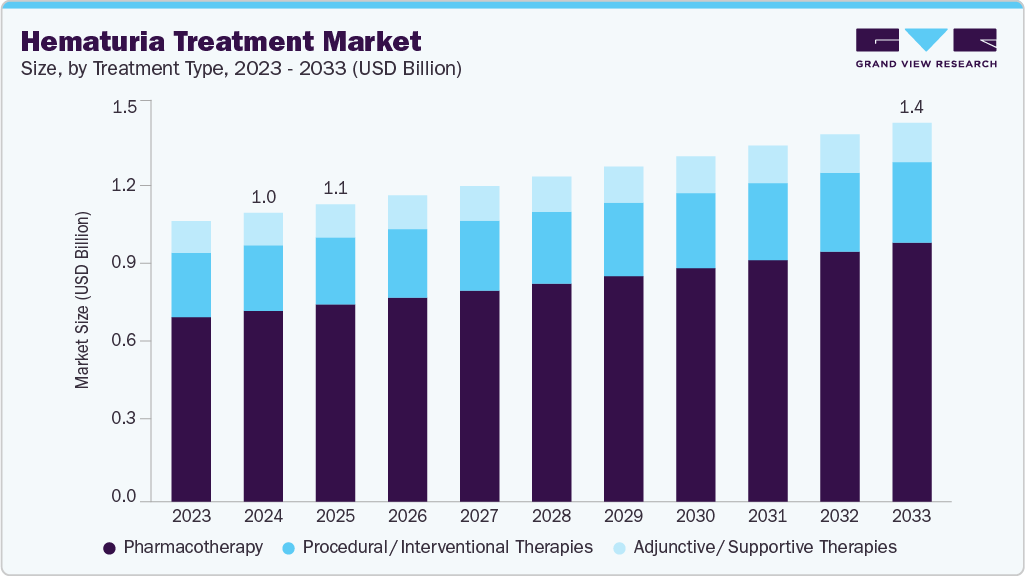
The global hematuria treatment market size was estimated at USD 1,087.3 million in 2024 and is projected to reach USD 1,426.9 million by 2033, growing at a CAGR of 3.1% from 2025 to 2033. The market is driven by urological care and sustained by the growing prevalence of recurrent urinary tract infections, bladder cancer, and urolithiasis, alongside an expanding geriatric population.
Key Market Trends & Insights
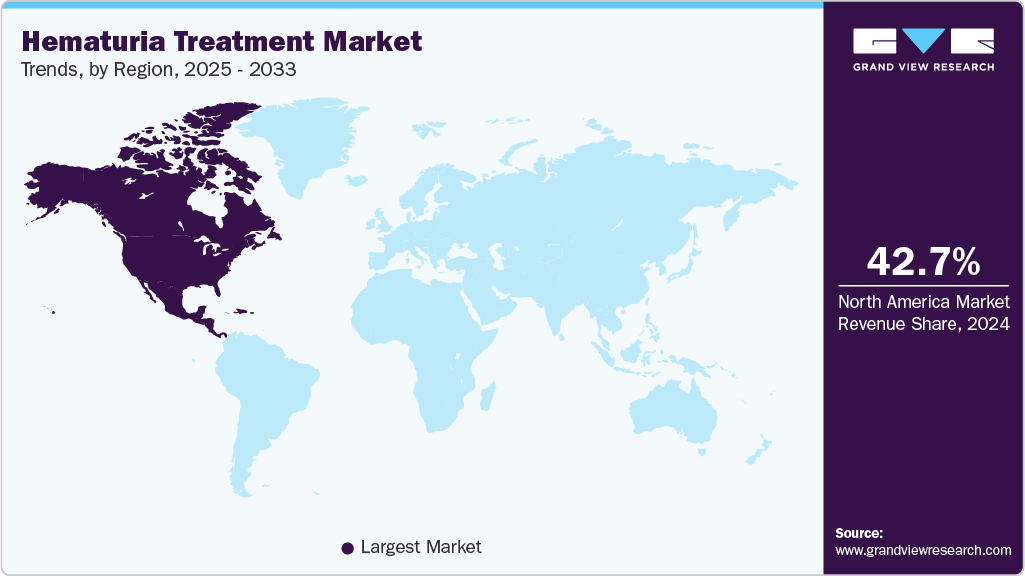
- North America hematuria treatment market held the largest share of 42.7% in 2024.
- Asia Pacific is estimated to register the fastest CAGR from 2025 to 2033
- By treatment type, the pharmacotherapy segment held the largest market share of 66.1% in 2024.
- By type, the generic segment is expected to grow at the fastest CAGR from 2025 to 2033.
Market Size & Forecast
- 2024 Market Size: USD 1,087.3 Million
- 2033 Projected Market Size: USD 1,426.9 Million
- CAGR (2025-2033): 3.1%
- North America: Largest market in 2024
Hematuria is the most common and vital early clinical sign for bladder cancer, which is a high-burden disease that requires extensive diagnostic and therapeutic resources. Moreover, the increasing incidence of bladder cancer cases globally is expected to drive the overall market growth. In the U.S., the American Cancer Society projects 84,870 new cases in 2025, reflecting stable incidence and continued reliance on diagnostic cystoscopy. Given that most bladder cancers require ongoing surveillance through repeated cystoscopy and risk-adapted intravesical therapy, rising case volumes drive the hematuria treatment industry.
Furthermore, rising urinary tract infection (UTI) incidence increases episodic hematuria presentations and empirical antibiotic use, which drives urgent evaluation demand and creates pressure for faster, point-of-care diagnostics. New rapid diagnostics have shortened pathogen identification, directly affecting hematuria treatment pathways by shortening time-to-diagnosis.
Urolithiasis prevalence and symptomatic stone events are important non-neoplastic causes of visible hematuria and often require definitive endourologic care (URS, PCNL) or imaging triage. Although some age-standardised rates have declined, absolute case counts, and new presentations have risen in many regions. It is characterized by symptoms and a high likelihood of recurrence and has created a considerable burden on the healthcare system, especially affecting individuals aged 20 to 54. This indicates substantial age-standardized incidence of stone disease and rising rates in many regions, which raises emergency and elective procedure volumes. Diagnostic cystoscopy remains among the most frequently performed urology procedures, so rising stone and hematuria referrals drive the industry.
Treatment Type Insights
The pharmacotherapy segment dominated the market with the largest revenue share of 66.1% in 2024 and is expected to grow at the fastest CAGR over the forecast period. Pharmacotherapy remains central in managing hematuria of medical causes, offering targeted treatment for infections, bleeding, and cancer while reducing invasive procedures. Antibiotics and hemostatic agents commonly treat infection or anticoagulant-related hematuria, whereas systemic and intravesical therapies are used in oncology cases to downstage disease, preserve the bladder, or lower recurrence.
The procedural/interventional therapies segment is projected to grow at a CAGR of 2.3% over the forecast period, driven by advances in endoscopic imaging, single-use platforms, and expanding case volumes for stones and cancer that require definitive intervention. Flexible cystoscopy and endourologic procedures (URS, PCNL, TURBT) now underpin most hematuria pathways, with diagnostic cystoscopy described as one of the most frequently performed urology procedures.
Type Insights
The branded segment held the largest revenue share of the hematuria treatment market in 2024. This is attributable to strong clinical validation, extensive physician trust, and established distribution channels. These therapies, including checkpoint inhibitors, intravesical agents, and specialized antibiotics, are often supported by robust clinical trial data and regulatory approvals, encouraging preferential use in hospital and specialty settings.
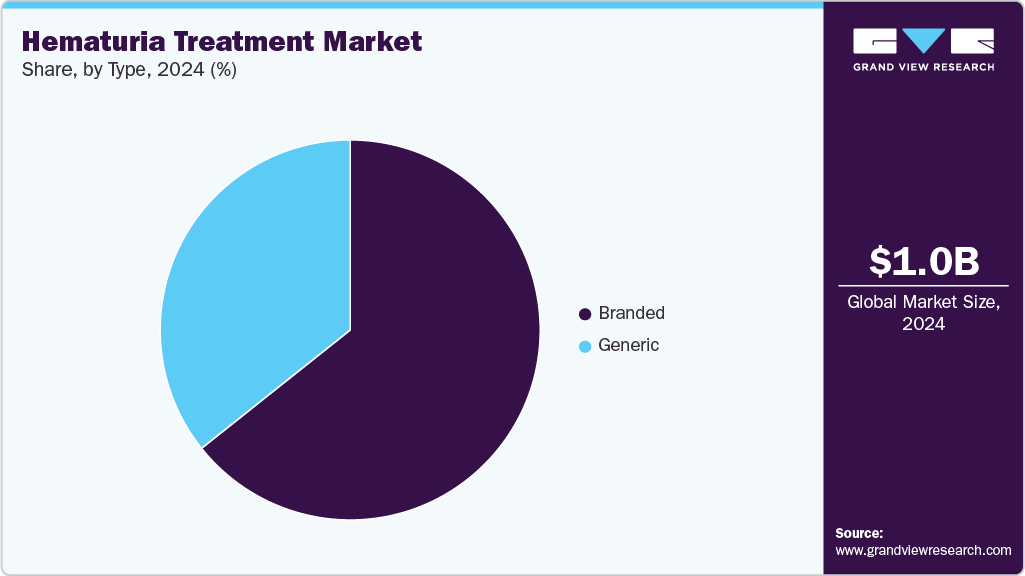
The generic segment is expected to grow at the fastest CAGR over the forecast period. The global hematuria treatment industry is driven by cost-efficiency, wider accessibility, and increasing adoption in outpatient and resource-constrained settings. As patents expire on major branded antibiotics and supportive agents, generics provide a more affordable alternative for treating infection or drug-induced hematuria, expanding patient reach.
Regional Insights
North America hematuria treatment market dominated the respective global market and accounted for a 42.7% share in 2024. This growth is driven by the region’s aging population, rising incidence of bladder cancer, increasing awareness, and the integration of innovative treatments into clinical practice. The North American hematuria treatment industry is characterized by its advanced healthcare infrastructure, high incidence of underlying conditions such as urinary tract infections and bladder cancer, and rapid adoption of novel therapies
U.S. Hematuria Treatment Market Trends
The U.S. hematuria treatment market dominated the global industry in 2024. Demographic trends, technological advancements, and regulatory developments drive the U.S. hematuria treatment market. The aging population and increasing incidence of bladder cancer contribute to a higher demand for diagnostic and therapeutic solutions.
Asia Pacific Hematuria Treatment Market Trends
The market in the Asia Pacific is expected to grow at the fastest rate during the forecast period, owing to the increasing incidence of bladder cancer, advancements in diagnostic technologies, and rising healthcare expenditures. Technological advancements are also contributing to the market's growth. Minimally invasive diagnostic tools and treatments improve patient outcomes and reduce healthcare costs.
Japan hematuria treatment market is driven by a rising elderly population and increasing prevalence of bladder cancer, nephrological disorders, and urolithiasis. According to Japan’s National Cancer Center, bladder cancer ranks among the top ten cancers in men, contributing significantly to hematuria cases. Widespread availability of advanced cystoscopy systems improved diagnostic coverage, and adoption of generic antibiotics and intravesical agents are supporting market growth, alongside the country’s expanding urological care infrastructure.
The hematuria treatment market in China accounted for a significant share in 2024 and is witnessing significant growth, driven by an aging population, rising prevalence of urological conditions, and advances in diagnostic technologies. Bladder cancer, a major contributor to hematuria, had an increasing age-standardized incidence rate, underscoring the demand for effective treatment options. The market features multinational and domestic pharmaceutical players.
Europe Hematuria Treatment Market Trends
Europe’s hematuria treatment market is supported by high diagnostic awareness, structured screening for urological malignancies, and mature hospital infrastructure. Rising bladder cancer incidence, particularly in aging male populations that drives sustained procedural and pharmacological demand. Favorable reimbursement frameworks, strong clinical adoption of cystoscopy, and expanding use of minimally invasive interventions underpin steady growth, while the shift toward cost-effective generics enhances accessibility across public healthcare systems.
The UK market benefits from a robust National Health Service network and widespread access to urological diagnostics. The country reports over 10,000 new bladder cancer cases annually, making hematuria a common referral symptom. Increasing use of flexible cystoscopy, adherence to NICE diagnostic guidelines, and preference for outpatient management support demand. Ongoing transitions from branded to generic antibiotics and intravesical agents enhance affordability and system sustainability.
Germany hematuria treatment market is characterized by strong hospital-based care, early diagnostic intervention, and extensive urological capacity. With bladder cancer among the top ten malignancies in men, recurring hematuria presentations remain frequent. Continuous investments in imaging and cystoscopy technologies, coupled with high procedural volumes and reimbursement stability, sustain market growth. The country’s preference for evidence-based pharmacotherapy, including generic formulations, strengthens its mature therapeutic ecosystem.
Hematuria treatment market in France is driven by early cancer screening programs, well-established urological centers, and favorable access to reimbursed therapies. Increasing incidence of urolithiasis and recurrent urinary infections contribute to rising hematuria cases. Adoption of intravesical therapies, minimally invasive stone removal, and hospital formulary preferences for cost-effective generics foster market expansion. The ongoing government focus on modernizing oncology care is also indirectly driving demand for hematuria management.
Latin America Hematuria Treatment Market Trends
The Latin American market shows moderate growth, supported by improving diagnostic infrastructure and expanding access to urological services. The rising prevalence of urinary tract infections, bladder cancer, and nephrolithiasis drives patient evaluation volumes. Uneven healthcare coverage and delayed diagnosis remain challenges, but public-private partnerships and increasing imports of affordable generics are enhancing treatment access. Brazil and Mexico dominate regional revenues due to higher procedural adoption.
Brazil leads the Latin American hematuria treatment market, driven by expanding urban healthcare infrastructure and high incidences of urinary tract infections and bladder cancer. The Brazilian Urological Society promotes early hematuria assessment, boosting demand for cystoscopy and pharmacotherapy. Growing acceptance of biosimilars and generics, combined with greater private-sector investment in diagnostic imaging, supports market expansion, although rural access disparities persist.
Middle East & Africa Hematuria Treatment Market Trends
The Middle East & Africa market is in a developing phase, propelled by rising awareness of urological conditions and improvements in tertiary healthcare facilities. Increased detection of urinary infections, kidney stones, and oncology-related hematuria contributes to steady demand. Wealthier Gulf nations are investing in endourology and advanced imaging systems, while sub-Saharan regions depend on imported generic antibiotics and limited specialist capacity.
Saudi Arabia hematuria treatment market is growing steadily, supported by government healthcare investment under Vision 2030 and a rising burden of urolithiasis and bladder cancer. Advanced hospitals in Riyadh and Jeddah increasingly adopt minimally invasive cystoscopy and endourologic interventions. Favorable insurance coverage, introduction of generics, and international collaborations with pharmaceutical firms are improving access to both pharmacological and procedural treatments across the kingdom.
Key Hematuria Treatment Company Insights
Some key companies operating in the hematuria treatment industry include Novartis AG, Pfizer Inc., Johnson & Johnson, etc.
Key Hematuria Treatment Companies:
The following are the leading companies in the hematuria treatment market. These companies collectively hold the largest market share and dictate industry trends.
- AstraZeneca
- Bristol-Myers Squibb Company
- F. Hoffmann-La Roche Ltd.
- Johnson & Johnson and its affiliates
- Merck & Co., Inc.
- Novartis AG
- Pfizer Inc.
- Sun Pharmaceutical Industries Ltd.
Recent Developments
Hematuria Treatment Market Report Scope
|
Report Attribute
|
Details
|
|
Market size value in 2025
|
USD 1,119.7 million
|
|
Revenue forecast in 2033
|
USD 1,426.9 million
|
|
Growth rate
|
CAGR of 3.1% from 2025 to 2033
|
|
Base year for estimation
|
2024
|
|
Historical data
|
2021 - 2023
|
|
Forecast period
|
2025 - 2033
|
|
Quantitative units
|
Revenue in USD million/billion and CAGR from 2025 to 2033
|
|
Report coverage
|
Revenue forecast, company ranking, competitive landscape, growth factors, trends
|
|
Segments covered
|
Treatment type, type, and region
|
|
Regional scope
|
North America; Europe; Asia Pacific; Latin America; Middle East & Africa
|
|
Country scope
|
U.S.; Canada; UK; Germany; Italy; France; Spain; Sweden; Denmark; Norway; Japan; China; India; Australia; South Korea; Thailand; Brazil; Mexico; Argentina; South Africa; Saudi Arabia; UAE; Kuwait
|
|
Key company profiled
|
AstraZeneca; Bristol-Myers Squibb Company; F. Hoffmann-La Roche Ltd.; Johnson & Johnson and its affiliates; Merck & Co., Inc.; Novartis AG; Pfizer Inc.; Sun Pharmaceutical Industries Ltd.
|
|
Customization scope
|
Free report customization (equivalent up to 8 analysts working days) with purchase. Addition or alteration to country, regional & segment scope.
|
|
Pricing and purchase options
|
Avail customized purchase options to meet your exact research needs. Explore purchase options
|
Global Hematuria Treatment Market Report Segmentation
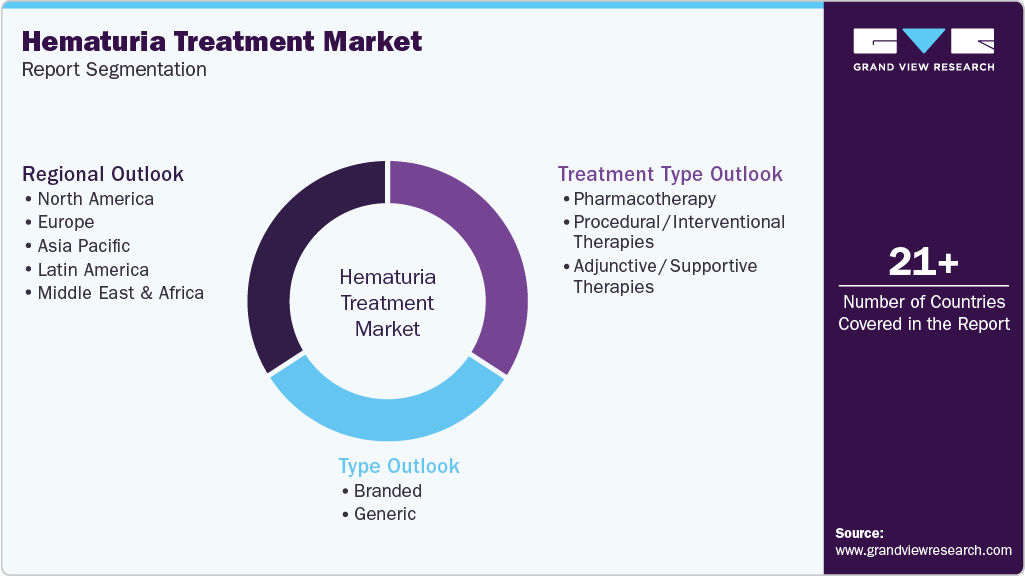
This report forecasts revenue growth at global, regional, and country levels and provides analysis of the latest industry trends in each of the sub-segments from 2021 to 2033. For this study, Grand View Research has segmented the global hematuria treatment market report based on treatment type, type, and region:
-
Treatment Type Outlook (Revenue, USD Million, 2021 - 2033)
-
Type Outlook (Revenue, USD Million, 2021 - 2033)
-
Regional Outlook (Revenue, USD Million, 2021 - 2033)
-
North America
-
Europe
-
Germany
-
UK
-
France
-
Italy
-
Spain
-
Denmark
-
Sweden
-
Norway
-
Asia Pacific
-
China
-
India
-
Japan
-
South Korea
-
Australia
-
Thailand
-
Latin America
-
Middle East & Africa
-
South Africa
-
Saudi Arabia
-
UAE
-
Kuwait

 Download Sample Report
















