
- Home
- »
- Medical Devices
- »
-
Home Use Intermittent Catheter Devices Market Report, 2033GVR Report cover
![Home Use Intermittent Catheter Devices Market Size, Share & Trends Report]()
Home Use Intermittent Catheter Devices Market (2026 - 2033) Size, Share & Trends Analysis Report By Product (Coated Catheters (Hydrophilic), Uncoated Catheters), By User Category, By Application, By Tip, By Distribution Channel, By Region, And Segment Forecasts
- Report ID: GVR-4-68040-849-3
- Number of Report Pages: 120
- Format: PDF
- Historical Range: 2021 - 2024
- Forecast Period: 2026 - 2033
- Industry: Healthcare
- Report Summary
- Table of Contents
- Segmentation
- Methodology
- Download FREE Sample
-
 Download Sample Report
Home Use Intermittent Catheter Devices Market Summary
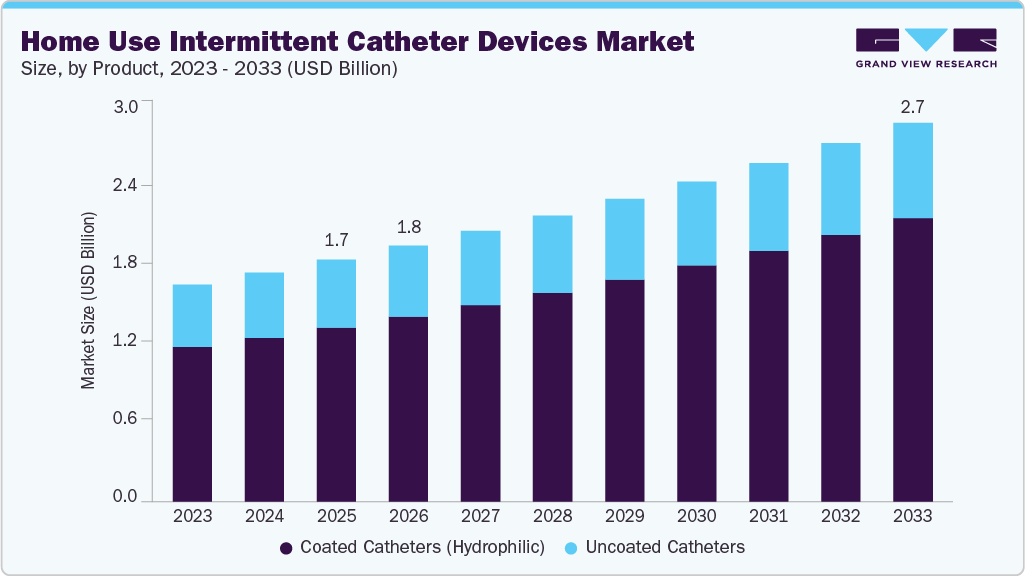
The global home use intermittent catheter devices market size was estimated at USD 1.74 billion in 2025 and is projected to reach USD 2.72 billion by 2033, growing at a CAGR of 5.8% from 2026 to 2033. The market is primarily driven by the rising prevalence of chronic urinary disorders and the growing elderly population requiring long-term bladder management.
Key Market Trends & Insights
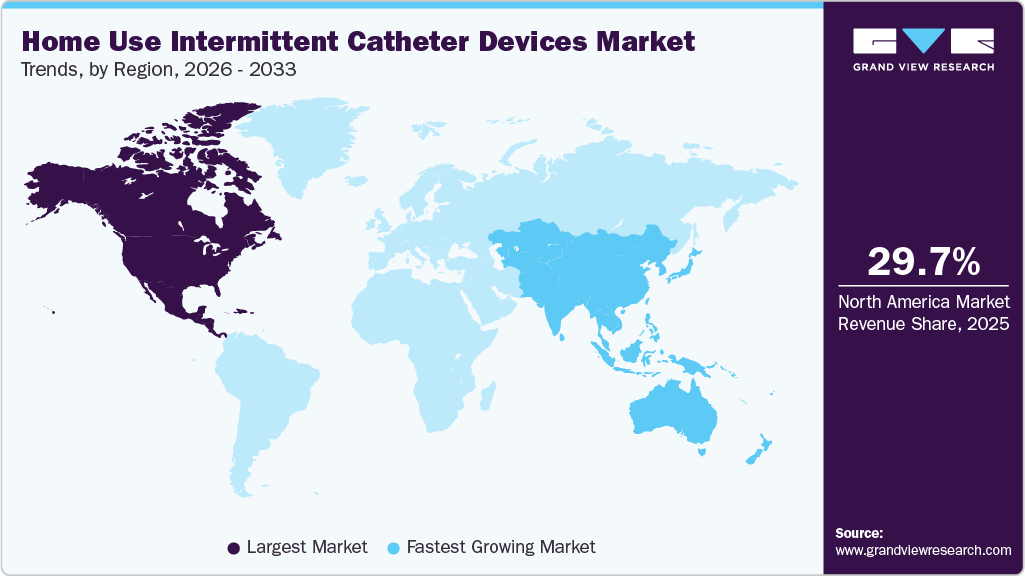
- North America dominated the home use intermittent catheter devices market with the largest revenue share of 29.65% in 2025.
- The home use intermittent catheter devices market in the U.S. accounted for the largest revenue share in North America in 2025.
- By product, the coated catheters (hydrophilic) segment led the market with the largest revenue share in 2025.
- By user category, the male segment led the market with the largest revenue share of in 2025.
- By application, urinary incontinence (UI) segment led the market with the largest revenue share in 2025.
- By tip, the straight segment led the market with the largest revenue share of in 2025.
- By distribution channel, the hospitals segment led the market with the largest revenue share in 2025.
Market Size & Forecast
- 2025 Market Size: USD 1.74 Billion
- 2033 Projected Market Size: USD 2.72 Billion
- CAGR (2026-2033): 5.8%
- North America: Largest market in 2025
- Asia Pacific: Fastest growing market
A strong shift toward home-based self-care, supported by healthcare cost-containment efforts, is accelerating the adoption of self-care outside clinical settings. Technological advancements, including hydrophilic coatings, compact designs, and closed-system catheters, have enhanced safety, comfort, and ease of use for patients. In addition, increased awareness of lower infection risk compared to indwelling catheters continues to support market growth.The rising prevalence of urological and neurological disorders such as spinal cord injuries, multiple sclerosis, urinary retention, and neurogenic bladder has significantly increased the need for long-term bladder management solutions. As many of these conditions require regular and ongoing catheterization, patients are opting for home-use intermittent catheters, which enable safe self-management, independence, and reduced reliance on clinical settings.
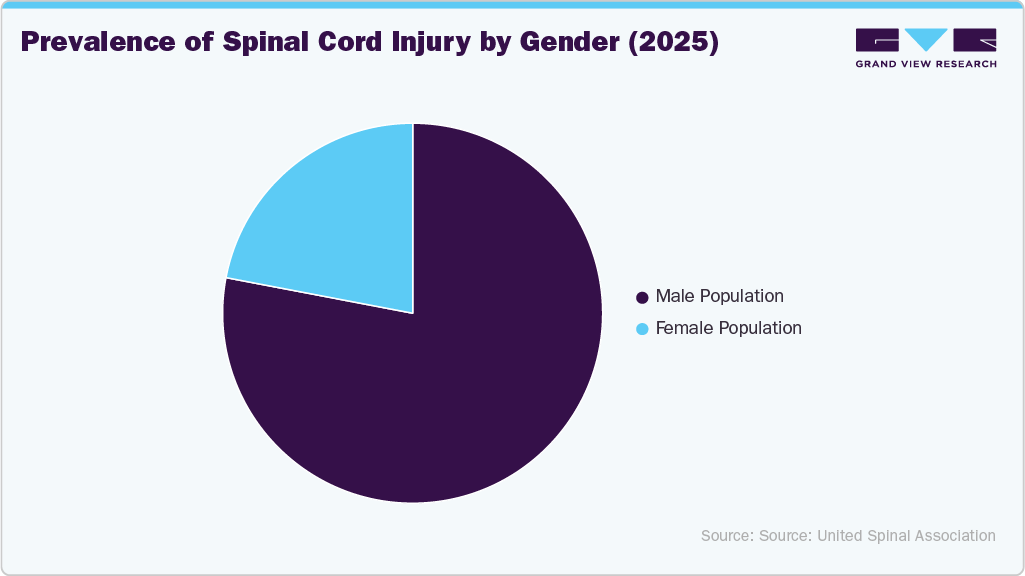
The rising prevalence of spinal cord injury (SCI) is driving growth in the home-use intermittent catheter device market, as many SCI patients require lifelong bladder management due to a neurogenic bladder. Increased emphasis on intermittent self-catheterization for home care, along with improved survival rates and a shift from hospital to home settings, is enhancing demand for easy-to-use intermittent catheters. For instance, according to the National Spinal Cord Injury Statistical Center, in 2024, approximately 308,620 individuals are currently living with traumatic spinal cord injury (tSCI) in the United States, with estimates ranging from 259,374 to 393,913 persons.
Most spinal cord injuries occur due to the reasons outlined in the table below, with vehicle accidents and falls accounting for the highest percentage of cases, followed by violence, sports-related injuries, and medical or surgical causes.
Causes of Spinal Cord Injury in the U.S.
Cause
Percentage of Cases
Vehicle accidents
39.30%
Falls
31.80%
Violence
13.20%
Sports-related injuries
8.00%
Medical or surgical causes
4.30%
Source:United Spinal Association
Product innovations that enhance safety and comfort are key drivers of the home use intermittent catheter devices market. Advances such as ergonomic designs, smooth catheter materials, and features that reduce the risk of infection help users feel more secure and comfortable during use. These improvements encourage greater adoption among patients who prefer managing their condition at home, leading to increased market demand. As manufacturers continue to innovate with safer and more comfortable options, they are expanding access to and adherence with catheter use, ultimately driving the market growth.
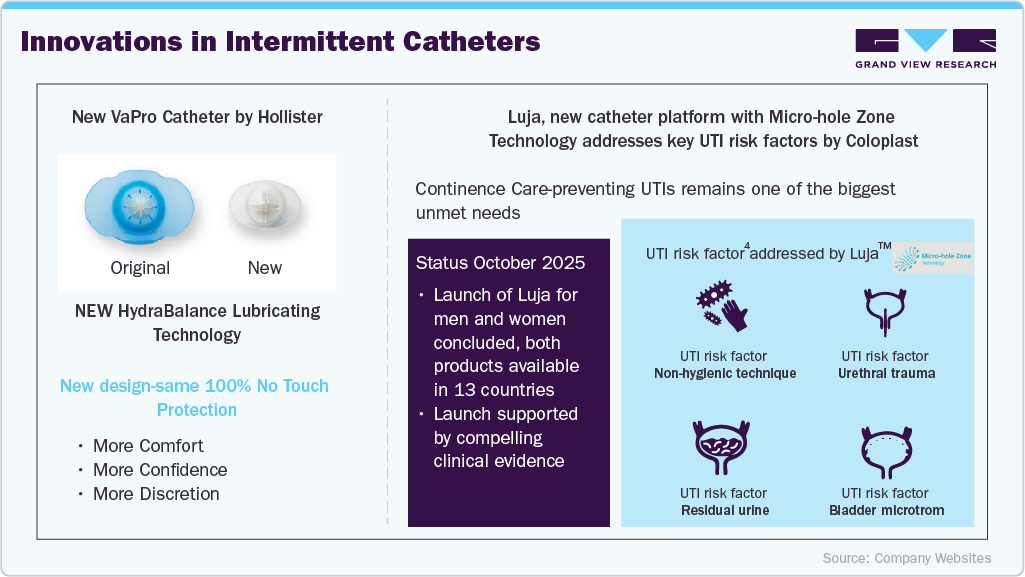
For instance, Hollister and Coloplast have launched innovative intermittent catheter products featuring advanced protection and urine-flow technologies, which are driving overall market growth and significantly increasing demand across the home-use catheter market.
Furthermore, key industry leaders highlight that home-use intermittent catheter devices are transforming patient care by enabling safe, convenient self-catheterization, reducing hospital visits, and improving quality of life. They also emphasize the growing demand for user-friendly, hygienic, and innovative catheter solutions tailored for home use.
Company
Product
Key Opinions
Hollister Incorporated
Closed System Intermittent Catheters
“Expanding access to closed system intermittent catheters is more than a policy victory- it’s a powerful step forward in fulfilling our mission to make life more rewarding and dignified for people who use our products and services. This change reflects our unwavering dedication to making a meaningful difference for our customers,” said President and CEO, Abinash Nayak.
“This historical transformation represents a significant step forward in Continence Care and patient advocacy, allowing for the clinician and patient to make the best product choice to meet their individual and specific needs,” said Casey Haan, Senior Director, Market Access and Government Affairs.
Convatec Group PLC
Intermittent catheter
Mark Jassey, President & Chief Operating Officer, Continence Care & Home Services Group at Convatec, said: “New catheter users can be overwhelmed by changes in their lives and often have basic questions and anxiety about many different topics. We know that a large proportion of intermittent catheter users say their needs are not met from current resources and support to help them live life confidently.
Dr Ased Ali, Senior Medical Affairs Director and Consultant Urologist at Convatec said: “As we continue to innovate our products, services and solutions, our primary focus remains on enhancing patient care and overall wellbeing. The Continence Care me+ support programme empowers users to manage their health confidently from practical advice on travelling and diet to selecting a catheter and knowing when to catheterize. Just as important is supporting healthcare professionals (HCPs) so that they can help patients live their life to the fullest. That’s why we worked with a team of medical experts and clinicians to provide comprehensive FAQs, a personalized video guide and resources all in one place to provide emotional and wellbeing support for HCPs to have an effective conversation.”
Source: Convatec Group PLC, Hollister Incorporated, Grand View Research
In addition, the shift toward home-based and self-care management is another factor that driving the home-use intermittent catheter device market, supported by rising concerns over catheter-associated urinary tract infections (CAUTIs) in hospital settings. To reduce the risk of infection and hospital stays, healthcare providers recommend intermittent self-catheterization at home. User-friendly, single-use, and hygienic catheter designs further support this transition, boosting market adoption. For instance, according to the National Healthcare Safety Network, acute care hospitals reported over 17,000 CAUTI events in 2023 across more than 23 million urinary catheter device-days. Nearly all healthcare-associated UTIs are linked to urinary tract instrumentation. An estimated 12%-16% of adult hospital inpatients receive an indwelling urinary catheter during hospitalization, and each additional day of catheter use increases the risk of developing a catheter-associated urinary tract infection by 3%-7%.
Market Concentration & Characteristics
The degree of innovation in the home use intermittent catheter devices market is high, driven by continuous improvements in patient comfort, safety, and usability. Manufacturers are focusing on hydrophilic and pre-lubricated coatings, compact and discreet designs, and closed-system catheters to reduce the risk of infection and support independent self-catheterization at home. For instance, in May 2024, Wellspect HealthCare announced the launch of a new line extension to its LoFric Origo catheter portfolio at EAUN24. The newly introduced LoFric Origo Sleeve is designed around a non-touch technique, enhancing hygiene and ease of use for patients, particularly in home-care settings.
The level of merger and acquisition activity in the home use intermittent catheter devices market is moderate, with leading medical device companies pursuing targeted acquisitions to expand their continence care portfolios and geographic reach. M&A strategies are primarily focused on gaining access to innovative catheter technologies, strengthening home care distribution networks, and consolidating positions in mature markets, such as North America and Europe.
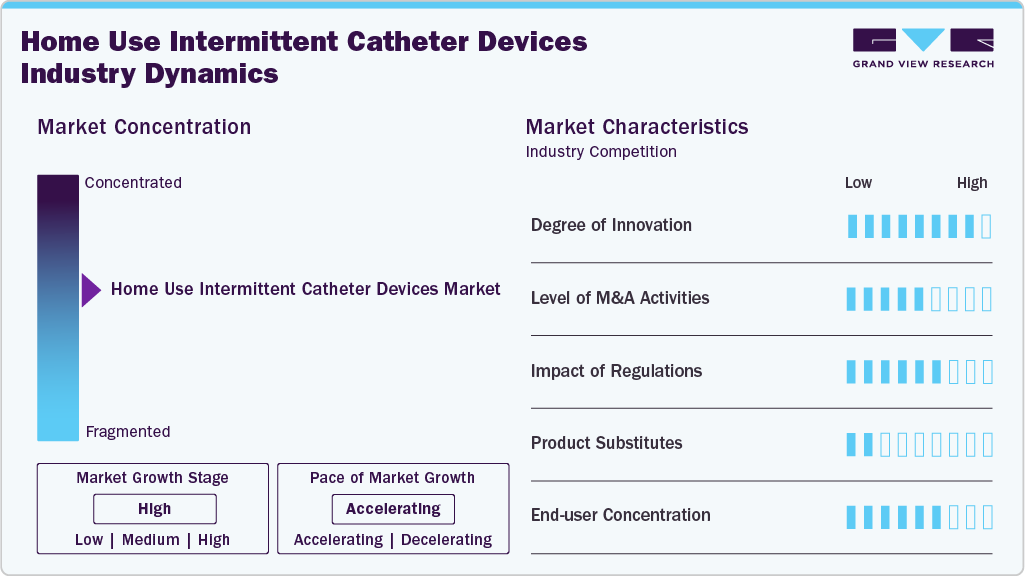
Regulations have a significant impact on the home use intermittent catheter devices market, as products must comply with stringent medical device standards related to safety, sterility, and biocompatibility. Regulatory approvals and quality requirements, such as FDA clearance and CE marking, increase development costs and timelines but also enhance product reliability and patient trust, supporting long-term market growth.
End-user concentration in the home use intermittent catheter devices market is high, with most of the demand coming from patients performing self-catheterization in home-care settings. A smaller but significant share is supported by home healthcare providers and caregivers, while hospital and clinical use remains limited primarily to initial training and patient education rather than ongoing consumption.
Product Insights
The coated catheters (Hydrophilic) segment dominated the home use intermittent catheter devices market in 2025 and is also expected to be the fastest-growing segment during the forecast period due to their enhanced comfort, reduced friction, and lower risk of urinary tract infections. These catheters, including silicone- and gel-coated hydrophilic catheters, are preferred by patients and healthcare providers for routine self-catheterization. Ongoing product innovations, such as improved coating technologies for smoother insertion, along with growing patient awareness, are further driving strong demand in this segment.
Uncoated catheters are experiencing significant growth in the home use intermittent catheter devices market due to their cost-effectiveness and widespread availability. They are often preferred in regions with budget constraints or for patients who perform frequent catheterizations and seek affordable options. The growing awareness of proper catheterization techniques and supportive home care programs is driving their adoption.
User Category Insights
The male segment dominated the home use intermittent catheter devices market in 2025, due to a higher prevalence of urinary retention and prostate-related conditions requiring catheterization. Strong demand was supported by well-established usage patterns and the availability of a wide range of male-specific catheter products. The increasing awareness and recommendations from healthcare providers reinforced their leading market position.
The female segment is expected to be the fastest-growing in the home use intermittent catheter devices market during the forecast period, driven by increasing awareness of discreet, easy-to-use catheter options tailored for women. Rising prevalence of urinary issues among women, along with product innovations focused on comfort and convenience, is boosting adoption. The greater access to education and support for self-catheterization is encouraging more female patients to choose home care solutions.
Application Insights
The urinary incontinence (UI) segment dominated the home use intermittent catheter devices market in 2025, driven by the high prevalence of incontinence conditions and the growing elderly population requiring regular bladder management. Strong demand was driven by increased awareness of self-catheterization as an effective care option and the availability of user-friendly products. Furthermore, healthcare initiatives promoting improved quality of life for UI patients supported the segment’s leading position.
The neurogenic bladder segment is expected to be the fastest-growing in the home use intermittent catheter devices market during the forecast period, driven by the rising incidence of neurological disorders such as spinal cord injuries and multiple sclerosis. Increased awareness of the benefits of self-catheterization for bladder management and improving access to advanced catheter technologies are fueling this growth. The expanding support from healthcare providers for personalized home care solutions is accelerating adoption in this patient group.
Tip Insights
The straight tip segment dominated the home use intermittent catheter devices market in 2025, due to its simplicity, ease of use, and suitability for a wide range of patients. Its straightforward design makes it a preferred choice for both new and experienced users seeking comfort and reliability. The strong availability through major healthcare channels and growing patient awareness contributed to its leading market share.
The coudé tip segment is expected to be the fastest-growing in the home use intermittent catheter devices market during the forecast period, driven by increasing demand from patients with enlarged prostates or urethral strictures who benefit from its angled design. Its enhanced ease of navigation and reduced risk of urethral trauma are boosting preference among healthcare providers and users. Growing clinical awareness and product innovations are further supporting its rapid adoption.
Distribution Channel Insights
DME / home care providers dominated the product segment in 2025,due to its established distribution networks and strong relationships with patients requiring long-term urological care. This segment’s leadership was driven by increasing demand for convenient, reliable catheter solutions that can be used safely at home. In addition, support services offered by home care providers, such as training and follow-up, reinforced their preference among patients and healthcare professionals.
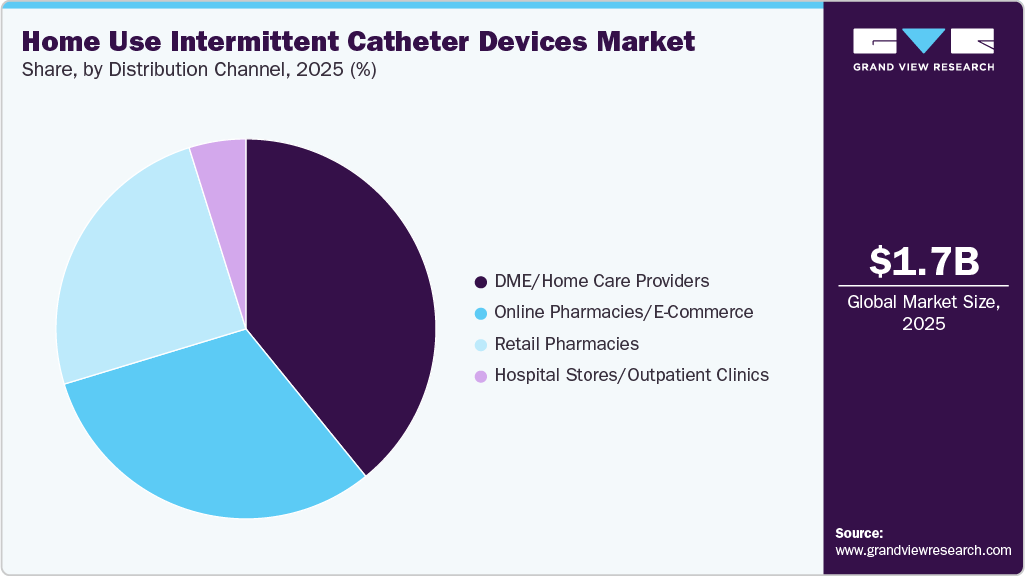
Online pharmacies are expected to be the fastest-growing channel in the home use intermittent catheter devices market during the forecast period, driven by increasing consumer preference for convenient and discreet purchasing options. Easy online access to products, coupled with home delivery and growing digital health adoption, is boosting their appeal. Rising awareness and acceptance of self-care solutions are encouraging more patients to buy catheter devices through online platforms.
Regional Insights
North America home use intermittent catheter devices market held the largest share and accounted for 29.65% of global revenue in 2025, driven by an increasing aging population and rising prevalence of urinary conditions such as incontinence and retention. Technological advancements have led to the development of more comfortable and user-friendly products, boosting consumer adoption. In addition, a growing awareness of self-care and a shift towards outpatient management of urinary issues are fueling demand. Market players are also focusing on innovation and improving product accessibility to capture a larger share of this expanding market.
U.S. Home Use Intermittent Catheter Devices Market Trends
Home use intermittent catheter devices market in the U.S. is experiencing significant growth as consumers seek more convenient and discreet solutions for urinary management. Advances in catheter design, emphasizing comfort and ease of use, are driving consumer preference. Furthermore, increasing awareness about urinary health and a preference for self-managed care are contributing to the market's expansion. Providers are also focusing on product innovation to meet the evolving needs of users and improve quality of life.
Europe Home Use Intermittent Catheter Devices Market Trends
Home use intermittent catheter devices market in Europe is witnessing growth driven by a rising aging population and increased focus on personal healthcare management. Innovations in catheter materials and design are enhancing user comfort and safety, encouraging more individuals to opt for home-based solutions. The greater awareness of urinary health issues and a shift towards minimally invasive treatment options are fueling market expansion. Healthcare providers in the region are also promoting self-care devices to improve patient independence and quality of life.
The UK home use intermittent catheter devices market is expanding as more individuals seek convenient and autonomous options for managing their urinary needs. Increased awareness of urinary health and a focus on improving patient comfort are driving demand for advanced, user-friendly catheter products. The trend toward self-care and outpatient solutions is supported by healthcare initiatives that promote independence and reduce hospital visits. Innovation in device design and materials continues to play a key role in shaping the market's growth.
Home use intermittent catheter devices market in France is experiencing significant growth, fueled by a rising focus on patient-centered care and outpatient treatment options. Advances in catheter technology are making devices more comfortable and easier to use, encouraging more patients to manage their condition at home. Increased healthcare awareness and a shift towards minimally invasive solutions are also contributing to the market’s upward trajectory. The trend reflects a broader shift toward improving the quality of life through innovative urinary management solutions.
Asia Pacific Home Use Intermittent Catheter Devices Market Trends
Home use intermittent catheter devices market in Asia Pacific is experiencing growth, driven by expanding healthcare infrastructure and increasing awareness of urinary health management. Rapid urbanization and an aging population are driving demand for convenient, at-home medical devices. The region's expanding healthcare investment and technological advancements are fostering innovation, making these devices more accessible and user-friendly. This trend indicates a significant shift toward self-care and outpatient treatment solutions across Asia Pacific countries.
The China home use intermittent catheter devices market is witnessing gradual growth, driven by increasing awareness of urinary health and a rising incidence of chronic and age-related urological conditions. The expansion of home healthcare services and improved access to medical devices are encouraging patients to adopt self-catheterization at home. Domestic manufacturers are focusing on affordable, user-friendly designs that support wider penetration beyond major urban centers. The market trend indicates a growing acceptance of home-based care, which aligns with cost efficiency and patient convenience.
Latin America Home Use Intermittent Catheter Devices Market Trends
The Latin America home use intermittent catheter devices market is gradually gaining momentum, supported by improving access to healthcare and growing awareness of at-home urinary care. The increasing prevalence of chronic conditions and a rising elderly population are encouraging the shift from hospital-based treatment to home-use solutions. Cost-sensitive markets are driving demand for affordable yet reliable catheter options, prompting manufacturers to tailor products for local needs. The region is moving toward greater adoption of self-care devices alongside the expansion of home healthcare services.
MEA Home Use Intermittent Catheter Devices Market Trends
The MEA home use intermittent catheter devices market is showing steady, early-stage growth, supported by expanding healthcare infrastructure and increasing awareness of self-managed urinary care. Demand is gradually rising as chronic diseases and age-related urological conditions become more prevalent across the region. Adoption remains uneven, with stronger uptake in urban and higher-income areas, where home healthcare services are more developed. The market trend reflects a gradual yet consistent shift toward home-based solutions that prioritize convenience and long-term cost savings.
Key Home Use Intermittent Catheter Devices Company Insights
The home use intermittent catheter devices market is largely led by a few established global manufacturers that hold a sizable share due to strong brand presence, wide product portfolios, and direct-to-consumer channels. Market share is concentrating around hydrophilic and ready-to-use catheters, as these higher-value products drive repeat usage, while smaller players mainly compete through pricing and local reimbursement advantages.
Key Home Use Intermittent Catheter Devices Companies:
The following key companies have been profiled for this study on the home use intermittent catheter devices market.
- Teleflex Incorporated
- Coloplast Corp
- Wellspect HealthCare, a Dentsply Sirona Company
- HR HealthCare
- BD
- Hollister Incorporated
- B. Braun SE
- Amsino International, Inc.
- Otsuka Pharmaceutical Factory, Inc.
- Cardinal Health
- Convatec
- Medline
Recent Developments
-
In November 2025, Hollister Incorporated announced a significant policy advancement that will benefit thousands of Medicare beneficiaries living with spinal cord injuries (SCI). Following a landmark patient advocacy effort, the Durable Medical Equipment Medicare Administrative Contractors (DME MACs) agreed to expand access to closed system intermittent catheters, recognizing their role in reducing urinary tract infections (UTIs) and improving patient health outcomes.
-
In December 2024, Convatec extended its me+ programme in the UK to better support intermittent catheter users and healthcare professionals (HCPs), aiming to provide a smoother and more consistent catheterization journey through enhanced education, resources, and ongoing support.
-
In August 2024, Convatec welcomed the Centers for Medicare & Medicaid Services’ (CMS) confirmation of new reimbursement codes for intermittent catheters in the United States, following the proposal issued in May 2024, with no change to pricing. Effective from January 2026, the revised coding framework is expected to encourage innovation and enable clearer differentiation between hydrophilic and other intermittent catheter types, supporting greater choice for healthcare professionals (HCPs) and improved patient outcomes.
Home Use Intermittent Catheter Devices Market Report Scope
Report Attribute
Details
Market size value in 2026
USD 1.84 billion
Revenue forecast in 2033
USD 2.72 billion
Growth rate
CAGR of 5.8% from 2026 to 2033
Base year for estimation
2025
Historical data
2021 - 2024
Forecast period
2026 - 2033
Quantitative units
Revenue in USD million/billion and CAGR from 2026 to 2033
Report coverage
Revenue forecast, company ranking, competitive landscape, growth factors, and trends
Segments covered
Product, user category, application, tip, distribution channel, region
Regional scope
North America; Europe; Asia Pacific; Latin America; MEA
Country scope
U.S.; Canada; Mexico; Germany; UK; France; Norway; Italy; Denmark; Sweden; Spain; China; Japan; India; South Korea; Australia; Thailand; Brazil; Argentina; KSA; UAE; South Africa; Kuwait; Saudi Arabia
Key companies profiled
Teleflex Incorporated, Coloplast Corp, Wellspect HealthCare, HR HealthCare, BD, Hollister Incorporated, B. Braun SE, Amsino International, Inc., Otsuka Pharmaceutical Factory, Inc., Cardinal Health, Convatec, Medline
Customization scope
Free report customization (equivalent up to 8 analysts working days) with purchase. Addition or alteration to country, regional & segment scope.
Pricing and purchase options
Avail customized purchase options to meet your exact research needs. Explore purchase options
Home Use Intermittent Catheter Devices Market Report Segmentation
This report forecasts revenue growth at global, regional, and country levels and provides an analysis on the latest industry trends in each of the sub-segments from 2021 to 2033. For this study, Grand View Research has segmented the global home use intermittent catheter devices market report based on product, user category, application, tip, distribution channel, and region:
-
Product Outlook (Revenue, USD Million, 2021 - 2033)
-
Coated Catheters (Hydrophilic)
-
Uncoated Catheters
-
-
User Category Outlook (Revenue, USD Million, 2021 - 2033)
-
Male
-
Female
-
-
Application Outlook (Revenue, USD Million, 2021 - 2033)
-
Urinary Incontinence (UI)
-
Neurogenic Bladder
-
Urinary Retention
-
Post-Surgical Care
-
-
Tip Outlook (Revenue, USD Million, 2021 - 2033)
-
Straight
-
Coudé
-
-
Distribution Channel Outlook (Revenue, USD Million, 2021 - 2033)
-
DME / Home Care Providers
-
Online Pharmacies / E-Commerce
-
Retail Pharmacies
-
Hospital Stores / Outpatient Clinics
-
-
Regional Outlook (Revenue, USD Million, 2021 - 2033)
-
North America
-
U.S.
-
Canada
-
Mexico
-
-
Europe
-
Germany
-
UK
-
France
-
Italy
-
Spain
-
Sweden
-
Denmark
-
Norway
-
-
Asia Pacific
-
Japan
-
China
-
India
-
Australia
-
South Korea
-
Thailand
-
-
Latin America
-
Brazil
-
Argentina
-
-
Middle East & Africa
-
South Africa
-
Saudi Arabia
-
UAE
-
Kuwait
-
-
Frequently Asked Questions About This Report
b. The global home use intermittent catheter devices market size was estimated at USD 1.74 billion in 2025 and is expected to reach USD 1.84 billion in 2026.
b. The global home use intermittent catheter devices market is expected to grow at a compound annual growth rate of 5.77% from 2026 to 2033 to reach USD 2.72 billion by 2033.
b. North America dominated the home use intermittent catheter devices market with a share of 33.33% in 2025. This is attributable to an increasing aging population and rising prevalence of urinary conditions such as incontinence and retention. Technological advancements have led to the development of more comfortable and user-friendly products, boosting consumer adoption.
b. Some key players operating in the home use intermittent catheter devices market include Teleflex Incorporated, Coloplast Corp, Wellspect HealthCare, HR HealthCare, BD, Hollister Incorporated, B. Braun SE, Amsino International, Inc., Otsuka Pharmaceutical Factory, Inc., Cardinal Health, Convatec, Medline
b. Key factors that are driving the market growth include the rising prevalence of chronic urinary disorders and the growing elderly population requiring long-term bladder management. A strong shift toward home-based self-care, supported by healthcare cost-containment efforts, is accelerating the adoption of self-care outside clinical settings.


Share this report with your colleague or friend.
Need a Tailored Report?
Customize this report to your needs — add regions, segments, or data points, with 20% free customization.


ISO 9001:2015 & 27001:2022 Certified
We are GDPR and CCPA compliant! Your transaction & personal information is safe and secure. For more details, please read our privacy policy.
Trusted market insights - try a free sample
See how our reports are structured and why industry leaders rely on Grand View Research. Get a free sample or ask us to tailor this report to your needs.













