
- Home
- »
- Healthcare IT
- »
-
Hospital Information System Market Size, Share Report 2033GVR Report cover

Hospital Information System Market (2026 - 2033)
Size, Share & Trends Analysis Report By Type (Population Health Management, Electronic Health Record), By Deployment (Web-based, On-premises, Cloud-based), By Component, By Region, And Segment Forecasts
Market Size, 2025
$54.7BMarket Estimate, 2026
$57.8BMarket Forecast, 2033
$89.2BCAGR, 2026–2033
6.4%Hospital Information System Market Summary
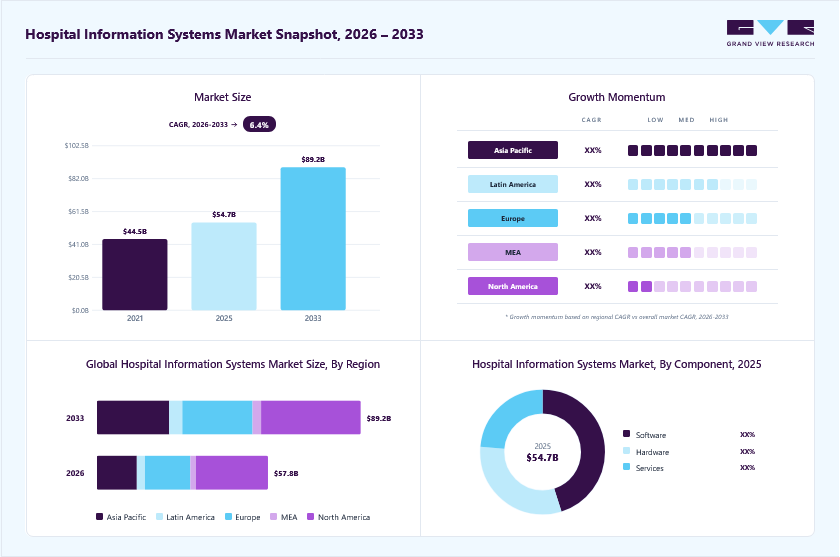
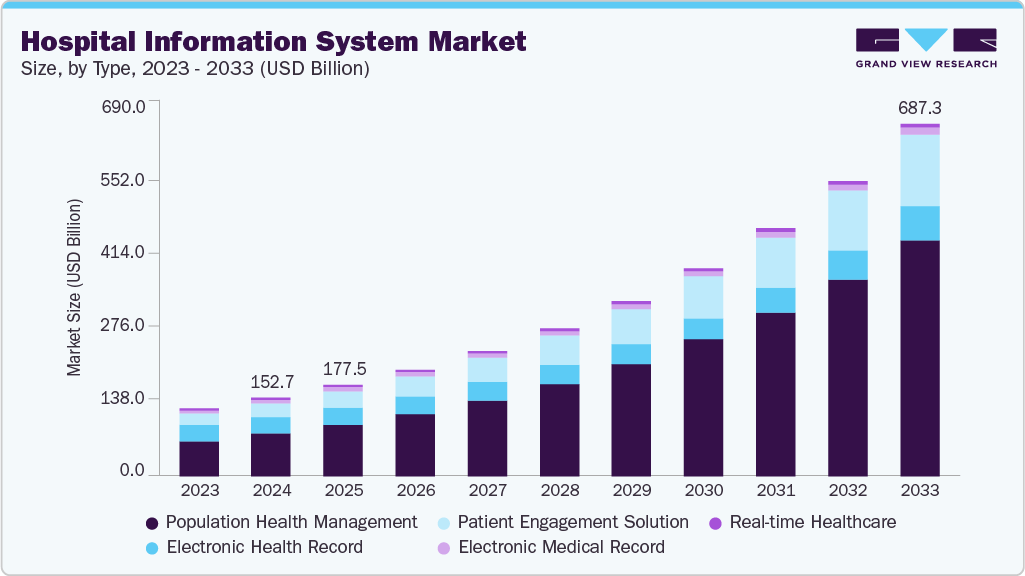
The global hospital information system market size was valued at USD 54.7 billion in 2025 and is projected to grow from USD 57.8 billion in 2026 to USD 89.2 billion by 2033, at a CAGR of 6.4% from 2026 to 2033. North America dominated the market, accounting for a revenue share of 42.7% in 2025. Hospital Information Systems (HIS) help healthcare facilities improve their operational outcomes and reduce the workload on the staff, which is expected to boost industry growth.
 Source: Grand View Research, IR Documents, Primary Interviews, Paid DatabasesTo learn more about this report,
 Download Free Sample Report
 Key Market Trends & Insights
- By type: Electronic Health Records (EHR) segment held the largest market share of 56.9% in 2025.
- By deployment mode: Web-based segment held the largest market share of 42.1% in 2025.
- By component: Software segment held the largest market share of 45.0% in 2025.
Regional Highlights
- Largest regional market: North America (42.7% revenue share, 2025)
- Fastest-growing regional market: Asia Pacific (highest CAGR, 2026-2033)
- By country: The U.S. held the largest market share in 2025.
Market Size & Forecast
- Market size in 2025: USD 54.7 Billion
- Estimated market size in 2026: USD 57.8 Billion
- Projected market size by 2033: USD 89.2 Billion
- CAGR (2026-2033): 6.4%
Three ways to get this report
Buy it, customize it, or ask a question.Ask an Analyst
Analyst response in 1 business day
- AccessReport author, directly
- Reply timeWithin 1 working day
- No sales callDirect answer only
- FormatEmail reply
- CostFree, no cost
Get the Full Report
What the study covers
- FormatsPDF · Excel · Dashboard
- Timeline2026–2033 annual, 2025 base
- Coverage20+ countries, 5 regions
- Companies10+ key players profiled
Customize the Report
20% free customization
- IncludeCountries, segments, points
- TailorTo your product definition
- ExtendDeeper competitor detail
- OrA fully bespoke study
- Turnaround5–10 working days
Various initiatives undertaken by governments across the globe and the rising demand for the deployment of advanced IT solutions in hospitals for enhanced operational efficiency are some of the key factors expected to boost the adoption of HIS.The need to curb healthcare expenditures due to hospital workflow inefficiencies is also anticipated to increase the adoption of these systems globally. Thus, the growing demand for effective clinical outcomes and reduced healthcare costs is a significant factor boosting the adoption of HIS in developed and emerging economies. The rising implementation of healthcare IT services and solutions by hospitals to provide enhanced care to patients at reduced costs, combined with the increasing need to upgrade the existing systems, is likely to be a key driver for the industry's growth.
 To learn more about this report, Download Free Sample Report
 Moreover, constant upgrades in the healthcare and IT infrastructure and increased adoption of cloud-based services in healthcare facilities are expected to drive the market further. For instance, in July 2024, King’s College Hospital London in Dubai (KCH Dubai) migrated its Oracle Health Electronic Health Record (EHR) to Oracle Cloud Infrastructure (OCI), achieving a 50% reduction in patient information access time, 20% less time reviewing medical charts, and a 25% overall decrease in EHR usage time.
“The combined power of OCI and our EHR is enabling KCH Dubai physicians to be more productive, waste less time in medical records, and refocus more time on patient care. Moreover, they have the comprehensive platform to continually be able to plug in the technologies they need to solve their toughest challenges and be more adaptable, predictive, and responsive to evolving healthcare needs.”
-Seema Verma, executive vice president and general manager, Oracle Health and Life Sciences.
Integrating Artificial Intelligence (AI) into hospital information systems transforms hospital workflows, enhancing efficiency, accuracy, and patient outcomes. AI streamlines repetitive administrative functions such as data entry, billing, and coding. This automation reduces human error and allows healthcare professionals to focus more on patient care.
By analyzing large amounts of patient data, AI provides predictive insights and personalized treatment recommendations, helping clinicians in making informed decisions. In addition, it facilitates seamless data sharing across different healthcare systems, enhancing collaboration among healthcare providers and ensuring comprehensive patient care. For instance, Oracle Health has developed a Clinical AI Agent that provides a comprehensive mobile solution to help physicians navigate workflow challenges, supporting time- and cost-efficient operations by combining clinical automation, note generation, integrated dictation, and proposed actions in a unified experience.
Furthermore, government initiatives and modernization programs are key market drivers in the hospital information systems industry. National strategies such as India's Ayushman Bharat Digital Health Mission, Saudi Arabia's Vision 2030, and the UAE's National Unified Medical Record program exemplify efforts to create integrated, unified healthcare data ecosystems. These programs enhance healthcare delivery quality, regulatory compliance, and operational transparency. Such government-backed initiatives provide a robust foundation for sustained market expansion.
Market Dynamics
Hospital Information Systems (HIS) help healthcare facilities improve their operational outcomes and reduce the workload on the staff, which is expected to boost industry growth. Various initiatives undertaken by governments across the globe and the rising demand for the deployment of advanced IT solutions in hospitals for enhanced operational efficiency are some of the key factors expected to boost the adoption of HIS.
Constant upgrades in the healthcare and IT infrastructure and increased adoption of cloud-based services in healthcare facilities are expected to drive the market growth. For instance, in July 2024, King’s College Hospital London in Dubai (KCH Dubai) migrated its Oracle Health Electronic Health Record (EHR) to Oracle Cloud Infrastructure (OCI), achieving a 50% reduction in patient information access time, 20% less time reviewing medical charts, and a 25% overall decrease in EHR usage time.
“The combined power of OCI and our EHR is enabling KCH Dubai physicians to be more productive, waste less time in medical records, and refocus more time on patient care. Moreover, they have the comprehensive platform to continually be able to plug in the technologies they need to solve their toughest challenges and be more adaptable, predictive, and responsive to evolving healthcare needs.”
-Seema Verma, executive vice president and general manager, Oracle Health and Life Sciences.
Integrating Artificial Intelligence (AI) into hospital information systems transforms hospital workflows, enhancing efficiency, accuracy, and patient outcomes. AI streamlines repetitive administrative functions such as data entry, billing, and coding. This automation reduces human error and allows healthcare professionals to focus more on patient care.
By analyzing large amounts of patient data, AI provides predictive insights and personalized treatment recommendations, helping clinicians in making informed decisions. In addition, it facilitates seamless data sharing across different healthcare systems, enhancing collaboration among healthcare providers and ensuring comprehensive patient care. For instance, Oracle Health has developed a Clinical AI Agent that provides a comprehensive mobile solution to help physicians navigate workflow challenges, supporting time- and cost-efficient operations by combining clinical automation, note generation, integrated dictation, and proposed actions in a unified experience.
For instance, in February 2026, Canada-based Lumeo Regional Health Information System (Lumeo RHIS) selected Oracle Health Clinical AI Agent for a pilot project representing six healthcare organizations: Brockville General Hospital, Kingston Health Sciences Center, Lennox and Addington County General Hospital, Perth and Smiths Falls District Hospital, Providence Care, and Quinte Health. The voice-enabled, AI-powered solution automatically generates narrative-rich draft clinical notes from interactions in near real time, reducing physicians' administrative workload by 30% on average and enabling them to spend more time on patient care.
“Administrative burden is a significant pressure eroding clinical practice—stealing time, fragmenting attention, and undermining clinician well‑being. Artificial Intelligence holds promise to improve clinician experience and remove low‑value tasks. We are excited to pilot Oracle Health’s Clinical AI Agent across our partner organizations to streamline documentation, return time to care, and support physicians where it matters most.”
- Dr. Siddhartha Srivastava, chief medical information officer, Lumeo.
Furthermore, government initiatives and modernization programs are key market drivers in the hospital information systems industry. National strategies such as India's Ayushman Bharat Digital Health Mission, Saudi Arabia's Vision 2030, and the UAE's National Unified Medical Record program exemplify efforts to create integrated, unified healthcare data ecosystems. These programs enhance healthcare delivery quality, regulatory compliance, and operational transparency. Such government-backed initiatives provide a robust foundation for sustained market expansion.
With the increasing adoption of cloud computing, connected medical devices, and digital healthcare platforms, cybersecurity threats in healthcare have become more prevalent. Healthcare information systems store large volumes of sensitive patient data, making them attractive targets for cybercriminals. While hospitals increasingly rely on interconnected systems such as electronic health records (EHR), telehealth platforms, and remote monitoring devices, concerns related to ransomware attacks, unauthorized data access, and system disruptions have intensified. Limited cybersecurity budgets, shortage of skilled IT professionals, and legacy IT infrastructure further increase the vulnerability of healthcare organizations to cyberattacks, thereby restraining the widespread adoption of digital healthcare technologies.
Healthcare data breaches have increased significantly in recent years. According to the 2024 Healthcare Data Breach Report in January 2025, 725 healthcare data breaches involving 500 or more records were reported, exposing more than 133 million patient records, highlighting the increasing vulnerability of healthcare IT systems to cyber threats. These incidents raise concerns among healthcare providers regarding the protection of sensitive patient information and create challenges for the adoption of healthcare information systems.
Market Concentration & Characteristics
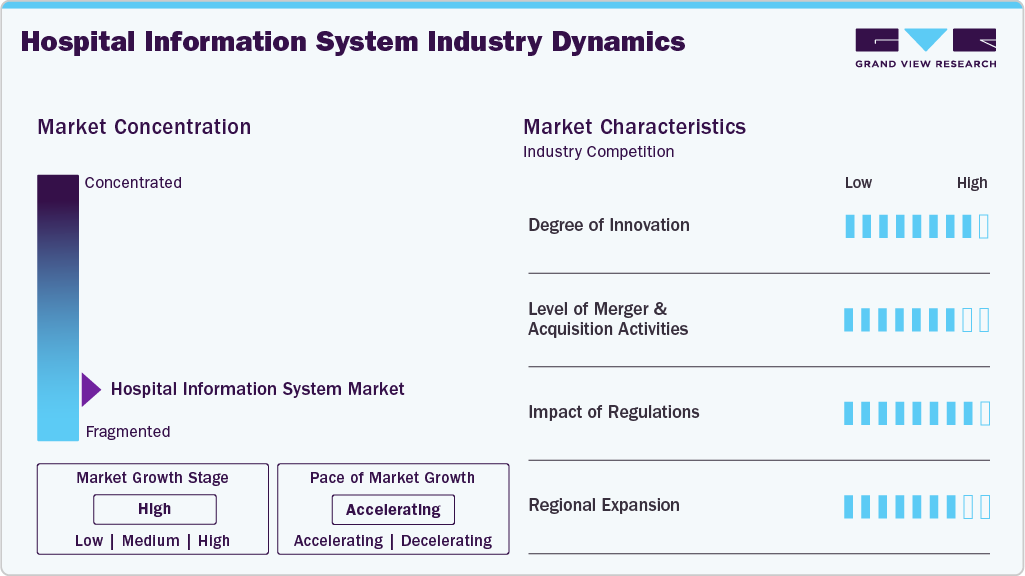
The chart below illustrates the relationship between market concentration, industry characteristics, and industry participants. The x-axis represents the level of industry concentration, ranging from low to high. The y-axis represents various industry characteristics, including industry competition, level of partnerships & collaborations activities, impact of regulations, and geographic expansion. The hospital information system industry is fragmented, with many small players entering the market and offering new products. The level of partnerships & collaborations activities, the impact of regulations, and the regional expansion of the market is medium.
Degree of Innovationin the hospital information system industry is high.eHealth initiatives encompass the development of current IT infrastructure and the promotion of patient engagement, along with patient-physician coordination tools. In addition, increasing adoption of remote patient monitoring solutions drives market growth further.
 To learn more about this report, Download Free Sample Report
 The impact of mergers and acquisitions on the hospital information system industry is high. Mergers and acquisitions in the hospital information system industry are increasing, with several companies acquiring smaller players to strengthen their market position, expand product portfolios, and improve competencies. For instance, in August 2025, CareCloud completed the acquisition of Medsphere Systems Corporation, expanding its reach into the hospital information system industry with inpatient EHR and revenue cycle management (RCM) solutions for small and mid-sized hospitals across the U.S.
“Medsphere and CareCloud are creating a next-generation platform-faster, smarter, and well aligned with the evolving needs of health systems. Our 600+ clients will benefit from integrating our full-stack offering with CareCloud’s AI and R&D infrastructure, positioning the combined company as an unmatched provider across the full care continuum.”
- Robert Hendricks, a member of the Board of Directors of Medsphere
Regulations play a crucial role in the hospital information system industry by establishing standards for data security, interoperability, and patient privacy. For instance, legislation such as HIPAA mandates stringent protocols to protect sensitive health data, constraining providers to adopt advanced information systems that adhere to these regulatory frameworks.
The impact of regional expansion in market is high. Several market players are involved in geographical expansion to enhance capabilities and have a direct presence in countries that have high demand. For instance, in July 2025, Seoul National University Bundang Hospital exported its Hospital Information System, "BESTCare 2.0A," to Saudi Arabia, which is expected to be implemented in major hospitals.
Analyst Perspective
The global hospital information systems (HIS) market is expanding as healthcare providers accelerate digital transformation and seek greater operational efficiency. Rising patient volumes, healthcare expenditure, regulatory requirements, and demand for coordinated care are encouraging hospitals to upgrade their information infrastructure. The adoption of EHRs, cloud-based platforms, AI-driven analytics, and clinical decision support tools is further supporting market growth. Healthcare providers are increasingly seeking interoperable systems that connect clinical, financial, administrative, and operational data. In addition, real-time analytics and population health management are gaining importance in improving clinical and operational outcomes. Vendors offering scalable platforms, strong interoperability, advanced analytics, and integrated healthcare IT solutions are expected to remain well positioned in the market.
Type Insights
By type, the Electronic Health Records (EHR) segment held the largest market share of 56.9% in 2025. However, the nursing information systems segment is anticipated to witness the fastest growth with a CAGR over the forecast period. The rising demand for effective disease management strategies is expected to boost segment growth. Population health management (PHM) has made significant progress as a structured, transformative, and data-driven approach that aims to enhance overall population health and well-being, improve the patient care experience, and ultimately reduce healthcare costs. In addition, this segment is anticipated to grow at the fastest CAGR over the forecast period. The transition of the healthcare industry to value-based healthcare from volume-based healthcare has strengthened the approach for incentives around risk reduction, improving outcomes, and appropriate utilization.
For most organizations, PHM adoption starts with managing chronic conditions such as cardiovascular diseases, diabetes, and hypertension. The increasing adoption of artificial intelligence in PHM to enhance patient engagement, clinical documentation, and hospital administration supports innovations in the market. For instance, in September 2024, HealthEC and VirtualHealth partnered to integrate HealthEC’s advanced population health analytics with VirtualHealth’s HELIOS care management platform.
Deployment Insights
By deployment mode, web-based segment held the largest market share of 42.1% in 2025. However, the cloud-based segment is expected to register fastest growth over the forecast period. Web-based hospital information system offers enhanced accessibility, facilitating seamless communication and data sharing among medical personnels, patients, & stakeholders. Major EHR vendors are launching new web-based solutions and expanding their services to cater to the growing demand, which is anticipated to boost the segment growth during the forecast period.
The cloud-based segment is expected to grow at the fastest CAGR during the forecast period. Cloud-based platforms enable real-time data access, seamless patient-provider communication, and secure storage of health information. For instance, in March 2022, Tata Elxsi introduced TEngage, a cloud-based digital health platform designed to help hospitals and healthcare providers deliver a seamless patient experience across multiple channels, enabling access to healthcare services anytime and anywhere.
Component Insights
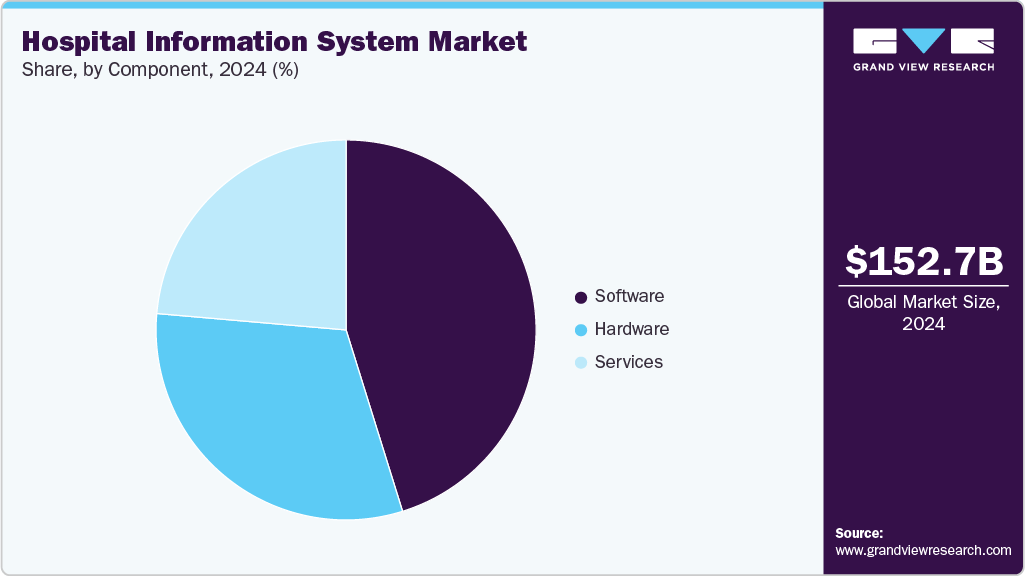
By component, the software segment held the largest market share of 45.0% in 2025. However, the services segment and is expected to witness the fastest growth during the forecast period from 2026 to 2033. The rising demand for comprehensive integrated software solutions in healthcare facilities significantly contributed to the growth of this segment. The software solutions perform critical functions, such as data capture, storage, interpretation, and analysis. The software solutions need periodic upgrades to sync with the latest analytics methods, which helps the facilities in managing their workflows.
 To learn more about this report, Download Free Sample Report
 The services component segment is expected to register at the fastest CAGR during the forecast period. This rapid growth can be attributed to the factors, such as the increasing adoption of technologically advanced solutions. In addition, cost-effective solutions offered by the key companies, which are also easy to install, are positively contributing to the growth of this segment. Several vendors in the global industry offer various services, such as optimization, hosting, consulting, and installation, which help hospitals in managing their information systems.
Regional Insights
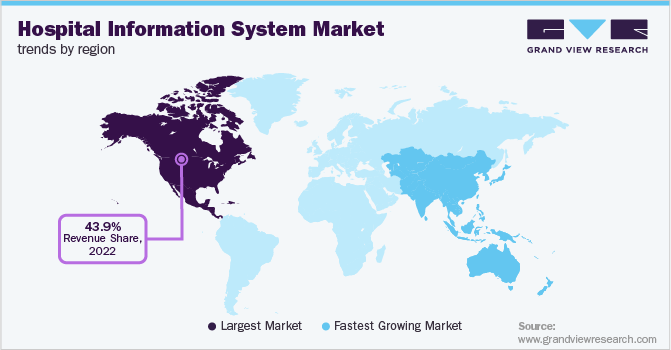
North America dominated the hospital information system market with the largest revenue share of 42.7% in 2025. Robust healthcare infrastructure with high digital literacy and policies supporting the adoption of electronic health records (EHRs), increasing adoption of Healthcare Information Technology (HCIT) by healthcare providers and payers, and rising preference for telehealth and remote patient monitoring are factors contributing to market growth. For instance, according to the Elation article published in March 2023, approximately 9 out of 10 U.S.-based physicians have implemented EHR.
 To learn more about this report, Download Free Sample Report
 U.S. Hospital Information System Market Trends
The hospital information system market in the U.S. held the largest share in the North America region in 2025. The hospital information system market in the U.S. has witnessed significant growth, fueled by the country’s shift toward value-based care, which emphasizes improving patient outcomes and reducing healthcare costs. Factors include the widespread adoption of digital health technologies such as telemedicine, mobile health apps, remote monitoring tools, and increasing patient demand for personalized and convenient healthcare experiences. In addition, increasing regulatory requirements and presence of large established companies such as Epic Systems, NextGen Healthcare, eClinicalWorks, Oracle, GE Healthcare, and Veradigm, LLC. Further fuel market growth.
Europe Hospital Information System Market Trends
The hospital information system market in Europe is anticipated to grow at a significant CAGR during the forecast period, due to digital transformation, improving healthcare efficiency, and patient outcomes. The presence of developed economies such as Germany, the UK, France, Spain, and Italy is expected to fuel the market growth during the forecast period. For instance, in December 2023, WHO/Europe and the European Commission signed a USD 14 million (€12 million), four-year partnership to strengthen health information systems and enhance health data governance and interoperability across 53 European countries.
The Germany hospital information system market is expected to grow at a significant CAGR during the forecast period. Germany is one of the key markets for healthcare IT in Europe. High utilization of EHRs to access patient information for treatment and reduce multiple investigations & treatment time, coupled with growing emphasis on healthcare data analytics, is expected to drive the market in Germany. For instance, in February 2025, Munich-based Avelios Medical secured USD 35 million (Euro 30 million) Series A funding led by Sequoia Capital to modernize hospital IT with its AI-driven, modular hospital information system (HIS).
The hospital information system market in the UK is anticipated to grow at a lucrative CAGR over the forecast period. This is attributable to an increasing number of initiatives, including developing integrated care systems for digital health and eHealth.
Asia Pacific Hospital Information System Market Trends
The hospital information system market in Asia Pacific is expected to witness at the fastest CAGR over the forecast period. This growth is attributed to the increasing digitalization of healthcare systems, government initiatives promoting healthcare IT adoption, and improvements in patient care quality and safety. In addition, growing focus on improving operational efficiency and the need for better data management and interoperability across hospitals are anticipated to drive market demand over the coming years.
The Japan hospital information system market accounted for the largest market revenue share in Asia Pacific in 2024, owing to factors such as rapid healthcare digitalization, government initiatives promoting smart healthcare, and increasing demand for cloud-based and AI-driven platforms. For instance, in March 2023, Fujitsu launched a cloud-based healthcare platform in Japan that securely collects and aggregates health data from medical institutions and personal devices, complying with HL7 FHIR standards. The platform supports personalized healthcare and drug development by enabling detailed data analysis and research.
The hospital information system market in India is growing rapidly, driven by the growing geriatric population, the increasing burden of chronic diseases, and government initiatives supporting the country’s eHealth scenario. For instance, in July 2025, the Delhi Government launched a new digital Health Information Management System (HIMS) to create a fully digital healthcare ecosystem.
Latin America Hospital Information System Market Trends
The hospital information system market in Latin America is anticipated to grow at a significant CAGR during the forecast period, due to demand for advanced healthcare amid a rapidly aging population and rising prevalence of chronic diseases. In addition, a growing population with diverse healthcare needs is driving the demand for improved patient care and operational efficiency, leading to an increased demand for the market.
Middle East & Africa Hospital Information System Market Trends
The hospital information system market in the Middle East & Africa region is anticipated to witness at a significant CAGR during the forecast period, due to increased healthcare expenditures and government investments in interoperability and artificial intelligence (AI), leveraging hospital information systems.
The UAE hospital information system market is expected to grow at a substantial CAGR over the forecast period. This growth is attributed to the increasing adoption of healthcare IT solutions. For instance, in January 2025, Saudi German Hospitals UAE (SGH UAE) partnered with Megamind IT Solutions to implement advanced Hospital Information Systems (HIS) and Enterprise Resource Planning (ERP) solutions. Moreover, rising government initiatives are expected to boost the market.
Key Hospitals Information System Company Insights
Key players operating in the hospital information system industry are undertaking various initiatives to strengthen their market presence and increase the reach of their products and services. Strategies such as new product launches and partnerships are playing a key role in propelling market growth.
Key Hospitals Information System Companies
The following key companies have been profiled for this study on the hospital information system market.
-
Carestream Health
-
Siemens Healthineers
-
McKesson Corp.
-
Philips Healthcare
-
GE Healthcare
-
Veradigm, LLC.
-
Oracle
-
NextGen Healthcare
-
Conifer Health Solutions, LLC
-
eClinicalWorks
-
Optum, Inc.
-
Epic Systems Corporation
Competitive Benchmarking
Operating Strategies
Competitive Edge
Weaknesses
Established Players (Oracle, Epic Systems Corporation, McKesson Corp., Optum, Inc., Siemens Healthineers, Philips Healthcare, GE Healthcare)
- Expand hospital information system (HIS) portfolios through continuous product innovation, strategic acquisitions, cloud-based platform development, and partnerships with hospitals, health systems, and government healthcare organizations.
- Invest in integrated EHRs, clinical decision support systems, revenue cycle management, interoperability platforms, AI-enabled analytics, population health management, and digital patient engagement solutions to strengthen market leadership.
- Focus on delivering end-to-end healthcare information ecosystems that connect clinical, financial, administrative, and operational workflows across healthcare enterprises.
- Strong global brand recognition, extensive healthcare IT expertise, comprehensive product portfolios, and long-standing relationships with hospitals and healthcare networks.
- Significant R&D investments, regulatory expertise, advanced interoperability capabilities, large implementation teams, and global support infrastructure enable deployment across complex healthcare environments and multi-facility health systems.
- High implementation, customization, and maintenance costs can create barriers for smaller healthcare providers.
- Complex deployment processes, lengthy implementation timelines, interoperability challenges with legacy systems, and substantial training requirements may impact adoption and customer satisfaction.
Emerging & Specialized Players (Carestream Health, Veradigm, LLC., NextGen Healthcare, Conifer Health Solutions, LLC, eClinicalWorks)
- Focus on specialized healthcare IT solutions such as ambulatory EHRs, practice management systems, healthcare analytics, revenue cycle optimization, imaging informatics, and cloud-based clinical workflow solutions.
- Leverage customer-centric innovation, flexible deployment models, rapid implementation capabilities, and targeted market expansion strategies to address specific healthcare provider needs and improve operational efficiency.
- Greater agility in responding to evolving healthcare IT requirements and regulatory changes.
- Ability to provide specialized solutions, faster deployment, lower implementation complexity, personalized customer support, and tailored workflow optimization for specific healthcare settings and provider segments.
- Limited global scale, narrower product portfolios, and lower financial resources compared to large enterprise healthcare IT vendors.
- Reduced brand visibility, smaller partner ecosystems, and limited capability to manage large-scale enterprise-wide deployments may restrict penetration into major health systems and government healthcare programs.
Recent Developments
-
In June 2025, Integra Connect launched RCM Sphere, a next-generation revenue cycle management ecosystem designed to unify people, processes, and technology for healthcare organizations. Powered by advanced AI, proprietary platforms, and agentic AI, it offers end-to-end execution from patient intake through collections, optimizing financial outcomes, operational efficiency, and transparency.
-
In January 2025, Percipio Health launched an AI-powered population health platform, securing USD 20 million in Series A funding led by UPMC Enterprises, WAVE Ventures, and Labcorp. The platform uses a smartphone app to collect vision-based and vocal AI biomarkers and other health signals, enabling real-time, device-free, holistic health monitoring and predictive insights for value-based care.
-
In December 2024, Allied Digestive Health partnered with Adonis to leverage its AI-driven Revenue Intelligence and Automation platform to enhance revenue cycle management (RCM). The platform provides real-time alerts, trend insights, and recommended actions, supporting Allied’s growing provider network with unified billing.
-
In October 2024, Oracle unveiled its next-generation Electronic Health Record (EHR) system. The EHR integrates AI across clinical workflows, automating processes, providing real-time insights, simplifying appointment preparation, documentation, and follow-ups. It supports seamless information exchange between payers and providers, facilitates clinical trial recruitment, optimizes financials, and accelerates value-based care adoption.
-
In November 2023, Thoma Bravo acquired NextGen Healthcare, Inc., a leading EHR systems manufacturer, to expand its capabilities in the market.
Hospital Information System Market Report Scope
Report Attribute
Details
Market size in 2025
USD 54.7 billion
Estimated market size in 2026
USD 57.8 billion
Projected market size by 2033
USD 89.2 billion
Growth rate
CAGR of 6.4% from 2026 to 2033
Historical data
2021 - 2024
Forecast period
2026 - 2033
Quantitative units
Revenue in USD million/billion and CAGR from 2026 to 2033
Report coverage
Revenue forecast, company ranking, competitive landscape, growth factors, and trends
Segments covered
Type, deployment mode, component, region
Regional scope
North America; Europe; Asia Pacific; Latin America; MEA
Country scope
U.S.; Canada; Mexico; UK; Germany; France; Russia; Italy; Spain; Netherlands; Sweden; Norway; Denmark; Ireland; Austria; Belgium; Switzerland; Japan; China; India; Australia; Singapore; Malaysia; Thailand; Indonesia; Philippines; South Korea; New Zealand; Brazil; Argentina; South Africa; Saudi Arabia; UAE; Kuwait; Morocco
Key companies profiled
Carestream Health; Siemens Healthineers; McKesson Corp.; Philips Healthcare; GE Healthcare; Veradigm LLC; Oracle; NextGen Healthcare; Conifer Health Solutions, LLC; eClinicalWorks; Optum, Inc.; Epic Systems Corporation
Customization scope
Free report customization (equivalent up to 8 analysts' working days) with purchase. Addition or alteration to country, regional & segment scope.
Pricing and purchase options
Avail customized purchase options to meet your exact research needs. Explore purchase options
Global Hospital Information System Market Report Segmentation
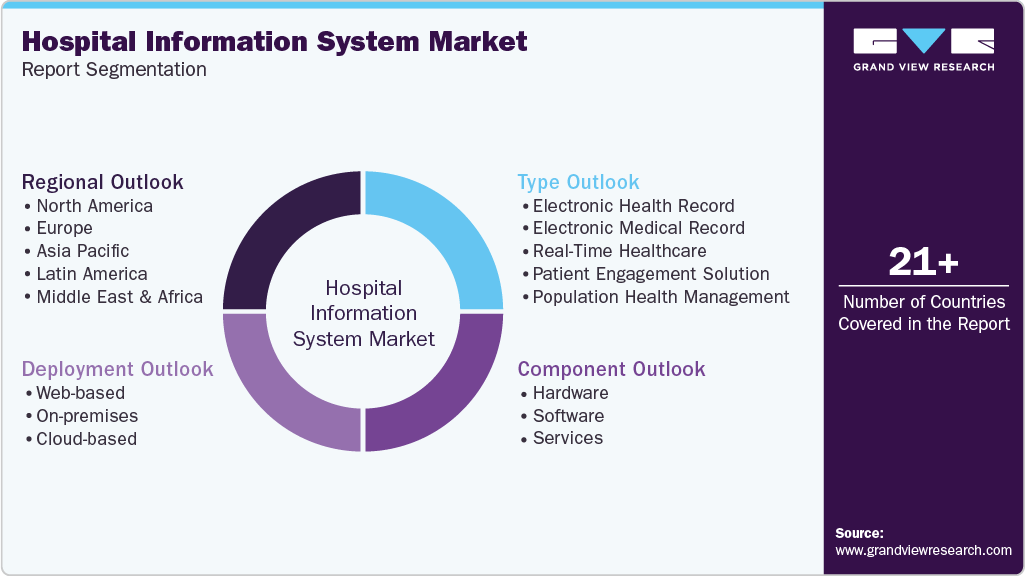
This report forecasts revenue growth at global, regional, and country levels and provides an analysis of the latest industry trends in each of the sub-segments from 2021 to 2033. For this study, Grand View Research has segmented the global hospital information system market report based on deployment, component, type, and region:
 To learn more about this report, Download Free Sample Report
 -
Deployment Outlook (Revenue, USD Million, 2021 - 2033)
-
Web-based
-
On-premises
-
Cloud-based
-
-
Component Outlook (Revenue, USD Million, 2021 - 2033)
-
Hardware
-
Software
-
Services
-
-
Type Outlook (Revenue, USD Million, 2021 - 2033)
-
Electronic Health Records (EHR)
-
Electronic Medical Records (EMR)
-
Clinical Decision Support Systems (CDSS)
-
Nursing Information Systems
-
Computerized Physician Order Entry (CPOE)
-
Real-Time Healthcare Monitoring Software
-
Patient Administration System
-
-
Regional Outlook (Revenue, USD Million, 2021 - 2033)
-
North America
-
U.S.
-
Canada
-
Mexico
-
-
Europe
-
UK
-
Germany
-
France
-
Russia
-
Italy
-
Spain
-
Netherlands
-
Sweden
-
Norway
-
Denmark
-
Ireland
-
Austria
-
Belgium
-
Switzerland
-
-
Asia Pacific
-
Japan
-
China
-
India
-
Australia
-
Singapore
-
Malaysia
-
Thailand
-
Indonesia
-
Philippines
-
South Korea
-
New Zealand
-
-
Latin America
-
Brazil
-
Argentina
-
-
Middle East and Africa (MEA)
-
South Africa
-
Saudi Arabia
-
UAE
-
Kuwait
-
Morocco
-
-
Research Methodology
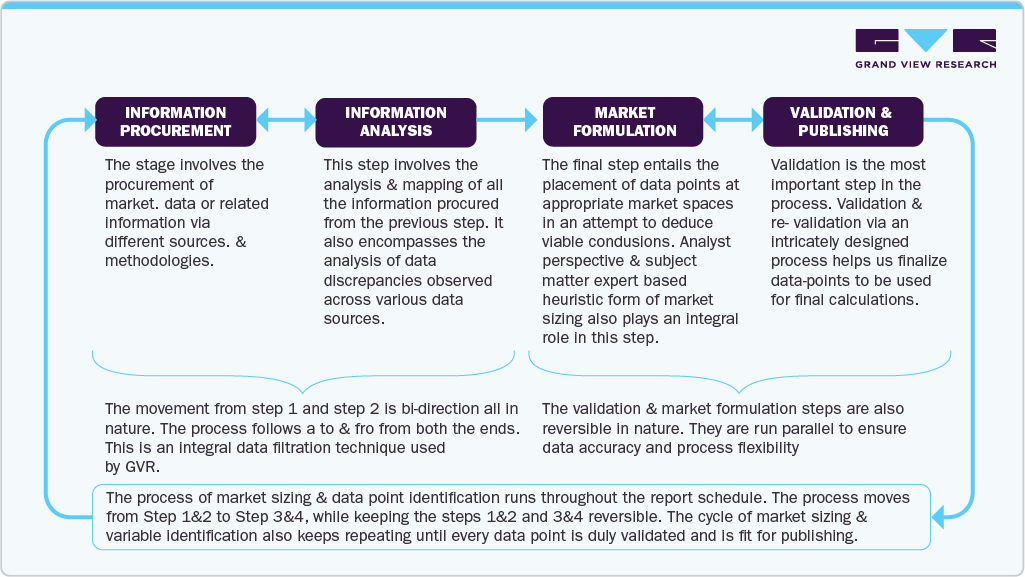
The hospital information system market figures in this report are based on a proven research process that combines executive interviews with secondary research from proprietary databases, company filings, and recognized regulatory and institutional sources. Market size is built through value-chain sizing - reconciling supply-side and demand-side estimates - and triangulated with bottom-up and top-down approaches. Every estimate passes multiple levels of expert validation before publication, with each hospital information system segment quantified using the revenue-capture definitions in the table below.
Segment Definition
Segment – Type
Revenue capture definition
Electronic Health Records (EHR)
A comprehensive digital record of a patient's health information that is designed to be shared across multiple healthcare providers and care settings. EHR systems integrate medical history, diagnoses, medications, laboratory results, imaging data, treatment plans, allergies, and other clinical information to support coordinated and longitudinal patient care.
Electronic Medical Records (EMR)
A digital version of a patient's medical chart maintained within a single healthcare organization or provider practice. EMRs primarily support clinical documentation, diagnosis, treatment planning, prescription management, and patient care activities within the originating facility.
Clinical Decision Support Systems (CDSS)
Software solutions that assist healthcare professionals in making informed clinical decisions by analyzing patient data and providing evidence-based recommendations, alerts, reminders, diagnostic support, treatment guidance, and risk assessments. CDSS helps improve care quality, patient safety, and clinical efficiency.
Nursing Information Systems (NIS)
Specialized healthcare information systems designed to support nursing workflows, patient care documentation, care planning, medication administration, patient monitoring, staffing management, and communication among healthcare teams. These systems help improve nursing productivity and patient care quality.
Computerized Physician Order Entry (CPOE)
Electronic systems that enable physicians and authorized healthcare providers to enter, modify, manage, and transmit medical orders digitally. These orders may include medications, laboratory tests, imaging studies, procedures, and referrals, helping reduce transcription errors and improve patient safety.
Real-Time Healthcare Monitoring Software
Software platforms that continuously collect, process, and analyze patient health data from monitoring devices, medical equipment, wearable technologies, and connected healthcare systems. These solutions enable immediate clinical intervention, remote patient monitoring, early warning alerts, and real-time care management.
Patient Administration System (PAS)
Administrative software used to manage patient registration, admissions, discharge, transfers, appointment scheduling, bed management, billing, insurance verification, demographic records, and other operational functions within healthcare facilities. These systems streamline hospital operations and improve patient flow management.
Segment – Deployment Mode
Revenue capture definition
Web-based
Hospital information systems accessed through a web browser over an internal network or the internet. These solutions allow healthcare providers to access patient records, administrative functions, and clinical workflows without requiring extensive local software installation.
On-premises
Hospital information systems installed and operated within a healthcare organization's own IT infrastructure and data centers. These systems provide greater control over data security, customization, system management, and regulatory compliance.
Cloud-based
Hospital information systems hosted on cloud infrastructure and delivered through a software-as-a-service (SaaS) or cloud platform model. These solutions offer scalability, remote accessibility, automated updates, reduced infrastructure costs, and simplified system maintenance.
Segment – Component
Revenue capture definition
Hardware
Physical infrastructure required to support hospital information systems, including servers, workstations, computers, storage devices, networking equipment, barcode scanners, printers, and other connected healthcare IT devices.
Software
Core applications and platforms that facilitate clinical, administrative, financial, and operational functions within healthcare organizations. Software solutions manage patient information, clinical workflows, billing, scheduling, reporting, and decision support activities.
Services
Professional, consulting, implementation, integration, training, maintenance, technical support, and managed services that support the deployment and ongoing operation of hospital information systems.
Estimation Model
 To learn more about this report, Download Free Sample Report
 Market-specific Research Models
Consensus-Based Estimates & Forecasting
The hospital information system market presents emerging dominant opportunities, featuring global key players such as Carestream Health; Siemens Healthineers; McKesson Corp.; Philips Healthcare; GE Healthcare; Veradigm LLC; Oracle; NextGen Healthcare; Conifer Health Solutions, LLC; eClinicalWorks; Optum, Inc.; Epic Systems Corporation. To ensure a holistic approach, the GVR research team adopted a comprehensive methodology, considering multiple companies worldwide and utilizing various variables for data accuracy.
Our methodology included
Model 1: Commodity Flow Analysis - For public players, annual reports were referenced. For private players, premium paid data sources such as S&P Global, Crunchbase, ZoomInfo, RocketReach, etc., were used for the latest revenue insights.
Model 2: Parent Market Analysis
Model 3: Country-level Multivariate Analysis Assumptions
Model 4: Segment-level Multivariate Analysis Assumptions
Model 5: Hospital Information System Market CAGR Calculations
 To learn more about this report, Download Free Sample Report
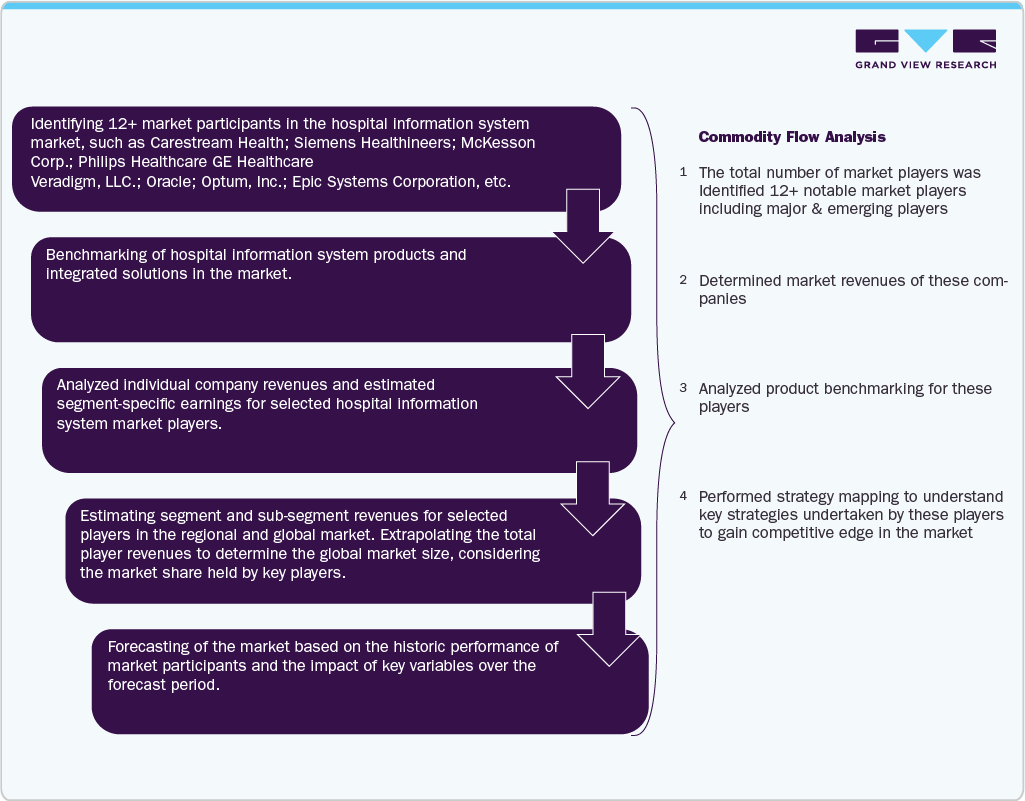
 Model 1: Commodity Flow Analysis
Commodity flow analysis was employed to track the movement of hospital information system through the value chain, from technology providers to end users. This analysis provided insights into demand generation points, intermediary roles, and ultimate consumption patterns.
Delivered Customizations
This report has been delivered with the following In-depth customizations
Client Request
Customization Delivered
Value Adds
Hospital Information Systems Adoption & Healthcare Workflow Analysis
Developed a tailored analysis of the global Hospital Information Systems (HIS) market focused on electronic health records (EHRs), clinical information systems, laboratory information systems (LIS), radiology information systems (RIS), pharmacy information systems, revenue cycle management solutions, patient administration systems, and healthcare analytics platforms. The study assessed adoption trends across hospitals, integrated delivery networks (IDNs), specialty clinics, ambulatory care centers, and healthcare systems while evaluating healthcare digitization initiatives, interoperability requirements, value-based care models, and increasing demand for data-driven clinical decision-making.
Enables stakeholders to understand evolving healthcare IT trends, identify high-growth HIS segments, assess digital transformation opportunities, and evaluate the impact of integrated information systems on operational efficiency, patient care quality, clinical workflows, and long-term market expansion.
Clinical Information Management, Interoperability & Healthcare IT Assessment
Delivered a customized evaluation of HIS utilization across patient registration, clinical documentation, electronic prescribing, laboratory management, radiology workflow management, billing and claims processing, population health management, and clinical decision support applications. The analysis assessed cloud-based and on-premise deployment models, interoperability standards, AI-enabled healthcare analytics, telehealth integration, cybersecurity requirements, healthcare provider adoption patterns, and demand for comprehensive digital healthcare management solutions.
Provides actionable insights into commercially attractive software segments, emerging healthcare IT technologies, evolving regulatory requirements, and growth opportunities associated with workflow automation, improved care coordination, enhanced patient engagement, reduced administrative burden, and data-driven healthcare delivery.
Healthcare IT Infrastructure, Regulatory Environment & Competitive Landscape Assessment
Conducted a focused assessment of the HIS ecosystem, including software platforms, cloud infrastructure, health information exchange frameworks, cybersecurity systems, regulatory compliance requirements, healthcare data management solutions, and competitive positioning. The analysis evaluated implementation challenges, integration complexities, data privacy requirements, technology adoption barriers, scalability considerations, and competitive differentiation strategies among leading market participants such as Epic Systems Corporation, Oracle Health, Optum, eClinicalWorks, Veradigm, NextGen Healthcare, McKesson Corporation, Siemens Healthineers, GE Healthcare, Philips Healthcare, Carestream Health, and Conifer Health Solutions.
Supports strategic planning for healthcare IT investments, digital transformation initiatives, software deployment strategies, healthcare partnerships, geographic expansion, and market entry decisions by identifying adoption drivers, operational challenges, regulatory considerations, revenue opportunities, infrastructure requirements, and competitive advantages across the global Hospital Information Systems value chain.
Frequently Asked Questions About This Report
The global hospital information system market size was estimated at USD 54.7 billion in 2025 and is expected to reach USD 57.8 billion in 2026.
The global hospital information system market is expected to grow at a compound annual growth rate of 6.4% from 2026 to 2033 to reach USD 89.2 billion by 2033.
Key factors that are driving the hospital information system market growth include a rapid increase in the adoption of these systems for efficient management of hospital operations and rising demand for efficient management of the large volume of data generated and its availability for medical practitioners.
North America dominated with a 42.7% revenue share in 2025.
Asia Pacific is the fastest-growing region over the forecast period.
The Electronic Health Records (EHR) segment led with a 56.9% revenue share in 2025, while nursing information systems is the fastest-growing segment.
The software segment led with a 45.0% revenue share in 2025, while services is the fastest-growing segment.
Web-based technology dominated the hospital information system market with a share of 42.1% in 2025. Web-based hospital information system offers enhanced accessibility, facilitating seamless communication and data sharing among medical personnel, patients, & stakeholders.
Some key players operating in the HIS market include Carestream Health; Siemens Healthineers; McKesson Corp.; Philips Healthcare; GE Healthcare; Veradigm LLC; Oracle; NextGen Healthcare; Conifer Health Solutions, LLC; eClinicalWorks; Optum, Inc.; Epic Systems Corporation
About the Author(s)
Healthcare IT Research Team
Healthcare · Healthcare ITThis report was authored by the healthcare it research team at Grand View Research - comprising two research analysts, one senior research analyst, and one industry expert - with specialized expertise in the healthcare it segment of the healthcare industry. All findings are based on proprietary healthcare databases, executive interviews, and regulatory analysis, subject to internal peer review prior to publication.
Last Updated:
Speak to Analyst

Customize this report to your needs - add regions, segments, or data points, with 20% free customization.
Or view our licence options:


ISO 9001:2015 & 27001:2022 Certified
We are GDPR and CCPA compliant! Your transaction & personal information is safe and secure. For more details, please read our privacy policy.


