
- Home
- »
- Biotechnology
- »
-
Human Identification Market Size & Share Report, 2026-2033GVR Report cover
![Human Identification Market (2026 - 2033)Report]()
Human Identification Market (2026 - 2033)
Size, Share & Trends Analysis Report By Product (Consumables, Instruments), By Application (Forensics, Paternity Testing), By Technology, By End User, By Region, And Segment Forecasts
Market Size, 2025
$845.7MMarket Estimate, 2026
$927.8MMarket Forecast, 2033
$1,873.2MCAGR, 2026–2033
10.6%Human Identification Market Summary
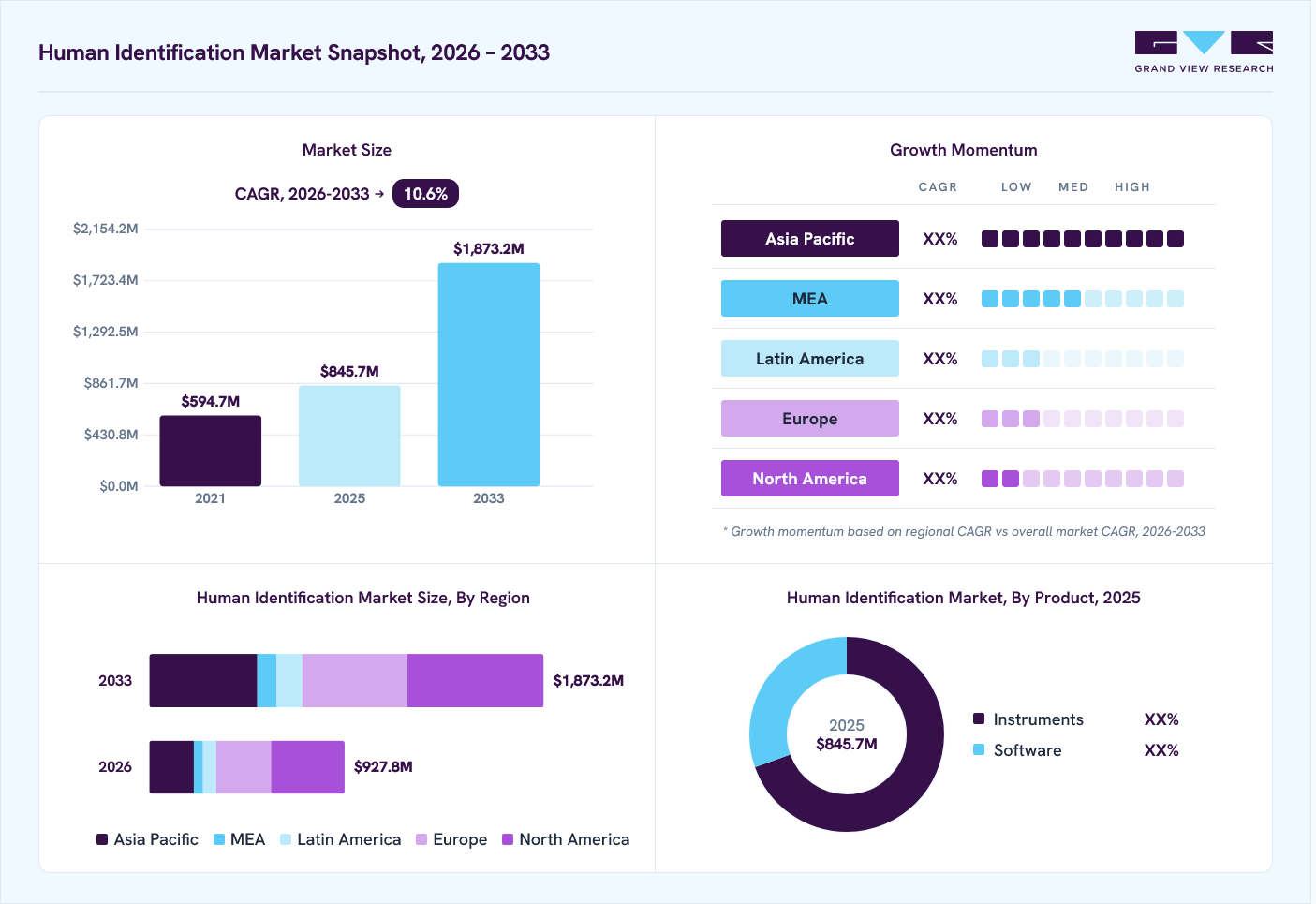
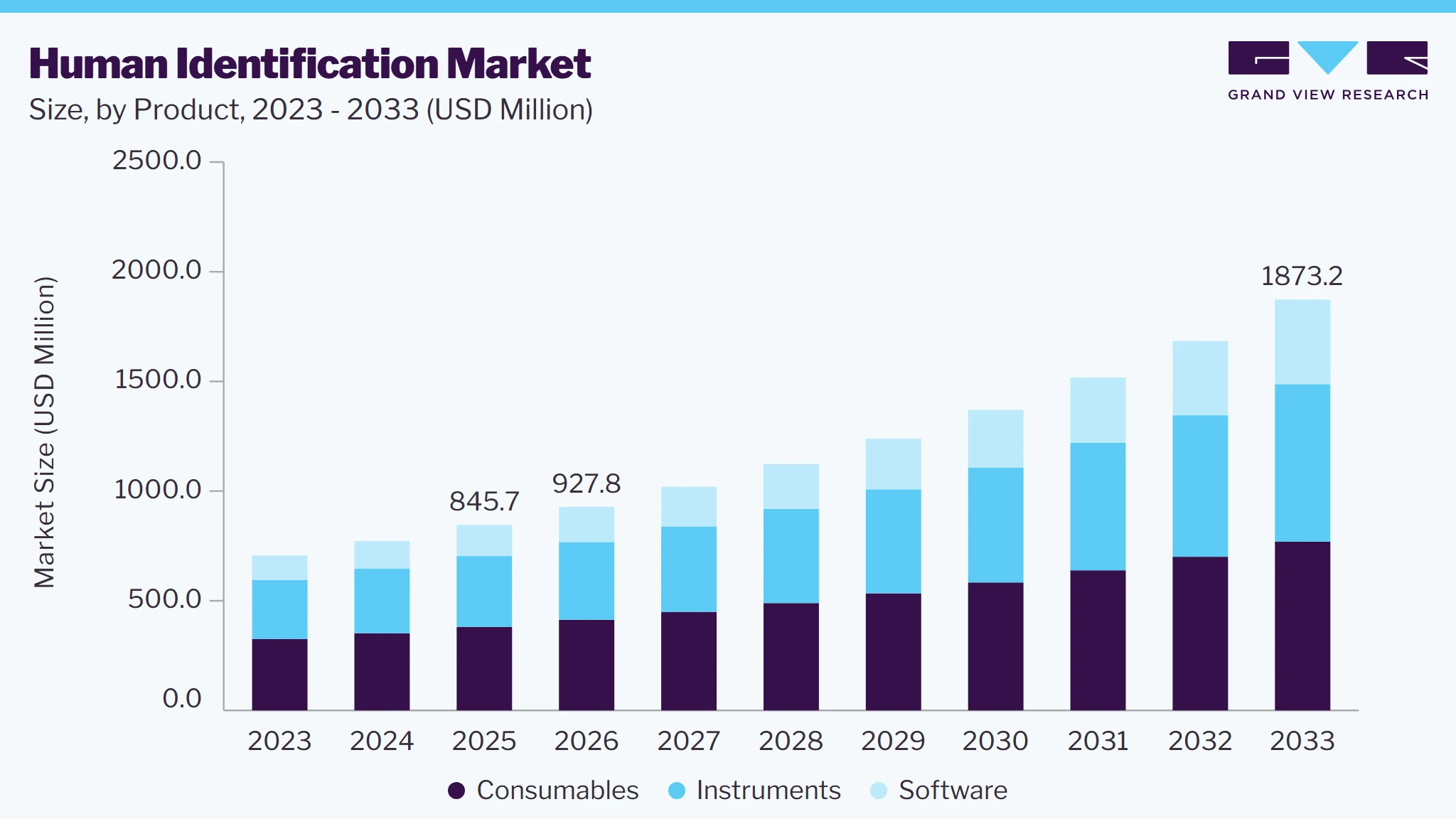
The global human identification market size was valued at USD 845.7 million in 2025 and is projected to grow from USD 927.8 million in 2026 to USD 1,873.2 million by 2033, at a CAGR of 10.6% from 2026 to 2033. North America dominated the market, accounting for the largest revenue share of 38.0% in 2025. Market growth is driven by increasing demand for forensic investigations, DNA profiling, paternity testing, missing-person identification, and advancements in molecular identification technologies.
Key Market Trends & Insights
- By product: Consumables segment held the highest market share of 45.1% in 2025.
- By technology: Polymerase chain reaction (PCR) segment held the highest market share of 41.8% in 2025.
- By application: Forensics segment held the highest market share of 46.4% in 2025.
- By End User: Forensic laboratories held the highest market share of 53.5% in 2025.
Regional Highlights
- Largest regional market: North America (38.0% revenue share, 2025)
- Fastest-growing regional market: Asia Pacific (highest CAGR, 2026-2033)
- By country: The U.S. held the largest market share in 2025
Market Size & Forecast
- Market size in 2025: USD 845.7 Million
- Estimated market size in 2026: USD 927.8 Million
- Projected market size by 2033: USD 1,873.2 Million
- CAGR (2026-2033): 10.6%
Three ways to get this report
Buy it, customize it, or ask a question.Ask an Analyst
A direct answer, usually in 1 working day
- AccessReport author, directly
- Reply timeWithin 1 working day
- No sales callDirect answer only
- FormatEmail reply
- CostFree, no cost
Get the Full Report
What the study covers
- FormatsPDF · Excel · Dashboard
- Timeline2026–2033 annual, 2025 base
- Coverage20+ countries, 5 regions
- Companies10+ key players profiled
Customize the Report
20% free customization
- IncludeCountries, segments, points
- TailorTo your product definition
- ExtendDeeper competitor detail
- OrA fully bespoke study
- Turnaround5–10 working days
Market Dynamics
The market is experiencing significant growth, driven by increasing demand for rapid and accurate identification solutions, the expansion of forensic infrastructure, the growing adoption of automated laboratory workflows, and the rising use of advanced molecular analysis technologies. The development of portable, high-throughput identification systems, coupled with improvements in data analysis, database integration, and workflow automation, is expected to enhance testing efficiency, accuracy, and turnaround time, thereby creating new opportunities for market growth.
DNA profiling has become an essential tool for human identification due to its high accuracy and discriminatory power in linking biological evidence to individuals. Its increasing use in criminal investigations, paternity and kinship testing, missing-person identification, and disaster victim identification is driving demand for DNA profiling instruments, reagents, consumables, and analysis software. The expansion of forensic DNA databases and improvements in STR-based profiling are further supporting adoption in forensic laboratories.
According to an article published in the International Journal of Molecular Sciences in February 2026, researchers supported by the U.S. National Institute of Justice developed STRspy2.0, a nanopore sequencing-based method for profiling autosomal and Y-STR markers. The approach generated accurate profiles from control libraries and mock forensic samples while remaining compatible with existing forensic databases, thereby supporting broader and more accessible DNA profiling capabilities.
DNA sample processing involves multiple sequential steps, including sample collection, extraction, purification, quantification, amplification, and genetic profiling. Variations in sample quality, degradation, low DNA concentrations, and the presence of inhibitors can complicate processing and affect analytical accuracy. These challenges increase testing time and may require specialized equipment, reagents, and skilled personnel, particularly for complex forensic samples.
Moreover, interpreting DNA profiles can be challenging when samples contain mixed, degraded, or limited genetic material. Complex workflows and stringent quality-control procedures can increase operational costs and limit the adoption of advanced human identification technologies, particularly in resource-constrained forensic laboratories. As a result, technical complexity and variability in sample characteristics remain key factors restraining market growth.
The demand for portable and automated forensic systems is increasing as forensic laboratories and law enforcement agencies seek faster, decentralized, and efficient DNA analysis capabilities. Compact systems can enable identification closer to crime scenes, disaster sites, and other field locations, while automation reduces manual intervention, processing time, and dependence on highly specialized laboratory personnel. These capabilities are particularly valuable for rapid human identification and mass-casualty investigations.
For instance, in June 2026, researchers developed a portable microfluidic forensic system integrating sample preparation, amplification, and detection into a streamlined workflow. The system enabled rapid human DNA and sex identification within 35 minutes, with lyophilized reagents supporting portability and extended storage, demonstrating the potential for automated, on-site forensic identification.
Market Concentration & Characteristics
The human identification industry is characterized by a high degree of innovation, driven by automation, advanced DNA analysis, rapid testing technologies, and improved integration of forensic workflows. Manufacturers are increasingly developing solutions that reduce manual intervention, improve processing consistency, and accelerate DNA profiling from challenging forensic samples. For instance, in October 2025, QIAGEN launched the EZ2 DNA Investigator Sep&Prep Kit, an automated solution designed to improve sperm DNA recovery and separation from victim DNA, generating high-quality DNA in less than 2.5 hours.
“This kit may be one of the most important advances in sex assault sample processing since differential extraction was introduced some 40 years ago. For decades, labs have relied on a complex manual process that often limits DNA quality. Our new kit delivers a standardized and efficient approach that could help transform this critical area of forensic work.”
- Keith Elliott, Senior Director of Strategic Marketing Human Identification at QIAGEN
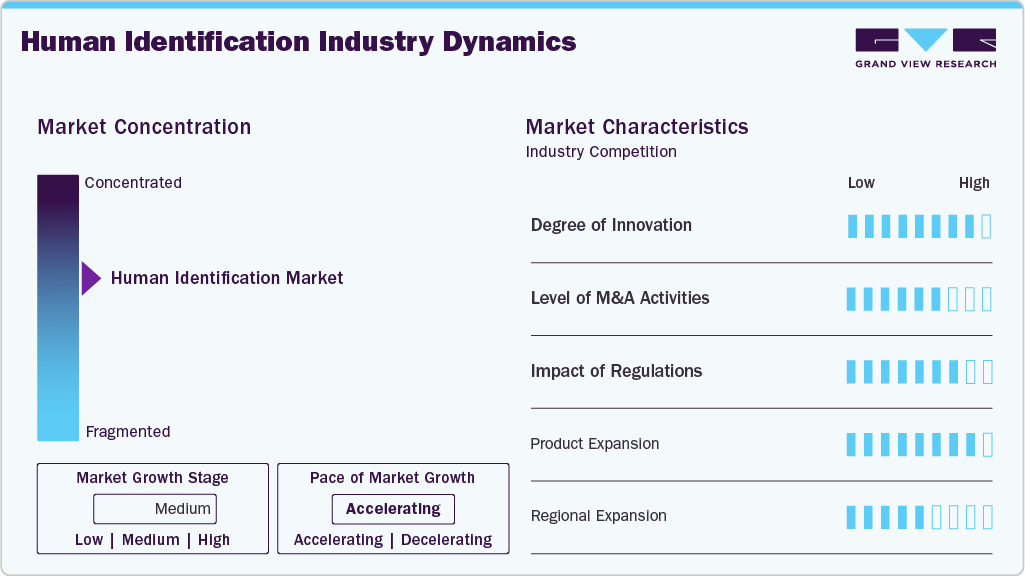
The human identification industry is experiencing moderate M&A activity, with consolidation focused on strengthening forensic analysis, molecular testing, and complementary identification technologies. Such activities enable companies to broaden their technology portfolios, integrate complementary capabilities, and strengthen their presence across the human identification workflow.
The human identification industry is significantly influenced by regulations governing DNA collection, forensic evidence, genetic data management, laboratory accreditation, and privacy. Increasing emphasis on secure handling and standardized management of forensic data is encouraging investments in compliant infrastructure. For instance, in March 2026, India's Ministry of Home Affairs approved a National Forensic Data Centre and additional forensic laboratories to strengthen centralized forensic data management and analytical capabilities.
The human identification industry is experiencing rapid product expansion, driven by growing demand for broader DNA marker analysis, automated workflows, and rapid identification solutions. Manufacturers are expanding portfolios across STR kits, DNA extraction and quantification products, sequencing platforms, and forensic analysis software. For instance, in February 2025, Promega received FBI approval for its PowerPlex 35GY System, an eight-color STR analysis chemistry designed for inclusion of eligible DNA profiles in the U.S. National DNA Index System, strengthening the availability of advanced forensic profiling solutions.
The human identification industry is experiencing moderate to high regional expansion, supported by increasing investments in forensic laboratories, the expansion of DNA databases, the modernization of law enforcement infrastructure, and the growing adoption of advanced DNA analysis technologies across emerging and developed markets.
Analyst Perspective
The market is expected to grow significantly, driven by the increasing adoption of DNA analysis in forensic investigations, criminal identification, disaster victim identification, and paternity testing. Rising investments in forensic infrastructure, advancements in DNA profiling and automated analysis technologies, and growing demand for rapid and accurate identification are supporting market expansion. Increasing adoption of next-generation sequencing and forensic genetic genealogy is further broadening application opportunities.
Product Insights
The consumables segment accounted for the largest revenue share, over 45.1% in 2025, driven by recurring demand for DNA extraction kits, amplification reagents, quantification kits, STR kits, and other consumables required across forensic DNA profiling workflows. Increasing forensic testing volumes and the expansion of DNA databases are further supporting segment growth. For instance, in February 2026, NIST issued new reference materials for degraded DNA and DNA mixtures, supporting forensic laboratories in validating DNA analysis methods and improving the reliability of profiling.
The software segment is expected to register the fastest CAGR over the forecast period, driven by increasing adoption of specialized forensic software for DNA profile interpretation, database management, statistical analysis, and automated matching. Growing demand for efficient interpretation of complex DNA evidence and integration with forensic laboratory workflows is further supporting segment growth.
Technology Insights
The polymerase chain reaction (PCR) segment dominated the market with a 41.8% share in 2025, driven by its established use in STR amplification, high sensitivity for low-input DNA samples, and compatibility with routine forensic DNA workflows. Its ability to support multiplex analysis and profiling of challenging samples continues to sustain adoption across forensic laboratories. For instance, in April 2026, NIST published a developmental validation of the PowerPlex 18E System, an 8-dye, 18-locus STR multiplex designed for reliable human identification DNA typing, including degraded samples.
The next-generation sequencing (NGS) segment is expected to register the fastest CAGR over the forecast period, driven by its ability to generate comprehensive genetic information from limited, degraded, or compromised DNA samples and simultaneously analyze multiple genetic markers. Increasing adoption for complex forensic investigations, kinship analysis, and mitochondrial DNA profiling, along with improving sequencing accessibility and bioinformatics capabilities, is further supporting segment growth.
Application Insights
The forensics segment dominated the market with a 46.4% share in 2025 and is expected to grow at the fastest CAGR during the forecast period, driven by the expanding use of DNA-based evidence in criminal investigations, missing-person identification, disaster victim identification, and cold-case resolution. Increasing forensic case volumes, expansion of DNA databases, and demand for accurate identification of degraded or limited biological samples are further supporting segment growth.
The paternity testing segment is expected to register a significant CAGR over the forecast period, driven by increasing demand for DNA-based family relationship verification in legal, immigration, inheritance, and personal applications. Growing awareness of genetic testing, greater accessibility of testing services, and improvements in the accuracy and affordability of DNA analysis are further supporting segment growth.
End User Insights
The forensic laboratories segment dominated the market with a 53.5% share in 2025, driven by the increasing volume of forensic casework, growing demand for DNA-based evidence analysis, and expanding requirements for accurate and timely individual identification. For instance, in June 2026, NIST published an INTERPOL review covering nearly 2,000 references on advances in forensic biology and DNA, including human identification, STR profiling, DNA processing, and next-generation sequencing, highlighting continued technological development across forensic laboratory workflows.
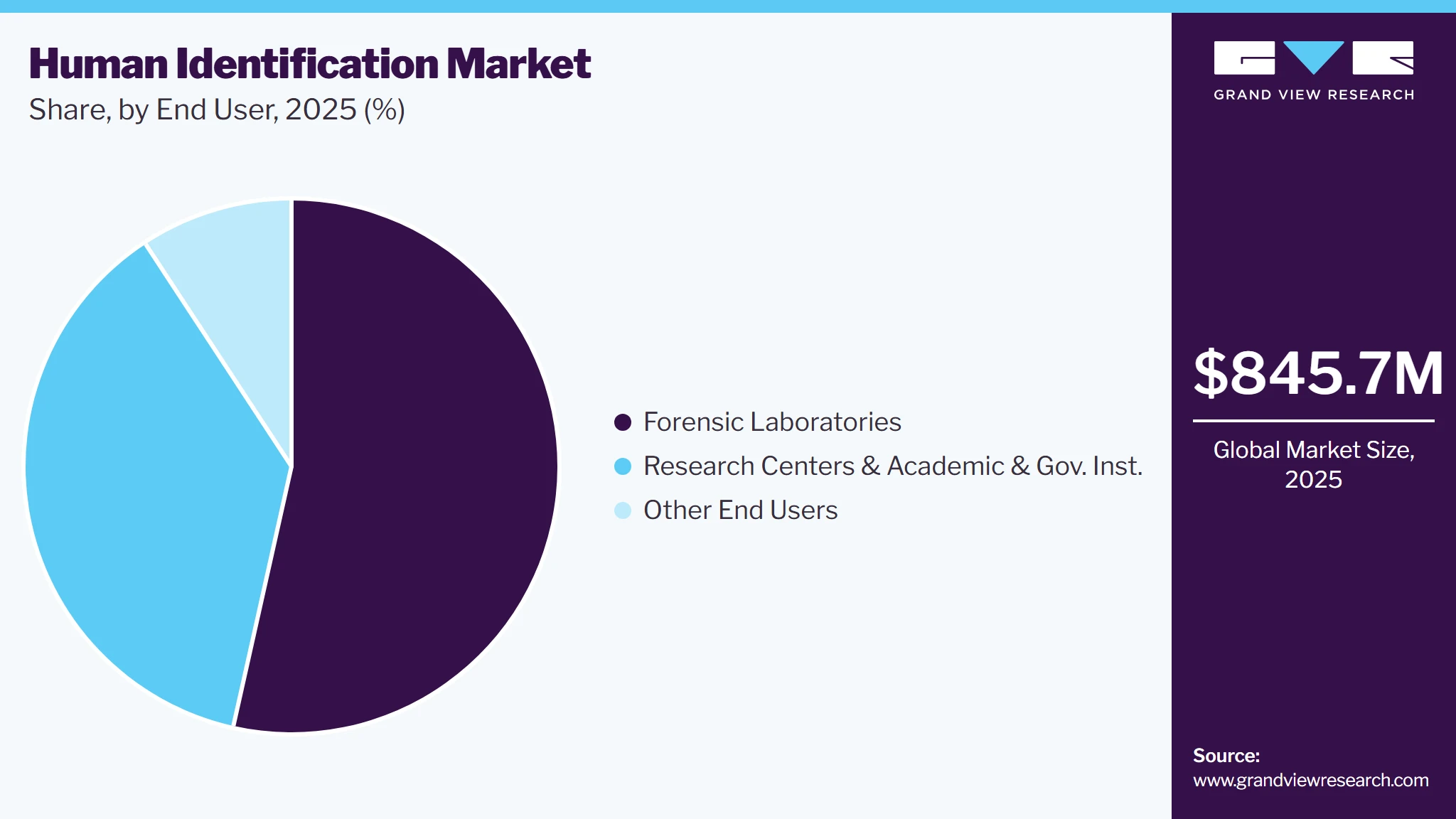
The research centers and academic & government institutes segment is projected to witness a significant CAGR, driven by increasing research activities in forensic genetics, human identification, and advanced DNA analysis. Growing investments in method development, validation, genetic marker characterization, and next-generation sequencing research are further supporting the adoption of human identification technologies across these institutions.
Regional Insights
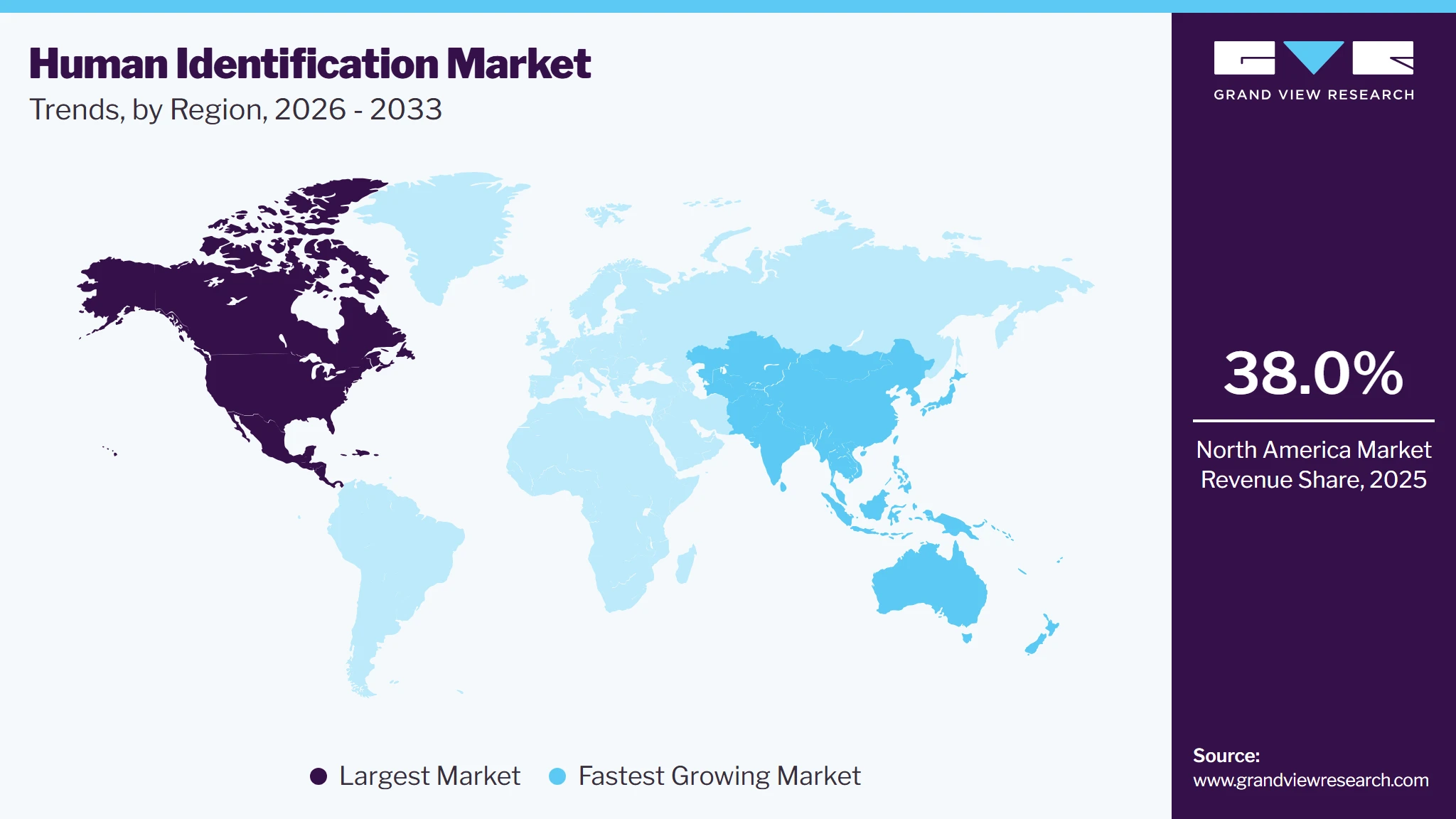
North America dominated the human identification industry, accounting for the largest revenue share of 38.0% in 2025, supported by extensive forensic DNA infrastructure, established national databases, and continued use of genetic evidence in criminal and humanitarian investigations. For instance, in June 2026, the U.S. National DNA Index System contained more than 20.3 million offender profiles and had assisted over 784,000 investigations, demonstrating the region’s mature DNA identification infrastructure.
U.S. Human Identification Market Trends
The human identification market in the U.S. is expected to grow over the forecast period, supported by widespread adoption of forensic DNA databases, high volumes of forensic testing, and continued integration of DNA evidence into criminal investigations. The scale of the CODIS network, which connects forensic laboratories across the country, provides a strong foundation for continued demand for human identification technologies.
Europe Human Identification Market Trends
The human identification market in Europe was identified as a lucrative region in this industry, supported by established forensic infrastructure, extensive DNA databases, and increasing adoption of standardized identification technologies. For instance, in June 2026, the European Commission established technical rules for automated DNA profile exchange via the Prüm router, including standardized DNA formats, quality requirements, and matching procedures, thereby strengthening cross-border forensic identification capabilities across EU member states.
The UK human identification marketis supported by stringent forensic quality requirements and an established network of accredited DNA testing laboratories. For instance, in June 2026, the Forensic Science Regulator issued a notification updating compliance requirements for incident-scene examination, reflecting continued development of regulatory frameworks governing forensic service providers.
The human identification market in Germanyis anticipated to grow significantly over the forecast period, supported by established forensic DNA analysis capabilities and extensive use of genetic databases in criminal investigations. The Federal Criminal Police Office (BKA) reports that its DNA analysis database enables crime-scene evidence to be compared with stored profiles, with almost one in four traces matched to an individual, supporting continued utilization of DNA identification.
Asia Pacific Human Identification Market Trends
The human identification market in the Asia Pacific is expected to grow at the fastest CAGR of 13.5% during the forecast period, supported by increasing forensic capabilities, modernization of DNA databases, and growing regional cooperation in victim identification. For instance, in December 2025, Singapore hosted INTERPOL’s Asia Victim Identification Task Force, bringing together 29 law enforcement officers from across the region to identify victims and support cross-border investigations.
China human identification market is expected to continue to grow as forensic identification becomes increasingly integrated into criminal investigation procedures. For instance, in September 2025, China’s Supreme People’s Court, Supreme People’s Procuratorate, and Ministry of Public Security issued guidance that strengthened procedures for verifying the identities of suspects and defendants, including the use of biometric information for identity confirmation.
The human identification market in Japan is expected to grow steadily, supported by advances in automated DNA analysis and the ongoing development of identification methods. The National Research Institute of Police Science conducts forensic DNA casework and evaluates new STR and mitochondrial DNA typing systems, supporting ongoing technological advancement in human identification.
Latin America Human Identification Market Trends
The human identification market in Latin America is expected to grow gradually, supported by the expansion of integrated forensic DNA databases and the greater adoption of advanced identification approaches. For instance, in July 2025, Brazil standardized the use of forensic investigative genetic genealogy across laboratories participating in its Integrated Network of Genetic Profile Banks, broadening the application of DNA technologies for criminal investigations and identification of missing persons.
MEA Human Identification Market Trends
The human identification market in MEA is expected to grow steadily, supported by increasing investments in forensic infrastructure, expansion of DNA profiling capabilities, and growing adoption of genetic technologies for criminal investigations, paternity testing, and missing-person identification. Rising government initiatives to strengthen forensic services and modernize laboratory capabilities are further creating opportunities for market growth.
Key Human Identification Company Insights
Several well-established companies operate in the market, supported by their portfolios of forensic DNA consumables, instruments, rapid identification systems, and molecular analysis technologies. Key players include Thermo Fisher Scientific Inc., QIAGEN, Promega Corporation, Hamilton Company, ANDE Corporation, AutoGen, Inc., INNOGENOMICS TECHNOLOGIES, LLC., FUJIFILM Wako Pure Chemical Corporation (a subsidiary of FUJIFILM Corporation), MACHEREY-NAGEL GmbH & Co. KG, and BIOTYPE GmbH, which focus on product innovation, workflow automation, and advancements in DNA profiling and forensic analysis.
Key Human Identification Companies
The following key companies have been profiled for this study on the human identification market:
-
Thermo Fisher Scientific Inc.
-
QIAGEN
-
Promega Corporation
-
Hamilton Company
-
ANDE Corporation
-
AutoGen, Inc.
-
INNOGENOMICS TECHNOLOGIES, LLC.
-
FUJIFILM Wako Pure Chemical Corporation (a subsidiary of FUJIFILM Corporation)
-
MACHEREY-NAGEL GmbH & Co. KG
-
BIOTYPE GmbH
Competitive Benchmarking
Category
Operating Strategies
Competitive Edge
Weakness
Established Players (Thermo Fisher Scientific Inc., QIAGEN, Promega Corporation, Hamilton Company, FUJIFILM Wako Pure Chemical Corporation, MACHEREY-NAGEL GmbH & Co. KG, etc.)
Strengthen market presence through product innovation, strategic collaborations, automation, and expansion across forensic, paternity, and law enforcement applications.
Broad portfolios, established global distribution networks, and strong relationships with forensic laboratories, research institutions, and government agencies.
High R&D and regulatory compliance costs associated with developing forensic-grade molecular diagnostic technologies.
Emerging Players (ANDE Corporation, AutoGen, Inc., INNOGENOMICS TECHNOLOGIES, LLC., BIOTYPE GmbH)
Target niche applications through portable technologies, workflow automation, specialized assays, and partnerships with forensic and law enforcement organizations.
Agile product development and customized technologies designed to address speed, portability, and operational efficiency requirements.
Greater dependence on forensic agency adoption, regulatory approvals, and government procurement, which can lengthen commercialization cycles.
Recent Developments:
-
In April 2026, Promega Corporation entered a distribution agreement with NimaGen to expand its forensic portfolio with IDseek MPS library preparation kits, supporting STR, SNP, microhaplotype, and mitochondrial DNA analysis for forensic human identification workflows.
"For decades, we have anticipated and responded to the technologies that forensic laboratories need to produce reliable results. With this agreement, labs that have long benefited from Promega reagents, instrumentation and support can continue relying on us as they expand their workflows with massively parallel sequencing."
- Tim Kupferschmid, Senior Director of Genetic Identity at Promega
-
In September 2024, QIAGEN partnered with Bode Technology to advance GEDmatch PRO, a forensic genetic genealogy database, and named Bode its exclusive global commercial partner. The collaboration supported law enforcement investigations and human remains identification through enhanced forensic genetic genealogy capabilities.
-
In May 2024, QIAGEN partnered with the FBI to develop a digital PCR assay for QIAcuity, enabling simultaneous quantification of nuclear, mitochondrial, and male DNA in forensic samples and improving the accuracy, reliability, and efficiency of human identification workflows.
Human Identification Market Report Scope
Report Attribute
Details
Market size in 2025
USD 845.7 million
Estimated market size in 2026
USD 927.8 million
Projected market size by 2033
USD 1,873.2 million
Growth rate
CAGR of 10.6% from 2026 to 2033
Historical data
2021 - 2025
Forecast period
2026 - 2033
Quantitative units
Revenue in USD million, and CAGR from 2026 to 2033
Report coverage
Revenue forecast, company ranking, competitive landscape, growth factors, and trends
Segments covered
Product, technology, application, end user, region
Regional scope
North America; Europe; Asia Pacific; Latin America; MEA
Country scope
U.S.; Canada; Mexico; UK; Germany; France; Italy; Spain; Norway; Denmark; Sweden; China; Japan; India; South Korea; Australia; Thailand; Brazil; Argentina; Saudi Arabia; South Africa; UAE; Kuwait
Key companies profiled
Thermo Fisher Scientific Inc.; QIAGEN; Promega Corporation; Hamilton Company; ANDE Corporation; AutoGen, Inc.; INNOGENOMICS TECHNOLOGIES, LLC.; FUJIFILM Wako Pure Chemical Corporation (a subsidiary of FUJIFILM Corporation); MACHEREY-NAGEL GmbH & Co. KG; BIOTYPE GmbH
Customization scope
Free report customization (equivalent up to 8 analysts' working days) with purchase. Addition or alteration to country, regional & segment scope.
Pricing and purchase options
Avail customized purchase options to meet your exact research needs. Explore purchase options
Global Human Identification Market Report Segmentation
This report forecasts revenue growth and provides an analysis of the latest trends in each of the sub-segments from 2021 to 2033. For this report, Grand View Research has segmented the global human identification market report based on product, technology, application, end user, and region:
-
Product Outlook (Revenue, USD Million, 2021 - 2033)
-
Consumables
-
Instruments
-
Software
-
-
Technology Outlook (Revenue, USD Million, 2021 - 2033)
-
Polymerase Chain Reaction (PCR)
-
Capillary Electrophoresis (CE)
-
Next-Generation Sequencing (NGS)
-
Microarrays
-
Rapid DNA Analysis
-
-
Application Outlook (Revenue, USD Million, 2021 - 2033)
-
Forensics
-
Paternity Testing
-
Other Applications
-
-
End User Outlook (Revenue, USD Million, 2021 - 2033)
-
Forensic Laboratories
-
Research Centers and Academic & Government Institutes
-
Other End Users
-
-
Regional Outlook (Revenue, USD Million, 2021 - 2033)
-
North America
-
U.S.
-
Canada
-
Mexico
-
-
Europe
-
UK
-
Germany
-
France
-
Italy
-
Spain
-
Denmark
-
Sweden
-
Norway
-
-
Asia Pacific
-
Japan
-
China
-
India
-
Australia
-
Thailand
-
South Korea
-
-
Latin America
-
Brazil
-
Argentina
-
-
Middle East and Africa (MEA)
-
South Africa
-
Saudi Arabia
-
UAE
-
Kuwait
-
-
Research Methodology
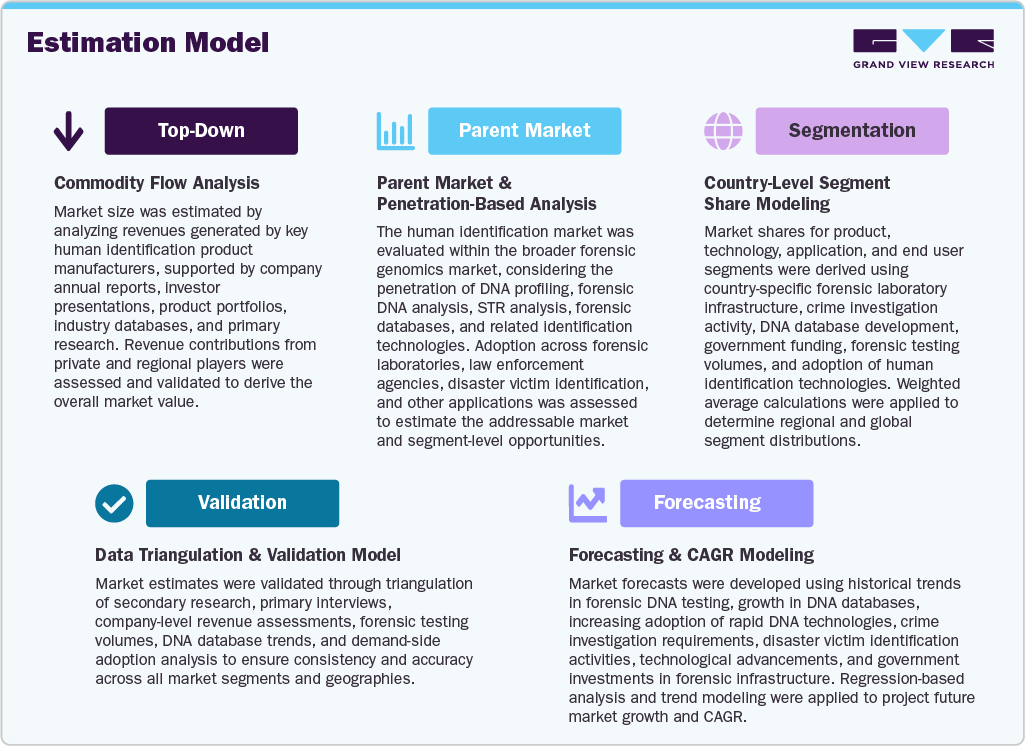
The human identification market figures in this report are based on a proven research process that combines executive interviews with secondary research from proprietary databases, company filings, and recognized regulatory and institutional sources. Market size is built through value-chain sizing—reconciling supply-side and demand-side estimates—and triangulated with bottom-up and top-down approaches. Every estimate passes multiple levels of expert validation before publication, with each human identification segment quantified using the revenue-capture definitions in the table below.
Segment Definition
Segment- Product
Revenue Capture Definition
Consumables
Revenue generated from consumable products used throughout human identification workflows, including DNA extraction and purification materials, amplification reagents, sample collection products, electrophoresis-related consumables, and other single-use components required for forensic, paternity, and genetic identification testing.
Instruments
This segment captures income from laboratory equipment used to process, analyze, and identify human genetic material. Products include PCR systems, capillary electrophoresis platforms, DNA analyzers, rapid DNA systems, and other analytical instruments supporting DNA profiling and identification workflows.
Software
Market value in this category stems from software platforms used to manage, analyze, interpret, compare, and report genetic identification data. Solutions support DNA profile generation, database matching, statistical analysis, case management, and visualization across forensic and other identification applications.
Segment- Technology
Revenue Capture Definition
Polymerase Chain Reaction (PCR)
Revenue originates from technologies that amplify specific regions of DNA to generate sufficient genetic material for downstream identification and profiling. PCR-based workflows are widely used for forensic DNA analysis, paternity testing, and other applications requiring sensitive analysis of limited or degraded samples.
Capillary Electrophoresis (CE)
This segment reflects income from technologies that separate and detect fluorescently labeled DNA fragments according to their size, enabling generation of genetic profiles used for human identification, forensic investigations, and relationship testing.
Next-Generation Sequencing (NGS)
Revenue derived from sequencing technologies that enable parallel analysis of multiple genetic regions or whole genomes for high-resolution human identification. These approaches support forensic genomics, ancestry analysis, complex sample investigation, and identification of challenging or highly degraded DNA specimens.
Microarrays
This category captures revenue from array-based technologies used to analyze multiple genetic markers simultaneously. Microarray platforms support applications such as genetic profiling, identity assessment, ancestry-related analysis, and characterization of genetic variations.
Rapid DNA Analysis
Market value in this segment arises from automated and accelerated DNA analysis technologies capable of generating genetic profiles with limited manual intervention and substantially shorter processing times. These systems are particularly relevant to forensic investigations and near-real-time identification workflows.
Segment- Application
Revenue Capture Definition
Forensics
Revenue generated from human identification products, technologies, and analytical solutions used in criminal investigations, crime scene analysis, missing-person identification, disaster victim identification, and DNA database matching.
Paternity Testing
This segment captures income from genetic testing solutions used to establish biological relationships between alleged parents and children. Applications include legal and non-legal parentage testing, family relationship assessment, and related kinship investigations.
Other Applications
Includes revenue from human identification technologies applied outside forensic and paternity testing, such as immigration-related relationship verification, ancestry analysis, kinship testing, and identification of unidentified individuals.
Segment- End User
Revenue Capture Definition
Forensic Laboratories
Revenue originates from human identification products and services utilized by forensic laboratories for DNA profiling, evidence analysis, criminal investigations, database matching, and identification of individuals from biological specimens.
Research Centers and Academic & Government Institutes
This segment reflects income from human identification technologies adopted by academic institutions, government laboratories, research centers, and public agencies conducting forensic research, population genetics studies, method development, and genetic identification investigations.
Other End Users
Market value in this category stems from adoption by hospitals, private diagnostic laboratories, commercial DNA testing facilities, law enforcement organizations, and other institutions involved in genetic identification and relationship testing.
Estimation Model
Delivered Customizations
This report has been delivered with the following In-depth customizations
Client Request
Customization Delivered
Value Adds
Forensic DNA Workflow & Technology Assessment
Evaluation of human identification workflows across DNA extraction, quantification, amplification, STR analysis, SNP analysis, mitochondrial DNA analysis, and DNA profile interpretation, including technology adoption, workflow complexity, turnaround time, and accuracy requirements.
Helps clients identify workflow inefficiencies, assess technology gaps, compare identification approaches, and prioritize investments in advanced forensic DNA technologies.
Rapid & Portable Human Identification Technology Assessment
Assessment of portable and rapid DNA identification systems based on analysis time, automation level, sample-processing requirements, portability, throughput, field deployment capabilities, and suitability for crime scenes, disaster victim identification, and missing-person investigations.
Enables clients to evaluate rapid identification opportunities, assess field-deployment potential, identify high-growth technology areas, and prioritize product development and commercialization strategies.
Forensic Laboratory Capacity & Expansion Analysis
Evaluation of forensic laboratory capacity, testing volumes, laboratory modernization programs, automation investments, equipment procurement, and planned infrastructure expansion across major geographic markets.
Helps clients identify capacity gaps, emerging forensic testing hubs, infrastructure investment opportunities, and regions with potential demand for human identification products and services.
About the Author(s)
Biotechnology Research Team
Healthcare · BiotechnologyThis report was authored by the biotechnology research team at Grand View Research - comprising two research analysts, one senior research analyst, and one industry expert - with specialized expertise in the biotechnology segment of the healthcare industry. All findings are based on proprietary healthcare databases, executive interviews, and regulatory analysis, subject to internal peer review prior to publication.
Last Updated:
Speak to Analyst


Customize this report to your needs - add regions, segments, or data points, with 20% free customization.
Or view our licence options:


ISO 9001:2015 & 27001:2022 Certified
We are GDPR and CCPA compliant! Your transaction & personal information is safe and secure. For more details, please read our privacy policy.


