
- Home
- »
- Medical Devices
- »
-
Hybrid PET/CT Systems Market Size & Share Report, 2033GVR Report cover

Hybrid PET/CT Systems Market (2026 - 2033)
Size, Share & Trends Analysis Report By Type (Fixed Hybrid PET/CT Systems, Mobile Hybrid PET/CT Systems), By Application (Oncology, Neurology, Infection & Inflammation), By End Use, By Region, And Segment Forecasts
Market Size, 2025
$4.0BMarket Estimate, 2026
$4.1BMarket Forecast, 2033
$5.3BCAGR, 2026–2033
3.8%Hybrid PET/CT Systems Market Summary
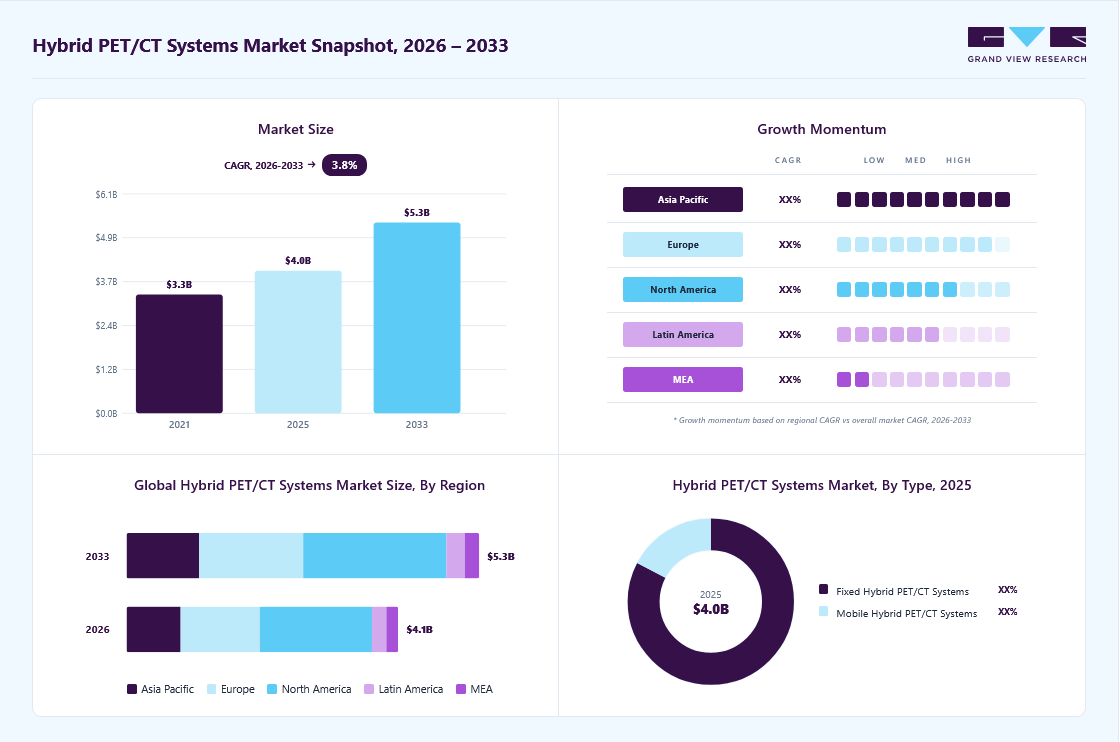
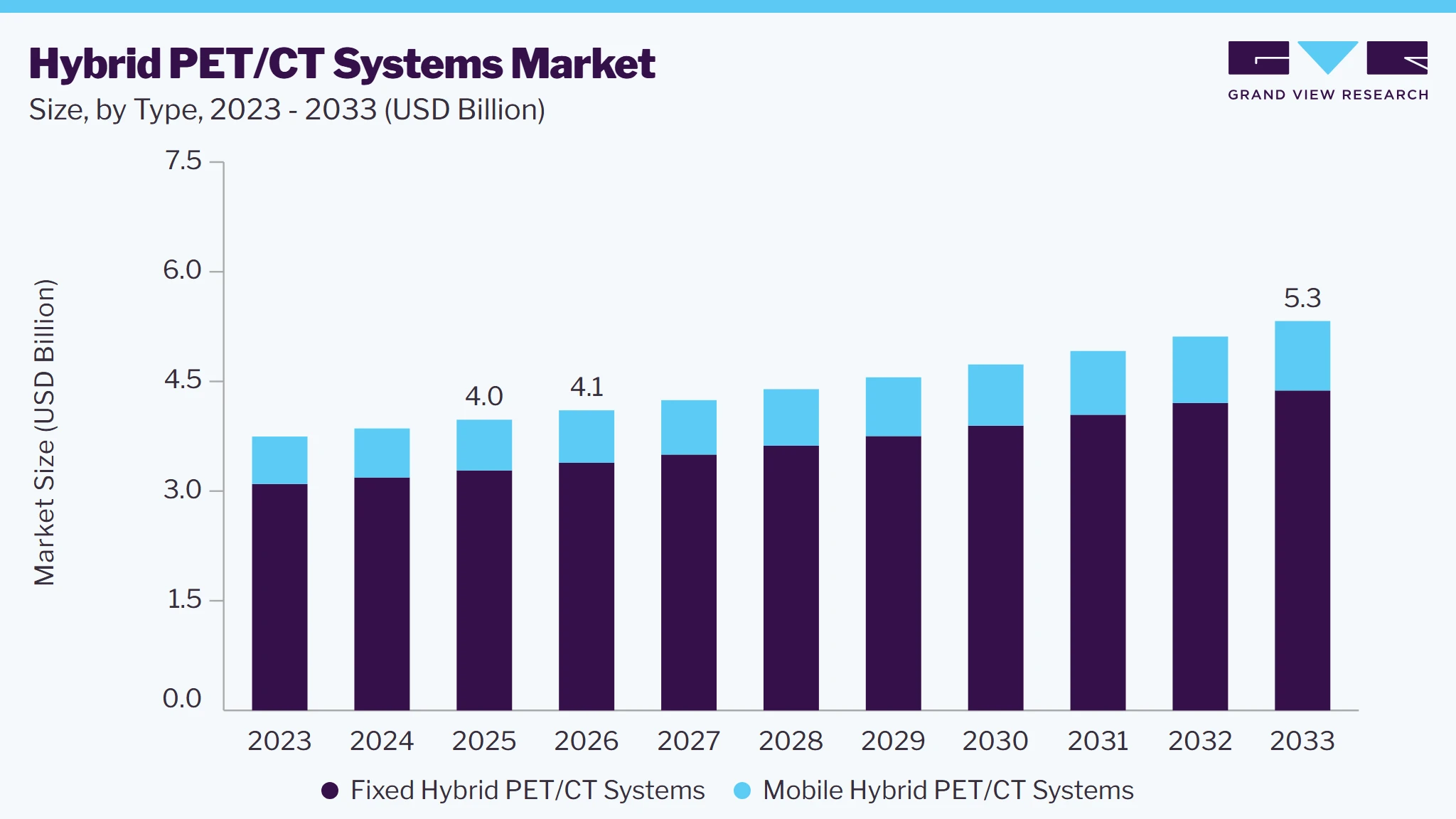
The global hybrid PET/CT systems market size was valued at USD 4.0 billion in 2025 and is projected to grow from USD 4.1 billion in 2026 to USD 5.3 billion by 2033, at a CAGR of 3.8% from 2026 to 2033. The market in North America dominated with a revenue share of 41.3% in 2025. The growing adoption of integrated functional and anatomical imaging is driving the market growth.
 Source: Grand View Research, IR Documents, Primary Interviews, Paid DatabasesTo learn more about this report,
 Download Free Sample Report
Key Market Trends & Insights
- By type: Fixed hybrid PET/CT systems segment held the largest market share of 82.6% in 2025.
- By application: Oncology segment held the largest market share of 73.4% in 2025.
- By end use: Hospitals segment held the largest market share of 45.2% in 2025.
Regional Highlights
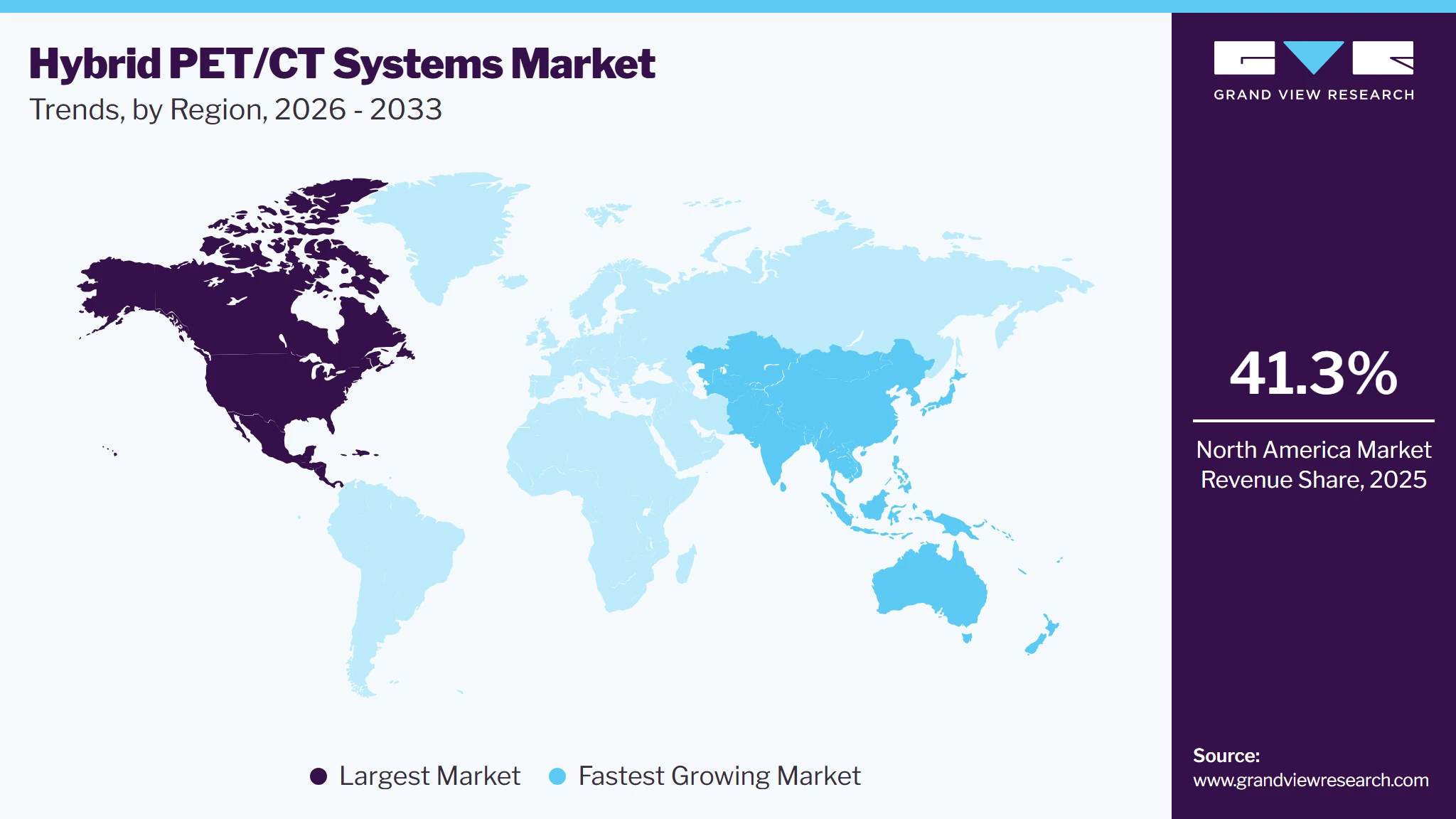
- Largest regional market: North America (41.3% revenue share, 2025)
- Fastest-growing regional market: Asia Pacific (highest CAGR, 2026-2033)
- By country: The U.S. held the largest market share in 2025.
Market Size & Forecast
- Market size in 2025: USD 4.0 Billion
- Estimated market size in 2026: USD 4.1 Billion
- Projected market size by 2033: USD 5.3 Billion
- CAGR (2026-2033): 3.8%
Prism AI by Grand View Research Free to tryAsk a question about the hybrid PET/CT systems marketTry asking✓Every figure cited from GVR research Prefer the report? Download free sample →
PET/CT combines PET-based metabolic and molecular information with CT-based anatomical imaging, enabling clinicians to accurately localize lesions, support disease detection and staging, guide treatment planning, and monitor therapeutic response within a single examination.The market is primarily driven by the growing burden of cancer and the expanding use of molecular imaging in oncology. According to the International Agency for Research on Cancer (IARC), an estimated 20.6 million people were diagnosed with cancer globally in 2024, while 9.8 million died from cancer; the number of new cases is projected to reach 34.4 million by 2050. The increasing cancer burden is therefore creating continued demand for imaging technologies that can support diagnosis, staging, treatment planning, and monitoring.
 To learn more about this report, Download Free Sample Report
Technological advancements in PET/CT are also supporting market growth as healthcare providers seek higher sensitivity, faster scanning, improved image quality, and lower radiation exposure. Manufacturers are increasingly introducing digital PET detectors, silicon photomultiplier technology, time-of-flight imaging, artificial intelligence-based reconstruction, automated workflows, and long-axial-field-of-view systems. For example, GE HealthCare reported in June 2026 that its Omni Legend PET/CT platform had surpassed 500 installations worldwide and highlighted its high-sensitivity design, faster scanning, improved image quality, and AI-enabled image processing. In addition, Siemens Healthineers reported in 2026 that two Biograph Vision Quadra total-body PET/CT systems at King's College London and Guy's and St Thomas' PET Center were being used for ultra-low-dose imaging, novel-tracer research, and dynamic whole-body PET studies. These developments are expanding the capabilities of PET/CT beyond conventional static imaging and supporting more complex clinical and research applications.
Evolution of Hybrid PET/CT Technology
Stage
Technology
Key Features
01
Conventional PET/CT
• PMT-based detectors
• First fusion of anatomy + metabolism
• Foundation of oncologic staging02
Digital PET/CT
• Solid-state digital detectors
• Better timing and spatial resolution
• Lower noise, improved lesion detection03
High-sensitivity SiPM / TOF PET/CT
• SiPM detectors with faster TOF timing
• Higher sensitivity and image quality
• Shorter scans or reduced dose04
Long-Axial-FOV PET/CT
• Extended axial coverage (about 1 m)
• Several-fold sensitivity gain
• Ultra-fast or low-dose protocols05
Total-body PET/CT
• Head-to-toe coverage in one bed position
• Whole-body dynamic imaging
• Ultra-low dose, kinetic modeling06
Theranostics + Precision Medicine
• Imaging paired with targeted radioligand therapy
• Image-based personalized dosimetry
• AI-supported, patient-tailored careThe expansion of oncology applications and theranostics is another major growth factor for the hybrid PET/CT systems industry. PET/CT is increasingly being integrated with radiopharmaceutical-based approaches that identify specific molecular targets and help determine whether patients may benefit from targeted radionuclide therapy. In March 2025, the U.S. FDA expanded the indication for Pluvicto, a radioligand therapy for PSMA-positive metastatic castration-resistant prostate cancer, and specified that patients should be selected using an approved PSMA PET product based on tumor PSMA expression. This development strengthens the link between PET imaging and treatment selection in precision oncology.
The emergence of long-axial-field-of-view and total-body PET/CT systems is creating additional opportunities by enabling greater body coverage, higher sensitivity, faster imaging, and lower administered tracer doses. A 2025 review published in the British Journal of Radiology reported that commercially available total-body PET/CT systems can cover most or all of the body in a single scan while providing higher sensitivity, improved temporal resolution, faster imaging, and lower radiation exposure. These capabilities can support dynamic imaging, quantitative analysis, and clinical research in oncology and other areas. Similarly, in Singapore, the National University Hospital and the National University of Singapore launched a Molecular Imaging and Theranostics Center incorporating the country's first next-generation total-body PET/CT system. The system provides a 106-cm field of view, single-bed-position imaging, and a throughput of up to 6 patients per hour, demonstrating an investment in advanced PET/CT infrastructure for clinical care and research.
Market Dynamics
The hybrid PET/CT systems market is driven by the increasing demand for advanced diagnostic imaging, rising prevalence of cancer and other chronic diseases, growing adoption of molecular imaging, and the expanding use of PET/CT for disease staging, treatment planning, and therapy monitoring. The integration of functional PET data with anatomical CT imaging enables a comprehensive assessment in a single examination, supporting its use across oncology, cardiology, neurology, and other specialized applications. Technology trends are centered on digital PET detectors, silicon photomultiplier (SiPM) technology, time-of-flight (TOF) imaging, higher sensitivity, improved spatial resolution, AI-enabled image reconstruction, motion correction, and extended axial field-of-view systems.
The rising prevalence of cancer and other chronic diseases is a major driver of market growth, as healthcare providers increasingly require advanced imaging technologies for disease detection, staging, treatment planning, and monitoring. PET/CT combines the metabolic information provided by PET with the anatomical detail of CT, making it particularly valuable in oncology for identifying primary tumors, detecting metastases, evaluating treatment response, and monitoring disease recurrence. The growing global cancer burden is therefore creating sustained demand for PET/CT imaging capacity. The increasing cancer burden is also expected to create a need for greater diagnostic and monitoring capacity. In addition, the World Health Organization (WHO) reported in July 2026 that cancer caused nearly 10 million deaths globally in 2024, highlighting the continued need for effective diagnostic and disease-management infrastructure. As cancer incidence increases with population aging, population growth, and exposure to risk factors, hospitals and specialized cancer centers are expanding their imaging capabilities. This supports demand for PET/CT systems capable of providing functional and anatomical information in a single examination. The increasing use of PET/CT is driving equipment installations, the replacement of older systems, and the adoption of technologically advanced PET/CT platforms.
High capital and installation costs are a significant restraint for the market growth, particularly for smaller hospitals, diagnostic imaging centers, and healthcare facilities in emerging markets. PET/CT systems require substantial upfront investment because they combine two advanced imaging technologies and require specialized components, software, radiation-shielded rooms, and supporting infrastructure. In addition to the equipment purchase price, healthcare providers may need to invest in facility modifications, electrical and cooling systems, radiation-safety measures, patient preparation areas, and radiopharmaceutical handling facilities. Advanced systems incorporating digital PET detectors, high-sensitivity technologies, extended axial field of view, and AI-based imaging capabilities can further increase acquisition costs. Healthcare providers also need to account for ongoing expenses related to equipment maintenance, software upgrades, calibration, technical support, and replacement of specialized components. These combined costs can increase the total cost of ownership and extend the payback period for PET/CT installations.
Market Concentration & Characteristics
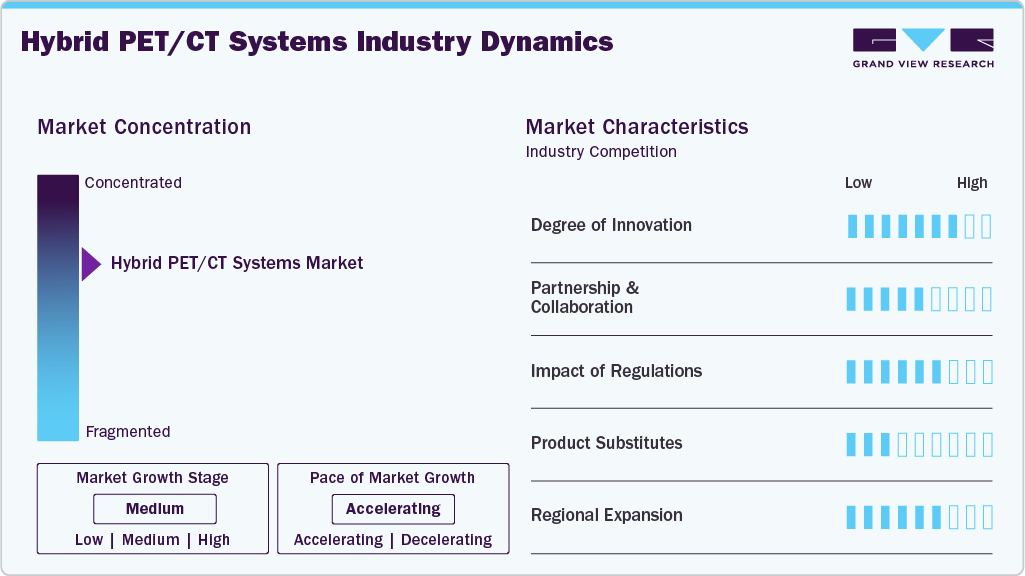
The market is moderately concentrated, with established medical imaging manufacturers maintaining strong positions through integrated PET/CT platforms, advanced detector technologies, CT capabilities, and comprehensive service networks. Key market participants include GE HealthCare, Siemens Healthineers, Philips, Canon Medical Systems, Neusoft Medical Systems, and Mediso, offering PET/CT systems for oncology, cardiology, neurology, and other clinical and research applications. Competition is increasingly focused on digital PET detector technology, silicon photomultiplier (SiPM) detection, time-of-flight (TOF) performance, higher PET sensitivity, improved spatial resolution, AI-enabled image reconstruction, respiratory motion correction, and extended axial field-of-view configurations.
The hybrid PET/CT systems industry is characterized by a high degree of technological innovation, as manufacturers continue to advance PET detector technologies, CT imaging capabilities, image reconstruction, motion correction, and integrated workflow solutions to improve diagnostic accuracy, scanning efficiency, and patient experience. Innovation is increasingly focused on digital PET detectors, silicon photomultiplier (SiPM)-based detection, high-sensitivity detector materials, time-of-flight imaging, deep-learning image reconstruction, automated patient positioning, respiratory motion correction, and extended or long-axial field-of-view configurations. These developments are intended to improve small-lesion detectability, quantitative accuracy, image quality, scan speed, and dose efficiency while supporting a broader range of clinical and research applications.
 To learn more about this report, Download Free Sample Report
Partnerships and collaborations are becoming an important strategy in the global market, as manufacturers seek to combine imaging technologies, radiopharmaceutical capabilities, artificial intelligence, clinical expertise, and research infrastructure to accelerate the development and adoption of advanced molecular imaging solutions. These collaborations are also supporting the deployment of long-axial-field-of-view PET/CT systems, advanced image reconstruction, AI-enabled analysis, novel radiotracers, and quantitative imaging technologies.
Regulatory oversight has a significant impact on the market, as manufacturers must demonstrate the safety, performance, intended use, radiation protection, and software functionality of systems before commercialization. In the U.S., emission computed tomography systems, including PET systems, are classified as Class II medical devices under 21 CFR 892.1200 and product code KPS, and are generally subject to the FDA 510(k) premarket notification pathway. The FDA requires manufacturers to demonstrate substantial equivalence to a legally marketed predicate, with submissions addressing device design, intended use, performance, safety, software, labeling, and applicable consensus standards. For hybrid PET/CT platforms, regulatory requirements also extend to the CT component and its radiation-emitting functions. FDA states that CT systems are Class II medical devices subject to registration and listing, 510(k) premarket notification, quality system requirements, and general and special controls, and that CT equipment must also comply with applicable diagnostic X-ray radiation safety requirements.
The hybrid PET/CT systems industry faces substitution by alternative molecular and anatomical imaging modalities, which can be selected based on the clinical indication, diagnostic objective, anatomical region, and availability of imaging infrastructure. PET/MRI represents an important alternative because it combines PET-derived metabolic information with the superior soft-tissue contrast of MRI and is particularly relevant for neurological, pelvic, and selected pediatric applications. SPECT/CT can also serve as an alternative hybrid nuclear imaging modality for clinical applications where SPECT radiopharmaceuticals are appropriate, while standalone PET, combined with separately acquired CT or MRI, can provide functional and anatomical information without requiring an integrated PET/CT platform. Conventional CT and MRI can further serve as alternatives to PET/CT when the primary requirement is detailed anatomical assessment rather than metabolic or molecular information.
Regional expansion is an important growth strategy in the global market, as manufacturers seek to broaden their geographic presence through regulatory approvals, localized manufacturing, distributor partnerships, direct sales networks, and collaborations with hospitals and nuclear medicine centers. Manufacturers are also strengthening local production and service capabilities to reduce supply-chain complexity, improve equipment availability, and address region-specific cost and infrastructure requirements. For example, United Imaging Healthcare Co., Ltd. has been expanding its international PET/CT presence through installations, regional service infrastructure, and partnerships across Europe, North America, Asia-Pacific, and emerging markets. In 2025, the company reported continued expansion of its global footprint, showcased new PET/CT technologies, and strengthened its European operations.
Analyst Perspective
The hybrid PET/CT systems market is an established segment within the broader molecular imaging, supported by the increasing use of combined functional and anatomical imaging for disease detection, characterization, staging, treatment planning, and therapy monitoring. Hybrid PET/CT systems integrate positron emission tomography (PET), which provides information on metabolic and molecular activity, with computed tomography (CT), which provides detailed anatomical information, enabling the acquisition and fusion of complementary imaging data within a single examination. The technology is widely used across oncology, cardiology, neurology, and other specialized clinical applications, with system selection influenced by factors such as detector technology, PET sensitivity, CT configuration, spatial and temporal resolution, axial field of view, patient throughput, radiation dose, and clinical application requirements.
Type Insights
The fixed hybrid PET/CT systems segment led the market with the largest revenue share of 82.6% in 2025. The growth is supported by the established use of permanent PET/CT infrastructure in hospitals, cancer centers, diagnostic imaging facilities, and academic medical institutions. Fixed systems are preferred by high-volume facilities because they support continuous patient scheduling across oncology staging and treatment monitoring, cardiology, neurology, and research applications. Their high utilization also helps healthcare providers justify investment in dedicated radiation-shielded rooms, radiopharmaceutical handling areas, and specialized nuclear medicine infrastructure. Demand is also being supported by the replacement of older PET/CT scanners with digital, higher-sensitivity, lower-dose, and faster systems. For example, in February 2025, Queensland's Princess Alexandra Hospital installed a new USD 2.5 million (AUD 4 million) PET/CT scanner, replacing a 13-year-old system; the hospital stated that the new digital scanner would improve efficiency and image quality and support patients across oncology, hematology, urology, neurology, and cardiology.
The mobile hybrid PET/CT systems segment is expected to grow at the fastest CAGR of 4.1% over the forecast period. The growth is driven by the need to expand access to advanced molecular imaging without requiring every healthcare facility to establish a permanent PET/CT installation. Mobile systems enable hospitals and diagnostic providers to serve geographically dispersed or lower-volume patient populations by relocating equipment between facilities, thereby improving utilization and reducing the infrastructure burden of permanent installations. This model is particularly relevant in rural and underserved areas where cancer patients may otherwise need to travel long distances for PET/CT examinations. Recent adoption demonstrates increasing interest in this approach. In August 2026, InHealth completed the first patient scan using Europe's first mobile Siemens Biograph Trinion PET/CT system at Wrexham Maelor Hospital in Wales. Siemens Healthineers stated that the relocatable system is intended to expand access to advanced cancer imaging while addressing growing PET/CT demand across the UK; its workflow technologies are also designed to support high patient throughput.
Application Insights
The oncology segment led the market with the largest revenue share of 73.4% in 2025. The growth is supported by the extensive use of PET/CT for cancer detection, staging, treatment planning, assessment of treatment response, evaluation of recurrence, and theranostics. The increasing availability of targeted radiopharmaceuticals is further expanding the role of PET/CT in personalized cancer management, while hospitals and cancer centers are investing in high-sensitivity systems to improve whole-body tumor assessment and workflow efficiency. For instance, in September 2026, Burjeel Specialty Hospital launched Sharjah's first PET/CT service, using a GE Discovery IQ PET/CT system in its Nuclear Medicine Department and at the Burjeel Cancer Institute. The hospital states that the system will support cancer diagnosis and staging, treatment-response assessment, recurrence detection, and treatment planning.
The neurology segment is expected to witness the fastest CAGR over the forecast period. The growth is driven by the increasing use of PET imaging for Alzheimer's disease and other neurodegenerative disorders, the growing demand for biomarker-based diagnosis, and the emergence of disease-modifying therapies that require more precise patient assessment and treatment monitoring. PET can provide molecular information on amyloid and other pathological processes that complements structural imaging, supporting differential diagnosis and evaluation of disease progression. For instance, in April 2025, Siemens Healthineers published a clinical case demonstrating the use of Biograph mCT PET/CT with beta-amyloid PET imaging to assess a patient with cognitive decline for anti-amyloid monoclonal antibody therapy. The PET/CT confirmed a significant cerebral beta-amyloid burden and supported eligibility for lecanemab treatment, highlighting the growing role of PET/CT in Alzheimer's disease diagnosis and treatment selection.
End Use Insights
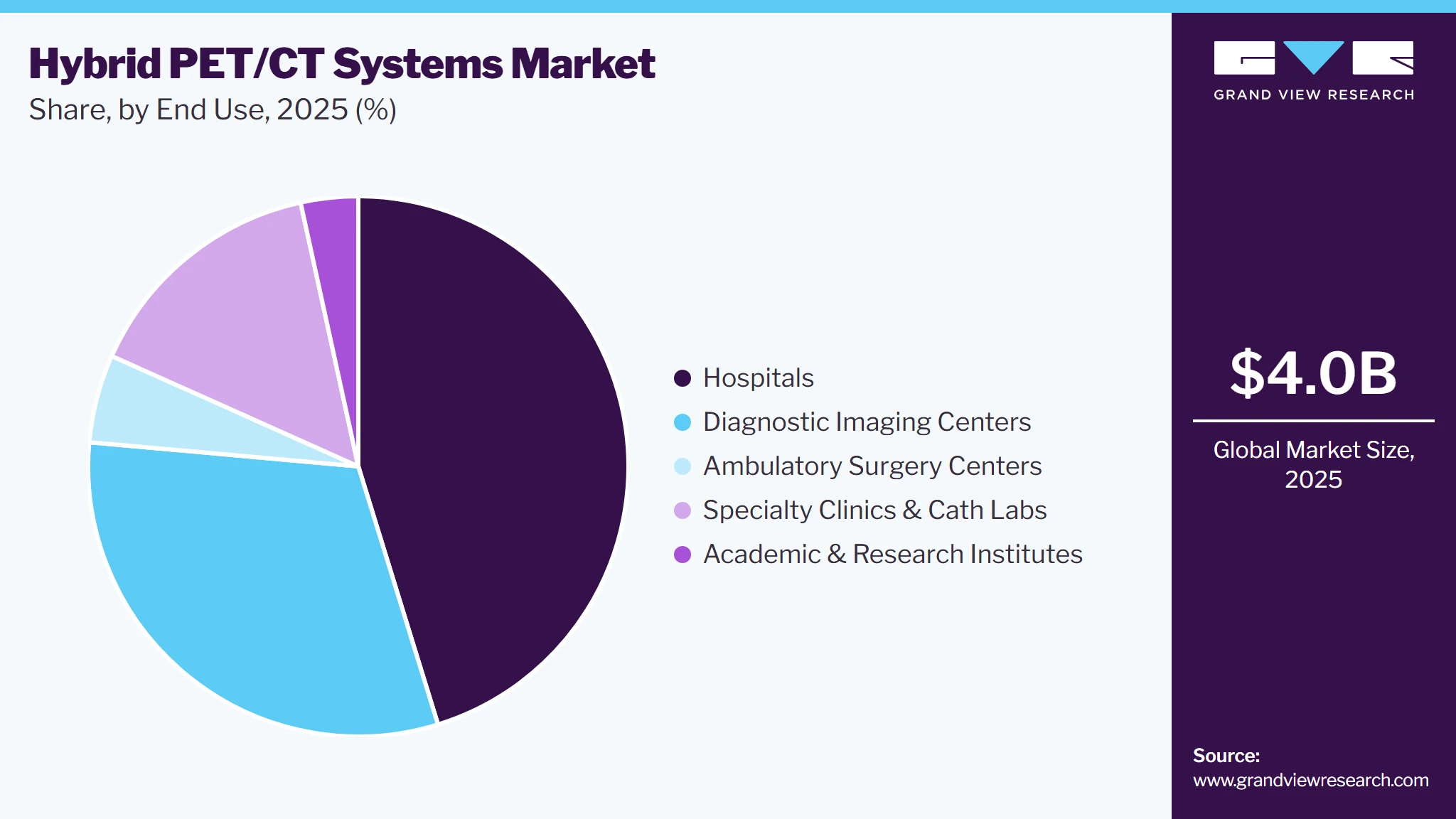
The hospitals segment led the market with the largest revenue share of 45.2% in 2025. The growth is supported by the high volume of oncology, cardiology, neurology, and other complex diagnostic procedures performed in hospital settings. Hospitals are well-positioned to adopt fixed PET/CT systems because they can support continuous patient scheduling, multidisciplinary interpretation, radiopharmaceutical handling, and integration with oncology and nuclear medicine departments. Demand is further supported by the increasing use of PET/CT for cancer staging, treatment planning, therapy-response assessment, and theranostics. Recent hospital investments demonstrate this trend. For instance, in March 2026, Clatterbridge Cancer Center-Wirral installed a new Siemens Biograph Trinion PET/CT to replace its older scanner, with the new system expected to reduce average scan times from approximately 25 minutes to around 7 minutes and increase PET/CT capacity. These developments highlight the importance of fixed PET/CT infrastructure in hospitals with sustained imaging demand and established nuclear medicine capabilities.
 To learn more about this report, Download Free Sample Report
The diagnostic imaging centers segment is anticipated to grow the fastest CAGR over the forecast period. The growth is attributed to the growing demand for specialized imaging services, increasing referrals for PET/CT examinations, and the expansion of advanced diagnostic infrastructure outside major hospitals. Diagnostic imaging centers can utilize PET/CT systems to provide dedicated imaging capacity for oncology and other molecular imaging applications, particularly in regions where hospital-based PET/CT capacity is limited. NHS England's 2024 PET/CT service specification emphasizes the need for sufficient service volume to maintain workforce expertise and the critical infrastructure required for PET/CT delivery, while also highlighting accessible scanning locations and convenient appointment availability. In addition, the launch of the Molecular Imaging and Theranostics Center at Singapore's National University Hospital in October 2025 demonstrates continued investment in dedicated molecular imaging infrastructure, with the center incorporating Singapore's first next-generation total-body PET/CT system to support clinical diagnostics, cancer care, and research.
Regional Insights
The North America hybrid PET/CT systems market held the largest revenue share of 41.3% in 2025. The growth is supported by a well-established nuclear medicine infrastructure, high adoption of advanced diagnostic imaging technologies, and strong demand for PET/CT in oncology. The region benefits from substantial cancer-care expenditure, availability of radiopharmaceuticals, established reimbursement pathways, and the presence of major PET/CT manufacturers and academic medical centers. In the U.S., PET/CT is widely used for cancer detection, staging, treatment planning, and treatment-response assessment, while continued development of molecular imaging and theranostics is supporting demand for higher-sensitivity and advanced PET/CT platforms. The U.S. National Cancer Institute estimates that approximately 2.04 million new cancer cases be diagnosed in the U.S. in 2025, supporting continued demand for advanced oncology imaging. In addition, ongoing research involving novel PET tracers and PET/CT-based imaging is expanding potential applications beyond conventional FDG imaging.
 To learn more about this report, Download Free Sample Report
U.S. Hybrid PET/CT Systems Market Trends
The hybrid PET/CT systems market in the U.S. accounted for the largest market revenue share in North America in 2025, driven by the high cancer burden, extensive use of PET/CT in oncology, expansion of molecular imaging and theranostics, and continued technological development in digital PET and long-axial-field-of-view systems. PET/CT is increasingly used to determine disease extent, evaluate treatment response, and support treatment planning, while the availability of multiple radiotracers is expanding the range of molecular targets that can be evaluated. The market is also supported by a strong clinical research infrastructure, with the NCI maintaining multiple approved sites for the production and investigation of PET imaging agents and supporting clinical trials involving emerging PET tracers.
Europe Hybrid PET/CT Systems Market Trends
The hybrid PET/CT systems market in Europe is experiencing robust growth, supported by established healthcare systems, increasing demand for oncology imaging, extensive nuclear medicine infrastructure, and government investment in advanced diagnostic equipment. PET/CT is incorporated into nuclear medicine services across European healthcare systems and is used particularly for oncology-related diagnosis, staging, treatment planning, and monitoring. Demand is also supported by the increasing focus on precision medicine and molecularly targeted therapies, which require imaging technologies capable of characterizing biological processes and treatment response. European healthcare providers are additionally investing in modernization and replacement of imaging equipment, creating opportunities for digital PET/CT, high-sensitivity systems, and advanced software-enabled platforms.
The UK hybrid PET/CT systems market is steadily growing. The growth is driven by continued investment in cancer diagnosis and treatment infrastructure, increasing demand for molecular imaging, and the established role of PET/CT within specialized NHS services. NHS England maintains a dedicated PET/CT service specification and reporting framework that reflects the integration of PET/CT into specialized healthcare commissioning and standardized reporting. In December 2025, the UK also introduced national diagnostic reference levels that specifically include CT performed as part of PET/CT examinations, reinforcing attention to radiation-dose optimization and standardized imaging practice. Furthermore, the National Cancer Plan for England, published in February 2026, sets out a long-term strategy to improve cancer diagnosis and care through 2035, supporting continued investment in cancer diagnostic capacity and advanced technologies.
The hybrid PET/CT systems market in Spain is experiencing significant growth in global market. The growth is attributed to the government investment in high-technology healthcare infrastructure, the established use of PET/CT in oncology, and the expansion of nuclear medicine capabilities. Spain's national healthcare service includes PET and PET/CT within specialized nuclear medicine services for authorized oncology indications, supporting the clinical utilization of hybrid molecular imaging. Government investment through the INVEAT high-technology equipment plan has also supported the renewal and expansion of advanced imaging infrastructure; the Spanish Ministry of Health reported nearly USD 918.5 million (EUR 800 million) in investment to renew or expand 851 high-technology medical devices, including PET-CT and SPECT-CT systems. In addition, the continued development of the nuclear-medicine workforce capacity and PET/CT-related training supports the operation and utilization of these systems across the healthcare network.
Asia Pacific Hybrid PET/CT Systems Market Trends
The hybrid PET/CT systems market in the Asia-Pacific is expected to grow at the fastest CAGR of 4.3% over the forecast period.The growth is supported by rising cancer incidence, expansion of oncology and nuclear medicine infrastructure, increasing healthcare expenditure, and growing adoption of advanced molecular imaging technologies. Countries across the region are expanding access to PET/CT as healthcare systems invest in high-end diagnostic equipment and seek to improve cancer staging, treatment planning, and monitoring. The region is also witnessing increasing investment in digital PET/CT, higher-sensitivity detectors, and advanced imaging workflows.
The China hybrid PET/CT systems market is experiencing rapid expansion, driven by the country's large cancer patient population, increasing demand for advanced oncology diagnostics, expansion of tertiary hospitals, and continued investment in high-end medical imaging infrastructure. Government healthcare initiatives supporting cancer prevention and early diagnosis are increasing the need for sophisticated imaging capabilities, while hospitals are actively procuring and upgrading PET/CT systems. Recent procurement activity illustrates this trend: in May 2026, Shengjing Hospital, affiliated with China Medical University, initiated an international tender for a PET/CT system with requirements that include digital PET detector technology and an axial field of view of at least 33 cm, or specified detector characteristics.
The hybrid PET/CT systems market in South Korea is experiencing strong growth, driven by the country's advanced healthcare infrastructure, high adoption of diagnostic imaging technologies, established nuclear medicine capabilities, and strong focus on cancer diagnosis and precision medicine. PET/CT is particularly relevant to oncology because it combines metabolic information with anatomical localization, supporting cancer staging, treatment planning, and response assessment. Demand is further supported by the country's concentration of tertiary hospitals and specialized cancer centers, which are important users of advanced molecular imaging technologies. The broader development of radiopharmaceutical-based precision medicine and theranostics is also creating opportunities for PET/CT systems with improved sensitivity, quantitative imaging, and compatibility with newer tracers.
Latin America Hybrid PET/CT Systems Market Trends
The hybrid PET/CT systems market in Latin America is emerging as a high-growth segment, supported by rising cancer-care needs, the gradual expansion of nuclear medicine infrastructure, greater investment in advanced diagnostic equipment, and efforts to improve access to high-complexity oncology services. PET/CT adoption is expanding as healthcare providers seek to improve cancer staging and treatment monitoring while reducing dependence on fragmented diagnostic pathways. The development of radiopharmaceutical supply networks is also important because PET/CT utilization depends on reliable access to short-lived radiotracers.
The Brazil hybrid PET/CT systems market is growing. The growth is supported by the expansion of public-sector oncology diagnostics, increasing access to nuclear medicine, government investment in PET/CT infrastructure, and improvements in domestic radiopharmaceutical supply. In February 2026, Hospital Universitário Antônio Pedro of the Universidade Federal Fluminense (UFF) inaugurated a new PET/CT system acquired with public funding, expected capacity of up to 20 examinations per day. The system is intended for cancer diagnosis, staging, and patient follow-up and expands access to high-complexity PET/CT services through Brazil's Unified Health System (SUS). Brazil also maintains public infrastructure to supply PET radiopharmaceuticals, including fluorine-18 FDG, thereby supporting the availability of tracers required for PET-based imaging.
Middle East & Africa Hybrid PET/CT Systems Market Trends
The hybrid PET/CT systems market in the Middle East & Africa (MEA) is experiencing steady growth, driven by increasing investment in healthcare infrastructure, rising demand for advanced cancer diagnostics, the development of specialized oncology centers, and government-led healthcare modernization programs. Adoption is concentrated in countries with comparatively developed healthcare infrastructure, particularly Gulf countries, where governments are investing in advanced diagnostic imaging and precision medicine. PET/CT is increasingly incorporated into specialized oncology and nuclear medicine services because it provides metabolic and anatomical information within a single examination. Expansion of radiopharmaceutical infrastructure and the development of cancer care centers are also important for improving the utilization of PET/CT systems across the region.
The Saudi Arabia hybrid PET/CT systems market is experiencing notable growth, driven by healthcare modernization under Saudi Vision 2030, the expansion of specialized medical facilities, increasing demand for advanced cancer diagnostics, and investment in high-end imaging infrastructure. PET/CT is being incorporated into major healthcare facilities to support cancer detection, cardiovascular assessment, neurological imaging, and treatment planning. In May 2025, Saudi Arabia's Ministry of Health highlighted advanced PET/CT technology at King Abdullah Medical City in Makkah, describing the system as the first PET/CT of its kind within Ministry of Health facilities in the Western Region. The initiative forms part of broader healthcare transformation efforts aimed at improving access to advanced diagnostic technologies and strengthening specialized healthcare services.
Key Hybrid PET/CT Systems Company Insight
The hybrid PET/CT systems industry is competitive, with medical imaging manufacturers focusing on advancing PET detector technologies, CT imaging capabilities, image reconstruction, motion correction, and integrated workflow solutions. Market participants are increasingly emphasizing digital PET detectors, silicon photomultiplier (SiPM) technology, time-of-flight (TOF) imaging, high-sensitivity platforms, AI- and deep-learning-based image reconstruction, and improved quantitative accuracy to enhance lesion detectability, image quality, scanning speed, and dose efficiency.
Key Hybrid PET/CT Systems Companies
The following key companies have been profiled for this study on the global hybrid PET/CT systems market.
-
GE HealthCare
-
Siemens Healthineers AG
-
Koninklijke Philips N.V.
-
Canon Medical Systems
-
United Imaging Healthcare Co., Ltd.
-
Neusoft Medical Systems Co., Ltd.
-
Mediso Medical Imaging Systems
-
Positron Corporation
Competitive Benchmarking
Category
Operating Strategies
Competitive Edge
Weakness
Established Players (GE HealthCare, Siemens Healthineers AG, Koninklijke Philips N.V., Canon Medical Systems)
- Focus on expanding digital PET/CT platforms with higher sensitivity, improved time-of-flight performance, advanced image reconstruction, AI-enabled workflow, and motion correction technologies.
- Strengthen hospital and imaging-center relationships through integrated PET/CT solutions, software upgrades, service networks, and applications spanning oncology, cardiology, neurology, and theranostics.
- Strong brand recognition, extensive installed-base presence, broad healthcare portfolios, and established relationships with hospitals and nuclear medicine centers support adoption.
- Broad technology capabilities enable these companies to address high-throughput clinical imaging, advanced oncology applications, research, and emerging tracer-based applications.
- High R&D, manufacturing, regulatory compliance, installation, and servicing requirements increase the cost of developing and commercializing advanced PET/CT platforms.
- Large organizational structures and complex product-development processes can increase the time required to introduce new PET/CT technologies and obtain regulatory clearances across multiple markets
Emerging Players (Neusoft Medical Systems Co., Ltd., Mediso Medical Imaging Systems, Positron Corporation)
- Focus on differentiated PET/CT platforms emphasizing digital detectors, high-resolution imaging, long or scalable axial field of view, compact system designs, AI-enabled workflows, and cost-conscious solutions.
- Expand through regional market penetration, distributor relationships, clinical collaborations, and introduction of advanced PET/CT platforms targeting oncology, neurology, cardiology, and research applications.
- Faster product innovation and differentiated architectures can allow emerging players to address demand for high-resolution, high-sensitivity, lower-dose, and faster PET/CT imaging.
- Flexible product architectures and competitive pricing can support penetration into hospitals and imaging centers seeking advanced capabilities without relying exclusively on traditional premium platforms.
- Smaller global installed bases and comparatively narrower service and distribution networks can limit penetration in some developed markets.
- Building long-term clinical evidence, physician familiarity, and brand recognition can require significant investment, particularly for newer digital and advanced PET/CT platforms.
Recent Development
-
In June 2026, Siemens Healthineers announced a USD 34.8 million (£26 million) investment in a new 8X radiopharmacy in Dunstable, UK, designed to provide eight times the production capacity of a conventional radiopharmacy and strengthen the supply of PET radiopharmaceuticals. The facility is expected to support the growing demand for PET/CT imaging and future theranostic applications through two high-energy cyclotrons, multiple cleanrooms, and nationwide distribution capabilities.
-
In November 2025, GE HealthCare announced the CE Mark for its Omni 128cm total-body PET/CT system, designed to enable head-to-thigh imaging in a single bed position, while supporting faster scans, lower-dose imaging, and multi-organ dynamic imaging. The system is also designed to support novel PET tracers and emerging theranostic applications, highlighting continued innovation toward high-sensitivity and extended-field-of-view PET/CT platforms.
-
In September 2025, Franciscan Health Crawfordsville partnered with Shared Medical Services to introduce a mobile United Imaging uMI 550 digital PET/CT, providing scheduled PET/CT services to the local community.
Hybrid PET/CT Systems Market Report Scope
Report Attribute
Details
Market size in 2025
USD 4.0 billion
Estimated market size in 2026
USD 4.1 billion
Projected market size by 2033
USD 5.3 billion
Growth rate
CAGR of 3.8% from 2026 to 2033
Base year for estimation
2025
Historical data
2021 - 2024
Forecast period
2026 - 2033
Quantitative units
Revenue in USD billion and CAGR from 2026 to 2033
Report coverage
Revenue forecast, company ranking, competitive landscape, growth factors, and trends
Segments covered
Type, application, end use, region
Regional scope
North America; Europe; Asia Pacific; Latin America; MEA
Country scope
U.S.; Canada; Mexico; UK; Germany; France; Italy; Spain; Denmark; Sweden; Norway; Japan; China; India; Australia; Thailand; South Korea; Brazil; Argentina; South Africa; Saudi Arabia; UAE; Kuwait
Key companies profiled
GE HealthCare; Siemens Healthineers AG; Koninklijke Philips N.V.; Canon Medical Systems; United Imaging Healthcare Co., Ltd.; Neusoft Medical Systems Co., Ltd.; Mediso Medical Imaging Systems; Positron Corporation
Customization scope
Free report customization (equivalent up to 8 analyst’s working days) with purchase. Addition or alteration to country, regional, and segment scope
Pricing and purchase options
Avail customized purchase options to meet your exact research needs. Explore purchase options
Global Hybrid PET/CT Systems Market Report Segmentation
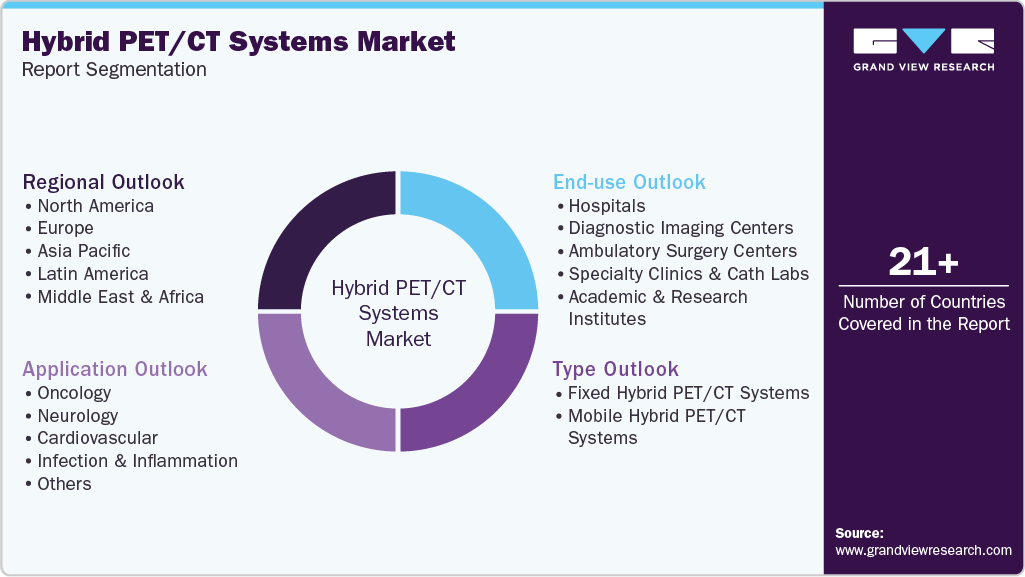
This report forecasts revenue growth at the global, regional, and country levels and provides an analysis of the latest industry trends across each sub-segment from 2021 to 2033. For this study, Grand View Research has segmented the global hybrid PET/CT systems market report based on type, application, end use, and region:
 To learn more about this report, Download Free Sample Report
-
Type Outlook (Revenue, USD Billion, 2021 - 2033)
-
Fixed Hybrid PET/CT Systems
-
Mobile Hybrid PET/CT Systems
-
-
Application Outlook (Revenue, USD Billion, 2021 - 2033)
-
Oncology
-
Neurology
-
Cardiovascular
-
Infection & Inflammation
-
Others
-
-
End Use Outlook (Revenue, USD Billion, 2021 - 2033)
-
Hospitals
-
Diagnostic Imaging Centers
-
Ambulatory Surgery Centers
-
Specialty Clinics & Cath Labs
-
Academic & Research Institutes
-
-
Region Outlook (Revenue, USD Billion, 2021 - 2033)
-
North America
-
U.S.
-
Canada
-
Mexico
-
-
Europe
-
UK
-
Germany
-
France
-
Italy
-
Spain
-
Norway
-
Denmark
-
Sweden
-
-
Asia Pacific
-
China
-
Japan
-
South Korea
-
Thailand
-
Australia
-
India
-
-
Latin America
-
Brazil
-
Argentina
-
-
MEA
-
South Africa
-
Saudi Arabia
-
UAE
-
Kuwait
-
-
Research Methodology
The hybrid PET/CT systems marketfigures in this report are based on a proven research process that combines executive interviews with secondary research from proprietary databases, company filings, and recognized regulatory and institutional sources. Market size is built through value-chain sizing-reconciling supply-side and demand-side estimates-and triangulated with bottom-up and top-down approaches. Every estimate passes multiple levels of expert validation before publication, with each hybrid PET/CT systems segment quantified using the revenue-capture definitions in the table below.
Segment Definition
Type
Revenue capture definition
Fixed Hybrid PET/CT Systems
Revenue is generated through high-capital procurement of stationary, room-mounted multimodality imaging installations. Original Equipment Manufacturers (OEMs) derive revenue from upfront gantry hardware sales, site preparation and room shielding services, custom detector configuration options, and high-margin, multi-year post-warranty service level agreements (SLAs) covering tube replacements, detector maintenance, and remote diagnostics.
Mobile Hybrid PET/CT Systems
Revenue flows from the commercialization of specialized PET/CT systems integrated into self-contained mobile trailer units or modular transportable platforms. Market participants generate revenue through direct equipment sales to specialized mobile healthcare providers, long-term operational lease structures for regional hospital networks, unit customization fees for weatherproofing and vibration dampening, and recurring maintenance and calibration contracts.
Application
Revenue capture definition
Oncology
Revenue is generated through high-volume diagnostic procedures that target primary tumor identification, staging, restaging, and treatment response monitoring. Device manufacturers and imaging centers capture revenue through high scanner throughput, proprietary oncology image reconstruction and quantitation software packages, and recurring consumption of standard radiotracers and targeted theranostic agents.
Neurology
Revenue flows from specialized metabolic and molecular brain imaging procedures utilized for early diagnosis and differential assessment of neurodegenerative conditions. Revenue capture is driven by advanced brain-dedicated reconstruction software licenses, specialized neuroimaging headrest modules, and the clinical adoption of radiotracers targeting amyloid plaques, tau tangles, and neuroinflammation.
Cardiovascular
Revenue is captured through non-invasive myocardial viability assessments, perfusion quantification, and active plaque/endocarditis inflammatory evaluations. Market participants monetize this segment via dedicated cardiac gating hardware and software integrations, stress-testing peripheral sync modules, advanced cardiac analysis software packages, and short-half-life PET radiotracer administration kits.
Infection & Inflammation
Revenue is derived from targeted PET/CT scans used to localize fever of unknown origin (FUO), osteomyelitis, prosthetic joint infections, and systemic inflammatory diseases like sarcoidosis. Income is secured through high clinical scan volumes across tertiary care facilities, alongside software protocols optimized for high-sensitivity, low-dose soft-tissue inflammatory mapping.
Others
Revenue encompasses expanding clinical and investigational applications, including pediatric molecular imaging, assessments of muscular diseases, orthopedics, and novel theranostic companion diagnostic workflows. Revenue in this segment is driven by specialized low-dose pediatric software licenses, custom positioning accessories, and emerging tracer-specific diagnostic processing modules.
End Use
Revenue capture definition
Hospitals
Revenue is generated through large-scale capital equipment purchases, complex institutional group purchasing organization (GPO) supply contracts, and public/private healthcare system tenders. Equipment providers monetize high-throughput hospital installations through complete hardware setup, multi-department PACS/RIS software integration, comprehensive clinical training programs, and comprehensive long-term equipment service contracts.
Diagnostic Imaging Centers
Revenue flows through commercial sales and equipment leasing arrangements with independent or network-affiliated outpatient imaging facilities. Income capture in this setting prioritizes rapid equipment return on investment (ROI), driven by high patient scan turnover, streamlined pre-filled radiotracer delivery workflows, modular service contracts, and automated patient scheduling and reporting software tools.
Ambulatory Surgery Centers
Revenue is captured by supplying compact, high-efficiency hybrid scanner configurations to same-day surgical and procedural facilities. Revenue is generated via streamlined capital equipment packages, specialized interventional PET/CT guidance software modules, and turnkey installation support tailored for lower-footprint clinical environments.
Specialty Clinics & Cath Labs
Revenue is derived through targeted equipment placement in sub-specialty practices, such as outpatient cardiology, oncology, and vascular centers. Device providers capture value by bundling domain-specific analysis tools with compact gantry designs and flexible financing or usage-based equipment leasing models.
Academic & Research Institutes
Revenue is generated through secondary research, clinical trial environments, and academic medical centers. Market participants monetize this segment by supplying high-resolution, open-architecture research PET/CT systems, specialized multi-tracer quantitation software libraries, custom hardware modifications for translational animal/human imaging, and grant-funded joint development or clinical trial research agreements.
Estimation Model
Stage
Key Question
Process Steps
Data Sources
Scope Definition
What is being sized?
- Define the market as hybrid PET/CT imaging systems
- Segment the market to establish the addressable equipment base
- Define market inclusion and exclusion criteria, including new system sales, replacement systems, and major system upgrades
- Establish geographic and temporal scope
FDA device classifications and regulatory records, IAEA nuclear medicine resources, national radiology/nuclear medicine associations
Build the Product Base
How large is the addressable PET/CT equipment base?
- Compile the number of installed PET/CT systems by country and region
- Estimate the active installed base by accounting for system age, decommissioning, replacement, and other factors
- Assess annual new installations and replacement demand
- Estimate the addressable annual unit demand by combining new-site demand and replacement demand
IAEA nuclear medicine facility and equipment data, national healthcare statistics, hospital databases, manufacturer annual reports
Estimate Penetration
What determines the number of PET/CT systems purchased each year?
- Measure PET/CT adoption across different end use settings
- Evaluate PET/CT examination volumes and scanner utilization, including different
- Estimate replacement penetration and upgrade cycles by assessing the age of installed systems
- Forecast future adoption based on different factors
Hospital and imaging-center surveys, PET/CT procedure volumes, IAEA databases, national cancer registries
Revenue Conversion
How does PET/CT system demand translate into market revenue?
- Collect average selling prices (ASP) for PET/CT systems by configuration
- Calculate annual market revenue using estimated PET/CT units sold × applicable ASP
- Adjust revenue estimates for regional pricing differences, product mix, and other factors
- Cross-check the calculated market value against manufacturer revenues, procurement/tender values, hospital capital expenditure
Manufacturer price lists and product portfolios, hospital procurement/tender databases, distributor quotation
Delivered Customizations
This report has been delivered with the following In-depth customizations
Client Request
Customization Delivered
Value Adds
Application Analysis
Conducted a detailed application analysis of the global hybrid PET/CT systems market, assessing adoption across major clinical applications, including oncology, cardiology, neurology, infection and inflammation imaging, and other applications. The analysis examined the role of PET/CT in cancer detection, staging, treatment planning, assessment of therapy response, recurrence monitoring, assessment of cardiac perfusion and viability, evaluation of neurodegenerative disease, and identification of infectious or inflammatory conditions. Application-level assessment also considered differences in procedure volumes, clinical demand, availability of radiopharmaceuticals, installed imaging infrastructure, referral patterns, reimbursement conditions, and the increasing use of molecular imaging alongside conventional CT.
Enables stakeholders to understand where PET/CT systems generate the strongest clinical demand and how application mix influences equipment utilization. The analysis supports application-specific product positioning, technology development, sales-channel prioritization, and identification of growth opportunities in oncology and other high-volume clinical areas.
Porter Analysis
Conducted a comprehensive Porter’s Five Forces analysis of the global hybrid PET/CT systems market, evaluating competitive rivalry, threat of new entrants, bargaining power of suppliers, bargaining power of buyers, and threat of substitutes. The assessment considered the high technical expertise required for PET/CT development, regulatory requirements, integration of PET and CT technologies, established installed bases, service and maintenance capabilities, detector and imaging component dependencies, software and reconstruction technology, and the importance of radiopharmaceutical supply chains. Buyer power was assessed across hospitals, diagnostic imaging centers, academic institutions, and government healthcare facilities, considering capital budgets, procurement processes, tender-based purchasing, total cost of ownership, and equipment utilization.
Provides stakeholders with a structured view of the competitive and economic forces shaping the commercialization of PET/CT systems. The analysis supports pricing strategy, supplier diversification, procurement planning, technology partnerships, market-entry assessment, and competitive positioning.
Market Dynamics Analysis
Conducted a detailed market dynamics analysis covering key drivers, restraints, opportunities, and challenges influencing the global hybrid PET/CT systems market. Major growth factors assessed include the increasing burden of cancer and other chronic diseases, rising demand for early and accurate disease diagnosis, greater utilization of molecular imaging in oncology, technological improvements in PET detector sensitivity and CT image quality, development of hybrid imaging workflows, and increasing demand for treatment planning and therapy monitoring. Restraints and challenges assessed include high system acquisition costs, significant installation and infrastructure requirements, radiation-related considerations, limited availability of trained nuclear medicine and imaging personnel, radiopharmaceutical supply constraints, and maintenance costs.
Enables stakeholders to understand the key factors driving and constraining the PET/CT market growth while linking clinical demand with healthcare economics. The analysis supports strategic planning for product launches, geographic expansion, pricing, financing models, technology investments, supply-chain planning, and capacity expansion.
Frequently Asked Questions About This Report
The hospitals segment led with a 45.2% revenue share in 2025.
The global hybrid PET/CT systems market size was valued at USD 4.0 billion in 2025 and is estimated at USD 4.1 billion for 2026.
The global hybrid PET/CT systems market is expected to grow at a CAGR of 3.8% from 2026 to 2033, reaching USD 5.3 billion by 2033.
By type, the fixed hybrid PET/CT systems segment held the highest market share of 82.6% in 2025.
The key players in the hybrid PET/CT systems market include GE HealthCare; Siemens Healthineers AG; Koninklijke Philips N.V.; Canon Medical Systems; United Imaging Healthcare Co., Ltd.; Neusoft Medical Systems Co., Ltd.; Mediso Medical Imaging Systems; Positron Corporation
North America hybrid PET/CT systems market held the largest share of 41.3% of the global market in 2025.
The hybrid PET/CT systems market is driven by the growing prevalence of cancer and neurological disorders, increasing demand for accurate diagnostic imaging, and advancements in hybrid imaging technologies.
Asia Pacific is the fastest-growing region over the forecast period.
By application, the oncology segment held a leading market share of 73.4% in 2025.
About the Author(s)
Medical Devices Research Team
Healthcare · Medical DevicesThis report was authored by the medical devices research team at Grand View Research - comprising two research analysts, one senior research analyst, and one industry expert - with specialized expertise in the medical devices segment of the healthcare industry. All findings are based on proprietary healthcare databases, executive interviews, and regulatory analysis, subject to internal peer review prior to publication.
Last Updated:
Speak to Analyst

Customize this report to your needs - add regions, segments, or data points, with 20% free customization.
Or view our licence options:


ISO 9001:2015 & 27001:2022 Certified
We are GDPR and CCPA compliant! Your transaction & personal information is safe and secure. For more details, please read our privacy policy.


