
- Home
- »
- Pharmaceuticals
- »
-
Immunology Market Size, Share & Trends Report, 2026-2035GVR Report cover

Immunology Market (2026 - 2035)
Size, Share & Trends Analysis Report By Drug Class (Monoclonal Antibodies, Fusion Proteins, Immunosuppressants, Polyclonal Antibodies), By Disease Indication (Rheumatoid Arthritis, Psoriatic Arthritis), By Distribution Channel, By Region, And Segment Fore
Market Size, 2025
$113.2BMarket Estimate, 2026
$124.9BMarket Forecast, 2035
$299.3BCAGR, 2026–2035
10.2%Immunology Market Summary
The global immunology market size was valued at USD 113.2 billion in 2025, and is projected to grow from USD 124.9 billion in 2026 to USD 299.3 billion in 2035, at a CAGR of 10.2% from 2026 to 2035. North America dominated the market, accounting for a revenue share of 50.0% in 2025. The global market encompasses therapeutics and biopharmaceutical products used to prevent, manage, and treat immune system-related disorders, including autoimmune diseases, inflammatory conditions, immunodeficiencies, and transplant rejection.
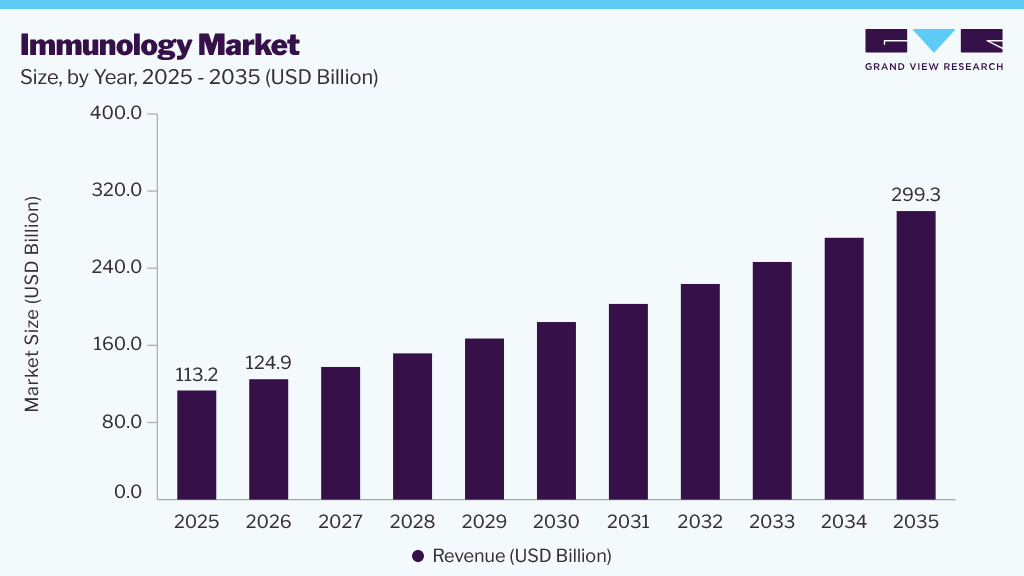 Source: Grand View Research, IR Documents, Primary Interviews, Paid DatabasesTo learn more about this report,
 Download Free Sample Report
 Key Market Trends & Insights
- By drug class: The monoclonal antibodies segment held the largest market share of around 65.0% in 2025.
- By disease indication: The rheumatoid arthritis segment held the largest market share of around 26.0% in 2025.
- By distribution channel: The hospital pharmacies segment held the largest market share of around 50.0% in 2025.
Regional Highlights
- Largest regional market: North America (50.0% revenue share, 2025)
- Fastest-growing regional market: Asia Pacific (highest CAGR, 2026-2035)
Market Size & Forecast
- Market size in 2025: USD 113.2 Billion
- Estimated market size in 2026: USD 124.9 Billion
- Projected market size by 2035: USD 299.3 Billion
- CAGR (2026-2035): 10.2%
Three ways to get this report
Buy it, customize it, or ask a question.Ask an Analyst
A direct answer, usually in 1 working day
- AccessReport author, directly
- Reply timeWithin 1 working day
- No sales callDirect answer only
- FormatEmail reply
- CostFree, no cost
Get the Full Report
What the study covers
- FormatsPDF · Excel · Dashboard
- Timeline2026–2035 annual, 2025 base
- Coverage20+ countries, 5 regions
- Companies10+ key players profiled
Customize the Report
20% free customization
- IncludeCountries, segments, points
- TailorTo your product definition
- ExtendDeeper competitor detail
- OrA fully bespoke study
- Turnaround5–10 working days
The pace of innovation in the immunology industry has accelerated significantly, driven by advancements in precision medicine, biologics, and targeted small-molecule therapies. A deeper understanding of immune system pathways and disease mechanisms has supported the development of Janus kinase (JAK) inhibitors, interleukin (IL) inhibitors, and other targeted immunomodulatory agents. Advancements in biomarkers, companion diagnostics, and molecular profiling are further enabling more precise patient stratification and treatment selection.The growth is also driven by the increasing prevalence of autoimmune and chronic inflammatory disorders, the rising adoption of biologic therapies, and growing healthcare expenditure. Pharmaceutical and biotechnology companies are making substantial investments in clinical research, biosimilar development, and next-generation immunomodulatory therapies to expand treatment options and improve patient access. In addition, supportive regulatory pathways for innovative biologics, expanding specialty care infrastructure, and increasing availability of advanced treatment options are facilitating the commercialization and adoption of immunology therapeutics across major healthcare markets.
The market is expected to present significant growth opportunities due to continued investment in immunology research, advancements in biologics manufacturing, and the development of next-generation therapeutic modalities. Emerging approaches, including cell-based immunotherapies, next-generation monoclonal antibodies, bispecific antibodies, and artificial intelligence-enabled drug discovery, are expected to influence the future treatment landscape. However, high treatment costs, pricing pressures, biosimilar competition, and reimbursement challenges may affect market dynamics. Nevertheless, the growing demand for targeted and personalized therapies is expected to support the long-term expansion of the market.
Analyst Perspective
The market is undergoing a significant transformation driven by advancements in biologics, precision medicine, and targeted immunotherapies. The rising prevalence of autoimmune and chronic inflammatory diseases is increasing demand for monoclonal antibodies, fusion proteins, targeted small molecules, and other immunomodulatory therapies. Companies are expanding and diversifying their product pipelines through continued investment in innovative biologics, biosimilars, and emerging therapeutic modalities, while artificial intelligence is increasingly being utilized to accelerate drug discovery and development. Continued scientific advancements and the growing adoption of targeted therapies are expected to support substantial market growth over the forecast period.
Drug Class Insights
The monoclonal antibodies segment accounted for the largest revenue share of approximately 65.0% in 2025. The segment's dominance is attributed to the high specificity and clinical efficacy of monoclonal antibodies in the treatment of a broad range of autoimmune and chronic inflammatory disorders, including rheumatoid arthritis, plaque psoriasis, inflammatory bowel disease, psoriatic arthritis, and atopic dermatitis. Continued advancements in antibody engineering, expanding regulatory approvals, and the increasing adoption of targeted biologics by healthcare providers have further strengthened the segment's market position. In addition, ongoing clinical research and label expansions of existing biologics are increasing the addressable patient population for monoclonal antibody therapies. For instance, in March 2025, the U.S. FDA approved Johnson & Johnson's TREMFYA (guselkumab) for the treatment of adults with moderately to severely active Crohn's disease, expanding the product's use in inflammatory bowel disease.
The immunosuppressants segment is expected to grow at a CAGR of 11.5% over the forecast period, supported by their continued use in the management of autoimmune diseases, chronic inflammatory conditions, and organ transplant rejection. The segment includes conventional immunosuppressive therapies and targeted small-molecule agents that help regulate excessive or abnormal immune responses. These therapies remain important treatment options due to their broad clinical applicability, established efficacy, and relatively wide availability across developed and emerging healthcare markets. The continued demand for long-term disease management, increasing prevalence of immune-mediated disorders, and expanding access to treatment are expected to support segment growth. However, the growth of the segment may be comparatively moderated by the increasing adoption of highly targeted biologics and biosimilars, as well as safety concerns associated with long-term immunosuppression.
Disease Indication Insights
The rheumatoid arthritis segment held the largest market share of around 26.0% in 2025, driven by the high prevalence and chronic nature of the disease, along with the sustained demand for biologics and targeted therapies. Patients with moderate-to-severe rheumatoid arthritis often require long-term treatment, supporting continued demand for monoclonal antibodies, Janus kinase (JAK) inhibitors, disease-modifying antirheumatic drugs (DMARDs), and other immunomodulatory therapies. Advancements in biologics, biosimilars, and precision medicine have expanded the range of available treatment options and improved disease management. Furthermore, clinical guidelines supporting earlier intervention, rising diagnostic rates, and favorable reimbursement coverage across developed healthcare markets continue to bolster the segment's leading position.
The inflammatory bowel disease segment is projected to register a CAGR of 10.8% over the forecast period, driven by the rising prevalence of Crohn's disease and ulcerative colitis, increasing diagnosis rates, and the rapid adoption of advanced targeted therapies. The growing use of biologics and novel small-molecule immunomodulators, including therapies targeting TNF, interleukin pathways, integrins, and Janus kinase signaling, is expanding treatment options for patients with moderate-to-severe disease. In addition, ongoing regulatory approvals and label expansions for existing therapies are supporting the adoption of advanced immunologic treatments.
Distribution Channel Insights
The hospital pharmacies segment held the largest market share, at around 50.0% in 2025, driven by the extensive use of biologics, monoclonal antibodies, and other specialized immunotherapies in hospitals and specialty facilities. Immunology drugs need close medical supervision, IV infusion, refrigeration, and constant monitoring of the patient, making hospital pharmacies the main distributors of such products. They also serve an important function in managing expensive treatments, determining appropriate dosages, and handling reimbursement. The growing number of patients using biologic treatments for autoimmune and inflammatory disorders, along with increased specialization in healthcare facilities, further reinforces the leading position of hospital pharmacies.
The online pharmacy segment is projected to register the fastest CAGR of 13.0% over the forecast period, driven by the increasing adoption of digital healthcare platforms, the expansion of e-pharmacy services, and the growing demand for convenient access to therapies for chronic diseases. Improvements in digital prescription management, cold-chain logistics, home delivery infrastructure, and telehealth services are making it easier for patients receiving long-term therapies to access and manage their medications. The growing availability of digitally enabled specialty pharmacy services and increasing patient preference for home delivery are also expected to support segment growth. For instance, CVS Health introduced an updated CVS Health app in January 2025 that enabled users to manage prescriptions across CVS Pharmacy, mail-order, and CVS Specialty services, and provided additional delivery and prescription-management capabilities.
Regional Insights
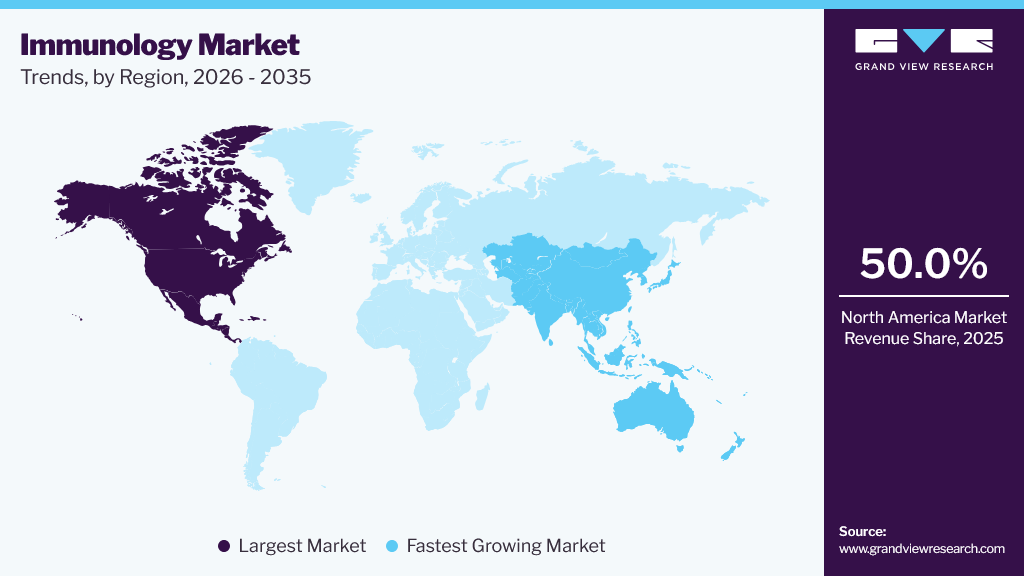
The immunology industry in North America dominated the global market, accounting for approximately 50.0% of global revenue in 2025. The region's leading position is attributed to the high prevalence of autoimmune and chronic inflammatory disorders, widespread adoption of biologic and targeted therapies, and the presence of a well-established healthcare and pharmaceutical ecosystem. The substantial disease burden in the U.S. continues to drive sustained demand for advanced immunotherapies. A study published in the Journal of Clinical Investigation estimated that more than 15 million people, representing approximately 4.6% of the U.S. population, had been diagnosed with at least one autoimmune disease.
 To learn more about this report, Download Free Sample Report
 The presence of major biopharmaceutical companies, extensive clinical research activities, favorable reimbursement mechanisms, and early access to innovative therapies further support market growth in the region. In addition, continued regulatory approvals for biologics and targeted therapies, coupled with substantial investments in immunology research and precision medicine, are expected to sustain North America's significant position in the global market. However, rising biosimilar competition and pricing pressures are expected to affect the long-term growth trajectories of several mature immunology drug categories.
Asia Pacific Immunology Market Trends
The immunology industry in Asia Pacific is poised to register the fastest CAGR of 12.8% over the forecast period, owing to improving healthcare infrastructure, increasing diagnosis of autoimmune diseases, expanding access to biologics, and rising healthcare expenditure. Countries such as China, Japan, South Korea, and India are strengthening their biopharmaceutical manufacturing capabilities while supporting clinical research and regulatory reforms for innovative therapies. Growing awareness of immune-mediated disorders, expanding health insurance coverage, and increasing investments in biosimilars and novel biologics are accelerating market development. The region's large patient population and improving access to specialty care are expected to sustain long-term growth in the market.
Key Immunology Company Insights
The immunology industry is characterized by the presence of large multinational pharmaceutical and biotechnology companies, along with specialized and emerging biopharmaceutical firms. Strategic collaborations, licensing agreements, acquisitions, and research partnerships are also playing an important role in expanding immunology pipelines and accelerating the development of innovative therapies. Companies are increasingly focusing on precision medicine, biomarker-based patient stratification, and artificial intelligence-enabled drug discovery to improve therapeutic development and identify new targets associated with immune-mediated diseases.
Key Immunology Companies:
The following key companies have been profiled for this study on the immunology market:
-
AbbVie Inc.
-
Johnson & Johnson
-
Amgen Inc.
-
UCB S.A.
-
Bristol Myers Squibb
-
Novartis AG
-
Sanofi S.A.
-
Eli Lilly and Company
-
Pfizer Inc.
-
F. Hoffmann-La Roche Ltd.
Recent Developments
-
In June 2026, Eli Lilly and Company announced the U.S. FDA approved an every-eight-weeks maintenance dosing regimen for EBGLYSS (lebrikizumab-lbkz) for eligible patients with moderate-to-severe atopic dermatitis. The approval provides a less frequent maintenance dosing option for the IL-13-targeting biologic and reflects continued innovation in targeted therapies for chronic inflammatory skin diseases.
-
In January 2025, AbbVie announced a collaboration and option-to-license agreement with Neomorph to develop novel molecular glue degraders targeting multiple disease pathways across oncology and immunology. The collaboration highlights the increasing interest in targeted protein degradation technologies for the development of next-generation therapies for immune-mediated diseases
Immunology Market Report Scope
Report Attribute
Details
Market size in 2025
USD 113.2 billion
Estimated market size in 2026
USD 124.9 billion
Projected market size by 2035
USD 299.3 billion
Growth rate
CAGR of 10.2% from 2026 to 2035
Base year for estimation
2025
Historical data
2021 - 2024
Forecast period
2026 - 2035
Quantitative units
Revenue in USD billion and CAGR from 2026 to 2035
Report coverage
Revenue forecast, company ranking, competitive landscape, growth factors, and trends
Segments covered
Drug class, disease indication, distribution channel, region
Regional Scope
North America; Europe; Asia Pacific; Latin America; Middle East & Africa
Country Scope
U.S.; Canada; Mexico; UK; Germany; France; Italy; Spain; China; Japan; India; Australia; South Korea; Brazil; Argentina; South Africa; Saudi Arabia; UAE
Key companies profiled
AbbVie Inc.; Johnson & Johnson; Amgen Inc.; UCB S.A.; Bristol Myers Squibb; Novartis AG; Sanofi S.A.; Eli Lilly and Company; Pfizer Inc.; F. Hoffmann-La Roche Ltd.
Customization scope
Free report customization (equivalent to 8 analyst working days) with purchase. Addition or alteration to country, regional & segment scope.
Pricing and purchase options
Avail of customized purchase options to meet your exact research needs. Explore purchase options
Global Immunology Market Report Segmentation
This report forecasts revenue growth at the global, regional, and country levels and provides an analysis of the latest industry trends and opportunities across each sub-segment from 2021 to 2035. For this study, Grand View Research has segmented the global immunology market report based on drug class, disease indication, distribution channel, and region:
-
Drug Class Outlook (Revenue, USD Billion, 2021 - 2035)
-
Monoclonal Antibodies
-
Fusion Proteins
-
Immunosuppressants
-
Polyclonal Antibodies
-
Others
-
-
Disease Indication Outlook (Revenue, USD Billion, 2021 - 2035)
-
Rheumatoid Arthritis
-
Psoriatic Arthritis
-
Plaque Psoriasis
-
Atopic Dermatitis
-
Inflammatory Bowel Disease
-
Others
-
-
Distribution Channel Outlook (Revenue, USD Billion, 2021 - 2035)
-
Hospital Pharmacies
-
Retail Pharmacies
-
Online Pharmacies
-
-
Regional Outlook (Revenue, USD Billion, 2021 - 2035)
-
North America
-
U.S.
-
Canada
-
Mexico
-
-
Europe
-
UK
-
Germany
-
France
-
Italy
-
Spain
-
-
Asia Pacific
-
China
-
Japan
-
India
-
Australia
-
South Korea
-
-
Central & South America
-
Brazil
-
Argentina
-
-
Middle East and Africa (MEA)
-
South Africa
-
Saudi Arabia
-
UAE
-
-
About the Author(s)
Pharmaceuticals Research Team
· PharmaceuticalsThis report was authored by the pharmaceuticals research team at Grand View Research - comprising two research analysts, one senior research analyst, and one industry expert - with specialized expertise in the pharmaceuticals segment of the industry. All findings are based on proprietary databases, executive interviews, and regulatory analysis, subject to internal peer review prior to publication.
Last Updated:
Speak to Analyst

Customize this report to your needs - add regions, segments, or data points, with 20% free customization.
Or view our licence options:


ISO 9001:2015 & 27001:2022 Certified
We are GDPR and CCPA compliant! Your transaction & personal information is safe and secure. For more details, please read our privacy policy.


