
- Home
- »
- IT Services & Applications
- »
-
Industrial Asset Management Market Size Report, 2026-2033GVR Report cover

Industrial Asset Management Market (2026 - 2033)
Size, Share & Trends Analysis Report By Component (Hardware, Software, Services), By Asset Type (Returnable Transport Assets, Manufacturing Assets, IT Asset), By Region (North America, Europe, Asia Pacific), And Segment Forecasts
Market Size, 2025
$209.6BMarket Estimate, 2026
$245.9BMarket Forecast, 2033
$986.9BCAGR, 2026–2033
22.0%Industrial Asset Management Market Summary
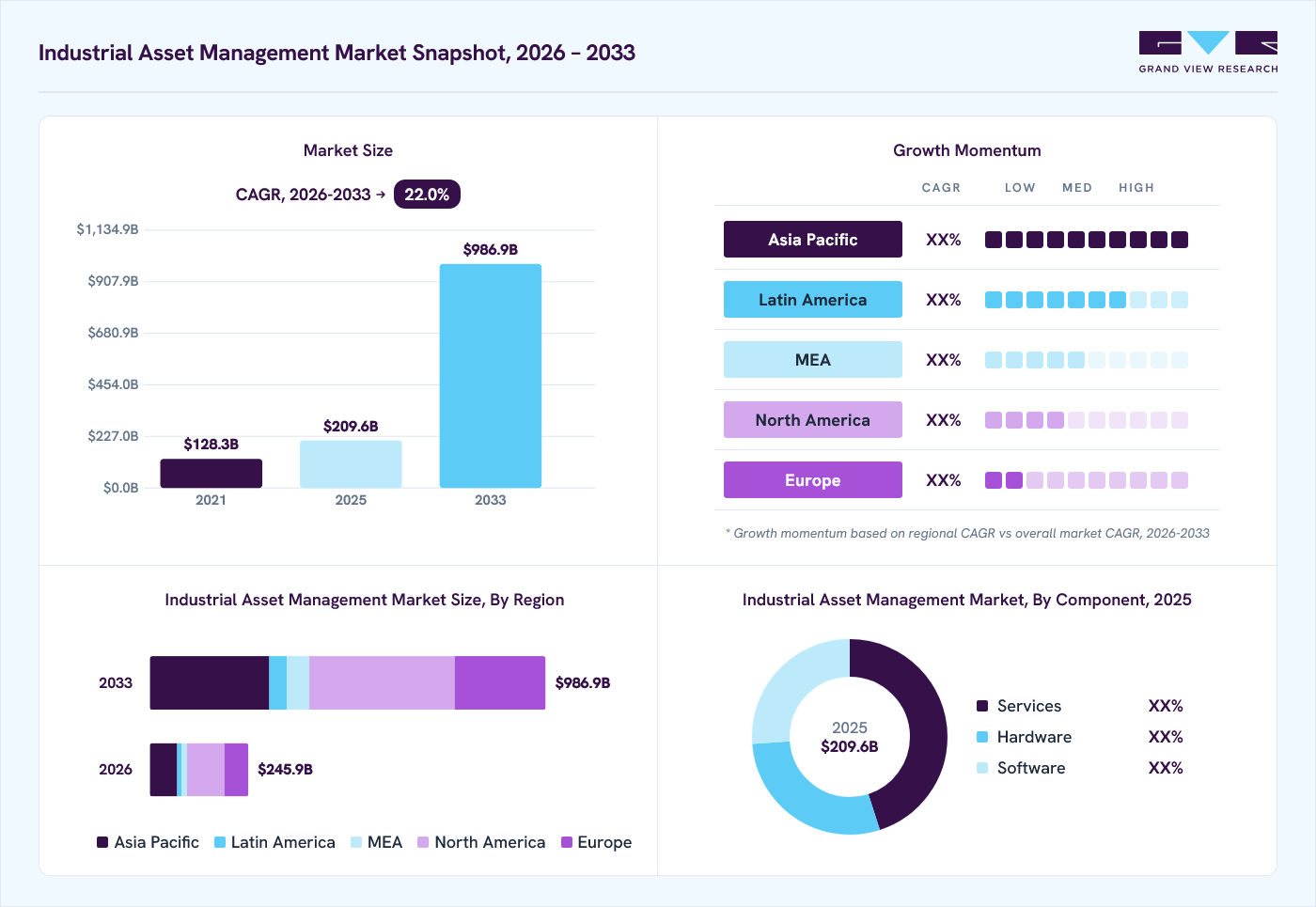
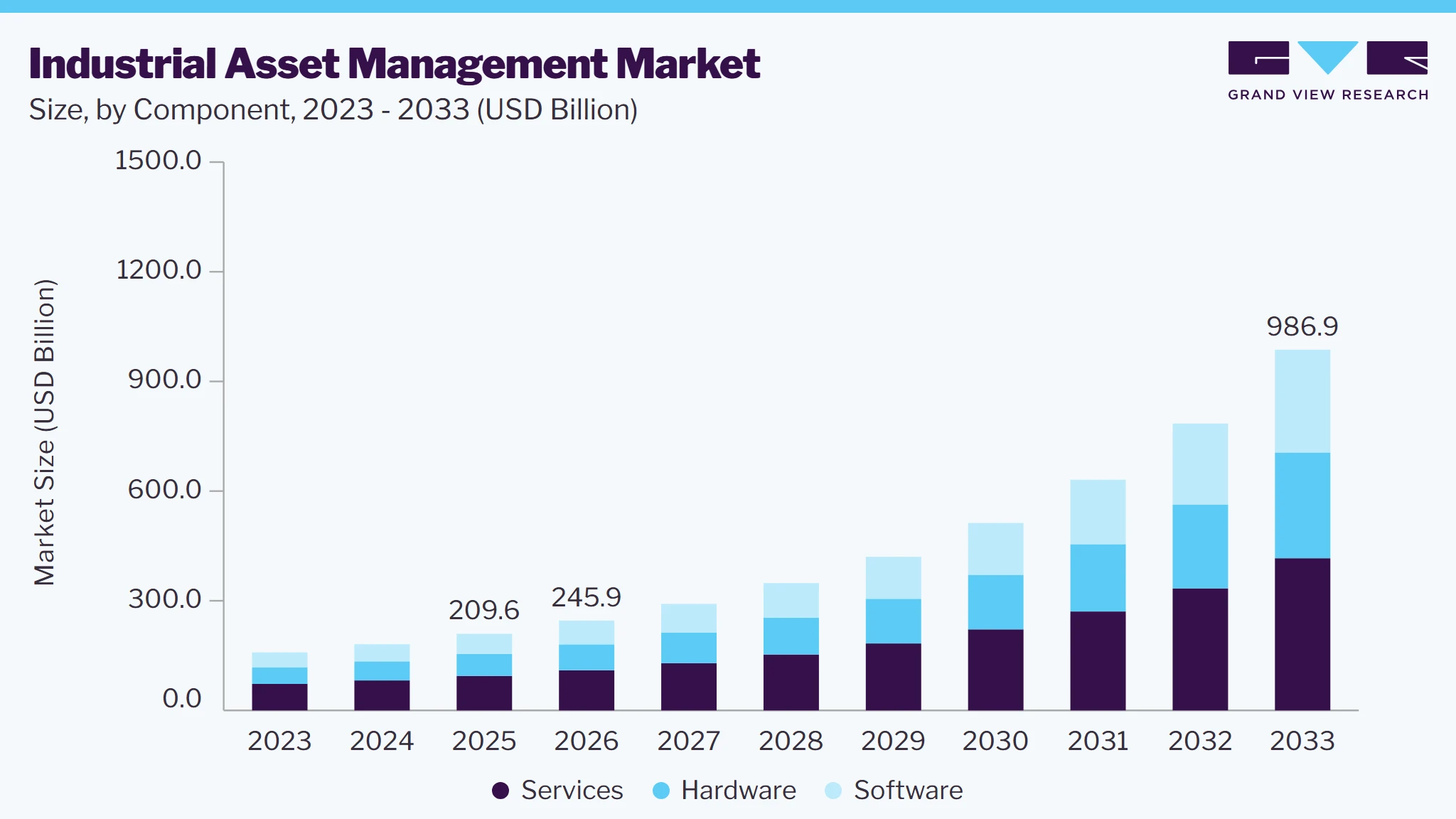
The global industrial asset management market size was valued at USD 209.6 billion in 2025 and is projected to grow from USD 245.9 billion in 2026 to USD 986.9 billion by 2033, at a CAGR of 22.0% from 2026 to 2033. The North America market dominated, with a revenue share of 38.0% in 2025. The industrial asset management market is witnessing strong growth, fueled by the accelerating adoption of digitalization and Industry 4.0 across industries.
 Source: Grand View Research, IR Documents, Primary Interviews, Paid DatabasesTo learn more about this report,
 Download Free Sample Report
Key Market Trends & Insights
- By component: The service segment dominated the market, with a revenue share of 45.0% in 2025
- By asset type: The manufacturing assets segment held the market share of 23.8% in 2025
Regional Highlights
- Largest regional market: North America (38.0% revenue share, 2025)
- Fastest-growing regional market: Asia Pacific (highest CAGR, 2026-2033)
- By country: The U.S. held the largest market share in 2025
Market Size & Forecast
- Market size in 2025: USD 209.6 Billion
- Estimated market size in 2026: USD 245.9 Billion
- Projected market size by 2033: USD 986.9 Billion
- CAGR (2026-2033): 22.0%
Prism AI by Grand View Research Free to tryAsk a question about the industrial asset management marketTry asking✓Every figure cited from GVR research Prefer the report? Download free sample →As organizations focus on enhancing operational efficiency and minimizing costs, the integration of advanced technologies such as the Internet of Things (IoT), artificial intelligence (AI), and machine learning (ML) into asset management systems is becoming increasingly critical. These technologies support predictive maintenance, real-time monitoring, and data-driven decision-making, ultimately improving asset performance and extending asset lifespan. As industries seek to improve operational efficiency and reduce costs, the integration of advanced technologies, such as the Internet of Things (IoT), artificial intelligence (AI), and machine learning (ML), into asset management systems is becoming essential. These technologies enable predictive maintenance, real-time monitoring, and data-driven decision-making, which enhance asset performance and longevity.
 To learn more about this report, Download Free Sample Report
Advancements in cloud computing and mobile solutions are also crucial to the growth of the IAM market. Cloud-based IAM solutions offer scalability, flexibility, and cost-effectiveness, making them accessible to small and medium-sized enterprises (SMEs) and large corporations. Accessing asset data and management tools remotely via mobile devices further enhances operational agility and responsiveness, which are critical in today's fast-paced industrial environment. Integrating cloud-based IAM systems with other enterprise systems, such as enterprise resource planning (ERP) and customer relationship management (CRM), further enhances operational efficiency by providing a holistic view of organizational data.
The expansion of the industrial sector in emerging economies contributes to market growth. Countries in Asia Pacific, Latin America, and Middle East are witnessing rapid industrialization and infrastructure development, leading to increased investment in asset-intensive industries, such as manufacturing, energy, and utilities. This surge in industrial activities necessitates implementing robust asset management systems to efficiently manage the growing number of assets. The Global Industry Statistics Yearbook, produced by the United Nations Industrial Development Organization in December 2023, highlights a 2.3% improvement in various industrial domains, including manufacturing, mining, electricity, water provision, waste management, and additional utilities. Notably, manufacturing was the primary engine of this growth, witnessing a 3.2% rise. In addition, the aggregate mining and utilities sectors, which play a pivotal role in the economies of low-income nations, also saw significant contributions.
Governments and regulatory bodies worldwide are implementing stricter environmental regulations and standards, compelling companies to ensure their operations and assets are compliant. This shift has increased demand for IAM systems that can track and report compliance metrics, reduce emissions, and optimize resource utilization, thus aligning with broader environmental, social, and governance (ESG) goals. Companies are increasingly focusing on sustainable practices, and sophisticated asset management solutions play a crucial role in achieving these objectives by enabling efficient monitoring and management of resources.
Market Dynamics
The industrial asset management market is being shaped by rapid digital transformation across asset-intensive industries such as manufacturing, energy, oil & gas, and utilities. A key driver is the growing need for organizations to optimize asset utilization, reduce unplanned downtime, and extend equipment life cycles. The increasing adoption of Industry 4.0 technologies, including IoT-enabled sensors, cloud computing, AI, and advanced analytics, is enabling real-time asset tracking and predictive maintenance capabilities. These advancements are helping enterprises shift from reactive to proactive maintenance strategies, significantly improving operational efficiency and cost control.
On the other hand, the market also faces certain challenges, including high initial implementation costs, integration complexities with legacy systems, and concerns related to data security and interoperability. Small and medium-sized enterprises may find it difficult to adopt fully integrated IAM solutions due to budget constraints and technical limitations. However, the rising demand for digital twins, remote asset monitoring, and sustainability-focused operations are expected to create new growth opportunities. Additionally, increasing investments in smart infrastructure and industrial automation are likely to further accelerate the adoption of IAM solutions globally.
The Industrial Asset Management (IAM) market is witnessing strong growth, primarily driven by the widespread adoption of digital transformation and Industry 4.0 initiatives across key sectors such as manufacturing, energy, utilities, transportation, and oil & gas. Organizations are increasingly prioritizing operational efficiency, asset optimization, and cost reduction, which is boosting the deployment of advanced IAM solutions. The integration of IoT-enabled sensors, artificial intelligence (AI), machine learning (ML), and cloud-based platforms enable real-time asset tracking, predictive maintenance, and condition-based monitoring. These capabilities help enterprises reduce unexpected equipment failures, improve uptime, and enhance overall asset performance.
In addition, the growing need to extend asset life cycles and improve reliability in complex industrial environments is further strengthening market growth. Industries are moving away from traditional reactive maintenance approaches toward predictive and prescriptive maintenance models, which significantly reduce maintenance costs and operational disruptions. Rising investments in smart factories, industrial automation, and connected infrastructure are also contributing to increased IAM adoption. Furthermore, regulatory pressure to improve safety standards and ensure equipment compliance is encouraging companies to implement advanced asset management systems.
Despite strong growth potential, the IAM market faces notable restraints, with high upfront implementation costs being one of the primary challenges. Deploying advanced asset management systems requires significant investment in hardware, software, skilled personnel, and system upgrades, which can be difficult for small and medium-sized enterprises (SMEs) to afford. Additionally, many organizations still operate on legacy systems, making integration with modern IAM platforms complex, time-consuming, and costly. This often results in delayed adoption and partial implementation of solutions.
Another major restraint is the increasing concern over cybersecurity risks, data privacy, and interoperability issues. As IAM systems rely heavily on connected devices, cloud computing, and large-scale data exchange, they become vulnerable to cyberattacks and data breaches. Moreover, the lack of standardized frameworks across different vendors and platforms creates compatibility issues, limiting seamless data integration and system interoperability. These challenges can slow down adoption rates, particularly in highly regulated industries where data security and compliance are critical.
The IAM market presents substantial opportunities driven by the rising adoption of advanced technologies such as digital twins, predictive analytics, and remote asset monitoring solutions. Digital twin technology is emerging as a key innovation, enabling organizations to create virtual replicas of physical assets for simulation, performance analysis, and predictive maintenance. This allows companies to optimize operations, reduce downtime, and improve decision-making accuracy. The increasing use of AI-powered analytics is further enhancing the ability to predict equipment failures and optimize maintenance schedules.
Moreover, growing global emphasis on sustainability, energy efficiency, and carbon reduction is creating new opportunities for IAM solution providers. Organizations are leveraging asset management platforms to monitor energy consumption, reduce waste, and meet environmental compliance requirements. Emerging economies are also investing heavily in industrial modernization, smart infrastructure, and automation, which is expected to significantly expand the addressable market. Additionally, the integration of IAM with Industry 4.0 ecosystems, including smart sensors and connected industrial networks, is expected to unlock long-term growth potential.
Market Concentration & Characteristics
The degree of innovation in the market is remarkably high, driven by rapid technological advancements and the evolving needs of industries. One of the most significant areas of innovation is integrating the Industrial IoT (IIoT) and IoT into asset management systems. IoT-enabled devices and sensors provide real-time data on asset performance, conditions, and usage patterns. AI and ML are also significant innovations in the market. In addition, the development of digital twins, virtual replicas of physical assets, is a critical innovation in the market. Digital twins allow companies to simulate and analyze asset performance in a virtual environment, providing insights into potential issues and optimization opportunities without affecting real-world operations. This technology is valuable for complex and high-value assets, where testing and modifications can be costly and risky.
The market is experiencing notable M&A activities, reflecting the industry's dynamic nature and the strategic importance of asset management solutions in modern industrial operations. This surge in M&A activities is primarily driven by the need for companies to expand their technological capabilities, enhance their product portfolios, and increase their market presence. For instance, in January 2024, IFS, a Swedish cloud enterprise software company, agreed to acquire Falkonry, Inc., a U.S.-based Industrial AI software company. Falkonry provides automated, high-speed data analysis to the manufacturing and defense industries using self-learning AI to identify and analyze abnormal behavior and root causes of failures. This strategy involves comprehensively deploying AI to deliver end-to-end intelligent insights in asset management across various technological domains to enhance people and asset productivity.
 To learn more about this report, Download Free Sample Report
Safety and health regulations are significant drivers of the market growth. Regulatory bodies set stringent guidelines to ensure the safety of workers and the public, particularly in industries, such as manufacturing, energy, and utilities, where hazardous materials and processes are commonplace. Compliance with these regulations requires robust asset management practices to ensure that equipment and infrastructure are regularly inspected, maintained, and operated safely. Advanced IAM solutions provide the tools to manage these tasks effectively, reducing the risk of accidents and ensuring regulatory compliance. Moreover, regulatory requirements for data security and privacy, such as the General Data Protection Regulation (GDPR) in Europe, influence the IAM market. Companies must ensure that the data collected and processed by their asset management systems is secure and complies with privacy laws. This has led to the development and adoption of IAM solutions with robust security features, including encryption, access controls, and data anonymization.
Industrial Asset Management (IAM) products and services offer numerous advantages to businesses, primarily by enhancing operational efficiency and reducing costs. By implementing sophisticated IAM solutions, companies can achieve real-time monitoring and predictive maintenance of their assets, significantly reducing unplanned downtime and maintenance costs. These systems leverage technologies, such as IoT, AI, and ML, to analyze asset performance data and predict potential failures before they occur. This proactive approach extends the lifespan of assets and optimizes their utilization, ensuring that businesses can maximize their return on investment.
Analyst Perspective
The industrial asset management market is evolving through the integration of Enterprise Asset Management (EAM), Industrial IoT, AI-driven analytics, and cloud-based platforms. Leading companies such as Siemens, Schneider Electric, SAP SE, IBM, and Honeywell International Inc. maintain strong positions through deep OT-IT integration capabilities, extensive customer relationships, and comprehensive asset lifecycle management solutions. Market growth is increasingly driven by the modernization of legacy systems and the transition toward cloud and subscription-based deployment models. Organizations are prioritizing real-time asset visibility, predictive maintenance, and operational intelligence over traditional asset tracking. Meanwhile, specialized vendors such as Asset Panda and GoCodes are gaining traction among SMEs with cost-effective, mobile-first SaaS solutions. Despite growing competition, enterprise adoption remains concentrated among established vendors due to scalability and reliability requirements. Going forward, AI-enabled predictive maintenance, digital twin technologies, and interoperability across industrial ecosystems will be key differentiators, while hybrid cloud-edge architectures are expected to shape long-term market leadership.
Component Insights
Based on component, the service segment led the market with the largest revenue share of 45.0% in 2025 in the industrial asset management market.As industries adopt more advanced technologies, such as IoT, AI, and predictive analytics, there is a growing demand for services that can help integrate these technologies into existing asset management frameworks. Companies are seeking external service providers to assist with the installation, configuration, and ongoing management of these sophisticated systems, ensuring they are effectively utilized to enhance operational efficiency and asset performance.
The software segment is expected to register a CAGR of 19.6% from 2024 to 2030. The shift towards cloud-based IAM solutions is a significant growth driver of the software segment. Cloud computing offers numerous advantages, including lower upfront costs, scalability, and remote accessibility. Cloud-based software allows companies to access their asset data and management tools from anywhere, facilitating greater flexibility and responsiveness. For instance, in October 2023, Gecko Robotics, a U.S.-based software platform that integrates data from robotic and hardware systems introduced an AI-powered platform for asset management, aiming to streamline the inspection of assets. This platform merges the use of drones and robotics with data analysis software for inspections. It enables seamless integration with various robotic and drone systems, effectively shifting the burden of asset maintenance. The platform collects data through these automated tools, which navigate the perimeters and surfaces of extensive assets.
Hardware Insights
The global positioning system (GPS) segment accounted for revenue share of 29.2% in 2025 due to several key factors that cater specifically to the needs of tracking and managing assets in industrial settings. The increasing demand for real-time location tracking and asset monitoring capabilities across diverse industries, such as logistics, transportation, construction, and manufacturing, drives the growth. GPS hardware enables companies to accurately track the location and movement of assets, including vehicles, equipment, and inventory indoors and outdoors.
The real-time location system (RTLS) segment is expected to register a CAGR of 23.1% from 2024 to 2030. The increasing integration of Internet of Things (IoT) devices and sensors in industrial environments has bolstered the adoption of RTLS. These devices can communicate location data wirelessly, often using technologies like RFID (Radio Frequency Identification) or Bluetooth Low Energy (BLE). Such IoT-enabled RTLS solutions track asset locations and gather data on usage patterns, environmental conditions, and operational efficiencies.
Software Insights
The location & movement tracking segment led the market with the revenue share of 34.1% in 2025. As industries become more complex and geographically circulated, there is a growing need to accurately track the location and movement of assets in real time. Location tracking software addresses this need by providing visibility into the whereabouts of assets, enabling companies to streamline operations, reduce search times, and optimize asset utilization. This capability is crucial for manufacturing, logistics, and utilities, where efficiently managing and monitoring assets across large facilities or remote locations is essential for maintaining productivity and minimizing downtime.
The repair & maintenance sub-segment is expected to register a CAGR of 23.1% from 2024 to 2030. Many industries are dealing with aging infrastructure and equipment, which are more prone to breakdowns and inefficiencies. Repair and maintenance software is crucial in managing these older assets by providing detailed insights into their condition and maintenance needs. This software helps organizations prioritize maintenance tasks, allocate resources effectively, and plan for replacements or upgrades, ensuring that aging equipment continues to operate reliably and efficiently.
For instance, in October 2023, Hitachi Energy, a Swiss technology company, announced the launch of asset performance management (APM) software, named Lumada APM. This advancement in Hitachi Energy's Lumada APM suite aims to strengthen sustainability, safety, and operational excellence initiatives by providing organizations that are heavy on assets with a comprehensive overview of their asset and asset systems' health. This strategic insight is designed to optimize asset utilization, decrease unexpected downtime, allocate maintenance budgets more effectively, prolong the lifespan of assets, and lower overall ownership costs.
Services Insights
The operational asset management segment led the market with the revenue share of 38.4% in 2025 as regulatory compliance and sustainability initiatives continue to influence the growth of operational asset management services. Regulatory requirements mandate industries to adhere to stringent environmental, safety, and operational standards, necessitating comprehensive asset management practices and documentation. Operational asset management services assist companies in ensuring compliance through regular audits, performance assessments, and reporting capabilities that track and demonstrate adherence to regulatory requirements.
The strategic asset management segment is expected to grow significantly from 2024 to 2030 owing to globalization and the expansion of industrial operations. As companies expand their operations globally, the complexity of managing assets across multiple locations increases. Strategic asset management services provide a centralized and standardized approach to asset management, facilitating consistent and efficient operations across different regions. This global approach ensures that best practices are implemented universally, improving overall asset performance and management. For instance, in September 2023, Infrastructure Data Solutions (IDS), headquartered in Canada, an asset solution developer, announced a partnership with Benesch, an engineering and asset management consultancy in the U.S. The partnership aims to investigate opportunities to offer cutting-edge asset management solutions, aiding their clientele in adopting advanced analytical tools and strategies for asset lifecycle planning.
Asset Type Insights
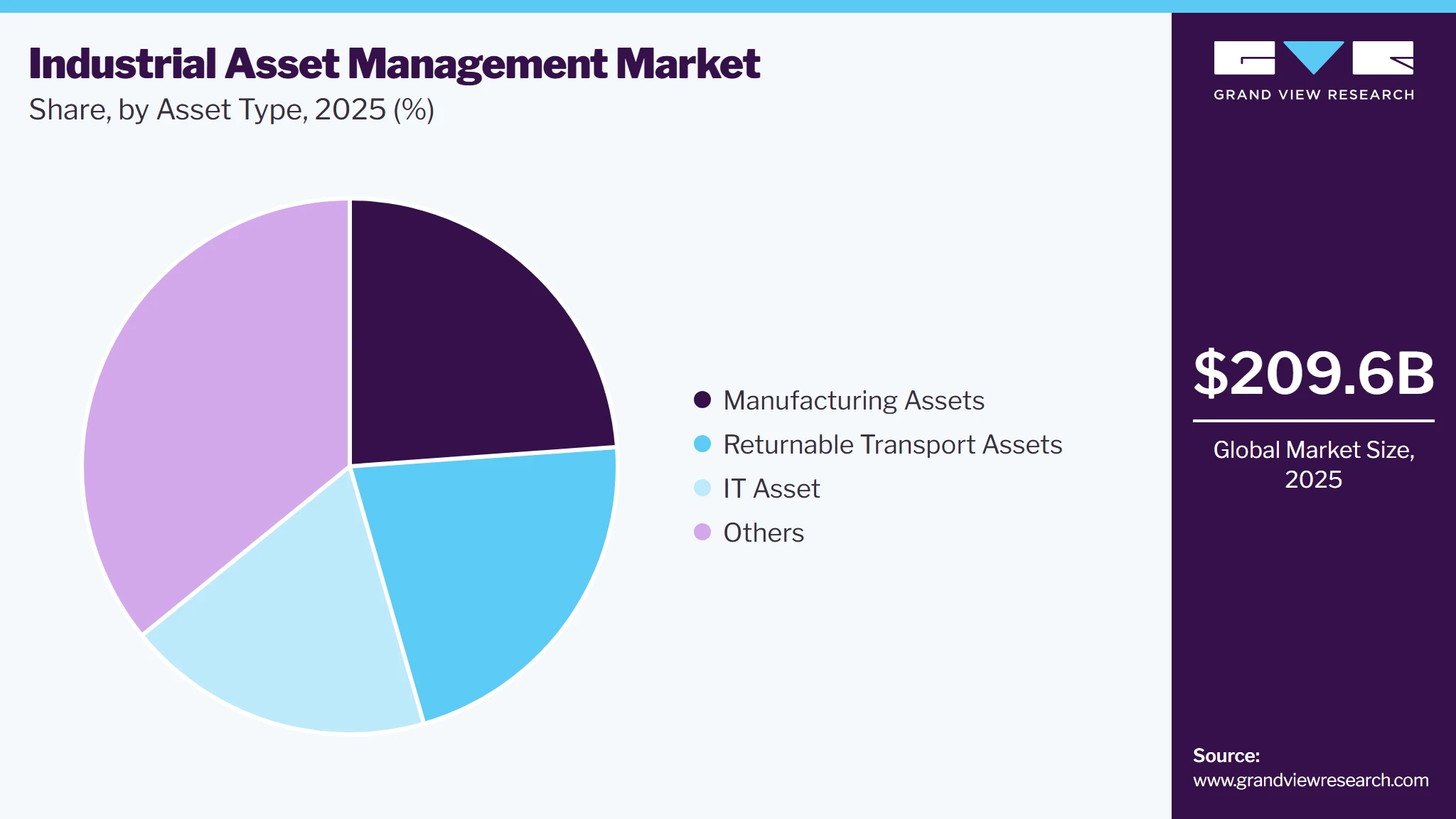
Based on asset type, the manufacturing assets segment led the market with the revenue share of 23.8% in 2025 owing to the increased adoption of automation and smart manufacturing technologies. As manufacturers aim to improve productivity and efficiency, they invest heavily in advanced machinery and equipment integrated with IoT sensors, AI, and machine learning capabilities. These technologies enable real-time monitoring and predictive maintenance of manufacturing assets, reducing downtime and enhancing operational efficiency. The need to effectively manage and optimize these high-value assets propels the demand for sophisticated IAM solutions tailored to the manufacturing sector. For instance, in November 2023, ABB introduced the ABB Ability SmartMaster, a digital platform for managing asset performance in instrumentation. The platform collects and analyzes diagnostic data from field devices to enhance operational efficiency in various industries. It allows fleet instrumentation management and enables early detection of potential issues to prevent unplanned downtime. SmartMaster also provides extended possibilities for device optimization and maintenance.
 To learn more about this report, Download Free Sample Report
The returnable transport assets segment is expected to register a CAGR of 19.1% from 2024 to 2030. The need for cost reduction and efficiency in logistics operations drives the adoption of returnable transport assets (RTAs). Companies can achieve significant cost savings over time by utilizing reusable transport assets. The initial investment in RTAs is offset by the reduction in recurring expenses associated with single-use packaging materials and the efficiencies gained through improved asset management.
Regional Insights
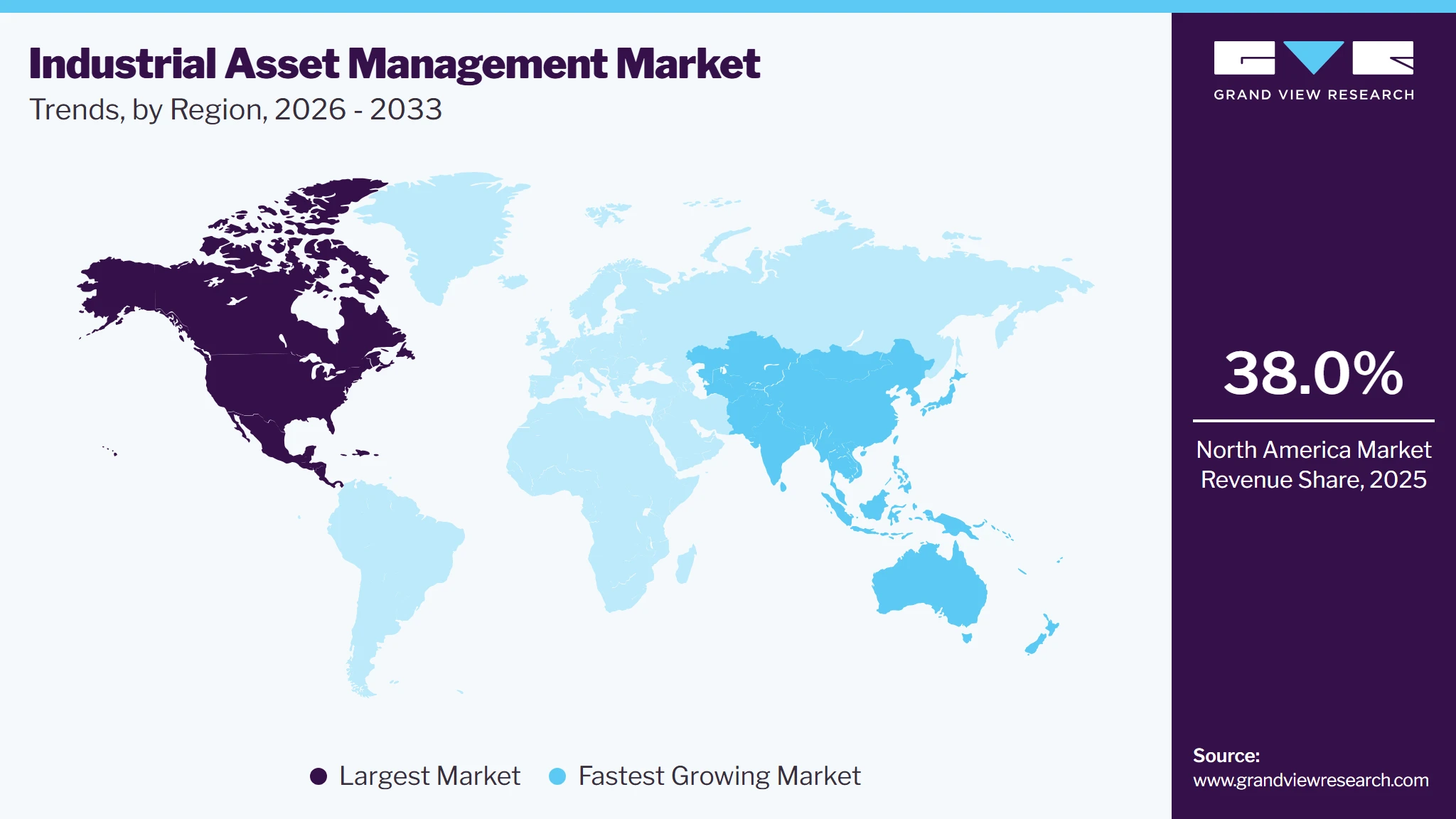
North America dominated the global industrial asset management market, with the largest revenue share of 38.0% in 2025. This growth is owing to the region's strong emphasis on infrastructure development and modernization across various sectors, including manufacturing, energy, utilities, and transportation. As industries in North America continue to invest in upgrading their aging infrastructure and adopting advanced technologies, the demand for sophisticated IAM solutions has surged. These solutions are essential for managing and optimizing the performance of industrial assets, ensuring operational efficiency, and meeting stringent regulatory requirements.
 To learn more about this report, Download Free Sample Report
U.S. Industrial Asset Management Market Trends
The industrial asset management market in the U.S. held the largest share of the North American market in 2025. The U.S. government has implemented regulations and initiatives that encourage adopting IAM practices, particularly in industries like healthcare and energy. This regulatory environment is further driving the market growth.
Asia Pacific Industrial Asset Management Market Trends
The industrial asset management market in Asia Pacific is projected to register a fastest CAGR from 2026 to 2033. Many countries, such as China, India, and Southeast Asian nations, are undergoing rapid industrialization and infrastructure development. This has led to a surge in the construction of new manufacturing facilities, logistics hubs, and transportation networks, driving the demand for effective asset management solutions to optimize the performance and lifespan of these critical industrial assets.
The China industrial asset management market is projected to register a CAGR of 19.8% from 2024 to 2030. The Chinese government has implemented various initiatives and regulations to promote the adoption of IAM solutions. For instance, in April 2024, the government of China issued a notice detailing the Implementation Plan for the Advancement of Equipment Renewal in the Industrial Field. This detailed action plan targets vital concerns about technological advancement and economic progression. It demonstrates China’s active approach toward boosting its manufacturing sector’s competitiveness and sustainability. The plan elevates the importance of modernizing industrial machinery to a key policy focus.
The industrial asset management market in India is estimated to grow significantly at a CAGR of 25.1% from 2024 to 2030. The rapid growth of e-commerce in India has fueled demand for modern, efficient logistics and warehousing assets. Asset managers play a crucial role in developing and managing these specialized industrial properties to cater to the needs of e-commerce giants and third-party logistics providers.
The Japan industrial asset management market is likely to record a CAGR of 23.3% from 2024 to 2030, driven by the country's capability as a leading manufacturer and innovator in robotics and advanced manufacturing technologies. Japan's industrial sector, including automotive, electronics, machinery, and robotics, relies heavily on sophisticated machinery and equipment that require efficient management and maintenance. IAM solutions are crucial in helping Japanese manufacturers optimize asset performance, reduce downtime, and enhance operational efficiency. For instance, according to the International Trade Administration, in 2021, Japan had 631 robots working in the manufacturing sector for every 10,000 humans.
Europe Industrial Asset Management Market Trends
The industrial asset management market in Europe is expected to grow at a CAGR of 19.9% from 2024 to 2030. The pharmaceutical industry in Europe is increasingly adopting IAM solutions to streamline operations, ensure regulatory compliance, and optimize asset performance. The growing emphasis on quality control and process efficiency in the pharmaceutical industry fuels the demand for IAM solutions in the region.
The UK industrial asset management market is likely to grow significantly at a CAGR of 21.1% from 2024 to 2030. The UK government's focus on promoting the adoption of Industry 4.0 technologies, such as the Made Smarter initiative, is expected to drive market growth. These initiatives help manufacturers leverage digital technologies to improve productivity, efficiency, and competitiveness, which is expected to increase the demand for industrial asset management solutions.
The industrial asset management market in Germany is growing significantly at a CAGR of 20.0% from 2024 to 2030. Sectors, such as energy, power, and pharmaceuticals, are increasingly adopting industrial asset management solutions in Germany. The energy and power segment, in particular, is experiencing high demand due to the need to upgrade aging infrastructure, control inventories, and prioritize work orders.
The France industrial asset management market is growing significantly at a CAGR of 22.9% from 2024 to 2030. There is a growing emphasis on digital transformation and Industry 4.0 initiatives in France, which are driving the adoption of advanced technologies, such as IoT, AI, and big data analytics, in industrial operations. IAM systems integrate these technologies to provide predictive maintenance capabilities, enhance asset performance monitoring, and support data-driven decision-making, thereby improving overall operational efficiency and competitiveness in domestic and international markets.
Middle East & Africa Industrial Asset Management Market Trends
The industrial asset management market in MEA is growing significantly at a CAGR of 16.0% from 2024 to 2030. Many countries in the region are undergoing rapid industrialization and infrastructure development to diversify their economies away from a heavy reliance on the oil & gas sector. It has increased investment in manufacturing, logistics, transportation, and other industrial sectors, driving the demand for effective asset management solutions.
Key Industrial Asset Management Company Insights
Some of the key players operating in the market include ABB, Honeywell International Inc., and IBM, among others.
-
ABB, a global technology company, is a significant player in the IAM market. Their ABB Ability platform offers a comprehensive suite of solutions to help organizations optimize the performance and efficiency of their industrial assets. One of the key offerings in ABB's industrial asset management portfolio is the ABB Ability Energy and Asset Manager. This solution combines hardware sensors and analytics software to provide real-time insights into energy consumption and the performance of multiple systems within a facility. The ABB Ability Asset Manager is designed to be user-friendly and accessible via computer, smartphone, or tablet, allowing companies to manage their systems flexibly
-
Honeywell International Inc. offers a range of solutions to help organizations optimize the performance and reliability of their critical assets. As a global leader in industrial automation and control systems, Honeywell provides a comprehensive suite of asset management tools and services that leverage advanced technologies, such as the IoT, data analytics, and AI. The company’s IAM offerings include Honeywell Forge platform, which provides a centralized system for monitoring, managing, and optimizing assets across multiple sites and industries. In addition, Honeywell offers a range of hardware products and services for industrial asset management. These include sensors, controllers, and other devices for monitoring and controlling industrial processes, as well as services, such as asset performance consulting, maintenance & repair, and training & support
Asset Panda, GoCodes and Accruent are some of the emerging market participants in the industrial asset management market.
-
Asset Panda is a provider of cloud-based asset management solutions, offering a powerful and flexible platform designed to help businesses across various industries, including the industrial sector, manage and track their assets effectively. Asset Panda's software provides full transparency into the state of assets, including their real-time status, depreciated value, repair history, warranty information, and more
-
GoCodes is a provider of IAM solutions, offering a comprehensive suite of tools to help businesses track, manage, and optimize their critical assets. GoCodes' flagship product is its cloud-based asset tracking software, which enables users to manage their equipment, inventory, and tools from a centralized platform. GoCodes also provides a range of hardware solutions, including patented QR code tags, rugged metal tags, and Bluetooth tracking devices
Key Industrial Asset Management Companies:
The following are the leading companies in the industrial asset management market.
- ABB
- Accruent
- Asset Panda
- AssetWorks, Inc.
- GE Vernova
- GoCodes
- Hexagon AB
- Hitachi Energy Ltd.
- Honeywell International Inc.
- IBM
- Oracle
- Rockwell Automation
- SAP SE
- Schneider Electric
- Siemens
Competitive Benchmarking
Category
Operating Strategies
Competitive Edge
Weakness
Mature Players (ABB; Accruent; AssetWorks; GE Vernova; Hexagon AB; Hitachi Energy; Honeywell; IBM; Oracle; Rockwell Automation; SAP SE; Schneider Electric; Siemens)
- Focus on integrating asset management with broader enterprise systems such as ERP, EAM, APM, and industrial IoT platforms to enable end-to-end asset lifecycle visibility.
- Invest in AI/ML-driven predictive maintenance, digital twins, and cloud-based asset performance optimization to improve operational efficiency and reduce downtime.
- Strong global installed base across industrial, energy, utilities, and manufacturing sectors with deep domain expertise and long-term enterprise relationships.
- Highly integrated, scalable platforms backed by strong ecosystem partnerships and compliance-ready solutions for critical industries.
- High implementation complexity and cost, making adoption slower for mid-sized enterprises.
- Legacy system dependencies and slower innovation cycles compared to niche or cloud-native competitors.
Emerging Players (Asset Panda; GoCodes; and ReliaQuest)
- Focus on cloud-native, mobile-first, and easy-to-deploy asset tracking solutions such as QR/RFID-based asset visibility and lightweight SaaS platforms.
- Emphasize niche functionality such as IT asset tracking, barcode-based inventory management, or facility-level asset control with flexible subscription models.
- Fast deployment, lower cost of ownership, and strong usability for SMEs and departmental asset tracking use cases.
- High flexibility and customization for specific use cases, enabling quick ROI for small and mid-sized deployments.
- Limited scalability for large industrial ecosystems and complex OT/IT integration environments.
- Weak enterprise ecosystem integration and limited advanced capabilities like predictive maintenance or digital twin support.
Recent Developments
-
In June 2024, Hexagon announced the acquisition of Voyansi, a U.S.-based company specializing in services and solutions for Building Information Modeling (BIM) and Virtual Design and Construction (VDC) aimed at the architecture, engineering, construction, and operations (AECO) sector. This includes expertise in creating BIM workflow software and providing reality capture services. This move is part of Hexagon's Geosystems division's initiative to advance the digital transformation of the construction sector
-
In February 2024, ABB entered into a definitive agreement to acquire SEAM Group, a U.S.-based management and consultation services provider for energized assets across various industrial and commercial sectors. This strategic move is expected to enhance ABB's Electrification Service portfolio by integrating extensive know-how in predictive, preventive, and corrective maintenance, electrical safety, renewable energy solutions, and asset management consultancy. The acquisition is a critical step in ABB's strategy to establish a presence in the electrification services sector, expanding its services and market reach in the U.S.
-
In February 2023, Accruent introduced MC Kinetic, an offline computerized maintenance management system (CMMS) application designed to enhance the maintenance connection CMMS. It empowers maintenance teams to carry out work orders offline, and offers geo-location mapping, comprehensive work order management, and simplified inventory and parts management. These features aim to streamline workflow and improve operational efficiency for maintenance teams, even in remote settings
Industrial Asset Management Market Report Scope
Report Attribute
Details
Market size in 2025
USD 209.6 billion
Estimated market size in 2026
USD 245.9 billion
Projected market size by 2033
USD 986.9 billion
Growth rate
CAGR of 22.0% from 2026 to 2033
Base year for estimation
2025
Historical data
2021 - 2024
Forecasts period
2026 - 2033
Quantitative units
Revenue in USD million/billion and CAGR from 2026 to 2033
Report coverage
Revenue forecasts, company market share analysis, competitive landscape, growth factors, and trends
Segments covered
Component, asset type, region
Regional scope
North America; Europe; Asia Pacific; Latin America; MEA
Country scope
U.S.; Canada; Mexico; Germany; UK; France; Italy; Spain; China; Japan; India; South Korea; Australia; Brazil; Saudi Arabia; South Africa; UAE
Key companies profiled
ABB; Accruent; Asset Panda; AssetWorks, Inc.; GE Vernova; GoCodes; Hexagon AB; Hitachi Energy Ltd.; Honeywell International Inc.; IBM; Oracle; Rockwell Automation; SAP SE; Schneider Electric; Siemens
Customization scope
Free report customization (equivalent to up to 8 analysts' working days) with purchase. Addition or alteration to country, regional & segment scope.
Pricing and purchase options
Avail customized purchase options to meet your exact research needs. Explore purchase options
Global Industrial Asset Management Market Report Segmentation
This report forecasts revenue growth at the global, regional, and country levels and provides an analysis of the latest trends in each of the sub-segments from 2021 to 2033. For this study, Grand View Research has segmented the industrial asset management market report based on component, asset type, and region:
 To learn more about this report, Download Free Sample Report
-
Component Outlook (Revenue, USD Billion, 2021 - 2033)
-
Hardware
-
Real-Time Location System (RTLS)
-
Barcode
-
Mobile Computer
-
Labels
-
Global Positioning System (GPS)
-
Others
-
-
Software
-
Location & Movement Tracking
-
Check In/Check Out
-
Repair & Maintenance
-
Others
-
-
Services
-
Strategic Asset Management
-
Operational Asset Management
-
Tactical Asset Management
-
-
-
Asset Type Outlook (Revenue, USD Billion, 2021 - 2033)
-
Returnable Transport Assets
-
Manufacturing Assets
-
IT Asset
-
Others
-
-
Regional Outlook (Market Value, USD Billion, 2021 - 2033)
-
North America
-
U.S.
-
Canada
-
Mexico
-
-
Europe
-
UK
-
Germany
-
France
-
-
Asia Pacific
-
China
-
India
-
Japan
-
South Korea
-
Australia
-
-
Latin America
-
Brazil
-
-
Middle East & Africa (MEA)
-
UAE
-
Saudi Arabia
-
South Africa
-
-
Research Methodology
The industrial asset management market figures in this report are based on a proven research process that combines executive interviews with secondary research from proprietary databases, company filings, and recognized regulatory and institutional sources. Market size is built through value-chain sizing - reconciling supply-side and demand-side estimates - and triangulated with bottom-up and top-down approaches. Every estimate passes multiple levels of expert validation before publication, with each industrial asset management segment quantified using the revenue-capture definitions in the table below.
Segment Definition
Segment - Component
Revenue Capture Definition
Hardware
Revenue from the sale and deployment of physical tracking devices such as RFID tags, IoT sensors, GPS trackers, scanners, gateways, and related installation/maintenance for asset visibility and monitoring.
Software
Revenue from asset management platforms and applications, including asset tracking, lifecycle management, predictive maintenance, analytics, SaaS subscriptions, licenses, upgrades, and integrations.
Services
Revenue from consulting, system integration, implementation, training, managed services, maintenance, and ongoing optimization of asset management solutions.
Segment - Asset Type
Revenue Capture Definition
Returnable Transport Assets
Revenue from tracking and managing reusable logistics assets like pallets, containers, crates, and bins using RFID/GPS and pooling/visibility solutions.
Manufacturing Assets
Revenue from monitoring industrial equipment such as machines, production lines, and robotics using predictive maintenance and performance optimization tools.
IT Assets
Revenue from managing IT infrastructure assets like servers, laptops, storage, and network devices through discovery, lifecycle, and compliance tools.
Others
Revenue from managing miscellaneous assets such as tools, facility equipment, and spare parts using customized tracking and maintenance solutions.
Estimation Model
Layer
Question
Analysis
Asset Digitalization & Management Need Layer (TAM)
Who can potentially use industrial asset management solutions?
Includes all organizations with physical and digital assets such as manufacturing companies, logistics & supply chain operators, energy & utilities firms, oil & gas players, healthcare institutions, government bodies, and data centers. Rapid industrial digitalization, Industry 4.0 adoption, IoT penetration, and increasing need for asset visibility and efficiency create the foundational demand for asset management solutions.
Operational & Technology Readiness Layer (SAM)
Who can technically adopt asset management solutions?
Includes organizations with established IT/OT infrastructure such as ERP systems, IoT-enabled equipment, industrial automation systems, cloud platforms, and data analytics capabilities. Enterprises operating large-scale manufacturing plants, distributed logistics networks, smart factories, and connected industrial environments form the core addressable market for deployment.
Active Adoption & Use Case Layer (SOM)
Who actively deploys industrial asset management solutions today?
Consists of enterprises actively using asset tracking, predictive maintenance, inventory optimization, equipment monitoring, and lifecycle management platforms. Key adopters include manufacturing, transportation & logistics, energy & utilities, IT & telecom infrastructure, and large-scale industrial operators with high-value asset bases and uptime-critical operations.
Revenue Realization Layer
How is revenue generated?
Revenue is generated through software subscriptions (SaaS platforms), perpetual software licenses, hardware sales (RFID tags, IoT sensors, gateways), implementation and integration services, consulting, maintenance contracts, managed asset monitoring services, analytics platforms, upgrades, and ongoing support agreements across enterprise asset ecosystems.
Delivered Customizations
This report has been delivered with the following In-depth customizations
Client Request
Customization Delivered
Value Adds
Asset lifecycle optimization & predictive maintenance assessment
Conducted a detailed evaluation of end-to-end industrial asset lifecycle management, including asset acquisition, utilization, condition monitoring, predictive maintenance strategies, downtime reduction initiatives, and digital twin adoption across manufacturing, energy, logistics, and infrastructure sectors.
Enables organizations to identify inefficiencies in asset utilization, improve equipment uptime, extend asset lifespan, and optimize maintenance spending through data-driven predictive insights.
IoT-enabled asset tracking & digital infrastructure analysis
Analyzed the impact of IoT-enabled sensors, RFID/GPS tracking systems, cloud platforms, edge computing, and hybrid IT-OT environments on industrial asset visibility. Assessed real-time asset monitoring, returnable transport asset management, and multi-site operational tracking challenges.
Provides improved visibility into distributed asset ecosystems, reduces asset loss and downtime, enhances supply chain efficiency, and strengthens decision-making through real-time operational intelligence.
Competitive benchmarking & industrial asset management vendor positioning
Evaluated leading vendors including Siemens, Schneider Electric, SAP SE, IBM, Oracle, Honeywell, Rockwell Automation, ABB, Hexagon AB, and Accruent based on platform capabilities, EAM/APM integration depth, IoT connectivity, AI-driven analytics, cloud adoption, and ecosystem interoperability.
Supports vendor selection, strategic partnerships, and investment decisions by highlighting competitive differentiation, technology leadership, platform scalability, and evolving market positioning across industrial asset management solutions.
Frequently Asked Questions About This Report
Some key players operating in the industrial asset management market include ABB; Accruent; Asset Panda; AssetWorks, Inc.; GE Vernova; GoCodes; Hexagon AB; Hitachi Energy Ltd.; Honeywell International Inc.; IBM; Oracle; Rockwell Automation; SAP SE; Schneider Electric; Siemens
Key factors include the increasing adoption of digitalization and Industry 4.0 principles in various industries is driving growth of the market.
Asia Pacific is the fastest-growing region over the forecast period.
North America dominated with a 38.0% revenue share in 2025.
The hardware segment led with a 45.0% revenue share in 2025, while software segment is the fastest-growing segment.
The manufacturing assets segment led the market with the revenue share of 23.8% in 2025 owing to the increased adoption of automation and smart manufacturing technologies.
The global industrial asset management market size was valued at USD 209.6 billion in 2025 and is estimated at USD 245.9 billion in 2026.
The global industrial asset management market is expected to grow at a CAGR of 22.0% from 2026 to 2033, reaching USD 986.9 billion by 2033.
About the Author(s)
IT Services & Applications Research Team
Technology · IT Services & ApplicationsThis report was authored by the it services & applications research team at Grand View Research - comprising two research analysts, one senior research analyst, and one industry expert - with specialized expertise in the it services & applications segment of the technology industry. All findings are based on proprietary technology databases, executive interviews, and regulatory analysis, subject to internal peer review prior to publication.
Last Updated:
Speak to Analyst

Customize this report to your needs - add regions, segments, or data points, with 20% free customization.
Or view our licence options:


ISO 9001:2015 & 27001:2022 Certified
We are GDPR and CCPA compliant! Your transaction & personal information is safe and secure. For more details, please read our privacy policy.


