
- Home
- »
- Organic Chemicals
- »
-
Industrial Cleaning Solvents Market Size Report, 2026-2033GVR Report cover

Industrial Cleaning Solvents Market (2026 - 2033)
Size, Share & Trends Analysis Report By Product (Hydrocarbon Solvents, Chlorinated Solvents, Oxygenated Solvents, Bio-Based Solvents), By End Use (Healthcare, Manufacturing & Commercial Offices), By Region, And Segment Forecasts
Market Size, 2025
$51.7BMarket Estimate, 2026
$54.2BMarket Forecast, 2033
$73.8BCAGR, 2026–2033
4.5%Industrial Cleaning Solvents Market Summary
The global industrial cleaning solvents market size was valued at USD 51.7 billion in 2025 and is projected to grow from USD 54.2 billion in 2026 to USD 73.8 billion by 2033, at a CAGR of 4.5% from 2026 to 2033. Asia Pacific dominated the industrial cleaning solvents market with the highest revenue share of 50.9% in 2025. The Industrial cleaning solvents are utilized across various industries, including manufacturing, automotive, aerospace, electronics, pharmaceuticals, and metal fabrication.
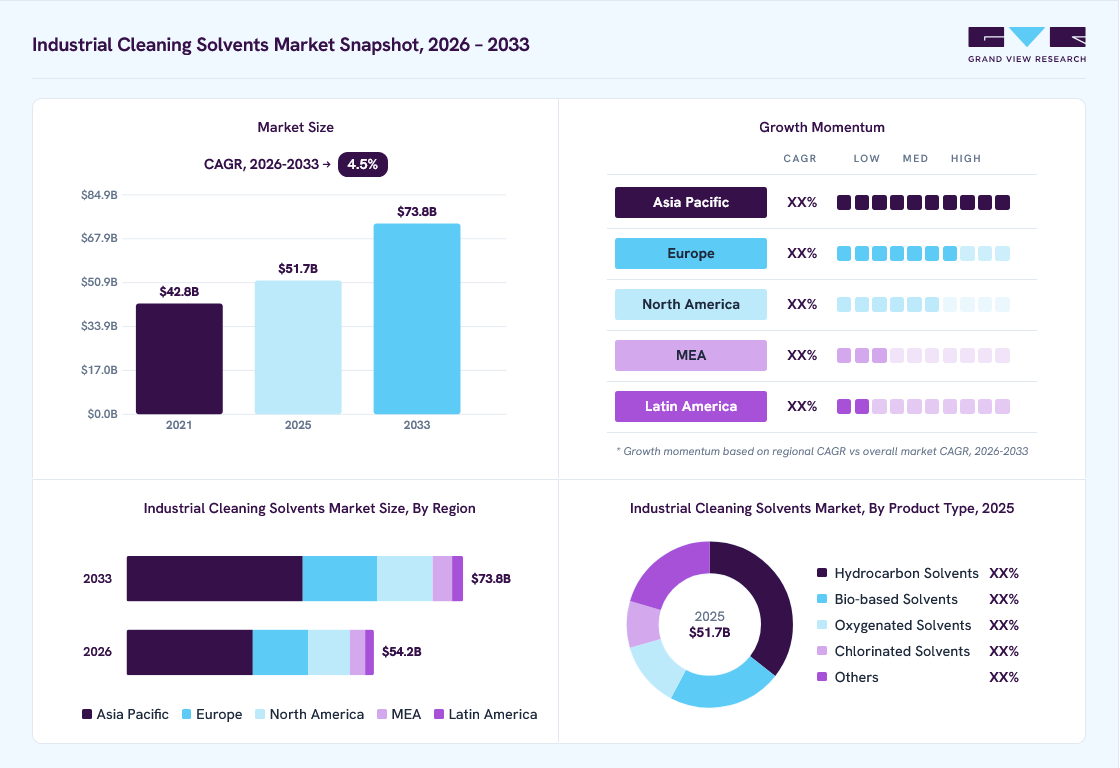 Source: Grand View Research, IR Documents, Primary Interviews, Paid DatabasesTo learn more about this report,
 Download Free Sample Report
Key Market Trends & Insights
- By product: Hydrocarbon solvents segment held the largest market share of 35.5% in 2025.
- By End-Use: Healthcare segment held the largest market share of 31.2% in 2025.
Regional Highlights
- Largest regional market: Asia Pacific (50.9% revenue share, 2025)
- By country: China held the largest market share in 2025
Market Size & Forecast
- Market size in 2025: USD 51.7 Billion
- Estimated market size in 2026: USD 54.2 Billion
- Projected market size by 2033: USD 73.8 Billion
- CAGR (2026-2033): 4.5%
Prism AI by Grand View Research Free to tryAsk a question about the industrial cleaning solvents marketTry asking✓Every figure cited from GVR research Prefer the report? Download free sample →
These solvents serve multiple purposes, such as degreasing metal parts, cleaning electronic components, removing flux residues, preparing surfaces for coating or painting, maintaining equipment, and cleaning precision instruments. Several factors, including the type of contaminant, material compatibility, environmental regulations, worker safety requirements, and the specific cleaning process involved, influence the solvent selection.Industrial production and automotive manufacturing growth have heightened the demand for solvents to clean machinery, equipment, and components, essential for maintaining operational efficiency. In response to rising environmental concerns, there has been a push towards developing biodegradable and non-toxic cleaning solvents, which help reduce reliance on traditional petroleum-based chemicals.
 To learn more about this report, Download Free Sample Report
Industrial cleaning solvents are chemical substances designed to remove contaminants, dirt, oils, greases, and other unwanted materials from surfaces, parts, and equipment in industrial environments. These solvents can be either pure compounds or specially formulated mixtures, selected based on their specific cleaning properties and compatibility with the materials used to clean.
Market Dynamics
The industrial cleaning solvents market is being driven by rising demand for efficient cleaning solutions across manufacturing, automotive, aerospace, electronics, and metal processing industries. Increasing emphasis on equipment maintenance, stringent cleanliness standards, and the need to improve operational efficiency are supporting market growth. The industry is also witnessing a gradual shift toward environmentally compliant and low-VOC solvent formulations as regulatory requirements become more stringent. In addition, advancements in bio-based and high-performance solvent technologies are creating new opportunities, while fluctuations in raw material prices and regulatory compliance costs remain key challenges influencing market dynamics.
The growth of manufacturing industries, including automotive, aerospace, electronics, machinery, and metal fabrication, is a key factor supporting demand for industrial cleaning solvents. These solvents play a critical role in removing oils, greases, residues, coatings, and contaminants from equipment, components, and production lines, helping manufacturers maintain product quality and operational efficiency. As industrial facilities continue to modernize production processes and adopt precision manufacturing techniques, the need for effective cleaning solutions has increased significantly.
Stringent quality standards and maintenance requirements across industrial sectors are encouraging greater use of specialized solvent formulations. Manufacturers are increasingly investing in cleaning processes that enhance equipment lifespan, reduce downtime, and improve production consistency. This trend is expected to sustain demand for high-performance industrial cleaning solvents across both developed and emerging industrial economies.
Growing environmental concerns regarding volatile organic compound (VOC) emissions and hazardous chemical exposure are creating challenges for the industrial cleaning solvents market. Regulatory authorities across various regions have implemented strict guidelines governing the production, handling, disposal, and use of solvent-based cleaning products. Compliance with these regulations often requires manufacturers to reformulate products, invest in sustainable technologies, and adopt environmentally friendly alternatives, increasing operational complexity.
The transition toward low-VOC and bio-based cleaning solutions can involve higher development and production costs compared to conventional solvent formulations. End users may also face additional expenses related to compliance, waste management, and worker safety measures. These factors can limit the adoption of certain solvent products and create pricing pressures, particularly in cost-sensitive industrial sectors.
The increasing focus on sustainability and environmental responsibility is creating significant opportunities for bio-based and eco-friendly industrial cleaning solvents. Industries are actively seeking alternatives to conventional solvent formulations that can reduce environmental impact while maintaining cleaning efficiency and operational performance. This shift is being supported by stricter environmental regulations, corporate sustainability initiatives, and growing customer preference for greener industrial products.
Manufacturers are investing in the development of renewable, low-toxicity, and biodegradable solvent technologies that comply with evolving regulatory standards without compromising cleaning effectiveness. As industries across automotive, electronics, aerospace, and general manufacturing continue to prioritize sustainable operations, demand for advanced green cleaning solutions is expected to rise, creating new growth avenues and product innovation opportunities within the industrial cleaning solvents market.
Analyst Perspective
The industrial cleaning solvents market is expected to witness steady growth, supported by increasing industrial production, stringent cleanliness requirements, and the rising need for equipment maintenance across manufacturing, automotive, aerospace, and healthcare sectors. Market participants are increasingly focusing on developing high-performance, low-VOC, and sustainable solvent solutions to align evolving environmental regulations and customer preferences. While regulatory pressures and raw material price volatility remain key challenges, ongoing innovation in bio-based and specialty solvent formulations is expected to create new growth opportunities and strengthen the market's long-term outlook.
Drivers, Opportunities & Restraints
The manufacturing industries are experiencing increased demand for industrial cleaning solvents due to heightened production activities and the need to maintain machinery and equipment. This demand drives innovation towards more sustainable options, such as biodegradable and non-toxic solvents, in response to environmental concerns and regulations. These alternatives help manufacturers improve operational efficiency while minimizing their ecological footprint.
Environmental and health concerns surrounding industrial cleaning solvents primarily stem from their potential toxic effects on workers and ecosystems. Many traditional solvents can release harmful volatile organic compounds (VOCs) into the air, contributing to air pollution and respiratory issues. Additionally, improper disposal of these chemicals can contaminate soil and water sources, leading to long-term ecological damage. As awareness of these risks grows, there is an increasing push for safer, sustainable alternatives in the industry.
The industrial cleaning solvents industry presents significant opportunities, particularly as businesses seek safer, more sustainable options due to growing environmental and health concerns. Innovations in eco-friendly formulations can attract companies aiming to reduce their carbon footprint and comply with stricter regulations. Additionally, increased awareness and demand for green products can lead to developing new markets and customer segments focused on sustainability. Investing in research and development of non-toxic, biodegradable cleaning agents could also yield competitive advantages in this evolving landscape.
Product Insights
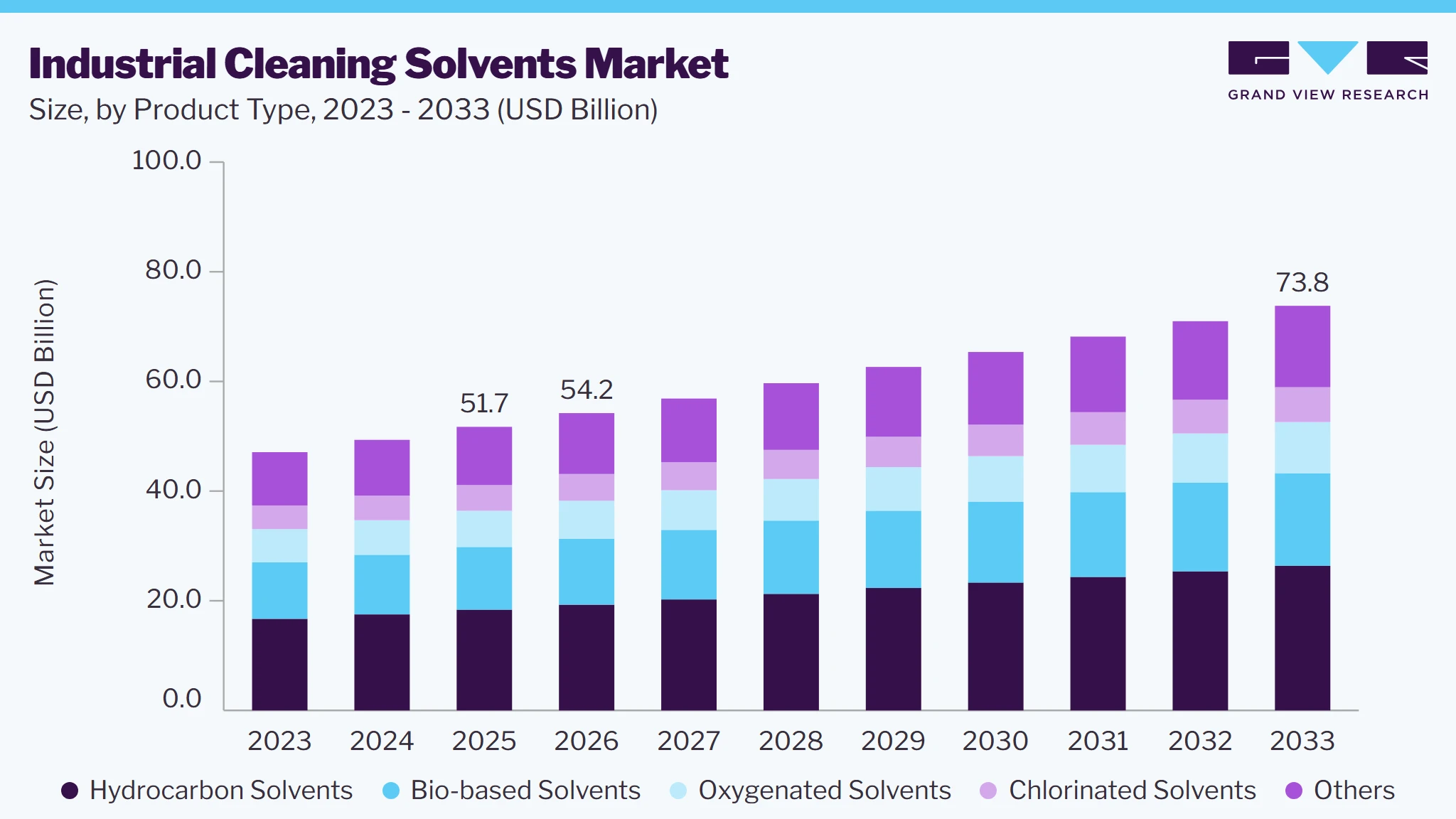
By product, hydrocarbon solvents held a dominant position, contributing 35.5% of total revenue in 2025 and is expected to continue to dominate the industry over the forecast period. The product is derived primarily from petroleum sources. They effectively dissolve oils, greases, and other contaminants, making them widely used in various industries for heavy-duty cleaning tasks. However, their reliance on fossil fuels and higher volatility can pose environmental and health concerns compared to more sustainable options like bio-based solvents.
Bio-based solvents is derived from renewable resources like plants and agricultural byproducts, these solvents offer adequate cleaning power while reducing reliance on petroleum-based chemicals. Their lower toxicity and reduced VOC emissions contribute to safer workplaces and a smaller ecological footprint, making them a preferred choice for many industries.
End Use Insights
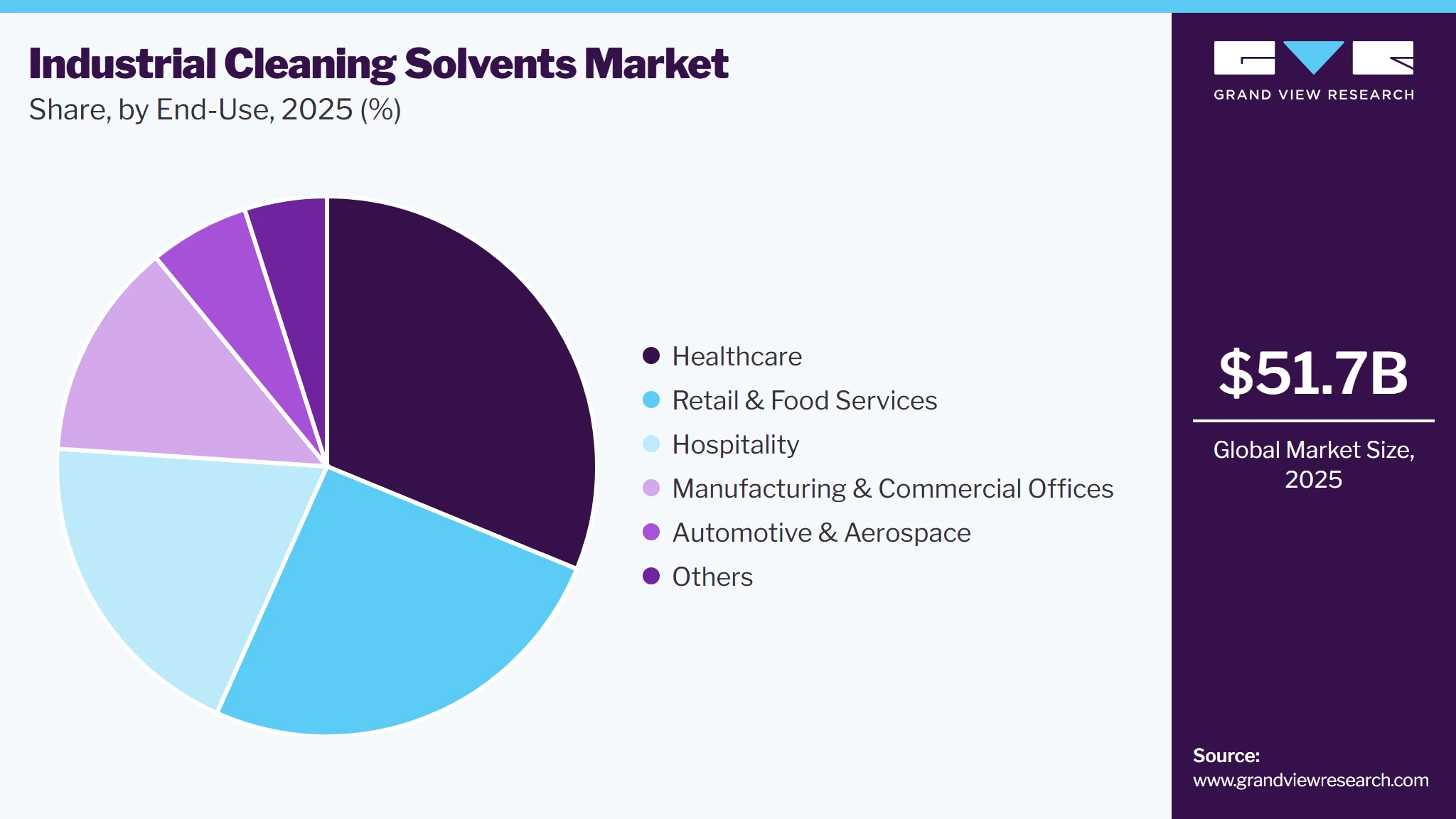
Healthcare segment accounted for the largest revenue of 31.2% in 2025, during the forecast period. These solvents are essential for cleaning and sanitizing equipment, surfaces, and instruments to ensure a sterile environment. Additionally, they effectively remove contaminants and residues, supporting compliance with health regulations and enhancing patient safety. Their efficacy and rapid evaporation make them ideal for use in environments where cleanliness is critical.
 To learn more about this report, Download Free Sample Report
The retail & food services segment utilizes industrial cleaning solvents to maintain hygiene and cleanliness in various environments, such as restaurants, grocery stores, and food processing facilities. These solvents help effectively remove grease, dirt, and food residues from surfaces and equipment, ensuring compliance with health and safety regulations. By using these cleaning agents, businesses can enhance their sanitation practices and provide a safer experience for customers and staff.
Regional Insights
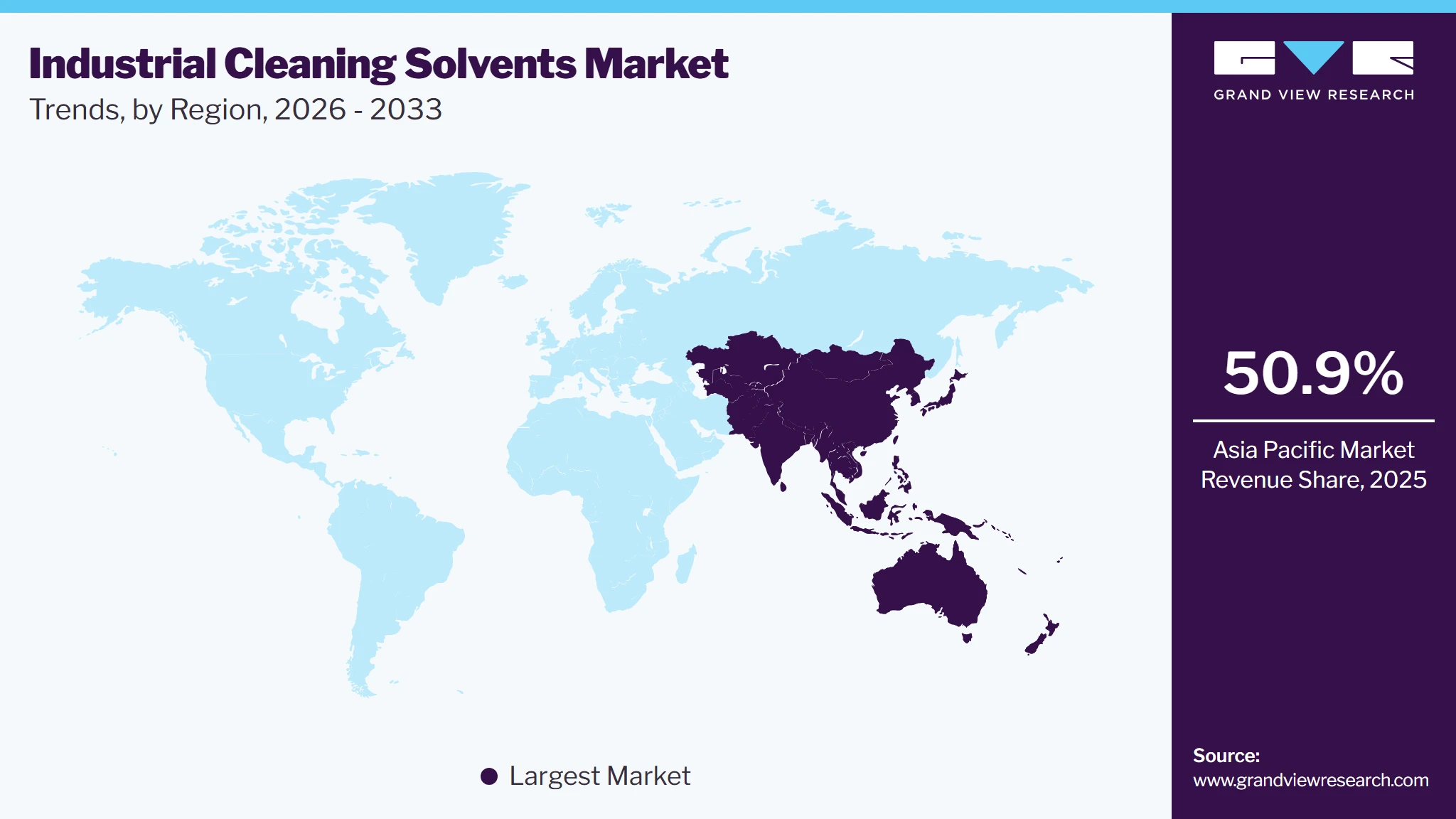
Asia Pacific dominated the industrial cleaning solvents market with the highest revenue share of 50.9% in 2025. The market is expanding due to rapid industrialization, growing manufacturing activities, and increasing hygiene standards across various industries. Countries such as China, India, Japan, and South Korea are driving demand, particularly in sectors like automotive, electronics, pharmaceuticals, and food processing. The region's strong industrial base and rising foreign investments in manufacturing contribute to the need for efficient cleaning solvents.
 To learn more about this report, Download Free Sample Report
China Industrial Cleaning Solvents Market Trends
China dominated the Asia Pacific industrial cleaning solvents market in 2025. The China industrial cleaning solvents market’s growth is driven by the country’s large-scale manufacturing sector, including automotive, electronics, aerospace, and pharmaceuticals. As one of the world’s leading industrial hubs, the demand for high-performance cleaning solvents continues to rise for applications such as metal degreasing, machinery maintenance, and surface preparation.
North America Industrial Cleaning Solvents Market Trends
The North America industrial cleaning solvents industry’s is driven by strong industrial activity, and advancements in cleaning technologies. The region’s key industries-automotive, aerospace, pharmaceuticals, and food processing-rely on high-performance solvents for degreasing, surface cleaning, and equipment maintenance. The demand is further fueled by the increasing need for hygiene and safety compliance in manufacturing and healthcare sectors.
U.S. Industrial cleaning solvents Market Trends
Growth of the U.S. industrial cleaning solvents industry is driven by strong manufacturing activity, stringent environmental regulations, and growing demand for high-performance cleaning solutions across industries such as automotive, aerospace, pharmaceuticals, and food processing. Industrial facilities require effective solvents for degreasing, surface preparation, and equipment maintenance, fueling consistent market demand.
Europe Industrial Cleaning Solvents Market Trends
The Europe industrial cleaning solvents industry’s growth is driven by companies investing in research and development to create innovative and eco-friendly cleaning solutions. This trend not only enhances cleaning efficiency but also aligns with stringent environmental regulations. The European industrial cleaning solvents sector is advancing towards more sustainable and efficient solutions, with manufacturers focusing on innovative products that meet both industrial demands and environmental standards.
Latin America Industrial Cleaning Solvents Market Trends
Latin America industrial cleaning solvents industry is expected to grow over the forecast period, due to its growing industrial sector and the increasing demand for efficient cooling solutions. The region's focus on sustainable practices and regulatory support for eco-friendly refrigerants further strengthens its position in the global market
Middle East & Africa Industrial Cleaning Solvents Market Trends
The Middle East and Africa region is experiencing growth in the industrial cleaning solvents industry due to the region's diverse economic landscape necessitates tailored cleaning solutions, ranging from advanced products for developed urban centers to cost-effective options for emerging markets.
Key Industrial Cleaning Solvents Company Insights
Some of the key players operating in the market include Dow and AkzoNobel N.V.
-
Dow manufactures chemicals, agrochemicals, rubber, specialty chemicals, and plastic materials. The company serves its products globally to several industries, including agriculture, infrastructure, packaging, and consumer care. It has a presence in all regions, including North America, Europe, Asia Pacific, Latin America, and Middle East & Africa. Its major markets include North America and Asia Pacific. The company had 106 manufacturing sites, 19 manufacturing sites in 10 Asia Pacific countries, 37 sites in 15 Europe, Middle East, Africa, and India (EMEAI) countries, 15 sites in 4 Latin America countries, and 35 manufacturing sites in the U.S. and Canada.
-
Akzo Nobel N.V. is a producer of paints, coatings, and specialty chemicals for industry and consumers across the globe. The company has a presence in over 80 countries. The well-known brands of the company are Dulux, Sikkens, Interpon, and Eka. The company serves its products to diverse end-use industries such as building & construction, industrial manufacturing, transportation, packaging, and consumer durables.
Key Industrial Cleaning Solvents Companies:
The following key companies have been profiled for this study on the industrial cleaning solvents market.
- Dow
- Ashland
- Evonik Industries
- Eastman Chemical Company
- Shell Plc
- The Lubrizol Corporation
- Arkema
- ExxonMobil Corporation
- Solvay SA
- AkzoNobel N.V.
- LyondellBasell Industries Holdings B.V.
Competitive Benchmarking
Category
Operating Strategies
Competitive Edge
Weakness
Established Players (Dow, Shell Plc, ExxonMobil Corporation, Eastman Chemical Company, Solvay SA, LyondellBasell Industries Holdings B.V., Arkema)
- Utilize vertically integrated production networks to ensure consistent raw material supply and cost optimization.
- Expand portfolios through sustainable solvent development and low-VOC formulations.
- Strengthen global distribution channels and long-term supply agreements with industrial customers.
- Invest in large-scale manufacturing facilities and process optimization technologies.
- Focus on strategic acquisitions and partnerships to expand market reach and application capabilities.
- Extensive global manufacturing footprint and economies of scale.
- Strong brand recognition and established customer relationships across industrial sectors.
- Broad product portfolios covering hydrocarbon, oxygenated, and specialty solvent categories.
- Significant financial resources supporting R&D, capacity expansion, and regulatory compliance.
- Integrated feedstock access that enhances supply reliability and cost competitiveness.
- Greater exposure to fluctuations in petrochemical feedstock prices.
- High compliance costs associated with environmental and safety regulations.
- Complex organizational structures may slow response to niche market demands.
- Dependence on mature industrial sectors in developed economies.
- Ongoing pressure to transition traditional solvent portfolios toward greener alternatives.
Emerging Players (Ashland, Evonik Industries, The Lubrizol Corporation, AkzoNobel N.V.)
- Focus on specialty formulations and value-added industrial cleaning solutions.
- Invest in innovation related to sustainable, bio-based, and performance-enhanced solvent technologies.
- Target niche end-use applications requiring customized cleaning performance.
- Strengthen customer engagement through technical service and application-specific expertise.
- Strong expertise in specialty chemicals and customized formulations.
- Greater flexibility in addressing specific customer requirements and emerging market trends.
- Focus on innovation-driven products with enhanced environmental profiles.
- Ability to develop differentiated solutions for high-performance industrial cleaning applications.
- Strong technical support capabilities for specialized end users.
- Smaller production scale compared with integrated chemical majors.
- Lower bargaining power in raw material procurement.
- More limited global distribution reach in certain regions.
- Higher dependence on specialty market segments that can be sensitive to economic fluctuations.
- Greater competitive pressure from large diversified chemical manufacturers with broader product offerings.
Recent Developments
-
In October 2024, Actemium Oil & Gas Offshore in Brazil developed a process to treat and reuse organic solvents used in equipment cleaning, aligning with environmental targets to reduce greenhouse gas emissions and optimize resource use. This initiative is expected to eliminate 30 tons of CO₂ equivalent emissions annually and prevent the generation of 9,000 kilograms of hazardous waste. Additionally, it will conserve 14 liters of solvent daily and save four cubic meters of water each year. Financially, the process is projected to save up to USD 14586.75 Million per year.
-
In February 2024, Jelmar, LLC, a family- and women-owned manufacturer known for CLR and Tarn-X cleaning products, launched CLR PRO MAX Industrial Descaler. This industrial-strength solution effectively dissolves scale and rust from drains and equipment that heats and cools liquids. The launch is part of Jelmar's initiative to expand its industrial cleaning solutions, with more products planned under the CLR PRO MAX line in 2024 and beyond.
Industrial Cleaning Solvents Market Report Scope
Report Attribute
Details
Market size in 2025
USD 51.7 billion
Estimated market size in 2026
USD 54.2billion
Projected market size by 2033
USD 73.8 billion
Growth rate
CAGR of 4.5% from 2026 to 2033
Base year for estimation
2025
Historical data
2021 - 2024
Forecast period
2026 - 2033
Quantitative units
Revenue in USD billion/billion, Volume in Kilotons and CAGR from 2026 to 2033
Report coverage
Revenue forecast, company ranking, competitive landscape, growth factors, and trends
Segments covered
Product, End Use and Region
Regional scope
North America; Europe; Asia Pacific; Latin America; MEA
Country scope
U.S., Canada, Mexico, Germany, UK, France, Italy, Spain, China, Japan, India, South Korea, Brazil, Argentina, Saudi Arabia, South Africa
Key companies profiled
Dow; AkzoNobel N.V.; Evonik Industries; Eastman Chemical Company; Shell Plc; The Lubrizol Corporation; Arkema; ExxonMobil Corporation; Ashland; Solvay SA
Customization scope
Free report customization (equivalent up to 8 analysts' working days) with purchase. Addition or alteration to country, regional & segment scope.
Pricing and purchase options
Avail customized purchase options to meet your exact research needs. Explore purchase options
Global Industrial Cleaning Solvents Market Report Segmentation
This report forecasts revenue and volume growth at global, regional, and country levels and provides an analysis of the latest industry trends in each of the sub-segments from 2021 to 2033. For this study, Grand View Research has segmented the global industrial cleaning solvents market report based on product, end use, and region:
 To learn more about this report, Download Free Sample Report
-
Product Outlook (Volume, Kilotons; Revenue, USD Million, 2021 - 2033)
-
Hydrocarbon Solvents
-
Oxygenated Solvents
-
Bio-Based Solvents
-
Chlorinated Solvents
-
Other Products
-
-
End Use Outlook (Volume, Kilotons; Revenue, USD Million, 2021 - 2033)
-
Healthcare
-
Manufacturing & Commercial Offices
-
Retail & Food Services
-
Hospitality
-
Automotive & Aerospace
-
Other End Use
-
-
Regional Outlook (Volume, Kilotons; Revenue, USD Million, 2021 - 2033)
-
North America
-
U.S.
-
Canada
-
Mexico
-
-
Europe
-
Germany
-
UK
-
France
-
Italy
-
Spain
-
-
Asia Pacific
-
China
-
India
-
Japan
-
South Korea
-
-
Latin America
-
Brazil
-
Argentina
-
-
Middle East & Africa
-
Saudi Arabia
-
South Africa
-
-
Research Methodology
The industrial cleaning solvents market figures in this report are based on a proven research process that combines executive interviews with secondary research from proprietary databases, company filings, and recognized regulatory and institutional sources. Market size is built through value-chain sizing - reconciling supply-side and demand-side estimates - and triangulated with bottom-up and top-down approaches. Every estimate passes multiple levels of expert validation before publication, with each industrial cleaning solvents segment quantified using the revenue-capture definitions in the table below.
Segment Definition
Segment - Type
Revenue capture definition
Hydrocarbon Solvents
Revenue from hydrocarbon solvents is generated through the sale of petroleum-based cleaning agents used for degreasing, metal cleaning, and removal of industrial contaminants. Demand is primarily driven by their strong solvency performance and widespread use across manufacturing and maintenance operations.
Oxygenated Solvents
Revenue is captured from alcohols, ketones, esters, and glycol ethers utilized in precision cleaning applications requiring effective removal of oils, greases, and residues. Growth is supported by increasing demand for high-performance solvents with improved environmental and worker safety profiles.
Bio-Based Solvents
Revenue is derived from renewable and biodegradable cleaning solvents formulated from plant-based or other sustainable feedstocks. Market expansion is driven by rising regulatory compliance requirements and growing adoption of environmentally responsible cleaning solutions.
Chlorinated Solvents
Revenue is generated through the supply of chlorinated cleaning agents used in heavy-duty industrial degreasing and precision cleaning applications. Demand is supported by their high cleaning efficiency in specialized industrial processes despite increasing regulatory scrutiny.
Other Products
Revenue includes sales of specialty and blended solvent formulations designed for niche industrial cleaning requirements. Growth is influenced by industry-specific performance needs and the development of customized cleaning solutions.
Segment - End Use
Revenue capture definition
Healthcare
Revenue is captured from industrial cleaning solvents used for equipment maintenance, surface sanitation, and contamination control within healthcare facilities and medical device manufacturing environments. Demand is supported by stringent hygiene and cleanliness standards.
Manufacturing & Commercial Offices
Revenue is generated through the use of cleaning solvents for machinery maintenance, facility cleaning, and operational upkeep across manufacturing plants and commercial establishments. Growth is driven by the need to maintain productivity, equipment reliability, and workplace cleanliness.
Retail & Food Services
Revenue is derived from cleaning solvents used to remove grease, residues, and contaminants from food preparation equipment, storage areas, and retail facilities. Demand is supported by food safety regulations and operational hygiene requirements.
Hospitality
Revenue is captured from cleaning and maintenance applications across hotels, resorts, and related hospitality facilities. Market growth is influenced by increasing emphasis on cleanliness, guest safety, and facility maintenance standards.
Automotive & Aerospace
Revenue is generated through solvent consumption in component cleaning, surface preparation, degreasing, and maintenance operations within automotive and aerospace industries. Demand is driven by strict quality requirements and the need for precision cleaning during manufacturing and servicing activities.
Other End Uses
Revenue includes solvent sales to sectors such as electronics, marine, energy, construction, and institutional facilities. Growth is supported by diverse industrial cleaning requirements and expanding maintenance activities across end-use industries.
Estimation Model
Layer Name
Key Question
Description
Solvent Production & Supply Layer
What forms the supply base?
Identify the global production capacity of industrial cleaning solvents supported by the availability of petrochemical feedstocks, bio-based raw materials, solvent manufacturing infrastructure, refining and chemical processing capabilities, formulation technologies, regulatory compliance standards, and regional production facilities. This layer establishes the foundational supply base for hydrocarbon, oxygenated, bio-based, chlorinated, and specialty solvent products used across industrial cleaning applications worldwide.
End-Use Adoption Layer
Where are industrial cleaning solvents utilized?
Estimate the proportion of industrial cleaning solvents consumed across healthcare facilities, manufacturing plants, commercial offices, retail and food service establishments, hospitality facilities, automotive production units, aerospace operations, and other industrial sectors. The analysis considers cleaning requirements, equipment maintenance needs, hygiene standards, operational practices, and industry-specific solvent usage trends across regions.
Consumption Intensity Layer
How much industrial cleaning solvent is used?
Analyze application-specific solvent consumption patterns based on equipment cleaning frequency, degreasing requirements, maintenance schedules, production volumes, contamination levels, regulatory cleanliness standards, facility sizes, and operational intensity. This assessment determines annual solvent demand across major end-use industries and geographic markets.
Revenue Layer
How is market revenue generated?
Market revenue is quantified through the sale of hydrocarbon solvents, oxygenated solvents, bio-based solvents, chlorinated solvents, and specialty cleaning solvent formulations supplied to healthcare institutions, manufacturing facilities, commercial establishments, retail and food service operators, hospitality providers, automotive manufacturers, aerospace companies, and other industrial end users globally.
Delivered Customizations
This report has been delivered with the following In-depth customizations
Client Request
Customization Delivered
Value Adds
Regional Segmentation
A comprehensive regional assessment of the industrial cleaning solvents market was conducted across North America, Europe, Asia Pacific, Latin America, and Middle East & Africa. Consumption trends for hydrocarbon, oxygenated, bio-based, and chlorinated solvents were evaluated across key countries, along with industrial activity levels, manufacturing output, regulatory developments, and end-use sector demand.
Provides visibility into regional demand dynamics and country-level growth opportunities. Supports market expansion planning, localization strategies, and prioritization of high-consumption markets.
Cross-Segmentation Analysis
Demand patterns were assessed across solvent types and end-use industries to evaluate adoption trends within healthcare, manufacturing & commercial offices, retail & food services, hospitality, and automotive & aerospace sectors. The analysis examined application suitability, solvent substitution trends, and industry-specific cleaning requirements.
Enables identification of the most attractive product-end-use combinations. Facilitates portfolio optimization and targeted commercialization strategies aligned with industry-specific demand.
Opportunity Assessment
Emerging opportunities were assessed across bio-based cleaning solvents, low-VOC formulations, precision cleaning applications, and advanced industrial maintenance solutions. Demand growth linked to sustainability initiatives, workplace safety requirements, and stricter environmental regulations was also evaluated.
Enables identification of high-growth market segments and emerging application areas. Supports innovation planning, product development efforts, and long-term business expansion strategies.
Frequently Asked Questions About This Report
Some key players operating in the industrial cleaning solvents market include Dow, AkzoNobel N.V., Evonik Industries, Eastman Chemical Company, Shell Plc, The Lubrizol Corporation, Arkema, ExxonMobil Corporation, Ashland, and Solvay SA
Key factors that are driving the market growth include the type of contaminant, material compatibility, environmental regulations, worker safety requirements, and the specific cleaning process involved.
The global industrial cleaning solvents market size was estimated at USD 51.7 billion in 2025 and is projected to grow from USD 54.2 billion in 2026.
The global industrial cleaning solvents market is expected to grow at a compound annual growth rate of 4.5% from 2026 to 2033 to reach USD 73.8 billion by 2033.
Asia Pacific dominated the industrial cleaning solvents market with a share of 50.9% in 2025. This is attributable to rapid industrialization, growing manufacturing activities, and increasing hygiene standards across various industries.
Healthcare segment accounted for the largest revenue of 31.2% in 2025.
Bio-based solvents is the fastest-growing product segment during the forecast period, driven by tightening environmental regulations, rising demand for sustainable cleaning solutions, and the increasing shift toward low-VOC, renewable solvent formulations across industrial applications.
About the Author(s)
Organic Chemicals Research Team
Bulk Chemicals · Organic ChemicalsThis report was authored by the organic chemicals research team at Grand View Research - comprising two research analysts, one senior research analyst, and one industry expert - with specialized expertise in the organic chemicals segment of the bulk chemicals industry. All findings are based on proprietary bulk chemicals databases, executive interviews, and regulatory analysis, subject to internal peer review prior to publication.
Last Updated:
Speak to Analyst

Customize this report to your needs - add regions, segments, or data points, with 20% free customization.
Or view our licence options:


ISO 9001:2015 & 27001:2022 Certified
We are GDPR and CCPA compliant! Your transaction & personal information is safe and secure. For more details, please read our privacy policy.


