
- Home
- »
- Pharmaceuticals
- »
-
Interstitial Cystitis Drugs Market Size & Share Report, 2033GVR Report cover

Interstitial Cystitis Drugs Market (2026 - 2033)
Size, Share & Trends Analysis Report By Route Of Administration (Oral, Intravesical), By Distribution Channel (Hospital Pharmacies, Mail-Order / Online Pharmacies), By Drug Class, By Region, And Segment Forecasts
Market Size, 2025
$1.4BMarket Estimate, 2026
$1.5BMarket Forecast, 2033
$2.1BCAGR, 2026–2033
4.9%Interstitial Cystitis Drugs Market Summary
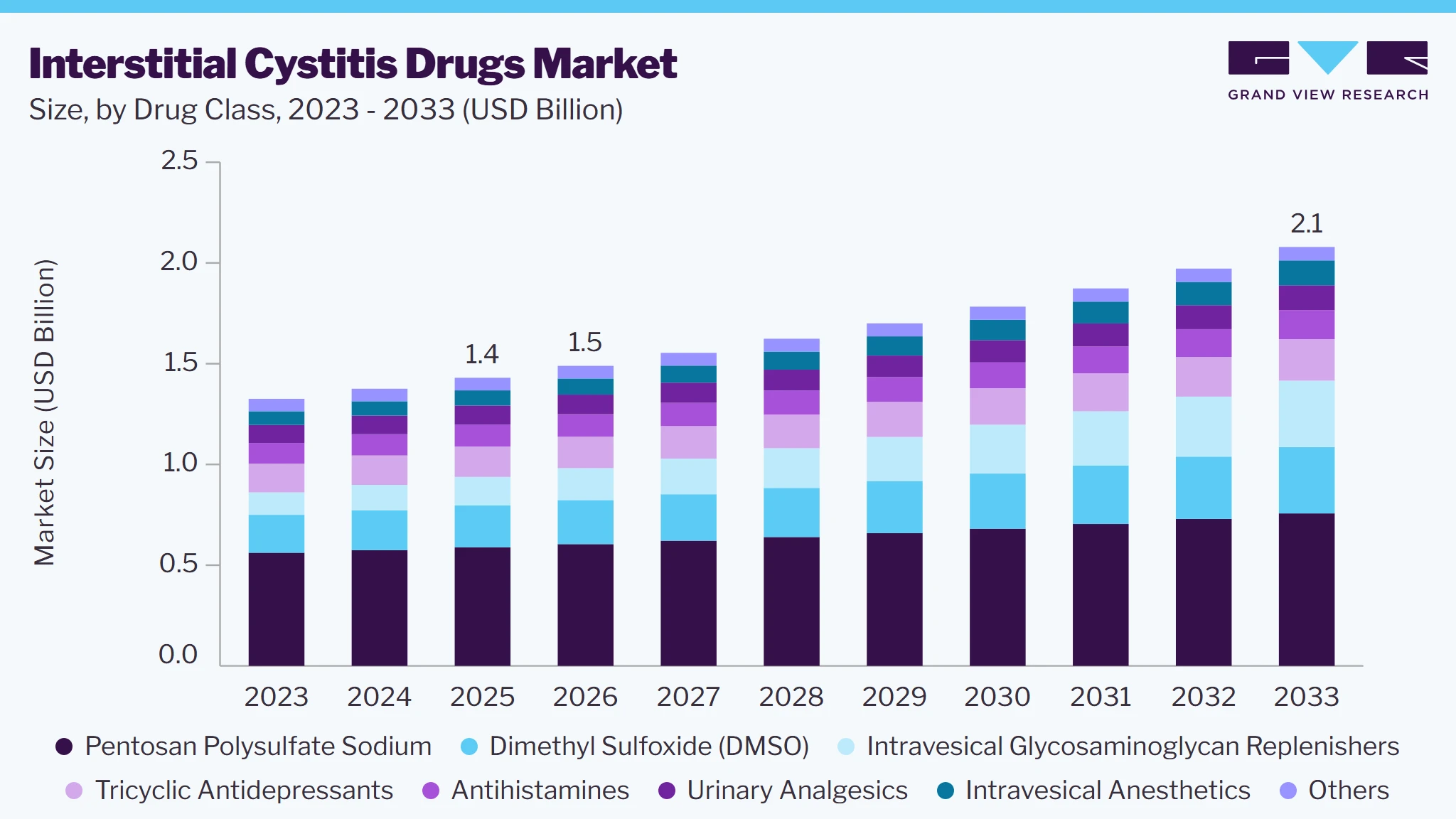
The global interstitial cystitis drugs market size was valued at USD 1.4 billion in 2025 and is projected to grow from USD 1.5 billion in 2026 to USD 2.1 billion by 2033, at a CAGR of 4.9% from 2026 to 2033. North America dominated the market, accounting for a revenue share of 41.2% in 2025. The market is driven by the need for long-term symptom management in patients experiencing bladder pain, urinary urgency, frequency, and discomfort.
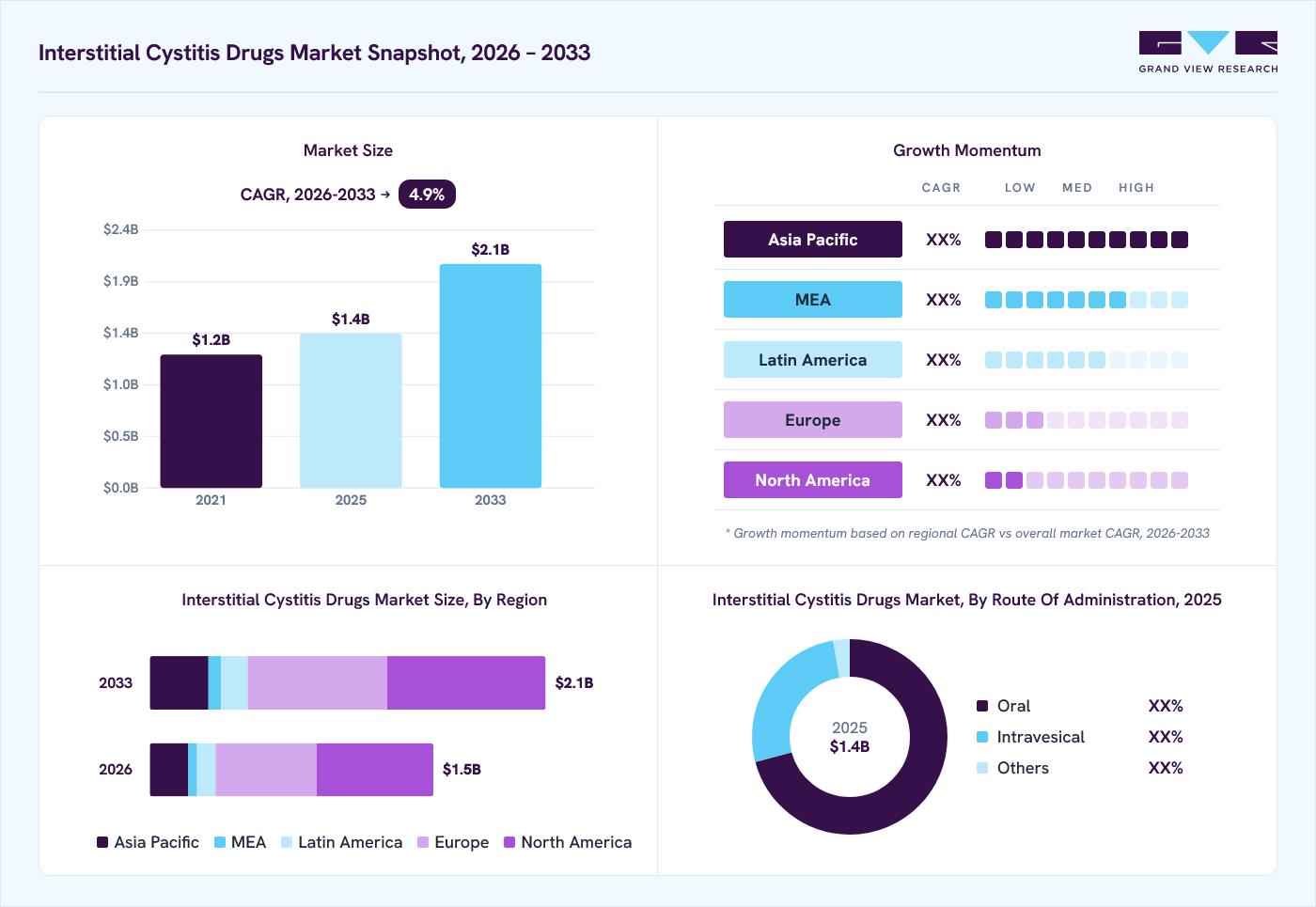 Source: Grand View Research, IR Documents, Primary Interviews, Paid DatabasesTo learn more about this report,
 Download Free Sample Report
 Key Market Trends & Insights
- By drug class: The pentosan polysulfate sodium segment held the highest market share of 41.2% in 2025.
- By route of administration: The oral segment held the highest market share of 70.8% in 2025.
- By distribution channel: The hospital pharmacies segment held the highest market share in 2025.
Regional Highlights
- Largest regional market: North America (41.2% revenue share, 2025)
- Fastest-growing regional market: Asia Pacific (highest CAGR, 2026-2033)
- By country: The U.S. held the largest market share in 2025
Market Size & Forecast
- Market size in 2025: USD 1.4 Billion
- Estimated market size in 2026: USD 1.5 Billion
- Projected market size by 2033: USD 2.1 Billion
- CAGR (2026-2033): 4.9%
Three ways to get this report
Buy it, customize it, or ask a question.Ask an Analyst
A direct answer, usually in 1 working day
- AccessReport author, directly
- Reply timeWithin 1 working day
- No sales callDirect answer only
- FormatEmail reply
- CostFree, no cost
Get the Full Report
What the study covers
- FormatsPDF · Excel · Dashboard
- Timeline2026–2033 annual, 2025 base
- Coverage20+ countries, 5 regions
- Companies10+ key players profiled
Customize the Report
20% free customization
- IncludeCountries, segments, points
- TailorTo your product definition
- ExtendDeeper competitor detail
- OrA fully bespoke study
- Turnaround5–10 working days
Interstitial cystitis is a chronic bladder condition with no single route of administration that provides adequate symptom control for all patients, creating demand for different therapeutic approaches based on disease symptoms and route of administration response. Oral medicines, pain management therapies, and bladder instillation remain important routes of administration, while behavioral and other non-drug approaches are also used as part of overall disease management.
 To learn more about this report, Download Free Sample Report
 Market development is supported by greater clinical recognition of interstitial cystitis, improved diagnosis of chronic bladder symptoms, and continued research on routes of administration that can provide better symptom control. However, challenges in diagnosis, variation in patient symptoms, limited disease-specific route of administration options, and differences in route of administration response continue to affect drug utilization. The market is therefore characterized by ongoing demand for symptom-focused therapies and continued clinical research into more targeted routes of administration approaches.
Market Dynamics
The market is supported by the need for continued symptom management among patients experiencing bladder pain, urinary urgency, urinary frequency, and discomfort. Interstitial cystitis is a chronic condition, and symptoms can vary among patients, requiring adjustments to the route of administration based on symptom severity and response. Oral medicines, pain management therapies, antihistamines, antidepressants, and the bladder instillation route of administration are used as part of clinical management. The need for an ongoing route of administration supports continued use of pharmaceutical therapies, particularly among patients with persistent or recurring symptoms. Greater recognition of interstitial cystitis and bladder pain syndrome can also support patient evaluation and route of administration. Physicians may change the route of administration when patients receive limited relief from an initial therapy, creating demand for alternative drug options. The lack of a single route of administration that consistently controls symptoms across patients further supports the need for different therapeutic approaches. These factors support continued demand for the pharmaceutical route of administration and provide a stable market base.
The market is constrained by the limited number of therapies specifically developed for the condition. Interstitial cystitis has varied symptoms and may involve several biological mechanisms, which makes drug development more complex. The route of administration also varies among patients, prompting physicians to adjust therapy based on symptom control and tolerability. Diagnosis presents another challenge because bladder pain, urinary urgency, and urinary frequency can overlap with urinary tract infections, pelvic floor disorders, endometriosis, and other conditions. Delayed or uncertain diagnosis can therefore affect the identification of patients who require a drug route of administration. The limited number of disease-specific therapies also restricts the routes of administration available to patients who do not respond adequately to the available options. Some patients may also require non-drug interventions as part of their overall route of administration plan, which can reduce dependence on pharmaceutical therapies. These factors create challenges for companies developing new products and can limit product differentiation within the market. As a result, the market remains dependent on a relatively narrow group of established routes of administration options for long-term symptom management.
The market presents opportunities for pharmaceutical companies to develop therapies that target distinct biological mechanisms underlying bladder pain, urinary urgency, urinary frequency, and bladder discomfort. Current routes of administration primarily focus on symptom management, while the underlying causes of interstitial cystitis remain complex and not fully established. This creates scope for drug development targeting pain signaling, sensory nerve activity, inflammation, urothelial function, and other pathways involved in bladder symptoms. New therapies may also address patients who receive limited relief from currently available medicines or experience tolerability concerns. A broader pipeline of disease-specific therapies could increase the range of routes of administration and support greater use of pharmacological management. Clinical research can help identify patient groups more likely to respond to specific mechanisms, supporting more focused decisions about routes of administration. Development of oral and local therapies may provide additional options across different symptom profiles. As understanding of disease biology improves, companies can explore differentiated routes of administration that address specific symptoms or pathways. This creates an opportunity to expand the route-of-administration base and support new product development in the market.
Market Concentration & Characteristics
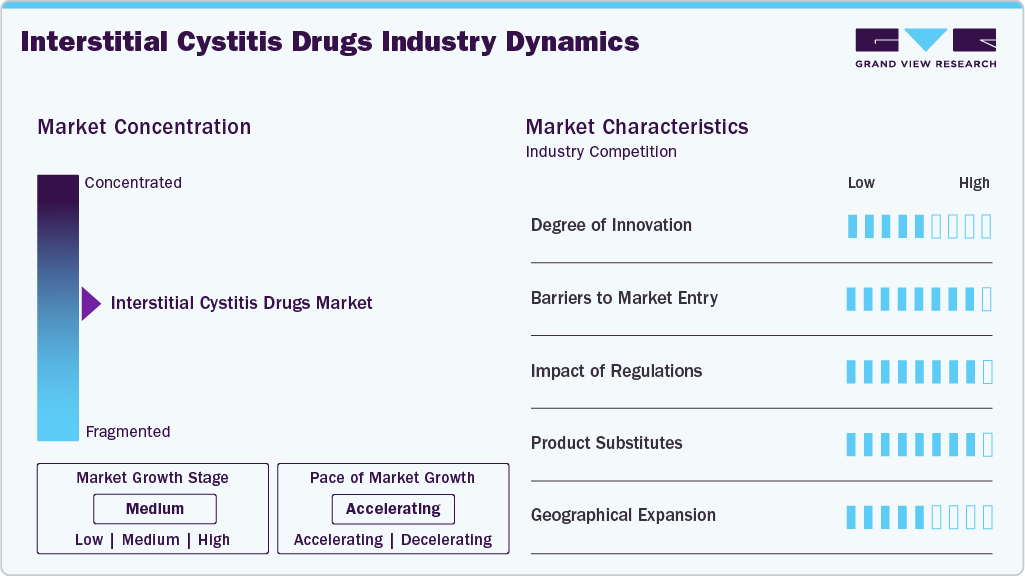
The degree of innovation in the interstitial cystitis drugs industry is moderate, as treatment development focuses on improving symptom control and addressing the various biological pathways implicated in the condition. Existing pharmaceutical management includes oral medications and bladder instillation therapies, while research continues to examine mechanisms underlying pain signaling, sensory nerve activity, inflammation, and bladder function. Innovation is also directed toward patients who experience inadequate relief from available treatments. The condition presents challenges for drug development because symptoms vary between patients, and the underlying disease mechanisms are not fully established. This limits the development of therapies targeting a single, clearly defined pathway. At the same time, clinical research into new mechanisms provides opportunities for differentiated products. The market, therefore, continues to see innovation, but it remains at a moderate level due to limited understanding of disease and the small number of approved disease-specific therapies.
The interstitial cystitis drugs industry has high barriers to market entry due to the clinical and regulatory requirements involved in developing therapies for a chronic condition with varied symptoms. Companies need to demonstrate safety and meaningful improvement in symptoms such as bladder pain, urinary urgency, and frequency through clinical studies. Patient identification also presents a challenge because symptoms overlap with urinary tract infections and other bladder or pelvic disorders. This can make patient recruitment and clinical trial design more difficult. The limited understanding of disease mechanisms further increases development challenges for companies developing targeted therapies. New products also need to establish a clear treatment benefit compared with existing medicines and non-drug treatment approaches. In addition, pharmaceutical development requires investment in research, clinical trials, manufacturing, and regulatory submissions. These factors make entry more difficult for companies without established drug development capabilities and clinical research infrastructure.
 To learn more about this report, Download Free Sample Report
 Regulations have a significant impact on the interstitial cystitis drugs industry because pharmaceutical products must undergo regulatory review before approval and commercialization. Companies developing new therapies need to provide clinical evidence covering safety, efficacy, dosing, and treatment benefits. Interstitial cystitis also presents specific development challenges because symptoms differ across patients and there is no single objective diagnostic measure that fully defines the condition. These factors affect clinical trial design and the selection of appropriate endpoints. Regulatory requirements, therefore, influence development timelines, research costs, and product approval decisions. In the U.S., the Food and Drug Administration provides guidance for companies developing therapies for interstitial cystitis/bladder pain syndrome, including considerations for clinical development programs. Approved products must also comply with requirements related to manufacturing, labeling, safety monitoring, and post-approval obligations. As a result, regulatory requirements have a direct role in determining which therapies enter the market and how pharmaceutical companies develop new products.
Product substitutes have a high impact on the interstitial cystitis drugs industry because patients have several treatment options outside a specific pharmaceutical product. Management of interstitial cystitis often involves a combination of approaches based on symptoms and treatment response. Non-drug measures, including dietary changes, physical therapy, bladder training, and stress management, are used as part of patient care. Medical alternatives also include bladder instillation procedures, pain management medicines, and other therapies that address individual symptoms rather than the underlying condition. These alternatives provide physicians with treatment choices when drug therapy does not provide adequate symptom relief or when tolerability becomes a concern. Generic medicines also create substitution within the pharmaceutical segment, particularly where the same active ingredient is available from multiple manufacturers. The availability of these alternatives limits dependence on individual branded products and creates competition in pricing and treatment. Therefore, substitute products and non-drug approaches remain an important factor affecting pharmaceutical demand.
Geographical expansion in the interstitial cystitis drugs industry is moderate, as diagnostic practices, treatment practices, product availability, and healthcare infrastructure vary across countries. Developed pharmaceutical markets have established urology services, regulatory pathways, and access to disease-specific and symptom-based therapies. The U.S. represents an important market due to established clinical awareness and the availability of approved treatment options. European countries also have established healthcare systems that support the diagnosis and management of bladder pain conditions. Expansion into emerging markets is influenced by awareness of interstitial cystitis, access to specialist care, availability of diagnostic services, and pharmaceutical distribution networks. Differences in treatment guidelines and regulatory requirements also affect the introduction of new products across countries. Companies seeking geographic expansion, therefore, need to address local registration requirements, physician awareness, pricing conditions, and distribution channels. These factors support moderate expansion, while differences in diagnosis and access to treatment limit faster adoption in less-developed healthcare markets.
Analyst Perspective
The market is driven by continued demand for chronic symptom management and established use of oral and intravesical therapies. Limited disease-specific treatment options create opportunities for new product development and portfolio expansion. Increasing clinical research, improved diagnosis, and wider access to specialist urology services are supporting treatment demand, while varied treatment response and diagnostic challenges remain key market constraints.
Drug Class Insights
The pentosan polysulfate sodium segment accounted for the largest market share of 41.2% in 2025. Its leading position is supported by its specific use for interstitial cystitis, oral administration, established clinical use, physician familiarity, product availability, and its role in supporting the bladder’s protective glycosaminoglycan layer. The availability of generic formulations also supports patient access and maintains product presence across healthcare systems. Pentosan polysulfate sodium is used for long-term symptom management, particularly for bladder pain and urinary discomfort, which supports continued treatment demand. Oral administration provides a convenient option compared with therapies requiring bladder instillation. In addition, its established regulatory history supports physician awareness and continued use in clinical practice. These factors contribute to sustained demand for the therapy and support its leading position within the drug class segment during the forecast period.
The intravesical glycosaminoglycan replenishers segment is projected to register the fastest CAGR of 11.0% during the forecast period. Growth is supported by increasing interest in bladder instillation therapies, localized drug delivery, and treatments based on glycosaminoglycan replacement. Hyaluronic acid and chondroitin sulfate-based therapies are used to support restoration of the bladder’s protective lining and address symptoms associated with bladder pain syndrome. Direct administration into the bladder provides a localized treatment approach and offers an alternative for patients who receive limited relief from oral medicines. Continued clinical research into bladder lining dysfunction and glycosaminoglycan depletion also supports interest in this class of treatments. The segment benefits from its role in multimodal treatment plans, where physicians use different therapies based on symptoms and treatment response. These factors support greater use of intravesical therapies and contribute to the segment’s faster growth during the forecast period.
Route Of Administration Insights
The oral segment accounted for the largest market share of 70.8% in 2025, supported by its role as a convenient option for managing persistent interstitial cystitis symptoms. Easy administration outside clinical facilities, established physician familiarity, availability of generic formulations, lower administration requirements, broad pharmacy access, and suitability for continued treatment support its use. Oral therapies also avoid the catheter-based procedure required for bladder instillation, which supports patient convenience and routine treatment. Pentosan polysulfate sodium is the main disease-specific oral therapy, while other oral medicines are used to manage pain, urinary urgency, and related symptoms. The established use of oral treatment across different symptom profiles further supports demand. In addition, retail and specialty pharmacy distribution provides patients with regular access to prescribed medicines. These factors are expected to support continued use of oral therapies and maintain the segment’s position during the forecast period.
The intravesical segment is projected to register the fastest CAGR of 8.1% during the forecast period, driven by greater use of treatments administered directly into the bladder. This route provides localized drug delivery and is used when patients require an alternative to systemic treatment. Interest in therapies that support the bladder lining is also contributing to segment growth, particularly through hyaluronic acid and chondroitin sulfate-based formulations. Intravesical treatment is further supported by its use in multimodal care, where physicians combine different approaches based on symptom severity and treatment response. Patients with persistent symptoms after oral therapy provide an additional treatment group for bladder instillation approaches. Clinical research focused on bladder barrier function and local treatment mechanisms is also supporting interest in this route. Growing availability of intravesical formulations across specialist urology practices is expected to support wider use and contribute to the segment’s growth during the forecast period.
Distribution Channel Insights
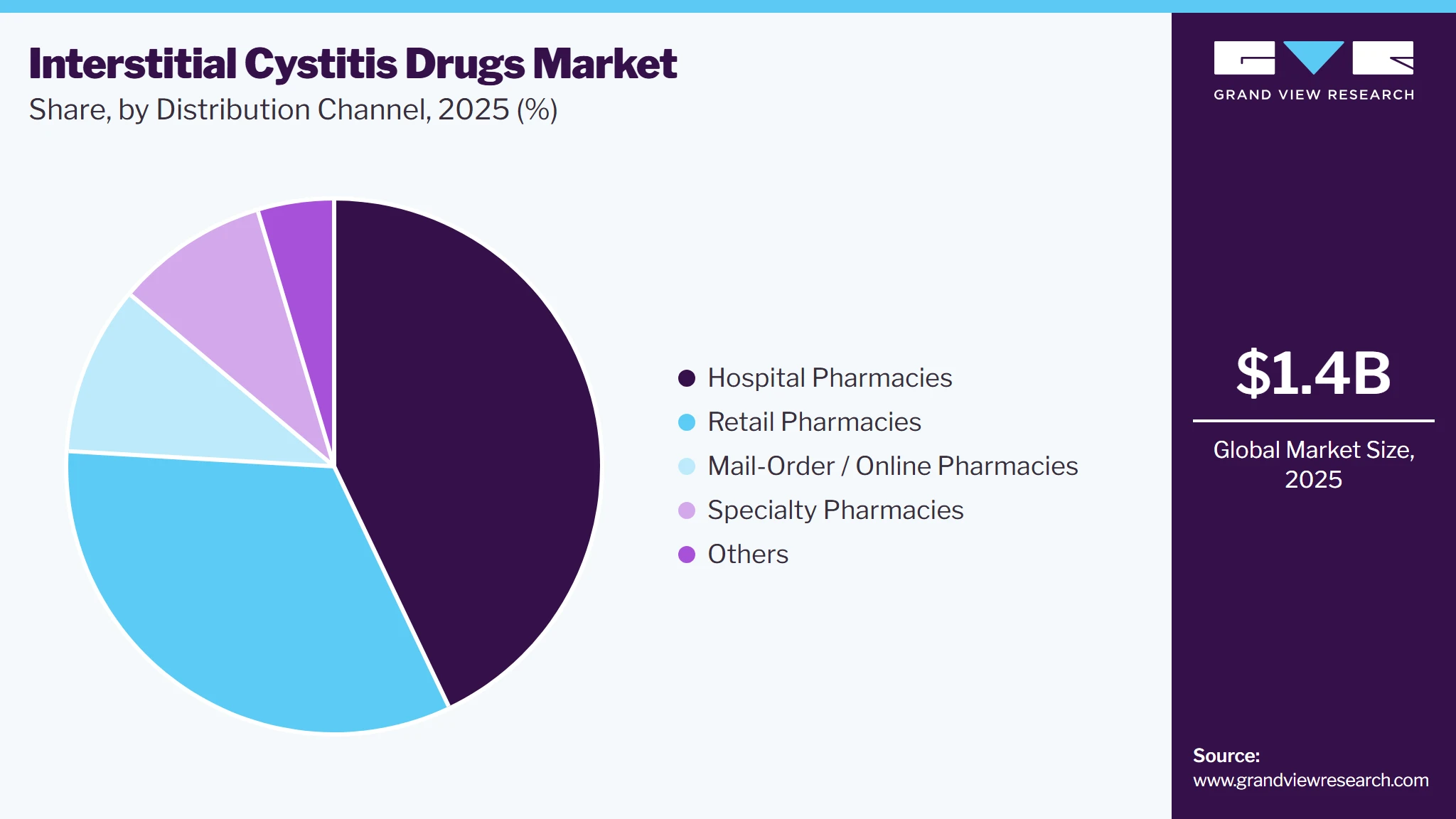
The hospital pharmacies segment accounted for the largest market share, at 42.9% in 2025, supported by hospitals' roles in diagnosis, treatment initiation, specialist consultations, access to medicines, and the management of patients with persistent interstitial cystitis symptoms. Direct access to urologists, availability of prescription medicines, hospital-based bladder instillation procedures, centralized medicine purchasing, and pharmacist support contribute to its position. Hospital pharmacies also serve patients with complex or recurring symptoms, for whom physicians adjust therapy based on treatment response. The presence of urologists, nurses, pharmacists, and other healthcare professionals supports prescription review and medicine selection. In addition, hospital pharmacies provide medications used alongside interstitial cystitis therapies to manage pain and urinary symptoms. These factors support the regular distribution of medicine through hospitals and maintain the segment’s leading position. Continued use of hospital-based treatment services is expected to support the segment during the forecast period.
 To learn more about this report, Download Free Sample Report
 The mail-order/online pharmacies segment is projected to register the fastest CAGR of 9.8% during the forecast period, supported by the growing use of digital pharmacy services and home delivery of prescription medicines. Home delivery reduces the need for repeated visits to physical pharmacies, which is useful for patients requiring long-term treatment for chronic bladder symptoms. Online pharmacy platforms also provide access to prescription refills, medicine information, order tracking, and scheduled delivery. The segment benefits from wider internet access, greater use of telehealth consultations, electronic prescriptions, and established delivery networks. Mail-order services also support recurring prescriptions by allowing patients to order medications according to their treatment schedules. Increasing acceptance of remote healthcare services is supporting online access to prescription medicines. In addition, convenient medicine delivery provides an option for patients managing chronic conditions. These factors are expected to support faster growth of the mail-order/online pharmacies segment during the forecast period.
Regional Insights
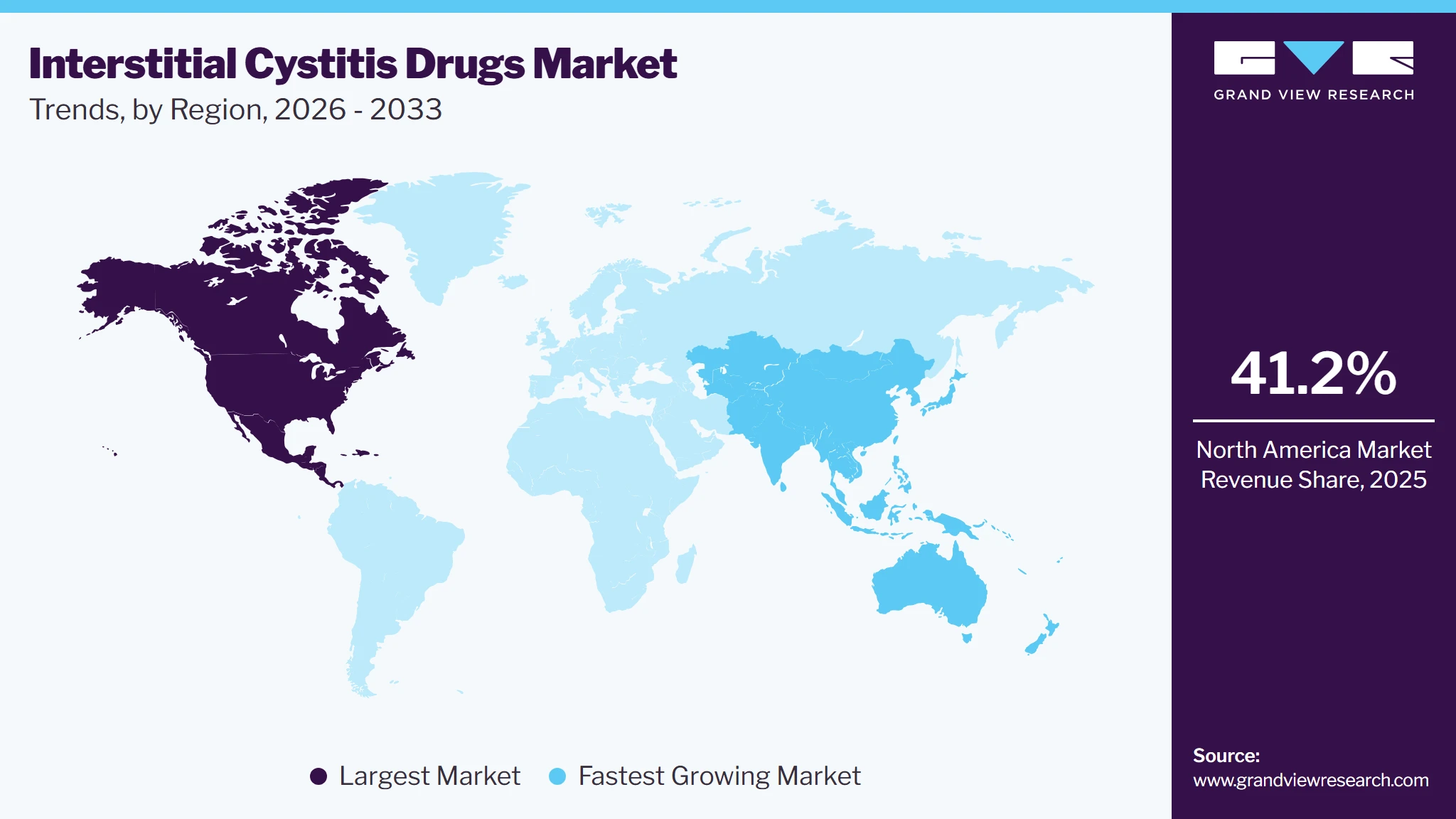
North America accounted for the largest market share of 41.2% in 2025, supported by established urology services and access to interstitial cystitis treatments. The region has a strong base of urologists who diagnose and manage chronic bladder pain, urinary urgency, and frequent urination. The wide availability of prescription medicines through hospitals, clinics, and pharmacies supports access to treatment. Established clinical practices for bladder pain syndrome also support patient diagnosis and treatment selection. The presence of pharmaceutical companies conducting research in urology supports the development of new treatment options. These factors support continued demand for medicines used to manage interstitial cystitis across North America.
 To learn more about this report, Download Free Sample Report
 U.S. Interstitial Cystitis Drugs Market Trends
The interstitial cystitis drugs market in the U.S. is supported by established urology services and by access to approved, commonly used treatment options. Pentosan polysulfate sodium remains an important oral medication used specifically for interstitial cystitis. A wide network of hospitals, specialist clinics, and pharmacies supports access to prescription treatment. Diagnostic evaluation of persistent bladder pain, urgency, and frequency also supports the identification of patients requiring treatment. Clinical research focused on bladder pain, sensory nerve activity, and other disease mechanisms is supporting the development of new therapies. These factors provide a strong base for continued pharmaceutical treatment of interstitial cystitis in the U.S.
Europe Interstitial Cystitis Drugs Market Trends
The interstitial cystitis drugs market in Europe has a developed system supported by established urology services and clinical guidance for bladder pain syndrome. Major countries have specialist centers that diagnose and manage chronic bladder symptoms. Oral medications and intravesical therapies are used based on patient symptoms and treatment response. Clinical recognition of persistent bladder pain has improved the evaluation of patients with recurring urinary complaints. Research into bladder function, pain mechanisms, and treatment options supports continued development in the region. Established pharmaceutical distribution networks across Europe also support access to prescription medicines for interstitial cystitis.
The UK interstitial cystitis drugs market is supported by established urology services and specialist care for patients with chronic bladder symptoms. Urologists assess bladder pain, urinary urgency, and frequency to distinguish interstitial cystitis from urinary tract infections and other conditions. Oral medications and bladder instillation treatments offer options for patients with varying symptom profiles. Specialist hospitals and outpatient clinics support continued diagnosis and treatment of the condition. Greater clinical recognition of chronic bladder pain also supports patient evaluation. Ongoing research in urology and pain management contributes to the development of treatment options for patients with persistent symptoms.
The interstitial cystitis drugs market in Germany benefits from established urology services and specialist healthcare infrastructure. Urologists play an important role in evaluating persistent bladder pain and urinary symptoms and selecting treatment based on patient needs. Prescription medicines are available through established hospital and pharmacy networks, supporting continued treatment. Intravesical therapies provide an option for patients requiring direct bladder treatment. Clinical research in urology supports further study of bladder pain and related disorders. The presence of pharmaceutical companies with activities in urology also supports research into new treatment approaches for chronic bladder conditions.
France interstitial cystitis drugs market is supported by specialist urology services and established treatment practices for bladder pain syndrome. Physicians use oral medications, pain management therapies, and intravesical treatments based on symptom severity and treatment response. Hospitals and pharmacy networks provide access to prescription medicines across major population centers. Clinical evaluation of persistent pelvic and bladder pain supports the diagnosis of patients with ongoing urinary symptoms. Research in urology and pain management contributes to a better understanding of treatment needs. These factors support continued demand for pharmaceutical therapies used to manage interstitial cystitis in France.
Asia Pacific Interstitial Cystitis Drugs Market Trends
The interstitial cystitis drugs market in the Asia Pacific is projected to register the fastest CAGR of 6.2% during the forecast period. Growth is supported by increasing clinical recognition of interstitial cystitis and wider access to urology services across major countries. Expansion of hospital infrastructure is supporting the diagnosis and treatment of chronic urinary disorders. Greater use of specialist consultations is improving the evaluation of patients with persistent bladder pain, urgency, and frequency. Japan, China, and South Korea have established urology services and access to prescription treatments. Increasing pharmaceutical research and wider medicine distribution networks are also supporting treatment availability across the region.
Japan interstitial cystitis drugs market is supported by established urology services and clinical recognition of interstitial cystitis as a bladder disorder. Intravesical treatment has an important role in Japanese clinical practice, providing a local treatment option for patients with persistent bladder symptoms. University hospitals and specialist medical centers provide diagnostic procedures and treatment for complex bladder conditions. Japan’s aging population also drives demand for healthcare services related to urinary disorders and chronic bladder symptoms. Japanese urology institutions continue to conduct research on bladder pain, urinary frequency, and treatment response. The availability of oral medicines and bladder-directed treatments gives physicians options based on patient symptoms and treatment response. These factors support continued use of pharmaceutical therapies and specialist treatment for interstitial cystitis in Japan.
The interstitial cystitis drugs market in China is supported by the expansion of urology departments within tertiary hospitals, particularly in major cities. Large hospitals provide diagnostic procedures and specialist consultations for patients with persistent bladder pain and urinary symptoms. China’s pharmaceutical manufacturing sector also supports the supply of generic medicines across several therapeutic areas. Greater use of hospital-based diagnostic procedures supports the assessment of patients with recurring urinary complaints. Medical universities and research institutions continue to study bladder pain syndrome and related urinary disorders. Access to specialist urology services remains more limited outside major urban centers, affecting access to diagnosis and treatment. Increasing availability of specialist care in developing cities is supporting broader access to interstitial cystitis treatment. These factors support the continued development of the market in China.
Latin America Interstitial Cystitis Drugs Market Trends
The interstitial cystitis drugs market in Latin America is supported by the development of specialist urology services in major healthcare markets such as Brazil and Mexico. Private hospitals and specialist clinics provide diagnosis and treatment for patients with chronic bladder pain and urinary symptoms. Pharmaceutical distribution networks support access to prescription medicines across major urban areas. Imported pharmaceutical products account for a significant share of the supply of medicines for specialized conditions in several Latin American countries. The availability of urologists and diagnostic procedures remains higher in major cities than in smaller communities. Increasing use of private healthcare services supports specialist treatment for chronic urinary disorders. Oral medications and intravesical therapies offer treatment options for patients with varying symptom profiles. These factors support the gradual development of the market across Latin America.
Brazil interstitial cystitis drugs market benefits from a large healthcare system, an established pharmaceutical distribution system, and a broad base of urology specialists. Major medical centers provide specialist diagnosis for patients with persistent bladder pain, urinary urgency, and frequent urination. Intravesical procedures are available through specialist urology centers, providing an additional treatment option for patients with ongoing symptoms. Retail pharmacies support access to prescription medicines used for symptom management outside hospital facilities. Private hospitals also provide specialist treatment and diagnostic services in major metropolitan areas. Brazilian urology institutions conduct clinical studies on bladder pain syndrome and related urinary disorders. Access to specialist care remains more limited in some regions outside major cities. These factors support continued demand for pharmaceutical treatment of interstitial cystitis in Brazil.
Middle East & Africa Interstitial Cystitis Drugs Market Trends
The interstitial cystitis drugs market in MEA is supported by the development of specialist healthcare facilities in major cities. Gulf countries have established private hospitals and specialist urology departments that provide diagnosis and treatment for chronic urinary disorders. Pharmaceutical imports are an important part of the medicine supply in many countries across the region. African markets have fewer specialist facilities for chronic bladder conditions, which limits access to diagnosis and treatment in several countries. Major medical centers serve as key locations for urological procedures and specialist consultations. Expansion of private healthcare services in selected Middle Eastern markets is increasing access to specialist treatment. Prescription medicines are distributed through hospital pharmacies and retail channels, supporting patient access to treatment. These factors support gradual market development across selected countries in the region.
Saudi Arabia interstitial cystitis drugs market is supported by specialist hospitals and private healthcare facilities in Riyadh, Jeddah, and other major cities. Urology departments provide diagnostic procedures and treatment for patients with chronic bladder pain, urinary urgency, and frequent urination. Private healthcare providers contribute to specialist consultations and urological procedures, supporting access to treatment outside public hospitals. Hospital pharmacies provide prescription medicines used for symptom management and bladder-related conditions. Saudi Arabia imports a significant share of its pharmaceutical products, thereby supporting the presence of international pharmaceutical suppliers in specialized treatment areas. Expansion of specialist medical facilities in major urban centers is improving access to urological services. Greater availability of specialist care supports the diagnosis and treatment of chronic bladder disorders. These factors support the demand for oral medicines and intravesical therapies used in the management of interstitial cystitis.
Key Interstitial Cystitis Drugs Company Insights
The market is fragmented, with market share distributed across established pharmaceutical companies and emerging players. Johnson & Johnson and Viatris (Mylan) maintain their positions through broad pharmaceutical portfolios, established distribution networks, and the availability of both generic and branded medicines. Kyorin Pharmaceutical, Seikagaku Corporation, Ono Pharmaceutical, and Aska Pharmaceutical intensify competition in the urology-focused products and therapies for bladder-related conditions. Hyloris Pharmaceuticals, Vaneltix Pharma, Imbrium Therapeutics, and Lipella Pharmaceuticals contribute through focused portfolios and development programs targeting interstitial cystitis and related bladder disorders. Company positioning varies based on product availability, geographic presence, pricing, treatment focus, and development activity. No single company accounts for a controlling share of the overall market, while established companies retain broader distribution coverage and emerging companies focus on specific treatment requirements.
Key Interstitial Cystitis Drugs Companies
The following key companies have been profiled for this study on the interstitial cystitis drugs market:
-
Johnson & Johnson
-
Viatris (Mylan)
-
Kyorin Pharmaceutical
-
Seikagaku Corporation
-
Ono Pharmaceutical
-
Aska Pharmaceutical
-
Hyloris Pharmaceuticals
-
Vaneltix Pharma
-
Imbrium Therapeutics
-
Lipella Pharmaceuticals
Competitive Benchmarking
Operating Strategies
Competitive Edge
Weaknesses
Mature Players: Johnson & Johnson
- Mature players focus on maintaining established urology portfolios, expanding product availability through pharmacy and hospital channels, supporting generic medicine supply, and strengthening their presence across established pharmaceutical markets.
- Companies also focus on lifecycle management, product quality, regulatory compliance, and partnerships that support wider distribution.
- Their strategies are centered on retaining physician familiarity and maintaining access to established treatment options for chronic bladder conditions.
- Mature players benefit from established manufacturing capabilities, broad distribution networks, regulatory knowledge, financial resources, and established pharmaceutical portfolios.
- Their presence across multiple healthcare markets supports product availability and access to physicians and patients.
- Established urology and generic medicine portfolios also provide a base for competing through product range, pricing, supply reliability, and distribution coverage.
- Mature players face pricing pressure from generic competition and challenges associated with maintaining products in a market with limited disease-specific treatment options.
- Regulatory compliance, manufacturing requirements, and product maintenance require continued investment.
- Broad pharmaceutical portfolios can also reduce the level of focus placed on interstitial cystitis compared with larger therapeutic areas.
Emerging Players: Kyorin Pharmaceutical
- Emerging players focus on expanding specialized pharmaceutical portfolios, increasing presence in selected urology markets, improving product availability, and addressing specific treatment requirements.
- Their strategies include product introductions, regional expansion, licensing arrangements, partnerships, and portfolio development.
- These companies also focus on strengthening manufacturing and distribution capabilities to increase access to prescription medicines across selected markets.
- Emerging players benefit from focused portfolios, flexible operations, regional market knowledge, and the ability to target specific treatment areas.
- Their smaller portfolio focus supports quicker decisions related to product development, market expansion, and distribution.
- Competitive positioning is also supported through generic medicines, specialized urology products, pricing, and access to selected regional markets.
- Emerging players face challenges related to brand recognition, market access, regulatory requirements, manufacturing capacity, and distribution reach.
- Limited financial resources can restrict investment in clinical development, product launches, and geographic expansion.
- Competition from established pharmaceutical companies with broader portfolios and stronger distribution networks also creates pressure on product visibility and market access.
Recent Developments
-
In January 2026, Viatris reported results from a real-world evidence study evaluating Cystistat, an intravesical sodium hyaluronate treatment, in patients with interstitial cystitis/bladder pain syndrome.
-
In April 2025, Ono Pharmaceutical initiated a Phase II study of ONO-1110 for Hunner-type interstitial cystitis in Japan. ONO-1110 is an oral investigational therapy being developed for the condition.
-
In March 2025, Hyloris Pharmaceuticals announced a positive recommendation from the Independent Data Monitoring Committee to continue the Phase 2 study of Alenura following an interim assessment.
Interstitial Cystitis Drugs Market Report Scope
Report Attribute
Details
Market size in 2025
USD 1.4 billion
Estimated market size in 2026
USD 1.5 billion
Projected market size by 2033
USD 2.1 billion
Growth rate
CAGR of 4.9% from 2026 to 2033
Historical data
2021 - 2025
Forecast period
2026 - 2033
Quantitative units
Revenue in USD billion and CAGR from 2026 to 2033
Report coverage
Revenue forecast, company ranking, competitive landscape, growth factors, trends
Segments covered
Drug Class, route of administration, distribution channel, region
Regional scope
North America; Europe; Asia Pacific; Latin America; MEA
Country scope
U.S.; Canada; Mexico; UK; Germany; France; Italy; Spain; Denmark; Sweden; Norway; China; Japan; India; Australia; South Korea; Thailand; Brazil; Argentina; South Africa; Saudi Arabia; UAE; Kuwait
Key companies profiled
Johnson & Johnson; Viatris (Mylan); Kyorin Pharmaceutical; Seikagaku Corporation; Ono Pharmaceutical; Aska Pharmaceutical; Hyloris Pharmaceuticals; Vaneltix Pharma; Imbrium Therapeutics; Lipella Pharmaceuticals
Customization scope
Free report customization (equivalent up to 8 analysts working days) with purchase. Addition or alteration to country, regional & segment scope.
Pricing and purchase options
Avail customized purchase options to meet your exact research needs. Explore purchase options
Global Interstitial Cystitis Drugs Market Report Segmentation
This report forecasts revenue growth at global, regional, and country levels and provides an analysis of the latest industry trends in each of the sub-segments from 2021 to 2033. For this study, Grand View Research has segmented the global interstitial cystitis drugs market report based on drug class, route of administration, distribution channel, and region:
-
Drug Class Outlook (Revenue, USD Million, 2021 - 2033)
-
Pentosan Polysulfate Sodium
-
Dimethyl Sulfoxide (DMSO)
-
Tricyclic Antidepressants
-
Antihistamines
-
Urinary Analgesics
-
Intravesical Anesthetics
-
Intravesical Glycosaminoglycan Replenishers
-
Others
-
-
Route of Administration Outlook (Revenue, USD Million, 2021 - 2033)
-
Oral
-
Intravesical
-
Others
-
-
Distribution Channel Outlook (Revenue, USD Million, 2021 - 2033)
-
Hospital Pharmacies
-
Retail Pharmacies
-
Specialty Pharmacies
-
Mail-Order / Online Pharmacies
-
Others
-
-
Regional Outlook (Revenue, USD Million, 2021 - 2033)
-
North America
-
U.S.
-
Canada
-
Mexico
-
-
Europe
-
UK
-
Germany
-
France
-
Italy
-
Spain
-
Denmark
-
Sweden
-
Norway
-
-
Asia Pacific
-
Japan
-
China
-
India
-
Australia
-
South Korea
-
Thailand
-
-
Latin America
-
Brazil
-
Argentina
-
-
Middle East & Africa
-
South Africa
-
Saudi Arabia
-
UAE
-
Kuwait
-
-
Research Methodolog
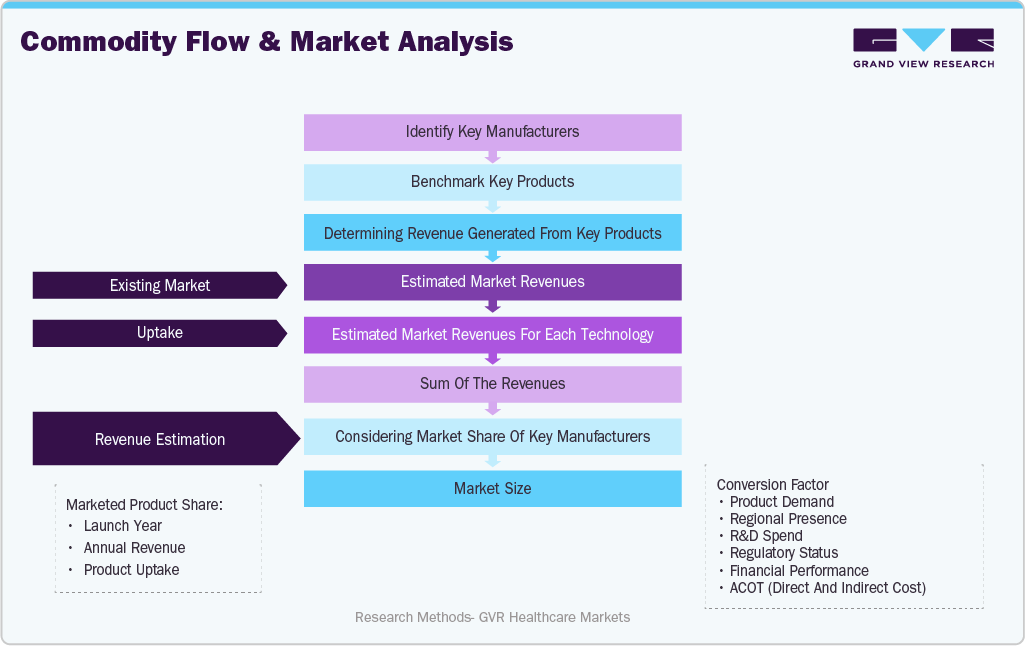
The interstitial cystitis drugs market was estimated using a commodity flow and revenue-based modeling approach. The study began by identifying key manufacturers and pharmaceutical products used for interstitial cystitis, including pentosan polysulfate sodium and intravesical glycosaminoglycan replenishers. Key products were benchmarked based on company disclosures, product sales, prescription volumes, pricing, treatment duration, product availability, geographic presence, and generic competition. Product-level revenues were assessed using company annual reports, regulatory filings, product information, pharmaceutical databases, and prescription data. Revenues from identified products were aggregated to estimate the market value, while market shares of key manufacturers were considered to account for products not directly reported by indication. Country-level estimates were developed and aggregated to regional and global markets. The estimates were validated using prescription trends, treated patient volumes, treatment duration, average therapy costs, primary interviews, secondary research, and data triangulation.
Segment Definition
Drug Class
Revenue capture definition
Pentosan Polysulfate Sodium
Medicines containing pentosan polysulfate sodium and indicated or used for the treatment of interstitial cystitis, primarily through oral administration to help manage bladder pain and related symptoms.
Dimethyl Sulfoxide (DMSO)
Medicines containing dimethyl sulfoxide and administered directly into the bladder for the treatment of interstitial cystitis and associated bladder pain and discomfort.
Tricyclic Antidepressants
Tricyclic antidepressant medicines used in interstitial cystitis treatment to manage bladder pain and urinary symptoms through their effects on pain signaling and bladder function.
Antihistamines
Antihistamine medicines used in interstitial cystitis treatment to manage bladder-related symptoms associated with histamine activity, including urinary discomfort and irritation.
Urinary Analgesics
Medicines used to relieve urinary tract pain, burning, and discomfort associated with interstitial cystitis, excluding analgesic therapies classified under other listed drug classes.
Intravesical Anesthetics
Local anesthetic medicines administered directly into the bladder to provide temporary relief from bladder pain and discomfort associated with interstitial cystitis.
Intravesical Glycosaminoglycan Replenishers
Bladder-instilled medicines containing glycosaminoglycan-related agents, including hyaluronic acid and chondroitin sulfate, used to support the bladder lining and manage interstitial cystitis symptoms.
Others
Pharmacological medicines used for interstitial cystitis that do not fall within pentosan polysulfate sodium, DMSO, tricyclic antidepressants, antihistamines, urinary analgesics, intravesical anesthetics, or intravesical glycosaminoglycan replenishers.
Route of Administration
Revenue capture definition
Oral
Interstitial cystitis medicines administered through the mouth in dosage forms such as tablets, capsules, or oral liquids for systemic treatment.
Intravesical
Interstitial cystitis medicines administered directly into the urinary bladder through a catheter for localized treatment of bladder symptoms.
Others
Interstitial cystitis medicines delivered through routes other than oral or intravesical administration, including topical, transdermal, injectable, or other applicable routes.
Distribution Channel
Revenue capture definition
Hospital Pharmacies
Pharmacies located within hospitals that dispense or supply interstitial cystitis medicines prescribed or administered as part of hospital-based care.
Retail Pharmacies
Community-based physical pharmacies that dispense interstitial cystitis medicines directly to patients based on prescriptions or applicable dispensing requirements.
Specialty Pharmacies
Pharmacies that dispense medicines requiring specialized handling, storage, patient support, or treatment management services for chronic or complex conditions.
Mail-Order / Online Pharmacies
Pharmacy channels through which interstitial cystitis medicines are ordered by mail or through digital platforms and delivered directly to patients.
Other Distribution Channels
Distribution channels for interstitial cystitis medicines that do not fall within hospital pharmacies, retail pharmacies, specialty pharmacies, or mail-order / online pharmacies.
Estimation Model
 To learn more about this report, Download Free Sample Report
 Customization Table
Client Request
Customization Delivered
Value Adds
Global Interstitial Cystitis Drugs Market Opportunity Assessment
Conducted a detailed assessment of treatment opportunities across the U.S., Germany, UK, France, Japan, China, and Brazil. The study evaluated disease burden, diagnosis trends, treatment patterns, drug class usage, prescription trends, treatment duration, pricing, and distribution channels for interstitial cystitis therapies.
Helped the client identify countries with higher treatment demand, assess product positioning opportunities, evaluate treatment gaps, and support regional expansion planning. The study also provided inputs for product portfolio decisions and assessment of unmet treatment needs across key markets.
Interstitial Cystitis Drug Class & Competitive Benchmarking
Delivered a benchmarking analysis of pentosan polysulfate sodium, dimethyl sulfoxide, tricyclic antidepressants, antihistamines, urinary analgesics, intravesical anesthetics, and glycosaminoglycan replenishers. The assessment covered product availability, treatment use, clinical positioning, route of administration, pricing, generic competition, and company portfolios.
Enabled the client to compare treatment options, identify areas with limited competition, assess product positioning, and prioritize portfolio opportunities. The analysis also supported evaluation of generic competition, pricing strategies, and potential areas for product development.
Emerging Interstitial Cystitis Therapies & Market Entry Assessment
Conducted a country-level assessment of emerging treatment opportunities and market entry conditions across selected markets. The study reviewed drug development pipelines, clinical research, regulatory requirements, specialist urology infrastructure, treatment access, distribution networks, and patient diagnosis patterns affecting interstitial cystitis drug adoption.
Supported the client in identifying pipeline opportunities, evaluating market entry conditions, and prioritizing countries for expansion. The study also helped assess treatment gaps, specialist care availability, competitive conditions, and commercial opportunities for new interstitial cystitis therapies.
Frequently Asked Questions About This Report
North America accounted for the largest market share of 41.2% in 2025, supported by established urology services and access to interstitial cystitis treatments.
Asia Pacific is projected to register the fastest CAGR of 6.2% during the forecast period. Growth is supported by increasing clinical recognition of interstitial cystitis and wider access to urology services across major countries.
The oral segment held the highest market share of 70.8% in 2025.
The hospital pharmacies segment held the highest market share in 2025.
The global interstitial cystitis drugs market size was valued at USD 1.4 billion in 2025 and estimated at USD 1.5 billion in 2026.
The global interstitial cystitis drugs market size is projected to reach USD 2.1 billion by 2033, growing at a CAGR of 4.9% from 2026 to 2033
The pentosan polysulfate sodium segment accounted for the largest market share of 41.2% in 2025. Its leading position is supported by its specific use for interstitial cystitis, oral administration, established clinical use, physician familiarity, product availability, and its role in supporting the bladder’s protective glycosaminoglycan layer.
The interstitial cystitis drugs market is supported by the need for continued symptom management among patients experiencing bladder pain, urinary urgency, urinary frequency, and discomfort.
A few of the key players operating in the market are Johnson & Johnson, Viatris (Mylan), Kyorin Pharmaceutical amongst others
About the Author(s)
Pharmaceuticals Research Team
Healthcare · PharmaceuticalsThis report was authored by the pharmaceuticals research team at Grand View Research - comprising two research analysts, one senior research analyst, and one industry expert - with specialized expertise in the pharmaceuticals segment of the healthcare industry. All findings are based on proprietary healthcare databases, executive interviews, and regulatory analysis, subject to internal peer review prior to publication.
Last Updated:
Speak to Analyst

Customize this report to your needs - add regions, segments, or data points, with 20% free customization.
Or view our licence options:


ISO 9001:2015 & 27001:2022 Certified
We are GDPR and CCPA compliant! Your transaction & personal information is safe and secure. For more details, please read our privacy policy.


