
- Home
- »
- Consumer F&B
- »
-
Kimchi Market Size, Share And Growth Report, 2026-2033GVR Report cover
![Kimchi Market (2026 - 2033)Report]()
Kimchi Market (2026 - 2033)
Size, Share & Trends Analysis Report By Product (Baechu Kimchi, Kkakdugi Kimchi, Chonggak Kimchi), By End Use (Households/Retail, Food Service), By Distribution Channel (B2C, B2B), By Region (North America, Europe, Asia Pacific), And Segment Forecasts
Market Size, 2025
$5.4BMarket Estimate, 2026
$5.7BMarket Forecast, 2033
$8.1BCAGR, 2026–2033
5.3%Kimchi Market Summary
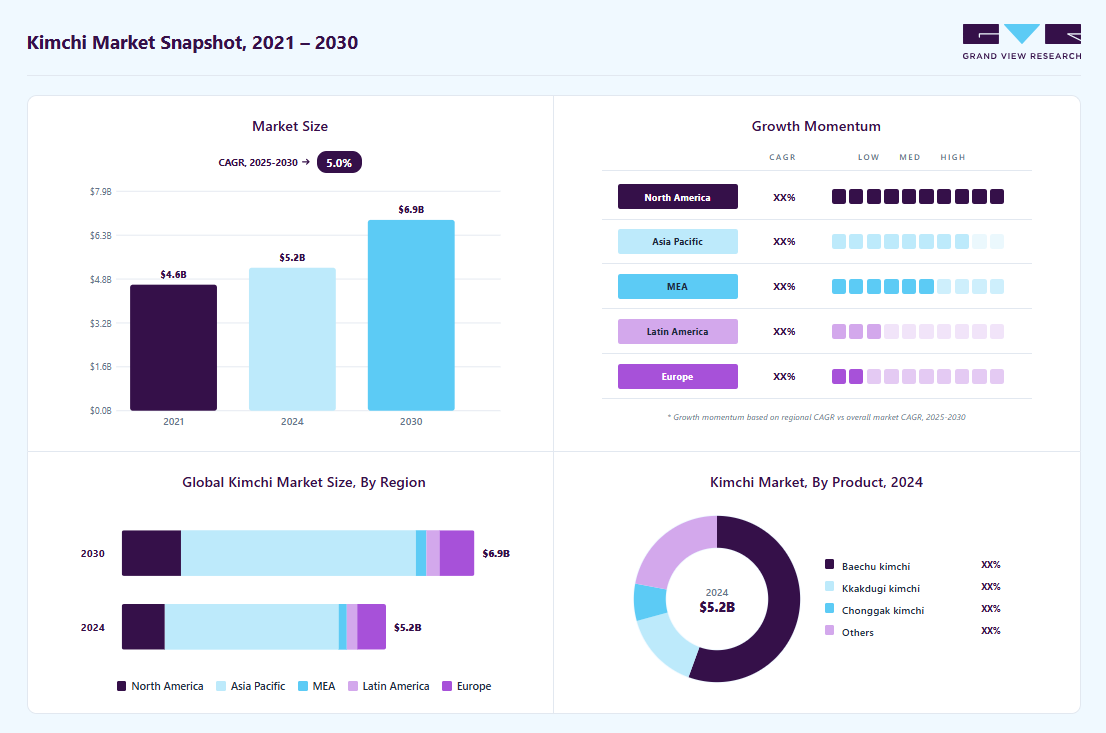
The global kimchi market size was valued at USD 5.4 billion in 2025 and is projected to grow from USD 5.7 billion in 2026 to USD 8.1 billion by 2033, at a CAGR of 5.3% from 2026 to 2033. The market in Asia Pacific dominated with a revenue share of 66.0% in 2025. This growth is driven by increasing consumer awareness of probiotic-rich foods, rising demand for fermented products, and growing interest in Korean cuisine globally.
Key Market Trends & Insights
- By product: Baechu kimchi segment held the largest market share of 55.3% in 2025.
- By end use: Household/retail segment held the largest market share of 72.0% in 2025.
- By distribution channel: B2C segment held the largest market share of 72.0% in 2025.
Regional Highlights
- Largest regional market: Asia Pacific (66.0% revenue share, 2025)
- Fastest-growing regional market: North America (highest CAGR, 2026-2033)
- By country: The U.S. held the largest market share in 2025
Market Size & Forecast
- Market size in 2025: USD 5.4 Billion
- Estimated market size in 2026: USD 5.7 Billion
- Projected market size by 2033: USD 8.1 Billion
- CAGR (2026-2033): 5.3%
This growth is driven by increasing consumer awareness of probiotic-rich foods, rising demand for fermented products, and growing interest in Korean cuisine globally. Factors such as health benefits associated with probiotics and the culinary versatility of kimchi are key drivers driving market growth during this period. The global popularity of kimchi, driven by factors such as its health benefits and cultural influence through Korean entertainment like K-dramas and K-pop, has significantly boosted South Korean kimchi exports. In 2023, exports reached a record high of 44,041 tons, with the U.S. and Japan leading as top importers. The rise in kimchi consumption abroad reflects a growing interest in fermented foods and Korean cuisine, supported by efforts from both businesses and the South Korean government to promote and capitalize on this culinary export.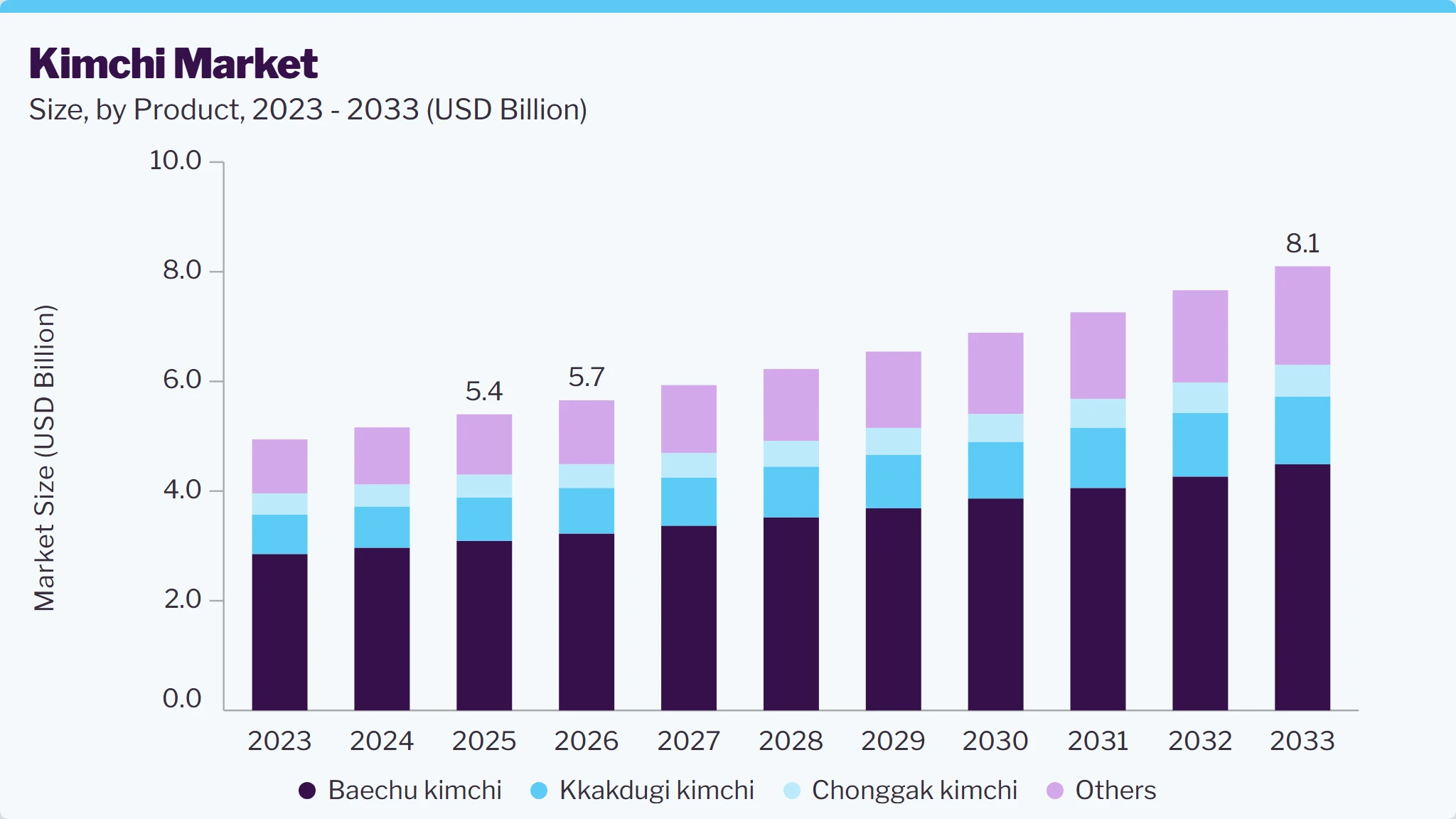
The market is traditionally dominated by South Korea, and also faces challenges from China's rapidly expanding exports. While South Korea historically led global exports, particularly to Japan and the U.S., increasing imports of cheaper Chinese kimchi have altered the market dynamics. Despite a decline in domestic consumption among younger South Koreans due to changing dietary preferences, overall demand in South Korea has risen, driven by population growth. However, South Korean kimchi exports to key markets like Japan have declined amidst currency fluctuations and geopolitical tensions.
Key players in the Asia-Pacific market is Daesang Corporation. They are increasingly expanding their production capacities to meet growing demand. For instance, in June 2024, Daesang's investment in Vietnam (USD 21.8 million) includes expanding kimchi production alongside other convenience foods like spring rolls and banh bao. This strategic move not only aims to enhance Daesang's share in the market but also to cater to local preferences with products like Jongga Kimchi and tailored offerings.
Market Dynamics
The global kimchi market is witnessing steady growth, fueled by increasing consumer awareness of gut health, rising demand for fermented foods, and growing interest in traditional Korean cuisine across international markets. As consumers increasingly prioritize functional foods that support digestive wellness and immunity, kimchi has gained significant popularity due to its probiotic content and nutritional benefits. Expanding retail availability, product diversification, and the influence of global food trends are expected to sustain market growth over the forecast period.
The growing emphasis on preventive healthcare and nutritional wellness is significantly contributing to the demand for fermented food products, including kimchi. Consumers are increasingly incorporating functional foods into their daily diets to support digestive health, immune function, and overall wellness. Kimchi's rich nutritional profile, including naturally occurring probiotics, vitamins, and antioxidants, has strengthened its position as a value-added food product among health-conscious consumers. This shift toward nutrient-dense and functional dietary choices continues to support the expansion of the global kimchi market.
Despite growing demand, the kimchi market faces challenges associated with product preservation, storage, and distribution. As a naturally fermented product, kimchi requires controlled temperature conditions to maintain quality and freshness throughout the supply chain. Variations in raw material availability, fluctuations in vegetable prices, and increasing logistics costs can also impact production efficiency and profit margins. These factors may create operational complexities for manufacturers and distributors.
The market presents significant opportunities through the development of premium and value-added kimchi offerings. Manufacturers are increasingly introducing organic, vegan, low-sodium, and flavored kimchi variants to cater to evolving consumer preferences. Innovation in packaging technologies, convenient ready-to-eat formats, and customized formulations is further enhancing product appeal. Growing consumer willingness to spend on health-oriented and authentic ethnic food products is creating new avenues for market expansion, brand differentiation, and revenue growth.
Analyst Perspective
The global kimchi market is demonstrating steady growth, supported by increasing consumer interest in fermented foods, digestive health, and functional nutrition. Rising awareness of the probiotic benefits of kimchi, coupled with the growing popularity of Korean cuisine worldwide, is driving product adoption across diverse consumer groups. Manufacturers are expanding their portfolios through organic, vegan, low-sodium, and premium product offerings to address evolving dietary preferences. Additionally, the expansion of modern retail networks and e-commerce channels is enhancing product accessibility and market reach. However, challenges related to raw material price volatility, shelf-life management, and supply chain complexities may influence market performance during the forecast period.
Product Insights
Based on product, the baechu kimchi segment led the market with the largest revenue share of 55.3% in 2025. This significant share is attributed to its widespread recognition and preference as a staple in Korean cuisine, appealing to both domestic and international consumers. Baechu kimchi’s versatility in culinary applications, its rich nutritional profile, and the growing global trend towards fermented and probiotic foods have driven its popularity. In addition, its prominent presence in K-culture, through media and global events, has further boosted its consumption worldwide.
The kkakdugi kimchi segment is projected to grow at the fastest CAGR of 5.8% from 2026 to 2033. This growth is driven by increasing consumer interest in diverse and traditional Korean flavors, as kkakdugi offers a distinct crunchy texture and a unique taste profile compared to napa cabbage kimchi. Its appeal is further enhanced by the rising popularity of Korean cuisine and the health benefits associated with fermented foods. In addition, its versatility in pairing with various dishes and its refreshing flavor make it a favorite in both Korean households and global markets.
End Use Insights
Based on end use, the household/retail segment led the market with the largest revenue share of 72.0% in 2025.This is largely due to the growing trend of home cooking and the incorporation of kimchi into everyday meals, driven by its health benefits and versatility. In addition, the increasing availability of kimchi in convenient packaging and various flavors in supermarkets and online channels has made it more accessible and appealing to consumers worldwide.
The food service segment is expected to grow at the fastest CAGR of 5.9% from 2026 to 2033, driven by its rising popularity in global cuisines and diverse dining experiences. Restaurants and food outlets are increasingly incorporating kimchi into their menus to meet consumer demand for exotic and healthy options. In addition, the expanding footprint of Korean cuisine and fusion dishes in the international food scene boosts its demand in the food service industry.
Distribution Channel Insights
Based on distribution channel, the B2C segment led the kimchi market with the largest revenue share of 72.0% in 2025. The segment's dominance was supported by strong household consumption and expanding retail accessibility. Consumers increasingly purchase kimchi through supermarkets, hypermarkets, specialty food retailers, and online grocery platforms, where a wide variety of traditional and flavored products are readily available. Growing consumer awareness of fermented foods, increasing preference for healthy side dishes, and the rising incorporation of kimchi into everyday meals have further strengthened direct retail sales. In addition, premium packaging, single-serve formats, and wider product availability across modern retail channels continue to enhance consumer convenience and support sustained demand through the B2C segment.
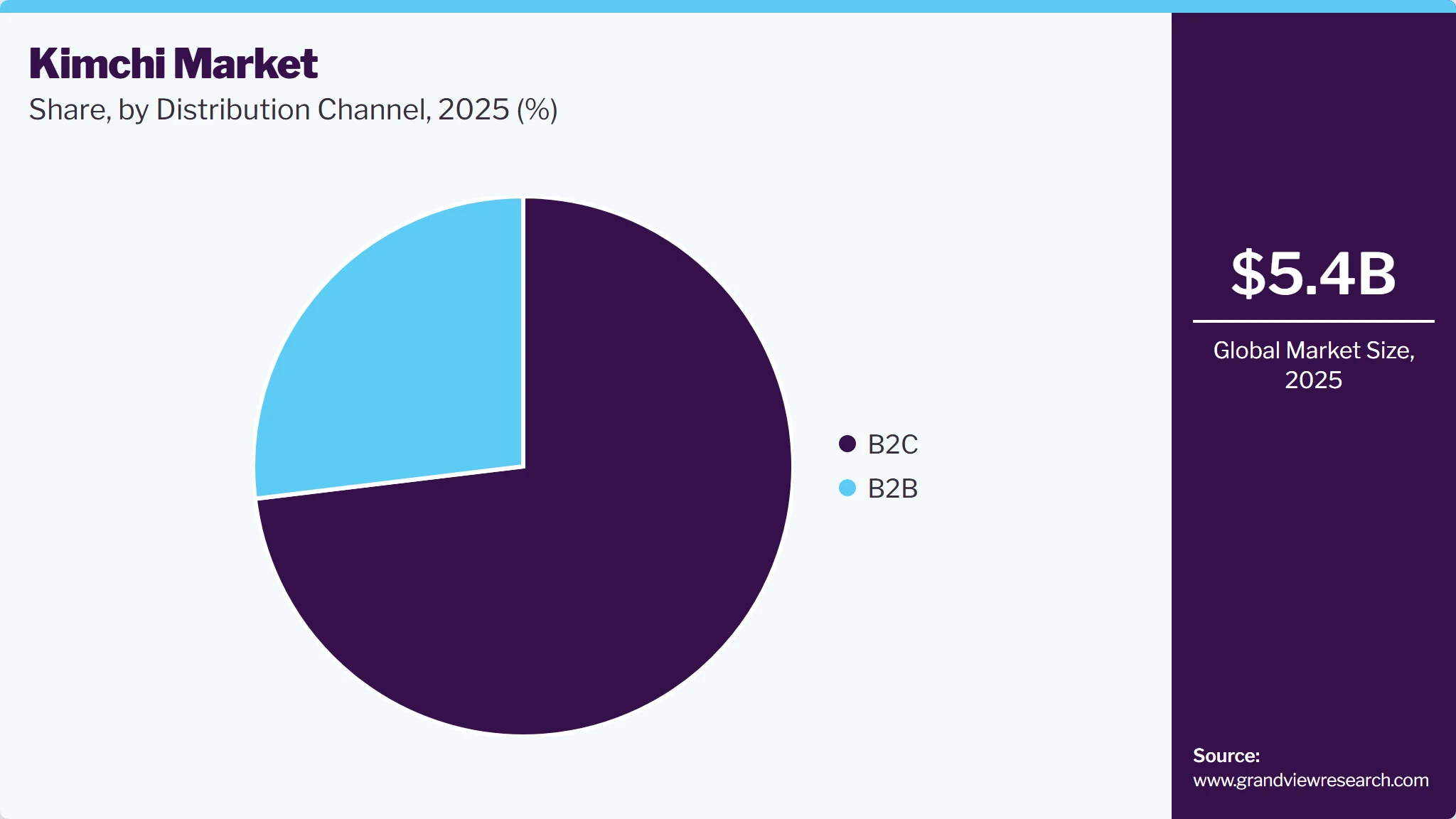
The B2B distribution channel is projected to grow at a CAGR of 5.9% from 2026 to 2033, driven by the increasing adoption of kimchi across the foodservice and food processing industries. Restaurants, quick-service restaurants, hotels, catering companies, and institutional foodservice providers are expanding the use of kimchi in a wider variety of menu offerings as demand for Korean cuisine and fermented food products continues to increase. In addition, food manufacturers are incorporating kimchi into ready-to-eat meals, dumplings, noodles, snacks, sauces, and other fusion food products to diversify their product portfolios. Growing demand for bulk purchasing, contract-based supply arrangements, and standardized product quality is expected to support continued expansion of the B2B distribution channel throughout the forecast period.
Regional Insights
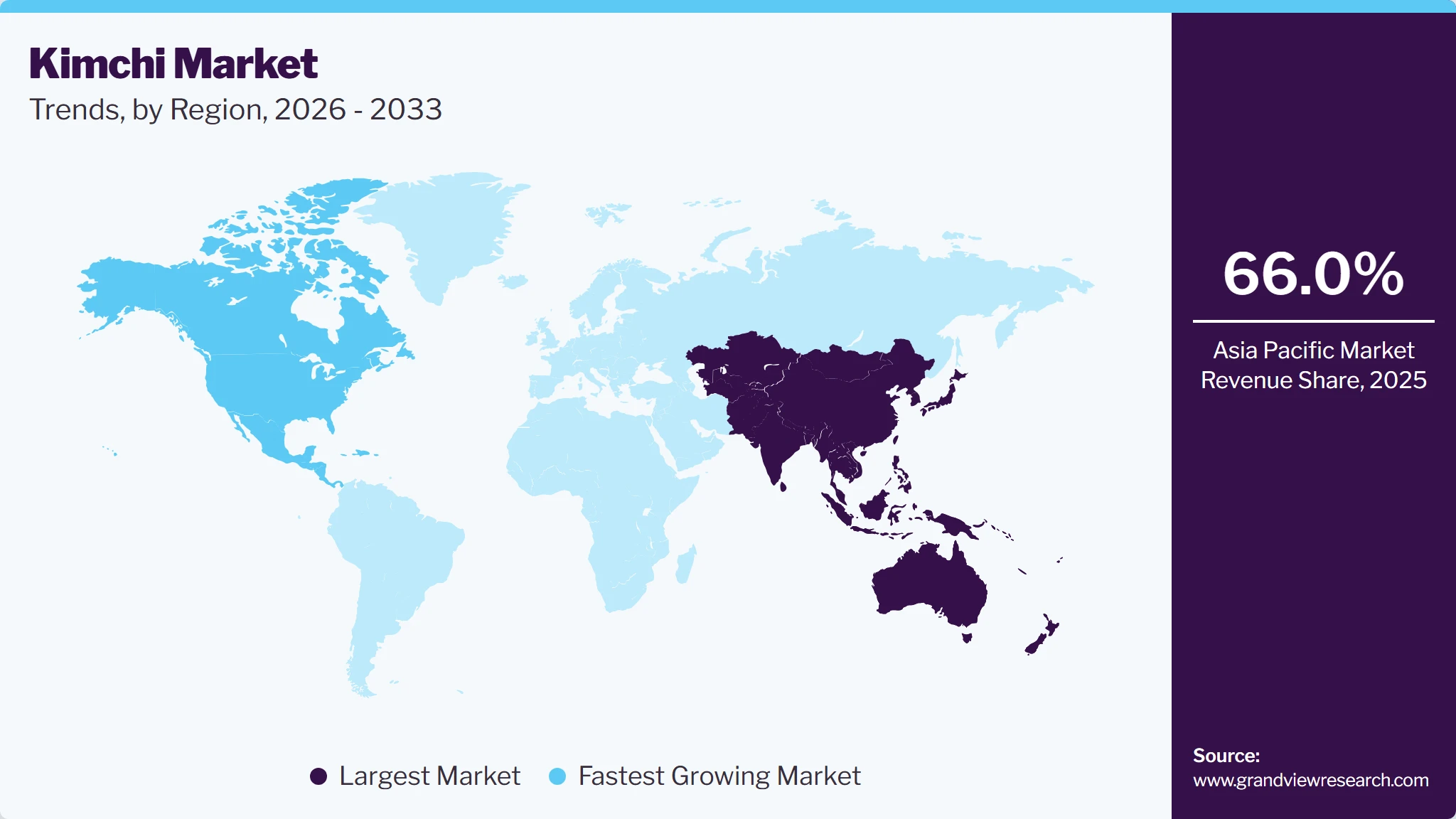
The kimchi market in North America is expected to grow at the fastest CAGR of 5.8% from 2026 to 2033. The demand for kimchi in North America is surging, reflecting a broader fascination with Korean cuisine. Kimchi exports to the U.S. reached USD 29 million in 2022, with sales up 41.2% from January to September that year, highlighting its growing appeal. This rise is driven by the "K-food" wave, popularized through Korean pop culture and media, which has spurred interest in authentic and health-boosting foods like kimchi. Restaurants and food service providers are increasingly incorporating kimchi into diverse dishes, from traditional Korean meals to innovative fusion fare, fueling further market growth.
U.S. Kimchi Market Trends
The kimchi market in the U.S. held the largest share in the North America region in 2025. The U.S. market experienced substantial growth in 2023, with South Korean exports reaching a record high of USD 40 million, marking a 37.4% increase from the previous year. This surge reflects a steady rise in demand driven by the perception of kimchi as a healthy, probiotic-rich food, increased by its integration into mainstream American culinary culture. The popularity of Korean entertainment content, such as K-dramas, has further boosted kimchi's appeal, contributing to its widespread availability in major retail chains across the country like Costco and Walmart.
Asia Pacific Kimchi Market Trends
Asia Pacific dominated the kimchi market with the largest revenue share of 66.0 % in 2025. Key Asian market players such as Daesang Corporation are investing in expanding its manufacturing capabilities in Vietnam, which is poised to drive growth in the Asia Pacific market. Daesang aims to capitalize on the increasing demand for Korean cuisine in Asia by increasing production capacities at its Daesang Vietnam and Daesang Duc Viet subsidiaries, particularly with new facilities for kimchi production and other convenience foods.
The South Korea kimchi market is projected to grow at the significant CAGR of 6.4% from 2026 to 2033, driven by increasing consumer preferences for healthier, fermented foods rich in probiotics. The domestic market is also benefiting from innovative product variations and enhanced packaging that appeal to younger and health-conscious consumers.
Key Kimchi Company Insights
The market is concentrated due to the presence of leading players such as Daesang Corporation and CJ CheilJedang Corp.Key players are focusing on expanding their production capabilities, innovating product varieties, and enhancing global distribution networks. Companies like Daesang, CJ CheilJedang, and Pulmuone are leading the way by investing in new manufacturing plants and developing convenient, ready-to-eat kimchi products to meet rising consumer demand. These players are also leveraging the popularity of K-food culture and emphasizing the health benefits of fermented foods to attract a broader international audience.
Key Kimchi Companies:
The following are the leading companies in the kimchi market.
- Daesang Corporation
- CJ CheilJedang Corp.
- Pulmuone U.S.A.
- Lucky Foods
- Weifang Jiahe Food Co., Ltd
- Sinto Gourmet
- JONGGA
- Choi's Kimchi LLC
- NONGSHIM CO., LTD.
- Cosmos Food Co., Inc.
Competitive Benchmarking
Category
Operating Strategies
Competitive Edge
Weakness
Established Players (Daesang Corporation; CJ CheilJedang Corp.; Pulmuone U.S.A.; JONGGA; NONGSHIM CO., LTD.; Cosmos Food Co., Inc.)s
- Expand product portfolios with premium, organic, and ready-to-eat kimchi variants.
- Strengthen global distribution through retail partnerships and international market expansion.
- Strong brand recognition and loyal customer base across key markets.
- Large-scale production capabilities and well-established distribution networks.
- High operational and supply chain costs associated with large-scale manufacturing.
- Limited flexibility in responding quickly to niche consumer trends.
Emerging Players (Lucky Foods; Weifang Jiahe Food Co., Ltd.; Sinto Gourmet; Choi's Kimchi LLC)
- Focus on specialty, authentic, and locally crafted kimchi products.
- Build brand awareness through online channels and regional retail partnerships.
- Ability to quickly adapt to changing consumer preferences and market trends.
- Strong focus on product innovation and niche market segments.
- Lower brand visibility and limited distribution reach compared to established competitors.
- Financial and operational constraints may limit expansion efforts.
Recent Developments
-
In June 2024, Franklin Farms, a division of Keystone Natural Holdings, launched Organic Shredded Kimchi, expanding its plant-based offerings. This new product is crafted with fresh cabbage fermented with onions, garlic, carrots, red chili pepper, and spices, catering to consumers seeking probiotic-rich, vegan, kosher, and gluten-free options. Available at Price Chopper & Market 32 stores in the Northeast U.S., Organic Shredded Kimchi is positioned as a versatile condiment ideal for enhancing various cuisines, from burgers and tacos to stir-fried rice
-
In February 2024, Cleveland Kitchen launched Kimchi Pickles in 466 Whole Foods Market stores in the U.S., combining the tangy flavors of kimchi with the crunch of pickles. Positioned as a fusion of culinary traditions, these Kimchi Pickles cater to both pickle enthusiasts and those curious about kimchi, offering a versatile and probiotic-rich option that can be enjoyed on its own or incorporated into various dishes like sandwiches, grain bowls, and pizza
-
In April 2024, Mrs Elswood, part of the Empire Bespoke Foods portfolio leveraged 75 years of vegetable preservation expertise to launch a new range of Kimchi in three flavors—Classic, Turmeric, and Beetroot—available from April 2024. Embracing Korean cuisine's rising popularity in Britain, these Kimchi offerings are crafted using authentic fermentation methods, resulting in crunchy vegetables with a distinct lactic tang and spicy chili heat
Kimchi Market Report Scope
Report Attribute
Details
Market size in 2025
USD 5.4 billion
Estimated market size in 2026
USD 5.7 billion
Projected market size by 2033
USD 8.1 billion
Growth rate
CAGR of 5.3% from 2026 to 2033
Base year for estimation
2025
Historical data
2021 - 2024
Forecast period
2026 - 2033
Quantitative units
Revenue in USD million/billion and CAGR from 2026 to 2033
Report coverage
Revenue forecast, company ranking, competitive landscape, growth factors, and trends
Segments covered
Product, end use, distribution channel, region
Regional scope
North America; Europe; Asia Pacific; Central & South America and Middle East & Africa.
Country scope
U.S.; Canada; Mexico; Germany; France; UK; Spain; Italy; China; Japan; India; South Korea; Australia; Brazil and South Africa
Key companies profiled
Daesang Corporation; CJ CheilJedang Corp.; Pulmuone U.S.A.; Lucky Foods; Weifang Jiahe Food Co., Ltd; Sinto Gourmet; JONGGA, Choi's Kimchi LLC; NONGSHIM CO., LTD.; Cosmos Food Co., Inc.
Customization scope
Free report customization (equivalent up to 8 analysts' working days) with purchase. Addition or alteration to country, regional & segment scope.
Pricing and purchase options
Avail customized purchase options to meet your exact research needs. Explore purchase options
Global Kimchi Market Report Segmentation
This report forecasts revenue and volume growth at the global, regional, and country levels and provides an analysis of the latest industry trends and opportunities in each of the sub-segments from 2021 to 2033. For this study, Grand View Research has segmented the global kimchi market report based on product, end-user, distribution channel, and region.
-
Product Outlook (Revenue, USD Million; Volume, Metric Tons, 2021 - 2033)
-
Baechu Kimchi
-
Kkakdugi Kimchi
-
Chonggak Kimchi
-
Others
-
-
End Use Outlook (Revenue, USD Million; Volume, Metric Tons, 2021 - 2033)
-
Households/Retail
-
Food Service
-
-
Distribution Channel Outlook (Revenue, USD Million; Volume, Metric Tons, 2021 - 2033)
-
B2C
-
Hypermarkets/Supermarkets
-
Specialty Food Stores
-
Online
-
Others
-
-
B2B
-
-
Regional Outlook (Revenue, USD Million; Volume, Metric Tons, 2021 - 2033)
-
North America
-
U.S.
-
Canada
-
-
Europe
-
Germany
-
UK
-
Netherlands
-
Poland
-
-
Asia Pacific
-
South Korea
-
China
-
Japan
-
India
-
Indonesia
-
Thailand
-
Vietnam
-
-
Central & South America
-
Brazil
-
-
Middle East & Africa
-
South Africa
-
-
Research Methodology
The kimchi market figures in this report are based on a proven research process that combines executive interviews with secondary research from proprietary databases, company filings, and recognized regulatory and institutional sources. Market size is built through value-chain sizing - reconciling supply-side and demand-side estimates - and triangulated with bottom-up and top-down approaches. Every estimate passes multiple levels of expert validation before publication, with each kimchi segment quantified using the revenue-capture definitions in the table below.
Segment Definition
Segment - Product
Revenue capture definition
Baechu kimchi
This segment includes sales of traditional napa cabbage kimchi products, comprising fresh, fermented, packaged, and ready-to-eat variants.
Kkakdugi kimchi
This segment includes sales of kimchi products made from diced Korean radish. The category comprises fermented radish-based kimchi.
Chonggak kimchi
This segment includes sales of kimchi products prepared using whole young ponytail radishes, including both the root and leafy stems.
Other Products
This segment includes sales of all other kimchi varieties prepared using ingredients such as cucumber, green onion, mustard leaves, perilla leaves, white cabbage, and other vegetables.
Estimation Model
Layer Name
Key Question
Description
Consumer Base Layer
Who consume kimchi products?
Identify the consumer base, including health-conscious individuals, probiotic food consumers, and consumers seeking authentic Korean and fermented food products. Assess demand across key demographic and regional markets.
Accessibility Layer
Where are kimchi products available?
Evaluate product availability across supermarkets, convenience stores, online retail platforms, specialty stores, vending channels, and foodservice outlets to determine market reach and accessibility.
Adoption Layer
Which consumers regularly consume kimchi?
Analyze consumption patterns among consumers seeking digestive health benefits, authentic ethnic food experiences, and nutrient-rich food products. Assess adoption across household consumption, restaurant and foodservice applications, and growing demand for ready-to-eat fermented foods in both mature and emerging markets.
Monetisation Layer
How much revenue is generated?
Estimate market revenue by evaluating consumption volumes, average selling prices, product premiumization trends, and sales performance across conventional, organic, vegan, and specialty kimchi categories. Assess revenue contribution across retail, e-commerce, and foodservice distribution channels.
Delivered Customizations
This report has been delivered with the following In-depth customizations
Client Request
Customization Delivered
Value Adds
Cross-Segmentation Analysis for Kimchi Products Across Distribution Channels
Detailed assessment of kimchi products including Baechu Kimchi, Kkakdugi Kimchi, Chonggak Kimchi, and Other Kimchi varieties. Across B2C &B2B channels
Identifies high-growth product segments, supports portfolio optimization, and highlights emerging consumer preferences.
Distribution Channel Analysis
Comprehensive evaluation of B2C channels including Hypermarkets/Supermarkets, Specialty Food Stores, Online, and Others, along with B2B sales channels. Analysis covers channel performance, sales contribution, and market reach.
Supports channel expansion strategies, improves distribution efficiency, and identifies the most profitable sales channels. ort risk mitigation, regulatory alignment, and informed market expansion strategies while ensuring compliance with evolving industry standards.
Company Share Analysis
Detailed assessment of key market participants, including market share, product portfolio strength, distribution presence, and competitive positioning within the kimchi market.
Enables competitive benchmarking, identifies market leaders, and supports strategic planning and market positioning decisions.
Frequently Asked Questions About This Report
The global kimchi market size was valued at USD 5.4 billion in 2025 and is estimated at USD 5.7 billion for 2026.
The global kimchi market is expected to grow at a CAGR of 5.3% from 2026 to 2033, reaching USD 8.1 billion by 2033.
Asia Pacific dominated with a 66.0% revenue share in 2025.
Some key players operating in the market include Daesang Corporation; CJ CheilJedang Corp.; Pulmuone U.S.A.; Lucky Foods; Weifang Jiahe Food Co., Ltd; Sinto Gourmet; JONGGA, Choi's Kimchi LLC; NONGSHIM CO., LTD.; Cosmos Food Co., Inc.
Key factors driving the demand for kimchi include its probiotic benefits promoting gut health and its growing popularity due to global interest in Korean cuisine and fermented foods.
North America is the fastest-growing region over the forecast period.
The baechu kimchi segment led with a 55.3% revenue share in 2025, while the kkakdugi kimchi segment is the fastest-growing product.
The B2C segment led with a 72.0% revenue share in 2025, while the B2B channel is the fastest-growing segment.
The household/retail segment led with a 72.0% revenue share in 2025, while the food service is the fastest-growing segment.
About the Author(s)
Consumer F&B Research Team
Consumer Goods · Consumer F&BThis report was authored by the consumer f&b research team at Grand View Research - comprising two research analysts, one senior research analyst, and one industry expert - with specialized expertise in the consumer f&b segment of the consumer goods industry. All findings are based on proprietary consumer goods databases, executive interviews, and regulatory analysis, subject to internal peer review prior to publication.
Last Updated:
Speak to Analyst


Customize this report to your needs — add regions, segments, or data points, with 20% free customization.
Or view our licence options:


ISO 9001:2015 & 27001:2022 Certified
We are GDPR and CCPA compliant! Your transaction & personal information is safe and secure. For more details, please read our privacy policy.


