
- Home
- »
- Medical Devices
- »
-
Lancing Device Market Size, Share & Trends Report, 2033GVR Report cover
![Lancing Device Market (2026 - 2033)Report]()
Lancing Device Market (2026 - 2033)
Size, Share & Trends Analysis Report By Product, By End-use (Home-care use, Hospital, Physician office), By Application (Blood Glucose Monitoring, Coagulation Testing, Neonatal Screening), By Distribution Channel, By Region, And Segment Forecasts
Market Size, 2025
$3.5BMarket Estimate, 2026
$3.7BMarket Forecast, 2033
$6.6BCAGR, 2026–2033
8.5%Lancing Device Market Summary
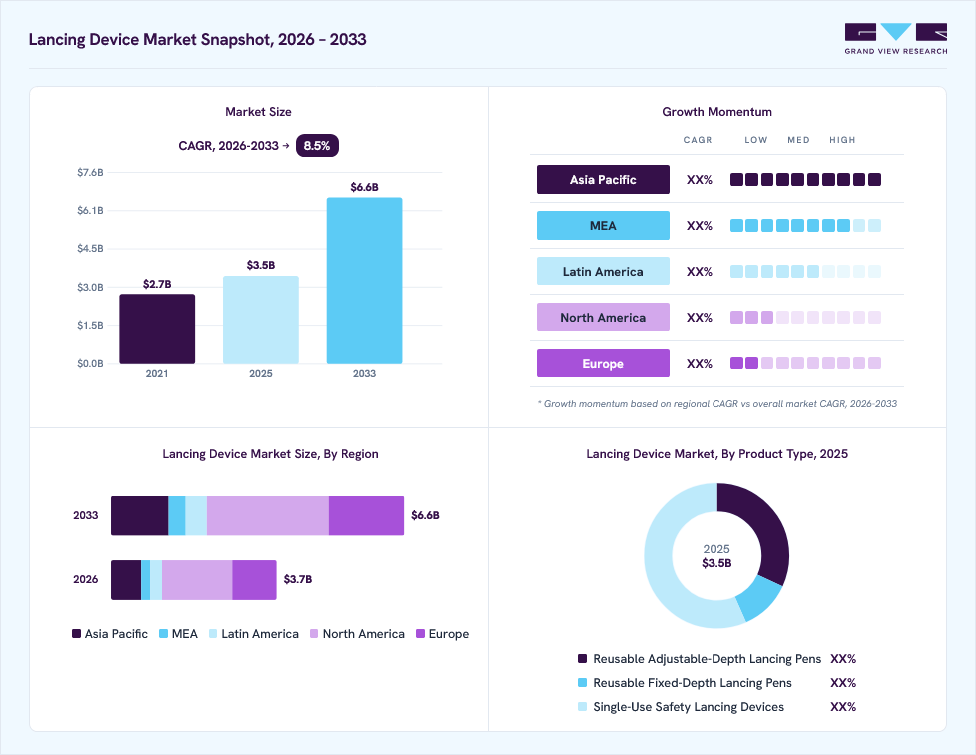
The global lancing device market size was valued at USD 3.5 billion in 2025 and is projected to grow from USD 3.7 billion in 2026 to USD 6.6 billion by 2033, at a CAGR of 8.5% from 2026 to 2033. North America dominated the market, accounting for the revenue share of 42.5% in 2025. The market growth is driven by the increasing prevalence of diabetes, growing adoption of self-monitoring blood glucose (SMBG), expansion of home-based diabetes management, and continued demand for convenient capillary blood sampling.
Key Market Trends & Insights
- By product: Single-use safety lancing devices segment held the largest market share of 56.7% in 2025.
- By end-use: Home-care use segment dominated the market with the largest revenue share of 57.5% in 2025.
- By application: Blood glucose monitoring segment accounted for the largest revenue share of 55.6% in 2025.
- By distribution channel: Retail channels segment held the largest market share of 57.3% in 2025.
Regional Highlights
- Largest regional market: North America (42.5% revenue share, 2025)
- Fastest-growing regional market: Asia Pacific (highest CAGR, 2026-2033)
- By country: The U.S. held the largest market share in 2025.
Market Size & Forecast
- Market size in 2025: USD 3.5 Billion
- Estimated market size in 2026: USD 3.7 Billion
- Projected market size by 2033: USD 6.6 Billion
- CAGR (2026-2033): 8.5%
Three ways to get this report
Buy it, customize it, or ask a question.Ask an Analyst
A direct answer, usually in 1 working day
- AccessReport author, directly
- Reply timeWithin 1 working day
- No sales callDirect answer only
- FormatEmail reply
- CostFree, no cost
Get the Full Report
What the study covers
- FormatsPDF · Excel · Dashboard
- Timeline2026–2033 annual, 2025 base
- Coverage20+ countries, 5 regions
- Companies10+ key players profiled
Customize the Report
20% free customization
- IncludeCountries, segments, points
- TailorTo your product definition
- ExtendDeeper competitor detail
- OrA fully bespoke study
- Turnaround5–10 working days
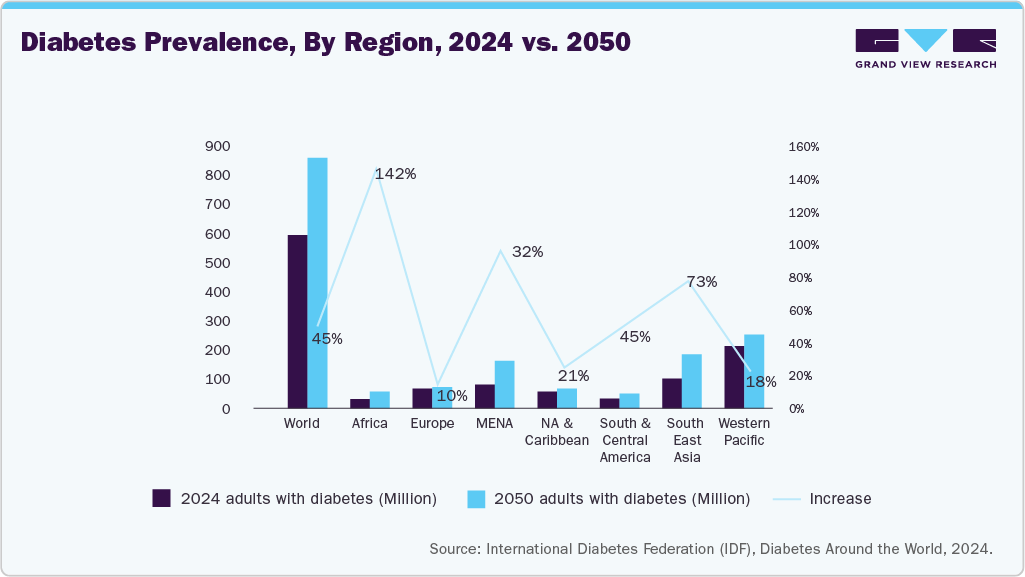
The market is further supported by the increasing use of low-pain, adjustable-depth, ergonomic, and safety-engineered lancing devices across home-care and healthcare settings. The growing global diabetes burden is expected to support demand for the lancing device industry, as increasing numbers of patients require regular blood glucose monitoring. According to the International Diabetes Federation (IDF) Diabetes Atlas, 11th Edition (2025), the number of adults living with diabetes is projected to rise from 588.7 million in 2024 to 852.5 million by 2050, increasing the need for capillary blood sampling and self-monitoring blood glucose products. Africa, with a projected 142% increase, is expected to offer significant growth opportunities due to expanding diabetes-care infrastructure and increasing access to monitoring technologies.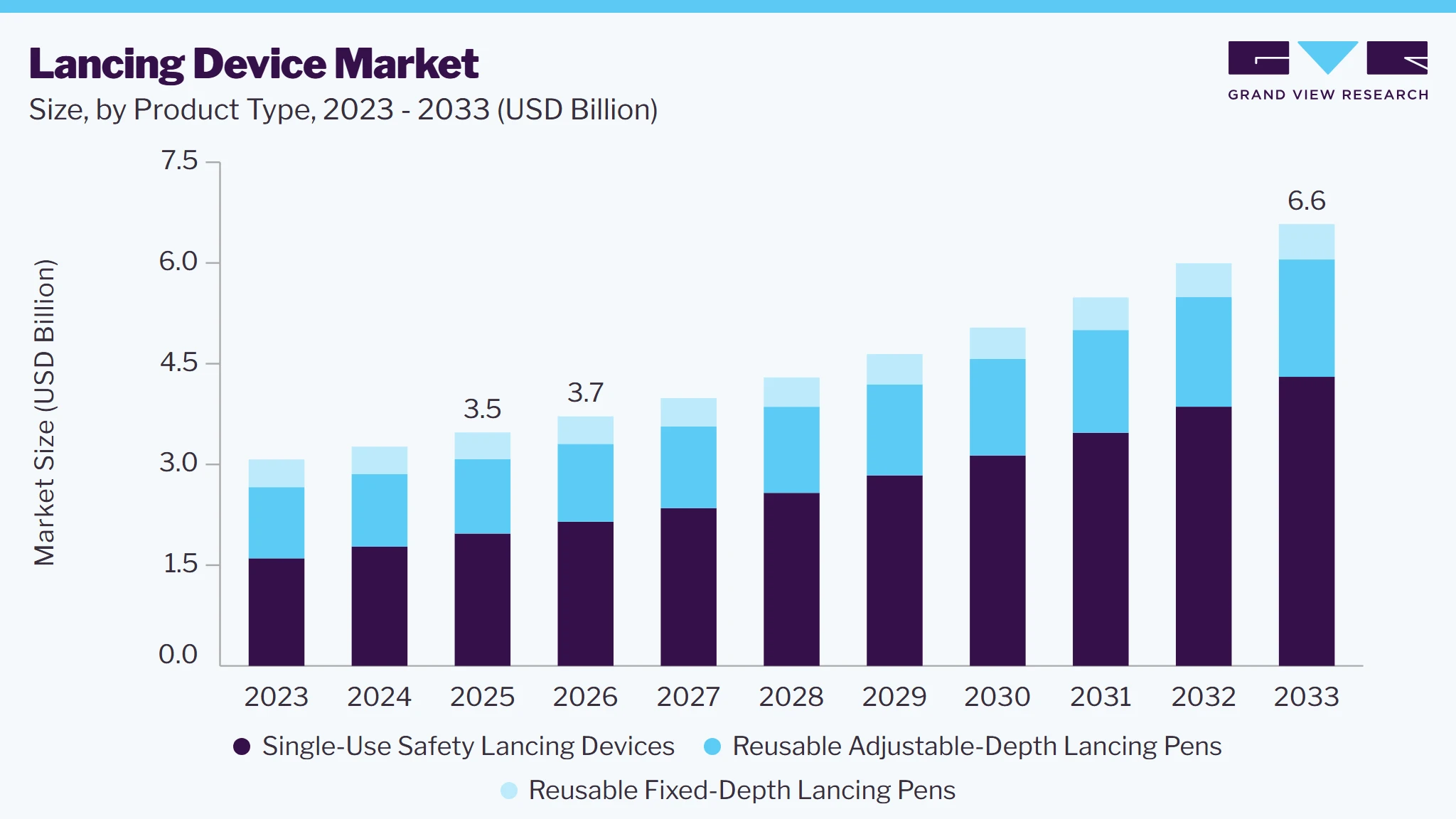
MENA and South-East Asia, projected to grow by 92% and 73%, respectively, are also expected to drive demand for affordable and easy-to-use lancing devices. Meanwhile, the Western Pacific region will remain a major market because of its large diabetic population. Overall, rising diabetes prevalence, greater self-management, and expanding healthcare access will support the adoption of lancing devices globally.
Pricing Analysis
Pricing in the lancing device industry varies depending on the device type, design complexity, safety features, reusability, and intended end-use setting. Conventional reusable lancing devices are generally the more economical option due to their simple mechanical design and compatibility with standard lancets, which makes them widely used for home-based blood glucose monitoring. In contrast, advanced devices featuring adjustable-depth mechanisms, low-pain technologies, integrated lancet drums, ergonomic designs, or enhanced safety mechanisms generally command higher prices due to their added functionality and manufacturing complexity.
Single-use and safety-engineered lancing devices also carry premium pricing because they incorporate features such as automatic retraction, needle shielding, and reduced needlestick risk, making them particularly suitable for hospitals, physician offices, and long-term care facilities. Overall, pricing remains an important competitive factor, particularly in emerging markets where affordability and accessibility strongly influence product adoption.
Small Device, Big Differentiation: Lancing Products Compared:
The comparative analysis evaluates lancing devices based on product features, penetration-depth settings, lancet configuration, patient comfort, safety features, ease of use, ergonomic design, and compatibility. The assessment compares reusable adjustable-depth, reusable fixed-depth, and single-use safety lancing devices to identify differences in functionality, usability, and positioning. Key products are benchmarked on features that influence purchasing decisions across home-care and institutional settings, including pain-reduction technologies, depth customization, lancet-loading mechanisms, infection-control features, and sampling convenience.
Parameter
OneTouch Delica Plus
Accu-Chek FastClix
Manufacturer / brand
LifeScan / OneTouch
Roche Diabetes Care / Accu-Chek
Product
Reusable adjustable-depth lancing device
Reusable adjustable-depth lancing device
Depth settings
13 settings
11 settings
Penetration depth
Adjustable depth; manufacturer specifies 13 settings
0.7–2.2 mm
Lancet
30G and 33G options
Beveled 30G
Lancet loading
Individual lancet loading
6-lancet preloaded drum
Price
USD 19.0 -23.0
USD 12.0 -24.0
Source: Company Website
Consumer Perception and Preferences
Consumer perception is becoming important in the lancing device industry as more patients manage diabetes through regular blood glucose monitoring at home. Users prefer lancing devices that provide minimal pain, ease of use, adjustable penetration depth, reliable blood sampling, and improved safety. Growing awareness of diabetes self-management and the availability of home blood glucose monitoring systems are encouraging consumers to consider comfort and convenience when selecting lancing devices.
At the same time, healthcare professionals and institutional users place greater emphasis on infection prevention, safety-engineered designs, and ease of handling. Although continuous glucose monitoring is reducing the frequency of finger-stick testing among some users, conventional lancing devices remain relevant for patients who use blood glucose meters and for situations requiring capillary glucose confirmation.
Key Consumer Preferences
-
Consumers prefer devices designed to minimize skin discomfort and vibration during lancing.
-
Users value multiple depth settings that allow the device to be customized according to individual skin thickness and sampling requirements.
-
Compact, ergonomic, and simple-to-operate devices are preferred for routine home use.
-
Consumers and healthcare providers favor safety-engineered and single-use options that reduce accidental needle stick and cross-contamination risks.
-
Consistent penetration and adequate blood collection are important for obtaining dependable glucose measurements.
-
Compatibility with commonly used lancets and glucose-monitoring systems, along with affordable pricing, influences purchasing decisions, particularly in emerging markets.
Market Dynamics
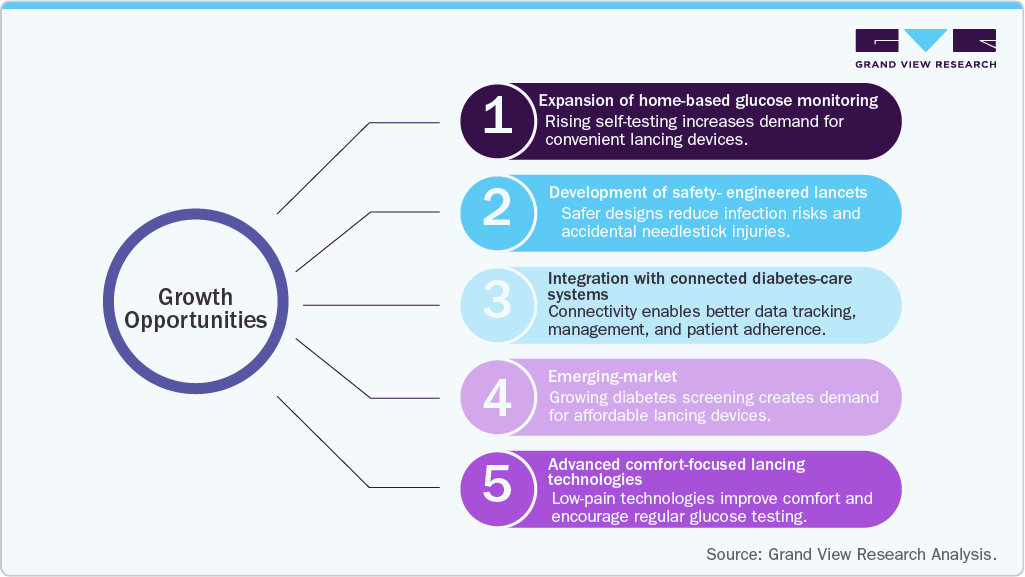
The lancing device industry is experiencing steady growth due to the increasing prevalence of diabetes and the continued need for convenient blood glucose monitoring. Lancing devices provide a controlled and convenient method for obtaining capillary blood samples for glucose testing, making them an important component of self-monitoring blood glucose systems. The market is further supported by the expansion of diabetes self-management and home-based healthcare, as patients perform blood glucose testing outside traditional healthcare settings. Demand is also supported by hospitals, physician offices, diagnostic laboratories, and long-term care facilities that require safe and reliable capillary blood sampling. In addition, manufacturers are introducing low-pain, adjustable-depth, ergonomic, and safety-engineered lancing devices to improve patient comfort and reduce the risk of accidental needlestick injuries.
The increasing shift toward self-management of diabetes is driving demand for lancing devices. Patients are managing their blood glucose levels at home, particularly those who require regular monitoring. Lancing devices provide a convenient way to obtain capillary blood samples for glucose meters, making them an important component of home-based diabetes management. The expansion of diabetes education, home healthcare services, and access to self-monitoring blood glucose systems is therefore supporting continued demand for lancing devices.
The rapid adoption of continuous glucose monitoring systems is a key restraint on the lancing device industry, as CGM can reduce the need for frequent finger-stick blood glucose testing. CGM sensors continuously measure glucose levels and provide readings without requiring repeated lancet punctures. As adoption increases, particularly among insulin-treated patients and in technologically advanced healthcare markets, the frequency of conventional capillary blood glucose testing may decline, limiting growth in demand for routine lancing devices.
The increasing emphasis on infection prevention, patient safety, and needlestick injury reduction creates an opportunity for single-use safety-engineered lancing devices. These products can incorporate features such as automatic needle retraction, controlled penetration, and mechanisms that prevent reuse, making them particularly suitable for hospitals, physician offices, long-term care facilities, and other settings where blood sampling is performed for multiple patients. Growing infection-control requirements and demand for safer blood-sampling practices can encourage healthcare providers to transition toward single-use and auto-disinfecting lancing technologies.
Market Characteristics & Concentration
The market is characterized by a moderate degree of innovation, driven by improvements in patient comfort, safety, device ergonomics, and blood-sampling efficiency. Manufacturers are developing lancing devices with adjustable penetration depths, low-pain mechanisms, improved spring systems, ergonomic designs, and safety features to reduce accidental needlestick injuries and cross-contamination. Innovation is also focused on making devices easier to use for home-based blood glucose monitoring and on ensuring compatibility with different lancet sizes and blood glucose monitoring systems.
The market has witnessed moderate M&A activity, with strategic consolidation primarily occurring within the broader diabetes-care and blood glucose monitoring industry. Companies are focusing on strengthening their diabetes-management portfolios by expanding into blood glucose meters, test strips, lancets, lancing devices, and connected monitoring solutions. For instance, in August 2025, Trividia Health UK partnered with Well Pharmacy to launch its TRUE METRIX AIR and TRUE METRIX GO blood glucose monitoring systems. The starter kits included a lancing device, highlighting expanded access to convenient blood glucose testing solutions for people with diabetes.
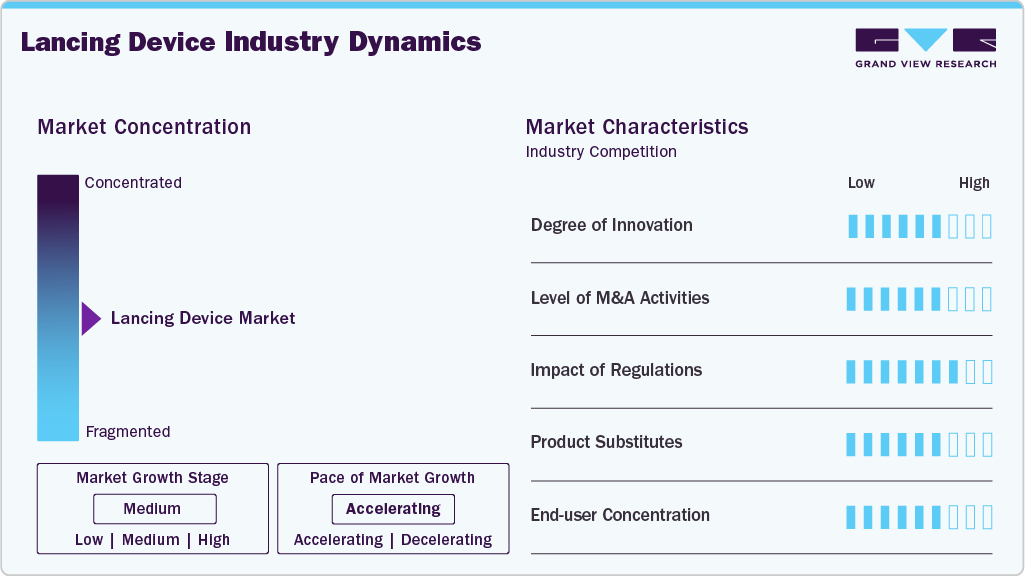
The market is significantly influenced by medical device regulations and safety requirements, particularly because these products are used to puncture the skin and collect capillary blood. Manufacturers must comply with requirements related to device safety, biocompatibility, performance, manufacturing quality, labeling, and infection control. In major markets such as the U.S. and Europe, regulatory requirements influence product development, manufacturing, and commercialization. Requirements for single-use and auto-disabling devices are particularly important in healthcare facilities where blood sampling is performed on multiple patients.
The market faces moderate competition from substitute and alternative glucose-monitoring technologies, particularly continuous glucose monitoring systems and emerging non-invasive glucose-monitoring technologies. CGM reduces the need for routine finger-stick testing among many users by continuously measuring glucose levels through a sensor. However, conventional blood glucose monitoring remains relevant because capillary blood testing may still be required in specific clinical situations and for users who do not have access to or do not use CGM. Therefore, substitutes primarily affect the frequency of routine testing rather than eliminating the need for lancing devices.
Demand for lancing devices is distributed across home-care settings, hospitals, physician offices, clinical and diagnostic laboratories, and long-term care facilities. Home care is an important end-use environment because individuals with diabetes frequently perform blood glucose self-monitoring. Hospitals, physicians' offices, and long-term care facilities also require lancets for point-of-care blood glucose testing and diabetes management. Demand from institutional healthcare settings is particularly influenced by infection-control requirements, which favor safe, single-use, and auto-disabling fingerstick technologies.
Analyst Perspective
The lancing device industry is expected to witness steady growth, supported by the rising prevalence of diabetes, continued demand for blood glucose monitoring, and increasing adoption of home-based diabetes management. Demand is also supported by the need for safe, convenient, and low-pain capillary blood sampling devices. From an analyst’s perspective, companies offering adjustable-depth, ergonomic, safety-engineered, and user-friendly lancing devices will be better positioned to remain competitive. However, growing adoption of continuous glucose monitoring is increasing pressure on conventional finger-stick testing. Future market growth will depend on product innovation, affordability, infection-control compliance, compatibility with glucose meters, and expansion across emerging healthcare markets.
Product Insights
The single-use safety lancing devices segment led the market with the largest revenue share of 56.7% in 2025. This dominance is supported by the increasing emphasis on infection prevention, patient safety, and cross-contamination prevention during blood glucose monitoring in healthcare settings. The CDC recommends the use of single-use, auto-disabling fingerstick devices for assisted blood glucose monitoring, as these devices prevent inadvertent reuse and provide an additional layer of protection for healthcare personnel. The growing adoption of safety-engineered devices across hospitals, long-term care facilities, physician offices, and other institutional settings is therefore expected to sustain demand for single-use lancing devices.
The reusable adjustable-depth lancing pens segment is anticipated to grow at a significant CAGR during the forecast period, due to the increasing demand for personalized blood sampling, growing adoption of home-based blood glucose monitoring, and rising preference for comfortable and convenient lancing solutions. Adjustable-depth mechanisms allow users to select an appropriate penetration level based on individual skin thickness and sampling requirements, helping improve comfort and blood collection efficiency. In addition, reusable designs reduce the need to replace the complete device after each use, making them cost-effective for frequent users.
End-use Insights
The home-care use segment led the market with the largest revenue share of 57.5% in 2025. This dominance is supported by the growing adoption of self-monitoring blood glucose systems and the increasing number of patients managing diabetes at home. Lancing devices provide a convenient method for obtaining capillary blood samples, making them an essential component of routine blood glucose monitoring. Rising diabetes prevalence, greater emphasis on self-management, and increasing availability of affordable glucose meters and lancets through retail and e-commerce channels are further supporting segment growth.
The clinical/diagnostic laboratories segment is projected to grow at the fastest CAGR during the forecast period, driven by the expansion of diagnostic laboratory networks and increasing access to routine and specialized testing services. For instance, in June 2026, Thyrocare Technologies expanded its diagnostic footprint in Prayagraj, Uttar Pradesh, by launching a new laboratory in partnership with SecondMedic, marking its fourth laboratory in the state. The facility is equipped to provide routine and specialized diagnostic testing, strengthening access to diagnostic services in emerging markets. Such expansion of diagnostic infrastructure is expected to increase testing volumes and support demand for blood-sampling products, including lancing devices, across clinical and diagnostic laboratory settings.
Application Insights
The blood glucose monitoring segment led the market with the largest revenue share of 55.6% in 2025. This dominance is supported by the widespread use of capillary blood glucose testing for diabetes management and the growing need for regular monitoring among patients with diabetes. The increasing adoption of self-monitoring blood glucose systems in home-care settings continues to drive demand for lancing devices and compatible lancets. In addition, the rising prevalence of diabetes, growing emphasis on glycemic control, and expansion of home-based diabetes management are strengthening demand in the segment.
According to the International Diabetes Federation (IDF) Diabetes Atlas 11th Edition 2025, approximately 106.9 million adults aged 20–79 years were living with diabetes in South-East Asia in 2024, representing an age-standardized prevalence of 10.8%. The number is projected to increase by 73% to 184.5 million by 2050. In addition, 42.7% of adults with diabetes were undiagnosed in 2024, highlighting the need for expanded diabetes screening and monitoring.
The cardiac enzyme / point-of-care diagnostic testing segment is expected to grow at a significant CAGR during the forecast period, due to the increasing adoption of rapid diagnostic testing and the growing need for timely blood-based assessments in healthcare settings. Point-of-care testing enables healthcare professionals to obtain diagnostic results quickly, supporting faster clinical decision-making, particularly in emergency and outpatient settings. Rising demand for decentralized testing, expansion of diagnostic services, and increasing use of capillary blood sampling for rapid tests are expected to support the adoption of lancing devices. In addition, growing emphasis on early detection and efficient patient management is expected to further drive segment growth.
Distribution Channel Insights
The retail channels segment led the market with the largest revenue share of 57.3% in 2025. This dominance is driven by the widespread availability of lancing devices through retail pharmacies, over-the-counter outlets, and e-commerce platforms, providing convenient access for patients who require regular blood glucose monitoring. The increasing adoption of home-based diabetes management has further strengthened retail demand, as consumers can easily purchase lancing devices and compatible lancets without visiting healthcare facilities. For instance, in November 2025, Apollo Pharmacy announced plans to add two stores per day over the next five years, targeting more than 10,600 stores by 2030. The expansion followed its achievement of reaching 7,000 stores across India, strengthening access to healthcare products and services.
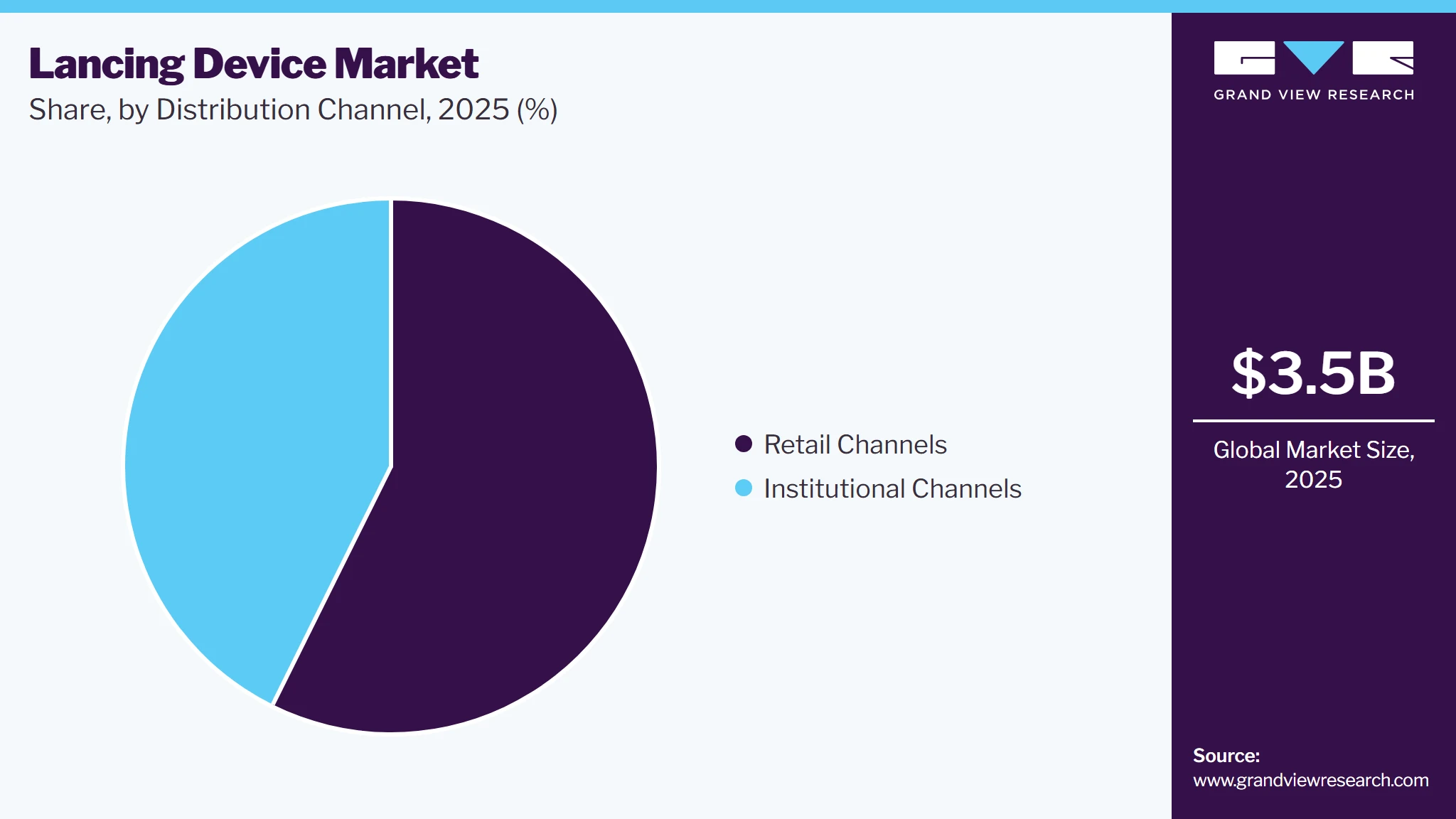
The institutional channels segment is expected to grow at a significant CAGR during the forecast period. Growth is driven by increasing demand for safe and reliable capillary blood sampling across hospitals, diagnostic laboratories, physician offices, and long-term care facilities. Rising emphasis on infection prevention and needlestick injury reduction is encouraging healthcare providers to adopt single-use and safety-engineered lancing devices. In addition, the growth of diabetes screening, point-of-care testing, and inpatient blood glucose monitoring is supporting institutional demand. Expanding healthcare infrastructure and increasing adoption of standardized blood glucose monitoring protocols are expected to further strengthen procurement of lancing devices through institutional channels.
Regional Insights
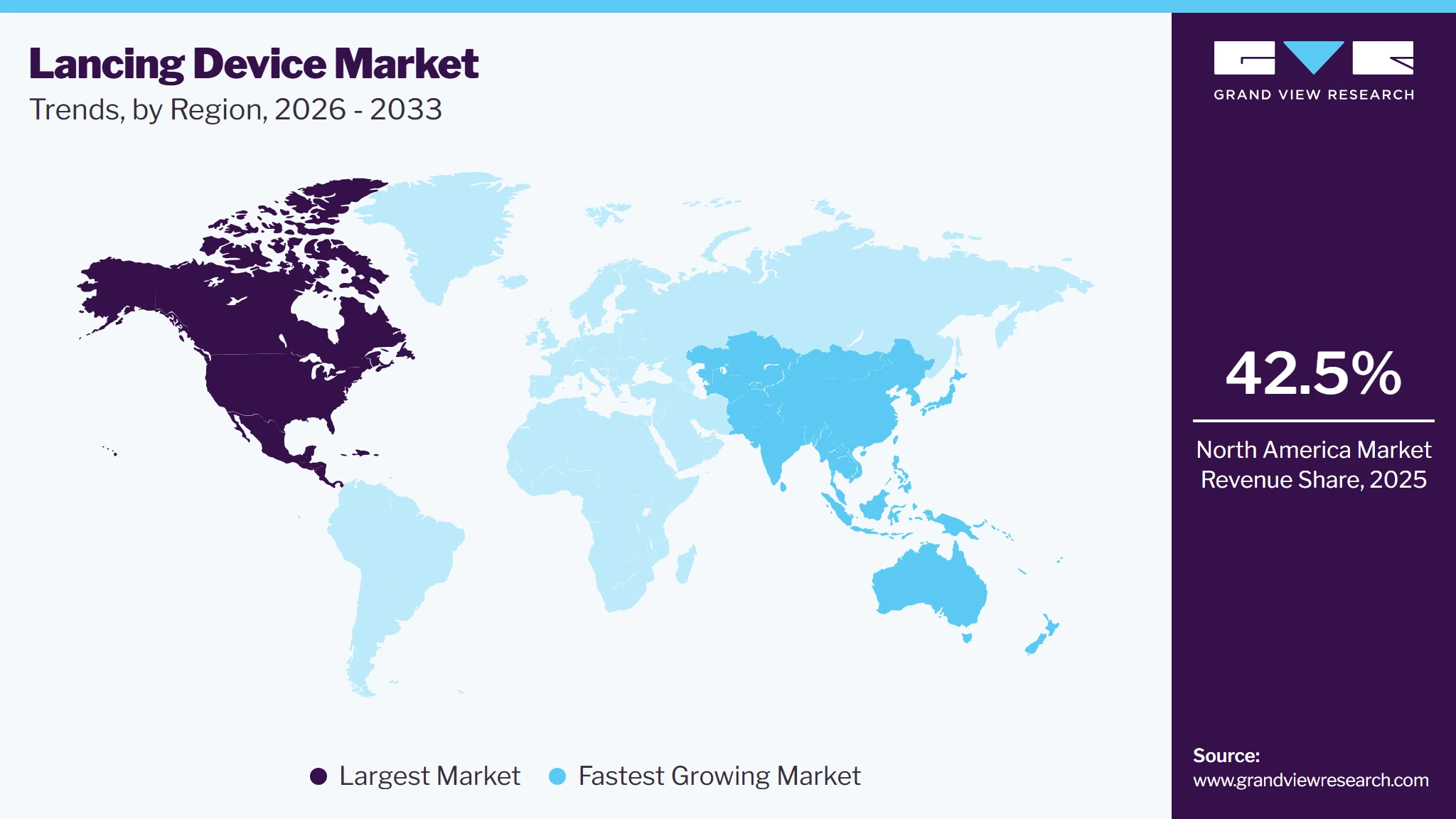
The North America lancing device market held the largest revenue share of 42.5% in 2025, supported by well-developed healthcare infrastructure, a large diabetes-care network, widespread availability of blood glucose monitoring systems, and strong access to pharmacies, hospitals, diabetes clinics, and home healthcare services across the U.S., Canada, and Mexico. Canada benefits from a universal healthcare infrastructure and established diabetes management services, while Mexico offers significant growth potential due to its rising diabetes burden and expanding access to healthcare services. The combination of established diabetes-monitoring infrastructure in the U.S. and Canada and increasing healthcare investment in Mexico is expected to support continued demand for lancing devices across North America.
U.S. Lancing Device Market Trends
The lancing device market in the U.S. accounted for the largest market revenue share in North America in 2025, supported by a large diabetes population, a well-developed diabetes-care infrastructure, and widespread access to blood glucose monitoring across hospitals and home healthcare settings. According to the International Diabetes Federation (IDF) Diabetes Atlas 11th Edition 2025, the U.S. had approximately 38.5 million adults aged 20–79 years living with diabetes in 2024, representing a 13.7% prevalence of diabetes among adults. The IDF estimates that the number of adults with diabetes in the U.S. could reach 43.0 million by 2050. This substantial and growing patient base, combined with established diabetes management services and ongoing requirements for capillary blood glucose testing, supports sustained demand for lancing devices in the U.S. market.
Europe Lancing Device Market Trends
The lancing device market in Europe is supported by the region's substantial diabetes population, established healthcare systems, and continued emphasis on diabetes self-management. According to the IDF Diabetes Atlas 2025, approximately 65.6 million adults aged 20–79 years were living with diabetes in Europe in 2024. Demand for lancing devices is supported by the continued role of blood glucose monitoring alongside CGM, particularly where patients require confirmatory measurements or use conventional glucose meters. The region's established medical-device regulatory environment and growing focus on patient safety are also encouraging manufacturers to develop ergonomic, low-pain, adjustable-depth, and safety-engineered lancing solutions.
The UK lancing device market is supported by a well-established healthcare infrastructure, strong NHS diabetes care services, and widespread access to blood glucose monitoring across primary and secondary care. NHS England provides commissioning recommendations covering blood glucose meters, testing strips, and lancets, with recommended suppliers also providing lancing devices to healthcare settings and service users. The market is supported by demand from hospitals, General Practitioner (GP) practices, diabetes clinics, pharmacies, and home-based diabetes management.
Asia Pacific Lancing Device Market Trends
The lancing device market in the Asia Pacific is anticipated to grow at the fastest CAGR during the forecast period, supported by expanding healthcare infrastructure, a large diabetes population, and increasing access to blood glucose monitoring across hospitals, clinical and diagnostic laboratories, home care settings, and long-term care facilities. Countries such as China, India, Japan, South Korea, and Australia have established healthcare systems with expanding diabetes management services and increasing availability of self-monitoring blood glucose technologies. The region also presents significant opportunities for affordable and easy-to-use lancing devices, particularly in emerging markets where conventional finger-stick blood glucose monitoring remains an important component of diabetes care. Growing healthcare expenditure, expansion of primary care services, and increasing awareness of diabetes management are expected to support demand for lancing devices across the Asia Pacific.
The China lancing device market is supported by a large diabetes population, expanding healthcare infrastructure, and increasing demand for diabetes monitoring across hospitals, home care settings, and long-term care facilities. According to the International Diabetes Federation (IDF) Diabetes Atlas 11th Edition 2025, approximately 148.0 million adults aged 20–79 years were living with diabetes in China in 2024, and this number is projected to increase to 168.3 million by 2050. The substantial patient population creates a large addressable market for blood glucose monitoring and associated capillary blood sampling products, including lancing devices. Growing diabetes management needs and continued use of blood glucose monitoring in healthcare and home care settings are expected to support demand for lancing devices in China.
Latin America Lancing Device Market Trends
The lancing device market in Latin America is supported by a growing burden of diabetes, expanding healthcare infrastructure, and increasing access to diabetes screening and monitoring services. The strengthening of primary healthcare systems and greater emphasis on early diagnosis and blood glucose control are expected to support demand for lancing devices. In addition, increasing awareness of diabetes self-management and the availability of affordable blood glucose monitoring products are expected to sustain the use of lancing devices across the region.
Middle East and Africa Lancing Device Market Trends
The lancing device market in the Middle East and Africa is anticipated to grow at a significant CAGR during the forecast period, supported by increasing government focus on diabetes prevention, early diagnosis, and long-term disease management. Governments and health authorities across the region are strengthening primary healthcare services and integrating diabetes screening and management into national healthcare programs. In Africa, WHO Member States endorsed the Regional Framework for Implementation of the Global Diabetes Compact in 2024, which focuses on improving access to affordable diabetes services, technologies, and medicines and integrating diabetes care into primary and community healthcare. These initiatives are expected to support demand for blood glucose monitoring and associated capillary blood sampling products.
Key Lancing Devices Company Insights
Some of the key companies in the lancing device industry include Roche Diabetes Care (Roche Holding AG), LifeScan Enterprises LLC. (Platinum Equity), Ascensia Diabetes Care Holdings AG (PHC Holdings), and among others. Organizations are focusing on increasing customer base to gain a competitive edge in the industry. Therefore, key players are taking several strategic initiatives, such as product launch and partnerships with other major companies.
Key Lancing Devices Companies:
The following key companies have been profiled for this study on the global lancing device market:
-
Roche Diabetes Care (Roche Holding AG)
-
LifeScan Enterprises LLC. (Platinum Equity)
-
Ascensia Diabetes Care Holdings AG (PHC Holdings)
-
Trividia Health, Inc. (Sinocare Group)
-
Owen Mumford (Embecta Corp.)
-
BD
-
Bionime Corporation
-
Abbott Laboratories
-
B. Braun SE
-
Greiner Bio-One International GmbH
-
Terumo Corporation
-
SARSTEDT AG & Co. KG
-
HTL Strefa
-
I-SENS, Inc.
-
LetsGetChecked
Competitive Benchmarking
Category
Operating Strategies
Competitive Edge
Weakness
Established Players (Roche Diabetes Care, LifeScan, Ascensia Diabetes Care, Trividia Health, Terumo Corporation)
- Focus on product innovation by developing low-pain, adjustable-depth, ergonomic, and safety-engineered lancing devices with improved user convenience.
- Expand distribution and market reach through established diabetes-care channels, pharmacies, hospitals, clinics, and partnerships with healthcare providers.
- Strong brand recognition and established presence across diabetes-care and blood glucose monitoring markets.
- Broad distribution networks, established regulatory capabilities, and compatibility with widely used glucose monitoring systems.
- Increasing adoption of CGM can reduce the frequency of conventional finger-stick testing.
- Mature markets and strong competition create pricing pressure and limit opportunities for significant volume growth.
Emerging Players (Owen Mumford, Bionime Corporation, i-SENS, Inc.)
- Develop cost-effective and specialized solutions targeting home-based glucose monitoring, pediatric/geriatric users, and healthcare settings requiring safe capillary blood sampling.
- Strengthen regional and international presence through OEM partnerships, regional distributors, regulatory approvals, and expansion into price-sensitive emerging markets.
- Competitive pricing and ability to develop specialized, low-pain, adjustable-depth, and safety-focused lancing solutions.
- Greater flexibility in serving regional markets and Original Equipment Manufacturer (OEM) opportunities.
- Lower brand recognition and smaller global distribution and service networks.
- Greater dependence on regional distributors and limited resources for large-scale R&D and regulatory expansion.
Recent Developments:
-
In July 2025, SteriLance Medical launched its Onestep cap-free, hidden-needle lancing device and SoftSense Lancets in Spain, marking its entry into the European market. The devices were designed to simplify blood sampling and provide virtually painless collection through Total Path Control technology.
-
In February 2025, LetsGetChecked received FDA 510(k) clearance for its ImPress single-use lancing device for healthcare professional use. The device was designed to produce microliter capillary whole blood samples while improving patient comfort and simplifying the blood collection process.
“At LetsGetChecked, we are steadfast in our mission to help people live longer, happier lives, and the invention of the LetsGetChecked ImPress exemplifies this dedication,” said Ronan Ryan, Chief Operating Officer at LetsGetChecked. “With this revolutionary product, we can elevate the patient experience, ensure more consistent delivery of results, and ultimately, improve health outcomes.”
Lancing Device Market Report Scope
Report Attribute
Details
Market size in 2025
USD 3.5 billion
Estimated market size in 2026
USD 3.7 billion
Projected market size by 2033
USD 6.6 billion
Growth rate
CAGR of 8.5% from 2026 to 2033
Base year for estimation
2025
Historical data
2021 - 2024
Forecast period
2026 – 2033
Quantitative units
Revenue in USD billion and CAGR from 2026 to 2033
Report coverage
Revenue forecast, company ranking, competitive landscape, growth factors, and trends
Segments covered
Product, end-use, application, distribution channel, region
Regional scope
North America; Europe; Asia Pacific; Latin America; Middle East & Africa
Country scope
U.S.; Canada; Mexico; UK; Germany; France; Italy; Spain; Denmark; Sweden; Norway; Japan; China; India; Thailand; Australia; South Korea; Brazil; Argentina; South Africa; Saudi Arabia; UAE; Kuwait
Key companies profiled
Roche Diabetes Care (Roche Holding AG); LifeScan Enterprises LLC. (Platinum Equity); Ascensia Diabetes Care Holdings AG (PHC Holdings); Trividia Health, Inc. (Sinocare Group); Owen Mumford (Embecta Corp.); BD; Bionime Corporation; Abbott Laboratories; B. Braun SE; Greiner Bio-One International GmbH; Terumo Corporation; SARSTEDT AG & Co. KG; HTL Strefa; i-SENS, Inc.; LetsGetChecked
Customization scope
Free report customization (equivalent up to 8 analyst’s working days) with purchase. Addition or alteration to country, regional & segment scope
Pricing and purchase options
Avail customized purchase options to meet your exact research needs. Explore purchase options
Global Lancing Device Market Report Segmentation
This report forecasts revenue growth at global, regional & country levels and provides an analysis of the latest industry trends in each of the sub-segments from 2021 to 2033. For this study, Grand View Research has segmented the global lancing device market report based on product, end-use, application, distribution channel, and region:
-
Product Outlook (Revenue, USD Billion, 2021 - 2033)
-
Reusable Adjustable-Depth Lancing Pens
-
Reusable Fixed-Depth Lancing Pens
-
Single-Use Safety Lancing Devices
-
-
End-use Outlook (Revenue, USD Billion, 2021 - 2033)
-
Home-care use
-
Hospital
-
Clinical / Diagnostic laboratories
-
Physician office
-
Long-term care facilities
-
-
Application Outlook (Revenue, USD Billion, 2021 - 2033)
-
Blood glucose monitoring
-
Cholesterol / Lipid Panel Testing
-
Hemoglobin / Anemia Screening
-
Coagulation Testing
-
Cardiac Enzyme / Point-of-Care Diagnostic Testing
-
Neonatal Screening
-
-
Distribution Channel Outlook (Revenue, USD Billion, 2021 - 2033)
-
Retail Channels
-
Retail Pharmacy/OTC
-
E-commerce/DTC
-
Institutional Channels
-
Hospital
-
Diagnostic chains & clinical labs procurement
-
-
Regional Outlook (Revenue, USD Billion, 2021-2033)
-
North America
-
U.S.
-
Canada
-
Mexico
-
-
Europe
-
UK
-
Germany
-
France
-
Italy
-
Spain
-
Denmark
-
Sweden
-
Norway
-
-
Asia Pacific
-
Japan
-
China
-
India
-
Thailand
-
Australia
-
South Korea
-
-
Latin America
-
Brazil
-
Argentina
-
-
Middle East & Africa
-
South Africa
-
Saudi Arabia
-
UAE
-
Kuwait
-
-
Research Methodology
The lancing device marketfigures in this report are based on a proven research process that combines executive interviews with secondary research from proprietary databases, company filings, and recognized regulatory and institutional sources. Market size is built through value-chain sizing—reconciling supply-side and demand-side estimates—and triangulated with bottom-up and top-down approaches. Every estimate passes multiple levels of expert validation before publication, with each lancing device segment quantified using the revenue-capture definitions in the table below.
Segment Definition
Segment – Product
Revenue capture definition
Reusable Adjustable-Depth Lancing Pens
Revenue generated from the sale of reusable lancing devices that allow users to adjust the penetration depth according to individual skin thickness and blood-sampling requirements. This includes devices sold for home blood glucose monitoring and compatible with replaceable lancets.
Reusable Fixed-Depth Lancing Pens
Revenue generated from the sale of reusable lancing devices with a predetermined or limited penetration depth that cannot be freely adjusted by the user. Revenue includes devices primarily used with replaceable lancets for routine capillary blood sampling and blood glucose testing.
Single-Use Safety Lancing Devices
Revenue generated from the sale of disposable, single-use lancing devices incorporating safety features such as automatic needle retraction, shielding, or mechanisms that prevent reuse. This includes devices used for capillary blood sampling in hospitals, physician offices, diagnostic laboratories, long-term care facilities, and other healthcare settings.
Estimation Model
No.
Approach
Description
01
Bottom-Up Estimation
The market is estimated by assessing the number of blood-sampling and blood glucose monitoring events performed across home-care settings, hospitals, physician offices, clinical and diagnostic laboratories, and long-term care facilities at the country, regional, and global levels. The analysis considers the number of people requiring blood glucose monitoring, testing frequency, utilization of reusable versus single-use lancing devices, and penetration of lancing devices across different end-use settings.
02
Top-Down Approach
The market estimation begins with the broader blood glucose monitoring and point-of-care blood-sampling equipment market, followed by determining the share attributable to lancing devices through secondary research, product-level analysis, and industry validation. Key market indicators include the global and regional diabetes population, prevalence of patients requiring self-monitoring of blood glucose, frequency of capillary blood sampling, and adoption of home-based glucose monitoring.
03
Supply-Side Analysis
The supply-side assessment considers manufacturer revenues, product shipments, production capacity, product portfolio mix, average selling prices, and geographic distribution across reusable adjustable-depth lancing pens, reusable fixed-depth lancing pens, and single-use safety lancing devices. Company-level analysis includes product availability, manufacturing capabilities, regulatory approvals, distributor networks, healthcare procurement contracts, and regional sales exposure.
Delivered Customizations
This report has been delivered with the following In-depth customizations
Client Request
Customization Delivered
Value Adds
Lancing Devices Product Portfolio & Application Analysis
Conducted a comprehensive assessment of the lancing devices product portfolio, including reusable adjustable-depth lancing pens, reusable fixed-depth lancing pens, and single-use safety lancing devices. Evaluated product utilization across blood glucose monitoring, cholesterol/lipid panel testing, hemoglobin/anemia screening, coagulation testing, cardiac enzyme/point-of-care diagnostic testing, and neonatal screening. The analysis also examined product features such as penetration-depth adjustment, low-pain mechanisms, ergonomic design, safety features, and single-use functionality.
Helps stakeholders identify high-growth product segments, understand application-specific demand, evaluate product features that influence adoption, and optimize portfolios in response to evolving requirements for blood sampling and point-of-care testing.
End-user Adoption & Procurement Landscape Analysis
Analyzed the adoption of lancing devices across home-care users, hospitals, clinical and diagnostic laboratories, physician offices, and long-term care facilities. Assessed procurement criteria, including product safety, patient comfort, ease of use, device compatibility, disposable versus reusable preferences, infection-control requirements, and purchasing volumes. The study also evaluated differences in adoption between institutional and home-care settings and the influence of diabetes-management practices on demand.
Enables manufacturers to identify high-demand end-user segments, strengthen procurement and distribution strategies, optimize product positioning, and expand market penetration across healthcare facilities and home-care environments.
Product Positioning & Manufacturer Competitiveness Assessment
Evaluated leading lancing device manufacturers based on product portfolio breadth, adjustable-depth technology, safety-engineered designs, ergonomic features, lancet compatibility, product innovation, geographic presence, pricing strategies, regulatory compliance, and distribution capabilities. The assessment also examined product launches, portfolio expansions, technological developments, and competitive differentiation across reusable and single-use lancing devices.
Supports competitive benchmarking, identifies opportunities for product differentiation and innovation, strengthens go-to-market strategies, and helps manufacturers improve competitive positioning through patient-centric design, safety features, cost optimization, and expansion into high-growth markets.
Frequently Asked Questions About This Report
North America dominated the market, accounting for the revenue share of 42.5% in 2025.
The home-care use held the largest share of 57.5% in 2025 while clinical/diagnostic laboratories is the fastest-growing segment.
The blood glucose monitoring held the largest share of 55.6% in 2025 and is the fastest-growing segment over the forecast period.
The retail channels segment held the largest share of 57.3% in 2025 and is the fastest-growing segment over the forecast period.
Key players include Roche Diabetes Care (Roche Holding AG), LifeScan Enterprises LLC. (Platinum Equity), Ascensia Diabetes Care Holdings AG (PHC Holdings), Trividia Health, Inc. (Sinocare Group), Owen Mumford (Embecta Corp.), BD, Bionime Corporation, Abbott Laboratories, B. Braun SE, Greiner Bio-One International GmbH, Terumo Corporation, SARSTEDT AG & Co. KG, HTL Strefa, and i-SENS, Inc.
The global lancing device market size was valued at USD 3.5 billion in 2025 and is estimated at USD 3.7 billion for 2026.
The global lancing device market is expected to grow at a CAGR of 8.5% from 2026 to 2033, reaching USD 6.6 billion by 2033.
Key factors include the increasing prevalence of diabetes, growing adoption of self-monitoring blood glucose (SMBG), expansion of home-based diabetes management, and continued demand for convenient capillary blood sampling.
Asia Pacific is the fastest-growing region over the forecast period.
The single-use safety lancing devices segment led the market with the largest revenue share of 56.7% in 2025
About the Author(s)
Medical Devices Research Team
Healthcare · Medical DevicesThis report was authored by the medical devices research team at Grand View Research - comprising two research analysts, one senior research analyst, and one industry expert - with specialized expertise in the medical devices segment of the healthcare industry. All findings are based on proprietary healthcare databases, executive interviews, and regulatory analysis, subject to internal peer review prior to publication.
Last Updated:
Speak to Analyst


Customize this report to your needs - add regions, segments, or data points, with 20% free customization.
Or view our licence options:


ISO 9001:2015 & 27001:2022 Certified
We are GDPR and CCPA compliant! Your transaction & personal information is safe and secure. For more details, please read our privacy policy.


