
- Home
- »
- Medical Devices
- »
-
Laparoscopic Robotic-assisted Procedures Market, 2033GVR Report cover

Laparoscopic Robotic-assisted Procedures Market (2025 - 2033) Size, Share & Trends Analysis Report By Application (General Surgery, Urology, Gynecology, Bariatric, Colorectal), By Procedure Complexity, By End-use, By Region, And Segment Forecasts
Market Size, 2024
$7.3BMarket Estimate, 2026
$8.6BMarket Forecast, 2033
$31.6BCAGR, 2025–2033
17.7%Laparoscopic Robotic-assisted Procedures Market Summary
The global laparoscopic robotic-assisted procedures market size was estimated at USD 7.33 billion in 2024 and is projected to reach USD 31.56 billion by 2033, growing at a CAGR of 17.71% from 2025 to 2033. The growing integration of advanced technology, broader application across different procedures, and rising institutional investment are propelling the use of laparoscopic surgical robotics.
 Source: Grand View Research, IR Documents, Primary Interviews, Paid DatabasesTo learn more about this report,
 Download Free Sample Report
 Key Market Trends & Insights
- The North America laparoscopic robotic-assisted procedures market accounted for the largest global revenue share of 51.36% in 2024.
- The U.S. dominated the laparoscopic robotic-assisted procedures industry in North America in 2024.
- By application, the general surgery segment dominated the laparoscopic robotic-assisted procedures market with the largest revenue share of 28.29% in 2024.
- By procedure complexity, the medium complexity segment dominated the laparoscopic robotic-assisted procedures industry with the largest revenue share of 43.22% in 2024.
- By end-use, the large hospital systems (multi-facility) segment dominated the market with a revenue share of 48.60% in 2024.
Market Size & Forecast
- 2024 Market Size: USD 7.33 Billion
- 2033 Projected Market Size: USD 31.56 Billion
- CAGR (2025-2033): 17.71%
- North America: Largest Market in 2024
- Asia Pacific: Fastest Growing Market
Three ways to get this report
Buy it, customize it, or ask a question.Ask an Analyst
Analyst response in 1 business day
- AccessReport author, directly
- Reply timeWithin 1 working day
- No sales callDirect answer only
- FormatEmail reply
- CostFree, no cost
Get the Full Report
What the study covers
- FormatsPDF · Excel · Dashboard
- Timeline2025–2033 annual, 2024 base
- Coverage20+ countries, 5 regions
- Companies10+ key players profiled
Customize the Report
20% free customization
- IncludeCountries, segments, points
- TailorTo your product definition
- ExtendDeeper competitor detail
- OrA fully bespoke study
- Turnaround5–10 working days
Hospitals are adopting robotic systems in diverse specialties and types of procedures, supported by enhanced clinical validation and improved operational efficiency. These trends are leading to the standardization of surgical robotics within routine hospital workflows. For example, Summerlin Hospital Medical Center in Nevada, U.S., utilizes the da Vinci Surgical System to conduct robot-assisted laparoscopic surgeries for kidney patients.The increasing demand for minimally invasive surgeries drives the adoption of laparoscopic surgical robots. Both patients and healthcare providers prioritize procedures that minimize trauma, promote faster recovery, and reduce complications. Robotic systems improve the precision and control necessary for these procedures, allowing surgeons to conduct complex maneuvers through smaller incisions. Furthermore, the market is experiencing growth due to increased product approvals. For instance, in October 2024, CMR Surgical received de novo clearance from the FDA for its Versius surgical system, which permits its modular, cart-based laparoscopic robot to be introduced in the U.S.
 To learn more about this report, Download Free Sample Report
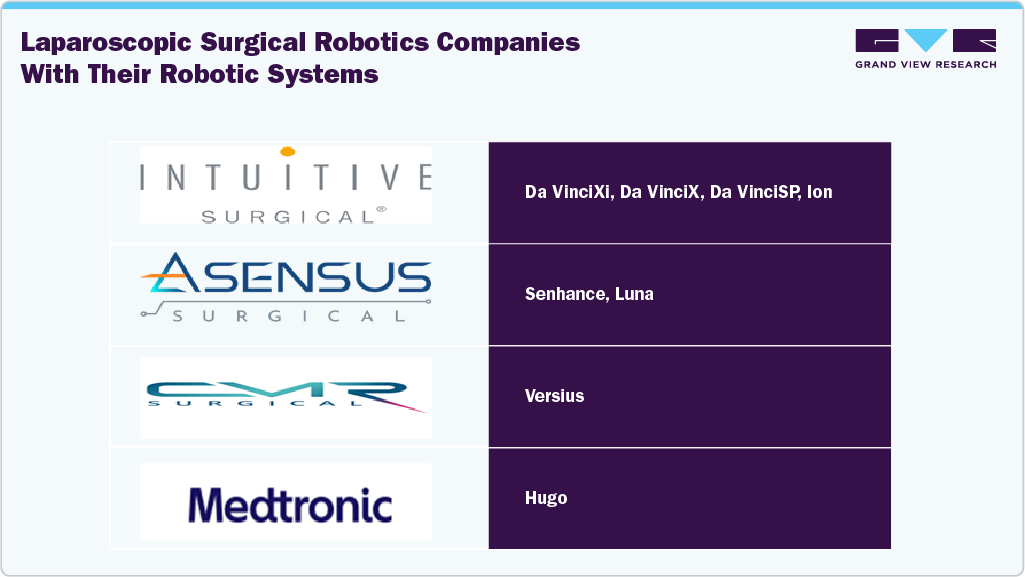
 One of the key factors propelling the laparoscopic robotic-assisted procedures industry forward is the ability of laparoscopic surgical robot systems to reduce human errors in the operating room. These robotic systems provide stable hands and accurate movements, significantly reducing the risk of errors during complex surgical procedures. By enhancing visualization and dexterity, robotic platforms help address challenges such as hand tremors or fatigue that compromise the accuracy of procedures. For instance, over 1,700 da Vinci Systems were installed in healthcare facilities worldwide, with over 775,000 patients having undergone a procedure using the da Vinci system.
 To learn more about this report, Download Free Sample Report
 The increasing number of regulatory approvals and patent grants drives growth in the laparoscopic surgical robot sector by speeding up product launches and technological advancements. Efficient pathways provided by agencies such as the FDA and CE Mark have facilitated the quick introduction of technologically advanced laparoscopic surgical systems. For instance, in June 2024, the FDA granted clearance for the commercial version of Moon Surgical's Maestro system, a robotic platform designed to support and manipulate laparoscopic instruments during soft tissue surgeries. This clearance allows the system, which integrates NVIDIA Holoscan and AI-powered ScoPilot technology, to be used in US hospitals to enhance surgical precision and workflow efficiency in various procedures.
Furthermore, several companies and experts have supported the shift towards Ambulatory Surgical Centers (ASCs). For example,
-
Intuitive Surgical, a provider of robotic surgery technology, highlights that extending services to ASCs facilitates greater access to laparoscopic robotic-assisted procedures. Their systems aim to enhance operational efficiency while upholding high standards of patient care.
-
Medtronic, a key player in the surgical robotics sector, has noted that incorporating robotic systems into ambulatory surgical centers (ASCs) optimizes workflows and improves patient throughput without sacrificing safety or quality.
-
Surgical Care Affiliates (SCA) has indicated that integrating robotic technology in their ASCs has improved patient satisfaction scores, which is attributed to faster recovery times and reduced postoperative discomfort.
Thus, this transition is anticipated to drive market growth over the forecast period.
The laparoscopic robotic-assisted procedures market’s growth is significantly driven by increasing government initiatives and funding to promote the development and adoption of surgical robots. Governments across the globe are acknowledging the advantages of robotic surgery in improving healthcare outcomes and investing in research, development, and the deployment of robotic surgical systems. For instance, in April 2022, Saskatchewan, Canada, announced a Robotic Surgical Program, with the estimated acquisition cost of the robotic system being around USD 2.5 million. The Ministry of Health has committed to contributing up to USD 1 million to help finance the purchase and offset initial annual operational costs, which are projected to be around USD 160,000 for the first year. These costs are expected to rise to nearly USD 800,000 by the fifth year after fully implementing the system. Moreover, St. Paul's Hospital Foundation is dedicated to raising over USD 1.5 million to support this initiative for a robotic system.
Case Study: Resident-Led Robotic-Assisted Laparoscopic Procedures
Background:
Robotic-assisted surgery is a growing extension of minimally invasive techniques, gaining traction in surgical residency programs despite debates around cost and training demands. The SAGES abstract demonstrates that residents can safely and effectively perform robotic procedures under supervision, highlighting its viability in training environments.
Study Overview:
-
Conducted at two institutions equipped with the da Vinci SI platform.
-
A single surgical resident performed 22 elective procedures under direct supervision; another resident served as first assistant.
-
Participants self-selected robotic versus non-robotic laparoscopy; only robotic cases were included
-
Procedures attempted:
-
19 cholecystectomies
-
1 enterolysis
-
1 gastrectomy
-
1 esophagogastrectomy
-
Outcomes:
-
21 robotic cases executed; most completed as planned.
-
Operative times remained within normal ranges.
-
One complication: a cystic stump bile leak presenting two weeks post-op.
-
Rates: Morbidity 4.7%, Mortality 0%
Key Insights & Market Implications:
A. Safety & Feasibility:
Even at early training stages, residents safely perform robotic-assisted laparoscopic surgeries with supervision and structured support, matching standard operative times and maintaining low complication rates.
B. Training Integration & Resident Adoption:
This model supports integrating robotic systems into surgical training. Other SAGES studies confirm rising incorporation of formal curricula, simulations, and progressive case exposure across institutions.
C. Cost & Access Considerations:
While robotic surgery has higher equipment acquisition, maintenance, and disposables costs, its integration into residency may enhance training value and long-term adoption. Broader SAGES recommendations highlight cost barriers and emphasize curriculum development and credentialing as critical for responsible implementation.
Market Concentration & Characteristics
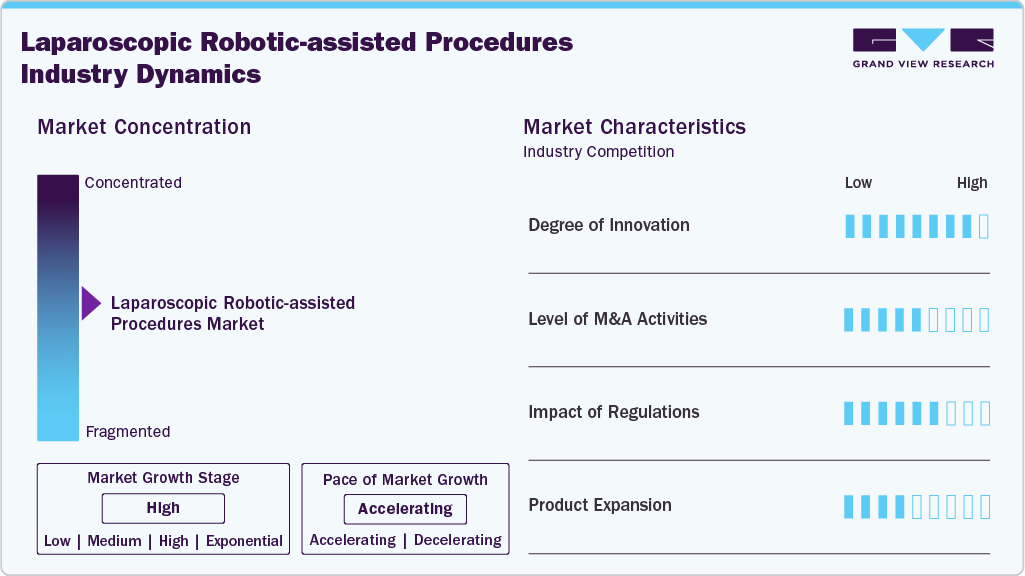
The global laparoscopic robotic-assisted procedures market is characterized by a high degree of innovation, owing to the high level of innovation, underscored by rapid integration of AI and real-time analytics into surgical workflows. For instance, in March 2025, MicroPort MedBot received its Toumai SP Laparoscopic Surgical Robot's market approval from the National Medical Products Administration (NMPA) in China. This surgical robot is approved for clinical use across various departments, including general surgery, urology, and gynecology.
The laparoscopic robotic-assisted procedures industry is characterized by medium merger and acquisition activity, owing to several factors, including the desire to expand the business to cater to the growing demand for laparoscopic robotics surgery to maintain a competitive edge. For instance, in March 2025, Distalmotion, a MedTech company, announced the acquisition of its DEXTER Robotic Surgery System, a system designed for laparoscopic surgery, by the Northtowns Ambulatory Surgery Center (ASC), a joint venture between Kaleida Health Ventures and Buffalo surgeons.
 To learn more about this report, Download Free Sample Report
 Laparoscopic surgical robots are often referred to as robotic-assisted surgery devices. These devices are presently approved in the U.S. by the FDA and the EU & CEA in Europe. Certification by these authorities is required to commercialize and market these devices in 27 EU nations. Surgical robots are classified as Class-II devices per the U.S. FDA risk-based classification and Class IIa (low risk) or Class IIb (high risk) in Europe. For any medical device, securing the U.S. FDA 510(k) premarket approval & Europe CE Mark is a significant barrier to commercializing the product. It requires a considerable investment of time and resources.
Market players are expanding their business by entering new geographical regions and launching new tools to strengthen their market position and expand their product portfolio. Furthermore, various projects support the development of laparoscopic surgical robots. For example, the EU-funded Smart Autonomous Robotic Assistant Surgeon (SARAS) project is developing a robotic platform for laparoscopic surgery. The platform is designed to allow a single surgeon to conduct minimally invasive procedures using robotic assistance.
Application Insights
The general surgery segment dominated the laparoscopic robotic-assisted procedures market with the largest revenue share of 28.29% in 2024. Robot-assisted laparoscopic general surgery uses robotic arms controlled by a surgeon from a console to perform minimally invasive procedures. This technique offers superior 3D visualization, increased instrument dexterity with articulated wrists, and enhanced control to perform complex procedures with greater accuracy and less surgeon fatigue than conventional laparoscopy. For example, the da Vinci system is the most established robotic platform, extensively used in general laparoscopic procedures, including gastrointestinal surgeries such as cholecystectomy, hernia repairs, and bowel resections.
The urology segment is anticipated to grow at the fastest CAGR over the forecast period. This growth is driven by the high volume of robotic-assisted laparoscopic urological procedures, particularly prostatectomies, where surgical robots offer enhanced precision, reduced recovery times, and improved outcomes. The Da Vinci system is used in a wide range of surgeries, primarily for urological, gastrointestinal, and gynecological surgeries. In addition, more than 70% of Da Vinci procedures are prostatectomies and hysterectomies.
Procedure Complexity Insights
The medium complexity segment dominated the laparoscopic robotic-assisted procedures industry with the largest revenue share of 43.22% in 2024. This is attributed to the increasing use of robotic systems in urologic, gynecologic, and colorectal surgeries, as they meet the demands of clinical practice, ensure reimbursement viability, and align with surgeons' preferences for precision and minimally invasive techniques. For instance, Meril's HandX is a software-driven and 5 mm fully articulated handheld robotic system that effectively connects robotic and laparoscopic surgery. Its ergonomic design enables surgeons to handle and operate the device more comfortably, significantly enhancing the surgical experience compared to traditional laparoscopic tools.
The low complexity segment is anticipated to grow at the fastest CAGR over the forecast period. This growth is fueled by the transition of standard laparoscopic surgeries to robotic systems, increased surgeon expertise, and broader implementation in community hospitals and ambulatory surgical centers (ASCs). These minimally invasive procedures are becoming more feasible for outpatient care with reduced surgery durations and quicker recovery times. In May 2025, Washington Health enhanced the utilization of the da Vinci Xi robotic system across its various ambulatory and specialty surgical facilities, focusing on lower-complexity minimally invasive procedures in gynecology, urology, and general surgery.
End-use Insights
The large hospital systems (multi-facility) segment dominated the market with a revenue share of 48.60% in 2024. This segment is fueled by substantial capital resources, increased surgical case volumes, and a strategic emphasis on incorporating advanced technologies to improve surgical results. These institutions allocate more resources for training and the infrastructure necessary to implement laparoscopic robotic surgery. For example, the World Laparoscopy Hospital is the first private hospital in India to introduce cutting-edge Da Vinci Robotic Surgery treatment and training.
 To learn more about this report, Download Free Sample Report
 The specialty clinics/ASCs segment is expected to grow at the fastest CAGR during the forecast period. Robotic-assisted laparoscopy in specialty clinics/ASCs is an emerging trend in which complex procedures are performed with enhanced precision and visualization, enabling shorter hospital stays and quicker recovery times. It offers advantages such as 3D vision, wrist-like dexterity, and reduced surgeon tremor. However, as the technology evolves and new procedures are approved, its application in ASCs is expected to expand, providing access to advanced minimally invasive options outside traditional hospitals.
Regional Insights
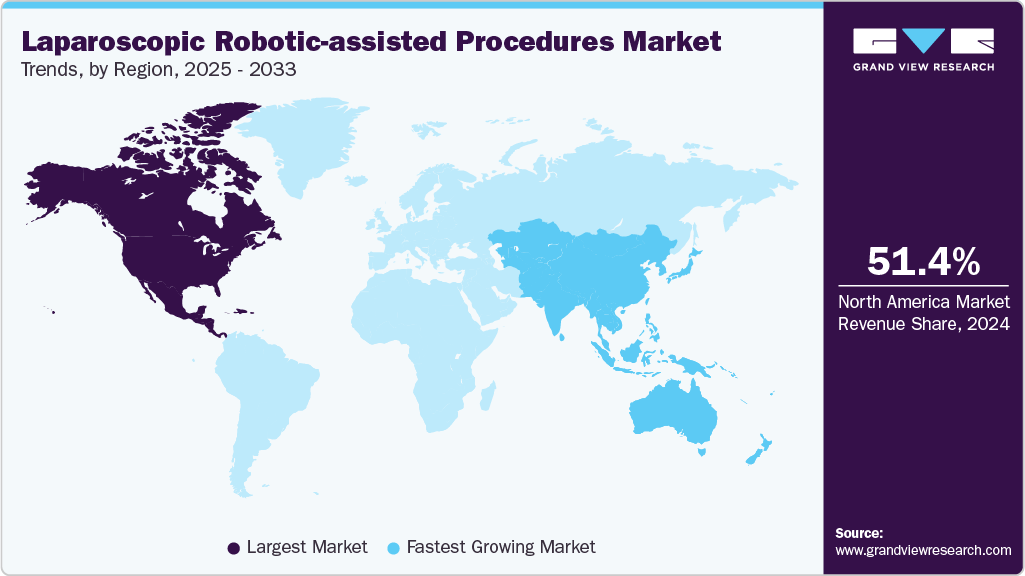
North America dominated the laparoscopic robotic-assisted procedures market with a revenue share of 51.36% in 2024. The rapid uptake of advanced medical technologies and robotics primarily fuels the market growth. The region boasts a robust healthcare infrastructure and significantly emphasizes technological progress, which contributes to a greater prevalence of robotic-assisted surgeries. For instance, in June 2024, Texas Health expanded its surgical robots to enhance surgical precision and improve patient outcomes across the system. The goal was to install the da Vinci 5 robotic systems in 12 hospitals by June.
 To learn more about this report, Download Free Sample Report
 U.S. Laparoscopic Robotic-assisted Procedures Market Trends
The U.S. dominated the laparoscopic robotic-assisted procedures industry in North America in 2024. Robotic-assisted laparoscopy enhances the safety, precision, and results of complex surgical procedures while minimizing patient recovery times. Furthermore, the availability of a robust healthcare infrastructure, ongoing advancements in robotic technology, and the involvement of key market players in the country are expected to propel market growth over the forecast period. For instance, a study published by MJH Life Sciences, a medical media company in the U.S., in March 2025, indicated that robotic-assisted laparoscopy provides a modest overall survival benefit compared to traditional laparoscopy for patients with endometrial cancer.
Europe Laparoscopic Robotic-assisted Procedures Market Trends
The laparoscopic robotic-assisted procedures industry in Europe is expected to grow significantly over the forecast period. The demand for minimally invasive surgeries continues to rise due to patient-centric advantages and advancements in surgical techniques. Key minimally invasive surgeries are experiencing demand growth for robot-assisted laparoscopic surgery. This trend highlighted the importance of innovation and development within the surgical robots industry to meet the evolving needs of healthcare providers and patients.
The laparoscopic robotic-assisted procedures market in the Germany is expected to grow significantly during the forecast period. The rising number of robot-assisted surgeries nationwide is expected to grow the country's market. According to the National Library of Medicine's July 2023 article, the utilization of robot-assisted systems in general surgery has grown in recent years, with Germany showcasing a rapid increase in installations. In 2018, approximately 100 robot-assisted systems were in operation in German hospitals, and by 2022, this number had surged to over 200.
Asia Pacific Laparoscopic Robotic-assisted Procedures Market Trends
The Asia Pacific laparoscopic robotic-assisted procedures industry is expected to register the fastest growth rate over the forecast period. Increasing government initiatives to encourage healthcare providers and other healthcare organizations to adopt technologically advanced medical devices and systems are a key factor driving the market growth. Regarding the APAC region, Japan, Singapore, Australia, and South Korea have been adopting technology on a large scale in the healthcare sector. Thailand, China, India, and Malaysia are the emerging markets.
China laparoscopic robotic-assisted procedures market is anticipated to register considerable growth during the forecast period. Strategies such as expansion activities, product approvals, launches, and partnerships are key to propelling market growth. For instance, in January 2022, Shanghai MicroPort MedBot announced NMPA approval of its Toumai Laparoscopic Surgical Robot, the first four-arm laparoscopic robot developed and commercialized in China.
Latin America Laparoscopic Robotic-assisted Procedures Market Trends
The Latin America laparoscopic robotic-assisted procedures industry is anticipated to witness considerable growth over the forecast period. Furthermore, the rise in healthcare expenditures and the significant investments in infrastructure throughout the region have enabled the adoption of advanced laparoscopic surgical robots in the healthcare sector. Moreover, supportive government initiatives, collaborations between healthcare institutions and technology providers, and a shift towards advanced medical technologies contribute to the significant growth potential for the market.
Brazil laparoscopic robotic-assisted procedures market is anticipated to register considerable growth during the forecast period. A rise in product approvals from regulatory authorities and patient awareness is expected to propel market growth. For instance, in December 2024, MicroPort MedBot received its Toumai Laparoscopic Surgical Robot (Toumai Robot) market approval from Brazil's Brazilian National Health Surveillance Agency (ANVISA).
Middle East & Africa Laparoscopic Robotic-assisted Procedures Market Trends
The Middle East and Africa laparoscopic robotic-assisted procedures industry is anticipated to witness considerable growth over the forecast period. Improving healthcare infrastructure, rapid technological advancements, and the increasing prevalence of chronic diseases and illnesses, which lead to an increase in the number of surgical procedures, are among the factors boosting the market in the country.
The UAE laparoscopic robotic-assisted procedures market is anticipated to register considerable growth during the forecast period. Flagship hospitals are adopting robotic systems to position themselves as regional surgical leaders. The Versius Surgical Robotic System was first introduced to the UAE at Al Zahra Hospital in Dubai, which became the first hospital in the region to adopt the system in May 2021. The system's introduction marked a significant expansion for CMR Surgical, the system's developer, into the Middle East, with the UAE serving as a strategic hub.
Key Laparoscopic Robotic-assisted Procedures Company Insights
Key participants in the laparoscopic robotic-assisted procedures industry are focusing on devising innovative business growth strategies, such as expanding their product portfolios, partnerships and collaborations, mergers and acquisitions, and expanding their business footprints.
Key Laparoscopic Robotic-assisted Procedures Companies:
The following are the leading companies in the laparoscopic robotic-assisted procedures market. These companies collectively hold the largest market share and dictate industry trends.
- Intuitive Surgical
- CMR Surgical
- Medtronic
- Asensus Surgical US, Inc.
- MicroPort (Shanghai MicroPort Medical (Group) Co.Ltd.)
- Stryker Corporation
- Titan Medical Inc.
- Vicarious Surgical
- Distalmotion SA
- Virtual Incision
Recent Developments
-
In February 2025, Erop, a manufacturer of surgical medical devices, completed preclinical trials for laparoscopic cholecystectomy with the "Eroptix 2nd Generation Laparoscopic Surgery-assisted Cooperative Robot." This robot was developed in partnership with Rainbow Robotics, a robotics platform company. The trials were conducted at Seoul St. Mary's Hospital, affiliated with the Catholic University of Korea, utilizing cadavers donated for research purposes.
-
In March 2025, Distalmotion completed a significant milestone by achieving the inaugural sale and delivery of the DEXTER Robotic Surgery System to Memorial Hermann Health System in Houston, Texas. This development represents a substantial advancement in increasing access to robotic surgery across the U.S.
Laparoscopic Robotic-assisted Procedures Market Report Scope
Report Attribute
Details
Market size value in 2025
USD 8.56 billion
Revenue forecast in 2033
USD 31.56 billion
Growth rate
CAGR of 17.71% from 2025 to 2033
Actual data
2021 - 2024
Forecast data
2025 - 2033
Quantitative units
Revenue in USD million/billion and CAGR from 2025 to 2033
Report coverage
Revenue forecast, company ranking, competitive landscape, growth factors, and trends
Segments covered
Application, procedure complexity, end-use, region
Regional scope
North America; Europe; Asia Pacific; Latin America; MEA
Country scope
U.S.; Canada; Mexico; UK; Germany; Spain; France; Italy; Spain; Denmark; Sweden; Norway; China; Japan; India; Australia; South Korea; Thailand; Brazil; Argentina; South Africa; Saudi Arabia; UAE; Kuwait
Key companies profiled
Intuitive Surgical, CMR Surgical, Medtronic, Asensus Surgical US, Inc., MicroPort (Shanghai MicroPort Medical (Group) Co. Ltd.), Stryker Corporation, Titan Medical Inc., Vicarious Surgical, Distalmotion SA, Virtual Incision
Customization scope
Free report customization (equivalent up to 8 analysts working days) with purchase. Addition or alteration to country, regional & segment scope.
Pricing and purchase options
Avail customized purchase options to meet your exact research needs. Explore purchase options
Global Laparoscopic Robotic-assisted Procedures Market Report Segmentation
This report forecasts revenue growth and provides at the global, regional, and country levels an analysis of the latest trends in each of the sub-segments from 2021 to 2033. For this report, Grand View Research has segmented the global laparoscopic robotic-assisted procedures market report based on application, procedure complexity, end-use, and region:
 To learn more about this report, Download Free Sample Report
 -
Application Outlook (Revenue USD Million, 2021 - 2033)
-
General Surgery
-
Urology
-
Gynecology
-
Colorectal
-
Bariatric
-
ENT (Otolaryngology)
-
Others (Cardiothoracic, Thoracic, Pediatric)
-
-
Procedure Complexity Outlook (Revenue USD Million, 2021 - 2033)
-
High complexity
-
Medium complexity
-
Low complexity
-
-
End-use Outlook (Revenue USD Million, 2021 - 2033)
-
Large hospital systems (multi-facility)
-
Standalone / private hospitals
-
Specialty clinics / ASCs
-
Other (Research / training centers)
-
-
Regional Outlook (Revenue, USD Million, 2021 - 2033)
-
North America
-
U.S.
-
Canada
-
Mexico
-
-
Europe
-
UK
-
Germany
-
France
-
Italy
-
Spain
-
Denmark
-
Sweden
-
Norway
-
-
Asia Pacific
-
Japan
-
China
-
India
-
Australia
-
South Korea
-
Thailand
-
-
Latin America
-
Brazil
-
Argentina
-
-
Middle East & Africa
-
South Africa
-
Saudi Arabia
-
UAE
-
Kuwait
-
-
Frequently Asked Questions About This Report
The global laparoscopic robotic-assisted procedures market size was estimated at USD 7.33 billion in 2024 and is expected to reach USD 31.56 billion in 2025.
The global laparoscopic robotic-assisted procedures market is expected to grow at a compound annual growth rate of 17.71% from 2025 to 2033 to reach USD 31.56 billion by 2033.
North America dominated the laparoscopic robotic-assisted procedures market with a revenue share of 51.36% in 2024. The rapid uptake of advanced medical technologies and robotics primarily fuels North America's laparoscopic robotic-assisted procedures market.
Some key players operating in the laparoscopic robotic-assisted procedures market include Intuitive Surgical, CMR Surgical, Medtronic, Asensus Surgical US, Inc., MicroPort (Shanghai MicroPort Medical (Group) Co. Ltd.), Stryker Corporation, Titan Medical Inc., Vicarious Surgical, Distalmotion SA, Virtual Incision.
Key factors that are driving the market growth include growing integration of advanced technology, increasing demand for minimally invasive surgeries and rising government initiatives.
About the Author(s)
Medical Devices Research Team
Healthcare · Medical DevicesThis report was authored by the medical devices research team at Grand View Research - comprising two research analysts, one senior research analyst, and one industry expert - with specialized expertise in the medical devices segment of the healthcare industry. All findings are based on proprietary healthcare databases, executive interviews, and regulatory analysis, subject to internal peer review prior to publication.
Last Updated:
Speak to Analyst

Customize this report to your needs - add regions, segments, or data points, with 20% free customization.
Or view our licence options:


ISO 9001:2015 & 27001:2022 Certified
We are GDPR and CCPA compliant! Your transaction & personal information is safe and secure. For more details, please read our privacy policy.


