
- Home
- »
- Medical Devices
- »
-
Latin America Trauma Devices Market, Industry Report 2033GVR Report cover

Latin America Trauma Devices Market (2026 - 2033) Size, Share & Trends Analysis Report By Type (Internal Fixators, External Fixators), By Surgical Site (Upper Extremities, Lower Extremities), By End Use, By Country, And Segment Forecasts
Market Size, 2025
$494.3MMarket Estimate, 2026
$522.5MMarket Forecast, 2033
$779.0MCAGR, 2026–2033
5.9%Latin America Trauma Devices Market Summary
The Latin America trauma devices market size was valued at USD 494.34 million in 2025 and is projected to grow from USD 522.5 million in 2026 to USD 779.02 million by 2033, at a CAGR of 5.87% from 2026 to 2033. The market growth is driven by the rising incidence of road traffic accidents, increasing orthopedic trauma procedures, and expanding access to advanced fracture care across countries such as Brazil, Mexico, and Argentina. Growing cases of long bone, hip, and lower extremity fractures are increasing demand for trauma fixation systems, including plates, screws, intramedullary nails, and external fixators.
Key Market Trends & Insights
- The Colombia trauma devices market is anticipated to grow at the fastest CAGR from 2026 to 2033.
- Based on type, the internal fixators segment held the largest revenue share in 2025.
Market Size & Forecast
- 2025 Market Size: USD 494.34 Million
- 2033 Projected Market Size: USD 779.02 Million
- CAGR (2026-2033): 5.87%
Prism AI by Grand View Research Free to tryAsk a question about the latin america trauma devices marketTry asking✓Every figure cited from GVR research Prefer the report? Download free sample →
For instance, in February 2025, CG MedTech expanded its portfolio by introducing the ANAX 5.5 posterior fixation system in Latin America. The company has expanded into four new markets, including Puerto Rico, the Dominican Republic, Nicaragua, and Peru.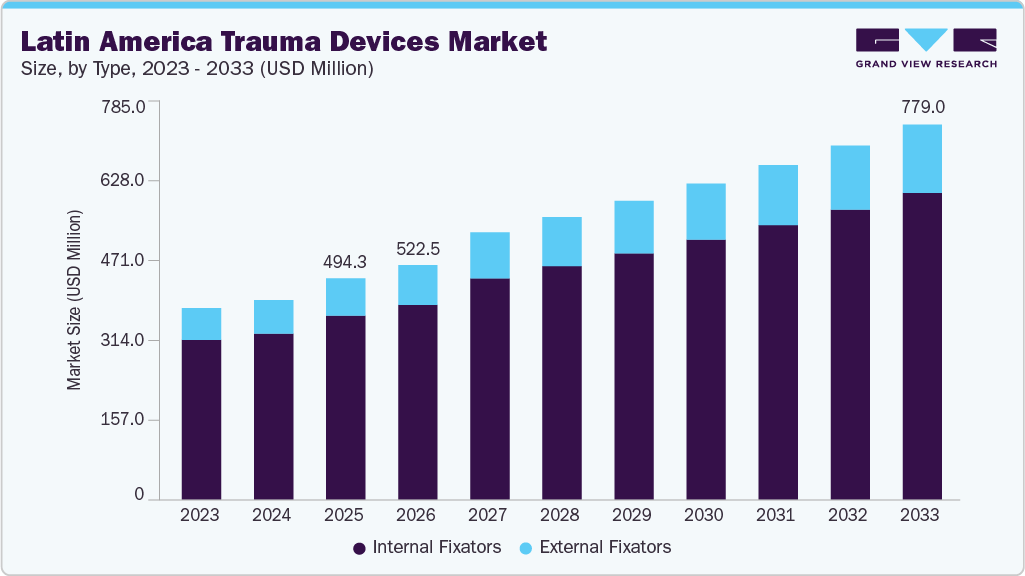 Source: Grand View Research, IR Documents, Primary Interviews, Paid DatabasesTo learn more about this report,
 Download Free Sample Report
The section below outlines the key factors driving the growth of the Latin America trauma devices industry, highlighting the rising incidence of road accidents, sports injuries, fractures, and orthopedic trauma cases across the region. It also examines increasing healthcare investments, expanding access to advanced orthopedic care, growing adoption of minimally invasive trauma fixation technologies, and the rising presence of international medical device manufacturers supporting market expansion.
Case Study: Intramedullary Nailing for Femoral Diaphyseal Fractures in Brazil
Patient Profile
A multicenter retrospective cohort study was conducted involving 91 adult patients with femoral diaphyseal fractures treated between 2020 and 2024 at two Brazilian hospitals: Cajuru University Hospital in Curitiba and Adriano Jorge Hospital Foundation in Manaus. The mean patient age was 33.3 years, with males accounting for 76.9% of cases. Traffic accidents represented the primary cause of injury, contributing to approximately 84.6% of fractured cases.
Clinical Objective
The clinical objective was to evaluate the epidemiology, fracture healing outcomes, and complication rates associated with intramedullary nail (IMN) fixation in femoral diaphyseal fractures in the Brazilian population. The study aimed to assess the effectiveness of advanced intramedullary fixation systems in achieving bone consolidation and minimizing post-surgical complications.
Procedure Overview
Patients underwent surgical fixation with intramedullary nail systems, including the Intramedullary Nail Orion SP Femur and the Intramedullary Nail SP2 Femur, both developed by Biomecanica. Both antegrade and retrograde nailing approaches were utilized depending on fracture characteristics and surgical considerations. Bone consolidation was evaluated through radiographic assessment at six months and one year following surgery. The procedures were performed across tertiary healthcare institutions specializing in orthopedic trauma management.
Results & Diagnosis
The study demonstrated the high clinical effectiveness of intramedullary fixation systems in the management of femoral fractures. Bone healing was achieved in 96.7% of patients within six months and 98.9% within one year. The complication rate remained low at 3.26%, including isolated cases of pseudoarthrosis and infection. Only two patients required reoperation during the study period. The findings confirmed that intramedullary nailing provides high consolidation rates and favorable surgical outcomes in complex femoral trauma cases.
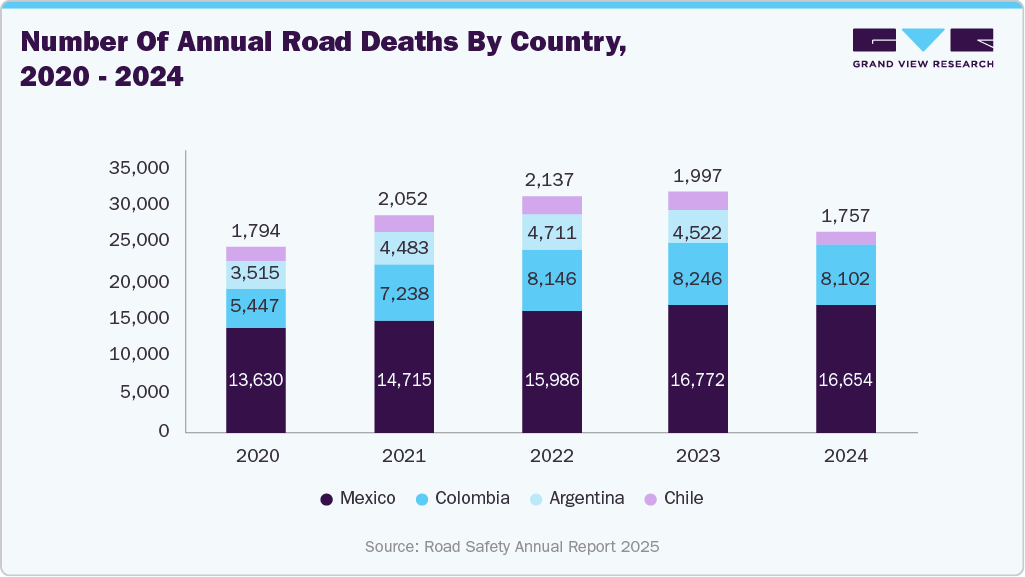
- Furthermore, global injury data indicates that road traffic crashes and falls remain among the leading causes of death and disability in the working-age population, particularly affecting individuals aged 5-29 years, which represents a large proportion of the economically active population in Latin America. This sustained trauma burden continues to generate a recurring patient pool requiring surgical fracture management, thereby reinforcing long-term demand for advanced trauma fixation systems across the region.
 To learn more about this report, Download Free Sample Report
The chart above shows an increase in annual road deaths across major Latin American countries between 2020 and 2024, particularly in Mexico, Colombia, and Argentina. The growing number of fatal and severe road accidents reflects a broader rise in high-impact trauma injuries, including complex fractures and musculoskeletal damage. As a result, the incidence of orthopedic trauma cases has increased significantly, driving higher demand for trauma fixation devices, emergency surgical procedures, and acute care treatment across the region.
Market Restraint: High Cost of Advanced Trauma Devices and Limited Reimbursement Coverage
Limited reimbursement coverage and the high overall cost of orthopedic trauma procedures continue to restrain the growth of the Latin America trauma devices market. Advanced trauma fixation surgeries often involve expensive implants, surgical equipment, hospitalization, and rehabilitation expenses, creating a substantial financial burden for both healthcare systems and patients. According to the OECD, out-of-pocket healthcare expenditure accounted for nearly 34% of total health spending across Latin America, significantly higher than the OECD average, limiting patient access to advanced orthopedic treatments and fracture management procedures.
In addition, the region remains highly dependent on imported orthopedic trauma implants and fixation systems supplied by multinational companies such as DePuy Synthes, Stryker, and Zimmer Biomet. Premium fixation devices, including locking plates and intramedullary nails, can cost several hundred to over a thousand dollars per procedure, increasing procurement costs for public hospitals and private healthcare providers. Due to constrained healthcare budgets and inconsistent reimbursement frameworks, many hospitals continue to prioritize lower-cost conventional treatment approaches, thereby restricting the broader adoption of advanced orthopedic trauma technologies across Latin America.
Average Market Price Range by Category
Orthopedic trauma device pricing in Latin America varies significantly based on fixation complexity, implant material, and procedural setting. Internal fixation systems, which are widely used in routine fracture management, typically fall in the range of ~USD 800-USD 1,600 per construct, depending on whether plates, screws, or intramedullary nails are used. External fixation systems are comparatively higher in value due to their specialized application in complex trauma and limb reconstruction cases, with pricing typically ranging from ~USD 600-USD 1,200 for unilateral fixators, ~USD 1,800-USD 3,500 for circular (Ilizarov) systems, and up to ~USD 2,500-USD 4,500 for hybrid or advanced deformity correction systems.
Market Opportunity: Increasing Adoption of Advanced Trauma Fixation Technologies and Minimally Invasive Surgeries
The growing preference for minimally invasive surgeries and technologically advanced fixation systems is increasing the demand for modern trauma implants, including locking plates, intramedullary nails, and external fixation devices. Healthcare providers are increasingly adopting advanced trauma systems that offer improved biomechanical stability, reduced surgical complications, shorter hospital stays, and faster patient recovery outcomes.
Furthermore, the rising penetration of private hospitals, companies, and ambulatory surgical centers is expected to support the broader adoption of premium orthopedic trauma devices in Latin America over the forecast period. In May 2024, Zimmer Biomet announced the expansion of its commercial and distribution activities across Latin America to strengthen access to orthopedic and trauma care solutions in emerging markets. The company continues to increase collaborations with regional distributors and healthcare providers to improve the availability of advanced musculoskeletal and trauma fixation technologies across the region.
Market Challenge: Stringent Regulatory Framework
Complex regulatory approval processes and heavy dependence on imported orthopedic implants remain major challenges for the Latin America trauma devices industry. Medical device regulations vary significantly across countries such as Brazil, Mexico, Argentina, and Colombia, creating lengthy approval timelines and increasing compliance costs for manufacturers. Regulatory authorities, including Brazil’s National Health Surveillance Agency (ANVISA), often require extensive product documentation, local registrations, and certification procedures before commercialization, delaying the introduction of advanced trauma fixation technologies into the market.
Market Dynamics
The Latin America trauma devices market is strongly supported by the growing burden of injury-related morbidity and mortality, particularly driven by road traffic accidents, falls, and sports-related trauma. The high burden of road traffic injuries in Latin America, particularly in Brazil, is significantly contributing to increased demand for trauma fixation systems used in fracture management and orthopedic reconstruction. For instance, a 2025 study published on Brazil’s road traffic injury burden reported more than 34,000 deaths in 2023, along with 2.34 million disability-adjusted life years and an estimated economic cost equivalent to 3.8% of GDP, reflecting the large-scale clinical and surgical need for trauma devices across the region.
As the region’s population continues to age, there is a steady increase in bone density loss and related conditions, particularly among postmenopausal women and elderly populations. This has led to a higher incidence of hip, vertebral, and wrist fractures resulting from low-impact falls. Therefore, demand for orthopedic trauma devices, such as fixation systems, plates, screws, and joint reconstruction implants, used in fracture management and surgical stabilization is increasing.
Market Concentration & Characteristics
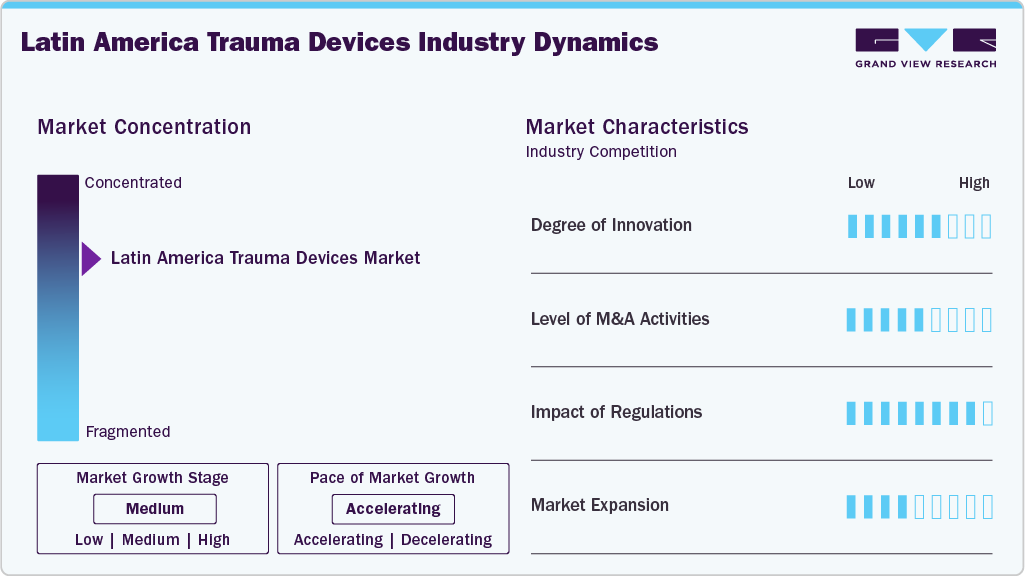
The chart below represents the relationship between industry concentration, characteristics, and participants. The industry is fragmented, with many products and end users in the market. There is a high degree of innovation, a moderate level of mergers & acquisitions, a high impact of regulations, and moderate industry expansion.
The industry is experiencing a high degree of innovation. Increasing strategic focus by major orthopedic companies on dedicated trauma and orthopedic innovation platforms to accelerate development of next-generation fixation technologies and surgical solutions. For instance, in October 2025, Johnson & Johnson announced its intent to separate its orthopedics business, DePuy Synthes, into an independent company focused exclusively on orthopedic technologies and musculoskeletal innovation.
 To learn more about this report, Download Free Sample Report
Mergers & acquisitions activities in the Latin America trauma devices market are high, driven by growing demand and consolidation among companies. For instance, in March 2025, Medartis acquired Brazilian company NeoOrtho with 51% of majority stake. NeoOrtho specializes in trauma, craniomaxillofacial, and spinal implants, focusing on making surgical solutions more accessible.
The regulatory landscape in the market is driven by government-led healthcare reforms, strict licensing requirements, and increasing emphasis on quality assurance and patient safety. In Argentina, medical (trauma) devices are regulated by the National Administration of Drugs, Foods, and Medical Devices (ANMAT), which oversees the approval, importation, and commercialization of orthopedic implants and trauma fixation systems. Devices such as plates, screws, external fixators, and intramedullary nails must comply with regulatory requirements related to product safety, quality, and performance before market entry.
Stryker launched the T2 Alpha Humerus Nailing System as part of its T2 Alpha trauma portfolio, designed for humeral fracture fixation, including complex cases such as non-unions and malunions. It also features guided instrumentation and advanced locking options to support streamlined surgical workflows and enhanced fixation outcomes.
“With the T2 Alpha Humerus Nailing System, we are giving surgeons greater flexibility to treat complex humerus fractures with confidence, this addition to our T2 Alpha portfolio builds on decades of surgeon collaboration and innovation, delivering solutions designed to support consistent results while driving efficiency in the operating room.”
- Eric Tamweber, vice president and general manager of Stryker’s Trauma business
Type Insights
The internal fixators segment dominated the Latin America trauma devices market, accounting for a significant share of 82.78% in 2025. The increasing incidence of road traffic accidents, sports injuries, and osteoporosis-related fractures across the region is driving the demand for internal fixation devices such as plates, screws, rods, and intramedullary nails. These systems are widely preferred due to their ability to provide rigid stabilization, improved anatomical alignment, faster healing, and enhanced patient mobility following orthopedic trauma procedures. For instance, in August 2024, Stryker launched the Pangea Plating System, designed for fracture fixation, osteotomies, and arthrodesis procedures with anatomically contoured plates and variable-angle locking technology.
The external fixators segment is expected to grow at a significant CAGR during the forecast period. This growth is attributed to the demand for limb reconstruction and deformity correction procedures. Manufacturers are increasingly focusing on lightweight modular systems, adjustable fixation frames, and patient-specific solutions to improve surgical precision and patient mobility. The increasing expansion of orthopedic implant manufacturers into emerging Latin American markets is driving the adoption of advanced fixation and trauma management systems across the region.
Surgical Site Insights
The lower extremity segment dominated the Latin America trauma devices industry, accounting for a significant share of 64.52% in 2025. This is due to the increasing incidence of fractures involving the femur, tibia, fibula, ankle, and foot, which often require complex surgical fixation to restore mobility and weight-bearing function. Rising cases of road traffic accidents, sports-related injuries, falls, and occupational trauma are significantly contributing to the growing burden of lower limb injuries in the region. In addition, the high prevalence of osteoporosis among the aging population is increasing the risk of fragility fractures, further supporting demand for advanced fixation systems.
The upper extremities segment is expected to grow at a significant CAGR during the forecast period. The rising incidence of upper limb fractures involving the shoulder, humerus, elbow, forearm, wrist, and hand is driving demand for advanced fixation systems in Latin America. Rising cases of road traffic accidents, sports injuries, and occupational trauma are further supporting the need for anatomically precise and stable fracture management solutions.
End Use Insights
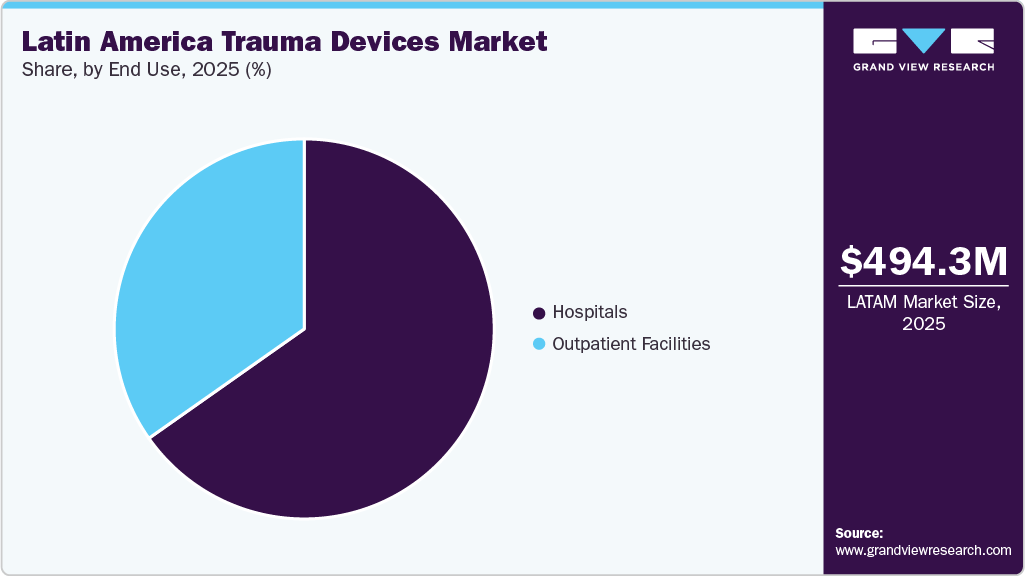
The hospital segment led the Latin America trauma devices market, accounting for a significant share of 65.24% in 2025. This can be attributed to the increasing burden of high-energy trauma cases, including road traffic accidents, falls, sports injuries, and occupational injuries, which require hospital-based surgical management using advanced fixation systems such as plates, screws, intramedullary nails, and external fixators.
 To learn more about this report, Download Free Sample Report
The outpatient facilities segment is expected to grow at a significant CAGR during the forecast period. This is due to the rising demand for faster patient turnover, reduced healthcare costs, and improved access to orthopedic care in urban centers across Latin America. Specialized orthopedic and sports medicine clinics are increasingly equipped with advanced imaging systems, fluoroscopy, and minimally invasive surgical tools that support outpatient management of selected upper and lower extremity injuries.
Country Insights
Brazil Trauma Devices Market Trends
Brazil dominated the Latin America trauma devices market in 2025, driven by its advanced private healthcare system and growing investment in orthopedic trauma care. The country’s high incidence of road traffic accidents and sports injuries, along with a growing elderly population, drives consistent demand for fracture fixation systems such as plates, screws, and intramedullary nails. According to World Bank data, Brazil recorded more than 34,000 fatalities due to road traffic injuries (RTIs) in 2023. The expansion of private hospital networks and the improvement of access to orthopedic surgeries in urban centers such as São Paulo and Rio de Janeiro are further supporting the adoption of advanced trauma solutions, while leading global manufacturers continue to strengthen distribution channels to improve product availability.
Colombia Trauma Devices Market Trends
The Colombia trauma devices market is expected to grow at a significant CAGR during the forecast period, driven by the consistent high number of road traffic injuries, which is a primary driver of demand for trauma fixation devices such as plates, screws, and nails. The increasing incidence of fractures directly fuels surgical interventions, and implant usage is primarily driving the market growth. According to the Road Safety Annual Report 2025, a key regional driver for the Colombia trauma devices market is the persistently high burden of road traffic fatalities, particularly among vulnerable road users such as cyclists and motorcyclists.
Key Latin America Trauma Devices Companies
-
Smith+Nephew
-
Globus Medical, Inc.
-
Medtronic
-
DePuy Synthes (Johnson & Johnson)
-
Orthofix Medical Inc
-
Stryker Corporation
-
Zimmer Biomet
-
Arthrex
-
Medartis AG
Competitive Benchmarking
Operating Strategies
Competitive Edge
Weaknesses
Mature Players: Smith+Nephew
- Expand trauma and orthopedic portfolios through advanced fixation systems, minimally invasive procedures, and digital surgical technologies.
- Strengthen Latin American presence through distributor networks, hospital partnerships, and surgeon training programs.
- Strong brand recognition, diversified product portfolios, and established surgeon preference support market leadership.
- Large-scale operations and strong R&D capabilities enable continuous innovation and broad market reach.
- High pricing of advanced implants limits adoption in cost-sensitive healthcare systems.
- Complex operations and broad portfolios increase regulatory and supply chain challenges.
Emerging Players: Globus Medical, Inc.
- Focus on niche trauma segments, biologics, minimally invasive technologies, and specialized orthopedic solutions.
- Expand through acquisitions, distributor partnerships, and targeted surgeon education programs.
- Agile innovation strategies support faster product development and specialized market positioning.
- Strong expertise in spine, limb reconstruction, and sports medicine differentiates these players.
- Limited brand presence and smaller distribution networks restrict broader market penetration.
- Lower financial scale reduces competitiveness in large hospital and government procurement contracts
Recent Developments
- In February 2026, Stryker launched the T2 Alpha Humerus Nailing System as part of its T2 Alpha trauma portfolio, designed for humeral fracture fixation, including complex cases such as non-unions and malunions.
“With the T2 Alpha Humerus Nailing System, we are giving surgeons greater flexibility to treat complex humerus fractures with confidence, this addition to our T2 Alpha portfolio builds on decades of surgeon collaboration and innovation, delivering solutions designed to support consistent results while driving efficiency in the operating room.”- Eric Tamweber, vice president and general manager of Stryker’s Trauma business
- In September 2025, Smith+Nephew launched the CENTRIO Platelet-Rich Plasma (PRP) System to expand its Advanced Wound Bioactives portfolio. The system is designed for chronic wound management, including diabetic foot ulcers and venous leg ulcers, and supports natural healing using a patient’s own platelets and plasma.
“CENTRIO PRP System sits perfectly alongside our portfolio of skin substitutes to offer a broad portfolio of proven biological solutions that augment healing outcomes backed by extensive clinical evidence. We are pleased to be able to expand access to this exciting and highly differentiated technology to help ease the burden of living with hard to heal wounds.” -Vincent Fath, SVP US Advanced Wound Management, Smith+Nephew
Latin America Trauma Devices Market Report Scope
Report Attribute
Details
Market size value in 2026
USD 522.5 million
Revenue forecast in 2033
USD 779.02 million
Growth rate
CAGR of 5.87% from 2026 to 2033
Actual data
2021 - 2025
Forecast data
2026 - 2033
Quantitative units
Revenue in USD million and CAGR from 2026 to 2033
Report coverage
Revenue forecast, company ranking, competitive landscape, growth factors, and trends
Regional Scope
Latin America
Segments covered
Type, surgical site, end use, country
Country scope
Brazil; Mexico; Argentina; Colombia; Chile
Key companies profiled
Smith+Nephew; Globus Medical, Inc.; Medtronic; DePuy Synthes (Johnson & Johnson); Orthofix Medical Inc.; Stryker Corporation; Zimmer Biomet; Arthrex; Medartis AG
Customization scope
Free report customization (equivalent up to 8 analysts working days) with purchase. Addition or alteration to country, regional & segment scope.
Pricing and purchase options
Avail customized purchase options to meet your exact research needs. Explore purchase options
Latin America Trauma Devices Market Report Segmentation
This report forecasts revenue growth at the country level and provides an analysis of the latest industry trends in each of the sub-segments from 2021 to 2033. For this study, Grand View Research has segmented the Latin America trauma devices market report based on type,surgical site, end use, and country:
-
Type Outlook (Revenue, USD Million, 2021 - 2033)
-
Internal Fixators
-
Plates & Screws
-
Rods & Pins
-
Others (Cerclage Wires, Staples, Bone Pins)
-
-
External Fixators
-
Uniplanar & Biplanar Fixators
-
Circular Fixators
-
Hybrid Fixators
-
-
-
Surgical Site Outlook (Revenue, USD Million, 2021 - 2033)
-
Upper Extremities
-
Hand & Wrist
-
Shoulder
-
Arm
-
Elbow
-
-
Lower Extremities
-
Hip & Pelvic
-
Lower Leg
-
Foot & Ankle
-
Knee
-
Thigh
-
-
-
End Use Outlook (Revenue, USD Million, 2021 - 2033)
-
Hospitals
-
Outpatient Facilities
-
-
Country Outlook (Revenue, USD Million, 2021 - 2033)
-
Brazil
-
Mexico
-
Argentina
-
Colombia
-
Chile
-
Rest of Latin America
-
Delivered Customizations
This report has been delivered with the following In-depth customizations
Client Request
Customization Delivered
Value Adds
Orthopedic Surgeon & Hospital Demand Analysis
Delivered a customized evaluation of orthopedic surgeon preferences, hospital procurement behavior, trauma care infrastructure, and adoption trends for internal fixation devices, external fixation systems, plates, screws, nails, and biologics. The study also analyzed demand drivers such as road accident rates, aging population, sports injuries, and increasing access to orthopedic surgery.
Provides actionable insights into evolving purchasing behavior, clinical adoption trends, and high-demand trauma device categories, helping manufacturers align commercialization, product development, and regional expansion strategies with market demand.
AI-Based Trauma Hotspot Mapping & Demand Forecasting
Developed an AI-driven regional trauma incidence mapping model analyzing road accidents, workplace injuries, sports trauma, violence-related injuries, and aging-related fractures across Latin America. The study integrated hospital admission data, urbanization trends, emergency response infrastructure, and orthopedic surgery volumes to forecast future trauma device demand by city and country.
Enables manufacturers and investors to identify high-growth trauma clusters, optimize distributor networks, prioritize hospital targeting strategies, and improve long-term sales forecasting accuracy.
Trauma Care Accessibility & Rural Penetration Analysis
Delivered a customized study evaluating trauma care accessibility gaps in rural and underserved regions, including ambulance response times, orthopedic specialist shortages, public hospital capacity, and availability of fracture fixation procedures. The analysis also examined opportunities for portable fixation systems and low-cost trauma implants.
Supports clients in developing inclusive pricing strategies, expanding into underserved markets, and identifying opportunities for affordable trauma device innovation and public-sector partnerships.
Frequently Asked Questions About This Report
The market is driven by the rising incidence of road traffic accidents, increasing orthopedic trauma procedures, and expanding access to advanced fracture care across countries such as Brazil, Mexico, and Argentina. Growing cases of long bone, hip, and lower extremity fractures are increasing demand for trauma fixation systems including plates, screws, intramedullary nails, and external fixators.
The Latin America trauma devices market is anticipated to witness growth at a rate of 5.87% over the forecast period to reach a value of 779.02 million by 2033.
The internal fixators segment held a significant share of 82.78% in 2025. Increasing incidence of road traffic accidents, sports injuries, and osteoporosis-related fractures across the region is driving the demand for internal fixation devices such as plates, screws, rods, and intramedullary nails.
Key players in the market include Smith+Nephew, Globus Medical, Inc., Medtronic, DePuy Synthes (Johnson & Johnson), Orthofix Medical Inc., Stryker Corporation, Zimmer Biomet, Arthrex, Medartis AG.
The Latin America trauma devices market was valued at USD 494.34 million in 2025 and is expected to reach USD 522.5 million in 2026.
About the Author(s)
Medical Devices Research Team
Healthcare · Medical DevicesThis report was authored by the medical devices research team at Grand View Research - comprising two research analysts, one senior research analyst, and one industry expert - with specialized expertise in the medical devices segment of the healthcare industry. All findings are based on proprietary healthcare databases, executive interviews, and regulatory analysis, subject to internal peer review prior to publication.
Last Updated:
Speak to Analyst

Customize this report to your needs - add regions, segments, or data points, with 20% free customization.
Or view our licence options:


ISO 9001:2015 & 27001:2022 Certified
We are GDPR and CCPA compliant! Your transaction & personal information is safe and secure. For more details, please read our privacy policy.


