
- Home
- »
- Clinical Diagnostics
- »
-
Legionella Testing Market Size, Growth Report, 2026-2033GVR Report cover

Legionella Testing Market (2026 - 2033)
Size, Share, & Trends Analysis Report By Type (Water Testing, IVD Testing), By End Use (Microbial Culture, Direct Fluorescent Antibody (DFA) Stain, PCR, Others), By Region, And Segment Forecasts
Market Size, 2025
$369.9MMarket Estimate, 2026
$399.3MMarket Forecast, 2023
$700.3MCAGR, 2026–2023
8.4%Legionella Testing Market Summary
The global legionella testing Market size was valued at USD 369.9 million in 2025 and is projected to grow from USD 399.3 million in 2026 to USD 700.3 million by 2033, growing at a CAGR of 8.4% from 2026 to 2033. North America dominated in the global market with the largest revenue share of 37.1% in 2025. The increasing incidence of Legionella-related disorders and rising awareness about preventive management are expected to drive market growth.
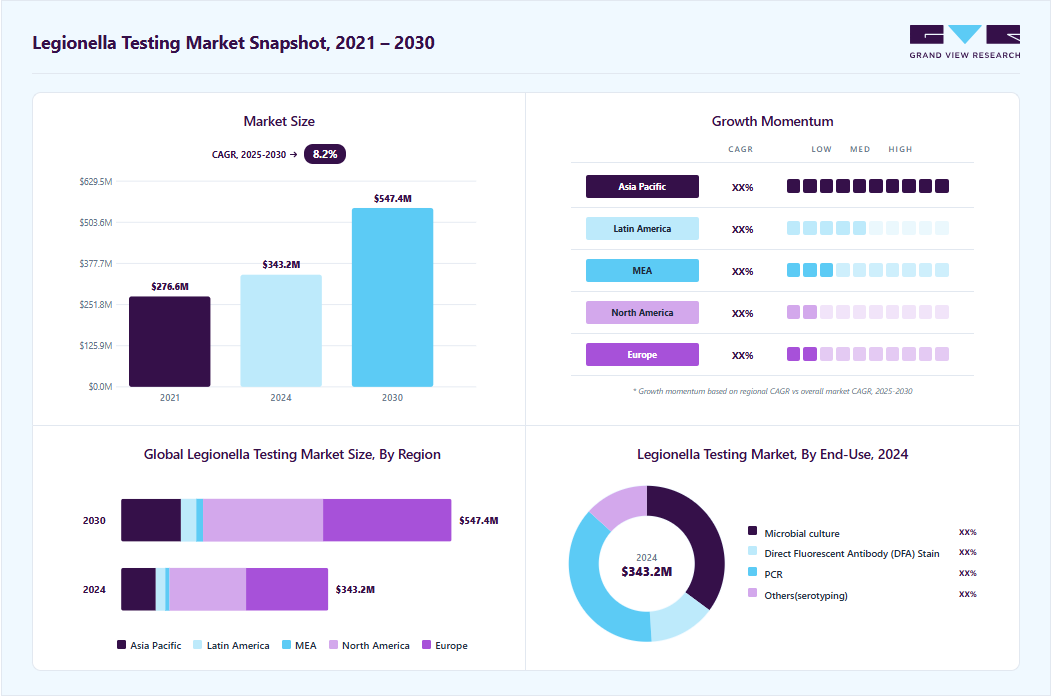 Source: Grand View Research, IR Documents, Primary Interviews, Paid DatabasesTo learn more about this report,
 Download Free Sample Report
 Key Market Trends & Insights
- By Type: Water testing segment led the market with the largest revenue share of 76.2% in 2025.
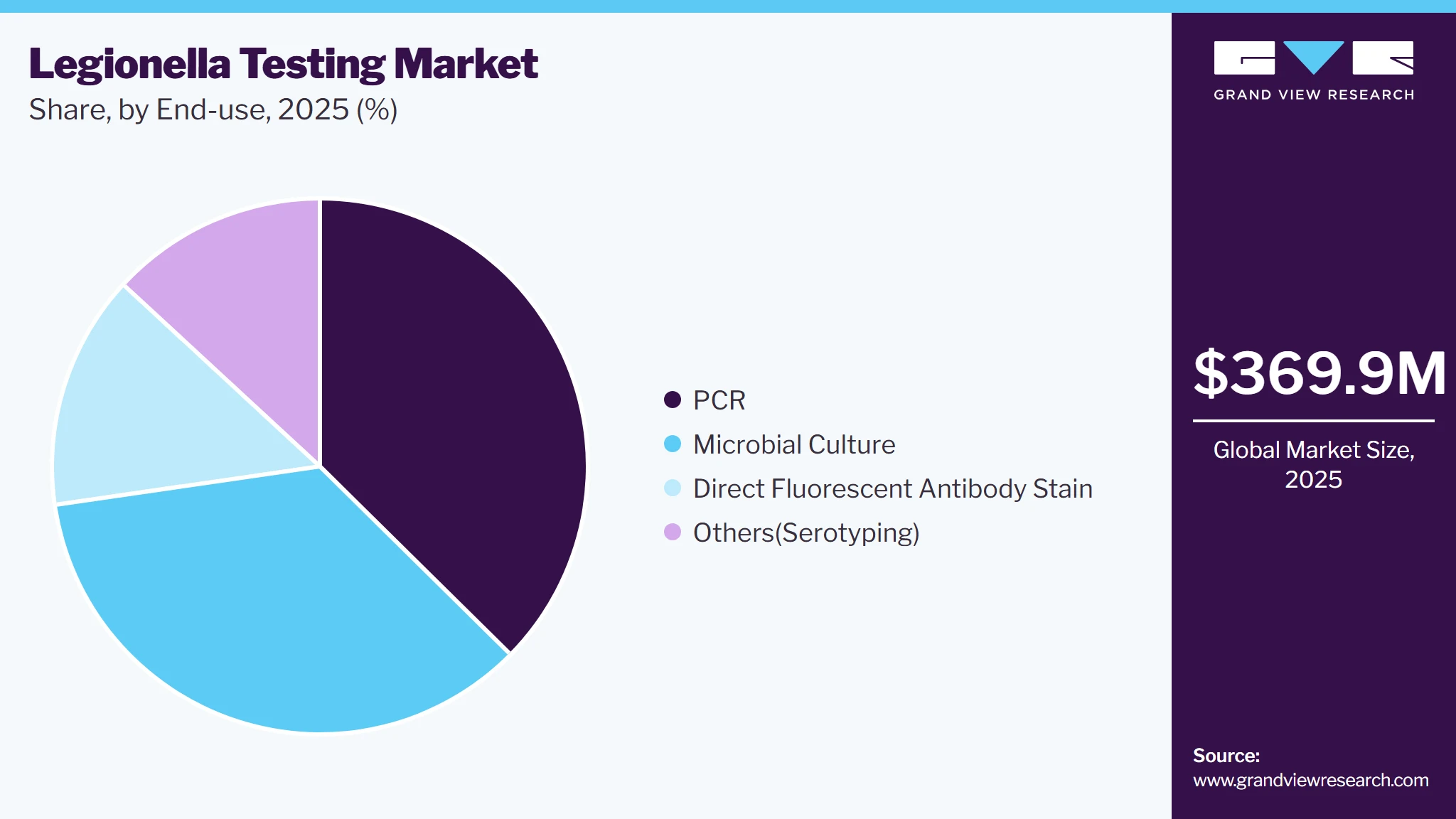
- By end use: PCR segment led the market with the largest revenue share of 37.4% in 2025.
Regional Highlights
- Largest regional market: North America (37.1% revenue share, 2025)
- By country: The U.S. held the largest market share in 2025
Market Size & Forecast
- Market size in 2025: USD 369.9 Million
- Estimated Market size in 2026: 399.3 Million
- Projected market size by 2033: USD 700.3 Million
- CAGR (2026-2033): 8.4%
Three ways to get this report
Buy it, customize it, or ask a question.Ask an Analyst
Analyst response in 1 business day
- AccessReport author, directly
- Reply timeWithin 1 working day
- No sales callDirect answer only
- FormatEmail reply
- CostFree, no cost
Get the Full Report
What the study covers
- FormatsPDF · Excel · Dashboard
- Timeline2026–2023 annual, 2025 base
- Coverage20+ countries, 5 regions
- Companies10+ key players profiled
Customize the Report
20% free customization
- IncludeCountries, segments, points
- TailorTo your product definition
- ExtendDeeper competitor detail
- OrA fully bespoke study
- Turnaround5–10 working days
Legionella can cause Legionellosis, a respiratory disorder (a form of pneumonia). It requires intensive care and hospitalization; hence, it is considered one of the public health concerns. The rising prevalence of bacteria-driven diseases and the increasing inclination among governments to incorporate programs to protect public health are expected to fuel the growth of this market. The growing new incidences of Legionnaires disease reported in multiple regions, especially in Europe, are leading to growth in demand for effective legionella testing solutions. For instance, according to the Communicable Disease Threats Report by the European Center for Disease Prevention and Control for week 9, 22-28 February 2025, Austria experienced an outbreak of Legionnaires in Vorarlberg.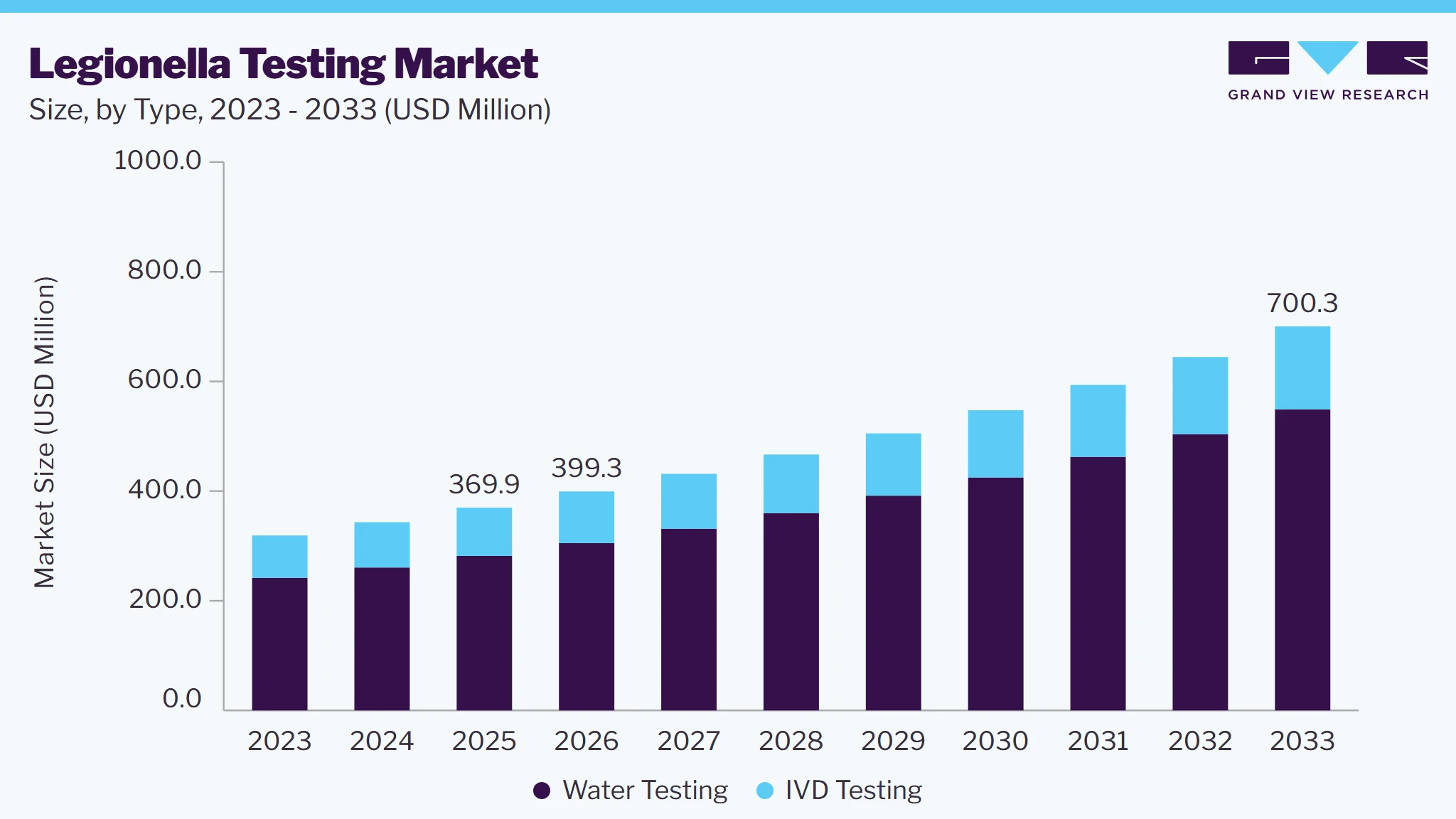 To learn more about this report, Download Free Sample Report
 Numerous countries in Europe have experienced such outbreaks. For instance, in 2024, 49 cases and 3 deaths associated with the Legionnaires outbreak were reported in Lombardy, Italy, whereas London, UK, experienced 30 cases and 2 deaths. Such incidences result in increasing awareness regarding timely interventions and significant steps by local authorities to limit the consequences of outbreaks. These factors are likely to fuel growth for this market.
Market Dynamics
The Legionella Testing Market is witnessing growth driven by increasing regulatory emphasis on water quality management, rising incidence of Legionnaires’ disease, and expanding implementation of preventive monitoring programs across healthcare facilities, hospitality establishments, commercial buildings, and industrial infrastructure. Demand for Legionella testing solutions is supported by the need for early detection and risk mitigation, encouraging the adoption of culture methods, urinary antigen tests, and molecular diagnostics. Market participants are investing in technologies that improve testing accuracy, reduce turnaround time, and support compliance with water safety standards. The market is benefiting from growing focus on environmental surveillance and water management programs designed to reduce contamination risks and improve public health outcomes. Moreover, companies are strengthening their molecular testing portfolios through strategic acquisitions and technology expansion initiatives. For instance, in September 2024, LuminUltra announced the acquisition of Genomadix's Legionella testing business assets and commercialization rights for the Genomadix Cube qPCR platform. The acquisition enhanced rapid field-based Legionella detection capabilities, supporting broader adoption of molecular testing solutions and reinforcing demand for advanced water monitoring technologies. Continued regulatory oversight and diagnostic innovation are expected to support market growth.
The Legionella Testing Market is driven by growing regulatory requirements related to water quality management and Legionella prevention across healthcare facilities, hospitality establishments, commercial buildings, and industrial sites. Governments and public health agencies are strengthening guidelines for routine water monitoring following the continued occurrence of Legionnaires’ disease outbreaks associated with building water systems. Organizations are adopting proactive testing programs to ensure compliance, reduce liability risks, and protect public health. The increasing emphasis on water management plans is supporting demand for culture-based methods, PCR assays, and rapid environmental testing solutions. Facility operators are also increasing surveillance activities to identify contamination risks before outbreaks occur and to maintain regulatory compliance. According to the recent report published in March 2024 by the U.S. Centers for Disease Control and Prevention updated and expanded resources supporting Legionella water management programs and routine monitoring practices in healthcare and building environments. Such initiatives are encouraging wider implementation of testing protocols and supporting sustained demand for Legionella detection solutions across public and private infrastructure.
The Legionella Testing Market faces constraints due to the cost associated with implementing and maintaining comprehensive monitoring programs and advanced diagnostic technologies. End users are required to allocate resources for routine sampling, laboratory testing, water system assessments, staff training, documentation, and corrective actions to maintain compliance with water safety requirements. These expenditures can be substantial for small healthcare facilities, educational institutions, residential properties, and commercial buildings operating under budget constraints. In many developing markets, limited awareness of Legionella related risks and variations in regulatory enforcement continue to restrict the adoption of routine testing programs. Organizations may also be reluctant to increase testing frequency when contamination incidents have not been previously identified, reducing investment in preventive monitoring strategies. While PCR based and other molecular testing methods offer faster and more sensitive detection, their higher implementation and operational costs compared with conventional culture-based approaches can limit adoption among cost conscious end users. These factors continue to moderate the pace of market penetration across several customer segments.
The Legionella Testing Market is creating opportunities through the increasing adoption of rapid molecular diagnostics and point of use testing technologies for water quality monitoring. Organizations across healthcare, hospitality, commercial, and industrial sectors are seeking testing solutions that provide faster detection of contamination and support timely corrective actions to reduce operational and public health risks. The growing focus on preventive water management programs is accelerating demand for technologies that offer improved sensitivity, shorter turnaround times, and streamlined testing workflows. Advancements in PCR based diagnostics, automation, and portable testing platforms are supporting the transition toward more efficient and accessible Legionella surveillance practices. For instance, according to a research study published in March 2025 in the journal Microorganisms, researchers developed and validated a PCR assay for the detection of Legionella micdadei in environmental samples. The development expanded molecular testing capabilities for environmental surveillance and water safety monitoring, supporting the adoption of advanced diagnostic methods for more accurate detection of Legionella species in water systems. Such innovations are expected to create growth opportunities for market participants by expanding the application of rapid testing solutions across diverse water management environments.
Market Concentration & Characteristics
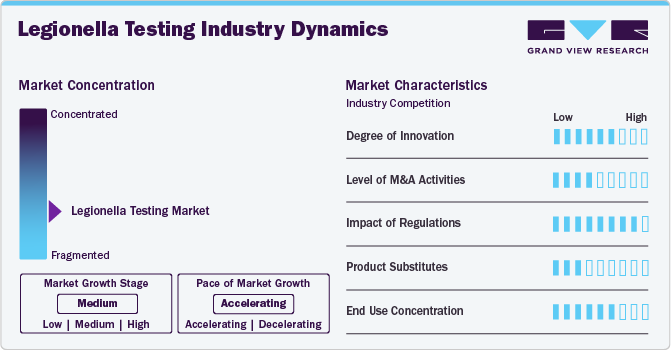
Market growth stage is high, and pace of the market growth is accelerating . The legionella testing industry is characterized by a medium degree of innovation owing to rapid technological advancements and increasing demand for novel diagnostic technologies. Innovation is mainly driven by the increasing investment by biotechnology companies and organizations operating in diagnostic solutions.
The legionella testing market has been experiencing moderate levels of mergers and acquisitions. The key strategic advancements associated with acquisitions are mainly driven by the initiatives embraced by key market participants and large enterprises to strengthen the market positioning. For instance, in September 2024, LuminUltra, one of the market participants in the biological diagnostic testing industry, acquired legionella testing business assets of Canada-based biotech company Genomadix Inc.
 To learn more about this report, Download Free Sample Report
 The legionella testing market experiences high degree impact of regulatory scenario. The legionella testing solutions are subjected to the health and safety regulations, standards for medical devices and others regulatory requirements. The threat of substitute products primarily stimulates from inability of traditional testing solutions to identify dead and live bacteria. Innovation-based new product launches equipped with advanced technology features are expected to capture greater market share in coming years.
Analyst Perspective
The Legionella Testing Market is positioned for steady growth, supported by increasing regulatory focus on water safety, rising incidence of Legionnaires’ disease, and growing implementation of preventive water management programs across healthcare, commercial, and industrial facilities. The market is witnessing a shift toward rapid molecular diagnostics, particularly PCR based technologies, due to their ability to deliver accurate and timely results. Demand for routine environmental surveillance and compliance driven testing is strengthening adoption across developed markets. Ongoing advancements in diagnostic methods, expanding awareness of waterborne disease prevention, and increasing investments in monitoring infrastructure are expected to support continued market expansion throughout the forecast period.
Type Insights
Based on Type, the water testing segment led the market with the largest revenue share of 76.2% in 2025. The factors contributing to the segment growth primarily include government laws that mandate the testing for Legionella. For instance, in numerous European countries, authorities implement Legionella testing regulations. Greater turnaround time is one of the key drawbacks of traditional testing methods, as these tests can take weeks to deliver results, which reduces the possibility of timely intervention. The absence of adequate diagnostics can lead to presumptive treatment or delay it. It can further hamper the treatment measures and cause outbreaks. Therefore, there is a need for the development of new and advanced diagnostic tools.
Traditional testing methods are labor-intensive and involve manual interference, which can cause contamination and affect the outputs. Advancements associated with diagnostic technologies in automation and digitization are responsible for market growth. Automation facilitates up to 50% timesaving in diagnostic procedures, as it reduces the burden of manual efforts. In addition, results are reliable, precise, and sensitive. Diagnostic lab automation generates standardized and reproducible results. Therefore, advanced rapid diagnostic methods are gaining popularity, and their demand is expected to expand in the coming years. However, a limited number of manufacturing companies can challenge market growth.
The IVD testing segment is expected to experience significant growth over the forecast period. Urinary antigen tests and PCR are widely used for legionella testing, combined with traditional culture methods. Reduced turnaround time associated with IVD testing facilitates quick diagnosis and timely interventions. These aspects are expected to support the growth of this segment.
End Use Insights
Based on end use, the PCR segment led the market with the largest revenue share of 37.4% in 2025. PCR is mainly preferred for its rapid pace, less turnaround time, sensitivity, and capacity to identify both viable and non-viable bacteria. PCR offers high sensitivity and quick detection capabilities, enabling accurate identification of Legionella bacteria quickly. Advancements in molecular diagnostics and increasing regulatory support for incorporating faster and more reliable testing methods drive the growth of this segment.
 To learn more about this report, Download Free Sample Report
 The microbial culture segment is expected to grow significantly from 2025 to 2030. Microbial culture offers high specificity and sensitivity, accurately identifying Legionella bacteria. Regulatory guidelines often recommend or require its use, ensuring water safety in various settings. It is increasingly used in routine legionella testing and case confirmations. The method is also used in risk assessment and regular water testing.
Regional Insights
North America dominated the Legionella Testing Market with the largest revenue share of 37.1% in 2025. The increasing incidence of Legionnaires' cases of pneumonia-like illness caused by the Legionella bacteria is a major driver for this regional market. Rising awareness regarding the risks associated with disease, stringent regulations, and growing investments in R&D to develop innovative testing solutions are likely to drive growth in this market.
 To learn more about this report, Download Free Sample Report
 U.S. Legionella Testing Market Trends
The Legionella Testing Market in the U.S. held the largest share in the North America region in 2025 with the largest revenue share due to its strict water safety stipulations, robust healthcare infrastructure, and high awareness of Legionnaires' disease. The increasing availability of advanced diagnostic solutions and the significant focus of government authorities on protecting public health and welfare are expected to add lucrative growth opportunities to this market.
Europe Legionella Testing Market Trends
Europe dominated the global legionella testing industry and accounted for the largest revenue share of 39.7% in 2024. The governments in some countries, such as the UK and Germany, have made Legionella testing mandatory to protect public health. This is primarily due to the high levels of awareness regarding Legionellosis related diseases and associated risks.
The UK legionella testing market held the largest revenue share of the regional market in 2024. Key factor influencing the growth of this market is increasing prevalence of Legionnaires disease driven by easy spread of bacteria, presence of multiple purpose-built water systems especially in public buildings such as hospitals, government buildings, and hotels.
Asia Pacific Legionella Testing Market Trends
Asia Pacific is expected to grow at the fastest CAGR of 9.5% during the forecast period. The rising geriatric population in this region, which is more prone to infections, is expected to develop a greater demand for diagnostic solutions related to bacteria-driven diseases. In addition, increasing disposable income and growing penetration of Legionella testing products via a strong distribution network of global market participants are expected to drive market growth over the forecast period. Significant enhancements associated with healthcare infrastructure in the region, the focus of multiple countries such as China and India to provide public health improvement support, and the growing availability of advanced solutions are anticipated to generate greater opportunities for this market.
China held a substantial revenue share of regional legionella testing industry in 2024 owing to rapid urbanization, industrialization and the increasing awareness of waterborne diseases. The focus of local authorities on the implementation of preventive measures is also driving the growth of this market.
Key Legionella Testing Company Insights
Key players in the global legionella testing industry include Abbott, Beckman Coulter, Inc. (Danaher Corporation), BD, BIOMÉRIEUX, F. Hoffmann-La Roche Ltd. and others. The key market participants focus on innovation, research and development investment, and the delivery of advanced technology-driven solutions to strengthen market positioning.
-
Abbott is one of the global market participants in diagnostics and it plays a significant role in the legionella testing market. It offers rapid diagnostic tools such as the BinaxNOW Legionella Urinary Antigen Card for aiding the presumptive diagnosis of disease.
-
Beckman Coulter, Inc. (Danaher Corporation) specializes in products associated with biomedical testing. It offers microbiology panels, systems, and analyzers. It also provides products and reagents which are utilized in the Legionella urinary antigen testing.
Key Legionella Testing Companies
The following key companies have been profiled for this study on the legionella testing market.
-
Abbott
-
Beckman Coulter, Inc. (Danaher Corporation)
-
BD
-
Bio-Rad Laboratories, Inc.
-
BIOMÉRIEUX
-
Eiken Chemical Co., Ltd.
-
Hologic, Inc
-
Pro Lab Diagnostics Inc.
-
QIAGEN
-
F. Hoffmann-La Roche Ltd.
-
Takara Bio Inc.
-
Thermo Fisher Scientific Inc.
Competitive Benchmarking
Category
Operating Strategies
Competitive Edge
Weakness
Well-Established Players (Abbott, Beckman Coulter, Inc. (Danaher Corporation), BD, BIOMÉRIEUX, QIAGEN)
- Expand Legionella testing portfolios through investments in molecular diagnostics, urinary antigen testing, microbiology platforms, and automated laboratory workflows. Focus on strengthening diagnostic capabilities through product innovation, regulatory compliance support, strategic partnerships, and integration of testing solutions across clinical and environmental applications. Emphasize laboratory efficiency, rapid pathogen detection, and broader access to advanced diagnostic technologies.
- Extensive global distribution networks, strong brand recognition, established customer relationships, broad diagnostic portfolios, and significant research and development capabilities. Ability to offer integrated solutions encompassing instruments, reagents, software, and laboratory services while supporting large scale clinical and public health testing requirements.
- Large organizational structures may reduce responsiveness to niche customer requirements and specialized testing applications. Dependence on regulatory approvals, competitive pricing pressures, and high operational costs associated with maintaining global manufacturing, distribution, and support infrastructure can affect market agility.
Emerging and Specialized Players (Bio-Rad Laboratories, Inc., Eiken Chemical Co., Ltd., Takara Bio Inc., Pro Lab Diagnostics Inc.)
- Focus on specialized molecular diagnostics, microbiology testing products, PCR based detection technologies, and environmental monitoring solutions for Legionella surveillance. Emphasize product innovation, targeted market expansion, and collaborations with research institutions, public health organizations, and diagnostic laboratories to strengthen adoption across specific application areas.
- Strong expertise in specialized diagnostic technologies, focused product development, flexibility in addressing evolving customer requirements, and ability to support targeted clinical and environmental testing applications. Well positioned to capitalize on demand for rapid and accurate Legionella detection solutions.
- More limited commercial scale, geographic reach, and distribution capabilities compared with larger diagnostic companies. Dependence on specific testing segments and narrower product portfolios may restrict market penetration and increase exposure to competitive pressures from diversified industry participants.
Recent Developments
-
In September 2024, LuminUltra Technologies Ltd., a Canadian molecular diagnostics company, acquired the Legionella testing assets of Genomadix Inc. This acquisition includes the Genomadix Cube qPCR platform, a portable device capable of delivering Legionella detection results in under an hour with laboratory-grade sensitivity
-
In May 2024, Dubai Central Laboratory, affiliated with Dubai Municipality, recently adopted a novel artificial intelligence (AI) powered technology developed to identify Legionella pulmonary bacteria which causes numerous acute respiratory infections. The first-of-its-kind application in the region is expected to support the growing demand for effective testing technologies equipped with less turnaround time.
Legionella Testing Market Report Scope
Report Attribute
Details
Market size in 2025
USD 369.9 million
Estimated Market size in 2026
USD 399.3 million
Projected Market size by 2033
USD 700.3 million
Growth rate
CAGR of 8.4% from 2026 to 2033
Historical data
2021 - 2024
Forecast period
2026 - 2033
Quantitative units
Revenue in USD million and CAGR from 2026 to 2033
Report coverage
Revenue forecast, company ranking, competitive landscape, growth factors, and trends
Segments covered
Type, End Use, Regional
Regional scope
North America; Europe; Asia Pacific; Latin America; MEA
Country scope
U.S.; Canada; Mexico; Germany; UK; France; Italy; Spain; Norway; Denmark; Sweden; Russia; Iceland; Finland; China; Japan; India; South Korea; Australia; Thailand; Singapore; Brazil; Argentina; Saudi Arabia; South Africa; UAE; Kuwait; Israel
Key companies profiled
Abbott, Beckman Coulter, Inc. (Danaher Corporation), BD, Bio-Rad Laboratories, Inc., BIOMÉRIEUX, Eiken Chemical Co., Ltd., Hologic, Inc, Pro Lab Diagnostics Inc., QIAGEN, F. Hoffmann-La Roche Ltd., Takara Bio Inc., Thermo Fisher Scientific Inc.
Customization scope
Free report customization (equivalent up to 8 analysts' working days) with purchase. Addition or alteration to country, regional & segment scope.
Pricing and purchase options
Avail customized purchase options to meet your exact research needs. Explore purchase options
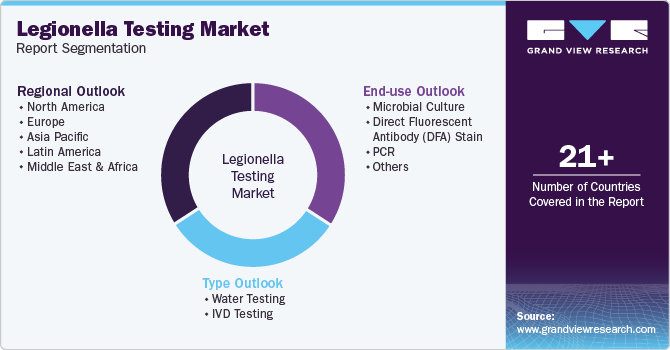
Global Legionella Testing Market Report Segmentation
This report forecasts revenue growth at global, regional, and country levels and provides an analysis of the latest industry trends in each of the sub-segments from 2021 to 2033. For this study, Grand View Research has segmented the global legionella testing industry report based on type, end use, and region.
 To learn more about this report, Download Free Sample Report
 -
Type Outlook (Revenue, USD Million, 2021 - 2033)
-
Water Testing
-
IVD Testing
-
-
End Use Outlook (Revenue, USD Million, 2021 - 2033)
-
Microbial Culture
-
Direct Fluorescent Antibody (DFA) Stain
-
PCR
-
Others
-
-
Regional Outlook (Revenue, USD Million, 2021 - 2033)
-
North America
-
U.S.
-
Canada
-
Mexico
-
-
Europe
-
Germany
-
UK
-
France
-
Italy
-
Spain
-
Denmark
-
Sweden
-
Norway
-
-
Asia Pacific
-
Japan
-
China
-
India
-
Australia
-
South Korea
-
Thailand
-
-
Latin America
-
Brazil
-
Argentina
-
-
MEA
-
South Africa
-
Saudi Arabia
-
UAE
-
Kuwait
-
-
Research Methodology
Segment Definition
Segment - Type
Revenue capture definition
Water Testing
Revenue is primarily captured through environmental water testing activities conducted across hospitals, long term care facilities, hotels, commercial buildings, industrial plants, and cooling towers. This includes sample collection, laboratory analysis, PCR assays, culture-based testing, consumables, and monitoring services used to detect Legionella contamination in water systems.
IVD Testing
Revenue flows from in vitro diagnostic testing used to identify Legionella infections in patients with suspected Legionnaires’ disease. This includes urinary antigen tests, molecular diagnostic assays, culture tests, clinical laboratory services, diagnostic consumables, and instruments utilized for patient diagnosis, treatment decisions, and disease surveillance.
Segment - End Use
Revenue capture definition
Microbial Culture
Revenue is primarily captured through culture based Legionella detection workflows, including selective culture media, sample preparation reagents, incubation systems, laboratory consumables, and microbiology testing services used for confirmation and quantification of Legionella species in environmental and clinical samples.
Direct Fluorescent Antibody (DFA) Stain
Revenue flows from the use of fluorescent antibody reagents, staining kits, microscopy consumables, and laboratory procedures employed for the direct visualization and identification of Legionella organisms in clinical specimens and environmental samples requiring rapid screening.
PCR
Revenue is derived from PCR based Legionella testing solutions, including molecular assay kits, nucleic acid extraction reagents, qPCR instruments, software platforms, laboratory consumables, and testing services utilized for rapid and sensitive detection of Legionella species.
Others
Revenue is captured through alternative Legionella testing methods, including urinary antigen tests, serological assays, immunodiagnostic kits, rapid screening technologies, associated consumables, and laboratory services used for complementary detection and surveillance applications.
Estimation Model
The legionella testing market was estimated using a bottom-up methodology that involved identifying leading market participants, evaluating their Legionella testing product portfolios, and assessing the contribution of diagnostic assays, instruments, consumables, and associated testing services. Market estimates were developed across key testing technologies and application segments based on adoption trends, utilization patterns, and end user demand. The overall market size was established through the aggregation of segment level estimates and further validated through an assessment of the market share of key manufacturers. The findings were corroborated using company annual reports, regulatory and public health publications, industry databases, scientific literature, and primary discussions with industry experts and stakeholders across the value chain.
Delivered Customizations
This report has been delivered with the following In-depth customizations
CLIENT REQUEST
CUSTOMIZATION DELIVERED
VALUE ADDS
Legionella Testing Competitive Landscape & Technology Assessment
Evaluated the global Legionella testing market across PCR, microbial culture, urinary antigen tests, DFA testing, and environmental monitoring solutions. Assessed key participants, product portfolios, technology trends, and competitive positioning.
Helped the client identify growth opportunities, benchmark competitors, evaluate product differentiation, and support strategic expansion initiatives within the Legionella testing market.
Legionella Testing Technology Benchmarking Study
Conducted benchmarking of Legionella testing technologies, including PCR, microbial culture, urinary antigen testing, and DFA methods. Assessed sensitivity, turnaround time, workflow efficiency, and regulatory alignment across leading providers.
Enabled the client to evaluate technology competitiveness, identify innovation opportunities, and prioritize investments in rapid diagnostics and water monitoring technologies.
Legionella Testing Market Access & Commercialization Assessment
Assessed the testing ecosystem across healthcare facilities, diagnostic laboratories, public health agencies, water utilities, and commercial buildings. Evaluated adoption trends, regulatory requirements, laboratory capabilities, and distribution channels.
Supported commercialization planning by identifying market access opportunities, assessing compliance requirements, evaluating partnership potential, and strengthening long term market expansion strategies.
Frequently Asked Questions About This Report
Some key players operating in the legionella testing market include Beckman Coulter, Inc.; Bio-Rad Laboratories, Inc.; Alere, Inc.; Roche Diagnostics; Thermo Fischer Scientific, Inc.; and Becton, Dickinson and Company (BD).
Key factors that are driving the market growth include increasing incidence of Legionella-related disorders and rising awareness about their preventive management.
North America dominated the Legionella Testing Market with the largest revenue share of 37.1% in 2025.The Legionella Testing Market in the U.S. held the largest share in the North America region in 2025
Based on Type, the water testing segment led the market with the largest revenue share of 76.2% in 2025.
Based on end use, the PCR segment led the market with the largest revenue share of 37.4% in 2025?
Asia Pacific is the fastest-growing region over the forecast period.
The global Legionella Testing Market size was estimated at USD 369.9 million in 2025 and is projected to grow from USD 399.3 million in 2026.
The global legionella testing market is expected to grow at a compound annual growth rate of 8.4% from 2026 to 2033 to reach USD 700.3 million by 2033.
About the Author(s)
Clinical Diagnostics Research Team
Healthcare · Clinical DiagnosticsThis report was authored by the clinical diagnostics research team at Grand View Research - comprising two research analysts, one senior research analyst, and one industry expert - with specialized expertise in the clinical diagnostics segment of the healthcare industry. All findings are based on proprietary healthcare databases, executive interviews, and regulatory analysis, subject to internal peer review prior to publication.
Last Updated:
Speak to Analyst

Customize this report to your needs - add regions, segments, or data points, with 20% free customization.
Or view our licence options:


ISO 9001:2015 & 27001:2022 Certified
We are GDPR and CCPA compliant! Your transaction & personal information is safe and secure. For more details, please read our privacy policy.


