
- Home
- »
- Biotechnology
- »
-
Lipid Nanoparticle Formulation & Development Services Market Report 2026-2033GVR Report cover

Lipid Nanoparticle Formulation & Development Services Market (2026 - 2033)
Size, Share & Trends Analysis Report By Service (LNP Formulation Development, Analytical Development & Characterization), By Payload Type, By Scale Of Operation, By End User, By Region, And Segment Forecasts
Market Size, 2025
$410.0MMarket Estimate, 2026
$447.8MMarket Forecast, 2033
$918.8MCAGR, 2026–2033
10.8%Lipid Nanoparticle Formulation & Development Services Market Summary
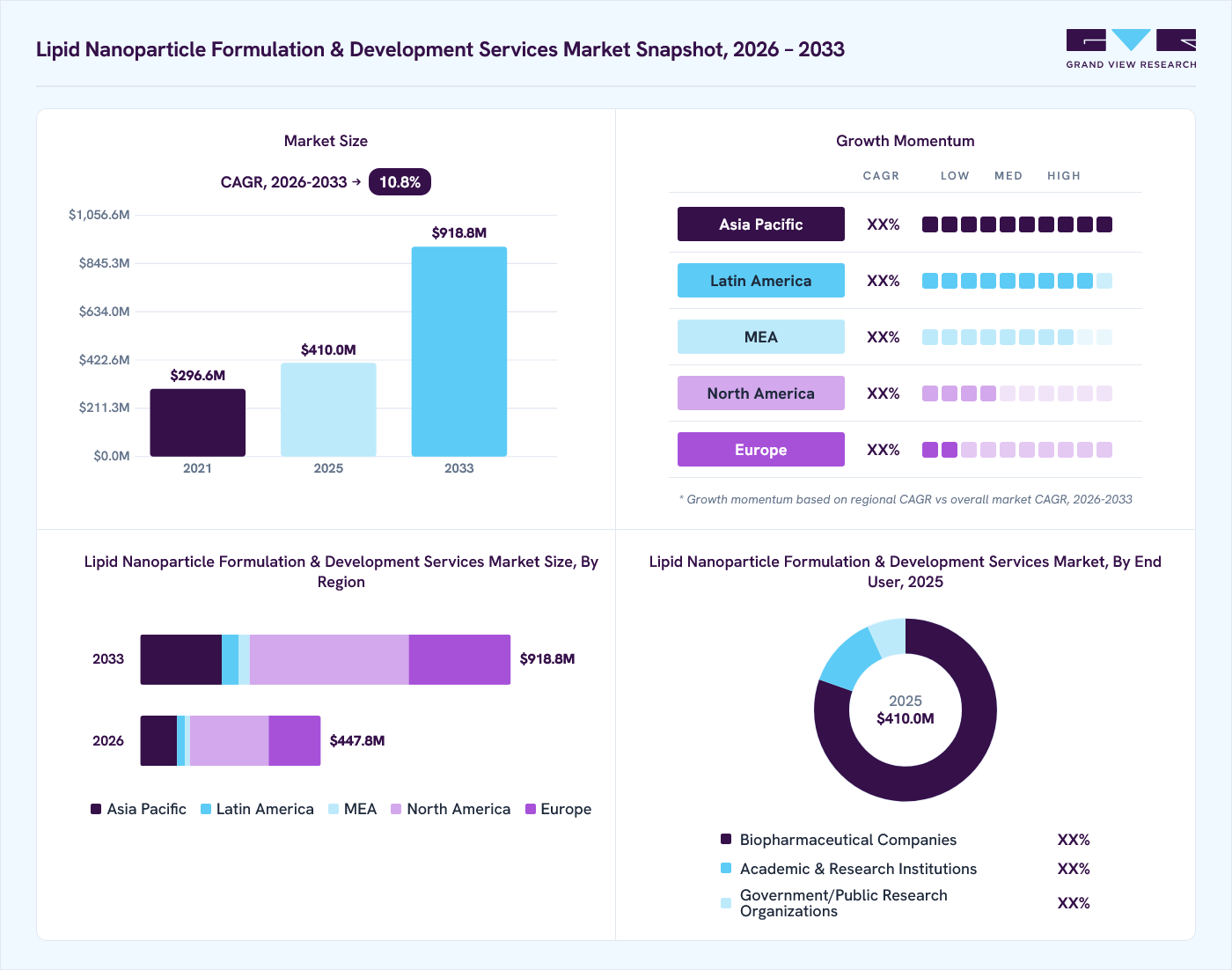
The global lipid nanoparticle formulation & development services market size was valued at USD 410.0 million in 2025 and is projected to grow from USD 447.8 million in 2026 to USD 918.8 million by 2033, at a CAGR of 10.8% from 2026 to 2033. North America dominated the market, accounting for a revenue share of 43.6% in 2025. The market growth is driven by increasing demand for advanced drug delivery systems, growing adoption of mRNA-based therapeutics and vaccines, rising investments in nanomedicine, and expanding applications of lipid nanoparticles in gene therapy, oncology, and drug development.
 Source: Grand View Research, IR Documents, Primary Interviews, Paid DatabasesTo learn more about this report,
 Download Free Sample Report
Key Market Trends & Insights
- By service: LNP formulation development segment held the highest market share of 33.7% in 2025.
- By payload type: mRNA segment held the highest market share of 54.3% in 2025.
- By end user: Biopharmaceutical companies segment held the highest market revenue share of 80.3% in 2025.
- By scale of operation: Preclinical segment accounted segment accounted for the largest revenue share of 51.3% in 2025.
Regional Highlights
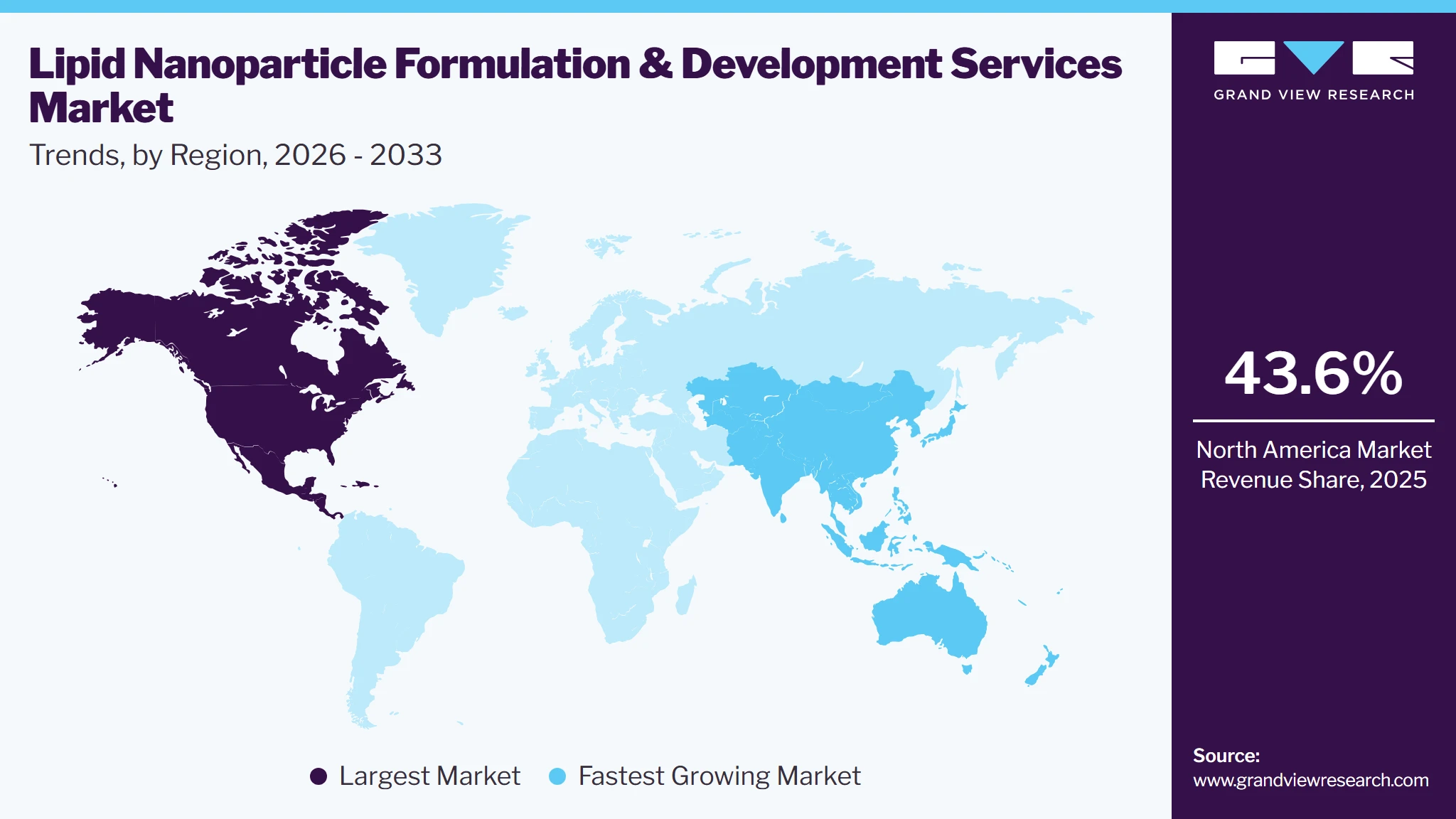
- Largest regional market: North America (43.6% revenue share, 2025)
- Fastest-growing regional market: Asia Pacific (highest CAGR, 2026-2033)
- By country: The U.S. held the largest market share in 2025.
Market Size & Forecast
- Market size in 2025: USD 410.0 Million
- Estimated market size in 2026: USD 447.8 Million
- Projected market size by 2033: USD 918.8 Million
- CAGR (2026-2033): 10.8%
Prism AI by Grand View Research Free to tryAsk a question about the lipid nanoparticle formulation & development services marketTry asking✓Every figure cited from GVR research Prefer the report? Download free sample →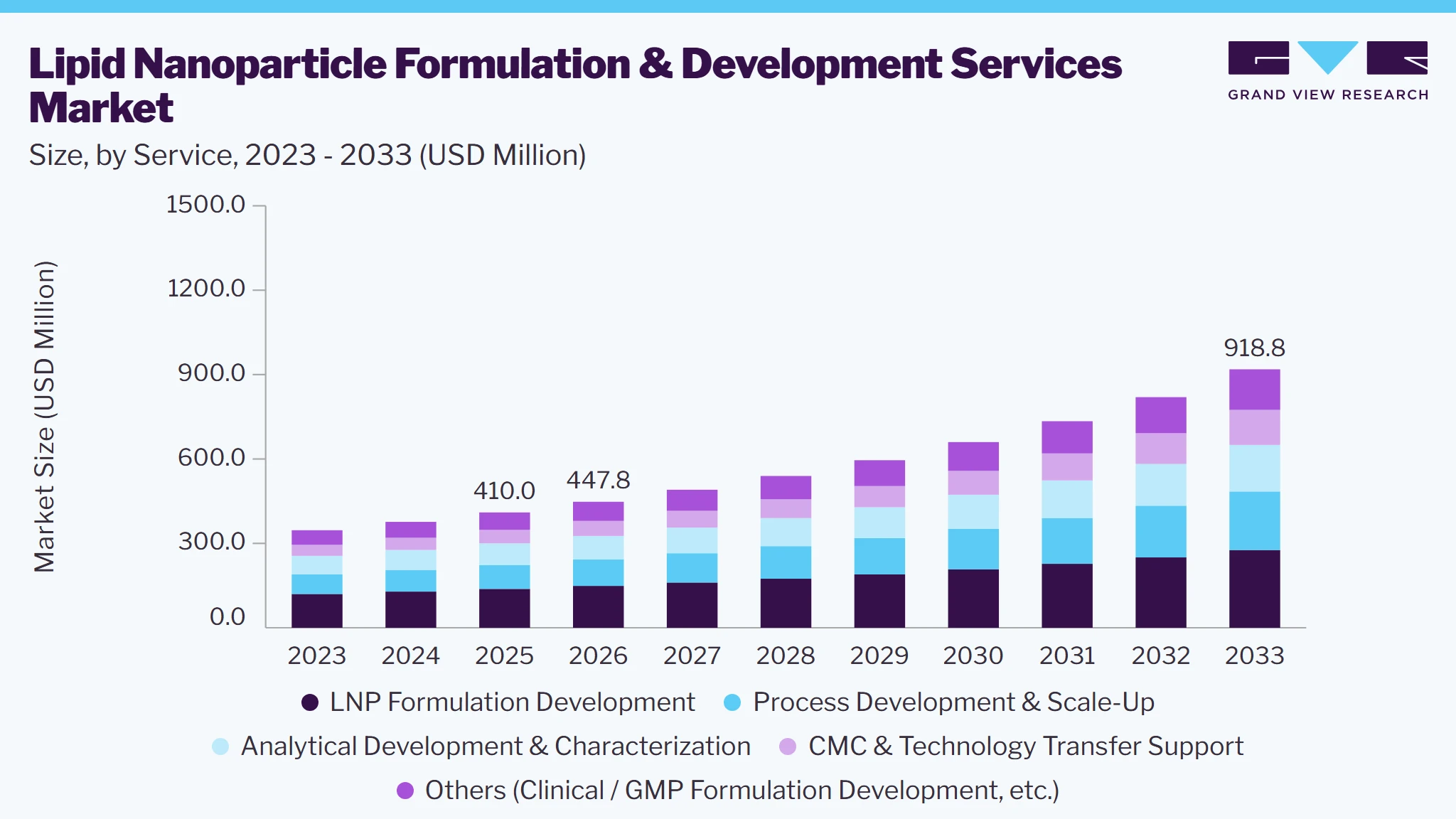 To learn more about this report, Download Free Sample Report
Market Dynamics
The market is witnessing significant growth, driven by increasing demand for advanced drug delivery systems for mRNA, siRNA, DNA, and other nucleic acid therapeutics across vaccine development, gene therapy, oncology, and precision medicine. Growing adoption of lipid nanoparticle technologies is supporting the development of efficient, scalable, and reproducible formulations with improved encapsulation, stability, and delivery capabilities. In addition, increasing investments in RNA-based therapeutics, novel lipid chemistries, and outsourced formulation and development services are supporting market growth.
Increasing demand for outsourced LNP development and manufacturing capabilities is driving the LNP formulation and development services market as biopharmaceutical companies seek specialized infrastructure for complex nucleic acid-based therapeutics. For instance, in September 2026, CordenPharma announced an €80 million (USD 93.07 million) multi-year investment to expand its Caponago, Italy facility, including a new 11,000 m² facility designed to provide aseptic fill-finish CDMO outsourcing for LNP-based therapeutics and integrated access to LNP manufacturing capabilities at the same site. The expansion is intended to support customers from early-phase development through commercial production and includes increased analytical and manufacturing capacity for complex modalities such as LNPs.
“The support of our shareholders, Astorg, underscores our commitment to advancing sterile injectable manufacturing at CordenPharma Caponago. This strategic investment strengthens our leadership in the manufacture of drug products using complex modalities and enhances our end-to-end supply capabilities to meet rising global demand for injectable outsourcing, ultimately enabling partners to bring vital drug products in key therapeutic areas to patients more efficiently.”
- Dr. Michael Quirmbach, President & CEO of CordenPharma Group.
The expanding clinical development of lipid nanoparticle (LNP)-based therapeutics across oncology, infectious diseases, and genetic disorders is increasing the need for specialized formulation and development capabilities. The table below summarizes representative LNP-based clinical programs at different stages of development. These programs illustrate the technical and development requirements that can encourage biopharmaceutical companies to engage specialized contract development and manufacturing organizations (CDMOs).
Clinical Development of LNP-Based Therapeutics Across Multiple Applications
Application Area
Therapeutic Candidate
Target Indication
Clinical Development Stage
Cancer
BNT112
Prostate cancer
Phase 1/2
Cancer
BNT113
Head and neck cancer
Phase 2
Cancer
BNT122
Pancreatic cancer
Phase 1
Cancer
mRNA-4157
Non-small cell lung cancer
Phase 3
Infectious disease
DCVC H1 HA mRNA vaccine
H1N1 influenza
Phase 1
Infectious disease
H3 mRNA/LNP vaccine
H3N2 influenza
Phase 1
Infectious disease
mRNA-1769
Mpox
Phase 1/2
Gene editing
NTLA-2001
Hereditary transthyretin amyloidosis (hATTR)
Phase 3
Gene editing
NTLA-2002
Hereditary angioedema (HAE)
Phase 3
Gene editing
VERVE-101
Heterozygous familial hypercholesterolemia (HeFH)
Phase 1
Source: PubMed Central, Secondary Research, Primary Interviews, Grand View Research Analysis
Complexity in optimizing LNP formulations and maintaining stability can restrain the LNP Formulation & Development Services Market by increasing formulation optimization and analytical testing requirements. According to an article published in Vaccines in July 2026, mRNA-LNP formulations are affected by temperature, pH, oxidation, aggregation, shear stress, freeze-thaw cycles, and hydrolysis, which can alter particle integrity, encapsulation efficiency, and mRNA stability. The article also highlights the need to optimize lipid composition, excipients, buffer conditions, and stabilization strategies, and to apply analytical methods to monitor degradation. These requirements can increase the development time and resources needed to establish stable and reproducible LNP formulations, limiting the efficiency of formulation development services.
The expansion of specialized LNP formulation platforms with organ-selective delivery capabilities creates opportunities for LNP formulation and development service providers to support emerging nucleic acid therapies targeting tissues beyond the liver. For instance, in June 2026, ARCALIS launched an Organ-Selective LNP Delivery Service designed to support mRNA therapeutic development, offering customizable LNP formulations for selective delivery to hepatic and extrahepatic tissues, including the lung and spleen. The service also provides scalable formulation technologies designed to maintain consistent quality during scale-up and technology transfer.
Market Concentration & Characteristics
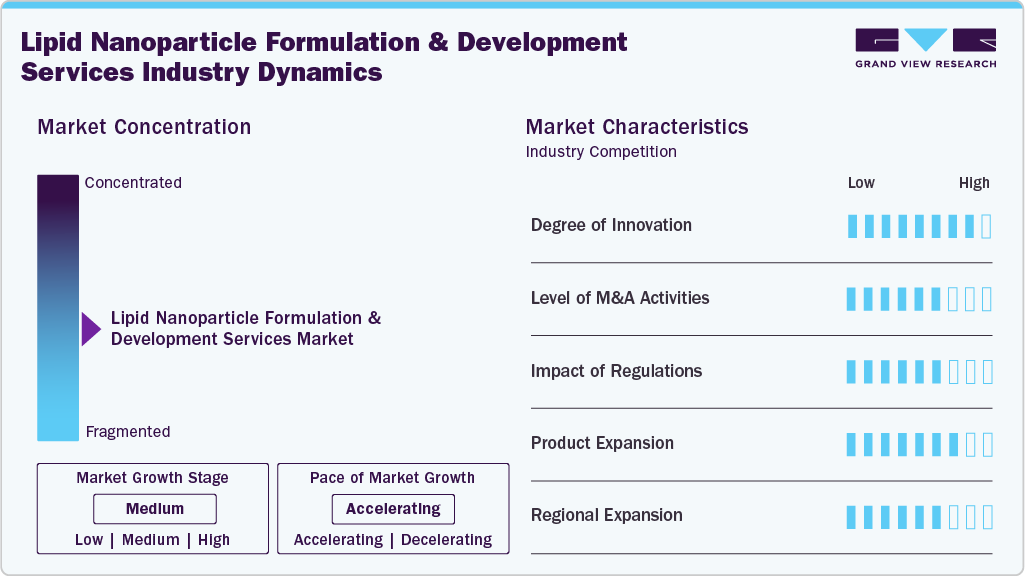
The degree of innovation in the lipid nanoparticle formulation & development services industry is high, driven by advances in artificial intelligence-assisted lipid discovery, high-throughput screening, microfluidic formulation, and targeted LNP design. For instance, in July 2024, researchers reported the AI-Guided Ionizable Lipid Engineering (AGILE) platform, which combines deep learning with combinatorial chemistry to accelerate the design and screening of ionizable lipids for mRNA delivery. The platform enables rapid identification of cell-specific lipid candidates, improving formulation development efficiency and supporting more targeted and effective LNP-based delivery.
The lipid nanoparticle formulation & development services industry is witnessing moderate M&A activity, as companies seek to expand specialized formulation and CDMO capabilities. For instance, in September 2024, Agilent Technologies completed its acquisition of BIOVECTRA for approximately USD 925 million, adding BIOVECTRA’s lipid nanoparticle (LNP) formulation, pDNA, and mRNA capabilities to its CDMO portfolio. The acquisition strengthens Agilent’s end-to-end biopharmaceutical development and manufacturing services and expands access to specialized LNP formulation capabilities.
 To learn more about this report, Download Free Sample Report
“We are delighted to officially welcome the BIOVECTRA team to Agilent. This acquisition demonstrates our commitment to providing customers the most advanced capabilities to accelerate their therapeutics programs, including best-in-class cGMP pharmaceutical manufacturing.”
- Padraig McDonnell, Agilent President and CEO.
The impact of regulations on the lipid nanoparticle formulation and development services market is high, as regulatory requirements increasingly emphasize the characterization and control of critical quality attributes of LNP-based products. For instance, in March 2025, the European Medicines Agency (EMA) published a draft guideline on the quality of mRNA vaccines specifying quality considerations for LNPs, including lipid identity and content, particle size, polydispersity, mRNA encapsulation efficiency, and lipid-related impurities. These requirements increase demand for specialized LNP formulation, analytical characterization, process development, and quality-control services.
The lipid nanoparticle formulation and development services market is witnessing product expansion through the introduction of integrated LNP development and manufacturing services. For instance, in March 2025, Biomay announced GMP services for lipid-based nanoparticles, expanding its platform to include LNP formulation, process development, analytical assay development, characterization, release testing, and aseptic filling. The expanded offering provides an integrated pathway from mRNA production through LNP formulation and filling, supporting the development and manufacturing of RNA-based therapeutics.
The lipid nanoparticle formulation and development services market is witnessing regional expansion as specialized CDMOs increase LNP formulation and manufacturing capacity in key biopharmaceutical markets. For instance, in August 2026, Evonik announced a new GMP manufacturing facility in Vancouver, Canada, to expand its lipid-based drug delivery capabilities, including LNP development and clinical drug product manufacturing. The investment is expected to more than triple manufacturing capacity and strengthen Evonik’s regional presence and global LNP formulation and manufacturing network, supporting growing demand for specialized development services.
“Lipid-based drug delivery technologies are already enabling the next generation of medicines. With the support of the Canadian federal government, this investment builds on our long-standing expertise in the field, enabling the development and commercialization of more life-changing therapies”
-Lauren Kjeldsen, member of Evonik’s Executive Board and COO for the Custom Solutions segment at Evonik.
Analyst Perspective
The market is expected to witness moderate growth, supported by the expanding development of mRNA-based therapeutics and increasing demand for advanced nucleic acid delivery systems. As biopharmaceutical companies seek to improve formulation performance and accelerate development timelines, demand is expected to rise for specialized services that optimize encapsulation efficiency, stability, and delivery characteristics. Growing emphasis on reproducible manufacturing and regulatory readiness is also strengthening the need for integrated development support. Market participants are focusing on expanding formulation expertise, enhancing analytical characterization, and strengthening process development, scale-up, and technology transfer capabilities to support the progression of LNP-based therapeutics toward clinical and commercial manufacturing.
Service Insights
The LNP formulation development segment accounted for the largest revenue share, over 33.7% in 2025, supported by increasing demand for efficient nucleic acid delivery systems and the growing development of mRNA therapeutics, vaccines, and gene-editing treatments. Formulation development services help optimize lipid composition, lipid-to-nucleic acid ratios, particle size, encapsulation efficiency, stability, and delivery performance. For instance, in April 2024, NOF Corporation announced a collaboration with Phosphorex to supply lipid nanoparticle formulations using NOF’s proprietary COATSOME SS Series ionizable lipids. The collaboration combines NOF’s lipid technology with Phosphorex’s LNP formulation development and manufacturing expertise, supporting the development and scale-up of tailored formulations for nucleic acid therapeutics.
The CMC & technology transfer support segment is expected to register the fastest CAGR during 2026-2033, driven by increasing demand for scalable, GMP-compliant manufacturing of LNP-based therapeutics. These services support process development, scale-up, analytical method development, regulatory documentation, and transfer to manufacturing facilities. For instance, in September 2025, DIANT Pharma and RNAV8 Bio announced a collaboration integrating mRNA design with LNP process development, scale-up, and technology transfer. The collaboration also covers process control strategies and CMC documentation to facilitate GMP manufacturing readiness.
“We’re closing the loop between smarter mRNA design and smarter manufacturing. Pairing RNAV8’s sequence engineering with DIANT’s continuous, PAT-enabled LNP platform helps teams iterate faster, lock their formulation earlier, and move to GMP with confidence.”
- Antonio Costa, Ph.D., Chief Executive Officer of DIANT Pharma
Payload Type Insights
The mRNA segment dominated the market with a share of 54.3% in 2025, supported by increasing demand for mRNA vaccines, therapeutics, and gene-editing applications. Lipid nanoparticles protect mRNA from degradation and facilitate intracellular delivery, making formulation optimization essential for improving encapsulation efficiency, stability, and delivery performance. For instance, in September 2025, Memorial Sloan Kettering Cancer Center and Quantoom Biosciences entered into a research license and supply agreement to support personalized cancer therapy development using Quantoom’s proprietary Ncapsulate QCX-002 LNP formulation technology. The agreement highlights growing research interest in specialized LNP formulations for mRNA-based therapeutics.
“This agreement with MSK marks a major milestone for Quantoom and validates the potential of our QCX formulation chemistries in human therapeutic applications. It is an honor to collaborate with one of the most prestigious cancer research institutions in the world to help advance personalized RNA-based medicines.”
- José Castillo, CEO of Quantoom Biosciences.
The gene-editing payloads segment is expected to register the fastest CAGR during 2026-2033, driven by advances in gene-editing technologies and increasing research into targeted genetic therapies. Lipid nanoparticles facilitate the delivery of gene-editing components, including messenger RNA (mRNA), guide RNA, and CRISPR-associated proteins, into target cells. Formulation development plays a crucial role in optimizing encapsulation efficiency, particle stability, cellular uptake, and intracellular delivery.
Scale of Operation Insights
The preclinical segment accounted for approximately 51.3% of the scale of operation segment in 2025, making it the leading segment, mainly due to increasing research into LNP-based drug delivery systems and the need to evaluate formulation safety, efficacy, and stability before clinical trials. Preclinical-scale LNP development enables researchers to optimize lipid composition, encapsulation efficiency, particle size, and delivery performance through in vitro and animal studies. For instance, in April 2024, Pantherna Therapeutics and WACKER announced that WACKER would manufacture an mRNA-LNP-based active ingredient for Pantherna’s preclinical dose-range-finding studies, following process development and technology transfer. This collaboration highlights the importance of preclinical manufacturing capabilities in advancing LNP-based therapeutics.
“Early collaboration with Pantherna made it possible to develop a cost-effective and scalable process. This doesn’t often happen during preclinical stages in a CDMO setting. Close collaboration with our experts in Corporate R&D was the key to success here. The transfer of technology to our new production facility is now moving at full speed, and we are certain that Pantherna will benefit from our manufacturing expertise.”
- Dr. Guido Seidel, managing director of Wacker Biotech GmbH
The commercial segment is projected to register the fastest CAGR during 2026-2033, driven by increasing commercialization of LNP-based therapeutics and the demand for large-scale, consistent manufacturing. Commercial-scale operations require robust formulation processes, reproducible product quality, and validated manufacturing procedures to support regulatory compliance and supply requirements. LNP formulation and development services help pharmaceutical and biotechnology companies optimize lipid composition, maintain product stability, and scale up production while preserving encapsulation efficiency and delivery performance. The growing pipeline of mRNA vaccines, therapeutics, and gene-editing products is expected to support demand for commercial-scale LNP development and manufacturing capabilities.
End User Insights
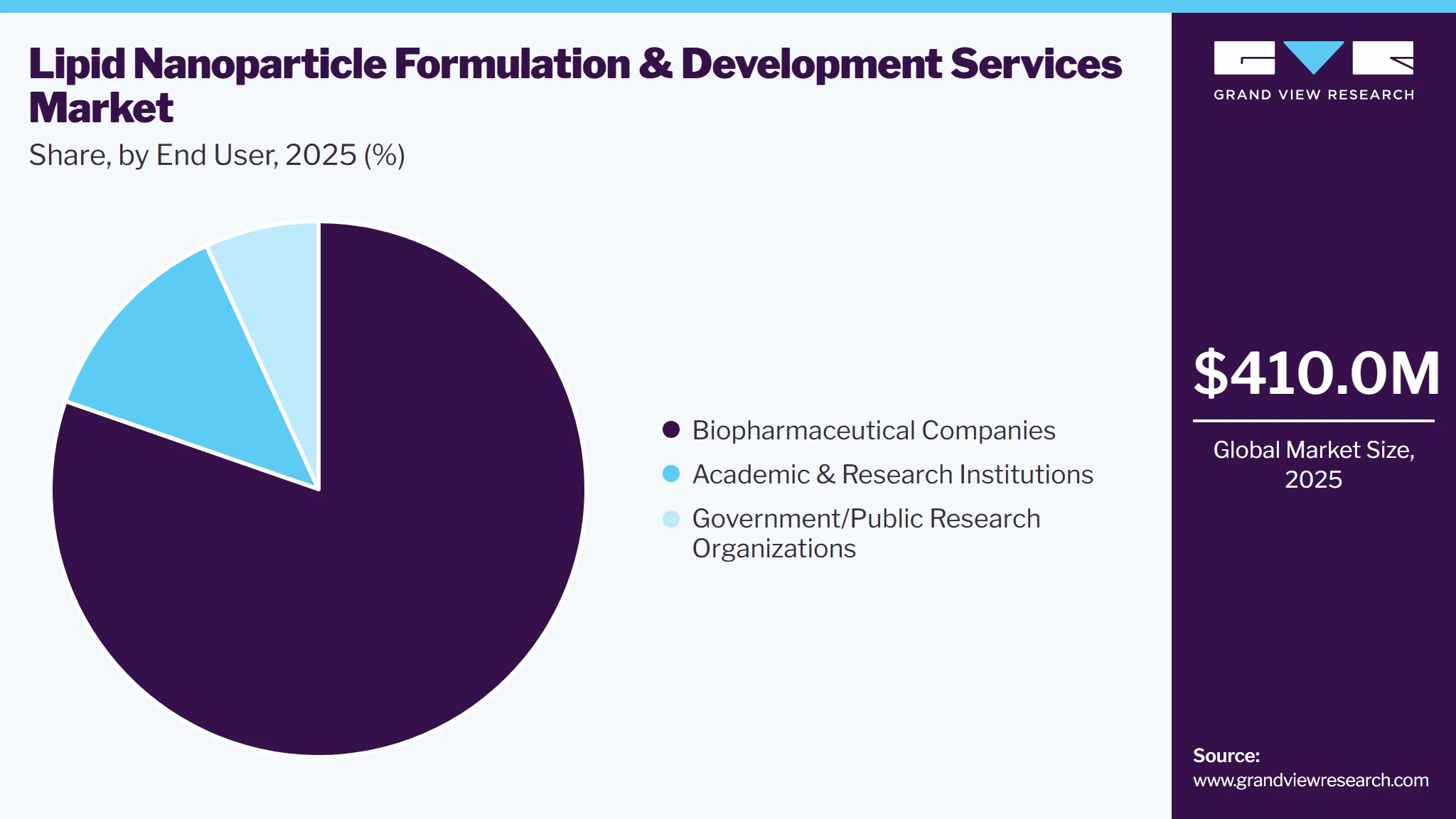
The biopharmaceutical companies segment accounted for approximately an 80.3% share in 2025, making it a leading end user segment. Growth is driven by increasing investments in RNA-based therapeutics and advanced drug delivery technologies. These companies rely on LNP formulation development to improve payload delivery, stability, and tissue-targeting performance. For instance, in May 2025, SML Biopharm signed a memorandum of understanding with French biotechnology company Affilogic to explore the integration of Affilogic’s Nanofitin targeting technology into SML Biopharm’s mRNA-LNP platform. The collaboration aims to advance targeted mRNA therapeutics for applications including cancer and rare diseases.
 To learn more about this report, Download Free Sample Report
Government/public research organizations segment is projected to witness the fastest CAGR during 2026-2033, supported by increasing public funding for mRNA therapeutics, vaccine development, and advanced drug delivery technologies. These organizations conduct research on LNP formulation to improve nucleic acid encapsulation, particle stability, cellular uptake, and delivery efficiency. Collaboration with academic institutions and biotechnology companies further supports the development and evaluation of novel LNP systems. Growing investments in infectious disease research, cancer therapeutics, and gene-based treatments are expected to increase demand for specialized LNP formulation and development services across publicly funded research programs.
Regional Insights
North America dominated the global market, accounting for the largest revenue share of 43.6% in 2025, driven by increasing outsourcing of LNP formulation, process development, analytical characterization, and manufacturing activities by biopharmaceutical companies. For instance, in May 2025, Phosphorex, NOF CORPORATION, NeoSome Life Sciences, NanoImaging Services (NIS), and Envol Biomedical established the LNP Alliance to provide integrated lipid nanoparticle development capabilities, including lipid synthesis, formulation development, process optimization, analytical characterization, and manufacturing support. The collaboration supports access to end-to-end LNP development services for biopharma and biotechnology companies in North America.
 To learn more about this report, Download Free Sample Report
“The LNP Alliance represents a unique convergence of industry leaders, each bringing specialized expertise to drive innovation in LNP-based drug development. By working together, we provide a comprehensive solution that allows our partners to develop more effective therapies, faster.”
-Jarlath Keating, CEO of Phosphorex
U.S. Lipid Nanoparticle Formulation & Development Services Market Trends
The lipid nanoparticle formulation & development services market in the U.S. is expected to grow over the forecast period, supported by increasing demand for specialized LNP screening, formulation optimization, and analytical characterization for nucleic acid therapeutics. For instance, in February 2025, Cayman Chemical and Labcorp introduced an integrated LNP development and screening approach using in vivo imaging to evaluate LNP formulations for potency and tissue-specific delivery. The service combines LNP formulation, characterization, biodistribution assessment, and analysis to identify candidate formulations, supporting the expansion of specialized LNP development services.
Europe Lipid Nanoparticle Formulation & Development Services Market Trends
The lipid nanoparticle formulation & development services market in Europe is anticipated to grow significantly over the forecast period, supported by increasing demand for integrated development and manufacturing capabilities for RNA-based therapeutics and genetic medicines. For instance, in August 2026, Artis BioSolutions launched a Genetic Medicines Center of Excellence in Bilbao, Spain, offering LNP formulation and manufacturing services alongside mRNA drug substance manufacturing and GMP drug product capabilities. The center provides an integrated development platform spanning early development through clinical and commercial manufacturing, supporting the growing demand for specialized LNP formulation and development services.
"The future of genetic medicines demands innovations and integrated partners that can seamlessly support the advancement of new therapeutic targets from development through commercialization. By combining synthetic DNA, mRNA, LNP technologies, and GMP manufacturing within one organization, we are creating a platform continuum that allows our customers to move faster, reduce complexity and cost, and accelerate the delivery of transformative therapies to patients around the world at record pace."
- Brian Neel, Chief Executive Officer of Artis BioSolutions
The UK lipid nanoparticle formulation & development services market is expected to grow over the forecast period, driven by increasing demand for specialized formulation, characterization, and preclinical development capabilities for nucleic acid therapeutics. For instance, in March 2024, Seda Pharmaceutical Development Services and Medicines Discovery Catapult collaborated to support the design, prototype manufacture, physical characterization, and screening of lipid nanoparticles for nucleic acid delivery. This collaboration combines formulation development and manufacturing expertise with advanced biological characterization capabilities, supporting the expansion of integrated LNP development services.
The lipid nanoparticle formulation & development services market in Germany is anticipated to grow significantly over the forecast period, supported by increasing demand for specialized LNP formulation and early-stage development capabilities for nucleic acid-based therapeutics. For instance, in May 2026, Germany-based Wacker launched Contract Research Services at its Biotechnology Center in Munich for R&D-grade pDNA, RNA, and lipid nanoparticles, including lipid library screening, LNP formulation, analytical testing, and functional assays. The service provides integrated support for preclinical development of nucleic acid-based therapies, strengthening the availability of specialized LNP formulation and development services.
“Every RNA or LNP project is unique. Our goal is to provide flexible, customizable services that adapt to our clients’ specific needs in a rapidly evolving landscape. Too often, innovative, potentially life-saving therapeutic concepts die on the vine due to the high cost of developing even small amounts of drug substance for R&D studies. Our CRS enable us to serve highly specialized customers, especially small startups.”
- Christian Dubiella, the CRS global program manager, Wacker Chemie AG
Asia Pacific Lipid Nanoparticle Formulation & Development Services Market Trends
The lipid nanoparticle formulation & development services market in the Asia Pacific is expected to grow at the fastest CAGR of 12.0% during the forecast period, driven by the expansion of regional LNP formulation and CDMO infrastructure and increasing localization of capabilities for RNA-based therapeutics. Growing availability of formulation screening, process development, analytical characterization, and scalable manufacturing services is enabling biotechnology and pharmaceutical companies to advance LNP-based programs within the region. In addition, increasing development of mRNA vaccines and other nucleic acid therapeutics is creating demand for integrated LNP development services across preclinical, clinical, and commercial stages.
China lipid nanoparticle formulation & development services market is expected to grow over the forecast period, supported by expanding nucleic acid drug development and increasing demand for specialized LNP delivery and CMC capabilities. For instance, in September 2025, China-based Porton Advanced and RongCan Biotech announced a strategic collaboration to jointly develop and commercialize novel ionizable lipids for nucleic acid delivery and provide LNP delivery technology licensing and CMC services to biopharmaceutical companies. The collaboration combines ionizable lipid development with optimized LNP formulation technologies, supporting the expansion of specialized LNP development services.
“This strategic collaboration with RongCan Biotech represents a significant expansion of our LNP technology platform. By combining their innovative lipid discovery and screening platform with our proven CDMO capabilities, we can provide more comprehensive solutions to developers of advanced therapies, particularly those working on in vivo CAR-T therapy. Our shared vision is to accelerate the development timeline for these potentially transformative treatments.”
- Andrew Chen, CFO of Porton Pharma and CEO of Porton Advanced
The lipid nanoparticle formulation & development services market in Japan is witnessing rapid growth driven by increasing development of mRNA therapeutics and expansion of domestic capabilities for LNP design and manufacturing. For instance, in January 2026, Toshiba entered into a business partnership with Rikobio Sciences and MediRidge to strengthen integrated contract manufacturing and support services for mRNA-LNP products. Under the collaboration, Toshiba is responsible for mRNA-LNP design and manufacturing, while the partners provide mRNA and plasmid DNA manufacturing, enabling an integrated development and manufacturing pathway for LNP-based therapeutics.
Latin America Lipid Nanoparticle Formulation & Development Services Market Trends
The lipid nanoparticle formulation & development services market in Latin America is expected to grow steadily over the forecast period, supported by increasing efforts to expand regional R&D and production capabilities for mRNA-based technologies and critical LNP inputs. For instance, in November 2025, the Pan American Health Organization (PAHO) highlighted regional collaboration to advance R&D and production of mRNA-based health technologies in Latin America and the Caribbean, including innovation in critical inputs such as lipid nanoparticles. This initiative emphasizes technology development, knowledge transfer, and regional manufacturing capabilities, supporting the development of LNP-related capabilities across Latin America.
MEA Lipid Nanoparticle Formulation & Development Services Market Trends
The lipid nanoparticle formulation & development services market in MEA is growing steadily, driven by strengthening regulatory frameworks and increasing development of mRNA and lipid nanoparticle technologies for next-generation therapeutics. For instance, in July 2026, the Saudi Food and Drug Authority highlighted advances in the regulatory framework for mRNA-based therapies and the growing role of lipid nanoparticles in next-generation drug delivery. The development supports a more favorable regulatory environment for LNP-based therapeutic development and associated formulation and development activities in the region.
Key Lipid Nanoparticle Formulation & Development Services Company Insights
The market is highly competitive, with key players focusing on LNP formulation, analytical characterization, process development, scale-up, CMC, technology transfer, and GMP manufacturing for mRNA, siRNA, saRNA, and gene-editing payloads. Companies are strengthening their market position through technological advancements, integrated development and manufacturing capabilities, strategic collaborations, and capacity expansion. Moreover, competitive positioning depends on formulation expertise, scalability, regulatory capabilities, geographic presence, customer base, and applications across vaccines, gene therapy, RNA therapeutics, gene editing, and drug delivery.
Key Lipid Nanoparticle Formulation & Development Services Companies
The following key companies have been profiled for this study on the lipid nanoparticle formulation & development services market.
-
Lonza
-
Evonik Industries AG
-
CordenPharma (acquired by Astorg)
-
Thermo Fisher Scientific Inc.
-
WuXi STA (WuXi AppTec)
-
FUJIFILM Biotechnologies
-
Polymun Scientific Immunbiologische Forschung GmbH
-
Curia Global, Inc.
-
Merck KGaA
-
Phosphorex
-
Curapath
-
Creative Biolabs
-
Etherna
-
NanoVation
-
AGC-Biologics
Competitive Benchmarking
Category
Operating Strategies
Competitive Edge
Weakness
Established Players (Lonza; Evonik Industries AG; CordenPharma; Thermo Fisher Scientific Inc.; WuXi STA (WuXi AppTec))
- Expanding LNP formulation through analytical development, process development, scale-up, CMC, technology transfer, and GMP manufacturing services; focusing on R&D and strategic collaborations.
- Broad service portfolios, strong formulation capabilities, established customer bases, global presence, and integrated development-to-manufacturing solutions.
- High R&D costs, complex LNP workflows, stringent regulatory requirements, infrastructure needs, and intense competition.
Emerging Players (FUJIFILM Biotechnologies; Polymun Scientific Immunbiologische Forschung GmbH; Curia Global, Inc.; Merck KGaA; AGC Biologics, Phosphorex, Curapath, Creative Biolabs, Etherna, NanoVation)
- Expanding LNP formulation, analytical characterization, process development, clinical manufacturing, and nucleic-acid drug-product services through technology development and partnerships.
- Specialized technologies, differentiated formulation capabilities, strong research expertise, flexible services, and growing presence in advanced therapeutics.
- Narrower market reach in some regions, high manufacturing costs, scale-up challenges, regulatory requirements, and competition from established players.
Recent Developments
-
In November 2025, AGC Biologics partnered with Repair Biotechnologies to develop and manufacture an mRNA therapeutic, leveraging its integrated mRNA and lipid nanoparticle (LNP) manufacturing capabilities. The collaboration supports development from mRNA production through LNP encapsulation and GMP manufacturing, strengthening AGC Biologics’ end-to-end RNA therapeutic CDMO services.
“Developing a novel mRNA therapeutic as a part of the vital goal of curing atherosclerotic cardiovascular disease is a complex task, and robust manufacturing is critical to our progress. We chose AGC Biologics because they have mastered the entire production chain for therapeutics of this class, eliminating critical risks and delays to provide a fast and reliable path to the GMP drug product needed for our clinical trials. We are pleased to work with AGC Biologics to advance our mission to help people enjoy longer, healthier lives.”
-Reason, CEO and co-founder, Repair Biotechnologies
-
In September 2025, Evonik partnered with Ethris to develop and commercialize a novel lipid nanoparticle (LNP) platform for nucleic-acid delivery. The partnership expands Evonik’s formulation-development services by incorporating Ethris’ proprietary LNP technology for RNA-based therapeutic applications.
“Our partnership with Ethris strengthens our portfolio and tackles key challenges in nucleic acid delivery. Ethris’ SNaP LNP technology improves thermostability - enabling storage at higher temperatures - and enhances local retention, facilitating targeted delivery to the site of action and prolonged presence where therapeutic effect is needed. We’re excited to offer this transformative solution to our customers.”
-JP Milde, Global Product Line Head, Parenteral Drug Delivery Solutions at Evonik.
-
In April 2025, Lonza partnered with Ethris to develop spray-dried mRNA-LNP formulations for respiratory vaccines. Lonza’s Bend facility will provide spray-drying and particle-engineering services for Ethris’ stabilized mRNA and LNP platform, focusing on improving physical stability while maintaining the activity of mRNA encapsulated within LNPs.
“Spray-drying represents a well-established technique that addresses solubility and other manufacturing and stability challenges. However, its application in the field of DNA and RNA-based products represents a highly innovative approach, with another level of complexity introduced by the presence of LNPs. Combining the expertise of Lonza Bend site’s particle engineering team with the innovative SNIM RNA of Ethris, there is great potential to target unmet medical needs in the field of non-invasive vaccine delivery.”
-Jan Vertommen, Vice President, Head of Commercial Development, Advanced Synthesis, Lonza.
Lipid Nanoparticle Formulation & Development Services Market Report Scope Table
Report Attribute
Details
Market size in 2025
USD 410.0 million
Market size value in 2026
USD 447.8 million
Revenue forecast in 2033
USD 918.8 million
Growth rate
CAGR of 10.8% from 2026 to 2033
Historical data
2021 - 2025
Forecast period
2026 - 2033
Quantitative units
Revenue in USD million, and CAGR from 2026 to 2033
Report coverage
Revenue forecast, company ranking, competitive landscape, growth factors, and trends
Segments covered
Service, payload type, scale of operation, end user, region
Regional scope
North America; Europe; Asia Pacific; Latin America; MEA
Country scope
U.S.; Canada; Mexico; UK; Germany; France; Italy; Spain; Norway; Denmark; Sweden; China; Japan; India; South Korea; Australia; Thailand; Brazil; Argentina; Saudi Arabia; South Africa; UAE; Kuwait
Key companies profiled
Lonza; Evonik Industries AG; CordenPharma (acquired by Astorg); Thermo Fisher Scientific Inc.; WuXi STA (WuXi AppTec); FUJIFILM Biotechnologies; Polymun Scientific Immunbiologische Forschung GmbH; Curia Global, Inc.; Merck KGaA; Phosphorex; Curapath; Creative; Biolabs; Etherna; NanoVation; AGC-Biologics
Customization scope
Free report customization (equivalent up to 8 analysts' working days) with purchase. Addition or alteration to country, regional & segment scope.
Pricing and purchase options
Avail customized purchase options to meet your exact research needs. Explore purchase options
Global Lipid Nanoparticle Formulation & Development Services Market Report Segmentation
This report forecasts revenue growth and provides an analysis of the latest trends in each of the sub-segments from 2021 to 2033. For this report, Grand View Research has segmented the global lipid nanoparticle formulation & development services market report based on service, payload type, scale of operation, end user, and region:
-
Service Outlook (Revenue, USD Million, 2021 - 2033)
-
LNP Formulation Development
-
Analytical Development & Characterization
-
Process Development & Scale-Up
-
CMC & Technology Transfer Support
-
Others (Clinical/GMP Formulation Development, etc.)
-
-
Payload Type Outlook (Revenue, USD Million, 2021 - 2033)
-
mRNA
-
siRNA
-
saRNA
-
Gene-Editing Payloads
-
Other (Plasmid DNA/DNA, etc.)
-
-
Scale of Operation Outlook (Revenue, USD Million, 2021 - 2033)
-
Preclinical
-
Clinical
-
Commercial
-
-
End User Outlook (Revenue, USD Million, 2021 - 2033)
-
Biopharmaceutical Companies
-
Academic & Research Institutions
-
Government / Public Research Organizations
-
-
Regional Outlook (Revenue, USD Million, 2021 - 2033)
-
North America
-
U.S.
-
Canada
-
Mexico
-
-
Europe
-
UK
-
Germany
-
France
-
Italy
-
Spain
-
Denmark
-
Sweden
-
Norway
-
-
Asia Pacific
-
Japan
-
China
-
India
-
Australia
-
Thailand
-
South Korea
-
-
Latin America
-
Brazil
-
Argentina
-
-
Middle East and Africa (MEA)
-
South Africa
-
Saudi Arabia
-
UAE
-
Kuwait
-
-
Research Methodology
The lipid nanoparticle formulation & development services market figures in this report are based on a proven research process that combines executive interviews with secondary research from proprietary databases, company filings, and recognized regulatory and institutional sources. Market size is built through value-chain sizing-reconciling supply-side and demand-side estimates-and triangulated with bottom-up and top-down approaches. Every estimate passes multiple levels of expert validation before publication, with each lipid nanoparticle formulation & development services segment quantified using the revenue-capture definitions in the table below.
Segment Definition
Service
Revenue Capture Definition
LNP Formulation Development
Revenue generated from services for designing, developing, and optimizing lipid nanoparticle formulations to encapsulate and deliver nucleic acid payloads with desired particle characteristics, encapsulation efficiency, stability, and delivery performance.
Analytical Development & Characterization
This segment captures income from analytical method development and characterization services used to evaluate LNP formulations, including particle size, polydispersity, encapsulation efficiency, lipid composition, payload integrity, potency, and stability.
Process Development & Scale-Up
Market value in this category stems from services for developing, optimizing, and scaling LNP manufacturing processes to achieve reproducible production, consistent product quality, and successful transition from laboratory-scale formulation to larger-scale manufacturing.
CMC & Technology Transfer Support
Revenue generated from chemistry, manufacturing, and controls (CMC) and technology transfer services for LNP-based products, including process documentation, control strategy development, comparability support, manufacturing documentation, and transfer of formulation and production processes between facilities.
Others (Clinical/GMP Formulation Development, etc.)
Revenue from LNP formulation and development services outside formulation development, analytical development and characterization, process development and scale-up, and CMC and technology transfer support, including specialized clinical formulation development and GMP-readiness support not classified under the other service categories.
Payload Type
Revenue Capture Definition
mRNA
Revenue generated from LNP formulation and development services for messenger RNA (mRNA) payloads, including formulation design, encapsulation optimization, analytical characterization, and delivery-system development for therapeutic, vaccine, and research applications.
siRNA
This segment captures income from LNP formulation and development services for small interfering RNA (siRNA) payloads, including encapsulation, formulation optimization, characterization, and delivery-system development for gene-silencing applications.
saRNA
Market value in this category stems from LNP formulation and development services for self-amplifying RNA (saRNA) payloads, including formulation optimization, encapsulation, stability assessment, and delivery-system development for therapeutic, vaccine, and research applications.
Gene-Editing Payloads
Revenue generated from LNP formulation and development services for nucleic acid components used in gene-editing systems, including guide RNAs and nucleic acids encoding gene-editing machinery, with services supporting encapsulation, delivery, and formulation optimization.
Other (Plasmid DNA/DNA, etc.)
Revenue from LNP formulation and development services for nucleic acid payloads outside mRNA, siRNA, saRNA, and gene-editing payloads, including plasmid DNA and other DNA-based payloads developed for research and therapeutic applications.
Scale of Operation
Revenue Capture Definition
Preclinical
Revenue generated from LNP formulation and development services supporting preclinical research, including formulation screening, payload encapsulation, physicochemical characterization, stability assessment, and formulation preparation for in vitro and in vivo studies before clinical development.
Clinical
This segment captures income from LNP formulation and development services supporting clinical-stage products, including formulation optimization, process refinement, analytical characterization, and manufacturing process development for clinical trial materials.
Commercial
Market value in this category stems from LNP formulation and development services supporting commercial-stage products, including process optimization, scale-up, technology transfer, comparability assessment, and continued formulation and process improvement for commercial manufacturing.
End User
Revenue Capture Definition
Biopharmaceutical Companies
Revenue generated from LNP formulation and development services used by pharmaceutical and biotechnology companies to design, characterize, optimize, and scale formulations for nucleic acid-based therapeutics, vaccines, and other biopharmaceutical products.
Academic & Research Institutions
This segment captures income from LNP formulation and development services used by universities, academic laboratories, and research institutions for nucleic acid delivery research, formulation studies, preclinical investigations, and development of experimental LNP-based systems.
Government/Public Research Organizations
Market value in this category stems from LNP formulation and development services used by government agencies, public research institutes, and publicly funded laboratories for nucleic acid delivery research, vaccine and therapeutic development, formulation characterization, and related research programs.
Estimation Model
Market Estimation Methodology Description
Top-Down
Commodity Flow Analysis
Market value was estimated by assessing revenues from LNP formulation development, lipid materials, nanoparticle optimization, nanoparticle synthesis, analytical testing, scale-up, and GMP manufacturing services. Company financials, service portfolios, pricing, project volumes, and commercial offerings were analyzed to quantify market revenue across major applications and service types. Revenue contributions from specialized LNP formulation and development services were further evaluated to capture the overall market value.
Parent Market
Parent Market & Penetration-Based Analysis
The lipid nanoparticle formulation & development services market was assessed within the broader lipid nanoparticle market based on the use of LNPs in mRNA therapeutics, vaccines, gene therapies, oncology, and research. Adoption of lipid nanoparticles across pharmaceutical and biotechnology applications was evaluated to establish the addressable opportunity. Estimated LNP-based products demonstrate applications ranging from mRNA vaccines to advanced nucleic acid delivery systems.
Segmentation
Country-Level Segment Share Modeling
Country-level shares were estimated using LNP development activity, lipid manufacturing capacity, nanoparticle formulation infrastructure, CDMO networks, pharmaceutical R&D, and clinical adoption. Differences in mRNA pipeline activity, outsourcing volume, technology availability, biopharmaceutical infrastructure, manufacturing capacity, and research activity were incorporated to determine country and regional distribution across service type, payload type, scale of operation, and end user segments.
Validation
Data Triangulation & Validation Model
Market estimates were cross-checked using company revenues, formulation volumes, service pricing, manufacturing capacity, development activity, clinical applications, and scientific evidence. The modeling estimates were cross-checked across service type, payload type, scale of operation, end user, country, and region to ensure consistency between volume-based and revenue-based calculations.
Forecasting
Forecasting & CAGR Modeling
Future demand was projected using the expansion of mRNA therapeutics, vaccine development, gene therapies, oncology applications, infectious disease vaccines, and clinical research. Increasing demand for targeted delivery, broader payload applications, technological improvements, and growing clinical use of LNP-based delivery systems were incorporated into segment-level growth assumptions.
Delivered Customizations
This report has been delivered with the following In-depth customizations
Client Request
Customization Delivered
Value Adds
Lipid Nanoparticle Formulation Optimization Assessment
Assessment of lipid composition, particle size, encapsulation efficiency, stability, and formulation parameters for selected LNP applications.
Help clients to identify key formulation variables and optimize LNP characteristics for specific development requirements.
Lipid Nanoparticle Scale-Up & Process Assessment
Assessment of mixing, formulation, purification, process scalability, batch consistency, and manufacturing requirements for selected LNP platforms.
Help clients to identify scale-up challenges, improve process consistency, and support manufacturing planning.
Lipid Nanoparticle Analytical Testing Assessment
Assessment of analytical methods for particle size, encapsulation efficiency, lipid content, purity, stability, and product characterization.
Help clients to understand testing requirements and identify suitable analytical approaches for LNP development.
Frequently Asked Questions About This Report
The global lipid nanoparticle formulation & development services market is expected to grow at a CAGR of 10.8% from 2026 to 2033, reaching USD 918.8 million by 2033.
The global lipid nanoparticle formulation & development services market size was valued at USD 410.0 million in 2025 and is estimated at USD 447.8 million for 2026.
The mRNA segment dominated the market with a share of 54.3% in 2025, and gene-editing payloads segment is second fastest growing market
The biopharmaceutical companies segment accounted for approximately an 80.3% share in 2025, making it a leading end user segment. Growth is driven by increasing investments in RNA-based therapeutics and advanced drug delivery technologies.
The market growth is driven by increasing demand for advanced drug delivery systems, growing adoption of mRNA-based therapeutics and vaccines, rising investments in nanomedicine, and expanding applications of lipid nanoparticles in gene therapy, oncology, and drug development.
North America dominated with a 43.6% revenue share in 2025.
Asia Pacific is the fastest-growing region over the forecast period.
The LNP formulation development segment led with 33.7% revenue share in 2025, while CMC & technology transfer support segment is the fastest-growing segment.
Key players includes Lonza, Evonik Industries AG, CordenPharma, Thermo Fisher Scientific Inc., WuXi STA (WuXi AppTec), FUJIFILM Biotechnologies, Polymun Scientific Immunbiologische Forschung GmbH, Curia Global, Inc., Merck KGaA, Phosphorex, Curapath, Creative Biolabs, Etherna, NanoVation, and AGC Biologics
About the Author(s)
Biotechnology Research Team
Healthcare · BiotechnologyThis report was authored by the biotechnology research team at Grand View Research - comprising two research analysts, one senior research analyst, and one industry expert - with specialized expertise in the biotechnology segment of the healthcare industry. All findings are based on proprietary healthcare databases, executive interviews, and regulatory analysis, subject to internal peer review prior to publication.
Last Updated:
Speak to Analyst

Customize this report to your needs - add regions, segments, or data points, with 20% free customization.
Or view our licence options:


ISO 9001:2015 & 27001:2022 Certified
We are GDPR and CCPA compliant! Your transaction & personal information is safe and secure. For more details, please read our privacy policy.


