
- Home
- »
- Healthcare IT
- »
-
Long-Term Care Software Market Size Report, 2026-2033GVR Report cover
![Long-Term Care Software Market (2026 - 2033)Report]()
Long-Term Care Software Market (2026 - 2033)
Size, Share & Trends Analysis Report By Application (Electronic Health Records (EHR), Revenue Cycle Management (RCM)), By Mode of Delivery (Cloud-Based, Web-Based), By End Use, By Region, And Segment Forecasts
Market Size, 2023
$5.6BMarket Estimate, 2026
$6.1BMarket Forecast, 2033
$10.2BCAGR, 2024–2033
7.7%Long-Term Care Software Market Summary
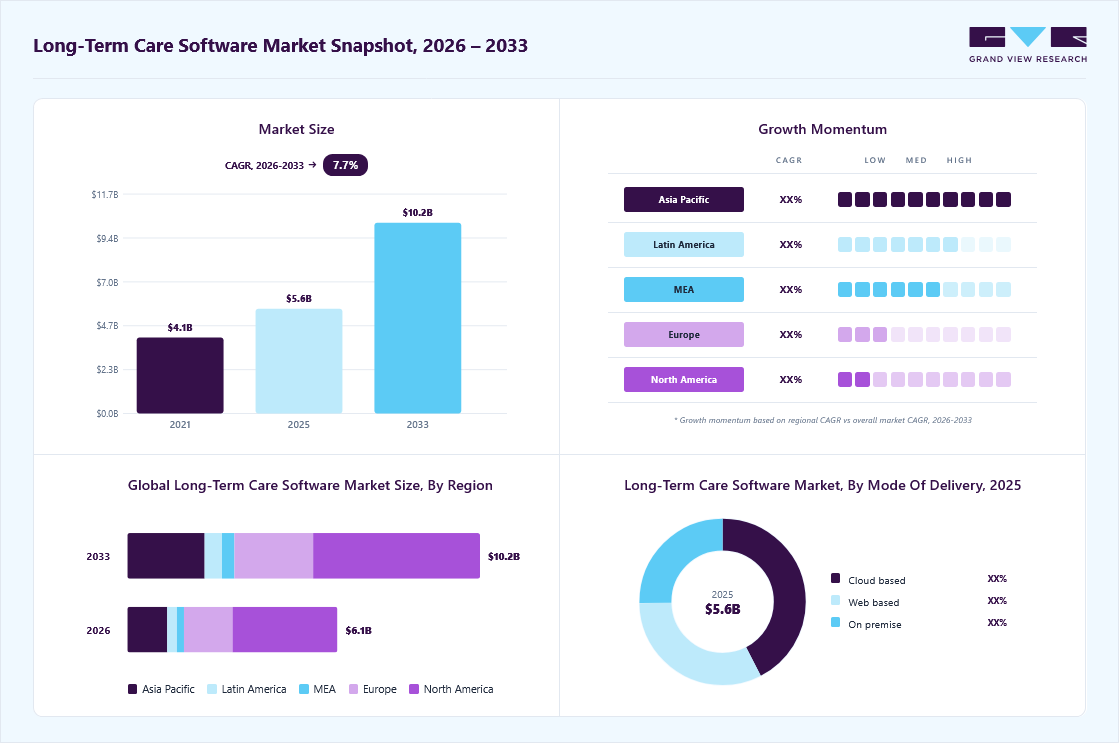
The global long-term care software market size was valued at USD 5.6 billion in 2025 and is projected to grow from USD 6.1 billion in 2026 to USD 10.2 billion by 2033, at a CAGR of 7.7% from 2026 to 2033. The North America held the largest share of 50.3% of the global market in 2025. The market is expected to grow significantly due to increasing demand for efficient management in LTC facilities, driven by the aging population and rising chronic health conditions.
Key Market Trends & Insights
- By application: EHR segment held the largest revenue share of 30.3% in 2025.
- By mode of delivery: Cloud-based segment held the largest share of 42.4% in 2025.
Regional Highlights
- Largest regional market: North America (50.3% revenue share, 2025)
- Fastest-growing regional market: Asia Pacific (highest CAGR, 2026-2033)
- By country: The U.S. led the North America market in 2025.
Market Size & Forecast
- Market size in 2025: USD 5.6 Billion
- Estimated market size in 2026: USD 6.1 Billion
- Projected market size by 2033: USD 10.2 Billion
- CAGR (2026-2033): 7.7%
Three ways to get this report
Buy it, customize it, or ask a question.Get the Full Report
What the study covers
- FormatsPDF · Excel · Dashboard
- Timeline2024–2033 annual, 2023 base
- Coverage20+ countries, 5 regions
- Companies10+ key players profiled
Customize the Report
20% free customization
- IncludeCountries, segments, points
- TailorTo your product definition
- ExtendDeeper competitor detail
- OrA fully bespoke study
- Turnaround5–10 working days
Ask an Analyst
A direct answer, usually in 1 working day
- AccessReport author, directly
- Reply timeWithin 1 working day
- No sales callDirect answer only
- FormatEmail reply
- CostFree, no cost
LTC software improves workflow automation, resident care, and regulatory compliance. It enhances data accuracy, streamlines care coordination, and reduces errors, improving overall quality and operational efficiency. As care centers adopt electronic health records (EHRs) and integrated care platforms, the software’s impact on patient outcomes and administrative processes is expected to drive the market growth.
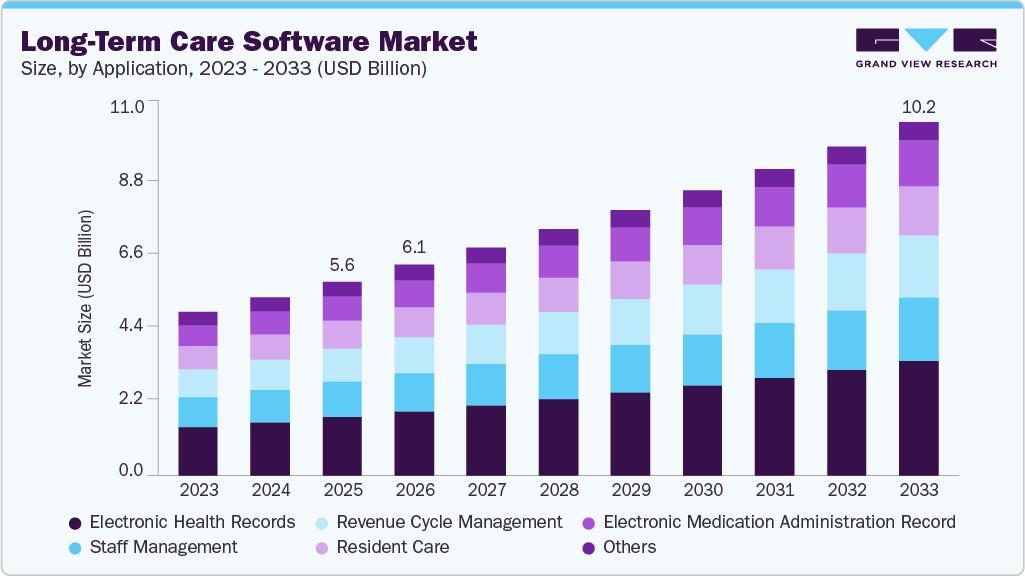
The section below outlines the key factors driving the growth of the long-term care software industry, highlighting the workforce shortage and its impact on driving IT adoption. The workflow efficiency and cost optimization, aging population, and rising burden of chronic diseases drive market growth significantly. The rising adoption of home based care models also drive demand further.
Market Drivers and Dynamics
Growing Geriatric Population & Chronic Disease Burden
The growing demand for medical services due to the rising elderly population facing long-term diseases is a significant factor driving the growth of the market. This software provides effective care management that ensures the efficient use of vital resources, catering to the unique requirements of patients and enhancing healthcare outcomes. Certain conditions, including cancer, Parkinson’s disease, diabetes, heart disease, dementia, multiple sclerosis, Alzheimer’s, mental stress, and cerebral palsy, are becoming more prevalent, especially among the elderly population. For instance, in March 2025 the World Health Organization reported that around 57 million people globally were living with dementia, with over 60% residing in low- and middle-income countries. Dementia continues to grow rapidly, with ~10 million new cases annually. Alzheimer's disease remains the most common form, accounting for ~60-70% of all dementia cases. This trend is anticipated to increase demand for LTC software to support efficient management and personalized care for Alzheimer's patients.
LTC software provides efficient workflow techniques that save time and money. They include a centralized database, integrated EHRs, and solutions for medication management, payroll management, resident care, revenue cycle management, clinical documentation, & others. This helps provide effective care to patients, improve compliance, and reduce costs.
Workforce Shortage Driving IT Adoption
The shortage of nursing staff and increasing burnout among healthcare professionals has enhanced the adoption of healthcare IT solutions. The Canadian press in May 2024 highlighted the requirement for nurses and personal support workers in Ontario is expected to be over 33,200 and 50,853 by 2032. Many LTC providers are adopting these suits to efficiently manage their workflow. For instance, in July 2024, Homecare Homebase (HCHB) and SimiTree partnered to integrate HCHB’s EHR technology with SimiTree’s Market Analysis Platform (MAP). This collaboration enhances market visibility for home health providers, helping them identify growth opportunities, analyze referral patterns, and assess competitors. It ultimately drives innovation and improved care quality.
Market Characteristics & Concentration
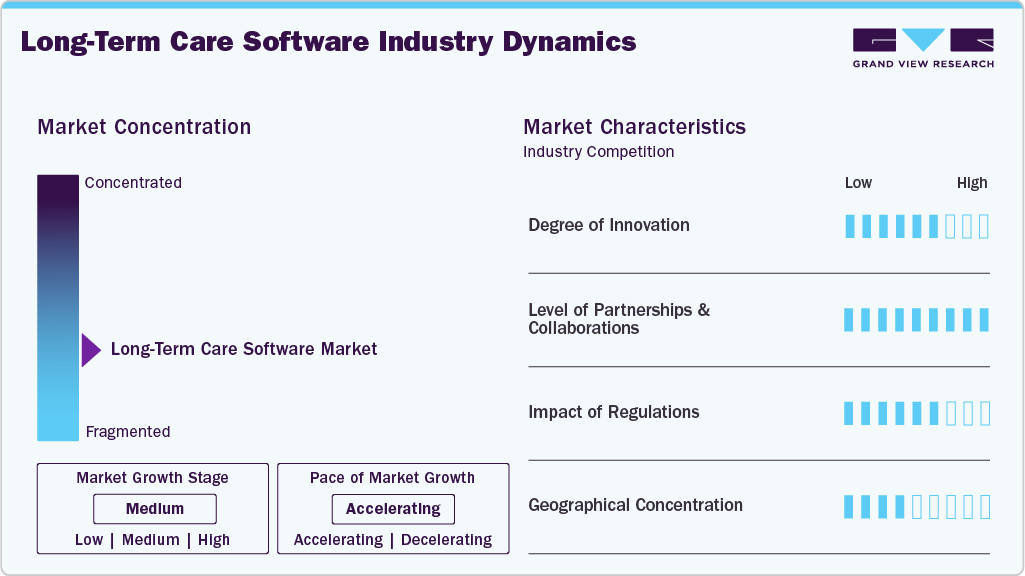
The chart below illustrates the relationship between industry concentration, industry characteristics, and industry participants, including industry competition, level of partnerships & collaboration activities, degree of innovation, impact of regulations, and regional expansion. The degree of innovation is high. The level of merger & acquisition activities is moderate. Moreover, the impact of regulations is high, and the regional expansion of industry is moderate.
The LTC software industry is experiencing a moderate degree of innovation. As the focus on delivering better and more efficient care increases, the demand for LTC software is expected to grow significantly, contributing to the overall advancement of the healthcare industry. For instance, in August 2025, SoftWriters announced the launch of FrameworkInsight, a cloud-based business intelligence platform for long-term care (LTC) pharmacies. The platform is designed to enable data-driven decision-making, improve operational efficiency, and address key challenges in LTC pharmacy workflows through advanced analytics and SaaS-based architecture.
Several key players are actively engaging in partnerships and collaborations to foster growth & innovation and improve their competitiveness by combining the expertise & efforts of different organizations. For instance, in April 2025, GE HealthCare expanded partnership with FPT Software to expand their strategic collaboration, focusing on AI-driven healthcare software solutions.
“As a digital transformation enabler, FPT can co-develop cutting-edge healthcare solutions with GE HealthCare. With nearly two decades of experience delivering solutions to healthcare providers, we see immense opportunities to harness AI to transform the industry, enhance efficiency, and drive smarter decision-making. The establishment of the FPT Competency Center will further accelerate the development of AI-powered solutions, supporting GE HealthCare’s mission of creating a healthier future for all”
-Pham Minh Tuan, FPT Software Chief Executive Officer and Executive Vice President, FPT Corporation.
The regulatory framework for the LTC software industry involves compliance with industry-specific guidelines and standards to ensure accuracy and consistency. For instance, in the UK, digital health products (software, apps, and wearables) are classified as medical devices, regulated under Medical Devices Regulations 2002. It should be registered with the Medicines and Healthcare Products Regulatory Agency (MHRA) before being launched in the UK market.
Geographical expansion helps companies to increase their presence to maintain or strengthen their market presence. For instance, in March 2026, OneAmerica Financial highlighted in its 2026 Long-Term Care Market Outlook that the company is expanding its long-term care solutions and services footprint across the U.S. to address rising care demand and support broader access to care delivery systems.
“What we're seeing from this most recent report is a renewed focused on working together across all aspects of the LTC industry, there is tremendous pressure on all aspects of long-term care but also tremendous opportunity for education, partnership and innovation as we all work together toward a common goal of helping as many people as we can."
-Jeff Levin, vice president, Head of Care Solutions for OneAmerica Financial.
Application Insights
Based on application, the EHR segment dominated the market with the largest revenue share of 30.3% in 2025. In addition, this segment is anticipated to grow at the fastest CAGR from 2026 to 2033. Electronic Healthcare Records (EHRs) play an essential role in the healthcare industry, serving the rapidly growing population requiring extended care. There have been positive developments, with 84% of nursing facilities choosing EHRs, as indicated by an NCBI study. Implementing an EHR system in LTC facilities can significantly enhance the quality of care if proper implementation, usage, and maintenance are ensured. For instance, in October 2025, PointClickCare highlighted, its cloud-based EHR platform for skilled nursing and senior living providers enables real-time clinical documentation, care coordination, and data-driven decision-making across LTC settings. The platform integrates clinical, financial, and operational data, allowing providers to improve care quality, ensure regulatory compliance, and streamline workflows in nursing facilities. As a result, EHR implementation has proven to be more effective in LTC facilities, enabling improved management of clinical documentation and facilitating better decision-making processes.
The Revenue Cycle Management (RCM) segment is expected to grow significantly over the forecast period. The growing adoption of integrated software solutions contributes to the expansion of the RCM segment. Integrated RCM systems, which connect financial management with clinical and operational data, offer a comprehensive approach to revenue management. By enhancing data across various functions, these systems provide actionable insights, enhance financial oversight, and improve overall revenue cycle efficiency. This integration supports better decision-making and operational transparency, driving increased demand for advanced RCM solutions in the market. For instance, MatrixCare in 2025 highlighted that its platform delivers fully integrated revenue cycle management (RCM) services for home health, hospice, skilled nursing, and senior living providers. The company emphasizes that integrating billing, coding, clinical documentation review, and financial workflows within a single platform helps providers streamline operations, reduce errors, and improve reimbursement cycles.
Mode of Delivery Insights
Based on mode of delivery, the cloud-based segment dominated the market with the largest revenue share of 42.4% in 2025 and is expected to grow at the fastest CAGR during the forecast period. Cloud-based solutions offer unparalleled accessibility, enabling healthcare providers to access patient data and essential software functionalities anywhere, anytime. This flexibility is particularly crucial for LTC facilities that operate around the clock and often require real-time data to make urgent care decisions. The demand for cloud-based solutions is rising, leading to the development of new products and the entry of players into the market. For instance, in April 2026, DAS Health announced the acquisition of Prime Care Technologies and Prime Cloud, aimed at expanding its cloud-based healthcare IT and managed services capabilities. The acquisition strengthens DAS Health’s offerings for senior living and long-term care organizations, adding cloud-hosted solutions designed for compliance, operational efficiency, and care delivery environments.
The web-based segment is expected to grow at a significant CAGR during the forecast period. The growing demand for accessibility and flexibility in healthcare management is expected to boost the web-based segment. Web-based solutions offer unparalleled access to patient information and care plans from any location, anytime, provided there is internet connectivity. This flexibility is particularly crucial in LTC settings, where care teams often operate across multiple locations and require real-time access to patient records to make swift, informed decisions. In addition, the scalability of web-based platforms allows for the integration of various functionalities as the needs of the facility grow, ensuring that the software can adapt to changing demands without significant overhauls or investments. For instance, in November 2025, PointClickCare announced a next-generation senior living platform, designed to deliver seamless connectivity, real-time access to resident data, and integrated workflows across care teams.
End Use Insights
Based on end use, the nursing homes segment dominated the market with a revenue share of 32.5% in 2025. The growth is attributed to the rising demand for Skilled Nursing Facilities (SNFs) globally. The SNFs offer essential nursing, rehabilitation, and related services, with Medicare covering short-term skilled nursing & rehabilitation for beneficiaries post their stay in acute care hospitals. The Medicare.gov data highlighted that Skilled Nursing Facility (SNF) care remains one of the most utilized post-acute care services, with Medicare continuing to cover short-term skilled nursing and rehabilitation following hospital stays, reinforcing sustained demand for SNF operations and management systems.
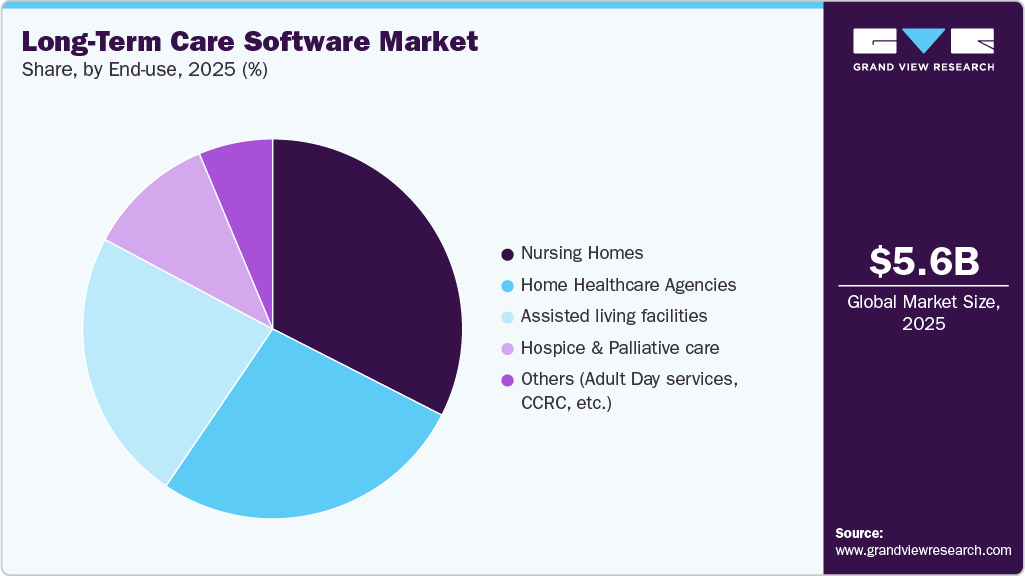
The home healthcare agencies segment is expected to grow at the fastest CAGR during the forecast period. The segment growth is driven by the rising demand for personalized and patient-centric care. As patients and their families increasingly prefer receiving care in the comfort of their own homes rather than in institutional settings, home healthcare agencies are expanding their services to meet these needs. This shift is leading to a heightened demand for advanced software solutions that can efficiently manage patient care, track health outcomes, and ensure compliance with regulatory standards.
Regional Insights
North America long-term care software industry dominated globally with the largest revenue share of 50.3% in 2025. The market growth is driven by an increasing demand for comprehensive healthcare solutions among the rapidly aging population. The growing geriatric population is prompting healthcare facilities to adopt advanced software solutions for better patient care management, efficient operation workflows, and effective handling of administrative tasks. Moreover, the rise in the prevalence of chronic diseases and the need for continuous care & monitoring of patients have necessitated the integration of technologically advanced software systems in LTC facilities. These systems offer functionalities such as EHRs, e-prescribing, patient management, and billing & invoicing, thereby ensuring operational efficiency & improving the quality of care provided.

U.S. Long-Term Care Software Market Trends
The U.S. long term care (LTC) software industry held the largest share in 2025. The increasing demand for medical services due to the growing elderly population suffering from long-term diseases is a significant factor driving the growth of the market in the U.S. The Alzheimer's Association 2025 report reveals that an estimated 7.2 million Americans age 65 and older live with Alzheimer's dementia today. This number could grow to 13.8 million by 2060, barring the development of medical breakthroughs to prevent or cure AD. Official AD death certificates recorded 120,122 deaths from Alzheimer’s disease in 2022. This growing prevalence and mortality burden is expected to significantly increase the demand for long-term care software solutions to support efficient patient management, care coordination, and personalized treatment for Alzheimer’s patients across the U.S.
Europe Long-Term Care Software Market Trends
The long term care software market in Europe is anticipated to grow significantly due to the presence of developed economies, such as Germany, the UK, France, Spain, & Italy. The need for integrated health systems is rising due to the rapidly growing geriatric population and subsequently increasing prevalence of chronic diseases. An increase in the number of initiatives supporting eHealth is expected to drive the regional market over the forecast period. In addition, EU policymakers are promoting various digital health programs, which are expected to boost market growth during the forecast period.
UK long-term care software industry is expected to grow significantly over the forecast period. The growth is driven by the ever-increasing need for efficient healthcare services amidst a rising geriatric population and the subsequent rise in chronic health conditions. This increase demands robust and scalable solutions to streamline operations and enhance care delivery in LTC facilities. In addition, the government's initiatives toward digitization of health records and the push for integrated care models are pivotal in steering the adoption of advanced software solutions. For instance, in March 2024, the investment of USD 4.3 million (EUR 4.2 million) by the government in the digitalization of healthcare services is expected to offer lucrative growth opportunities for market players, thereby driving market growth.
Germany long-term care software industry held a significantshare in 2025. The growing geriatric population in Germany has led to an increase in the demand for LTC services. As the percentage of the elderly population rises, there is a growing need for efficient management systems in nursing homes, assisted living facilities, and home care settings. Furthermore, the German healthcare system's emphasis on quality care and operational efficiency has increased the adoption of advanced software solutions. These tools enhance patient care management, streamline administrative tasks, and ensure compliance with regulatory standards, fostering a more effective & sustainable long-term care ecosystem.
Asia Pacific Long-Term Care Software Market Trends
Asia Pacific long-term care software industry is projected to be the fastest-growing over the forecast period, with a high demand for LTC solutions due to an increase in government spending on healthcare. In addition, the need for LTC software has been growing, as it enables effective management of financial, clinical, and administrative aspects of LTC centers. Various LTC providers in Japan, Malaysia, South Korea, and Australia have adopted these systems for better patient care and satisfaction. Furthermore, several supportive government policies and increasing investments in digital health infrastructure are accelerating market growth. Several governments are implementing initiatives and providing funding to promote the adoption of digital health technologies, including LTC software.
Japan long-term care software industry held a significant revenue share in 2025. Several factors, such as the rapid adoption of new technologies and growing popularity of at-home care & regular monitoring services, are likely to propel the market growth in Japan. For instance, in June 2024, the Ministry of Health, Labor and Welfare (MHLW) and the Ministry of Economy, Trade and Industry (METI) updated the Priority Fields in the Use of Robot Technology for LTC and updated the title to Priority Fields in the Use of Technologies for LTC. The new priority fields aim to enhance care quality, reduce caregiver burden, and support elderly self-reliance with robots, ICT, and other innovations. An increasing number of partnerships among major cross-industry players over recent years is propelling the adoption of newer technologies in Japan’s healthcare sector such as LTC.
India long-term care software industry is driven by the growing geriatric population, increasing burden of chronic diseases, and government initiatives supporting the country’s eHealth scenario. In addition, efforts to improve healthcare infrastructure are likely to boost the market. The Indian government has undertaken various initiatives to support digital health. Significant investments have been made to develop healthcare IT infrastructure. One such notable initiative is the development of the Integrated Health Information Platform (IHIP). IHIP is being implemented to create standard-compliant EHRs and their integration & interoperability through a centralized platform. This initiative aims to reduce healthcare costs, enable patient involvement in the overall care management process, and optimize information exchange to generate better health outcomes.
Latin America Long-Term Care Software Market Trends
The long-term care software industry in Latin America is anticipated to grow significantly over the forecast period. The healthcare system in Latin America is rapidly evolving. The demand for advanced healthcare is increasing amid a rapidly aging population and rising prevalence of chronic diseases. In certain demographic sectors, rising income fuels the demand for high-quality services, there is a heightened demand for advanced software that can streamline care delivery, improve operational efficiency, and enhance patient outcomes. Technologies such as EHRs, care coordination platforms, and remote monitoring systems are becoming essential in addressing the complexities of long-term care and managing resource constraints.
Brazil long-term care software industry held the largest market share in 2025. Some of the major factors driving Brazil’s long term care software industry are rising per capita income, increasing government medical & healthcare spending, improving access to private healthcare facilities such as LTC centers, and fast-growing healthcare R&D. Brazil is one of the most profitable healthcare markets in Latin America with largest healthcare spending. Strong government backing and high demand for healthcare services drive the country’s healthcare sector. The government has undertaken various efforts and implemented appropriate plans & regulations, which have resulted in the beneficial growth of total healthcare services & facilities.
Middle East and Africa Long-Term Care Software Market Trends
The long-term care software industry in MEA is anticipated to grow significantly during the forecast period. Market growth in this region can be attributed to the steady development of healthcare facilities in emerging economies and an increase in healthcare expenditure. Some of the key countries in the region, such as Saudi Arabia and the UAE, have exhibited significant growth & major changes in healthcare facilities.
South Africa long-term care software industry is expected to grow significantly over the forecast period.An increase in the adoption of IT in healthcare is expected to boost the market. The eHealth strategy in South Africa’s public health sector is expected to accelerate the deployment of LTC solutions, focusing on enhancing the efficiency and effectiveness of the national health information system through a patient-centric approach. For instance, in April 2025, South Africa’s Council for Scientific and Industrial Research (CSIR), supporting National Health Insurance (NHI) implementation, advanced the National Electronic Health Record System (NEHRS), designed to enable interoperable patient records across provinces and improve continuity of long-term care management. South Africa’s digital health need is significant, as the public health sector serves 84% of the population, while the private sector serves only 16%, reinforcing demand for scalable long-term care software solutions.
Key Long-Term Care Software Company Insights
The market is fragmented, with the presence of many country-level service end uses. The market players undertake several strategic initiatives, such as partnerships & collaborations, product launches, mergers & acquisitions, and geographical expansion to maintain their position and grow in the market.
Key Long-Term Care Software Companies:
The following key companies have been profiled for this study on the long term care software market.
- Veradigm LLC (Allscripts Healthcare, LLC)
- Cerner Corporation (Oracle)
- Netsmart Technologies, Inc.
- MatrixCare (ResMed Inc.)
- Yardi Systems, Inc.
- VITALS SOFTWARE (ALINE)
- PointClickCare
- Medtelligent, Inc.
- AL Advantage, LLC
- Genexod Technologies LLC
- Revver, Inc.
- Homecare Homebase, LLC.
- eClinicalWorks
- Kareo, Inc.
Recent Developments
-
In May 2024, MatrixCare (ResMed Inc.) entered into a strategic partnership with NHS Management, LLC, a provider of administrative & consulting services for skilled nursing and rehabilitative facilities in the Southeast. This collaboration aims to enhance out-of-hospital healthcare solutions through MatrixCare (ResMed Inc.)’s innovative technology.
“Providers of long-term care were greatly impacted due to the recent transition of electronic medical record (EMR) providers, forcing operators to evaluate new technologies in the industry. The suite of holistic solutions at MatrixCare, including a purpose-built EMR, a fully integrated dietary and nutrition solution, best-in-class enterprise financial solutions, and AI-powered safety solutions are all designed to help communities deliver the best care possible for their residents.”
~Bharat Monteiro, General Manager, Facilities, MatrixCare
-
In March 2024, MatrixCare (ResMed Inc.), a global postacute technology provider, announced that it would integrate HEALTHCARE first’s revenue cycle management, coding, and clinical documentation review services with its software suite.
-
In January 2024, Aline, a provider of senior living software, acquired VITALS SOFTWARE, expanding its enterprise-scale solutions to Vitals customers while continuing to support their existing platform.
“Vitals Software, originally built by and for an operator, has a solid reputation for providing a customizable and flexible technology suite that caters to the unique needs of senior living operators.
Robert and I had many conversations over the years about our common customer-first philosophy and how a combination of our resources would allow us to invest more in innovation and bring additional features and functionality to our customers faster and more cost effectively than we would separately. The Vitals Software acquisition is another building block in Aline’s strategy to provide the most powerful, user-friendly software platform in senior living.”
~ Brad Frasher, Chairman and CEO, Aline
Long-Term Care Software Market Report Scope
Report Attribute
Details
Market size in 2025
USD 5.6 billion
Estimated market size in 2026
USD 6.1 billion
Projected market size by 2033
USD 10.2 billion
Growth rate
CAGR of 7.7% from 2026 to 2033
Actual data
2021 - 2024
Forecast period
2026 - 2033
Quantitative units
Revenue in USD billion and CAGR from 2026 to 2033
Report coverage
Revenue forecast, company ranking, competitive landscape, growth factors, and trends
Segments covered
Application, mode of delivery, end use, region
Regional scope
North America; Europe; Asia Pacific; Latin America; MEA
Country scope
U.S.; Canada; Mexico; Germany; UK; France; Italy; Spain; Norway; Denmark; Sweden; China; Japan; India; South Korea; Australia; Thailand; Brazil; Argentina; Saudi Arabia; South Africa; UAE; Kuwait
Key companies profiled
Veradigm LLC; Oracle; Netsmart Technologies, Inc.; MatrixCare (ResMed Inc.); Yardi Systems, Inc.; VITALS SOFTWARE (ALINE); PointClickCare; Medtelligent, Inc.; AL Advantage, LLC; Genexod Technologies LLC; Revver, Inc.; Homecare Homebase, LLC.; eClinicalWorks; Kareo, Inc.
Customization scope
Free report customization (equivalent up to 8 analysts working days) with purchase. Addition or alteration to country, regional & segment scope.
Pricing and purchase options
Avail customized purchase options to meet your exact research needs. Explore purchase options
Global Long-Term Care Software Market Report Segmentation
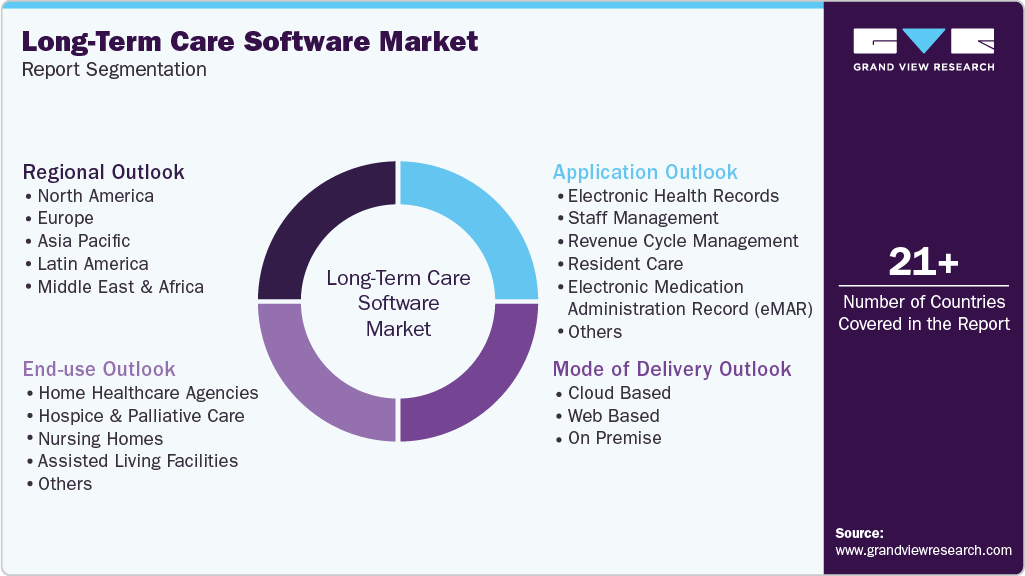
This report forecasts revenue growth at global, regional, and country levels and provides an analysis of the latest industry trends in each of the sub-segments from 2021 to 2033. For this study, Grand View Research has segmented the long-term care software market report based on application, mode of delivery, end use, and region.
-
Application Outlook (Revenue, USD Million, 2021 - 2033)
-
Electronic Health Records (EHR)
-
Staff Management
-
Revenue Cycle Management (RCM)
-
Resident Care
-
Electronic Medication Administration Record (eMAR)
-
Others (Scheduling software, Document Management Systems (DMS), Analytics & reporting tools, Compliance & regulatory reporting, etc.)
-
-
Mode of Delivery Outlook (Revenue, USD Million, 2021 - 2033)
-
Cloud Based
-
Web Based
-
On Premise
-
-
End Use Outlook (Revenue, USD Million, 2021 - 2033)
-
Home Healthcare Agencies
-
Hospice & Palliative care
-
Nursing Homes
-
Assisted living facilities
-
Others
-
-
Regional Outlook (Revenue, USD Million, 2021 - 2033)
-
North America
-
U.S.
-
Canada
-
Mexico
-
-
Europe
-
UK
-
Germany
-
France
-
Italy
-
Spain
-
Denmark
-
Sweden
-
Norway
-
-
Asia Pacific
-
China
-
Japan
-
India
-
South Korea
-
Australia
-
Thailand
-
-
Latin America
-
Brazil
-
Argentina
-
-
Middle East and Africa (MEA)
-
South Africa
-
Saudi Arabia
-
UAE
-
Kuwait
-
-
Frequently Asked Questions About This Report
Key factors driving the long-term care software market growth include rising adoption of EHRs by the LTC providers, increasing prevalence of chronic diseases, especially among the elderly population, technological advancement.
North America dominated with a 50.3% revenue share in 2025.
Asia Pacific is the fastest-growing region over the forecast period.
The cloud-based segment led with a 42.4% revenue share in 2025, and is the fastest-growing mode of delivery.
Nursing homes segment held the largest share (over 32.0%) in 2025, while home healthcare agencies is the fastest-growing segment.
The global long-term care software market size was valued at USD 5.6 billion in 2025 and is estimated at USD 6.1 billion for 2026.
The global long-term care software market is expected to grow at a CAGR of 7.7% from 2026 to 2033, reaching USD 10.2 billion by 2033.
The electronic health records (EHR) segment dominated the long-term care software market with the largest share of 30.3% in 2025.
Key players include Veradigm LLC; Oracle; Netsmart Technologies, Inc.; MatrixCare (ResMed Inc.); Yardi Systems, Inc.; VITALS SOFTWARE (ALINE); PointClickCare; Medtelligent, Inc.; AL Advantage, LLC; Genexod Technologies LLC; Revver, Inc.; Homecare Homebase, LLC.; eClinicalWorks; Kareo, Inc.
About the Author(s)
Healthcare IT Research Team
Healthcare · Healthcare ITThis report was authored by the healthcare it research team at Grand View Research - comprising two research analysts, one senior research analyst, and one industry expert - with specialized expertise in the healthcare it segment of the healthcare industry. All findings are based on proprietary healthcare databases, executive interviews, and regulatory analysis, subject to internal peer review prior to publication.
Last Updated:
Speak to Analyst


Customize this report to your needs - add regions, segments, or data points, with 20% free customization.
Or view our licence options:


ISO 9001:2015 & 27001:2022 Certified
We are GDPR and CCPA compliant! Your transaction & personal information is safe and secure. For more details, please read our privacy policy.


