
- Home
- »
- Healthcare IT
- »
-
Master Data Management In Healthcare Market Report, 2025-2033GVR Report cover

Master Data Management In Healthcare Market (2025 - 2033)
Size, Share & Trends Analysis Report By Component (Software, Services), By Deployment Mode (Cloud-based, On-premise), By End Use, By Region, And Segment Forecasts
Market Size, 2024
$1.6BMarket Estimate, 2026
$1.9BMarket Forecast, 2033
$3.0BCAGR, 2025–2033
7.0%Master Data Management In Healthcare Market Summary
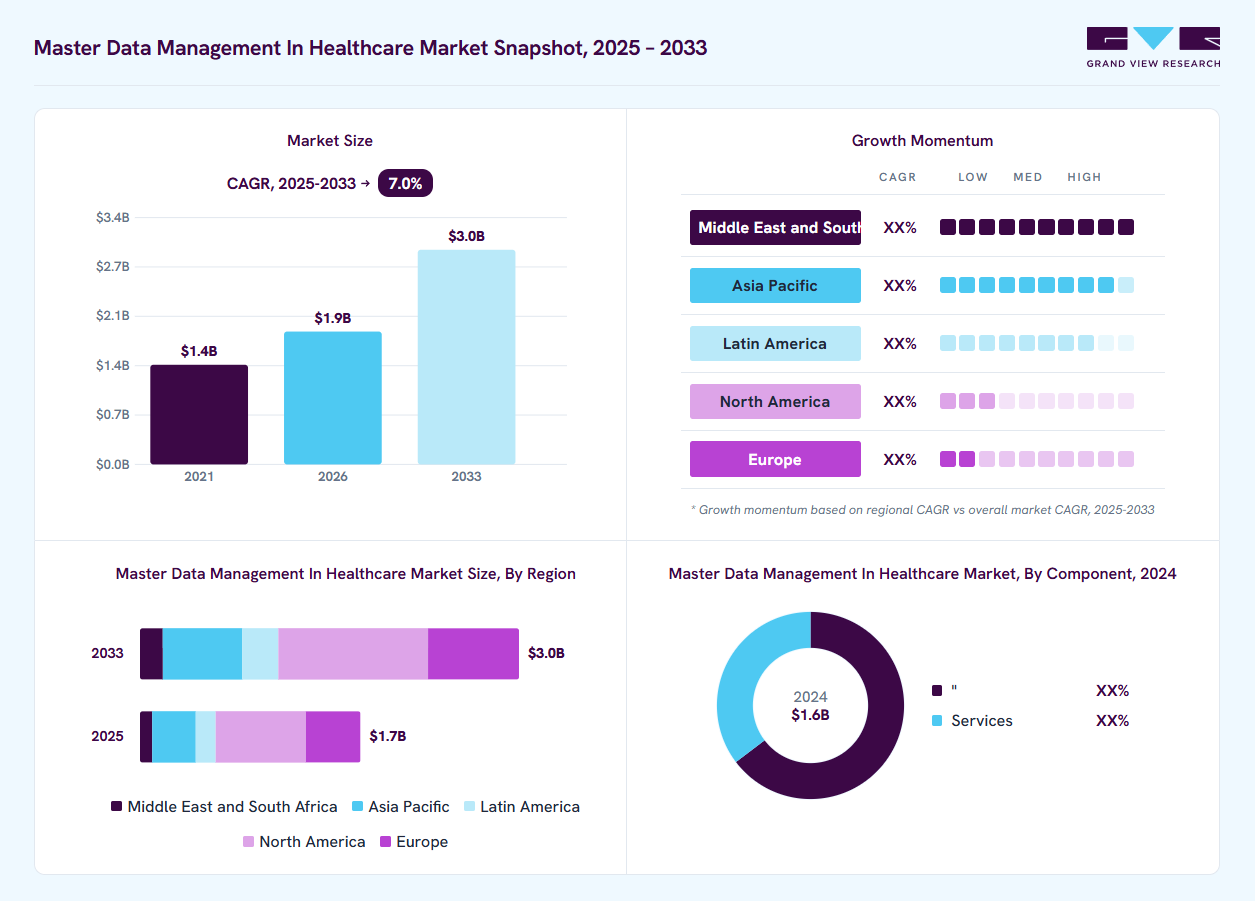
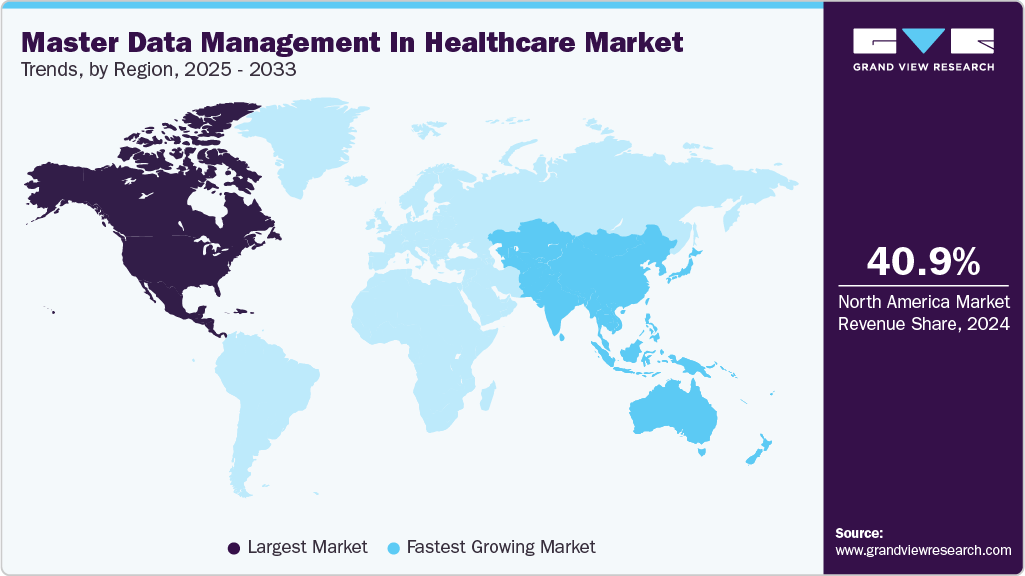
The global master data management in healthcare market size was valued at USD 1.6 billion in 2024 and is projected to grow from USD 1.9 billion in 2026 to USD 3.0 billion by 2033, at a CAGR of 7.0% from 2025 to 2033. North America dominated the market, accounting for a revenue share of 40.9% in 2024. This growth is attributed to the growing volume of healthcare data, increasing adoption of healthcare IT solutions, integration of advanced analytics & AI, and the need for data accuracy and interoperability.
 Source: Grand View Research, IR Documents, Primary Interviews, Paid DatabasesTo learn more about this report,
 Download Free Sample Report
 Key Market Trends & Insights
- Asia Pacific is expected to be the fastest-growing region from 2025 to 2033.
- By component, the software segment held the largest market share of 64.7% in 2024.
- By deployment mode, the cloud-based segment held the dominant market share in 2024.
- By end use, the healthcare providers segment held the largest revenue share in 2024.
Market Size & Forecast
- 2024 Market Size: USD 1.6 Billion
- 2033 Projected Market Size: USD 3.0 Billion
- CAGR (2025-2033): 7.0%
- North America: Largest Market in 2024
- Asia Pacific: Fastest Growing Market
Three ways to get this report
Buy it, customize it, or ask a question.Ask an Analyst
Analyst response in 1 business day
- AccessReport author, directly
- Reply timeWithin 1 working day
- No sales callDirect answer only
- FormatEmail reply
- CostFree, no cost
Get the Full Report
What the study covers
- FormatsPDF · Excel · Dashboard
- Timeline2025–2033 annual, 2024 base
- Coverage20+ countries, 5 regions
- Companies10+ key players profiled
Customize the Report
20% free customization
- IncludeCountries, segments, points
- TailorTo your product definition
- ExtendDeeper competitor detail
- OrA fully bespoke study
- Turnaround5–10 working days
The growing volume of healthcare data is contributing to the growth of the healthcare master data management (MDM) for healthcare market, as providers, payers, and life science organizations generate massive amounts of clinical, operational, and patient-centric information across EHRs, diagnostics, IoT devices, imaging systems, and claims platforms. For instance, according to Semarchy, the healthcare sector accounted for 30% of global data and is projected to reach 36% by 2025. This surge in healthcare data makes it challenging for healthcare enterprises to maintain accuracy, consistency, and interoperability without a unified framework, highlighting the need for scalable master data management solutions that can harmonize data sources, eliminate duplication, and support analytics, regulatory compliance, and value-based care initiatives.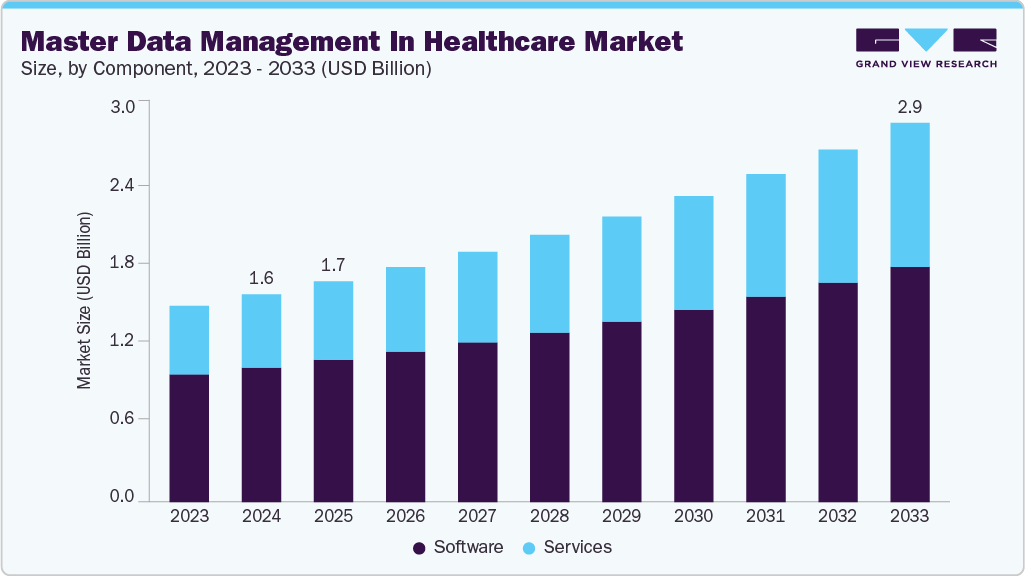 To learn more about this report, Download Free Sample Report
 Growing demands for data accuracy and interoperability are accelerating the expansion of the healthcare master data management market, as organizations struggle with fragmented, siloed information across EHRs, lab systems, billing platforms, imaging archives, and connected health devices. Inaccurate or inconsistent data creates risks ranging from clinical errors to reimbursement delays, making a unified, reliable data foundation essential. MDM platforms help standardize patient, provider, and asset records, eliminate duplication, and enable smooth data exchange across disparate systems through governance and normalization frameworks. As healthcare shifts toward analytics-driven decision-making, coordinated care, and regulatory compliance, the need for interoperable, high-quality data is pushing both providers and payers to adopt robust MDM solutions.
Integration of AI in Master Data Management for Healthcare
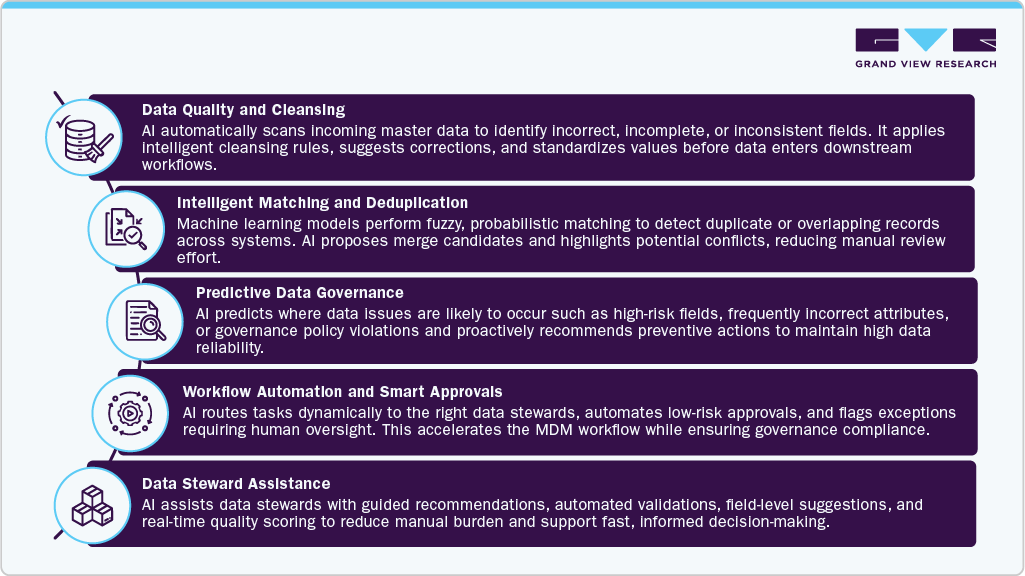
The integration of AI into healthcare Master Data Management (MDM) is transforming how organizations maintain accuracy, consistency, and governance across complex clinical and administrative datasets. As healthcare providers, payers, and digital health platforms generate massive volumes of structured and unstructured information, AI-driven capabilities help automate cleansing, enhance matching precision, streamline governance workflows, and reduce the manual workload on data stewards.
 To learn more about this report, Download Free Sample Report
 These advancements improve data reliability and accelerate real-time decision-making across clinical, financial, and operational systems.
Market Concentration & Characteristics
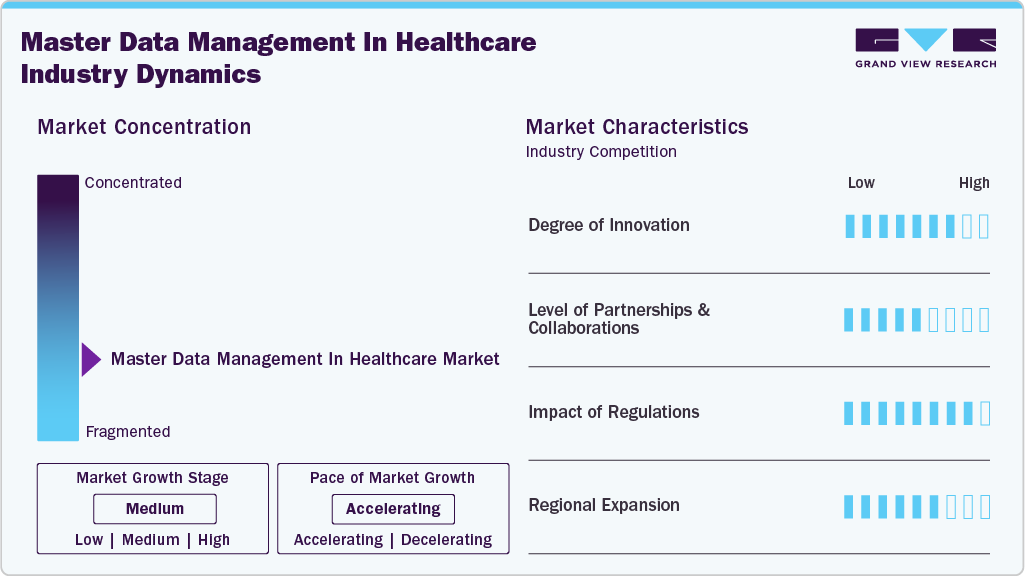
The chart below illustrates the relationship between market concentration, characteristics, and participants. The x-axis represents the level of industry concentration, ranging from low to high. The y-axis represents various industry characteristics, including industry competition, the impact of regulations, the level of partnership and collaboration activities, the degree of innovation, and regional expansion.
Innovation in master data management in healthcare industry is accelerating as organizations strive to enhance data accuracy, interoperability, and operational efficiency. Vendors are integrating AI to automate data cleansing, enhance entity matching, and strengthen the creation of reliable golden records. Key players, including Informatica Inc., IBM, Reltio, SAP, Semarchy, and Ataccama, are leading this shift with AI-enabled MDM solutions tailored to meet the needs of clinical, administrative, and regulatory requirements.
 To learn more about this report, Download Free Sample Report
 The level of partnerships and collaboration in the master data management in healthcare market is rising, with life sciences and healthcare technology firms increasingly joining forces to improve data governance, interoperability, and analytics. For instance, in August 2025, IQVIA and Veeva announced a long-term clinical and commercial partnership, resolving all past disputes. As part of their collaboration, they plan to align on master data management strategies leveraging IQVIA’s data infrastructure and Veeva’s Cloud-based platform to unify and govern critical clinical and commercial master data.
Regulations have a significant impact on the market, as organizations must maintain accurate, consistent, and traceable data to comply with frameworks such as HIPAA, CMS data standards, the 21st Century Cures Act, and interoperability mandates from ONC. These requirements push healthcare providers, payers, and life sciences companies to adopt robust MDM solutions that ensure data integrity, enable secure information exchange, and support auditability across clinical, financial, and operational systems.
The regional expansion of the market for master data management in healthcare is gaining momentum as vendors extend Cloud-based-native and AI-driven capabilities to new geographies to meet rising demand for data accuracy, interoperability, and regulatory compliance. Companies are increasingly localizing deployments to support regional Cloud-based infrastructure, improve latency, and comply with country-specific data governance rules. For instance, in November 2022, Informatica expanded its Cloud-based-native master data management offering into Asia, with support for Microsoft Azure to enable scalable, regionally hosted MDM deployments. This move allows Asian enterprises to leverage Informatica’s Cloud-based-native MDM on Azure to centrally manage and govern master data across distributed systems.
Case Study Insights
Global Pharma Network Case Study Semarchy Master Data Management
Overview:
-
A leading multinational pharmaceutical company adopted Semarchy’s master data management platform to unify and govern its product, clinical trial, and regulatory master data across global regions.
Challenges:
-
Fragmented data across regional subsidiaries and systems, leading to inconsistencies in product naming, trial metadata, and regulatory submissions.
-
Inefficiencies and risk in global data sharing and compliance, with manual reconciliation and limited data governance.
Solution:
-
Implemented Semarchy’s Intelligent Data Hub to centralize critical master data from multiple sources.
-
Used data stewardship workflows, data matching, and validation rules to ensure high accuracy and consistency.
-
Enabled role-based access control to support cross-geography data governance and distributed stewardship.
Results & Benefits:
-
Improved Data Quality: Errors and duplicates were substantially reduced through deduplication and automated validation.
-
Faster Time to Market: Regulatory submissions became faster and more reliable due to shared, trusted data.
-
Better Collaboration: Regional teams collaborated on a unified data model, improving trust and efficiency in global operations.
-
Governance & Compliance: The centralized hub simplified auditing, data stewardship, and regulatory compliance.
Key Takeaways:
-
A unified MDM platform can significantly streamline global regulatory and clinical operations in pharma.
-
Automated data governance and stewardship workflows drive better data quality and cross-functional trust.
-
Centralized master data helps align global teams and accelerates critical business processes like regulatory submission and product launch.
Component Insights
The software segment dominated the master data management for the healthcare market, with the largest revenue share of 64.7% in 2024, and is anticipated to witness the fastest CAGR over the forecast period. The growth is attributed to the increasing adoption of AI-driven data quality tools, automated matching and deduplication engines, and advanced metadata management features that significantly reduce manual stewardship efforts. In addition, the rapid shift toward Cloud-based-native master data management platforms, scalable integration frameworks, and low-code configuration capabilities is encouraging healthcare organizations to prioritize software investments for faster deployment, better customization, and enhanced system interoperability.
Moreover, the services segment is expected to grow significantly over the forecast period, owing to the demand for implementation, integration, consulting, and managed services related to master data management solutions. Healthcare organizations are relying on expert service providers to customize MDM platforms, ensure compliance with regulations, streamline data governance processes, and optimize system performance, which is driving growth in this segment.
Deployment Mode Insights
The cloud-based segment dominated the master data management in healthcare industry in 2024, with the largest revenue share. This growth is attributed to the scalability, flexibility, and cost-effectiveness offered by Cloud-based master data management solutions. Healthcare organizations are increasingly opting for cloud-based deployments to centralize and unify master data across multiple facilities, enabling real-time access, reducing IT infrastructure costs, and supporting remote collaboration. Additionally, Cloud-based platforms facilitate rapid integration with existing systems, seamless updates, and enhanced security and compliance features, further driving adoption in the healthcare sector.
The on-premise segment is anticipated to showcase the significant growth over the forecast period, driven by healthcare organizations that prioritize data control, security, and compliance. Many hospitals and large healthcare providers prefer on-premises deployments to maintain sensitive patient data within their own infrastructure, ensure adherence to local regulations, and customize MDM solutions to meet specific organizational workflows and legacy system integrations.
End Use Insights
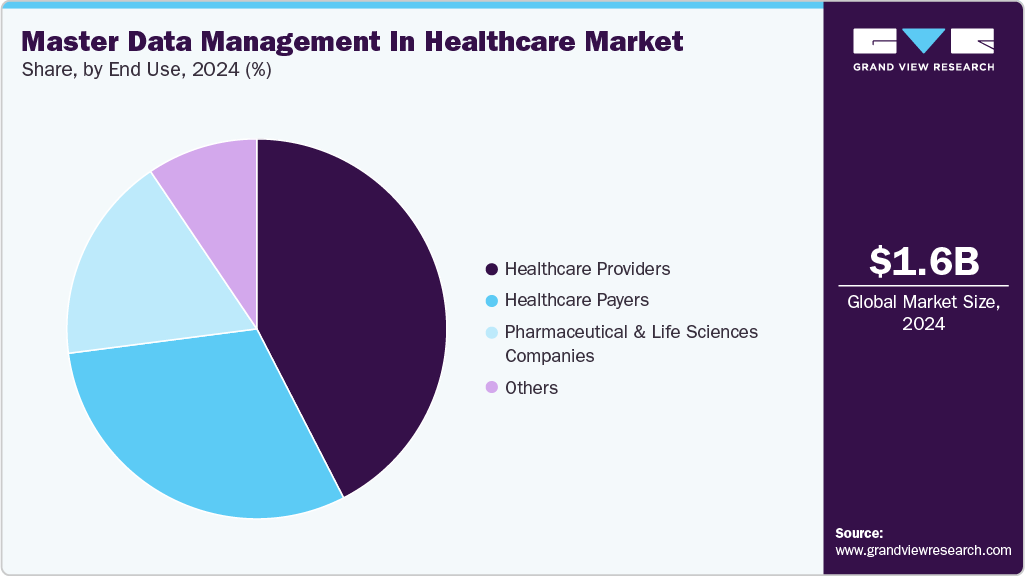
The healthcare providers segment dominated the master data management in healthcare market, with the largest revenue share in 2024, driven by the critical need to manage vast volumes of patient, clinical, and operational data across hospitals, clinics, and specialty centers. The adoption of master data management solutions enables providers to unify patient records, reduce duplicates, enhance care coordination, and ensure compliance with regulatory standards, thereby improving operational efficiency and the quality of patient care.
 To learn more about this report, Download Free Sample Report
 The healthcare payer segment is expected to experience significant growth over the forecast period. This growth is attributed to the rising value-based contracting and increasing network complexity, which forces payers to reconcile provider directories, referral relationships, and contract attributes in near real-time. At the same time, mergers, acquisitions, and third-party partnerships (PBMs, care managers, analytics vendors) increase the number of disparate systems that must interoperate. Cost pressures and the consumerization of benefits prompt payers to enhance their member 360-degree views for personalization and digital member experiences, which rely on robust identity resolution, master data governance, and lineage.
Regional Insights
North America dominated the master data management in healthcare market due to the largest healthcare IT spend, fastest enterprise adoption, and presence of large market players. The growing adoption of artificial intelligence (AI), machine learning (ML), and advanced analytics within MDM platforms is further accelerating market expansion. These technologies enable healthcare organizations to enhance care personalization, strengthen clinical outcomes, and improve operational efficiency. With regulatory requirements becoming more stringent and data privacy concerns rising, the North American MDM market is entering a phase of strategic transformation-centered on compliance, security, and seamless interoperability. This evolving environment presents significant opportunities for technology vendors, healthcare enterprises, and investors seeking to capitalize on the ongoing digitalization of healthcare data management.
 To learn more about this report, Download Free Sample Report
 U.S. Master Data Management in Healthcare Market Trends
The growth of the master data management industry in the U.S. is attributed to the federal policies such as the HITECH Act, stringent interoperability mandates, and anti-information-blocking regulations under the 21st Century Cures Act, growing complexity from fragmented patient, provider, and payer data, and rising demand for robust data governance and compliance frameworks. Furthermore, the growing adoption of Cloud-based MDM solutions and AI/ML-powered data quality tools is further accelerating this trend. In addition, the implementation of USCDI standards under the Cures Act enforces consistent data exchange and strengthens patient data accessibility across providers. This environment presents significant opportunities for master data management platforms to support population health initiatives, facilitate value-based care strategies, and serve as centralized, trusted data hubs for integrated healthcare delivery.
Europe Master Data Management in Healthcare Market Trends
The Europe master data management in healthcare industry’s growth is driven by several factors: strict data-protection regulations such as GDPR; the introduction of the European Health Data Space (EHDS), which enables cross-border health data sharing; the need for interoperability due to fragmented national health-IT systems; and increasing digitization of health records and EHR adoption across EU states. For instance, a February 2024 article by the National Health Authority notes that 96% of General Practitioners (GPs) in Europe use EHR. Collectively, these factors contribute to the market growth.
The growth of master data management in healthcare market in the UK is driven by the national digital-health strategy, which promotes open standards and interoperability, centralized data modeling through the NHS Data Model and Dictionary, and the increasing demand for secure, linked data environments, such as NHS secure data environments for research. In addition, the Data Strategy 2024-2029, which emphasizes managing data as a strategic asset through stronger governance and master‑data practices across NHS bodies, including NHS Business Services Authority (NHSBSA) creates opportunities for healthcare organizations to improve data accuracy, enable seamless patient care coordination, support compliance with regulatory requirements, and leverage advanced analytics for population health management and value-based care.
The growth of the Germany master data management in healthcare market is driven by the nationwide rollout of the electronic patient record (ePA) and Telematics Infrastructure (TI) 2.0, strong regulatory frameworks like the E‑Health Act and Patient Data Protection Act. Moreover, the growing adoption of interoperability increases demand for the secondary use of health data via research platforms and initiatives focused on consent governance and data linkage across hospital systems. These factors are raising a strategic focus on implementing robust MDM solutions, enabling healthcare providers and research institutions to streamline data integration, ensure compliance, and leverage comprehensive health data for analytics, innovation, and improved operational efficiency.
Asia PacificMaster Data Management in Healthcare Market Trends
The Asia Pacific master data management in healthcare industry’s growth is driven by: rapid healthcare digitization and EMR adoption across countries like India, China, and Australia; increasing government-led digital‑health initiatives and Cloud-based infrastructure investment; fragmentation of patient, provider and system data across diverse national systems; rising demand for real‑world data and analytics to support value‑based care and research; and growing focus on data standards, interoperability, and cybersecurity frameworks to support cross‑system data governance.
The master data management in healthcare market in Japan is expected to grow over the forecast period. The Medical Digital Transformation (DX) Promotion Plan is driving the adoption of master data management for healthcare in Japan by encouraging healthcare providers to adopt standardized, interoperable, and Cloud-based-ready digital systems. This shift, however, exposes significant gaps in data consistency and integration across hospitals and clinics. As EMR usage expands and data exchange becomes more regulated and structured, organizations increasingly require MDM platforms to unify patient identities, normalize clinical data, ensure governance, and support secure sharing across the national health IT ecosystem, making MDM a foundational component of Japan’s DX agenda.
The Indian master data management in healthcare market is expected to grow, driven by the rapid digitization of hospitals, the accelerated adoption of electronic health records under the Ayushman Bharat Digital Mission (ABDM), and the growing demand for interoperable, high-quality data across public and private healthcare systems. In addition, the rising use of analytics, AI-driven decision support, and the need to unify patient identities across fragmented care settings are also contributing to the growth. For instance, in August 2024, Hexaware Technologies and Blumetra Solutions partnered to deliver cloud-based master data management (MDM) solutions tailored for the life sciences industry. This collaboration leverages AI-driven data governance and integration to enhance data accuracy, compliance, and operational efficiency across clinical, research, and commercial teams.
Latin America Master Data Management in Healthcare Market Trends
In Latin America, growth of the healthcare master data management in healthcare industry is driven by fragmented public-private health systems, increasing regulatory momentum around national data-protection and governance laws such as Brazil’s LGPD, a rising focus on interoperability of clinical and administrative data across hospitals and payers, and the growing need to harness de-identified health data for research and analytics.
Middle East & Africa Master Data Management in Healthcare Market Trends
The Middle East & Africa master data management in healthcare industry is expected to grow, driven by increasing digital health transformation and Cloud-based adoption, rising healthcare data volumes from EHR systems, telemedicine, and public-health data platforms, stronger regulatory focus on data governance and patient privacy, and a growing need to integrate fragmented data across public and private health systems.
Key Master Data Management in Healthcare Company Insights
The companies operating in this market are focusing on strategic partnerships, collaborations with other organizations, and innovative solutions. Furthermore, the market players are undertaking strategies such as acquisitions, new product launches, joint ventures and agreements, and expansion in other regions to increase their market outreach.
Key Master Data Management in Healthcare Companies:
The following are the leading companies in the master data management in healthcare market. These companies collectively hold the largest market share and dictate industry trends.
- Informatica Inc. (acquired by Salesforce)
- IBM
- SAS Institute Inc.
- Profisee
- IQVIA
- The RELTIO
- Stibo Systems
- Verato
- Semarchy
- Smile Digital Health
- Civica
- Veeva Systems
Recent Developments
-
In November 2025, Salesforce completed its acquisition of Informatica, a leader in AI-powered Cloud-based data management, bringing Informatica's comprehensive capabilities in data catalog, integration, governance, quality, metadata management, and Master Data Management (MDM) into the Salesforce platform. This acquisition strengthens Salesforce’s Data 360 and MuleSoft integration, providing a unified, trusted data foundation that enables AI agents to operate responsibly and at scale, thereby enhancing the company’s AI-driven offerings for enterprises.
-
In September 2025, Precisely updated its EnterWorks software by integrating master data management (MDM) with its Data Governance service in the Precisely Data Integrity Suite. This integration enables organizations to link master data to policies, goals, and metrics, improving visibility, accountability, and compliance. The update features a modernized user interface and AI-powered enhancements that boost productivity, making trusted data accessible and actionable across industries with stringent regulatory requirements, such as retail, manufacturing, and healthcare.
-
In November 2023, Informatica partnered with MongoDB to deliver cloud-based-native master data management (MDM) powered applications using Informatica’s AI-driven MDM SaaS and MongoDB Atlas. This collaboration enables organizations, particularly in highly regulated industries, to consolidate legacy systems, achieve 360-degree data visibility, and accelerate digital transformation through secure, data-driven business applications.
Master Data Management in Healthcare Market Report Scope
Report Attribute
Details
Market size in 2024
USD 1.6 billion
Estimated market size in 2026
USD 1.9 billion
Projected market size by 2033
USD 3.0 billion
Growth rate
CAGR of 7.0% from 2025 to 2033
Actual data
2021 - 2024
Forecast period
2025 - 2033
Quantitative units
Market value in USD million/billion and CAGR from 2025 to 2033
Report coverage
Revenue forecast, company ranking, competitive landscape, growth factors, and trends
Segments covered
Component, deployment mode, end use, and region
Regional scope
North America; Europe; Asia Pacific; Latin America; MEA
Country scope
U.S.; Canada; Mexico; Germany; UK; France; Italy; Spain; Norway; Denmark; Sweden; China; Japan; India; South Korea; Australia; Thailand; Brazil; Argentina; Saudi Arabia; South Africa; UAE; Kuwait
Key companies profiled
Informatica Inc. (acquired by Salesforce); IBM; SAS Institute Inc.; Profisee; IQVIA; The Reltio; Stibo Systems; Verato; Semarchy; Smile Digital Health; Civica; Veeva Systems
Customization scope
Free report customization (equivalent up to 8 analysts working days) with purchase. Addition or alteration to country, regional & segment scope.
Pricing and purchase options
Avail customized purchase options to meet your exact research needs. Explore purchase options
Global Master Data Management In Healthcare Market Report Segmentation
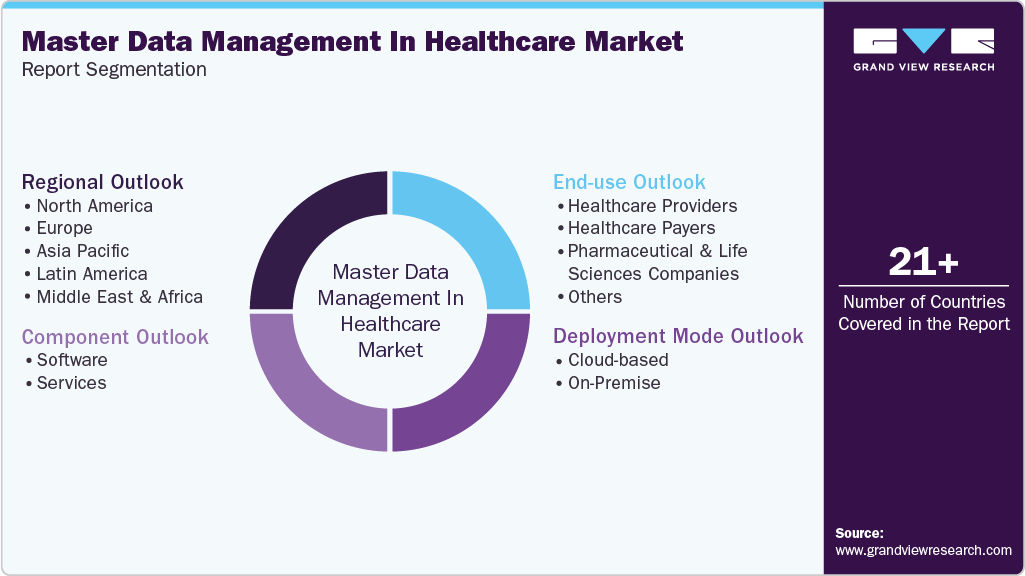
This report forecasts revenue growth at the global, regional, and country levels and provides an analysis of the latest industry trends in each of the sub-segments from 2021 to 2033. For this study, Grand View Research has segmented the global master data management in healthcare market report based on component, application, end use, and region:
 To learn more about this report, Download Free Sample Report
 -
Component Outlook (Revenue, USD Million, 2021 - 2033)
-
Software
-
Services
-
-
Deployment Mode Outlook (Revenue, USD Million, 2021 - 2033)
-
Cloud-based
-
On-Premise
-
-
End Use Outlook (Revenue, USD Million, 2021 - 2033)
-
Healthcare Providers
-
Healthcare Payers
-
Pharmaceutical & Life Sciences Companies
-
Others
-
-
Regional Outlook (Revenue, USD Million, 2021 - 2033)
-
North America
-
U.S.
-
Canada
-
Mexico
-
-
Europe
-
UK
-
Germany
-
France
-
Italy
-
Spain
-
Denmark
-
Sweden
-
Norway
-
-
Asia Pacific
-
China
-
Japan
-
India
-
South Korea
-
Australia
-
Thailand
-
-
Latin America
-
Brazil
-
Argentina
-
-
Middle East and Africa (MEA)
-
South Africa
-
Saudi Arabia
-
UAE
-
Kuwait
-
-
Frequently Asked Questions About This Report
The global master data management in healthcare market size was valued at USD 1.6 billion in 2024 and is estimated at USD 1.9 billion for 2026.
North America dominated the MDM in healthcare market with a share of 40.9 % in 2024. This is attributable to adoption of artificial intelligence (AI), machine learning (ML), and advanced analytics within MDM platforms is further accelerating market expansion. These technologies enable healthcare organizations to enhance care personalization, strengthen clinical outcomes, and improve operational efficiency.
Some key players operating in the master data management (MDM) in healthcare market include Informatica Inc. (acquired by Salesforce), IBM, SAS Institute Inc., Profisee, IQVIA, The Reltio, Stibo Systems, Verato, Semarchy, Smile Digital Health, Civica, Veeva Systems
Key factors that are driving the market growth include growing volume of healthcare data, increasing adoption of healthcare IT solutions, integration of advanced analytics & AI, need for data accuracy and interoperability. In addition, increasing adoption of AI-driven data quality tools, automated matching and deduplication engines, and advanced metadata management features that significantly reduce manual stewardship efforts.
The global master data management in healthcare market is expected to grow at a CAGR of 7.0% from 2025 to 2033, reaching USD 3.0 billion by 2033.
About the Author(s)
Healthcare IT Research Team
Healthcare · Healthcare ITThis report was authored by the healthcare it research team at Grand View Research - comprising two research analysts, one senior research analyst, and one industry expert - with specialized expertise in the healthcare it segment of the healthcare industry. All findings are based on proprietary healthcare databases, executive interviews, and regulatory analysis, subject to internal peer review prior to publication.
Last Updated:
Speak to Analyst

Customize this report to your needs - add regions, segments, or data points, with 20% free customization.
Or view our licence options:


ISO 9001:2015 & 27001:2022 Certified
We are GDPR and CCPA compliant! Your transaction & personal information is safe and secure. For more details, please read our privacy policy.


